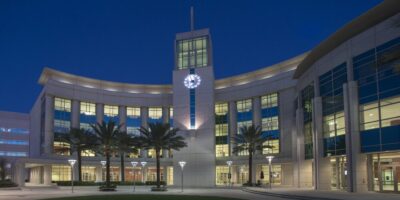

The University of Miami Leonard M. Miller School of Medicine is the private MD school of the University of Miami, located in the Miami Health District between Miami International Airport and Downtown Miami. Founded in 1952, it was Florida’s first medical school, and it remains the oldest and largest medical school in the state. Six hospitals with nearly 3,000 beds sit on or beside the medical campus, giving students one of the widest ranges of clinical experience in the country, from the Ryder Trauma Center at Jackson Memorial Hospital to the Bascom Palmer Eye Institute and the Sylvester Comprehensive Cancer Center.
This guide covers the 2026-2027 application cycle, which fills the class that starts in August 2027. It walks you through the school’s mission, accreditation, MD and dual-degree programs, the three-phase NextGenMD curriculum, admissions requirements and deadlines, 2026-27 tuition and cost of attendance, student life, clinical training and research, the people who lead the school and its admissions office, the current class profile, all six 2026-2027 secondary questions with worked examples and analysis, and what to expect on interview day.
As a prospective student, you probably have questions. Is the Miller School a good school? What GPA and MCAT do you need? How much does it cost? How hard is it to get in? At International Medical Aid, we believe that knowledge is power. Whether Miami is a reach school or a strong fit for you, this guide will help you build the best primary and secondary application you can, and decide whether the Miller School belongs on your list.
Overview of the University of Miami Miller School of Medicine
The Miller School describes itself as a school built around clinical exposure, research and service. It has more than 1,700 faculty members, 48 centers and institutes and 29 clinical and basic science departments, and it welcomes an entering class of about 200 students each year. Its specialty centers include the Bascom Palmer Eye Institute and Anne Bates Leach Eye Hospital, the Ambulatory Care Center, the Diabetes Research Institute, the Lois Pope Life Center (home of The Miami Project to Cure Paralysis), the Batchelor Children’s Research Institute, the Ryder Trauma Center and the Sylvester Comprehensive Cancer Center, South Florida’s only National Cancer Institute-designated cancer center.
Two features set Miami apart from most other Florida medical schools. The first is the size of its dual-degree program: the school reports that it leads the nation in dual medical degree graduates, and 40% of the Class of 2026 graduated with a second degree. The second is the patient population. Miami is one of the most international and multilingual cities in the United States, and students train at Jackson Memorial Hospital, one of the largest public teaching hospitals in the country, alongside UHealth (the University of Miami Health System) and the Miami VA.
Purpose of This University of Miami Miller School of Medicine Guide
This guide is meant to be a single, practical resource for applicants who are seriously considering the Miller School. The University of Miami is a cornerstone of Florida’s medical education system, with programs that fit a wide range of interests and career goals. Whether you are interested in research, clinical practice, public health, business, law or global health, the sections below explain what the school offers, what it expects from applicants and how to show that you are ready for it. Every figure is labeled with its year or entering class so you can tell how current it is.
Key Takeaways
- Who can apply: You must be a U.S. citizen, an unconditional permanent resident with your green card in hand when you submit AMCAS, or a DACA recipient. Miami does not accept international or Canadian applicants who lack U.S. citizenship or permanent residency, and it does not take transfer students. Tuition is the same for Florida residents and out-of-state students, and there is no limit on the number of out-of-state students admitted.
- Academic profile: The Class of 2029 (entered in 2025) had an average cumulative GPA of 3.85, an average science GPA of 3.80 and an average MCAT of 516. For the 2025 entering class, the median MCAT of accepted applicants was 516. Applicants with an MCAT below 504 or a science GPA below 3.20 are unlikely to be invited to interview.
- Competition: 9,912 people applied for the Class of 2029, 686 were interviewed and 202 enrolled.
- Key dates: AMCAS opened May 28, 2026, and closes December 1, 2026, with no extensions. The secondary costs $100 (fee waivers available) and is due December 15, 2026. Offers go out between October 15, 2026, and May 30, 2027.
- Tests: CASPer is not required, and PREview scores are not used. Your MCAT must be from September 2023 through September 12, 2026.
- Costs: 2026-27 MD tuition is $57,600 for every student, and the estimated first-year cost of attendance is $115,633. The school awards more than $4 million in scholarships and grants to each entering class.
- What makes Miami different: the NextGenMD curriculum with clinical work from the first weeks, a required Scholarly Concentration or dual degree for every student, 12 Academic Societies with two faculty mentors each, a student-run community service program (DOCS) and a three-year Accelerated Pathway to Residency.
- Your next step: Submit AMCAS early in the window, line up your committee letter or three faculty letters now, and start drafting the “Why Miami” essay and the #MedCanes values essay before your secondary invitation arrives.
Key Statistics About the University of Miami Miller School of Medicine

The snapshot and the table below come from the same fact record. The Class of 2029 entered in 2025, so its profile and the 2025 entering class figures describe the same students. Costs are for the 2026-27 academic year, the newest year the school has posted.
No acceptance rate is shown. A real acceptance rate divides the number of offers of admission by the number of applicants for the same cycle, and Miami does not publish its number of offers. Dividing the 202 students who enrolled by the 9,912 applicants gives about 2.0%, but that is a matriculation rate, not an acceptance rate, because some admitted applicants choose other schools. Likewise, 686 interviews out of 9,912 applicants means that about 6.9% of applicants were interviewed for the Class of 2029.
| Measure | Value | Cohort or year | Source |
|---|---|---|---|
| School and degree | University of Miami Leonard M. Miller School of Medicine, MD; Miami, Florida; private | Current | Miller School About Us; AAMC MSAR school profile |
| Founded | 1952, Florida’s first medical school | Historical | Miller School History |
| Accreditation | LCME fully accredited | Current | Miller School website |
| Applicants, interviewed, enrolled | 9,912; 686; 202 | Class of 2029 (entered 2025) | Miller School Class of 2029 Profile |
| Average cumulative GPA, science GPA, MCAT | 3.85; 3.80; 516 | Class of 2029; enrolled students | Miller School Class of 2029 Profile |
| Median MCAT (mean) | 516 (516.5); section medians 129 / 128 / 129 / 130 (Chem/Phys, CARS, Bio/Biochem, Psych/Soc) | 2025 entering class; all accepted applicants | AAMC MSAR school profile (2026 MSAR) |
| Median GPA | 3.9 | 2025 entering class; accepted applicants | AAMC MSAR school profile (2026 MSAR) |
| In-state and out-of-state students | 74 in-state; 128 out-of-state | Class of 2029 | Miller School Class of 2029 Profile |
| Gender | 111 women; 90 men; 1 other identity | Class of 2029 | Miller School Class of 2029 Profile |
| Race and ethnicity (alone or in combination) | Asian 72; Black or African American 8; Hispanic 27; Non-Hispanic White 56; multiple ethnicities 24; none reported 15 | Class of 2029 | Miller School Class of 2029 Profile |
| Enrolled in dual degrees | MD/MPH 46; MD/MBA 25; MD/PhD 11 | Class of 2029 | Miller School Class of 2029 Profile |
| Total medical school enrollment | 919 students | October 2025 | AAMC MSAR school profile (2026 MSAR) |
| Tuition | $57,600, in-state and out-of-state | 2026-27 academic year | Miller School Tuition and Cost of Attendance |
| Estimated cost of attendance | $115,633 (year 1); $116,900 (year 2); $116,340 (year 3); $113,127 (year 4) | 2026-27 academic year | Miller School Tuition and Cost of Attendance |
| Students receiving aid; average debt of indebted graduates | 80%; $249,498 | 2024-25 academic year | AAMC MSAR school profile (LCME Part I-B) |
| Secondary fee and deadline | $100 (fee waiver available); December 15, 2026 | 2026-2027 cycle | Miller School M.D. Application Process |
| Interview format | Two 50-minute virtual interviews: one open-file experiential, one closed-file behavioral | 2026-2027 cycle | AAMC MSAR school profile (2026 MSAR) |
| Class of 2026 Match | 98.6% placement; 23 specialties; residencies in 28 states | March 2026 | Miller School Match Day Results |
Is the University of Miami Miller School of Medicine a good school?
Yes. The Miller School is a well-regarded institution, not only among Miami medical schools but among Florida medical schools as a whole. It is one of the top National Institutes of Health-funded medical schools in Florida, with $171,964,033 in direct federal research grants and contracts in fiscal year 2024, and the school reports that seven of its programs rank in the top 25 nationally. Its neurology and neurosurgery programs, the Bascom Palmer Eye Institute and the Miami Project to Cure Paralysis are known well beyond Florida. The Class of 2026 achieved a 98.6% placement rate on Match Day and matched in 23 specialties, at programs including Johns Hopkins, Yale, Stanford, Columbia, Weill Cornell and Washington University.
Admission standards are high. The Class of 2029 entered with an average cumulative GPA of 3.85 and an average MCAT of 516. What GPA and MCAT are required for the Miller School of Medicine? There is no minimum GPA, but applicants with a science GPA below 3.20 or an MCAT below 504 are unlikely to be invited to interview, and the class averages tell you where a competitive application usually sits.
One aspect that sets the University of Miami medical school apart from other Florida medical schools is its range of programs. Besides the MD, the school offers a long list of dual degrees and graduate programs, including master’s degrees in biomedical sciences for students who want to build a research background. What is the average MCAT score for Miami Miller School of Medicine? The Class of 2029 average was 516, a strong academic profile that reflects how competitive the school has become as it has recruited nationally.
In terms of Physician Assistant (PA) programs, Florida PA Schools are known for their rigorous curricula and comprehensive training. The University of Miami trains physician assistants through a separate PA program, while the Miller School’s own admissions process covers the MD and its combined degrees. Those interested in PA programs, a master’s in biomedical sciences or other specialized fields should consider the full range of options across Florida’s medical and health science schools, including the University of Miami.
Mission and Educational Priorities
The Miller School states its mission this way:
“The University of Miami Miller School of Medicine’s mission is to provide state-of-the-art, translational and evidence-based information to enhance the quality of education, research, and clinical practice, to foster professional growth, to stimulate intellectual (academic) curiosity, and to promote excellence in the delivery of health care in South Florida and internationally. These educational activities will be relevant to medical knowledge, clinical performance, soundly performed research and/or patient outcomes.”
Its educational mission is more specific about the kind of doctor it wants to graduate: physicians “with the ability and desire to improve the health of all populations by alleviating suffering and eliminating healthcare disparities through their leadership in patient care, research, education, health care administration and the community.”
In plain terms, the school is committed to improving health care both locally in South Florida and internationally. It emphasizes evidence-based medical education, research and clinical practice, encourages professional growth and intellectual curiosity, and expects its educational activities to lead to better clinical performance, sound research and improved patient outcomes.
The #MedCanes values
The school also asks its students, the #MedCanes, to commit to five values, and the 2026-2027 secondary asks you to write about one of them:
- Integrity: Demonstrating honesty and fairness in our words and actions
- Collaboration: Working together in teams to achieve common goals
- Accountability: Taking ownership and responsibility for our actions and outcomes
- Respect: Treating others with dignity and compassion
- Excellence: Giving of ourselves in a way that exceeds expectations
What the mission means for applicants
Three practical messages follow from the mission and values.
First, Miami wants evidence that you can work with diverse patients. The school points out that the diversity of its faculty and students increasingly mirrors its patient population and that it serves “a community that represents the future demographics of the U.S. population.” One of the 2026-2027 secondary questions asks directly about experience in broadly diverse environments.
Second, the school values service that is sustained. Virtually all Miller students take part in the Department of Community Service (DOCS), and the admissions committee rates community service, leadership and teaching. Long-term commitments read better than a long list of one-time events.
Third, scholarship is expected of everyone. Every student graduates with either a Scholarly Concentration or a dual degree, so an applicant who can describe a question they want to study, and why, fits the school’s design.
Accreditation and Institutional Identity
Is the University of Miami Miller School of Medicine Accredited?
Yes. The Leonard M. Miller School of Medicine is fully accredited by the Liaison Committee on Medical Education (LCME), the accrediting body for MD programs in the United States and Canada. LCME accreditation is what allows graduates to sit for the USMLE and enter residency programs nationwide. The school’s first class graduated in June 1956, and the American Medical Association and the Association of American Medical Colleges granted formal accreditation a few weeks before that first graduation.
Name, history and campus
The school’s full name is the University of Miami Leonard M. Miller School of Medicine, often shortened to UMMSM or the Miller School. Its history begins on August 21, 1951, when the effort to open a medical school at the University of Miami took a decisive step with an agreement with the Veterans Administration. The school was founded in 1952, held its first classes at the Biltmore Hotel and signed the agreement that made Jackson Memorial Hospital its teaching hospital the same year. Its inaugural class had 28 students, and 26 of them graduated in June 1956.
Today the medical campus sits at the heart of the Miami Health District in the Civic Center neighborhood. The Miller School, the UM Hospitals and Clinics, Jackson Memorial Hospital and the Miami VA share the same campus. The school also has a Regional Medical Campus in Broward and Palm Beach counties, based principally at Holy Cross Hospital in Fort Lauderdale, JFK Medical Center in Atlantis and the Florida Department of Health in Palm Beach.
How the school fits within the University of Miami
The Miller School is part of a private research university. That matters for applicants in two ways. Tuition is the same for every student, wherever they live, so Florida residency brings no tuition discount. And the school is connected to the university’s other colleges, which is what makes the MD/MBA (with the Patti and Allan Herbert Business School), the MD/JD (with the School of Law) and the MD/Certificate in Security Management (with the College of Arts and Sciences) possible.
The Miller School does not run its own PA program; physician assistant training at the University of Miami is a separate program with its own admissions process. If you are deciding between the MD and PA routes, it can help to spend time in clinical settings first. Our pre-PA internships give pre-health students supervised patient-care experience that helps clarify that choice.
Medical Programs and Affiliations
Programs Offered at the University of Miami Miller School of Medicine
The Miller School has an expansive set of medical and academic programs. Its 29 clinical and basic science departments include, among others:
- Biomedical Sciences
- Cardiovascular Medicine
- Cell Biology, Molecular and Cellular Pharmacology
- Child Health
- Clinical and Translational Science
- Dermatology (University of Miami Dermatology)
- Family Medicine
- Human Genetics
- Internal Medicine (Internal Medicine Residency)
- Medical Education
- Microbiology and Immunology
- Molecular and Cellular Neuroscience (Miami Neurology)
- Neurological Sciences
- Neurosurgery (Miami Neurosurgery)
- Ophthalmology
- Orthopaedics
- Otolaryngology
- Pathology
- Pediatrics
- Pharmacology and Therapeutics
- Physiology and Biophysics
- Psychiatry and Behavioral Sciences
- Public Health (University of Miami Public Health)
- Radiology
- Rehabilitation Medicine
- Surgery
- Urology
Academic Programs and Departments
- Medical Degree (MD) Program: a four-year program that combines case-based classroom learning, clinical training from the first year and required scholarship, built on the NextGenMD curriculum described below.
- Graduate Programs: the school offers master’s and doctoral programs taught by Miller School faculty, including PhD programs in fields such as biomedical sciences, molecular and cellular neuroscience, and pharmacology, and master’s programs in fields such as clinical and translational science, biomedical sciences and public health.
- Combined Degree Programs: the school offers MD/MPH, MD/JD, MD/MBA, MD/MS in Genomic Medicine, MD/Certificate in Security Management, MD/PhD and a baccalaureate/MD pathway for University of Miami undergraduates.
Dual-degree programs in detail
The Miller School reports that it leads the nation in dual medical degree graduates. For the Class of 2029, 46 students enrolled in the MD/MPH, 25 in the MD/MBA and 11 in the MD/PhD. These are the main options:
- MD/MPH (four years): You earn both degrees in four years without extending medical school. Coursework covers epidemiology, biostatistics, environmental health, health policy and management, and community health interventions, and every student completes a capstone public health project with faculty mentors and community partners. You indicate interest in the secondary application. Shirin Shafazand, M.D., M.S., directs the program.
- MD/MBA: Offered with the Patti and Allan Herbert Business School, this program prepares physicians for practice management, health sector leadership and policy. Sabrina Taldone, M.D., M.B.A., directs the MD portion.
- MD/JD (six years): Offered with the University of Miami School of Law. Students spend the first two years on MD coursework, the third and fourth years on JD coursework, and the final two years completing both programs’ requirements.
- MD/MS in Genomic Medicine (four years): Offered with the John P. Hussman Institute for Human Genomics. It covers human genetics, diagnostic genomic tests, high-throughput sequencing and pharmacogenomics, and includes a capstone. Applicants answer program-specific questions in the secondary application and must first be accepted to the MD program.
- MD/Certificate in Security Management: A 12-credit certificate, offered with the College of Arts and Sciences, that can be completed in one summer. It focuses on emergency management, disaster response and security in health care settings.
- MD/MS in Global Medical Sciences: A 30-credit hybrid master’s created with the Department of Medical Education and the Global Institute, including a faculty-led study abroad experience.
- MD/PhD (Medical Scientist Training Program): The MSTP trains physician-scientists in fields such as cancer, genetics and genomics, regenerative medicine, immunotherapy and infectious diseases. Affiliated programs include biomedical engineering and public health sciences, and affiliated institutes include the Diabetes Research Institute, the Hussman Institute, the Miami Project to Cure Paralysis and Sylvester. The school estimates about 10 MD/PhD entrants per year.
Three-Year Accelerated Pathway to Residency
The Accelerated Pathway lets qualifying students earn the MD in 36 months and move directly into a University of Miami/Jackson Health System residency. You indicate interest when you apply to the four-year NextGenMD program; applications open in January for students already accepted to the four-year track. Eligibility matches the standard MD with two exceptions: you need an MCAT of at least 510, and you cannot combine the pathway with another dual-degree program. Applicants complete second interviews with program directors in their chosen specialty, and decisions come by April 1. Eighteen residency programs participate. If you are not admitted to the pathway, your acceptance to the four-year program is unaffected. Shawn Banks, M.D., directs the program, and seven members of the Class of 2026 graduated in three years.
Medical Scholars Program (early admission for UM undergraduates)
The Medical Scholars Program (MSP) is open only to University of Miami undergraduates. Students apply at the end of their sophomore year and choose one of two tracks: Early Matriculation, which starts medical school after junior year, or Early Assurance, which starts after senior year. Students must keep a cumulative and science GPA of 3.75 or higher and earn an MCAT of 512 or higher within three attempts. The program is not part of the AAMC Early Decision Program, and students in it may not apply to other medical schools. The school estimates about 15 baccalaureate/MD entrants per year. If you are still in high school and considering the University of Miami for this reason, our medical internships for high school students are one way to test your interest in medicine early.
Affiliations with the University of Miami Health System and Jackson Health System
The Miller School is closely linked with UHealth, the University of Miami Health System, and with Jackson Health System. These affiliations give students access to academic specialty care and to one of the country’s largest public hospitals, with a very diverse patient population. Within UHealth, the Desai Sethi Urology Institute, directed by Dipen J. Parekh, M.D., is a major center for urologic care and research, and its scientific director, Nima Sharifi, M.D., is profiled later in this guide. UHealth serves patients both regionally and from abroad through its hospitals and clinics.
Curriculum Overview
Curriculum Overview at the University of Miami Miller School of Medicine
Program objectives and core competencies: the curriculum integrates basic, clinical and health systems sciences and requires students to be active, responsible learners. It emphasizes faculty- and student-led team-based and small-group learning, in which basic science concepts are introduced in light of common diseases and clinical relevance. Health systems science runs throughout, with attention to social determinants of health, professionalism, humanism and ethics, population medicine, prevention and screening, quality and outcomes, medical informatics, geriatrics, integrative medicine, nutrition, health care economics and end-of-life care. The continuous development of clinical skills, starting in the first weeks of medical school, is the theme that ties all four years together.
Instruction includes small-group problem-based learning, case-based learning, team-based learning, instructional videos with self-assessment exercises, interactive sessions, simulations and interactive lectures. Attendance at small groups and clinical training is mandatory; lecture attendance is strongly encouraged but not mandatory, and lectures are recorded and archived online daily. English is the language of instruction.
Curriculum Phases at the Medical School
Message from the Dean of Curriculum
The curriculum is called NextGenMD. Gauri Agarwal, M.D., FACP, Senior Associate Dean of Curriculum, leads the Office of Curriculum, whose stated goal is an educational experience in which students are “inspired, challenged, mentored, and empowered.” NextGenMD focuses on case-based and small-group learning, early clinical skills, community involvement, mentorship and skills beyond the medical degree, and it integrates training at three hospitals so that students work with a diverse patient population from the first year. Students complete their education in three phases, with longitudinal courses that run across all four years.
Their Team
Each phase has its own directors and program staff. Faculty and staff from many departments work together to keep the curriculum current and clinically relevant, and the full team, from phase directors to course managers, is listed on the school’s Our Team page.
Phase 1: Foundations
Duration: 14 months
Methodology: Phase 1 is student-led and faculty-facilitated, using case-based collaborative learning to teach the foundational sciences. Early clinical experiences include serving as patient navigators and learning emergency medical skills, and Longitudinal Clinical Educators (LCEs) coach students in foundational clinical skills.
Courses:
- Introduction to the Medical Profession (August)
- Biomedical Principles of Health (September to November)
- Symptoms, Signs, and Disease 1 (Hematology, Cardiovascular)
- Symptoms, Signs, and Disease 2 (Respiratory, Renal)
- Symptoms, Signs, and Disease 3 (Gastroenterology/Hepatology/Nutrition, and Rheumatology)
- Symptoms, Signs, and Disease 4 (Neurology, Psychology)
- Symptoms, Signs, and Disease 5 (Endocrine/Reproductive, ENT/Dermatology)
Key Faculty for Phase 1:
Dr. Richard Riley, Co-Director, Associate Dean for Basic Science Integration Dr. Christopher Mallow, Co-Director Dr. Madeleine Norris, Co-Director, Director of Biomedical Science Integration
Key Staff for Phase 1:
Shadana James, Manager, Programs
Phase 2: Clerkships
Duration: 12 months
Methodology: Phase 2 begins with a Transition to Clerkships course and then moves through two 12-week blocks and four 6-week blocks of clerkships. Basic science, longitudinal topics, simulation, standardized patient experiences and competency-based assessments are built into every clerkship, and students keep working with their LCEs. A USMLE study period follows, from October to December.
Clerkship Blocks:
- ER to OR (12 weeks): Surgery, Anesthesia, and Emergency Medicine
- Practice of Medicine (12 weeks): Inpatient/Outpatient Internal Medicine, Family Medicine, and Palliative Medicine
- Neurology (6 weeks): Neurology, Ophthalmology, and Physical Medicine and Rehabilitation
- Psychiatry (6 weeks)
- Obstetrics and Gynecology (6 weeks)
- Pediatrics (6 weeks)
Key Faculty for Phase 2:
Dr. Sarah Bland, Director
Key Staff for Phase 2:
Sharon Ramirez, Manager, Programs
Phase 3: Pathways and Capstones
Duration: 18 months
Methodology: Phase 3 is the most personalized part of the curriculum. Students explore career goals, complete dual degrees and scholarly projects, and finish with a Transition to Residency bootcamp. By the end of Phase 3, students have reached competency as sub-interns and are ready for internship.
Components:
- Electives: two- to four-week courses chosen to match the student’s career interests.
- Selectives: a 2-week Critical Care selective and a 4-week Advanced Integrated Sciences (AIS) selective.
- Sub-internship: a 4-week rotation that prepares students for internship.
Key Faculty for Phase 3:
Dr. Shirin Shafazand, Co-Director Dr. Patricia Alvarez, Co-Director
Key Staff for Phase 3:
John Ryan Mallari, Senior Program Coordinator Joyce Fernandez, Senior Program Coordinator
Longitudinal courses
- Medicine as a Profession (MAP): runs through all four years and covers clinical skills, professionalism, communication, population health, health systems science, nutrition and wellness, and personal development.
- Scholarly Concentration: every student either completes a dual degree or follows one of 14 pathways, undertaking a scholarly project with a faculty mentor and presenting a capstone report. The pathways are Advancing Mind-Body Medicine; Biomedical Engineering; Business of Medicine, Quality Improvement and Patient Safety; Diagnostic Pathology and Laboratory Medicine; Doctor of the Future: AI, Innovation, and Health Informatics; Ethics, Humanities, and Health Law; Global Health and Surgery; the Jay Weiss Pathway in Community Health Empowerment; Maternal and Child Health: Research, Advocacy, and Leadership; Neuroscience and Behavioral Science; Oncology and Related Health Disparities; Regenerative Medicine; Translational and Molecular Medicine; and Vision Science. Peter Buchwald, Ph.D., directs the Scholarly Concentration.
- Nutrition curriculum: nutrition medicine is integrated across all four years.
Additional Resources
The Office of Medical Education and the Office of Student Services provide health and wellness resources, career advising, mentorship and academic enrichment services, including two full-time academic enrichment specialists and a peer-tutoring program run through the Academic Societies. By the end of the three phases, students are academically prepared and clinically competent, ready to begin residency.
Longitudinal Clinical Educators
Longitudinal Clinical Educators (LCEs) are experienced physician faculty who teach clinical skills and serve as coaches, mentors and advocates throughout medical school. Each of the 12 Academic Societies has two LCEs, so the same mentors follow a group of students for years. LCEs help students work through the intellectual, emotional and social challenges of training, give constructive feedback and point students toward resources. These confidential one-on-one conversations help students meet developmental milestones while holding to the school’s standards.
Faculty Profiles
The school publishes profiles of its LCEs, including their training, interests and the mentorship lesson each one passes on. A sample:
Alexis Powell, MD, MPH
Clinical Assistant Professor, Infectious Diseases
- Medical Training: Jackson Memorial Hospital
- Professional Interests: Internal Medicine, Transition of Adolescents with HIV to Adult Care Services, HIV
- Research Interests: Transition of Adolescents with HIV to Adult Care Services
- Personal Interests: Dance, Fitness, Travel, The Arts
- Mentorship Lesson: Giving people meaningful attention takes less time than you think.
Ami Panara Shukla, MD
Assistant Professor of Clinical Medicine
- Medical Training: Undergraduate and Medical Degree at University of Miami Miller School of Medicine
- Professional Interests: General Gastroenterology, Neurogastroenterology
- Research Interests: Neurogastroenterology, Helicobacter Pylori infection, Healthcare quality improvement
- Personal Interests: Traveling, Vegetarian recipes, Eating bread and chocolate, Historical dramas, Book club, Herb gardening
- Mentorship Lesson: Always try to do the best you can and don’t worry about the rest.
Andrew Brown, MD
Clinical Assistant Professor, General Neurology
- Medical Training: University of Miami
- Professional Interests: General Neurology
- Research Interests: General Neurology
- Personal Interests: Gardening, Cooking, Reading
- Mentorship Lesson: Always be generous with the knowledge you have acquired.
Carly Brand Levine, MD, MPH
Assistant Professor of Clinical Pediatrics
- Medical Training: Undergraduate at University of Florida, Medical School at University of Miami Miller School of Medicine
- Professional Interests: General Pediatrics, Developmental and Behavioral Pediatrics, Medical Education
- Personal Interests: Boating, Travel, Family and pet time
- Mentorship Lesson: Take time to care for yourself and seek help when needed.
Cristina I Pravia, MD, FACP, MBA
Department of Executive Medicine
- Medical Training: University of Miami/Jackson Memorial Hospital
- Professional Interests: Concierge Medicine, Internal Medicine
- Personal Interests: Parenting
- Mentorship Lesson: Be self-reliant but know when to seek help; courage is key.
Other LCEs bring their own perspectives. Maria Antonietta Mosetti, MD, emphasizes humility and continuous learning, a lesson she credits to her physician father, and her interests include clinical and point-of-care ultrasound as a diagnostic tool. Marie Anne Sosa, MD, stresses “enjoying the journey” and works on improving hospital outcomes through quality initiatives; her interest in yoga may appeal to students who want a balanced approach to life and medicine. Melanie S. Helfman, MD, covers areas from preventive health care to patient safety and stresses listening to patients, and she enjoys theater and music. Melissa Ann Fellman, MD, works on ethical questions in neuro-palliative care and small fiber neuropathies, and reminds students that nothing is purely black or white. Nicole S. Torres, MD, advises students not to mistake discomfort for incompetence, an important lesson for anyone facing the challenges of clinical training, and her interests include mental health and vaccine hesitancy. Oneith Cadiz, MD, emphasizes empathy and understanding with diverse patient populations and focuses on injury prevention. Sujata Tipnis, MD, MPH, works in global child health and with underserved populations and encourages students to push their own boundaries. Zain Mithani, MD, specializes in renal physiology and onconephrology, with research interests that closely track his clinical work. Sabrina Taldone, MD, MBA, who directs the MD/MBA program, focuses on the business of medicine and quality improvement.
The list of faculty mentors goes on, each with their own expertise and advice. With faculty ranging from medical educators to clinicians and researchers, students get mentorship from people who know them well over several years, which is one of the most valued parts of the Miller School experience.
Admissions Requirements and Application Process
Medical School Admissions Consulting and Admissions Process at the University of Miami Miller School of Medicine
Medical School Admissions Consulting
The Miller School does not provide admissions consulting, but many applicants work with advisors at their college or with outside firms. A good advisor can help with MCAT planning, personal statements, letters of recommendation, secondary essays and mock interviews. International Medical Aid’s admissions advising is described in the IMA section near the end of this guide.
Admissions Process
- Submit an AMCAS application. All MD applicants, including dual-degree applicants, start with the American Medical College Application Service (AMCAS). Miami does not accept paper applications.
- Submit the secondary application. Miami sends secondary applications to most U.S. citizens, permanent residents and DACA applicants who submit a verified AMCAS application. The committee may decline to send one to applicants with unacceptable infractions, who do not meet eligibility rules or who have extremely low metrics, but it does not screen anyone out on a single number alone; a low-metric application is read in full before that decision is made.
- Interview. The admissions committee rates every completed application and invites the highest-rated applicants to interview. Interviews are conducted virtually by members of the Admissions Committee.
Admission Requirements
- Degree: You need a conferred bachelor’s degree from a fully accredited U.S., U.S. territorial or Canadian college before you start medical school, and the school recommends that you have at least 90 credit hours when you apply. The degree requirement does not apply to students admitted through the Medical Scholars Program.
- MCAT: Required. The Class of 2029 averaged 516.
- Coursework: The required courses are listed in the table below. Science coursework must be completed at a four-year, bachelor’s degree-granting institution.
Required and Recommended Coursework
| Course | Semesters | Quarters | Notes |
|---|---|---|---|
| English | 2 | 3 | AP credit accepted if verified by AMCAS and on your transcript |
| Chemistry with labs | 2 | 3 | AP credit accepted for inorganic chemistry |
| Organic Chemistry with lab | 1 | 2 | |
| Biochemistry (lab recommended, not required) | 1 | 2 | |
| Physics with labs | 2 | 3 | AP credit accepted |
| Biology with labs | 2 | 3 | AP credit accepted |
| Behavioral Science | 2 | 3 | Anthropology, economics, family studies, psychology, sociology and similar courses count |
This list is the school’s minimum preparation for medicine. Accepted students are strongly encouraged to take more science, including cell and molecular biology, computer science, developmental biology, genetics, immunology, microbiology, neuroscience and physiology.
Course policies to check before you apply:
- Time limit: prerequisite courses must be completed within 10 years of your AMCAS application, and the latest date to finish them for the 2027 entering class is June 2027.
- Online courses: Miami accepts online courses only if they were taken between the summer 2020 and fall 2021 terms.
- Pass/fail: prerequisite courses graded pass/fail are not accepted.
- Not accepted: CLEP credit and courses from foreign institutions, except study-abroad courses completed through a qualified institution.
- Community college: coursework verified by AMCAS and included in your GPA is reviewed case by case, particularly for upward-transfer and dual-enrollment students.
- Self-assessment: the school cannot review transcripts before you apply, so read the requirements carefully and use your judgment about whether to apply with the courses you have completed or planned.
Selection Factors
Primary evaluation criteria: the committee rates every completed application on preparedness to study medicine, life experiences, the meaningfulness of direct patient contact experiences, community service, leadership, teaching experiences and the quality of letters of recommendation. At the interview stage it also weighs academic and behavioral preparedness, breadth of life experiences, preparedness to serve diverse populations, experience in direct patient care, research and health care delivery, interpersonal skills, motivation and maturity. Residential preference: there is no in-state preference, no cap on out-of-state students and no difference in tuition.
Equal opportunity commitment: applications are reviewed without regard to race, creed, sex, national origin, age or disability. DACA applicants are encouraged to apply and are supported through the Office of Belonging and Inclusive Excellence.
Evaluation Criteria
The admissions committee assesses academic preparedness, life experiences, patient care experience, research involvement, community service, leadership, teaching and interpersonal skills. Applicants are compared on the full picture, not on a single number.
Additional Policies and Screening
- GPA and MCAT guidance: Miami has no minimum GPA for screening, but applicants with a science GPA below 3.20 or an MCAT below 504 are unlikely to be invited to interview. The application process page asks you to compare yourself with recent entering classes before deciding whether to complete the secondary.
- Postbaccalaureate and graduate work: the committee considers advanced GPAs for applicants with at least 25 credits of postbaccalaureate or graduate coursework, mainly in the basic or behavioral sciences, verified in AMCAS.
- MCAT policy: take the MCAT no later than the last test date in the year before you plan to start (September 2026 for a 2027 start). Scores are valid for 36 months; for this cycle, Miami accepts scores from September 2023 through September 12, 2026. The committee considers your most recent three attempts within that window and looks at your highest total.
- CASPer and PREview: the Miller School does not require CASPer and does not use PREview scores.
- Citizenship: applicants must be U.S. citizens, DACA recipients or unconditional permanent residents with a green card in hand when they submit AMCAS. A DACA applicant submits a copy of the Notice of Action and the employment authorization card. Canadian and other international applicants without U.S. citizenship or permanent residency are not eligible.
- Background check: a criminal background check is required.
- Technical standards: candidates must have abilities in observation, communication, motor function, conceptual-integrative reasoning and behavioral-social skills, with or without reasonable accommodations.
Clinical Experience
Shadowing is recommended, and meaningful direct patient contact is one of the factors the committee rates. The school asks for “a variety of experiences that afford them a clear understanding of the patient-physician relationship and the healthcare field,” including shadowing, volunteering and paid clinical work. Working as a medical scribe, an EMT, a medical assistant or a clinic volunteer can all count. In the 2025 entering class, 95% of students reported physician shadowing or clinical observation, 87% medical or clinical volunteering, 70% paid medical or clinical employment, 89% community service and 99% research or lab experience.
If your hands-on patient contact is thin, structured clinical internships for pre-med students can add supervised experience in which you take vitals, help with intake and triage and assist with direct care, which gives you concrete patient stories to reflect on in your Miami essays.
Letters of Recommendation
Miami participates in the AMCAS Letter Service. You need either a pre-medical committee letter or packet, or three individual letters from people who can speak to your strengths as a future medical student, two of whom must be science faculty who have taught you. In addition, you may submit a maximum of two more letters, for example from a clinical, research, service, employment or leadership supervisor. These extra letters cannot replace the required ones. The school asks faculty writers to say how long and how well they have known you and how you compare with other students they have recommended.
Submit all letters and transcripts through AMCAS. Do not send them directly to the school unless your transcript includes substantial coursework that is not in your AMCAS application.
Secondary Application
Secondary invitations arrive by email and the secondary is completed in the Miller School applicant gateway. The fee is $100, it is non-refundable, and fee waivers are available. The deadline is December 15, 2026, and late applications are not accepted. The school advises submitting the secondary when your application is at its most complete and competitive, and after you submit it and pay the fee (or receive a waiver), you get a receipt email. You can track letters and application status in the applicant portal.
Interview Process
Interview invitations begin in August 2026. Interviews are held virtually on selected Mondays and Fridays from mid-September to the end of April. Each applicant has two 50-minute interviews: one open-file, experiential interview and one closed-file, behavioral interview. From November, the school offers monthly on-site tours for accepted applicants. See the interview section below for preparation advice.
Timeline and Commitment Details
Miami publishes two hard deadlines: the AMCAS application is due December 1, with no extensions for any reason, and the secondary is due December 15, with a $100 non-refundable fee. Transcripts are due to AMCAS two weeks after the AMCAS deadline. Take the MCAT no later than September of the year before you plan to start.
After acceptances go out, enrollment runs through the AMCAS Plan to Enroll and Commit to Enroll tools. For the 2026 entering class, Miami’s Plan to Enroll date was May 1 and its Commit to Enroll date was May 15; dates are similar each year and move to the next business day when they fall on a weekend or holiday. Applicants holding several acceptances narrow them down through those tools. MD/PhD students start earlier than other students (orientation in late June for the 2026 class), so confirm the start date for your program in your acceptance materials.
Acceptance and Deposit
Offers for the 2027 entering class will be sent between October 15, 2026, and May 30, 2027. You have up to two weeks to respond to an offer. A non-refundable deposit of $100 is required for in-state and out-of-state students, and it is applied to tuition. The deposit is due by June 1, 2027. Requests to defer entry are considered case by case. Classes for the MD program begin on August 9, 2027.
Waitlist and Selection Factors
About 300 applicants are placed on the waitlist each cycle, and about 75 of them eventually receive an offer. The Admissions Committee sets the waitlist order, and the Associate Dean for Admissions and Enrollment has the authority to select from it. After the interview stage, you can submit updates through the Document Upload section of the portal; good updates include new publications, research, community involvement or clinical experience not already in your AMCAS.
Important Dates and Deadlines
| Step | 2026-2027 cycle date |
|---|---|
| Earliest AMCAS submission | May 28, 2026 |
| Application review begins | June 29, 2026 |
| Secondary invitations and interview invitations begin | Interview invitations from August 2026 |
| Latest MCAT accepted | September 12, 2026 |
| Interviews | Selected Mondays and Fridays, mid-September 2026 to end of April 2027 |
| First offers | October 15, 2026 |
| AMCAS deadline (no extensions) | December 1, 2026 |
| Need-based grant materials due (accepted applicants) | December 14, 2026 |
| Secondary deadline ($100) | December 15, 2026 |
| Transcripts due to AMCAS | Two weeks after December 1 |
| Last offers | May 30, 2027 |
| Deposit due ($100) | June 1, 2027 |
| Prerequisites completed | June 2027 |
| Classes begin | August 9, 2027 |
Being aware of these dates is crucial. Miami reviews applications as they become complete, so a secondary returned in August is read long before one returned in December.
Application Timeline
The dates to mark on your calendar are Miami’s own: AMCAS closes December 1 and the secondary closes December 15. After that, the AMCAS Plan to Enroll and Commit to Enroll steps in the spring decide where applicants holding several offers will enroll. Because the AAMC resets these traffic-rule dates each cycle, confirm the current ones with the AAMC or with Miami admissions.
Reapplicants
About 20% of Miami’s applicants each year are reapplicants, and the school is candid that reapplicants are admitted at a lower rate. Its advice is specific: compare your old application with the latest class profile, get your pre-med advisor’s honest feedback, and improve both GPA and MCAT, because “one does not compensate for the other.” A strong upward trend from a postbaccalaureate or master’s program matters more than a single good grade, and an MCAT that falls below the 505 to 515 range is unlikely to set you apart. The school also suggests new letters from people who know you well, more meaningful patient-contact experience, and interview practice if interviews were a weak point. If you are planning a year between cycles, pre-med gap year programs with structured patient-care roles can give you the new clinical experience Miami says it weighs heavily.
Additional Resources About the MCAT:
- Best Classes to Take Before the MCAT
- MCAT Score Calculator: Predict and Convert Your Scores
- MCAT Sections Guide: Experts Explain the MCAT
- Medical Schools Accepting Low MCAT Scores
Tuition, Cost of Attendance and Financial Aid
Financial Information
Tuition and Cost of Attendance
The Miller School describes itself as one of the most affordable private medical schools in Florida and nationally. Tuition is the same for Florida residents and out-of-state students. The tables below show the school’s estimated cost of attendance (COA) for the 2026-27 academic year. Tuition and fees are fixed charges; the other lines are averages. The school uses the COA to set the maximum financial aid you can receive, including scholarships and loans.
2026-27 tuition by program
| Program | Academic Year 2026-27 Tuition |
|---|---|
| MD students (in and out of state) | $57,600 |
| MD/MPH students (MS1-4) | $65,100 |
| MD/MS students (in and out of state) | $62,600 |
| MD/MBA (4-year program) | $67,601 |
| MD/Certificate in Security Management | $60,725 |
2026-27 fees
| Fee | Amount |
|---|---|
| Medical Student Assistance Programs | $220 |
| Disability/Accidental Death and Dismemberment Insurance | $64 |
| Student Council | $130 |
| Student Activity Fee (Gables) | $15 |
| Health and Counseling Centers Fee (Gables) | $400 |
| Wellness Center | $430 |
| Technology Fee | $400 |
| Mandatory Background Check Fee (MS1) | $365 |
| Board Exam Preparation Fee (MS2) | $559 |
| Athletic Fee (optional) | $360 |
2026-27 cost of attendance, MD program
| Expense | Year 1 | Year 2 | Year 3 | Year 4 |
|---|---|---|---|---|
| Tuition | $57,600 | $57,600 | $57,600 | $57,600 |
| Fees | $1,659 | $1,659 | $1,659 | $1,659 |
| Housing | $26,180 | $26,180 | $26,180 | $23,998 |
| Food | $12,368 | $12,368 | $12,368 | $11,337 |
| Books and Supplies | $950 | $950 | $950 | $950 |
| Transportation | $5,000 | $5,000 | $5,000 | $5,000 |
| Miscellaneous | $5,000 | $5,000 | $5,000 | $5,000 |
| Loan Fees | $528 | $3,100 | $3,100 | $3,100 |
| Health Insurance | $4,483 | $4,483 | $4,483 | $4,483 |
| Board Prep Fee | $0 | $560 | $0 | $0 |
| Background Check Fee | $365 | $0 | $0 | $0 |
| Computer Allowance | $1,500 | $0 | $0 | $0 |
| Total | $115,633 | $116,900 | $116,340 | $113,127 |
The COA tuition line is for the MD program only; dual-degree students pay the program tuition in the first table. For comparison across schools, the AAMC’s Tuition and Student Fees survey reported first-year tuition and fees of $57,587 and a total cost of attendance of $112,815 for 2025-26, the year before the current figures.
2026-27 Mandatory Fees
Medical Student Assistance Programs, $220: This fee includes:
- Access to the Medical Student Urgent Care Service for urgent medical needs
- Free annual flu vaccines
- Annual TB skin testing
- Annual OSHA training
- Care for occupational exposures or injuries, such as needle sticks
- Access to the Student Behavioral Health Service for confidential psychiatric and psychological counseling (at least 5 to 10 free visits per year)
Health and Counseling Center Fee (Gables Campus), $400: This fee includes:
- Maintenance of student health records
- Verification of required immunizations and updates
- Primary care at the Student Health Center on the Coral Gables campus
- Access to the Student Counseling Center
Disability Insurance Fee, $64: the school buys disability insurance for all active medical students.
Student Government Fee, $130: funds student government, student organizations and events such as the Medical Student Convention and the Fall Ball.
Wellness Center (Med) Fee, $430: access to the UM/Jackson Memorial Hospital Wellness Center and the Wellness Center on the Coral Gables campus.
Technology Fee, $400: supports exam software and online modules used in clerkships.
Gables Student Activity Fee, $15: access to university events on the Coral Gables campus, such as concerts and lecture series.
These fees cover services from urgent medical care and mental health support to fitness facilities. Most are charged in full at the start of the fall semester.
Books and Supplies
Specific equipment recommendations are given in the Medicine as a Profession (MAP) course. The estimate covers course reference textbooks, USMLE Step 1 preparation materials and diagnostic instruments. Students typically need:
- Lab coats
- Ophthalmoscope and otoscope kit
- Stethoscope
- Tuning fork
- Reflex hammer
- Anatomy lab scrubs
- Blood pressure cuff (optional)
Health Insurance
You must carry health insurance, and the student plan charge is billed in full at the start of the fall semester. You can use your insurance for acute care on either the Coral Gables or medical campus. By planning for these costs early, you can prepare for medical school at Miami without surprises.
Guide to Financial Aid and Cost of Attendance at Miller School of Medicine
Tuition and Fees
If you are considering the Miller School, cost is probably one of your top concerns. For 2026-27, MD tuition is $57,600 for both in-state and out-of-state students. Dual-degree tuition ranges from $60,725 (MD/Certificate in Security Management) to $67,601 (MD/MBA). Fees total $1,659 a year in the cost of attendance, with the Medical Student Assistance Programs ($220), disability insurance ($64), student council ($130), health and counseling ($400) and wellness center ($430) fees making up most of that total.
Estimated Cost of Attendance
The estimated cost of attendance includes much more than tuition and fees: housing, food, books, transportation, loan fees and health insurance. For the MD program in 2026-27, it ranges from $113,127 in the fourth year to $116,900 in the second year, or about $462,000 across four years at current prices.
Types of Financial Aid Available
Merit scholarships: applicants accepted for the Class of 2031 are automatically considered for merit scholarships based on their AMCAS application. No separate application is needed. The Scholarship Committee looks at academic excellence across your educational career, including GPA and MCAT.
Need-based grants: to apply, accepted applicants submit a CSS Profile (school code 5815) and related documents through the College Board’s IDOC service by December 14, 2026. Applicants who will be 30 or younger on December 31, 2027, must include parental information. Qualified students can currently receive need-based grants of up to $30,000 per academic year.
Scale of awards: the school awards more than $4,000,000 in scholarships and grants to each entering class each year, and individual awards range from $15,000 to full tuition and fees.
Federal Loan Options
Federal loan rules changed for students starting programs on or after July 1, 2026:
- Federal Direct Unsubsidized Loans: the main federal loan for medical students, available to qualified borrowers up to $50,000 per academic year, with lifetime and aggregate limits.
- Graduate PLUS Loans: available only to students who started their program before July 1, 2026, and already borrowed a federal loan in the Miller School MD program. New students entering in 2027 should not plan on Grad PLUS.
- Private education loans: after the federal changes, the University of Miami named Citizens Bank, College Ave and Sallie Mae as preferred private lenders. You may use any lender you choose.
Interest rates and origination fees for federal loans are reset each July 1. Check the current rates on studentaid.gov before you build a borrowing plan.
Additional Notes
- If you qualified for an AMCAS fee waiver, you can ask the financial aid office ([email protected]) to waive the cost of the CSS Profile.
- The FAFSA is not required for scholarships or institutional grants, but you need it for federal loans.
- Meet the December 14, 2026, deadline for need-based grant materials.
Medical school is a major investment, but scholarships, grants and loans can make it manageable. Read the aid materials carefully and contact the financial aid office with questions.
Percentage Receiving Aid
80% of students received some form of financial aid in the 2024-25 academic year.
Average Graduate Indebtedness
The average medical school debt of indebted graduates was $249,498 in the 2024-25 academic year.
Campus Facilities and Student Life
Campus Life
Setting
The Miller School, the UM Hospitals and Clinics, Jackson Memorial Hospital and the Miami VA share one campus in the Miami Health District, in the Civic Center area between Miami International Airport and Downtown Miami. The campus is within walking distance of bus and Metrorail service, and students are not required to have a car or a driver’s license.
Housing
The school does not run on-campus medical student housing, so most students rent. About 65% of the class lives in Brickell, about 5 miles from the medical campus, and about 20% lives on Miami Beach. Some students live in apartment buildings next to campus. Metrorail connects the medical campus with Brickell. Miami’s housing market is expensive and competitive, so the school offers support: current students share tips at Second Look Day, the school runs housing webinars in the spring, rising first-year students write a neighborhood guide called “The Beat,” and the university’s off-campus housing website lists rentals. Budget carefully; the 2026-27 cost of attendance assumes $26,180 a year for housing.
Academic Societies
Every MD student is assigned during the first week of school to one of 12 Academic Societies, small learning communities that include students from every class year. Each society has two LCEs as faculty mentors and its own crest and traditions. Societies are named after figures in medical history or notable Miller School graduates, such as the Adler-Everitt Society, named for Sidney J. Adler and Kathleen Everitt, the first man and first woman to receive Miller School diplomas in 1956. Students created the societies in 2001, and they now host small-group teaching, clinical skills practice, exam preparation, peer tutoring, wellness programs, service projects and social events.
Student Organizations and Activities
Miller students lead dozens of organizations registered through Student Government, including specialty interest groups, identity and advocacy organizations, service organizations and two national honor society chapters: the Gold Humanism Honor Society and Alpha Omega Alpha. The full directory is maintained on the university’s Engage platform. Students also publish two magazines, the Medical IBIS and Obliterants, a humanities magazine.
Groups and programs that applicants often ask about include:
- Gold Humanism Honor Society (GHHS), Miami chapter: recognizes students who show outstanding compassion and humanism in patient care. Dr. Gauri Agarwal serves as its faculty advisor.
- Alpha Omega Alpha Honor Medical Society (AOA): the national medical honor society, which recognizes academic achievement and leadership.
- Student Government: oversees student organizations and funds events such as the Medical Student Convention and the Fall Ball through the student government fee.
- Specialty interest groups: student groups tied to individual medical fields give students a way to learn about a specialty and meet faculty and residents in it.
- Identity, advocacy and service organizations: student-led groups that support students from many backgrounds and organize service in Miami-Dade County, along with student-led international medical mission trips.
- #MedCanes Ambassador Program: a student ambassador program listed among the school’s student involvement options.
Students are encouraged to get involved. Groups offer chances to learn, lead and serve, and the school reports a high level of student participation in and satisfaction with extracurricular activities. Peer teaching and service-learning organizations are especially important to Miller students.
Department of Community Service (DOCS)
The Mitchell Wolfson Sr. Department of Community Service is a student-run program that provides preventive, primary and specialty care to medically underserved communities. DOCS holds 10 annual health fairs across Miami-Dade, Broward and Monroe counties and runs four free weekly clinics. It also hosts an annual Community Health Leadership Conference for medical students from around the country. Virtually all Miller students take part, and Dean Henri Ford calls DOCS one of the school’s “most fundamental and essential missions: service to our community.”
Wellness and student support
The Office of Student Services provides confidential academic enrichment, behavioral health services, a peer support network, a Wellness Advisory Council, disability services through the medical student disability coordinator, family and dependent resources, an ombudsperson and a longitudinal career advising program. Hilit Mechaber, M.D., Senior Associate Dean for Student Affairs, leads this work.
Diversity Programs
The school sponsors pipeline programs for students considering medicine, including a seven-week summer program that gives pre-medical undergraduates first-hand knowledge of medical education, the High School Careers in Medicine Program, the Students Training in Research (STIR) Program, the Health Careers Motivation Program and an MCAT Preparation Program. Questions go to the Office of Belonging and Inclusive Excellence.
Support Systems for Gender and Sexual Minority Students
The Office of Student Services and the Office of Belonging and Inclusive Excellence jointly provide support for gender and sexual minority students.
Medical School’s Introductory Video
For a more detailed look at the school and what it has to offer, you can watch the introductory video here.
Clinical Rotations and Research Opportunities
Clinical and Patient Experience
Patient Interaction
Patient interaction begins early in the first year and continues through all four years. In Phase 1, students serve as patient navigators and learn emergency medical skills while their LCEs teach history-taking and examination.
Dress Code
Medical students are expected to convey a professional demeanor through their behavior, dress and appearance. As the school puts it, a professional image increases credibility, trust, respect and confidence.
Clinical Rotations
Clinical rotations begin in the second year, in Phase 2. Students complete clerkships in surgery, anesthesia and emergency medicine; internal medicine, family medicine and palliative medicine; neurology, ophthalmology and physical medicine and rehabilitation; psychiatry; obstetrics and gynecology; and pediatrics. Phase 3 adds a sub-internship, critical care and integrated science selectives, and electives.
Affiliated Hospitals
- Jackson Health System hospitals, including Jackson Memorial Hospital and the Ryder Trauma Center
- University of Miami Hospitals and Clinics (UHealth), including Sylvester Comprehensive Cancer Center and Bascom Palmer Eye Institute
- Miami Veterans Administration Medical Center
- Holy Cross Hospital, Fort Lauderdale, Florida
- JFK Medical Center, Atlantis, Florida
Training across a large public safety-net hospital, an academic health system and a VA hospital means students see an unusually wide range of patients, languages and insurance situations.
Global Health Experiences
In 2025, 11% of graduating seniors reported participating in a global health experience during medical school. Miller School options include the Global Health and Surgery scholarly pathway, the MD/MS in Global Medical Sciences with its faculty-led study abroad component, and student medical mission trips. Barth A. Green, M.D., the school’s Executive Dean for Global Health and Community Service, oversees this work. Applicants interested in Spanish-language medicine can also build relevant experience before medical school through a medical internship in Peru.
Research Funding and Opportunities
Federal Research Grants and Contracts
The school received $171,964,033 in total direct federal research grants and contracts in fiscal year 2024.
Research Opportunities Available
Students can work with faculty researchers on a wide range of projects throughout medical school. Research and scholarship are built into the curriculum: every student completes a Scholarly Concentration pathway with a mentored project and capstone, or a dual degree. Students who want more can apply to the MD/PhD program or the MD/MS in Genomic Medicine.
Research Opportunities
The Miller School is a hub for research across a broad range of fields, including cancer, cardiovascular disease, infectious diseases, genetics and genomics, regenerative medicine and neuroscience. Students can join projects led by leading experts in these fields.
In addition to departmental research, the school is home to many research centers and institutes, including:
- Sylvester Comprehensive Cancer Center
- Bascom Palmer Eye Institute
- Miami Project to Cure Paralysis
- Diabetes Research Institute
- John P. Hussman Institute for Human Genomics
- Interdisciplinary Stem Cell Institute
- Evelyn F. McKnight Brain Institute
- Center for AIDS Research
- Center for HIV and Research in Mental Health
- Center for Computational Science
- Michael S. Gordon Center for Research in Medical Education
These centers give students access to major research resources and mentors, and they widen the scope of projects available for a Scholarly Concentration.
Evaluation and Requirements
Community Service Requirement During Medical School
There is no formal community service requirement, but community engagement is strongly encouraged and virtually all students take part in DOCS.
Grading System
The pre-clerkship curriculum and electives are graded pass/fail. Clerkships currently have numeric scores, and the numeric score appears on the transcript along with a Pass or Fail.
Community Service: Additional Information
Wolfson DOCS, the Department of Community Service, plays an active role in community health through 10 annual health fairs and four weekly clinics. Students also have access to several global health experiences.
Students Rankings
Students are ranked by class quartile, calculated for each campus and based on performance in the clerkship phase.
Research or Thesis Requirement During Medical School
Yes. Scholarship is required: every student completes a Scholarly Concentration pathway, with a mentored scholarly project and a capstone report and presentation, or a dual degree.
Prematriculation Program
The school does not list a pre-matriculation program for admitted students.
Match outcomes
The Class of 2026 achieved a 98.6% placement rate. Of 218 seniors in the Match, 70 will train in Florida, including 47 at the University of Miami/Jackson Health System, and the class will train in 28 states. The most common specialties were internal medicine (38), anesthesiology (19) and psychiatry (17). Forty percent of the class graduated with dual degrees, including 51 MD/MPH and 19 MD/MBA graduates, and seven students completed the MD in three years through the Accelerated Pathway.
Notable Alumni, Faculty, Leadership and Admissions Staff
Notable Alumni and Faculty of the University of Miami Miller School of Medicine
The Miller School has a distinguished roster of faculty and alumni. The people below were chosen because their work shows applicants something concrete about the school: who runs admissions and the curriculum, what kind of research and clinical care students can join, and what Miller graduates go on to do. Each role was checked against the school’s own faculty and leadership pages in November 2026.
School leadership
Henri R. Ford, M.D., M.H.A.
Dr. Ford is Dean and Chief Academic Officer of the Miller School. A Haitian-born pediatric surgeon, he earned his undergraduate degree at Princeton and his MD at Harvard Medical School, trained in surgery at New York Hospital-Cornell and in pediatric surgery at Children’s Hospital of Pittsburgh, and later earned a Master of Health Administration at USC. In 2015 he performed the first successful separation of conjoined twins in Haiti, alongside surgeons he had helped train. His NIH-funded research focuses on necrotizing enterocolitis, and he has written more than 300 articles, chapters and abstracts. He is a member of the National Academy of Medicine, immediate past president of the American College of Surgeons and a past chair of the AAMC Council of Deans. For applicants, his priorities are visible in the school’s emphasis on surgical global health, humanism alongside new technology, and the fact that every student graduates with a scholarly concentration or a dual degree.
Gauri G. Agarwal, M.D., FACP
Dr. Agarwal is Senior Associate Dean of Curriculum and Professor of Clinical Medicine, and she is a Miller School graduate (MD, 2000) who also earned her undergraduate degree at the University of Miami. After faculty positions at the University of Pittsburgh and Harvard Medical School, she returned to Miami in 2007 and has built and taught courses from cardiovascular and respiratory medicine to the Internal Medicine Clerkship and Transition to Residency. She founded the student humanities magazine Obliterants, has published on visual thinking strategies in medical education, sees patients at UM’s Human Rights clinic writing medical affidavits for asylum seekers and volunteers with DOCS. Her path is a good example of how the school’s medical humanities, community service and curriculum design fit together.
Hilit F. Mechaber, M.D.
Dr. Mechaber is Senior Associate Dean for Student Affairs and an alumna of the University of Miami BS/MD Honors Program in Medicine. She leads student career development, coaching and support, including the longitudinal career advising program that the school calls a hallmark of the student experience. Nationally, she has served as National Chair of the AAMC Group on Student Affairs and received its 2024 Exemplary Service Award.
Barth A. Green, M.D.
Dr. Green is Executive Dean for Global Health and Community Service, Professor of Neurological Surgery and Chairman of the Miami Project to Cure Paralysis. He took on the executive dean role in January 2016 after 22 years as chair of neurological surgery and is a world-renowned specialist in complex spine and spinal cord injuries. Students interested in global health or the Miami Project will find his work at the center of both.
Admissions leadership and staff
Louis R. Pizano, M.D., M.B.A., FACS
Dr. Pizano is Associate Dean of Admissions. He is also Professor of Surgery, Chief of the Division of Burns, Medical Director of the UM/Jackson Memorial Burn Center and Director of the Trauma/Surgical Critical Care Fellowship. He trained in surgical critical care and trauma at Jackson’s Ryder Trauma Center, joined the faculty in 2001 and later earned an MBA at the University of Miami. A trauma and burn surgeon leading admissions is a reminder of what the committee values: sound judgment under pressure, teamwork and direct patient care.
Mayte B. Reyes, MA, EdD
Dr. Reyes is Director of Admissions and manages the Office of Admissions in the Rosenstiel Medical Science Building. Applicant questions go to [email protected].
Faculty and alumni
Nicole Martin, M.D., is an Assistant Professor of Clinical Anesthesiology in the Department of Anesthesiology and a Miller School graduate. She earned her BS in Chemistry at the University of Miami in 2005 and her MD at the Miller School in 2009, then completed her anesthesiology internship (2010), residency (2012) and fellowship (2014) at the same institution. She is a diplomate of the American Board of Anesthesiology. Her career, from UM undergraduate to Miller graduate to faculty member, shows how many Miami students stay to train and teach.
Joseph Lamelas
Joseph Lamelas, M.D., an internationally known pioneer of minimally invasive heart surgery, joined UHealth in January 2019 as chief of cardiothoracic surgery and professor of surgery in the Miller School. He developed “The Miami Method,” which reaches the heart through an incision of less than 2 inches on the right side of the chest without opening the breastbone, created instruments to make the approach possible and trained more than 1,000 surgeons in it. At the time he joined, he had performed more than 16,000 cardiac operations. In October 2025 he joined the NCH Rooney Heart Institute in Naples, Florida, so he is no longer on the Miller School faculty, but his years at UHealth are part of the school’s cardiac surgery history.
Omaida Velazquez
Omaida C. Velazquez, M.D., FACS, is Professor of Surgery and holds the David Kimmelman Endowed Chair in Vascular and Endovascular Surgery. She served as chair of the DeWitt Daughtry Family Department of Surgery and Surgeon-in-Chief from 2015 to 2023, and before that as the Miller School’s Executive Dean of Research, Research Education and Innovative Medicine from 2012 to 2015. A surgeon-scientist and member of the American Society for Clinical Investigation, she studies stem cells and blood vessel growth, wound healing and limb salvage in peripheral vascular disease, work that has led to cell-based and gene therapy trials. She earned her MD as valedictorian at New Jersey Medical School in 1991 and trained in general and vascular surgery at the University of Pennsylvania.
Oliver McDonald
Oliver Gene McDonald, M.D., Ph.D., is an Associate Professor in the Department of Pathology and Laboratory Medicine. He directs the Gastrointestinal Pathology Research Program and the Pathology Physician-Scientist Program in the Division of Clinical and Translational Research.
He completed his MD and PhD at the University of Virginia in 2007, an anatomic pathology residency at Johns Hopkins in 2011 and a gastrointestinal and liver pathology fellowship at Johns Hopkins in 2013. He was an Assistant Professor at Vanderbilt University from 2013 to 2020 before joining the University of Miami in 2021. He also holds a BS in Biology from the University of Tennessee at Martin, medical licenses in Florida and Tennessee and board certification in anatomic pathology.
His research spans basic and clinical science, from how pancreatic cancer cells change their metabolism and epigenome as they spread to the pathology of diseases of the gastrointestinal tract, liver and pancreas, and his lab supports translational pathology research at Sylvester. For applicants interested in an MD/PhD or the Translational and Molecular Medicine pathway, his program is a model of physician-scientist training at Miami.
More about Dr. Oliver Gene McDonald, M.D., Ph.D.
Howard M. Lieberman
Howard M. Lieberman, M.D., is an Assistant Professor of Surgery in the Division of Trauma, Burns and Surgical Critical Care of the DeWitt Daughtry Family Department of Surgery, and Medical Director of Trauma 3A and the Mini Unit.
He grew up in Montreal and earned his BS and MS at McGill University, then his medical degree at the Technion in Haifa, Israel, in 2002. He returned to the United States for surgery residency at Mount Sinai and Northshore/Long Island Jewish Hospital in New York, and then completed a Surgical Critical Care and Trauma Fellowship at the University of Miami, Jackson Memorial Hospital and the Ryder Trauma Center.
As a trauma and acute care surgeon at a major teaching hospital, he works with students, residents and fellows every day and enjoys hands-on teaching in the operating room, from complex trauma cases to basic anatomy. He lectures on hernias and advanced abdominal wall reconstruction. His research interests center on tissue technology and regenerative medicine, and he has used new wound-care products to help patients with large open wounds. Students on the ER to OR clerkship spend time in exactly this setting.
Alberto Ramos
Alberto R. Ramos, M.D., M.S., FAAN, FAASM, is a Professor of Clinical Neurology and Research Director of the Sleep Medicine Program in the Department of Neurology.
He earned a BS in General Sciences at the University of Puerto Rico, Rio Piedras, in 1998 and his MD at Universidad Central del Caribe in 2003. He later earned an MPH in Epidemiology and Public Health (2012) and an MS in Clinical and Translational Research (2018), both at the Miller School, and completed his residency and fellowship training at the University of Miami and Jackson Memorial Hospital.
Since 2010 he has been an investigator with the Northern Manhattan Study and the Hispanic Community Health Study/Study of Latinos (HCHS/SOL), and he served as Miami site principal investigator for Sueño, an HCHS/SOL ancillary study of sleep patterns in 2,200 Latino adults using actigraphy. That work led to Sleep in Neurocognitive Aging and Alzheimer’s Research (SANAR), a five-year, $13 million grant from the National Institute on Aging studying how obstructive sleep apnea and nighttime blood pressure affect the risk of Alzheimer’s disease and other dementias in Hispanic and Latino adults. He is a Fellow of the American Academy of Neurology and the American Academy of Sleep Medicine. His career is a good example of how the Miller School’s own master’s programs and Miami’s population shape research careers.
You can learn more about Dr. Alberto R. Ramos by visiting the following website: Alberto R. Ramos, M.D., M.S., FAAN, FAASM at University of Miami.
Nima Sharifi
Nima Sharifi, M.D., is Professor and Scientific Director of the Desai Sethi Urology Institute and a prostate cancer medical oncologist and physician-scientist.
He earned his BS in Biology at Virginia Tech in 1995 and his MD at the University of Pittsburgh School of Medicine in 2001, and he completed training that included a medical oncology fellowship at the National Cancer Institute in 2007.
His laboratory studies how steroid metabolism drives prostate cancer’s resistance to hormonal therapies, including the development of castration-resistant prostate cancer. His group has identified abiraterone metabolites found in patients that may change how the drug’s action is understood, and a change in glucocorticoid metabolism that is critical for drug resistance, with findings published in journals including Nature. Students interested in oncology research, including the Oncology and Related Health Disparities pathway, can see the kind of bench-to-bedside work available at the Desai Sethi Urology Institute and Sylvester.
For further details, you can visit Nima Sharifi, M.D. at the University of Miami.
Ashish Shah
Ashish H. Shah, M.D., is an Assistant Professor of Neurological Surgery and a Miller School graduate. He specializes in minimally invasive approaches to brain tumors, using techniques such as laser interstitial thermal therapy, convection-enhanced delivery, viral-based gene therapy, Gamma Knife radiosurgery, awake craniotomy and robotic neurosurgery.
Raised in Corpus Christi, Texas, he graduated summa cum laude with a BS in Biology, Chemistry and Spanish, was awarded the Foote Fellowship and was inducted into Phi Beta Kappa. He earned his medical degree at the University of Miami, where he was inducted into Alpha Omega Alpha, and completed his neurosurgical internship and residency at the University of Miami/Jackson Memorial Hospital, a Surgical Neuro-Oncology fellowship at the University of Miami and a Translational Neuro-Oncology fellowship at the National Institutes of Health.
As Director of Clinical Trials and Translational Research in the Sylvester Brain Tumor Institute, he leads investigator-initiated trials of viral and immunotherapies for brain tumors, and his laboratory develops virotherapies, immunotherapies and targeted molecular treatments. He has written more than 200 peer-reviewed articles, chapters and editorials and has received NIH funding. Since 2008 he has worked with Project Medishare to build a sustainable neurosurgery residency program in Haiti, work recognized by the World Federation of Neurosurgical Societies. For applicants, his path shows how a Miller MD can lead to academic neurosurgery and global surgery at the same institution.
For further details, you can visit Ashish H. Shah, M.D. at the University of Miami.
Desai Sethi Urology Institute
The Desai Sethi Urology Institute, directed by Dipen J. Parekh, M.D., who is also the Miller School’s Executive Dean for Clinical Affairs, is UHealth’s center for urologic care and research. Dr. Sharifi’s prostate cancer laboratory is one example of the research based there.
This list is not exhaustive, but it shows the range of expertise at the Miller School. The faculty above, and others like them, shape the quality of education and patient care students experience across UHealth and Jackson. Whether you are interested in University of Miami Neurosurgery or University of Miami DPT (Doctor of Physical Therapy), which is housed in the school’s Department of Physical Therapy, you will learn alongside people who lead their fields.
Would you like to know more about University of Miami medical school requirements or the average MCAT score for Miami Miller School of Medicine admissions? The sections below cover the class profile, admissions strategy and secondary essays in detail. How hard is it to get into the Miller School of Medicine? The numbers in the next section answer that, and you can also compare Miami with PA Schools in Florida if you are still choosing between MD and PA training.
Admissions Statistics and Class Profile
Admission Statistics and Student Profile
For the Class of 2029, which entered in 2025, the school reports:
- Total applicants: 9,912
- Interviewed: 686
- New students matriculated: 202
- Average cumulative GPA: 3.85
- Average science GPA: 3.80
- Average MCAT: 516
- State of residence: 74 in-state, 128 out-of-state
- Gender: 111 women, 90 men, 1 other identity
- Dual degrees: 46 MD/MPH, 25 MD/MBA, 11 MD/PhD
- Reach: students from 25 states and 68 undergraduate institutions; the largest groups came from the University of Miami (31), the University of Florida (17), Vanderbilt and Cornell (9 each) and UCLA (8)
The class was chosen from nearly 10,000 applicants. Matriculants divided by applicants is about 2.0% (a matriculation rate, not an acceptance rate), and about 6.9% of applicants were interviewed.
Key Statistics About the University of Miami Miller School of Medicine
- Total medical school enrollment: 919 students (October 2025)
- First-year matriculants: 202 (Class of 2029)
- Estimated entering class for 2027: about 200, including about 100 in the standard MD program, 75 in combined MD programs, 15 from the baccalaureate/MD pathway and 10 MD/PhD students
- Self-reported race and ethnicity, Class of 2029 (alone or in combination): Asian 72, Black or African American 8, Hispanic 27, Non-Hispanic White 56, multiple ethnicities 24, none reported 15. These are student counts, not percentages, and because students can report more than one category, the numbers do not add up to the class total.
- Languages: current students report fluency in more than 30 languages, from Spanish, French Creole and Portuguese to Amharic, Tagalog and Vietnamese. In the 2025 entering class, 58% reported native proficiency in a language besides English.
Academic Profile of Accepted Students
- Median MCAT, all accepted applicants (2025 entering class): 516, with a mean of 516.5 and section medians of 129 (Chemical and Physical Foundations), 128 (CARS), 129 (Biological and Biochemical Foundations) and 130 (Psychological, Social and Biological Foundations).
- Median GPA (2025 entering class): 3.9.
- Average GPA, enrolled students (Class of 2029): mean cumulative GPA of 3.85.
The averages and medians are close, which tells you that the class is clustered tightly: most students have GPAs in the high 3s and MCATs in the mid-510s. The school notes that there is a wide range around the academic metrics, and its holistic review means that a strong upward trend, a strong postbaccalaureate record or exceptional experience can offset a number below the average. Numbers below 504 on the MCAT or 3.20 in science GPA, however, make an interview unlikely.
Matriculation and Specialties Data
- Total applicants (Class of 2029): 9,912
- Total interviewed: 686
- Total matriculated: 202
- Waitlist: about 300 positions per cycle, with about 75 offers made from it
The school’s Match Day results show where graduates go. For the Class of 2026, the most common specialties were internal medicine (38 graduates), anesthesiology (19) and psychiatry (17), with matches in 23 specialties overall. Seventy graduates stayed in Florida, 47 of them at the University of Miami/Jackson Health System, and the most popular other states were New York (21), California (16), Massachusetts (12) and North Carolina (11). The Accelerated Pathway connects students to 18 participating Miami residency programs, including anesthesiology, emergency medicine, family medicine, internal medicine, obstetrics and gynecology, pediatrics, psychiatry and surgery.
Ranking by US News and World Report
Rankings change each year and measure different things. The Miller School states that seven of its programs rank in the top 25 nationally, and that Bascom Palmer is ranked the number one eye hospital in the United States. Check the current edition of any ranking yourself, and weigh it against the factors that matter for you: curriculum, location, cost, patient population and the programs you want.
Tips and Strategies for Admission
Tips and Strategies for Getting into the University of Miami Miller School of Medicine
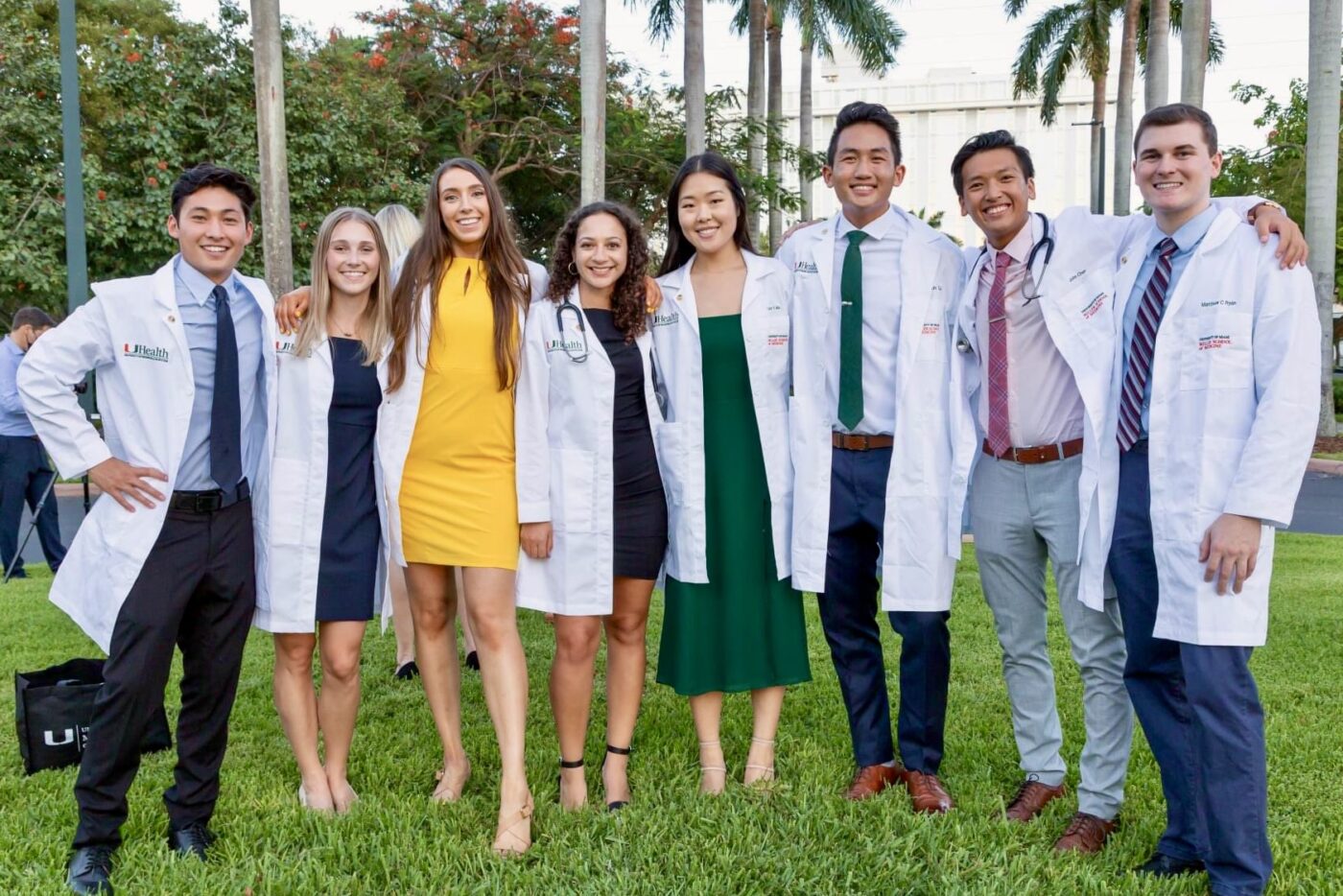
1. Hit both academic marks, not just one. Miami’s own reapplicant guidance says that a strong GPA does not make up for a weak MCAT, or the other way around. Aim for a science GPA well above 3.20 and an MCAT at or above the mid-510s. If your GPA is low, 25 or more credits of strong postbaccalaureate or graduate science coursework is the route the school says it will consider.
2. Check the course rules early. Miami’s prerequisite policies are stricter than many schools’. Pass/fail prerequisites are not accepted, online courses count only if taken between summer 2020 and fall 2021, and science courses must come from a four-year institution. Fix any gap before you apply rather than hoping it will be overlooked.
3. Build direct patient contact, not just observation. The committee rates the “meaningfulness of direct patient contact experiences.” Nearly every Miller matriculant reports clinical experience, so what separates applicants is depth: sustained roles where you are responsible for part of a patient’s care and can describe what you learned. Many students build those hours through work as a scribe, EMT or medical assistant, or through pre-med summer internships that place them in supervised patient-care roles.
4. Show sustained service and teaching. Community service, leadership and teaching are all rated. Miami’s culture runs on DOCS and peer teaching in the Academic Societies, so evidence that you have tutored, mentored or organized volunteers over time fits the school well.
5. Be ready to write about diverse environments. One of the 2026-2027 secondary questions asks about serving, working, living or learning in broadly diverse environments. Applicants who have worked with patients across languages and cultures, whether in South Florida or abroad, should keep notes on specific encounters. Experience gained through pre-med internships abroad can be a strong source for this essay if you reflect honestly on what you learned and what you could not do.
6. Know the school well enough to be specific. Your “Why Miami” essay should name the features that matter to you and connect them to your past: NextGenMD’s early clinical roles, LCE mentorship in the Academic Societies, the Scholarly Concentration pathway you would choose, DOCS, Jackson Memorial’s patient population or a specific dual degree.
7. Choose letters that add context. The school asks faculty to explain how long and how well they know you and how you compare with other students. Ask writers who can do that, and use the optional extra letters for a clinical or research supervisor who has seen you work.
8. Apply early. AMCAS opened May 28, 2026, and application review began June 29, 2026. Offers start October 15. Even though the secondary deadline is December 15, a file completed in summer is read when more interview slots remain.
9. Prepare for two very different interviews. The open-file interview will draw on your application; the closed-file behavioral interview will not. Practice telling short, specific stories about teamwork, conflict, failure and ethics.
10. Consider the extra pathways honestly. The MD/MPH is popular at Miami; apply to it if public health is really part of your plan. The Accelerated Pathway requires an MCAT of 510 or higher and a firm specialty choice early. Picking a pathway only because it looks impressive usually shows in interviews.
If you are looking for internships for pre-med students that also build reflection and interview stories, choose roles where you work directly with patients and can describe what you did, not only what you saw.
Secondary Application Questions, Example Responses and Analysis
University of Miami School of Medicine Secondary Application Questions and Example Answers
Miami’s secondary for the 2026-2027 cycle has six questions: two short-answer fields that apply only to some applicants (reapplicants and applicants with a family connection to the school), three essays and one optional box for anything else. The secondary is due December 15, 2026, and carries a $100 fee, with fee waivers available. Miami does not post the questions publicly; invited applicants see them in the applicant gateway.
Limits: for the three essays, plan for 5,000 characters each, the limit Miami used for these essays in the 2024-2025 and 2025-2026 cycles; for the reapplicant and family fields, plan for 1,000 characters. Always follow the limit shown in your portal. The examples below are written to those limits.
Program-specific questions: applicants who indicate interest in the MD/MPH or the MD/MS in Genomic Medicine answer additional program questions inside the secondary. Their 2026-2027 wording has not been published outside the portal, so answer them from the program descriptions earlier in this guide and your own experience.
Each example below is original and labeled. Use them to understand structure and depth, not as text to borrow.
Question 1: Reapplicant
If you have submitted an AMCAS application to the University of Miami Miller School of Medicine before we invite you to use this space to provide additional information about your previous application. This can include year(s) applied, outcome of application, and ways you have strengthened your application since your last application. [Leave blank if this does not apply]
Limit: 1,000 characters (the limit Miami used in 2025-2026; follow the limit shown in your portal). Who answers: Reapplicants who submitted an AMCAS application to the Miller School in a previous cycle; leave blank otherwise. Status: Optional.
What it asks: Only reapplicants answer this. It asks for three facts, the year or years you applied, the outcome and what you have strengthened since, so the committee can compare your two applications quickly.
How to approach it: List concrete changes with numbers and dates: new coursework and grades, a new MCAT, clinical hours, new letters. Spend one sentence on what you learned from reviewing your earlier application. Skip any argument about why the last cycle went the way it did.
Illustrative example, not an actual applicant essay (771 characters):
I applied to the Miller School in the 2025-2026 cycle and was not invited to interview. My science GPA was 3.41, my MCAT was 507, and most of my clinical hours came from a single summer. Since then I completed 30 credits of upper-level science in a post-baccalaureate program (4.0 GPA, including immunology and physiology) and retook the MCAT, scoring 514. I have worked 11 months as an emergency department scribe at a Broward County hospital, about 1,600 hours, and I added a weekly shift at a free clinic serving uninsured adults, where I check in patients and take vitals. I also asked two new writers who have watched me work this year for letters. I read my old essays honestly: they described what I wanted, not what I had done. This year I tried to show the work.
Why this example works: It answers all three parts the prompt names: the year applied, the outcome and the concrete changes since, each with numbers a reviewer can check against the new AMCAS. It names the weakness (narrow clinical hours, metrics below the school’s guidance) without making excuses, and it ends with a one-line reflection instead of a plea. Mistakes to avoid: blaming the committee, listing changes without dates or hours, and using this box to repeat the personal statement.
Question 2: Family connection
Use the space below if you would like to share information about a family member who is a graduate of one of our Miller SOM educational or residency programs or who is a current faculty or staff member. This information could include the name of the family member, program(s) they are/were affiliated with, (if alumni) graduation year, and how this family member’s experience with the University of Miller SOM shaped your career trajectory or has otherwise impacted your decision to apply to our program. [Leave blank if this does not apply]
Limit: 1,000 characters (the limit Miami used in 2025-2026; follow the limit shown in your portal). Who answers: Applicants with a family member who is a Miller SOM educational or residency program graduate or current faculty or staff; leave blank otherwise. Status: Optional.
What it asks: This is optional and factual. It asks for the family member’s name, program, graduation year if an alumnus, and how their experience shaped your path or your decision to apply.
How to approach it: Give the facts first, then one or two sentences on real influence. Leave it blank if the connection is distant or does not apply.
Illustrative example, not an actual applicant essay (676 characters):
My aunt, Dr. [full name], completed her internal medicine residency (class of [year]) through the University of Miami/Jackson Memorial Hospital program and now practices primary care in Hialeah. When I was in high school she let me sit at her kitchen table while she finished notes, and she explained how many of her patients first came to her through Jackson’s clinics. Her stories about training in a public hospital, where residents care for people the rest of the system often misses, are the reason I first imagined medicine as public service. She did not write a letter for me and has no role in my application, but her path is why Miami was the first school on my list.
Why this example works: It supplies the facts the prompt lists (name, program, role) and then the part that matters most: how the relative shaped the applicant’s path. It is careful not to imply influence over the application. Mistakes to avoid: name-dropping a distant connection, describing the relative’s career at length instead of your own decision, and filling the box when it does not apply.
Question 3: Why Miami
Why are you applying to the University of Miami Leonard M. Miller School of Medicine? In your essay, please provide a response that clearly articulates how you believe our program specifically will enhance your education/training, what you feel you will uniquely contribute to our learning community, and/or what features of our medical school prompted you to apply.
Limit: 5,000 characters (the limit Miami used in 2025-2026; follow the limit shown in your portal). Who answers: All secondary applicants. Status: Required.
What it asks: This is the core essay. It asks how Miami’s program will enhance your training, what you will contribute to its learning community and what features of the school drew you, joined by ‘and/or’, so you may weight them, but strong answers cover all three.
How to approach it: Pick three or four features you can tie to your own experience, such as NextGenMD’s early clinical roles, LCEs and Academic Societies, a Scholarly Concentration pathway, a dual degree, DOCS or Jackson Memorial’s patient population. Then give a specific, skills-based account of what you would contribute.
Illustrative example, not an actual applicant essay (3,362 characters):
When I volunteered at a free clinic in Little Havana last year, the patient I remember best was not the sickest one. He was a 58-year-old man with diabetes who had stopped taking metformin because the pharmacy label was in English and nobody had explained the dose in Spanish. The fix took ten minutes. The gap that caused it had taken years. I want to train where medicine is practiced at that intersection of clinical care and the systems around it, and the Miller School is built for exactly that.
First, the NextGenMD curriculum puts students into clinical roles in the first weeks. I am drawn to the way Phase 1 pairs case-based learning with early clinical work as patient navigators and to the Longitudinal Clinical Educators who coach students in small groups. I learn best when a concept has a patient attached to it. In my physiology courses I kept a notebook of the patients I had met at the clinic and wrote down which mechanism explained each one. A curriculum that formalizes that habit, with an LCE who knows me for four years through my Academic Society, would make me a better learner and a more honest one.
Second, Miami’s patient population is the reason I want to be here rather than somewhere that only describes diversity in its brochures. Training at Jackson Memorial Hospital, one of the largest public teaching hospitals in the country, alongside UHealth and the Miami VA, would let me care for patients across insurance status, language, immigration history and age. I grew up speaking Spanish at home and I am working toward medical fluency, and I want my clinical Spanish to develop under supervision, with feedback, in a city where I will use it every day.
Third, the Scholarly Concentration fits the questions I already have. The Jay Weiss Pathway in Community Health Empowerment would let me study the problem I saw at that clinic: how health literacy and language access affect chronic disease control. If I am accepted, I would also like to explore the four-year MD/MPH, because the epidemiology and health policy training would help me measure whether an intervention like bilingual medication counseling actually lowers A1c, rather than assuming that it does.
I would contribute to the learning community in three ways. The first is the Department of Community Service. I have spent two years organizing volunteers for a mobile screening van, so I know how to recruit, schedule and keep volunteers coming back when the work is unglamorous. I would want to bring that experience to a DOCS health fair or weekly clinic. The second is teaching. I have tutored organic chemistry for three semesters and learned to explain the same mechanism four different ways until one sticks. Peer tutoring through the Academic Societies is where I would start. The third is a habit of asking the patient what went wrong before deciding what the problem is. That habit came from the man with the metformin label, and I think it is the kind of question a class of future physicians should keep asking one another.
I am applying to the Miller School because I want my education to happen where my future patients are, with a curriculum that treats early clinical experience, community service and scholarship as the core of medical school instead of extras. I want to be a physician who can manage a patient’s diabetes and also fix the label.
Why this example works: The prompt asks for three things joined by ‘and/or’: how the program will enhance your training, what you will contribute, and what features prompted you to apply. The example answers all three with verified Miami specifics: Phase 1 patient-navigator roles and Longitudinal Clinical Educators in NextGenMD, training at Jackson Memorial, UHealth and the Miami VA, the Jay Weiss Pathway in Community Health Empowerment, the four-year MD/MPH and DOCS. Each feature is tied to a past experience, so the reader sees fit rather than flattery. The contribution paragraph offers skills the school can use (volunteer coordination, tutoring) instead of adjectives. Mistakes to avoid: praising the weather or the beach, listing rankings, naming programs without saying what you would do in them, and copying website language.
Question 4: Diverse environments
In the space below, please discuss any experiences you may have had serving, working, living, and/or learning in broadly diverse environments that you believe would enable you to thrive in and contribute to our Miller SOM and Greater Miami community.
Limit: 5,000 characters (the limit Miami used in 2025-2026; follow the limit shown in your portal). Who answers: All secondary applicants. Status: Answer it; it is not marked optional.
What it asks: It asks about experiences serving, working, living or learning in broadly diverse environments and how they would help you thrive in and contribute to the Miller SOM and Greater Miami community.
How to approach it: Choose one or two settings and show what you learned from specific encounters, including mistakes. End by connecting those habits to Miami’s patients and to DOCS or clinical work in Miami-Dade, Broward and Monroe counties.
Illustrative example, not an actual applicant essay (2,776 characters):
For three summers in college I worked the front desk of a community health center in Homestead that serves farmworkers, families who have recently arrived from Central America and Haiti, and longtime residents of South Dade. My job was check-in, but in practice I spent most of my time translating forms, explaining how sliding-scale fees work and figuring out which of three phone numbers would actually reach someone during the workday.
The first lesson came quickly. I had assumed that speaking Spanish meant I could communicate with every Spanish-speaking patient. Then a Guatemalan mother answered my questions politely and, I later learned, understood very little; her first language was K’iche’. I had confused language with understanding. After that I started asking a different first question, “What language do you feel most comfortable using with a doctor?”, and I learned to request phone interpreters for languages I did not speak instead of pushing through in mine. The clinic’s intake numbers improved after we added that question to the form, and I was proud that a front-desk observation became a small policy change.
The second lesson was about trust. Haitian patients often brought a relative to translate Creole, and I noticed that adult children sometimes softened bad news for their parents. I raised this with the nurse manager, who explained why trained interpreters matter even when family members are willing to help. I spent a semester learning basic Haitian Creole greetings and clinic phrases. I am nowhere near fluent, but patients visibly relaxed when I could at least say good morning and ask them to wait a few minutes in their own language.
I have also lived and studied in environments where I was the outsider. During a semester at a university in Valencia, I was the only American in my organic chemistry section and the slowest reader in the room. Classmates explained idioms, and I explained the American lab report format that our visiting professor expected. That semester taught me what it feels like to be competent but unsure whether you are being understood, which is how many patients feel in an exam room.
These experiences would help me thrive at the Miller School because Greater Miami is not one community but many, and I have practiced listening for the differences between them. I would contribute by bringing the practical habits I built at that front desk to DOCS health fairs in Miami-Dade, Broward and Monroe counties: ask about language first, explain costs plainly, and treat the family members who come with patients as part of the visit. I would also bring humility. I have learned that the person who looks like they share your background may not, and that the most useful thing I can do is ask and then listen.
Why this example works: The prompt asks about serving, working, living or learning in broadly diverse environments and how that prepares you to thrive in and contribute to the Miller SOM and Greater Miami community. The example covers working (a Homestead health center) and learning (a semester abroad), shows specific lessons with consequences (language versus understanding, family interpreters) and ends by connecting those habits to DOCS sites in Miami-Dade, Broward and Monroe counties. Mistakes to avoid: defining diversity only by your own identity, writing a travel essay with no patients in it, and claiming expertise in a culture after a short visit.
Question 5: #MedCanes value
In the space below, we invite you to choose one of our #MedCanes values and discuss how you exemplify that value. -Integrity: Demonstrating honesty and fairness in our words and actions -Collaboration: Working together in teams to achieve common goals -Accountability: Taking ownership and responsibility for our actions and outcomes -Respect: Treating others with dignity and compassion -Excellence: Giving of ourselves in a way that exceeds expectations
Limit: 5,000 characters (the limit Miami used in 2025-2026; follow the limit shown in your portal). Who answers: All secondary applicants. Status: Answer it; it is not marked optional.
What it asks: It asks you to choose one of five values (Integrity, Collaboration, Accountability, Respect, Excellence) and show how you exemplify it.
How to approach it: Name one value, use one story in which you acted on it under some pressure, show the result and say how you would bring it to medical school. A story about owning a problem is stronger than a story about a success.
Illustrative example, not an actual applicant essay (2,482 characters):
I choose Accountability: taking ownership and responsibility for our actions and outcomes.
In my junior year I coordinated volunteers for a student-run blood pressure screening program at three churches in North Miami. Each Saturday we checked blood pressures, gave patients a printed log and referred anyone with a reading above our threshold to a partner clinic for a follow-up appointment. I built the volunteer schedule and the referral spreadsheet, and I trained new volunteers on the protocol.
In March, the partner clinic’s coordinator called me. Out of 41 referrals over two months, only 9 patients had ever called to schedule. She asked whether we were giving patients the right phone number. We were. The real problem was mine. I had designed the process so that we handed patients a card and trusted them to call. I had never checked whether it worked, because our success measure was the number of people screened, not the number who reached care.
My first instinct was to explain that patients are responsible for their own follow-up. I wrote that sentence in a draft email to our faculty advisor and then deleted it, because it was not true. I had built a process that was easy for us and hard for them. So I told our advisor and our volunteers exactly that: the drop-off was a design failure, and I was the one who designed it.
Then we fixed it. With the clinic’s agreement, we started scheduling the follow-up appointment on the spot, using a tablet connected to the clinic’s scheduling line, before the patient left the church hall. I created a two-week reminder call list and personally made the calls for the first month so I would hear the barriers myself. Patients told me about shift work, a bus route that did not run on Sundays and a fear that the clinic would ask about immigration status. We added evening appointment options and asked the clinic to put a plain statement about its policy on the referral card. Within three months, 31 of 44 referred patients had kept their first appointment.
Accountability, for me, means measuring the outcome that matters to the patient, not the one that makes my work look good, and saying so out loud when the numbers are bad. I expect to make mistakes in medical school and residency. What I can promise is that I will look for them, name them and help fix the system that let them happen. That is the kind of teammate I want to be in an Academic Society, on a DOCS team and eventually on a clerkship at Jackson.
Why this example works: The prompt asks you to choose one of five named values and show how you exemplify it. The example names Accountability and quotes its definition, then tells one story where the applicant owned a failure, measured it and fixed it, with before-and-after numbers. Accountability is shown through action (the deleted email, the reminder calls), not claimed. The last paragraph links the value to Miami’s Academic Societies, DOCS and clerkships. Mistakes to avoid: choosing a value and describing a time you were simply successful, discussing several values at once, and telling a story where the lesson is someone else’s mistake.
Question 6: Anything else (optional)
Use the space below if you would like to briefly discuss anything else that you want the Admissions Committee to know that you feel has not been covered in your primary and secondary applications.
Limit: No limit has been published; the prompt asks for a brief answer, so keep it to about 100 to 150 words and follow any limit shown in your portal. Who answers: All secondary applicants (optional). Status: Optional.
What it asks: This optional box asks, briefly, for anything not covered in your primary and secondary applications.
How to approach it: Use it only for context a reader needs, such as a hard semester, a gap in your timeline or a major update. Keep it short. Leaving it blank is fine.
Illustrative example, not an actual applicant essay (106 words):
In the spring of my sophomore year my grades dropped, including a C in physics II, while I was helping care for my father after a stroke. I moved home for the semester, took a reduced course load and drove him to rehabilitation three days a week. I retook physics II the next year and earned an A, and every semester since then has been above a 3.8. I mention it here so the committee can read that semester in context. It also changed how I think about recovery: watching his physical therapists set small, measurable goals is part of why I want to practice medicine.
Why this example works: The prompt asks only for information not covered elsewhere, and asks for it briefly. The example uses the space for context a reviewer needs to read the transcript fairly: one hard semester, what happened and the evidence of recovery. It does not ask for sympathy and adds one line of reflection. Mistakes to avoid: pasting another essay here, repeating activities already in AMCAS, and writing at length when nothing needs explaining. Leaving it blank is fine.
Older Miami secondary questions you may see online
Before the 2024-2025 cycle, Miami’s secondary looked very different, and older lists still circulate. Those secondaries asked applicants for chronological lists, with dates, of clinical experience and shadowing, community service and volunteering, and employment, along with short essays on leadership, research experience and what the applicant had done to identify, address and correct an issue of systemic discrimination. Those questions are not part of the 2026-2027 secondary. The habits they rewarded still help, though: keep an accurate log of your clinical, service and work hours with dates, because your interviewers will see your AMCAS experiences, and inflated hours are the fastest way to lose credibility in an open-file interview. Sustained commitment to one organization reads better than a long list of one-time events, and a job held through college is evidence of responsibility, not a distraction.
Prompts can change mid-cycle, so always write to the exact wording in your own portal.
Interview Format and Preparation
What to expect
For the 2026-2027 cycle, Miami interviews are virtual and conducted by members of the Admissions Committee, only at the request of the Office of Admissions. They take place on selected Mondays and Fridays from mid-September to the end of April, and invitations begin in August. Each applicant has two interviews of about 50 minutes each:
- Open-file, experiential interview: the interviewer has read your application and will ask about your experiences, choices and motivation. Expect follow-up questions on anything in your AMCAS or secondary.
- Closed-file, behavioral interview: the interviewer has not seen your file. Questions are about how you have handled specific situations, such as teamwork, conflict, failure, ethical dilemmas and pressure. Your answers are judged on their own.
Accepted applicants can attend monthly on-site tours beginning in November.
What the committee is evaluating
The school lists the factors it weighs at the interview stage: academic and behavioral preparedness to study medicine, breadth of life experiences, preparedness to serve diverse populations, demonstrated interest and experience in direct patient care, research and health care delivery, interpersonal skill, the source and degree of motivation, and maturity.
How to prepare
- Know your file cold. For the open-file interview, reread your AMCAS experiences, personal statement and secondary essays. Be ready to go deeper on any of them, including what you would do differently.
- Build a story bank for the behavioral interview. Prepare eight to ten short stories, each with a situation, your specific action and the result, covering teamwork, leadership, a mistake, a conflict, a time you received hard feedback, an ethical gray area, working with someone very different from you and a moment of stress. In a closed-file interview, these stories carry the whole conversation.
- Connect your answers to Miami. Be ready to explain why you want to train in Miami’s patient population, which Scholarly Concentration pathway or dual degree interests you, and how you would contribute to DOCS or your Academic Society.
- Practice on video. Test your camera, lighting, sound and connection. Look at the camera when you answer, keep notes off screen and plan a quiet, private space.
- Prepare questions. Ask about things you cannot find online, such as how students choose a Scholarly Concentration, how LCE mentorship works in practice or what clinical work looks like in Phase 1.
- Reflect on clinical work. Many behavioral questions come back to patients. Applicants who have done hands-on clinical work, for example through pre-health internships in which they took vitals and helped with intake and triage under supervision, usually have more specific stories to draw on.
The school’s reapplicant page also recommends mock interviews and asking for feedback if interviews were a weak point in an earlier cycle. Treat the closed-file interview as seriously as the open-file one; it is the part many applicants underprepare.
Frequently Asked Questions
Is the University of Miami Miller School of Medicine a good school?
Yes. It is Florida’s oldest and largest medical school, one of the top NIH-funded medical schools in the state, home to institutes such as Bascom Palmer, Sylvester and the Miami Project to Cure Paralysis, and it placed 98.6% of the Class of 2026 in the Match. Whether it is a good school for you depends on fit: Miami is a strong choice for applicants who want early clinical work, a diverse patient population, required scholarship and a wide menu of dual degrees.
What GPA and MCAT are required for the Miller School of Medicine?
There is no minimum GPA, but applicants with a science GPA below 3.20 or an MCAT below 504 are unlikely to be interviewed. The Class of 2029 averaged a 3.85 cumulative GPA, a 3.80 science GPA and a 516 MCAT, and the median MCAT of accepted applicants in the 2025 entering class was 516. Aim to be close to those numbers in both GPA and MCAT.
What is the average MCAT score for Miami Miller School of Medicine?
The Class of 2029 average MCAT was 516. For the 2025 entering class, accepted applicants had a median of 516 and a mean of 516.5.
How hard is it to get into the Miller School of Medicine?
Very hard. For the Class of 2029, 9,912 people applied, 686 were interviewed (about 6.9%) and 202 enrolled. The school does not publish the number of offers it makes, so its true acceptance rate is not available, but fewer than 7 in 100 applicants reach the interview stage.
Is the University of Miami Miller School of Medicine accredited?
Yes. It is fully accredited by the Liaison Committee on Medical Education (LCME), which accredits MD programs in the United States and Canada.
Does Miami prefer Florida residents?
No. There is no in-state preference, no limit on out-of-state students and no tuition difference. The Class of 2029 included 74 Florida residents and 128 out-of-state students.
Does the Miller School accept international or Canadian applicants?
No, unless they are U.S. citizens or permanent residents. Applicants must be U.S. citizens, DACA recipients or unconditional permanent residents with a green card in their possession when they submit AMCAS. An approved green card that has not yet arrived does not qualify.
Can DACA recipients apply?
Yes. DACA applicants are encouraged to apply and must provide a copy of their Notice of Action and employment authorization card. They are supported through the Office of Belonging and Inclusive Excellence.
Does Miami require CASPer or PREview?
No. The Miller School does not require CASPer and does not use PREview scores.
How much does the University of Miami Miller School of Medicine cost?
For 2026-27, MD tuition is $57,600 for all students, and the total estimated cost of attendance is $115,633 in the first year, $116,900 in the second, $116,340 in the third and $113,127 in the fourth. Dual-degree tuition is higher, from $60,725 to $67,601.
Does Miami offer scholarships?
Yes. Accepted applicants are automatically considered for merit scholarships based on their AMCAS application, and need-based grants of up to $30,000 a year are available to students who submit a CSS Profile by December 14, 2026. The school awards more than $4 million to each entering class, with individual awards from $15,000 to full tuition and fees.
What is the secondary application fee and deadline?
The secondary fee is $100, non-refundable, with fee waivers available. The deadline is December 15, 2026, and late applications are not accepted. The AMCAS deadline is December 1, 2026.
What is the interview format?
Two virtual interviews of about 50 minutes each: one open-file experiential interview and one closed-file behavioral interview, held on selected Mondays and Fridays from mid-September to the end of April.
Does Miami have an early decision program?
No. Miami discontinued its early decision program several years ago. University of Miami undergraduates can apply to the Medical Scholars Program for early matriculation or early assurance, but that program is not part of the AAMC Early Decision Program.
Can I complete medical school in three years at Miami?
Yes, through the Accelerated Pathway to Residency. You indicate interest when applying, need an MCAT of 510 or higher, complete second interviews with specialty program directors and, if accepted, finish the MD in 36 months before entering one of 18 participating Miami residency programs. Seven members of the Class of 2026 graduated through this pathway.
Is Spanish required to study medicine in Miami?
No. English is the language of instruction. Many students do use or learn Spanish because of the patient population, and Miller students report fluency in more than 30 languages.
Are online or pass/fail courses accepted for prerequisites?
Pass/fail prerequisite courses are not accepted. Online courses are accepted only if they were taken between the summer 2020 and fall 2021 terms. CLEP credit and most foreign coursework are not accepted, while AP credit verified by AMCAS can satisfy some requirements.
How many letters of recommendation does Miami require?
Either a committee letter or packet, or three individual letters, two of them from science faculty who have taught you. You may add a maximum of two more letters. All letters go through the AMCAS Letter Service.
Does Miami accept transfer students?
No. The MD program does not accept routine transfer requests with advanced standing; only extreme circumstances are considered.
How much clinical experience do I need?
The school sets no hour minimum, but it rates the meaningfulness of direct patient contact and recommends shadowing. In the 2025 entering class, 95% of students reported shadowing or clinical observation, 87% medical or clinical volunteering and 70% paid clinical work. Sustained, hands-on roles you can reflect on carry the most weight.
Can I send update letters?
Miami accepts notices of significant updates or achievements, such as publications, new research, community involvement or new clinical experience. Invited applicants receive instructions for submitting updates through the portal’s Document Upload section.
What happens if I am waitlisted?
About 300 applicants are waitlisted each cycle, and about 75 eventually receive offers. The Admissions Committee sets the order. Keep your file current with meaningful updates and stay responsive to email.
Related Medical School Guides
Other Medical Schools in Florida and PA Schools in Florida
If you are considering medicine or physician assistant training, Florida offers many respected schools beyond the Miller School. Looking at several schools helps, because each has its own strengths and focus. Start with our overview of Medical Schools in Florida and How to Get Accepted, then compare these guides:
Other Medical Schools in Florida
- USF Morsani College of Medicine: a research-focused Tampa MD program with dual-degree options and strengths in areas such as cardiovascular medicine and neuroscience.
- NSU MD (Dr. Kiran C. Patel College of Allopathic Medicine): a private South Florida MD program in Fort Lauderdale, close to Miami, recognized for its comprehensive approach to education and research.
- Florida State University College of Medicine: known for its commitment to community-based, patient-centered medical education, a contrast with Miami’s large academic medical center.
- FIU Herbert Wertheim College of Medicine: Miami’s public MD school, with a strong community health focus, for applicants who want to train in the same city.
- Florida Atlantic University Charles E. Schmidt College of Medicine: a Boca Raton MD program with an integrated, patient-centered curriculum and research opportunities, in the same region as Miami’s Palm Beach and Broward clinical sites.
- Mayo Clinic Alix School of Medicine: a highly selective MD program with a Florida campus in Jacksonville, for applicants targeting research-intensive schools.
- University of Central Florida College of Medicine: an Orlando MD program known for its focus on innovation, technology and a personalized curriculum.
- University of Florida Medical School: the state’s flagship public academic medical center in Gainesville, the second most common undergraduate school in Miami’s Class of 2029.
PA Schools in Florida
- Florida State University Physician Assistant Program: offers a traditional medical model of education.
- University of Florida Physician Assistant Program: known for its rigorous curriculum and diverse clinical rotation sites.
- Nova Southeastern University Physician Assistant Program: provides a broad-based curriculum on multiple campuses across Florida.
- University of South Florida Physician Assistant Program: focuses on primary care while covering surgery and emergency medicine.
- University of Miami Physician Assistant Program: the university’s own PA program, separate from Miller MD admissions.
You can also compare all Florida PA Schools in our Florida PA guide.
Medical school guides in other states
To compare Miami with schools across the country, see these guides:
- Arkansas College of Osteopathic Medicine (ARCOM)
- University of Arkansas for Medical Sciences (UAMS)
- Tulane University School of Medicine
- LSU Health New Orleans School of Medicine
- LSU Shreveport Medical School
- Kirk Kerkorian School of Medicine at UNLV
- University of Nevada Reno School of Medicine
- University of Arizona College of Medicine-Tucson
- University of Arizona College of Medicine-Phoenix
- Burrell College of Osteopathic Medicine (BCOM)
- The University of New Mexico School of Medicine
- Alabama College of Osteopathic Medicine (ACOM)
- University of South Alabama College of Medicine
- University of Alabama School of Medicine
- Morehouse School of Medicine
- Medical College of Georgia at Augusta University
- Mercer University School of Medicine (MUSM)
- Campbell University School of Osteopathic Medicine (CUSOM)
- Medicine
- Edward Via College of Osteopathic Medicine (VCOM)
- University of South Carolina Medical School
- Medical University of South Carolina (MUSC)
- Lewis Katz School of Medicine at Temple University
- Philadelphia College of Osteopathic Medicine (PCOM)
- Geisinger Commonwealth School of Medicine (GCSOM)
- Penn State Medical School
- CUNY School of Medicine
- SUNY Downstate Medical School
- NYIT College of Osteopathic Medicine
- NYU Long Island School of Medicine
- TOURO College of Osteopathic Medicine
- Albany Medical College
- Norton College of Medicine at Upstate Medical University
- Jacobs School of Medicine at the University at Buffalo
- Hofstra Zucker School of Medicine
- Weill Medical College of Cornell University
- University of Rochester Medical School
- Icahn School of Medicine at Mount Sinai
- Renaissance School of Medicine at Stony Brook University
- Albert Einstein College of Medicine
- Ohio University Heritage College of Osteopathic Medicine
- Northeast Ohio Medical University (NEOMED)
- University of Cincinnati College of Medicine
- University of Toledo College of Medicine
- Wright State University Boonshoft School of Medicine
- Ohio State University College of Medicine
- Rowan University School of Osteopathic Medicine
- Hackensack Meridian School of Medicine (HMSOM)
- Rutgers New Jersey Medical School (NJMS)
- Rutgers Robert Wood Johnson Medical School
- Cooper Medical School of Rowan University (CMSRU)
- A.T. Still University Kirksville College of Osteopathic Medicine
- Saint Louis University School of Medicine
- University of Missouri Medical School
- Kansas City University (KCU)
- UMKC School of Medicine
- New York Medical College
- University of Pittsburgh School of Medicine
- University of Wisconsin Medical School
- VCU School of Medicine
- University of Maryland School of Medicine
- Case Western Medical School
- University of North Carolina Medical School
- Emory University School of Medicine
- Boston University College of Medicine
- California University of Science and Medicine
- UC San Diego Medical School
- California Northstate University College of Medicine
- Touro University of California
- CHSU College of Osteopathic Medicine
- UC Davis School of Medicine
- Harvard Medical School
- UC Riverside School of Medicine
- USC Keck School of Medicine
- UT Southwestern Medical School
- Long School of Medicine at UT Health San Antonio
- University of the Incarnate Word School of Osteopathic Medicine
- UT Austin’s Dell Medical School
- UTMB School of Medicine
- McGovern Medical School at UT Health
- Johns Hopkins School of Medicine
- The University of Texas Rio Grande Valley School of Medicine
- UNT Texas College of Osteopathic Medicine
- University of Houston College of Medicine
- Texas A&M College of Medicine
- Baylor College of Medicine
- George Washington University School of Medicine
- Vanderbilt University School of Medicine
- St. George’s University School of Medicine
- Lake Erie College of Osteopathic Medicine (in Pennsylvania)
- Sidney Kimmel Medical College at Thomas Jefferson University
- Wake Forest University School of Medicine
- Western University of Health Sciences (in California)
- Drexel University College of Medicine
- Stritch School of Medicine at Loyola University Chicago
- Georgetown University School of Medicine
- Yale School of Medicine
- Perelman School of Medicine
- UCLA Medical School
- NYU Medical School
- Washington University School of Medicine
- Brown Medical School
Each program has its own prerequisites, tuition and scholarship opportunities, so look into each one individually and visit campuses if you can. Looking at other schools helps you understand your options and make a more informed decision; you may find that a different program fits your goals better.
How International Medical Aid Can Help
International Medical Aid Medical School Application Consulting
If you are applying to the University of Miami Miller School of Medicine, you may also be interested in International Medical Aid’s services. International Medical Aid is not affiliated with the University of Miami, and taking part in our programs does not affect admission decisions. What we can do is help you gain clinical experience, reflect on it and present it clearly.
Services available through International Medical Aid:
- Personal statement reviews: guidance to make your personal statement clear, specific and honest.
- Interview prep: practice for traditional interviews and for formats like Miami’s open-file and closed-file behavioral interviews, plus Multiple Mini-Interviews at other schools.
- Secondary application guidance: strategies for essays like Miami’s “Why Miami,” diverse environments and #MedCanes values questions.
- Academic advising: help with MCAT planning and course selection that fits your situation.
For more details on these services, visit International Medical Aid’s Global Initiatives Overview.
Pre-Med Shadowing Study Abroad Programs by International Medical Aid:
International Medical Aid runs medical internships abroad for pre-health students in Kenya and other locations. Our pre-med internships place you in hospitals and clinics under the supervision of licensed clinicians. Interns take vitals, do patient intake and triage and help with direct care under supervision, which builds the hands-on patient contact Miami’s committee rates.
Why choose International Medical Aid’s programs?
- Global perspective: see how health care works in another system, which deepens your understanding of medicine and of the patients you will meet in Miami.
- Clinical experience: work alongside clinicians across specialties and take part in patient care under supervision, not just watch it.
- Cultural competence: develop the skills to work with diverse patient populations, a core theme of Miami’s secondary.
Our programs are open to medical internships for undergraduates and recent graduates, and you can explore all of our healthcare internships abroad to find the right fit. To learn more, check out International Medical Aid’s Global Initiatives Overview.
Additional Resources
- MCAT Test Dates and Score Release
- What You Need to Know if No Med School Interview Invites are Received
- MCAT Cost
- Duration of Medical School
Final Thoughts and Sources
How to Reach Out for More Information About the University of Miami
For admissions questions, contact the Office of Admissions at [email protected] or (305) 243-3234. The mailing address is University of Miami Leonard M. Miller School of Medicine, Office of Admissions, P.O. Box 016159, Miami, FL 33136-1015. Financial aid questions go to [email protected], and Accelerated Pathway questions to [email protected]. To reach the school’s medical advancement team, call 305-243-6256.
The school invites future students to join its mission to advance medical science, develop new treatments and cures, train new generations of physician-scientists and improve the health of millions of people in Miami, South Florida and beyond.
Conclusion and Best Wishes
The Miller School is an excellent choice for applicants who want clinical work from the first weeks of medical school, a large and diverse patient population, required scholarship and one of the widest choices of dual degrees in the country, all in a city that will shape how you practice. It is also highly competitive, with fewer than 7 in 100 applicants reaching the interview stage.
Your next step: confirm your prerequisites meet Miami’s course policies, plan an MCAT date no later than September 2026 if you are applying this cycle, arrange your committee letter or three faculty letters, and start drafting your “Why Miami,” diverse environments and #MedCanes values essays now. Submit AMCAS early, return the secondary well before December 15, and prepare for both the open-file and closed-file interviews.
We hope this guide helps as you prepare your application and, later, your interview at the University of Miami Miller School of Medicine. The admissions process is not only a review of your academic and extracurricular record; it is also a chance to show the physician you want to become. If you would like personalized advice, scheduling an appointment with our consulting services is a good place to start. We wish you a successful application and a fulfilling career in medicine.
Sources
Facts in this guide were checked on November 13, 2026, against these sources:
- University of Miami Miller School of Medicine, M.D. Application Process (deadlines, $100 secondary fee, MCAT validity, CASPer policy, letters) and Admissions FAQ (eligibility, DACA, early decision, transfers, secondary portal, postbaccalaureate coursework)
- University of Miami Miller School of Medicine, M.D. Prerequisite Courses, Technical Standards and Re-applicants pages
- University of Miami Miller School of Medicine, Class of 2029 Profile
- University of Miami Miller School of Medicine, Tuition and Cost of Attendance (2026-27) and Types of Aid
- University of Miami Miller School of Medicine, Curriculum Phases, Curriculum, Scholarly Concentration and Pathways, and Our Team pages
- University of Miami Miller School of Medicine, M.D. Programs, Dual-Degree Programs (MD/MPH, MD/MBA, MD/JD, MD/MS in Genomic Medicine, MD/Certificate in Security Management, MD/MS in Global Medical Sciences), Medical Scientist Training Program, Three-Year M.D. Accelerated Pathway and Early Admission to Medical School pages
- University of Miami Miller School of Medicine, About Us, History, Leadership and faculty profile pages for the people profiled above
- University of Miami Miller School of Medicine, Match Day Results (Class of 2026), Academic Societies, Student Activities and Organizations, Housing Resources and Department of Community Service (DOCS) pages
- Miller School News, “University of Miami Health System Welcomes Internationally Renowned Cardiac Surgeon Joseph Lamelas, M.D.” (January 2, 2019); NCH Healthcare System announcement of Dr. Lamelas joining the NCH Rooney Heart Institute (September 2025)
- AAMC Medical School Admission Requirements (MSAR) school profile for the University of Miami Leonard M. Miller School of Medicine, 2026 MSAR (2025 entering class): MCAT and GPA medians, interview format and dates, cycle dates, deposit, waitlist, estimated entrants, enrollment, premedical experiences, languages, aid and debt (LCME Part I-B 2024-25), Tuition and Student Fees 2025-26, AAMC Graduation Questionnaire 2025 and federal research funding (FY2024)
- Secondary prompt wording for 2026-2027: Student Doctor Network Schools Database and Med School Insiders, which list the same six 2026-2027 prompts word for word; essay limits from the same sources’ 2024-2025 and 2025-2026 lists
See more of our guides in your Google results: add International Medical Aid as a preferred source on Google.