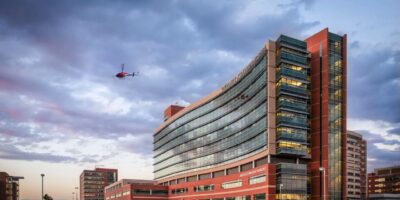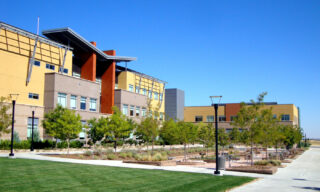

Welcome to this complete guide to admission at Rocky Vista University College of Osteopathic Medicine (RVUCOM). RVUCOM is a private, for-profit college of osteopathic medicine that grants the Doctor of Osteopathic Medicine (DO) degree. It teaches the same four-year DO program on two campuses: the main campus in Parker, Colorado, about 20 miles southeast of Denver, and an additional location in Ivins, Utah, about 15 minutes from St. George. One application covers both. Rocky Vista University also runs a third DO program, the Montana College of Osteopathic Medicine (RVU-MCOM) in Billings. Montana is a separate application with its own admissions office and supplemental application.
This guide is for applicants in the 2026-2027 AACOMAS cycle, who will start medical school in July 2027. It covers RVUCOM’s mission, accreditation, programs and tracks, curriculum, admissions requirements and deadlines, 2026-2027 tuition and full cost of attendance, campus life, clinical rotations and research, people worth knowing, class statistics, strategy, the one 2026-2027 secondary essay with a complete original example, the interview and a detailed FAQ. Facts were checked on October 17, 2026.
As you prepare for this demanding but rewarding process, preparation and informed decisions matter. Whether you live in Colorado or Utah or are applying from across the country, the sections below explain what RVUCOM asks for, what it values and how to present yourself well.
Be an Informed Applicant
RVUCOM screens every verified AACOMAS application against published minimums before it sends a secondary. It reviews files on a rolling basis, interviews by video with a two-person panel that cannot see your grades or MCAT score, and fills seats steadily from fall through spring. Each of those choices affects when you should apply and what you should write. Knowing them now will help you decide whether RVUCOM belongs on your list and how to stand out if it does.
Personalized Help
Every school adds its own questions, deadlines and interview style. International Medical Aid (IMA) helps pre-health students at each stage, from building hands-on clinical experience abroad to writing secondary essays and preparing for interviews. Details on IMA’s clinical internships and admissions consulting are in the section on how IMA can help, near the end of this guide.
Key Takeaways
- Eligibility. You need a bachelor’s degree from a U.S. regionally accredited school before you start (exceptions are reviewed case by case), plus the listed prerequisites with no grade below C. RVUCOM may consider international applicants. DACA recipients are not considered for admission.
- Screening before the secondary. RVUCOM sends its secondary only to verified applicants who meet its minimums: a 3.0 science and cumulative GPA, an MCAT taken within three years of matriculation and three letters of recommendation submitted through AACOMAS. There is no minimum MCAT score.
- Academic context. Choose DO’s reported averages for RVUCOM are a mean MCAT of 504.4 and a cumulative undergraduate GPA of 3.61. A competitive MCAT is around 506, and RVUCOM gives preference to GPAs of 3.6 or higher. No acceptance rate is published.
- One application, two campuses. You apply once for Colorado and Utah and state your campus preference. Montana (RVU-MCOM) requires its own separate application.
- Key dates for 2026-2027. AACOMAS opened May 4, 2026, and closes April 30, 2027. The supplemental deadline is June 16, 2027, but RVUCOM warns that interviews may all be awarded before then. Classes start July 12, 2027.
- Costs. Tuition for 2026-2027 is $72,526 for every student, regardless of residency or campus. The full first-year cost of attendance in Colorado and Utah is $122,147.
- Distinctive training. Students learn osteopathic principles and practice from the first semester, train in an American College of Surgeons accredited simulation center and can join one optional track, such as Rural and Wilderness Medicine or Global Medicine.
- Next step. Line up a letter from a DO, MD, PA or NP who supervised you clinically, submit AACOMAS early and draft your answer to the single secondary essay before the invitation arrives.
Key Statistics About Rocky Vista University College of Osteopathic Medicine

The table below collects the key numbers for RVUCOM. Each row names its year, group and source, because the figures come from different years and different groups.
| Measure | Value | Year, population and source |
|---|---|---|
| School and degree | Rocky Vista University College of Osteopathic Medicine, DO | Parker, Colo. (main campus) and Ivins, Utah (additional location); private, for-profit; founded 2006 (RVU at a Glance) |
| Mean MCAT | 504.4 | RVUCOM matriculants, cohort not labeled (AACOM Choose DO Explorer) |
| Average cumulative undergraduate GPA | 3.61 | RVUCOM matriculants, cohort not labeled (AACOM Choose DO Explorer) |
| Minimum GPA and MCAT | 3.0 science and cumulative GPA; no minimum MCAT (competitive score around 506) | Current requirements (RVUCOM admissions page) |
| First-year matriculants | 366 (86 in-state, 280 out-of-state) | 2024-2025 academic year, Colorado and Utah combined (Choose DO Explorer) |
| Total DO enrollment | Colorado 861; Utah 636 | 2024-2025 academic year (Choose DO Explorer) |
| Acceptance rate | Not published | RVUCOM does not publish applicant, interview or acceptance counts |
| Tuition | $72,526 a year | 2026-2027, same for in-state and out-of-state, all three DO campuses (RVU Tuition and Fees) |
| Student health insurance | $5,936 a year | 2026-2027, waivable with equivalent coverage (RVU Tuition and Fees) |
| Total cost of attendance | $122,147 (OMS I) to $134,153 (OMS III) | 2026-2027, Colorado and Utah (RVU Cost of Attendance) |
| Average graduate debt | Colorado $306,705; Utah $331,489 | Graduating class not stated (Choose DO Explorer) |
| COMLEX Level 1 first-time pass rate | 91.94% (national 90.25%) | Class of 2026 (RVUCOM board pass rates) |
| COMLEX Level 2-CE first-time pass rate | 90.86% (national 91.33%) | Class of 2025 (RVUCOM board pass rates) |
| Residency placement | 98.87% (351 placed) | 2026, preliminary data verified May 13, 2026 (RVUCOM residency placements) |
| Supplemental fee | $60, non-refundable | 2026-2027; waived for AACOMAS fee-waiver holders, active-duty military, veterans and immediate family (RVUCOM admissions page; Choose DO Explorer) |
| Accreditation | COCA Accreditation for seven years | COCA letter dated September 17, 2026; also covers the Montana branch campus |
Two notes help you read these numbers. First, the MCAT and GPA figures are averages for enrolled students, not cutoffs. RVUCOM’s published minimum GPA is 3.0, and it sets no minimum MCAT. Second, the class figures cover the Colorado and Utah campuses together. Montana’s DO program has its own application and its own outcomes, which this guide notes separately where they differ.
If you want to compare RVUCOM’s averages with other schools, our table of medical school GPA and MCAT averages lists MD and DO programs across the country.
Mission and Educational Priorities
General Information About Rocky Vista University College of Osteopathic Medicine (RVUCOM)
Founded in 2006, Rocky Vista University set out to educate osteopathic physicians prepared to serve diverse patient needs. RVU chose osteopathic medicine as its first program because of the profession’s emphasis on primary care and its mind, body and spirit approach to patients. The school trains students for every specialty, but primary care and community-based medicine remain central. RVU established its first home in Colorado because many counties there were designated as medically underserved. Its Utah campus helps address a shortage of primary care, and in Montana it became the first four-year medical school in the state.
RVUCOM wants graduates who are academically strong, ethical and patient-centered. The college describes its program as resting on three principles: early clinical integration and hands-on experience, a supportive and active learning environment, and an integrated curriculum that supports lifelong professional growth. Its tagline is “Preserving the heritage while advancing the art of osteopathic medicine.”
Rocky Vista University College of Osteopathic Medicine Mission Statement
RVUCOM states its mission this way: “The mission of RVUCOM is to educate and inspire students to become highly competent osteopathic physicians and lifelong learners prepared to meet the diverse healthcare needs of tomorrow through compassionate service, relevant research, and innovative education.” The mission is twofold: to educate and to inspire. It also commits the school to three methods of getting there: compassionate service, relevant research and innovative education.
The college’s vision is “To establish RVUCOM as a premier educational program providing excellent osteopathic physicians in the Mountain West.” RVUCOM adopts the university’s institutional values: collegiality, compassion, diversity, equity, excellence, inclusivity, innovation, integrity and service. A 2023-2028 RVUCOM Strategic Plan guides its work. The full statements are on the RVUCOM program page.
Program Learning Outcomes
RVUCOM organizes its educational goals around the seven American Osteopathic Association core competencies. The program is designed to help students learn to:
- Apply osteopathic principles and practices to patient care.
- Apply knowledge of biomedical sciences to clinical medicine.
- Perform comprehensive patient care using best practices of osteopathic medicine.
- Use effective communication skills to support patient-centered and interprofessional relationships.
- Uphold the principles of the RVU Osteopathic Oath.
- Evaluate patient-care practices through critical thinking using evidence-based principles.
- Analyze health systems science to deliver individualized patient care.
Put simply, RVUCOM wants physicians who are community-focused, strong in the biomedical sciences and committed to osteopathic principles, with skills that run from medical knowledge to patient care and interprofessional communication.
What the mission means for applicants
Each part of the mission points to something you can show in your application.
- Lifelong learning. The school’s language repeatedly returns to learning as a career-long habit. Applicants who can describe how they taught themselves a hard skill, sought feedback or kept learning after a setback speak directly to this value.
- Compassionate service. Service is one of the three named methods. RVUCOM’s own selection factors say it seeks “well-rounded, service-oriented individuals.” Sustained service, especially to people with limited access to care, matters more than a long list of one-day events.
- Relevant research. Research is not required for admission, but the mission names it and the school runs a Physician Scientist Track. If you have research experience, explain what question you asked and what you learned, not just the lab’s name.
- Innovative education. The secondary essay asks how you will help RVU achieve “new heights in medical education.” Teaching, mentoring, simulation, digital health and creative problem-solving all connect to this phrase.
- The Mountain West. The vision names the region. Ties to Colorado, Utah, Montana, Arizona, Wyoming, Nebraska, Nevada or other Western states, or a clear interest in rural and underserved practice there, fit the school’s stated purpose. You do not need to be a Westerner to apply, though: 280 of the 366 first-year students in 2024-2025 came from out of state.
Diversity, Equity, AND Inclusion at RVUCOM
The Importance of Diversity in Medical Education
Diversity is part of the educational experience at RVU. The university defines diversity broadly, as the recognition and representation of individual differences including culture, race, age, ethnicity or national origin, sex, gender, gender identity, sexual orientation, religious beliefs, veteran status, political beliefs, mental and physical ability, socioeconomic status and individual life experiences. In other words, it is not only about culture, race or gender.
Strategy for Inclusive Excellence
RVU practices Inclusive Excellence, a strategy first developed in 2005 by the Association of American Colleges and Universities. RVU describes it as treating inclusiveness and excellence as one and the same, embedding it in every part of the university and assigning responsibility for inclusiveness to everyone on campus rather than to a single office. It is not a side project. It shapes policies, curriculum, recruitment, student advising and campus climate.
Dedicated Resources
The university’s Office of Inclusive Excellence serves students, faculty and staff across the Colorado, Utah and Montana campuses. Students who want help or support can contact the RVU Office for Diversity, Equity, and Inclusion at 720-875-2825. RVU also publishes a student religious accommodations for absences policy.
Voices from the Community
The school community values the sharing of different perspectives. Gurpreet Kaur, an OMS III student, put it this way: “In today’s society, which is more divided than ever before, it is crucial to…showcase our diversity. When we understand each other’s differences and perspectives, we can move towards tolerance and inclusion.”
Formal Commitment to Inclusive Excellence
RVU formalizes its approach through an implementation infrastructure, measurement initiatives and an accountability system tied to the Inclusive Excellence model. It also gives students practical guidance for learning across differences, such as interacting with classmates from different backgrounds, asking questions respectfully and allowing each other to make and learn from mistakes.
Definitions to Understand
RVU defines its key terms explicitly. “Equity” means unbiased policies and practices that give everyone access to opportunities, along with a needs-based distribution of resources so that all individuals can reach their full potential. “Inclusivity” means creating a welcoming environment that lets people with diverse backgrounds, abilities and experiences interact in an open, fair, respectful and collaborative way.
For applicants, the takeaway is practical. RVUCOM’s Acting Dean writes that the program emphasizes cultural humility and prepares students to serve patients and communities of all backgrounds. If you have worked across language, culture, income or disability, describe what you did and what changed in how you listen. That is more persuasive than general statements about valuing diversity.
Accreditation and Institutional Identity
Is Rocky Vista Medical School Accredited? CO DO Schools Accreditation
Yes. RVUCOM is accredited by the Commission on Osteopathic College Accreditation (COCA) of the American Osteopathic Association (AOA), the body that accredits every DO school in the United States.
At its meeting on August 27, 2026, COCA voted to grant RVUCOM the status of Accreditation for a period of seven years. The decision covers RVUCOM’s main campus in Parker, its additional location in Ivins, Utah, and its branch campus in Billings, Montana (RVU-MCOM). COCA reported the decision in a letter dated September 17, 2026. In the same action, COCA found the element on principles of osteopathic medicine met, after reviewing a reconsideration request about its spring 2026 site visit findings. COCA defines the Accreditation status as full compliance with all core elements and noncompliance with one or more non-core elements; in RVUCOM’s case, the open element is secure student record keeping, which requires a progress report. COCA also asked for monitoring reports on three elements it found met: financial resources (the school’s federal Title IV authorization), clinical experience and student debt outcomes. A mid-cycle report is due in March 2030, and the next comprehensive site visit is scheduled for the 2033-2034 academic year. You can read the letter through RVU’s accreditations page.
Graduating from a COCA-accredited college is what allows DO graduates to enter ACGME residency programs and sit for COMLEX-USA Level 3. RVU’s DO curriculum at the Colorado, Utah and Montana campuses meets state educational requirements for licensure in all U.S. states and territories. Accreditation is a baseline, not a ranking, so weigh it alongside outcomes, cost and fit.
Accreditation and Affiliation
RVUCOM takes applications through AACOMAS and is part of the national community of osteopathic medical schools represented by the American Association of Colleges of Osteopathic Medicine (AACOM). Its curriculum incorporates milestones, competencies and Entrustable Professional Activities (EPAs) as outlined by AACOM and the Association of American Medical Colleges (AAMC). RVUCOM is an osteopathic school, so it is listed by AACOM rather than as an AAMC member medical school.
University-Level Accreditation
Rocky Vista University holds institutional accreditation from the Higher Learning Commission (HLC), which accredits degree-granting colleges and universities as a whole. At its meeting on July 15, 2024, HLC’s Institutional Actions Council voted to continue RVU’s accreditation, with the next reaffirmation of accreditation in 2033-34. RVU is accredited by HLC under the same standards as nonprofit medical schools. HLC can be reached at 230 South LaSalle Street, Suite 7-500, Chicago, IL 60604, or (800) 621-7440.
State-Level Authorizations
RVU is authorized to operate in Colorado, Utah and Montana:
- Colorado Department of Higher Education, 1560 Broadway, Suite 1600, Denver, CO 80202, (303) 862-3001
- Montana University System, 560 N. Park, PO Box 203201, Helena, MT 59620-3201, (406) 449-9124
- Utah Department of Commerce, 160 East 300 South, Salt Lake City, UT 84114, (801) 530-6601
Program-Specific Accreditations
Specialized accreditations ensure that graduates of each program can sit for the right licensing exams.
Doctor of Osteopathic Medicine
The DO programs at all three campuses are accredited by COCA, as described above. COCA can be reached at 142 E. Ontario St., Chicago, IL 60611, or (800) 621-1773.
Master of Physician Assistant Studies
The Accreditation Review Commission on Education for the Physician Assistant (ARC-PA) has granted Accreditation-Continued status to RVU’s PA program, with the next validation review expected in March 2033. RVU’s Doctor of Nurse Anesthesia Practice holds a seven-year initial accreditation from the Council on Accreditation of Nurse Anesthesia Educational Programs, with its next evaluation in 2030.
Rocky Vista University Surgical Simulation Center
RVU’s Office of Simulation in Medicine and Surgery (SIMS) is recognized as a Comprehensive Accredited Education Institute (AEI) by the American College of Surgeons. RVU is the only osteopathic medical school with this accreditation, and the designation covers both the Colorado and Utah campuses. The ACS is at 633 N. Saint Clair Street, Chicago, IL 60611, (312) 202-5000.
DEI and Accreditation
RVU ties its Inclusive Excellence strategy to its institutional planning, and accreditors in medical education also expect schools to attend to diversity and an inclusive learning environment. RVU’s approach, described in the mission section above, is part of how it meets those broader expectations.
Ownership and identity
Rocky Vista University is a private, for-profit health sciences university. Established in 2006, it was the nation’s first for-profit health sciences university to offer a professional medical degree since 1910. RVU is owned by RVU Holdings, Inc., an indirect subsidiary of Medforth Global Healthcare Education Group, LP and Bear Holdings, LP, and it is governed by an independent Board of Trustees. For applicants, for-profit status mainly matters in two ways: tuition is set by the university rather than subsidized by a state, and accreditors watch financial and debt outcomes closely. RVU is also a two-time award recipient: it received the AOA’s Strategic Team Award and Recognition (STAR) in 2018 and Military Training Technology’s 2015 Best Program award.
Additional Locations
Aside from the main campus in Parker, Colorado, RVUCOM has an additional location in Ivins, Utah. COCA treats Ivins as an additional location of RVUCOM, which means it offers the same DO program under the same application. The Colorado campus mailing address is 8401 S. Chambers Road, Englewood, CO 80112, although the campus itself is in Parker. To learn more, visit the RVU Utah campus page.
Osteopathic Medical Schools in Colorado Rocky Vista Montana Campus
Billings is Montana’s largest city and the medical hub for about two-thirds of the state and parts of neighboring states. Billings offers small-town hospitality and sits along the Yellowstone River and the Rimrocks, where the mountains of western Montana meet the plains, giving students a blend of academic and outdoor life.
The Billings campus is home to the Montana College of Osteopathic Medicine (RVU-MCOM), which enrolled its first students in 2023 and is a COCA branch campus of RVUCOM. MCOM shares RVUCOM’s mission statement, tuition and accreditation, but it is a separate program for admissions. There are two separate applications, although it is easy to apply to both. Montana has its own AACOMAS designation, its own supplemental application and its own Director of Admissions. MCOM’s campus building covers 138,000 square feet on 12.8 acres, with 224 students on campus, and includes laboratories, active learning classrooms, standardized patient rooms and simulation space. Its clinical externship sites are in Montana, Wyoming, Idaho, North and South Dakota, Washington and Alaska.
The Montana campus also emphasizes community engagement and medical service in underserved and rural areas. It is home to the one-year Master of Medical Sciences (MMS) program, described in the next section. If Montana is your first choice, read the RVU-MCOM program page and apply to MCOM directly. The rest of this guide focuses on RVUCOM in Colorado and Utah.
Medical Programs and Affiliations
Programs Offered
RVUCOM offers the Doctor of Osteopathic Medicine (DO) degree as a four-year, full-time, in-person program on its Colorado and Utah campuses. Single-degree DO students must finish within a maximum of six years. RVUCOM does not list a combined DO/MPH program. Instead, it offers three dual-enrollment master’s programs and a certificate that current DO students can add:
- Master of Science in Medical Simulation (MSMS). For students accepted into the Pre-doctoral Simulation Fellowship. Up to four fellows a year (two per campus) are chosen from third-year students. The program focuses on teaching with simulation in healthcare settings.
- Master of Science in Applied Osteopathic Biokinematics (MSAOB). Open only to students in the OPP pre-doctoral fellowship. Up to four students are chosen per campus per year. Fellows help teach osteopathic principles and practice and develop osteopathic research. The program adds one year, and the MSAOB is awarded with the DO.
- Master of Science in Human Anatomy. For DO students accepted into the Anatomy Fellows program. It combines advanced coursework in gross anatomy, neuroanatomy, histology and embryology with teaching assistant roles in the anatomy labs.
- Global Health Certificate. Fourteen credit hours of classroom work, a required international clinical experience and a capstone assignment.
Here is a look at the other ways into, and alongside, the DO program.
Tracks and Special Programs
Tracks are competitive, optional programs that run in addition to the core curriculum. Students apply toward the end of their first semester and may apply to more than one track, but they can join only one. Accepted students start in the spring of first year and stay in the track through graduation. Tracks are graded honors, pass or fail and appear on the transcript as a concentration. Not every track is offered on every campus. The current tracks are:
- Academic Medicine and Leadership. Medical education, organized medicine, health policy, health disparities and leadership development, with training in public speaking, teaching and advocacy.
- Digital Health. More than 60 hours of classroom and clinical activities over two semesters, plus a clinical requirement in years three and four. No coding experience is needed to apply.
- Global Medicine. A three-and-a-half-year track on global medicine and public health. It typically adds more than 30 hours of coursework a semester, plus international clerkships in the clinical years that RVU estimates can cost $2,000 to $10,000 in extra expenses.
- Physician Scientist. Three semesters of research training in years one and two, extended into research rotations in years three and four.
- Rural and Wilderness Medicine. A three-and-a-half-year track for students committed to rural and remote practice, with procedural skills, simulation, off-campus field activities and at least four rural clerkships. Admission includes an in-person interview with track students and faculty.
- Urban Underserved Medicine (Colorado only). A two-semester track on caring for vulnerable urban populations, including Indigenous peoples, immigrants, refugees, LGBTQ+ people and people experiencing homelessness, with an annual visit to the Arapahoe County Detention Center.
RVU also runs a separate Military Medicine Program for students headed to service in the Army, Navy or Air Force. Most participants hold a Health Professions Scholarship Program (HPSP) award. The program spans three and a half years, begins in the second semester of first year and ends with an intensive surgical and trauma skills course. RVU’s military program has a 100 percent residency match to date. Short electives, such as Medical Spanish, History of Medicine and Integrative Pain Management, are open to students in good academic standing. Details are on the RVU Tracks and Special Programs page.
If the Global Medicine Track appeals to you, it helps to arrive with some real experience of care in another health system. Many applicants build that through pre-med internships abroad, which also give you concrete material for the secondary essay and interview.
Preparatory/Post Baccalaureate Programs
Master of Science in Biomedical Sciences (MSBS)
The MSBS is a nine-month, 31-credit-hour master’s program on the Colorado and Utah campuses. It strengthens the academic record of students aiming for medicine, veterinary medicine, dentistry or physician assistant programs, and it is RVU’s direct pathway into RVUCOM. Tuition for 2026-2027 is $32,953 ($1,063 per credit hour). Applications go through PostbacCAS from September 1 through July 26, on a rolling basis. There are roughly 65 seats in Colorado and 25 in Utah, though the number varies from year to year.
Overview of the Master of Science in Biomedical Sciences Program at Rocky Vista University
The MSBS is interdisciplinary and prepares students for professional careers and advanced study in the biomedical sciences. Its core curriculum covers 31 credit hours, usually scheduled Monday through Thursday, with one day free for study and professional development. The program has graduated more than 200 students, and about 95 percent have been accepted to or are attending medical or PA school.
Goals and Objectives of the Program
The program has three goals: a thorough understanding of the biomedical sciences in health and disease, the critical thinking and knowledge needed for success in professional or advanced degree programs, and help for students in meeting their own educational and career goals in the health professions.
Distinctive Features of the Program
Most MSBS faculty also teach in the medical school and hold PhD, DO, MD or PharmD degrees. The curriculum relies on case studies, includes service learning, uses block testing to prepare students for long exams like board exams, and includes simulation with medical students and standardized patients. There are joint courses with the PA and DO programs, MSBS alumni serve as peer mentors and tutors, and MSBS students can join medical school clubs.
Learning Outcomes
Graduates are expected to apply biomedical principles to health-related fields, solve problems with evidence-based concepts, communicate their ideas clearly and act with compassion and professionalism.
Pathway to RVUCOM for MSBS Students
The MSBS is a direct pathway to RVUCOM in Colorado or Utah. Successful MSBS graduates receive an RVUCOM admission decision with no MCAT retake needed, no additional letters of recommendation, no additional prerequisites (including the COM biochemistry requirement), no interview if their MSBS GPA is 3.3 or higher and no undergraduate overall or science GPA minimum.
The process is still a review, not an automatic seat. MSBS faculty evaluate students at the end of each semester and recommend them to the RVUCOM Admissions Committee based on academic aptitude and fit with RVUCOM’s mission. The committee makes its recommendation to the Dean, who makes the final decision. Recommended students submit an AACOMAS application in the fall and send their MSBS grades once fall grades post, and the MSBS Program Director writes a summative letter. Recommended students may not need to submit a supplemental application. RVU does not guarantee acceptance to any of its programs and will consider as many or as few MSBS students as it deems appropriate. Students exploring programs outside RVU should check those programs’ admissions standards. Details are on the RVU MSBS page.
Master of Medical Sciences (MMS) at Rocky Vista University
The Master of Medical Sciences (MMS) is a one-year program offered only on the Montana campus in Billings. It gives a foundation in the biomedical sciences, humanism and professionalism for students who want to attend medical or other health professional school but have not yet met the requirements. MMS students take part in the MCOM curriculum, sharing classrooms and learning with first-year medical students, and all courses are taught by MCOM faculty. Attendance on the Billings campus is required.
RVU calls the MMS a direct pathway to RVU-MCOM: students who meet the program’s high standards can gain admission to MCOM after the one-year program. Graduates are expected to understand the normal function of human body systems, engage in biomedical research through the scientific process, work respectfully with faculty, peers, staff and the community and communicate well in professional settings. Tuition for 2026-2027 is $711 per credit hour, or $29,862 in total. Because MMS feeds MCOM, not RVUCOM, it matters mainly for applicants focused on Montana.
Linkage and early acceptance programs
RVUCOM also holds seats for students from several partner programs:
- Colorado State University MS in Biomedical Sciences. Up to six seats a year for graduates of CSU’s one-year master’s program who meet RVUCOM minimums, earn at least a 3.4 master’s GPA, submit AACOMAS before March 15 and provide a physician letter. CSU recommends candidates, and RVUCOM decides.
- Regis University MSBS. Up to ten interview seats a year for Regis MSBS graduates with at least a 3.4 GPA who show interest in osteopathic medicine and a preference for RVUCOM. Recommended students submit AACOMAS in June after graduation, skip the supplemental and interview in September. An interview does not guarantee acceptance.
- Utah Rural Health Scholars Early Acceptance Program (Utah only). A provisional early acceptance for students in good standing in the Utah Rural Health Scholars Program, open after 60 semester hours. Up to 12 students a year may enter RVUCOM this way, and those who remain in good standing do not take the MCAT.
- Western Colorado University Early Acceptance Program. Up to five seats a year. Students apply after 60 to 90 semester hours by November 1, need a 3.4 science and cumulative GPA and must shadow a physician. RVUCOM interviews candidates on the Western Colorado campus in December. Accepted students apply only to RVUCOM through AACOMAS before January 1 and do not take the MCAT if they stay in good standing.
- Early Decision Program. For 2026-2027, RVUCOM offered Early Decision to in-state and out-of-state applicants, with materials due July 14, 2026, and notification by August 14, 2026. For a future cycle, check the new dates when AACOMAS opens.
Other Rocky Vista University programs (separate applications)
RVU also offers programs outside the DO degree. Each has its own application.
Master of Physician Assistant Studies (MPAS) Program at Rocky Vista University
Overview
The Master of Physician Assistant Studies (MPAS) program at RVU uses a competency-based medical education model aimed at developing clinically competent, collaborative and compassionate physician assistants. It is housed on the Colorado campus. The program totals 122 credit hours. In the first two semesters (the didactic phase), students move from foundational concepts to clinically oriented content. The next five semesters (the clinical phase) bring each student to the “competent” level in all 13 entrustable professional activities. The program focuses on patient safety and primary care.
Learning Outcomes
The program measures progress against 13 entrustable professional activities, the everyday tasks a new PA must be trusted to perform without direct supervision. Students say the competency-based model lets them focus on their own strengths and weaknesses, and the program’s longer clinical phase allows 12 different rotations.
Admission Statistics
For 2026-2027, PA tuition is billed per credit hour ($940 in PA year 1, $895 in year 2 and $852 in year 3). RVU estimates tuition for the entire program at $111,734. The maximum entering class approved by ARC-PA is 36 students.
Class Profiles
| Class | Female | Male | In-state | Out-of-state | Average age | Average cumulative GPA | Average BCP GPA |
|---|---|---|---|---|---|---|---|
| Class of 2023 | 25 | 11 | 20 | 16 | 25 | 3.45 | 3.33 |
| Class of 2024 | 32 | 5 | 17 | 20 | 25 | 3.50 | 3.31 |
| Class of 2025 | 25 | 11 | 14 | 22 | 24 | 3.52 | 3.39 |
| Class of 2026 | 23 | 13 | 21 | 15 | 27 | 3.46 | 3.30 |
| Class of 2027 | 29 | 8 | 18 | 19 | 24 | 3.67 | 3.53 |
PANCE Exam Performance
The PA program’s PANCE pass rate for 2025 was 100 percent (data as of January 29, 2026). For the Classes of 2023, 2024 and 2025, graduation rates were 91.67, 91.89 and 94.44 percent. These results show how well the MPAS program prepares students for practice.
For those interested in the PA program, meeting its specific prerequisites, which may include academic coursework and clinical experience, is essential. Please visit our PA School Map Page for more details on PA programs in Colorado. If you are still deciding between medicine and PA, pre-PA internships let you work alongside clinical teams before you commit.
Other degrees
RVU’s Colorado campus also offers a Doctor of Nurse Anesthesia Practice (DNAP). Tuition for the first three semesters in 2026-2027 is $51,500.
Curriculum Overview
Curriculum at Rocky Vista University College of Osteopathic Medicine (RVUCOM)
Curricular Offerings
RVUCOM uses a systems-based, integrated curriculum in the first two years. Each body system is studied twice: first with an emphasis on normal anatomy and physiology in Year 1, then with an emphasis on pathophysiology, diagnosis and management in Year 2. Running alongside the systems courses are two longitudinal courses, Principles of Clinical Medicine and Osteopathic Principles and Practice. Rather than separating disciplines, the curriculum ties the basic biomedical sciences to clinical application throughout, and it includes patient care, ethics, evidence-based medicine and interprofessional collaboration, all grounded in osteopathic philosophy.
One distinctive feature is early clinical exposure. Students meet clinical scenarios in their first semester and practice clinical and osteopathic skills in hands-on labs from the start. In the second year, they interact more with standardized patients on campus and can work under physician supervision with real patients in office and hospital settings. The aim is to build critical thinking, clinical problem-solving and lifelong learning. Professionalism and ethics are part of the curriculum throughout.
Year 1: normal structure and function
The first-year courses, as listed on the RVUCOM program page, are:
- Fall: Musculoskeletal System I (6 credits), Molecular and Cellular Mechanisms (4), Hematology and Immunology I (3), Respiratory System I (2), Cardiovascular System I (3), Renal System I (2), Osteopathic Principles and Practice I (3), Principles of Clinical Medicine I (3), Introduction to IPE Seminar I (1) and Introduction to Evidence-Based Medicine (1).
- Spring: Gastrointestinal System I (3), Endocrine/Reproductive System I (4), Neuroscience System I (7), Osteopathic Principles and Practice II (2), Principles of Clinical Medicine II (3), Microbes and Infectious Diseases (3), Transition to Clinical Medicine (4), Introduction to IPE Seminar II (1) and Medical Ethics (2).
Year 2: disease, diagnosis and management
- Fall: Renal System II (5), Cardiovascular System II (5), Respiratory System II (4), Hematologic/Lymphatic System II (4), Gastrointestinal System II (4), Osteopathic Principles and Practice III (3), Principles of Clinical Medicine III (3) and Preclinical Capstone I (1).
- Spring: Endocrine System II (3), Reproductive System II (3), Musculoskeletal System II (3), Neuroscience System II (4), Psychiatry System (2), Osteopathic Principles and Practice IV (2), Principles of Clinical Medicine IV (3) and Preclinical Capstone II (3).
The two capstone courses help students pull the preclinical material together before COMLEX Level 1. Students who join a track begin those classes in the spring of first year, on top of the core schedule.
Osteopathic principles and practice
Osteopathic Principles and Practice (OPP) runs through all four preclinical semesters and continues in the clinical years as OPP clinical integration courses in Years 3 and 4. Students learn osteopathic manipulative treatment (OMT) by practicing on each other in OPP labs, so RVU’s technical standards require every student to examine and be examined by classmates. COCA’s 2026 review confirmed that licensed osteopathic physicians directly supervise students in the OMM labs on all three campuses. Students who want more can apply for the OPP pre-doctoral fellowship and the MSAOB.
Years 3 and 4: clinical training
In the third and fourth years, students train at one of RVUCOM’s regional core sites within its clinical training network, which keeps their clerkships coordinated. The clinical years total 90 credit hours:
- Courses: Fundamentals of Clinical Medicine, OPP clinical integration courses in Years 3 and 4 and two Critical Reflection and Professional Career Development courses.
- Core clerkships: Family Medicine (8 credits), General Internal Medicine (4), Pediatrics (4) and General Surgery (4).
- Required clerkships: Obstetrics and Gynecology (4), Psychiatry (4) and Critical Care/Emergency Medicine (4).
- Selectives: a surgery selective (4) and a medicine selective (4).
- Electives: 42 credit hours, at least 28 of them in clinical electives, including 8 credit hours of audition clerkships. Students can also earn 1 to 8 credit hours in Research and Scholarly Activities (RSH 4001).
This competency-based structure prepares students for residency, with a strong emphasis on primary care. More on rotations and sites is in the clinical training section below.
Grading, class rank and boards
Courses are graded on a 0 to 100 scale, and 70 is passing. Preclinical courses are recorded as pass, honors or fail; clinical courses as honors, high pass, pass, pass with remediation or fail. Class rank is reported by quartile at the end of the second year and by quintile after the third year, unless a student needs an exception, for example for military requirements. RVU requires students to pass COMLEX Level 1 and Level 2-CE to graduate, and graduates take COMLEX Level 3 during residency.
Competencies and milestones
RVUCOM builds milestones, competencies and Entrustable Professional Activities into its curriculum, using the frameworks outlined by AACOM and the AAMC. It stresses that physicians work as part of interprofessional teams, and its IPE seminars bring DO students together with other health professions students.
What this means for applicants
The curriculum rewards students who are comfortable with hands-on learning from week one. Before you apply, try to get experience where you touched the work: taking vitals, supporting patients during procedures, teaching a skill or working on a team under time pressure. Those stories show that you will be ready for standardized patients and simulation in your first semester, and they are useful material for the interview.
Science Course Requirements
The current prerequisites are listed in the admissions section that follows. They are minimums. RVUCOM highly recommends upper-division coursework in human anatomy, physiology, genetics and cellular biology because those subjects appear in the first semester.
Behavioral and Other Course Requirements
Beyond the sciences, RVUCOM requires six semester hours of English or literature. Behavioral science and math or statistics are not listed as required courses, but coursework in psychology, sociology and statistics still helps with the MCAT and with the evidence-based medicine and ethics courses in Year 1.
Additional Information and Resources
RVUCOM has a dedicated faculty and established affiliations with medical centers, hospitals and healthcare systems. For a list of all CO medical schools and other osteopathic programs, including RVUCOM, browse our DO Schools in Colorado collection of DO school admissions guides. Faculty such as Daniel Chappell, DO, profiled later in this guide, show how the clinical education side of the school is organized.
Admissions Requirements and Application Process
Applications and Admissions at Rocky Vista University College of Osteopathic Medicine (RVUCOM)
RVUCOM uses AACOMAS, the centralized application for osteopathic medical schools, for every applicant. There is a single RVUCOM designation for both Colorado and Utah. In the application, you choose your preferred campus and can also ask to be considered for the other one. If you want Montana too, you must designate RVU-MCOM separately. Our AACOMAS application guide walks through the primary application step by step.
Admission Requirements
Degree
You need a bachelor’s degree or higher from a U.S. regionally accredited college or university before you start. Exceptions may be reviewed case by case, including for faith-based and strong international universities. Coursework from a foreign school needs an official course-by-course evaluation from an approved agency, such as World Education Services, AACRAO, Educational Credential Evaluators or Josef Silny and Associates.
Prerequisite courses
The minimum coursework you must finish before matriculation is:
| Course | Requirement |
|---|---|
| Biology/Zoology | 8 semester hours, including lab |
| General Chemistry (inorganic) | 8 semester hours, including lab |
| Organic Chemistry | 8 semester hours, including lab |
| Physics | 8 semester hours, including lab |
| English or Literature | 6 semester hours |
| Biochemistry | 3 semester hours |
| Human Anatomy, Physiology, Genetics, Cellular Biology | Highly recommended (upper-division) |
No grade below a C counts toward a requirement, and a C- does not count. Three more course policies apply this cycle: online coursework can fulfill prerequisites, online lab coursework cannot, and pass/fail grades count only if you can document that the P equals a C or higher.
GPA
RVUCOM requires a minimum science and cumulative GPA of 3.0 as calculated by AACOMAS. The school is frank about what that minimum means: “The chances for admission for a candidate with minimal grades are limited.” Admission with minimal grades would require outstanding achievement or unique individual circumstances. RVUCOM gives preference to candidates with a science and cumulative GPA of 3.6 or higher, and it notes that applicants admitted to osteopathic colleges over each of the past three years have averaged above 3.6.
MCAT
The MCAT is required and cannot be waived. You must take it within three years before matriculation. There is no minimum score, but a competitive MCAT is around 506. For the 2026-2027 cycle, the oldest MCAT considered is from January 31, 2024, and the latest score accepted is from January 23, 2027.
Letters of Recommendation
RVUCOM requires three letters, all submitted through AACOMAS:
- A letter from a credentialed healthcare provider (DO, MD, PA or NP) who supervised your work, paid or volunteer, in a clinical setting.
- An academic reference. In order of preference, this is a pre-med advisor or committee, a basic science faculty member or anyone who can speak to your ability to complete a rigorous medical curriculum.
- A letter of your choice.
RVUCOM considers up to six letters submitted through AACOMAS. It cannot accept letters sent directly to the school or through other services such as Interfolio or VirtualEvals, and letters from previous application years do not carry over. If your school has no pre-health committee or advisor, a basic science faculty member’s letter is an accepted substitute.
The clinical letter is the one most applicants underestimate. The word “supervised” matters: RVUCOM wants someone who watched you work in a clinical setting, not a family physician who knows you socially. Plan this letter months ahead, during a job, a volunteer role or clinical internships for pre-med students where a licensed clinician oversees what you do.
Experience and shadowing
RVUCOM does not publish a required number of clinical, service or shadowing hours. Its selection factors describe the people it wants: “well-rounded, service-oriented individuals who can complete an academically rigorous curriculum and will help the college fulfill its mission.” RVUCOM accepts either virtual or in-person shadowing. Because the clinical letter must come from someone who supervised you, sustained hands-on clinical work is the most direct way to meet RVUCOM’s requirements and to give your interviewers something real to ask about.
International Students
RVUCOM may consider international applications. Applicants must show English language proficiency during the interview, and preference goes to those who previously attended a regionally accredited college or university in the U.S. Foreign coursework needs the course-by-course evaluation described above.
DACA recipients
For 2026-2027, students with Deferred Action for Childhood Arrivals (DACA) status are not considered for admission.
Selection Factors
RVUCOM looks for well-rounded, service-oriented applicants who can handle a demanding curriculum and advance its mission. The college does not discriminate on the basis of gender, age, race, color, disability, religion, sexual orientation or national origin. Applicants with disabilities can request accommodations through the Office of Disability Services, and matriculants must meet RVUCOM’s technical standards with or without reasonable accommodation.
The Admissions Process: Step by Step
- Submit AACOMAS. AACOMAS processing takes about three to six weeks, depending on transcripts and volume. RVUCOM’s AACOMAS deadline matches the AACOMAS deadline, April 30, 2027, for this cycle.
- Screening. Once your application is verified, RVUCOM checks it against the minimums: a 3.0 science and cumulative GPA, an MCAT within three years and three letters.
- Supplemental application. If you meet the minimums, you receive an email with instructions to log in to the RVU Applicant Portal, complete the supplemental application and pay the fee. If you do not meet them at first, you can update your information through AACOMAS and will be invited once the minimums are verified.
- Complete file and review. Your file is complete when RVUCOM has your AACOMAS application, supplemental application, fee and letters. The Office of Admissions reviews complete files and notifies applicants of their interview status.
- Interview. Competitive applicants are invited to a virtual interview and can choose from several dates. Interviews run from the fall through the spring.
- Committee and decision. The Admissions Committee meets at least once a month and recommends acceptance, the alternate list or denial. The Dean makes the final decision.
Applications are evaluated on a rolling basis, so applying early is in your interest. It is possible that all interviews will be awarded before the supplemental deadline.
Additional Application Components
The admissions process does not stop at academic requirements. The supplemental application includes one essay (covered in full below), your campus preference and the $60 fee. Letters of recommendation, with the specific referee types above, round out the picture beyond your numbers.
Application Timeline
| Step | Date |
|---|---|
| AACOMAS opens (earliest submission) | May 4, 2026 |
| Earliest supplemental submission | May 13, 2026 |
| Early Decision application and supplemental due | July 14, 2026 |
| Early Decision applicants notified | August 14, 2026 |
| Virtual interviews | Fall 2026 through spring 2027 |
| First deposit ($1,000) | December 14, or per AACOMAS traffic guidelines |
| Second deposit ($1,000) | March 1 |
| Latest MCAT accepted | January 23, 2027 |
| AACOMAS primary deadline | April 30, 2027 |
| Supplemental application deadline | June 16, 2027 |
| Orientation and first day | July 12, 2027 |
RVUCOM’s Choose DO Explorer profile keeps the full set of current-cycle dates in one place. The secondary is sent only to screened applicants. The supplemental fee is $60, non-refundable, with waivers for AACOMAS fee-waiver holders and for active-duty military, veterans and their immediate family members.
A realistic plan for most applicants is to submit AACOMAS in May or June, return the secondary within about two weeks of receiving it and be ready to interview by early fall. If you are planning a year ahead, pre-med summer internships completed before you submit give you fresh clinical experience to describe and a supervisor who can write your clinical letter.
Interviews and Decisions
The interview is virtual and runs about 30 minutes with a two-person panel. Admissions are rolling, so early applications are advised. Full details are in the interview section below.
Post-Admission Requirements
All acceptances are provisional until you complete the conditions in your matriculation agreement:
- Finish all prerequisites and earn at least a bachelor’s degree from a U.S. regionally accredited school, with transcripts or a registrar’s letter.
- Pay non-refundable deposits totaling $2,000 by the dates in your agreement. RVUCOM follows AACOM’s guidelines for deposit dates, and deposits are applied to tuition.
- Pass a drug screen and background check through PreCheck. Any finding is referred to a subcommittee for review.
- Complete medical and immunization records through SentryMD.
- Show proof of health insurance or enroll in the university plan.
- Sign a waiver confirming you meet the technical standards and agree to the policy on physical contact in OMM and physical exam courses, along with the student code of conduct.
Deferral and transfer
Accepted, fully deposited students can request a deferral of up to one academic year. The request must be in writing with supporting documentation, and an approved deferral requires a $500 non-refundable administrative fee. Deferred students do not reapply or re-interview. Requests made less than 30 days before the program starts may not be considered.
RVUCOM considers transfers only from COCA-accredited colleges of osteopathic medicine, for students in good standing who will complete at least the last two years at RVU. It does not consider transfers from foreign medical schools or LCME-accredited MD programs.
Contact the admissions office
You can reach RVUCOM’s Office of Admissions at (303) 373-2008 or [email protected]. Current requirements are on the RVU Admissions page.
Tuition, Cost of Attendance and Financial Aid
Key Financial Details
RVUCOM charges one tuition rate for everyone. For 2026-2027, DO tuition is $72,526 a year on all three campuses, for in-state and out-of-state students alike. Student health insurance is $5,936 a year (pending state approval). All students must have health insurance and are enrolled in and billed for the RVU plan automatically unless they show equivalent coverage before the waiver deadline. There are no separate annual student fees for the DO program in 2026-2027.
Cost of attendance in Colorado and Utah
RVU publishes a full cost of attendance (COA) for each year of the DO program. The COA is an estimate of what it costs to attend RVU and maintain a modest but adequate standard of living.
| Item | OMS I (11 months) | OMS II (11 months) | OMS III (12 months) | OMS IV (10.5 months) |
|---|---|---|---|---|
| Tuition | $72,526 | $72,526 | $72,526 | $72,526 |
| Student health insurance | $5,936 | $5,936 | $5,936 | $5,936 |
| Books and supplies | $2,354 | $2,583 | $1,950 | $100 |
| Diagnostic kit | $1,000 | |||
| Credentialing fee | $180 | |||
| COMLEX exam fees | $745 (Level 1) | $745 (Level 2-CE) | ||
| Clinical and audition rotation travel | $4,800 | $4,000 | ||
| ERAS and VSLO expenses | $1,500 | $2,000 | ||
| Food and housing ($2,780 a month) | $30,580 | $30,580 | $33,360 | $29,190 |
| Personal expenses ($475 a month) | $5,225 | $5,225 | $5,700 | $4,987 |
| Transportation ($370 a month) | $4,070 | $4,070 | $4,440 | $3,885 |
| Loan fees | $456 | $3,196 | $3,196 | $3,196 |
| Total cost of attendance | $122,147 | $125,041 | $134,153 | $125,820 |
Adding the four years together gives an estimated total of about $507,000 before any scholarships, at today’s prices. That sum is our own arithmetic, not an RVU figure, and it assumes 2026-2027 costs hold steady, which they rarely do. The books line includes small items such as an iClicker, an OMM table and a suture kit, and the second- and third-year budgets include $1,000 for board preparation materials. The COA does not cover living expenses for a spouse or dependents. You can download the full budget from RVU’s tuition and fees page.
For comparison, Montana’s 2026-2027 COA is slightly lower: $121,907 for OMS I, $122,625 for OMS II, $130,007 for OMS III and $122,624 for OMS IV, with the same tuition.
Financial aid and loans
Most RVUCOM students finance medical school with federal and private loans, within the limits of the cost of attendance. Loans plus scholarships cannot exceed the COA minus other aid, and RVU encourages students to build a personal budget and borrow only what they need. RVU’s COA footnote also notes that recent federal changes (the One Big Beautiful Bill) affect loan limits for students returning from a leave of absence. Because federal loan rules for professional students are changing, talk with RVU’s Office of Student Financial Services before you commit to a borrowing plan. The office is at 720-874-2442 for Colorado, 435-222-1248 for Utah and 406-901-2759 for Montana. More information is on the RVU Financial Aid page.
RVUCOM has not published the share of students receiving aid or the average scholarship amount for the current cycle.
Scholarships
RVU and the RVU Alumni Association offer several scholarships to incoming students each year, in the form of partial tuition waivers. Applications open in April and close in May of the spring before you matriculate, and accepted students receive instructions when the cycle opens. The Alumni Association’s awards are service-based.
RVU also points students to outside programs:
- Health Professions Scholarship Program (HPSP). Army, Navy and Air Force scholarships that cover direct educational costs and pay a monthly stipend in exchange for active-duty service.
- National Health Service Corps. Scholarships for future primary care physicians that cover tuition, fees and a living stipend in exchange for service at an approved site.
- WICHE Professional Student Exchange Program. RVU accepts PSEP students whose permanent residence is in a participating state. For RVU, those states are Arizona, Montana and Wyoming. PSEP can provide substantial tuition support from your home state.
- Indian Health Service Scholarship for American Indian and Alaska Native students, with a service commitment.
- Professional societies and foundations, including the Colorado Springs Osteopathic Foundation (up to five $10,000 scholarships for third-year students, renewable for fourth year), the Denver Osteopathic Foundation, the Colorado Medical Society Education Foundation and AACOM’s Sherry R. Arnstein Scholarship.
Debt after graduation
Average graduate indebtedness is $306,705 for RVUCOM Colorado and $331,489 for Utah (graduating class not stated). COCA has also asked RVUCOM for a monitoring report on student debt outcomes, so expect the school to keep reporting on this topic. If you are comparing schools, look at the four-year COA, any scholarship you are offered and your likely specialty, and run a repayment estimate before you accept.
Additional Information
You can reach RVUCOM’s Office of Admissions at (303) 373-2008 or [email protected] for application questions, and the Office of Student Financial Services at the campus numbers above for aid questions. Faculty such as Daniel Chappell, DO, Assistant Dean of Clinical Education Resources, are part of the clinical education team you will work with in the third and fourth years.
Campus Facilities and Student Life
Facilities at RVUCOM
The Colorado campus in Parker is a 145,000-square-foot building and clinic with 1,029 students on campus. It houses standardized patient rooms, simulation laboratories, auditoriums, active learning classrooms and study areas. Parker is a historic small town about 20 miles southeast of Denver, with excellent schools, more than 33 miles of multi-use trails, dining and community events.
The Utah campus in Ivins covers 127,000 square feet in two buildings on 11.2 acres, with 657 students on campus. It sits beneath Red Mountain, about 15 minutes from downtown St. George, near Snow Canyon State Park and within driving distance of Zion, Bryce Canyon and Grand Canyon National Parks. Its simulation center includes an operating lab, an emergency lab and a labor and delivery lab.
Both campuses include:
- The Office of Simulation in Medicine and Surgery (SIMS), accredited by the American College of Surgeons, with life-size, computer-controlled manikins that breathe, have heartbeats, bleed and respond to treatment.
- Full cadaver dissection labs for whole-body anatomy.
- An emergency room and trauma simulation suite with defibrillators, IV setups, ventilators and emergency medications.
- Osteopathic clinical skills labs with treatment tables and instructional technology.
- Standardized patient rooms used for Objective Structured Clinical Examinations (OSCEs).
- Two large lecture halls and many small group study rooms.
Health Facilities and Services
The Rocky Vista Health Center (RVHC) medical clinic is one of RVU’s hands-on learning resources, and the Colorado campus building includes a clinic. RVUCOM’s curriculum includes practice management training in the campus clinic in the second year.
Housing
RVU does not offer on-campus housing in Colorado or Utah. In Utah, the Crimson Cliffs Student Residences are within walking distance of campus, and RVU’s student support contract with WellConnect includes help with housing searches. Students also use their class social media pages to find roommates. Budget for housing at RVU’s COA rate of $2,780 a month for food and housing, and remember that your third-year core site may require a move.
Student support
RVU offers academic advising, tutoring, career counseling, mental health services, residency preparation resources and disability accommodations. A Peer Mentor Program pairs new students with upper-year students, and the Student Government Association offers leadership roles.
Clubs and organizations
Students can join as many associations, clubs and organizations as they can contribute to, and an ACO membership fair is held every fall. Examples include student chapters of the American College of Osteopathic Family Physicians, the American College of Osteopathic Emergency Physicians, the American College of Osteopathic Pediatricians and the American College of Osteopathic Surgeons; the American Medical Women’s Association; APAMSA; a Global Health Club in Southern Utah; a Global Medical Outreach Club; the Gold Humanism Honor Society; a Colorado Medical Society student chapter; and a Community Outreach and Medical Mentors group in Utah. RVU also runs service-learning and community outreach programs.
Reputation in Various Fields
RVUCOM has a positive reputation among CO medical schools, especially in primary care and rural medicine. Its emphasis on interprofessional education and community service supports that standing. RVU has consistently ranked among the top board scores of all colleges of osteopathic medicine, and its published residency placement has stayed above 98 percent in every year since 2022.
Rocky Vista University College of Osteopathic Medicine Rankings
RVUCOM does not publish a national ranking on its admissions or program pages. The measures it does publish, COMLEX pass rates and residency placement, are in the statistics sections of this guide. For a broader view of how osteopathic schools compare, see our guide to DO school rankings, and treat any ranking as one input alongside cost, location and mission fit.
Does the Rocky Vista University College of Osteopathic Medicine have a good medical program?
RVUCOM offers a strong DO program by the measures it publishes. It holds COCA accreditation for seven years, its university holds HLC accreditation, and it is the only osteopathic school whose simulation center is an ACS Comprehensive Accredited Education Institute. Its Class of 2026 passed COMLEX Level 1 on the first attempt at 91.94 percent, above the national rate of 90.25 percent, and 98.87 percent of its 2026 applicants were placed in residency.
Is Rocky Vista a Good Med School?
The college does well in interprofessional education, rural medicine and simulation, and community service aligns with its mission. Whether it is a good school for you depends on fit. RVUCOM suits applicants who want hands-on training from the first semester, a Mountain West setting, a choice of tracks and a large class. Weigh those strengths against the cost, which is the same for every student and does not include a state discount.
Unique Accreditations and Features
RVU was the nation’s first for-profit health sciences university to offer a professional medical degree since 1910. It is also the only osteopathic medical school to receive Comprehensive Accredited Education Institute (AEI) accreditation from the American College of Surgeons. These features reflect the school’s focus on simulation and innovative education.
Clinical Rotations and Research Opportunities
How clinical training is organized
RVUCOM assigns each student to one of its regional core sites for the third year, which keeps clerkships coordinated within its clinical training network. Core sites are assigned by lottery during the second year, and results are issued in the fall of OMS II. Lottery results are final. Students can request a change, but RVUCOM does not guarantee one.
RVUCOM’s clinical externship sites are located primarily in Colorado and Utah, with a few satellite sites in Arizona, Nebraska, Nevada and California. Plan for most of your training to be in Colorado or Utah, with a chance of a placement farther away. Montana students train at sites in Montana, Wyoming, Idaho, North and South Dakota, Washington and Alaska.
Third-year core rotations for HPSP students are in civilian settings, and military facilities offer elective and audition rotations in the fourth year. Available clinical sites span from near campus to both coasts, and fourth-year audition and elective rotations often take students out of state. The COA budgets $4,800 for travel in OMS III and $4,000 in OMS IV for this reason.
Required clerkships
The required clinical structure is listed in the curriculum section above: core clerkships in family medicine, general internal medicine, pediatrics and general surgery; required rotations in obstetrics and gynecology, psychiatry and critical care or emergency medicine; selectives in surgery and medicine; and 42 credit hours of electives, including audition rotations. Students in the Rural and Wilderness Track must complete at least four rural clerkships with rural preceptors in offices, critical-access hospitals or rural health clinics.
Global health
RVU’s global health options start early. Each spring, one-week global medical outreach trips are open to first- and second-year students. Third- and fourth-year students are encouraged to complete at least one international externship as an elective rotation, usually two to four weeks long. Students can join RVUCOM-sponsored trips, such as those to Guatemala or Kenya, use global clerkships offered by an outside agency or set up their own international rotation after an academic and site approval process. About 30 to 40 percent of each graduating class completes some form of international medical training.
If you are drawn to this side of RVUCOM, it helps to have seen how care works in a low-resource setting before medical school. IMA’s medical internships abroad place students in clinics in Kenya and other countries, where they support local teams with patient care under supervision.
Research
Research is not required for every RVUCOM student, but RVU encourages all students to take part. The Office of Research and Scholarly Activity, led by Vice Provost Amanda Brooks, PhD, supports basic, translational, educational, epidemiological, health equity and clinical studies. It offers mentorship, statistical consulting, an intramural grant program and travel funds, and it hosts an annual Research Week where faculty, staff and students share their work. In the clinical years, students can earn 1 to 8 credit hours of Research and Scholarly Activities, and RVUCOM expects students to stay involved in academic pursuits through Years 3 and 4. Students who want structured research training can apply to the Physician Scientist Track.
Students who want a year away for a degree or a major research project can request a one-year sabbatical to train or study at another institution. Students do not pay RVU tuition during a sabbatical, but it delays graduation by one year.
Outcomes: boards and residency placement
| Class | COMLEX Level 1 (RVU / national) | COMLEX Level 2-CE (RVU / national) | COMLEX Level 3 (RVU / national) |
|---|---|---|---|
| Class of 2026 | 91.94% / 90.25% | Pending | Pending |
| Class of 2025 | 90.88% / 93.05% | 90.86% / 91.33% | Pending |
| Class of 2024 | 95.29% / 90.60% | 97.35% / 92.51% | Pending |
| Class of 2023 | 98.59% / 92.20% | 98.58% / 94.50% | 97.40% / 93.70% |
| Class of 2022 | 98.92% / 93.70% | 100.00% / 95.06% | 97.83% / 96.25% |
| Year | Colorado placed / applying | Utah placed / applying | Total placed | Placement rate |
|---|---|---|---|---|
| 2026 | 196 / 198 | 155 / 157 | 351 | 98.87% |
| 2025 | 198 / 202 | 134 / 134 | 332 | 98.81% |
| 2024 | 140 / 142 | 120 / 122 | 260 | 98.48% |
| 2023 | 155 / 156 | 132 / 132 | 287 | 99.65% |
| 2022 | 158 / 158 | 121 / 123 | 279 | 99.29% |
RVU reports placement as the share of students applying who were placed in a residency position. It is not a match rate for a single specialty.
Rocky Vista University College of Osteopathic Medicine Match List
RVUCOM’s match results show the range of specialties and locations where graduates train. RVU’s Match Day page for 2026 highlights graduates matching from coast to coast, including anesthesiology at the University of Florida, physical medicine and rehabilitation at Yale, family medicine at Wright State University Boonshoft in Dayton, Ohio, and general surgery in El Paso through the Army. RVU also publishes placement data by specialty and location and by race, ethnicity and gender on its program page.
The match list celebrates graduates and is a useful resource for applicants. It shows the opportunities that can follow from completing the program, and it reflects the network RVUCOM has built in the medical community. Like other DO students, some RVUCOM students also take the USMLE to apply to residency programs that prefer it. RVU’s Acting Dean has publicly supported the federal FAIR Act, which aims to ensure that Medicare-funded residency programs accept DO applicants and COMLEX scores.
Notable Alumni, Faculty, Leadership and Admissions Staff
These profiles come from RVU’s official pages and news stories. They explain each person’s verified connection to the school and why it matters to applicants. They do not imply that any person reviews applications or would mentor a specific student.
School leadership
Christopher M. LaFontano, DO, Acting Dean, RVUCOM. Dr. LaFontano leads RVUCOM as Acting Dean and signs the dean’s welcome on the RVUCOM program page, which stresses clinical competence through technology and hands-on training, a foundation in osteopathic principles and cultural humility in serving patients of all backgrounds. COCA addressed its September 17, 2026 accreditation letter to him. In September 2026 he joined RVU students in Washington, D.C., for AACOM Advocacy Day, where he argued that residency directors should give DO students a fair chance to match without requiring the USMLE. His public focus on residency access is useful context for applicants weighing COMLEX-only versus dual-exam plans.
Lori Werth, PhD, MS, President, Rocky Vista University. Dr. Werth leads the university that houses RVUCOM and RVU-MCOM. She previously served as Executive Vice President and Chief Strategy Officer at the University of Pikeville, where she oversaw admissions and the colleges of osteopathic medicine, optometry and dental medicine, and before that as provost for nearly eight years. She was a Fulbright Scholar in 2022. A first-generation college graduate and Romanian immigrant, she writes that she is also the parent of a first-year osteopathic medical student. Her priorities include interprofessional education and healthcare workforce development in underserved communities.
Benjamin B. Wilde, DO, FAAFP, Campus Dean, Montana College of Osteopathic Medicine. Dr. Wilde is a board-certified osteopathic family physician who leads RVU-MCOM; RVU and COCA also refer to him as its Acting Dean. He practiced full-scope rural family medicine in northern Wyoming, joined the founding faculty at RVUCOM’s Southern Utah campus in 2017 and moved to Billings in 2022 as inaugural chair of clinical sciences to help launch MCOM. He also serves as Assistant Dean of Preclinical Education and as president of the ACOFP Mountain West regional society. His career shows the school’s rural primary care orientation in practice.
Faculty
Amanda Brooks, PhD, Vice Provost of Research and Scholarly Activity. Dr. Brooks leads RVU’s research office and directs the Physician Scientist Track on the Utah campus. She earned a doctorate in molecular biology from the University of Wyoming, completed a postdoctoral fellowship at the University of California San Diego and founded a company, EluteInc, in 2012 based on technology she developed. She later taught pharmaceutical sciences at North Dakota State University and has received NIH funding and mentoring awards. Applicants interested in research can see from her office’s programs that RVU supports student projects with mentorship, statistics help and grants.
Rebecca Ryznar, PhD, MA, Associate Professor of Molecular Biology and Physician Scientist Track Director. Dr. Ryznar teaches in the DO and MSBS programs and directs the Physician Scientist Track in Colorado, where she mentors students through research questions, study design, data analysis, abstracts and presentations. Her own research looks at the biology of stress, trauma and resilience, including cortisol, cytokines and other biomarkers in medical students, first responders and trauma surgeons. Her work is a good example of the clinically relevant research RVUCOM students can join.
Thomas N. Told, DO, FACOFP dist., Dean Emeritus and Professor of Family Medicine. Dr. Told entered his 50th year as a practicing physician in 2024, most of it as a rural family physician in northwest Colorado. A 1973 graduate of A.T. Still University Kirksville College of Osteopathic Medicine, he joined RVU in 2009, served as RVUCOM Dean and RVU Vice President of Academic Affairs and helped build the initial clinical curriculum, including the Rural and Wilderness Track that became the model for today’s tracks. He now helps students with clinical rotations in Utah and the residency selection process. RVU faculty chose him for the Presidential Award of Excellence in 2020.
Daniel Chappell, DO, FAAFP, Assistant Dean of Clinical Education Resources. Dr. Chappell works in the Department of Clinical Education, which organizes third- and fourth-year rotations. He grew up in Salt Lake City, earned a bachelor’s degree in microbiology at Brigham Young University and a DO at Touro University Nevada, and completed a family medicine residency at the Mayo Clinic in Rochester, Minnesota. Before joining RVU, he practiced family medicine at Ogden Clinic in Ogden, Utah, and he has served as a regional clinical director for northern Utah. His role is part of how RVUCOM supports students during the clinical years. You can read more on Daniel Chappell’s profile.
Brett Condon, PhD, Associate Professor of Physiology, RVU-MCOM. Dr. Condon was named the 2026 George W. Northup Educator of the Year by the Student Osteopathic Medical Association, a national award nominated by students. A member of MCOM’s inaugural faculty in 2023, he earned his PhD in biochemistry at Duke University, completed a postdoctoral fellowship in STEM education and taught at Drexel University. He spent two years at Wake Forest University School of Medicine before choosing teaching, and students describe him walking the halls on weekends before exams to answer questions. His award shows the teaching culture on the Montana campus.
Admissions staff
RVUCOM Office of Admissions (Colorado and Utah). RVUCOM does not publish an individual admissions director profile for the Colorado and Utah program. The office handles screening, secondaries and interview scheduling and can be reached at (303) 373-2008 or [email protected]. Questions about the technical standards or accommodations go to the Associate Dean of Student Affairs and the Office of Disability Services.
Jaime Bazemore, MPH, Director of Admissions, Montana College of Osteopathic Medicine. Ms. Bazemore leads admissions for RVU-MCOM in Billings. Before joining RVU, she spent five years as Admissions Manager at A.T. Still University’s College of Graduate Health Studies in Kirksville, Missouri. She earned a master’s in public health from ATSU and a bachelor’s degree from Michigan State University, where she was a student-athlete. Her office, not RVUCOM’s, handles the separate Montana application.
Alumni
Meredith Ware, DO (RVU, May 2024). Dr. Ware received the Denver Osteopathic Foundation’s 2024 Timothy Judd, DO, Volunteer of the Year award. As a student, she was president of the Pediatrics Club, joined the foundation’s Food, Fun and Fitness program and served as a student representative on its executive board. She co-founded Networking in Medicine, a mentorship program that has matched nearly 100 RVU students with community physicians who share their career interests. Her story shows how RVUCOM students can build service and mentorship projects of their own.
Bobby Petro, DO, CAQ-Sports Medicine (RVUCOM 2014), President, RVUCOM Alumni Association. Dr. Petro leads the RVU Alumni Association, a nonprofit founded in 2012 that offers mentorship, networking, webinars and service-based scholarships for incoming students. He says he joined to give back and that hosting students during clinical rotations “brings our mission full circle.” For applicants, the association is a sign that graduates return to teach and precept.
Christopher Perez (RVU MSBS to RVUCOM, Match 2026). RVU’s 2026 Match Day spotlight features Christopher Perez, who struggled in college, rebuilt his record, earned a place in RVU’s MSBS program and finished in the top 1 to 2 percent of his class. An Army HPSP student, he matched into a general surgery residency in El Paso. His path shows how the MSBS direct pathway and the Military Medicine Program can work together.
Alumni Success
RVUCOM graduates work across primary care, specialty medicine, academia and public health. The RVU Alumni Association is currently reorganizing and recruiting alumni for leadership roles, with a focus on mentoring students, networking and continuing education.
Admissions Statistics and Class Profile
Admission Statistics and Demographics for RVUCOM
For the 2024-2025 academic year, RVUCOM reported:
- Total medical school enrollment: 861 in Colorado and 636 in Utah (1,497 combined).
- First-year matriculants: 366.
- Gender: 180 men, 185 women and 1 other.
- Residency: 86 in-state and 280 out-of-state.
- Majors: 80.1 percent science majors and 19.9 percent non-science majors; 9.8 percent held graduate degrees.
Self-Reported Race/Ethnicity
| Group | Share |
|---|---|
| Asian | 21.9% |
| Black/African American | 4.9% |
| Hispanic/Latino | 9.8% |
| White | 52.7% |
| Multiple races | 5.2% |
| Undisclosed | 2.7% |
| American Indian/Alaska Native | 0% |
| Native Hawaiian/Pacific Islander | 0% |
The class is large and drawn mostly from outside Colorado and Utah. In 2024-2025, about three in four first-year students (280 of 366) came from out of state. That matters because RVUCOM, unlike a state school, does not set aside most seats for residents. Your home state alone will neither help nor hurt you much, but a clear reason to train in the Mountain West still helps your essay.
GPA and MCAT Requirements for Admission to Rocky Vista University College of Osteopathic Medicine (RVUCOM)
RVUCOM, committed to advancing osteopathic philosophy and practice, treats GPA and MCAT scores as essential evidence that you can handle the pace of medical school.
Importance of GPA and MCAT
RVUCOM uses GPA and MCAT for its first screen. With a large applicant pool, the school relies on these numbers to decide who receives the secondary, and then it uses them as one input among many.
- GPA: your GPA summarizes your academic record and reflects discipline and consistency. Given the volume of the medical curriculum, it suggests how well you will adapt.
- MCAT: the MCAT tests problem-solving, critical thinking and scientific understanding. A strong score also predicts board performance, which affects residency options later.
MCAT Scores for Accepted Applicants at RVUCOM
There is no minimum MCAT score. A competitive score is around 506, and Choose DO’s reported mean MCAT for RVUCOM matriculants is 504.4. Read those two numbers together. The mean shows where enrolled students actually landed, while the school’s own guidance of about 506 is the better target if you are applying through the regular AACOMAS route.
What GPA Do You Need to Get into RVUCOM?
The minimum required GPA is 3.0 science and cumulative. RVUCOM gives preference to applicants with a 3.6 or higher, notes that candidates admitted to colleges of osteopathic medicine have averaged above 3.6 for each of the past three years, and reports an average cumulative GPA of 3.61 on Choose DO.
GPA and MCAT: Academic Milestones
GPA and MCAT scores are essential markers of academic readiness. A GPA reflects years of discipline, and a strong one shows you can handle demanding coursework. The MCAT is more than a hurdle; it measures your reasoning and scientific understanding, and it can influence residency options down the line. While there is no explicit minimum MCAT, aim for around 506.
GPA Requirements: Aim High
RVUCOM does not look only for the minimum. A 3.0 GPA makes you eligible for the secondary, but you will likely need a GPA closer to 3.6 to be a strong contender. If your GPA is lower, an upward trend, strong upper-division science grades or a graduate program such as RVU’s MSBS can show the committee you are ready.
Evaluation
RVUCOM takes a broad approach to review. Beyond GPA and MCAT, it weighs clinical exposure, service, research, letters and the personal statement. Its interviewers do not see your grades or MCAT score at all, which tells you how much weight the school places on the rest of your file once you clear the academic screen.
Application Evaluation: More Than Just Numbers
Admission to RVUCOM calls for solid academics plus experiences that show you will become a well-rounded physician. To summarize, aim for a GPA near 3.6 and an MCAT around 506, but remember that these numbers are not the only factors in the selection process.
Rocky Vista University College of Osteopathic Medicine Acceptance Rate
What is the acceptance rate for Rocky Vista University College of Osteopathic Medicine?
Understanding competition for admission is important. RVUCOM does not publish the number of applicants, interviews or acceptances, so a verified acceptance rate is not available. Any rate you see elsewhere is an estimate, not a school figure. Do not divide the class size by an applicant count to make one: matriculants divided by applicants is a yield figure, not an acceptance rate.
What is Rocky Vista University of Osteopathic Medicine Acceptance Rate?
What the school does publish points to strong competition. RVUCOM enrolled 366 first-year students across two campuses in 2024-2025, prefers GPAs of 3.6 or higher and fills interviews on a rolling basis. Treat it as a competitive school and apply early. For those worried about MCAT scores, our list of Medical Schools Accepting Low MCAT Scores in 2023 can help you balance your list. It is especially useful for candidates who may not have the highest scores but excel in areas RVUCOM values, such as community service, healthcare experience or research.
How to use these numbers
- If your GPA and MCAT are at or above RVUCOM’s preferred marks (3.6 and 506), focus your energy on the secondary essay and on applying early.
- If you are between the minimum and the preferred marks, apply early, make sure your clinical letter is strong and consider whether the MSBS pathway or a partner program fits you better.
- If you are below 3.0, you will not receive a secondary. Strengthen your record first, through additional coursework or a post-baccalaureate program, before applying.
Tips and Strategies for Admission
RVUCOM’s requirements are clear, but its selection is holistic and rolling. These strategies turn what the school publishes into practical steps.
1. Apply early, then return the secondary fast
RVUCOM reviews files as they are completed and warns that all interviews may be awarded before the June 16, 2027 supplemental deadline. The deadline is not a target. Submit AACOMAS as early in the cycle as you can, ideally in May or June, and return the secondary within a week or two of the email. A complete file in July is reviewed while most interview dates are still open.
2. Clear the screen with room to spare
The secondary goes only to applicants who meet the minimums: a 3.0 science and cumulative GPA, an MCAT within three years and three AACOMAS letters. Check that your MCAT falls inside the January 31, 2024 to January 23, 2027 window and that all three letters are uploaded before you submit. A missing letter delays your secondary invitation, and every week of delay matters in a rolling process.
3. Get the clinical letter right
RVUCOM’s first required letter must come from a DO, MD, PA or NP who supervised your work in a clinical setting. A letter from a physician you shadowed for two days rarely says much. Look for a clinician who watched you take vitals, room patients, scribe, assist with procedures or work a shift as an EMT or medical assistant. Clinical work that puts you beside licensed providers, including pre-med internships with supervised patient contact, gives a supervisor specific observations to write about.
4. Show service, not just hours
RVUCOM describes the students it wants as “service-oriented.” Sustained service in one setting, such as a free clinic, a food bank, a rural health fair or a refugee resettlement program, tells a stronger story than ten one-day events. In your experiences section, describe what changed because you were there and what you learned about the people you served.
5. Connect yourself to the Mountain West or to underserved care
The vision names the Mountain West, and RVU explains its campus choices by local physician shortages. You do not need to be from Colorado or Utah; most students are not. But if you have a real tie to the region, or a real interest in rural, frontier, tribal or urban underserved practice, make it visible. If you do not, be honest and explain what draws you to train there.
6. Prepare for an interview that does not see your numbers
RVUCOM’s interviewers do not see your grades or MCAT. They see your personal statement, experiences, secondary and letters. That means your written application is the script for your interview. Before you submit, make sure every activity you list is one you can talk about for two minutes with a specific story.
7. Choose a track direction, lightly
You cannot apply to a track until the end of your first semester, so you do not need to commit now. Still, if one track fits your history, such as Rural and Wilderness Medicine after EMS work or Global Medicine after work abroad, mentioning it shows that you have read about the school. Avoid promising a track you cannot explain.
8. Build experience outside the classroom
If your clinical exposure is thin, structured programs can help you build it quickly. Internships for pre-med students in other health systems can add hands-on patient care, cross-cultural communication and material for the secondary essay. They work best when added to steady experience at home, not as a replacement for it.
9. Weigh the alternate pathways honestly
If your GPA is between 3.0 and 3.6, compare applying directly with RVU’s MSBS direct pathway. The MSBS offers an admission decision with no MCAT retake and no interview at a 3.3 MSBS GPA, but it costs $32,953 and a year. If you are an undergraduate at Western Colorado University or in the Utah Rural Health Scholars Program, look at the early acceptance programs before your junior year.
10. If you are reapplying
RVUCOM does not carry letters forward from previous cycles, so request fresh letters. Use the year to fix the specific gap in your file, whether that is a grade trend, MCAT score, clinical hours or a thin service record. Many reapplicants use pre-med gap year programs or full-time clinical jobs to add depth. If you were not invited to interview, focus on academics and clinical experience; if you interviewed and were not accepted, practice explaining your motivation and experiences out loud.
11. Budget before you accept
At $72,526 in tuition and $122,147 to $134,153 a year in total costs, RVUCOM is a significant investment. Check whether you qualify for HPSP, NHSC, WICHE PSEP (Arizona, Montana and Wyoming residents) or the Indian Health Service scholarship before you accept, and apply for RVU scholarships in April and May of your matriculation year.
Secondary Application Questions, Example Responses and Analysis
Answer to RVUCOM Secondary Application Question
After you submit your primary application through AACOMAS, schools that want to learn more send a secondary application. Unlike the primary, which presents you to every school at once, secondaries are specific to each institution. They let a school learn how well you fit its mission and vision.
RVUCOM’s secondary is short in structure: one required essay, your campus preference and the fee. It reaches you only after AACOMAS verifies your application and RVUCOM confirms you meet its minimum requirements. You then receive an email with instructions to log in to the RVU Applicant Portal.

2026-2027 secondary at a glance
| Item | Detail |
|---|---|
| Essays | One required essay |
| Length | No stated limit; follow any limit shown in your portal |
| Who receives it | Verified AACOMAS applicants who meet RVUCOM’s minimums |
| Campus | One secondary for Colorado and Utah; you state your campus preference |
| Fee | $60, non-refundable; waived for AACOMAS fee-waiver holders, active-duty military, veterans and immediate family |
| Earliest submission | May 13, 2026 |
| Deadline | June 16, 2027 (interviews may fill earlier) |
| Montana (RVU-MCOM) | Separate application and separate secondary |
Prompt: What noteworthy characteristics, abilities, or skills do you possess that will help ensure RVU achieves new heights in medical education?
Who answers: every RVUCOM applicant who receives the supplemental application. It is required.
Limit: no word or character limit is stated for 2026-2027. Write about 500 words, which is long enough to develop two or three examples and short enough to read in a few minutes, and follow any limit shown in your portal.
Montana: RVU-MCOM sends its own secondary through its separate application. Its 2026-2027 prompt is not published, so answer whatever the MCOM portal shows; do not assume it matches RVUCOM’s.
What the question is really asking
The prompt has three parts, and a strong answer handles all of them.
- “Noteworthy characteristics, abilities, or skills.” Not a list of virtues. Pick two or three specific strengths that someone could observe in your record or your letters.
- “That you possess.” Each strength needs evidence: a moment when you used it, what happened and what you learned.
- “Help ensure RVU achieves new heights in medical education.” The essay must point forward. How will those strengths make RVU’s classrooms, labs, simulations, tracks and clinics better for you and your classmates? Notice that the question is about medical education, not just medicine. RVU uses this exact phrase in its own news stories when it describes faculty and staff “committed to achieving new heights in medical education.” Teaching, peer support, feedback, simulation and service all fit.
How to approach it
- Start with a scene, then name the strengths. A short, concrete moment earns attention and gives your interviewers something to ask about.
- Choose strengths that fit RVU. Connect each one to something RVUCOM actually offers: the Peer Mentor Program, the ACS-accredited simulation center, standardized patient encounters, a track, the Medical Spanish elective, global outreach trips or rural clerkships.
- Show teaching and learning. The phrase “medical education” invites you to describe how you help others learn or how you respond to feedback.
- End with a forward look. Close with what you will do as a student and, if it is true, where you see yourself practicing.
Example response
Illustrative example, not an actual applicant essay
The first time I taught a CPR class in Spanish, I froze halfway through my explanation of chest compressions. I knew the skill well after two years on a volunteer ambulance crew in Delta County, Colorado, but I had memorized my script in English. A grandmother in the front row rescued me. She pushed on the mannequin to the beat while her grandson translated my hand signals, and by the end of the evening I had rewritten my lesson on a paper plate. The class had taught me how they wanted to learn.
That night sums up the three things I would bring to RVU: I learn by teaching, I stay steady when a plan falls apart, and I can build trust across a language barrier.
Teaching is how I test my own understanding. Over three years I led more than forty community CPR and Stop the Bleed sessions at churches, ranches and a migrant health fair. Each group exposed a gap in what I thought I knew, whether it was a rancher asking how to pack a wound three hours from the nearest hospital or a teenager asking why compressions have to be so deep. I now prepare by writing down the questions I hope no one asks, then answering them. At RVU I would bring that habit to study groups and, if selected, to the Peer Mentor Program and to teaching roles in the anatomy lab. A school that prepares future educators through its Academic Medicine and Leadership Track and its teaching fellowships needs students who enjoy explaining hard ideas to each other.
Steadiness comes from rural EMS. On a call to a hay field last summer, our cardiac monitor failed and the helicopter we requested was grounded by wind. My partner and I fell back on what we had drilled: manual vital signs every five minutes, a clear handoff script and calm updates for the patient’s wife. RVU’s Rural and Wilderness Medicine Track, with its simulation training, field activities and rural clerkships, is built for the kind of physician I want to become. I would bring real field experience to those simulations and an honest sense of what goes wrong when equipment and help are far away.
Trust across language comes from practice, not just vocabulary. My Spanish moved from classroom level to working level because I returned to the same health fair each year and let families correct me. I want to keep building it through RVU’s Medical Spanish elective, and I would gladly share the phrase sheets my students helped me write with classmates who are just starting.
New heights in medical education are reached the same way a CPR class improves: someone notices where learners struggle, asks them, and changes the lesson. I want to be that kind of classmate in Parker or Ivins, the student who turns a hard week of systems exams into a shared review session, who brings a rural patient’s perspective into a standardized patient encounter, and who later returns to precept RVU students in a small Western town. I have learned the most from the people I was supposed to be teaching. I expect RVU will be no different.
About 530 words.
Analysis: why this example works
- It names exactly three strengths in one sentence. The second paragraph tells the reader the structure: learning by teaching, steadiness and trust across language. Each later paragraph proves one strength.
- Every strength has evidence. The writer gives a number (more than forty sessions), a setting (churches, ranches, a migrant health fair) and a specific moment (the failed monitor and grounded helicopter). Interviewers can ask about any of these.
- It answers the “medical education” part directly. The opening story is about teaching, and the essay explains how the writer will help classmates learn: study groups, the Peer Mentor Program, teaching roles and shared phrase sheets. That is a literal answer to “new heights in medical education.”
- It connects to real RVU programs. The Rural and Wilderness Medicine Track, the Academic Medicine and Leadership Track, the Peer Mentor Program, the Medical Spanish elective, standardized patient encounters and the two campus towns are all verified parts of RVUCOM. The writer uses “if selected” for competitive roles instead of assuming them.
- It shows reflection, not just achievement. The CPR story is about a mistake and what the writer learned from it. The closing line returns to that idea, which makes the essay feel complete.
- It ends with a future the school cares about. Precepting RVU students in a small Western town connects to the school’s Mountain West vision and its rural training.
- It stays humble. The writer never claims to be the best or the most experienced. The strengths are shown through what happened.
Mistakes to avoid
- Listing ten qualities. A long list of traits with one sentence each reads like a résumé. Two or three strengths with real evidence are stronger.
- Ignoring “medical education.” Many answers describe why the applicant will be a good doctor but never say how they will improve the learning environment. Answer the question as written.
- Generic praise of RVU. Saying the school is “innovative” or “prestigious” adds nothing. Name a track, program or feature and say why it matters to you.
- Overclaiming. Do not promise to “revolutionize” medical education or assume you will be chosen for a fellowship. Use “if selected” and keep your claims to what you have done.
- Repeating your personal statement. Use a different story, or a different angle on the same experience, so the essay adds something new.
- Copying an example. The example above shows structure and tone. Your experiences, details and voice must be your own.
Ways to frame your strengths
RVUCOM’s question invites a wide range of answers. These are common strengths applicants draw on, with notes on how to make each one specific to RVU. Choose two or three that your record actually supports.
- Strong academic foundation. Strong grades across science and non-science courses, or skill in research methods, connect to the mission’s “relevant research.” Show a specific project or question you pursued, not your GPA, which the committee already has.
- Multidisciplinary experience. Coursework in the social sciences or humanities can help you see the social and economic side of health, which matters in underserved communities. Give an example of when that perspective changed what you did.
- Technological proficiency. Programming, data analysis or medical software skills fit RVU’s Digital Health Track and its simulation center. Describe what you built or analyzed and who used it.
- Cultural sensitivity. Volunteering in diverse communities teaches you to respect patients’ cultural backgrounds, which fits the mission’s focus on “the diverse healthcare needs of tomorrow.” Show a moment when you changed your approach for a patient or community.
- Ethical mindset. A commitment to ethics and service fits RVU’s values of integrity and compassion. Use a real dilemma you faced rather than a statement of principles.
- Focus on teamwork. Healthcare is a team effort, and RVUCOM’s curriculum includes interprofessional education seminars. Describe your role on a clinical or volunteer team and how you handled a disagreement or handoff.
- Commitment to lifelong learning. Medicine keeps changing, and the mission names “lifelong learners.” Describe a skill you taught yourself or how you responded to hard feedback.
- Leadership skills. Leading academic or community projects builds resource management, team leadership and decision-making. Show the result of your leadership, not the title.
- Public speaking and communication. Experience in outreach or teaching helps you explain complex ideas to patients and families. The Academic Medicine and Leadership Track trains students as speakers and educators.
- Adaptability and resilience. The pace of medical school and clinical training rewards people who adjust. Use a specific setback and describe what you did next.
- Financial literacy. An understanding of budgets and costs can help you think about care in resource-limited systems. If you choose this, tie it to patients, for example helping a clinic reduce missed appointments.
Whatever strengths you choose, finish by showing how you will add to RVUCOM’s community. A good closing line says what you will do as a student, not just what you have done.
Montana and other program-specific questions
The RVUCOM secondary has one essay for 2026-2027. RVU-MCOM’s 2026-2027 secondary prompt has not been published. If you apply to both programs, write each answer for the campus and program you are addressing. Early Decision applicants submit the same supplemental by the Early Decision due date. Regis MSBS students recommended to RVUCOM do not submit a supplemental, and RVU MSBS students recommended by their faculty may not need one; follow your program’s own instructions.
Interview Format and Preparation
What RVUCOM confirms about the interview
- Format: virtual only, by video (RVUCOM uses Zoom). An official campus visit day is offered to accepted students instead of an on-campus interview.
- Length: about 30 minutes.
- Interviewers: a two-person panel from the RVUCOM team, selected by the Office of Admissions.
- Style: traditional, “relaxed and conversational,” meant to help the school judge your fit with RVUCOM’s culture.
- What interviewers see: your personal statement, work and volunteer experiences, honors and awards, supplemental application and letters of recommendation.
- What they do not see: your grades and MCAT score. Questions are based only on your supplemental application and the non-academic parts of your AACOMAS application.
- Scheduling: invited applicants choose from several dates. Interviews run from the fall through the spring.
- After the interview: the Admissions Committee reviews interviewer recommendations and recommends acceptance, the alternate list or denial, and the Dean makes the final decision. The committee meets at least monthly.
- English proficiency: international applicants must demonstrate it during the interview.
Applicants this cycle have reported that some invitations follow an online overview session with the dean and current students, and that some applicants were accepted without a separate interview. RVUCOM does not describe either step on its admissions pages, so prepare for the standard interview and follow the instructions in your email.
How to prepare
The following is general practice advice, not a published RVUCOM scoring rule.
- Know your file cold. Because interviewers only see your written materials, every activity, award and sentence in your secondary is fair game. Reread your AACOMAS application and secondary the night before and pick a story for each major activity.
- Expect conversational questions. Common openers include “Tell us about yourself,” “Why osteopathic medicine?” and “Why RVU?” Expect follow-ups that go deeper into one experience. Our list of medical school interview questions is a good place to practice.
- Have a real answer to “Why DO?” Be ready to explain osteopathic principles in plain language, describe a DO you worked with if you have, and say what draws you to hands-on, whole-person care.
- Have a real answer to “Why RVU?” Name specific things: the systems-based curriculum, early clinical exposure, the ACS-accredited simulation center, a track, the Medical Spanish elective, global outreach trips or the campus you prefer and why.
- Prepare for your campus question. If you listed a preferred campus, be ready to explain it. If you are open to both Parker and Ivins, say so and give a reason that goes beyond location.
- Practice on video. Test your camera, lighting, sound and internet connection. Look at the camera when you speak, keep notes out of sight and use a quiet, plain background.
- Be concise. With about 30 minutes and two interviewers, aim for answers of one to two minutes. Leave time for your own questions.
- Ask good questions. Ask about the core site lottery, how students balance a track with the core curriculum, peer mentoring, or what students find most helpful in the second year. Avoid questions the website already answers.
- Follow up appropriately. RVUCOM does not publish a policy on thank-you notes or update letters. A short thank-you email to the admissions office is usually fine; avoid repeated contact.
If you want structured practice, IMA’s medical school admissions consulting includes mock interviews built around a school’s format, including traditional one-on-one and panel interviews as well as the Multiple Mini-Interview (MMI) used by other schools.
Frequently Asked Questions
What is the acceptance rate at Rocky Vista University College of Osteopathic Medicine?
RVUCOM does not publish an acceptance rate, and it does not publish applicant, interview or acceptance counts. Any figure you see is an estimate. What the school does publish is a large class, 366 first-year students across Colorado and Utah in 2024-2025, a preference for GPAs of 3.6 or higher and a rolling process that can fill interviews before the deadline. Treat RVUCOM as competitive, apply early and build a balanced list. If your MCAT is below the school’s competitive mark of about 506, our guide to medical schools accepting low MCAT scores can help you find additional options.
What GPA and MCAT do I need for RVUCOM?
The minimum is a 3.0 science and cumulative GPA. There is no minimum MCAT, but you must take it within three years of matriculation, and for 2026-2027 the score must be from January 31, 2024 or later. RVUCOM prefers a science and cumulative GPA of 3.6 or higher and says a competitive MCAT is around 506. Its reported averages are a 504.4 MCAT and a 3.61 GPA. If you are near the minimums, apply early and make the rest of your file strong, especially your clinical letter and secondary essay.
Do I need separate applications for the Colorado and Utah campuses?
No. RVUCOM has one AACOMAS designation for both campuses. You choose your preferred campus in the application and can ask to be considered for the other campus as well. The program, tuition and requirements are the same in Parker and Ivins. If you have a strong reason to prefer one campus, such as family nearby or a specific track, say so in your application and be ready to explain it in the interview.
Is the Montana campus part of the same application?
No. The Montana College of Osteopathic Medicine (RVU-MCOM) in Billings is a separate application with its own AACOMAS designation, its own supplemental application and its own Director of Admissions. It is a COCA branch campus of RVUCOM and shares the same tuition and accreditation, but you must apply to it directly. You can apply to both RVUCOM and MCOM in the same cycle; write each secondary for the program you are addressing.
What is the RVUCOM secondary essay prompt for 2026-2027?
There is one required essay: “What noteworthy characteristics, abilities, or skills do you possess that will help ensure RVU achieves new heights in medical education?” No limit is stated, so write about 500 words and follow any limit your portal shows. The secondary costs $60, and the fee is waived for AACOMAS fee-waiver holders, active-duty military, veterans and their immediate families. A full example answer and analysis are in the secondary section of this guide.
When is the RVUCOM secondary deadline?
For the 2026-2027 cycle, the supplemental application deadline is June 16, 2027, and the AACOMAS deadline is April 30, 2027. Those dates are the last possible days, not good targets. RVUCOM reviews on a rolling basis and states that all interviews may be awarded before the deadline. Submit AACOMAS early in the cycle and return the secondary within a week or two of receiving it.
Who should write my letters of recommendation?
RVUCOM requires three letters through AACOMAS. One must come from a credentialed healthcare provider, a DO, MD, PA or NP, who supervised your paid or volunteer work in a clinical setting. One must be academic, preferably from a pre-med advisor or committee, otherwise a basic science faculty member. The third is your choice. RVUCOM considers up to six AACOMAS letters and does not accept letters sent directly or through Interfolio or VirtualEvals.
How much clinical experience do I need?
RVUCOM does not publish a minimum number of hours. It does require a letter from a licensed provider who supervised you clinically, so you need enough sustained clinical work for someone to know you well. Jobs such as medical assistant, EMT or scribe, regular volunteering in a clinic and structured medical internships for undergraduates can all build that experience. Quality and reflection matter more than a large number.
Are DACA recipients or international students eligible?
RVUCOM may consider international applicants. They must show English proficiency during the interview, and preference goes to applicants who have studied at a regionally accredited U.S. college or university. Foreign coursework needs a course-by-course evaluation from an approved agency. DACA recipients are not considered for admission for 2026-2027. If your status is uncertain, contact the admissions office before you apply.
What does RVUCOM cost?
Tuition for 2026-2027 is $72,526 a year for all students, regardless of residency. With health insurance, books, equipment, exam fees and living costs, the total cost of attendance in Colorado and Utah is $122,147 for the first year and up to $134,153 in the third year. Deposits total $2,000 and are applied to tuition. Scholarships are offered as partial tuition waivers, with applications in April and May before matriculation. Federal and military scholarship programs are also available.
Does Rocky Vista University College of Osteopathic Medicine have a good medical program?
By its published outcomes, yes. RVUCOM holds COCA accreditation for seven years, granted in 2026, and its university holds HLC accreditation. Its Class of 2026 passed COMLEX Level 1 at 91.94 percent on the first attempt, above the national rate of 90.25 percent, and its 2026 residency placement rate was 98.87 percent. It is also the only osteopathic school whose simulation center is an American College of Surgeons Comprehensive Accredited Education Institute.
Is Rocky Vista a good med school for me?
RVUCOM is a strong fit if you want hands-on training from your first semester, a large and mostly out-of-state class, a choice of tracks and a Mountain West setting. It is less of a fit if you need low tuition or in-state pricing, because all students pay the same rate. Compare the full four-year cost, your likely specialty and your track interests before you decide.
What is Rocky Vista University College of Osteopathic Medicine ranked?
RVUCOM does not publish a national ranking on its program or admissions pages. Instead, it publishes COMLEX pass rates and residency placement, which are more useful for comparing how well a school prepares students. For context on how DO schools compare, see our guide to DO school rankings, and weigh rankings alongside cost and fit.
Is RVUCOM accredited?
Yes. COCA voted on August 27, 2026, to grant RVUCOM Accreditation for seven years, and the status also covers the Montana branch campus. Rocky Vista University also holds institutional accreditation from the Higher Learning Commission, continued in July 2024 with the next reaffirmation in 2033-34.
Does RVUCOM offer a DO/MPH?
RVUCOM does not list a combined DO/MPH. It offers three dual-enrollment master’s degrees for current DO students: a Master of Science in Medical Simulation, a Master of Science in Applied Osteopathic Biokinematics and a Master of Science in Human Anatomy, plus a 14-credit Global Health Certificate. If public health is your goal, the Global Medicine Track and the certificate are the closest options inside the DO program.
What tracks does RVUCOM offer?
The current tracks are Academic Medicine and Leadership, Digital Health, Global Medicine, Physician Scientist, Rural and Wilderness Medicine and Urban Underserved Medicine (Colorado only). Tracks are optional and competitive. You apply near the end of your first semester, can join only one and start in the spring of first year. RVU also runs a separate Military Medicine Program, mainly for HPSP scholarship students.
Can I get into RVUCOM through the MSBS program?
Yes, the MSBS is RVU’s direct pathway to RVUCOM in Colorado or Utah. Successful graduates receive an admission decision without an MCAT retake, additional letters or prerequisites, and without an interview if their MSBS GPA is 3.3 or higher. It is not automatic: MSBS faculty recommend students, the Admissions Committee reviews them and the Dean decides. The 2026-2027 MSBS costs $32,953 for nine months.
Does RVUCOM have Early Decision?
Yes. For the 2026-2027 cycle, RVUCOM offered an Early Decision Program to in-state and out-of-state applicants, with the application and supplemental due July 14, 2026, and notification by August 14, 2026. Early Decision applicants commit to applying to only that one school until they receive a decision, so use it only if RVUCOM is clearly your first choice. Future applicants should check the new cycle’s dates in late spring.
Can I defer my RVUCOM acceptance?
Accepted students who have paid their full deposit can request a deferral of up to one academic year. The request must be in writing with documentation, and an approved deferral carries a $500 non-refundable fee. Deferred students do not reapply or re-interview. Requests made less than 30 days before the start of classes may not be considered.
Where will I do my clinical rotations?
Third-year core sites are assigned by lottery during the second year. Most are in Colorado and Utah, with some satellite sites in other states. Fourth-year electives and audition rotations can be anywhere in the country, and the cost of attendance includes a travel allowance for them. Montana students rotate in Montana and nearby states.
Related Medical School Guides
If RVUCOM is on your list, these guides can help you build a balanced set of schools. The relationships are by geography, degree or pathway, not by selectivity.
- Touro College of Osteopathic Medicine: another DO option with a Montana presence, worth comparing if you are also applying to RVU-MCOM in Billings.
- Noorda College of Osteopathic Medicine: a newer Utah DO school in Provo, a natural comparison for applicants who prefer RVUCOM’s Ivins campus.
- CHSU College of Osteopathic Medicine: a Western DO school in California’s Central Valley with a focus on underserved communities.
- Western University of Health Sciences (in California): a long-established Western DO program, useful for comparing cost, class size and clinical training.
- Idaho College of Osteopathic Medicine: a Mountain West DO school focused on the region’s physician shortage, a fit for applicants drawn to RVUCOM’s rural mission.
- Touro University Nevada College of Osteopathic Medicine: a Las Vegas-area DO school for applicants who want to stay in the interior West.
- University of Colorado School of Medicine: Colorado’s public MD school, the main in-state alternative for Colorado residents applying to both MD and DO programs.
- Spencer Fox Eccles School of Medicine at the University of Utah: Utah’s public MD school, a comparison for Utah residents considering the Ivins campus.
State guide. For a full view of options in Utah, where RVUCOM’s additional location sits, see our guide to medical schools in Utah, which compares the state’s MD and DO programs.
Local and National Medical Schools
Choosing the right medical school is a significant decision. Most applicants apply to many schools, both local and out of state, which raises the chance of an acceptance on the first try. Whether you are searching for medical schools near you or looking beyond your home state, our definitive guides cover most U.S. medical schools, including options in and around Colorado:
Mountain West and Southwest
- University of Colorado School of Medicine
- Burrell College of Osteopathic Medicine (BCOM)
- The University of New Mexico School of Medicine
California
- California University of Science and Medicine
- UC San Diego Medical School
- California Northstate University College of Medicine
- Touro University of California
- CHSU College of Osteopathic Medicine
- UC Davis School of Medicine
- UC Riverside School of Medicine
- USC Keck School of Medicine
- Western University of Health Sciences (in California)
- UCLA Medical School
Texas
- UT Southwestern Medical School
- Long School of Medicine at UT Health San Antonio
- University of the Incarnate Word School of Osteopathic Medicine
- UT Austin’s Dell Medical School
- UTMB School of Medicine
- McGovern Medical School at UT Health
- The University of Texas Rio Grande Valley School of Medicine
- UNT Texas College of Osteopathic Medicine
- University of Houston College of Medicine
- Texas A&M College of Medicine
- Baylor College of Medicine
Southeast
- Alabama College of Osteopathic Medicine (ACOM)
- University of South Alabama College of Medicine
- University of Alabama School of Medicine
- FIU College of Medicine
- UCF College of Medicine
- USF Morsani College of Medicine
- Florida State University College of Medicine
- Morehouse School of Medicine
- Medical College of Georgia at Augusta University
- Mercer University School of Medicine (MUSM)
- Campbell University School of Osteopathic Medicine (CUSOM)
- ECU Brody School of Medicine
- Edward Via College of Osteopathic Medicine (VCOM)
- University of South Carolina Medical School
- VCU School of Medicine
- University of North Carolina Medical School
- University of Florida Medical School
- Emory University School of Medicine
- Vanderbilt University School of Medicine
- Wake Forest University School of Medicine
New York
- CUNY School of Medicine
- SUNY Downstate Medical School
- NYIT College of Osteopathic Medicine
- NYU Long Island School of Medicine
- Albany Medical College
- Touro College of Osteopathic Medicine
- Norton College of Medicine at Upstate Medical University
- Jacobs School of Medicine at the University at Buffalo
- Hofstra Zucker School of Medicine
- Weill Medical College of Cornell University
- University of Rochester Medical School
- Icahn School of Medicine at Mount Sinai
- Renaissance School of Medicine at Stony Brook University
- Albert Einstein College of Medicine
- New York Medical College
- NYU Medical School
Pennsylvania, New Jersey and the Mid-Atlantic
- Lewis Katz School of Medicine at Temple University
- Philadelphia College of Osteopathic Medicine (PCOM)
- Geisinger Commonwealth School of Medicine (GCSOM)
- Penn State Medical School
- Rowan University School of Osteopathic Medicine
- Hackensack Meridian School of Medicine (HMSOM)
- Rutgers New Jersey Medical School (NJMS)
- Rutgers Robert Wood Johnson Medical School
- Cooper Medical School of Rowan University (CMSRU)
- University of Pittsburgh School of Medicine
- University of Maryland School of Medicine
- Johns Hopkins School of Medicine
- George Washington University School of Medicine
- Lake Erie College of Osteopathic Medicine (in Pennsylvania)
- Sidney Kimmel Medical College at Thomas Jefferson University
- Drexel University College of Medicine
- Georgetown University School of Medicine
- Perelman School of Medicine
Midwest
- Ohio University Heritage College of Osteopathic Medicine
- Northeast Ohio Medical University (NEOMED)
- University of Cincinnati College of Medicine
- University of Toledo College of Medicine
- Wright State University Boonshoft School of Medicine
- Ohio State University College of Medicine
- A.T. Still University Kirksville College of Osteopathic Medicine
- Saint Louis University School of Medicine
- University of Missouri Medical School
- Kansas City University (KCU)
- UMKC School of Medicine
- University of Wisconsin Medical School
- Case Western Medical School
- Stritch School of Medicine at Loyola University Chicago
- Washington University School of Medicine
New England
- Boston University College of Medicine
- Harvard Medical School
- Yale School of Medicine
- Brown Medical School
Caribbean
How International Medical Aid Can Help
RVUCOM looks for service-oriented applicants with real clinical experience, a clinical letter from a provider who supervised them and a clear sense of how they will contribute to medical education. International Medical Aid (IMA) helps pre-health students build and explain that kind of experience through clinical programs abroad and admissions support.
IMA Medical School Admissions Consulting for Rocky Vista University College of Osteopathic Medicine (RVUCOM)
Every part of a medical school application needs careful attention, whether you are working on your personal statement or preparing for interviews. IMA’s admissions consultants understand these details and can help you put together your strongest application to schools like RVUCOM. For more details, visit Medical School Admissions Consulting.
What We Offer:
- Personal statement reviews: help telling your story in a way that is clear and memorable.
- Interview preparation: practice for traditional, panel and Multiple Mini-Interview (MMI) formats, including virtual interviews like RVUCOM’s.
- Secondary application assistance: guidance on secondary essays, including RVUCOM’s question about how you will help RVU achieve new heights in medical education.
- Academic guidance: advice on MCAT preparation, course selection and post-baccalaureate options.
- Application assessment: a review of your full application against the school’s published requirements.
These services adjust to your needs and circumstances. If you want advice on RVUCOM Colorado or other medical schools near you, schedule an appointment through IMA’s consulting page.
Pre-Med Shadowing Programs Abroad
For aspiring doctors, clinical programs abroad can add both hands-on experience and a broader view of global health care. IMA runs healthcare internships abroad in Kenya and other countries for students exploring medicine and other health professions. IMA’s internships are patient-facing. Under the supervision of local clinicians, interns take vital signs, help with patient intake and triage and assist with direct patient care. For a full overview of IMA’s work, see our Global Initiatives Overview.
Why Choose Overseas Clinical Programs?
- Worldly understanding: firsthand experience of how care is delivered in a different health system.
- Clinical exposure: time with clinicians across a range of specialties and settings.
- Cultural skill set: practice communicating with patients from backgrounds different from your own.
- Professional connections: relationships with healthcare professionals around the world.
- Clinical hours: supervised patient-care hours that strengthen your application to RVUCOM and other medical schools.
For future physicians, IMA’s pre-health internships connect directly to what RVUCOM values: service to communities with limited access to care, comfort working across language and culture, and stories you can use in the secondary essay and interview. Students interested in RVUCOM’s Global Medicine Track or its outreach trips often find this experience useful context.
An IMA internship is one experience among many and works best alongside sustained clinical work and service at home. IMA is not affiliated with Rocky Vista University, and no program guarantees admission. Next step: compare your clinical, service and teaching experience with what RVUCOM asks for, then decide whether an internship, consulting or both would close the gaps you find. Click Here to Schedule an Appointment with IMA for Customized Advice.
Final Thoughts and Sources
Setting the Stage for Success at RVUCOM
You have reached the end of this guide to applying to Rocky Vista University College of Osteopathic Medicine. It has covered GPA and MCAT requirements, the admissions process, the one secondary essay, the interview and the costs and aid you should plan for.
Admission to RVUCOM is not only about clearing academic and procedural hurdles. It is the start of a lifelong commitment to a field that affects lives directly. RVUCOM is searching for candidates who do well academically and who fit its mission of compassionate service, relevant research and innovative education. As you move through each stage, show not only who you are but also the kind of osteopathic physician you plan to be.
It is normal to feel a mix of excitement and nerves as you prepare to apply to one of the leading medical schools in CO. The care the admissions process demands mirrors the responsibility you will one day hold. If you would like personalized help, IMA’s admissions consultants can offer guidance suited to your circumstances.
Your interest in this demanding and rewarding field says a lot about your ambition and character. Whatever the outcome of your RVUCOM application, you are on a path that can make a real difference, not only in your own life but in the health of many others. To recap the next steps: confirm your MCAT date, secure a clinical letter from a DO, MD, PA or NP who supervised you, submit AACOMAS early, draft your secondary answer and be ready for a 30-minute virtual interview. Best of luck, and may your future in healthcare be both meaningful and rewarding.
IMA Additional Information Resource Guide
- MDs, DOs, and Chiropractors: How They’re Different: explains the educational and professional differences between these practitioners, useful if you are still deciding between MD and DO.
- How Medical School Admission Consulting Can Help You Stand Out and Succeed: outlines how expert guidance can help with applications and interviews.
- What Does DO Mean After a Doctor’s Name?: a clear look at what a Doctor of Osteopathic Medicine is and how DO training compares with MD training.
- MCAT Cost in 2023: The Definitive Guide: registration fees, preparation materials and other costs to budget for.
- No Med School Interview Invites: What You Need to Know: practical steps if interview invitations do not arrive.
- Will Grad School Help You Get into Medical School?: the pros and cons of a graduate degree, helpful if you are weighing RVU’s MSBS.
- Medical School Tuition in the US and Canada in 2023: a broad view of medical school costs for comparing RVUCOM’s tuition.
Sources
Facts in this guide were checked on October 17, 2026. Statistics are labeled with their year or cohort where they appear.
- Rocky Vista University, RVUCOM admissions page (requirements, letters, screening, interview format, pathways, deposits, deferral and transfer policies).
- Rocky Vista University, RVUCOM program page (mission, vision, values, learning outcomes, curriculum and courses, dual-enrollment programs, COMLEX pass rates certified October 1, 2025 with Class of 2026 Level 1, residency placements through 2026, Acting Dean’s message).
- AACOM Choose DO Explorer, RVUCOM profile (2026-2027 cycle dates, supplemental fee and waivers, Early Decision, course policies, DACA policy, interview format, 2024-2025 enrollment and matriculant profile, mean MCAT 504.4 and average GPA 3.61 with no cohort label, deposits, average graduate indebtedness).
- Commission on Osteopathic College Accreditation, letter to RVUCOM and RVU-MCOM dated September 17, 2026 (August 27, 2026 meeting).
- Rocky Vista University, Accreditations page (HLC, ACS AEI, ARC-PA, COA, state authorizations).
- Rocky Vista University, Tuition and Fees 2026-2027; Colorado and Utah COM Cost of Attendance 2026-2027; Montana COM Cost of Attendance 2026-2027; Scholarships page; Financial Aid page.
- Rocky Vista University, Tracks and Special Programs page; Military Medicine Program page; Clinical Education page; Office of Research page; Match Day 2026 page.
- Rocky Vista University, MSBS page; Master of Medical Sciences page; MPAS page; RVU-MCOM program and admissions pages.
- Rocky Vista University, Campuses page; Utah campus page; RVU at a Glance; Inclusive Excellence page; Student Clubs and Organizations page; Alumni page.
- Rocky Vista University, President’s page and faculty and staff profiles (Lori Werth, Benjamin Wilde, Amanda Brooks, Rebecca Ryznar, Thomas Told, Daniel Chappell, Jaime Bazemore) and RVU news stories (AACOM Advocacy Day 2026; SOMA Educator of the Year 2026; Meredith Ware, 2024 Volunteer of the Year).
- 2026-2027 RVUCOM secondary prompt wording: current-cycle prompt compilations and 2026-2027 applicant reports, checked October 17, 2026. RVUCOM does not publish its prompt outside the applicant portal.