
Welcome to the comprehensive guide for the University of Minnesota Medical School. The school awards the Doctor of Medicine (MD) degree on three campuses: the Twin Cities campus in Minneapolis, the Duluth campus on the shore of Lake Superior and the CentraCare Regional Campus in St. Cloud, which opened in fall 2025. It also runs a Medical Scientist Training Program (MD/PhD) on the Twin Cities campus. Whether you want a research-intensive education, a career in rural family medicine or a path into Native American health, this guide walks you through what the school offers and how its admissions process works.
The University of Minnesota Medical School is known for primary care, rural medicine, research and community service. It is the state’s land-grant medical school, and it gives preference to Minnesota residents and to applicants with a strong desire to practice in Minnesota. This guide is written for the 2026-2027 AMCAS cycle, which the school calls Application Cycle 2027, for students who would start medical school in August 2027 as the Class of 2031. Facts were checked on October 17, 2026.
Overview of the University of Minnesota Medical School
Founded in 1888 as the College of Medicine and Surgery, the University of Minnesota Medical School has a long history of pioneering medical education. It grew out of the merger of private medical colleges in the Twin Cities, with another joining in 1908. For most of its modern history the school had two campuses: the main campus in the Twin Cities and the Duluth campus, founded in 1972 to train physicians for rural Minnesota and Native American communities. Duluth students used to spend their first two years in Duluth and then finish elsewhere. The Class of 2029, which entered in fall 2025, is the first four-year class on the Duluth campus. The same fall, the CentraCare Regional Campus in St. Cloud welcomed its first 24 students, the state’s first new medical school campus in 50 years.
The school attracts strong students who want to lead in medicine, and it backs them with a large faculty, more than 20 centers and institutes and 27 departments. Its curriculum links basic science with early clinical work, and its research facilities give students room to explore. When you compare Minnesota medical schools, the University of Minnesota Medical School stands out for its size, its reach across the state and its three distinct missions. This overview covers the school’s campuses, admissions requirements, rankings and much more.
University of Minnesota Medical School Rankings and Reviews
The University of Minnesota Medical School is widely recognized among the country’s leading medical schools. It ranks #2 nationally in primary care and #2 in family medicine, and #24 in NIH research funding. These figures reflect strengths in research, primary care and specialized training, and the Duluth campus adds its own distinctions in rural and Native American medicine, covered in the statistics section below.
Students and alumni often praise the school for its rigorous curriculum, supportive faculty and range of clinical experiences. The longitudinal integrated clerkships, which began here with the Rural Physician Associate Program in 1971, come up again and again when graduates describe what set their training apart.
University of Minnesota Duluth Medical School
The Duluth campus is an integral part of the University of Minnesota Medical School, not a separate school. Known for its focus on rural and small-town medicine, it trains physicians to address health care needs in underserved areas, with a specific mission to improve access and outcomes in rural Minnesota and American Indian and Alaska Native communities. That focus makes the Duluth campus a distinctive part of the state’s medical education system. Since fall 2025, Duluth students can complete all four years on the campus.
Admissions and Requirements
Prospective students must meet specific University of Minnesota Medical School requirements to be considered. Every applicant needs a bachelor’s or graduate degree, seven prerequisite courses, an MCAT score of at least 500 to receive the supplemental application and a score on the AAMC PREview professional readiness exam. The MD program is open to U.S. citizens, permanent residents and Minnesota residents with DACA status. After the AMCAS application, eligible applicants complete a supplemental application, choose one of three missions and a campus and write mission-specific essays.
The University of Minnesota Medical School, including its Duluth and St. Cloud campuses, is among the best medical schools in Minnesota. Its national reputation, statewide clinical network and clear admissions process make it a top choice for students who want a rigorous medical education. If you are looking for good medical schools in Minnesota, this school deserves a close look.
Purpose of this Guide
This guide gives you an in-depth understanding of the University of Minnesota Medical School. By looking at its educational approach, curriculum, research centers and admissions process, it helps prospective students make informed decisions. It also explains the school’s commitment to rural, urban and Native American communities, which shapes everything from the mission you choose to the essays you write.
Topics Covered in the University of Minnesota Medical School Guide
The sections that follow cover key statistics, the mission, accreditation, programs and affiliations, the curriculum, the admissions process, tuition and financial aid, campus facilities and student life, clinical rotations and research, notable alumni, faculty and staff, admission statistics, tips and strategies, every 2026-2027 secondary prompt with original example answers, the interview and a long list of frequently asked questions. Read them in order if you are just starting, or jump to the section you need using the table of contents.
Key Takeaways
- Eligibility. The MD program admits U.S. citizens, permanent residents and Minnesota residents with DACA status. International applicants without a green card are not eligible for the MD program, though the MD/PhD program does accept international applicants. You need a bachelor’s or graduate degree before you start, and the program does not accept transfer students.
- Screening. The AMCAS application is screened before the supplemental is sent. You need an MCAT score of at least 500 from January 1, 2023 or later, a PREview exam score and verified citizenship or residency status.
- Prerequisites. Seven one-semester courses, completed by July 1 of the year you start: biology with lab, chemistry with lab, two more sciences at any level, two upper-level sciences and one upper-level humanities or social science course. Physics, math and biochemistry are not required by name.
- Mission choice. In the supplemental you choose the General Mission (Twin Cities), the Rural Health Mission (Duluth and St. Cloud) or the Indigenous Health Mission (Duluth and Twin Cities), then a campus. Your essays and your interview are mission-specific.
- Key dates. AMCAS was due October 1, 2026 and transcripts October 15, 2026. The MD supplemental is due October 30, 2026, and the MD/PhD application is due November 1. Offers are made on a rolling basis starting in October.
- Costs. For 2026-2027, Year 1 tuition and fees total $50,472 for Minnesota residents and $75,951 for nonresidents. The Year 1 cost of attendance, including living costs, is $87,278 for residents and $112,757 for nonresidents, plus $1,795 per semester for student health insurance unless you waive it.
- Distinctive training. The school created the first longitudinal integrated clerkship, the Rural Physician Associate Program, in 1971. Today third-year students can choose RPAP, MetroPAP, HeLIX, REACH, FLIIC or the VA’s VALUE program, among others.
- Next step. If you are applying this cycle, submit the supplemental well before October 30. If you are planning for 2027-2028, take the MCAT and PREview early and build sustained clinical experience in the communities your chosen mission serves.
Key Statistics About University of Minnesota Medical School
The University of Minnesota Medical School’s key numbers give you a quick view of the class, its scores, the size of the applicant pool and the cost. The graphic and the table below come from the same verified fact record, and every figure names its year and population.

| Measure | Value | Year, population and source |
|---|---|---|
| School and degree | University of Minnesota Medical School, MD; MD/PhD through the Medical Scientist Training Program | Public, land-grant university (University of Minnesota Medical School pages) |
| Location | Minneapolis (Twin Cities campus), Duluth and St. Cloud, Minnesota | Three campuses; MD/PhD on the Twin Cities campus (Medical School About Us page) |
| Founded | 1888, as the College of Medicine and Surgery | Medical School History page |
| Campus type | Urban (Twin Cities); regional campuses in Duluth (founded 1972) and St. Cloud (opened 2025) | Duluth Campus and CentraCare Regional Campus pages |
| Accreditation | LCME, full accreditation; next site visit April 24-26, 2028 | Medical School LCME page |
| Entering class | Twin Cities 167, Duluth 65, St. Cloud 24 (256 in all); MSTP 8 | School’s current class profile (Facts and Figures page) |
| Class composition | 56.8% female, 37.5% male, 5.7% not disclosed or other | School’s current class profile |
| Nonresidents | 20.1% of the class | School’s current class profile |
| Age range | 21 to 43, average 24 | School’s current class profile |
| Backgrounds | 97 undergraduate institutions, 35 majors, 15 advanced degree holders | School’s current class profile |
| Median MCAT | 513 (mean 512.5); section medians 128 / 127 / 128 / 129 | All accepted applicants, 2025 entering class (AAMC MSAR) |
| Median GPA | Overall 3.9 (mean 3.84); science 3.89 (mean 3.8) | All accepted applicants, 2025 entering class (AAMC MSAR) |
| Minimum MCAT | 500 to receive the supplemental application | 2026-2027 cycle (Prepare to Apply and Application Process pages) |
| MCAT dates accepted | January 1, 2023 through August 22, 2026 | Entering class of 2027 (Prepare to Apply page) |
| PREview | Required; test dates through September 16-17, 2026 | Entering class of 2027 (Prepare to Apply page) |
| Minimum GPA | None stated | Holistic review within a competency framework (Prepare to Apply page) |
| Verified applications | 6,843 (882 in-state, 5,918 out-of-state, 43 international) | 2025 entering class (AAMC MSAR) |
| Interviewed | 638 (307 in-state, 331 out-of-state); 9.3% of verified applications | 2025 entering class (AAMC MSAR); interviewed divided by applications, not an acceptance rate |
| Matriculants | 264 (225 in-state, 38 out-of-state, 1 international) | 2025 entering class, AAMC residency classification (AAMC MSAR) |
| Acceptance rate | Not published | Offer counts are not reported, so no acceptance rate can be calculated (AAMC MSAR, 2025 entering class) |
| Total enrollment | 1,090 MD students | October 2025, all campuses (AAMC MSAR) |
| Primary application | AMCAS; deadline October 1, 2026; transcripts October 15, 2026 | Application Cycle 2027, Class of 2031 (Prepare to Apply page) |
| Supplemental application | $100 processing fee, waived with AAMC Fee Assistance; deadline October 30, 2026 | 2026-2027 cycle (Application Process page) |
| Acceptance notices and deposit | October 15, 2026 to June 28, 2027; no deposit; about two weeks to respond | 2026-2027 cycle (AAMC MSAR) |
| Early Decision | Not offered | 2026-2027 cycle (AAMC MSAR) |
| Letters | Exactly three letters through AMCAS | Application Process page |
| Interview | Zoom: welcome presentation, 30-minute mission-specific interview and Admissions Ambassadors conversation | 2026-2027 cycle (Application Process page) |
| Year 1 tuition and fees | Resident $50,472; nonresident $75,951 | 2026-2027, Class of 2030 budget, fall, spring and summer terms (Student Budget page) |
| Year 1 cost of attendance | Resident $87,278; nonresident $112,757 | 2026-2027, same budget; health insurance of $1,795 per fall and spring semester is extra |
| Tuition per semester | Resident $16,062; nonresident $24,555 | Current rates (Costs and Budgeting page) |
| Students receiving aid | 89% | All enrolled and graduated students, 2024-2025 (AAMC MSAR, LCME Part I-B) |
| Average graduate debt | $197,321 | Indebted graduates, 2024-2025 (AAMC MSAR, LCME Part I-B) |
| Alumni | 17,703 MD and MD/PhD alumni; 12,564 living; 6,831 living in Minnesota | Medical School Alumni page |
| Faculty and departments | 3,000+ faculty, 27 departments, 20+ centers and institutes | Facts and Figures page |
Three notes help you read these numbers. First, the 500 MCAT figure is a minimum for receiving the supplemental, not a typical score for admitted students. Accepted applicants for the 2025 entering class had a median MCAT of 513 and a median GPA of 3.9, so compare your numbers with those and with our list of average GPA and MCAT scores by medical school. Second, about 9% of verified applicants for the 2025 entering class were interviewed (638 of 6,843). That is an interview rate, not an acceptance rate; offer counts are not published. Third, the class figures are the school’s current class profile, and the campus counts are listed separately from the eight MD/PhD students.
University of Minnesota Medical School Snapshot
- Location: Minneapolis, Minnesota (Twin Cities campus), with regional campuses in Duluth and St. Cloud
- Founded: 1888
- Campus type: Urban main campus with two regional campuses
- Entering class: 256 MD students across three campuses, plus 8 MD/PhD students, in the school’s current class profile
- Total enrollment: 1,090 MD students (October 2025)
- Median MCAT and GPA: 513 and 3.9 for all accepted applicants in the 2025 entering class
- Applications and interviews: 6,843 verified applications and 638 interviews for the 2025 entering class
- Gender distribution: 56.8% female, 37.5% male and 5.7% not disclosed or another identity
Application Deadlines
- Primary application service: AMCAS
- Last date to take the MCAT: August 22, 2026
- Last date to take the PREview exam: September 17, 2026 (extended from August 13)
- Primary application deadline: October 1, 2026
- AMCAS transcript deadline: October 15, 2026
- Supplemental application deadline: October 30, 2026
- MD/PhD application deadline: November 1
Application Timeline
The school posts the enrollment dates for each class as it goes. For the cycle that just finished (Application Cycle 2026, Class of 2030), the dates were:
- AAMC Choose Your Medical School tool, Plan to Enroll option opened: February 19, 2026
- AAMC Commit to Enroll option opened: April 30, 2026
- University of Minnesota Plan to Enroll deadline: May 1, 2026
- Deferral request deadline: May 1, 2026
- Commit to Enroll deadline and prerequisite completion: July 1, 2026
For the Class of 2031, offers begin in October 2026 and come with campus placement information. The admitted student days are April 2, 2027 (Twin Cities) and April 9, 2027 (Duluth), and orientation runs August 16-20, 2027, with the White Coat Ceremony on August 20 and classes starting August 23, 2027. Deferral requests are due April 15. Acceptance notices go out from October 15, 2026 through June 28, 2027. No acceptance deposit is required, and the school prefers a response to an offer within two weeks, though the time allowed varies with when the offer is made.
Requirements, Letters, Interview and Costs at a Glance
The table above covers the MCAT minimum, PREview, letters, the interview format and Year 1 costs. Three points are worth repeating: the school reads exactly three letters, all through AMCAS; the interview is a 30-minute mission-specific conversation on Zoom, not an MMI; and resident tuition depends on the University’s residency rules, explained in the tuition section below. For the 2025 entering class, accepted applicants had a median MCAT of 513 and a median GPA of 3.9, and the school interviewed 638 of 6,843 verified applicants.
Special Considerations for Non-Residents
- Preference: Minnesota residents and applicants with a high desire to practice in Minnesota receive preference. About one in five students in the current class profile came from outside Minnesota, from 20 states and Puerto Rico.
- Duluth and St. Cloud: Applicants to the Rural Health Mission should show real ties to rural communities, and Duluth also serves American Indian and Alaska Native communities. Nonresidents who apply to these campuses should be ready to explain their commitment to that work.
Community College Coursework
- Accepted: lower-level prerequisites completed at an accredited community college
- Additional information: all upper-level courses must be completed at an accredited four-year college or university in the U.S. or Canada
Combined Degree Programs Contact Info
- MD/PhD: Medical Scientist Training Program office, Twin Cities campus; Director Yoji Shimizu, PhD; program contact Susan Shurson. Applications are due November 1, and there is no fee for the MSTP supplemental.
- MD/JD: Law, Health and the Life Sciences joint degree with the University of Minnesota Law School; contact Law School admissions at [email protected].
- MD/MPH: joint program with the School of Public Health that adds population-based science and a public health degree to the MD. The MPH portion takes three terms (one year), and you apply to the School of Public Health the year before you would start it. Contact: Jeff Bender, [email protected].
- MD/MBA: joint program with the Carlson School of Management; both degrees in five years. Contact the full-time MBA office at (612) 625-5555 or [email protected].
- MD/MHI: health informatics, one year of coursework in addition to the four MD years.
- MD/MS in Biomedical Engineering: master’s-level engineering training alongside the MD.
- BA/MD Scholars Program: an invitation-only program for high-achieving Minnesota high school seniors, run by the College of Liberal Arts and the Medical School; contact [email protected].
Contacts
- Twin Cities campus: Office of Admissions, (612) 625-7977, [email protected]; mailing address B639 Mayo Memorial Building, MMC 293, Minneapolis, MN 55455-0341
- Duluth campus: 1035 University Drive, Duluth, MN 55812; Erin Wiig, MBA, Director of Admissions, 218-726-7481
- St. Cloud campus: 1600 County Road 134, St. Cloud, MN 56303; Stephanie Kroll, Admissions Manager
- Admissions leadership: Carrie Costantini, MD, Assistant Dean for Admissions
The lists above give you a quick view of the key statistics, general information and admissions criteria. The sections that follow explain each one in detail.
University of Minnesota Medical School Ranking
The University of Minnesota Medical School is consistently recognized as one of the top medical schools in the nation. Its current rankings and distinctions include:
#2 in Primary Care and #2 in Family Medicine
These rankings reflect the school’s commitment to training primary care physicians who are ready to serve a wide range of clinical settings. Primary care is written into the mission itself, and the St. Cloud campus cites the #2 primary care ranking when it describes what students gain there.
#24 in NIH Research Funding
This ranking reflects the school’s substantial research enterprise. It underscores the University of Minnesota’s commitment to scientific discovery, from basic biomedical research to population health.
Duluth Campus Distinctions
The Duluth campus ranks #5 in training primary care physicians, #1 in family medicine and #2 in the number of American Indian graduates, and 44% of its alumni practice in rural communities. These figures reflect the campus’s rural and Native American health mission.
Rankings in Specialty and Mission Areas
The school is also known for its record in family medicine, its graduates who practice in rural and underserved areas and its contributions to the state’s primary care workforce. Rankings change from year to year, so check the current figures before you cite them in an interview.
The University of Minnesota Medical School’s standing in these areas shows a balanced approach to medical education, research and community service.
Additional Information
- Medical School video channel: Watch Here
Selection Factors
- Residency preference: Minnesota residents and applicants with a high desire to practice in Minnesota receive preference. Out-of-state applicants may apply to the MD program, and the MD/PhD program gives no preference to Minnesota residents.
- Evaluation criteria: a holistic review within a competency-based framework. Applicants must show evidence of the school’s Competencies for Entering Medical Students in both the application and the interview, along with the commitment to service, professionalism, interpersonal skill and lifelong learning that those competencies describe.
- Premedical coursework: must be completed at accredited U.S. or Canadian institutions.
- Latest date to complete prerequisites: July 1 of the year you start, which is July 1, 2027 for this cycle.
- Oldest coursework: coursework does not expire, but the school recommends completing prerequisites within 10 years of applying.
Mission and Educational Priorities
The mission of the University of Minnesota Medical School, printed on its application process page, reads:
The Mission of the University of Minnesota Medical School is to be a leader in enhancing the health of people through the education of skilled, compassionate and socially responsible physicians. With three campuses serving diverse populations in rural and urban Minnesota, the Medical School is dedicated to preeminent primary care medicine, exemplary specialty care and innovative research.
Two campus missions add to it. The Duluth campus aims “to be a national leader in improving healthcare access and outcomes in rural Minnesota and American Indian/Alaska Native (AI/AN) communities.” The CentraCare Regional Campus in St. Cloud aims “to educate future physicians who aspire to be clinicians and leaders across Greater Minnesota.” The St. Cloud campus describes its focus as serving Minnesota’s rural communities, including immigrant communities.
Mission Statement
The mission has four parts that matter to applicants. It centers the health of people, not just the training of doctors. It names three qualities in the physicians it wants to produce: skilled, compassionate and socially responsible. It ties the school to both rural and urban Minnesota through three campuses. And it commits to three areas of work: preeminent primary care, exemplary specialty care and innovative research. The 2026-2027 General Mission essay asks you to choose one of these “pillars,” so read the statement closely before you write.
This mission emphasizes:
- Educational excellence: a rigorous, integrated curriculum that prepares the next generation of physician leaders.
- Community-based training: clinical learning in Minnesota communities, from Minneapolis clinics to rural towns, through longitudinal programs such as RPAP and MetroPAP.
- Research and innovation: research that advances understanding of health and disease and leads to new treatments, supported by more than 20 centers and institutes.
- Global and population health: opportunities such as the Global Medical Education and Research program, which helps students complete a global health elective in their fourth year.
Three Missions, Three Admissions Paths
The mission is also how the school organizes admissions. In the supplemental application you choose one mission:
- General Mission: Twin Cities campus. Students train across the Minneapolis-St. Paul area with access to the full range of specialty care and research.
- Rural Health Mission: Duluth and St. Cloud campuses. Students prepare to practice in rural Minnesota and Greater Minnesota.
- Indigenous Health Mission: Duluth and Twin Cities campuses. Students prepare to serve American Indian and Alaska Native communities, supported by the Center of American Indian and Minority Health in Duluth.
Once you choose a mission, the portal shows the campus options for it. Your essays and your 30-minute interview are specific to that mission, and acceptance offers include campus placement information.
What the Mission Means for Your Application
The mission gives you a practical checklist. Primary care shows up again and again, so experience in community clinics, family medicine or continuity care is valuable for every applicant, not just those choosing the Rural Health Mission. “Socially responsible” means the school looks for evidence of service, especially service that has lasted and changed you. The preference for Minnesotans means out-of-state applicants should explain any real tie to the state or a concrete plan to practice here. And the Duluth campus mission means Indigenous Health and Rural Health applicants need a record of time in those communities, not just interest.
If you are building that record now, look for clinical roles where you work with patients over time. Clinical exposure abroad can add perspective too, and some applicants use pre-med internships abroad to see primary care in low-resource settings before they apply. Whatever you choose, connect it back to the patients the University of Minnesota serves.
Accreditation and Institutional Identity
Accreditation and Recognition
The University of Minnesota Medical School is fully accredited by the Liaison Committee on Medical Education (LCME), the accrediting body for MD programs in the United States and Canada. The school’s most recent full accreditation review was in July 2020, and it continues to be fully accredited. It began its next Institutional Self-Study in the 2025-2026 academic year. A Self-Study Task Force will work through 2026-2027 and 2027-2028, the school will submit its self-study package in December 2027, an LCME survey team will visit April 24-26, 2028, and the LCME is expected to vote on accreditation in October 2028.
LCME accreditation matters to you in practical ways. It gives students access to federal financial aid, allows them to take the USMLE licensing exams and qualifies them for ACGME-accredited residency programs. Medical students also take part in the review through the Independent Student Analysis, a student-led survey of curriculum, services and the learning environment. The school trains highly skilled clinicians as well as innovators in research and public health, with a commitment to local and global health challenges.
Institutional Identity
The Medical School is part of the University of Minnesota, a public land-grant university. It sits within the University’s Health Sciences, which includes six colleges and schools: the Medical School, the School of Nursing, the School of Dentistry, the School of Public Health, the College of Pharmacy and the College of Veterinary Medicine. That structure makes interprofessional training and dual degrees easier to arrange.
Leadership changed recently. Carol R. Bradford, MD, MS, FACS, joined the University in February 2026 as Interim Dean of the Medical School and Interim Executive Vice President for Health Affairs. Kevin Diebel, PhD, leads the Duluth campus as Regional Campus Dean, and Christopher Fallert, MD, leads the St. Cloud campus as Regional Dean.
Recent Changes Applicants Should Know
- Three campuses, not two. The CentraCare Regional Campus in St. Cloud opened in fall 2025 with 24 first-year students. It plans to reach 96 students in 2028 and graduate its first class in 2029. It is a partnership with CentraCare, a regional health system.
- Duluth is now four years. The Class of 2029 is the first four-year cohort on the Duluth campus, after 53 years of a two-year program there.
- New mission names. Applicants now choose the General Mission, the Rural Health Mission or the Indigenous Health Mission.
- PREview required. The AAMC PREview professional readiness exam is now required and is part of the screen for the supplemental.
Key Features of the University of Minnesota Medical School
- Strategic location: Minneapolis offers a diverse, dynamic setting, and the regional campuses in Duluth and St. Cloud extend training across the state.
- Accreditation: full LCME accreditation, with the next site visit in April 2028.
- Diverse academic offerings: the MD on three campuses, the MD/PhD and dual degrees in public health, biomedical engineering, business, health informatics and law.
- Facilities: modern medical and research facilities, with clinical training at hospitals and clinics throughout the Twin Cities and Minnesota.
- Community impact: student-run clinics, required community service learning in the first year and global health programs let students contribute to health care locally and worldwide.
Medical Programs and Affiliations
The University of Minnesota Medical School offers a wide range of programs that train future leaders in medicine. By combining academic research with practical clinical experience, the school prepares students to excel in the specialty they choose. Here is how the main options fit together, and which ones need a separate application.
Academic Programs at the University of Minnesota Medical School
Doctor of Medicine (MD) Program
The MD is the school’s flagship program. It uses a basic and clinical science curriculum integrated across all four years, so students connect what they learn in class with the patients they see in clinic. You can earn the MD on the Twin Cities, Duluth or St. Cloud campus. You apply once through AMCAS, then choose a mission and a campus in the supplemental. Acceptance offers include your campus placement.
Medical Scientist Training Program (MD/PhD)
The MSTP lets students earn both an MD and a PhD on the Twin Cities campus. It has been supported by an NIH Medical Scientist Training Program grant since 1988 and is one of 44 NIH-funded MSTPs. Students can complete the PhD in one of 12 partner graduate programs. All accepted MSTP students receive a fully funded position that includes a stipend, tuition, required fees and health insurance, with a small required share of the health insurance premium. The program accepts international applicants and gives no preference to Minnesota residents.
The MSTP is a separate application track. Applicants who apply to the MSTP cannot be considered for the MD-only program in the same year. The application deadline is November 1, the program begins reviewing applications in August and interviews run from October through February.
MD Dual Degrees and Special Programs
The Medical School describes seven dual-degree programs for students who want to combine medicine with research, public health, biomedical engineering, law, business or health informatics:
- MD/PhD (Medical Scientist Training Program): physician-scientist training, described above.
- MD/MPH: a public health degree that builds knowledge of population-based science and the cultural and environmental factors that affect patients.
- MD/MS in Biomedical Engineering: master’s-level engineering training and research for students who want a command of medical technology.
- MD/MBA: both degrees in five years. Graduates work in health care entrepreneurship, device development, pharmaceuticals, policy and direct patient care.
- MD/MHI (Health Informatics): one extra year of coursework that prepares students to apply information technology to medicine.
- MD/JD (Law, Health and the Life Sciences): both degrees in less time than earning them separately, with training in the legal, ethical and social side of medicine.
Most dual degrees are arranged after you enroll. The Flexible MD program, described in the curriculum section, lets students take up to six years to finish the MD while pursuing these options.
BA/MD Scholars Program
The Bachelor of Arts/Medical Doctor (BA/MD) Scholars Program is a partnership between the College of Liberal Arts and the Medical School. It is invitation-only and is open to high-achieving Minnesota high school seniors who show an early interest in medicine, including students from rural and medically underserved communities, first-generation college students and students from economically disadvantaged backgrounds. Scholars begin in the College of Liberal Arts with mentoring from the Medical School. To enter medical school they must still meet the Medical School’s admissions requirements and complete a successful application and interview. High school students thinking about this route can start building clinical exposure early, for example through medical internships for high school students.
PhDs in Biomedical Sciences and Other Graduate Programs
The Medical School offers MS and PhD programs, including PhDs in Biochemistry, Molecular Biology and Biophysics; Microbiology, Immunology and Cancer Biology; Molecular, Cellular, Developmental Biology and Genetics; and Neuroscience; MS and PhD programs in Integrative Biology and Physiology, Medical Physics, Molecular Pharmacology and Therapeutics, and Rehabilitation Science; an MS in Stem Cell Biology; and the Biomedical Sciences Gateways to Medicine and Research MS on the Duluth campus. The school also offers the Doctor of Physical Therapy, a BS in Mortuary Science and graduate study in the History of Science, Technology and Medicine.
Residency, Fellowship, and Training Programs at University of Minnesota Medical School
The Medical School and its clinical partners offer more than 140 residency and fellowship programs. These matter to applicants because residents and fellows teach medical students every day, and because many students build relationships in Minnesota programs that lead to residency there.
Residency Programs
- General Surgery: comprehensive training for future surgeons, alongside integrated plastic and reconstructive surgery and integrated vascular surgery residencies.
- Psychiatry: expertise in managing psychiatric disorders.
- Emergency Medicine: training in fast-paced emergency care.
- Neurology: adult neurology and a separate child neurology residency.
- Obstetrics and Gynecology: specialized clinical training in women’s health.
- Internal Medicine, Pediatrics, Dermatology, Diagnostic and Interventional Radiology, Anesthesiology and many more.
Fellowship Programs
- Cardiology: subspecialty training in clinical cardiac electrophysiology and advanced heart failure and transplant cardiology.
- Anesthesiology: fellowships in pain medicine, pediatric anesthesiology, adult cardiothoracic anesthesiology and critical care.
- Dermatology: pediatric dermatology and procedural dermatology.
- Neurology: fellowships in vascular neurology, epilepsy, clinical neurophysiology and neuromuscular medicine.
- Pediatrics: neonatal-perinatal medicine, pediatric endocrinology, pediatric cardiology, pediatric critical care and more.
Other Training Programs
- Psychiatry fellowships: including child and adolescent psychiatry and forensic psychiatry.
- Research training: NIH training grants and research tracks support residents and fellows who want academic careers.
The University of Minnesota Medical School is committed to a full education for future health care leaders. Whether through the MD, a dual degree or advanced training, the school prepares graduates to make a meaningful impact.
Clinical Affiliations
Medical students train at clinics and teaching hospitals across the Minneapolis-St. Paul area and throughout Minnesota. Named clinical sites include the University of Minnesota Medical Center and M Health Fairview Masonic Children’s Hospital, Hennepin County Medical Center (home of the HeLIX clerkship), Regions Hospital in St. Paul (home of REACH), the Minneapolis VA (home of VALUE) and M Health Fairview clinics such as Smiley’s Family Medicine Clinic and the Eagan clinic and Ridges Hospital used by FLIIC. The Community-University Health Care Center in Minneapolis serves underserved residents and is a practice site for school faculty. In all, the school is affiliated with more than 26 teaching hospitals and 31 clinical training sites.
Outside the metro, St. Cloud students train with physicians throughout CentraCare, and Duluth students work with faculty and clinicians from the Duluth campus, Essentia Health and St. Luke’s. RPAP places third-year students in more than 120 rural communities across Minnesota and western Wisconsin. Because the school is the state’s only public MD program and the only one in the Twin Cities, students can use these systems without competing for clerkship spots with other medical schools.
University of Minnesota Medical School Departments
The Medical School is home to 27 departments that offer training across clinical and basic science disciplines. Its affiliations with many hospitals and health care centers provide a broad training ground for medical students. The school also draws on strengths across the University of Minnesota.
Healthcare Programs
The school’s health care programs address patient needs from primary care to specialty services. Students learn to provide comprehensive care for diverse patient populations, with emphasis on primary care, community health and clinical research.
Biomedical Engineering
Biomedical engineering at the University of Minnesota combines engineering principles with medical science to develop new diagnostic and treatment technologies, including medical devices and regenerative medicine. Medical students can add this training through the MD/MS in Biomedical Engineering.
Neuroscience
The Departments of Neurology and Neuroscience and related research centers study the nervous system and treatments for neurological disorders such as Alzheimer’s and Parkinson’s disease.
Oncology
The Masonic Cancer Center, the University’s National Cancer Institute designated Comprehensive Cancer Center, leads cancer research and supports multidisciplinary care, including immunotherapy and precision medicine.
Public Health
The University of Minnesota School of Public Health, a separate school within the Health Sciences, drives the University’s public health work in epidemiology, chronic disease and health policy. Medical students can earn an MPH through the MD/MPH.
Departments at the University of Minnesota Medical School
Anesthesiology
The Department of Anesthesiology advances the field through research, clinical care and education. Faculty work on a wide range of research projects and provide anesthetic care across all specialties.
Biochemistry, Molecular Biology & Biophysics
This department studies the molecular mechanisms behind biological processes, combining biochemistry, molecular biology and biophysics to answer basic questions in the life sciences that bear on health and disease.
Biomedical Sciences (Duluth)
Based on the Duluth campus, this department focuses on research and teaching in the biomedical sciences. It supports a curriculum that prepares students for rural and small-town practice, especially in underserved areas.
Dermatology
The Department of Dermatology provides training, research and specialized patient care for conditions of the skin, with residencies that include a combined medicine-dermatology track.
Emergency Medicine
This department trains students to handle critical medical situations and combines clinical practice with research on emergency care outcomes and protocols.
Family Medicine & Biobehavioral Health (Duluth)
Located on the Duluth campus, this department joins family medicine with biobehavioral health to address the needs of rural populations, with an emphasis on community-based training and primary care research.
Family Medicine & Community Health
This Twin Cities department advances family medicine through research, education and clinical practice. It focuses on community health and preventive care and runs programs such as UCAM and the Minnesota Primary Care Research Learning Network.
Genetics, Cell Biology & Development
This department studies the genetic and cellular basis of development and disease, including gene function, cell behavior and organismal development.
Integrative Biology & Physiology
This department studies how physiological systems interact and adapt, with work that spans molecular to whole-organism biology.
Laboratory Medicine & Pathology
This department provides laboratory and diagnostic services and studies disease mechanisms. It plays a central role in patient care through pathology and laboratory diagnostics.
Medicine
The Department of Medicine, the school’s largest department, covers the internal medicine specialties. It is committed to patient care, education and research in adult health and disease.
Microbiology & Immunology
This department studies microbes and the immune system, including pathogens, immune responses and new treatments for infectious and immune-related diseases.
Neurology
The Department of Neurology provides specialized care and research on diseases of the brain and nervous system and trains students and residents in neurological care.
Neuroscience
The Neuroscience department studies the structure and function of the nervous system, including brain development, neural signaling and neurodegenerative disease.
Neurosurgery
This department provides surgical treatment for neurological disorders and studies ways to improve outcomes for patients with brain and spine conditions.
Obstetrics, Gynecology & Women’s Health
The department offers care in obstetrics and gynecology and studies reproductive health, prenatal care and other women’s health issues.
Ophthalmology & Visual Neurosciences
This department provides eye care and studies visual disorders, with the goal of better treatments for eye disease and a deeper understanding of vision.
Orthopedic Surgery
This department treats musculoskeletal disorders and studies better treatments and rehabilitation for bone and joint conditions.
Otolaryngology (ENT)
Specializing in ear, nose and throat conditions, the department provides care and research to improve diagnosis and treatment of ENT disorders.
Pediatrics
The Department of Pediatrics is dedicated to children’s health. It offers specialized care, studies pediatric diseases and runs the Education in Pediatrics Across the Continuum (EPAC) pathway.
Pharmacology
This department studies how drugs act on biological systems, including drug discovery, pharmacokinetics and therapeutic mechanisms. Its faculty include Fang Li, PhD, director of the Center for Emerging Viruses.
Psychiatry & Behavioral Sciences
The department provides mental health care and studies psychiatric disorders, with the goal of better treatments grounded in behavioral science.
Radiation Oncology
Specializing in cancer treatment, this department provides radiation therapy and studies ways to improve radiation techniques and patient outcomes.
Radiology
The Department of Radiology provides diagnostic imaging and studies imaging technology, giving clinicians the information they need for accurate diagnosis.
Rehabilitation Medicine
This department helps patients with physical impairments restore function and improve quality of life, combining clinical care with research on rehabilitation.
Surgery
The Department of Surgery provides comprehensive surgical care and research on surgical outcomes. It trains students and residents across surgical specialties, with emphasis on new techniques and patient safety.
Urology
This department treats disorders of the urinary tract and male reproductive system and studies better treatments for urological disease.
Curriculum Overview
Educational Approach at the University of Minnesota Medical School
The school’s educational philosophy rests on a curriculum that integrates foundational science with clinical training. Students learn the principles of medicine while gaining practical experience in real clinical settings, and the curriculum emphasizes excellence, equity and respect so that graduates become compassionate leaders in health care. The school calls this the Serve Curriculum, and it is offered on all three campuses.
Clinical training takes place in a wide range of urban and rural settings through the school’s affiliated hospitals and clinics. That breadth helps students understand patient needs and community health challenges and prepares them to serve diverse populations.
The University’s research enterprise addresses major health challenges, and students can join faculty-led projects that contribute to medical science. Community service is built in from the start: the first year includes a required community service learning component, and students can volunteer through student-run clinics and advocacy groups.
By building an inclusive and supportive environment, the school works to give every student the resources and mentorship they need. The Houses Program, peer mentoring and a dedicated career development team, described later in this guide, are part of that support.
Curriculum at the University of Minnesota Medical School
The MD curriculum has three phases.
Phase 1: Foundations
The systems-based Foundations phase launched in 2023 and lasts about a year and a half. It moves through nine organ systems of the human body and covers the basic and clinical science that prepares students for clinical training. Its goals include a solid foundation in the basic medical sciences and pathophysiology, an evidence-based approach to decisions, the ability to find and assess biomedical literature and clinical skills strong enough for clinical coursework. Students also study ethics and professionalism and begin taking histories and doing physical exams.
Each course blends learning formats:
- Large-group active learning sessions
- Hands-on activities
- Clinical skills practice with standardized patients and models in simulation settings
- Small-group work with classmates and trained facilitators
- Online active learning modules
The second year begins in late August and the Foundations phase ends in mid-December, followed by dedicated time to prepare for and take the USMLE Step 1 exam, with formal Step 1 support built into Foundations. Kevin Diebel, PhD, is the Assistant Dean for Foundational Curriculum.
Phase 2: Clinical Immersion
After Step 1, students enter Clinical Immersion, the core clerkship phase. It builds the communication, physical exam, patient assessment, patient management and professionalism skills begun in Foundations. Students either rotate through traditional clerkships or join a longitudinal integrated clerkship (LIC), in which they follow the same patients and preceptors for many months. The school’s clinical curriculum is led by Katherine (Betsy) Murray, MD, MPH, Dean for Clinical Curriculum.
Phase 3: Specialty-Specific Transitions
The final phase prepares students for residency in their chosen field through acting internships, advanced electives and residency preparation. For MD/PhD students returning from the PhD, the clinical phase includes 56 weeks of required clerkships and at least 20 weeks of electives.
Competencies and Assessment
The school organizes its graduation competencies into nine domains, adapted from the AAMC Physician Competency Reference Set and aligned with the core ACGME competencies used in residency. Patient Care, Knowledge for Practice and Practice-Based Learning and Improvement are among them. Every course goal and session objective rolls up to these domains, which is why the admissions office also uses competencies to evaluate applicants.
Programs at the University of Minnesota Medical School
The University of Minnesota Medical School has long been a leader in medical education. It offers students programs and concentrations to study medicine abroad, focus on research, earn a combined degree such as the MD/MBA or practice medicine in a rural area. One of the school’s standout features is its pioneering role in the longitudinal integrated clerkship. Family Medicine faculty member Dr. John “Jack” Verby created the Rural Physician Associate Program (RPAP) in 1971 as a workforce initiative for rural Minnesota, and that program continues today.
Individualized Pathways
The school offers flexible pathways to meet students’ goals. Whether students want to study medicine abroad, focus on research, earn a combined degree or practice in a rural area, the school’s Individualized Pathways offer many options. The Flexible MD program lets any enrolled student in good academic standing take a leave or extend graduation to pursue research, community-based service learning, global health through GMER, advanced courses or certificates or a dual degree (other than the MD/PhD). Students may take up to six years to finish and pay the same total price for the MD.
Summer Internship in Medical Education
The Summer Internship in Medical Education gives students between years 1 and 2 a chance to work on medical education projects that match their interests while learning educational theory and practice. Students meet regularly with leadership for a medical education journal club and work closely with faculty mentors. It suits students who may want careers in academic medicine.
Education for Pediatrics Across the Continuum (EPAC)
The University of Minnesota is one of four schools that started EPAC in fall 2013, along with UCSF, Utah and Colorado. EPAC admits students entering year 3 for competency-based clinical training in pediatrics. Students advance based on demonstrated outcomes rather than time, complete a pediatric-focused longitudinal clerkship and then transition directly into the University of Minnesota’s general pediatrics residency, with residency slots predetermined. Good candidates are certain about pediatrics and want to stay at Minnesota for residency.
Global Medical Education and Research Program (GMER)
GMER promotes an exchange of educational, research and scholarly opportunities for medical students, graduate students and faculty, working with the Center for Global Health and Social Responsibility. Its goal is to help every medical student take a global health elective in the fourth year, after required clinical rotations, at a U.S. site or one of 11 international affiliate sites. Students are encouraged to contact the GMER office in years 1 and 2 and start planning the elective in year 3. If you are building global health experience before medical school, the school’s emphasis on fourth-year global electives is a good reason to reflect on any international clinical work you have done, including any supervised patient care you did abroad, in your application.
Center of American Indian and Minority Health
Located on the Duluth campus, the Center of American Indian and Minority Health (CAIMH) works with American Indian and Alaska Native communities to improve physical and spiritual health “for the next Seven Generations” through education, research and clinical care. It recruits and supports Native American medical students, offers Indigenous health curricula and clinical opportunities at Tribal sites and runs programs for K-12 and college students interested in health careers.
Medical Education through Diversity Services (MEDS)
MEDS is a Global and Population Health elective for Duluth medical students. It includes lectures and small-group activities on global and population health, and students can identify and join international health experiences the summer after the course.
Center for Rural Mental Health Studies
Based on the Duluth campus, this center studies the factors behind mental health and mental illness in rural areas and the barriers to treatment. Its goal is to build prevention, assessment and treatment that fit rural settings financially, culturally and geographically, rather than copying an urban care system. Applicants interested in this work sometimes start with mental health internships abroad or local behavioral health roles to see how care changes when resources are thin.
Veterans’ Administration Longitudinal Undergraduate Education (VALUE)
VALUE is a 10-month longitudinal integrated clerkship for third-year students at the Minneapolis VA. Students complete clinical requirements with the same preceptors and patients throughout and conduct research in quality improvement and patient safety, presenting their findings and recommendations to leadership at the end of the program.
Medical Scientist Training Program (MD/PhD)
MSTP students start with a laboratory rotation in late June, before the first year of medical school, complete one or two more rotations between years 1 and 2 and finish the Foundations phase and Step 1 before moving into their PhD lab. The graduate phase takes three to four years, during which students stay connected to patients through the Clinical Continuity and Mentoring Program. They then return to complete their clinical training.
Rural Physicians Associate Program (RPAP)
RPAP is a nine-month, community-based experience for third-year students, who live and train in rural communities across Minnesota and western Wisconsin under the supervision of family physician preceptors. Each student is the only student in the community, so they see patients in clinic, hospital, emergency room, nursing homes, hospice and at home and get hands-on experience with many procedures. Students from any campus may apply.
Summer Internship in Medicine (SIM)
SIM is an elective rural clinical experience for students between the first and second years. Offered through the Duluth campus and open to Duluth, St. Cloud and Twin Cities students, it places students in a rural community for two weeks (longer experiences may be available) to take part in clinic and hospital medicine, interprofessional care and community health. It builds clinical confidence, reinforces rural practice choice and helps students make career decisions.
Urban Primary Care Programs
Several longitudinal clerkships serve urban and underserved patients:
- HeLIX (Hennepin Longitudinal Integrated eXperience): a 10-month clerkship at Hennepin County Medical Center, where students follow patients through clinic visits, surgeries, emergency encounters and hospital stays while completing most third-year core clerkships.
- MetroPAP (Metropolitan Physician Associate Program): a nine-month clerkship in a metropolitan setting with continuity across hospital, clinic, specialty practice, emergency room, nursing homes and home visits.
- FLIIC (M Health Fairview Longitudinal Interprofessional Integrated Clerkship): a nine-month community-based clerkship in which medical students and family nurse practitioner students train together, mainly at the M Health Fairview Eagan Clinic and Ridges Hospital, with a leadership development curriculum.
REACH Longitudinal Integrated Clerkship
REACH is a 10-month clerkship at Regions Hospital in St. Paul for third-year students from the Twin Cities and Duluth campuses. Students complete most of their core clerkships while studying how social factors such as poverty, homelessness, drug use and mental illness affect their patients’ physical health.
Ambulatory Medicine (UCAM)
Urban Community Ambulatory Medicine (UCAM) is an 8- or 12-week continuous experience for third- or fourth-year students in a family medicine clinic serving lower-income patients from diverse backgrounds. It satisfies the required family medicine clerkship and can add advanced selective and elective credit. Students learn practical skills that many curricula skip, such as completing disability paperwork and helping patients qualify for Medical Assistance.
These programs show the school’s commitment to a flexible, patient-centered education. Each is designed to give students the skills and experiences to serve diverse patient populations well.
Admissions Requirements and Application Process
The Admissions Process
The University of Minnesota Medical School uses AMCAS for the primary application, and eligible applicants then complete a supplemental application. The admissions committees look for students who show the school’s competencies for entering medical students, including academic readiness, service, professionalism and the ability to work with people from many backgrounds. Review is holistic: no single number decides your file, and every part of your application is read in the context of the mission you choose.
The school equips graduates to address health care challenges across Minnesota and beyond. With a clear admissions process, a modern curriculum and an active student life, it is a strong fit for applicants who want to make an impact on health care locally and globally.
Eligibility
To be considered for the MD program, you must be one of the following when you submit your application:
- A U.S. citizen, or
- A permanent resident (green card holder), or a Minnesota resident with Deferred Action for Childhood Arrivals (DACA) status.
You must also:
- Hold a bachelor’s or graduate degree from a college or university in your country of origin or from an accredited college or university in the continental U.S. or Canada.
- Complete all prerequisite courses at an accredited U.S. or Canadian college or university by July 1 of the year you matriculate.
- Take the MCAT within the past three years, with a minimum score of 500 to receive a supplemental application.
- Take the AAMC PREview Professional Readiness Exam within the past three years.
- Meet the school’s Technical Standards to matriculate, progress and graduate.
The MD program does not accept transfer students. International applicants without permanent residency are not eligible for the MD program, but the MSTP does accept international applicants.
Prerequisite Coursework
The school requires seven prerequisite courses, each one semester or one quarter long, completed at an accredited U.S. or Canadian college or university by July 1 of the year you start.
| Course | Length | Level | What counts |
|---|---|---|---|
| 1. Biology with lab | 1 semester or quarter | Any level | Biological sciences with emphasis on general principles, cell biology and/or physiology |
| 2. Chemistry with lab | 1 semester or quarter | Any level | General or organic chemistry |
| 3. Any level science | 1 semester or quarter | Any level | Physical or natural science, such as biology, genetics, zoology, botany, parasitology, biochemistry, additional chemistry, pharmacology or physics |
| 4. Any level science | 1 semester or quarter | Any level | Same options as course 3 |
| 5. Upper level science | 1 semester or quarter | Upper level, at a four-year school | Same subject options; usually a course numbered 300/3000 or higher |
| 6. Upper level science | 1 semester or quarter | Upper level, at a four-year school | Same subject options |
| 7. Humanities or social science | 1 semester or quarter | Upper level, at a four-year school | Non-STEM, such as English, history, philosophy, political science, psychology, sociology, gender studies, cultural appreciation or theater |
Course policies:
- Prerequisites require a letter grade, but there is no minimum grade.
- Online courses are accepted for most prerequisites, but lab courses must be taken in person.
- Lower-level prerequisites from an accredited community college are accepted. All upper-level courses must be completed at an accredited four-year college or university.
- AP, CLEP and IB credit cannot fulfill prerequisites.
- Coursework does not expire, but the school recommends completing prerequisites within 10 years of applying.
- The Office of Admissions does not evaluate individual transcripts. Your pre-health advisor can help you check whether a course qualifies.
Physics, mathematics and biochemistry are not required by name, though they can count as science courses and the MCAT tests the material. For a broader view of what other schools expect, see our medical school prerequisites checklist.
MCAT and PREview
The MCAT is valid for three years before the application year. For the entering class of 2027, the school accepts MCAT scores from January 1, 2023 through August 22, 2026. A minimum score of 500 is required to receive the supplemental. If your AMCAS application says you are retaking the MCAT, the school waits to screen your application until the new score is released.
The AAMC PREview Professional Readiness Exam is also required and valid for three years. For this cycle the deadline was extended to include the September 16 and 17, 2026 test dates. If you are taking PREview later, the school waits for your verified score before screening. PREview is a situational judgment test, so your score is one more way the school sees your professional readiness.
MCAT, PREview and Residency Status Screen
Before sending the supplemental, the school screens each AMCAS application for:
- A minimum MCAT score of 500
- A PREview exam score
- Residency status: U.S. citizen, permanent resident or Minnesota resident with DACA status
- Status of your bachelor’s degree
If you pass the screen, the school emails you the supplemental. Not every applicant receives one.
Selection Criteria
The MD program conducts a holistic review within a competency-based evaluation framework. Throughout your application and interview, you must show evidence of the University of Minnesota Medical School Competencies for Entering Medical Students. As a land-grant institution, the University gives preference to applicants from Minnesota and to applicants with a high desire to practice medicine in Minnesota.
Experience requirements are not listed as hours, but the competencies make clear that the school wants evidence of service, teamwork, communication and an understanding of medicine. Sustained clinical work, such as scribing, medical assisting, EMT work or pre-med internships where you work directly with patients under supervision, gives you the examples you will need for the mission-specific essays.
AMCAS Application
The first step is the AMCAS application, the AAMC’s common application. It includes your academic record, biographical information, personal statement, experiences and letters of evaluation, and you designate the University of Minnesota Medical School as a recipient. Our Guide to AMCAS and our AMCAS application guide walk through each section.
The final AMCAS deadline for the MD program is October 1, and transcripts are due October 15. The MSTP deadline is November 1. Start the AMCAS application soon after it opens in May and aim to submit early, because the school sends supplementals and interview invitations on a rolling basis. Once AMCAS verifies your application, most sections cannot be changed, so check every entry before you submit. For questions about verification, contact AMCAS directly.
Letters of Evaluation
All letters must be available in your AMCAS application. Choose writers who can speak to your intellectual ability, personal qualities and performance, such as faculty, employers, research mentors and volunteer or clinical supervisors. The admissions committee does not accept letters from people writing as friends or family acquaintances.
The MD program accepts a total of three letters. Committee letters, letter packets and individual letters can all be submitted through AMCAS. If you do not identify three letters for the University of Minnesota, reviewers will choose three to read at their discretion, and the Office of Admissions cannot direct which ones. The school does not require a specific mix, such as a physician letter or a science letter, so choose the three people who know your work best.
Update letters are accepted only from applicants invited to interview, and the instructions for sending them come with the interview invitation. Do not send updates before then.
Supplemental Application
After AMCAS verification, the school emails eligible applicants the supplemental application. All applicants complete the same supplemental and pay a non-refundable $100 processing fee, which is waived for applicants approved for the AAMC Fee Assistance Program. The final supplemental deadline for the MD program is October 30. The secondary portal recommends submitting within two weeks of receiving it, and doing so keeps your file moving in a rolling process.
Inside the supplemental, you select the mission you are applying to: the General Mission, the Rural Health Mission or the Indigenous Health Mission. Once you select a mission, the portal shows the campus options for it. The essays you see depend on that choice, and your application is reviewed in the context of the selected mission. Every 2026-2027 prompt is covered, with original example answers, in the secondary section of this guide.
The MSTP supplemental is a separate, shorter form for applicants who meet the minimum MCAT requirement, and it has no additional fee.
Interview
Interview invitations are sent by email on a rolling basis beginning in August. The interview program is on Zoom and includes a welcome presentation, a 30-minute mission-specific interview and a conversation with Admissions Ambassadors. If you have concerns about interviewing virtually, contact Admissions, which offers support, alternative options or reasonable accommodations. The interview section below has detailed preparation advice.
Final Decisions
Decisions take one of three forms:
- Accept: offers are made on a rolling basis beginning in October. Each offer includes campus placement information and asks you to confirm that you have received and reviewed it.
- Waitlist: waitlisted applicants receive more information after all final decisions have been made.
- Deny: all decisions are final.
Accepted applicants manage their choices through the AAMC Choose Your Medical School tool. In the last cycle, the school’s Plan to Enroll deadline was May 1 and its Commit to Enroll deadline was July 1.
Delayed Matriculation
Accepted applicants may request to delay matriculation for one year. During the deferral you may not apply to other medical schools. Send a deferral request letter to the Office of Admissions by April 15. Applicants accepted after April 30 who request a deferral are considered if spots are available.
Reapplicants
If you reapply, the school recommends reviewing its competencies, the Applicant Self-Assessment Guide and the Prepare to Apply page, and attending a Reapplicant Workshop. The next workshop is on Friday, March 5, 2027, and the school posts a recording of the Cycle 2026 workshop. Reapplicants start fresh every cycle, and the committees do not review previous materials, so your new application must stand on its own. Update your reflections, add experiences and consider at least one new letter that reflects your growth since the last cycle. Many reapplicants use a gap year to add patient contact through jobs or pre-med gap year programs, then show what changed.
Advising and Admissions Events
The Medical School does not offer individual advising or application reviews, because admissions staff are involved in screening. It does offer:
- General information sessions on Zoom: November 20, 2026; January 13, 2027; and February 19, 2027, plus a recorded session.
- An in-person information session and tour: October 30, 2026.
- Application information sessions: “Prerequisites and Your Application” on November 4, 2026, with sessions on letters of recommendation and personal statements planned for early 2027.
- Virtual office appointments: 30-minute Zoom appointments with admissions staff about the process (not feedback on a current application).
- Lecture sit-ins: a limited number of seats in in-person classes on the Twin Cities, Duluth and St. Cloud campuses for prospective students.
Timeline and Key Dates
| Date | Step |
|---|---|
| May 2026 | AMCAS opens for submission; submit early |
| July 2026 | Supplementals begin arriving for screened applicants |
| August 2026 | Interview invitations begin, on a rolling basis |
| August 22, 2026 | Last accepted MCAT test date |
| September 17, 2026 | Last accepted PREview test date (extended from August 13) |
| October 1, 2026 | MD AMCAS application deadline |
| October 2026 | Rolling offers of admission begin, with campus placement |
| October 15, 2026 | MD AMCAS transcript deadline |
| October 30, 2026 | MD supplemental application deadline |
| November 1, 2026 | MSTP (MD/PhD) application deadline |
| March 1, 2027 | Priority deadline for the FAFSA and Medical Student Scholarship Application |
| Early April 2027 | Estimated financial aid notices for accepted students who filed the FAFSA |
| April 2 and April 9, 2027 | Admitted Student Days (Twin Cities and Duluth) |
| April 15, 2027 | Deferral request deadline |
| July 1, 2027 | All prerequisites must be complete |
| Mid-July 2027 | Official financial aid offers |
| August 16-20, 2027 | Orientation; White Coat Ceremony August 20 |
| August 23, 2027 | First day of class |
If you are planning for a future cycle, use the summer before you apply for MCAT and PREview preparation and steady clinical work. Applicants who need more patient contact sometimes add pre-med summer internships in the summer before applying so their newest experiences are fresh for the supplemental.
Tuition, Cost of Attendance and Financial Aid
What You Can Expect to Pay
Medical school at the University of Minnesota spans 11 semesters, including summer terms. Rather than charging by credit, the school charges tuition per semester of enrollment. Current rates are $16,062 per semester for Minnesota residents and $24,555 per semester for nonresidents. University, college and student fees are separate. Tuition for each entering Year 1 class is set in mid- to late June, and the budget lists a different figure for each class year. Under the school’s cost-of-degree tuition policy, the rate for new students is fixed for their class.
One student budget covers the Twin Cities, St. Cloud and Duluth campuses. Year 1 includes fall, spring and a two-month summer term, so the Year 1 totals below add the fall and spring column and the summer column.
| Item | Year 1, Class of 2030 (fall/spring + summer) | Year 2, Class of 2029 (fall/spring + summer) | Year 3, Class of 2028 (fall/spring + summer) | Year 4, Class of 2027 (fall/spring) |
|---|---|---|---|---|
| Tuition and estimated average fees | $34,136 + $16,336 = $50,472 | $33,202 + $15,869 = $49,071 | $31,716 + $15,126 = $46,842 | $30,586 |
| Books, supplies and equipment | $1,300 + $250 | $500 + $250 | $500 + $250 | $500 |
| Food and housing | $19,112 + $4,778 | $19,112 + $9,556 | $19,112 + $9,556 | $19,112 |
| Transportation | $4,600 + $1,150 | $4,600 + $2,300 | $4,600 + $2,300 | $4,600 |
| Loan fees | $838 + $428 | $838 + $428 | $838 + $428 | $838 |
| Licensing exams | $0 | $700 | $700 | $1,020 |
| Personal and miscellaneous | $3,480 + $870 | $3,480 + $1,740 | $3,480 + $1,740 | $3,480 |
| Total cost of attendance | $63,466 + $23,812 = $87,278 | $62,432 + $30,143 = $92,575 | $60,946 + $29,400 = $90,346 | $60,136 |
| Item | Year 1, Class of 2030 | Year 2, Class of 2029 | Year 3, Class of 2028 | Year 4, Class of 2027 |
|---|---|---|---|---|
| Tuition and estimated average fees | $51,122 + $24,829 = $75,951 | $49,690 + $24,113 = $73,803 | $46,992 + $22,764 = $69,756 | $44,850 |
| Total cost of attendance | $80,452 + $32,305 = $112,757 | $78,920 + $38,387 = $117,307 | $76,222 + $37,038 = $113,260 | $74,400 |
Nonresident living-cost lines are the same as the resident lines. Students from Canada and other countries are considered nonresidents.
What the budget includes and leaves out:
- Fees: estimated average fees include a $533 Student Services Fee, a $126 Collegiate Fee, $51 for disability insurance and $296 in miscellaneous fees for each fall and spring semester. Summer fees are lower.
- Housing: food and housing figures assume you live off campus, not with parents, based on an average one-bedroom rent of $1,680 per month and the equivalent of an unlimited campus meal plan at $709 per month.
- Health insurance: student health insurance of $1,795 per fall and spring semester is not included in the cost of attendance, because about 60% of Medical School students waive it with other coverage. If you need the University plan, the budget can be adjusted.
- Year 1 summer: students are responsible for their own living costs in July and August before the first year.
- Adjustments: with documentation, the financial aid office can adjust your budget for child care, a one-time computer purchase, University health insurance, disability-related costs and some medical expenses.
Financial Aid at the University of Minnesota Medical School
Financial aid can include loans, scholarships and work-study, and the Medical School has a financial aid team that serves only its students. Aid packages are mostly loans, because scholarship funds are limited. In 2024-2025, 89% of enrolled and graduated students received financial aid, and indebted graduates left with an average of $197,321 in medical school debt.
Eligibility for Financial Aid
You are eligible for financial aid if you:
- Are a U.S. citizen or permanent resident
- Are enrolled or accepted at the Medical School at least half-time (3 credits per semester)
- Maintain Satisfactory Academic Progress
- Are not in default on a federal education loan and do not owe a repayment on a federal grant
- Have not borrowed more than federal loan limits
- Are creditworthy under alternative loan requirements
Applying for Financial Aid
1. Completing Your FAFSA
As a medical student, you are considered an independent student for financial aid, whatever your dependency status. For need-based institutional scholarships, you must also submit the Medical Student Scholarship Application. Students entering in 2027 should file the 2027-28 FAFSA, which covers Fall 2027, Spring 2028 and Summer 2028.
Key steps:
- Get a Federal Student Aid ID (FSA ID).
- Submit the 2027-28 FAFSA online, using filed 2025 federal tax information, not estimates.
- Use the IRS Direct Data Exchange (DDX) to share tax information or confirm non-filing status.
- Meet the March 1 priority deadline. The deadline is waived for new students accepted on or after March 1. The school code is 003969.
The FAFSA becomes available in October and the scholarship application in December, and both must be filed again each year.
2. Submitting the Medical Student Scholarship Application
This optional application is required for need-based institutional scholarships from the University of Minnesota Foundation, the Medical School and the Financial Aid Office. Its priority deadline is also March 1, waived for students accepted on or after March 1.
3. Work-Study Application
Work-study resources are available on the Twin Cities campus, with separate summer and fall/spring applications posted when they are being accepted.
4. Responding to University Correspondence
Watch for requests for more documentation and respond quickly, using your University email address. Aid can be held or withdrawn if requested information is not provided promptly.
5. Accepting, Reducing, or Rejecting Financial Aid Offers
Accepted incoming students who file the FAFSA receive an estimated aid notice by email in early April 2027 for planning; you do not respond to the estimate. The official aid offer arrives in mid-July. You must accept all or part of it within three weeks, or some awards may be canceled, and then complete promissory notes and any required counseling.
Scholarships
The Office of Admissions awards a small pool of recruitment scholarships, including nonresident tuition waivers, full-tuition and half-tuition scholarships and donor scholarships. They are awarded on a rolling basis beginning in January. Other scholarships are based on academic achievement, financial need, nonresident status or a service commitment. MSTP students are fully funded, including tuition and a stipend.
Budget Planning
University financial aid is designed to cover a standard student budget. Living within it helps you cover expenses, borrow less and keep a steady cash flow, since aid arrives at the start of each semester while expenses vary month to month.
Budgeting Tools:
- Use the school’s budget worksheet.
- Use the AAMC Financial Wellness budgeting tools to stay organized.
- Check the disbursement schedule so you know when aid arrives.
Anticipate Expenses:
- Year 1: moving costs (not covered by the budget because they occur before the year starts), security and utility deposits and $300 to $500 for instruments in the fall.
- Year 2: the USMLE Step 1 application fee (included in the budget) and test preparation materials.
- Year 3: professional clothing for clerkships and higher transportation and parking costs (transportation is included in the budget).
- Year 4: the USMLE Step 2 CK fee (included), ERAS residency application costs, graduation expenses and living costs between graduation and your first residency paycheck.
Tuition and Fees
Tuition is charged per semester, and the 2026-2027 budget shows a separate tuition-and-fee line for each class. For the class entering in 2026, Year 1 tuition and fees are $50,472 for residents and $75,951 for nonresidents. Check the budget page each June for the figure that applies to the class you would join.
Additional Fees:
- University, college and student fees are separate from tuition and can change each year.
- The full breakdown appears in the combined Twin Cities, St. Cloud and Duluth budget table.
Residency for Tuition Purposes
Resident tuition depends on the University’s residency rules, not on where you went to college. In general, you must have been continuously present in Minnesota for at least one calendar year before the first day of class, among other conditions. Review the University’s Residency Handbook or contact the Residency Classification Office before you assume resident tuition.
Financial Aid Contact Information
- Twin Cities and St. Cloud campuses: Medical School Financial Aid Office, 612-625-4998, [email protected], weekdays 8:00 a.m. to 4:30 p.m.
- Duluth campus: Dina Flaherty, 218-726-6548, [email protected].
With these resources, students can manage their aid and budget and focus on their education.
Campus Facilities and Student Life
Facilities at the University of Minnesota Medical School
The Medical School provides a rich environment for medical education and research:
- Research laboratories: labs across the Twin Cities and Duluth campuses support molecular biology, biochemistry and clinical research.
- Clinical and Translational Science Institute (CTSI): the University’s hub for translational research, which bridges basic science and clinical applications and offers research funding programs for students.
- Health Sciences Library: an extensive collection of medical resources for research and learning.
- Simulation facilities: realistic environments where students practice with standardized patients and models, so they can become engaged intellectually, physically and emotionally in providing care.
- Neuroscience research centers: interdisciplinary research on brain function and neurological disorders.
- Cancer research: the Masonic Cancer Center, described below.
- Student support: academic success services, tutoring and career guidance for every year of school.
These facilities create an environment that supports academic excellence, research and clinical training.
About the Masonic Cancer Center
The Masonic Cancer Center (MCC) at the University of Minnesota creates a collaborative research environment focused on the causes, prevention, detection and treatment of cancer. It applies that knowledge to improve quality of life for patients and survivors and shares discoveries with scientists, students, professionals and the community. Its stated mission is to reduce cancer’s burden in Minnesota and throughout the world.
Founded in 1991, the MCC became a National Cancer Institute designated Comprehensive Cancer Center in 1998. It is one of 57 such institutions in the United States and one of two in Minnesota, and it renews that designation every five years through a competitive review.
Heritage and Collaborations
The MCC is part of the University’s health sciences, which include the Medical School, the Schools of Dentistry, Nursing and Public Health and the Colleges of Pharmacy and Veterinary Medicine. Its research partners include the University’s Stem Cell Institute, Center for Immunology, Center for Magnetic Resonance Imaging, clinical and translational science programs and the Physical Sciences in Oncology Center.
Research and Clinical Partnerships
The center’s clinical research and treatment partners include the University of Minnesota Medical Center and University of Minnesota Health clinics. These partnerships help move research findings into patient care.
Significant Contributions and Leadership
The MCC’s more than 600 members study cancer causes, prevention, treatment, outcomes and survivorship. Jeffrey Miller, MD, is the center’s director. An External Scientific Advisory Board of national experts reviews the center’s work each year.
Community and Philanthropic Support
Community involvement and philanthropy are central to the center’s work. The MCC credits patients, advocates, philanthropic and community organizations and federal and state funding agencies as partners in its research and care.
Engaging the Public
Patients who join clinical trials and community members who volunteer for studies are essential to cancer research. The center’s outreach explains why research matters and encourages participation.
The Masonic Cancer Center gives medical students with oncology interests access to a major research enterprise and to faculty who lead clinical trials.
Student Life at the University of Minnesota Medical School
Student life at the Medical School is active and varied, with student groups, community programs and wellness resources that round out the medical school experience.
Houses Program
Every medical student belongs to one of three Houses: Beacon, Centennial and Zestar. Each House includes about a third of the student body, an academic advisor, faculty advisors, tutors and representatives from the Well-being Committee, the Peer Mentorship Committee and Peers Supporting Peers. An inter-House competition awards points for scholarly, wellbeing, social, volunteering and advocacy activities.
Medical Student Groups
There are about 60 medical student groups. They include specialty interest groups (from anesthesiology and dermatology to emergency medicine, family medicine and surgery), service groups such as the Global Health Impact Group, the Gopher Grocery Assistance Program, the Interprofessional Street Outreach Program and the Pillsbury House Integrated Health Clinic, the Gold Humanism Honor Society and identity and advocacy groups such as the Latino Medical Student Association, PRIDE in Healthcare, White Coats for Black Lives and Women in Medicine. These groups provide professional growth, community service and advocacy.
Transition from Student to Professional
The first part of the curriculum is structured to give you a solid foundation, and the clinical years open up specialties and hands-on experience. As tests give way to patient encounters, students work with interprofessional teams and take on more responsibility, and the identity of a student gives way to that of a professional. A transitions course prepares rising third-year students for patient care on clerkships.
Student Health and Wellbeing
Students can use Medical Student Wellbeing resources, the Boynton Mental Health Clinic, Student Mental Health services and University Counseling and Consulting Services. The school also has clear procedures for reporting mistreatment or harassment in classroom or clinical settings. Student health insurance is available through the University, and most students waive it with other coverage.
Campus Life at the University of Minnesota Medical School
Twin Cities Campus
The Twin Cities campus offers medical students access to the full resources of a large research university. Housing and dining are mostly off campus for medical students; the school’s budget assumes an off-campus apartment. The University’s on-campus cultural institutions include Northrop, the Weisman Art Museum and the Bell Museum, and the Twin Cities arts scene includes the Walker Art Center, the Minneapolis Sculpture Garden, the Guthrie Theater and the Minneapolis Institute of Art.
For recreation, the Twin Cities have miles of bike paths, many lakes and the Mississippi National River and Recreation Area. Students can use University recreation and wellness facilities, intramural sports and outdoor programs. For getting around, students rely on bikes, campus connector buses, city buses and light rail, and the University provides safety alerts, emergency phones and escort services.
Duluth Campus
The Duluth campus sits at 1035 University Drive in Duluth. It is a low-hassle campus, with plenty of parking and housing across the street, faculty and staff who act as friends and allies to students, and a city with history, good food and the North Shore of Lake Superior nearby for outdoor activities. The campus has two main departments and more than 130 faculty members.
UMD Duluth Campus Map
The Duluth campus offers a compact, accessible setting for medical education. Located in the city of Duluth, it specializes in training physicians to serve rural and small-town communities. The campus map is a useful tool for finding lecture halls, research labs, student centers and clinical skills spaces.
Key Locations on the Duluth Campus:
- Medical School buildings (SMed): home to classrooms, faculty offices and Medical School administration, including the financial aid office at 173 SMed.
- Library and learning spaces: study areas and medical literature for students.
- Clinical skills and simulation spaces: hands-on clinical training.
- Student services: academic advising, career guidance and wellness support.
- Research laboratories: biomedical and clinical research, with student research opportunities.
- Recreation and fitness: University of Minnesota Duluth recreation facilities.
For the full layout, use the UMD Duluth Campus Map here. It helps new and returning students learn the campus and plan their routes.
CentraCare Regional Campus, St. Cloud
The St. Cloud campus sits along the Sauk River near its meeting point with the Mississippi River. It offers small classes, experienced faculty and student housing and parking close to the campus. St. Cloud is the economic hub of Central Minnesota, with a local arts and music scene, regional sports and easy access to outdoor activities in every season.
Community Engagement
Students build leadership skills and serve their communities through required community service learning, student-run clinics and advocacy groups. The Twin Cities, Duluth and St. Cloud each give students a different set of communities to serve.
Pre-Med Outreach Programs
The school also supports future applicants. The Student National Medical Association (SNMA) Mentor Program, run by the Twin Cities SNMA chapter, pairs underrepresented and minority pre-medical students in the Minneapolis-St. Paul area with current medical students for a year of mentoring, shadowing, workshops and application help. Applications open in late summer each year. The Minority Association of Pre-Medical Students (MAPS), an undergraduate group, offers programs, networking and volunteering, and the University’s Pre-Health Student Resource Center offers career resources open to the public. Pre-meds who live outside the Twin Cities can look for similar mentoring through their own pre-health advising offices.
Clinical Rotations and Research Opportunities
Clinical Rotations
Clinical training begins after the Foundations phase and Step 1. Students then complete core clerkships, either in traditional blocks or in a longitudinal integrated clerkship, and later advanced electives and acting internships in the Specialty-Specific Transitions phase. For MD/PhD students returning from the PhD, the clinical phase includes 56 weeks of required clerkships and at least 20 weeks of electives at sites such as the University of Minnesota Medical Center, the children’s hospital, the Minneapolis VA, Hennepin County Medical Center and Regions Hospital.
The longitudinal options are a real strength of this school, and they differ in setting and length:
| Program | Setting | Length | Best fit |
|---|---|---|---|
| RPAP | Rural communities across Minnesota and western Wisconsin | 9 months, year 3 | Rural and family medicine; students from any campus |
| MetroPAP | Metropolitan clinics and hospitals | 9 months, year 3 | Urban continuity care |
| HeLIX | Hennepin County Medical Center, Minneapolis | 10 months, year 3 | Underserved, safety-net care |
| REACH | Regions Hospital, St. Paul | 10 months, year 3 | Social determinants of health; Twin Cities and Duluth students |
| FLIIC | M Health Fairview Eagan Clinic and Ridges Hospital | 9 months | Interprofessional care with nurse practitioner students and leadership training |
| VALUE | Minneapolis VA | 10 months, year 3 | Veterans’ care, quality improvement and patient safety research |
| UCAM | Urban family medicine clinic | 8 or 12 weeks, year 3 or 4 | Primary care for lower-income, multicultural communities |
| EPAC | Pediatric-focused clinical curriculum | Time-variable, from year 3 | Students certain about pediatrics who want to stay at Minnesota for residency |
Rural Physician Associate Program in Detail
RPAP has been placing third-year students in non-metropolitan communities since 1971. More than 120 Minnesota communities with populations from 350 to 30,000 have hosted students, at practices from small family medicine clinics to large multispecialty centers and hospitals with 15 to 140 beds. More than 1,600 students have taken part. Two out of three former students practice in Minnesota, more than 40% practice in rural locations and 75% are in primary care. Students learn clinical medicine, procedures, community health and the business of medicine while living in their host towns, and many join local teams, clubs, bands and civic groups. Kirby Clark, MD, directs the program. Before committing, students can try the two- to three-day Rural Observation Experience with a rural family physician or the two-week Summer Internship in Medicine.
Research Opportunities at the University of Minnesota Medical School
The school offers research opportunities for students and residents, and students can do research for credit, for pay through grant stipends or as volunteers. The school has more than 20 research centers and institutes and Medical Discovery Teams that work on critical health issues for the state.
Diverse Research Opportunities
Students can work with experienced faculty on projects in many fields. Research can fit into elective periods, the summer after the first year or structured programs. On the Duluth campus, the Medical Student Research Program pairs first-year students with investigators for research between the first and second years, with mentors from the Duluth campus, Essentia Health and St. Luke’s. In recent years about a third of the first-year class, more than 20 students, has taken part, and the program ends with a Medical Student Research Symposium each spring.
Grants, Fellowships, and Programs
- UMF Research Grants: the University of Minnesota Foundation awards Medical Student Research Grants of $3,000 for 8 to 12 weeks of research during free or elective periods or the summer, with deadlines on September 15 and February 15.
- Summer Research Program in Infection and Immunity: a Center for Immunology program with a weekly stipend, an investigator mentor, weekly discussions and a final poster and presentation.
- Wilson Scholars Program: a Lillehei Heart Institute program that places students in a research lab with a mentor from early July through August, with weekly career development lectures and a poster at the Cardiovascular Scientific Retreat.
- Walter Judd International Graduate and Professional Fellowships: support for professional degree students to study, intern or conduct research abroad.
- CTSI Advanced Pathways to Research Program: a summer program with a weekly stipend, a core curriculum, a mentored project, weekly seminars and a final presentation.
Research Electives for Credit
Students may earn up to 12 elective credit weeks in research. Most specialties offer a research clerkship listed in the course directory, such as FMCH 7595 Family Medicine Research, and students can also earn credit for independent research through INMD 7000 and 7001, Interdisciplinary Research I and II. Students cannot earn academic credit and pay for the same research, so a student with a research stipend cannot also take credit for that work.
Additional Support and Resources
The school supports student research with laboratories, libraries and dedicated research centers. The Experts@Minnesota database helps students find faculty in any discipline, and the school lists AAMC research programs, awards for student researchers and NIH loan repayment programs. MSTP students can apply for CTSI Translational Research Development Program funding.
By taking part in these opportunities, students build their own skills and contribute to medical science.
Collaborations and Initiatives at the University of Minnesota Medical School
Collaborations extend the reach of the school’s research, bring new evidence into practice and apply it to patient care. This cycle of learning and applying research leads to safer, higher-quality and more efficient care, and many projects involve partners across the country.
Practice-Based Research Network
The Department of Family Medicine and Community Health runs the Minnesota Primary Care Research Learning Network (PCRLN), which equips and supports primary care providers across Minnesota to conduct research in their own clinics. Research facilitators work in clinics such as Smiley’s, Broadway, Bethesda and Phalen Village Family Medicine, connecting researchers and clinicians and building research capacity among physicians and staff.
Grants and Research Initiatives
The Center for Learning Health System Sciences (CLHSS), a collaboration between the Medical School and the School of Public Health, studies how health systems can learn from every patient to care better for the next one. Its collaborations include:
ENTRUST AI
A project to ensure the trustworthiness of clinical AI and machine learning models, tracking the reliability of predictions to support patient safety.
All of Us Risk Modeling
Work with data from the national All of Us program to develop risk modeling methods designed for minority groups.
Evaluation of the SCALED Approach
The SCALED (Scaling AcceptabLE cDs) approach adapts a clinical decision support system to deliver guidelines for preventing venous thromboembolism in patients with traumatic brain injury.
Federated and Imbalanced Learning
Development of federated learning methods for natural language processing of clinical text and of algorithms that work with imbalanced data sets.
I CAN DO Surgical ACP
A study of delivery strategies for an advance care planning tool for older patients and people with serious illness facing surgery.
REST-PSLL
A patient safety learning lab that designs technology-based solutions to improve home-based recovery after emergency abdominal surgery.
Interventions for Alzheimer’s
Informatics approaches to assess how drugs and non-drug interventions affect Alzheimer’s disease and related dementias.
M-PALS
Managing Pain After Laparoscopic Surgery: development, implementation and evaluation of pain management guidelines for abdominal laparoscopic surgery.
Dietary Supplements
A dietary supplement knowledge base and informatics framework for research on supplement safety and effectiveness.
Through these collaborations, the school advances medical research, contributes to learning health systems and improves the quality and safety of care.
Global Health
GMER helps students complete a global health elective in the fourth year at a U.S. site or one of 11 international affiliate sites, with travel awards available, and the Center for Global Health and Social Responsibility offers other opportunities in the first two years. Duluth students can also take the MEDS elective in global and population health. Among 2025 graduating seniors, 23% reported a global health experience during medical school. Students who arrive with clinical experience abroad, for example through clinical internships for pre-med students in Kenya or other sites, can build on it through these programs.
Career Guidance and the Match
The school provides career support across all four years and all three campuses. Each student has an academic advisor for scheduling and clerkship choices, a faculty advisor and access to career development staff and specialty experts, along with monthly residency application newsletters. Match Day is a national event held on the third Friday in March; the 2026 ceremony took place on March 20, 2026 at McNamara Alumni Center.
Graduates choose a wide range of fields. In the most recent graduating class surveyed (July 2025), the most common intended specialties were internal medicine (21.2%), family medicine (15.2%), emergency medicine (12.1%), anesthesiology (7.6%) and pediatrics (7.6%).
Notable Alumni, Faculty, Leadership and Admissions Staff
The people below hold verified roles at the school or have a verified connection to it. Knowing who leads the school, the admissions office and the programs you care about helps you write specific essays and ask good interview questions. It does not mean any of them will review your application.
School Leadership
Carol R. Bradford, MD, MS, FACS: Interim Dean and Interim Executive Vice President for Health Affairs
Dr. Bradford joined the University of Minnesota in February 2026 to lead the Medical School and the University’s Health Sciences. A surgeon-scientist in head and neck oncology and a member of the National Academy of Medicine, she previously spent five years as dean of The Ohio State University College of Medicine. She is credited with pioneering sentinel lymph node biopsy for staging melanoma of the head and neck and has authored more than 330 peer-reviewed articles. Her research focuses on biomarkers that predict outcomes and therapies for treatment-resistant head and neck cancers.
Andrew Olson, MD, FACP, FAAP, SFHM: Interim Senior Associate Dean for Undergraduate Medical Education
Dr. Olson oversees the MD curriculum and is the school’s designated Faculty Accreditation Lead for the 2028 LCME review. A professor of medicine and pediatrics who trained in the University’s internal medicine and pediatrics residency, he founded the Division of Hospital Medicine. His research focuses on clinical reasoning and diagnostic error, topics that shape how students learn to think through cases.
Elizabeth “Betsy” Seaquist, MD: Associate Dean for Medical Specialties and Primary Care; Head, Department of Medicine
Dr. Seaquist, a University of Minnesota Medical School graduate, is the Nesbitt Chair and Head of the Department of Medicine and a professor of diabetes, endocrinology and metabolism. In 2022 she became the first woman to head the department, the school’s largest, which has more than 650 faculty. A clinical investigator, she studies how diabetes and low blood sugar affect the brain and was a site investigator for the ACCORD, GRADE and REWIND trials. She served as President for Medicine and Science of the American Diabetes Association in 2014.
Mary Owen, MD: Associate Dean for Native American Health
Dr. Owen is a member of the Auk Kwaan Tribe of the Tlingit people and a graduate of the University of Minnesota Medical School and its family practice residency. After graduation she returned home to practice full-scope family medicine for her tribal community in Juneau, Alaska, for eleven years. She came back to the Duluth campus in 2014 to direct the Center of American Indian and Minority Health and has been Associate Dean of Native American Health since October 2022. Her work builds programs that bring more American Indian and Alaska Native students into medicine. Applicants to the Indigenous Health Mission should know her work.
Raymond Christensen, MD: Associate Dean for Rural Health
Dr. Christensen has practiced family medicine for about 40 years and made rural access to high-quality care his personal mission. He is associate dean for rural health, associate director of RPAP and MetroPAP and adviser to the Family Medicine Interest Group on the Duluth campus. His roles connect the Rural Health Mission’s admissions goals to the clinical programs that follow.
Kevin Diebel, PhD: Regional Campus Dean, Duluth
Dr. Diebel leads the Duluth campus and serves as Assistant Dean for Foundational Curriculum for all three campuses. A virologist in the Department of Biomedical Sciences, he studies how gammaherpesviruses establish latent infection, and he has served on the school’s student assessment, education and scientific foundations committees since 2016.
Christopher Fallert, MD: Regional Dean, CentraCare Regional Campus
Dr. Fallert, a lifelong Minnesotan, earned his medical degree at the University of Minnesota Medical School and completed residency at the North Memorial Family Medicine Residency Program. He practices full-spectrum family medicine, including obstetrics, and has been on the faculty since 2008. He spent nine years as clerkship director for the Woodwinds Hospital Family Medicine Residency Program. His career is a model of the clinician-leader the St. Cloud campus aims to train.
Admissions Staff
Carrie Costantini, MD: Assistant Dean for Admissions
Dr. Costantini, a graduate of the University of Minnesota Medical School, leads admissions on the Twin Cities campus. She is an associate professor in the Division of Hematology, Oncology and Transplantation, where she focuses on breast cancer, and she trained in internal medicine and hematology-oncology at UC San Diego. Medical education is her academic passion. Her role does not mean she reads any particular file, but her background explains the school’s attention to long-term patient relationships and teamwork.
Erin Wiig, MBA: Director of Admissions, Duluth Campus
Erin Wiig directs admissions on the Duluth campus and is the contact for Duluth applicants with process questions.
Kendra Nordgren, PhD: Assistant Dean for Undergraduate Medical Education, Duluth Campus
Dr. Nordgren is an assistant professor of biomedical sciences and is listed with the Duluth admissions team.
Jill Amsberry, DO: Assistant Dean for Undergraduate Medical Education, CentraCare St. Cloud Campus
Dr. Amsberry is a pediatrician who completed residency at the University of Iowa and is the Director of Undergraduate Medical Education at CentraCare. She is pursuing a master’s in health professions education at Johns Hopkins University and supports the rural mission of what the school calls the state’s first new medical school campus in 50 years.
Stephanie Kroll: Admissions Manager, St. Cloud
Stephanie Kroll manages admissions for the St. Cloud campus. The Twin Cities admissions team also includes an applications coordinator, an interview coordinator and an admissions and recruitment coordinator.
University of Minnesota Medical School Faculty
The faculty includes leading clinicians, scientists and educators who guide students through a curriculum that integrates clinical practice with biomedical research. Faculty also serve as mentors, helping students develop interests in patient care, the social sciences and community service.
Notable Faculty
Five Medical School Faculty Honored as Health Care Heroes
In April 2023, five Medical School faculty were named Health Care Heroes by the Minneapolis/St. Paul Business Journal. The award honors clinical and administrative health care professionals in the Twin Cities for innovation, care, dedication and compassion, with honorees chosen across ten categories.
Cuong Pham, MD, Internal Medicine Physician
Dr. Pham, a University of Minnesota Medical School graduate who trained in the University’s internal medicine and pediatrics residency, is an associate professor in the Division of Hospital Medicine. He directs the Medical School DEI Coaches and is faculty director of the graduate medical education DEI advisory group. He practices at the Community-University Health Care Center, which serves underserved residents of Minneapolis, and on the wards of the University of Minnesota Medical Center. Drawing on his own experience as an immigrant, he co-founded Minnesota Doctors for Health Equity and created Project ECHO on Race Equity in Opioid Use, which brings African American, East African and Indigenous community leaders together on the opioid crisis. He was named the 2023 Health Equity Champion.
Alexander Boucher, MD, Pediatric Hematologist and Oncologist
Dr. Boucher is an associate professor in pediatric hematology-oncology and in the Division of Hematology, Oncology and Transplantation, program director for the pediatric hematology-oncology fellowship and director of the Pediatric and Adult Sickle Cell Programs. He has expanded clinical trials and reduced hospital admissions for patients with sickle cell disease and brings his work on bias and inequity in clinical care into teaching medical students.
Elizabeth “Betsy” Seaquist, MD, Head of UMN Medical School Department of Medicine
Profiled under School Leadership above, Dr. Seaquist was honored in the health system executive category for strengthening clinical operations and directing quality and safety initiatives in the department.
Fang Li, PhD, Pharmacology Researcher
Dr. Li is a professor of pharmacology, holder of the Edmund Wallace Tulloch and Anna Marie Tulloch Endowed Chair and director of the Center for Emerging Viruses. A leader in coronavirus entry research, his group solved the first seven structures of coronavirus entry proteins reported in the field and has studied how SARS-CoV-2 infects cells and evades immune detection. His recent work covers Ebola, Sudan and Marburg viruses and nanobody and small-molecule inhibitors. He supports graduate students through the Fang Li Research Awards.
Nicole Chaisson, MD, MPH, Family Medicine Physician
Dr. Chaisson is an associate professor and faculty member of the University of Minnesota Medical Center Family Medicine Residency at the M Health Fairview Smiley’s clinic. She completed fellowship training in adolescent medicine, earned her MPH in maternal and child health at the University of Minnesota and is a family medicine team member on the Minnesota Primary Care Transformation Collaborative. Her interests include adolescent health, reproductive health and family planning, cross-cultural health and community-oriented care.
Yoji Shimizu, PhD: Director, Medical Scientist Training Program
Dr. Shimizu directs the MSTP and is a professor in Laboratory Medicine and Pathology and a member of the Center for Immunology. His lab studies how integrins control T-cell adhesion, activation and migration, with a focus on the immunosuppressive tumor microenvironment. As director, he meets one-on-one with every MSTP interviewee.
These faculty members’ achievements show their dedication to advancing health care, education and research.
University of Minnesota Medical School Alumni
The school has 17,703 MD and MD/PhD alumni, 12,564 of them living and 6,831 living in Minnesota, plus more than 14,000 alumni of its residency and fellowship programs. Graduates make significant contributions to medicine, science and public policy, and the alumni network offers resources and opportunities for career growth, including volunteers who host students traveling for residency interviews.
Alan Glass, MD (MD Class of 1982, Twin Cities): President, Medical School Alumni Board
Dr. Glass is an emeritus faculty member in the Department of Psychiatry and former medical director of the Standardized Patient Program. A pediatrician by training, he spent two decades as a higher education administrator, is a past president of the American College Health Association and formerly served as an assistant dean for admissions at Washington University. His expertise in admissions and clinical skills remediation makes him a useful example of how alumni stay involved in training students.
Alumni in School Leadership
Several current leaders are alumni: Mary Owen, MD; Christopher Fallert, MD; Carrie Costantini, MD; Elizabeth Seaquist, MD; and Cuong Pham, MD. Their careers show the paths the school’s missions describe, from tribal health and rural family medicine to academic medicine and health equity.
Notable Alumni
The MSTP alumni directory shows the range of careers that physician-scientists from the program build. Since the program began, 183 trainees have completed MD/PhD training, and 140 of them (76%) hold research positions in academic medicine or industry or are still in academic training. In an alumni survey, 82% of respondents said they would choose MD/PhD training again. Notable MSTP alumni include:
Brad S. Karon (1996, biochemistry) is known for his expertise in pathology and laboratory medicine. He is a professor and dean of the Mayo Clinic School of Health Sciences. He completed his pathology residency at Barnes-Jewish Hospital/Washington University.
Sakeen W. Kashem (2018, microbiology, immunology and cancer biology) studied immunity against Candida albicans skin infections. He is an assistant professor at the University of California, San Francisco (UCSF). He completed his dermatology residency at UCSF after a transitional year at UT Southwestern.
James T. Katter (1995, neuroscience) trained in medicine and pediatrics at Brigham and Women’s Hospital/Harvard. He practices as a physician in Zimmerman, Minnesota.
Christopher Dirk Keene (2005, neuroscience) studied neuroprotective effects in experimental Huntington’s disease. He is a professor at the University of Washington, where he completed his pathology residency.
Hyon J. Kim (2007) focused his thesis on the genetic analysis of early vertebrate endocrine pancreas formation. He practices medicine after completing his internal medicine residency at the University of Cincinnati.
Yong Y. Kim (2011) researched barriers to RAS-mediated oncogenesis, including a translational control checkpoint and a proliferative block by autophagy. He completed his pediatrics residency at the University of Florida and went on to a hematology-oncology fellowship at Children’s National Medical Center.
Ivan A. Klement (2000) studied the role of nuclear localization of Ataxin-1 in Spinocerebellar Ataxia Type 1. He practices as a physician in Santa Barbara, California, after a pathology residency at UCLA.
David A. Knorr (2014) engineered human pluripotent stem cells for enhanced lymphocyte development and function. He is Medical Director of Clinical Development in Oncology and Translational Sciences at Regeneron, after internal medicine residency at Weill Cornell Medical Center.
Lisa K. Koch (2011) studied indoleamine 2,3-dioxygenase as a regulator of graft-versus-host disease. She completed her pathology residency at the University of Washington and joined its pathology faculty.
Marcos T. Kuroki (2015, neuroscience) studied neural control of the splanchnic circulation in angiotensin II-salt hypertension. He completed his surgery residency at the Pennsylvania State College of Medicine and practices with Kaiser Permanente.
Christine S. Lambert (2015, environmental health sciences) researched occupational exposures and lung disease in Minnesota miners. She completed her internal medicine residency at the University of Minnesota, where she is an assistant professor.
Michael D. Lane (2018, BMBB) developed methods to understand and engineer protease cleavage specificity.
Frederick J.P. Langheim (2007, neuroscience) studied brain interactions revealed by magnetoencephalography (MEG). He is a clinical adjunct assistant professor of psychiatry at the University of Wisconsin, where he completed his psychiatry residency.
Andrew W. Larson (1995, pathobiology) completed his pediatrics residency at the University of Minnesota and practices as a physician in Maple Grove, Minnesota.
Tuong H. Le (1998, biomedical engineering) completed his radiology residency at UCSF and practices as a physician in Plano, Texas.
Joseph Lee (2008, biomedical engineering) studied myocardial energy metabolism through xanthine oxidase inhibition, SCA-1+ stem cell treatment and PPAR-delta gene ablation. He completed his radiation oncology residency at Barnes-Jewish Hospital/Washington University and practices as a physician.
Peter K. Lee (1993, microbiology) studied the mechanism of hypotension in toxic shock syndromes. He completed his dermatology residency at Brigham and Women’s Hospital/Harvard and is an adjunct associate professor at the University of Minnesota.
Robin D. Lee (2024, microbiology, immunology and cancer biology) studied transcriptional and epigenetic networks that govern B-cell development and transformation. He is a resident in the internal medicine physician-scientist track at the University of Minnesota.
Ava Y. Lin (2014, BMBB) researched structure and dynamics for therapeutic development in neuromuscular disease. She completed her pediatric neurology residency at the University of Washington and is an assistant professor of pediatric neurology at the University of Michigan.
Hong-Yiou Lin studied the role of protein kinase C in differential morphine tolerance. He completed a radiation oncology residency at Beaumont Health System, where he practices.
Michael A. Linden (2006) researched targeted deregulation of apoptotic and oncogenic pathways that lead to B-lymphoid malignancies. He completed his pathology residency at the University of Washington and is a professor at the University of Minnesota.
James F. List (1996, microbiology) focused his thesis on Visna virus replication and provirus formation. He completed his medicine and pediatrics residency at Brigham and Women’s Hospital/Harvard and is Vice President of Full Development at Bristol-Myers Squibb.
Jennifer L. Long (2004, chemical engineering) studied elastogenesis in cardiovascular tissue engineering. She completed her otolaryngology residency at UCLA, where she is an associate professor.
Shawn A. Mahmud (2016) researched how TNF receptor superfamily costimulation drives thymic regulatory T-cell development. He completed his pediatrics residency at the University of Minnesota and a pediatric rheumatology fellowship there.
These alumni have contributed to their fields and continue to advance medical science and health care. For more on each one, visit the University of Minnesota MSTP Alumni Directory.
Department of Surgery
The University of Minnesota has a rich history of surgical innovation, which the Department of Surgery traces across more than 120 years and through the Wangensteen and Najarian eras. Owen Harding Wangensteen led the department for decades and trained a generation of surgeons. C. Walton Lillehei, working with F. John Lewis and Richard Varco, helped make the school a center of early open-heart surgery, starting with the first successful open-heart operation in 1952. Norman Shumway and Russell M. Nelson trained in Minnesota’s surgery program during that era; Shumway later pioneered heart transplantation at Stanford, and Nelson became a heart surgeon before becoming president of the Church of Jesus Christ of Latter-day Saints.
Department of Medicine
The Department of Medicine, today the school’s largest, has a long list of faculty who shaped modern medicine. Robert A. Good performed the first successful bone marrow transplant in a child with an inherited immune deficiency in 1968, and B. J. Kennedy is recognized as a founder of medical oncology as a specialty. Today the department is led by Elizabeth Seaquist, MD, and includes faculty such as Cuong Pham, MD, and Carrie Costantini, MD.
Department of Pediatrics
The Department of Pediatrics is equally distinguished. Jakub Tolar and John Wagner performed the first combined bone marrow and cord blood transplant for a severe skin disease in 2007, and Damien Fair is known for his work in pediatric brain development and neuroimaging. The department also runs EPAC and the University’s pediatric residency and fellowships.
Notable Accomplishments
The University of Minnesota’s research history includes many firsts:
- 1952: the first successful open-heart surgery, by F. John Lewis with Walton Lillehei and Richard Varco.
- 1957: the first wearable battery-powered cardiac pacemaker, built by Earl Bakken for Walton Lillehei’s patients.
- 1966: the first pancreas-kidney transplant, by Richard Lillehei and William Kelly, followed by early intestinal transplant work by Richard Lillehei.
- 1968: the first successful bone marrow transplant for an inherited immune deficiency, by Robert Good.
- 1970s: B.J. Kennedy’s leadership in establishing medical oncology as a specialty.
- 1977: the first total pancreatectomy with islet auto-transplant (TPIAT).
- 2007: the first combined bone marrow and cord blood transplant for a severe genetic skin disease, by John Wagner and Jakub Tolar.
The school has produced more than 17,000 alumni and is recognized for its NIH research funding and its output of primary care physicians. These achievements underscore its role as a leader in medical education and research.
Admissions Statistics and Class Profile
University of Minnesota Medical School Admission Statistics
The University of Minnesota Medical School seeks candidates who show strong academic preparation, a commitment to the principles of medicine and dedication to community care. The school publishes its class profile, its screening rules and its costs. Score medians and applicant, interview and matriculant counts for the 2025 entering class appear below; offer counts are not published.
Screening Criteria and Academic Averages
- MCAT screen: a score of at least 500 to receive the supplemental application
- PREview: a score is required to receive the supplemental
- GPA screen: no minimum GPA
- Median MCAT: 513 (mean 512.5) for all accepted applicants, 2025 entering class
- Median GPA: 3.9 overall (mean 3.84) and 3.89 science (mean 3.8) for all accepted applicants, 2025 entering class
The screen tells you whether you will receive a supplemental, not whether you are competitive. Because the review is holistic and mission-based, a strong clinical and service record matters alongside your scores. For national context, compare your numbers with our guide to what MCAT score you need for medical school and our guide on whether your GPA is good enough for med school.
Applications, Interviews and Matriculants
| Stage | In-state | Out-of-state | International | Total | Source |
|---|---|---|---|---|---|
| Verified applications | 882 | 5,918 | 43 | 6,843 | AAMC MSAR, 2025 entering class |
| Interviewed | 307 | 331 | 0 | 638 | AAMC MSAR, 2025 entering class |
| Deferred | 5 | 1 | 0 | 6 | AAMC MSAR, 2025 entering class |
| Matriculated | 225 | 38 | 1 | 264 | AAMC MSAR, 2025 entering class |
In-state applicants made up 13% of verified applications but 48% of interviews, and about 35% of in-state applicants were interviewed (307 of 882) compared with about 6% of out-of-state applicants (331 of 5,918). Overall, 9.3% of verified applicants were interviewed. Residency in this table follows AAMC classification, which can differ from the University’s own tuition residency rules. The 264 matriculants match the school’s 256 campus students plus 8 MD/PhD students.
The School’s Current Class Profile
| Measure | Value |
|---|---|
| Twin Cities campus | 167 students |
| Duluth campus | 65 students |
| St. Cloud campus | 24 students |
| MD/PhD (MSTP) | 8 students |
| Age | 21 to 43, average 24 |
| Gender | 56.8% female, 37.5% male, 5.7% not disclosed or other |
| Nonresidents | 20.1%, from California, Colorado, Illinois, Iowa, Kansas, Maryland, Mississippi, Michigan, Missouri, Montana, New Jersey, New York, North Dakota, Oklahoma, Oregon, Puerto Rico, South Dakota, Utah, Washington and Wisconsin |
| Undergraduate institutions | 97 |
| Undergraduate majors | 35 |
| Advanced degree holders | 15 |
What the Numbers Show
About four in five students are Minnesota residents, which matches the school’s stated preference. The nonresidents come from 20 states and Puerto Rico, many of them in the Upper Midwest, so applying from outside Minnesota is realistic if you have a clear reason to train and practice here. The class draws on 97 undergraduate institutions and 35 majors, and the age range of 21 to 43 shows that career changers and applicants with gap years are well represented. The Twin Cities campus is by far the largest, Duluth enrolls a substantial rural- and Indigenous-focused class and St. Cloud is still growing toward 96 students across its four years.
For the 2025 entering class, 8% of matriculants held a graduate degree, 77% majored in science or math and 25% reported disadvantaged status. Their premedical records were broad: 90% reported research, 88% physician shadowing, 81% paid clinical work, 80% clinical volunteering and 80% community service. Shadowing is recommended rather than required.
MD/PhD Statistics
The MSTP interviews about 55 applicants each cycle over six interview days from October through February. Eight MD/PhD students appear in the school’s current class profile; in the 2025 entering class, one of the eight was a Minnesota resident and seven came from out of state. These two figures describe different stages and should not be combined into an acceptance rate.
Student Demographics and Diversity
The University of Minnesota Medical School values diversity and aims for a class that represents many backgrounds and experiences, including rural, urban, immigrant and Indigenous communities across Minnesota. Its Office of Diversity, Equity and Inclusion, the Center of Multicultural Affairs and Engagement and the Center of American Indian and Minority Health support students from underrepresented backgrounds. Self-reported race and ethnicity for the 264 matriculants in the 2025 entering class were: White 192, Asian 47, Black or African American 9, Hispanic or Latino 9, Middle Eastern or North African 9, American Indian or Alaska Native 9, other 1, with 14 declining to respond. Students could select more than one category, so the counts add up to more than 264. Tribal affiliations in that class included Cherokee, Choctaw, Minnesota Chippewa, Red Cliff Band of Lake Superior Chippewa Indians and Tlingit.
Limits of These Data
Applicant, interview and matriculant counts are published for the 2025 entering class, but offer counts are not, so there is no verified acceptance rate. Be cautious with any acceptance rate you see quoted for this school; ask what the numerator and denominator were and which year they describe. A matriculants-to-applicants ratio (264 of 6,843) is not an acceptance rate, and neither is the 9.3% interview rate.
Tips and Strategies for Admission
Useful Tips and Resources for Applying to the University of Minnesota Medical School
Applying to medical school is complex, but with the right preparation you can manage it well. Here are tips specific to the University of Minnesota Medical School.
1. Choose your mission honestly
The mission you select shapes your essays, your interview and your campus. Choose the General Mission if you want the Twin Cities and a broad range of specialty and research options. Choose the Rural Health Mission only if you have real ties to rural communities and can describe them in specific experiences, since one of the two rural essays asks for up to three of them. Choose the Indigenous Health Mission if you have meaningful connections to American Indian or Alaska Native communities and want to serve them. A mismatch between your record and your mission is hard to fix in an essay.
2. Show you belong in Minnesota
Preference goes to Minnesota residents and applicants with a high desire to practice in Minnesota. If you are from out of state, name your tie: family, school, work, a partner or a career plan, and show it in your experiences. The “Why this environment” essay is the place to make the case.
3. Build primary care and continuity experience
The mission names preeminent primary care first, and the school’s signature programs are longitudinal. Experiences where you follow the same patients or community over time, such as medical assisting in a family clinic, long-term volunteering at a free clinic, hospice work or EMT service, give you stronger stories than one-time events. If you need more supervised patient contact, internships for pre-med students that include vitals, intake and triage under supervision can add to your local clinical work.
4. Prepare for PREview as well as the MCAT
PREview is required and part of the screen. Take the official AAMC practice materials and schedule the exam early enough to avoid an extended deadline.
5. Use the competencies as your checklist
The school asks you to show its Competencies for Entering Medical Students in your application and interview. Read them, then map one experience to each. The Applicant Self-Assessment Guide is built for this.
6. Write mission-specific essays early
Supplementals arrive as early as July, and the portal recommends finishing within two weeks. Draft your answers to the 2026-2027 prompts in this guide before your invitation arrives, then revise for your chosen mission.
MCAT Preparation
- Official MCAT practice tests: use the AAMC’s practice exams to simulate test conditions and check your readiness.
- Khan Academy MCAT prep: free review covering biology, chemistry, physics and the social sciences.
- Commercial courses: companies such as Kaplan and The Princeton Review offer full courses, practice exams and review books.
Our MCAT Sections Guide explains each section, How to Study for the MCAT gives study strategies and Free MCAT Questions lists free practice. If your first score is below 500, read our Retaking the MCAT Guide before you plan a retake; the school waits for your new score before screening.
GPA Improvement and Maintenance
- Tutoring services: most universities, including the University of Minnesota, offer tutoring for prerequisite courses.
- Study groups: working through hard material with peers builds understanding.
- Academic advising: meet with your advisor regularly to stay on track. Remember that prerequisites need a letter grade and lab courses must be in person.
Application Process
- AMCAS guide: read the AMCAS instructions carefully, and submit early since review is rolling.
- Personal statement: use your campus writing center or workshops, and attend the school’s personal statement information session in early 2027 if you are applying next cycle. Our guide to Writing a Medical School Personal Statement shows what separates a strong statement from an average one.
- Mock interviews: practice for a 30-minute, one-on-one, mission-specific conversation on Zoom.
Financial Aid and Scholarships
- FAFSA: file the FAFSA by March 1 to be considered for federal aid and need-based scholarships.
- Scholarship databases: search outside scholarships through databases such as Fastweb and the University’s scholarship resources.
- Financial Aid Office: contact the Medical School Financial Aid Office about scholarships, grants and loans.
Letters of Recommendation
- Request early: ask faculty, research mentors and clinical supervisors well before your AMCAS submission.
- Choose three carefully: the school reads exactly three, so designate the three strongest in AMCAS.
- Give guidance: share the school’s competencies and your chosen mission so writers can speak to them.
- Follow up: politely remind writers so letters arrive on time.
Extracurricular Activities
- Volunteering: sustained service that shows commitment to patients and communities.
- Research experience: important for MSTP applicants and valuable for anyone interested in innovative research, one of the mission’s pillars.
- Shadowing physicians: see several specialties, including primary care, to understand the profession. Rural Health Mission applicants should shadow in rural settings if they can.
- Clinical work: paid or volunteer roles with direct patient contact. Students without access to local roles sometimes look at medical internships for undergraduates that include supervised hands-on care.
IMA’s Comprehensive Guides for Medical School Applicants
International Medical Aid (IMA) offers a series of guides to help prospective medical students through the application process. These guides provide insight and strategies to strengthen your application.
- Guide to AMCAS: a full explanation of the American Medical College Application Service. Guide to AMCAS
- MCAT Sections Guide: what to expect on each section of the MCAT. MCAT Sections Guide
- How to Study for the MCAT: 7 Tips and Tricks: strategies to improve your preparation. How to Study for the MCAT
- What MCAT Score Do You Need to Get Into Medical School?: how MCAT scores figure in admissions. MCAT Score Requirements
- Is My GPA Good Enough for Med School?: GPA expectations for medical school. GPA Requirements for Med School
- Medical School Admissions Consulting: how working with a consultant can help. Med School Admissions Consulting
- How to Write a Compelling Medical School Personal Statement: building a narrative that stands out. Writing a Medical School Personal Statement
- Understanding Medical School Secondary Applications: how primary and secondary applications differ. Secondary Applications Guide
- Medical School Interview Guide: how to prepare for and succeed in interviews. Medical School Interview Guide
- How to Improve Your Medical School Application: ways to strengthen your profile. Improving Your Med School Application
- How to Get Free MCAT Questions: free practice resources. Free MCAT Questions
- Average GPA and MCAT Scores for Every Medical School: statistics to help you set realistic goals. GPA and MCAT by School
- Medical School Admissions: The Definitive Guide: an overview of the whole admissions process. Medical School Admissions Guide
- Retaking the MCAT: Everything You Need to Know: what to consider before a retake. Retaking the MCAT Guide
By using these resources and following these tips, you can strengthen your application to the University of Minnesota Medical School. Stay organized, ask for support when you need it and keep your focus on your academic and clinical goals.
Secondary Application Questions, Example Responses and Analysis
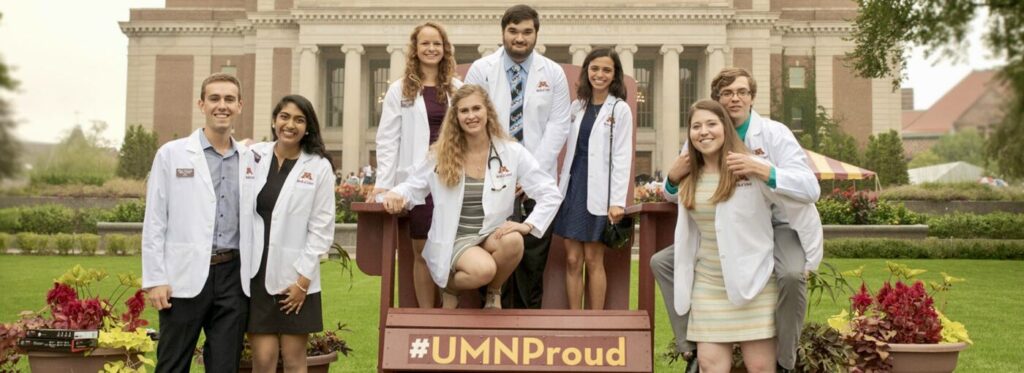
How the 2026-2027 Supplemental Works
After AMCAS verifies your application and you pass the screen (MCAT of at least 500, a PREview score, eligible citizenship or residency status and a bachelor’s degree), the school emails you the supplemental application. All MD applicants complete the same supplemental and pay a $100 non-refundable processing fee, waived for AAMC Fee Assistance Program applicants. The deadline is October 30, 2026, and the portal recommends finishing within two weeks of receiving it. Supplementals for this cycle started arriving in early July 2026. The supplemental also includes recorded video answers to asynchronous questions, which you upload as part of the supplemental, so plan time for a quiet room and a camera check.
Inside the supplemental you first choose a mission and then a campus. The essays you see depend on that choice:
| Prompt | General Mission (Twin Cities) | Rural Health Mission (Duluth and St. Cloud) | Limit |
|---|---|---|---|
| Mission pillar essay | Required | Not asked | 1,500 characters |
| Up to 3 rural experiences | Not asked | Required | 1,500 characters |
| Leadership in a resource-limited or culturally distinct environment | Not asked | Required | 1,500 characters |
| Learning environment | Required | Required | 1,500 characters |
| Feedback or setback | Required | Required | 1,500 characters |
| Why this geographic and clinical environment | Required | Required | 1,500 characters |
| Additional information | Optional | Optional | 1,500 characters |
General Mission applicants write four required essays and one optional essay. Rural Health Mission applicants write five required essays and one optional essay. MD/PhD applicants complete a separate MSTP supplemental with five prompts of 300 to 700 characters, covered at the end of this section. To compare these prompts with other schools, see our Secondary Applications Guide.
Always follow the exact wording and character counter shown in your portal.
About the character limits. Every MD prompt allows 1,500 characters, and spaces count. That is roughly 230 to 270 words. Draft in a word processor that shows character counts with spaces, then paste into the portal and check its counter. Straight quotation marks and apostrophes are safest when you paste.
Each example below is an original, illustrative answer written for this guide. It shows one way to answer the prompt. Do not copy it; your essays must come from your own experiences.
Indigenous Health Mission Prompts
The Indigenous Health Mission’s essay prompts have not been published for the 2026-2027 cycle. If you select the Indigenous Health Mission, answer exactly the prompts your portal shows. Write to the limit displayed in the portal and draw on your relationships with American Indian and Alaska Native communities, what you have learned from community members and your plans to serve. The school’s Duluth campus mission and the Center of American Indian and Minority Health are the clearest guides to what this mission values.
General Mission Essay 1: mission pillar
Prompt: “Please select one of these pillars that resonates most deeply with your journey. Describe a specific experience where you demonstrated this value in action and explain how that experience has prepared you to enhance the health of Minnesotans.”
Who answers: General Mission applicants (Twin Cities campus). Limit: 1,500 characters, including spaces. Status: Required.
What the prompt asks
This prompt has three parts. You name one pillar, you tell one specific story in which you acted on it, and you connect that story to the health of people in Minnesota. The pillars come from the mission statement that sits above the prompt in the portal: the school wants to educate skilled, compassionate and socially responsible physicians and is dedicated to preeminent primary care medicine, exemplary specialty care and innovative research.
How to approach it
Pick the pillar your experience actually shows, not the one you think sounds best. Primary care, specialty care and research are all valid. Name the pillar in your first sentence so the reader never has to guess. Then spend most of your characters on one scene: what you saw, what you did and what changed. Close with a concrete link to Minnesota, such as a neighborhood, a patient population or a program at the school that matches your story. At 1,500 characters you have room for about 230 to 260 words, so one experience told well beats three told briefly.
Example response
Illustrative example, not an actual applicant essay (1,336 characters)
The pillar that resonates most with me is preeminent primary care medicine, because I have seen what happens when it is missing. For two years I worked as a medical assistant at a family medicine clinic in north Minneapolis. One afternoon a man in his sixties came in for a cough. While rooming him, I noticed he had not refilled his blood pressure medicine in four months. The pharmacy he used had closed, and the new bus route took ninety minutes each way. I told the physician, who moved him to mail-order delivery and set up a nurse phone check two weeks later. By that call his pressure had fallen from 178/102 to 142/88. Nothing about that visit was dramatic. It worked because someone asked one more question and the clinic had a way to act on the answer. After that, I asked every patient I roomed how they got their medicines, and I kept a log of the barriers I heard for six months. I shared it with our clinic manager, and we added a transportation question to intake. I learned that primary care is where small, repeated acts of attention prevent the emergencies that fill hospitals. Minnesota has neighborhoods like the one I served and towns hours from a specialist. Training in continuity settings such as MetroPAP or UCAM would let me practice that kind of medicine for Minnesotans before they become patients in crisis.
Why this example works
The example names its pillar, preeminent primary care medicine, in the first sentence and never drifts from it. The experience is specific: a single patient, a concrete barrier (a closed pharmacy and a 90-minute bus ride), a clear action and a measurable result. It shows the value in action twice, first in one visit and then in a six-month habit and a change to clinic intake, which proves the applicant acted on the lesson rather than only noticing it. The last third answers the second half of the prompt. It ties the lesson to Minnesota’s urban neighborhoods and rural towns and names two verified Twin Cities training routes, MetroPAP and UCAM, without claiming the applicant has been promised either one. The tone is modest. The physician makes the medical decision and the applicant does what a medical assistant can do.
Mistakes to avoid
Do not list all three pillars or pick one and then write about another. Do not describe a value without a moment where you acted on it. Avoid ending with a generic line about helping people; the prompt asks how the experience prepared you to improve the health of Minnesotans, so say how. Do not invent clinical authority you did not have.
Prompts Shared by the General and Rural Health Missions
The next four prompts appear in both the General Mission and the Rural Health Mission supplementals with the same wording and the same 1,500-character limit. Each one is answered once below, with notes on how to angle it for your mission.
Learning environment (General and Rural Health Missions)
Prompt: “How would you contribute to a learning environment that respects and supports individuals with a wide range of identities, perspectives, and life experiences? Please share specific examples from your professional and/or personal background that demonstrate your ability to work effectively with people from varied communities.”
Who answers: General Mission and Rural Health Mission applicants (appears in both sets). Limit: 1,500 characters, including spaces. Status: Required.
What the prompt asks
The prompt asks two things. First, how you will contribute to a respectful learning environment in medical school. Second, specific evidence from your work or personal life that you already work well with people from different communities. The second part is where most essays fall short.
How to approach it
Lead with one or two real examples, then translate them into what you will do as a classmate. Good evidence shows a moment where you misread a person or situation, asked a better question and changed what you did. Then name concrete behaviors you will bring to small groups, labs and clinical teams. Your own identity can be part of the answer, but the prompt rewards what you do with it, not a list of traits.
Angling it for your mission
General Mission applicants can draw on urban clinics, interpreter work, campus groups or work with immigrant communities in the Twin Cities. Rural Health Mission applicants can show the variety inside small towns: farmworkers, older residents, new immigrant families in regional centers such as St. Cloud, and differences in politics and faith that a rural physician has to bridge with respect.
Example response
Illustrative example, not an actual applicant essay (1,370 characters)
I grew up on a dairy farm in Stearns County, and my first job in health care was as a nursing assistant on the night shift of a care center in St. Cloud. Our residents included retired farmers, a Hmong grandmother who spoke no English and a former professor with dementia. My coworkers had come from Liberia, Somalia, Mexico and small towns like mine. I learned quickly that respect is a skill. When Mrs. Vang refused her evening bath for a week, the easy story was that she was difficult. A coworker who spoke Hmong helped me ask her why. She had always bathed in the morning and felt cold and exposed at night. We changed her schedule, and the refusals stopped. Since then I ask before I assume, and I credit the people who teach me. In college I trained new peer tutors and built our first session on asking students how they learn best, because a first-generation student and a transfer student rarely need the same thing. In medical school I would bring the same habits to small groups and anatomy teams: listen first, ask the quiet person what they see and speak up when a case discussion leans on a stereotype. I also bring a rural, working-class view that classmates from cities may not have heard, and I want to learn from theirs. A class that holds many identities and life experiences teaches all of us to care for the full range of Minnesotans we will serve.
Why this example works
The example opens with a setting full of different identities: residents, coworkers and the writer’s own rural, working-class background. The Mrs. Vang story is the center of the essay. It shows a wrong first assumption, a respectful question asked with help from a coworker and a practical change that worked, which is exactly the kind of specific evidence the prompt requests. The tutoring paragraph adds a second, different setting so the reader sees a pattern rather than a single lucky moment. The contribution section names behaviors a classmate can picture in a small group or anatomy team: listening first, inviting quieter voices and speaking up about stereotypes. It closes by tying the learning environment to the range of Minnesotans the class will serve, which fits the school’s mission.
Mistakes to avoid
Do not write a definition of diversity or a summary of why it matters. Do not use another person’s identity as a prop in your story. Avoid claiming you will “fix” a culture you have not joined yet. If your examples come from a less diverse setting, write honestly about the differences that were there, such as age, income, religion or rural and urban backgrounds.
Feedback or setback (General and Rural Health Missions)
Prompt: “Describe a time when you received significant constructive feedback or encountered a setback that challenged your perception of your abilities. How did you respond to this situation, and how has this experience changed your approach to learning and self-improvement?”
Who answers: General Mission and Rural Health Mission applicants (appears in both sets). Limit: 1,500 characters, including spaces. Status: Required.
What the prompt asks
The prompt has three parts: a moment when feedback or a setback challenged how you saw your own ability, what you did in response, and how your approach to learning changed afterward. The phrase “challenged your perception of your abilities” matters. The best answers involve something that really stung.
How to approach it
Choose a real setback with a clear before and after. Spend about a quarter of your characters on the moment, half on your response and the rest on the lasting change. Show the change with evidence, such as a new study method, a habit of asking for feedback or a later situation where you used the lesson. Be honest about how it felt without dwelling on it.
Example response
Illustrative example, not an actual applicant essay (1,354 characters)
During my junior year I scored a 54 on my first biochemistry exam. I had earned A’s in every science course before it, and I thought of myself as someone who simply understood things. My professor’s comment was short: “You memorized pathways. You did not learn why they run.” That sentence bothered me more than the grade, because it was true. I went to her office hours that week and asked her to show me what she meant. She drew glycolysis and asked what would happen to a muscle cell if one enzyme stopped working. I could not answer. I changed how I studied. Instead of rereading notes, I wrote one question a day that forced me to predict what a cell would do, then checked my answer with a study partner. I started going to office hours before exams instead of after them. I finished the course with a B+, which I am prouder of than many A’s. The bigger change was in how I respond to criticism. I used to treat feedback as a verdict on my ability. Now I treat it as information I could not see on my own. When a physician I shadow tells me a history I took missed the social piece, I write it down and try again the next week. Medical school will give me more feedback than I have ever received, often in front of others. I want to be the student who asks for it early and uses it, because that is how I will become a physician patients can trust.
Why this example works
The example picks a setback that genuinely challenged the writer’s self-image: a strong student who scores 54 and receives blunt written feedback. It quotes the professor’s comment, which makes the moment specific. The response is active and concrete. The writer goes to office hours, learns what the feedback meant and replaces rereading with a daily prediction question checked with a partner. The outcome is believable, a B+, and the writer says why it matters more than easy A’s. The final third answers the last part of the prompt. It explains a changed attitude toward feedback, gives a current example from shadowing and connects it to medical school, where feedback is constant and often public. The essay never blames the professor or the course.
Mistakes to avoid
Do not pick a disguised strength (“my weakness is working too hard”). Do not tell a setback story that ends the moment it happened; the prompt asks how you changed. Avoid blaming others. Do not choose a crisis so severe that you cannot explain your response within the limit, and do not use this essay to explain a grade dip that belongs in the optional essay unless the story truly fits.
Why this environment (General and Rural Health Missions)
Prompt: “Considering the University of Minnesota Medical School’s mission and strengths, why is this specific geographic and clinical environment the right place for your medical education?”
Who answers: General Mission and Rural Health Mission applicants (appears in both sets). Limit: 1,500 characters, including spaces. Status: Required.
What the prompt asks
This is the school’s “why us” essay, but it is narrower than most. It asks about the geographic and clinical environment of the campus you are applying to, in the light of the school’s mission and strengths. A general essay about why you like Minnesota will not answer it.
How to approach it
Answer for the mission and campus you selected. Name the places and programs where you would actually train, explain what in your background makes them the right fit and connect them to the kind of physician you plan to become. Use verified details only: clinical sites, longitudinal clerkships, campus missions and centers. Show that you already know the population you hope to serve.
Angling it for your mission
For the General Mission, focus on the Twin Cities: urban and immigrant patient populations, county and VA hospitals, longitudinal clerkships such as HeLIX, MetroPAP, REACH and FLIIC, research strength and the school’s role as the state’s land-grant medical school. For the Rural Health Mission, write about Duluth or St. Cloud specifically. Duluth applicants can draw on the campus mission for rural Minnesota and American Indian and Alaska Native communities, its four-year program, RPAP and SIM. St. Cloud applicants can write about the CentraCare Regional Campus, its focus on clinicians and leaders across Greater Minnesota, small class sizes and training across CentraCare’s rural communities, including immigrant communities.
Example response: General Mission version (Twin Cities)
Illustrative example, not an actual applicant essay (1,462 characters)
I want to train in the Twin Cities because the patients I hope to serve are already here, and the University of Minnesota sends its students to them. I have spent three years working in Minneapolis, first as a medical interpreter and then as a medical assistant, with families who speak Somali, Spanish, Hmong and Oromo. Many of them move between a community clinic, a county hospital and a large health system in the same month. The Medical School trains students across that whole map: Hennepin County Medical Center through HeLIX, Regions Hospital through REACH and the Minneapolis VA through VALUE, along with M Health Fairview sites. As the only MD program in the metro, the school does not compete with others for these sites, which means more hands-on time with real patients. The school’s mission of primary care, specialty care and research also fits my goals. I want to practice general internal medicine and stay in Minnesota, and I want enough research training to study why my patients miss follow-up visits. A longitudinal clerkship would let me follow patients across clinic, hospital and home, the same path I have watched families struggle through without a guide. Student-run clinics such as the Pillsbury House Integrated Health Clinic would let me keep serving neighborhoods like mine during the Foundations phase. This is the clinical environment I already know, and the University of Minnesota is the place to learn how to care for it well.
Example response: Rural Health Mission version (Duluth)
Illustrative example, not an actual applicant essay (1,392 characters)
I want to train in Duluth because I plan to practice family medicine in a town like the one where I grew up, and Duluth was built for that goal. Since 1972 the campus has prepared physicians for rural Minnesota and American Indian and Alaska Native communities, and it now offers all four years. I am drawn to the way the curriculum moves students into real rural practice: the Summer Internship in Medicine after the first year and the nine-month Rural Physician Associate Program in the third year, where a student is the only learner in a community and follows the same patients for months. I grew up in Grand Marais, where my mother drove two hours for prenatal visits and my uncle waited weeks for a counselor after a suicide attempt. Those are not abstract problems to me. The Center for Rural Mental Health Studies, which works on care that fits rural settings, speaks to the gap I watched my family fall into. The Center of American Indian and Minority Health matters to me as well. Our county borders the Grand Portage Reservation, and I want to learn from Native physicians and communities about care that is built with them, not for them. Duluth’s small class, its faculty who teach rural medicine because they practice it, and its ties to Essentia Health and St. Luke’s would prepare me to return to the North Shore. This is the environment that matches the doctor I intend to be.
Why this example works
The Twin Cities example answers the prompt in its first sentence, then proves the claim with the writer’s three years of work with specific language communities. It names real training sites tied to verified programs (HeLIX at Hennepin County Medical Center, REACH at Regions Hospital, VALUE at the Minneapolis VA) and explains a concrete advantage: the school does not share these sites with competing medical schools. It links the mission’s three commitments to the writer’s own plan to practice internal medicine in Minnesota and do health services research. The student-run clinic detail shows how the writer would serve before clinical years start. The Duluth example does the same work for the Rural Health Mission. It ties the campus history and new four-year program to the writer’s hometown, names SIM and RPAP accurately and connects the Center for Rural Mental Health Studies and the Center of American Indian and Minority Health to personal experience without overstating it.
Mistakes to avoid
Do not write the same essay for every campus; reviewers know the difference between Minneapolis, Duluth and St. Cloud. Do not list programs without saying why each one matters to you. Avoid rankings and prestige language. Do not claim you will be placed in a specific clerkship or campus; the school decides placement with the offer.
Optional additional information (General and Rural Health Missions)
Prompt: “(Optional) Is there any additional information you would like the Admissions Committee to know that was not covered elsewhere in your application or recent experiences not included in your AMCAS submission?”
Who answers: General Mission and Rural Health Mission applicants (appears in both sets). Limit: 1,500 characters, including spaces. Status: Optional.
What the prompt asks
This optional prompt covers two kinds of content: information not covered elsewhere in your application, and recent experiences that happened after you submitted AMCAS.
How to approach it
Use it when you have something new or something that needs context. Strong uses include a new clinical or research role, a completed thesis or publication, a change in your plans for the year, or a short, factual explanation of a grade dip, a gap or an institutional action. Write in plain, factual language and keep it shorter than the limit if you can. If you have nothing new, leave it blank.
Angling it for your mission
Both missions use the same prompt. Rural Health Mission applicants can use it to add a rural experience that started after AMCAS, such as a new EMT certification or a summer at a rural clinic. General Mission applicants might add a new Twin Cities clinical role or research result.
Example response
Illustrative example, not an actual applicant essay (932 characters)
Since submitting my AMCAS application in June, I have started a new clinical role that is relevant to my application. In August I began working 24 hours a week as an emergency department scribe at a Level II trauma center in St. Paul. Scribing has shown me how emergency physicians reason under time pressure, and it has deepened my interest in primary care, because many of the patients I document come to the ED for problems a regular clinic could have caught earlier. I also completed my honors thesis on medication adherence among adults with type 2 diabetes in August and presented a poster on it at my university’s undergraduate research symposium in September. Finally, I want to note that my lower spring 2023 grades came during a semester when I worked 30 hours a week after my father lost his job. I reduced my hours the next fall once my family was stable, and my grades since then reflect what I can do when I can focus.
Why this example works
The example is organized as three clear updates, which makes it easy to read quickly. The first two are real additions since AMCAS, a new scribe job with hours and setting, and a finished thesis and poster, and each comes with one sentence on why it matters. The third explains a weak semester in two sentences, gives the cause without drama and shows recovery. The essay uses about 930 characters, well under the 1,500 limit, which signals respect for the reader’s time.
Mistakes to avoid
Do not paste in a second personal statement or repeat activities already in your AMCAS. Do not write a long apology for a grade. Do not fill the space just because it exists. If you write about a hardship, focus on what you did and where you are now.
Rural Health Mission Prompts
Rural Health Mission applicants, who will train on the Duluth or St. Cloud campus, answer two rural essays in place of the General Mission pillar essay, along with the four shared prompts above.
Rural Health Mission Essay 1: rural experiences
Prompt: “Please highlight up to 3 experiences that support your application to the Rural Health Mission.”
Who answers: Rural Health Mission applicants only (Duluth and St. Cloud campuses). Limit: 1,500 characters, including spaces. Status: Required.
What the prompt asks
This prompt asks for up to three experiences that support your application to the Rural Health Mission. It is a short evidence essay. Reviewers want to see real ties to rural communities and real exposure to rural health care.
How to approach it
Choose experiences that show different sides of your rural commitment: where you come from, what you have done in rural health care and what you know about rural practice. Give each one a title, dates and a few sentences on what you did and learned. A numbered format is fine and easy to scan. End with one sentence that ties the three together and states your goal.
Example response
Illustrative example, not an actual applicant essay (1,181 characters)
Volunteer EMT, Wadena County (2022 to present). I joined our town’s volunteer ambulance service at 19. Our nearest Level I trauma center is more than two hours away, so I have learned what rural emergency care looks like when the crew is three people and the next ambulance is 40 minutes out. I have answered more than 150 calls, including farm injuries and winter rollovers, and I now help train new volunteers on patient handoffs.
Nursing assistant at a critical access hospital (summers 2023 and 2024). I worked on a 25-bed unit where the same family physician might round on inpatients, cover the emergency room and deliver a baby in one shift. Watching her care for three generations of one family showed me the continuity I want in my own career.
Rural health shadowing and outreach (2024 to 2025). I shadowed a family physician in Long Prairie for 60 hours and helped her clinic run fall flu shot events at two churches and a grain elevator. I saw that rural health depends on trust built outside the clinic walls. These experiences are why I am applying to the Rural Health Mission: I intend to return to a town like mine and practice full-scope family medicine.
Why this example works
The example uses all three slots, and each shows a different strength: emergency care in a volunteer ambulance service, inpatient work at a critical access hospital and community outreach with a rural family physician. Each entry has a role, dates and concrete details, such as more than 150 calls, a 25-bed unit or flu clinics at a grain elevator, so the reader can picture the setting. The middle entry shows the writer understands full-scope rural family medicine, which matches the Rural Physician Associate Program the school is known for. The final sentence states the goal plainly, returning to a town like the writer’s to practice full-scope family medicine, which is what the Rural Health Mission exists to produce.
Mistakes to avoid
Do not pick experiences in which rural is only the backdrop. A vacation home or a single shadowing day will not carry this essay. Do not repeat your AMCAS descriptions word for word; add what each experience taught you about rural health. Avoid romanticizing small towns or describing rural patients as people to be rescued.
Rural Health Mission Essay 2: leadership in a resource-limited setting
Prompt: “Describe an experience where you demonstrated leadership by adapting to a resource-limited or culturally distinct environment.”
Who answers: Rural Health Mission applicants only (Duluth and St. Cloud campuses). Limit: 1,500 characters, including spaces. Status: Required.
What the prompt asks
The prompt asks for leadership shown through adaptation. The setting must be resource-limited, culturally distinct or both, and the essay must show you changed your approach because of that setting.
How to approach it
Tell one story with a clear structure: the plan, what went wrong or did not fit, how you listened and changed course, and the result. Leadership here does not require a title. It can mean organizing a team, partnering with a community member or making a hard call when resources ran short. Give credit to others and show what you learned about leading where you are not the expert.
Example response
Illustrative example, not an actual applicant essay (1,427 characters)
Last summer I led a team of six student volunteers running free blood pressure and blood sugar screenings at farmworker housing sites in southern Minnesota. Our plan came from a campus health fair: a table, printed handouts in English and a sign-up sheet. It failed on the first night. Most residents spoke Spanish or K’iche’, many worked until dark, and no one wanted to write their name on a list. I called a meeting with our community partner, a health worker named Rosa who had lived at the site for years. I asked what we had gotten wrong, and she was direct. People did not trust a list, did not read our handouts and would not come to us after a 12-hour shift. We changed almost everything. We moved the screenings to the evening meal, dropped the sign-up sheet, and Rosa trained two residents to explain results in K’iche’. We replaced the handouts with a single card that used pictures and our clinic partner’s phone number. One site had no running water, so we built a hand-washing station from a cooler. Over eight weeks we screened 210 adults and referred 31 with high readings to a free clinic, and Rosa’s follow-up calls confirmed that 19 kept their appointments. I learned that leadership in a setting that is not mine means listening first and giving credit and decisions to the people who know the community. That lesson will matter in rural Minnesota, where my patients will be the experts on their own lives.
Why this example works
The example meets both conditions of the prompt: the farmworker housing sites are culturally distinct (Spanish and K’iche’ speakers) and resource-limited (late shifts, no running water). It shows leadership through adaptation rather than authority. The writer admits the first plan failed, asks the community health worker what went wrong and changes the timing, format, language and materials. The results are specific and modest, with screenings, referrals and confirmed appointments, and the writer credits Rosa and the residents. The last two sentences turn the story into a lesson for rural practice, which ties it to the mission the applicant chose.
Mistakes to avoid
Do not choose a story where you arrived and fixed things on your own. Do not write about a culturally distinct setting in a way that treats people as exotic. Avoid stories where the adaptation is minor, such as moving a meeting room. If your example is from a trip abroad, focus on what you did within your role and what you learned, not on hardship tourism.
MSTP (MD/PhD) Supplemental Prompts
All completed MSTP applications that meet the minimum MCAT requirement receive a brief MSTP supplemental. It has no additional fee, and the MSTP application deadline is November 1. Answer every prompt your MSTP portal shows. Remember that MSTP applicants are not considered for the MD-only program in the same year.
MSTP 1: faculty list
Prompt: “List University of Minnesota faculty members you would be interested in potentially working with for your PhD studies in our program. A list of names is sufficient, and they do not need to be in any rank order. You may provide up to 12 names.”
Who answers: MSTP (MD/PhD) applicants. Limit: 300 characters, including spaces. Status: Required.
What the prompt asks
This is a factual field. The program wants names of faculty you might work with for your PhD. A list is enough, ranking is not needed and you may list up to 12.
How to approach it
List faculty whose current research matches the interests you describe in the next prompt. Check each person’s current faculty page before you list them, because faculty move. Adding the department or center in parentheses helps reviewers see the fit quickly. Six to ten well-chosen names is a reasonable target; more names that do not fit your interests can weaken the answer.
Example response
Illustrative example, not an actual applicant essay (134 characters)
Fang Li, PhD (Pharmacology; Center for Emerging Viruses); Yoji Shimizu, PhD (Laboratory Medicine and Pathology; Center for Immunology)
Why this example works
This worked pattern lists two current faculty whose roles were verified on official Medical School pages, with their department and center in parentheses. The names match the research interests in the next example (viral entry and immune responses), so the two answers support each other. A real applicant would add more names after reading current lab pages and checking that each lab takes MD/PhD students.
Mistakes to avoid
Do not list only famous names or the program director without a research reason. Do not include faculty who have left the University; check current pages. Do not exceed 300 characters. Do not list faculty whose work has no link to the interests you describe.
MSTP 2: research interests
Prompt: “Describe the area(s) of research you are interested in pursuing during your PhD training and how your interest(s) align with the research opportunities available at the University of Minnesota.”
Who answers: MSTP (MD/PhD) applicants. Limit: 500 characters, including spaces. Status: Required.
What the prompt asks
At 500 characters this is a short answer. It asks for your research area and how it fits research at the University of Minnesota.
How to approach it
Use one sentence for the question you want to study, one for the experience that prepared you and one or two for the specific centers, programs or labs at Minnesota that fit. Keep it concrete.
Example response
Illustrative example, not an actual applicant essay (449 characters)
I want to study how viruses enter human cells and how to block that step. In my undergraduate lab I purified a viral surface protein and ran binding assays against candidate inhibitors. At Minnesota, structural virology in the Center for Emerging Viruses and T-cell biology in the Center for Immunology would let me connect entry mechanisms with the immune response, and the Masonic Cancer Center offers a path to apply these tools to tumor biology.
Why this example works
The example names a precise question (how viruses enter cells and how to block that step), proves preparation with one lab skill, and names three real University of Minnesota research homes that fit the interest. It stays under the limit at about 450 characters.
Mistakes to avoid
Do not list five unrelated fields. Do not repeat your research AMCAS entry. Avoid vague phrases like “cutting-edge research” without naming where it happens.
MSTP 3: why UMN MSTP
Prompt: “Why are you particularly interested in joining the University of Minnesota MSTP?”
Who answers: MSTP (MD/PhD) applicants. Limit: 700 characters, including spaces. Status: Required.
What the prompt asks
A short “why us” answer for the MD/PhD program.
How to approach it
Pick two or three features of the program that matter to your training and explain why each one matters to you. Verified features include NIH MSTP support since 1988, PhD training in 12 partner graduate programs, a lab rotation that starts in late June before the first year, and the Clinical Continuity and Mentoring Program during the PhD years.
Example response
Illustrative example, not an actual applicant essay (653 characters)
I want an MSTP that treats clinical and research training as one path. Minnesota’s program has held an NIH MSTP grant since 1988 and offers PhD training in 12 graduate programs, which gives me room to choose between pharmacology and microbiology after rotations. Starting with a lab rotation in late June, before the first year of medical school, would let me meet mentors early. I also value the Clinical Continuity and Mentoring Program during the PhD years, which keeps students seeing patients with a clinical mentor. I also plan to stay in Minnesota, and its mix of academic labs, industry and statewide patients is where I want to build my career.
Why this example works
The example names three verified program features and ties each to a personal reason: flexibility in choosing a graduate program, an early start with mentors and staying connected to patients during the PhD. It ends with a plan to stay in Minnesota, which is useful context even though the MSTP gives no residency preference.
Mistakes to avoid
Do not recite the program website. Do not focus on prestige or funding alone. Avoid saying you want an MSTP because the MD program is hard to get into; applicants to the MSTP are not considered for the MD-only program in the same year.
MSTP 4: lived experience
Prompt: “How does your lived experience (relating to identity, past work, leadership, socioeconomic status, first generation status, disability, etc.) inform your understanding of and support for justice, equity, diversity, and inclusion?”
Who answers: MSTP (MD/PhD) applicants. Limit: 700 characters, including spaces. Status: Required.
What the prompt asks
The prompt asks how your own lived experience shapes your understanding of and support for justice, equity, diversity and inclusion. It lists many possible starting points, from identity to past work and leadership.
How to approach it
Choose one part of your life, tie it to a specific observation, and show an action you took. In 700 characters you can tell one short story and give one concrete example of support, such as mentoring or changing a policy.
Example response
Illustrative example, not an actual applicant essay (588 characters)
I am the first in my family to finish college. I paid for school by working as a lab technician 20 hours a week, and I learned how much of science depends on who has time and money to volunteer in a lab. Two friends left our pre-med program because they could not afford unpaid research. That shaped how I lead: as a senior I helped our department create paid entry-level lab positions and wrote a guide to the unwritten rules of joining a lab. In the MSTP I want to mentor students who look at research and assume it is not for them. Fairness in science starts with who gets in the door.
Why this example works
The example uses first-generation status and paid work as its starting point, gives a specific observation (friends who left because unpaid research was unaffordable) and shows action (helping create paid lab positions and writing a guide). It ends with how the writer will act in the MSTP, which answers the “support” part of the question.
Mistakes to avoid
Do not write only about beliefs without actions. Do not speak for groups you do not belong to. Avoid listing every identity you hold; pick the one that shaped your view most.
MSTP 5: optional additional information
Prompt: “What other pertinent information would you like to bring to the attention of the MSTP? This is an opportunity for you to discuss an aspect of your physician scientist journey that you have not already presented in your application. You may also update us with any current experiences that were not included in your AMCAS application.”
Who answers: MSTP (MD/PhD) applicants. Limit: 700 characters, including spaces. Status: Optional.
What the prompt asks
An optional space for new information about your physician-scientist path or updates since AMCAS.
How to approach it
Use it for concrete research updates, such as a manuscript status, a new poster, a new role or a change in your plans. Keep it factual and short.
Example response
Illustrative example, not an actual applicant essay (451 characters)
Since submitting my AMCAS application, my first-author manuscript on viral entry inhibitors was accepted pending minor revisions, and I presented the work as a poster at a regional virology meeting in September. I have also taken on training two new undergraduates in our lab, which has confirmed how much I enjoy teaching research skills. These updates reflect my continued commitment to a career that combines laboratory discovery with patient care.
Why this example works
The example gives three clear updates in under 500 characters: a manuscript accepted pending revisions, a regional poster and new teaching duties in the lab. Each is checkable and relevant to an MD/PhD application.
Mistakes to avoid
Do not overstate publication status; “submitted” and “accepted” are different. Do not repeat your research essay. Leave it blank if there is nothing new.
Prompts No Longer on the Supplemental
Several essay topics that appeared on the University of Minnesota supplemental in recent cycles are not part of the 2026-2027 set. These include a prompt on why diversity, equity and inclusion matter to the learning environment, a prompt on how your identity has shaped you, a critical thinking prompt, a “why medical school in the state of Minnesota” prompt and a separate optional essay on rural Minnesota. If you find older sample answers online, check the wording against your portal before you reuse any of your own drafts. The new prompts ask more pointed questions, especially about feedback, setbacks and the clinical environment of your campus.
Final Advice for the Supplemental
- Answer every part of each prompt. Several prompts have two or three parts. Underline each verb before you write.
- Use your best evidence once. With five or six essays, spread your experiences so each essay shows something new.
- Match your mission. The same story can work for a General or Rural essay, but the closing lines should point to the campus and patients you chose.
- Stay under the limit with room to spare. Portals sometimes count line breaks or special characters differently.
- Submit promptly. Review is rolling, so finishing within the recommended two weeks keeps your file moving.
Interview Format and Preparation
Format
The MD interview is virtual. Invitations go out by email on a rolling basis beginning in August, and the interview program runs on Zoom. It has three parts:
- Welcome presentation from the school.
- A 30-minute mission-specific interview, focused on the mission you selected in the supplemental.
- An Admissions Ambassadors conversation with current students.
The MD interview does not use the multiple mini interview (MMI) format. The recorded video answers to asynchronous questions are part of the supplemental, not the interview day. If you have concerns about interviewing in a virtual environment, contact Admissions. Staff will discuss alternatives or reasonable accommodations if you identify a barrier to participating.
MSTP Interview
The MD/PhD program interviews about 55 applicants a cycle over six interview days from October to February. Before your interview day, the program asks about your research interests and the faculty you would like to meet. You will have one-on-one meetings of about 30 minutes each with several of those faculty, members of the Steering Committee, a member of the Student Admissions Committee and the Director. The day also includes an information session, a student-led session, a campus tour and social time with current students. The Steering Committee then discusses your application and decides on an offer, waitlist or no offer on a rolling basis. Accepted applicants are invited to a revisit weekend in April.
What the Mission-Specific Interview Means for You
Because the interview is tied to your mission, expect questions that test whether your experiences and goals fit it:
- General Mission: why the Twin Cities, how you work with diverse urban patient populations, how you think about primary care, specialty care and research and what you would contribute to classmates.
- Rural Health Mission: your ties to rural communities, what you understand about rural practice (scope, isolation, continuity, workforce shortages) and why Duluth or St. Cloud.
- Indigenous Health Mission: your relationships with American Indian and Alaska Native communities, what you have learned from them and how you would approach care built with communities.
The school evaluates applicants against its Competencies for Entering Medical Students, so prepare examples for each competency. Questions about teamwork, service, ethical judgment, resilience, cultural humility and how you learn are all fair game.
How to Prepare
- Reread your application. Your AMCAS experiences and your supplemental essays are the starting point for most questions. Know every detail.
- Prepare three to five core stories that show different competencies, and practice telling each in about two minutes.
- Know the programs that fit your mission. Be ready to explain why RPAP, MetroPAP, HeLIX, REACH, the Center of American Indian and Minority Health or the MSTP matters to you, and keep it personal rather than listing facts.
- Practice on Zoom. Test your camera, lighting, sound and internet ahead of time, use a quiet space and look at the camera when you speak.
- Prepare questions for the Admissions Ambassadors. Ask about House life, clerkship choices, the campus community and what students wish they had known.
- Practice common questions. Our list of the most common medical school interview questions and our Medical School Interview Guide are good starting points, and structured mock interviews help. If you want feedback from an experienced coach, see how medical school admissions consulting can help.
After the Interview
After the interview, your full application is reviewed holistically, including your academic record, experiences, essays, letters and interview. Offers go out on a rolling basis starting in October and include campus placement. If you are waitlisted, the school sends more information after all final decisions are made. A short, sincere thank-you note is a courtesy, not a requirement.
What Is Confirmed and What Is General Advice
The format, timing, length of the mission-specific interview and the accommodations policy are the school’s official details. The preparation advice above is general practice guidance based on the school’s competencies and missions, not a description of a private scoring rubric.
Frequently Asked Questions
The questions below are the ones applicants ask most often about the University of Minnesota Medical School.
Does University of Minnesota Duluth have a medical school?
Yes. The University of Minnesota Medical School has a Duluth campus, founded in 1972, which focuses on training physicians for rural Minnesota and American Indian and Alaska Native communities. It is part of the same medical school as the Twin Cities campus, not a separate school. Since fall 2025, students can complete all four years in Duluth; before that, Duluth students spent two years there and finished elsewhere. The campus ranks #2 in American Indian graduates, and 44% of its alumni practice in rural communities. To be considered for Duluth, choose the Rural Health Mission or the Indigenous Health Mission in the supplemental application.
Does University of Minnesota have a medical school?
Yes. The University of Minnesota Medical School, founded in 1888, awards the MD on three campuses: the Twin Cities campus in Minneapolis, the Duluth campus and the CentraCare Regional Campus in St. Cloud. It also offers an MD/PhD through the Medical Scientist Training Program on the Twin Cities campus and dual degrees in public health, biomedical engineering, business, health informatics and law. You apply through AMCAS and then complete one supplemental application, where you choose a mission and a campus.
How good is the medical school in Minnesota?
The University of Minnesota Medical School is highly regarded. It ranks #2 nationally in primary care and in family medicine and #24 in NIH research funding, and it created the first longitudinal integrated clerkship, the Rural Physician Associate Program, in 1971. Minnesota’s other MD school, Mayo Clinic Alix School of Medicine, is also nationally known. Which one is “good” for you depends on your goals: the University of Minnesota stands out for primary care, rural medicine, Native American health and a large, statewide clinical network.
How is University of Minnesota viewed by medical schools?
Other medical schools and residency programs know the University of Minnesota Medical School for its research, its primary care and rural training and its long history of medical firsts, from early open-heart surgery to transplantation. Its graduates match into residencies across the country, and its 17,703 MD and MD/PhD alumni include many leaders in academic medicine. If you are an undergraduate at the University of Minnesota applying elsewhere, its pre-health resources and research opportunities are well regarded too.
How many medical schools are in Minnesota?
There are two MD-granting medical schools in Minnesota: the University of Minnesota Medical School, with campuses in the Twin Cities, Duluth and St. Cloud, and the Mayo Clinic Alix School of Medicine in Rochester. The University of Minnesota is the state’s public medical school and its land-grant institution, and it gives admissions preference to Minnesota residents and applicants who plan to practice in Minnesota. Our guide to medical schools in Minnesota compares them side by side.
How to get into Minnesota Medical School?
Meet the eligibility rules (U.S. citizen, permanent resident or Minnesota resident with DACA), complete the seven prerequisites by July 1 of the year you start, score at least 500 on the MCAT and take the PREview exam. Then submit AMCAS by October 1 and the supplemental by October 30, choosing the mission that fits your experience. Strong applicants show the school’s competencies through sustained clinical work, service and reflection, write mission-specific essays that use real examples and prepare for a 30-minute mission-specific interview on Zoom. Minnesota ties help, because the school gives preference to residents and applicants planning to practice in the state.
Is the University of Minnesota a good medical school?
Yes. It is a large, research-active public medical school with full LCME accreditation, more than 3,000 faculty, 27 departments and more than 20 research centers and institutes. It is especially strong in primary care, family medicine and rural medicine, and its longitudinal clerkships, MSTP and statewide clinical network give students many paths. Whether it is a good fit for you depends on your goals and your ties to Minnesota and its communities.
What are my chances of getting into Minnesota Medical School?
For the 2025 entering class, 6,843 verified applicants competed for 264 seats and 638 were interviewed, about 9%. Offer counts are not published, so there is no verified acceptance rate. In-state applicants fare much better: about 35% of them were interviewed, compared with about 6% of out-of-state applicants. Your chances depend on meeting the screen (MCAT of at least 500, a PREview score and eligible citizenship or residency status) and then on how well your whole application shows the school’s competencies and fits your chosen mission. Minnesota residents and applicants with a strong desire to practice in Minnesota receive preference, and about 20% of the current class came from outside the state. Strengthen your chances with sustained clinical experience, genuine community ties and careful, specific essays.
What grades do I need to get into the University of Minnesota Medical School?
The school has no minimum GPA. For the 2025 entering class, accepted applicants had a median overall GPA of 3.9 (mean 3.84) and a median science GPA of 3.89. Prerequisites must be taken for a letter grade, but there is no minimum grade for them. Because review is holistic, a strong upward trend, solid upper-level science grades and a good MCAT can help balance an early weak semester. Aim for consistent strength in your science courses, especially the two required upper-level sciences, and use the optional essay to explain a dip briefly if needed.
What is the University of Minnesota Medical School known for?
The school is known for primary care and family medicine, rural medical education, Native American health on the Duluth campus and research, including a long list of medical firsts in heart surgery, pacemakers and transplantation. It created the first longitudinal integrated clerkship, the Rural Physician Associate Program, in 1971, and today offers several more, from HeLIX at Hennepin County Medical Center to the VA’s VALUE program. It is also known for its Medical Scientist Training Program, supported by NIH since 1988.
What schools did Minnesota medical students come from?
Students in the school’s current class profile came from 97 undergraduate institutions and 35 majors, and 15 already held an advanced degree. Many attended Minnesota colleges and universities, but the class also includes nonresidents from 20 states and Puerto Rico. You do not need to attend the University of Minnesota for college to be admitted, and no specific major is required.
Why choose the University of Minnesota Medical School?
Choose it if you want strong primary care and rural training, a choice of three campuses and missions, a large research university and a statewide clinical network without competition from other medical schools for clerkship sites. Its longitudinal clerkships let you follow patients for nine or ten months, its Flexible MD lets you take up to six years at the same total price and its tuition is lower for Minnesota residents. If you plan to practice in Minnesota, its alumni network is a major asset, with 6,831 living alumni in the state.
Why go to medical school in Minnesota?
Minnesota offers training in both diverse urban settings and rural communities, nationally known health systems and a strong primary care tradition. The Twin Cities have large immigrant communities, including Somali, Hmong and Latino populations, and the state’s rural areas and tribal nations give students experience that few other places can match. Medical students here train across the Minneapolis-St. Paul area and in more than 120 rural communities through RPAP.
Why is Minnesota Medical School good?
It combines a comprehensive curriculum, a focus on primary care, strong research and a commitment to community service and rural health care. Practical strengths include longitudinal clerkships, the MSTP, dual degrees, global health electives through GMER and student support such as the Houses Program and dedicated financial aid counselors. Its mission to educate skilled, compassionate and socially responsible physicians shows up in everything from its essays to its clinical programs.
Why the University of Minnesota Medical School?
The University of Minnesota Medical School offers a strong medical education with opportunities for research, clinical practice in diverse settings and a commitment to improving access to care across Minnesota. For your “Why this environment” essay and interview, go beyond these general strengths. Name the campus, the patient populations and the specific programs, such as RPAP, MetroPAP, HeLIX or the Center of American Indian and Minority Health, that match your own experience and goals.
What is the minimum MCAT score for the University of Minnesota Medical School?
The minimum is 500. You need at least a 500 to receive the supplemental application, and the score must be from January 1, 2023 or later for the entering class of 2027 (the last accepted test date was August 22, 2026). A 500 is a screen, not a target. Accepted applicants for the 2025 entering class had a median MCAT of 513 (mean 512.5), so aim as high as you can, and if you are retaking, the school waits for your new score before screening your application.
Is the PREview exam required?
Yes. The AAMC PREview Professional Readiness Exam is required for the MD program and must be within the past three years. For the 2026-2027 cycle, the deadline was extended to include the September 16 and 17, 2026 test dates. Your PREview score is part of the screen before the supplemental is sent, so if you are planning for 2027-2028, schedule PREview early in the summer you apply.
Which mission should I choose: General, Rural Health or Indigenous Health?
Choose the mission that your experiences already support. The General Mission places students on the Twin Cities campus and fits applicants interested in urban populations, specialty care or research. The Rural Health Mission places students in Duluth or St. Cloud and asks for up to three experiences that support a rural commitment. The Indigenous Health Mission places students in Duluth or the Twin Cities and fits applicants with meaningful ties to American Indian and Alaska Native communities. Your essays and interview are mission-specific, so a real match matters more than which campus you prefer.
What is the CentraCare Regional Campus in St. Cloud?
It is the University of Minnesota Medical School’s newest campus, a partnership with CentraCare that opened in fall 2025 with 24 first-year students. It is the state’s first new medical school campus in 50 years, it plans to reach 96 students by 2028 and its first class will graduate in 2029. Its mission is to educate physicians who aspire to be clinicians and leaders across Greater Minnesota, with training in CentraCare’s rural communities, including immigrant communities. Choose the Rural Health Mission and select St. Cloud as your campus to apply.
Can out-of-state applicants get into the University of Minnesota Medical School?
Yes. About 20% of the current class is from outside Minnesota, from 20 states and Puerto Rico. Preference goes to Minnesota residents and to applicants with a high desire to practice in Minnesota, so explain your tie to the state in your essays and interview. Nonresident tuition is higher, at $75,951 for Year 1 tuition and fees in 2026-2027, though the admissions office offers a small pool of nonresident tuition waiver scholarships.
Can international students or DACA recipients apply?
The MD program accepts U.S. citizens, permanent residents and Minnesota residents with DACA status. International applicants without permanent residency are not eligible for the MD program. The MD/PhD program does accept international applicants. If you have DACA status but are not a Minnesota resident, you are not eligible for the MD program under the current rules.
How much does the University of Minnesota Medical School cost?
For 2026-2027, Year 1 tuition and fees are $50,472 for Minnesota residents and $75,951 for nonresidents, covering fall, spring and summer terms. The Year 1 cost of attendance, including living costs, is $87,278 for residents and $112,757 for nonresidents. Student health insurance of $1,795 per fall and spring semester is extra unless you waive it. Most aid is loans, but the school awards some recruitment scholarships and need-based scholarships through a separate application due March 1.
How many letters of recommendation does the University of Minnesota require?
Exactly three. The MD program accepts a total of three letters, all through AMCAS, and does not accept letters from friends or family acquaintances. There is no required mix of physician or science letters. If you do not designate three letters for the school, reviewers will pick three at their discretion, so assign your three strongest letters in AMCAS.
Does the University of Minnesota use MMI interviews?
No. The MD interview is on Zoom and includes a welcome presentation, a 30-minute mission-specific interview and a conversation with Admissions Ambassadors. Prepare for a one-on-one conversation about your experiences and your fit with the mission you chose. The MD/PhD program uses a series of 30-minute one-on-one meetings with faculty, committee members, a student and the Director.
Can I apply to both the MD and the MD/PhD programs?
Not in the same year. Applicants to the MSTP are not eligible to be considered for the MD-only program in the same application year. Decide which path fits your goals before you apply. Current University of Minnesota MD students can apply to the MSTP, ideally in their first year.
Does the school accept community college or online courses?
Yes, with limits. Lower-level prerequisites from an accredited community college are accepted, but all upper-level courses must be taken at an accredited four-year college or university in the U.S. or Canada. Online courses are accepted for most prerequisites, but lab courses must be taken in person. AP, CLEP and IB credit do not count.
When is the supplemental due and how much does it cost?
The MD supplemental deadline is October 30, 2026. The processing fee is $100, non-refundable, and it is waived for applicants approved for the AAMC Fee Assistance Program. The portal recommends finishing within two weeks of receiving it. The MSTP supplemental has no additional fee, and the MSTP application deadline is November 1.
Does the University of Minnesota Medical School require a deposit?
No. Accepted applicants do not pay a deposit. Acceptance notices go out from October 15, 2026 through June 28, 2027, and the school prefers a response within two weeks, though the time allowed depends on when the offer is made. You then manage your choice through the AAMC Choose Your Medical School tool.
How much debt do University of Minnesota medical graduates have?
Indebted graduates in 2024-2025 left with an average of $197,321 in medical school debt, and 89% of enrolled and graduated students received financial aid that year. Minnesota residents pay much lower tuition, and the school awards a small pool of recruitment scholarships, so your own total depends heavily on residency and scholarships.
Does the University of Minnesota Medical School have Early Decision?
No. Admissions runs as one rolling process, with offers beginning in October, and there is no Early Decision Program. Plan on the standard timeline: submit AMCAS early, return the supplemental quickly and prepare for interviews that begin in the fall.
How can I get clinical experience before applying?
The school does not set a minimum number of clinical hours, but its competencies and mission-specific essays reward sustained, hands-on patient contact. Good options include medical assisting, scribing, EMT work, hospice and free-clinic volunteering and supervised clinical internships. Look for roles where you work with the same patients or community over time. If you want to add international experience, choose a program where you take vitals and help with intake and care under supervision, and reflect on what you learned for your essays.
Related Medical School Guides
If you are applying to the University of Minnesota Medical School, these guides cover schools that share its region, mission or applicant pool. They are starting points for building your list, not claims of equal selectivity.
- Mayo Clinic Alix School of Medicine: Minnesota’s other MD school, in Rochester, is a natural comparison for Minnesota residents who want to apply in state.
- Wayne State University School of Medicine: a large public Midwest MD school with a strong urban health mission, useful if you are drawn to the General Mission’s urban training.
- South Dakota Sanford School of Medicine: a neighboring public school with a rural and family medicine focus that mirrors the Rural Health Mission.
- University of Chicago Pritzker School of Medicine: a research-intensive private Midwest school to compare if research is the pillar that draws you most.
- University of Michigan Medical School: another major Midwest public research university with a large medical school, a useful benchmark for MSTP and research-focused applicants.
- Cleveland Clinic Lerner College of Medicine: a research-focused Midwest program for applicants interested in physician-scientist careers.
For a statewide comparison of costs, missions and admissions, see our guide to medical schools in Minnesota. To compare prompts across schools, use our medical school secondary essay prompts database.
Medical Education Beyond the University of Minnesota Medical School
The University of Minnesota Medical School is known for its contributions to medical education and research. Students interested in physician assistant programs or other health careers outside the MD may need to look at other institutions to reach their goals.
For options beyond the University of Minnesota, International Medical Aid (IMA) offers resources to guide your search. Whether you want to become a physician or pursue another health care role, IMA’s school guides can help you make well-informed decisions and find programs that match your interests. If you are weighing a PA career, our pre-PA internships page explains how supervised clinical work can help you decide.
- Johns Hopkins School of Medicine
- Oklahoma State University College of Osteopathic Medicine
- University of Oklahoma College of Medicine
- Marshall University Joan C. Edwards School of Medicine
- Warren Alpert Medical School of Brown University
- Georgetown University Medical School
- Yale School of Medicine
- West Virginia University School of Medicine
- West Virginia School of Osteopathic Medicine
- Indiana University School of Medicine
- Des Moines University College of Osteopathic Medicine
- University of Iowa Roy J. and Lucille A. Carver College of Medicine
- Marian University College of Osteopathic Medicine
- Meharry Medical College
- Howard University College of Medicine
- University of Kansas School of Medicine (KUMC)
- Charles R. Drew University of Medicine and Science College of Medicine
- Loma Linda University School of Medicine
- John A. Burns School of Medicine (JABSOM)
- Kansas College of Osteopathic Medicine (KansasCOM)
- UC Irvine School of Medicine
- Nova Southeastern University College of Allopathic Medicine
- Touro University Nevada College of Osteopathic Medicine
- University of Miami Miller School of Medicine
- Arkansas College of Osteopathic Medicine (ARCOM)
- University of Arkansas for Medical Sciences (UAMS)
- Tulane University School of Medicine
- LSU Health New Orleans School of Medicine
- LSU Shreveport Medical School
- Kirk Kerkorian School of Medicine at UNLV
- University of Nevada Reno School of Medicine
- University of Arizona College of Medicine-Tucson
- University of Arizona College of Medicine-Phoenix
- Burrell College of Osteopathic Medicine (BCOM)
- The University of New Mexico School of Medicine
- Alabama College of Osteopathic Medicine (ACOM)
- University of South Alabama College of Medicine
- University of Alabama School of Medicine
- FIU College of Medicine
- UCF College of Medicine
- USF Morsani College of Medicine
- Florida State University College of Medicine
- Morehouse School of Medicine
- Medical College of Georgia at Augusta University
- Mercer University School of Medicine (MUSM)
- Campbell University School of Osteopathic Medicine (CUSOM)
- ECU Brody School of Medicine
- Edward Via College of Osteopathic Medicine (VCOM)
- University of South Carolina Medical School
- Lewis Katz School of Medicine at Temple University
- Philadelphia College of Osteopathic Medicine (PCOM)
- Geisinger Commonwealth School of Medicine (GCSOM)
- Penn State Medical School
- CUNY School of Medicine
- SUNY Downstate Medical School
- NYIT College of Osteopathic Medicine
- NYU Long Island School of Medicine
- Albany Medical College
- TOURO College of Osteopathic Medicine
- Norton College of Medicine at Upstate Medical University
- Jacobs School of Medicine at the University at Buffalo
- Hofstra Zucker School of Medicine
- Weill Medical College of Cornell University
- University of Rochester Medical School
- Icahn School of Medicine at Mount Sinai
- Renaissance School of Medicine at Stony Brook University
- Albert Einstein College of Medicine
- Ohio University Heritage College of Osteopathic Medicine
- Northeast Ohio Medical University (NEOMED)
- University of Cincinnati College of Medicine
- University of Toledo College of Medicine
- Wright State University Boonshoft School of Medicine
- Ohio State University College of Medicine
- Rowan University School of Osteopathic Medicine
- Hackensack Meridian School of Medicine (HMSOM)
- Rutgers New Jersey Medical School (NJMS)
- Rutgers Robert Wood Johnson Medical School
- Cooper Medical School of Rowan University (CMSRU)
- A.T. Still University Kirksville College of Osteopathic Medicine
- Saint Louis University School of Medicine
- University of Missouri Medical School
- Kansas City University (KCU)
- UMKC School of Medicine
- New York Medical College
- University of Pittsburgh School of Medicine
- University of Wisconsin Medical School
- VCU School of Medicine
- University of Maryland School of Medicine
- Case Western Medical School
- University of North Carolina Medical School
- University of Florida Medical School
- Emory University School of Medicine
- Boston University College of Medicine
- California University of Science and Medicine
- UC San Diego Medical School
- California Northstate University College of Medicine
- Touro University of California
- CHSU College of Osteopathic Medicine
- UC Davis School of Medicine
- Harvard Medical School
- UC Riverside School of Medicine
- USC Keck School of Medicine
- UT Southwestern Medical School
- Long School of Medicine at UT Health San Antonio
- University of the Incarnate Word School of Osteopathic Medicine
- UT Austin’s Dell Medical School
- UTMB School of Medicine
- McGovern Medical School at UTHealth
- The University of Texas Rio Grande Valley School of Medicine
- UNT Texas College of Osteopathic Medicine
- University of Houston College of Medicine
- Texas A&M College of Medicine
- Baylor College of Medicine
- George Washington University School of Medicine
- Vanderbilt University School of Medicine
- St. George’s University School of Medicine
- Lake Erie College of Osteopathic Medicine (in Pennsylvania)
- Sidney Kimmel Medical College at Thomas Jefferson University
- Wake Forest University School of Medicine
- Western University of Health Sciences (in California)
- Drexel University College of Medicine
- Stritch School of Medicine at Loyola University Chicago
- Perelman School of Medicine
- UCLA Medical School
- NYU Medical School
- Washington University School of Medicine
How International Medical Aid Can Help
How IMA’s Global Health Initiatives Support Applicants to the University of Minnesota Medical School
International Medical Aid (IMA) provides medical internships abroad and pre-health clinical programs for students preparing for medical school. Our work shares several goals with the University of Minnesota Medical School’s mission: better patient care, attention to health care disparities and physicians who understand the communities they serve, in Minnesota and around the world. IMA is independent of the University of Minnesota, and taking part in an IMA program does not affect admission.
Global Health Internships
IMA’s programs place pre-health students in clinical settings in Kenya and other sites, where they work alongside local health care teams. Interns take vitals, do patient intake and triage and help with direct patient care under supervision. That hands-on work gives applicants concrete stories about patients, teamwork and resource-limited care, the same themes that appear in the University of Minnesota’s 2026-2027 essays on learning environments, setbacks and leadership in resource-limited or culturally distinct settings. You can compare programs on our healthcare internships abroad overview page.
Admissions Consulting
Competitive Edge for Applicants
IMA’s admissions consulting can help University of Minnesota applicants present their commitment to service and to underserved communities clearly, which matters for a school whose mission centers socially responsible physicians.
Highlighting Global Healthcare Engagement
Through IMA’s medical school consulting services, applicants can turn clinical and global health experiences into specific, reflective essays and interview answers that fit the mission they choose.
Promoting a Lifelong Commitment to Healthcare Innovation
Experience with health care challenges in different settings gives students perspectives they can bring back to Minnesota’s urban neighborhoods and rural towns. Participants in IMA programs often say the experience changed their perspective on health care and made them want to be better doctors.
Next step: if you need more hands-on patient experience before you apply, explore IMA’s clinical internships, then use what you learn to answer the University of Minnesota’s mission-specific prompts with real examples.
Final Thoughts and Sources
Final Thoughts
The University of Minnesota Medical School has a rich history and a long commitment to innovative medical education. Since 1888, it has grown from the merger of private medical colleges into one of the country’s leading medical schools. Its Twin Cities campus centers on landmarks such as the Mayo Memorial Building and Jackson Hall, which have played central roles in educating generations of health professionals.
The school’s partnership with Fairview Health Services, beginning in 1997, expanded its clinical training and patient care, and the opening of the University’s children’s hospital in 2011, now M Health Fairview Masonic Children’s Hospital, strengthened its pediatric care. The Duluth campus, opened in 1972, reflects the school’s commitment to rural and underserved communities and is known for educating American Indian and Alaska Native physicians. In 2025 the Duluth program became a full four-year campus and the CentraCare Regional Campus in St. Cloud opened, extending the school’s reach across Greater Minnesota.
As you prepare your application, understand the values that shape this school. Its mission to educate skilled, compassionate and socially responsible physicians, its preference for future Minnesota physicians and its three missions mean that your experiences and your reasons must fit together. Your next step is concrete: confirm your eligibility and screen requirements, choose the mission your record supports and draft your supplemental answers before the invitation arrives. Whether you are drawn to research, community service or clinical care, the school offers a supportive environment where you can grow into the physician Minnesota needs.
Sources
Facts in this guide were checked on October 17 and 18, 2026. Statistics are labeled with their cohort or academic year in the body and tables.
- University of Minnesota Medical School, Application Process (2026-2027 cycle: letters, screen, supplemental fee and deadline, missions, interview format, decisions, deferral, reapplicants).
- University of Minnesota Medical School, Prepare to Apply (eligibility, MCAT and PREview windows, prerequisites summary, selection criteria, Application Cycle 2026 and 2027 deadlines, recruitment scholarships, events).
- University of Minnesota Medical School, Prerequisite Courses (seven courses and course policies).
- University of Minnesota Medical School, Facts and Figures (the school’s current class profile: campus counts, age, gender, nonresidents, institutions, majors; school size).
- University of Minnesota Medical School, Twin Cities, St. Cloud and Duluth Student Budget, 2026-2027; Costs and Budgeting; Budget Planning; Apply for Financial Aid; Eligibility; Types of Aid; Contact Financial Aid.
- University of Minnesota OneStop, Residency Handbook and Classification Appeal (tuition residency).
- University of Minnesota Medical School, LCME Accreditation page (July 2020 review; 2028 site visit).
- University of Minnesota Medical School, Leadership; Admissions Staff; Duluth Leadership; Duluth Campus; CentraCare Regional Campus St. Cloud; Twin Cities Campus; History; Alumni; Alumni Board Members.
- University of Minnesota Medical School, Degrees Offered; Individualized Pathways and program pages for EPAC, GMER, HeLIX, MetroPAP, FLIIC, REACH, RPAP, SIM, SIME, VALUE and UCAM; Flexible MD Program; Classroom Experiences; Clinical Experiences; Competencies Required for Graduation; Residencies and Fellowships.
- University of Minnesota Medical School, Medical Scientist Training Program pages (overview, application process, interview process, financial support, curriculum and timeline, message from the director, alumni directory).
- University of Minnesota Medical School, Research Opportunities; Opportunities for Students; Duluth Medical Student Research Program; Center for Learning Health System Sciences; Minnesota Primary Care Research Learning Network.
- University of Minnesota Medical School, Student Experience; Houses Program; Annual Events; Personal and Professional Wellbeing; Career Guidance and the Match; Medical Student Council, Medical Student Groups; SNMA Mentor Program.
- Masonic Cancer Center, About MCC.
- University of Minnesota Medical School faculty biographies: Carol Bradford, Andrew Olson, Carrie Costantini, Elizabeth Seaquist, Mary Owen, Raymond Christensen, Kevin Diebel, Yoji Shimizu, Cuong Pham, Alexander Boucher, Fang Li and Nicole Chaisson; Medical School news, “Five Medical School Faculty Honored as Health Care Heroes” (April 13, 2023).
- University of Minnesota Admissions, BA/MD Scholars Program.
- AAMC Medical School Admission Requirements (MSAR), University of Minnesota Medical School profile, 2026 edition, accessed October 18, 2026 (2025 entering class MCAT and GPA medians, applications, interviews, matriculants, demographics and premedical experiences; total enrollment, October 2025; acceptance notice dates, deposit, response time and update policy for the 2026-2027 cycle; aid and graduate debt, 2024-2025; specialty intentions and global health experience, Graduation Questionnaire 2025; affiliated hospitals; combined-degree contacts; tuition policy).
- 2026-2027 secondary prompts: the school does not publish its supplemental prompts. Wording comes from applicants who received the 2026-2027 supplemental (Student Doctor Network 2026-2027 University of Minnesota thread) checked against Med School Insiders’ 2026-2027 prompt database and Accepted’s 2026-2027 University of Minnesota prompt list, each checked October 17, 2026.