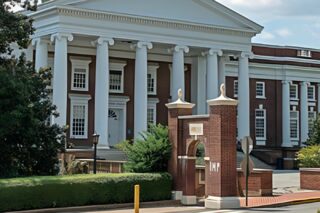

The University of Virginia School of Medicine (UVA SOM) is the public medical school of the University of Virginia in Charlottesville. The Board of Visitors authorized a School of Medicine at its first meeting in 1819, and the school opened in 1825, which gives it one of the longest histories of any medical school in the country. It grants the MD degree, runs an MD-PhD Medical Scientist Training Program (MSTP), and trains students at two locations: the main campus in Charlottesville and a regional campus at Inova in Northern Virginia.
UVA is known for a few things that matter to applicants. Its Cells to Society curriculum puts patient care and foundational science side by side from the first week. Every student belongs to one of four learning communities, called colleges, and stays with the same college dean from the white coat ceremony to graduation. The school also sets almost no hard course requirements. There are no prerequisite courses at all, which puts more weight on the MCAT, the rest of the transcript, clinical exposure and the written application.
This guide covers the 2026-2027 application cycle, which fills the class entering in August 2027. Class statistics are for the Class of 2030, the 155 students who entered in 2026. Median MCAT and GPA figures are for all accepted applicants in the 2025 entering class. Costs are for the 2026-27 academic year. All figures were checked on October 18, 2026.
The purpose of this guide is to give you one place to understand UVA SOM: its mission, curriculum, admissions process, costs, campus life, clinical and research training, people, statistics, secondary essays and interview. Whether you are deciding where to apply, writing your secondary or preparing for an interview, each section ends with something you can act on.
Key Takeaways
- Eligibility is broad, but coursework must be North American. You need at least 90 semester hours at an accredited U.S. or Canadian college at the time you apply, and UVA strongly prefers a bachelor’s degree. Non-U.S. citizens and temporary residents can apply to the MD program on the same coursework terms. The MSTP requires U.S. citizenship or permanent residency.
- There are no prerequisite courses. UVA recommends Cell Biology, Biochemistry, Human Behavior and Statistics, and accepts AP credit that counted toward your degree and appears on your transcript.
- The academic bar is high. The Class of 2030 had a mean MCAT of 520 and a GPA of 3.91, and accepted applicants in the 2025 entering class had a median MCAT of 520 and a median GPA of 3.96. UVA sets no minimum MCAT or GPA for screening.
- Virginians make up a large share of the class. Virginia residents were 1,056 of 7,248 applications but 54% of the Class of 2030.
- Key dates for 2026-2027: the supplemental opened July 8, 2026; interviews run from September 8, 2026 to the first week of March 2027; the AMCAS deadline is November 1, 2026; the UVA supplemental deadline is December 15, 2026. MD applicants must Commit to Enroll by July 1, 2027.
- The secondary is short but required. UVA sends it to every applicant once AMCAS verifies the primary application. It has two 350-word essays and two short answers, and the $80 fee is waived for applicants with an approved AMCAS Fee Assistance Program waiver.
- Interviews are virtual and conversational. You will have two 30-minute interviews with Admissions Committee members, not an MMI. There is no Early Decision Program and no deposit.
- 2026-27 tuition and fees for first-year students are $56,700 for Virginia residents and $71,046 for nonresidents. The first-year cost of attendance is $88,454 and $102,800.
- Next step: compare your MCAT, clinical exposure and reasons for UVA against the sections below before you write the two essays, since the “Why UVA” essay needs specific detail about Cells to Society, the colleges and the two clinical campuses.
Key Statistics About University of Virginia School of Medicine
The snapshot and table below give the figures applicants ask about first. Class figures are for the Class of 2030, which entered in 2026 after applying in the 2025-2026 cycle. Median MCAT and GPA are for all accepted applicants in the 2025 entering class. Cost figures are for the 2026-27 academic year, Med 1 (first year), Charlottesville budget.

| Metric | Value | Year or cohort | Source and definition |
|---|---|---|---|
| School and degree | University of Virginia School of Medicine; MD and MD-PhD (MSTP) | Current | UVA SOM; public school in Charlottesville, VA, with a regional clinical campus at Inova, Northern Virginia |
| Class size | 155 students (156 seats per class) | Class of 2030, entered 2026 | UVA SOM Statistics Overview (matriculants); UVA SOM Admissions Process (seats) |
| MCAT, entering class | Mean 520 (CPBS 130, CARS 129, BBFL 130, PSBB 131) | Class of 2030 | UVA SOM Statistics Overview; entering class |
| MCAT, accepted applicants | Median 520; mean 519.8 (section medians 130, 129, 130, 131) | 2025 entering class | AAMC MSAR; all accepted applicants, most recent score |
| GPA, entering class | 3.91 | Class of 2030 | UVA SOM Statistics Overview; entering class GPA as reported by the school |
| GPA, accepted applicants | Median 3.96; mean 3.91; science GPA median 3.95 | 2025 entering class | AAMC MSAR; all accepted applicants |
| Applications | 7,248 (1,056 Virginia; 6,192 out of state) | Class of 2030 | UVA SOM Statistics Overview |
| Interviewed | 627 (149 Virginia; 478 out of state) | Class of 2030 | UVA SOM Statistics Overview |
| Offers | About 400 offers a year for about 156 seats | Recurring, current cycle | UVA SOM Admissions Process |
| Acceptance rate | Not published | n/a | UVA SOM publishes applications, interviews and approximate offers, not an acceptance rate; AAMC MSAR does not report offers for the 2025 entering class |
| Prior-year applications and matriculants | 7,148 verified applications; 156 matriculants (81 in-state, 73 out-of-state, 2 international) | 2025 entering class | AAMC MSAR; verified AMCAS applications |
| Class makeup | 54% Virginians; 46% out of state; 57% women | Class of 2030 | UVA SOM Statistics Overview |
| Tuition and fees | $56,700 Virginia resident; $71,046 nonresident | 2026-27, Med 1 | UVA SOM Costs page, 2026-27 Cost of Attendance (same at both campuses) |
| Total cost of attendance | $88,454 Virginia resident; $102,800 nonresident | 2026-27, Med 1, Charlottesville | UVA SOM Costs page; includes tuition and fees, living, transportation, books, health insurance estimate and loan fees |
| MD students enrolled | 623 | Current Facts and Figures | UVA SOM Facts and Figures |
| Students receiving financial aid | 80% | 2024-25 | AAMC MSAR (LCME Part I-B); all enrolled and graduated students |
| Average graduate debt | $160,430 | 2024-25 | AAMC MSAR (LCME Part I-B); indebted graduates |
| Accreditation | LCME | Current | UVA SOM MD Curriculum page |
| Application deadlines | AMCAS November 1, 2026; UVA supplemental December 15, 2026 | 2026-2027 cycle | UVA SOM Admissions Process timeline |
| Supplemental application | Sent to all verified applicants; $80 fee, waived with an AMCAS fee waiver | 2026-2027 cycle | UVA SOM Admissions Process; AAMC MSAR |
| Early decision and deposit | No Early Decision Program; no deposit; deferrals case by case | 2026-2027 cycle | UVA SOM Admissions Process (deposit); AAMC MSAR |
Two notes on reading these numbers. First, the 155 students are the matriculated Class of 2030, while 156 is the number of seats the school fills each year. Second, the GPA of 3.91 and the MCAT of 520 describe the entering class, not a cutoff. UVA sets no minimum GPA or MCAT for screening. Accepted applicants in the 2025 entering class had a median MCAT of 520 and a median GPA of 3.96, so half of admitted applicants were at or above those marks. For the Class of 2029, the year before, the average GPA was 3.85, with 7,148 applicants and 675 interviews, so the class profile moves a little from year to year.
The class is selective. Each year UVA receives more than 7,000 applications, invites about 650 applicants to interview and extends about 400 offers for about 156 seats. In the Class of 2030 cycle, 627 of 7,248 applicants were interviewed. Earning an interview is the hardest step. With about 400 offers a year against about 650 interviews, most of the selection happens before the interview invitation.
Mission and Educational Priorities
UVA’s mission statement is short: “At the University of Virginia School of Medicine, our mission is to transform health and inspire hope for all Virginians and beyond.” The vision that goes with it is “to be the nation’s leading public academic School of Medicine and the best place to work-while transforming patient care, research, education and management with the communities we serve.”
Three words in that mission carry most of the weight for applicants.
“Virginians.” UVA is a state school, and the mission names the people of the Commonwealth first. That shows up in the class: 54% of the Class of 2030 are Virginians, even though Virginians filed only about one in seven applications. It also shows up in the training. Students work at the Charlottesville Free Clinic, at the Remote Area Medicine clinic in Wise and Grundy Counties in Southwest Virginia, and at the Inova campus in Northern Virginia. If you are a Virginia applicant, the mission gives you a natural story. If you are not, the mission tells you that “why here” needs to include the communities UVA serves, not only the prestige of the name.
“Beyond.” The mission does not stop at state lines. Nearly half of the class comes from outside Virginia, and Phase 3 offers global health electives in Bangladesh, Costa Rica, Guatemala, India, Rwanda, South Africa, Tanzania and Uganda. Out-of-state applicants succeed at UVA, but they need to show they understand what kind of public school it is.
“Transform health.” The school organizes its work into four pillars: education, research, clinical care and community. The education pillar talks about a “nurturing and respectful learning environment.” The research pillar describes new translational research, a statewide clinical trials network and recruitment of more physician-scientists. The community pillar talks about new neighborhood clinics and “a workforce inclusive of the communities we serve.” An applicant who has done some of each (clinical work, research or inquiry, and steady community service) fits the mission without having to force it.
The mission also explains several school policies you will meet later in this guide:
- The required first-year Social Issues in Medicine (SIM) course places every student in a community agency for 30 hours of service during the first year, with partner agencies that have included the Charlottesville Free Clinic, the International Rescue Committee and the Jefferson Area Board for Aging.
- The Generalist Scholars Program exists “to help grow the number of generalists physicians particularly in the underserved areas of the Commonwealth.”
- The Bedside to Community course in Phase 3 asks students to connect clinical medicine to health policy and population health.
UVA’s curriculum also names professionalism expectations, such as advocacy, empathy, self-awareness and teamwork, that read like a description of what interviewers look for. Read them before your interview.
What this means for you: a UVA application should show that you understand care beyond the hospital. You do not need a public health degree. You do need examples of what you learned from patients and communities, and a reason to train at a school that names “all Virginians” in its mission.
Accreditation and Institutional Identity
The University of Virginia School of Medicine is accredited by the Liaison Committee on Medical Education (LCME), the body that accredits MD programs in the United States and Canada. The school states that its MD program “meets all requirements for eligibility for licensure in all U.S. jurisdictions,” and its graduates are eligible to sit for the USMLE. The school’s most recent full accreditation cycle is documented on its LCME Accreditation 2023 page. You can read more about how LCME accreditation works on the LCME site.
LCME accreditation matters in practical ways. It means UVA’s curriculum, clinical training and student support have been reviewed against national standards, that graduates can enter U.S. residency programs through the Match, and that federal financial aid is available to eligible students.
Some identity details are worth getting right in an application or interview:
- Name and status. The school is the University of Virginia School of Medicine, part of UVA Health, and a public, state-supported school. Students often say “UVA SOM” or simply “UVA.”
- History. The Board of Visitors authorized the school in 1819, and it opened in 1825. Walter Reed, who led the team that showed mosquitoes transmit yellow fever, graduated in 1869 at age 18 as the youngest graduate in the school’s history. Vivian Pinn, a pathologist and the retired director of the NIH Office of Research on Women’s Health, was the only African American and the only woman in the Class of 1967. Both now give their names to UVA’s colleges.
- One school, two campuses. All students start in Charlottesville. The Inova campus at the Inova Fairfax Medical Campus in Northern Virginia hosts 72 students, 36 per class, for clerkships and the post-clerkship phase. Those students form Pinn College. The school assigns the clinical campus; applicants are notified at the start of April. MSTP students train in Charlottesville.
- Leadership. Colin P. Derdeyn, MD, a UVA School of Medicine graduate, is Interim Dean. Melina R. Kibbe, MD, was dean from 2021 to 2025.
How UVA SOM is recognized
Rather than third-party lists, the school’s own Facts and Figures page gives a clear picture of its size and research weight:
- 19th among public schools in NIH funding (Blue Ridge Institute ranking)
- $269 million in research funding and 198 NIH-funded principal investigators
- 13 members of the National Academy of Medicine and 3 Nobel Prize awards connected to the school
- 1,436 faculty, 631 MD residents and 216 fellows
- 623 MD students, 325 biomedical sciences (BIMS) PhD students and 102 master’s students
- A 99% residency match rate
These numbers explain the school’s balance. UVA is a research-intensive academic medical center, but it is also the flagship public medical school of a state with large rural regions. The research weight makes the summer research program and MSTP strong. The state role makes community service, primary care and rural outreach part of the core curriculum. Both halves matter, and the strongest applications respect both.
Medical Programs and Affiliations
UVA SOM offers programs designed to train skilled, caring physicians with room for an added degree or scholarly focus. Here is what each one involves and when you apply.
Doctor of Medicine (MD) Program
The four-year MD program runs on the Cells to Society curriculum, which integrates foundational science with clinical practice. Students start patient-care skills in the first weeks through Foundations of Clinical Medicine and keep building them through clerkships and electives. The program aims to produce physicians who practice evidence-based medicine, provide patient-centered care and keep learning for a whole career. You apply through AMCAS and the UVA supplemental application.
MD-PhD Program (Medical Scientist Training Program)
The NIH-funded MSTP trains physician-scientists. Students combine Cells to Society with PhD research in one of UVA’s Biomedical Sciences interdisciplinary graduate programs, such as Biochemistry, Molecular Biology and Genetics; Biomedical Engineering; Microbiology, Immunology and Infectious Disease; Molecular Medicine; and Neuroscience. The program typically takes seven to eight years, and requirements must be finished within nine years of matriculation.
You apply to the MSTP at the same time as the MD program: through AMCAS, followed by a separate MD/PhD Supplemental Application. Applicants are encouraged to apply by December 1, and the program uses rolling admission with most interviews before winter break. MSTP applicants must be U.S. citizens or permanent residents. In 2025-2026 the MSTP received 438 applications, interviewed 54 and made 35 offers. Interviews for 2026-2027 are virtual, with an in-person Second Look planned for March. MSTP candidates must Commit to Enroll by May 10.
MD-MPH (Master of Public Health)
The MD-MPH adds training in quantitative and qualitative research methods, community-based research, health policy, program evaluation, epidemiology and biostatistics. Students begin MPH courses after Phase 2 and extend their education by one year. Requirements must be completed within seven years.
MD-MBA (Master of Business Administration)
The MD-MBA, offered with the Darden School of Business, prepares physician-leaders for work in health system management, administration and policy. Students can earn both degrees in five years. You apply to Darden during Phase 2, after you are admitted to the School of Medicine, and must finish within seven years of matriculation. UVA publishes a separate 2026-27 cost of attendance for MD-MBA students, and financial aid during the Darden terms comes from Darden.
MD-JD (Juris Doctor)
The MD-JD, offered with the UVA School of Law, lets a student earn both degrees in six years. Students must gain separate admission to both schools, and the law school requires the LSAT. Students apply to law school during Phase 2 and begin the JD after completing Phase 2. Requirements must be met within eight years. This route fits students interested in health law, policy and medical ethics.
MD-MS in Clinical Research (MS-CR) and MD-MS in Data Science (MSDS)
The MS-CR trains students in research methods and translational and community-based research strategies. The MSDS, run with the School of Data Science, is an 11-month program in data science tools applied to medicine. Both start after Phase 2, add one year and must be finished within seven years of matriculation.
How the dual degrees fit together
Except for the MSTP, you do not apply to these programs as a premed. Students typically apply to the second program during Phase 2, then fit the added coursework around Phase 3, and graduate with both degrees in less time than taking them separately. Approval and time away must be arranged in advance with your college dean, and the School of Medicine does not provide financial aid for the extra degree program.
Other scholarly programs
- Generalist Scholars Program (GSP). A four-year mentoring and scholarship program for a small group of first-year students who plan careers in Family Medicine, General Internal Medicine, General Pediatrics or Med-Peds. Scholars complete a longitudinal primary care project and receive some scholarship support. Information and the application come after you are offered admission.
- Edward W. Hook Scholars Program in Humanities and Ethics. Up to five first-year students a year join the Center for Health Humanities and Ethics for a four-year pathway in humanities, bioethics and the arts, including a seven-week summer research project and the capstone course “Calls of Medicine.”
- Medical Student Summer Research Program (MSSRP). A seven-week funded research experience for rising second-year students, covering essentially every department. As many as 94 students have taken part in a year.
Clinical affiliations
Students train at UVA Medical Center in Charlottesville and at the Inova Fairfax Medical Campus in Northern Virginia. Some clerkships take place at the Salem Veterans Affairs Medical Center or at Bon Secours hospital in Richmond. Service sites include the Charlottesville Free Clinic, the Department of Family Medicine’s International Family Medicine Clinic and the Remote Area Medicine clinic in Southwest Virginia. UVA does not list an early assurance, linkage or BS/MD program on its MD admissions pages.
Curriculum Overview
UVA’s curriculum is called Cells to Society. It teaches foundational science in the setting where physicians use it, mixing small-group work, team learning, labs, clinical skills practice and patient care. The school describes the goal as preparing students to “provide excellent patient-centered care, practice evidence-based medicine, and engage in lifelong learning.” The model encourages students to own their learning, with active learning sessions and regular feedback.
UVA School of Medicine’s 12 Educational Program Objectives
UVA organizes what every graduate must be able to do into 12 Educational Program Objectives. They are worth knowing, because they describe the kind of physician UVA is trying to produce and because they echo through interviews and evaluations.
- Personal and professional attributes. Graduates show humanism, compassion and empathy; collegiality and interdisciplinary collaboration; lifelong self-education; awareness of their own personal and professional limits; engagement in community and social service; high ethical standards; knowledge of legal standards and commitment to legal conduct; awareness of economic issues in clinical practice; and cultural competency and responsiveness in practice and professional relationships. Healthcare is a team effort, and the humility to know when to ask for help is part of the standard.
- Applying the scientific basis of medicine both to current clinical practice and to the analysis and expansion of medical knowledge, which is why research and inquiry appear throughout the curriculum.
- Engaging and communicating with patients and others in professional settings, building relationships for information gathering, guidance, education, support and individualized care.
- Taking a clinical history, both focused and comprehensive.
- Performing a mental and physical examination.
- Selecting, justifying and interpreting clinical tests and imaging.
- Explaining and performing basic clinical procedures.
- Recording, presenting, researching, analyzing and managing clinical information.
- Diagnosing and explaining clinical problems in terms of pathogenesis, with a basic differential diagnosis and clinical reasoning.
- Identifying and justifying clinical interventions, including preventive, curative and palliative strategies.
- Formulating a prognosis based on the patient, the natural history of disease and the options available.
- Providing care within the context of a patient’s life: age, gender, preferences, family, health literacy, culture, religious perspective and economic circumstances, including ethical, legal and public health considerations and the limits of the health system.
Read objective 1 and objective 12 closely. They are the heart of UVA’s approach: a physician who is skilled, humble, ethical and aware of the patient’s whole situation. UVA’s separate Professionalism Expectations spell out behaviors such as admitting mistakes, identifying yourself as a learner, recognizing your own biases, asking for feedback and taking care of your own well-being.
Phase 1: Pre-Clerkship (18 Months)
Phase 1 lasts 18 months and builds the knowledge, skills and values needed to begin practicing medicine. It opens with Orientation, where students meet their college dean, complete a personality inventory, do team-building activities and end at the Brodie Gateway Dinner, where they meet their Foundations of Clinical Medicine coach and peer group.
The science is taught in systems-based courses grouped into three blocks:
- Integrated Systems 1: Cells to Society (1 week, using diabetes as a model illness from cell to community), Foundations of Medicine (5 weeks), Microbes and the Immune System (6 weeks), and Cells, Blood and Cancer (5 weeks).
- Integrated Systems 2: Musculoskeletal and Integument (6 weeks), Gastrointestinal System (6 weeks), and Mind, Brain and Behavior (8 weeks).
- Integrated Systems 3: Cardiovascular (4.5 weeks), Pulmonary (3 weeks), Renal (3 weeks), an integrated cardiovascular-pulmonary-renal week, Endocrine/Reproductive (4 weeks), and Classroom to Clinics (2 weeks).
Running alongside the systems courses:
- Foundations of Clinical Medicine (FCM). Early clinical exposure starts here. In groups of six with a physician coach and a non-physician co-mentor such as a nurse or pharmacist, students learn history taking, the doctor-patient relationship, physical examination, differential diagnosis and clinical reasoning.
- Entrustable Professional Activities (EPA). Faculty assess history taking, exam maneuvers, oral presentations, high-value test selection and self-directed learning.
- Patient Student Partnership. Each student follows an assigned patient with a chronic condition, conducts narrative interviews, joins the patient at health system visits and learns to advocate for them.
- Social Issues in Medicine. Required since 2006, SIM teaches the social determinants of health through sessions on topics such as rural health, health literacy, poverty and housing, disability, veterans’ issues, and mental health and addiction, combined with 30 hours of community service-learning.
- Anatomy. Students dissect, study prosections and use 3D software, and take part in procedure-based sessions such as arthroscopy, intubation and chest tube placement. At the end of Phase 1, students design the Anatomical Donor Convocation of Gratitude to honor donors and their families.
The summer between first and second year (June to July) is open for research, and about 70% of students do research their first summer.
Phase 2: Clerkships (39 Weeks)
Phase 2 begins with the two-week Clerkship Readiness Course, held at both campuses, which covers interprofessional care, clinical skills and procedures. Then students rotate with their college through 39 weeks of clerkships in three 13-week blocks, with a one-week vacation between blocks and one-week Intersession courses that revisit basic science and practice skills:
- Internal Medicine (6 weeks)
- Primary Care and Outpatient Medicine, PCOM (6 weeks), covering Family Medicine, Ambulatory Internal Medicine and Geriatrics
- Peri-operative Services: Surgery, Anesthesia, Gynecology and Obstetrics, SAGO (12 weeks), including labor and delivery
- Pediatrics (6 weeks, half inpatient and half ambulatory)
- Psychiatry (3 weeks)
- Neurology (3 weeks)
Students complete clerkships in Charlottesville or at Inova, with some at the Salem VA or Bon Secours in Richmond. Because colleges rotate together, students keep the same peer group and dean oversight through the clinical year.
Phase 3: Post-Clerkship
Phase 3 lets students shape their own program while they choose a specialty and apply for residency. It includes:
- Emergency Medicine (4 weeks)
- Critical Care Medicine (4 weeks)
- Advanced Clinical Elective (4 weeks), a sub-internship-style rotation with more responsibility
- Internship Readiness (2 weeks around Match Day), with specialty tracks such as surgery, pediatrics, acute care, internal medicine, OB/GYN and pathology, plus simulation and procedural training
- Bedside to Community: Integrating Clinical Medicine and Population Health (2 weeks)
- Electives (40 weeks), offered at both campuses across dozens of specialties
- Flexible/Interview time (10 weeks)
Electives include global health rotations in Bangladesh, Costa Rica, Guatemala, India, Rwanda, South Africa, Tanzania and Uganda, along with research, humanities and ethics, and teaching roles.
Additional Curriculum Features
Clinical Performance Education Center (CPEC). CPEC holds two centers in the Claude Moore Medical Education Building. The Medical Simulation Center is an 11,000-square-foot facility on the ground floor with four simulation bays that recreate an intensive care unit, an operating room, a labor and delivery suite and an emergency room, plus procedure rooms and an ambulance entrance. The Clinical Skills Center, also 11,000 square feet, has 18 outpatient exam rooms and two inpatient rooms where trained standardized patients help students practice and test their skills, including the Clinical Practice Examination.
Learner-centered education. The Learning Studio uses five 20-foot screens tied to each group table so students can share work with a small group or the whole class, and most sessions are recorded.
Research. Research runs through the curriculum, from the first-summer MSSRP to Phase 3 research electives and the dual degrees. The school’s research infrastructure supports students interested in academic medicine.
Community engagement and service learning. SIM, the Charlottesville Free Clinic, Remote Area Medicine and the Bedside to Community course make service a required part of training, not an extra.
What this means for you: Cells to Society rewards students who learn well in teams, take feedback, and want early patient contact. If you can describe a time you learned from a group, adjusted after feedback or followed one patient over time, you have material for the “Why UVA” essay and the interview.
Admissions Requirements and Application Process
UVA uses a holistic, rolling admissions process. The committee weighs academic achievement (GPA and MCAT), healthcare and volunteer experience, life experience, the personal statement and letters of recommendation. For applicants who are invited, the interview is also a major part of the decision. Because review is rolling and early application is encouraged, the date you complete your file matters.
General requirements
- Coursework: at least 90 semester hours at an accredited U.S. or Canadian college or university at the time you apply. UVA strongly prefers a bachelor’s degree.
- Citizenship: Non-U.S. citizens and temporary U.S. residents may apply to the MD program on the same 90-hour U.S. or Canadian coursework rule. International students are not eligible for federal loans or university aid and must document the ability to pay before starting. The MSTP requires U.S. citizenship or permanent residency.
- Technical Standards: all students must meet the school’s Technical Standards, with or without reasonable accommodation, and admitted students sign a Declaration of Meeting Technical Standards.
- Background check: a criminal background check through AMCAS and Certiphi Screening is a condition of acceptance, and you must report any legal proceedings or institutional discipline to the Admissions Office immediately.
Prerequisites and course policies
UVA has no prerequisite courses and no science or humanities requirement. It recommends four courses: Cell Biology, Biochemistry, Human Behavior and Statistics. AP credit is accepted (not exemptions) if it counted toward your undergraduate degree and appears on your official transcript.
No required courses does not mean no science. You still need to master the content tested on the MCAT, and the committee reads your transcript for rigor and trend. Graduate-level courses are not combined with your undergraduate GPA. There is no minimum GPA for screening, and if your undergraduate GPA is lower, UVA will consider postbaccalaureate or graduate coursework as long as your undergraduate GPA is at least 3.0 and you have at least 90 credit hours. If you want a school-by-school comparison of course rules, our guide to medical school prerequisites lays out how UVA’s approach differs from schools with long required lists.
MCAT
The MCAT is required. Scores must come from a test taken no later than September 30 of the year before you matriculate and no earlier than April 1 of the third year before you matriculate. For the class entering in 2027, that means a test date between April 1, 2024 and September 30, 2026. There is no minimum MCAT for screening, and UVA considers only your most recent score. Accepted applicants in the 2025 entering class had a median of 520 (mean 519.8). The Class of 2030 had a mean of 520, with section means of 130 (Chemical and Physical Foundations), 129 (Critical Analysis and Reasoning), 130 (Biological and Biochemical Foundations) and 131 (Psychological, Social and Biological Foundations).
Additional assessments: no CASPer, PREview for research only
UVA does not require CASPer or any other situational judgment test. For the 2027 admissions cycle, UVA will collect AAMC PREview scores from applicants who took the exam for other schools, but it will hold them separately for research and will not use them to evaluate applicants. Do not take PREview for UVA alone.
Clinical exposure and shadowing
UVA considers shadowing a physician “very important.” It also recognizes other ways to learn about healthcare, including work as a scribe, EMT, pharmacy technician or phlebotomist, and it considers personal or family experience with healthcare. The committee wants to see that you know what physicians actually do and that you have spent real time around patients. In the 2025 entering class, 95% of matriculants reported physician shadowing or clinical observation, 90% clinical volunteering, 71% paid clinical work, 92% community service and 98% research or lab work. Structured pre-med internships can add supervised patient contact to your record, but they work best alongside steady local experience such as scribing, EMT shifts or free clinic volunteering, which UVA names directly.
UVA also says it looks for applicants who are “authentic and the best versions of themselves.” That is a useful filter. Choose activities you can talk about in detail, not ones you added to fill a list.
Gap years and nontraditional applicants
About half of UVA students finished college a year or more before starting medical school, using that time for work, service, research or other study. A significant number also come from the humanities or social sciences. In the 2025 entering class, 62% were science or math majors, 8% held a graduate degree, five came from postbaccalaureate programs, and 66 of 156 matriculants were 24 or older. A gap year will not hurt you at UVA if you use it well. If you need more patient contact, pre-med gap year programs and full-time clinical jobs are both reasonable choices, as long as you can explain what you learned.
Letters of recommendation
UVA accepts letters only through AMCAS. It prefers a premedical advisor or committee evaluation. If your school does not offer one, UVA asks for at least two letters, preferably from science professors or the equivalent. You can send individual letters along with a committee evaluation. There is no maximum, but UVA states plainly that a few meaningful letters from people who know you well are stronger than many superficial ones. A letter from a clinical supervisor or research mentor who watched you work for months is often the best addition.
Primary Application (AMCAS)
The process starts with the AMCAS application. It opens for data entry in early May and for submission in late May. You will enter your coursework and GPA, MCAT scores, up to 15 Work and Activities entries, and your personal statement. Highlight healthcare experience, service and leadership in Work and Activities, and use the personal statement to explain your motivation for medicine, the experiences that shaped it and your goals. The AMCAS deadline for UVA is November 1, 2026. UVA does not offer an Early Decision Program, so every applicant goes through the regular rolling process. Our AMCAS application guide walks through each section.
Secondary (supplemental) application
After AMCAS verifies your application, UVA sends its supplemental application to every applicant. There is no screen before the supplemental. For the 2026-2027 cycle it opened on July 8, 2026, and the supplemental deadline is December 15, 2026. The fee is $80. Applicants with an approved AMCAS Fee Assistance Program waiver also receive a supplemental fee waiver, but AMCAS must approve the waiver before UVA can process it. Review of your file begins once all materials, including MCAT scores and letters, arrive. Because UVA reviews on a rolling basis, aim to return the supplemental within about two weeks of receiving it. The essays are covered in full later in this guide.
If you submitted AMCAS but did not send UVA’s supplemental, you are not disadvantaged if you apply to UVA in a later year.
Interviews and decisions
UVA interviews about 650 applicants a year, virtually, from early September through the first week of March. For 2026-2027, interview invitations began going out on July 29, 2026, and interviews began on September 8, 2026. Interviews run Monday through Thursday. The Admissions Committee meets each Friday to discuss that week’s interviewees and vote on offers, and decisions are typically sent within the week after the interview, starting on October 15. Details are in the interview section below.
Admissions Committee
The committee has 36 members: 24 faculty and 12 fourth-year medical students, 34 of whom vote. Students and faculty are treated as equals, and each member has one vote. Four voting faculty members and four of the student members come from the Inova campus. Faculty serve three-year terms, and one-third of the committee turns over each year. The committee has final authority for all admissions decisions, and decisions are not subject to change.
The Admissions Office can answer general questions until May 1 of the year you apply. After that, staff can only discuss application status, and they never comment on CVs or specific parts of an application.
Offers, Plan to Enroll and Commit to Enroll
UVA follows the AMCAS Choose Your Medical School tool:
- Late February: you can select Plan to Enroll for one school while still holding all offers.
- Start of April: admitted applicants learn their assigned clinical training location, Charlottesville or Inova.
- Mid-April: narrow your acceptances to three or fewer schools.
- End of April: choose Plan to Enroll or Commit to Enroll. After April 30 you may hold only one acceptance. UVA asks admitted applicants to tell the office their decision no later than April 30, out of fairness to the alternate list.
- May 10: MSTP candidates must Commit to Enroll or the offer is rescinded.
- July 1: MD candidates must Commit to Enroll or the offer is rescinded.
Conditions of acceptance
If you are admitted, submit your Class Reservation on the applicant portal within three weeks and sign the Declaration of Meeting Technical Standards. No deposit is required. You must also:
- Finish current coursework satisfactorily. A grade of C requires a written explanation, and a D or below triggers re-evaluation of your application. Tell the office about course changes, pass/fail or audit choices, early graduation or part-time enrollment.
- Send official transcripts from every college you attended, including study abroad, by July 1 of your matriculating year.
- Complete the background check and show current Basic Life Support certification from the American Heart Association, with an in-person skills component, by July 1.
- Attend Orientation, which is mandatory. Missing it forfeits your place.
Alternate list
UVA keeps an unranked alternate list. It starts with about 175 applicants after the interview season and usually shrinks to 70 to 80 people still interested by the time seats open. Review generally begins in late June, after withdrawals around April 30, and candidates stay under consideration until the first day of orientation. In previous years, an average of 10 to 12 students matriculated from the list. You may add new letters, publications, activity updates and transcripts at any time. Offers come by email, so keep your contact information current.
Deferrals and transfers
UVA considers deferred entrance requests case by case. Make any request to the Admissions Office after you are admitted, and explain your plans and goals for the year. No admitted applicants deferred from the 2025 entering class. Transfer credit is reviewed case by case.
Reapplying
If you are not admitted, you may reapply. UVA suggests raising your GPA through added coursework or a post-baccalaureate program, retaking the MCAT with real preparation, adding clinical experience, updating or replacing letters, and rewriting your essays to show growth. Reapplicants who use the year for full-time clinical work or pre-med summer internships should explain what changed, not only list new hours.
2026-2027 timeline
| Date | Step |
|---|---|
| Early May 2026 | AMCAS opens for data entry |
| Late May 2026 | AMCAS submission begins |
| July 8, 2026 | UVA supplemental application opens |
| July 29, 2026 | Interview invitations begin |
| September 8, 2026 | Interviews begin (virtual, Monday to Thursday) |
| September 30, 2026 | Last MCAT test date accepted for 2027 entry |
| October 15, 2026 | First day decisions can be released |
| November 1, 2026 | AMCAS primary application deadline |
| December 1, 2026 | Recommended MSTP application date |
| December 15, 2026 | UVA MD/MSTP supplemental deadline |
| First week of March 2027 | Interview season ends |
| Late February 2027 | Plan to Enroll available |
| Start of April 2027 | Clinical campus assignments (Charlottesville or Inova) sent |
| Mid-April 2027 | Narrow to three or fewer acceptances |
| April 30, 2027 | Hold only one acceptance after this date; alternate list phase begins |
| May 10, 2027 | MSTP Commit to Enroll deadline |
| July 1, 2027 | MD Commit to Enroll deadline; transcripts, background check and BLS due |
| August 3, 2027 | Last date acceptance offers are sent |
| August 16, 2027 | Classes begin |
Holistic review in practice
UVA does not publish a scoring rubric, but its pages make clear what it weighs:
- Academic readiness: GPA trend and rigor, MCAT within the accepted window, and the recommended courses.
- Healthcare and service experience: shadowing, patient-facing work and community service, especially work that shows sustained commitment.
- Personal qualities: authenticity, resilience, empathy, maturity and communication, read through essays, letters and the interview.
- Leadership and initiative: taking responsibility in a student group, research project, job or community effort.
The admissions process is designed to pick students who will do well in a collaborative learning community and serve patients well. Treat each part of the application as evidence for those traits.
Tuition, Cost of Attendance and Financial Aid
UVA publishes a full cost of attendance (COA) budget for each year of the MD program and each campus. The COA sets the most aid, including all scholarships and loans, that a student can receive in a year. UVA says most students do not need the full amount, especially if they have family help, a family health plan or good budgeting habits. For a rough estimate of the next year, add 3%.
2026-27 Cost of Attendance, Charlottesville
| Item | Med 1 (10 months) | Med 2 (12 months) | Med 3 (12 months) | Med 4 (9 months) |
|---|---|---|---|---|
| Tuition and fees, Virginia resident | $56,700 | $55,212 | $53,768 | $52,828 |
| Tuition and fees, nonresident | $71,046 | $69,160 | $67,330 | $64,984 |
| Living expenses ($2,460/month) | $24,600 | $29,520 | $29,520 | $22,140 |
| Transportation | $976 | $1,712 | $1,206 | $1,280 |
| Books and supplies | $850 | $1,200 | $2,000 | $1,000 |
| Boards and residency interviewing | $0 | $0 | $1,420 | $3,500 |
| Health insurance (estimate) | $4,212 | $4,212 | $4,212 | $4,212 |
| Loan fees | $1,116 | $1,158 | $1,076 | $1,164 |
| Total, Virginia resident | $88,454 | $93,014 | $93,202 | $86,124 |
| Total, nonresident | $102,800 | $106,962 | $106,764 | $98,280 |
Inova campus budgets
Tuition and fees are the same at Inova. Living costs are higher in Northern Virginia once students move there for clerkships: $31,980 in Med 2, $34,440 in Med 3 and $25,830 in Med 4, with higher transportation estimates. That brings the 2026-27 Inova totals to $95,474, $98,836 and $90,634 for Virginia residents in Med 2 to Med 4, and $109,422, $112,398 and $102,790 for nonresidents. Med 1 is the same at both campuses because all students start in Charlottesville.
What changed and what the numbers mean
Tuition and fees for first-year Virginia residents are $56,700 in 2026-27, and $71,046 for nonresidents. A rough four-year estimate for a Virginia resident in Charlottesville, using 2026-27 figures without increases, is about $361,000 in total COA, and about $415,000 for a nonresident. Real costs will be higher because budgets rise each year.
Health insurance. The $4,212 figure is an estimate of the Aetna student plan premium. The exact amount is published each summer. Every student must either show their own coverage or buy the university plan, and students on the university plan pay the premium in full by the end of October.
Residency for tuition. Because UVA is state-supported, students legally domiciled in Virginia pay much lower tuition. You must apply for Virginia status through the Office of Virginia Status; the Financial Aid Office does not decide it. Moving to Virginia for medical school does not by itself make you a resident for tuition purposes.
Aid and debt. In 2024-25, 80% of UVA medical students received financial aid, and graduates who borrowed left with an average of $160,430 in medical school debt.
For a broader comparison of what medical school costs, including living costs and debt, see our guide to the total cost of medical school.
Sources of Financial Aid
UVA’s financial aid comes from federal loans, institutional need-based aid, merit scholarships, service programs and outside scholarships.
Federal Loans
U.S. citizens and eligible non-citizens can borrow federal Direct Unsubsidized Loans, which are not based on need. Federal graduate borrowing rules changed for new borrowers beginning July 1, 2026, including annual and lifetime limits for professional students and the end of new Grad PLUS loans for new borrowers. Confirm the limits that apply to you with the UVA financial aid office and StudentAid.gov before you plan, because older loan tables still circulate. Federal loans can cover tuition, fees and living costs up to the COA, and the financial aid office counsels students on loan terms and repayment.
Institutional Aid
The School of Medicine offers need-based scholarships and need-based loans to students who show need through the financial aid application, including the FAFSA. Once you receive a need-based scholarship, that amount is guaranteed to renew each year. You may reapply if your circumstances change. In 2026-27, the maximum annual need-based scholarship is $29,000 for Virginia residents and $36,000 for nonresidents. Institutional loans can carry better terms than federal loans, so ask about them if you qualify. Every dollar of scholarship reduces what you need to borrow.
Merit-Based Scholarships
All merit scholarships are awarded by the Office of Admissions. There is no separate application. Recipients are typically notified in late March or early April, and awards renew for four years as long as you stay in good standing.
Generalist Scholars Program (GSP)
Students interested in Family Medicine, General Internal Medicine, General Pediatrics or Med-Peds can apply to the GSP, which adds an enriched curriculum, mentoring and some scholarship support. Program details come with your offer of admission, and you apply directly to the GSP, not to financial aid.
Military Scholarships
Military programs are open to U.S. citizens who meet the physical and personal requirements for a commission.
HPSP (Army, Navy, Air Force)
The Armed Forces Health Professions Scholarship Program pays full tuition, reimburses health insurance, books and required supplies, and provides a monthly stipend for ten and a half months of the year. In return you serve as a commissioned medical officer, with a minimum three-year term. HPSP recipients cannot receive other federal or institutional aid because the award exceeds the COA. The program is highly competitive.
National Guard and Army Reserve Scholarships
Students who join the Army Reserve or National Guard receive a monthly stipend during medical school without interrupting school or residency, and may qualify for loan repayment, a continued stipend in residency and a special pay bonus with a service agreement. Military-affiliated students can also use federal education benefits such as the Post-9/11 GI Bill.
National Health Service Corps (NHSC) Scholarship
The NHSC Scholarship pays full tuition and required fees, a single payment for other reasonable educational expenses and a monthly stipend. You must be a U.S. citizen. For each year of support, you serve one year in a federally designated Health Professional Shortage Area, with a minimum of two years. Applications are generally due in March.
Outside Scholarships
UVA recommends that every student search for outside scholarships. The financial aid office keeps a Scholarship Bulletin Board, and the U.S. Department of Labor offers a free scholarship search tool. Outside awards reduce loan eligibility first.
Financial Aid for International Students
International students are not eligible for federal aid or for the School of Medicine’s institutional aid, and UVA requires documentation of the ability to pay before you start. Funding may come from your home country’s government, private organizations in your home country, or private lenders that lend to international students. Some home-country programs require you to return after training. Ontario residents may be able to use OSAP. Private loans must be certified by the financial aid office, up to the COA.
Waitlist and financial aid
If you are on the alternate list, you can file the FAFSA with UVA’s school code (003745) early. If you are admitted late and need numbers fast, the office can usually give an estimate within 24 to 48 hours after you send its Financial Aid Estimate form and tax documents.
Contact the Financial Aid Office
The financial aid office reviews each student’s situation, assigns a counselor, and publishes a Financial Aid handout with application steps and deadlines. Admitted students see aid details in VMED. Reach out early if your situation is unusual.
What this means for you: if you are a Virginia resident, UVA is one of the better values among research-heavy medical schools. If you are not, compare the nonresident COA with the private schools on your list, and remember that need-based awards renew at the same amount each year.
Campus Facilities and Student Life
UVA describes itself as a “nurturing, close-knit learning community,” and the structure of student life backs that up.
Campus Facilities
Claude Moore Medical Education Building
The five-story Claude Moore Medical Education Building is the home of the medical school in Charlottesville. It contains the Learning Studio, the Clinical Performance Education Center with the Medical Simulation Center and Clinical Skills Center, the Mulholland Student Lounge, an auditorium, the Student Affairs Office and the Office of Admissions. The Medical Simulation Center, an 11,000-square-foot space on the ground floor, recreates an ICU, an operating room, a labor and delivery suite and an emergency room with patient simulators that breathe, speak and respond to drugs and procedures, plus seven task-training rooms for skills such as endoscopy, intubation and ultrasound-guided central line placement. The Clinical Skills Center, also 11,000 square feet, has 20 patient rooms where standardized patients take part in teaching and testing.
The anatomy facilities support cadaver dissection, prosections, models and 3D software, plus Clinical Anatomy and Imaging Labs. The Claude Moore Health Sciences Library offers group study rooms, a 24-hour study area, a computer lab and a medical education librarian who works with students for all four years.
Inova campus facilities
At the Inova Fairfax Medical Campus, UVA students use the Inova Claude Moore Education and Research Center, with 12,000 square feet of space for UVA students, including classrooms with tele-video links to Charlottesville, study carrels and a student lounge. The campus also has the 12,000-square-foot Inova Center for Advanced Medical Simulation (ICAMS), a mock hospital accredited by the Society for Simulation in Healthcare; the ASTEC surgical simulation space; and the Jacob D. Zylman Health Sciences Library, open to students 24/7.
Clinical Rotations and Affiliated Hospitals
Students gain hands-on experience at UVA Medical Center in Charlottesville and at Inova Fairfax in Northern Virginia, with some clerkships at the Salem VA Medical Center and Bon Secours in Richmond. The different settings expose students to rural, suburban and high-volume urban patient populations.
Learning Communities: The Four Colleges
Every student joins one of four colleges: Dunglison, Hunter, Pinn and Reed. They are not buildings. They are learning communities, each named for a figure in the school’s history and led by a college dean who advises on academics, health issues, careers and personal concerns.
- Dunglison College honors Robley Dunglison, UVA’s first professor of anatomy and medicine and Thomas Jefferson’s physician. Dean: Laurie Archbald-Pannone, MD.
- Hunter College honors Thomas Hunter, dean from 1953 to 1965 and a pioneer in bioethics. Dean: John Densmore, MD, PhD.
- Pinn College honors Vivian Pinn, Class of 1967. Pinn College students complete their clerkships and post-clerkship requirements at Inova. Deans: Dana L. Redick, MD, and Gregory Trimble, MD.
- Reed College honors Walter Reed, who graduated in 1869. Dean: Sean Reed, MD.
College groups are set before matriculation and stay together for four years. Each college is divided into cohorts of six students who spend the first 18 months learning clinical skills with a physician coach and a non-physician co-mentor. The colleges rotate through clerkships on the same schedule. A Big Sibling program pairs upper-year students with newer students, and the deans lead major events such as orientation, the White Coat Ceremony, Match Day and graduation.
Student Life and Extracurricular Activities
Students can join a wide range of clubs, courses and activities, and they have access to all UVA facilities and university clubs.
Mulholland Society
The Mulholland Society is the medical school’s student government, and every medical student is a member. It runs more than 100 student groups, promotes student interests to the faculty and health system, supports academic, social and athletic activities, and elects representatives to university-wide bodies such as the Honor Committee, the Judiciary Committee and the Student Council. Library staff meet regularly with Mulholland representatives to keep services responsive to students. UVA’s Honor Code, under which students pledge never to lie, cheat or steal, applies to medical students too.
VMED Strength: Student Gym
Medical students, working with the UVA SOM Alumni Association, proposed and built VMED Strength, a student-run gym for medical students with classes, equipment and peer support.
Clubs and activities
- Athletics and outdoor activities: the Medical Football League, soccer, triathlons, the SOM Wilderness Club and university intramural sports.
- Creative arts: groups such as the a cappella group The Arrhythmics, the annual talent show and the student-run Veritas creative magazine.
- Clinical skills: suture clinics, surgery observation, obstetrics and wilderness medicine workshops, specialty interest groups and shadowing across UVA Medical Center.
- Service: the Charlottesville Free Clinic, the Remote Area Medicine clinic and SHARE (Service, Humanity, Action, Responsibility, Education).
Research Opportunities
Students can do basic science, clinical or translational research during the year and over the summer, with faculty mentors at both campuses. Details are in the research section below.
Service and Community Engagement
Service is part of the required curriculum through SIM, and students volunteer in large numbers. The Remote Area Medicine experience takes students to Southwest Virginia, where they work beside residents and clinicians giving free care, screening, eye and dental services to about 1,000 patients over two days. The Charlottesville Free Clinic, founded in 1992 by two medical residents, serves uninsured patients with primary and specialty care, dentistry and a free on-site pharmacy, staffed by volunteer students, residents and clinicians. The Department of Family Medicine’s International Family Medicine Clinic has worked with the local community since 2002, and the International Rescue Committee in Charlottesville is a SIM partner agency.
Wellness Programs
Wellness runs as a thread through the curriculum. Students are offered mindfulness-based stress reduction, wellness weeks, cooking courses and a community garden, and a student group called CALM (Compassionate Awareness and Living Mindfully) shares mindfulness, meditation, yoga and tai chi resources. Student Affairs runs student wellness resources alongside Student Health and Wellness, a block away, which offers medical and counseling services and has a therapist dedicated to medical students. VMED Strength, the colleges and the Big Sibling program add peer support. The curriculum itself names balance and well-being as professional expectations.
Charlottesville Community
Charlottesville sits about 100 miles southwest of Washington, D.C., and 70 miles northwest of Richmond, at the foot of the Blue Ridge Mountains. It is the economic, cultural and educational center of Central Virginia, with theater, music, art exhibits, festivals, wineries and breweries, and strong restaurants. Outdoor options include hiking, swimming, tennis, skiing and canoeing. Monticello, Thomas Jefferson’s home, is nearby. Living costs are moderate compared with large cities, which is why the Charlottesville budget assumes $2,460 a month. Most students rent near the school and hospital, where rents run from about $950 to $1,900 a month.
Life in Northern Virginia
Students at Inova live in the Washington, D.C., metro area, with museums, landmarks, professional sports, varied dining and Metro rail transit. There is housing within walking distance of the Inova Fairfax Medical Campus and near the Mosaic District, though rents are higher, as the Inova budget shows.
Cultural and Recreational Activities
Between Charlottesville and Northern Virginia, students have both a small-city college town and a major metro area within reach. Washington, D.C., and Richmond are close enough for weekends, conferences and professional networking.
Student Support Services
The Office of Student Affairs handles academic guidance, career advising, student advocacy and major events. Students can use tutoring, disability accommodations and mentorship programs, and the college deans provide individual advising throughout. Career advising helps students explore specialties and prepare for the Match, including residency applications and interviews.
What this means for you: if you value a stable peer group and one dean who knows you for four years, the college system is a strong reason to choose UVA. Say so specifically in your essay or interview if it is true.
Clinical Rotations and Research Opportunities
Clinical Rotations
Clinical training starts in the first weeks of Phase 1 through Foundations of Clinical Medicine and the Patient Student Partnership. By the time students enter Phase 2 clerkships, they have practiced histories, exams and presentations with coaches and standardized patients.
Key Clinical Rotations
- Internal Medicine (6 weeks): inpatient care of common acute and chronic conditions, evidence-based medicine and coordination with other health professionals.
- Primary Care and Outpatient Medicine, PCOM (6 weeks): Family Medicine, Ambulatory Internal Medicine and Geriatrics with a consistent set of clinic preceptors, focused on longitudinal relationships and care across the lifespan.
- Surgery, Anesthesia, Gynecology and Obstetrics, SAGO (12 weeks): ambulatory, inpatient and operating room time across surgery, women’s health and anesthesiology, including labor and delivery, plus high-fidelity simulation.
- Pediatrics (6 weeks): three weeks inpatient and three weeks ambulatory, from newborns to young adults, with family-centered rounds.
- Psychiatry (3 weeks): inpatient, consult and outpatient psychiatry, plus addiction medicine and capacity assessment.
- Neurology (3 weeks): an inpatient core in adult, vascular, consult or pediatric neurology, plus outpatient clinics.
After the clerkships, Phase 3 requires Emergency Medicine, Critical Care Medicine and an Advanced Clinical Elective, then leaves 40 weeks for electives in dozens of specialties at both campuses, including away electives at other U.S. programs.
Clinical sites and campus assignment
Clerkships take place at UVA Medical Center in Charlottesville or at Inova Fairfax, with some at the Salem VA Medical Center or Bon Secours in Richmond. You do not choose your campus when you apply. UVA assigns the clinical location and notifies admitted applicants at the start of April. Keep an open mind about both, and do not write an essay that only works if you are placed at one of them.
Inova Fairfax Campus
The Inova campus gives 72 students (36 per class) their clerkships and post-clerkship training in a high-volume, urban setting in the Washington, D.C., area. Inova students form Pinn College, take the same curriculum, have UVA faculty and deans, and connect with Charlottesville through tele-video classrooms. Four voting faculty on the Admissions Committee and four student members come from Inova, so the campus is part of the school’s decision-making, not an add-on.
Research Opportunities
UVA is a research-intensive school with $269 million in research funding. Research opportunities exist at both campuses, and a central clearinghouse links students with faculty. About 70% of students do research in their first summer, some at the NIH, some at UVA and some abroad. Research sites around Grounds include the Carter Harrison Research Building, the MR4 and MR5 research buildings, Fontaine Research Park and the Ivy Translational Research Building, and the new Manning Institute for Biotechnology is set to open in late 2026.
Summer Research Programs
The Medical Student Summer Research Program (MSSRP) is open to rising second-year UVA students. It runs seven weeks during the break between first and second year, pays a fellowship, and covers essentially every department, from lab science to clinical, epidemiological and theoretical projects. Students match with a faculty preceptor by April 30, complete CITI research ethics training, present their project and submit a final report, and they are invited to present at the fall Medical Student Research Symposium. Inova also publishes its own summer research catalog. The Brodie Medical Education Fund supports medical education research projects with generalist faculty mentors.
Basic and Translational Science Research
Students can work with faculty across UVA’s research departments and centers, including the UVA Cancer Center, the Beirne B. Carter Center for Immunology Research, the Center for Diabetes Technology, the Robert M. Berne Cardiovascular Research Center, the Center for Membrane and Cell Physiology, and the Harrison Family Translational Research Center in Alzheimer’s and Neurodegenerative Diseases. Research areas include cancer biology, immunology, neuroscience, genetics and cardiovascular science.
Clinical Research
Students can join clinical trials, outcomes studies and public health projects across UVA Health. Those who want formal training can add the MS in Clinical Research, the MPH or the MS in Data Science.
Global Health Research
Phase 3 electives include global health rotations in Bangladesh, Costa Rica, Guatemala, India, Rwanda, South Africa, Tanzania and Uganda, and some students do summer research abroad. In the 2025 Graduation Questionnaire, 18% of UVA’s graduating seniors reported a global health experience during medical school. These experiences focus on care in resource-limited settings and the social and structural causes of disease. If you are drawn to this side of UVA, it helps to arrive with some experience of your own. Supervised pre-med internships abroad can give you a first look at care in low-resource settings, and Spanish speakers interested in UVA’s Latin American electives might compare a medical internship in Peru with local volunteering in Spanish-speaking clinics.
Mentorship and Support
Faculty preceptors guide students in choosing projects, applying for funding and presenting results. College deans and coaches help students fit research into their schedules, and the Office for Research runs the matching process.
Opportunities for Presentation and Publication
Students present at the Medical Student Research Symposium each fall and at regional, national and international meetings, and many publish in peer-reviewed journals. That experience matters for residency applications and for careers in academic medicine.
Service clinics
The Charlottesville Free Clinic, Remote Area Medicine, the International Family Medicine Clinic, and the Center for Telemedicine, a regional telehealth resource center serving several Mid-Atlantic states and the District of Columbia, round out students’ clinical exposure beyond the hospital.
Notable Alumni, Faculty, Leadership and Admissions Staff
The people below have verified ties to the UVA School of Medicine. They are included to show the range of careers UVA graduates build and who leads the school and its admissions process today, not to suggest that any of them affect individual decisions or will mentor applicants.
School leadership
Colin P. Derdeyn, MD, Interim Dean
Dr. Derdeyn is a nationally recognized leader in neurointerventional radiology and stroke research. He joined UVA in 2024 as the Keats Professor and Chair of Radiology and is also a professor of radiology, neurology and neurological surgery. He is an Echols Scholar and a graduate of the UVA School of Medicine. He trained at Washington University and the University of Wisconsin, founded and led the Center for Stroke and Cerebrovascular Disease at Washington University, and chaired radiology at the University of Iowa for nine years. He holds more than 20 patents for medical devices, has had continuous NIH funding since 1998, is a multiple principal investigator for the NIH StrokeNet Endovascular Thrombectomy Platform trial, and has served as president of the Society of NeuroInterventional Surgery and chair of the American Heart Association Stroke Council. For applicants, his career is a good example of the physician-scientist path UVA’s research pillar describes, and it is useful to know the dean’s office is in an interim period.
Meg Keeley, Senior Associate Dean for Education
Meg Keeley leads medical education as Senior Associate Dean for Education, the office responsible for the Cells to Society curriculum. The Admissions Committee’s annual report goes to the dean and the senior associate dean for education.
Admissions leadership and staff
John J. Densmore, MD, PhD, Associate Dean for Admissions and Student Affairs
Dr. Densmore chairs the Admissions Committee and votes only to break a tie. He is also dean of Hunter College, so he sees students from admission through graduation. He presents an annual admissions report to the dean.
Gabrielle R. Marzani, MD, MBA, Assistant Dean for Admissions
Dr. Marzani is the Admissions Committee’s vice chair, a standing, non-voting member.
Rachel P. Wyant, MEd, Director of Admissions
Rachel Wyant directs the Office of Admissions and staffs the committee, including recording its votes. Questions about your file go to the office at [email protected] or (434) 924-5571.
Laurie Archbald-Pannone, MD, Director for Student Engagement
Dr. Archbald-Pannone is a voting, ex officio member of the Admissions Committee and the dean of Dunglison College. Her dual role shows how closely UVA ties admissions to student life.
Current faculty
Judith A. Woodfolk, MBChB, PhD
Dr. Woodfolk is a professor of medicine in Asthma, Allergy and Immunology and directs the Medical Scientist Training Program. She trained in medicine at the University of Sheffield and earned her PhD in microbiology at UVA. Her lab studies how the immune system responds to rhinovirus and allergens in asthma, and it has expanded to immune responses in COVID-19 and post-viral lung injury. During the pandemic she created the UVA COVID Biorepository. In 2026 she received the Medical Alumni Association’s Distinguished Achievement in Biomedical Sciences award. MSTP applicants should know her work and the program she leads.
Thomas A. Platts-Mills, MD
Dr. Platts-Mills is a professor of medicine in Asthma, Allergy and Immunology who has worked at UVA since 1982. His lab studies the immune responses behind asthma, rhinitis and atopic dermatitis, with long work on indoor allergens such as dust mites. He is also credited with identifying the alpha-gal allergy, a delayed and sometimes life-threatening reaction to red meat linked to Lone Star tick bites. His work is a good example of a clinical question from Virginia patients turning into a discovery with national reach.
Boris P. Kovatchev, PhD
Dr. Kovatchev directs UVA’s Center for Diabetes Technology and is a professor of psychiatry and neurobehavioral sciences. Trained in mathematics and statistics, he works on dynamic modeling of biological and behavioral processes and algorithms for diabetes. The center is known for its role in developing the artificial pancreas for type 1 diabetes.
Thomas P. Loughran Jr., MD
Dr. Loughran directs the UVA Cancer Center, the hub for cancer research and care that many students join for research.
Kirsten Greene, MD
Dr. Greene chairs the Department of Urology, one of UVA’s 20 clinical departments.
Notable Alumni
Melissa M. Wu, MD ’92
Dr. Wu received the 2026 Outstanding Medical Alumnus Award. A retired emergency physician, she spent 20 years at Southern New Hampshire Health, where she grew an urgent care program from one site to seven. She is immediate past president of the UVA Medical School Foundation Board of Trustees, has served as her class representative since 2010 and mentors students through MedShare.
Paul M. Harari, MD ’84
Dr. Harari received the 2026 Walter Reed Distinguished Achievement Award. He is a radiation oncologist at the University of Wisconsin focused on head and neck cancer research and clinical trials. He led Wisconsin’s Department of Human Oncology from 2007 to 2024, has published more than 275 peer-reviewed papers and has led national radiation oncology organizations, including ASTRO.
Brynne Sullivan, MD ’11
Dr. Sullivan received the 2026 MD Early Achievement Award. She completed her MD, residency and fellowship at UVA and is now an associate professor of pediatrics in neonatology, a physician-scientist who uses physiologic data for predictive analytics in newborn care. She directs the UVA Center for Advanced Medical Analytics and received tenure in 2026.
Nora Kern, MD ’08
Dr. Kern received the Outstanding Medical Alumnus Award in 2023. She is a urologist, and the award recognizes outstanding contributions to medicine and exceptional service to the UVA community.
Patrick J. McManus, MD ’85
Dr. McManus received the Outstanding Medical Alumnus Award in 2022. He is an internist whose career has focused on primary care and prevention, and the award reflects his long volunteer service to the school’s alumni community.
Frederick L. Greene, MD ’70
Dr. Greene received the Outstanding Medical Alumnus Award in 2019 and the 1819 Alumni Society Award in 2025. He is a surgeon known for leadership in surgical oncology.
Historic alumni
Walter Reed (1869) and Vivian Pinn (1967) are two of the school’s best-known graduates, and both give their names to UVA colleges.
These alumni show the range of careers UVA graduates build: emergency medicine leadership, academic radiation oncology, neonatal data science, surgical oncology and primary care. The Medical Alumni Association recognizes graduates each year through the Outstanding Medical Alumnus Award and related honors.
Notable Faculty and Discoveries
UVA’s Facts and Figures page counts three Nobel Prize awards connected to the school.
Alfred G. Gilman, MD, PhD
Dr. Gilman joined UVA’s pharmacology faculty in 1971 and became a full professor in 1977. His discovery of G-proteins, cellular mediators of hormone action, earned the 1994 Nobel Prize in Physiology or Medicine and reshaped modern pharmacology. He was a member of the National Academy of Sciences.
Ferid Murad, MD, PhD
Dr. Murad held appointments in UVA’s Departments of Medicine and Pharmacology from 1970 to 1981. He received the 1998 Nobel Prize in Physiology or Medicine for showing how nitroglycerin works through nitric oxide, a signaling molecule in the cardiovascular system, and he made his first key observations at UVA. His work changed the treatment of heart disease. He died in 2023 at 86.
Barry Marshall, MBBS
Dr. Marshall, a former UVA faculty member in internal medicine, shared the 2005 Nobel Prize for showing that the bacterium Helicobacter pylori causes peptic ulcers and is linked to gastric cancer. He received the 1995 Albert Lasker Award while at UVA.
Robert M. Berne, MD
Dr. Berne, a former professor and chair of physiology, established the role of adenosine in cardiovascular function and introduced adenosine as a treatment for supraventricular tachycardia. UVA’s Robert M. Berne Cardiovascular Research Center carries his name.
Michael O. Thorner, MBBS, DSc
Dr. Thorner, now Harrison Professor Emeritus of Internal Medicine, joined UVA in 1977. His neuroendocrinology research identified growth hormone-releasing hormone, which shaped the treatment of growth disorders.
Key Research Contributions
UVA’s history includes several discoveries that shaped modern medicine:
- Sidney William Britton, PhD, and Herbert Silvette, PhD, showed that the adrenal cortex contains a hormone, not epinephrine, that influences carbohydrate storage and metabolism.
- Alfred Chanutin, PhD, found the role of red blood cell 2,3-diphosphoglycerate (2,3-DPG) in oxygen release from hemoglobin.
- Dupont Guerry III, MD, and William Wirt Waddell Jr., MD, discovered the role of vitamin K in preventing and treating hemorrhagic disease of the newborn.
- Brain immunology at UVA has produced important work on how the immune system and the brain interact.
Renowned Research Centers
- UVA Cancer Center, led by Dr. Thomas P. Loughran Jr., a center for cancer treatment and research.
- Center for Diabetes Technology, led by Dr. Boris Kovatchev and known for its role in developing the artificial pancreas.
- Beirne B. Carter Center for Immunology Research, led by Dr. Coleen McNamara, a major center for immunology and autoimmune disease research.
These people and centers explain why UVA attracts students interested in research, and why the school can offer funded summer research to most of its first-year class.
Admissions Statistics and Class Profile
Class of 2030 (entered 2026)
| Group | Applications | Interviewed | Interviewed/applications |
|---|---|---|---|
| Virginia | 1,056 | 149 | 14.1% |
| Out of state | 6,192 | 478 | 7.7% |
| Total | 7,248 | 627 | 8.7% |
The Class of 2030 enrolled 155 students: 54% Virginians, 46% out of state and 57% women. The mean MCAT was 520, with section means of 130, 129, 130 and 131, and the class GPA was 3.91.
How to read these numbers:
- Interviewed/applications is not an acceptance rate. It shows how many applicants reached the interview stage. Virginians were interviewed at almost twice the rate of out-of-state applicants, and they made up more than half of the class.
- Offers are published as an approximate yearly figure. UVA extends about 400 offers each year for about 156 seats, so many admitted students choose other schools and the alternate list fills the rest.
- Matriculants are not offers. Dividing the 155 matriculants by applications would understate how many people UVA admits.
- The prior year was similar. For the Class of 2029, UVA reports 7,148 MD applicants, 675 interviews and a 3.85 average GPA.
2025 entering class by residency
| Group | Verified applications | Matriculated | Source |
|---|---|---|---|
| In-state (Virginia) | 992 | 81 | AAMC MSAR, 2025 entering class |
| Out of state | 5,604 | 73 | AAMC MSAR, 2025 entering class |
| International | 552 | 2 | AAMC MSAR, 2025 entering class |
| Total | 7,148 | 156 | AAMC MSAR, 2025 entering class |
Virginians filed about 14% of verified applications in the 2025 entering class but were 52% of the students who enrolled. Accepted applicants that year had a median MCAT of 520 (mean 519.8) and a median GPA of 3.96 (mean 3.91), with a median science GPA of 3.95. Four MD-PhD students also matriculated. Offers for that class are not reported, so no acceptance rate can be calculated, and matriculants divided by applications is not one. In the same class, 31% of students reported disadvantaged status on AMCAS.
Typical volume
UVA describes a typical year as more than 7,000 applications and about 650 interviews. The MSTP is much smaller: 438 applications, 54 interviewed and 35 offered in 2025-2026, with interviewed applicants’ GPAs ranging from 3.57 to 4.00 and MCAT percentiles from 84 to 100.
Matching and outcomes
UVA reports a 99% residency match rate. In the most recent Graduation Questionnaire (2025), the most common specialty intentions among graduating seniors were internal medicine (22.4%), anesthesiology (13.6%), pediatrics (8.8%), obstetrics and gynecology (8.0%) and family medicine (7.2%). UVA posts annual Residency Match Results through Student Affairs, which is the best place to see where recent graduates trained and in which specialties.
Where you stand
If your MCAT is at or above 520 and your GPA is at or above 3.96, your numbers are at or above the median for accepted applicants in the 2025 entering class. If you are below, numbers alone will not keep you out, but the rest of the file has to be strong: sustained clinical exposure, real service and essays that show reflection. For a quick comparison across schools, see our list of the average GPA and MCAT score for every medical school. Students still in college who want patient contact before applying often look at medical internships for undergraduates alongside campus and hometown opportunities.
Tips and Strategies for Admission
Applying to UVA works best when every part of your application points to the same picture: a capable student who learns well with others, has spent real time with patients, cares about the communities around them and can reflect honestly. These strategies translate UVA’s stated priorities into steps.
Mission and values
UVA’s mission is to “transform health and inspire hope for all Virginians and beyond.” Show that you understand both halves. Point to work with patients and communities, and explain what it taught you about health outside the hospital. If you are from Virginia, connect your goals to a region of the state you know. If you are not, explain what draws you to a public school with a statewide mission, for example the Remote Area Medicine clinic, the free clinic or the Generalist Scholars Program, rather than repeating general praise.
Showcase commitment to service and health disparities
UVA builds service into the required curriculum through Social Issues in Medicine and Bedside to Community. Applicants who already serve, steadily and over time, fit that design. One long commitment at a free clinic, a food bank, a school program or a refugee resettlement agency usually reads better than many short ones. When you describe it, name what you did, who you served and what changed in your thinking. Demonstrating that you understand the social and structural barriers to care will strengthen your candidacy.
Crafting a compelling personal statement
Your personal statement should explain why you want to practice medicine, using a few specific moments rather than a summary of your résumé. Go beyond listing accomplishments and tell a story that connects your values to the work of a physician. Reflect on what each moment taught you and how it prepared you for the demands of medical school. UVA’s admissions committee reads for authenticity, so write in your own voice and keep the focus on what you learned.
Preparing for the interview
UVA’s two 30-minute interviews are conversations with committee members, not stations. Practice telling your story clearly, explaining your activities in depth, and talking through ethical questions and access-to-care issues without rehearsed scripts. Communicate clearly, concisely and with empathy. The interview section below has specific preparation steps.
Securing strong letters of recommendation
UVA prefers a premed committee or advisor evaluation. Without one, send at least two letters, preferably from science professors. Choose writers who have watched you work closely: a professor from a small upper-level course, a research mentor, or a clinical supervisor. Give each writer your personal statement, a short list of your experiences and a note on why you are applying to medical school, so they can write a specific letter. A few strong letters beat a long stack of thin ones.
Highlighting relevant experiences
Clinical exposure. UVA calls physician shadowing “very important” and also values hands-on roles such as scribe, EMT, pharmacy technician and phlebotomist. Aim for both: enough shadowing to understand what physicians do day to day, and a role where you are responsible for part of a patient’s care. Clinical hours from internships for pre-med students can add supervised patient contact, but steady local roles will usually carry more weight in your Work and Activities section because they show months or years of commitment.
Research. About 70% of UVA students do summer research after their first year, and the school has a strong research culture. If you have research experience, explain your question, your role and what you learned, including what did not work. If you do not, that is acceptable for the MD program, but show curiosity and inquiry somewhere, such as a quality improvement project or a careful independent study.
Community engagement. Work in under-resourced communities matters at UVA. Explain how it shaped your understanding of health and health care.
Demonstrating academic excellence
UVA’s Class of 2030 had a mean MCAT of 520 and a GPA of 3.91, and accepted applicants in the 2025 entering class had a median GPA of 3.96. Since there are no prerequisites, the committee reads your transcript for rigor and trend, and UVA recommends Cell Biology, Biochemistry, Human Behavior and Statistics. If your metrics are lower, an upward trend, strong recent coursework or a post-baccalaureate record can help. If there is a gap or a hard semester, explain it briefly and factually in the short answer about what affected your college experience, then show what you did next.
Apply early and complete quickly
UVA reviews on a rolling basis and interviews from early September. Submit AMCAS early in the cycle, return the supplemental within about two weeks of receiving it, and make sure your letters and MCAT are in AMCAS, because review starts only when the file is complete.
Plan for either campus
You will not choose between Charlottesville and Inova. Write and interview as someone who would do well at either site, and if one campus genuinely draws you, say why without making your interest depend on it.
Other considerations
UVA highly recommends shadowing as part of your premedical experience. Remember that the whole application counts: academic preparation, personal qualities, community involvement and fit with the school’s mission. By following these steps, you can present a well-rounded, dedicated application. The road to medical school is demanding, but thoughtful preparation and honest reflection will carry you a long way.
It is also wise to build a balanced school list. These guides cover other schools you may want to compare:
- Eastern Virginia Medical School (EVMS)
- Virginia Commonwealth University School of Medicine
- Virginia Tech Carilion School of Medicine
- Medical College of Wisconsin
- Washington State University Elson S. Floyd College of Medicine
- Western Michigan University Homer Stryker M.D. School of Medicine
- Perelman School of Medicine at the University of Pennsylvania
- NYU Grossman School of Medicine (NYU Langone Health)
- Cleveland Clinic Lerner College of Medicine
- Uniformed Services University of the Health Sciences (USUHS)
- University of Kentucky College of Medicine
- Creighton University School of Medicine
- University of Nebraska College of Medicine
- Washington University in St. Louis School of Medicine
- Oakland University William Beaumont School of Medicine
- Wayne State University School of Medicine
- NYU Grossman School of Medicine (NYU Manhattan)
- Touro University California College of Osteopathic Medicine
- University of Massachusetts T.H. Chan School of Medicine
- Columbia University Vagelos College of Physicians and Surgeons
- Idaho College of Osteopathic Medicine
- Tufts University School of Medicine
- University of Louisville School of Medicine
- Michigan State University College of Human Medicine
- University of South Dakota Sanford School of Medicine
- University of Chicago Pritzker School of Medicine
- Carle Illinois College of Medicine
- Northwestern University Feinberg School of Medicine
- Chicago Medical School at Rosalind Franklin University
- Southern Illinois University School of Medicine
- Rush Medical College of Rush University Medical Center
- Central Michigan University College of Medicine
- Geisel School of Medicine at Dartmouth
- University of Minnesota Medical School
- Johns Hopkins School of Medicine
- Oklahoma State University College of Osteopathic Medicine
- University of Oklahoma College of Medicine
- Marshall University Joan C. Edwards School of Medicine
- Warren Alpert Medical School of Brown University
- Georgetown University Medical School
- Yale School of Medicine
- Full List of Medical School Guides
Secondary Application Questions, Example Responses and Analysis
UVA’s supplemental application for the 2026-2027 cycle has four questions: two essays with a 350-word limit and two short answers. The first short answer is new this cycle. It replaces the earlier question about how the pandemic affected your experiences. The other three questions are unchanged from last cycle. All four apply to every MD applicant who receives the supplemental.
| Question | Limit | Who answers |
|---|---|---|
| Essay 1: Why UVA and what factors matter most to you | 350 words | All MD applicants |
| Essay 2: A challenge or obstacle and how you managed it | 350 words | All MD applicants |
| Short answer 1: Anything that has affected your college or postgrad experience | No limit shown; keep it to about 100 to 150 words and follow the space shown in your portal | All MD applicants |
| Short answer 2: Planned activities in the upcoming year | No limit shown; keep it to about 100 to 150 words and follow the space shown in your portal | All MD applicants |
Logistics. The supplemental fee is $80, waived for applicants with an approved AMCAS Fee Assistance Program waiver. The supplemental deadline is December 15, 2026, but because UVA reviews on a rolling basis, earlier is better. MD-PhD applicants complete a separate MD/PhD Supplemental Application, which this guide does not cover. Use the questions in the MSTP portal for those essays.
About the examples. Each example below is written for a different illustrative applicant, and each is labeled “Illustrative example, not an actual applicant essay.” They show structure and level of detail. Do not copy them. Your answers must come from your own experiences. For prompts at other schools, see our medical school secondary essay prompts database.
Essay 1: “Why are you interested in attending the University of Virginia School of Medicine? What factors will be most important to you in choosing a medical school? Please answer the question in 350 words or less.”
Limit: 350 words. Required for all MD applicants who receive the supplemental.
What it asks. This is a two-part question. Part one is “why UVA.” Part two is “what factors matter most to you in choosing any medical school.” The strongest answers name the factors first, then show how specific UVA features meet them, so both parts are answered at once.
Approach. Start with a short, concrete moment that explains your priorities. Name two or three factors. Match each factor to a real UVA program: the Patient Student Partnership, Social Issues in Medicine, the colleges and six-student FCM groups, Remote Area Medicine, the Generalist Scholars Program, the Hook Scholars, the summer research program, or the two clinical campuses. Close with how you would contribute.
Example response (Illustrative example, not an actual applicant essay; 343 words):
The patient I think about most when I picture medical school is a retired coal miner I met while scribing at an urgent care clinic in Abingdon. He drove forty minutes with a foot wound he had ignored for weeks because the nearest podiatrist had a three-month wait. The physician I worked for cleaned the wound, then called a colleague and arranged a visit for the next morning. What stayed with me was not the wound care. It was the phone call, the moment she treated access as part of the treatment.
That moment shapes the three factors that matter most to me in a medical school: early, continuous patient contact; training that takes communities seriously; and a structure that keeps students supported while they learn.
UVA meets all three in specific ways. Through the Patient Student Partnership, I would follow one person with a chronic illness through the health system during my first eighteen months, learning the side of care I only glimpsed from the scribe’s chair. Social Issues in Medicine would place me in a community agency in my first year, and Remote Area Medicine would bring me back to Southwest Virginia to care for patients like the ones I grew up near. If I keep leaning toward primary care, the Generalist Scholars Program would give me mentors and a longitudinal project on rural access, a question I have already started studying through a county diabetes education program.
The college system matters to me as much as the curriculum. I do my best work in small teams where people know each other well. A six-person Foundations of Clinical Medicine group, a coach who follows our progress and one college dean from white coat to graduation is the kind of structure in which I would ask for help early and give it freely.
I also value that UVA trains students at two very different sites. Whether I complete clerkships in Charlottesville or at Inova, I would be learning medicine for all Virginians, which is the kind of medicine I hope to practice.
Why this example works.
- It answers both parts. The second paragraph names three factors directly, which answers “what factors will be most important.” The next three paragraphs answer “why UVA” by matching each factor to a specific program.
- Every UVA detail is real and used for a reason. The Patient Student Partnership, SIM, Remote Area Medicine, the Generalist Scholars Program, six-person FCM groups and the college deans are all current UVA features, and each is tied to something the applicant already did or values.
- It opens with evidence, not praise. The scribe story shows the applicant’s priorities before stating them, and it connects to UVA’s mission language about “all Virginians” without quoting it.
- It handles the campus question well. The applicant says they would do well at either site, which fits UVA’s assignment process.
- It stays inside the limit with room to spare.
Mistakes to avoid.
- Listing rankings, reputation or Charlottesville’s charm as your main reasons.
- Naming programs without explaining why they matter to you.
- Answering only “why UVA” and skipping the factors question.
- Saying you want the Inova campus (or Charlottesville) as if you could choose it.
- Copying the curriculum’s language without connecting it to your own experience.
Essay 2: “Tell us about a challenge or obstacle you experienced. How did you manage it? Please answer the question in 350 words or less.”
Limit: 350 words. Required for all MD applicants who receive the supplemental.
What it asks. Two things: describe the challenge, and explain how you managed it. “Managed” is the key word. The committee wants to see your actions, judgment and growth, not only how hard the situation was.
Approach. Spend about a quarter of the essay on the challenge and the rest on what you did and learned. Be honest about what you did badly at first, if you did. Show specific actions, a result and a lesson you still use. Avoid trauma for its own sake; pick a challenge where your response is clear.
Example response (Illustrative example, not an actual applicant essay; 340 words):
In the spring of my sophomore year, my mother’s hours at a distribution warehouse were cut in half, and the rent on our apartment in Roanoke was due in three weeks. I was working twelve hours a week as a phlebotomist at a plasma donation center. I asked for more shifts, and within a month I was working twenty-eight hours a week while taking organic chemistry and physics.
I solved the money problem. I did not handle the rest well at first. I studied in fragments between shifts, stopped going to office hours and told myself I would catch up on weekends. I earned a C on my first organic chemistry exam, the lowest grade I had ever received.
That grade made me look honestly at what I was doing. I had treated the situation as something to push through alone, a habit I learned from watching my mother. I made three changes. First, I asked my supervisor to move me to fixed evening shifts so I could protect morning study blocks; she agreed once I explained why. Second, I joined a study group that met on Sunday afternoons, which gave me deadlines I could not quietly skip. Third, I met with the financial aid office and learned I qualified for an emergency grant that covered one month of rent, which let me drop back to twenty hours.
I finished organic chemistry with a B+ and earned an A in the second semester. My mother found full-time work that summer, and I kept my phlebotomy job through graduation, eventually training new hires.
The lasting lesson was to ask for help before a problem becomes a crisis. Donors at the plasma center sometimes arrived dizzy because they had skipped meals to make a shift. I notice those signs faster now, because I know how easy it is to hide strain behind competence. In medical school, where the workload will be heavier, I plan to use my college dean, my classmates and the resources around me early, not as a last resort.
Why this example works.
- It answers both parts in the right proportion. The challenge takes two short paragraphs. Most of the essay is about management: three specific actions and their results.
- It admits a mistake. The first response (studying in fragments, skipping office hours) did not work, and the essay says so. That honesty makes the recovery believable and fits UVA’s professionalism expectations about recognizing limits and seeking help.
- It shows measurable results. The grade went from a C on one exam to a B+ and then an A, and the applicant kept a clinical job and took on training responsibilities.
- It connects to patients and to UVA without forcing it. The lesson about hidden strain links to the donors the applicant served, and the closing line points to UVA’s college dean structure.
- It stays within 350 words.
Mistakes to avoid.
- Spending most of the essay on the hardship and one sentence on what you did.
- Choosing a challenge with no clear action on your part.
- Presenting a perfect response with no misstep, which can read as rehearsed.
- Ending with a general statement such as “this made me resilient” without showing how.
- Repeating your personal statement story word for word.
Short answer 1: “Please briefly describe anything that has impacted your college or postgrad experience.”
Limit: no limit is shown with this question. Keep your answer to about 100 to 150 words and follow the space shown in your portal. Required for all MD applicants who receive the supplemental. This question is new for 2026-2027.
What it asks. This is a context question. It gives you room to explain anything that shaped your path through college or the years after: work hours, family responsibilities, a transfer, illness, military service, a change in major, or a hard semester. “Briefly” means facts and effect, not a third essay.
Approach. State what happened, how it affected your coursework or activities, and what the reader should take from your record because of it. If nothing unusual affected you, a short answer about a defining influence (for example, a job you held throughout college) is better than a forced story. Do not repeat Essay 2 if you used the same event there.
Example response (Illustrative example, not an actual applicant essay; 117 words):
I began at Virginia Western Community College so I could live at home while my younger brother recovered from a spinal cord injury. For two years I drove him to outpatient therapy three mornings a week and took classes in the afternoons and evenings. I transferred to Virginia Tech as a junior with 61 credits. The move meant adjusting to large lecture courses and a new advising system, so I took a lighter first semester, which explains the 13-credit term on my transcript. My grades rose each semester after that. Those years also shaped my interest in medicine: in therapy waiting rooms, I saw how much recovery depends on clinicians and families working from the same plan.
Why this example works.
- It is brief and factual. It names the circumstance, the time it took and the effect on the transcript.
- It explains something the reader will notice. The lighter semester and the community college start are accounted for, so the committee does not have to guess.
- It ends with meaning, not drama. One sentence links the experience to the applicant’s interest in medicine.
Mistakes to avoid.
- Writing 400 words because no limit is shown.
- Using this space for a second “why medicine” essay.
- Listing hardships without saying how they affected your record.
- Leaving it vague (“many things affected me”). Name the facts.
Short answer 2: “Please list any and all future activities in clinical work, shadowing, research, or community service that you plan to pursue in the upcoming year.”
Limit: no limit is shown with this question. Keep your answer to about 100 to 150 words and follow the space shown in your portal. Required for all MD applicants who receive the supplemental.
What it asks. UVA wants a list of what you will do between now and matriculation in the four named areas: clinical work, shadowing, research and community service. This is a factual field, so use a clear list with roles, settings, time commitment and dates.
Approach. Group activities by the four categories in the prompt. Give hours and dates. Include only plans that are confirmed or very likely, and say so if one is pending. If you are still in school, include what fits around classes.
Example response (Illustrative example, not an actual applicant essay; 111 words):
- Clinical work: Full-time emergency department scribe at a community hospital, about 40 hours per week through June 2027.
- Clinical volunteering: One evening per week at a free clinic, doing patient intake and helping patients apply for prescription assistance programs (continuing since 2025).
- Shadowing: Two days per month with a family physician at a rural health clinic, January to April 2027 (confirmed).
- Research: Completing data analysis for a county health department project on missed follow-up visits after diabetes screening, with a poster planned for a state public health meeting in spring 2027.
- Community service: Teaching a monthly adult literacy class at the public library, about four hours per month, through spring 2027.
Why this example works.
- It follows the prompt’s categories, so a reader can check each area quickly.
- It is specific. Each line has a role, a setting, a time commitment and dates.
- It shows continuity. Most items continue work already in the AMCAS application, which supports the picture of sustained commitment UVA looks for.
- It is honest about status. It marks what is confirmed and what is planned.
Mistakes to avoid.
- Writing paragraphs instead of a list.
- Listing activities you have not arranged and may not do.
- Leaving out hours and dates.
- Skipping a category without comment. If you have no research planned, it is fine to leave it out, but do not invent something.
Final secondary checklist
- Answer every part of each question.
- Keep both essays at or under 350 words.
- Use real UVA programs only where they connect to you.
- Proofread names: Cells to Society, Foundations of Clinical Medicine, Social Issues in Medicine, Inova, Pinn College.
- Submit early in the rolling cycle, and well before December 15, 2026.
A carefully written supplemental strengthens your case for UVA. Write with the school’s values in mind: education, patient care, research and service to communities.
Interview Format and Preparation
Confirmed format for 2026-2027
- All interviews are virtual. The MSTP also interviews virtually this season.
- Dates: interviews began September 8, 2026, and run through the first week of March 2027, Monday through Thursday.
- Volume: about 650 applicants a year are interviewed. For the Class of 2030, 627 were interviewed. For 2026-2027, invitations began going out on July 29, 2026.
- Groups: applicants are interviewed in groups of six or eight.
- Format: each candidate has two 30-minute interviews with members of the Admissions Committee. The panel may be two faculty members, or one faculty member and one fourth-year medical student. UVA does not use the MMI.
- Decisions: the interviewers present that week’s candidates to the full committee, which meets each Friday and votes on offers. Decisions are typically sent within the week after the interview, starting October 15.
The interview is an opportunity for the committee to learn about the passions and experiences behind your choice of medicine, and for you to ask about the program and see what the community is like. UVA describes it as an essential part of the process.
What to expect in the conversation
UVA does not publish its interview questions. Based on the format, expect a conversational interview that draws on your application. Interviewers often ask about your path to medicine, the activities you list, challenges you have faced, teamwork, an ethical or access-to-care question, and why UVA. Because one interviewer may be a fourth-year student, expect some questions about how you learn and how you would fit into a student community.
How to prepare
- Know your application cold. Re-read your AMCAS and both UVA essays. Be ready to go deeper on any entry, including what you would do differently.
- Prepare a specific “why UVA.” Connect your goals to Cells to Society, the colleges, SIM, Remote Area Medicine, the summer research program or the Generalist Scholars Program. Mention them only if they are true for you.
- Practice reflection, not scripts. For three or four key experiences, practice explaining what happened, what you did and what you learned in about two minutes.
- Think through common ethical and access topics. Patient autonomy, confidentiality, rationing, rural access and the cost of care are fair game. Practice reasoning out loud and admitting uncertainty.
- Prepare questions for both interviewers. Ask a faculty member about teaching in Phase 1 or the colleges. Ask a student about clerkships, the Inova campus or summer research.
- Set up the technology. Test your camera, microphone and internet connection; use a quiet, well-lit space; and have a backup device ready.
- Practice with common prompts. Our list of the most common medical school interview questions is a good place to start.
MSTP interviews
The MSTP extends about 50 interviews a year. Interviews have historically been a two-day process and are virtual for 2026-2027. Decisions come within four to six weeks, and admitted students are invited to an in-person Second Look in March. Expect detailed questions about your research.
After the interview
You may add materials to your file, such as new letters, publications or activity updates. If you are placed on the alternate list, keep your file current and keep your email address active, since offers come by email.
Frequently Asked Questions
What is the average MCAT score and GPA for accepted students at the University of Virginia School of Medicine?
The Class of 2030, which entered in 2026, had a mean MCAT of 520 and a GPA of 3.91. The section means were 130 (Chemical and Physical Foundations), 129 (Critical Analysis and Reasoning), 130 (Biological and Biochemical Foundations) and 131 (Psychological, Social and Biological Foundations). Accepted applicants in the 2025 entering class had a median MCAT of 520 and a median GPA of 3.96. UVA has no minimum score for screening. Because review is holistic, experiences, letters and personal qualities also weigh heavily. If your scores are below these figures, strengthen the rest of your file before you apply.
What is the acceptance rate for the University of Virginia School of Medicine?
UVA does not publish an acceptance rate. It does publish the pieces: 7,248 applications and 627 interviews for the Class of 2030, about 400 offers a year, and a class of about 156 students. The hardest step is earning an interview: UVA interviews about 650 applicants a year and extends about 400 offers. For the 2025 entering class, 7,148 verified applications led to 156 matriculants, but matriculants divided by applications is not an acceptance rate, because many admitted applicants enroll elsewhere.
What are the tuition costs for the University of Virginia School of Medicine?
For 2026-27, first-year tuition and fees are $56,700 for Virginia residents and $71,046 for nonresidents. The full first-year cost of attendance, including living costs, health insurance, books, transportation and loan fees, is $88,454 for residents and $102,800 for nonresidents at the Charlottesville campus. Living costs, and therefore total costs, are higher in later years for students at the Inova campus.
What types of financial aid are available for students at UVA School of Medicine?
UVA offers need-based scholarships and loans, merit scholarships and help with federal loans. Need-based scholarships renew at the same amount each year once awarded, up to $29,000 for residents and $36,000 for nonresidents in 2026-27. Merit scholarships are awarded by the Office of Admissions with no separate application and renew for four years in good standing. Students can also use federal loans, military scholarships such as HPSP, the National Guard and Army Reserve programs, the NHSC Scholarship and outside scholarships. Federal graduate loan rules changed for new borrowers in 2026, so confirm current limits with the financial aid office. In 2024-25, 80% of students received aid, and indebted graduates averaged $160,430 in medical school debt.
What is the interview format at the University of Virginia School of Medicine?
UVA conducts two 30-minute interviews, all virtual, with members of the Admissions Committee. Your panel will be two faculty members or one faculty member and one fourth-year student. Applicants interview in groups of six or eight, Monday through Thursday, from early September to the first week of March. UVA does not use the MMI. The committee votes each Friday, and decisions usually arrive within the week after your interview.
Are international students eligible to apply to UVA School of Medicine?
Yes, for the MD program. Non-U.S. citizens and temporary residents may apply once they have completed at least 90 semester hours at a U.S. or Canadian college or university. International students are not eligible for federal loans or UVA financial aid and must document the ability to pay before starting. The MSTP is limited to U.S. citizens and permanent residents.
What combined degree programs are offered at UVA School of Medicine?
UVA offers the MD-PhD (MSTP), MD-MPH, MD-MBA with the Darden School of Business, MD-JD with the School of Law, MD-MS in Clinical Research and MD-MS in Data Science. The MD-PhD typically takes seven to eight years, the MD-JD six years and the MD-MBA five years. The MPH, MS-CR and MSDS each add one year. Except for the MSTP, students apply to the second program during Phase 2 of medical school, not as premeds.
What clinical rotations are available to students at UVA School of Medicine?
Phase 2 includes Internal Medicine, Primary Care and Outpatient Medicine (which covers Family Medicine, Ambulatory Internal Medicine and Geriatrics), Surgery, Anesthesia, Gynecology and Obstetrics, Pediatrics, Psychiatry and Neurology over 39 weeks. Students complete them in Charlottesville or at Inova Fairfax, with some clerkships at the Salem VA or Bon Secours in Richmond. Phase 3 adds required Emergency Medicine, Critical Care and an Advanced Clinical Elective, plus 40 weeks of electives at both campuses.
What global health opportunities are available to UVA medical students?
Phase 3 electives include global health rotations in Bangladesh, Costa Rica, Guatemala, India, Rwanda, South Africa, Tanzania and Uganda, and some students do summer research abroad after their first year. In the 2025 Graduation Questionnaire, 18% of graduating seniors reported a global health experience. Closer to home, Remote Area Medicine, the International Family Medicine Clinic and SIM partner agencies such as the International Rescue Committee give students experience caring for diverse and under-resourced communities.
What student organizations and extracurricular activities are available at UVA School of Medicine?
All students belong to the Mulholland Society, the student government, which supports academic, social and athletic activities and sends representatives to university committees such as the Honor and Judiciary Committees. Students also join specialty interest groups, service groups such as SHARE and the free clinic, athletics such as the Medical Football League and the SOM Wilderness Club, creative groups such as The Arrhythmics and the Veritas magazine, and the student-run VMED Strength gym. Medical students can use all UVA university clubs and facilities.
What support systems are available for students at UVA School of Medicine?
Every student belongs to one of four colleges, each led by a dean who advises on academics, health, careers and personal concerns for all four years. Students also have a six-person FCM group with a physician coach, a Big Sibling, the Office of Student Affairs, tutoring, disability accommodations, career advising and Student Health and Wellness, including counseling services.
Does UVA School of Medicine have prerequisite courses?
No. UVA has no prerequisite courses and no science or humanities requirement. It recommends Cell Biology, Biochemistry, Human Behavior and Statistics and accepts AP credit that appears on your transcript. You still need to prepare for the MCAT and show academic rigor.
Does UVA require CASPer or PREview?
No. UVA does not require any additional assessment. For the 2027 cycle it will collect PREview scores from applicants who took the exam for other schools, but only for research, and it will not use them in decisions.
How does UVA decide who trains at the Inova campus?
The school assigns the clinical training location. Admitted applicants are notified at the start of April whether they will complete clerkships in Charlottesville or at Inova, where 36 students per class train as members of Pinn College. Everyone completes Phase 1 in Charlottesville, and MSTP students train in Charlottesville.
When do I have to commit to UVA after an acceptance?
Submit your Class Reservation within three weeks of the offer. No deposit is required. After April 30 you may hold only one acceptance, and MD applicants must choose Commit to Enroll in AMCAS by July 1 of the matriculating year. MSTP applicants must commit by May 10.
Does UVA prefer Virginia residents?
Virginians are a large share of the class. For the Class of 2030, Virginians filed 1,056 of 7,248 applications but made up 54% of the class, and 14.1% of Virginia applicants were interviewed compared with 7.7% of out-of-state applicants. In the 2025 entering class, 81 of 156 matriculants were Virginia residents. Out-of-state applicants are still almost half of the class, so a strong nonresident application is very competitive.
How much clinical experience do I need for UVA?
UVA does not set an hours minimum. It calls physician shadowing very important and also values patient-facing roles such as scribe, EMT, pharmacy technician or phlebotomist. Aim for sustained experience over months, not a single burst. Options include local jobs, hospital volunteering and clinical internships for pre-med students that include supervised patient care.
Can I take gap years before applying to UVA?
Yes. About half of UVA students finished college a year or more before starting medical school. Use the time for work, service, research or study you can explain clearly in your application and interview.
Does UVA offer early decision?
No. UVA does not have an Early Decision Program. All MD applicants apply through AMCAS by November 1, 2026, complete the supplemental by December 15, 2026, and are reviewed on a rolling basis, so applying early in the cycle still helps.
Can I defer my admission to UVA?
UVA considers deferral requests case by case. Ask the Admissions Office after you are admitted and explain your plans for the year. No admitted applicants deferred from the 2025 entering class, so plan as if you will start on time.
Does UVA look at all of my MCAT scores?
UVA considers only your most recent MCAT score, and it must fall within the accepted window, April 1, 2024 to September 30, 2026 for the class entering in 2027. Retake only when you are ready to improve, because the newest score is the one that counts.
When do classes start for the class entering in 2027?
Classes begin August 16, 2027. Acceptance offers go out from October 15, 2026 through August 3, 2027, so alternate-list offers can arrive close to the start of the year.
What happens if I am placed on UVA’s alternate list?
The list is unranked and starts at about 175 applicants, typically shrinking to 70 to 80 who remain interested. Review usually begins in late June, and in past years 10 to 12 students have matriculated from the list. Send updates such as new letters, publications and transcripts, and keep your email active.
Related Medical School Guides
If UVA is on your list, these guides cover schools that share its state, region or applicant considerations. They are comparisons, not predictions of equal selectivity.
- VCU School of Medicine: Virginia’s other large public MD school, in Richmond, and a natural pairing for Virginia residents who want a second in-state option.
- Eastern Virginia Medical School: a Virginia MD school in Norfolk with a strong community health focus, useful for comparing in-state options and mission fit.
- Virginia Tech Carilion School of Medicine: a smaller Virginia MD program in Roanoke with a research-centered curriculum, a good comparison for applicants weighing UVA’s research culture.
- Marshall University Joan C. Edwards School of Medicine: a public MD school in nearby Appalachia with a rural mission, relevant for applicants drawn to UVA’s Remote Area Medicine work.
- University of Oklahoma College of Medicine: another flagship public MD school serving a state with large rural regions, useful for comparing in-state preference and cost.
- University of Tennessee Health Science Center College of Medicine: a Southern public MD school with a statewide mission and a strong in-state focus, a useful contrast for out-of-state applicants.
For every Virginia option side by side, see our guide to medical schools in Virginia.
How International Medical Aid Can Help
International Medical Aid (IMA) runs clinical internships abroad, including in Kenya and other sites, for pre-health students. Interns work alongside local clinicians and, under supervision, take vitals, do patient intake and triage, and help with direct care. IMA programs are independent of UVA and do not affect admissions decisions, but they can add hands-on patient experience and perspective on care in resource-limited settings, which connects to UVA’s interest in service and its global health electives.
For applicants building toward UVA, IMA can help in three ways:
- Patient contact. Pre-health internships give you supervised, hands-on clinical work to pair with shadowing and local roles such as scribing or EMT work.
- Perspective on access and health systems. Working in medical internships abroad shows how clinicians care for patients when resources are limited, which gives you real material for the “Why UVA” essay and for interview questions about access to care. You can compare healthcare internships abroad by location and focus.
- Reflection and advising. IMA’s Medical School Admissions Consulting helps applicants turn experiences into clear AMCAS entries, secondary essays and interview answers.
Next step: review dates and locations on the International Medical Aid Internships page, and plan any program so that you can describe what you did in your application.
Final Thoughts and Sources
The University of Virginia School of Medicine combines a research-intensive academic medical center with a public mission to serve all Virginians. It sets no prerequisites, interviews conversationally, trains students in small, stable college groups, and sends each class to two clinical campuses. Admission is highly competitive, with a Class of 2030 mean MCAT of 520 and GPA of 3.91, a median MCAT of 520 and median GPA of 3.96 for accepted applicants in the 2025 entering class, and Virginians make up more than half of the class. Your next step is to compare your record and experiences with the priorities in this guide, submit AMCAS early, and draft both 350-word essays before the supplemental arrives, so you can return it quickly.
Source notes
All figures were checked on October 17 and 18, 2026. Class statistics are for the Class of 2030 (entered 2026) unless labeled otherwise; median MCAT and GPA are for accepted applicants in the 2025 entering class. Costs are for the 2026-27 academic year. Secondary questions are for the 2026-2027 cycle.
- UVA SOM, Statistics Overview: Class of 2030 applications, interviews, class size, makeup, MCAT and GPA.
- UVA SOM, Admissions Process: requirements, MCAT window, assessments, letters, 2026-2027 timeline, interviews, offers, Admissions Committee, conditions of acceptance, alternate list, reapplication and supplemental fee.
- UVA SOM, Costs: 2026-27 cost of attendance for Charlottesville, Inova and MD-MBA; maximum need-based scholarship.
- UVA SOM, Sources of Financial Aid: institutional, merit, military, NHSC and international aid.
- UVA SOM, About the School of Medicine: mission, vision and pillars; and Facts and Figures: enrollment, research metrics and match rate.
- UVA SOM, MD Curriculum and Phase 1, Phase 2 and Phase 3 pages: Cells to Society, Educational Program Objectives, course lengths, clerkship sites and LCME accreditation statement.
- UVA SOM, Combined Degree Programs: dual-degree lengths and rules.
- UVA SOM, Learning Facilities, Medical Simulation Center facilities, Clinical Skills Center, Student Life, Learning Communities and Clinical and Research Opportunities pages: facilities, colleges, student activities and service clinics.
- UVA SOM, MSTP Admissions: MD-PhD eligibility, timing, interviews and statistics.
- UVA SOM, About the Dean, Leadership and Admissions Contacts pages; faculty directory profiles: people and roles.
- UVA Medical Alumni Association, 2026 awards and award history: alumni honors.
- 2026-2027 supplemental questions: wording checked against current-cycle applicant compilations on October 17, 2026; UVA does not post the questions publicly. Follow the questions and space limits shown in your UVA portal.
- AAMC Medical School Admission Requirements (MSAR), 2026 edition, University of Virginia School of Medicine profile, accessed October 18, 2026: median and mean MCAT and GPA for accepted applicants, verified applications and matriculants by residency, premedical experience and background of matriculants (2025 entering class); interview invitation, acceptance notice and class start dates; supplemental, early decision, deferral, deposit, MCAT and GPA policies; students receiving aid and average graduate debt (LCME Part I-B, 2024-25); specialty intentions and global health participation (Graduation Questionnaire, 2025); wellness, housing and research facility details.
- IMA data snapshot: median MCAT and GPA from AAMC MSAR (2025 entering class); class size, applications and interviews from the Statistics Overview (Class of 2030); tuition and fees from the 2026-27 Costs page.