The Michigan State University College of Human Medicine is a public MD school with a commitment to producing physicians who are not only highly skilled in their medical practice but also deeply engaged with their communities. Established in 1964 in response to Michigan’s need for primary care physicians, the college is part of Michigan State University. Its headquarters sit on the Grand Rapids Medical Mile, students spend their first two years in either East Lansing or Grand Rapids, and they complete their last two years at one of eight community campuses across the state. Over the years, the college has built a reputation for community-based learning and for training doctors to address health care disparities, which makes it a strong choice for students who want to make a difference in public health and in underserved communities.
This guide covers the 2026-2027 application cycle for students who plan to start medical school in August 2027. For this cycle, the AMCAS application is due October 15, 2026, the secondary application and letters of evaluation are due November 30, 2026, and the last MCAT date the college considers is September 12, 2026. The AAMC PREview exam must be taken by October 15 and the Casper test by November 12. All facts in this guide were checked on October 28, 2026.
The college’s mission joins patient care with public health and service to the medically underserved. You can see it in the Shared Discovery Curriculum, which puts students into clinics from the first year, and in a student body drawn mostly from Michigan: of the 190 MD students who entered in 2026, 80% were Michigan residents and 91% came from medically underserved counties. The college is not just about producing doctors; it is about producing leaders in health care who understand equity, inclusion and community service.
In this guide, we cover the class profile, prerequisites, the Shared Discovery Curriculum, the eight community campuses, the rural and public health certificate programs, combined degrees, 2026-27 tuition and cost of attendance, the virtual multiple mini-interview and all three secondary essay prompts for 2026-2027 with original example answers and analysis.
Purpose of This Guide
This guide is designed to give prospective students a complete overview of the Michigan State University College of Human Medicine. It aims to help you work through the application process, understand the school’s curriculum and community-focused programs, and make well-informed decisions about your medical education. It covers the school’s mission, key statistics, curriculum structure, admissions process, costs, campus life, people and secondary essays, providing a clear roadmap for anyone considering a career in medicine at the College of Human Medicine.
Nothing beats one-on-one guidance, though. Our medical school admissions consulting helps students build an overall application strategy, write strong materials and prepare for interviews.
Key Takeaways
- Michigan comes first, but out-of-state applicants are welcome. The college gives preference to Michigan residents, and 80% of the 2026 entering class were Michigan residents. Out-of-state applicants with ties to Michigan or a sincere interest in serving underserved communities are encouraged to apply, and one secondary prompt now invites out-of-state applicants to explain their interest in training and practicing in Michigan. U.S. citizens, permanent residents, DACA recipients and Canadian citizens are considered; other international applicants are not.
- Academic context. Accepted applicants to the 2025 entering class had a median MCAT of 508 and a median GPA of 3.84. To receive a secondary, you generally need a science (BCPM) GPA of at least 2.5 (or a post-baccalaureate or graduate BCPM of 3.0 with 20 or more science credits) and an MCAT of at least 498. Those are screening floors, not targets.
- Mission fit decides a lot. The college describes a “mission-aligned selection process” that looks for academic excellence, commitment to service and community, the personal qualities of a physician and the potential to advance the college’s mission.
- Key dates for 2026-2027. Submit AMCAS by October 15, 2026, take the MCAT no later than September 12, 2026, take AAMC PREview by October 15 or Casper by November 12, and return the secondary and letters by November 30, 2026. Interviews run from September through February, and acceptances go out from October 15, 2026.
- Costs. For 2026-27, tuition is $17,051 per semester for Michigan residents and $30,963 per semester for nonresidents. The degree takes eleven semesters over four years, including summer terms. The first-year cost of attendance in the AAMC’s 2025-2026 survey was $67,978 in-state and $95,802 out-of-state. Indebted graduates in 2024-25 left with an average of $263,084 in medical school debt.
- Distinctive training. Students start in clinics in year one, learn in a pass/fail curriculum built around being useful in real clinical settings, and spend years three and four at one of eight community campuses, from Detroit and Flint to Traverse City and the Upper Peninsula.
- Special routes. Combined degrees include MD/PhD (with MSU or Van Andel Institute Graduate School), MD/MPH, MD/MBA and a six-year MD/oral and maxillofacial surgery program with Henry Ford Health. Certificates include Leadership in Rural Medicine and the new Leadership in Community and Public Health program in Flint.
- Next step. If you are applying now, submit your secondary soon after you receive it and schedule your situational judgment test early. If you are planning for a later cycle, build long-term clinical and community service experience, ideally with populations the college serves.
Key Statistics About Michigan State University College of Human Medicine
The snapshot and table below gather the college’s key numbers. Each figure carries its cohort or academic year, because the class profile, the cost of attendance and the debt figures each cover a different year. The newest entering class is the 2026 class of 190 MD students. Medians for MCAT and GPA come from accepted applicants to the 2025 entering class, the newest cohort with those figures. Tuition is the 2026-27 rate.

| Measure | Value | Cohort, population and source |
|---|---|---|
| School and degree | Michigan State University College of Human Medicine; Doctor of Medicine (MD) | MSU College of Human Medicine |
| Location | Headquarters at the Secchia Center, Grand Rapids; years 1 and 2 in East Lansing or Grand Rapids; years 3 and 4 at one of eight community campuses | MSU CHM About page; AAMC MSAR |
| Year founded and type | 1964; public | AAMC MSAR |
| Accreditation | Full LCME accreditation; next full survey 2030-31 | LCME Directory of Accredited U.S. Programs |
| Entering class | 190 MD students | 2026 entering class (MSU Today, August 2026) |
| Michigan residents | 80% | 2026 entering class (MSU Today) |
| First-generation students | 19% | 2026 entering class (MSU Today) |
| From medically underserved counties | 91% (174 of 190) | 2026 entering class (MSU Today; WGVU News, August 24, 2026) |
| Applicants | More than 9,600, up 16% | 2026 entering class, as reported by WGVU News (August 24, 2026) quoting the Grand Rapids community assistant dean; not an official school statistic |
| Applicants interviewed | 550 (400 in-state, 150 out-of-state) | Latest cycle reported in the current MSAR profile (AAMC MSAR) |
| Median MCAT, accepted applicants | 508 (mean 509.4); section medians 127 / 126 / 127 / 128 | All accepted applicants, 2025 entering class (AAMC MSAR) |
| Median GPA, accepted applicants | 3.84 | All accepted applicants, 2025 entering class (AAMC MSAR) |
| Acceptance rate | Not published (number of acceptance offers not reported) | MSU CHM; AAMC MSAR; checked October 28, 2026 |
| Secondary screen | Undergraduate BCPM GPA 2.5 or higher (or post-baccalaureate or graduate BCPM 3.0 with 20+ science credits) and MCAT 498 or higher | 2026-2027 cycle (MSU CHM Admissions information) |
| Total enrollment | 822 MD students | October 2025 (AAMC MSAR) |
| AMCAS deadline | October 15, 2026 | 2026-2027 cycle (AAMC MSAR) |
| Secondary and letters deadline; fee | November 30, 2026; $100; fee waiver available | 2026-2027 cycle (MSU CHM Admissions information; fee: AAMC MSAR) |
| Situational judgment test | AAMC PREview by October 15 or Casper by November 12 | 2026-2027 cycle (MSU CHM Admissions information) |
| Tuition, Michigan residents | $17,051 per semester | 2026-27 (MSU Office of Financial Aid, CHM 2026-2027 budget) |
| Tuition, nonresidents | $30,963 per semester | 2026-27 (MSU Office of Financial Aid, CHM 2026-2027 budget) |
| First-year cost of attendance | $67,978 in-state; $95,802 out-of-state | 2025-2026, AAMC Tuition and Student Fees survey (AAMC MSAR) |
| Students receiving financial aid | 91% | All enrolled and graduated students, 2024-25 (AAMC MSAR, LCME Part I-B) |
| Average graduate debt | $263,084 | Indebted graduates, 2024-25 (AAMC MSAR, LCME Part I-B) |
| Match 2026 | 97% matched; 58% staying in Michigan; 39% into primary care | Class of 2026 (MSU Today, March 2026) |
| Alumni | 6,599 Spartan MDs | MSU CHM About page, 2026 |
| Combined degrees | MD/PhD, MD/MPH, MD/MBA, MD/oral and maxillofacial surgery | AAMC MSAR |
What Are the Michigan State University College of Human Medicine’s Average MCAT and GPA?
Accepted applicants to the 2025 entering class had a median MCAT score of 508, with a mean of 509.4, and a median GPA of 3.84. Their median section scores were 127 in Chemical and Physical Foundations, 126 in Critical Analysis and Reasoning Skills, 127 in Biological and Biochemical Foundations and 128 in Psychological, Social and Biological Foundations. These are class figures, not cutoffs.
The college’s screening floors are much lower: a BCPM GPA of 2.5 and an MCAT of 498 are enough to receive a secondary. The committee emphasizes your most recent MCAT score, but it can also consider how many times you took the exam, the trend in your scores and your highest section scores. If your numbers sit below the medians, the rest of your file carries more weight, especially mission fit, long-term service and clinical work. For a comparison with other schools, see our list of average GPA and MCAT scores by medical school.
Mission and Educational Priorities
Mission Statement
The college’s mission reads: “Michigan State University College of Human Medicine is committed to educating exemplary physicians and scholars, discovering and disseminating new knowledge, and providing service at home and abroad. We enhance our communities by providing outstanding primary and specialty care, promoting the dignity and inclusion of all people, and responding to the needs of the medically underserved.” (MSU College of Human Medicine, About)
What the mission means in practice
The college was founded in 1964 to respond to Michigan’s need for primary care physicians, and that origin still shapes how it trains students. Three features stand out.
First, education is community-based. Rather than training every student at one academic hospital, the college spreads clinical training across the state. Students spend their first two years in East Lansing or Grand Rapids and work in more than 90 clinics during that time. They then join one of eight community campuses for their clerkships, rotating at nine primary teaching hospitals and 57 community hospitals. The result is training that looks much like the settings where many physicians actually practice.
Second, service is built into the program. Community service is a requirement during medical school, and the curriculum’s first competency, in the college’s SCRIPT framework, is Service: taking part in community services, planning them around real community needs and reflecting on that work.
Third, the college openly aims to train doctors for underserved places. The 2026 entering class drew 91% of its students from medically underserved counties, and the college’s rural programs in Midland, Traverse City and the Upper Peninsula and its public health programs in Flint exist to send graduates where physicians are scarce. In Match 2026, 58% of graduating seniors stayed in Michigan for residency and 39% matched into primary care.
What the mission means for your application
The admissions committee seeks “a class that is academically competent, reflective of the rural and urban character of Michigan, and representative of a wide spectrum of personal characteristics, life experiences, and talents.” Its selection criteria include year-to-year and cumulative GPA, MCAT performance, fit with the school’s mission, relevant clinical and community service, motivation, the ability to communicate and solve problems, state of residence and your potential to add to the class.
In practice, that means three things for applicants. Your service should be sustained and close to the people you want to serve, not a collection of one-day events. Your clinical experience should show that you understand what physicians do in community settings. And your essays should connect your experience to Michigan’s communities, especially rural, urban and medically underserved ones. The college does not require you to be from a disadvantaged background or a rural town, but it does expect you to show why its community-based model fits you.
Accreditation and Institutional Identity
Accreditation
The College of Human Medicine is fully accredited by the Liaison Committee on Medical Education (LCME), the accrediting body for programs leading to the MD degree in the United States and Canada. The LCME directory lists the program in East Lansing with full accreditation and its next full survey in 2030-31. Accreditation confirms that the program meets national standards; it is not a ranking. The college is also a member of the Association of American Medical Colleges (AAMC), which runs AMCAS.
One college, many campuses
People often call the college “MSU,” “Michigan State Medical School” or “MSU CHM.” It is one of three medical colleges at Michigan State University, alongside the College of Osteopathic Medicine, which awards the DO degree, and the College of Nursing. If you are applying to both, keep them straight: the College of Human Medicine grants the MD and uses AMCAS, while the College of Osteopathic Medicine grants the DO and uses AACOMAS.
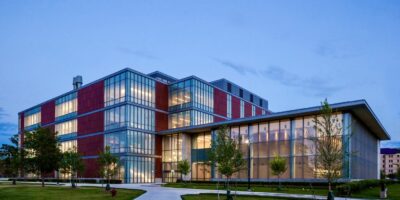
The college’s headquarters are on the Grand Rapids Medical Mile, a corridor of health science education, research and hospital care. The $90 million, privately funded Secchia Center opened there in 2010 with a simulation center where students practice clinical skills. The college also keeps a full presence on the MSU campus in East Lansing, and its eight community campuses are in Detroit, Flint, Grand Rapids, Lansing, Midland Regional, Southeast Michigan, Traverse City and the Upper Peninsula Region. The college lists Corewell Health and Henry Ford Health among its partners, and in 2025 it appointed interim chairs for six new statewide departments anchored at Henry Ford Health.
A rich history, thoughtfully designed
The college has a long record of medical education built around improving the health of Michigan’s people. When it was founded, its main goal was to train primary care doctors for the state. Since then it has expanded in mission and size: under former dean Aron Sousa, then senior associate dean for academic affairs, the college doubled its class size and turned a two-year, 60-student Grand Rapids campus into a four-year, 350-student campus. The college now counts 6,599 Spartan MD alumni, and its faculty includes physicians and researchers who teach, practice and mentor students across the state.
Leadership changes
The college has seen several leadership changes in recent years. Norman Beauchamp Jr., MD, was dean from 2016 to 2019 before becoming MSU’s executive vice president for health sciences; he left MSU for Georgetown University in 2024. Aron Sousa, MD, the seventh dean, left in 2025 to become president of Rosalind Franklin University of Medicine and Science. Supratik Rayamajhi, MD, FACP, has served as interim dean since October 1, 2025, and will serve until a national search selects a new dean.
Medical Programs and Affiliations
Michigan State University College of Human Medicine offers several programs designed to meet the needs and interests of its students. These include the traditional MD program, combined degree options and certificate programs that let students focus on a specific area. Some of these programs need a separate application or extra materials, so read each one carefully.
MD Program
The flagship program is the Doctor of Medicine (MD). It follows the Shared Discovery Curriculum, which puts students in real clinical settings from the first year. All MD students apply through AMCAS. The college estimates its new entrants for this cycle at 193: 165 through the regular MD program, 16 through early assurance, 2 MD/PhD students, 3 in other combined programs and 7 through other special programs.
Dual Degrees
MD/PhD Degree
The MD/PhD program offers two options. In the CHM-MSU MD/PhD program, established in 1985, students earn an MD from the College of Human Medicine and a PhD from the MSU Graduate School. Students can choose from many MSU PhD programs; the BioMolecular Science Gateway alone offers admission to six: Biochemistry and Molecular Biology; Cell and Molecular Biology; Microbiology, Genetics and Immunology; Genetics and Genome Sciences; Pharmacology and Toxicology; and Physiology. The program also welcomes applicants whose research interests lie outside the traditional biomedical sciences, as long as the research connects to medicine and health care.
In the VAI-CHM MD/PhD program, students earn the MD from the College of Human Medicine and a PhD in Molecular and Cellular Biology through the Van Andel Institute Graduate School in Grand Rapids. Both options train physician-scientists.
On the CHM-MSU track, students take medical and graduate courses for the first three years, sit for USMLE Step 1 by the end of year three, then spend years four, five and more on dissertation research before returning for clinical clerkships. During the research years, students keep a monthly continuity clinic in an area they choose. The college’s financial package has included health care, partial tuition and a living stipend for the medical training years, with graduate programs supporting students during the PhD years, and every student must apply for an NIH F30 award (or its equivalent) within their first 48 months.
To apply, choose the combined MD/PhD application type in AMCAS. For the 2026-2027 cycle, MD/PhD applicants must take the MCAT by August 15, Casper by August 13 or PREview by August 25, submit AMCAS by September 1, 2026, and submit the secondary and letters of evaluation by October 1, 2026. They submit their PhD program preference with the secondary. An applicant who is not selected for the MD/PhD program is not eligible for a seat as an MD-only student. Questions go to Cindy Grove Arvidson, PhD, director of the CHM-MSU MD/PhD program (MD/PhD program).
MD/MPH Degree
This dual degree joins medical education with public health training. The Master of Public Health is an online program of 43 credits. Applicants must apply to both the College of Human Medicine and the MSU Graduate School, and each admissions committee evaluates them separately. Students admitted to the MD program can count nine credits of medical school coursework toward the MPH electives. Because the Shared Discovery Curriculum is demanding, the program strongly encourages students to finish the MPH coursework in the four semesters before medical school, which delays matriculation by one year. A second option spreads the work across a summer before medical school and a gap year after the first two years. The MPH offers concentrations in general public health, rural public health and public health data management and analytics.
MD/MBA Degree
The MD/MBA combines medical education with business administration through MSU’s Eli Broad College of Business. It prepares students to lead health care organizations and make decisions that serve both patients and operations. Contact the Broad College’s dual-degree office for current details.
MD/Oral and Maxillofacial Surgery
The college also offers a six-year combined MD and oral and maxillofacial surgery program with Henry Ford Hospital in Detroit. Applicants must first apply through ADEA PASS by September 15, then submit an AMCAS application, the MSU CHM secondary, letters and a situational judgment test. For 2026-2027, MD/OMS applicants should take Casper by October 1 or PREview by October 15 and submit the secondary and letters by November 1, 2026; the National Matching Services OMS match is January 20, 2027.
Certificate Programs
Leadership in Rural Medicine (LRM)
This program is for students who want to practice in rural communities. Applicants must have strong qualifications for rural practice, and the committee considers previous rural life experience, initiative and the desire to become both an excellent physician and a community leader. Students spend their first two years in East Lansing or Grand Rapids, then complete their clinical years at a rural campus, where they gain small-group, hands-on experience.
Applicants indicate interest in one or both of two tracks, but they follow one track once admitted:
- Rural Physician Program (RPP): based at the Upper Peninsula Region campus in Marquette.
- Rural Community Health Program (R-CHP): based in Midland and Traverse City, with up to 12 admitted students selected each year. Students train at Munson Medical Center in Traverse City or at MyMichigan Medical Center Midland and in surrounding small communities, with exposure to rural community health and rural leadership training.
The LRM application includes additional essays within the secondary application. The track-specific prompts for this cycle were not confirmed at the time of writing; follow the instructions in your applicant portal.
Leadership in Community and Public Health (LCPH)
At the Flint campus, medical students can join the Leadership in Community and Public Health certificate program, formerly known as Leadership in Medicine for the Underserved (LMU). The new program combines two of the college’s legacy programs: Leadership in Medicine for the Underserved and Medical Partners in Public Health (MD-PH). It offers hands-on work with underserved populations through community-engaged research, electives with community organizations and international experiences. Clinical training is paired with core public health fields such as epidemiology, public policy and behavioral and environmental health, with an emphasis on cultural competency, health equity and population health (Flint Campus, Leadership in Community and Public Health).
In May 2026, CHM alumna Gurbaksh Esch, MD, MPH, FAAP, was named director of LCPH. Students who would once have applied to LMU or MD-PH should look at LCPH instead. Program-specific essay prompts for this cycle were not confirmed at the time of writing.
What LMU and MD-PH offered
Because many applicants still search for the older names, here is what the two legacy programs covered. Leadership in Medicine for the Underserved, based in Flint, placed students with underserved and vulnerable populations through community involvement, clerkships in underserved areas and local and international electives. Medical Partners in Public Health added a population-based approach to clinical training, with public health coursework and a community-based capstone project focused on the social determinants of health. LCPH now carries both missions forward.
Epidemiology Certificate
MSU’s Department of Epidemiology and Biostatistics offers a 16-credit graduate certificate in epidemiology for students interested in clinical and epidemiologic research who may not have time for a full master’s program. It covers epidemiology and biostatistics, requires no thesis and lets students take one or more courses per semester. Certificate students can apply to the MS in Epidemiology and, if accepted, transfer up to nine credits.
Programs and Degrees for the Wider Health Sciences
Public Health
The online Master of Public Health program offers three concentrations: general public health, rural public health and public health data management and analytics. Because it is delivered entirely online, it is open to working professionals and students across the country, and it is the MPH used in the MD/MPH.
Epidemiology and Biostatistics
MSU offers graduate training in epidemiology and in biostatistics. The epidemiology programs focus on disease patterns and research methods in public health, while biostatistics focuses on statistical methods for designing and analyzing health research.
Basic Science and Interdisciplinary Programs
For students drawn to research, MSU’s basic science departments connect closely to the College of Human Medicine. The college’s research program highlights its affiliated basic science departments of Biochemistry and Molecular Biology; Microbiology and Molecular Genetics; Pharmacology; and Physiology. Through the BioMolecular Science Gateway, PhD students study microbiology, genetics and immunology; pharmacology and toxicology, including how drugs and toxic substances affect living systems and how new therapies are developed; and physiology, the study of normal body function and the mechanisms of disease. Neuroscience is a research focus at the Grand Rapids Research Center through the Department of Translational Neuroscience, which studies conditions such as Parkinson’s and Alzheimer’s diseases. These programs give MD/PhD students and research-minded MD students specialized knowledge that complements their medical education.
Early Assurance and Special Admissions Programs
The college offers several early admission pathways for students committed to serving underserved communities. All are enriched, interest-directed programs, not accelerated ones.
- Early Assurance Opportunity (EAO): for Michigan State University undergraduates.
- Early Assurance Program (EAP): for students at partner colleges and universities with ties to the college’s community campus sites. Students apply as juniors (or in the year before finishing their degree) as representatives of their school. Preference goes to first-generation college students, graduates of low-income high schools, students eligible for need-based grants and those with an interest in a high-need specialty. Recent requirements have included an overall and BCPM GPA of at least 3.0, an MCAT of at least 500 with section scores of 125 or above, a situational judgment test and three to five letters through the premedical advisor.
- Mission SMART (SpartanMD Acceptance Realization Track): an early admission partnership with like-minded undergraduate institutions that share the college’s mission, with similar preferences and requirements. Xavier University of Louisiana was its founding partner in 2019.
- Advanced Baccalaureate Learning Experience (ABLE): a year-long enriched academic program for an invited group of disadvantaged applicants. There is no direct application. After the regular interview, the admissions committee refers selected applicants who show promise for medicine but may lack the science background to perform at their best. Students who meet the program’s minimum requirements are offered regular admission to the following year’s class. ABLE was established in 1986 and has helped more than 300 students from disadvantaged backgrounds enter medical school.
Talk with your premedical advisor if your school is an early assurance partner, because applications go through the partner school and timelines start in the junior year.
Curriculum Overview
The curriculum at Michigan State University College of Human Medicine is called the Shared Discovery Curriculum (SDC). The college describes it as “a radical departure from present educational models, emphasizing usefulness and experience as a framework for adult education.” It integrates basic science, disease science and clinical experience across all four years, building each stage on the last. Students learn by doing and by being useful in real clinical settings.
Three phases
- Early Clinical Experience (ECE): Students begin medical school with hands-on clinical work while they study the basic sciences, so they can apply what they learn right away. The first year includes fall, spring and summer semesters.
- Middle Clinical Experience (MCE): Students keep building clinical skills while studying more advanced medical knowledge. During the ECE and MCE, students in East Lansing or Grand Rapids apply the sciences to their work in more than 90 clinics.
- Late Clinical Experience (LCE): In years three and four, students complete disciplinary clerkships, such as internal medicine, surgery, pediatrics and obstetrics and gynecology, at one of eight community campuses. They also take electives in their areas of interest and prepare for residency.
The full program takes eleven semesters over four years. Patient interaction begins in year one, and clinical rotations are integrated throughout all four years.
How students learn
The SDC emphasizes small-group and structured self-directed learning. The college grounds this design in educational research: active processing of information deepens understanding, learning with others works better than learning alone, feedback is one of the strongest drivers of learning, mentoring supports reflection and growth, and engagement guards against burnout. Students and faculty work and learn together to build strong relationships. Lectures are not offered online, and timely attendance at all scheduled activities is expected; attendance records are part of each end-of-semester competence review.
Assessment
The curriculum is graded pass/fail, and students are not ranked. A research thesis is not required, although research opportunities are available. Community service is required. Tutoring is available throughout medical school through the college’s Academic Achievement office.
Core Principles: SCRIPT
Since 2005, the college has organized its curriculum around a set of competencies called SCRIPT. These build on the residency competencies of the Accreditation Council for Graduate Medical Education, with additions that fit the college’s mission:
- Service: taking part in services that benefit the community, planning them around community needs and reflecting on that work.
- Care of Patients: showing kindness and compassion, collecting accurate patient data, forming sound assessments and plans, including patient values in care, and communicating and counseling well.
- Rationality: using evidence and critical thinking in clinical decisions, identifying your own strengths and weaknesses and responding to feedback.
- Integration: combining basic, clinical and social sciences across the curriculum.
- Professionalism: holding high standards of ethics and behavior in every interaction.
- Transformation: growing into an adaptable, resilient physician who can work in a changing health care system.
What the curriculum means for applicants
Two practical points follow. First, because students work in clinics from the start, the college looks for applicants who already understand clinical settings and can be useful in them. Second, because the third and fourth years take place in community campuses that may be far from East Lansing or Grand Rapids, you need to be ready to move. All students must have a valid U.S. or Canadian driver’s license and a reliable vehicle by matriculation.
Admissions Requirements and Application Process
The admissions process at Michigan State University College of Human Medicine is highly competitive. The college looks for students who excel academically and fit its mission of service to underserved populations. It uses a holistic, mission-aligned review that considers academic metrics, personal qualities and experiences.
Selection Factors
In the college’s words, it admits “individuals who demonstrate academic excellence; commitment to service and community; personal characteristics and competencies consistent with the profession of medicine; and potential to advance the mission of our college.” The key factors are:
- Academic metrics. There is a minimum for receiving a secondary (BCPM GPA 2.5, MCAT 498), but no minimum for admission beyond that. The committee looks at year-to-year and cumulative GPA, including postbaccalaureate and graduate work, and at MCAT performance in context.
- Experiences. Significant weight goes to clinical experience, community service, leadership and other activities that show commitment to medicine and to vulnerable populations. Shadowing is recommended, and the college encourages long-term, in-depth medical, clinical and volunteer work, paid or unpaid.
- Personal characteristics. Motivation, communication, problem solving, resilience, empathy, cultural humility and a real interest in addressing health disparities.
- State residency. Preference is given to Michigan residents. Out-of-state applicants with ties to Michigan or a sincere interest in serving underserved communities are encouraged to apply.
- Diversity of the class. The college seeks a class reflective of the rural and urban character of Michigan and representative of a wide range of life experiences and talents.
Eligibility and citizenship
The college considers citizens of the United States and Canada, U.S. permanent residents and DACA recipients, with preference for DACA recipients who are Michigan residents. Canadian applicants must be Canadian citizens and are reviewed as out-of-state applicants. Other international applicants are not considered, and the college is not accepting transfer students this cycle.
You must have completed at least 90 hours of college coursework at an accredited U.S. or Canadian institution to apply, and a bachelor’s degree must be conferred before you enroll. You also need a valid U.S. or Canadian driver’s license and a reliable vehicle by matriculation. Coursework must come from an accredited U.S. or Canadian four-year institution; community college courses count when a four-year school accepts them as transfer credit, and the college accepts community college coursework in every common pattern, including upward transfer, dual enrollment in high school and supplemental courses after starting at a four-year school.
Required Coursework
The college requires only three courses, and every prerequisite must be completed with a grade of C+ (2.3 on a 4-point scale) or higher:
| Subject | Requirement | Status |
|---|---|---|
| Biochemistry | Biochemistry, C+ (2.3) or higher | Required |
| Biology | Upper-level biology (300 level or higher), C+ (2.3) or higher | Required |
| Physics | Two semesters, C+ (2.3) or higher | Required |
The college also strongly recommends coursework in these subjects:
- Behavioral sciences: anthropology, psychology, sociology.
- Humanities: ethics (bioethics), history, languages, philosophy.
- Life and physical sciences: anatomy, bioinformatics, genetics, immunology, microbiology, neuroscience, physiology.
- Mathematics: algebra, data analysis and processing, statistics.
Biochemistry, upper-level biology and the MCAT all build on general chemistry, organic chemistry and introductory biology, so plan to take those foundation courses as well, even though the college lists only the three courses above as required. All prerequisites must be completed at an accredited college or university in the United States or Canada. If you took a prerequisite at a community college, the college encourages you to show competency with higher-level courses in related subjects at an accredited four-year institution.
AP credit and online courses are accepted. Pass/fail courses are reviewed case by case, so contact the admissions office if pass/fail grades cover a prerequisite. You can finish prerequisites as late as August 2027, and older coursework does not expire, although more recent or advanced science work is preferred. For a broader checklist, see our guide to medical school prerequisites.
GPA, postbaccalaureate work and ABLE
If your undergraduate GPA is low, the college considers postbaccalaureate and graduate work: a cumulative post-baccalaureate or graduate BCPM GPA of 3.0 with at least 20 science credit hours meets its minimum academic standard for a secondary. There is no fixed credit minimum, but most successful applicants complete at least 20 academic credits with a GPA of 3.5 or higher in the area that needs improvement. Extra courses outside that area generally do not help. The college encourages a formal postbaccalaureate or graduate enhancement program where possible, for the advising and structure it provides.
Applicants from disadvantaged backgrounds, especially from Michigan, who are strong mission fits and would benefit from more science preparation are encouraged to apply. They may be considered for the ABLE program.
MCAT
The MCAT is required. For the 2026-2027 cycle, the college accepts scores from January 2023 through September 12, 2026. It emphasizes the most recent score, but it can also consider how many times you tested, trends across attempts and your highest section scores. An MCAT of 498 is the minimum to receive a secondary.
Situational Judgment Test: Casper or PREview
Applicants must take one situational judgment test, either the Casper test or the AAMC PREview exam. For the MD program, the last acceptable PREview date is October 15 and the last acceptable Casper date is November 12. Applicants who test after the deadline are not considered. MD/PhD applicants face earlier dates (Casper by August 13, PREview by August 25, MCAT by August 15), and MD/OMS applicants should follow that program’s dates. Schedule your test early in the summer so your score reaches the college while your file is being reviewed.
Letters of Evaluation
Applicants must submit at least three and no more than four letters of evaluation, and one letter must be written by a science course instructor. Letters should come from people who know you well and can objectively assess your academic readiness, personal characteristics and ability to engage with others in academic, clinical or community settings. A letter from a supervisor in a clinical setting is encouraged but not required. Letters from family members or friends are discouraged. All letters should be on letterhead, signed and submitted through the AMCAS Letters Service; do not send letters directly to the college. Letters are due November 30, 2026, with the secondary.
Committee letters and letter packets each count as one letter entry. A committee letter fulfills the requirement if it is accompanied by at least two of the individual letters it references; otherwise, add two more individual letters. A letter packet fulfills the requirement if it contains at least three individual letters; otherwise, add individual letters to reach the minimum. For help choosing writers, read our guide to medical school recommendation letters.
Clinical Experience
The college recommends shadowing and encourages long-term, in-depth medical, clinical and volunteer work. The 2025 entering class showed how common that is: most matriculants reported community service, physician shadowing or clinical observation, medical or clinical volunteering, paid clinical work and research. Your goal is not to match a checklist but to show sustained, meaningful contact with patients. If your hands-on hours are thin, clinical internships for pre-med students can add structured patient contact, though experience close to home with Michigan communities speaks most directly to this college’s mission.
Primary Application
The college participates in the American Medical College Application Service (AMCAS). For the 2026-2027 cycle, the earliest submission date was May 28, 2026, review began July 6, 2026 and the deadline is October 15, 2026. See our AMCAS application guide for help with each section.
Secondary Application
Applicants who meet the residency and minimum academic standards receive a secondary. The standards are an undergraduate BCPM GPA of 2.5 or above (or a cumulative post-baccalaureate or graduate BCPM GPA of 3.0 with at least 20 science credits) and an MCAT of 498 or above, about the 40th percentile. Applicants below these standards are screened for mission alignment and achievement and may still receive a secondary. Secondaries come through the College of Human Medicine applicant portal at chmadmissions.msu.edu, which is also used to pay the fee and track your status. Secondaries could be submitted from July 1, 2026, and the secondary and your letters of evaluation are due November 30, 2026. The college advises submitting secondary responses within two weeks. The fee is $100, and fee waivers are available. The 2026-2027 secondary has three essays of up to 400 words each, covered in detail below.
Interview
Selected applicants take part in a virtual interview day with a multiple mini-interview (MMI) and a 30-minute traditional one-on-one interview with a current medical student. Invitations begin in August, and interviews run from September through February.
Criminal Background Check and Technical Standards
All accepted applicants must complete a criminal background check as part of the final admissions process. The results are compared with the information in your AMCAS application and the MSU application. Disclose any institutional action, felony conviction or other criminal conviction. Failing to disclose is treated as falsification and can lead to the offer of admission being withdrawn.
Students must also meet the college’s technical standards, the abilities needed to complete medical training. You attest to them at the interview, at matriculation and every year after. Reasonable accommodations are possible in some cases; contact MSU’s Resource Center for Persons with Disabilities if you think you may need one.
Decisions, deposits and the alternate list
Acceptance notices go out between October 15, 2026, and August 9, 2027. You have up to two weeks to respond to an offer. The deposit is $100 for in-state and out-of-state students; it is refundable until April 30, 2027, and it is applied to tuition. Deferral requests are considered case by case, so ask as soon as possible after your acceptance if you need one.
The college typically places about 200 applicants on its alternate list each cycle. Alternates are not ranked; they are reviewed on an ongoing, mission-aligned basis. Letters of intent, letters of interest and updates on significant achievements are accepted only from applicants on the alternate list.
Additional information for admitted students
Admitted students receive their MSU Personal Identification and Access Numbers (PID and PAN), which activate MSU email and other university services. Every entering student must submit an institutional action certification form from each college or university attended. Admitted students also provide official transcripts from all colleges and universities attended, to verify completion of premedical coursework and degrees.
Admissions Timeline
| Date | Step |
|---|---|
| May 28, 2026 | Earliest date to submit AMCAS |
| July 1, 2026 | Secondary applications can be submitted |
| July 6, 2026 | Application review begins |
| August 2026 | Interview invitations begin |
| September 1, 2026 | MD/PhD AMCAS deadline (MD/PhD secondary and letters due October 1) |
| September 12, 2026 | Latest MCAT date considered |
| September 2026 to February 2027 | Virtual interviews |
| October 1, 2026 | MD/PhD secondary and letters due; MD/OMS Casper date |
| November 1, 2026 | MD/OMS secondary and letters due |
| October 15, 2026 | AMCAS deadline; last acceptable AAMC PREview date; earliest acceptance notices |
| November 12, 2026 | Last acceptable Casper test date |
| November 30, 2026 | Secondary application and letters of evaluation due |
| February 19, 2027 | Accepted applicants select the school they “Plan to Enroll” at in the AMCAS Choose Your Medical School Tool |
| April 30, 2027 | Accepted applicants engage with the AMCAS “Commit to Enroll” step; last day for a deposit refund |
| July 13, 2027 | College of Human Medicine “Commit to Enroll” deadline |
| August 9, 2027 | Latest acceptance notices |
| August 23, 2027 | Classes begin |
For more information, contact the Office of Admissions at (517) 353-9620 or [email protected].
Tuition, Cost of Attendance and Financial Aid
Attending medical school is a large financial commitment, and the College of Human Medicine works with MSU’s Office of Financial Aid to help students manage the cost.
2026-27 tuition and student budget
MSU charges medical tuition by the semester. For 2026-27, tuition is $17,051 per semester for Michigan residents and $30,963 per semester for nonresidents, for full-time enrollment (12 or more credits). Fees are $195 in fall and spring and $19 in summer. The degree takes eleven semesters over four years, and the first year includes a summer semester, so first-year tuition covers three semesters.
The Office of Financial Aid publishes a student budget, the cost of attendance it uses to set aid, for each semester (MSU Office of Financial Aid, Budget Planning). For the first year (the Early Clinical Experience), the 2026-2027 budget is:
| Semester | Michigan resident | Nonresident |
|---|---|---|
| Fall | $33,272 | $47,184 |
| Spring | $33,272 | $47,184 |
| Summer | $27,875 | $41,787 |
| Year 1 total (sum of the three semesters) | $94,419 | $136,155 |
These budgets include tuition, fees and living allowances. The monthly living allowance is $2,623: $2,187 for rent, food and utilities and $436 for personal and miscellaneous costs. The financial aid office can raise a budget for health insurance coverage and, for some students with children and little or no income, for dependent care. Plan for living costs in the summer between the Middle and Late Clinical Experiences if you are not enrolled, and note that fourth-year budgets include allowances for residency applications and interview travel.
AAMC cost of attendance
The AAMC’s Tuition and Student Fees survey uses a standard first-year format, which makes it useful for comparing schools. For 2025-2026, it lists:
- In-state: tuition and fees $33,752; other expenses $31,114; health insurance $3,112; total cost of attendance $67,978.
- Out-of-state: tuition and fees $61,576; other expenses $31,114; health insurance $3,112; total cost of attendance $95,802.
The survey figures cover a standard academic year and are lower than the college’s own Year 1 budget, which also covers the first-year summer semester. Use the college budget for planning and the AAMC figure for comparisons.
Financial Aid
Ninety-one percent of the college’s students received financial aid in 2024-25. MSU’s Office of Financial Aid works with students to plan their funding, which typically combines federal loans with scholarships and grants. You can reach the office at 517-353-2401. The Academic Affairs team also includes an associate director of financial aid who meets with medical students.
Scholarships
The college offers three named scholarship programs for entering students:
- Mission Excellence Scholarship: $20,000 for the first year, renewable for a second year, for a total of up to $40,000. Recipients are selected through holistic review, with no separate application.
- Dean’s Scholars Program: a full tuition scholarship at Michigan resident rates for all eleven semesters. Three Dean’s Scholars are identified each year, and candidates are invited to interview.
- Bhanusali Innovation Scholars Program: a full tuition scholarship plus venture funds. Applicants complete extra essays with the secondary, and interviews take place in December and January. The program was established by Dhaval Bhanusali, MD, a 2010 graduate of the college.
Entering students may also be invited to apply for donor-funded scholarships in late winter or early spring before matriculation. The college and its community campuses award many donor-funded scholarships tied to its mission. Examples include:
- Daniel and Debra Edson Endowed Scholarship Fund: established in 2016 to support in-state students admitted through the Early Assurance Program.
- Mazzuchi Scholarship: for Upper Peninsula campus students who plan to practice in the Upper Peninsula after residency, with financial need as one factor.
- Dr. Harry D. Brickley Endowed Scholarship and Mashkiki Endowed Scholarship: support for students interested in caring for Indigenous communities in Michigan.
Ask the financial aid office which awards are open each year and whether you need a separate application.
Loan forgiveness and repayment
Graduates who work in public service may qualify for federal programs such as Public Service Loan Forgiveness, which forgives remaining federal loan balances after a qualifying period of public service employment and payments. Physicians who practice in shortage areas may also qualify for state and federal loan repayment programs. Check each program’s current rules before you count on it.
Average graduate debt
Indebted graduates in 2024-25 left with an average of $263,084 in medical school debt. Budget carefully, borrow only what you need and use the financial aid office’s planning help to keep debt manageable.
Campus Facilities and Student Life
Life at the College of Human Medicine depends a lot on where you are in the program. For the first two years, you study either on the MSU campus in East Lansing or at the Secchia Center in Grand Rapids. For the last two, you live and train in one of eight community campuses, which range from Detroit to small towns in the Upper Peninsula. The college describes its culture as positive and supportive, with team-based learning that helps students build lasting relationships with classmates and faculty mentors.
Grand Rapids Campus
The Grand Rapids campus sits in the health sciences corridor on the Grand Rapids Medical Mile and is home to the Secchia Center, the college’s headquarters. The $90 million, privately funded building opened in 2010 and was designed specifically for medical education, with modern classrooms, a simulation center and clinical skills training facilities. Nearby, the MSU Grand Rapids Innovation Park holds the college’s Grand Rapids Research Center, where 33 biomedical research teams study women’s health, Parkinson’s and Alzheimer’s diseases and cancer. Grand Rapids itself is one of Michigan’s largest cities and has a strong health care community, which gives students many options for clinical experience and research. The campus is close to restaurants, markets, parks and trails.
East Lansing Campus
On the main Michigan State University campus, students have access to everything a large Big Ten university offers: libraries, research labs, recreation facilities and a huge range of student activities. MSU’s East Lansing campus is known for its mix of historic buildings and modern architecture, set among park-like green spaces and gardens, and it covers thousands of acres, so it often feels like a small, walkable city. Students on the East Lansing campus have access to all student recreation facilities. The MSU Institute for Quantitative Health Science and Engineering (MSU IQ) in East Lansing applies engineering to biomedicine.
Explore the MSU campus
Much of MSU’s campus life was built for undergraduates, but medical students in East Lansing can use a great deal of it.
- Historic and modern architecture: the campus mixes historic landmarks with newer facilities, reflecting the university’s long history and its commitment to innovation.
- Botanical gardens and green spaces: the campus is known for gardens and open spaces that offer places to study, relax and exercise.
- Athletics and recreation: MSU competes in the Big Ten, and its recreational sports and fitness programs, including intramural leagues, give students many ways to stay active.
- Arts and culture: the Eli and Edythe Broad Art Museum features contemporary art exhibitions and public programs, and the Wharton Center for Performing Arts hosts Broadway shows, concerts and other performances.
- Student organizations: MSU has a very large number of student organizations, from academic clubs to cultural groups and fraternities and sororities, though medical students usually spend their limited free time in medical school groups.
Living and dining
The college does not offer on-campus housing reserved for medical students. Most medical students live off campus, and the college reports that affordable housing is readily available near every site. MSU offers off-campus housing resources, and East Lansing and Grand Rapids both have a wide range of neighborhoods within reach of campus. MSU’s residence halls, organized into neighborhoods with nearby dining halls, mainly serve undergraduates.
MSU’s dining services offer dining halls, cafes and food courts across campus, with options for vegetarian, vegan and other diets, and dietitians can help students with food allergies. In Grand Rapids, the Medical Mile is close to downtown restaurants and food markets.
Getting around
Every medical student needs a valid U.S. or Canadian driver’s license and a reliable vehicle, because clinical sites and community campuses are spread across the state. In East Lansing, the Capital Area Transportation Authority (CATA) runs bus service on campus and in the surrounding area, MSU is a bicycle-friendly campus with bike lanes and plenty of bike parking, and Zipcar and moped parking are available. MSU is a tobacco-free campus.
Getting to campus
East Lansing is a short drive from Capital Region International Airport and roughly 75 minutes from Detroit Metropolitan Airport, with airport shuttle service between Detroit Metro and East Lansing. The Capital Area Multimodal Gateway on the MSU campus connects to Amtrak and intercity bus lines. Grand Rapids is served by Gerald R. Ford International Airport.
Health, wellness and safety
The college supports student well-being through its Office of Student Affairs and Services, student wellness faculty and academic support. In East Lansing, MSU’s Olin Health Center provides primary care and other medical services to students, and Counseling and Psychiatric Services (CAPS) offers confidential counseling for stress, depression and other concerns. The Resource Center for Persons with Disabilities (RCPD) works with students who need accommodations so they can take full part in their education. In Grand Rapids, the campus works with local health care providers to offer students similar services. The college also supports students who identify as gender or sexual minorities through student organizations and wellness faculty who can help with career and life challenges.
Student Organizations
Medical students participate in a wide range of student organizations for professional development, personal growth, service and fun. The college has its own student government and professional and interest groups, such as chapters of the American Medical Association and the Student National Medical Association. The college and student groups also coordinate volunteer clinical programs, so students can sharpen their clinical skills while serving the communities where they live and train. In Traverse City, for example, the community campus runs a street medicine program.
Diversity and inclusion
The college’s mission commits it to “promoting the dignity and inclusion of all people.” Its Office of Access and Inclusive Engagement, led by Senior Associate Dean Wanda Lipscomb, PhD, supports students from many backgrounds, and programs such as ABLE and the early assurance pathways open doors for students from disadvantaged and underrepresented backgrounds. Current students speak dozens of languages besides English, including Spanish, Arabic, Hindi, Vietnamese, Tagalog and American Sign Language.
Life at the community campuses
Your third and fourth years are spent at a community campus, and life there looks very different from campus life in East Lansing. You may live in a mid-sized city like Lansing, Flint or Grand Rapids, in the Detroit area, or in a smaller community near Midland, Traverse City or Marquette. The smaller setting often means closer working relationships with faculty and residents. Plan for the move, budget for a car and housing, and think early about which campus fits your goals and your personal life.
Clinical Rotations and Research Opportunities
One of the defining features of the College of Human Medicine is its commitment to community-based education. In the Late Clinical Experience, students complete clerkships at one of eight community campuses, each with its own hospitals, clinics and patient populations. The college has a presence in more than 50 inpatient institutions in eight communities, and students rotate across nine primary teaching hospitals and 57 community hospitals statewide.
Community Campuses
- Detroit: tied to the college’s partnership with Henry Ford Health, which anchors six new statewide departments.
- Flint: known for its focus on public health and community outreach. The Flint campus is home to community participatory public health research, the Leadership in Community and Public Health certificate and the MSU and Hurley Children’s Hospital Pediatric Public Health Initiative. Students work with underserved populations in an urban setting.
- Grand Rapids: the college’s headquarters campus, with access to the region’s large health systems, including Corewell Health, and a wide range of clinical experiences.
- Lansing: near the state capital, with rotations in urban and suburban settings and a strong primary care focus.
- Midland Regional: a mid-sized and rural experience. Students train at MyMichigan Medical Center Midland and in clinics and hospitals in surrounding small towns.
- Southeast Michigan: near Detroit, with exposure to a diverse patient population and a variety of health care challenges.
- Traverse City: combines rural and small-town health care in Northern Michigan, with training at Munson Medical Center and other area hospitals.
- Upper Peninsula Region: based in Marquette, for students interested in rural medicine and in caring for patients in some of the most remote parts of Michigan.
How campus placement works
Students begin in East Lansing or Grand Rapids for the Early and Middle Clinical Experiences. For the Late Clinical Experience, students are placed at a community campus. Students in the rural tracks go to Midland, Traverse City or the Upper Peninsula, MD/PhD clerkship sites are set individually, and students in the Leadership in Community and Public Health program train in Flint. Placement considers student preferences and program needs, so state your interests clearly when the college asks.
Core clerkships and electives
The Late Clinical Experience includes required clerkships across the core disciplines, such as internal medicine, surgery, pediatrics and obstetrics and gynecology, plus electives in areas of interest. Because each community campus has its own hospitals and faculty, your elective options vary by campus. Students can also use electives for research or global health.
Match results
In Match 2026, 97% of the college’s seniors matched, 58% will stay in Michigan for residency and 39% matched into primary care programs (MSU Today, Match Day 2026). Match Day events were held in eight Michigan communities.
Research Opportunities
The college is committed to advancing medical knowledge through research. As a community-based school, one of its goals is collaborative, multidisciplinary and multi-community research that uses its distributed campus system. Its research spans clinical research that can be applied in practice and basic science on the mechanisms of disease in its affiliated departments: Biochemistry and Molecular Biology, Microbiology and Molecular Genetics, Pharmacology, and Physiology. The college reported $51.6 million in direct federal research grants and contracts in fiscal year 2024.
Three “pillar” communities anchor the research program:
- Grand Rapids Research Center: in the MSU Grand Rapids Innovation Park, with 33 biomedical research teams working on women’s health, Parkinson’s and Alzheimer’s diseases and cancer. Departments here include Translational Neuroscience; Obstetrics, Gynecology and Reproductive Biology; and Pediatrics and Human Development.
- MSU IQ in East Lansing: the Institute for Quantitative Health Science and Engineering, which brings engineering principles into biomedicine.
- Flint: community participatory public health research.
The college also has research ties to the Van Andel Institute through the VAI-CHM MD/PhD track. A research thesis is not required for the MD, but students can join faculty projects in biomedical science, clinical medicine and public health. The Research to Reduce Disparities in Disease (R2D2) NIH grant has trained CHM students to do mentored research during medical school.
Global health
Global health experiences are part of the college’s mission of service “at home and abroad.” In the 2025 AAMC Graduation Questionnaire, 14% of the college’s graduating seniors reported a global health experience during medical school. The Leadership in Community and Public Health program includes international experiences, and the college runs a Global Health Study program. If you are interested in Spanish-language medicine or Latin American health systems before medical school, a medical internship in Peru can give you patient contact in that setting.
If you are thinking about service abroad before medical school, choose a program where you work under supervision and do real tasks. IMA’s medical internships abroad place pre-health students in clinics where they take vitals and help with intake, triage and direct care under supervision. Experience like this complements, but does not replace, long-term service in Michigan communities.
Notable Alumni, Faculty, Leadership and Admissions Staff
The College of Human Medicine has a long record of producing leaders in medicine, research and public health. Its 6,599 MD alumni practice in a wide range of specialties across Michigan, the United States and the world. The profiles below cover alumni, current leadership, admissions staff and faculty whose roles were confirmed on college or MSU pages. Knowing who leads the college can help you understand its priorities; it does not mean any of these people will review your application or mentor you.
Leadership
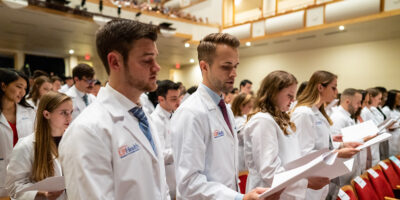
Supratik Rayamajhi, MD, FACP, Interim Dean. Dr. Rayamajhi was appointed interim dean on October 1, 2025. He is a professor of medicine and associate dean for clinical affairs. A graduate of the Michigan State University Internal Medicine Residency Program, he joined the college’s faculty in 2011 and has served as clerkship director, residency program director, vice chair for education and senior vice chair for clinical strategy in the Department of Medicine. At the 2026 white coat ceremony, he told incoming students that their coats represent a promise of humanism and compassion. He will serve until a national search selects a new dean. For applicants, his path shows the college’s close ties to its own residency programs and to clinical education.
Andrea Wendling, MD, Senior Associate Dean for Academic Affairs. Dr. Wendling is a professor of family medicine who created the college’s continuum of rural medicine programs, designed to address the shortage of physicians in rural communities. She was named Michigan’s Rural Health Professional of the Year in 2018 and National Rural Health Educator of the Year in 2020, and she has published more than 50 peer-reviewed articles on primary care and rural physician workforce and rural medical education. She has also chaired the Curriculum Committee. If the Rural Physician Program or the Rural Community Health Program interests you, her work explains why the college invests so heavily in rural training.
Wanda Lipscomb, PhD, Senior Associate Dean for Access and Inclusive Engagement and Associate Dean for Student Affairs. Dr. Lipscomb is an associate professor of psychiatry and directs the Advanced Baccalaureate Learning Experience (ABLE), the conditional admissions program established in 1986 that has helped more than 300 students from disadvantaged backgrounds enter medical school. She previously served as the college’s director of admissions and has led federal HRSA grants totaling more than $22 million, including a Center of Excellence in Diversity in Medicine. Her office supports students throughout medical school.
Admissions staff
Amber Heard-Booth, PhD, Assistant Dean for Admissions. Dr. Heard-Booth leads the college’s admissions office and is available to answer students’ questions about the admissions process. She reports to the senior associate dean for academic affairs.
The Office of Admissions can be reached at (517) 353-9620 or [email protected].
Program leaders
Gurbaksh Esch, MD, MPH, FAAP, Director, Leadership in Community and Public Health. A College of Human Medicine alumna, Dr. Esch was named director of the new LCPH certificate in May 2026 after two years as interim director of Leadership in Medicine for the Underserved. She is an assistant professor in the Charles Stewart Mott Department of Public Health, a pediatrician at Hurley Medical Center and core faculty of the Hurley/MSU Pediatric Residency. She worked with Laura Carravallah, MD, then director of Medical Partners in Public Health, to merge the two programs.
Cindy Grove Arvidson, PhD, Director, CHM-MSU MD/PhD Program. Dr. Arvidson is the contact for MD/PhD applicants and meets with candidates during the interview process.
Faculty
Mona Hanna, MD, MPH, FAAP, Associate Dean for Public Health and C. S. Mott Endowed Professor of Public Health. Dr. Hanna, formerly known as Dr. Mona Hanna-Attisha, is a pediatrician and public health leader. She is the founding director of the Pediatric Public Health Initiative, a partnership of MSU and Hurley Children’s Hospital in Flint, and she leads Rx Kids, a first-in-the-nation program that provides economic support to mothers and babies. She was named one of Time magazine’s 100 Most Influential People after helping expose the Flint water crisis, and in 2026 she was honored again on the TIME100 Health list. She is the author of What the Eyes Don’t See. She is also one of the college’s best-known alumni (see below).
Julie Phillips, MD, MPH, Chair, Department of Family Medicine. Dr. Phillips is known for research on how medical students choose careers and how those choices shape the primary care workforce. Her interests include professional development for students and residents, social mission-driven medical education and narrative medicine. She earned her MD and MPH at the University of Michigan.
Adesuwa (Ade) Olomu, MD, MS, FMCP, FACP, Blanch B. and Frederick C. Swartz Endowed Professor of Medicine. Dr. Olomu is interim associate dean for faculty affairs and vice chair for research in the Department of Medicine. A health services researcher, she leads the Office-GAP program, which aims to improve cardiovascular outcomes for patients with diabetes and heart disease. Her research on health disparities and better outcomes for underserved patients reflects the college’s mission.
Wayne McCullough, PhD: A Leader in Public Health at MSU
Wayne McCullough, PhD, directs the Master of Public Health Program in the Charles Stewart Mott Department of Public Health and is an associate professor in the Department of Family Medicine. His work matters to applicants interested in the MD/MPH or in public health careers, because the MPH program he leads is the one MD/MPH students complete.
Before joining MSU, Dr. McCullough was managing director of the Office for Health Equity and Inclusion at the University of Michigan Health System. He also co-directed Society 2030, a business and academic group at the University of Michigan’s Institute for Social Research that studied societal issues for the coming decades. That background gave him a deep understanding of health disparities and how institutions can address them.
His research focuses on men’s health, especially the health of Black men, with an emphasis on mental health, depression, diabetes and cardiovascular disease. He also studies how to identify and resolve health and health delivery disparities for underserved populations and how to turn those findings into real benefits for communities. He has published in journals including the Journal of the National Medical Association, Health Equity and Current Gerontology and Geriatrics Research.
Dr. McCullough has also supported medical student research. He is a co-investigator on the Research to Reduce Disparities in Disease (R2D2) NIH grant, which trains College of Human Medicine students to conduct mentored research during their medical education. By building research skills in future physicians, programs like this prepare them to address health disparities and improve patient outcomes.
For applicants, his career shows how public health and medicine meet at the College of Human Medicine: the MPH program is fully online, it offers rural public health and data analytics concentrations, and it gives medical students a structured way to add population health skills to clinical training.
Notable Alumni
Mona Hanna, MD, MPH (CHM MD, 2002). Dr. Hanna completed her clinical years at the college’s Flint campus and later her residency and chief residency at Children’s Hospital of Michigan in Detroit. She is best known for her work exposing lead in Flint’s drinking water in 2014 and advocating for the health of Flint’s children. MSU gave her its Distinguished Alumni Award in 2017. Her career shows the kind of community-centered public health leadership the college hopes to produce.
Gurbaksh Esch, MD, MPH, FAAP. An alumna who now leads the college’s Leadership in Community and Public Health certificate in Flint, Dr. Esch combines pediatric practice, public health teaching and advocacy, including service on the board of the Michigan Chapter of the American Academy of Pediatrics.
Dhaval Bhanusali, MD (CHM MD, 2010). Dr. Bhanusali established the Bhanusali Innovation Scholars Program, which gives selected entering students a full tuition scholarship plus venture funds.
Farhan Bhatti, MD (CHM MD, 2012). Dr. Bhatti received MSU’s 2022 Young Alumni Award, which recognizes alumni 40 and younger who have reached high levels of professional accomplishment early in their careers.
Admissions Statistics and Class Profile
The admissions process at the College of Human Medicine is highly selective, with a focus on students who fit the college’s mission of serving underserved populations. Below are the most recent figures, each labeled with its cohort and source.
The 2026 entering class
The college welcomed 190 new MD students at its 2026 Matriculation and White Coat Ceremony. Eighty percent are Michigan residents, 19% are first-generation college students and 91% come from medically underserved counties. Students are split roughly evenly between the East Lansing and Grand Rapids campuses for their first two years.
Matthew Emery, MD, the community assistant dean for the Grand Rapids campus, told WGVU News in August 2026 that more than 9,600 applicants competed for the 190 seats, a 16% increase from the year before, that 174 of the 190 students come from medically underserved counties and that one student came from Canada. The college has not published an official applicant count for this class.
Accepted applicants, 2025 entering class
| Measure | Value |
|---|---|
| Median MCAT (accepted applicants) | 508 |
| Mean MCAT (accepted applicants) | 509.4 (standard deviation 5.9) |
| Median section scores | 127 Chem/Phys; 126 CARS; 127 Bio/Biochem; 128 Psych/Soc |
| Median GPA (accepted applicants) | 3.84 |
Interviews and estimated entrants
In its most recently reported cycle, the college interviewed 550 applicants: 400 in-state, 150 out-of-state and none from other countries. For the 2026-2027 cycle, it estimates 193 new entrants across all pathways.
Enrollment and class makeup
Total enrollment was 822 MD students in October 2025. The most recently reported class included 119 women, 73 men and one student of another gender identity.
Selection Factors and residency
The college gives preference to Michigan residents and considers out-of-state applicants with ties to Michigan or a sincere interest in serving underserved communities. The college values diversity in all its forms, including racial, ethnic, socioeconomic and geographic diversity, and aims for a class that mirrors the patients its graduates will serve. A demonstrated commitment to underserved communities, through clinical experience, volunteer work or research, is a significant factor.
How to read these numbers
Keep the cohorts separate. The class size and Michigan share describe the 2026 entering class. The MCAT and GPA medians describe accepted applicants to the 2025 entering class. The interview count is the college’s most recently reported figure. The applicant figure for 2026 comes from a news report, not an official table.
Michigan State University College of Human Medicine Acceptance Rate
The college does not publish an acceptance rate or the number of acceptance offers it makes. Dividing the class size by the number of applicants gives a matriculation ratio, not an acceptance rate, because some admitted students enroll elsewhere. What the numbers do show is that the college interviews only a small share of its applicant pool, so your secondary and your mission fit carry a lot of weight in getting an interview.
Tips and Strategies for Admission
Gaining admission to Michigan State University College of Human Medicine takes careful preparation and a clear understanding of what the admissions committee is looking for. Here are tips to strengthen your application.
Highlight Your Commitment to Underserved Communities
The college places strong emphasis on applicants who have shown a commitment to underserved populations. Whether through volunteer work, clinical experience or personal background, make those experiences easy to find in your application. Depth beats breadth: two years at one free clinic says more than ten one-day events. If you can, serve communities that look like the ones the college serves, such as rural Michigan towns, Flint, Detroit or Grand Rapids neighborhoods with limited access to care.
Make Your Michigan Connection Specific
Eighty percent of the 2026 entering class were Michigan residents. If you are from Michigan, explain which community shaped you and where you hope to practice. If you are from out of state, the third secondary prompt invites you to explain your interest in training and practicing in Michigan. Real ties, such as family, school, work or long-term service in the state, are stronger than general praise.
Build Long-Term Clinical Experience
Hands-on experience in research and clinical settings matters. Be sure to detail your role in relevant projects and clinical work, including what you did and what you learned. Shadowing is recommended, and long-term paid or volunteer clinical work helps you understand the profession while serving others. Many students build hours over the summer through pre-med summer internships or local clinical jobs such as medical assistant, scribe or nursing assistant.
Strong Letters of Recommendation
Secure letters from people who know you well and can speak to your academic ability, clinical experience and character. The college requires three to four letters, including one from a science course instructor, and encourages one from a clinical supervisor. A letter from a physician you have shadowed or worked with can be especially effective. If you work with physicians during international healthcare internships, ask early whether a supervising clinician can write about your work, and make sure they can describe what they actually saw you do.
Take the Situational Judgment Test Seriously
Casper (by November 12) or PREview (by October 15) is required, and a test taken after the deadline is not considered. Practice with the official preparation materials, take the test early and treat it as part of your application, not an afterthought.
Prepare for the MMI
The multiple mini-interview format can be challenging because it requires quick thinking and clear communication. Practice common MMI scenarios and consider mock interviews to build confidence.
Showcase Your Research and Clinical Experiences
Research is not required, but the college values it, especially community-based and health services research. Describe your question, your role and what you learned, and connect it to patients where you can.
Be Genuine in Your Essays
The secondary application essays are your chance to share more about who you are and why you want to practice medicine. Be honest and reflective, and connect your experiences to the college’s mission and values.
Submit Early
Review begins in July and interviews start in September. Submit AMCAS early in the summer, take your situational judgment test early and return the secondary within a couple of weeks of receiving it.
Use the Postbaccalaureate Path Wisely
If your GPA needs repair, focus on the weak area. The college notes that most successful applicants who take enhancement coursework complete at least 20 credits with a 3.5 or higher in the area of need, ideally in a formal postbaccalaureate or graduate program.
If You Are Reapplying
Show what changed. A stronger MCAT, new coursework, a new clinical role or a year of service can all make a difference. Many reapplicants use a gap year to add patient contact; pre-med gap year programs can be one part of that plan, alongside steady work in your own community.
Keep Your Options Open
Applying to medical school is a competitive process. Even if the College of Human Medicine is your top choice, keep your options open. Applying to several medical schools improves your chances and lets you choose the program that best fits your goals and values. Consider a mix of schools that vary in competitiveness, mission focus and location, and weigh factors such as curriculum style, campus culture, support services and opportunities for clinical exposure or research. If rural medicine, public health or biomedical research interests you, look for schools with strong programs in those areas. Our related guides below can help you build a balanced list.
Secondary Application Questions, Example Responses and Analysis
Michigan State University College of Human Medicine Secondary Application: Essay Prompts, Sample Answers and Advice
After the college receives your verified AMCAS application, it invites applicants who meet its minimum academic standards (an undergraduate BCPM GPA of 2.5 or above, or a post-baccalaureate or graduate BCPM GPA of 3.0 with at least 20 science credits, and an MCAT of 498 or above) to complete a secondary application. Applicants below those standards are screened for mission alignment and achievement and may still be invited. The secondary is completed through the College of Human Medicine applicant portal. The secondary costs $100, fee waivers are available, and it is due, along with your letters of evaluation, on November 30, 2026. The college suggests submitting your responses within two weeks. The essays give the admissions committee a deeper look at your experiences, motivations and fit with the college’s mission.
For the 2026-2027 cycle, the secondary has three essay prompts, each with a limit of 400 words. All three are new this cycle. They ask about your vision for your career, your perspective on systemic inequities and your fit with the college’s community-based mission. Write every essay to 400 words or fewer and follow the limit shown in your portal.
The college publishes these prompts on its admissions information page under “Secondary Application Essay Prompts | 2027 Admission Cycle.” If you are applying to the Leadership in Rural Medicine program, the secondary includes additional rural medicine essays. The track-specific prompts for this cycle, for LRM and for the new Leadership in Community and Public Health program, were not yet published when this guide was written. MD/PhD applicants also submit their PhD program preference with the secondary. Answer any extra questions your portal shows using the same approach as below: be specific, stay within the limit and connect your answer to the program’s mission.
Each example below is original and written for this guide. They are teaching tools, not essays to copy. Use them to see how an answer can cover every part of a prompt, then write your own from your own experiences.
Essay #1: Your vision 15 years from now
Prompt: “How have your most meaningful experiences shaped what you envision doing in medicine 15 years from now? Describe one specific future accomplishment that would define your career’s success up to that point in time. (Please limit your response to 400 words or less.)”
Limit: 400 words. Who answers: all applicants who receive the secondary.
What it asks. This prompt has two parts. First, it asks you to connect your most meaningful experiences to a picture of your career in 15 years. Second, it asks for one specific accomplishment that would define your success by then. “One” and “specific” are the key words. The committee wants to see that your goals grow out of what you have actually done and that you can imagine a concrete result, not just a title.
How to approach it. Pick one or two experiences that changed how you see medicine, describe them briefly with real detail, then show how they point to a type of practice. Choose an accomplishment that is meaningful and realistic for a physician 11 or 12 years out of medical school: a program built, a service kept open, a gap closed, a group of students trained. Explain what it would take to get there. If it fits, connect your vision to Michigan and to the college’s community campuses or tracks.
Illustrative example, not an actual applicant essay (391 words)
The night shift at our county hospital in the western Upper Peninsula ended at seven, and by then I usually knew which patients had driven the farthest. As a certified nursing assistant for two years, I took vitals, helped patients walk after surgery and sat with families while they waited. The patient I think about most was a young mother in early labor who had driven ninety minutes because the closest birthing unit to her home had closed. She asked me, between contractions, whether her car would make it back in the snow. I did not have an answer.
That question shaped what I see myself doing fifteen years from now. I want to be a family physician who delivers babies in a rural Michigan county, works in the clinic three days a week and covers the hospital the rest. My shadowing with a family doctor in Ironwood showed me what that life looks like: she saw a toddler with an ear infection, a farmer with chest pain and a teenager who needed a quiet conversation about depression, all before lunch. She knew their roads, their jobs and their grandparents.
The accomplishment that would define my success by then is specific: helping a rural hospital reopen or keep its obstetric unit, so that women in that county can give birth within thirty minutes of home. That goal is not something one doctor achieves alone. It takes physicians willing to take call, nurses trained in emergencies, a hospital board that sees the value and data that shows outcomes are safe. I would want to be the physician who brings those groups together, presents the numbers and then takes the first night of call.
My experiences have also taught me that rural care depends on training rural doctors close to home. Students who learn in a small hospital often stay. That is why the College of Human Medicine’s community campus model matters to me. If admitted, I hope to complete my clinical years through the Rural Physician Program in the Upper Peninsula, where I could learn obstetrics from physicians who practice in the same conditions I will.
In fifteen years, I hope a medical student is standing where I stood as an aide, watching a mother deliver safely in her own county, and deciding that this is the kind of medicine worth practicing.
Why this example works.
- It answers both parts. The first half ties two concrete experiences, a nursing assistant shift and a shadowing day, to the kind of physician the writer wants to be. The second half names one accomplishment: helping a rural hospital keep or reopen its obstetric unit so that women can deliver within 30 minutes of home.
- The accomplishment is specific and believable. It is not “improving rural health.” It has a measurable outcome and lists what it takes: physicians willing to take call, trained nurses, a supportive hospital board and safety data.
- It shows understanding of the college. The writer connects rural training to the college’s community campus model and names the Rural Physician Program in the Upper Peninsula without over-praising it.
- The ending returns to the start. It closes with a future student in the writer’s old role, which shows the writer sees teaching as part of the goal.
Mistakes to avoid. Listing several goals instead of one. Naming a vague accomplishment such as “helping people” or a title such as “becoming chief of surgery.” Spending 350 words on the past and one sentence on the future. Inventing a program at the college or claiming you will be placed on a specific campus.
Essay #2: Systemic inequities and your approach to patient care
Prompt: “How have your personal experiences with, or observations of, systemic inequities shaped your perspective? Moving beyond generalities, describe how this perspective will uniquely influence your approach to patient care and your role in addressing health disparities as a future physician. (Please limit your response to 400 words or less.)”
Limit: 400 words. Who answers: all applicants who receive the secondary.
What it asks. This prompt has three parts: an experience with or observation of a systemic inequity, how it shaped your perspective, and how that perspective will change both your patient care and your role in addressing disparities. “Moving beyond generalities” is a direct instruction. The committee does not want a general essay about injustice; it wants to see how you will practice differently.
How to approach it. Start with something you lived or saw closely, described in concrete detail. Name the system that produced the problem, such as transportation, insurance, drug pricing, housing, language access or work rules, rather than blaming individuals. Then give two or three specific habits you will bring to patient care, with an example of each. Finish with a realistic role in addressing disparities, at a scale you can actually affect. It is fine to connect this to a verified program such as the Leadership in Community and Public Health certificate if it truly fits your goals.
Illustrative example, not an actual applicant essay (395 words)
For three years, my mother had dialysis three mornings a week. Her appointment was at six. The first bus in our part of Saginaw ran at six-fifteen. When my older brother’s car broke down, she either paid a neighbor or missed a session. Her nephrologist once wrote “nonadherent” in her chart. I read it over her shoulder in the patient portal and understood, for the first time, that the system could describe a bus schedule as a personal failure.
As a medical scribe in a Grand Rapids primary care clinic, I saw the same pattern again. A man’s A1c kept rising, and the plan each visit was a higher insulin dose. In the fourth visit, a medical assistant asked a question no one had asked: how much insulin was he actually able to buy? He was splitting doses to make a vial last. Another patient missed referrals because the specialty office only took calls during her work hours, and her employer did not allow phone breaks. None of these were failures of willpower. They were the predictable result of how transportation, drug pricing and work schedules are arranged.
These experiences changed how I think about patient care in three concrete ways. First, I will ask about barriers before I adjust a treatment. Questions such as “How do you get here?”, “What does this medicine cost you?” and “When can you actually take a call?” belong in the history, not at the end of a visit. Second, I will document barriers accurately. A note that says “missed sessions due to lack of early transportation” leads to a different plan and a different attitude than “nonadherent.” Third, I will treat a recurring barrier as a problem to fix, not just to work around. In my mother’s case, the fix was eventually simple: the dialysis center moved her to a later chair. It took one social worker’s phone call.
As a future physician, I want to work on disparities at the clinic level, where I can change intake questions, referral workflows and how teams use community health workers. The Leadership in Community and Public Health certificate at the College of Human Medicine’s Flint campus interests me because it pairs clinical training with public policy and community-engaged research. I want to learn how to turn what I hear in the exam room into changes that outlast a single visit.
Why this example works.
- It starts with a lived experience and names the system. A dialysis appointment before the first bus, and a chart note that called a transportation problem “nonadherent,” show how a system turns a barrier into blame.
- It adds observation from clinical work. The scribe examples, insulin rationing and referral calls during work hours, show the writer has seen the same pattern in other patients.
- It moves beyond generalities. It gives three concrete clinical habits, each with an example: asking about barriers, documenting them accurately and treating a recurring barrier as a problem to fix.
- It defines a realistic role. The writer chooses clinic-level change, intake questions, referral workflows and community health workers, and links it to the LCPH certificate in Flint.
Mistakes to avoid. Writing about inequity in general with no patients in it. Using another person’s hardship as a backdrop for your own story without showing respect for them. Promising to fix national policy alone. Ending with feelings instead of actions.
Essay #3: Your fit for MSU CHM’s community-based mission
Prompt: “Each year, we review thousands of applications. Beyond what is in your primary application, what do you want the Admissions Committee to know about you as it relates to your fit for MSU CHM’s community-based mission? If you are an out-of-state applicant, we encourage you to address your interest in training and potentially practicing in Michigan. (Please limit your response to 400 words or less.)”
Limit: 400 words. Who answers: all applicants who receive the secondary. Out-of-state applicants are encouraged to address Michigan.
What it asks. The prompt asks for something new, “beyond what is in your primary application,” and it ties that new information to the college’s community-based mission. The second sentence, new this cycle, asks out-of-state applicants to explain their interest in training and possibly practicing in Michigan.
How to approach it. Do not repeat your personal statement. Instead, add something the committee cannot see: what a listed activity was really like, a quality that does not show up in your activities, a family responsibility, a recovery from a setback or a Michigan connection. Then link it to how the college trains doctors: early clinical work in the Shared Discovery Curriculum, community campuses across the state, service and care for medically underserved communities. If you are out of state, give real ties and a real reason, not general praise. If you are from Michigan, still answer the mission question; residency alone is not an answer.
Illustrative example, not an actual applicant essay (389 words)
My application lists my hours at a free clinic in Toledo. It does not explain why so many of those hours were spent on the phone. Most of our patients had no primary care doctor, and many lived across the state line in Monroe and Lenawee counties in Michigan. After each visit, I called to confirm lab orders, find a pharmacy that accepted a discount card or arrange a ride for a follow-up. I learned that much of medicine happens between appointments, in the work of connecting a patient to the next step.
That lesson is why the College of Human Medicine’s community-based mission fits me. I do not want to learn medicine only inside one academic hospital and then try to apply it elsewhere. I want to learn it in clinics and community hospitals from the start, alongside physicians who know the towns their patients come from. The Shared Discovery Curriculum’s early clinical work and the plan to spend my last two years at one of eight community campuses match how I already learn best: by being useful, then reflecting on what I missed.
I also want the committee to know that I am a steady person in long projects. During college, I worked twenty hours a week as a pharmacy technician while keeping my coursework on track. I took two semesters to raise my organic chemistry grade through tutoring and extra practice, and I improved from a C+ to an A- in the second course. I do not quit when something is hard; I change my method.
As an out-of-state applicant, my interest in Michigan is concrete. My grandparents farmed outside Adrian, and I spent every summer there until I was sixteen. When my grandfather had a stroke, his care depended on a small hospital and a family physician who visited him at home afterward. I saw then how much a rural Michigan community relied on a few doctors. Through the free clinic, I later saw that the same gaps exist just across the border from my home.
I hope to train at the Midland or Lansing community campus and to practice internal medicine in south-central Michigan, close to the counties I already know. I would bring persistence, an appreciation for the work that happens between visits and a real connection to the communities the college serves.
Why this example works.
- It adds new information. It explains what the activities list leaves out, the phone work after free clinic visits, and adds a grade recovery that shows persistence.
- It links that information to the mission. The writer ties “medicine between appointments” to the college’s community-based training, early clinical work and eight community campuses.
- It answers the out-of-state question concretely. Grandparents near Adrian, patients from Monroe and Lenawee counties and a plan to practice in south-central Michigan make the interest believable.
- It closes with what the writer brings. The last paragraph names three qualities in one sentence, so the committee leaves with a clear picture.
Mistakes to avoid. Repeating your personal statement. Praising the school in general terms. Giving an out-of-state answer with no Michigan connection. Skipping the mission question because you are a Michigan resident.
Writing tips for the whole secondary
- Write fresh answers. All three prompts are new for 2026-2027. Earlier MSU prompts, such as essays about retirement, COVID-19 or three or four words that describe you, are no longer used, so do not recycle old answers.
- Use the full 400 words wisely. Aim for 350 to 400 words. Short answers can look rushed, but every sentence should earn its place.
- Spread your stories. Use different experiences across the three essays so the committee sees more of you.
- Return it quickly. Review starts in July and interviews start in September, so return the secondary within about two weeks of receiving it.
- Check names and facts. Use program names exactly, and do not promise to join a program or campus you have not researched.
Interview Format and Preparation
The format
For the 2026-2027 cycle, all interviews are virtual. The interview combines a multiple mini-interview (MMI) with a 30-minute traditional one-on-one interview with a current medical student. Invitations begin in August, and interviews run from September through February. The college does not offer regional interviews. Detailed instructions go to each applicant who is offered an interview.
In the MMI, you rotate through a series of short stations. Each station gives you a scenario or question, such as an ethical dilemma, a teamwork problem or a question about your experiences, and a short time to respond. The format tests communication, ethical reasoning and how you think under time pressure. The one-on-one interview with a medical student is more conversational and gives you a chance to ask about life at the college.
MD/PhD applicants also have a chance to meet with the MD/PhD program director and current students.
You also attest that you meet the college’s technical standards at the time of the interview.
What is confirmed and what is general advice
The format, the virtual setting, the student interviewer and the timing above come from the college’s own reporting. The college does not publish its MMI stations or scoring. The advice below is general preparation guidance, not a description of the college’s internal rubric.
How to prepare
- Practice the MMI format. Time yourself on practice scenarios: about two minutes to read and plan, then a few minutes to respond. Work on structure: name the key issue, consider the people involved, weigh options and explain your choice.
- Know common question types. Review common medical school interview questions, especially about why medicine, why this college, teamwork, conflict and ethics.
- Prepare for the student interview. Treat it as a real interview. Be ready to talk about your experiences in depth, and bring thoughtful questions about the Shared Discovery Curriculum, campus placement or the certificate programs.
- Connect to the mission. Be ready to explain why community-based training fits you and, if you are from out of state, why Michigan.
- Set up your space. Test your camera, microphone and internet connection, and choose a quiet, well-lit room.
- Stay calm and honest. It is fine to pause and think. Interviewers want to see how you reason, not a memorized answer.
If you want structured practice, IMA’s medical school admissions consulting includes mock interviews.
Frequently Asked Questions
What Is the College of Human Medicine at Michigan State University?
The College of Human Medicine is Michigan State University’s MD-granting medical school, known for its strong commitment to community-based medicine. Established in 1964 to meet Michigan’s need for primary care physicians, it now has its headquarters in Grand Rapids, a presence on the East Lansing campus and eight community campuses statewide. Students train in a wide range of health care settings across the state, gaining real-world experience in many kinds of communities. If you want a public MD program that trains you close to the communities you will serve, it belongs on your list.
What Makes the College of Human Medicine Michigan State University Unique?
Its community-based model is the biggest difference. Instead of training every student at one academic medical center, the college places students in clinics from the first year and sends them to one of eight community campuses for years three and four, from Detroit and Flint to Traverse City and the Upper Peninsula. Students work closely with practicing physicians in hospitals and clinics across Michigan. The Shared Discovery Curriculum, rural tracks and public health programs reinforce that focus. If you learn best by doing, this model is worth a close look.
What Can I Expect During a Medical School Interview at Michigan State University College of Human Medicine?
Expect a virtual interview day with two parts: a multiple mini-interview (MMI) made up of short, timed stations, and a 30-minute one-on-one interview with a current medical student. The MMI assesses communication, ethical reasoning and critical thinking, while the student interview is more conversational. Invitations start in August, and interviews run from September through February. Practice timed scenarios and prepare a clear answer to why the college’s community-based mission fits you.
What Is the Michigan State University College of Human Medicine?
It is a public medical school that educates future physicians through its Shared Discovery Curriculum, which combines basic science with early clinical experience in community settings. The college awards the MD degree. Michigan State University also has a separate College of Osteopathic Medicine that awards the DO, so make sure you apply to the right one: the College of Human Medicine uses AMCAS.
What Is the Michigan State University College of Human Medicine Acceptance Rate?
The college does not publish an acceptance rate, and the number of acceptance offers is not reported, so an exact rate cannot be calculated. What is known: the 2026 entering class had 190 MD students, local news reported more than 9,600 applicants for those seats, and the college interviewed 550 applicants in its most recently reported cycle. Admission is highly selective. Focus on what you control: a strong secondary, sustained service and good interview preparation.
What Is Included in the Michigan State University College of Human Medicine Class Profile?
The class profile shows a group drawn mostly from Michigan and from underserved communities. The 190 students who entered in 2026 were 80% Michigan residents, 19% first-generation college students and 91% from medically underserved counties. Accepted applicants to the 2025 entering class had a median MCAT of 508 and a median GPA of 3.84. The class reflects the college’s commitment to diversity and inclusion and its balance of academic preparation with a passion for serving communities.
What Is the Michigan State University College of Human Medicine Curriculum Like?
The curriculum, called the Shared Discovery Curriculum, integrates science with clinical practice across all four years. Students begin clinical work in their first year, working in community health care settings and applying what they learn right away. The program has three phases: the Early, Middle and Late Clinical Experiences. It is graded pass/fail, emphasizes small-group and self-directed learning and takes eleven semesters over four years, including summer terms.
What Is the Michigan State University College of Human Medicine Early Assurance Program?
The Early Assurance Program offers early admission to students from partner colleges and universities with ties to the college’s community campus sites. Students apply in their junior year as representatives of their school, and preference goes to first-generation college students, graduates of low-income high schools, students eligible for need-based grants and those interested in high-need specialties. MSU undergraduates use a parallel pathway, the Early Assurance Opportunity, and other partner schools use Mission SMART. The aim is to bring more students from underserved communities into medicine. Ask your premedical advisor whether your school participates.
What Can Students Expect at the Michigan State University College of Human Medicine Grand Rapids Campus?
The Grand Rapids campus is the college’s headquarters. Students take their first two years at the Secchia Center on the Medical Mile, which has modern classrooms and a simulation center, and they have access to the region’s large health systems and to research at the nearby Grand Rapids Research Center. Grand Rapids is one of Michigan’s largest cities, so students see a diverse patient population. Grand Rapids is also one of the eight community campuses for years three and four.
Does the Michigan State University College of Human Medicine Accept International Students?
Only in limited cases. The college considers U.S. citizens, U.S. permanent residents, DACA recipients and Canadian citizens. Canadian citizens are reviewed as out-of-state applicants, and the 2026 class included one student from Canada. Applicants with other international status are not considered, and permanent residency in Canada without Canadian citizenship does not qualify. Coursework must come from an accredited U.S. or Canadian college or university.
What Are the Michigan State University College of Human Medicine Letters of Recommendation Requirements?
Submit at least three and no more than four letters through the AMCAS Letters Service by November 30, 2026, and make sure one comes from a science course instructor. A committee letter or letter packet counts as one entry, so add individual letters if it does not contain enough of them. Letters should come from people who know you well and can speak to your academic readiness, personal qualities and ability to work with others in academic, clinical or community settings. A letter from a clinical supervisor is encouraged but not required, and letters from family or friends are discouraged. Ask early and give each writer your CV and a short summary of what you hope they can address.
How Does the Michigan State University College of Human Medicine Compare to Other Medical Schools?
The college is highly regarded for its community-based education model. Compared with schools that train students mainly at one academic medical center, it spreads training across eight community campuses and puts students in clinics from year one. It is a strong fit for students who want primary care, rural medicine, public health or practice in Michigan, though graduates match into every specialty. If you want a single large academic hospital, compare it with the other Michigan schools in our related guides.
What Is the Michigan State University College of Human Medicine Ranking?
The college’s own materials highlight that it is ranked sixth in social mission, reflecting its focus on training physicians for underserved communities. Rankings change often and measure different things, so use them as one input. More useful measures for your decision are outcomes the college publishes: in Match 2026, 97% of seniors matched, 58% stayed in Michigan and 39% entered primary care.
What Are the Michigan State University College of Human Medicine Requirements?
You need a bachelor’s degree from an accredited U.S. or Canadian institution, at least 90 credit hours of college coursework, the three required courses (biochemistry, upper-level biology at the 300 level or higher and two semesters of physics, each with a C+ or better), an MCAT taken between January 2023 and September 12, 2026, a Casper or PREview score, three to four letters (one from a science course instructor) and a completed secondary. You also need a valid U.S. or Canadian driver’s license and a reliable vehicle by matriculation. To receive a secondary, you generally need a BCPM GPA of at least 2.5 (or a post-baccalaureate or graduate BCPM of 3.0 with at least 20 science credits) and an MCAT of at least 498. The college also looks for a strong commitment to service and a compelling personal statement.
What Is Discussed on the Michigan State University College of Human Medicine SDN (Student Doctor Network) Forum?
On Student Doctor Network, applicants share when they received secondaries, interview invitations and decisions, and they trade impressions of the virtual MMI and the student interview. Current students and alumni sometimes answer questions about campuses and student life. The forum can help you understand the process, but posts are anecdotal and sometimes out of date. Always confirm dates and requirements with the college.
How Do I Complete the Michigan State University College of Human Medicine Secondary Application?
If you meet the minimum criteria, you will receive a secondary through the college’s applicant portal after AMCAS verifies your application. For 2026-2027, you answer three essay prompts of up to 400 words each, pay the $100 fee (waivers are available) and submit by November 30, 2026, the same day your letters are due. The essays assess your fit with the college’s mission and values. Rural track and other program applicants may see extra questions. Return the secondary within about two weeks for the best timing.
What Is the Michigan State University College of Human Medicine Tuition?
For 2026-27, tuition is $17,051 per semester for Michigan residents and $30,963 per semester for nonresidents, plus small semester fees. The program runs eleven semesters, and the first year includes a summer semester. The college’s Year 1 student budget, which includes tuition, fees and living costs, adds up to $94,419 for residents and $136,155 for nonresidents across the three semesters. In the AAMC’s 2025-2026 survey, the first-year cost of attendance was $67,978 in-state and $95,802 out-of-state. Ninety-one percent of students receive financial aid.
How Do I Prepare for the Secondary Essay Prompts for Michigan State University College of Human Medicine?
Start before you receive the secondary. The three 2026-2027 prompts ask about your vision 15 years from now, your perspective on systemic inequities and your fit with the community-based mission, so list the experiences that best answer each one. Draft to 400 words or fewer, and make sure each essay answers every part of its prompt. Show your commitment to community service, health equity and the college’s values with specific stories, not general statements.
What is the Shared Discovery Curriculum at MSU College of Human Medicine?
The Shared Discovery Curriculum (SDC) is the college’s approach to medical education, built around learning by doing and being useful in real clinical settings. It integrates clinical experience from the first year with basic and disease science throughout all four years. Students move through the Early, Middle and Late Clinical Experiences, guided by the SCRIPT competencies: Service, Care of Patients, Rationality, Integration, Professionalism and Transformation.
Where are the clinical campuses located, and how do students choose their campus?
The eight community campuses are in Detroit, Flint, Grand Rapids, Lansing, Midland Regional, Southeast Michigan, Traverse City and the Upper Peninsula Region. Students start in East Lansing or Grand Rapids for the Early and Middle Clinical Experiences, then move to a community campus for the Late Clinical Experience. Placement considers student preferences and program needs; rural track students go to Midland, Traverse City or the Upper Peninsula, and LCPH students train in Flint.
What are the dual degree programs available at MSU College of Human Medicine?
The college offers MD/PhD (with the MSU Graduate School or the Van Andel Institute Graduate School), MD/MPH, MD/MBA with the Eli Broad College of Business, and a six-year MD and oral and maxillofacial surgery program with Henry Ford Hospital. These let students combine medicine with research, public health, business or surgery training. Each has its own application steps and deadlines, so check them early.
How does the College of Human Medicine support students interested in serving underserved populations?
Service to underserved communities runs through the whole college. The Leadership in Rural Medicine program trains students in rural Michigan, and the new Leadership in Community and Public Health program in Flint focuses on underserved urban communities and public health. Early assurance pathways and the ABLE program bring in students from disadvantaged backgrounds, and community service is a requirement for every student. The curriculum and mission are designed to build a strong sense of social responsibility.
What is the Advanced Baccalaureate Learning Experience (ABLE) program?
ABLE is a year-long enriched academic program for an invited group of disadvantaged applicants to the College of Human Medicine. There is no direct application. After the regular interview, the admissions committee refers promising applicants who may lack strong science preparation to the ABLE Selection Committee, which makes the final choice. Students who meet the program’s minimum requirements are offered regular admission to the next year’s entering class. Since 1986, ABLE has helped more than 300 students enter medical school.
What type of student organizations are available at MSU College of Human Medicine?
Medical students take part in a wide range of organizations for professional development, service, culture and special interests, including the college’s student government and chapters of national groups such as the American Medical Association and the Student National Medical Association. The college and student groups also run volunteer clinical programs that let students serve their communities while building skills. These groups help students connect with classmates and explore medicine outside class.
How does MSU College of Human Medicine approach diversity and inclusion?
Diversity and inclusion are part of the college’s mission, which commits it to “promoting the dignity and inclusion of all people.” The college seeks a class that reflects the rural and urban character of Michigan and a wide range of life experiences. Its Office of Access and Inclusive Engagement, early assurance pathways and the ABLE program support students from many backgrounds, and student organizations and wellness faculty support students who identify as gender or sexual minorities.
What kind of support services are available for students at MSU College of Human Medicine?
Students have academic advising, tutoring through the Academic Achievement office, wellness support, mental health services and career advising. In East Lansing, MSU’s Olin Health Center and Counseling and Psychiatric Services serve students, and the Resource Center for Persons with Disabilities handles accommodations. The Office of Student Affairs and Services and the Academic Affairs team, including a financial aid adviser, meet with students throughout medical school.
How does MSU College of Human Medicine handle the secondary application process?
After AMCAS verifies your primary application, the college sends secondaries to applicants with a BCPM GPA of at least 2.5 and an MCAT of at least 498. You complete three essays, pay a $100 fee or use a fee waiver, and track your status in the college’s applicant portal. The secondary is an important part of the process because it lets you show your fit with the college’s mission and values.
When is the AMCAS deadline for the College of Human Medicine?
For the 2026-2027 cycle, the AMCAS deadline is October 15, 2026, and the secondary application and letters of evaluation are due November 30, 2026. Review begins in July, so earlier is better. MD/PhD deadlines are earlier: AMCAS by September 1 and the secondary and letters by October 1, 2026.
Does the College of Human Medicine require Casper or PREview?
Yes. You must take one situational judgment test, either the Casper test or the AAMC PREview exam. For the MD program, PREview must be taken by October 15 and Casper by November 12; scores from tests taken after those dates are not considered. Take it early in the summer so your score is ready when your file is reviewed.
What is the minimum GPA and MCAT for the College of Human Medicine?
To receive a secondary, you generally need an undergraduate BCPM (science) GPA of at least 2.5, or a post-baccalaureate or graduate BCPM GPA of 3.0 with at least 20 science credits, and an MCAT of at least 498. Applicants below these standards are screened for mission alignment and may still be invited. These are screening floors, not admission targets: accepted applicants to the 2025 entering class had a median MCAT of 508 and a median GPA of 3.84. If your undergraduate GPA is low, the college does consider postbaccalaureate and graduate coursework.
Does the College of Human Medicine accept out-of-state applicants?
Yes. Michigan residents receive preference and made up 80% of the 2026 entering class, but out-of-state applicants with ties to Michigan or a sincere interest in serving underserved communities are encouraged to apply. The third secondary prompt invites out-of-state applicants to explain their interest in training and practicing in Michigan, so use it.
How much clinical experience do I need for the College of Human Medicine?
The college does not set a minimum number of hours. It recommends shadowing and encourages long-term, in-depth medical, clinical and volunteer experience, paid or unpaid. Most recent matriculants reported clinical volunteering, paid clinical work and shadowing. Aim for sustained, hands-on patient contact over time, such as work as a medical assistant, scribe or nursing assistant, or internships for pre-med students that include supervised patient care.
Do I need a car at the College of Human Medicine?
Yes. You need a valid U.S. or Canadian driver’s license and a reliable vehicle by matriculation, because clinical sites and community campuses are spread across Michigan. Plan the cost of a car into your budget.
Can I defer my admission, and is the deposit refundable?
Deferral requests are considered case by case, so ask as soon as possible after you are accepted. The deposit is $100, it is refundable until April 30, 2027, and it is applied to tuition. You have up to two weeks to respond to an offer.
How does the College of Human Medicine alternate list work?
The college typically places about 200 applicants on its alternate list. Alternates are not ranked; they are reviewed on an ongoing basis for mission fit. Letters of intent, letters of interest and updates about significant achievements are accepted only from applicants on the alternate list, so save your update letter until then.
Related Medical School Guides
The College of Human Medicine is a strong school, but with about 190 MD seats a year, most of them filled by Michigan residents, there is no guarantee. Build a balanced list. These guides are good places to start:
- Western Michigan University Homer Stryker M.D. School of Medicine: a private MD school in Kalamazoo, a close geographic alternative for West Michigan applicants who want a smaller class.
- University of Michigan Medical School: Michigan’s large public research medical school in Ann Arbor, a useful contrast to the College of Human Medicine’s community-based model.
- Oakland University William Beaumont School of Medicine: an MD school in Rochester, Michigan, for applicants focused on metro Detroit.
- Wayne State University School of Medicine: a large urban public MD school in Detroit, a fit for applicants drawn to urban underserved care like the college’s Detroit and Flint campuses.
- Central Michigan University College of Medicine: another Michigan MD school with a mission to serve rural and medically underserved communities.
- University of Iowa Roy J. and Lucille A. Carver College of Medicine: a public Midwest MD school with its own rural scholars program, worth comparing if the Leadership in Rural Medicine program appeals to you.
- University of South Dakota Sanford School of Medicine: a public Midwest school with a strong rural and community mission and a similar focus on training doctors for its own state.
For a side-by-side look at every option in the state, see our guide to medical schools in Michigan.
More medical school guides
Remember that each medical school has its own strengths. The qualities that define the College of Human Medicine, community-based training, a commitment to service and early clinical experience, are shared by many schools across the country, from research-heavy universities to community-focused programs. By applying to a range of programs, you can find the best fit for your medical education and future career. If you’re wondering whether there are more guides on medical schools near you, check out the lists below.
Midwest
- University of South Dakota Sanford School of Medicine
- University of Chicago Pritzker School of Medicine
- Carle Illinois College of Medicine
- Northwestern University Feinberg School of Medicine
- Chicago Medical School at Rosalind Franklin University
- Southern Illinois University School of Medicine
- Rush Medical College of Rush University Medical Center
- Central Michigan University College of Medicine
- University of Minnesota Medical School
- Indiana University School of Medicine
- Des Moines University College of Osteopathic Medicine
- University of Iowa Roy J. and Lucille A. Carver College of Medicine
- Marian University College of Osteopathic Medicine
- University of Kansas School of Medicine (KUMC)
- Kansas College of Osteopathic Medicine (KansasCOM)
- Ohio University Heritage College of Osteopathic Medicine
- Northeast Ohio Medical University (NEOMED)
- University of Cincinnati College of Medicine
- University of Toledo College of Medicine
- Wright State University Boonshoft School of Medicine
- Ohio State University College of Medicine
- A.T. Still University Kirksville College of Osteopathic Medicine
- Saint Louis University School of Medicine
- University of Missouri Medical School
- Kansas City University (KCU)
- UMKC School of Medicine
- University of Wisconsin Medical School
- Case Western Medical School
- Stritch School of Medicine at Loyola University Chicago
- Washington University School of Medicine
Northeast and Mid-Atlantic
- Geisel School of Medicine at Dartmouth
- Johns Hopkins School of Medicine
- Marshall University Joan C. Edwards School of Medicine
- Warren Alpert Medical School of Brown University
- Georgetown University Medical School
- Yale School of Medicine
- West Virginia University School of Medicine
- West Virginia School of Osteopathic Medicine
- Lewis Katz School of Medicine at Temple University
- Philadelphia College of Osteopathic Medicine (PCOM)
- Geisinger Commonwealth School of Medicine (GCSOM)
- Penn State Medical School
- CUNY School of Medicine
- SUNY Downstate Medical School
- NYIT College of Osteopathic Medicine
- NYU Long Island School of Medicine
- Albany Medical College
- TOURO College of Osteopathic Medicine
- Norton College of Medicine at Upstate Medical University
- Jacobs School of Medicine at the University at Buffalo
- Hofstra Zucker School of Medicine
- Weill Medical College of Cornell University
- University of Rochester Medical School
- Icahn School of Medicine at Mount Sinai
- Renaissance School of Medicine at Stony Brook University
- Albert Einstein College of Medicine
- Rowan University School of Osteopathic Medicine
- Hackensack Meridian School of Medicine (HMSOM)
- Rutgers New Jersey Medical School (NJMS)
- Rutgers Robert Wood Johnson Medical School
- Cooper Medical School of Rowan University (CMSRU)
- New York Medical College
- University of Pittsburgh School of Medicine
- University of Maryland School of Medicine
- Boston University College of Medicine
- Harvard Medical School
- George Washington University School of Medicine
- Lake Erie College of Osteopathic Medicine (in Pennsylvania)
- Sidney Kimmel Medical College at Thomas Jefferson University
- Drexel University College of Medicine
- Perelman School of Medicine
- NYU Medical School
South and Southeast
- Oklahoma State University College of Osteopathic Medicine
- University of Oklahoma College of Medicine
- Meharry Medical College
- Howard University College of Medicine
- Nova Southeastern University College of Allopathic Medicine
- University of Miami Miller School of Medicine
- Arkansas College of Osteopathic Medicine (ARCOM)
- University of Arkansas for Medical Sciences (UAMS)
- Tulane University School of Medicine
- LSU Health New Orleans School of Medicine
- LSU Shreveport Medical School
- Alabama College of Osteopathic Medicine (ACOM)
- University of South Alabama College of Medicine
- University of Alabama School of Medicine
- FIU College of Medicine
- UCF College of Medicine
- USF Morsani College of Medicine
- Florida State University College of Medicine
- Morehouse School of Medicine
- Medical College of Georgia at Augusta University
- Mercer University School of Medicine (MUSM)
- Campbell University School of Osteopathic Medicine (CUSOM)
- ECU Brody School of Medicine
- Edward Via College of Osteopathic Medicine (VCOM)
- University of South Carolina Medical School
- VCU School of Medicine
- University of North Carolina Medical School
- University of Florida Medical School
- Emory University School of Medicine
- Vanderbilt University School of Medicine
- Wake Forest University School of Medicine
Texas
- UT Southwestern Medical School
- Long School of Medicine at UT Health San Antonio
- University of the Incarnate Word School of Osteopathic Medicine
- UT Austin’s Dell Medical School
- UTMB School of Medicine
- McGovern Medical School at UT Health
- The University of Texas Rio Grande Valley School of Medicine
- UNT Texas College of Osteopathic Medicine
- University of Houston College of Medicine
- Texas A&M College of Medicine
- Baylor College of Medicine
West
- Charles R. Drew University of Medicine and Science College of Medicine
- Loma Linda University School of Medicine
- John A. Burns School of Medicine (JABSOM)
- UC Irvine School of Medicine
- Touro University Nevada College of Osteopathic Medicine
- Kirk Kerkorian School of Medicine at UNLV
- University of Nevada Reno School of Medicine
- University of Arizona College of Medicine-Tucson
- University of Arizona College of Medicine-Phoenix
- Burrell College of Osteopathic Medicine (BCOM)
- The University of New Mexico School of Medicine
- California University of Science and Medicine
- UC San Diego Medical School
- California Northstate University College of Medicine
- Touro University of California
- CHSU College of Osteopathic Medicine
- UC Davis School of Medicine
- UC Riverside School of Medicine
- USC Keck School of Medicine
- Western University of Health Sciences (in California)
- UCLA Medical School
Caribbean
How International Medical Aid Can Help
It’s easy to get overwhelmed by medical school applications. Each school has its own process, and the College of Human Medicine alone asks for a situational judgment test, three new 400-word essays and a virtual MMI. International Medical Aid (IMA) supports pre-health students in two ways that fit what the college looks for: hands-on clinical experience and admissions advising. IMA is an independent organization. It is not affiliated with Michigan State University or the College of Human Medicine, and taking part in an IMA program does not affect admission decisions at any school.
Clinical experience. IMA runs clinical internships for pre-health students in Kenya and other sites. In our programs, interns work in hospitals and clinics under supervision: they take vitals, do patient intake and triage and help with direct patient care for communities with limited access to care. Our pre-med internships fit a summer or a gap year, our medical internships for undergraduates are open to students still in college, and our pre-med internships abroad give you supervised patient contact in a new health system. You can compare all of our healthcare internships abroad on one page.
The College of Human Medicine’s mission includes “providing service at home and abroad,” but its heart is service to Michigan communities. The strongest applications pair sustained clinical and service work at home with any experience abroad, then reflect on what each taught about access to care. If you join one of our pre-health internships, keep a careful record of your dates, duties and hours so you can describe the experience accurately in AMCAS and in your secondary essays.
Admissions consulting. Writing thousands of words for multiple applications is exhausting. A medical school admissions consultant can help you at every stage, from your personal statement and the college’s three 400-word essays to MMI practice. Learn more about IMA’s admissions consulting services, and please reach out to us with any questions, big or small.
Final Thoughts and Sources
Final Thoughts
Michigan State University College of Human Medicine offers a distinctive medical education built on community-based learning and service to underserved populations. The Shared Discovery Curriculum puts students in clinics from the first year, and eight community campuses let students shape their training around rural, urban or suburban practice. For those committed to making a difference in medicine, especially in Michigan communities that need it most, the college is an excellent choice.
Your next step depends on where you are. If you are in the 2026-2027 cycle, submit AMCAS by October 15, 2026, take Casper or PREview, and return your secondary and letters well before November 30, 2026. If you are planning for a later cycle, build long-term clinical and service experience, keep careful records of your hours and think about which Michigan communities you want to serve. The process is long and competitive, but with focus and steady work, you’ll be one step closer to becoming a physician. Thank you for reading, and good luck.
Sources
Facts in this guide were checked against these sources on October 28, 2026. Cohort and academic year labels appear with each figure above. Some College of Human Medicine pages were read from Internet Archive copies made between 2025 and September 2026.
- MSU College of Human Medicine: About (mission, history, campuses, Secchia Center, alumni count), Leadership, Community Campuses, About the Shared Discovery Curriculum, SCRIPT competencies, MD/PhD, Academic Affairs Leadership Directory and faculty directory pages for Mona Hanna, Andrea Wendling, Wanda Lipscomb, Julie Phillips and Wayne McCullough.
- MSU College of Human Medicine Office of Admissions: Leadership in Rural Medicine, Early Assurance Program, Mission SMART and MD/MPH pages.
- MSU College of Human Medicine Flint Campus: Leadership in Community and Public Health; college news, “Gurbaksh Esch Named Director of New Leadership in Community and Public Health Program,” May 19, 2026; September 2022 college news (alumni).
- MSU Office of Financial Aid: Budget Planning and College of Human Medicine 2026-2027 student budget.
- MSU Today: white coat ceremonies, August 2026; Match Day 2026; Alumni Grand Awards, September 2017.
- MSU Office of the Provost: 2025 Human Medicine leadership transition.
- MSU Office-GAP Impact Program: Adesuwa Olomu, MD.
- MSU Department of Epidemiology and Biostatistics: Certificate in Epidemiology.
- Hurley Medical Education: faculty page for Mona Hanna, MD.
- WGVU News, “High demand, local focus inside MSU’s newest medical class,” August 24, 2026 (applicant count reported in local news).
- Scholarship examples: MSU Today (Edson Endowed Scholarship, 2016), MSU College of Human Medicine news (Indigenous Pathway scholarships, 2023) and The Mining Journal (Mazzuchi Scholarship, 2023).
- LCME Directory of Accredited U.S. Programs.
- AAMC Medical School Admission Requirements (MSAR), Michigan State University College of Human Medicine profile, current edition (2026-2027 cycle dates; 2025 entering class data; Tuition and Student Fees 2025-2026; LCME Part I-B 2024-2025; Graduation Questionnaire 2025; LCME Part I-A FY 2024), accessed October 28, 2026.
- Secondary prompts: 2026-2027 wording, checked October 28, 2026.