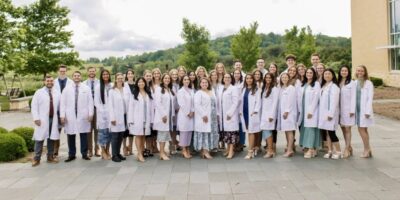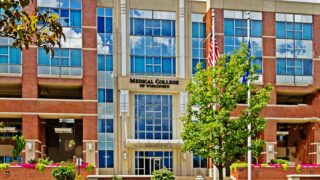

The Medical College of Wisconsin (MCW) is a private medical school that has trained physicians since its founding in 1893. Its flagship campus sits in the Milwaukee Regional Medical Center, and two smaller regional campuses in Green Bay and Wausau (MCW-Central Wisconsin) train physicians in three years for the communities around them. MCW is one of the largest private medical schools in the country, and it is known for its strong emphasis on primary care, its commitment to easing physician shortages in rural Wisconsin and its research enterprise.
Students choose between a four-year program in Milwaukee, with dual degrees and a wide range of clinical partners such as Froedtert Hospital and Children’s Wisconsin, and a three-year, community-based program on a regional campus. Every student trains in the MCWfusion curriculum, which puts patient care and early clinical work next to foundational science from the first semester.
This guide is for students applying in the 2026-2027 cycle, which MCW calls the 2027 application cycle, to start medical school in summer 2027. It covers MCW’s mission, its three campuses and programs, the MCWfusion curriculum, the current requirements and deadlines, 2026-27 tuition and cost of attendance, clinical training and research, the virtual interview and all seven current secondary essay prompts, each with a full illustrative example and analysis. Facts in this guide were checked on October 17 and 18, 2026.
Key Takeaways
- Check eligibility first. For the 2027 cycle, MCW accepts applications from US citizens, US permanent residents and DACA recipients only. International applicants are expected to be welcomed at MCW-Milwaukee in a future cycle, not this one.
- Pick your campus with care. You set campus preferences on the secondary. Milwaukee is a four-year program with every dual degree. Green Bay and Central Wisconsin are three-year, primary care focused programs with small classes of mostly Wisconsin residents. Offers are campus-specific and cannot be transferred.
- Apply early. MCW reviews applications on a rolling basis by completion date. The AMCAS deadline is November 2, 2026, and the secondary deadline is December 7, 2026, but the preferred dates are July 1 and August 15, 2026. Early Decision closes August 1.
- Casper is mandatory. Your file is not complete until MCW receives your Casper score. PREview is not accepted as a substitute.
- MCAT guidance, not a cutoff. Scores from January 1, 2024 through September 12, 2026 count, MCW superscores your two most recent exams and a superscore of at least 500 is strongly encouraged but not required.
- Know the class numbers. For the 2025 entering class, accepted applicants had a median MCAT of 511 and a median GPA of 3.87. MCW received 10,711 verified applications, interviewed 812 applicants and enrolled 274 first-year students.
- Tuition is the same for everyone. First-year tuition for 2026-27 is $70,800 for residents and non-residents. Wisconsin residents receive an estimated $3,450 state credit. The first-year budget is $107,852 in Milwaukee and $106,292 on the regional campuses, before health insurance.
- The secondary has up to seven essays. Four are required of everyone, one is for reapplicants and two more are required if you select Green Bay or Central Wisconsin. You must certify your essays are your own work, and AI tools may be used only for brainstorming, proofreading or editing.
- Next step: decide whether a regional campus fits your goals, then start drafting the four required essays before your secondary invitation arrives.
Key Statistics About the Medical College of Wisconsin
The snapshot below collects the figures applicants ask about first. Class statistics (median MCAT and GPA, applications, interviews and matriculants) are for the 2025 entering class, costs are for the 2026-27 academic year, deadlines are for the 2026-2027 cycle and outcomes are from Match Day 2026. No count of acceptance offers is reported for the 2025 entering class, so no acceptance rate is shown.

| Metric | Value | Year or cohort | Source and definition |
|---|---|---|---|
| School and degree | Medical College of Wisconsin, MD. MCW-Milwaukee (four-year), MCW-Green Bay and MCW-Central Wisconsin (three-year) | 2027 entry | MCW Admissions, program types. Private; founded 1893 |
| Accreditation | LCME, fully accredited through 2027 (site visit April 2027); institution accredited by HLC | Current | MCW Accreditation page |
| Medical students enrolled | 1,055 (of 1,720 MCW students) | 2026 Facts and Impact | MCW 2026 Facts and Impact |
| Eligibility | US citizens, US permanent residents and DACA recipients | 2027 application cycle | MCW Admissions, eligibility requirements |
| Median MCAT | 511 (mean 511); section medians 128, 127, 128 and 129 | 2025 entering class | AAMC MSAR, all accepted applicants. MCW guidance: superscore of 500 or higher strongly encouraged, not a required minimum |
| Median GPA | 3.87 total (mean 3.81); 3.83 science | 2025 entering class | AAMC MSAR, all accepted applicants. No minimum GPA |
| Applications, interviews, matriculants | 10,711 verified applications; 812 interviewed; 274 matriculated | 2025 entering class | AAMC MSAR. No offer count is reported, so no acceptance rate is shown; an acceptance rate needs offers divided by applicants for the same cohort |
| First-year tuition | $70,800, residents and non-residents, all campuses | 2026-27 | MCW Tuition and Fees 2026-27, Class of 2030 |
| Wisconsin resident credit | About $3,450 (estimated) | 2026-27 | Wisconsin Medical Student Assistance, applied to tuition after HEAB residency approval |
| First-year billed total | $75,997.12 (Wisconsin residents); $79,447.12 (non-residents) | 2026-27 | Tuition, fees, life/disability and single health insurance ($6,057.12, waivable) |
| First-year cost of attendance | $107,852 (Milwaukee); $106,292 (Green Bay and Central Wisconsin) | 2026-2027 | MCW standard cost of attendance budgets; exclude health insurance; tuition before the Wisconsin credit |
| Average graduate debt | $254,905 (graduates with medical school debt); 84% of students receive aid | 2024-2025 | AAMC MSAR (LCME Part I-B Student Financial Aid Questionnaire) |
| Secondary fee | $100; fee waiver available | 2026-2027 cycle | AAMC MSAR, secondary application |
| AMCAS and secondary deadlines | November 2, 2026 and December 7, 2026 (Early Decision: August 1 and August 27, 2026) | 2026-2027 cycle | MCW Admissions, dates and deadlines |
| MD/PhD (MSTP) | About 10 students per year; about eight years; Milwaukee only | Current | MCW Admissions, program types |
| Match outcomes | 237 students matched; 87 staying in Wisconsin | Match 2026 | MCW Match Day 2026 report |
| Match rate | 99% Milwaukee; 100% Green Bay and Central Wisconsin | Match 2025 | MCW 2026 Facts and Impact (newest published rate) |
| Living alumni | 21,000+ | 2026 | MCW 2026 Facts and Impact (all MCW schools and programs) |
Mission and Educational Priorities
MCW publishes its vision as “Pioneering Pathways to a Healthier World.” Its mission statement reads: “We are a distinguished leader and innovator in the education and development of the next generation of physicians, scientists, pharmacists and health professionals. We discover and translate new knowledge in the biomedical and health sciences. We provide cutting-edge, collaborative patient care of the highest quality, and we improve the health of the communities we serve.” You can read it on the MCW Medical School page.
The mission has four parts, and each one shows up in how the school trains students and in what the admissions committee asks you to write.
Education. MCW trains physicians alongside pharmacists, scientists and other health professionals. Interprofessional education and practice is one of the seven doctoring threads that run through every phase of the curriculum, so teamwork is part of the program, not an add-on.
Discovery. MCW is the largest private research center in Wisconsin, with more than $428 million in annual investment in research and training. Every medical student completes a Scholarly Concentration, and the MD/PhD and MD/MS programs exist for students who want research at the center of their careers.
Patient care. With Froedtert Hospital, Children’s Wisconsin and the Versiti Blood Research Institute, MCW forms the Milwaukee Regional Medical Center, which MCW calls the only academic medical center in eastern Wisconsin. Students start clinical work in their first semester.
Community health. MCW’s community engagement is unusually central. It runs the Advancing a Healthier Wisconsin Endowment, the state’s largest health improvement philanthropy, and it is one of only seven institutions nationwide to hold the Carnegie Community Engagement Classification as an academic medical institution. The two regional campuses exist to train physicians who will stay and practice in Wisconsin.
What the mission means for your application
The secondary essays mirror these priorities. The first prompt names MCW’s values: acting in caring ways, collaboration, curiosity, inclusive practices, integrity and respect. The fourth prompt asks how you adapt to new communities to serve others, because MCW students work “with and within various communities throughout Wisconsin.” If you apply to a regional campus, two more essays ask about primary care and the community where you plan to practice.
The practical implication is simple. Your experiences should show service with real people, honest reflection and an understanding of community health, not only grades and research. Applicants who can explain where they want to practice, and why MCW’s campus model fits that plan, have a clear story to tell. None of this changes the academic bar, but it shapes which experiences are worth writing about.
Accreditation and Institutional Identity
The Medical College of Wisconsin is accredited by the Liaison Committee on Medical Education (LCME), the accrediting body for MD-granting medical schools in the United States. MCW is fully accredited through 2027, when the LCME will conduct a comprehensive evaluation and site visit, scheduled for April 2027. The institution as a whole, including its medical, graduate and pharmacy schools, is accredited by the Higher Learning Commission (HLC), one of the regional accreditors of degree-granting institutions. MCW’s Master of Public Health program is separately accredited by the Council on Education for Public Health through 2032. Details are on the MCW accreditation page.
LCME accreditation is what makes an MD program eligible for federal financial aid and lets its graduates enter US residency programs and seek licensure. It does not rank schools or guarantee outcomes. It confirms that the program meets national standards for MD education.
A few points about institutional identity help applicants avoid confusion:
- MCW is a private, independent institution. It is not part of the University of Wisconsin System. The state’s public medical school is the University of Wisconsin School of Medicine and Public Health in Madison.
- Tuition is not split by residency. Because MCW is private, it does not charge non-resident tuition. Wisconsin residents receive a state tuition credit instead. The Minnesota-Wisconsin tuition reciprocity agreement does not apply to MCW.
- MCW began as Marquette’s medical school. Its alumni association is still called the MCW/Marquette Medical Alumni Association, and some older alumni hold degrees from the Marquette University School of Medicine.
- The leadership is new. Shekar N. Kurpad, MD, PhD, became MCW’s seventh president and CEO in July 2026, and Brett Kissela, MD, MS, became Executive Vice President for Health Affairs and Dean of the School of Medicine on September 1, 2026.
For applicants planning ahead, pre-med internships and other patient-facing roles are worth arranging early, because MCW’s selection factors and essays reward experiences that show how you work with patients and communities.
Medical Programs and Affiliations
MCW offers several medical programs for different career paths in clinical medicine, research and community practice. All of them lead to the MD and use the MCWfusion curriculum, but the campus and program type you choose on AMCAS and the secondary determine how long you train, where you train and which options are open to you.
Doctor of Medicine (MD) program
The MD is offered at all three campuses as the Regular MD program type on AMCAS. The MCWfusion curriculum, launched in July 2023, uses inquiry-based learning in small groups, patient-based cases and early clinical experience. MCW’s earlier Discovery curriculum was retired in 2026.
- MCW-Milwaukee is the flagship four-year campus at the Milwaukee Regional Medical Center. It offers the widest range of electives and the dual degree programs, and its clinical partners include Froedtert Hospital, Children’s Wisconsin, the Versiti Blood Center of Wisconsin and the Clement J. Zablocki VA Medical Center.
- MCW-Green Bay opened in 2015 and offers a three-year MD. Classes meet in the Gehl-Mulva Science Center at St. Norbert College, with clinical training through partners such as Bellin Health, Prevea Health and the Hospital Sisters Health System.
- MCW-Central Wisconsin in Wausau offers a three-year MD focused on training primary care physicians (family medicine, pediatrics and internal medicine) and psychiatrists who want to live and work in the region.
Early Decision Program
MCW offers an Early Decision Program (EDP) at all three campuses for applicants who are certain MCW is their first choice. EDP applicants submit AMCAS by August 1, 2026, the secondary by August 27, 2026, interview in September and receive a decision by October 1, 2026. EDP has its own MCAT window (tests through July 24, 2026) and Casper window (through July 30, 2026). As with all AMCAS Early Decision programs, you apply to only one school early and may apply elsewhere only if MCW does not admit you.
Combined degree programs
MCW offers several combined degree programs for students who want training beyond the MD. Each one has its own AMCAS program type, so decide before you submit.
MD/PhD (Medical Scientist Training Program)
The Medical Scientist Training Program (MSTP) is MCW’s MD/PhD program for future physician-scientists. It is offered only at MCW-Milwaukee, is typically completed in eight years and matriculates about ten students per year. Apply with the AMCAS program type “Combined Medical Degree/PhD.” There is no extra application fee for the MSTP. The program looks for substantive research experience and commitment to biomedical research, and it accepts three to five letters (or a committee letter), with at least one from a research mentor. MSTP initial interviews are virtual two-day sessions on Thursdays and Fridays, scheduled for December 3-4, 2026 and January 7-8, January 21-22, February 11-12 and February 25-26, 2027. The program director is Nita H. Salzman, MD, PhD. See the MSTP admissions page for details.
MD/MPH
MCW’s MD/MPH dual degree was built for MCW-Milwaukee medical students interested in public health and the social determinants of health. Students applied after starting the MD, and the program ran five years. The MD/MPH is currently on hold while it is being modified for the MCWfusion curriculum, so do not plan your application around it. MCW’s MPH program itself remains accredited.
MD/MS in Clinical and Translational Science
The MD/MS in Clinical and Translational Science is for students who want a research-focused clinical career. It is offered only at MCW-Milwaukee, is intended to be completed within four years and uses the AMCAS program type “Combined MD/Graduate.” For 2026-27, MD/MS students pay an additional $5,769 per term during the first two years.
Postbaccalaureate and pipeline programs
MCW’s current medical school pages do not list a postbaccalaureate program for MD readiness. Applicants who need to strengthen their science record should look at postbaccalaureate programs elsewhere. What MCW does list are pipeline and enrichment programs for younger students:
- StEP-UP brings academic-year opportunities to middle school, high school and college students in the Milwaukee area who are interested in careers in medicine and science.
- Apprenticeship in Medicine (AIM) and the Summer Health Research Program (SHREP) are MCW’s summer enrichment programs for students interested in science and medicine.
- Summer Program for Undergraduate Research (SPUR) is run by MCW’s Graduate School for undergraduates interested in biomedical research.
These programs are separate from MD admissions and do not guarantee a seat, but they are a way for Milwaukee-area students to get early exposure to medicine and research.
Clinical affiliations
MCW’s clinical training is built on partnerships rather than a single university hospital. In Milwaukee, the Milwaukee Regional Medical Center includes Froedtert Hospital, Children’s Wisconsin and Versiti, with the Zablocki VA nearby. Together, MCW reports, its clinical enterprise offers every medical specialty and subspecialty and sees about 5.7 million patient visits a year. In Green Bay, students train with Bellin, Prevea, HSHS and the Milo C. Huempfner VA Outpatient Clinic. Central Wisconsin students train with community physicians in the region through a longitudinal clerkship model. Central Wisconsin’s focus includes psychiatry, so applicants interested in behavioral health may also look at mental health internships abroad as one way to gain supervised experience before medical school.
Which program should you choose?
Choose Milwaukee if you want four years, the widest specialty exposure, a dual degree or the most research options. Choose Green Bay or Central Wisconsin if you are committed to primary care or psychiatry in Wisconsin, want small classes and want to finish in three years. MCW notes that the regional campuses have small classes of primarily Wisconsin residents, so non-residents have limited spaces there. It is highly unlikely you will be invited to interview at more than one campus, so rank your preferences honestly.
Curriculum Overview
MCW’s MCWfusion curriculum launched in July 2023. It features clinically applicable, integrated basic science teaching; active, small group, inquiry-based learning; and individualized training. Students learn science in the context of patient cases and spend time in clinics from the first semester. The MCWfusion curriculum page has the full overview.
Phases of the MCWfusion curriculum
MCWfusion is divided into three phases. The phases are the same on every campus, but they are shorter on the three-year regional campuses.
| Phase | Focus | MCW-Milwaukee | Green Bay and Central Wisconsin |
|---|---|---|---|
| Phase 1 | Integrated foundational science and early clinical learning | 18 months | 15 months |
| Phase 2 | Core clinical experiences (the clerkship year) | 12 months | 10 months |
| Phase 3 | Individualization toward a specialty | 17 months | 10 months |
Phase 1: Integrated Science
Phase 1 combines foundational science with early clinical learning. Students complete 10 Integrated Science Blocks, each organized around an organ system and taught through in-person, case-based, inquiry-based sessions. Wednesday mornings are reserved for small group Patient-Based Discussions and Learning Communities. About half of learning time is lectures (live or recorded) and half is active learning.
Early clinical learning runs alongside the blocks in four courses: Launch, Climb 1, Climb 2 and Soar. Students work with an assigned preceptor, practice with standardized patients and complete an Objective Structured Clinical Examination (OSCE) at the end of each course. During Climb and Soar, two afternoons a week are spent in classroom sessions and clinic. The Good Doctor is a longitudinal professional development course that includes Learning Communities. Phase 1 ends with individual professional development time for USMLE Step 1 study. All Phase 1 courses are graded Satisfactory/Unsatisfactory.
Phase 2: Core Clinical
Phase 2 is the clerkship year, and its structure differs by campus.
- Milwaukee: 16 weeks each in three integrated blocks. The Hospital block covers general internal medicine, general pediatrics, psychiatry and critical care. The Surgery block covers general surgery, a surgical specialty, anesthesia and obstetrics and gynecology. The Ambulatory block covers family medicine, neurology and pediatric specialty care, urgent care and outpatient care with preceptors from several departments.
- Green Bay: 10 months of block clerkships with longitudinal primary care experience in pediatrics or family medicine.
- Central Wisconsin: 10 months of a Longitudinal Integrated Clerkship (LIC), in which students experience family medicine, pediatrics, obstetrics and gynecology, hospital medicine, psychiatry, surgery and anesthesiology multiple times in short rotations, for 32 weeks of clinical experience and 7 weeks of spiral week didactics.
A course called Thriving During Clerkship connects clinical content with the doctoring threads and individual development plans, and the year ends with a Phase 2 Capstone that includes the NBME Comprehensive Clinical Science Exam and MCW’s in-house Clinical Reasoning Exam.
Phase 3: Individualization
Phase 3 lets students shape their training around their chosen specialty. Requirements include two Acting Internships, in which students take intern-level responsibility as the “physician of first contact” under supervision; one Integrated Science Selective, a four-week course that ties foundational science to clinical care; the Preparing for Residency course, which covers residency applications, interview practice and the AAMC’s 13 core entrustable professional activities; and completion of the Scholarly Concentration. Electives fill the remaining credits.
Phase 3 is organized into tracks: Primary Care and Medical Specialties, Acute Care/Emergency Medicine, Surgical Procedural, Mind, Brain and Body, Diagnostics and Therapeutics, Undifferentiated and the Accelerated Regional Campus (ARC) track. Milwaukee students can use two elective blocks as vacation time.
Unique features of the curriculum
Doctoring Threads and Spiral Weeks
Seven Doctoring Threads run through all three phases: communication skills, health equity, critical thinking, patient care skills, health systems science, character and professional development, and interprofessional education and practice.
Spiral Weeks fall between blocks. During them, students attend required thread sessions, make up clinic days or missed work, retake exams if needed and build Individualized Learning Plans with goals for excellence and remediation. Applicants often ask why MCW uses spiral weeks: the idea is to return to key concepts repeatedly, so foundational knowledge stays connected to clinical learning instead of fading after a single exam.
Learning Communities
Each student joins a Learning Community, a small group of peers with a faculty navigator. The navigator provides academic advising and coaching and reviews each student’s Individualized Learning Plan. MCW describes the Learning Community as your support system during medical school.
Scholarly Concentrations
MCW’s earlier “Scholarly Pathways” are now called Scholarly Concentrations. They are a required part of the curriculum: under MCWfusion, students take part in their concentration during Phases 1 and 2, about two years. Each concentration combines monthly core sessions with flexible enrichment activities guided by a faculty advisor and an Individualized Learning Plan. Milwaukee students choose from these concentrations:
- Basic to Translational Research
- Bioethics and Medical Humanities
- Clinical to Translational Research
- Clinician Educator
- Global Health
- Health Systems Management and Policy
- Quality Improvement and Patient Safety
- Urban and Community Health
Students on the regional campuses complete the Physician in the Community Concentration, which links their training with the needs of the communities around Green Bay and Central Wisconsin. Core sessions meet about once a month on Thursday afternoons. If you name a concentration in a “Why MCW” essay, make sure it is offered on the campus you are applying to.
Commitment to primary care and rural health
For students who want to address the primary care physician shortage, especially in rural Wisconsin, the Green Bay and Central Wisconsin campuses offer a three-year curriculum built around community practice. MCW-Green Bay reports a 100% match rate since its first class, with 74% of graduates continuing training in the Midwest and 71% choosing family medicine, internal medicine, pediatrics or psychiatry. MCW-Central Wisconsin recruits first-generation college graduates, rural students and students of diverse backgrounds, especially from northern Wisconsin. Applicants planning summers before medical school can use pre-med summer internships or local clinic work to test whether community-based primary care suits them.
Assessment and grading
All Phase 1 courses are graded Satisfactory/Unsatisfactory, so students focus on mastery rather than class rank. Clinical skills are assessed through OSCEs at the end of each early clinical course, and the clerkship year ends with the NBME Comprehensive Clinical Science Exam and MCW’s Clinical Reasoning Exam. MCW’s public curriculum pages do not describe the grading scale used in Phases 2 and 3; ask about it at your interview if it matters to you.
Research and scholarly work in the curriculum
Research is built into MCWfusion through the Scholarly Concentration, the Integrated Science Selective and research electives in Phase 3. The clinical rotations and research section below explains the research options, including paid summer research, in more detail.
The MCWfusion curriculum is designed to produce physicians who can handle a fast-changing health system. The combination of early clinical work, integrated science, required scholarship and individualized tracks gives students a lot of structure in the first year and a lot of choice by the last.
Admissions Requirements and Application Process
MCW’s admissions process looks for applicants who are academically prepared and who fit the school’s mission of education, discovery, patient care and community health. Review is holistic. MCW lists seven selection factors: academic achievement; MCAT and Casper scores; the personal statement and essays; letters of recommendation; experiences; non-cognitive personal and professional characteristics; and the personal interview. Applications are generally reviewed on a rolling basis by date of completion, so timing is part of your strategy. All requirements below come from the MCW Medical School Admissions page.
Eligibility and citizenship
To matriculate, you need a bachelor’s degree or at least 90 earned postsecondary credits, not counting AP, IB, CLEP or similar credit. All required credits, including prerequisites, must come from accredited colleges or universities in the United States or Canada. Individual exceptions may be considered for regionally accredited institutions outside the US or Canada.
For the 2027 application cycle, MCW accepts applications only from US citizens, US permanent residents and DACA recipients. MCW expects to welcome international applicants to MCW-Milwaukee in a future cycle. Applicants who are not US citizens or permanent residents must submit a Certification of Finances form after admission.
Prerequisites
Prerequisites do not have to be finished to be reviewed, interviewed or admitted, but all of them must be completed by June 1 of the matriculation year, and final official transcripts from every institution must reach the Office of Admissions by the same date. MCW recommends finishing them before the MCAT. Quarter or trimester students need three quarters or trimesters for each semester listed.
| Subject | Requirement | Notes |
|---|---|---|
| Biology | 3-4 credits (1 semester) of advanced biology | For example anatomy and physiology, immunology, microbiology or neurobiology |
| Chemistry | 3-4 credits (1 semester) of biochemistry | The course must have required general and organic chemistry as prerequisites |
| Physics | 6-8 credits (2 semesters) | Typically Physics I and II |
| Math | 3-4 credits (1 semester) | Statistics recommended |
| English | 3-4 credits (1 semester) | A writing-intensive course may count |
| Social science | 3-4 credits (1 semester) | Psychology or sociology |
| Oral communication | 3-4 credits (1 semester) | Recommended, not required |
AP credit counts for physics, math, English and social science. CLEP credit counts for math, English and social science. IB credit does not count toward prerequisites. MCW accepts pass/fail grades for coursework taken from January 2020 through Summer Term 2023. The social science requirement is psychology or sociology, so plan for one of those rather than another social science. For a broader checklist, see our guide to medical school prerequisites.
MCAT
The MCAT is required. For 2027 entry, MCW accepts scores from tests taken no earlier than January 2024. The eligible test dates are January 1, 2024 through September 12, 2026 for Regular MD, MD/MS and MSTP applicants, and through July 24, 2026 for Early Decision.
If you have taken the MCAT more than once, the committee will mix and match the two most recent eligible exams to find your best overall score, called the superscore. A superscore of at least 500 is strongly encouraged. It is not a required minimum, and applicants with lower scores may still be considered based on the strength of the rest of the application.
Casper (Acuity Insights)
The Casper test, an open-response situational judgment test run by Acuity Insights, is mandatory for all MCW medical school applicants. AAMC PREview is not required and is not accepted as a substitute.
- MCW accepts Casper scores from March 19, 2026 through December 3, 2026 (Early Decision: through July 30, 2026).
- Your application is not complete or reviewed for interview selection until MCW receives your Casper score, and scores take about four weeks to arrive.
- Casper scores are valid for one cycle. Reapplicants must retake it.
- The base fee is $85 with nine program distributions; additional distributions are $20, and fees are waived for AAMC Fee Assistance Program recipients.
- Register on Acuity Insights for the US Medicine (CSP-10111) test using your AAMC ID, and select MCW for distribution before the posted deadline.
Because MCW reviews on a rolling basis and your file waits for Casper, taking it in May or June is one of the easiest ways to avoid a delay.
Letters of recommendation
MCW’s letter rules are specific:
- Required undergraduate academic letters: two letters from classroom professors, at least one of whom taught biology, chemistry, physics or a comparable science. A committee letter or letter packet is accepted instead. These letters are not required if your undergraduate degree was conferred at least five years ago.
- Required graduate academic letter (if applicable): if you are or were enrolled in a degree-granting graduate program, one letter from a professor or thesis advisor. Students who just started a graduate program may send it later.
- Optional professional letters: up to three additional letters, which are encouraged. MD/PhD and MD/MS applicants are strongly encouraged to include a letter about their potential as a physician-scientist.
- Letters from principal investigators can be submitted as optional letters but typically cannot fill the academic letter requirements.
- Letters must be on letterhead and signed. A teaching assistant’s letter must be co-signed by the professor. MCW accepts letters through AMCAS, Interfolio, VirtualEvals and US mail.
Our guide to medical school recommendation letters explains how to ask and when.
Primary application (AMCAS)
MCW uses the American Medical College Application Service. For the 2026-2027 cycle, AMCAS opened on May 5, 2026, and the earliest submission date was May 28, 2026. The preferred submission date is July 1, 2026, and the deadline is November 2, 2026. Choose your program type carefully: Regular MD, Early Decision, Combined Medical Degree/PhD (MSTP) or Combined MD/Graduate (MD/MS). Our AMCAS application guide covers each section.
Your AMCAS application should include:
- Academic record: transcripts from every institution. MCW does not publish a minimum GPA.
- MCAT score: within the eligible window above.
- Personal statement: your reasons for medicine and the experiences behind them. At MCW, it helps when the statement shows an understanding of the communities you want to serve.
- Experiences: clinical work, service, research, leadership and employment, described with what you did and what you learned.
- Letters: sent to MCW through AMCAS or another accepted service.
Secondary application
MCW sends secondary invitations, or a notification of ineligibility, to verified applicants beginning July 6, 2026 and continuing as each verified AMCAS application arrives. Secondaries go to all eligible applicants. Login credentials for the MCW Secondary Application arrive by email, so check your spam folder if you do not see one.
- There is one secondary application and one fee, regardless of how many campuses you select. The secondary fee is $100, and it is waived for applicants approved for the AAMC Fee Assistance Program; confirm the amount in your portal.
- You designate your campus preferences on the secondary.
- The preferred submission date is August 15, 2026, and the deadline is December 7, 2026 at 11:59 p.m. CST (Early Decision: August 27, 2026).
- Before submitting, you must certify that your application is your own original work and has not been written, in part or whole, by a third party. Mentors, peers, advisors and AI tools may be used only for brainstorming, proofreading or editing. Quotations are allowed if cited.
All seven essay prompts, with full illustrative examples, are in the secondary section below.
Required forms
- Dean’s Certification: required if you reported an institutional action or previously matriculated at a medical school.
- Wisconsin Residency Form: Wisconsin residents file the HEAB Residency Determination Form with the Higher Educational Aids Board. It must be approved before matriculation to receive the Wisconsin Medical Student Tuition Assistance credit, but it is not required to complete the secondary.
- Technical Standards: admitted students attest that they meet MCW’s technical standards before matriculation.
- Certification of Finances: for admitted applicants who are not US citizens.
Interviews, decisions and deposits
Interviews are typically offered from September 2026 through March 2027 and are conducted virtually on Zoom for all campuses. At MCW-Milwaukee you have two one-on-one open file interviews with student and faculty interviewers. At MCW-Green Bay and MCW-Central Wisconsin you have one open file interview with a large panel of community members, students and faculty. First interview decisions are released on October 15, 2026, and the latest decisions go out in June 2027. The interview section below covers the format.
If you are admitted, MCW requires a $110 non-refundable deposit by close of business on April 30, paid through your secondary portal. Applicants admitted from the waitlist after April 30 receive a deadline in their offer letter. Other pre-matriculation requirements include a criminal background check, completed prerequisites, final transcripts, adult and pediatric CPR and AED certification through the American Heart Association, health requirements and immunizations. Orientation for all three campuses begins June 28, 2027, and classes start July 6, 2027.
Waitlist: the waitlist is unranked, and applicants on it are selected through holistic review, with few waitlist offers before May. A typical cycle places 100 to 200 applicants on the MCW-Milwaukee waitlist and 25 to 50 on the MCW-Green Bay and MCW-Central Wisconsin waitlists. In a recent cycle, 50 acceptance offers went to applicants on the waitlist.
Deferral: MCW expects admitted applicants to matriculate in the class for which they interviewed. One-year deferrals may be requested in writing for personal, professional development or extenuating reasons, decided case by case and communicated in May of the matriculation year.
Transfers: since July 2024, MCW no longer accepts transfer applications into the third year because of the integrated MCWfusion curriculum.
Early Decision Program (EDP)
EDP is available for the MD program at all three campuses. It is meant for applicants with strong applications who are certain MCW is their first choice. Submit AMCAS by August 1, 2026 and the secondary by August 27, 2026; interviews take place in September and the latest decision date is October 1, 2026. EDP is a program type for the MD, not for the MSTP or MD/MS.
2026-2027 application timeline
| Date | Step |
|---|---|
| March 19, 2026 | First accepted Casper test date |
| May 5, 2026 | AMCAS opens |
| May 28, 2026 | Earliest AMCAS submission |
| July 1, 2026 | Preferred AMCAS submission (Regular MD, MD/MS, MSTP) |
| July 6, 2026 | Secondary invitations or ineligibility notices begin |
| July 24, 2026 | Last eligible MCAT date for Early Decision |
| July 30, 2026 | Last Casper date for Early Decision |
| August 1, 2026 | Early Decision AMCAS deadline |
| August 15, 2026 | Preferred secondary submission (Regular MD, MD/MS, MSTP) |
| August 27, 2026 | Early Decision secondary deadline (11:59 p.m. CST) |
| September 2026 | Early Decision interviews; Regular interviews begin |
| September 12, 2026 | Last eligible MCAT date (Regular MD, MD/MS, MSTP) |
| October 1, 2026 | Latest Early Decision decision |
| October 15, 2026 | First Regular interview decisions released |
| November 2, 2026 | AMCAS deadline (Regular MD, MD/MS, MSTP) |
| December 3, 2026 | Last accepted Casper test date |
| December 7, 2026 | Secondary deadline (11:59 p.m. CST) |
| March 2027 | Last Regular interviews |
| April 30, 2027 | $110 deposit due |
| June 2027 | Latest interview decisions |
| June 28, 2027 | Orientation, all campuses |
| July 6, 2027 | First day of classes |
If you are planning the year before you apply, the summer is the best time for clinical work. Pre-med gap year programs can also help applicants who need more patient contact before a first application or a reapplication.
Tuition, Cost of Attendance and Financial Aid
The cost of medical school is a major factor for most applicants. MCW publishes a tuition and fees schedule and a standard cost of attendance budget for each campus every year. The figures below are for the 2026-27 academic year and come from the MCW 2026-27 tuition and fees schedule and the campus cost of attendance budgets.
Tuition and fees for 2026-27
Tuition is the same for Wisconsin residents and non-residents and the same at all three campuses. Wisconsin residents approved by HEAB receive the Wisconsin Medical Student Assistance credit, estimated at $3,450 for 2026-27 and subject to change based on enrollment.
| Item | Wisconsin residents | Non-residents |
|---|---|---|
| Tuition | $70,800.00 | $70,800.00 |
| Wisconsin Medical Student Assistance (estimated) | ($3,450.00) | n/a |
| Laptop fee | $1,048.00 | $1,048.00 |
| SAC fee | $100.00 | $100.00 |
| Technology fee | $216.00 | $216.00 |
| Q-Bank fee | $862.00 | $862.00 |
| Student services fee | $200.00 | $200.00 |
| Background check fee | $98.00 | $98.00 |
| Life/disability insurance (mandatory) | $66.00 | $66.00 |
| Single health insurance (waivable) | $6,057.12 | $6,057.12 |
| Total | $75,997.12 | $79,447.12 |
After the $110 deposit, the amount due for first-year students is $75,887.12 for Wisconsin residents and $79,337.12 for non-residents. Tuition for later classes in 2026-27 is $70,800 (Class of 2029), $70,118 (Class of 2028) and $68,448 (Class of 2027). Health insurance can be waived with proof of coverage from a parent, spouse or private plan, and plans for dependents are available. Tuition is billed in two installments, due July 31 and January 31, with a $250 late fee. If a first-year student withdraws or takes a leave, the full laptop cost becomes due.
Cost of attendance budgets for 2026-2027
The cost of attendance (COA) is the budget used to set financial aid. MCW’s standard budgets exclude health insurance and show tuition before the Wisconsin credit.
| First-year budget item | MCW-Milwaukee | MCW-Green Bay and MCW-Central Wisconsin |
|---|---|---|
| Rent and utilities | $18,120 | $15,360 |
| Food and household | $6,000 | $6,000 |
| Transportation by car | $2,400 | $3,600 |
| Personal, clothing and recreation | $7,440 | $7,440 |
| Books, equipment and supplies | $550 | $550 |
| Computer purchase | $1,000 | $1,000 |
| Tuition | $70,800 | $70,800 |
| Mandatory student fees | $1,476 | $1,476 |
| Life and disability insurance | $66 | $66 |
| Yearly total (12 months) | $107,852 | $106,292 |
Later-year Milwaukee budgets are $107,649 (M2), $106,797 (M3) and $101,150 (M4). Regional campus students finish in three years, so their total cost of the degree is lower than a four-year Milwaukee degree even though first-year budgets are similar. Students living with parents have a reduced rent allowance of $100 a month. Add health insurance if you need MCW’s plan, and subtract the Wisconsin credit if you are a resident.
How the old in-state and out-of-state framing changed: MCW charges one tuition rate. The difference between residents and non-residents is the state credit, about $3,450 in 2026-27, not a separate tuition schedule. Minnesota residents should note that the Minnesota-Wisconsin reciprocity agreement does not apply to MCW.
Financial aid options
MCW’s Financial Aid Office helps students apply for federal loans, institutional aid and outside scholarships. File the FAFSA early using MCW’s federal school code, 015611. Institutional aid goes to students with the greatest financial need who meet the deadline, and it requires a completed FAFSA with parental information, the MCW Financial Aid Application and a Parental Assistance Worksheet. Check the deadline with the Financial Aid Office when you are admitted.
Federal loans
MCW participates in the federal Direct Loan program. The Direct Unsubsidized Loan is the main federal option for medical students. Federal law ended new Graduate PLUS borrowing for students starting graduate or professional programs from July 2026, so students entering in 2027 should plan around Direct Unsubsidized limits, institutional loans and other sources. Confirm current federal loan limits with the Financial Aid Office, because federal rules have changed recently. Federal loans require entrance counseling and a Master Promissory Note.
Private loans
MCW provides information about private loans for students who need to fill gaps. Terms and rates vary by lender, so compare options carefully before borrowing.
Institutional and emergency loans
MCW offers institutional aid loans funded by donors for financially needy medical students, available once federal and private options are exhausted. These loans are interest-free while enrolled, during grace and during deferment such as residency, with fixed rates generally between 3% and 9% afterward. The Wisconsin Medical Society Student Loan program serves rising M2 to M4 students who are Wisconsin residents. For short-term needs, ask the Financial Aid Office about emergency loan options.
Scholarships and grants
- MCW scholarships: MCW offers a modest number of merit scholarships to incoming students, selected by the Senior Associate Dean, and a limited number of need-based scholarships awarded through the standard aid process with no separate application.
- Wisconsin programs: the HEAB Primary Care and Psychiatry Shortage Grant and the State of Wisconsin Health Services Scholarship Program support residents who plan to practice in shortage areas.
- Service scholarships: the Armed Forces Health Professions Scholarship Program and the National Health Service Corps Scholarship pay tuition, fees and a stipend in exchange for service.
- Outside scholarships: the Wisconsin Medical Society, AAMC, AMA and National Medical Fellowships list additional awards. Local organizations and professional associations also offer support.
Repayment and debt management
MCW’s Financial Aid Office offers loan counseling and debt management guidance so students understand their obligations before residency. In 2024-2025, the average medical school debt of MCW graduates who borrowed was $254,905, and 84% of enrolled and graduating students received financial aid. For the most recent three-year regional campus graduating class, average medical education debt was $215,817, and 83% of that class had medical debt. Students can reduce borrowing through scholarships, budgeting within the COA and service-based loan repayment programs after graduation.
Additional financial aid resources
- Residency interviews and away electives: students can request additional loan funds for residency interview travel and required away electives.
- Childcare: students with children can request additional loan funds for childcare costs with verification from the provider.
- Tuition questions: the Office of Student Accounts handles billing and payment plans.
Key financial dates
- FAFSA: file as early as possible after you apply, and meet MCW’s institutional aid deadline.
- Tuition installments: July 31 and January 31.
- Deposit: $110 by April 30 of the year you enroll.
- Wisconsin residency: HEAB approval before matriculation to receive the state credit.
Campus Facilities and Student Life
MCW gives students a choice of setting: a large academic medical center in metro Milwaukee or a small, community-based campus in Green Bay or Wausau. Each campus has its own focus, and the choice shapes daily life as much as it shapes training.
Campus locations and facilities
MCW-Milwaukee
The flagship campus is at 8701 Watertown Plank Road in the Milwaukee Regional Medical Center, about seven miles west of downtown Milwaukee in Wauwatosa. MCW describes the campus as being in a vibrant metro area on the shore of Lake Michigan, with “everything you would expect in an urban center.” Students study and train next to Froedtert Hospital, Children’s Wisconsin and Versiti, with the Clement J. Zablocki VA Medical Center close by. The Milwaukee campus offers the most electives and every dual degree. MCW also runs simulation training for clinical skills, and students practice with standardized patients from Phase 1.
MCW-Green Bay
MCW-Green Bay opened in 2015. Its administrative offices and classrooms are in the Gehl-Mulva Science Center at St. Norbert College in De Pere, and introductory clinical skills training takes place at Bellin College before students move into the hospitals and clinics of the campus partners: Bellin College, Bellin Health, Hospital Sisters Health System Eastern Division, the Milo C. Huempfner VA Outpatient Clinic, Northeast Wisconsin Technical College, Prevea Health, St. Norbert College and the University of Wisconsin-Green Bay. Students begin clinical experience in their first semester. MCW-Green Bay’s first class was the first group of US students from a three-year program to match through the national residency match, and in 2021 MCW and Prevea launched the MCW-Prevea Green Bay Family Medicine Residency.
MCW-Central Wisconsin
MCW-Central Wisconsin is in Wausau. Its three-year curriculum trains primary care physicians (family medicine, pediatrics and internal medicine) and psychiatrists who want to live and work in the region. Students work side by side with community physicians, and the Phase 2 Longitudinal Integrated Clerkship keeps them with the same preceptors and patients over months. The campus offers small classes, state-of-the-art classrooms and labs and a mid-size city with year-round outdoor activities. Campus tours and virtual open houses can be scheduled through the campus Student Services Program Manager.
Student life at MCW
MCW emphasizes wellness, inclusion and leadership development, with student services on every campus.
Housing
MCW does not offer on-campus housing. Students rent near their campus, and MCW’s budgets assume $18,120 a year for rent and utilities in Milwaukee and $15,360 on the regional campuses. Incoming students often connect with possible roommates through class social media groups, and it pays to look for a rental within a short drive of your main clinical sites.
Mentorship and student organizations
MCW lists more than 60 medical student organizations and interest groups under its Student Assembly. They range from specialty interest groups (anesthesiology, dermatology, neurology, OB/GYN, oncology, pediatrics, psychiatry, radiology, sports medicine, surgery and emergency medicine) to identity and professional groups and service organizations. Examples include:
- the American Medical Student Association (AMSA) and the Student National Medical Association (SNMA);
- LGBTQ+ People in Medicine, the Latino Medical Student Association, the Asian Pacific American Medical Student Association and the Muslim Medical Association;
- the Global Health Organization and the Global Surgery Student Alliance;
- the Rural Medicine Interest Group and the Psychiatry and Mental Health Student Association;
- the Saturday Clinic for the Uninsured and the Philippine Center Free Medical Clinic, two student-run service clinics; and
- the Applicant Host Program, the Student-Physician Networking Program and the Student Leadership Development Initiative.
Mentorship comes through the Learning Community navigator, faculty advisors in the Scholarly Concentrations and student-run networking programs. Ask current students at your interview which groups are active on your campus, since the regional campuses are much smaller than Milwaukee.
Inclusion and outreach
MCW’s pipeline programs (StEP-UP, AIM, SHREP and the Graduate School’s SPUR) bring younger students into medicine and research, and the regional campuses recruit first-generation, rural and diverse students from Wisconsin. Medical students also take part in community engagement projects across the state, from the student-run Saturday Clinic for the Uninsured in Milwaukee to community health projects on the regional campuses.
Wellness resources
MCW’s Office of Student Health and Wellness connects students with support for the demands of medical school, including:
- MCW Student Behavioral Health Services, with an after-hours emergency line, and 10 unbilled counseling sessions per academic year through the Department of Student and Resident Behavioral Health, covering talk therapy and medication management;
- the Student Assistance Program (SAP), with 10 counseling sessions per presenting issue plus financial and legal consultation, all at no cost;
- SilverCloud, a free, self-guided online program for anxiety, depression and stress;
- Academic Support and Enrichment, with tutoring and board preparation;
- Early Alert, a confidential text-message wellness self-monitoring tool with weekly check-ins;
- regular wellbeing self-assessment surveys; and
- the MCW Student Food Center and a student-planted garden that address food insecurity.
All three campuses have a Student Food Center with free food and hygiene items, and all three partner with local animal foster programs, so students can foster a pet for a short time. Phase 2 also includes protected time for student well-being.
Technology and academic support
Every incoming M1 receives an enterprise-class laptop configured to MCW standards, billed as a $1,048 fee in 2026-27. Students also need a mobile device for learning apps and testing. Academic support includes tutoring, board preparation, individual consultations with faculty and academic enrichment staff, and the Learning Community navigator.
Social and cultural life
Milwaukee offers restaurants, theaters, museums, lakefront parks, summer festivals and professional sports. Green Bay and Wausau are smaller cities with a close community feel and easy access to hiking, biking, lakes and winter sports. MCW’s budgets assume a car on every campus, which matters more on the regional campuses, where clinical sites can be spread out.
Clinical Rotations and Research Opportunities
Clinical training and research are central to an MCW education. Students apply classroom knowledge in real patient care from the first semester and can contribute to research across a large academic enterprise.
Clinical rotations at MCW
Phase 1: Early clinical exposure
From the start of Phase 1, students take the early clinical courses (Launch, Climb 1, Climb 2 and Soar) with an assigned preceptor. They practice interviewing, physical examination and clinical reasoning, work with standardized patients and complete an OSCE after each course. Regional campus schedules for early clinical work may differ, and Green Bay students begin clinical experience with community partners in their first semester.
Phase 2: Core clinical clerkships
The core clerkships cover internal medicine, pediatrics, psychiatry, emergency and critical care, surgery and surgical specialties, obstetrics and gynecology, anesthesiology, family medicine and neurology. How they are arranged depends on the campus:
- Milwaukee: three 16-week integrated blocks (Hospital, Surgery and Ambulatory) across MCW’s Milwaukee partners, including Froedtert Hospital, Children’s Wisconsin and the Zablocki VA.
- Green Bay: block clerkships, including pediatrics (four weeks outpatient and two weeks inpatient), psychiatry, surgery (four weeks general and four weeks specialty), acute care and emergency medicine, anesthesiology, family medicine, internal medicine and obstetrics and gynecology, with longitudinal primary care experience.
- Central Wisconsin: the CW-LIC, with 32 weeks of clinical experience at regional sites. Students and preceptors decide together whether weekend rounding and weeknight call add value at each site.
Students work closely with attending physicians, residents and other health professionals, and they learn to function as members of interdisciplinary teams. Some students use clerkship time to explore subspecialties within these fields.
Phase 3: Acting internships and electives
In Phase 3, students complete two Acting Internships with intern-level responsibility and overnight call or night float where appropriate. Core acting internships are offered in internal medicine, pediatrics, surgery, obstetrics and gynecology, family medicine and psychiatry, with non-core options in other services. Electives in fields such as emergency medicine, anesthesiology and neurology fill the rest of the phase, and the Preparing for Residency course gets students ready for the Match.
Research opportunities at MCW
Research is a cornerstone of MCW’s educational philosophy. MCW’s 2026 Facts and Impact report lists more than $428 million in annual investments for research and training, more than 1,240 clinical trials and 5,100 active research studies in fiscal 2025, and a ranking in the top 4% worldwide for publishing new clinical medicine knowledge. Students can do research from basic science to translational medicine and public health. In fiscal 2024, MCW held $116.4 million in direct federal research grants and contracts.
Scholarly Concentrations: the required scholarly component
Every MCW medical student completes a Scholarly Concentration, MCW’s required scholarly component, during Phases 1 and 2. Milwaukee students choose from Basic to Translational Research, Bioethics and Medical Humanities, Clinical to Translational Research, Clinician Educator, Global Health, Health Systems Management and Policy, Quality Improvement and Patient Safety, and Urban and Community Health. Regional students complete the Physician in the Community Concentration. Each concentration pairs monthly core sessions with a faculty advisor and an Individualized Learning Plan, so students can explore basic science, clinical research, public health, education or health policy in depth.
Medical Student Summer Research Program (MSSRP)
MCW’s summer research for medical students runs through the Summer Academic Programs for Medical Students (SAMS), and the largest program within it is the Medical Student Summer Research Program (MSSRP). A limited number of paid, full-time (40 hours a week) fellowships of 8 or 10 weeks are awarded competitively to MCW-Milwaukee medical students for the summer within Phase 1. Students join the laboratory or research team of a full-time MCW faculty investigator and take a meaningful role in that preceptor’s existing project, with publishing and presenting as program goals. The program is funded in part by several NIH agencies.
The timeline is set: the intent to apply opens November 1 and closes December 20, students identify a project and preceptor from November to January, applications and research proposals are due February 15, funding decisions come by April 15 and training begins the Wednesday after Memorial Day. Only Milwaukee students are eligible, so regional campus applicants should not plan on MSSRP. MCW students have presented their work at meetings such as the 2026 Alzheimer’s Association International Conference.
Research centers and dual degrees
Students interested in research can join faculty projects across MCW’s centers and institutes, including cancer research at the Froedtert and the Medical College of Wisconsin Clinical Cancer Center, cardiovascular research, the Wisconsin Institute of Neuroscience, the Center for Microbiome Research and the Center for Substance Use Research and Intervention, established in 2025. MCW leads a multi-arm clinical trial of an in-house manufactured, dual-targeted CAR T-cell therapy for patients with B-cell cancers. The MD/MS and MD/PhD programs offer the deepest research training.
Global health and community-based research
MCW’s community engagement is extensive. Its Advancing a Healthier Wisconsin Endowment has invested $128 million in community partnerships, and faculty and staff reported thousands of community engagement activities in fiscal 2025. The Urban and Community Health concentration and the regional campuses’ Physician in the Community Concentration are the most direct routes for students who want community-based scholarship. Students can also volunteer at the student-run Saturday Clinic for the Uninsured, which offers free primary and specialty care to uninsured Milwaukee patients on Saturday mornings.
For global health, Milwaukee students can choose the Global Health Concentration, directed by Kirsten Beyer, PhD, MPH, MS, and Megan Schultz, MD, MA. It covers topics such as disaster preparedness, refugee and immigrant health and working in limited-resource settings, with non-core activities in local clinics that serve immigrant and refugee patients. MCW’s Office of Global Health supports international partnerships and electives. In 2025, 13% of MCW graduating seniors reported a global health experience during medical school, for credit or as volunteers. Applicants who want global health experience before medical school can look at pre-med internships abroad that place students in supervised, patient-facing roles.
Together, early clinical work, three campus models, a required scholarly component and a large research enterprise prepare MCW graduates for residency and for careers that can include practice, research and community leadership.
Notable Alumni, Faculty, Leadership and Admissions Staff
MCW reports more than 21,000 living alumni, and its alumni association serves more than 22,000 graduates of the medical school, graduate school, pharmacy school, regional campuses and residency and fellowship programs. More than 900 MCW clinical faculty are alumni. The people below have verified MCW connections. MCW’s alumni include graduates of its residency, fellowship and graduate programs as well as its MD program, so each profile states the actual connection.
School leadership
Brett Kissela, MD, GME ’96, MS
Executive Vice President for Health Affairs and the Julia A. Uihlein Dean of the School of Medicine since September 1, 2026. Dr. Kissela is a neurologist, stroke epidemiologist and clinician-scientist who was Executive Vice Dean of the University of Cincinnati College of Medicine. He completed his internal medicine internship at the Medical College of Wisconsin Affiliated Hospitals in 1995-96 after earning his MD at Washington University School of Medicine. He leads a School of Medicine of about 1,100 students on three campuses, has authored nearly 300 peer-reviewed publications and has mentored more than 230 residents and fellows. A Wisconsin native and Marquette graduate, he has named research excellence, education quality and community impact across Wisconsin as priorities. He chairs the American Academy of Neurology’s AI workgroup.
Shekar N. Kurpad, MD, PhD, FEL ’01
MCW’s seventh President and CEO since July 2026. Dr. Kurpad is a neurosurgeon and physician-scientist who completed fellowship training at MCW, chaired its Department of Neurosurgery from 2017 to 2024, served as Senior Associate Dean for Neuroscience and founded the Wisconsin Institute of NeuroScience. He has performed nearly 15,000 surgical procedures and written more than 150 research manuscripts on spinal cord science, and he was chief of neurosurgery at the Zablocki VA Medical Center for more than a decade.
Matthew L. Hunsaker, MD, FAAFP
Founding Campus Dean of MCW-Green Bay and Interim Campus Dean of MCW-Central Wisconsin. Dr. Hunsaker was a rural family physician in southern Illinois who practiced full-scope family medicine with obstetrics. He has consulted on rural medical education at medical schools across the country and served as a US State Department Fulbright Specialist. If you apply to a regional campus, you are applying to programs he leads.
Jose Franco, MD
Senior Associate Dean for Education in the School of Medicine. Dr. Franco’s office oversees the medical education program. At Match Day 2026 he described the day as “both an ending and a beginning,” as students grow “as scholars, clinicians, and leaders.”
Marty Muntz, MD, FACP
Associate Dean for Curriculum, Professor of Medicine and Vice-Chair for Faculty Development in the Department of Medicine. Dr. Muntz leads the curriculum team that runs MCWfusion, including Learning Communities, the doctoring threads, early clinical courses and scholarly activities.
Erin Green, MD, MHPE
Associate Dean for Clinical Learning for MCW-Green Bay and MCW-Central Wisconsin. Dr. Green leads clinical education on the regional campuses, where students train with community preceptors in block clerkships or the Central Wisconsin longitudinal clerkship.
Raj Narayan, MD
Associate Dean for Student Affairs. His office handles academic standing and professionalism, leaves of absence, Dean’s Letters, residency application questions and Match Day.
Faculty and researchers
Nita H. Salzman, MD, PhD
Professor of Pediatrics and Microbiology and Immunology, Director of the Medical Scientist Training Program and Founding Director of the Center for Microbiome Research. Dr. Salzman’s research covers antimicrobial peptides, host-microbe interactions in the gut and the microbiota in health and disease, including inflammatory bowel disease. MSTP applicants meet the program director during the virtual interview.
Calvin B. Williams, MD, PhD
Professor of Pediatrics and Microbiology and Immunology, Associate Dean of Research, Associate Director of the MSTP, Chief Scientific Officer of the Children’s Wisconsin Research Institute and Chief of Pediatric Rheumatology. Dr. Williams studies T cell development and immune tolerance. His roles show how closely MCW research connects with its clinical partners.
Margaret Mary Samyn, MD
Professor and a member of the School of Medicine curriculum team, with a physician profile at Children’s Wisconsin. MD/MS applicants should ask the Office of Admissions or the Graduate School for the program’s current director and contacts.
Admissions and program staff
MCW does not name its MD admissions leadership on its public admissions pages. MD applicants contact the Office of Admissions at [email protected] or (414) 955-8246, Monday through Friday, 8 a.m. to 5 p.m. CST. The office offers virtual info sessions and one-on-one advising appointments for first-time applicants.
- Peter Dahl, MA, is the Admissions Recruiter for the MSTP, the contact for MD/PhD applicants.
- Chris Knight is the Student Services Program Manager at MCW-Central Wisconsin and schedules campus tours and virtual open houses there.
Notable alumni
Deborah Costakos, MD ’98, MS
An MCW medical school graduate who served as Dean of the School of Medicine from January 2025 to September 2026, after more than 17 years at MCW. She led the school through Match Day 2026.
Ashok Rai, MD ’97
President and CEO of Prevea Health, a Green Bay-based system with more than 75 locations and over 400 physicians and providers. Prevea helped launch MCW-Green Bay, and Dr. Rai calls the campus “a vital pipeline of medical talent” for northeast Wisconsin.
Steven Bergin, MD ’74, GME ’78
Dr. Bergin earned his MD and completed residency at MCW, practiced in Stevens Point and now teaches at MCW-Central Wisconsin. He has served on MCW’s board of trustees, chairs the Walter Zeit Fellowship and created an endowed professorship in obstetrics and gynecology with his wife in 2018. He tells students they do not have to be perfect, because “medicine is a lifelong learning experience.”
Elizabeth M. Wendt, MD ’20, MPH
A graduate of MCW-Central Wisconsin who helped launch PATCH (Providers and Teens Communicating for Health) in the Wausau area, a program that later grew to serve 15 north central Wisconsin counties. As of 2025 she was an Epidemic Intelligence Service officer with the CDC’s Global Health Center, working on river blindness and lymphatic filariasis.
Robert E. Becker, MD ’19, FEL ’25
A graduate of MCW-Green Bay who completed pediatric residency at the University of Minnesota and pediatric gastroenterology fellowship at MCW. He now practices with Children’s Wisconsin in the Fox Valley, teaches at MCW-Green Bay and was the first regional campus graduate on the alumni association board.
Richard D. Weisel, MD
A 1969 graduate of MCW’s MD program (then Marquette School of Medicine). Dr. Weisel is a cardiovascular surgeon and professor of surgery at the University of Toronto, former chair of its division of cardiac surgery and former editor-in-chief of the Journal of Thoracic and Cardiovascular Surgery. His research on myocardial protection and cardiac regeneration has produced more than 400 publications, and he was appointed to the Order of Canada in 2022.
Larry Bucshon, MD
Dr. Bucshon trained in surgery at MCW, where he was chief resident, and completed a cardiothoracic surgery fellowship there after earning his MD at the University of Illinois. He practiced cardiothoracic surgery before serving as US Representative for Indiana’s 8th district from 2011 to 2025.
Don J. Wright, MD, MPH
Dr. Wright holds a Master of Public Health from MCW and an MD from the University of Texas Medical Branch. A family physician, he led the HHS Office of Disease Prevention and Health Promotion, served as acting US Secretary of Health and Human Services in 2017 and was US Ambassador to Tanzania from 2020 to 2023.
Jeffery D. Molkentin, PhD
A Milwaukee native who earned his PhD in physiology at MCW in 1994. Dr. Molkentin directs Molecular Cardiovascular Biology and co-directs the Heart Institute at Cincinnati Children’s, and he is one of the most highly cited researchers in cardiovascular biology.
Sarah K. England, PhD
Dr. England completed her graduate training in physiology at MCW from 1989 to 1993. She is the Alan A. and Edith L. Wolff Professor of Obstetrics and Gynecology at Washington University School of Medicine, where she studies the mechanisms of preterm birth.
Olawale Sulaiman, MD, PhD
Dr. Sulaiman completed a complex spine surgery fellowship at MCW. A neurosurgeon of Nigerian heritage, he chaired neurosurgery at Ochsner Health System and has worked to expand neurosurgical care and training in Nigeria.
Research leaders and innovators
MCW faculty lead research in cancer, cardiovascular disease, neuroscience, infectious disease, microbiome science and substance use. MCW is the largest private research center in Wisconsin and ranks in the top 100 of 20,000 research institutions in the nation, based on National Science Foundation data. It is also first in Wisconsin and in the top 45 nationally for clinical trials, based on fiscal 2024 expenditures. Its faculty and alumni together carry a long record of clinical care, discovery and public service.
Admissions Statistics and Class Profile
The Medical College of Wisconsin runs a competitive admissions process. It looks for applicants with strong academic preparation who also show commitment to medicine and to serving diverse communities, and it reviews each file holistically: grades and test scores, experiences, essays, letters, Casper and the interview.
The class statistics below are for the 2025 entering class, the newest class reported. Costs, aid and outcomes carry their own year. The table shows each measure with its cohort.
| Metric | Value | Cohort | Source |
|---|---|---|---|
| Verified applications | 10,711 (707 in-state, 9,950 out-of-state, 54 international) | 2025 entering class | AAMC MSAR |
| Interviewed | 812 (338 in-state, 473 out-of-state, 1 international); interviewed / verified applications: 7.6% | 2025 entering class | AAMC MSAR (interview counts reported by MCW) |
| Acceptance rate (offers / applicants) | Not available: no offer count is reported for this class | 2025 entering class | AAMC MSAR |
| Matriculants and residency mix | 274 (141 in-state, 132 out-of-state, 1 international); 4 deferred | 2025 entering class | AAMC MSAR |
| Other program matriculants | 8 MD/PhD; 2 Early Decision | 2025 entering class | AAMC MSAR |
| Median MCAT | 511 (mean 511, SD 6). Section medians: Chemical and Physical 128, CARS 127, Biological and Biochemical 128, Psychological and Social 129 | 2025 entering class | AAMC MSAR, all accepted applicants |
| Median GPA | 3.87 total (mean 3.81); 3.83 science (mean 3.75) | 2025 entering class | AAMC MSAR, all accepted applicants |
| Class background | 11% hold a graduate degree; 73% science or math majors; about 13% completed a postbaccalaureate program; 33% reported disadvantaged status | 2025 entering class | AAMC MSAR (self-reported by matriculants) |
| Regional campus class size | Typically 20 to 25 students per regional campus, mostly Wisconsin residents | Annual | AAMC MSAR, three-year MD pathway |
| Average graduate debt | $254,905 (graduates with medical school debt); 84% of students receive aid | 2024-2025 | AAMC MSAR (LCME Part I-B) |
| Wisconsin residents | About half of each entering class | Annual | MCW financial aid page: MCW admits approximately one-half of its entering class from its Wisconsin applicant pool |
| Medical students enrolled | 1,055 | 2026 | MCW 2026 Facts and Impact |
| MSTP class | About 10 per year | Current | MCW Admissions |
| Students matched | 237; 87 in Wisconsin | Match 2026 | MCW Match Day 2026 report |
| Match rate | 99% Milwaukee; 100% Green Bay and Central Wisconsin | Match 2025 | MCW 2026 Facts and Impact |
| MCW-Green Bay graduates | 100% match since inception; 74% train in the Midwest; 71% in family medicine, internal medicine, pediatrics or psychiatry | 2015 to August 2026 | MCW news release, August 13, 2026 |
How to read these numbers
- An acceptance rate is offers divided by applicants for the same cohort. No offer count is reported for the 2025 entering class, so no acceptance rate is shown here. In that class, 812 of 10,711 verified applicants (7.6%) were interviewed; that is an interview ratio, not an acceptance rate. Dividing the number of students who enroll by the number of applicants gives a matriculation ratio, which is lower and should not be called an acceptance rate either.
- A median is not a minimum. Accepted applicants in the 2025 entering class had a median MCAT of 511 and a median GPA of 3.87. MCW strongly encourages an MCAT superscore of at least 500, and it says applicants with lower scores may still be considered. Half of accepted applicants scored below each median.
- Residency matters most on the regional campuses. MCW admits about half of each entering class from Wisconsin, and the regional campuses enroll primarily Wisconsin residents, with limited spaces for non-residents.
- Match outcomes describe graduates, not admissions odds. Match Day 2026’s most common specialties were internal medicine, emergency medicine, family medicine, pediatrics and anesthesiology, and Wisconsin, Illinois, California and Minnesota were the top states.
In-state and out-of-state applicants
Wisconsin applicants have strong opportunities at all three campuses, especially Green Bay and Central Wisconsin, which were built to train physicians for Wisconsin communities. The 2025 entering class shows the difference residency makes: Wisconsin residents filed 707 of 10,711 verified applications but made up 141 of 274 matriculants (51%). In that cycle, 338 of 707 in-state applicants (48%) were interviewed, compared with 473 of 9,950 out-of-state applicants (4.8%). Out-of-state applicants are welcome and are more likely to fit the Milwaukee campus, with its wider range of specialties, dual degrees and research options. Either way, a well-rounded application that shows academic readiness and a real commitment to patients and communities is the goal.
Tips and Strategies for Admission
Applying to the Medical College of Wisconsin takes a thoughtful approach that shows how you fit the school’s mission, values and campus model. The tips below translate MCW’s published priorities into practical steps.
Understanding the mission and values
Align with MCW’s mission
MCW’s mission joins education, discovery, patient care and community health, and its first secondary prompt names six values: acting in caring ways, collaboration, curiosity, inclusive practices, integrity and respect. Your application should show those values through action. Focus on experiences where you showed compassion, worked on a team, asked good questions or did the right thing when no one was watching. Clinical work, service and research all count, as long as you explain what you did and what it taught you.
Showcase commitment to service and community health
MCW’s community engagement runs through all of its missions, and its students work “with and within various communities throughout Wisconsin.” If you have worked with people from backgrounds different from your own, or with communities that face barriers to care, describe those experiences specifically. Show that you understand the social and practical factors that shape health, such as distance, cost, language and trust. For regional campus applicants, rural and small-town experience is especially relevant.
Choose your campus deliberately
You rank campuses on the secondary, interviews are almost always at one campus and offers cannot be transferred. Read the campus pages and decide what you actually want:
- Milwaukee for four years, the most specialties and electives, dual degrees and research.
- Green Bay for a three-year program with block clerkships and close ties to northeast Wisconsin health systems.
- Central Wisconsin for a three-year program with a longitudinal integrated clerkship, aimed at primary care and psychiatry in the region.
If you select a regional campus, you must write two extra essays about primary care and the community where you plan to practice. Write them only if you mean them.
Crafting a compelling personal statement
Tell your unique story
Your personal statement explains why you want to be a physician and how your life experiences shaped that decision. Instead of listing achievements, build a narrative around a few specific moments that show your motivation and the kind of doctor you want to be. Connect your values with the work you have already done.
Reflect on your experiences
MCW values applicants who reflect honestly. Discuss key moments that prepared you for the challenges of medical school, what went wrong as well as what went right, and how you changed as a result. Reflection is also what the secondary asks for in its regret and new-environment prompts, so practicing it in your personal statement pays off twice.
Securing strong letters of recommendation
Choose recommenders who know you well
MCW requires two letters from classroom professors (one in a science) or a committee letter, plus a graduate letter if you are or were in a degree-granting graduate program. Choose professors who can describe your work in detail, not just your grade. Then use the up to three optional letters for people who have seen you in clinical, research or service roles, such as a clinical supervisor or research mentor. MD/PhD and MD/MS applicants should include a letter about their potential as a physician-scientist.
Provide context to your recommenders
Give each writer your CV, your personal statement draft and a short note on what you hope they can speak to. Remind them that MCW needs letters on letterhead and signed, and ask early so letters arrive before your file is complete.
Highlighting relevant experiences
Clinical experience
MCW places strong emphasis on hands-on clinical experience. Shadowing helps you understand a physician’s day, but MCW’s essays reward experiences where you did something for patients: working as a nursing assistant, medical assistant, scribe, emergency department technician or EMT, or volunteering in a clinic. Explain what you learned about patients, teams and health systems. Clinical internships for pre-med students are another way to build supervised, patient-facing hours, especially for students who cannot find enough local opportunities.
When you choose experiences, think about depth over time. A year at one clinic usually gives you more to write about than many short placements, because you can describe how your role and understanding grew.
Research involvement
If you have done research, especially clinical or translational research, explain your contribution and the skills you developed: asking a question, handling data, presenting results. MCW requires every student to complete a Scholarly Concentration, so research experience shows you are ready for that part of the curriculum. Research is essential for MSTP applicants and strongly helpful for MD/MS applicants.
Community service
MCW is committed to reducing health disparities across Wisconsin. Highlight service that brought you into contact with people facing barriers to care, and explain what it taught you. Sustained service, such as a weekly role at a free clinic, food pantry or tutoring program, carries more weight than one-time events.
Build experience early in college
If you are early in college, plan your experiences across several years. Medical internships for undergraduates, local hospital volunteering and campus health programs can all start before your junior year, which leaves time to deepen the roles that matter most to you before you apply.
Demonstrating academic excellence
Balance GPA and MCAT
MCW reviews applications holistically, but academic readiness still matters. MCW strongly encourages an MCAT superscore of at least 500, and because it superscores your two most recent eligible exams, a retake can raise your score if one section held you back. The school does not publish a minimum GPA. For the 2025 entering class, accepted applicants had a median MCAT of 511 and a median GPA of 3.87 (3.83 science). Use our medical school GPA calculator to see your science and overall GPA the way AMCAS will, and compare it with the medians on our average GPA and MCAT score by medical school page. If your numbers are below a school’s medians, strengthen the rest of your application: clinical experience, service, reflection and letters.
Address any academic weaknesses
If you have a dip in your GPA or a weaker MCAT section, address it directly. Show the upward trend, explain briefly what changed and point to recent coursework that proves your readiness. MCW’s prerequisites include upper-level biology and biochemistry, so strong grades in those courses are especially useful evidence. Avoid long explanations; a few clear sentences and recent results are enough.
Timing and logistics
- Take Casper early. Your application is not complete until MCW receives the score, which takes about four weeks.
- Submit AMCAS close to July 1. MCW reviews on a rolling basis by completion date.
- Pre-write the secondary. MCW publishes the prompts in advance. Draft the four required essays (and the two regional essays if they apply) before your invitation arrives, and aim to submit by the preferred August 15 date.
- Respect the certification. You must certify that your essays are your own work. Use mentors and editing tools only for brainstorming, proofreading or editing, as MCW allows.
- Keep your story consistent. Your AMCAS activities, personal statement, secondary essays and interview answers should describe the same person with the same goals.
By following these strategies, you can present yourself as a well-rounded, mission-aligned applicant. The path to medical school is demanding, but careful preparation, honest reflection and real commitment to patients and communities will show in your application. It is also wise to apply to a range of schools that fit your goals. The related guides section near the end of this guide links to other Midwest schools and to our full list of school guides.
Secondary Application Questions, Example Responses and Analysis
MCW’s secondary application gives you space to expand on your primary application, show how you fit MCW’s values and explain your goals. MCW publishes its essay prompts in advance on its admissions page under “2027 Cycle Essay Prompts,” so you can start writing before your invitation arrives. For prompts from other schools, see our medical school secondary essay prompts database.
What you need to know first
- Seven prompts in total. Four are required of every applicant. One is required of reapplicants to MCW. Two are required if you select MCW-Central Wisconsin and/or MCW-Green Bay.
- Character limits include spaces. The limits are 1,000 characters for the first two prompts and 2,000 characters for the rest. Count with a tool that includes spaces, and remember that line breaks may count too.
- One secondary for all campuses. You submit one secondary and pay one fee, regardless of how many campuses you select.
- Original work is required. Before submitting, you certify that your application is your own original work and has not been written, in part or whole, by a third party. Mentors, peers, advisors and AI tools may be used for brainstorming, proofreading or editing only, and your final submission must reflect your own work and experiences. Quotations are allowed if you cite the source.
- No separate MD/PhD or MD/MS essays are posted. MSTP and MD/MS applicants use the same MCW secondary, and MCW has not published separate program-specific prompts for this cycle. Follow any additional instructions in your secondary portal.
The examples below are original teaching examples written for this guide. Each is labeled “Illustrative example, not an actual applicant essay.” They show structure and depth. Do not copy them: MCW requires your own original work, and your essays must describe your own experiences.
Prompt 1: MCW values and your contribution to the learning community
At MCW, we are guided by the values of acting in caring ways, engaging in collaborative efforts, approaching our world with curiosity, advancing inclusive practices, demonstrating integrity in all that we do, and treating everyone with respect. Describe how your unique experiences, interests, and talents have embodied one or more of these values, and how they will shape the way you plan to contribute to the MCW learning community.
Limit: 1,000 characters, including spaces. Who answers: required of all applicants.
What it asks. This prompt has two parts. First, show one or more of MCW’s six named values (caring, collaboration, curiosity, inclusive practices, integrity, respect) in your own experiences, interests or talents. Second, say how those values will shape what you contribute to the MCW learning community. With 1,000 characters, one story and one or two values work better than a tour of all six.
How to approach it. Pick a single moment where a value cost you something or changed what you did. Name the value in plain words, show the action, then spend the last third on MCW: a Learning Community, Patient-Based Discussions in Phase 1 or a student group you would join. Keep the contribution concrete and modest.
Example response (Illustrative example, not an actual applicant essay. 927 characters, including spaces):
For two years I worked night shifts as a nursing assistant in a long-term care home. One night I found a resident’s call light unplugged behind her bed. No one had done it on purpose, but she had gone hours unable to ask for help. I told the charge nurse, wrote it up and suggested a cord check on our rounds. The check is still on the night list. That night taught me that integrity is mostly small, unseen acts, and that respect means believing a patient who says she called and no one came.
The residents also taught me curiosity. I began asking each one a question about their life, and the answers changed my care, from the farmer who wanted his window cracked open to the retired teacher who liked each step explained.
At MCW I want to bring that habit to my Learning Community and to small group Patient-Based Discussions: notice the small thing, say it out loud and ask the person in front of me what matters to them.
Why this example works. The example answers both halves of the prompt. It names two of MCW’s values, integrity and respect, and adds curiosity, each tied to a specific action rather than a claim. The call-light story shows integrity through what the writer did after noticing a problem: reporting it, documenting it and proposing a fix that lasted. The second paragraph shows curiosity in a way that changed patient care. The final paragraph answers the ‘how will they shape your contribution’ part with real MCWfusion structures, the Learning Community and Patient-Based Discussions, and a contribution that sounds like something a first-year student can actually do. Nothing is exaggerated: the writer does not claim to have transformed the facility.
Mistakes to avoid:
- Listing all six values with one line each. The reader learns nothing about you.
- Writing only about the past and forgetting the second half: how you will contribute at MCW.
- Using the space to praise MCW instead of showing your own experience.
- Going over 1,000 characters. Spaces count, so check the count in a tool that includes them.
Prompt 2: How will MCW uniquely prepare you for your future goals?
How will MCW uniquely prepare you for your future goals?
Limit: 1,000 characters, including spaces. Who answers: required of all applicants.
What it asks. This is the ‘why us’ question. It asks you to state your goals and then connect them to what MCW specifically offers. ‘Uniquely’ means the answer should not work for any other school.
How to approach it. Lead with one clear goal and the experience behind it. Then connect it to two or three features that are actually MCW’s: a named Scholarly Concentration, a campus program, a phase of MCWfusion or a clinical partner. If you are applying to a regional campus, name that campus and its model. Do not list everything.
Example response (Illustrative example, not an actual applicant essay. 961 characters, including spaces):
My goal is to practice general internal medicine and lead quality improvement work inside a hospital. As a patient safety intern at a regional hospital, I helped track falls on two medical floors and watched a change in bed alarm settings cut repeat falls. I want the clinical depth to lead that kind of work as a physician, not only support it.
MCW-Milwaukee fits that goal in specific ways. The Quality Improvement and Patient Safety Scholarly Concentration would give me two years of structured training and a mentored project, alongside the health systems science thread in every phase of MCWfusion. The Phase 2 Hospital and Ambulatory blocks would let me follow the same conditions on the floor and in clinic, where handoff errors happen. Training at Froedtert Hospital, Children’s Wisconsin and the Zablocki VA would show me how different systems approach safety, and Phase 3 acting internships would let me practice that responsibility before residency.
Why this example works. The response states one goal in the first sentence and backs it with a real experience, so the ‘future goals’ half is clear. Every sentence in the second paragraph names something MCW actually offers: the Quality Improvement and Patient Safety Scholarly Concentration, the health systems science doctoring thread, the Phase 2 Hospital and Ambulatory blocks, the three Milwaukee clinical partners and Phase 3 acting internships. Each feature is tied back to the goal, which is what makes the answer ‘unique’ to MCW rather than generic. It also names the campus, which matters because offers are campus-specific.
Mistakes to avoid:
- Naming features without saying why they matter to your goal.
- Using the old ‘Scholarly Pathways’ name instead of Scholarly Concentrations, or naming a concentration that is offered only on another campus.
- Describing regional-campus features in a Milwaukee answer, or the reverse.
- Promising a specialty you have no experience behind.
Prompt 3: A decision you regret
Recount a time when you made a decision you regret. How did it affect you, and what did you learn from the experience?
Limit: 2,000 characters, including spaces. Who answers: required of all applicants.
What it asks. Three parts: the decision, its effect on you (and often on others), and what you learned. The committee is looking for honesty and growth, not a disguised strength.
How to approach it. Choose a real decision with real consequences that you made, not something that happened to you. Spend about a third on the decision and context, a third on the effect and a third on what you learned and how you act differently now. A medically relevant lesson, such as owning an error, reads well, but it must be true.
Example response (Illustrative example, not an actual applicant essay. 1,816 characters, including spaces):
In my second year as a research assistant in a nutrition lab, I entered six weeks of food diary data for a study on teenagers with type 1 diabetes. While checking my work one evening, I noticed I had entered carbohydrate grams in the wrong column for about forty records. I fixed them quietly. I did not tell my supervisor, a graduate student named Priya, because she was under deadline pressure and I did not want her to doubt the rest of my work. I told myself the problem was solved.
Two weeks later Priya presented early results at lab meeting. One subgroup looked odd, and she spent a weekend trying to explain it. On Monday I realized she had pulled her dataset before my corrections. The odd result was my error. I told her that afternoon. She was not angry about the mistake. She was frustrated that I had not told her when I found it, because a five-minute email would have saved her two days and a confusing slide in front of the lab.
The decision I regret is not the data entry error. It is choosing to hide it. I thought silence protected her from stress. In fact it protected me from an uncomfortable conversation, and someone else paid the cost. I also learned that a correction no one knows about is not a full correction, because other people are working from the same information.
I changed how I work. I now keep a short change log for every dataset I touch and send it to the team when I edit records. When I make an error, I report it first and explain the fix second. Last spring I caught a coding error in a survey export, flagged it the same day and Priya asked me to write the lab’s checklist for data cleaning.
I know medicine has far higher stakes than a food diary. That is exactly why I want the habit of disclosure to be automatic before I ever have a patient’s chart in front of me.
Why this example works. The essay answers all three parts in order. The decision is specific and owned: the writer chose not to report a correction. The effect is concrete and includes harm to someone else (a lost weekend and a misleading slide), which keeps it honest. The lesson is stated precisely (‘a correction no one knows about is not a full correction’) and backed by changed behavior with evidence: a change log, same-day reporting and a later checklist. The last paragraph connects the lesson to medicine without overstating it. It works because the regret is a choice about honesty, not a scheduling conflict dressed up as a flaw.
Mistakes to avoid:
- Picking a ‘regret’ that is really a strength, such as working too hard.
- Choosing something with no consequence for anyone, which leaves nothing to learn from.
- Spending 1,500 characters on the story and one line on the lesson.
- Blaming others for the outcome.
- Choosing a story that raises professionalism concerns you cannot resolve in the essay.
Prompt 4: Entering a new environment and adapting to serve others
MCW is committed to its missions of community engagement and improving health for all. MCW medical students play an important role in advancing these missions by working with and within various communities throughout Wisconsin which requires adaptability and a willingness to learn from new experiences. Describe a time where you entered a new environment or situation, how you adapted, what you learned, and how that experience helped you grow in your ability to serve others and contribute to MCW’s missions during your education.
Limit: 2,000 characters, including spaces. Who answers: required of all applicants.
What it asks. Four tasks: describe a new environment you entered, show how you adapted, say what you learned and connect that growth to serving others and to MCW’s community engagement mission while you are a student.
How to approach it. Pick an environment that was truly new to you: a community, language, workplace or role. Show one or two concrete adaptations rather than a general ‘I learned to be flexible.’ End with how you would apply the lesson in MCW’s community work, such as a community clinic, the Urban and Community Health concentration or the regional campuses’ community-based training.
Example response (Illustrative example, not an actual applicant essay. 1,809 characters, including spaces):
I grew up in a suburb where almost everyone I knew spoke English at home. After college I joined a year of national service at a free clinic on Milwaukee’s south side, where most patients spoke Spanish and many had not seen a doctor in years. My job was intake: vitals, the reason for the visit and a short social needs screen.
My first weeks were humbling. I had four years of classroom Spanish, but I froze when patients spoke quickly, and I relied on bilingual staff for almost everything. I also noticed that some patients answered ‘no’ to every screening question, even when they had just told me they had trouble paying rent.
I adapted in two ways. First, I stopped hiding my limits. I told patients my Spanish was still growing and asked them to slow down, and most were patient with me. I studied the clinic’s intake forms each night and practiced with a nurse during slow afternoons. By month four I could complete most intakes alone and knew when to call an interpreter. Second, I asked the community health worker why patients denied needs they had described. She explained that many feared the screen would be shared with immigration authorities. We added a short sentence explaining who saw the answers, and the number of patients connected to food and legal aid rose that spring.
I learned that adapting is not only learning new skills. It is asking the people who already belong to a place what you are missing. I also learned that trust is part of the clinical work, not something that comes before it.
At MCW I will be working in communities I do not know yet, whether in Milwaukee or across Wisconsin. I want to bring the same approach: be honest about what I do not know, learn the local context from community partners and treat trust as something that has to be earned at every visit.
Why this example works. All four parts are covered. The new environment is clear and specific (a Spanish-speaking free clinic, as an intake worker). Adaptation is shown through two concrete actions: practicing intake Spanish and asking a community health worker to explain a pattern. What the writer learned is stated in two plain sentences. The final paragraph connects the growth to serving others and to MCW’s missions during medical school, without claiming expertise. The example also stays within the writer’s role: intake and screening, not diagnosis. Because MCW’s prompt mentions working ‘throughout Wisconsin,’ the reference to Milwaukee and other Wisconsin communities fits naturally.
Mistakes to avoid:
- Treating a vacation or a single service trip as ‘entering a new environment’ without real adaptation.
- Describing the community as a problem to fix rather than people to learn from.
- Skipping the last part of the prompt: how the growth helps you contribute to MCW’s missions as a student.
- Repeating your AMCAS activity description word for word.
Prompt 5: Reapplicant essay
Please explain how your application has changed since your last application to MCW Medical School. How have you enhanced your preparation for medical school and future career as a physician (e.g., additional academic work, employment, volunteer experience, etc.)? You may wish to elaborate on the process you employed to critique your application’s strengths and weaknesses or share life changes or circumstances that have impacted your application.
Limit: 2,000 characters, including spaces. Who answers: required of reapplicants to MCW.
What it asks. Explain what changed since your last MCW application, how you strengthened your preparation, and optionally how you critiqued your previous application and any life changes that affected it.
How to approach it. Be specific and measurable. Name the weaknesses you identified, how you identified them, and what you did about each one. Use dates. Avoid sounding defensive about the last cycle.
Example response (Illustrative example, not an actual applicant essay. 1,877 characters, including spaces):
When I applied to MCW last cycle, I submitted my secondary in late October and took Casper in September. I was not invited to interview. In January I met with my college’s pre-health advisor and asked for a direct review of my file. Her feedback, and my own reread of my essays, pointed to three problems: I applied late in a rolling process, my clinical experience was mostly shadowing, and my essays described what I saw rather than what I did.
I fixed the timing first. This cycle I took Casper in June, submitted AMCAS in the first week it opened and returned this secondary within ten days of receiving it.
Second, I moved from watching care to giving it. Since February I have worked full time as an emergency department technician at a community hospital, about 1,400 hours so far. I take vitals, perform EKGs, set up for procedures and help transport and reposition patients. The role taught me how a department runs at 3 a.m. and how much of patient care happens between the physician’s visits.
Third, I rewrote my essays around my own actions and what I learned. My personal statement now centers on a night when I noticed a patient’s speech change while I was repeating his vitals and alerted the nurse, who called a stroke alert. I describe my part accurately: I noticed and spoke up.
I also kept up my academic preparation. I completed an upper-level immunology course this summer with an A, which strengthened my science background after a weaker semester in my sophomore year.
Finally, a life change: my father’s heart surgery last fall meant I spent several months helping with his care at home. Managing his medications and appointments showed me the work families do outside the hospital, and it is part of why I want to train at a school with strong ties to the communities it serves. I am a stronger applicant now, and I hope this application shows it.
Why this example works. The essay answers every element. It explains what changed (timing, clinical experience, essays, coursework), how the writer enhanced preparation (ED technician work with hours and duties, an upper-level course), the critique process (advisor review plus a self-review, with three named problems) and a life change and its effect. The timing fix uses MCW’s own facts: rolling review by completion date and the requirement that the application is not complete until the Casper score arrives. The clinical description stays inside an ED technician’s scope. The tone is factual, not defensive.
Mistakes to avoid:
- Saying ‘I have more experience now’ without numbers, dates or duties.
- Blaming the last cycle on bad luck.
- Ignoring weaknesses you know about, such as a late application.
- Recycling last year’s essays with small edits.
Prompt 6: Regional campus essay 1, motivation for a primary care focused, community-based program
Describe the experiences that have contributed to your motivation to pursue a primary care focused, community-based medical education program.
Limit: 2,000 characters, including spaces. Who answers: required of applicants applying to MCW-Central Wisconsin and/or MCW-Green Bay.
What it asks. Which experiences made you want a primary care focused, community-based program, the model MCW-Green Bay and MCW-Central Wisconsin use. It asks about motivation for the program type, not just for medicine.
How to approach it. Show experiences with primary care and with a specific community. Explain why learning in that setting, rather than at a large academic center, fits you. Naming the campus model (three-year curriculum, the Central Wisconsin Longitudinal Integrated Clerkship, the Physician in the Community Concentration) shows you understand what you are choosing.
Example response (Illustrative example, not an actual applicant essay. 1,777 characters, including spaces):
I grew up outside a town of about 3,000 people in north central Wisconsin. Our family doctor, Dr. Lindgren, delivered my younger brother, set my wrist after a sledding accident and later managed my grandfather’s heart failure. When my grandfather needed a cardiologist, my mother drove him two hours each way. Even as a kid I noticed that Dr. Lindgren was the one who kept everything together between those trips.
In college I worked summers as a nursing assistant at our county’s critical access hospital. On a small staff, I helped with vitals, intake, bathing and feeding, and I saw the same family physicians cover clinic in the morning and the hospital in the afternoon. One physician knew which patients could not afford their inhalers and which ones lived alone. That knowledge came from years in one community, and it changed what she ordered and how she planned discharges.
I also volunteered with a mobile health screening day run by our county health department. We checked blood pressure and blood sugar at a church, a feed mill and a school. Many farmers told me they had not seen a doctor in years because the nearest clinic was far and the hours did not fit chores. I learned that access in rural Wisconsin is often about distance, time and trust more than insurance.
These experiences are why I want a primary care focused, community-based program rather than a large academic center. At MCW-Central Wisconsin, the Longitudinal Integrated Clerkship would let me follow patients over months with community physicians, the way I watched Dr. Lindgren work. The three-year curriculum and the Physician in the Community Concentration fit my plan to train in the region and return to it. I want to learn medicine in the kind of place where I intend to practice it.
Why this example works. The response answers the exact question: which experiences motivated a primary care focused, community-based program. It gives three layers of experience (a family physician, a critical access hospital job, a county screening event), each showing a different part of rural primary care. The fourth paragraph explains why this program type fits better than a large academic center and names verified Central Wisconsin features: the Longitudinal Integrated Clerkship, the three-year curriculum and the Physician in the Community Concentration. The nursing assistant duties stay within that role’s scope.
Mistakes to avoid:
- Writing a general ‘why medicine’ essay with no mention of primary care or community.
- Calling rural communities ‘underserved’ without showing you know what that means locally.
- Naming the wrong campus features, such as the Central Wisconsin LIC in a Green Bay answer.
- Implying you will choose a subspecialty. Central Wisconsin trains family medicine, pediatrics, internal medicine and psychiatry.
Prompt 7: Regional campus essay 2, the community where you will live and practice
Describe the community in which you envision yourself living and practicing medicine. Address the benefits and challenges of life in your specified community.
Limit: 2,000 characters, including spaces. Who answers: required of applicants applying to MCW-Central Wisconsin and/or MCW-Green Bay.
What it asks. Describe a specific community where you see yourself living and practicing, then address both benefits and challenges of life there, personal as well as professional.
How to approach it. Make the community concrete: size, region, economy, health system. Give real benefits and real challenges, including personal ones such as weather, a partner’s job or privacy. Show a realistic plan for the challenges. The regional campuses train physicians for Wisconsin communities, so a Wisconsin community with ties to you is the most natural answer.
Example response (Illustrative example, not an actual applicant essay. 1,834 characters, including spaces):
I see myself practicing family medicine in a small city of about 10,000 to 15,000 people in northeast Wisconsin, within an hour of Green Bay. I picture a clinic tied to a regional health system, a small hospital where I can still round on my own patients and a town with a paper mill or dairy plant as the main employer.
The benefits are what draw me. In a community that size, I would care for families across generations and see the results of my work at the grocery store and the high school football game. I have watched rural physicians build trust that way, and it makes preventive care possible. I also want a life outside medicine that fits me: short commutes, lakes and trails nearby, and room for the family I hope to have.
The challenges are real. Specialists may be an hour or more away, so I would manage more complex conditions myself and rely on referrals and telehealth for the rest. Call can be heavy when a group has only a few physicians, and recruiting partners is hard. Privacy is thin when your patients are also your neighbors. Winters are long, roads can close and my partner would need work that fits a smaller job market.
I have thought about how to handle these. Training in Green Bay’s block clerkships with community preceptors would show me what full-scope family medicine requires before I commit to a town. I would look for a practice within a regional system that shares call and offers telehealth access to specialists. Many MCW-Green Bay graduates stay in the Midwest and in Wisconsin, and I want to be part of that pattern, then help precept students myself.
I know the town I choose in eight years may not be the one I picture now. What will not change is the kind of community I want to serve: one where a family physician is part of daily life, and where my work keeps people closer to home.
Why this example works. The essay names a specific type of community and gives it real features (size, region, employers, a small hospital). It covers benefits and challenges in balance and includes personal challenges, not only clinical ones. It then gives a realistic plan that uses verified MCW-Green Bay facts: block clerkships with community preceptors and the pattern of graduates staying in the Midwest and in Wisconsin. The closing paragraph acknowledges uncertainty honestly, which reads as maturity rather than doubt.
Mistakes to avoid:
- Describing only benefits, as if rural or small-city practice had no hard parts.
- Naming a big city when applying to a regional campus built for community practice.
- Writing about the community abstractly without placing yourself in it.
- Ignoring the personal side (family, partner, weather) that the prompt’s ‘life in your specified community’ invites.
Final advice on the MCW secondary
The secondary is your chance to give the admissions committee a deeper view of who you are than the primary application allows. Answer every part of each prompt, use specific experiences, connect them to MCW’s values and campus model, and stay inside the character limits. Start early: MCW’s preferred submission date is August 15, and a file that is complete early, with Casper received, is reviewed earlier in a rolling process.
Interview Format and Preparation
What MCW confirms about the interview
- Format: interview day programming and interviews are conducted virtually on Zoom for Regular MD applicants at all three campuses, MD/MS applicants and MSTP applicants.
- Timing: interviews are typically offered from September to March. For the 2026-2027 cycle, Regular interviews run from September 2026 through March 2027, and Early Decision interviews take place in September 2026.
- Structure: at MCW-Milwaukee, two one-on-one open file interviews with student and faculty interviewers. At MCW-Green Bay and MCW-Central Wisconsin, one open file interview with a large panel that includes community members, students and faculty. Open file means your interviewers can see your application, so know every part of it.
- Invitations: all invitations are sent by email. Interview space is limited, and reservations are taken on a first-come, first-served basis, so respond quickly.
- Campus: each invitation names the campus where you are invited to interview, so you experience the campus where you may enroll. It is highly unlikely you will be invited to interview at more than one campus, and MCW cannot guarantee an interview at your first-choice campus.
- Offers: an offer is for a specific campus and is not transferable. If you interview and are admitted at more than one campus, you choose which offer to hold.
- Decisions: first Regular decisions are released October 15, 2026, and the latest decisions go out in June 2027.
- Visits: optional in-person campus visits are offered during the cycle for admitted applicants. The Office of Admissions is not currently offering campus tours for prospective students, while MCW-Central Wisconsin offers campus tours and virtual open houses on request.
When you are invited, MCW sends more information through your secondary application portal and by email, including the schedule for your campus, so read both carefully.
The MSTP interview
MD/PhD applicants have a separate, two-day virtual interview on a Thursday and Friday. For this cycle the dates are December 3-4, 2026, and January 7-8, January 21-22, February 11-12 and February 25-26, 2027. The schedule includes meeting the program director, current students and program leadership, and individual interviews with the program director, research faculty, MSTP students and admissions committee members. The interviews cover both the MD/PhD and the MD. Admitted MSTP applicants are encouraged to attend a revisit in early April.
How to prepare
Understand what MCW is evaluating
MCW’s selection factors include non-cognitive personal and professional characteristics and the personal interview. Expect questions about why you want to be a physician, why MCW and your chosen campus, your experiences with patients and communities, teamwork, ethics and how you handle mistakes. Your secondary essays are good preparation, because the regret and new-environment prompts ask the same kinds of questions an interviewer might.
Prepare for your campus
- Milwaukee: be ready to explain how you would use the four-year curriculum, which Scholarly Concentration interests you and what draws you to an academic medical center.
- Green Bay or Central Wisconsin: be ready to talk about primary care or psychiatry, community-based training, three-year pacing and where you plan to practice. Your panel includes community members, so speak plainly about why you want to practice in their region. Know the difference between Green Bay’s block clerkships and Central Wisconsin’s longitudinal integrated clerkship.
Develop strong communication skills
Practice speaking clearly, concisely and with empathy about your experiences and motivations. Use specific examples and finish each answer with what you learned. Our list of medical school interview questions is a good place to practice. Record yourself answering a few, and watch for filler words and answers that run past two minutes.
Get the virtual setup right
Because every MCW interview is on Zoom, test your camera, microphone and internet connection in advance. Choose a quiet, well-lit space with a plain background, keep your camera at eye level and close other applications. Have a copy of your AMCAS application and secondary essays nearby so your answers stay consistent with what you wrote.
Ask good questions
Prepare questions that show you have read about MCW: how Learning Communities work in practice, how students choose a Scholarly Concentration, what Phase 3 tracks look like or how regional students choose clinical sites. Avoid questions the website already answers.
For one-on-one practice, IMA’s medical school admissions consulting offers mock interviews and feedback.
Frequently Asked Questions
What is the acceptance rate at the Medical College of Wisconsin?
No acceptance rate is published for MCW, because no count of acceptance offers is reported. A true acceptance rate is the number of applicants offered admission divided by the number of applicants for the same cohort. For the 2025 entering class, MCW received 10,711 verified applications, interviewed 812 applicants (7.6% of verified applications) and enrolled 274 first-year students, so admission is highly competitive. Review is holistic: grades and MCAT, Casper, essays, letters, experiences, personal and professional characteristics and the interview all count. Be careful with figures that divide enrolled students by applicants. That ratio is a matriculation rate, not an acceptance rate.
What are the average GPA and MCAT scores for admitted students?
For the 2025 entering class, accepted applicants had a median MCAT of 511 (mean 511) and a median total GPA of 3.87 (mean 3.81), with a median science GPA of 3.83. MCW also gives guidance: an MCAT superscore of at least 500 is strongly encouraged, but it is not a required minimum, and applicants with lower scores may still be considered based on the rest of the application. There is no published minimum GPA. A median is the middle of the class, so many admitted students score below it. Strengthen the parts of your file you can still change, such as clinical experience and essays.
When is the application deadline for MCW?
For the 2026-2027 cycle, the AMCAS deadline is November 2, 2026, and the secondary deadline is December 7, 2026 at 11:59 p.m. CST, for Regular MD, MD/MS and MSTP applicants. The preferred dates are much earlier: July 1, 2026 for AMCAS and August 15, 2026 for the secondary. Early Decision applicants must submit AMCAS by August 1 and the secondary by August 27, 2026. MCW reviews applications on a rolling basis by completion date, and your file is not complete until your Casper score arrives, so applying early matters.
What is the interview format for MCW?
All MCW interviews for this cycle are virtual on Zoom, for Regular MD applicants at all three campuses, MD/MS applicants and MSTP applicants. Interviews run from September 2026 through March 2027. Your invitation names the campus where you will interview, and it is highly unlikely you will interview at more than one. At MCW-Milwaukee you have two one-on-one open file interviews with student and faculty interviewers. At Green Bay and Central Wisconsin you have one open file interview with a large panel of community members, students and faculty. Your invitation email gives the schedule for your campus. MSTP applicants have a two-day virtual interview with individual interviews with faculty, students and the program director.
What financial aid options are available at MCW?
MCW students can use federal Direct Unsubsidized Loans, private loans, MCW institutional loans for students with financial need, the Wisconsin Medical Society loan for Wisconsin residents, MCW merit and need-based scholarships, Wisconsin state grants and scholarships for shortage-area practice and service scholarships such as the military Health Professions Scholarship Program and the National Health Service Corps. File the FAFSA with school code 015611 and complete MCW’s aid application and Parental Assistance Worksheet to be considered for institutional aid. New federal Grad PLUS borrowing has ended for students starting from 2026, so check federal loan limits with the Financial Aid Office early. In 2024-2025, 84% of MCW medical students received financial aid, and the average debt of graduates who borrowed was $254,905.
What is the cost of attendance for the Medical College of Wisconsin?
For 2026-27, first-year tuition is $70,800 for every student at every campus. The billed total for first-year students, including fees, life and disability insurance and single health insurance, is $75,997.12 for Wisconsin residents (after the estimated $3,450 state credit) and $79,447.12 for non-residents. The standard first-year cost of attendance budget, which adds living costs but excludes health insurance, is $107,852 in Milwaukee and $106,292 in Green Bay and Central Wisconsin. Regional students finish in three years, which lowers the total cost of the degree.
Does MCW offer combined degree programs?
Yes, at MCW-Milwaukee. The MD/PhD Medical Scientist Training Program takes about eight years and enrolls about ten students a year. The MD/MS in Clinical and Translational Science is intended to be completed within four years and adds a charge of $5,769 per term in the first two years. Both have their own AMCAS program types. The MD/MPH dual degree is currently on hold while it is modified for the MCWfusion curriculum, so do not count on it when you apply. The regional campuses do not offer dual degrees.
What type of clinical experience can students expect at MCW?
MCW students begin clinical work in the first semester. In Phase 1, the early clinical courses (Launch, Climb 1, Climb 2 and Soar) pair students with a preceptor and standardized patients. In Phase 2, Milwaukee students rotate through Hospital, Surgery and Ambulatory blocks with partners such as Froedtert Hospital, Children’s Wisconsin and the Zablocki VA; Green Bay students do block clerkships with community partners; and Central Wisconsin students do a longitudinal integrated clerkship. Phase 3 adds two Acting Internships with intern-level responsibility.
Does MCW offer research opportunities for students?
Yes. Every student completes a Scholarly Concentration during Phases 1 and 2. Milwaukee options include basic, clinical and translational research, bioethics, medical education, global health, health systems management and policy, quality improvement and urban and community health; regional students complete the Physician in the Community Concentration. Milwaukee students can compete for paid 8- or 10-week summer fellowships through the Medical Student Summer Research Program. The MSTP and MD/MS offer the deepest research training.
What is the curriculum structure at MCW?
MCW uses the MCWfusion curriculum, launched in July 2023. Phase 1 (18 months in Milwaukee, 15 on regional campuses) integrates organ system-based science with early clinical courses and is graded Satisfactory/Unsatisfactory. Phase 2 (12 or 10 months) is the core clerkship year. Phase 3 (17 or 10 months) lets students individualize their training with acting internships, an Integrated Science Selective, electives and specialty tracks. Doctoring threads, Spiral Weeks, Learning Communities and Scholarly Concentrations run throughout.
How does MCW prepare students for residency?
Phase 3 includes a Preparing for Residency course, where students build their residency application, practice interviewing and are assessed on the AAMC’s 13 core entrustable professional activities, and students choose a specialty-oriented track. In the 2025 Match, 99% of Milwaukee students and 100% of Green Bay and Central Wisconsin students matched. On Match Day 2026, 237 MCW students obtained residency positions, 87 of them in Wisconsin, with internal medicine, emergency medicine, family medicine, pediatrics and anesthesiology the most common specialties.
What opportunities are available for community service at MCW?
Students can volunteer at the student-run Saturday Clinic for the Uninsured, which offers free primary and specialty care to uninsured Milwaukee patients, and at the student-run Philippine Center Free Medical Clinic. Groups such as STEM Outreach and Community Engagement, the Rural Medicine Interest Group and the Public Health Interest Group run outreach projects. The Urban and Community Health and Physician in the Community concentrations build service into the curriculum. MCW holds the Carnegie Community Engagement Classification.
Is there support for wellness and mental health at MCW?
Yes. MCW offers Student Behavioral Health Services with an after-hours emergency line and 10 unbilled counseling sessions per academic year, a Student Assistance Program with 10 no-cost counseling sessions per presenting issue, the free SilverCloud online program, Academic Support and Enrichment for tutoring and board preparation, and Early Alert, a confidential text-message wellness check-in tool. The Office of Student Health and Wellness runs regular wellbeing surveys, and the Student Food Center and a student garden help with food insecurity. Phase 2 also includes protected time for student well-being, and Learning Community navigators provide coaching throughout.
Are there housing options available for students?
MCW does not provide on-campus housing on any campus. Students rent apartments or houses nearby, often with classmates they meet through class social media groups. MCW’s 2026-2027 budgets assume $18,120 a year for rent and utilities in Milwaukee and $15,360 in Green Bay and Central Wisconsin, with a much lower allowance for students living with parents. Because the budgets also assume a car, look for housing that keeps your drive to clinical sites short.
Does MCW offer global health opportunities?
Yes. Milwaukee students can choose the Global Health Concentration as their Scholarly Concentration. It covers topics such as refugee and immigrant health, disaster preparedness and working in limited-resource settings, with activities in local clinics that serve immigrant and refugee patients. MCW’s Office of Global Health supports international partnerships and electives, and student groups such as the Global Health Organization and the Global Surgery Student Alliance are active. In 2025, 13% of MCW graduating seniors reported a global health experience during medical school. Ask at your interview about international elective options for your campus.
What types of student organizations and activities are available at MCW?
MCW lists more than 60 medical student organizations and interest groups under its Student Assembly. They include specialty interest groups in nearly every field, national groups such as AMSA and SNMA, identity and faith-based associations, student-run free clinics, wellness and sports groups, an applicant host program and leadership programs. The regional campuses have smaller student bodies, so ask current students which groups are active on your campus.
Does MCW accept international applicants?
Not in the 2026-2027 cycle. During the 2027 application cycle, MCW accepts applications only from US citizens, US permanent residents and DACA recipients. MCW expects to welcome international applicants to MCW-Milwaukee in a future cycle. Separately, all required credits, including prerequisites, must come from accredited US or Canadian institutions, with individual exceptions considered for regionally accredited schools elsewhere. If you are not a US citizen or permanent resident and are eligible, you will need a Certification of Finances after admission.
Is Casper required, and does MCW accept PREview?
Casper is mandatory for every MCW medical school applicant, and PREview is neither required nor accepted as a substitute. MCW accepts Casper scores from tests taken March 19, 2026 through December 3, 2026 (through July 30, 2026 for Early Decision). Your application is not complete or reviewed for interviews until MCW receives your score, which takes about four weeks, and scores from a previous cycle do not count. Take Casper early in the cycle and select MCW for distribution.
Do Wisconsin residents pay less tuition?
Tuition is the same for everyone: $70,800 for first-year students in 2026-27. Because MCW is private, it does not charge non-resident tuition. Instead, Wisconsin residents approved by the Higher Educational Aids Board receive a state credit, estimated at $3,450 for 2026-27, applied to tuition. File the HEAB Residency Determination Form before matriculation to receive it. The Minnesota-Wisconsin reciprocity agreement does not apply to MCW.
Can I apply to more than one MCW campus?
Yes. You submit one secondary and one fee and designate your campus preferences on the secondary. If you select Green Bay or Central Wisconsin, you must also answer the two regional campus essays. However, it is highly unlikely you will be invited to interview at more than one campus, and offers are campus-specific and not transferable. The regional campuses enroll primarily Wisconsin residents and have limited spaces for non-residents, so rank the campus that truly fits your goals first.
Do I need to finish my prerequisites before I apply?
No. Completing prerequisites is not required to have your application reviewed, to interview or to receive an offer. All prerequisites must be finished by June 1 of the year you enroll, and final official transcripts must reach MCW by the same date. MCW recommends completing them before you take the MCAT. The social science requirement is one semester of psychology or sociology, and biochemistry must be a course that required general and organic chemistry.
Can I use AI tools or an editor on my MCW secondary essays?
Only for limited help. Before submitting, you certify that your application is your own original work and has not been written, in part or whole, by a third party. MCW allows mentors, peers, advisors and AI tools for brainstorming, proofreading or editing, but your final submission must be a true reflection of your own work and experiences. Quotations are allowed if you cite the source. Write your own drafts, then use feedback to improve them.
Should I apply Early Decision to MCW?
Apply Early Decision only if MCW is clearly your first choice and your application is ready by August 1, 2026. EDP is offered at all three campuses for the MD. You must submit the secondary by August 27, interview in September and receive a decision by October 1, 2026. Under Early Decision rules, you apply only to MCW at first and may apply to other schools only if MCW does not admit you. Your MCAT must be from a test date by July 24, 2026 and your Casper by July 30, 2026.
Does MCW accept transfer students?
No. Since July 2024, MCW no longer accepts applications for transfer into the third year, because the MCWfusion curriculum is integrated across all phases. Students who want to attend MCW must apply as first-year applicants through AMCAS.
What clinical experience should I have before applying to MCW?
MCW does not publish a minimum number of clinical hours, but its selection factors include experiences, and its essays ask about caring for others, adapting to new communities and, for regional applicants, primary care. Aim for sustained, hands-on roles where you work directly with patients, such as nursing assistant, medical assistant, scribe, EMT or clinic volunteer, along with some physician shadowing. Internships for pre-med students can add supervised, patient-facing experience if local options are limited. What matters most is what you did and what you learned.
Related Medical School Guides
If you are applying to MCW, these guides cover schools with a useful connection to it. They are not ranked by selectivity, and none is a “safety” school.
- University of Wisconsin School of Medicine and Public Health: Wisconsin’s other MD school, a public option in Madison that most Wisconsin applicants consider alongside MCW.
- University of Kansas School of Medicine: a Midwest MD school that, like MCW, trains students on regional campuses with a focus on serving the state’s smaller communities.
- Oakland University William Beaumont School of Medicine: a Midwest private MD program built on a large hospital partnership, a useful comparison to MCW’s partner-based clinical model.
- Western Michigan University Homer Stryker M.D. School of Medicine: a private Midwest MD school whose community-based training is worth comparing with MCW’s regional campuses.
- Michigan State University College of Human Medicine: a Midwest MD school that trains students across community campuses, similar in spirit to MCW-Green Bay and MCW-Central Wisconsin.
- Wayne State University School of Medicine: a large urban Midwest MD program for applicants who want a city-based academic medical center like MCW-Milwaukee.
For every school we cover, see our Full List of Medical School Guides.
More medical school guides to explore
It is also wise to look at other medical schools that match your goals and values. These guides cover schools across the country:
- Washington State University Elson S. Floyd College of Medicine
- Perelman School of Medicine at the University of Pennsylvania
- NYU Grossman School of Medicine (NYU Langone Health)
- Cleveland Clinic Lerner College of Medicine
- Uniformed Services University of the Health Sciences (USUHS)
- University of Kentucky College of Medicine
- Creighton University School of Medicine
- University of Nebraska College of Medicine
- Washington University in St. Louis School of Medicine
- NYU Grossman School of Medicine (NYU Manhattan)
- Touro University California College of Osteopathic Medicine
- University of Massachusetts T.H. Chan School of Medicine
- Columbia University Vagelos College of Physicians and Surgeons
- Idaho College of Osteopathic Medicine
- Tufts University School of Medicine
- University of Louisville School of Medicine
- University of South Dakota Sanford School of Medicine
- University of Chicago Pritzker School of Medicine
- Carle Illinois College of Medicine
- Northwestern University Feinberg School of Medicine
- Chicago Medical School at Rosalind Franklin University
- Southern Illinois University School of Medicine
- Rush Medical College of Rush University Medical Center
- Central Michigan University College of Medicine
- Geisel School of Medicine at Dartmouth
- University of Minnesota Medical School
- Johns Hopkins School of Medicine
- Oklahoma State University College of Osteopathic Medicine
- University of Oklahoma College of Medicine
- Marshall University Joan C. Edwards School of Medicine
- Warren Alpert Medical School of Brown University
- Georgetown University Medical School
- Yale School of Medicine
How International Medical Aid Can Help
At International Medical Aid, we offer aspiring medical professionals practical guidance because getting into medical school is hard work and we want you to succeed. MCW’s application asks you to show how you care for people, adapt to new communities and, for regional applicants, why you want community-based primary care. Strong, specific clinical experience makes every one of those essays easier to write.
Clinical internships
IMA runs pre-health internships in Kenya and other sites for pre-med and other pre-health students. Interns work in hospitals and clinics, where they take vitals, do intake and triage and help with direct patient care under the supervision of local clinicians. Our programs are hands-on and patient-facing. Interns serve patients in settings with limited resources, build communication skills across languages and cultures and gain experiences worth reflecting on in essays like MCW’s new-environment prompt. To compare locations and program types, see our healthcare internships abroad overview, or start with IMA’s medical internships abroad.
IMA programs are independent of the Medical College of Wisconsin. They do not affect MCW admissions decisions and are not a substitute for any MCW requirement. What they can give you is supervised, direct patient care to learn from and write about honestly.
Admissions consulting
A medical school admissions consultant can guide you through each stage of the process and give personalized feedback. Our advisors can help you choose the right MCW campus for your goals, plan your timeline around rolling review and Casper, shape your secondary essays while keeping them fully your own work and practice for a virtual interview. Explore our consulting services to get started.
Final Thoughts and Sources
Final thoughts about the Medical College of Wisconsin
The Medical College of Wisconsin offers a clear choice of paths: a four-year program at a large academic medical center in Milwaukee, or a three-year, community-based program in Green Bay or Central Wisconsin. Whichever you choose, you will train in the MCWfusion curriculum, start clinical work in your first semester and complete a Scholarly Concentration. Applicants who align their experiences with MCW’s values, show a real commitment to patients and communities and apply early, with Casper done, give themselves the best chance. Your next step: choose your campus, take Casper and start drafting the four required secondary essays now.
Sources and notes
Facts were checked on October 17 and 18, 2026. Costs are for the 2026-27 academic year; deadlines are for the 2026-2027 application cycle (2027 entry); outcomes are from the 2025 and 2026 Match. Class statistics (MCAT and GPA medians, applications, interviews and matriculants) are for the 2025 entering class, and aid and debt figures are for 2024-2025, from the AAMC Medical School Admission Requirements (MSAR) profile. No acceptance (offer) count is reported, so no acceptance rate is given.
- MCW Medical School Admissions: 2027 cycle dates and deadlines, eligibility, prerequisites, MCAT, Casper, letters, 2027 Cycle Essay Prompts, interview, deposit, deferral and transfer policy.
- MCW Tuition and Fees, Medical School, 2026-27 (dated April 30, 2026).
- MCW-Milwaukee Cost of Attendance 2026-2027, MCW-Green Bay Cost of Attendance 2026-2027 and the MCW-Central Wisconsin budget.
- MCW Medical School Financial Aid and Tuition: loans, scholarships, Wisconsin residency.
- 2026 MCW Facts and Impact: enrollment, alumni, 2025 Match rates, research and community figures.
- MCW Match Day 2026 report (March 23, 2026).
- MCWfusion Phase 1, Phase 2 and Phase 3 pages.
- MCW Scholarly Concentrations and SAMS/MSSRP summer research.
- MCW MD/MPH dual degree (on hold).
- MCW-Green Bay partners, MCW-Green Bay outcomes release (August 13, 2026) and MCW-Central Wisconsin prospective students.
- MCW Dean of the School of Medicine, President and CEO, MSTP team and curriculum team pages.
- MCW student organizations, Student Health and Wellness Resources and Saturday Clinic for the Uninsured.
- MCWknowledge alumni stories on Steven Bergin (March 5, 2025), Elizabeth Wendt (April 1, 2025) and Robert Becker (June 30, 2026), and the September 1, 2026 dean announcement. Biographical details for Richard Weisel, Larry Bucshon, Don Wright, Jeffery Molkentin, Sarah England and Olawale Sulaiman are from their published biographies (Wikipedia, accessed October 17, 2026).
- AAMC Medical School Admission Requirements (MSAR), Medical College of Wisconsin profile, 2026 edition (accessed October 18, 2026): 2025 entering class MCAT and GPA of accepted applicants, verified applications, interviews and matriculants; interview format; waitlist; secondary fee; aid and debt (LCME Part I-B, 2024-2025); global health participation (2025 Graduation Questionnaire); federal research funding (fiscal 2024); and student wellness resources.