

Georgia now has seven places to earn a medical degree: five MD programs and two osteopathic (DO) campuses. Emory University School of Medicine, the Medical College of Georgia at Augusta University, Mercer University School of Medicine and Morehouse School of Medicine have been joined by the University of Georgia School of Medicine in Athens, which received preliminary accreditation on February 13, 2026 and welcomed its first class in July 2026. Philadelphia College of Osteopathic Medicine runs two Georgia DO campuses, PCOM Georgia in Suwanee and PCOM South Georgia in Moultrie.
This guide compares all seven programs side by side: where each one teaches, the latest class MCAT and GPA averages, what the first year costs, and the rule that matters most for many applicants, which schools admit students who are not Georgia residents. Each school profile ends with a link to IMA’s full admissions guide for that school.
Key Takeaways
- Georgia has five MD programs (Emory, MCG, UGA, Mercer and Morehouse) and two DO campuses (PCOM Georgia in Suwanee and PCOM South Georgia in Moultrie).
- The University of Georgia School of Medicine is Georgia’s newest medical school. Its inaugural class of 64 students entered in July 2026 with an average MCAT of 514 and an average GPA of 3.85.
- Mercer admits Georgia residents only. MCG and UGA strongly prefer Georgia residents. Morehouse gives Georgia residents high priority but enrolls many nonresidents. Emory and both PCOM campuses have no state residency rule.
- Emory’s M1 class entering fall 2026 posted a mean MCAT of 515.1, the highest class MCAT average in the state, with an average GPA of 3.83.
- UGA lists first-year tuition of $30,048 for Georgia residents, while both PCOM campuses charge $67,665 for 2026-27, the highest first-year tuition in the state.
- MCG enrolls 304 students per class, one of the five largest classes in the nation, across Augusta, a four-year campus in Savannah and regional clinical campuses.
- Mercer teaches its full four-year MD program in Macon, Savannah and Columbus, and Morehouse runs a regional campus in Columbus.

Application Strategies for Georgia Medical Schools
Our primary goal at International Medical Aid (IMA) has always been to help aspiring physicians select, apply to and gain acceptance to the medical school of their choosing. That was our motivation for this review of the medical schools in Georgia. Perhaps you found it by searching “medical schools near me” and were flooded with information but very little guidance for sorting through it. That can be overwhelming. This guide takes the large amount of information available and summarizes it into one accessible review of the medical colleges in Georgia, so you can decide where to apply with a clear view of each program.
Every school has its own admissions process and guidelines. No two medical schools or admissions committees are exactly the same. Each has its own standards, testing rules and degree options, and each is looking for specific qualities in an applicant. It is important to research every school you are interested in, and this is where our detailed medical school guides come in handy.
Each admissions committee looks closely at certain parts of an application: strong grades in prerequisite courses, a competitive MCAT score, and evidence that you understand what a physician’s work involves. Each school also sets the basic requirements an applicant must meet to reach the secondary application or interview stage, and in Georgia those requirements differ more than many applicants expect:
- Citizenship. MCG, UGA, Mercer, Morehouse and both PCOM campuses consider only U.S. citizens and permanent residents. Emory welcomes international applicants, including Canadians, and reviews them through the same process as domestic applicants.
- Where you took your prerequisites. Mercer requires a bachelor’s or higher degree from an accredited institution in the United States. Emory accepts prerequisite coursework from accredited U.S. or Canadian colleges; applicants whose degree comes from outside the U.S. or Canada complete a full year of coursework, including the sciences, in the U.S. or Canada before applying.
- State residency. Mercer considers Georgia residents only, and the two public schools give strong preference to Georgia residents. This is covered in detail below.
Admissions committees also look for clinical experience and service in medicine, which they weigh heavily. MCG, for example, expects applicants to complete at least 200 hours of clinical experience. College students who are still building those hours can look at medical internships for undergraduates alongside volunteer and work roles closer to home. Medical schools in Georgia can be challenging to get into, and you will need to be as prepared as possible. The most selective programs are used to seeing high GPA and MCAT scores, so give your full effort at every step if you want to earn one of those seats.
When you do your “medical schools near me” search and choose where to apply, consider every part of each school, including its vision, mission and goals. What is the focus of the program, and does it match your own goals for a career in medicine? Will you be a good fit for the student body, adding your own strengths and perspective, or will you blend into the crowd? These are good questions to think through as you study your options. IMA’s guide on how many medical schools to apply to can help you decide how many Georgia programs belong on your list next to schools in other states.
Selecting the right schools is vital. Applicants come across as enthusiastic, confident and dedicated when they are passionate about the school and what it stands for. Every admissions committee wants to know you will be fully on board with its mission, and in Georgia those missions range from biomedical research at Emory to rural primary care at Mercer and PCOM South Georgia.
Make Your Application Count: Medical School Admissions Consulting
There is plenty of information online about the medical schools of Georgia, and there is useful information here in our guides. Still, no written guide or website can prepare an aspiring doctor as well as one-on-one attention from an expert in medical school admissions. This is not a one-size-fits-all process. Each candidate is different and every school is unique, so preparing and working through the application takes an individual approach.
It is very important that your application stands out from the pile as one worth a closer look. IMA’s medical school admissions consulting meets each applicant where their story begins and guides them through the application process to give them the best chance of matriculating. Our consulting program includes:
- Strategy planning
- Essay editing
- Interview preparation
- Mock interviews
- And more
Our medical school admissions experts can help you apply to the Georgia medical schools that fit you best. Visit IMA’s Medical School Admissions Consulting page and schedule your own initial consultation.
Georgia Medical Schools: Pre-Med Considerations
The medical schools in Georgia are competitive, and planning early is the ideal approach. There are many steps you can take now that add to the quality of your application. If you are reading this guide early in your planning, these guidelines will help you get ready:
- Take the science courses medical schools require. Take as many high-level science classes that are likely prerequisites as you can, such as biology, biochemistry and general and organic chemistry. Mercer requires a full year, with labs, in each required science.
- Keep your GPA high. Admissions committees take it seriously. IMA’s Medical School GPA Calculator can show where you stand, including the science (BCPM) GPA that Mercer and UGA use in their screens.
- Prepare thoroughly for the MCAT and plan when you take it. Georgia schools set different limits on how old a score can be, so check the school-by-school rules below before you book a test date.
- Get involved on campus. Participation in clubs and extracurricular activities does not go unnoticed. Admissions committees like to see students who are involved in student government, athletics or service, and clubs related to science or health care are a natural fit.
- Build real clinical experience. Work in a physician’s office in any role, join a research project, or volunteer at a community clinic in an underserved part of Georgia. This experience is vital to admissions committees at every Georgia medical school.
Here is how the MCAT timing rules differ for the 2026-27 application cycle:
| School | MCAT rule for the current cycle |
|---|---|
| Emory | Total of 502 or higher with at least 124 in each section; no more than three attempts; recent scores, taken within four years of matriculation, are needed to be competitive |
| MCG | Not taken earlier than January 2024; scores below 496 are not considered competitive for interview; last Regular Decision test date September 12, 2026 |
| UGA | Taken within the past three years; 502 or higher to receive a secondary application |
| Mercer | Taken at least once on or after April 1, 2023, with a percentile rank of 31 or higher |
| Morehouse | Scores more than three years old from the entering class are not considered |
| PCOM Georgia and PCOM South Georgia | Oldest MCAT considered January 1, 2024; latest accepted January 31, 2027 |
Most applicants plan their MCAT date and their clinical experience around the same calendar. If you are a year or two from applying, the summer before you submit is often the best window for both: study blocks in the spring, a test date that leaves time for a retake before the school’s cutoff, and pre-med summer internships or local clinical work once the exam is behind you.
Clinical experience is where many Georgia applicants can set themselves apart. MCG states the expectation plainly: at least 200 hours of clinical experience, with direct observation of or interaction with patients across a variety of health care settings. Other schools do not publish an hour count, but every one of them reads your experiences for evidence that you understand patient care. Clinical internships for pre-med students are one way to add structured, supervised hours to the experiences you build at home in Georgia.
IMA offers one such opportunity. Our healthcare internships abroad are popular with undergraduates, pre-med students and gap year students, and participants describe them as educational and enriching. Students experience a health care system that works very differently from the one in Georgia or anywhere else in the United States. Many come home inspired to serve where medical professionals are needed and in short supply. IMA’s pre-med internships abroad place interns in teaching hospitals in Mombasa, Kenya and Cusco, Peru, where they take vitals, help with patient intake and triage and assist with direct care under the supervision of local physicians and nurses. Students who want a Spanish-language setting can choose the medical internship in Peru. To learn more about the communities IMA works with, visit our global health initiatives page.
While most medical schools in Georgia review each candidate holistically, MCAT scores and GPAs still play a large role. Every admissions committee considers them when deciding whether to move your application forward, so keep your grades up and study thoroughly for the MCAT. Among the Georgia schools that publish class averages, the latest average GPAs run from 3.64 at Morehouse (Entering Class of 2025) to 3.85 at UGA (inaugural class, 2026). Calculate your own GPA and check our medical school guides to learn what your school of choice expects. Our Medical School GPA Calculator can help a great deal.
To help your research, IMA has also compiled the Average GPA and MCAT Score for Every Medical School in the US. Use it as a motivational tool to keep yourself on track in your studies and steady in your preparation. Nothing is wasted when it comes to preparing for medical school. If you want to get into one of the best medical schools in Georgia, raise your GPA as high as you can and be ready for the MCAT.
Which Georgia Medical Schools Admit Nonresidents?
Residency shapes your chances in Georgia more than almost any other factor. Here is where each program stands for the 2026-27 cycle:
- Mercer University School of Medicine: Georgia residents only. Applicants must be U.S. citizens or permanent residents who have established Georgia residency for at least 12 months before matriculation, and they submit a notarized declaration of Georgia domicile. Applicants who cannot claim Georgia as their legal residence cannot designate Mercer on their AMCAS application.
- Medical College of Georgia: strong preference for Georgia residents. Nonresidents may apply through Regular Decision, but only Georgia residents are considered for MCG’s Early Decision Program. The Class of 2029 included 4 non-Georgia residents among its 304 students. Applicants who claim Georgia residency must do so on their AMCAS application no later than November 1.
- University of Georgia School of Medicine: priority for Georgia residents and applicants with a Georgia tie. UGA counts a nonresident as having a tie to Georgia if the applicant graduated or will graduate from a Georgia four-year college, currently lives and works in Georgia, has a parent or guardian living in Georgia, or graduated from a Georgia high school. Out-of-state applicants who are strongly aligned with the school’s mission are welcome; competitive out-of-state applicants typically present an MCAT of 511 or higher. The inaugural class was 95% Georgia residents.
- Morehouse School of Medicine: Georgia residents get high priority, and many nonresidents enroll. In the Entering Class of 2025, 62 of 110 students were Georgia residents, so the other 48 came from outside the state. Morehouse’s Early Decision option is limited to Georgia residents.
- Emory University School of Medicine: no state preference. Emory is private, charges one tuition rate and accepts international applicants, including Canadians, through the same process as domestic applicants.
- PCOM Georgia and PCOM South Georgia: no state requirement. Both campuses are private and charge one tuition rate. PCOM Georgia trains students “from Georgia and the surrounding states,” and PCOM South Georgia focuses on the health care needs of Georgia and the Southeast. Both consider only U.S. citizens and permanent residents.
If you live outside Georgia, your realistic in-state options are Emory, Morehouse and the two PCOM campuses, with MCG and UGA as reach choices that depend on a Georgia tie or a very strong mission fit. If you are a Georgia resident, you can apply to all seven, and Mercer, MCG and UGA were built with you in mind.
Georgia Medical School Profiles and How to Get Accepted
Below is an alphabetical list of the medical schools in Georgia. Click a link to read IMA’s full guide to that school, with details on the application process, what the school looks for in a candidate, campus life, student organizations, interviews and secondary essay prompts with sample answers.
- Emory University School of Medicine
- Medical College of Georgia at Augusta University
- Mercer University School of Medicine
- Morehouse School of Medicine
- Philadelphia College of Osteopathic Medicine (PCOM Georgia in Suwanee and PCOM South Georgia in Moultrie)
- University of Georgia School of Medicine
Georgia Medical Schools Admissions Profile
| School | Degree, type and campuses | Average MCAT | Average GPA | Class size | Applications and outcomes | Class or cohort | Source |
|---|---|---|---|---|---|---|---|
| Emory University School of Medicine | MD, private; Atlanta | 515.1 (mean) | 3.83 (undergraduate) | 140 | 13,909 applications received; 627 interviewed; 253 offered admission | M1 class entering fall 2026 | Emory M1 Class Profile Fall 2026, checked October 17, 2026 |
| Medical College of Georgia at Augusta University | MD, public; Augusta and a four-year campus in Savannah, plus regional clinical campuses | 512 | 3.8 (overall) | 304 | 3,367 applications | Class of 2029 (entered 2025) | MCG 2025 Admissions Fact Sheet, checked October 17, 2026 |
| University of Georgia School of Medicine | MD, public; Athens; LCME preliminary accreditation (2026) | 514 | 3.85 | 64 | More than 2,000 applications; 235 interviewed | Inaugural class, entered July 2026 | UGA Today, “UGA School of Medicine welcomes inaugural class,” July 28, 2026, checked October 17, 2026 |
| Mercer University School of Medicine | MD, private; four-year campuses in Macon, Savannah and Columbus | Not published | Not published | Not published | Not published | Not applicable | Mercer School of Medicine admissions process page, checked October 17, 2026 |
| Morehouse School of Medicine | MD, private; Atlanta and a regional campus in Columbus | 505.6 | 3.64 (science 3.56) | 110 | 6,875 applied | Entering Class of 2025 | Morehouse School of Medicine MD Fact Sheet, checked October 17, 2026 |
| PCOM Georgia | DO, private; Suwanee | 503 (labeled 2025) | Not published for this campus | 135 | 3,563 applied; 317 accepted | Entering Class of 2026 | PCOM Georgia DO program data page, checked October 17, 2026 |
| PCOM South Georgia | DO, private; Moultrie | 499 (labeled 2025) | Not published for this campus | 96 | 3,127 applied; 309 accepted | Entering Class of 2026 | PCOM South Georgia DO program data page, checked October 17, 2026 |
Georgia Medical Schools Cost and Residency Rules
| School | First-year tuition | First-year cost of attendance | Who may apply | Georgia residents in the latest class | Source |
|---|---|---|---|---|---|
| Emory University School of Medicine | $62,000 for every student (2026-27) | $116,242 (2026-27, 12 months) | No state preference; international applicants, including Canadians, welcome | Not published | Emory MD Program Costs page and 2026-27 cost of attendance PDF; MD Admission FAQ, checked October 17, 2026 |
| Medical College of Georgia at Augusta University | $15,024 per semester for Georgia residents; $31,956 per semester for nonresidents; plus $1,012.50 in mandatory fees per semester (Fall 2026 to Summer 2027) | No MD-specific budget published | Preference to Georgia residents; nonresidents may apply Regular Decision; Early Decision for Georgia residents only; U.S. citizens and permanent residents | 300 of 304 (4 non-Georgia residents, Class of 2029) | Augusta University Doctor of Medicine tuition page; MCG 2025 Admissions Fact Sheet; MCG admissions FAQs, checked October 17, 2026 |
| University of Georgia School of Medicine | $30,048 for residents; $63,912 for nonresidents (current first-year budget) | $61,604 for residents; $96,098 for nonresidents | Priority to Georgia residents and applicants with a Georgia tie; mission-aligned out-of-state applicants welcome; U.S. citizens and permanent residents | 95% (inaugural class, 2026) | UGA School of Medicine cost of attendance and admissions process pages; UGA Today, July 28, 2026, checked October 17, 2026 |
| Mercer University School of Medicine | $44,864, one rate (2026-27) | $75,830 (year 1, 2026-27) | Georgia residents only, with at least 12 months of Georgia residency; U.S. citizens and permanent residents | All students, by rule | Mercer 2026-2027 Tuition, Fees and Other Estimated Costs; Mercer admissions process page, checked October 17, 2026 |
| Morehouse School of Medicine | $54,702 plus $12,612 in fees (2025-26, newest posted) | $115,918 (2025-26) | High priority to qualified Georgia residents; nonresidents admitted; Early Decision for Georgia residents only; U.S. citizens and permanent residents | 62 of 110 (Entering Class of 2025) | Morehouse 2025-2026 student budgets; MD Fact Sheet; admissions requirements and FAQ pages, checked October 17, 2026 |
| PCOM Georgia | $67,665, same at every PCOM campus (2026-27) | $100,157 (2026-27) | No state requirement; trains students from Georgia and the surrounding states; U.S. citizens and permanent residents | Not published | PCOM 2026-2027 cost of attendance page; PCOM Georgia DO program and FAQ pages, checked October 17, 2026 |
| PCOM South Georgia | $67,665, same at every PCOM campus (2026-27) | $100,157 (2026-27) | No state requirement; focus on Georgia and the Southeast; U.S. citizens and permanent residents | Not published | PCOM 2026-2027 cost of attendance page; PCOM South Georgia DO program page, checked October 17, 2026 |
A few notes on reading these tables. An acceptance rate is the number of applicants offered admission divided by the number who applied. Emory, PCOM Georgia and PCOM South Georgia publish both numbers: 253 offers on 13,909 applications at Emory (about 1.8%), 317 acceptances on 3,563 applications at PCOM Georgia (about 8.9%) and 309 acceptances on 3,127 applications at PCOM South Georgia (about 9.9%). MCG, UGA and Morehouse publish applications and matriculants but not offers, so their acceptance rates cannot be calculated from their own figures. Dividing matriculants by applicants understates the real acceptance rate, because some admitted students enroll elsewhere. IMA’s guide to the cost of medical school explains how tuition, fees and living costs add up over four years.

Emory University School of Medicine
Emory University School of Medicine traces its roots to 1854, when the Georgia General Assembly chartered Atlanta Medical College, the forerunner of the school. After a series of mergers, the combined school became Emory University School of Medicine in 1915, and in 1917 new buildings for anatomy and physiology let the first two years of instruction move to the Emory campus. The school has continued to grow ever since and is located on the Emory campus in Atlanta’s Druid Hills area and in Emory medical facilities downtown.
Emory aims to be a leading educational institution in Georgia and the country, with high standards in education, exemplary patient care and a strong focus on biomedical research. The school also embraces and promotes diversity on campus. The admissions committee is looking for bright minds to train into skilled physicians and biomedical researchers, and research is one of Emory’s top priorities. Emory holds full accreditation from the Liaison Committee on Medical Education (LCME).
Medical Degrees
- Doctor of Medicine (MD)
- MD/PhD through the Medical Scientist Training Program
- MD/MPH (10 students in the M1 class entering fall 2026 are pursuing it)
- Doctor of Philosophy in Biological and Biomedical Sciences (PhD)
- Doctor of Physical Therapy (DPT)
- Master of Medical Science in Anesthesiology (MMSc)
- Master of Medical Science in Genetic Counseling (MMSc)
- Master of Medical Science, Physician Assistant (MMSc-PA)
- Bachelor of Medical Science in Medical Imaging (BMSc)
Emory University School of Medicine Highlights
Here are a few points that set Emory apart from other Georgia medical schools.
Diversity. Diversity and inclusion are priorities at Emory University School of Medicine. The admissions committee seeks candidates from a wide range of backgrounds, and it reviews international applicants, including Canadians, through the same process as domestic applicants. Every applicant receives a full review regardless of citizenship or immigration status.
Focus on biomedical research. Emory recognizes that medicine is living through a period of major advances in biomedical research, and its goal has always been to be at the front of that progress. Emory trains and supports students in biomedical research. In the M1 class entering fall 2026, 9 of the 140 students are in the MD/PhD program.
Emory’s fall 2026 class at a glance. The M1 class has 91 women and 49 men, and the average age at matriculation is 24.1.
Emory University School of Medicine Selection Factors
These are the factors the Emory admissions committee looks at closely when deciding whether to advance your application.
GPA. Emory does not prescreen for a minimum GPA. The average undergraduate GPA of the M1 class entering fall 2026 is 3.83.
MCAT. For the 2026-27 application cycle, Emory prescreens for a total MCAT score of 502 or higher with at least 124 in each of the four sections. Applicants who have taken the MCAT four or more times do not receive a supplemental application. Recent scores, taken within four years of matriculation, are needed to be competitive.
Letters of recommendation. Emory receives letters through the AMCAS letter service. Applicants submit either one letter or letter packet from a pre-health or pre-medical committee, or three individual letters, two of them from professors or others familiar with your knowledge of the sciences.
Supplemental application. Applicants who meet the MCAT prescreen receive access to Emory’s supplemental application. It requires a headshot and a nonrefundable $120 fee, which is waived for applicants approved for the AMCAS Fee Assistance Program. Emory’s AMCAS deadline is October 15 (October 15, 2026 for this cycle), and the supplemental application is due December 1.
How Competitive is Emory University School of Medicine?
Emory University School of Medicine is one of the most challenging medical schools in Georgia to get into. Successful applicants plan ahead, prepare as much as possible and complete each part of the application with careful attention to detail. Here is Emory’s M1 class profile for fall 2026:
- Applications received: 13,909 (10,430 completed)
- Applicants interviewed: 627
- Applicants offered admission: 253
- Class size: 140
- Mean MCAT: 515.1
- Average undergraduate GPA: 3.83
With 253 offers on 13,909 applications, about 1.8% of applicants received an offer, which makes Emory extremely difficult to get into. For more information and helpful tips about applying, read How to Get Into Emory Medical School: The Definitive Guide.
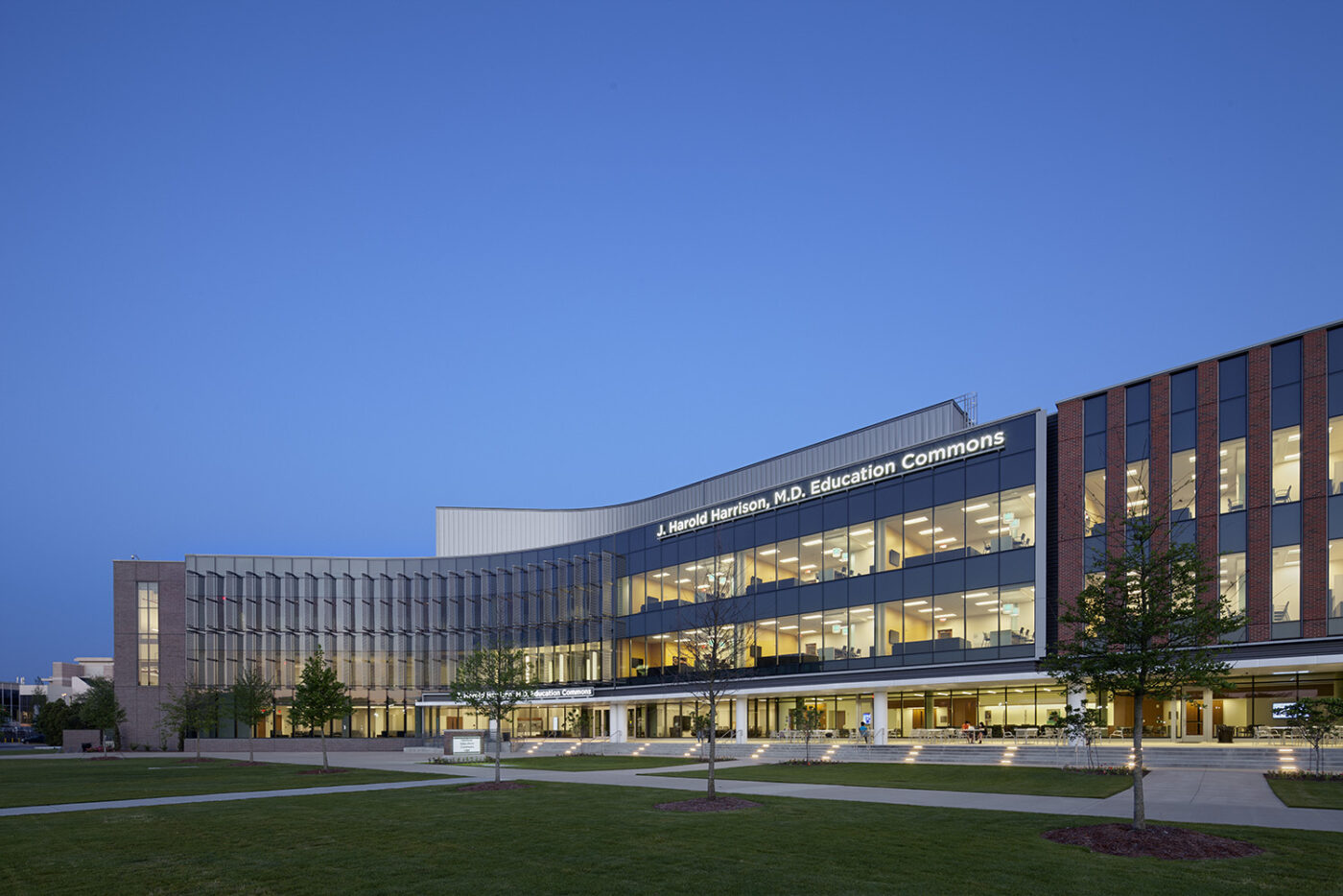
Medical College of Georgia at Augusta University
In 1828, Dr. Milton Antony and Dr. Joseph Adams Eve secured a state charter to establish the Medical Academy of Georgia, which would become the Medical College of Georgia at Augusta University. The General Assembly revised the charter to name it the Medical Institute of Georgia and, in 1833, the Medical College of Georgia. Over nearly two centuries the school has faced wars, economic crises and a constantly changing medical profession, and it has grown into one of the nation’s first public medical schools and Georgia’s flagship public medical school. One in five Georgia physicians attended MCG or completed residency at Wellstar MCG Health.
MCG now enrolls 304 students per class, which places it among the five largest medical school classes in the nation. Students study at the academic medical center in Augusta or at the school’s four-year campus in Savannah, on the Armstrong Campus of Georgia Southern University. The Savannah campus opened in July 2024 with 41 first-year students, raising MCG’s class from 264 to 304. Students on the Augusta campus may be assigned to a regional clinical campus for their clinical years, and MCG’s teaching network reaches Albany, Atlanta, Brunswick, Dalton, Rome and Savannah. In the Class of 2029, 21 students chose the Regional Clinical Campus Pathway (13 at the Northwest Campus and 8 at the Southwest Campus).
MCG also partnered with UGA through the AU/UGA Medical Partnership, which has educated physicians in Athens since 2010. That partnership is the foundation of the new University of Georgia School of Medicine, and UGA is working with MCG on a smooth transition for students still enrolled in the partnership.
Medical Degrees
- Doctor of Medicine (MD)
- MD/PhD program
- MD/MBA dual degree
- MD/MPH dual degree
Medical College of Georgia at Augusta University Highlights
Here are a few points that set MCG apart from other Georgia medical schools.
Large class, statewide reach. With 304 students per class, MCG sends a large number of new physicians into practice every year, and its Class of 2029 came from 49 Georgia counties. Seventy-one students in that class come from underserved counties, and 119 are nontraditional students.
A teaching network across Georgia. MCG’s faculty teach in Augusta, Savannah and regional clinical campuses across the state, which gives students clinical training in very different communities, from urban academic centers to smaller cities and rural regions. That statewide teaching network is a large part of what draws Georgia students to the school.
The Medical College of Georgia at Augusta University Selection Factors
The MCG admissions committee focuses on several key parts of your application when it considers your eligibility and suitability as a candidate.
GPA. The average overall GPA of the Class of 2029 is 3.8. Applicants with GPAs below 3.0 are not considered competitive for interview.
MCAT. The average MCAT of the Class of 2029 is 512. Applicants with scores below 496 are not considered competitive for interview, and the MCAT must not have been taken earlier than January 2024. The last test date for Regular Decision applicants is September 12, 2026.
Letters of recommendation. All applicants must submit at least three current letters of recommendation through AMCAS, and the admissions committee will not review a file without all three. Letters can come from science professors, a pre-health advisory committee or personal references, and MCG strongly recommends that one come from a physician who can speak to your clinical experience.
Clinical experience. The admissions committee expects at least 200 hours of clinical experience, which includes direct observation of or interaction with patients across a variety of health care settings.
Deadlines and fees. Under MCG’s application procedures for the 2026-2027 cycle, Regular Decision applicants submit AMCAS between May 28 and November 1, 2026, and Georgia residents apply to the Early Decision Program between May 28 and August 1, 2026. MCG charges no fee beyond the AMCAS fee. Applicants must be U.S. citizens or permanent residents.
How Competitive is the Medical College of Georgia at Augusta University?
MCG is a challenging school to gain acceptance to, especially for applicants from outside Georgia. Its high GPA and MCAT averages add an extra level of selectivity. Here is the Class of 2029, which entered in 2025:
- Total applications: 3,367
- Matriculated students: 304
- Men: 126 (41%)
- Women: 178 (59%)
- Non-Georgia residents: 4
- Average MCAT: 512
- Average overall GPA: 3.8
MCG publishes applications and matriculants but not the number of offers, so its exact acceptance rate is not available from its own figures. With 304 seats and a strong in-state preference, Georgia residents with competitive scores have a real chance here, while nonresidents face very long odds. For more information and helpful tips about applying, read How to Get Into the Medical College of Georgia at Augusta University: The Definitive Guide.
University of Georgia School of Medicine
The University of Georgia School of Medicine is Georgia’s newest medical school and its second public one. The University System of Georgia Board of Regents authorized UGA to establish an independent school of medicine in Athens on February 13, 2024, building on the AU/UGA Medical Partnership that has educated physicians in Athens since 2010. The LCME granted the school preliminary accreditation on February 13, 2026, and its inaugural class, the Class of 2030, entered in July 2026.
Preliminary accreditation is the first step in the LCME’s process for new schools. It allows a school to recruit and admit students, and programs count as accredited from that point. The LCME directory lists UGA’s next survey in 2027-28. A new school then moves to provisional and, once its first class reaches the final year, full accreditation.
Medical Degrees
- Doctor of Medicine (MD)
University of Georgia School of Medicine Highlights
A mission built around Georgia. UGA runs a mission-aligned admissions process, and its mission is to strengthen Georgia’s physician workforce. The inaugural class reflects that: 95% of its students are Georgia residents, 80% earned their undergraduate degrees at Georgia institutions, and 37.5% graduated from UGA. The class includes seven first-generation students.
A fast first cycle. UGA received more than 2,000 applications during a condensed two-week admissions cycle and interviewed 235 prospective students before making offers for its 64 seats.
University of Georgia School of Medicine Selection Factors
GPA and MCAT screen. Under its admissions process, UGA sends its secondary application to applicants with a BCPM (biology, chemistry, physics and math) GPA of at least 3.0 and an MCAT of at least 502, taken within the past three years. Applicants whose undergraduate BCPM GPA is below 3.0 can be considered with a graduate BCPM GPA of 3.0 or higher across at least 15 hours of graduate BCPM coursework.
Early Decision. UGA has no formal Early Decision cutoff beyond the secondary screen, but it encourages Early Decision applicants to have an MCAT of 512 or higher and a BCPM GPA of 3.7 or higher.
Residency and citizenship. UGA prioritizes Georgia residents and applicants with a Georgia tie, and it considers only U.S. citizens and permanent residents.
Application pieces and dates. A complete application includes the AMCAS application, the UGA secondary with a $75 fee (or fee waiver), MCAT scores and three to five letters of recommendation. For the 2026-27 cycle, the Early Decision AMCAS deadline was August 3, 2026 and the Regular Decision AMCAS deadline was October 15, 2026, with all Regular Decision materials due November 15, 2026. Applicants who missed those dates should plan for the next cycle and use the time to strengthen their application; pre-med gap year programs are one way to add supervised clinical hours before reapplying.
How Competitive is the University of Georgia School of Medicine?
Here is the inaugural class, which entered in July 2026:
- Applications: more than 2,000
- Applicants interviewed: 235
- Class size: 64
- Georgia residents: 95%
- Average MCAT: 514
- Average GPA: 3.85
UGA did not publish the number of offers, so its acceptance rate cannot be calculated. With 64 seats and an average MCAT of 514, the first class was highly competitive. First-year cost of attendance is $61,604 for Georgia residents and $96,098 for nonresidents. For a full look at the new school, read How to Get Into the University of Georgia School of Medicine: The Definitive Guide.

Mercer University School of Medicine
Mercer University School of Medicine was founded to train physicians and other health professionals to serve the people of Georgia, especially in rural and underserved parts of the state, and it earned LCME accreditation in 1982. That remains the focus of the school, its faculty and its admissions committee.
Mercer runs its full four-year MD program on three campuses:
- Macon, the school’s original home.
- Savannah, where a clinical partnership with Memorial Health that began in 1996 became a full four-year MD campus in 2008. The campus is based at Memorial Health University Medical Center.
- Columbus, where Mercer opened a clinical campus in 2012 with Piedmont Columbus Regional’s Midtown Campus and St. Francis Hospital. The MD program there became a full four-year program in 2021 with the opening of a new medical school building.
Medical Degrees
- Doctor of Medicine (MD)
- Doctor of Medicine, Accelerated Track (MD-ACT), including the Primary Care Accelerated Track and the Rural Critical Need Accelerated Track in psychiatry
- Master of Family Therapy (MFT)
- Master of Science in Preclinical Sciences (MSPS)
- Doctor of Philosophy in Biomedical Sciences (PhD)
- Doctor of Philosophy in Rural Health Sciences (PhD)
Mercer University School of Medicine Highlights
Here are a few points that set Mercer apart from other Georgia medical schools.
Dedication to Georgia. Mercer is committed to training skilled physicians who will serve residents of Georgia throughout the state’s rural and underserved regions. Its admissions rules reflect that: only Georgia residents may apply, and established residency alone does not demonstrate commitment to its mission of meeting the primary care and health care needs of rural and medically underserved Georgia.
Teaching compassionate care. Mercer teaches that every patient should be treated with compassion and understanding, regardless of background or circumstances. That commitment fits the communities its graduates are trained to serve.
Mercer School of Medicine Selection Factors
Mercer’s admissions committee focuses on a few key factors when it considers your eligibility and suitability as a candidate.
Residency and citizenship. You must be a U.S. citizen or permanent resident and must have established Georgia residency for at least 12 months before matriculation. Applicants submit documentation of Georgia domicile and a copy of a state-issued photo ID with the secondary application.
MCAT and GPA. Mercer’s MD admissions process uses a two-part screen in place of fixed GPA and MCAT minimums. You must have taken the MCAT at least once on or after April 1, 2023 with a percentile rank of at least 31, and Mercer considers only your highest score. To receive a secondary application, your MCAT percentile rank multiplied by your cumulative undergraduate BCPM GPA must be greater than 93. For example, a 31st-percentile score paired with a 3.0 BCPM GPA produces exactly 93, which does not clear the bar, while a 50th-percentile score paired with a 3.4 BCPM GPA produces 170. Applicants with an earned graduate degree, or 20 or more hours of graduate coursework, receive a secondary invitation with a percentile rank of 31 or higher regardless of BCPM GPA. The AAMC PREview exam is optional.
Letters of recommendation. Applicants submit at least three letters of recommendation or one committee letter through AMCAS, with a maximum of seven. Mercer does not invite applicants to interview until the letters are on file.
Secondary application. The secondary requires a nonrefundable $90 processing fee, which is waived automatically for applicants with an AMCAS Fee Assistance Program waiver, along with the Georgia domicile declaration.
How Competitive is Mercer School of Medicine?
Mercer University School of Medicine is selective, but its applicant pool is limited to Georgia residents, so you compete only against other Georgians. Mercer does not publish its class size, average MCAT, average GPA or acceptance rate. Use the two-part screen as your first check, and use the class averages of Georgia’s other MD programs as a rough benchmark for a competitive application.
Mercer is also one of the more affordable private options in the state: 2026-27 tuition is $44,864 ($22,432 per semester), tuition and fees for the first year total $46,023, and the full year-one cost of attendance is $75,830. For more information and helpful tips about applying to this program, read How to Get Into Mercer University School of Medicine: The Definitive Guide.

Morehouse School of Medicine
Morehouse School of Medicine (MSM) was founded in 1975 as the Medical Education Program at Morehouse College and became an independently chartered institution in 1981. It earned LCME accreditation in 1978. Morehouse states its mission this way:
We exist to:
- Improve the health and well-being of individuals and communities
- Increase the diversity of the health professional and scientific workforce
- Address primary health care through programs in education, research, and service
With emphasis on people of color and those systemically excluded in urban and rural populations in Georgia, the nation, and the world.
Morehouse’s main campus is in Atlanta. On October 31, 2023, the LCME formally approved MSM’s Columbus site as an official regional campus, and the Columbus campus now offers clinical rotations in specialties that include obstetrics and gynecology and thoracic surgery.
Medical Degrees
- Doctor of Medicine (MD)
- Doctor of Philosophy in Biomedical Sciences (PhD)
- Doctor of Health Administration (DHA)
- Master of Public Health (MPH)
- Master of Science in Physician Assistant Studies (MSPAS)
- Master of Science programs in medical sciences, biomedical research, clinical research and biotechnology
- Dual degree programs
Morehouse School of Medicine Highlights
These are a few of the key focuses that set Morehouse apart from other Georgia medical schools.
Focus on social mission. Morehouse School of Medicine is one of the few historically Black medical schools in the country. It works on important social issues, such as Black representation in medicine, and it was recognized as the top U.S. medical school for social mission. Morehouse also highlights its standing as the 16th best medical school in primary care, and 63% of its alumni practice in primary care.
Recognized faculty. Morehouse is proud of its accomplished faculty, who are known in their fields for excellence in teaching, research and public policy.
Morehouse School of Medicine Selection Factors
The Morehouse admissions committee pays particular attention to a few key factors when it considers your application.
GPA. Morehouse does not publish a minimum GPA. The Entering Class of 2025 had an average GPA of 3.64 and an average science GPA of 3.56.
MCAT. The Entering Class of 2025 had an average MCAT of 505.6. Scores more than three years old from the entering class are not considered, and Morehouse urges applicants to test in the spring of the year before they plan to enter so the score can be considered earlier.
Letters of recommendation. Letters should be sent through AMCAS. Applicants submit either letters or a composite letter from a pre-health advisor or committee, or three letters from individual writers, two of whom must be science professors. Additional letters may also be sent.
Prerequisites. Premedical courses must be taken for letter grades, not pass/fail, and coursework completed after June 2024 must be taken in a classroom setting.
Deadlines, Early Decision and eligibility. The AMCAS deadline is December 1. Morehouse’s Early Decision option, with a decision by October 1, is open to Georgia residents applying only to MSM. Secondary applications are sent by invitation only. Morehouse accepts only U.S. citizens and permanent residents who hold a green card.
How Competitive is Morehouse School of Medicine?
Getting an acceptance letter from Morehouse School of Medicine is no simple task. It is one of the most popular medical schools in Atlanta, and thousands of applicants compete for about 110 seats. Here is the Entering Class of 2025 from the Morehouse MD fact sheet:
- Total applied: 6,875
- Matriculated: 110
- Average MCAT: 505.6
- Average GPA: 3.64
- Average science GPA: 3.56
- Georgia residents: 62
- Average age: 24
Morehouse publishes applicants and matriculants but not offers, so its acceptance rate cannot be calculated from its own figures; with 6,875 applicants for 110 seats, competition is intense. For more information and helpful guidance, read How to Get Into Morehouse School of Medicine: The Definitive Guide.

Philadelphia College of Osteopathic Medicine (PCOM Georgia and PCOM South Georgia)
The Philadelphia College of Osteopathic Medicine (PCOM) has trained health professionals since 1899, when Dr. Oscar John Snyder and Dr. Mason W. Pressly founded the school in Philadelphia. At that time there were very few osteopathic physicians in the city, and the need for osteopathic medical schools was clear. PCOM grew from there, and through many changes its mission has stayed the same: training physicians who see the whole person, not just the symptoms.
PCOM operates two separate DO campuses in Georgia, each with its own class, its own admissions data and its own accreditation listing:
- PCOM Georgia in Suwanee, in metro Atlanta, a branch campus of PCOM established in 2005.
- PCOM South Georgia in Moultrie, an additional location of PCOM established in 2019.
Both are accredited by the American Osteopathic Association’s Commission on Osteopathic College Accreditation (COCA), with their last accreditation visit in spring 2024 and the next in the 2028-2029 academic year. They are the only osteopathic medical schools in Georgia.
Medical Degrees
Both Georgia campuses offer the Doctor of Osteopathic Medicine (DO) and biomedical sciences graduate programs. The other programs depend on the campus:
- Doctor of Osteopathic Medicine (DO): PCOM Georgia and PCOM South Georgia
- Biomedical Sciences (MS, one-year MS and certificate): PCOM Georgia and PCOM South Georgia
- Doctor of Pharmacy (PharmD): PCOM Georgia
- Doctor of Physical Therapy (DPT): PCOM Georgia
- Physician Assistant Studies (MS in Health Sciences): PCOM Georgia
- Medical Laboratory Science (MS, pre-professional program): PCOM Georgia
PCOM’s psychology doctorates, including the PsyD in clinical psychology and the PsyD in school psychology, are offered at the Philadelphia campus.
Philadelphia College of Osteopathic Medicine Highlights
Here are a few points that set PCOM apart from other Georgia medical schools.
Inclusion and diversity. PCOM is known for its forward-thinking approach to inclusion and diversity, and it looks for a diverse class each year.
Osteopathic medicine. Osteopathic medicine focuses on the whole patient, not just a handful of symptoms. PCOM’s mission includes promoting and teaching osteopathic medicine so its graduates can encourage healthy living that prevents illness before it begins.
A regional mission. PCOM Georgia trains students from Georgia and the surrounding states and aims to keep its graduates in the Southeast. PCOM South Georgia educates students to serve the health care needs of Georgia and the Southeast and encourages graduates to stay in the region and practice among underserved populations. Its students describe the rural setting and smaller class size as a close community.
Philadelphia College of Osteopathic Medicine Selection Factors
The PCOM admissions committee looks at a few very important factors when it decides whether your application moves to the next stage. The same process applies to both Georgia campuses.
GPA and MCAT. PCOM reviews MCAT scores and grades, but it reads the entire application, including letters and personal statements, and there are no cutoffs or minimums. Research experience, clinical exposure, extracurricular activities, community involvement and motivation to study medicine also carry weight. The latest campus averages are an MCAT of 503 at PCOM Georgia and 499 at PCOM South Georgia (both labeled 2025). PCOM does not publish a GPA average for either Georgia campus.
MCAT timing. For the current cycle, the oldest MCAT considered is from January 1, 2024, and the latest score accepted is from January 31, 2027. PCOM’s Faculty Committee on Admissions reviews all MCAT results if you test more than once.
Letters of recommendation. PCOM requires letters of recommendation, submitted through AACOMAS, Interfolio or email. The strongest letters come from people who know you professionally and can speak to your character, academic success, scientific understanding, work ethic and commitment to medicine. A letter from a DO is not required but is strongly recommended. Good choices include your pre-health or academic advisor, a science faculty member from your undergraduate, graduate or post-baccalaureate program, and a physician, ideally a DO, or another health care professional who supervised your clinical experience.
Application and fee. PCOM applications go through AACOMAS, and there are no supplemental essays. A $75 nonrefundable institutional application fee and the required letters must arrive by March 1, 2027, and the AACOMAS deadline is February 1, 2027. IMA’s guide to AACOMAS explains the osteopathic application service step by step.
Citizenship. PCOM’s DO program does not accept applicants who are not U.S. citizens or permanent residents.
How Competitive is PCOM Georgia?
PCOM Georgia in Suwanee is a selective program with a larger class than its sister campus. Here is the Entering Class of 2026 from its program data page:
- Applied: 3,563
- Accepted: 317 (about 8.9% of applicants)
- Matriculated: 135
- Average MCAT: 503 (labeled 2025)
How Competitive is PCOM South Georgia?
PCOM South Georgia in Moultrie admits a smaller class with a rural focus. Here is the Entering Class of 2026 from its program data page:
- Applied: 3,127
- Accepted: 309 (about 9.9% of applicants)
- Matriculated: 96
- Average MCAT: 499 (labeled 2025)
How Competitive is Philadelphia College of Osteopathic Medicine?
Both Georgia campuses are challenging to get into, with fewer than one applicant in ten accepted. Tuition is the same at every PCOM campus: $67,665 for 2026-27, plus an $800 comprehensive fee, for a total estimated first-year cost of attendance of $100,157. For more information and helpful tips about applying to PCOM, read How to Get Into Philadelphia College of Osteopathic Medicine (PCOM): The Definitive Guide.
Good Luck!
As you research which of the medical schools in Georgia is right for you, whether MD schools or DO schools, we are confident this guide will help you make the right decision. We hope the information here gives you a sense of calm as you choose where to apply.
If you are still searching for the answer to “What are the best medical schools near me?”, explore our other medical school guides. Reach out to IMA if you would like to learn more about our medical school admissions consulting services or about gaining clinical experience through our international healthcare internships. We are here to help you apply to the Georgia medical schools that fit you best.
Frequently Asked Questions
How many medical schools are in Georgia?
Georgia has seven medical school programs: five MD programs (Emory University School of Medicine, the Medical College of Georgia at Augusta University, the University of Georgia School of Medicine, Mercer University School of Medicine and Morehouse School of Medicine) and two DO campuses run by the Philadelphia College of Osteopathic Medicine (PCOM Georgia in Suwanee and PCOM South Georgia in Moultrie). Several of them teach on more than one campus, including MCG in Savannah, Mercer in Savannah and Columbus, and Morehouse in Columbus.
What is the newest medical school in Georgia?
The University of Georgia School of Medicine in Athens is the newest. It received preliminary accreditation on February 13, 2026, and its inaugural class of 64 students entered in July 2026. It is Georgia’s second public medical school, after the Medical College of Georgia.
What is the easiest medical school to get into in Georgia?
No Georgia medical school is easy to get into. Among programs that publish both applicants and acceptances, PCOM South Georgia accepted about 9.9% of applicants and PCOM Georgia about 8.9% for the Entering Class of 2026, compared with about 1.8% of applicants receiving offers at Emory. PCOM South Georgia also has the lowest published average MCAT in the state, 499. For Georgia residents, Mercer’s residents-only pool and MCG’s large class of 304 are also worth weighing.
Which medical schools in Georgia accept out-of-state students?
Emory, Morehouse, PCOM Georgia and PCOM South Georgia all admit students from outside Georgia. MCG and UGA accept applications from nonresidents but strongly prefer Georgia residents; MCG’s Class of 2029 included only 4 nonresidents among 304 students, and UGA’s inaugural class was 95% Georgia residents. Mercer accepts Georgia residents only.
Does Mercer University School of Medicine accept out-of-state applicants?
No. Mercer requires applicants to be U.S. citizens or permanent residents who have established Georgia residency for at least 12 months before matriculation. Applicants who cannot claim Georgia as their legal residence cannot designate Mercer on the AMCAS application.
What MCAT score do I need for medical school in Georgia?
It depends on the school. The latest class averages are 515.1 at Emory, 514 at UGA, 512 at MCG, 505.6 at Morehouse, 503 at PCOM Georgia and 499 at PCOM South Georgia. Screening rules also differ: Emory requires at least 502 with 124 in every section, UGA sends secondaries at 502 and above, MCG does not consider scores below 496 competitive for interview, and Mercer uses a percentile-times-GPA formula.
What GPA do I need for medical school in Georgia?
The latest average GPAs are 3.85 at UGA, 3.83 at Emory, 3.8 at MCG and 3.64 at Morehouse. MCG does not consider GPAs below 3.0 competitive for interview, and UGA requires a BCPM GPA of at least 3.0 for its secondary application. Emory does not prescreen for GPA, and PCOM states that it has no cutoffs.
Which is the cheapest medical school in Georgia?
For Georgia residents, the public schools cost the least. UGA lists first-year tuition of $30,048 for residents, and MCG charges Georgia residents $15,024 per semester for Fall 2026 to Summer 2027. Among private schools, Mercer has the lowest tuition at $44,864 for 2026-27. For nonresidents, UGA’s tuition is $63,912 and MCG’s is $31,956 per semester.
Do Georgia medical schools accept international students?
Emory is the only Georgia medical school that accepts international applicants, including Canadians, through the same process as domestic applicants. MCG, UGA, Mercer, Morehouse and both PCOM campuses consider only U.S. citizens and permanent residents.
Is PCOM Georgia the same school as PCOM South Georgia?
They are part of the same college but run as separate campuses. PCOM Georgia in Suwanee is a branch campus established in 2005, and PCOM South Georgia in Moultrie is an additional location established in 2019. Each publishes its own class data and admissions numbers, and each has its own accreditation listing. Tuition is the same at both.
How much clinical experience do Georgia medical schools want?
MCG states the clearest number: at least 200 hours of clinical experience involving direct observation of or interaction with patients. Other Georgia schools do not set an hour count, but all of them look for meaningful patient contact. Supervised programs such as IMA’s pre-health internships can add hands-on hours alongside the clinical work you do in Georgia.
When should I apply to medical schools in Georgia?
Apply early in the AMCAS or AACOMAS cycle. For the 2026-27 cycle, Emory’s AMCAS deadline was October 15, UGA’s Regular Decision AMCAS deadline was October 15, 2026, MCG’s is November 1, 2026, Morehouse’s is December 1, and PCOM’s AACOMAS deadline is February 1, 2027. Mercer reviews applications and issues acceptances on a rolling basis, so it advises applying well ahead of its deadline.
IMA Resources
International Medical Aid (IMA) offers useful tools and memorable experiences to pre-health students, medical students and clinicians. Our global internship opportunities give participants experiences that shape them as future doctors and as people.
IMA’s pre-med internships give students the opportunity to work with patients who live in underserved parts of the world and lack access to consistent, quality medical care. These internships for pre-med students run in teaching hospitals, where interns take vitals, do intake and triage and help with direct care under supervision, and they never perform tasks that would require a medical license in the United States. IMA’s medical internships abroad also include programs for nursing, pre-PA, mental health and other health careers. This clinical experience will stand out to the admissions committees of medical schools in Georgia, and IMA’s Pre-Med Shadowing Study Abroad Programs page describes every track.
IMA also offers medical school admissions consulting to help applicants gain acceptance to the medical school of their choice. Our experts provide one-on-one, personalized guidance, tips and coaching throughout the process, and guidance on essay writing and mock interviews goes a long way.
Another IMA resource you may find useful is our Medical School Secondary Essay Prompts Database. Take the secondary essay section seriously. It is a big part of how admissions committees make their decisions, because it gives them a glimpse of what makes you unique, how you will contribute on campus and what kind of physician you are likely to become.
Sources
- Emory University School of Medicine: M1 Class Profile Fall 2026; MD Admission FAQ (2026-27 cycle); MD Program Costs (2026-27); Emory medicine cost of attendance PDF (Fall 2026 to Spring 2027); Education Programs; History. Checked October 17, 2026.
- Medical College of Georgia at Augusta University: 2025 Admissions Fact Sheet (Class of 2029); Doctor of Medicine tuition and fees (Fall 2026 to Summer 2027); admissions general information, application procedures (2026-2027 cycle) and FAQs; MCG home page; Augusta University history page; Jagwire, “Augusta University opens new Medical College of Georgia campus in Savannah” (July 2024). Checked October 17, 2026.
- University of Georgia School of Medicine: admissions process; cost of attendance; accreditation; UGA Today, “UGA to launch new School of Medicine” (February 13, 2024), “UGA School of Medicine granted preliminary accreditation” (February 13, 2026) and “UGA School of Medicine welcomes inaugural class” (July 28, 2026). Checked October 17, 2026.
- Mercer University School of Medicine: 2026-2027 Tuition, Fees and Other Estimated Costs; MD admissions process; campus locations; home page. Checked October 17, 2026.
- Morehouse School of Medicine: MD Fact Sheet (Entering Class of 2025); 2025-2026 student budgets; MD admissions process, admissions requirements and FAQs; Columbus campus page; About MSM. Checked October 17, 2026.
- Philadelphia College of Osteopathic Medicine: PCOM Georgia and PCOM South Georgia DO program and program data pages (Entering Class of 2026); PCOM cost of attendance (2026-2027); PCOM Georgia DO FAQs; programs and degrees by campus; PCOM home page. Checked October 17, 2026.
- Liaison Committee on Medical Education, Directory of Accredited Programs (updated October 14, 2026).
- American Osteopathic Association, directory of colleges of osteopathic medicine (September 2026); AACOM Choose DO Explorer, PCOM Georgia (2026-2027 cycle deadlines and MCAT dates). Checked October 17, 2026.