
Authorized by the University System of Georgia Board of Regents in February 2024, with the MD degree program approved in November 2024, the University of Georgia School of Medicine represents the formal evolution of the long-standing AU/UGA Medical Partnership into an independent medical school based in Athens. The school is currently advancing through the LCME accreditation process, with an expected decision in February 2026 that would allow the first independently accredited class to matriculate in Fall 2026.
Applicants should be aware that the Athens-based MD program is currently undergoing a formal accreditation transition as the University of Georgia advances toward independent accreditation of its medical school.
During the 2025–2026 admissions cycle, the MD program continues to operate under the accreditation framework of the Medical College of Georgia while establishing its own governance, leadership structure, and long-term academic identity. Students admitted during this period earn a fully accredited MD degree, remain eligible for federal financial aid, USMLE licensing exams, and ACGME-accredited residency programs, and graduate with the institutional backing of both MCG and the University of Georgia.
What distinguishes the University of Georgia School of Medicine is not branding or geography, but mission design. The program is built around a One Health framework that integrates human health, animal health, environmental science, and population-level systems. This philosophy is not abstract. It is operationalized through case-based learning, regional clinical immersion across Northeast Georgia, and research pathways that emphasize precision medicine, public health, and health systems improvement.
This guide is written specifically for applicants targeting the Athens-based MD program. It reflects confirmed policies, current admissions practices, and verified institutional direction for the 2025–2026 cycle. Rather than offering generic advice, we explain how the school evaluates applicants, how its curriculum functions in practice, and how to determine whether this environment aligns with your goals as a future physician.
Purpose of This Guide
Applying to the University of Georgia School of Medicine requires a different level of preparation than applying to most medical schools. As the program transitions from the AU/UGA Medical Partnership to an independent medical school, applicants often rely on fragmented or outdated information. Public materials frequently lag behind institutional changes, and generic admissions advice fails to account for how the school actually evaluates candidates during this phase.
The purpose of this guide is to close that gap.
This document is designed to translate the University of Georgia School of Medicine’s mission, curriculum structure, admissions priorities, and institutional trajectory into practical guidance for applicants. Rather than repeating surface-level descriptions, it explains how the school’s One Health framework, regional workforce mandate, and case-based learning model shape both admissions decisions and student outcomes.
This guide also reflects a critical reality of the 2025–2026 admissions cycle: applicants are not being evaluated against a static template. The admissions committee is building a class that can sustain continuity during institutional transition while advancing the school’s long-term goals. That requires students who demonstrate adaptability, service orientation, and a clear understanding of healthcare delivery in Georgia’s rural and regional communities.
Throughout this guide, each section answers a specific question applicants routinely ask but rarely find addressed directly: How does this affect how I apply? Whether discussing accreditation, curriculum design, research opportunities, or clinical rotations, the emphasis remains on actionable insight rather than promotional language.
By the end of this guide, you should be able to determine three things with confidence: first, whether the University of Georgia School of Medicine aligns with your learning style and professional goals. Second, how to position your application to reflect authentic mission fit. Third, what distinguishes a competitive applicant for the Athens campus during this admissions cycle.
Topics Covered
- Key Statistics & The “Bridge Phase” Explained
- The “One Health” Mission Statement & Analysis
- Admission & Interview Guidelines
- Accreditation Status (MCG vs. Independent)
- Curriculum Overview (The “Highways” Model)
- Admissions Process & Funnel Data
- Financial Information & ROI
- Campus Facilities (The New Build)
- Clinical Rotations (Piedmont & St. Mary’s)
- Research Opportunities (Precision One Health)
- Notable Alumni & Faculty
- Secondary Application Lab
- FAQ
Key Statistics
- Location: Athens, Georgia (Health Sciences Campus, Normaltown)
- Year Authorized: 2024 (Independent School Authorization by Board of Regents) Partnership Established: 2010 (AU/UGA Medical Partnership) First Independent Class: Expected Fall 2026 (pending LCME accreditation)
- Campus Type: Suburban / College Town
- Total Enrollment: Approximately 240 (Expanding to 120 per class post-accreditation)
- Application Deadlines:
- Primary (AMCAS): November 1 (Regular Decision); August 1 (Early Decision)
- Secondary: Generally 2 weeks after receipt
- Start Date for Classes: Early August
- Median MCAT Score: 512 (Athens Campus Profile)
- Median GPA: 3.84 (Based on Class of 2029 profile data)
- Combined Degree Programs: MD/MPH, MD/MBA, MD/PhD (Currently administered via MCG)
- Tuition & Fees:
- In-state: Approximately $31,675 per year
- Out-of-state: Approximately $62,767 per year
Note: Tuition is charged on a semester basis. Students should verify current semester rates through the MCG/UGA bursar’s office, as these figures are subject to annual adjustment by the Board of Regents.
- Economic Impact: Projected to generate $2.3 billion by 2040 and create new jobs
- Residency Match Rate: 99–100% historically (Partnership data)
- Research Expenditures: UGA topped $570.9 million in R&D in FY2023
Mission Statement
To educate excellent physicians, to pursue new knowledge, and to advance the health of our communities, Georgia, and beyond.
Important Note for Applicants
As of the 2025-2026 admissions cycle, applicants apply through the Medical College of Georgia (MCG) via AMCAS and indicate preference for the Athens campus during the secondary application process. Students admitted to the Athens campus during this transition period graduate with an MD degree conferred by MCG. Once the UGA School of Medicine receives Preliminary Accreditation (expected decision February 2026), future classes will matriculate directly under UGA and graduate with a UGA-conferred MD degree. This transition does not affect the quality of education, residency match outcomes, or career prospects.
Mission Analysis: The “One Health” Mandate
Most medical schools have a mission statement focused on patient care. UGA’s mission is distinct because it is operationalized through the “One Health” philosophy. This is critical for your application. UGA is one of the few universities in the nation with top-tier colleges of Veterinary Medicine, Ecology, Public Health, Agriculture, and Pharmacy on a single campus.
The school views human health as inextricably linked to animal and environmental health. This is not just a slogan. It is the structural foundation of the new school.
To Educate Excellent Physicians (The Shortage Crisis)
The creation of this independent school is a direct response to a crisis. Georgia faces a severe physician shortage. The state has numerous counties with no physician, no family medicine doctor, and no OB/GYN.
What this means for you: The ideal candidate is not just someone who wants to be a doctor. The committee seeks someone who wants to be a doctor in Georgia. The admissions committee heavily favors applicants who demonstrate a long-term commitment to the state’s healthcare ecosystem. Dean Shelley Nuss has explicitly stated that the school focuses on geographic disparities.
To Pursue New Knowledge (The Research Engine)
UGA is a Research 1 (R1) institution that brought significant R&D expenditures in FY2024. It ranks highly among U.S. universities for products brought to market.
What this means for you: The curriculum integrates “Precision One Health.” Research here focuses on zoonotic diseases (70% of infectious diseases originate in animals) and immunology. The school has launched the Precision One Health Initiative. This initiative focuses on four cores: Translational Medicine, Systems Modeling, Epidemiology, and Social Sciences. Applicants with research experience in these domains will find a receptive audience.
To Advance the Health of Our Communities (The Economic Driver)
The school is viewed as an economic engine. The new Medical Education and Research Building is a $100 million project supported by corporate partners and state funding.
What this means for you: You are entering an institution that is heavily invested in community outreach. Students are expected to engage with the AU/UGA Medical Partnership Mobile Clinic and local Athens health systems immediately. The school aims for a significant percentage of its graduates to remain in Georgia.
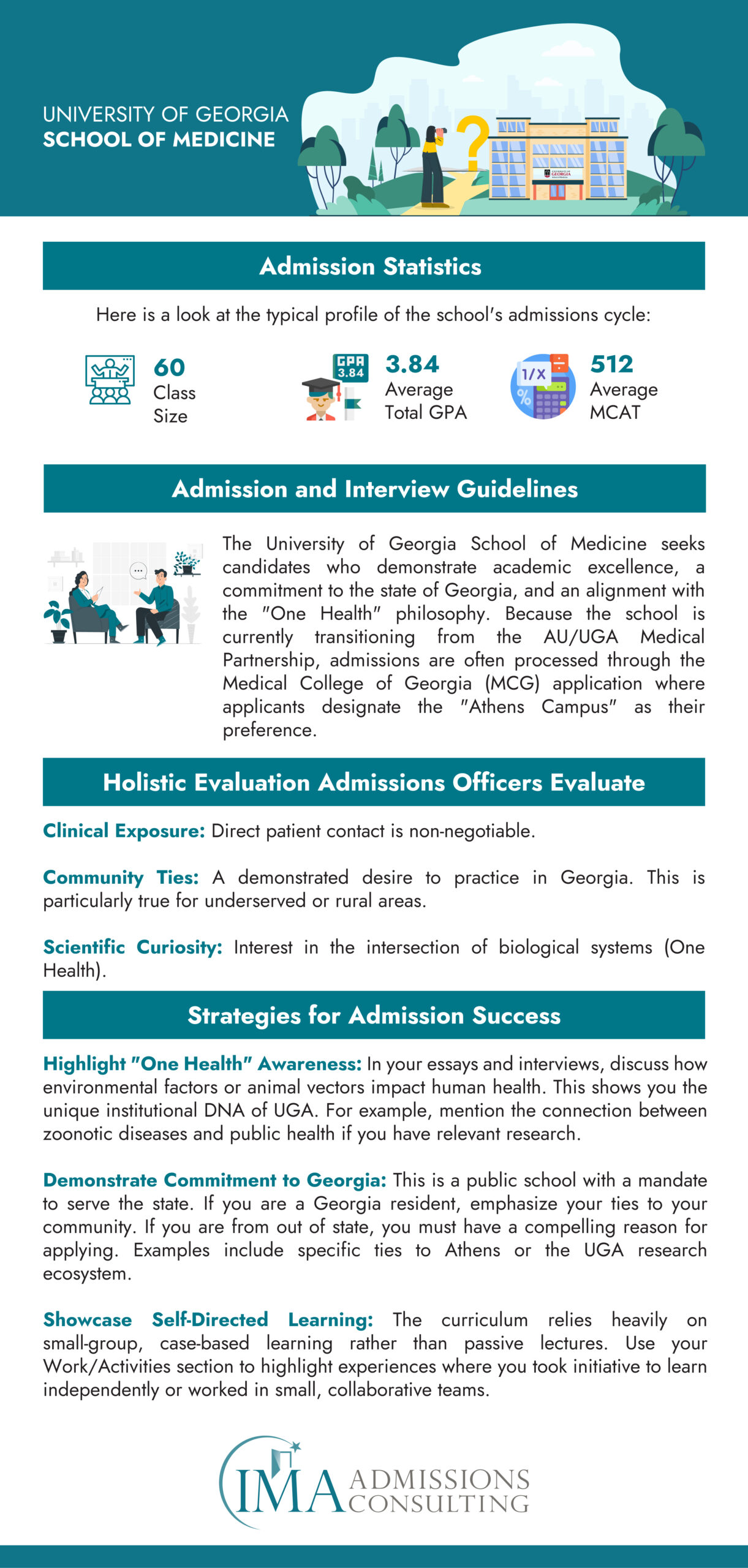
Accreditation
The University of Georgia School of Medicine is currently advancing through a formal and well-established accreditation pathway while operating within Georgia’s existing public medical education system. Understanding how accreditation functions during this transition is essential for applicants evaluating both stability and long-term trajectory.
As of December 2025, the University of Georgia School of Medicine holds LCME Candidate Status with the Liaison Committee on Medical Education (LCME), the nationally recognized accrediting authority for MD-granting medical schools in the United States. Candidate Status is not provisional or informal; it is an official stage in the LCME accreditation process reserved for institutions that have demonstrated sufficient organizational structure, curriculum design, faculty leadership, and clinical training capacity to move toward independent accreditation.
How Accreditation Works During the Transition
During this transitional phase, medical students training at the Athens campus remain enrolled under the Medical College of Georgia, Georgia’s established public medical school based in Augusta. Until the University of Georgia School of Medicine begins matriculating independently accredited classes, all students at the Athens-based program graduate with an MD degree conferred by the Medical College of Georgia.
This structure ensures continuity, legitimacy, and regulatory compliance. Students admitted during the transition period are fully eligible for federal financial aid, including Direct Unsubsidized Loans and Grad PLUS loans. They are also eligible to sit for the USMLE Step examinations, apply for medical licensure in all U.S. states, and participate in ACGME-accredited residency programs nationwide. There is no distinction made by residency programs between degrees earned through this transitional model and those earned at long-established medical schools.
The comprehensive LCME site visit was completed in September 2025 (September 16-17, 2025). The LCME is expected to make its accreditation decision in February 2026, which would determine whether the University of Georgia School of Medicine can advance to Preliminary Accreditation and begin matriculating its first independently accredited MD class in Fall 2026.
Successful completion of this visit would allow the University of Georgia School of Medicine to advance to Preliminary Accreditation, which authorizes the recruitment and matriculation of its first independently accredited MD class under the University of Georgia. This step follows the standard accreditation trajectory used by all newly established U.S. medical schools.
Applicants should view this phase not as uncertainty, but as a structured progression. The Athens-based MD program operates within a fully accredited framework while building toward independent status, combining the academic oversight of the Medical College of Georgia with the research-intensive, small-group educational environment unique to the University of Georgia.
Programs Overview
The University of Georgia School of Medicine leverages the massive resources of a top-tier land-grant research university. The academic offerings extend beyond the MD, utilizing UGA’s other colleges (Public Health, Business, Veterinary Medicine) to create interdisciplinary professionals.
Doctor of Medicine (M.D.)
The core program is a four-year allopathic degree focused on the “One Health” philosophy. It is designed to produce physicians who are comfortable in both high-tech research labs and rural community clinics. The program is expanding from its historical class size of 60 to an eventual 120 students per year once the new Medical Education and Research Building is operational.
Dual Degree Programs
Students can pursue dual degrees that integrate medicine with other disciplines. While currently administered in coordination with MCG, these tracks are transitioning to independent UGA pathways.
- MD/MPH (Master of Public Health): This is a natural fit for the school’s mission. Offered in collaboration with the UGA College of Public Health (located on the same Health Sciences Campus), this 5-year track focuses on epidemiology, disaster management, and health policy.
- MD/MBA (Master of Business Administration): Partnered with the Terry College of Business, this program prepares students for leadership roles in hospital administration and healthcare economics.
- MD/PhD: Geared toward physician-scientists, this track capitalizes on UGA’s $570.9 million annual R&D expenditure, particularly in immunology and infectious diseases.
Curriculum Overview: Hybrid Case-Based Learning Model
The University of Georgia School of Medicine (Athens Campus) utilizes a hybrid curriculum anchored in Case-Based Learning (CBL) rather than traditional large-lecture instruction. This educational model emphasizes small-group learning, early clinical reasoning, and close faculty engagement, with an approximate student-to-faculty ratio of 3:1.
The curriculum was deliberately structured to meet LCME standards for new medical schools while preserving the intimate, case-based learning environment that defines the Athens campus experience.
The Pedagogy: Case-Based Learning (CBL)
During Phase 1, students do not spend the majority of their time in lecture halls. Instead, they work in small groups of approximately eight students with two faculty facilitators.
Each week, student teams are presented with a clinical case, such as a patient presenting with chest pain or shortness of breath. Students identify learning objectives, research relevant foundational sciences including anatomy, physiology, pathology, and pharmacology, and synthesize their findings through guided discussion.
This approach integrates basic science with clinical reasoning from the beginning of medical training, requiring students to develop diagnostic thinking, teamwork skills, and self-directed learning habits early in the curriculum.
Phase 1: Pre-Clerkship Curriculum (18 Months)
Phase 1 is organized into integrated, organ-system–based modules rather than isolated discipline-based courses. Foundational sciences are taught in direct clinical context, reinforcing relevance and application.
Year 1 (Fall)
- Module 1: Cellular and Molecular Basis of Medicine (MEDI 5150) – foundational mechanisms of health and disease
- Module 2: Tissue and Musculoskeletal Systems (MEDI 5155) – includes cadaveric dissection in the anatomy laboratory
- Module 3: Cardiopulmonary Systems (MEDI 5158) – physiology and pathology of the heart and lungs
Year 1 (Spring)
- Module 4: Cardiopulmonary and Renal Systems (MEDI 5168) – advanced integration of cardiovascular and renal physiology
- Module 5: Gastrointestinal and Nutrition Systems (MEDI 5178)
- Module 6: Reproductive and Endocrine Systems (MEDI 5173)
Longitudinal Course: Essentials of Clinical Medicine (ECM)
Essentials of Clinical Medicine runs throughout Years 1 and 2 and focuses on core clinical skills, including patient interviewing, physical examination, clinical documentation, and medical ethics. Students practice these skills through standardized patient encounters and simulation-based training, reinforcing professional development alongside academic coursework.
Phase 2: Core Clinical Clerkships (Year 3)
During Phase 2, students transition from the classroom into immersive clinical rotations across Northeast Georgia. The focus shifts to applying foundational knowledge to real-world patient care.
Clinical education emphasizes Cellular and Systems Disease States (CSDS) across required clerkships, including:
- Internal Medicine
- Family Medicine
- Surgery
- Pediatrics
- Obstetrics and Gynecology
- Psychiatry
- Neurology
Primary teaching sites include Piedmont Athens Regional Medical Center and St. Mary’s Health Care System, providing exposure to both acute care environments and community-based healthcare delivery.
Phase 3: Advanced Clinical Training (Year 4)
The final phase of the curriculum is designed to prepare students for residency training.
Students are required to complete:
- An Acting Internship (AI) in a core discipline such as Internal Medicine or Surgery
- A Critical Care rotation
In addition, students complete approximately three months of elective coursework. At least one elective must be completed on campus in Athens, while others may be used for away rotations and residency audition experiences across the country.
Admissions Process, Requirements, and Timeline
Admission to the University of Georgia School of Medicine’s Athens-based MD program is highly competitive and operates within a specific structural and accreditation context that applicants must understand clearly. During the current accreditation transition, the Athens campus functions as part of Georgia’s public medical education system under the Medical College of Georgia (MCG), while advancing toward independent accreditation under the University of Georgia.
Application Pathway and Campus Designation
Applicants apply through AMCAS under the Medical College of Georgia designation. There is no separate AMCAS application for the University of Georgia School of Medicine at this time. During the secondary application process and admissions review, applicants may indicate a preference for the Athens campus MD program.
During the accreditation transition, applicants apply through the Medical College of Georgia via AMCAS and designate interest in the Athens-based program. Independent University of Georgia matriculation will begin only after Preliminary LCME accreditation is granted. Until that point, students admitted to the Athens campus remain enrolled under MCG and graduate with an MD degree conferred by the Medical College of Georgia.
Campus preference is evaluated deliberately. The Athens campus is not a fallback or overflow option. Admissions committees assess Athens preference as a distinct educational choice, requiring applicants to articulate a clear interest in small-group, case-based learning, a research-intensive university environment, and regional clinical training centered in Northeast Georgia. Applicants who view Athens as interchangeable with Augusta are less competitive than those who demonstrate intentional alignment with the Athens model.
Admissions Funnel (System-Wide Context)
The following data reflects system-wide admissions outcomes for the Medical College of Georgia, which governs admissions for both the Augusta and Athens campuses.
- Total Verified Applications: 3,244
- Interviewed: 646 (approximately 20%)
- Matriculated (System-Wide): 304
- Matriculated (Athens Campus): 60
- Overall Acceptance Rate: approximately 9.3%
These figures underscore the competitiveness of admission and the limited number of seats available at the Athens campus.
Class Profile: The Athens Cohort
The Athens campus attracts a specific student profile. Students admitted to Athens typically thrive in smaller, highly collaborative learning environments and demonstrate strong academic preparation alongside a clear commitment to Georgia’s healthcare needs.
- Class Size: 60 students
- Gender Distribution: Approximately 50% female / 50% male
- Residency: Nearly 100% Georgia residents
- While the broader MCG system may admit a small number of out-of-state students (often MD/PhD candidates or applicants with exceptional ties), the Athens cohort is overwhelmingly composed of Georgia residents.
- Median GPA: 3.84 (Based on Class of 2029 profile data)
- Median MCAT: 512
- Top Feeder Institutions:
- University of Georgia (18)
- Emory University (6)
- Georgia Institute of Technology (4)
Admissions Review Philosophy
The admissions process is holistic and mission-driven. Academic metrics are evaluated in context, alongside clinical exposure, service, leadership, ethical reasoning, and readiness for collaborative medical education.
Because the program currently operates within Georgia’s public medical education system, state residency plays a substantial role. Non-resident applicants face significantly higher competition and typically must demonstrate exceptional academic strength, meaningful ties to Georgia, or a compelling commitment to serving underserved, rural, or regional populations similar to those found across the state.
Admissions Requirements
1. Academic Prerequisites
Applicants must complete a bachelor’s degree from an accredited institution. Required coursework must be completed with a letter grade; Pass/Fail coursework is not accepted for prerequisites.
- Biology: 1 year with lab (8 credit hours)
- General Chemistry: 1 year with lab (8 credit hours)
- Organic Chemistry: 1 year with lab (8 credit hours)
- Note: Biochemistry may substitute for the second semester of Organic Chemistry depending on policy updates
- Physics: 1 year with lab (8 credit hours)
- English: 1 year (6–8 credit hours), composition or literature
- Statistics: 1 semester (3 credit hours), probability or biostatistics
2. Standardized Testing
- MCAT: Required
- Scores must be no more than three years old at the time of matriculation
- Scores below approximately 496 are generally considered non-competitive
- Situational Judgment Tests:
- CASPer and AAMC PREview requirements have varied by cycle
- Applicants should monitor the current admissions cycle instructions carefully, as these assessments may be required, optional, or used for internal evaluation depending on the year
3. Letters of Recommendation
Applicants must submit a minimum of three individual letters or one committee packet.
- Physician Letter: Strongly recommended, particularly from a physician who supervised the applicant’s clinical exposure
- Academic Letters: Letters from science faculty who taught the applicant in a classroom setting are advised
Interview Process
Interviews are conducted virtually. Format may vary by cycle but typically includes faculty interviews emphasizing communication skills, ethical reasoning, maturity, and readiness for small-group, case-based learning. Interviewers assess an applicant’s ability to collaborate, manage uncertainty, and engage meaningfully with community- and regionally based clinical training.
Application Timeline (Typical Cycle)
- May: AMCAS application opens
- June: First date to submit AMCAS
- August 1: Interview invitations typically begin
- July–February: Interview season (virtual)
- October 15: Earliest acceptance notifications
- January: Primary and secondary application deadlines (cycle-specific)
Applicants interested in the Athens campus are strongly encouraged to apply early, as earlier review provides greater flexibility for campus preference consideration and interview scheduling.
Campus Assignment Process
Applicants apply through the Medical College of Georgia and may indicate a preference for the Athens-based MD program during the admissions process. Campus placement is determined through holistic review rather than a guaranteed post-acceptance ranking system.
Due to its small cohort size of approximately 60 students, the Athens campus is highly competitive. Applicants with strong ties to the University of Georgia, prior experience in Athens, or a demonstrated interest in the One Health and small-group, case-based curriculum are more likely to be viewed as a strong fit. Admissions committees evaluate Athens preference as a deliberate educational choice rather than an alternative placement to Augusta.
Financial Information and Cost of Attendance
The University of Georgia School of Medicine (Athens Campus) operates within Georgia’s public medical education system and follows tuition policies established through the Medical College of Georgia and the University System of Georgia. As a result, the overall cost of attendance is substantially lower than that of most private medical schools, particularly for Georgia residents.
Because the program currently operates under the accreditation framework of the Medical College of Georgia, students benefit from public medical education pricing rather than private tuition rates. This structure provides greater financial flexibility when selecting residency programs and future practice settings, including primary care, pediatrics, and other service-oriented specialties.
Tuition and Fees (2025–2026)
Students assigned to the Athens campus pay tuition rates approved by the University System of Georgia. These rates are identical to those charged at the Medical College of Georgia. However, Athens-based students pay University of Georgia–specific mandatory fees rather than Augusta-based campus fees.
The figures below represent approximate annual costs based on Board of Regents–approved tuition schedules and University of Georgia campus fees. Actual costs are subject to change.
Annual Tuition and Fees Breakdown
| Expense Category | In-State Resident | Out-of-State Resident |
|---|---|---|
| Tuition (Annual) | ~$31,675 | ~$62,767 |
| Mandatory Campus Fees | ~$2,118 | ~$2,118 |
| Total Educational Cost | ~$33,793 | ~$64,885 |
Mandatory Campus Fees (Athens)
Mandatory fees support University of Georgia campus services and academic infrastructure and are assessed on a per-semester basis.
- Health Fee: $309.00
- Activity Fee: $126.00
- Technology Fee: $171.00
- Transportation Fee: $189.00
- Student Center Fee: $112.50
- Connect UGA Fee: $45.00
- Recreation Fee: $22.50
- Green Fee: $4.50
- Anatomy Lab Fee: $400.00 (charged during Year 1 anatomy modules)
Note: These fee amounts are approximate and based on available University of Georgia fee schedules. Medical students at the Athens campus should verify current mandatory fees with the UGA Office of the Bursar, as amounts are subject to change annually and may differ slightly from standard graduate student fees.
Cost of Attendance (COA)
Cost of Attendance reflects the estimated total cost required to attend medical school, including tuition, fees, books, supplies, and living expenses.
Athens, Georgia, offers a lower cost of living than larger metropolitan areas such as Atlanta. The Health Sciences Campus is located in the Normaltown neighborhood, where many medical students rent housing within walking distance of Russell Hall and affiliated facilities, potentially reducing transportation expenses.
Estimated Annual Living Expenses
- Housing: ~$8,500–$12,500
- Food: ~$4,400
- Books and Supplies: ~$1,290
- Personal and Miscellaneous: ~$3,150
- Health Insurance: Varies (mandatory unless waived)
Financial Analysis and Comparative Context (2025–2026)
For Georgia residents, the estimated total cost of attendance at the Athens campus typically falls in the range of $60,000–$65,000 per year, depending on housing and lifestyle choices.
By comparison, private medical schools such as Emory University School of Medicine report an estimated annual cost of attendance exceeding $109,000 for the same academic year. This represents a potential savings of approximately $45,000 per year, or nearly $180,000 over four years, for students training in Georgia’s public medical education system.
Despite the lower cost, most students still rely on Federal Direct Unsubsidized Loans and Grad PLUS loans. Scholarships and service-based programs can significantly reduce debt burden, including:
- Merit-based institutional awards
- Service-based programs such as the National Health Service Corps (NHSC)
- Limited need-based grants
Students seeking additional funding strategies may benefit from external scholarship research and long-term repayment planning.
For more information about funding strategies, students should review The Cost of Medical School and Top Medical School Scholarships to identify external funding sources.
Financial Aid and Scholarships
During the transition to independence, financial aid is administered through the Augusta University Office of Student Financial Aid. Students must file the FAFSA and include the school code for Augusta University until the UGA School of Medicine receives independent Title IV authorization.
Institutional Scholarships
Scholarships are awarded based on merit and financial need. There are two specific bodies that determine awards:
- Medical College of Georgia Scholarship Committee: Awards general system-wide scholarships.
- Medical Partnership Scholarship Committee: Awards funds specifically designated for students on the Athens campus.
Loan Programs
- Federal Direct Unsubsidized Loans: The primary source of funding for most medical students.
- Federal Direct Grad PLUS Loans: Covers the remaining gap up to the Cost of Attendance.
- Service-Contingent Loans: Georgia residents may be eligible for state-funded loans that are forgivable in exchange for practicing in underserved rural areas of Georgia after residency.
Return on Investment (ROI)
The ROI for a degree from the UGA School of Medicine is exceptionally high due to the low in-state tuition.
Debt Load: The median debt for public medical school graduates (Class of 2024) was $203,606, compared to $227,839 for private school graduates. UGA students often graduate with significantly less debt than the national private average.
Residency Match: The AU/UGA Medical Partnership has historically maintained a 99–100% match rate, ensuring that students secure residency positions that allow them to service their debt effectively.
Campus Facilities and Student Life
The University of Georgia School of Medicine is headquartered on the Health Sciences Campus (HSC), a distinct 56-acre enclave located in the historic Normaltown district of Athens. This location is physically separate from the massive main UGA campus, giving it a tighter, more professional “graduate school” atmosphere while remaining just minutes from the vibrant downtown scene.
Normaltown is known for its eclectic mix of coffee shops, retro diners, and renovated historic homes, creating a walkable and community-focused environment that many medical students prefer over the bustle of the main undergraduate campus.
Key Facilities
Russell Hall (The Academic Hub)
Currently, the majority of the medical curriculum is delivered in Russell Hall. This 63,000-square-foot facility is designed specifically for the school’s small-group pedagogy. It houses:
- Small Group Learning Rooms: Dedicated spaces for Case-Based Learning (CBL) teams.
- Gross Anatomy Lab: A state-of-the-art laboratory for cadaveric dissection.
- Pathology and Histology Labs: Equipped for microscopic analysis.
- Clinical Skills Lab: Where students practice physical exams and procedural skills.
The New Medical Education and Research Building
Ground was broken in April 2024 for a new 92,000-square-foot facility (approximately 93,600 gross square feet) that will serve as the flagship of the independent medical school, with construction beginning in May 2025.
Scheduled for completion by late 2026 to welcome the inaugural independent class, this building will feature:
- Advanced Simulation Suites: High-fidelity trauma and surgical simulation rooms.
- Standardized Patient Rooms: Mimicking real clinical environments for OSCEs (Objective Structured Clinical Examinations).
- Student Wellness Spaces: Dedicated lounges and study areas designed to combat burnout.
Carnegie Library Learning Center
A historic building originally funded by the Andrew Carnegie Foundation in 1910, this structure has been renovated into a modern student center and digital library. It serves as the primary “third space” for students to study, collaborate, or decompress between modules.
The Niche
Located on the Health Sciences Campus, The Niche is the dedicated dining facility for medical and public health students. It is famous among students for its made-to-order pizzas and intimate atmosphere, separating it from the crowded dining halls of the main campus.
Student Life and Culture
The “Small School” Feel Because the current class size is roughly 60 students (expanding to 120), the culture is tight-knit. Students describe it as collaborative rather than cutthroat. The Office of Personalized Health and Well-Being provides dedicated mental health support and academic counseling directly on the HSC, ensuring students don’t have to navigate the main university bureaucracy for support.
Student Organizations
The student body is highly active, with governance and interest groups that rival larger schools:
- Student Government Organization (SGO): The primary liaison between the student body and the administration.
- Medical Interest Groups: Including Internal Medicine, Family Medicine, Pediatrics, and Surgery interest groups that organize workshops and shadowing.
- Honor Societies: Chapters of Alpha Omega Alpha (AΩA) and the Gold Humanism Honor Society (GHHS) are active on campus.
Involvement Opportunities at the Athens Campus
Medical students at the University of Georgia School of Medicine (Athens Campus) have access to a growing set of student organizations aligned with clinical service, advocacy, scholarship, and professional development. While many University of Georgia organizations are undergraduate-focused, the groups below are either medical student–led, medically affiliated, or explicitly inclusive of medical trainees.
Several organizations emphasize service and public health engagement. Medical students may participate in the Medical Reserve Corps (UGA MRC), which supports community emergency preparedness and public health response initiatives throughout Northeast Georgia. Clinical service opportunities are also available through Athens-based outreach efforts such as free clinics and mobile health programs serving unhoused and underserved populations.
Professional and advocacy organizations are represented through chapters of national medical student groups. These include the American Medical Student Association (AMSA) and Latino Medical Student Association PLUS (LMSA+), both of which focus on physician advocacy, leadership development, and addressing health disparities.
Students with academic and scholarly interests may engage in student-run medical publications and journals that provide opportunities to write, edit, and publish on clinical topics, healthcare policy, and population health. These organizations support early exposure to academic medicine and medical communication.
Entrepreneurial and interdisciplinary interests are supported through emerging groups such as a Medical Business–focused student organization, which explores healthcare management, innovation, and the business of medicine.
Availability, leadership structure, and activity level may vary by year, and students are encouraged to confirm participation pathways during orientation or through the Office of Student Affairs. As the Athens campus continues to mature, student-led organizations are expected to expand alongside the program.
Service Learning: The Athens Free Mobile Clinic
A cornerstone of student life is the Athens Free Mobile Clinic. Established by faculty and students, this mobile unit travels to underserved neighborhoods, schools, and shelters in Clarke County. It allows students to provide free primary care, COVID-19 testing, and chronic disease management under faculty supervision, directly fulfilling the school’s mission to serve the local community.
Housing
On-Campus: HSC Townhomes The Health Sciences Campus offers limited on-campus housing in the HSC Townhomes. These are highly coveted by medical students for their convenience, you can roll out of bed and walk to Russell Hall in five minutes. Assignments are handled through “The Dawg House” system.
Off-Campus: Normaltown & Five Points Most medical students choose to live in the surrounding neighborhoods.
- Normaltown: The most popular choice due to walkability to campus and local hangouts like Hi-Lo Lounge and Ike & Jane.
- Five Points: A more upscale, historic neighborhood slightly further away but popular for its restaurants and quiet streets.
Clinical Rotations and Research Opportunities
The University of Georgia School of Medicine utilizes a distributed clinical training model. Unlike schools that rely on a single university hospital, UGA immerses students in a network of major community health systems across Northeast Georgia. This ensures that you see “undifferentiated” patients, common, real-world cases,rather than just the rare conditions often found in tertiary academic centers.
Clinical Affiliates
Piedmont Athens Regional
A 360-bed non-profit hospital and Level II Trauma Center, Piedmont Athens Regional is a primary teaching hub for the Athens campus. As part of the larger Piedmont Healthcare system, it hosts an Internal Medicine Residency Program, allowing medical students to work directly on inpatient teams alongside residents.
Student Experience: This is a high-volume site serving a 17-county catchment area. Students rotate here for Internal Medicine, Surgery, and Critical Care, gaining exposure to high-acuity trauma and complex disease management.
St. Mary’s Health Care System
St. Mary’s is a 196-bed Catholic hospital system that serves as the other pillar of clinical training in Athens. It hosts its own Internal Medicine Residency and a Family Medicine Residency, creating a robust environment for primary care training.
Key Rotations: General Surgery, Internal Medicine, and Family Medicine.
Rural Focus: Students interested in rural medicine can rotate at St. Mary’s Good Samaritan Hospital in Greensboro, GA. This 25-bed critical access hospital offers a unique “rural hospitalist” experience, where students learn to manage inpatients with limited local resources.
Community-Based Outpatient Sites
A significant portion of the curriculum occurs in ambulatory settings to reflect the reality of modern medical practice. Students work with private preceptors in Athens, Gainesville, and surrounding counties. This includes rotations at Community Internal Medicine of Athens (CIMA), which functions as a continuity clinic for residents and students.
Rotation Structure
Year 3: Core Clerkships The third year is dedicated to mastering the core disciplines of medicine.
- Structure: Rotations include Internal Medicine (8 weeks), Surgery (8 weeks), Family Medicine (6 weeks), Pediatrics (6 weeks), OB/GYN (6 weeks), Psychiatry (4 weeks), and Neurology (4 weeks).
- Educational Goal: The focus is on “Cellular and Systems Disease States,” applying the basic science learned in Years 1 and 2 to live patient care.
Year 4: Advanced Clinicals The fourth year is designed for residency preparation and differentiation.
- Selectives (4 Months): Students are required to complete an Acting Internship (AI) in a core discipline (e.g., Medicine, Surgery, Pediatrics) where they carry the responsibility of an intern. Additional requirements include Critical Care, Emergency Medicine, and Ambulatory Medicine.
- Electives (3 Months): This block provides flexibility for research or away rotations (audition rotations). At least one elective must be completed on-campus to ensure continued faculty oversight.
Research Opportunities
Research at the UGA School of Medicine is defined by the “One Health” framework. Students are encouraged to look beyond traditional clinical trials to the intersection of human, animal, and environmental health.
Precision One Health Initiative This initiative is the research engine of the new medical school, integrating faculty from Veterinary Medicine, Ecology, and Public Health.
- Focus Areas: The initiative is organized into four cores: Translational Medicine, Systems Modeling & Data Analytics, Epidemiology & Disease Ecology, and Social Sciences.
- Student Involvement: Medical students can join interdisciplinary teams working on high-impact projects, such as tracking zoonotic diseases (e.g., Avian Influenza) or using predictive modeling for chronic kidney disease.
Clinical and Translational Research Unit (CTRU)
Located on the Health Sciences Campus, the CTRU provides the infrastructure for human clinical trials. It supports student investigators by offering access to patient populations, nursing support, and statistical analysis for translational studies.
Annual Research Symposium
Every November, the school hosts a Research Symposium where medical students present their findings. This event is a critical professional milestone, providing a platform to showcase work funded by internal grants or the NIH to residency directors and faculty.
Notable Alumni and Faculty
Because the University of Georgia School of Medicine is in its inaugural phase as an independent institution, its “alumni” network is currently defined by the graduates of the AU/UGA Medical Partnership. These physicians, trained on the Athens campus under the same curriculum and faculty that will guide the new school, have achieved a 100% residency match rate in recent years, proving that this campus produces top-tier competitive candidates.
Leadership & Faculty
Dean Shelley Nuss, MD, MACP Founding Dean, UGA School of Medicine
Dr. Nuss is the architect of the independent school. A dual-boarded internist and psychiatrist, she has led the Athens campus since 2016 and was instrumental in securing the state funding for the new Medical Education and Research Building. She is a national leader in Graduate Medical Education (GME) expansion, having helped create nearly 800 new residency slots across Georgia to combat the physician shortage.
Dr. Jonathan Mochel, DVM, PhD Director, Precision One Health Initiative
Dr. Mochel represents the school’s “One Health” ethos. A Fellow of the American Academy of Veterinary Pharmacology, he leads the Precision One Health Initiative, using data from veterinary cases to model human diseases. Recognized as one of the “World’s Top 2% Scientists” by Stanford University, he mentors medical students interested in translational research that bridges the gap between animal and human medicine.
Dr. Laurel Murrow, MD, MSc Internal Medicine Program Director, Piedmont Athens Regional
As the Program Director at the school’s primary teaching affiliate, Dr. Murrow is a key clinical mentor for third- and fourth-year students. She oversees the inpatient teaching teams where students rotate, ensuring that the academic content of the classroom translates to the bedside.
Dr. Shawnette Alston, MD, MBA Internal Medicine Program Director, St. Mary’s Health Care System
Dr. Alston leads the residency program at St. Mary’s, the other major clinical site in Athens. With a background in primary care and business administration, she mentors students on the complexities of community medicine and healthcare systems.
Notable Alumni (Partnership Legacy)
The following physicians graduated from the AU/UGA Medical Partnership training at the Athens campus. While they received their MD degrees from the Medical College of Georgia, they completed their medical education using the same curriculum, faculty, and clinical sites that form the foundation of the emerging UGA School of Medicine.
While the first “UGA School of Medicine” class has yet to graduate, the Athens campus has launched hundreds of careers. Recent matches demonstrate the caliber of training provided here:
Dr. Peter Bodunrin (Class of 2021): Matched into Ophthalmology at Emory University, one of the most competitive residencies in the country, highlighting the campus’s strength in specialty preparation.
Dr. Sahar Alimohamadi (Class of 2021): Matched into Vascular Surgery at UPMC (University of Pittsburgh Medical Center), a top-tier academic surgical program.
Dr. Naser Ibrahim (Class of 2020): Matched into Neurosurgery at Tulane University, proving that students from the Athens campus can secure spots in highly specialized surgical fields.
Dr. Emily Morris (Class of 2021): Matched into Neurological Surgery at the Medical College of Wisconsin, reinforcing the campus’s track record in producing neurosurgeons.
Tips and Strategies for Admission to the University of Georgia School of Medicine
Gaining admission to the University of Georgia School of Medicine (Athens Campus) requires more than strong academic metrics. The admissions committee is evaluating whether an applicant is genuinely suited for a small, case-based learning environment housed within a major public research university and aligned with the school’s foundational One Health mission. Competitive applicants demonstrate intention, not convenience.
Operationalize “One Health” in Your Application Narrative
Many applicants state they want to help people. That alone will not distinguish you here. The University of Georgia School of Medicine was founded on the One Health framework, which recognizes the interconnectedness of human health, animal health, and environmental systems.
Successful applicants move beyond surface-level interest and show how this perspective already informs their thinking. If you have experience in public health, environmental science, agriculture, veterinary settings, food insecurity work, or community-level health initiatives, elevate those experiences rather than treating them as secondary.
Instead of describing a routine shadowing experience, you might discuss how housing quality, air exposure, or occupational conditions contributed to a patient’s chronic disease. That framing signals that you already think in systems rather than isolated symptoms, which aligns directly with the Athens curriculum.
Demonstrate “Active Learner” Traits for the Case-Based Learning Curriculum
The Athens campus relies on an intensive Case-Based Learning (CBL) model. Students work in small groups of approximately eight, guided by faculty facilitators. There are no passive roles in this environment.
Applicants who succeed here show evidence of active learning. Use your Work and Activities section to highlight experiences where you facilitated discussion, taught peers, led study groups, served as a tutor, or collaborated deeply to solve complex problems. Research projects, capstone courses, and team-based service initiatives translate well to this curriculum.
Avoid positioning yourself as a lone academic performer. The admissions committee is looking for applicants who raise the level of the group, not those who compete against it.
Prove a Real Commitment to Georgia and Its Healthcare Needs
Because the University of Georgia School of Medicine currently operates within Georgia’s public medical education system, geographic commitment matters. The Athens cohort is overwhelmingly composed of Georgia residents, and the mission emphasizes addressing physician shortages across the state.
For in-state applicants, this is an advantage. Be specific about where you hope to practice and why. Referencing regions such as Northeast Georgia, Southwest Georgia, or rural counties strengthens credibility and shows mission alignment.
For out-of-state applicants, success depends on a compelling reason for applying. Prior education in Georgia, family ties to the state, or a clear connection to UGA’s One Health research focus should be articulated clearly. Generic interest without regional grounding is rarely competitive.
Prepare Strategically for the Multiple Mini-Interview (MMI)
The admissions process uses a Multiple Mini-Interview (MMI) format to evaluate ethical reasoning, communication, empathy, and resilience.
MMI scenarios rarely have a single correct answer. Interviewers are assessing how you reason through uncertainty and communicate your thought process. Strong preparation involves practicing how to articulate ethical tradeoffs rather than memorizing scripted responses.
Applicants benefit from reviewing common MMI formats and themes outlined in 320 Common Medical School Interview Questions and Answers.
Build an Application That Shows, Not Tells
Your personal statement should focus on specific moments that shaped your decision to pursue medicine rather than summarizing your resume. Concrete experiences carry more weight than abstract motivation. Applicants refining this skill often reference Showing Instead of Telling: How to Make Your Essays Stand Out.
Letters of recommendation should come from individuals who know you well enough to speak to your character, work ethic, and interpersonal skills. A detailed letter from a research mentor, clinical supervisor, or service coordinator is typically more persuasive than a generic endorsement. Guidance on this process is available in Writing Your Own Medical School Letter of Recommendation: A Step-by-Step Guide.
Medical College of Georgia Secondary Application Questions
Because the University of Georgia School of Medicine (Athens Campus) currently processes admissions through the Medical College of Georgia (MCG), you will complete the MCG secondary application. However, your answers must be tailored specifically to the Athens campus if you wish to secure a seat there.
The secondary application is your opportunity to prove “mission fit.” For the Athens campus, this means demonstrating a readiness for Case-Based Learning (CBL), a commitment to Georgia, and an understanding of One Health.
Please discuss your primary interest in attending the Medical College of Georgia and how medical education at MCG will help you achieve your future career goals and desired specialty. (300 words)
Example Answer: My primary interest in attending the Medical College of Georgia stems from its longstanding role as Georgia’s flagship public medical school and its clear commitment to training physicians who serve the full spectrum of the state’s communities. MCG’s emphasis on clinical excellence, early patient exposure, and service to underserved populations aligns directly with my goal of practicing internal medicine in a regional or rural setting within Georgia.
During my undergraduate studies at the University of Georgia, I volunteered with Mercy Health Center in Athens and later shadowed physicians at University Hospital in Augusta. These experiences showed me how deeply social context influences disease progression and patient outcomes. MCG’s integrated curriculum and extensive clinical network across Augusta, Savannah, Albany, and surrounding rural counties would allow me to continue developing this understanding while gaining exposure to complex inpatient and outpatient care.
I am particularly drawn to MCG’s strength in internal medicine and its affiliation with Augusta University Health, a Level I trauma center that serves as a referral hub for much of eastern Georgia. Training in this environment would prepare me to manage high-acuity cases while remaining attentive to continuity of care and long-term disease management. Additionally, MCG’s emphasis on interdisciplinary collaboration and resident mentorship supports my long-term goal of pursuing academic medicine with a focus on community-based teaching.
Ultimately, MCG offers the clinical training, mission alignment, and geographic reach necessary to help me become a physician who not only treats disease, but contributes meaningfully to Georgia’s healthcare workforce.
At the core of MCG’s mission is community engagement and providing care to underserved communities. Please describe your engagement or your personal experience with underserved communities. (300 words)
Example Answer: My engagement with underserved communities has been a consistent theme throughout my academic and clinical experiences. As an undergraduate student in Athens, Georgia, I volunteered weekly at Mercy Health Center, a free clinic serving uninsured and underinsured residents of Clarke County. There, I assisted with patient intake, health education, and follow-up coordination, often working with patients managing chronic conditions such as diabetes and hypertension without reliable access to transportation or medications.
One experience that shaped my perspective involved a patient who routinely missed appointments due to inconsistent work schedules and limited childcare options. Rather than viewing these missed visits as noncompliance, the clinical team helped me understand the broader structural barriers affecting her care. This reframing reinforced the importance of approaching medicine with humility and a systems-based mindset, values that are central to MCG’s mission.
In addition to clinic work, I participated in a mobile health outreach program through the Athens-Clarke County Health Department, assisting with blood pressure screenings and health education events at community centers and churches. These settings highlighted how trust and accessibility influence whether patients engage with healthcare at all.
Through these experiences, I learned that serving underserved communities requires more than clinical knowledge. It requires listening, cultural awareness, and a willingness to meet patients where they are. MCG’s focus on community engagement and its extensive partnerships across urban and rural Georgia reflect the type of physician training environment I am seeking, one that prepares graduates to address both medical and social determinants of health.
Please describe your motivation for becoming a physician. Provide an example of an impactful clinical experience or patient encounter which reinforced your desire to enter medicine. (300 words)
Example Answer: My motivation for becoming a physician developed gradually through sustained exposure to patient care rather than a single defining moment. I am drawn to medicine because it combines scientific problem-solving with the responsibility of guiding patients through some of the most vulnerable moments of their lives.
While working as an emergency department scribe at University Hospital in Augusta, I observed a case that reinforced this commitment. An elderly patient presented with shortness of breath and confusion, ultimately diagnosed with acute heart failure exacerbated by medication nonadherence. During the encounter, the attending physician took time to sit with the patient and her daughter, explaining not only the diagnosis and treatment plan, but also addressing their concerns about medication costs and follow-up care.
What stood out was how the physician coordinated with social work to arrange home health support and medication assistance before discharge. This approach transformed what could have been a revolving-door hospitalization into a sustainable care plan. Observing this interaction showed me how physicians can influence outcomes far beyond the immediate clinical intervention.
This experience solidified my desire to pursue medicine as a career rooted in both clinical competence and patient advocacy. It also underscored the importance of training in an environment like MCG, where physicians are prepared to manage complex medical conditions while remaining attentive to the socioeconomic realities faced by many Georgians.
The art of medicine requires resilience on the part of its practitioners. There can be perceived failure even when the medical team has done everything right. Please describe a time when you were part of something that failed. What did you learn from this experience? (300 words)
Example Answer: During my time as a research assistant in a public health outcomes study at the University of Georgia, I experienced a project that did not achieve its intended results. Our team was evaluating the effectiveness of a community-based hypertension education program in rural Oglethorpe County. Despite strong initial engagement, participant retention declined significantly over the six-month follow-up period, limiting the statistical power of our findings.
At first, this felt like a failure. We had invested months in planning, community outreach, and data collection, yet the outcomes did not reflect the program’s potential. Through post-project analysis and conversations with community partners, we identified key factors that contributed to the attrition, including transportation challenges, competing work obligations, and limited internet access for follow-up communication.
What I learned from this experience was that failure in healthcare-related work often reflects systemic barriers rather than individual shortcomings. More importantly, I learned the value of reflection and adaptation. The insights gained from this project informed revisions to future outreach efforts, including partnering more closely with local churches and adjusting follow-up methods.
This experience taught me resilience and reinforced the importance of humility in medicine. Even when outcomes fall short, there is value in learning, refining approaches, and continuing to serve. These lessons align closely with MCG’s emphasis on perseverance, service, and continuous improvement in patient care.
The Admissions Committee regards an individual’s personal attributes and life experiences as important factors in serving the educational mission of MCG and meeting the healthcare needs of a diverse patient population. In this context, how would you contribute to MCG’s community and the healthcare needs of Georgians? (300 words)
Example Answer: I would contribute to the MCG community by bringing a strong commitment to collaboration, service, and mentorship. Having grown up and completed my education in Georgia, I am deeply familiar with the state’s healthcare disparities, particularly in rural and medically underserved areas.
At MCG, I would actively engage in student-led service initiatives and clinical outreach programs, building on my prior involvement with free clinics and public health outreach. I am particularly interested in working with programs that address chronic disease management and preventive care in rural counties surrounding Augusta.
Within the student community, I value peer support and shared learning. As a teaching assistant during my undergraduate coursework, I learned how collaborative environments strengthen academic performance and morale. I would bring this same approach to study groups and peer mentorship at MCG, contributing to a culture where students support one another rather than compete.
In the long term, I aim to practice medicine in Georgia and contribute to the state’s physician workforce, particularly in regions facing shortages. MCG’s mission-driven training environment would allow me to develop the skills and perspective necessary to meet the evolving healthcare needs of Georgians while remaining grounded in service and professionalism.
Please describe the specific geographical area (state, city, town or country if applicable) in which you would most likely practice medicine and why. (300 words)
Example Answer: I intend to practice medicine in Georgia, with a strong preference for working in a regional or rural community within the state. Having lived in both Athens and Augusta, I have seen firsthand the contrast between academic medical centers and the surrounding areas that rely on them for specialized care.
I am particularly interested in practicing in eastern or northeast Georgia, where access to primary and specialty care remains limited in many counties. Communities in this region often face higher rates of chronic disease, fewer healthcare providers, and longer travel times to receive care. Practicing in this setting would allow me to build long-term relationships with patients and contribute meaningfully to improving health outcomes at the community level.
MCG’s extensive clinical network across Georgia and its focus on training physicians for in-state practice make it an ideal environment to prepare for this career path. By training in Augusta and surrounding communities, I would gain exposure to both high-acuity care and the realities of regional medicine.
My goal is to establish a practice that emphasizes continuity, preventive care, and patient education, values that align closely with MCG’s mission. Remaining in Georgia would allow me to serve the communities that shaped my commitment to medicine.
(Optional) Please explain any inconsistencies in your academic record. This may include below average course performance, grade trends, MCAT scores, etc. If no inconsistencies have occurred, please select “N/A.” (300 words)
Example Answer: During my sophomore year, I experienced a temporary decline in academic performance while adjusting to a heavier science course load alongside increased work responsibilities. At the time, I was working part-time to support my education while taking upper-level biology and chemistry courses.
Recognizing the impact this balance was having on my academic performance, I made deliberate changes. I reduced my work hours, sought guidance from academic advisors, and developed more effective study strategies. These adjustments resulted in a sustained upward trend in my coursework during my junior and senior years, particularly in advanced science classes.
This period was formative in teaching me self-awareness and accountability. Rather than viewing the experience as a setback, I see it as evidence of growth and adaptability. The lessons I learned during this time have informed how I approach challenges, manage responsibilities, and seek support when needed.
Overall, my academic record reflects resilience and a demonstrated ability to improve performance in response to challenges, qualities that I believe are essential for success in medical school.
(Optional) Please list any additional coursework or certifications which may not be captured on your primary AMCAS application. If not applicable, please select “N/A.” (300 words)
Example Answer: Since submitting my AMCAS application, I have completed additional coursework in biostatistics and public health policy through the University of Georgia’s College of Public Health. These courses strengthened my understanding of population-level health trends, healthcare policy, and data interpretation.
In addition, I obtained Basic Life Support (BLS) certification through the American Heart Association, which I have used during clinical volunteering and emergency response training. These experiences have enhanced my preparedness for patient-facing roles and reinforced my interest in clinical medicine.
If applicable, this coursework and certification would further support my readiness for medical training at MCG.
If not applicable, N/A.
(Optional) If you have completed an undergraduate degree, please describe your plans for the remainder of the current application cycle. (300 words)
Example Answer: Since completing my undergraduate degree, I have continued to strengthen my clinical exposure and service involvement while awaiting application outcomes. I am currently employed as an emergency department scribe at University Hospital in Augusta, where I work closely with physicians, residents, and nursing staff in a fast-paced clinical environment.
This role has provided valuable insight into clinical decision-making, documentation, and interdisciplinary communication. I also plan to continue volunteering at Mercy Health Center in Athens, maintaining my commitment to serving underserved populations.
If no additional information is applicable, N/A.
(Optional) Please list any additional clinical experiences that are not included on your AMCAS application. (300 words)
Example Answer: In addition to the clinical experiences listed on my AMCAS application, I have recently begun volunteering with a hospice care organization in the Athens area. In this role, I assist with patient support and family communication under the guidance of hospice staff.
This experience has deepened my understanding of end-of-life care and the importance of compassion, communication, and presence. It has also reinforced my desire to pursue a career in medicine that prioritizes patient dignity and holistic care.
If no additional experiences have occurred, N/A.
(Optional) Indicate any updates to your application since AMCAS submission or other information you feel the admissions committee should consider. (300 words)
Example Answer: Since submitting my AMCAS application, I have continued my clinical employment, completed additional coursework, and remained engaged in community service. These experiences have further clarified my commitment to practicing medicine in Georgia and serving underserved populations.
I have also strengthened my mentorship relationships with physicians and faculty, gaining additional perspective on career development and professional responsibility. These ongoing experiences reflect my continued growth and readiness for medical training.
If no additional information is applicable, N/A.
Closing Perspective on the Medical College of Georgia Secondary Application
The Medical College of Georgia secondary application is designed to assess more than academic readiness. It evaluates whether an applicant understands MCG’s role as Georgia’s public medical school and whether they are prepared to serve the state’s diverse and often underserved populations with consistency, humility, and resilience.
Strong responses demonstrate alignment, not flattery. They show familiarity with Georgia’s healthcare landscape, awareness of structural barriers to care, and a clear rationale for choosing MCG as a training environment. Across each prompt, successful applicants communicate continuity between past experiences and future goals, grounding their answers in real clinical exposure, community engagement, and personal growth.
Applicants targeting the University of Georgia School of Medicine Athens campus in particular should be intentional about tailoring their responses to reflect readiness for case-based learning, regional clinical immersion, and long-term service within Georgia. While the application is processed through MCG, the admissions committee is attentive to campus-specific fit and clarity of intent.
Taken together, these secondary questions offer an opportunity to present a cohesive narrative. When approached thoughtfully, they allow applicants to demonstrate not only why they want to become physicians, but why they are well-suited to train at MCG and contribute meaningfully to Georgia’s healthcare future.
Broaden Your Horizons – Additional Schools
If you are reading this guide, chances are you have already identified a top-choice medical school that feels like the perfect fit. That is an exciting first step. Having a clear goal can drive your motivation and focus your application narrative. However, the reality of medical school admissions is that it is incredibly competitive, with acceptance rates often hovering in the single digits. Even the most qualified candidates need a strategy that extends beyond a single dream school.
The following list of medical school guides is designed to help you build a robust, diversified application strategy. While we hope you land an interview at your top choice, we also encourage you to explore these other institutions. Many of them may share the specific characteristics you admire in your favorite school, whether that is a focus on rural medicine, a commitment to serving underrepresented communities, or a specific research prestige.
Think of this list not just as backup plans but as a catalog of potential opportunities where you could thrive as a future physician. We recommend looking for schools with mission statements, location preferences, and average GPA and MCAT statistics that align with your profile. By casting a wider net, you maximize your chances of success and might just discover a program that surprises you.
Explore our guides to other top medical schools below:
Oklahoma State University College of Osteopathic Medicine
University of Oklahoma College of Medicine
Marshall University Joan C. Edwards School of Medicine
Warren Alpert Medical School of Brown University
Georgetown University Medical School
West Virginia University School of Medicine
West Virginia School of Osteopathic Medicine
Indiana University School of Medicine
Des Moines University College of Osteopathic Medicine
University of Iowa Roy J. and Lucille A. Carver College of Medicine
Marian University College of Osteopathic Medicine
Howard University College of Medicine
University of Kansas School of Medicine (KUMC)
Charles R. Drew University of Medicine and Science College of Medicine
Loma Linda University School of Medicine
John A. Burns School of Medicine (JABSOM)
Kansas College of Osteopathic Medicine (KansasCOM)
Nova Southeastern University College of Allopathic Medicine
Florida Atlantic University Charles E. Schmidt College of Medicine
Touro University Nevada College of Osteopathic Medicine
University of Miami Miller School of Medicine
Arkansas College of Osteopathic Medicine (ARCOM)
University of Arkansas for Medical Sciences (UAMS)
Tulane University School of Medicine
LSU Health New Orleans School of Medicine
Kirk Kerkorian School of Medicine at UNLV
University of Nevada Reno School of Medicine
University of Arizona College of Medicine-Tucson
University of Arizona College of Medicine-Phoenix
Burrell College of Osteopathic Medicine (BCOM)
The University of New Mexico School of Medicine
Alabama College of Osteopathic Medicine (ACOM)
University of South Alabama College of Medicine
University of Alabama School of Medicine
USF Morsani College of Medicine
Florida State University College of Medicine
Medical College of Georgia at Augusta University
Mercer University School of Medicine (MUSM)
Campbell University School of Osteopathic Medicine (CUSOM)
Edward Via College of Osteopathic Medicine (VCOM)
University of South Carolina Medical School
Medical University of South Carolina (MUSC)
Lewis Katz School of Medicine at Temple University
Philadelphia College of Osteopathic Medicine (PCOM)
Geisinger Commonwealth School of Medicine (GCSOM)
NYIT College of Osteopathic Medicine
NYU Long Island School of Medicine
TOURO College of Osteopathic Medicine
Norton College of Medicine at Upstate Medical University
Jacobs School of Medicine at the University at Buffalo
Hofstra Zucker School of Medicine
Weill Medical College of Cornell University
University of Rochester Medical School
Icahn School of Medicine at Mount Sinai
Renaissance School of Medicine at Stony Brook University
Albert Einstein College of Medicine
Ohio University Heritage College of Osteopathic Medicine
Northeast Ohio Medical University (NEOMED)
University of Cincinnati College of Medicine
University of Toledo College of Medicine
Wright State University Boonshoft School of Medicine
Ohio State University College of Medicine
Rowan University School of Osteopathic Medicine
Hackensack Meridian School of Medicine (HMSOM)
Rutgers New Jersey Medical School (NJMS)
Rutgers Robert Wood Johnson Medical School
Cooper Medical School of Rowan University (CMSRU)
A.T. Still University Kirksville College of Osteopathic Medicine
Saint Louis University School of Medicine
University of Missouri Medical School
University of Pittsburgh School of Medicine
University of Wisconsin Medical School
University of Maryland School of Medicine
University of North Carolina Medical School
University of Florida Medical School
Emory University School of Medicine
Boston University College of Medicine
California University of Science and Medicine
California Northstate University College of Medicine
Touro University of California
CHSU College of Osteopathic Medicine
UC Riverside School of Medicine
UT Southwestern Medical School
Long School of Medicine at UT Health San Antonio
University of the Incarnate Word School of Osteopathic Medicine
UT Austin’s Dell Medical School
McGovern Medical School at UT Health
The University of Texas Rio Grande Valley School of Medicine
UNT Texas College of Osteopathic Medicine
University of Houston College of Medicine
George Washington University School of Medicine
Vanderbilt University School of Medicine
St. George’s University School of Medicine
Lake Erie College of Osteopathic Medicine (in Pennsylvania)
Sidney Kimmel Medical College at Thomas Jefferson University
Wake Forest University School of Medicine
Western University of Health Sciences (in California)
Drexel University College of Medicine
Stritch School of Medicine at Loyola University Chicago
Washington University School of Medicine
Frequently Asked Questions About the University of Georgia School of Medicine
Is the University of Georgia School of Medicine accredited?
As of December 2025, the University of Georgia School of Medicine holds LCME Candidate Status and has completed its comprehensive LCME site visit (September 16-17, 2025). The LCME is expected to announce its accreditation decision in February 2026. This status reflects successful progress through the formal accreditation pathway and confirms that the program meets key structural and educational standards.
The school is scheduled for a comprehensive LCME site visit in Fall 2025, which will determine eligibility for Preliminary Accreditation. Advancement to that stage would authorize the University of Georgia School of Medicine to recruit and matriculate its first class under an independent UGA accreditation pathway.
During the transition period, students training at the Athens campus remain fully accredited through the Medical College of Georgia (MCG) and graduate with an MCG-conferred MD degree. This arrangement preserves full eligibility for federal financial aid, USMLE Step examinations, medical licensure, and ACGME-accredited residency programs.
How do I apply to the University of Georgia School of Medicine Athens campus?
There is no separate AMCAS application for the University of Georgia School of Medicine at this time. Applicants must apply through AMCAS to the Medical College of Georgia (MCG).
During the secondary application process, applicants are given the opportunity to indicate a preference for the Athens campus. Admissions reviewers pay close attention to this designation. Applicants who clearly articulate a specific interest in the Athens program’s small-group, case-based curriculum and regional clinical model are viewed more favorably than those who treat campus selection as interchangeable.
Can out-of-state students apply to the University of Georgia School of Medicine?
Yes, out-of-state applicants may apply, but admission is highly competitive. Historically, the Medical College of Georgia system matriculates a class that is approximately 97–98 percent Georgia residents, reflecting its public mission to serve the state’s healthcare workforce needs.
Out-of-state applicants who receive serious consideration typically demonstrate exceptionally strong academic metrics, such as an MCAT score above 515, or substantial ties to Georgia, including prior education in the state, long-term residence, or family connections. Clear intent to practice medicine in Georgia is also critical.
Does the University of Georgia School of Medicine accept AP credits?
AP credits are generally accepted if they appear as course credit on an official undergraduate transcript, consistent with Medical College of Georgia admissions policies. However, for core science prerequisites such as Biology, Chemistry, and Physics, admissions officers strongly recommend completing upper-level collegiate coursework to demonstrate academic readiness.
Applicants who rely heavily on AP credit for introductory sciences are encouraged to supplement with advanced coursework to strengthen their application.
Is the University of Georgia School of Medicine curriculum Pass/Fail?
Yes, the Phase 1 (pre-clerkship) curriculum at the University of Georgia School of Medicine is Pass/Fail. This structure is intentional and supports collaboration within the school’s small-group, case-based learning environment.
During Phase 2 (clinical clerkships), students are evaluated using a tiered grading system such as Honors, High Pass, Pass, and Fail. This approach provides residency programs with meaningful performance differentiation while maintaining a supportive learning culture.
Do University of Georgia School of Medicine students need a car?
Yes. While the Athens Health Sciences Campus itself is walkable, the clinical curriculum relies on a distributed training model across Northeast Georgia. Students are required to travel to sites such as Piedmont Athens Regional, St. Mary’s Health Care System, and various outpatient and regional clinics.
A reliable personal vehicle is considered essential for Years 3 and 4.
What does “One Health” mean at the University of Georgia School of Medicine?
One Health is the foundational framework of the University of Georgia School of Medicine. It recognizes that human health is deeply connected to animal health, environmental factors, and population-level systems.
The curriculum integrates these concepts through case-based learning, research initiatives, and interdisciplinary collaboration. While students are not expected to have formal training in veterinary medicine or environmental science, applicants are expected to demonstrate intellectual curiosity about these intersections, such as the role of zoonotic disease, environmental exposure, or public health infrastructure in shaping patient outcomes.
When will the UGA School of Medicine begin accepting applications independently from MCG?
If the LCME grants Preliminary Accreditation in February 2026, the University of Georgia School of Medicine would begin recruiting and matriculating its first independently accredited class for Fall 2026. This means the 2025-2026 application cycle (applications opening May 2025) would potentially be the first cycle where students apply directly to UGA rather than through MCG.
However, until Preliminary Accreditation is officially granted, all applicants must continue to apply through the Medical College of Georgia designation in AMCAS and indicate Athens campus preference during the secondary application process.
Applicants should monitor the official UGA School of Medicine website for announcements regarding application process changes following the February 2026 LCME decision.
Final Thoughts
The University of Georgia School of Medicine offers a rare opportunity to be part of a historic evolution in medical education. By transitioning to an independent school, UGA is doubling down on its commitment to solving Georgia’s physician shortage through a “One Health” lens.
For applicants, this means the ideal candidate is not just academically gifted but deeply committed to the state of Georgia and capable of thriving in a small-group, active-learning environment. If you are ready to engage with a curriculum that views health as an interconnected system of humans, animals, and the environment, UGA School of Medicine is a premier choice.