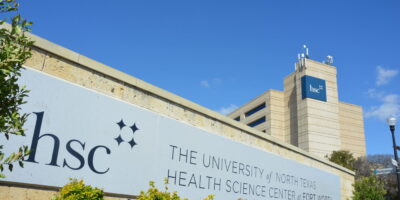

Yes, Texas A&M University has a medical school: the Texas A&M University Naresh K. Vashisht College of Medicine, which was known as the Texas A&M University College of Medicine (and earlier as the Texas A&M School of Medicine) until the new name launched in August 2025. The college is headquartered on the Texas A&M Health Science Center campus in Bryan, next to College Station. Students start in Bryan-College Station, and clinical training is split across campus tracks in Bryan-College Station, Dallas, Houston and Round Rock. Students in the EnMed engineering medicine track spend all four years in Houston at the Texas Medical Center.
MD applicants apply through TMDSAS, the Texas Medical and Dental Schools Application Service, whether or not they live in Texas. MD/PhD applicants use AMCAS, and nonresidents applying to EnMed may use either service. The college enrolls about 200 students a year, and by state mandate no more than 10% of a class can be residents of other states.
This guide is written for the 2026-2027 application cycle, which is for students who will start medical school in July 2027. TMDSAS opened on May 1, 2026, accepted submissions from May 15 and closed on October 1, 2026. The Texas A&M secondary application and its $75 fee are due November 1, 2026, at 5 p.m. Central time. Interviews run from July 20, 2026, to January 15, 2027. All facts in this guide were checked on November 13, 2026.
Part 1: Introduction
Among the leading medical schools in Texas, the Vashisht College of Medicine has built its reputation on a commitment to serving those in need and those who serve our country. The college was founded in 1977 with a charter class of 32 students under the Teague-Cranston Act, a federal law that created new medical schools in partnership with Veterans Affairs hospitals to bring physicians to underserved areas. In November 2024, the Texas A&M University System Board of Regents voted unanimously to name the college for Arlington entrepreneur and philanthropist Naresh K. Vashisht ’72, whose gift is the largest endowed gift in the college’s history. The new name was launched at the white coat ceremony on August 9, 2025, when the 200 members of the Class of 2029 became the first class to wear it on their coats. The gift creates four endowments: full-tuition scholarships for medical students, the Texas A&M Rural Medicine Program, an innovation and discovery fund for research and emerging technologies, and a dean’s excellence fund.
Despite the new name, the mission remains the same. The college focuses on care for rural populations, military communities and underserved groups across the state, and its Aerospace, Austere and Military Medicine program prepares physicians to care for people in extreme environments on Earth and in space.
The college operates across four regional campuses in Bryan-College Station, Dallas, Houston and Round Rock, plus rural training sites. In Houston, it works closely with Houston Methodist Hospital and the Texas Medical Center, including through the Texas A&M University School of Engineering Medicine, which runs EnMed.
If serving veterans, working with underserved populations, or combining medicine with engineering or public health is your passion, consider applying to the Vashisht College of Medicine and taking on the title of Aggie. In this definitive guide, we cover everything the college offers prospective medical students. Programs are numerous, tuition is among the lowest of any MD program in the country, and the school holds full LCME accreditation for the maximum eight-year term. Keep reading to learn what it takes to earn your seat in the 2027 entering class.
Key Takeaways
- Texas residents fill at least 90% of the class. By state mandate, residents of other states may not exceed 10% of the class. Nonresidents still apply through TMDSAS (EnMed nonresidents may use AMCAS). International applicants are not considered.
- Academic context. Accepted applicants in the 2025 entering class had a median MCAT of 513 and a median GPA of 3.93. There is no minimum MCAT or GPA for screening, but GPAs below 3.25 and MCAT scores below the 50th percentile are not considered competitive.
- The secondary changed for 2026-2027. Two essays are required, a hardship essay is optional, and a short areas-of-interest section asks about underserved care, rural health, military medicine, aerospace medicine, research and primary care. Each essay allows 3,500 characters.
- Interviews use an MMI. MD interviews are virtual: six five-minute stations plus one 15-minute personal interview. EnMed interviews are in person in Houston.
- Key dates. TMDSAS deadline October 1, 2026; secondary and fee November 1, 2026; interviews July 20, 2026, to January 15, 2027; rolling offers from October 15, 2026; TMDSAS Match February 12, 2027.
- Costs. First-year tuition and fees for 2026-27 are $23,778 for Texas residents and $36,878 for nonresidents, with an estimated cost of attendance of $55,982 and $71,712.
- Distinctive training. An 18-month pre-clerkship phase, Texas’s first longitudinal integrated clerkship (AIM), four MD campus tracks, EnMed, MD Plus master’s degrees and 15 co-curricular Distinctions.
- Next step. Submit TMDSAS early, finish the secondary well before November 1, and build sustained clinical and community service you can talk about in detail.
Key Statistics About the Texas A&M Vashisht College of Medicine
The snapshot and table bring the college’s key numbers together. MCAT and GPA medians describe accepted applicants in the 2025 entering class. The class size is the Class of 2029, which started in August 2025; the college says it enrolls 200 students per year. Tuition and cost of attendance are 2026-27 first-year figures for Texas residents from the university’s tuition calculator.

| Measure | Value | Cohort, population and source |
|---|---|---|
| School and degree | Texas A&M University Naresh K. Vashisht College of Medicine; Doctor of Medicine (MD) | College About page; August 2025 renaming release |
| Headquarters | Health Professions Education Building, Texas A&M Health Science Center, Bryan, Texas | AAMC MSAR, 2026 edition |
| Founded | 1977, charter class of 32, under the Teague-Cranston Act | College History page |
| Accreditation | Full LCME accreditation for eight years (granted June 2020); next site visit 2027-28 | College LCME Accreditation page |
| Application service | TMDSAS for MD (all applicants); AMCAS for MD/PhD; EnMed nonresidents may use either | MD Application Requirements page |
| Primary deadline | October 1, 2026, 11:59 p.m. CST | TMDSAS Entry Year 2027 dates |
| Secondary | Required; $75 nonrefundable fee; due November 1, 2026, 5 p.m. CST; fee waiver available | MD Application Requirements page; AAMC MSAR, 2026 edition |
| Entering class | 200 students (94 men, 106 women) | 2025 entering class, Class of 2029 (college release; AAMC MSAR, 2026 edition) |
| Estimated new entrants | 200 (194 MD program, 6 MD/PhD) | 2027 entering class (AAMC MSAR, 2026 edition) |
| Applicants interviewed | 773 (654 Texas residents, 119 out-of-state, 0 international) | 2025 entering class cycle, school-reported (AAMC MSAR, 2026 edition) |
| Average interviews per year | 740 | Last five years (MD Admissions FAQ) |
| Median MCAT, accepted applicants | 513 (mean 513.9); sections: 129 Chem/Phys, 127 CARS, 129 Bio/Biochem, 130 Psych/Soc | 2025 entering class (AAMC MSAR, 2026 edition) |
| Median GPA, accepted applicants | 3.93 | 2025 entering class (AAMC MSAR, 2026 edition) |
| Minimum MCAT or GPA | None for screening; GPA below 3.25 and MCAT below the 50th percentile not considered competitive | AAMC MSAR, 2026 edition |
| Acceptance rate | Not published (no count of applications or offers available) | College pages and AAMC MSAR, checked November 13, 2026 |
| Tuition and fees, first year | $23,778 (Texas resident); $36,878 (nonresident) | 2026-27 (Texas A&M tuition calculator, two semesters) |
| Estimated cost of attendance, first year | $55,982 (Texas resident); $71,712 (nonresident) | 2026-27 (Texas A&M tuition calculator components) |
| Tuition and fees / total cost, prior year | $22,998 / $53,130 (resident); $36,098 / $68,880 (nonresident) | 2025-26 (AAMC MSAR, Tuition and Student Fees survey) |
| Average debt of indebted graduates | $151,252; 80% of students receive aid | 2024-25 (AAMC MSAR, LCME Part I-B) |
| 2024 graduates in primary care | 64 of 172 (37%) | 2024 Match (college release, April 2024) |
Mission and Educational Priorities
The college states its mission this way: “Our mission is to develop accomplished, forward-thinking, compassionate, and ethical Aggie leaders to pioneer the future of health in Texas and beyond.” Its vision is “to be a distinguished and recognized leader in medical education, research, and patient care.”
Those words sit on a long history. The college was one of five medical schools founded under the Teague-Cranston Act, which paired new schools with existing Veterans Affairs hospitals to address the shortage of physicians in underserved areas. From the start it embraced Texas A&M’s land-grant service mission: training physicians for areas in need, particularly primary and clinical care in rural settings, while keeping medical education affordable. Today the college describes itself as “a community-based, research-driven academic medical institution,” with work that reaches “rural clinics, urban hospitals, NASA labs, or classrooms across the state.”
What does this mean for an applicant? Four practical points stand out.
Service is a screening factor, not a bonus. The admissions committee screens applicants on “humanism, dedication to service, capacity for effective interactions, special life experiences, academic achievements, scholarly and innovation activities, capacity for improvement, MCAT performance and other compelling factors.” Its list of compelling factors includes community service outside health care, leadership, shadowing and health care experience, being a veteran of the U.S. armed services, being the first in your family to attend college, needing to work during school, caring for others, and coming from a region with few physicians.
Rural and underserved care is part of the identity. Texas A&M has long trained physicians for rural and underserved communities, and the Vashisht gift directs part of its funding to the Rural Medicine Program. If you are drawn to rural medicine, Texas A&M is one of the most natural fits in the state. The program reports that 52 Aggie medical students have taken rural rotations, 25 rural Texas communities have hosted Aggie externs, and K-12 outreach has reached 64 school districts in 45 counties.
Military and veteran care is still central. The college’s affiliated hospitals include the Central Texas Veterans Health Care System, Darnall Army Medical Center, the 59th Medical Wing at Lackland Air Force Base and Brooke Army Medical Center. Its Cadet to Medicine and Military Academy to Medicine pathways recruit future military physicians, and Military Medicine is one of its Distinctions.
Innovation is a real expectation. EnMed, the aerospace medicine program and a new Artificial Intelligence and Innovation in Medicine Distinction show that the college wants physicians who build solutions as well as deliver care. Even if you apply only to the MD program, evidence that you have solved a real problem, improved a process or taken on research will fit the college’s priorities.
The secondary application mirrors these priorities. Its two required essays ask about working with multicultural communities and about the Aggie Core Values of Respect, Excellence, Leadership, Loyalty, Integrity and Selfless Service, and its areas-of-interest section lists underserved care, rural health, military medicine and aerospace medicine first.
Accreditation and Institutional Identity
The MD program is accredited by the Liaison Committee on Medical Education (LCME), the national accreditor for programs leading to the MD degree in the U.S. and Canada. In June 2020, the LCME granted the college full accreditation for the maximum term of eight years, with the next site visit scheduled for the 2027-28 academic year. Full accreditation means graduates are eligible for the USMLE and for residency training on the same footing as graduates of any other U.S. MD program. It is a statement about meeting standards, not a ranking.
Names can confuse applicants, so it helps to be precise:
- Texas A&M University Naresh K. Vashisht College of Medicine is the current name, used since August 2025.
- Texas A&M University College of Medicine and Texas A&M University School of Medicine are former names. You will still see them on older pages, on residency program sites and in alumni titles. TMDSAS and some portal screens may still use them.
- Texas A&M University School of Engineering Medicine delivers EnMed, a parallel track within the college’s MD program, with its own dean (Dr. Timothy Boone) and admissions office in Houston. EnMed graduates receive an MD from the Vashisht College of Medicine and a Master of Engineering from the Texas A&M College of Engineering.
- Texas A&M Health (the Health Science Center) is the umbrella for the university’s health colleges, including nursing, pharmacy, dentistry and public health.
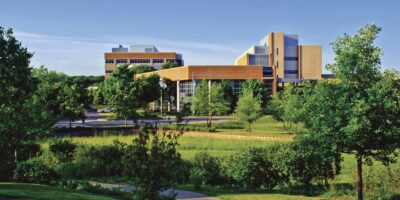
The college is a public school with a rural campus setting, and its headquarters is the Health Professions Education Building on the Health Science Center campus in Bryan, about 100 miles northwest of Houston. Total enrollment is 865 medical students. The college also offers MS and PhD degrees in medical sciences and a health professions education degree.
If you are still deciding whether hands-on patient care is right for you before you commit to a medical school list, pre-med internships that place you in supervised clinical work can help you find out early.
Medical Programs and Affiliations
Part 2: The Programs Texas A&M Vashisht College of Medicine Offers
The Vashisht College of Medicine offers the following programs.
- Doctor of Medicine (MD)
- Doctor of Philosophy and Master of Science in Medical Sciences
- Master of Science in Medical Science
- Master of Science in Education for Healthcare Professionals
- Certificate in Education for Healthcare Professionals
- Doctor of Philosophy and Doctor of Medicine (MD/PhD)
- MD Plus: MD and Master of Business Administration
- MD Plus: MD and Master of Public Health
- MD Plus: MD and Master of Science in Medical Sciences
- MD Plus: MD and Education for Healthcare Professionals
- MD Plus: MD and Master of Science in Science and Technology Journalism
- MD Plus: MD and Entrepreneurial Leadership and Innovation
- MD Plus: MD and Health Law, Policy and Management
- MD and Master of Engineering (EnMed, School of Engineering Medicine)
Not all of these degrees lead to an MD. The Medical Sciences graduate degrees, the education degree and the education certificate are separate graduate programs with their own applications through the Texas A&M graduate application. The degrees that include an MD are described below.
Doctor of Medicine (MD) Program
This first option will have you donning your white coat in the traditional four-year time frame. The pre-clerkship phase lasts 18 months, compared with the two years common at many schools, and clinical training lasts two and a half years. This structure gives students clinical exposure before they take USMLE Step 1 and lets them start clinical electives earlier. In the pre-clerkship phase, much of the learning is case-based synthesis rather than lectures alone.
The college enrolls 200 students per year and distributes them across campus tracks for clerkship training. All students complete the 18-month pre-clerkship phase before clerkships begin. Here is how each track works, using the college’s current track table:
- Bryan-College Station (BCS) AIM: All four years in Bryan-College Station, with the A&M Integrated Medicine longitudinal integrated clerkship.
- BCS and Houston Willowbrook: Pre-clerkship training in BCS, then the clerkship phase in Houston (about 2.5 years) at Houston Methodist Willowbrook and other Houston sites.
- BCS and Dallas: One year of pre-clerkship training in BCS, then the remaining pre-clerkship and clerkship training in Dallas at Baylor University Medical Center.
- BCS and Round Rock: One year of pre-clerkship training in BCS, then three years in Round Rock, where students train across more than ten hospitals in Williamson and Travis counties.
Students in the separate EnMed track are in Houston at the Texas Medical Center for all four years. Admitted students submit campus track preferences in late March and learn their designations in mid-April.
What the College Looks For: Technical Standards
The college’s technical standards describe the abilities every MD candidate needs in six areas.
- Observation: “A candidate must be able to observe a patient accurately.” Strong observation lets a physician detect problems at the bedside and in the laboratory.
- Communication: A candidate should be able to speak, hear and observe patients, and to communicate effectively with patients in speech, reading and writing.
- Motor: Candidates need “sufficient motor function to elicit information from patients by palpation, auscultation, percussion, and other diagnostic maneuvers,” and to provide general and emergency care.
- Intellectual-conceptual: The standards state: “These abilities include measurement, calculation, reasoning, analysis, and synthesis.”
- Integrative and quantitative: The standards add that “the candidate should be able to comprehend three-dimensional relationships and to understand the spatial relationships of structures.”
- Behavioral and social: Candidates need the emotional health to use their abilities fully, exercise good judgment, function under stress and adapt to uncertainty. While anyone can have a bad day, you must be able to make sound decisions for your patients.
- Ethical: Candidates must show professional demeanor and act ethically with peers, faculty, staff and patients.
The college states that it does not deny admission or graduation on the basis of disability when a candidate can meet these standards, with reasonable accommodation where possible. If you have additional questions about the MD program, contact the Office of Admissions at [email protected] or 979.436.0237.
Doctor of Philosophy and Master of Science in Medical Sciences
The Medical Sciences graduate program trains researchers who bridge patient care and bench science. Students choose among six research areas across college departments in Bryan-College Station and the Institute of Biosciences and Technology in Houston, and they apply through the Texas A&M graduate application, naming the campus they prefer. The MS in Medical Sciences builds a foundation in the biological sciences with scholarly work and is meant to strengthen preparation for medical or graduate school and research careers. The 2026 application deadline listed for the MS program was June 15, 2026.
MD/PhD Program
This degree is the college’s physician-scientist pathway, similar to the Medical Scientist Training Programs at many universities. Upon completion, students earn both a PhD and an MD. The program accepted its first student in 1992 and typically takes seven to eight years. Students can pursue a PhD in the college’s Medical Sciences program or in any other Texas A&M PhD program broadly related to biomedicine. Even a nontraditional field, such as political science or architecture, may be approved if the research project relates to biomedicine. The partnership with Houston Methodist Hospital provides clinical training and research at the Houston Methodist Research Institute and the Institute of Biosciences and Technology.
Applicants apply to the MD/PhD program through AMCAS at the same time they apply to medical school, and can also check boxes in the secondary to be considered for the MD-only program, MD Plus or EnMed. MD/PhD applicants complete a supplemental application in addition to the secondary and provide three letters of recommendation, at least one from a research mentor.
Students choose one of two curriculum options. In Option 1, they finish the pre-clinical medical curriculum, complete the PhD, then return for clerkships and the fourth year. In Option 2, they complete three years of medical school, including a second research rotation during clerkships, then the PhD, then the fourth year.
Students are required to maintain at least a 75 average during their first year, a cumulative 77.5 by the end of pre-clinical training, and an 80 average thereafter. In the graduate portion, students complete at least 64 credit hours, including:
- at least 15 graded credit hours of formal courses
- 3 credit hours of seminar
- research hours to bring the total to 64 credit hours
Additionally, you must:
- pass a preliminary examination to enter PhD candidacy
- defend and file a research proposal
- complete your doctoral research
- write and defend your dissertation
All MD/PhD students take the one-credit Journal Club, MSCI 620/920 (The Scientific Basis of Medicine). The program covers tuition and fees and provides a yearly stipend of $32,000 during both the medical and graduate years. The program reports that matriculants over the past three years had a mean undergraduate GPA of 3.65 (range 2.95 to 3.99) and a mean MCAT at the 94th percentile. Six of the 200 estimated new entrants for 2027 are MD/PhD seats.
MD Plus Dual Degrees
The MD Plus program lets admitted MD students add a master’s degree, usually in one additional year. Prospective MD Plus students are considered after acceptance to the MD program; they apply through the MD Plus office, and the application deadline is in early April. Classes for MD Plus tracks typically begin in a summer semester. Competitive scholarships are available, and the program reports that 100% of its graduates matched with their first-choice residencies. The MD Plus program page lists the current tracks and timelines.
MD and Master of Business Administration. The MBA is delivered through the Mays Business School full-time MBA program. Career options the college lists include hospital or health care administration, private practice ownership, health care executive roles, nonprofit management and health care business consulting. An MD with business training is well placed for any part of health care that requires business skills, development or leadership.
MD and Master of Public Health. This 12-month track expands your skills in population health and gives you more ways to work in clinical and community settings. If the intersection of clinical practice and population health appeals to you, our guide to getting into an MD-MPH program offers broader context on these combined degrees. Career options include:
- Occupational medicine physician
- Medical officer (medical expert) for the FDA
- Vaccine researcher for the NIAID
- Medical epidemiologist for the CDC
- Forensic pathologist
- Biodefense researcher
- Preventive medicine officer for the Army
MD and Master of Science in Medical Sciences. This track runs through the Clinical and Translational Science track of the graduate program. It is condensed to 12 months and can be completed before medical school or after the third year. The MCAT is accepted and the GRE is not required. Students are trained by two mentors, one a basic scientist and the other a clinical scientist, to strengthen a medically related research project. Students who want to understand whether graduate coursework strengthens a medical school application may find this dual-degree path especially relevant, although MD Plus is only for students already admitted.
MD and Education for Healthcare Professionals (EDHP). The EDHP program prepares physicians to teach and to study teaching. The current program offers a 36-credit-hour non-thesis master’s that ends in an educational project and a 14-credit-hour certificate that ends in a guided practicum. Coursework includes assessment and evaluation, a project course, and electives such as accreditation and program evaluation. Careers include medical education faculty, medical school administration and medical education research. See the EDHP certificate and degree page for details.
MD and Science and Technology Journalism (STJR). This dual degree gives doctors the skills to become medical journalists. Career options include:
- Medical reporter
- Provider of online medical content
- Corporate or freelance medical writer or editor
- Medical communication educator
MD and Entrepreneurial Leadership and Innovation. A newer track with Mays Business School for students who want to launch new ventures, lead change inside existing organizations or consult on care delivery.
MD and Health Law, Policy and Management. A newer track with the Texas A&M School of Law covering health law, compliance, health care management and legislative advocacy.
EnMed: MD and Master of Engineering
EnMed, started in 2019 and delivered by the Texas A&M University School of Engineering Medicine, is a parallel track within the college’s MD program. It is a first-of-its-kind four-year program that grants an MD from the Vashisht College of Medicine and a Master of Engineering from the Texas A&M College of Engineering. Students train in Houston for all four years, with clinical rotations at Houston Methodist Hospital, and complete multiple innovation projects to bring new medical technologies toward real use. The school calls its graduates “physicianeers.”
Applicants to EnMed must have a bachelor’s or advanced degree in engineering or computer science, or a declared minor, second major or second degree in one of those fields. Applicants without an ABET-accredited engineering or computer science degree may qualify by completing prescribed math through differential equations and advanced engineering leveling courses with a grade of B or better before acceptance. EnMed places high priority on letters from engineering, computer science, physics, mathematics and other STEM recommenders.
On Match Day 2025, EnMed reported a 100% match rate for the third consecutive year. Nearly one-third of that class stayed in Texas, at programs such as Houston Methodist, Baylor College of Medicine and UT Southwestern, while others matched at programs including Stanford Health Care and NewYork-Presbyterian. Top specialties were internal medicine, diagnostic radiology, family medicine, surgery and anesthesiology. For the Class of 2026, more than 65% of matched students stayed in Texas, others matched at Stanford, Columbia, Brigham and Women’s Hospital and the University of Michigan, and over 15% matched into surgical specialties.
The school also runs the E2EnMed Early Assurance Program, an eight-year pathway for National Merit Scholar high school seniors entering the Texas A&M College of Engineering and for current Texas A&M engineering sophomores. Students who complete all program requirements are guaranteed an interview for EnMed. High school students curious about medicine before committing to a pathway like this can explore medical internships for high school students.
More information about this degree is on the EnMed program website.
Early Assurance Pathways and Special Programs
The college runs several early assurance pathways, each with a September 1 TMDSAS deadline in the application year: Aggie to Medicine (A2M) for second-year Texas A&M University System students, Cadet to Medicine (C2M) for Corps of Cadets students, Military Academy to Medicine (MA2M) for second-year cadets at the Army, Navy and Air Force academies, Pre-Med Fellows, and Rural and Underserved Populations in Medicine (RUP2M). E2EnMed has an August 1 deadline. These pathways have their own eligibility rules; check each program page before you plan around one.
Clinical Affiliations
The college’s affiliated hospitals include CHI St. Joseph Health, Baylor Scott & White in Dallas, Houston Methodist, the Central Texas Veterans Health Care System, St. David’s Health, Darnall Army Medical Center, the 59th Medical Wing at Lackland and Brooke Army Medical Center. Clinical training also takes place in Bryan-College Station, Dallas, Houston, the Rural Hub in Kingsville, Round Rock and San Antonio.
Now that we have looked at the programs, let’s look at how the curriculum works, then how much it costs to attend.
Curriculum Overview
The MD curriculum has two phases: an 18-month pre-clerkship phase and two and a half years of clinical training.
Pre-Clerkship Phase (18 Months)
Students start in Bryan-College Station with the Foundations blocks, which run through mid-April of the first year. Foundations cover the structure of the human body and the basic principles of other medical sciences: gross anatomy, histology, biochemistry, genetics, pharmacology and cell physiology. This phase also includes Neuroscience and Introduction to Disease, which covers basic pathophysiology, immunology and bacteriology.
Alongside the sciences, students take integrated Practice of Medicine courses in medical humanities, ethics, leadership and professional development, and an introduction to clinical skills that covers history-taking, doctor-patient communication and physical diagnosis. The college describes the pre-clerkship phase as an 18-month, competency-based curriculum organized in blocks, with organ-systems instruction and close integration of basic science and clinical application.
Instruction mixes traditional lectures, laboratory exercises and active learning: clinical synthesis and integration exercises, flipped classrooms, patient encounter sessions and clinical skills training. Students have one-on-one interaction with physicians and patients during pre-clerkship training, including history and physical exam skills, simulation center exercises and preceptorships. If you believe early clinical exposure matters for physician development, this structure is built with that philosophy in mind.
Clinical Phase (2.5 Years)
The clerkship portion begins in April of the second year, after students pass USMLE Step 1, and runs until graduation. Core clerkships include family medicine, internal medicine, pediatrics, psychiatry, surgery, obstetrics and gynecology, and emergency medicine, with radiology and other required experiences, followed by fourth-year electives. On the Houston campus, many clerkships are six weeks long at Houston Methodist and St. Joseph Medical Center, and fourth-year electives are available across the Texas Medical Center.
The A&M Integrated Medicine (AIM) Program
Students who spend all four years in Bryan-College Station take part in AIM, established in 2013 as the first longitudinal integrated clerkship in Texas. Instead of rotating through core specialties in separate blocks, AIM students work in family medicine, internal medicine, pediatrics, psychiatry, obstetrics and gynecology, and surgery practices throughout the year while following a panel of their own patients. They can accompany those patients to consultations, hospitalizations, surgeries and tests. Each week includes two to three half days of self-directed “opportunity time,” and two afternoons are set aside for AIM threads such as simulation, EKG instruction and radiology. AIM students also take call in labor and delivery or surgery, complete a two-week inpatient pediatrics rotation at Driscoll Hospital in Corpus Christi, and sit NBME shelf exams and OSCEs at the end of the year.
Grading, Rank and Requirements
The college uses a Satisfactory/Unsatisfactory/Honors grading system. In the pre-clerkship phase, Satisfactory requires a performance average of 70 or higher. Class rank is determined at the end of the second year and again at the end of the third year. Community service and a research or scholarly requirement are both part of the degree. Medical Spanish electives are offered from elementary to advanced levels.
Distinctions
Distinctions are optional, co-curricular paths that run across all four years. Students who complete one receive a medallion and certificate at the hooding ceremony. Current Distinctions are Aerospace Medicine; Art in Medicine; Artificial Intelligence and Innovation in Medicine; Clinical Scholarship and Research; Community Service; Disaster and Emergency Preparedness; Global Health; Health Systems Science; Humanities in Medicine; Lifestyle Medicine; Medical Education Teaching and Scholarship; Military Medicine; Rural Medicine; Telehealth; and Ultrasound. The Global Health Distinction centers on work in underserved communities abroad, and 12% of the college’s 2025 graduates reported a global health experience during medical school.
Support Before and During School
MedCamp, a pre-matriculation program, is open to incoming first-year students but limited to 25. The Office of Academic Support Services offers one-on-one consultations and tutoring for any learning or study concern.
Admissions Requirements and Application Process
Part 4: Requirements for Getting into the MD Program
You can apply to the Vashisht College of Medicine once you have completed at least 90 semester credit hours of undergraduate work at a fully accredited college or university in the United States or Canada. That is about three-fourths of the way toward a bachelor’s degree, since 120 credits typically earn a four-year degree. The college prefers that applicants have a bachelor’s degree by enrollment, and most entering students do. Students who enroll with 90 hours must show an academic record, experiences and test performance comparable or superior to graduates.
Either way, you must complete 47 semester hours of prerequisite courses with a grade of C or better before enrollment.
| Course | Semester hours | Quarter hours |
|---|---|---|
| General Biology (with labs) | 8 | 12 |
| Advanced Biological Sciences (must include 3 semester hours of biochemistry) | 6 | 9 |
| General Chemistry (with labs) | 8 | 12 |
| Organic Chemistry (with labs) | 8 | 12 |
| General Physics (with labs) | 8 | 12 |
| Math-Based Statistics | 3 | 5 |
| English | 6 | 9 |
| Total | 47 | 71 |
A few course rules matter:
- Advanced biology must be junior- or senior-level biological science, such as biochemistry, microbiology, molecular or cell biology, genetics, genomics, ecology or human anatomy and physiology.
- Biochemistry cannot be an introductory course and must cover topics including pH, protein structure, DNA replication, carbohydrate, lipid and amino acid metabolism, enzyme kinetics, one-carbon metabolism and RNA transcription.
- Statistics should be taught in a math or statistics department and must cover descriptive and inferential statistics, including probability, confidence intervals, chi-square and general linear models.
- In person. Prerequisites completed after the pandemic must be taken in person. Online courses may be considered case by case through the admissions office.
- AP, dual credit and community college. The college prefers four-year coursework but does not dismiss AP credit, credit by exam, dual credit or community college courses. If you placed out of a required course, another course in that discipline at the same or higher level will be accepted.
- Timing. Some prerequisites may be in progress when you apply, but all must be done by May 2027.
For more details on what courses will satisfy these requirements, visit this page. Visit this page for requirements for the MD Plus program and this page for the MD/PhD program.
MCAT
The MCAT must have been taken no earlier than five years before enrollment. For the 2027 entering class, the college considers scores from September 2021 through September 30, 2026. The committee considers your highest MCAT score, and all scores are visible. There is no minimum MCAT for screening, but scores below the 50th percentile are not considered competitive. The college uses MCAT scores together with your whole academic record, including science grades, rigor of major, grade trends, research and post-baccalaureate work.
GPA
There is no minimum GPA for screening, but overall and science GPAs below 3.25 are not considered competitive. The committee considers all coursework at all levels, and it will consider postbaccalaureate or graduate work when your undergraduate GPA is at least 3.0.
Residency, Citizenship and Eligibility
By state mandate, residents of other states may not exceed 10% of the class. Only U.S. citizens and U.S. permanent residents are eligible, including applicants who will have a green card by enrollment. DACA recipients should confirm current eligibility directly with the admissions office. U.S. citizens or permanent residents who completed 90 hours or a degree at a fully accredited Canadian school can apply. Foreign coursework does not count toward the prerequisites or the 90-hour minimum unless it appears course by course as transfer credit on a U.S. transcript. Nonresidents who receive a competitive, renewable college scholarship of at least $1,000 may qualify for in-state tuition. Transfers from other medical schools are generally not considered.
Experience Expectations
Physician shadowing is required. The college prefers applicants with “meaningful and consistent experiences in healthcare such as shadowing physicians and other ancillary health professionals, volunteering or employment in a hospital or clinic setting, earning healthcare certifications (EMT, Scribe, etc.), medical missions locally and abroad, etc.” It adds: “We especially appreciate these kinds of activities sustained over time.” It also expects enough community service to judge “compassion, altruism, and emotional intelligence.” If you need sustained, supervised patient contact to meet that bar, clinical internships for pre-med students are one way to add hands-on hours to the shadowing you already have.
Letters of Evaluation
The college accepts a Health Professions Advisory Committee packet, which it prefers, or a maximum of three individual letters of evaluation. Faculty letters are preferred, but letters from physicians, other medical personnel, research mentors or employment supervisors are acceptable. Every letter must be on letterhead, include the evaluator’s phone and email, your name and TMDSAS or AMCAS ID, a signature and a date, and be written in English. Letters go to TMDSAS by mail, Interfolio, Virtual Evals or the evaluator portal, and TMDSAS asks that they arrive by October 15.
If you are out of school, special rules apply. Graduate students need one letter from a graduate advisor, a faculty member in their concentration or a department chair. Applicants who have been out of college more than a year and are working or serving in the military need one letter from an immediate supervisor or commanding officer. Self-employed applicants need one letter from a business associate. Applicants out of school for several years can substitute at least two letters from supervisors, medical personnel or research mentors.
Other Assessments
Texas A&M is not on the TMDSAS list of schools that require CASPer, and the college does not use PREview scores. No additional assessment is required.
Application Timeline for 2026-2027
If you are planning to matriculate in July 2027, here is how the cycle runs. The college uses rolling admissions, so earlier complete applications are reviewed first.
| Date | Step |
|---|---|
| January to September 2026 | MCAT administered; scores taken by September 30, 2026 are considered |
| May 1, 2026 | TMDSAS application opens |
| May 15, 2026 | TMDSAS submission opens; transmission to schools begins |
| June 1, 2026 | Application review begins; secondary invitations go to verified applicants |
| July 20, 2026 | Interview period begins |
| October 1, 2026 | TMDSAS (and AMCAS for MD/PhD and EnMed) deadline, 11:59 p.m. CST |
| October 15, 2026 | Rolling (pre-match) offers begin; TMDSAS letter target date |
| November 1, 2026, 5 p.m. CST | Secondary application and $75 fee due |
| January 15, 2027 | Interview period ends |
| January 29, 2027 | Rolling offers end; deadline to submit TMDSAS match rank list, 5 p.m. CST |
| February 12, 2027 | TMDSAS Match results |
| Late March to mid-April 2027 | Admitted students submit campus track preferences, then receive designations |
| April 30, 2027 | Applicants holding multiple offers must choose one school |
| May 15, 2027 | Last day for offers to Texas applicants holding a seat at another Texas school |
| June 1, 2027 | Latest date acceptance notices are sent |
| Late July 2027 | Orientation week and white coat ceremony; classes begin July 26, 2027 |
Here is the order of steps in practice:
- Take the MCAT between January and June of the year you apply, so you have time to retake it in late summer if needed.
- Fill out the TMDSAS application as soon as it opens in May, whether or not you live in Texas. MD/PhD applicants apply through AMCAS instead.
- Watch for the secondary invitation by email after TMDSAS verifies your application. Submit it with the $75 fee by credit card. The committee will not review your file until the primary, secondary and fee are complete. A fee waiver is available.
- Interview invitations go out about two to three weeks before each interview session, and invitations continue through the fall.
- Offers are made on a rolling basis from October 15. Texas residents not admitted before the Match take part in the TMDSAS Match. Nonresident, MD/PhD and assured-acceptance applicants are not part of the Match.
What is the TMDSAS? It is the centralized application service for participating Texas medical, dental and other health professional schools, for residents and nonresidents alike. Whether you live in Texas or another state, apply to the Texas A&M MD program through TMDSAS. The TMDSAS processing fee is a flat $230. MD/PhD applicants use AMCAS, and nonresidents applying to the EnMed track may use either AMCAS or TMDSAS.
After You Apply: Decisions, Deposits and Waitlist
- Response time: Accepted applicants have five to ten business days to respond, depending on the time of year.
- Deposit: None is required.
- Deferral: Requests are considered case by case.
- Early Decision: The college does not offer an Early Decision Program.
- Updates: The college accepts notices of significant updates or achievements, such as a publication, a major honor or significant new service. It does not consider letters of intent or interest.
- Waitlist: The college typically holds 75 to 100 waitlist positions per cycle and reports 25 acceptance offers to waitlisted applicants. Applicants are notified a few days after the TMDSAS Match.
- Background check: Every accepted applicant must complete a criminal background check, and admission is final only when the results are favorable.
Tuition, Cost of Attendance and Financial Aid
Part 3: Cost of Attendance
Tuition at the Vashisht College of Medicine is among the lowest of any MD program in the country. For the 2026-27 academic year, first-year tuition and fees are $23,778 for Texas residents and $36,878 for nonresidents, based on the university’s tuition calculator for the Medical Program (fall plus spring semesters). That is up from $22,998 and $36,098 in 2025-26.
| Component (two semesters) | Texas resident | Nonresident |
|---|---|---|
| Tuition and fees | $23,778 | $36,878 |
| Housing and food | $21,362 | $21,362 |
| Personal and miscellaneous | $6,776 | $6,776 |
| Transportation | $3,014 | $5,644 |
| Books and supplies | $638 | $638 |
| Loan fees | $414 | $414 |
| Estimated total | $55,982 | $71,712 |
The calculator lists no separate health insurance charge, and the AAMC Tuition and Student Fees survey shows $0 for health insurance at Texas A&M in 2025-26. Budget for coverage if you are not on a family or employer plan. For 2025-26, the survey reports a first-year total cost of attendance of $53,130 for Texas residents and $68,880 for nonresidents.
Later years cost a little more or less depending on the year. The calculator shows the same tuition in each year but higher housing in the third year and higher transportation in the fourth year. EnMed carries an additional program fee; use the calculator’s Engineering Medicine option to see it.
To put these figures in context, the national median first-year in-state tuition and fees at public medical schools was $42,668 in 2023-24, and the median first-year cost of attendance was $73,126. Texas A&M’s resident tuition is about half that public-school median.
Debt follows cost. Nationally, 71% of the Class of 2024 graduated with education debt, and the median among indebted graduates was $205,000. At Texas A&M, the average medical school debt of indebted graduates was $151,252 in 2024-25, and 80% of students received financial aid. The ratio of debt to early-career income is an important factor when choosing a medical school, and this is one of the more financially manageable options in the country.
The school provides a handy calculator to get the exact cost of attendance, broken down by semester, residency status, level of education and college. Select “Naresh K. Vashisht College of Medicine,” then “Medical Program” or “Engineering Medicine.”
Texas A&M University also has a financial aid website if you are looking for more specific information. Use FAFSA school code 003632.
Scholarships and Financial Aid at Vashisht College of Medicine
The Vashisht gift, announced in November 2024, expands scholarship availability. Its endowment for full-tuition scholarships is meant, in the dean’s words, to “give more scholarships that will make our college even more attractive to applicants and help us retain students, particularly those from rural or underserved parts of the state.” This is in addition to the college’s existing scholarships.
Other philanthropy also targets rural care. In 2019, Sue and Joe Knowles ’50 committed a $7 million planned gift for endowed scholarships in the colleges of medicine and nursing, with a preference for students who wish to practice in rural settings.
A few more points to know:
- Institutional merit and need-based recruiting scholarships are awarded competitively before matriculation.
- A nonresident who receives a competitive, renewable college scholarship of at least $1,000 may be eligible for in-state tuition and fees, which can cut a nonresident’s tuition by more than $13,000 a year.
- MD Plus students are eligible for competitive MD Plus scholarships, and the MD/PhD program covers tuition and fees and pays a $32,000 stipend.
- Federal and state loans are available to students with financial need, and federal student aid rules changed on July 1, 2026, under the One Big Beautiful Bill Act. Review the university’s guidance before you borrow.
For students concerned about medical school costs, Texas A&M’s combination of low tuition and growing scholarship resources is one of the strongest financial packages available at a public medical school.
Campus Facilities and Student Life
Bryan-College Station
The Bryan-College Station campus is the college’s headquarters. Students train at the Health Science Center on State Highway 47 in Bryan and at clinical affiliates including CHI St. Joseph Regional Health Center, CHI St. Joseph College Station Hospital, Baylor Scott & White College Station, the college’s Family Medicine Residency in Bryan and The Physicians Center. Bryan-College Station, known as Aggieland, is home to about 203,000 people and sits between the Brazos and Navasota rivers. Every MD student spends at least the first year here, so you will experience Aggie traditions on the main university campus next door.
Dallas
The Dallas campus is based at Baylor University Medical Center at 3500 Gaston Avenue, an urban tertiary referral center serving private and underserved patients, with specialty and subspecialty services and residents who teach students.
Houston
The Houston campus opened in 2014, and its first students arrived in June 2015. MD students on the Houston track train at Houston Methodist Hospital, Houston Methodist Willowbrook and other Texas Medical Center institutions. Houston is also home to EnMed, the MD/PhD partnership with Houston Methodist, the Institute of Biosciences and Technology and the Houston Aggie Medical Society, a former-student group that supports students.
Round Rock
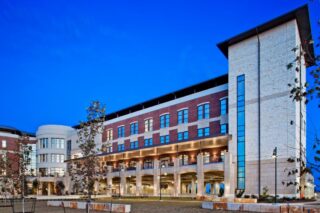
The Round Rock campus, established in 2008, moved into a modern building in 2009 that it shares with the Texas A&M College of Nursing. Students train with three major hospital systems at more than ten hospitals in Williamson and Travis counties, guided by more than 400 faculty members. Students in the nursing and medical programs share space here, which creates natural chances for interprofessional teamwork.
Housing and Getting Around
There is no on-campus housing for medical students. Apartment complexes surround each campus, some within walking or biking distance, and Student Affairs coordinators on every campus share listings and roommate options. Unfurnished apartments range from about $400 to $1,200 per month. A driver’s license and a vehicle are recommended, since clinical sites are spread out.
Student Organizations and Support
Students take part in “the other education” through more than 50 student organizations, from specialty interest groups to religious and community service groups. Each class chooses human service organizations to support throughout medical school, and community service is part of the degree. The Office of Student Affairs leads student support; under Texas Senate Bill 17, the college does not run identity-based support offices, and it says all students are supported through Student Affairs. The Office of Health and Well-being offers exercise spaces, prayer rooms and personal wellness programs, and the Office of Academic Support Services provides tutoring and learning consultations.
Clinical Rotations and Research Opportunities
Clinical Rotations
Clerkships start in April of the second year. Where you do them depends on your campus track:
- Bryan-College Station: AIM longitudinal integrated clerkship at CHI St. Joseph, Baylor Scott & White College Station and community practices, with a two-week pediatric inpatient rotation at Driscoll Hospital in Corpus Christi.
- Dallas: Baylor University Medical Center, with clerkship directors in emergency medicine, family medicine, internal medicine, obstetrics and gynecology, pediatrics, psychiatry and radiology.
- Houston: Houston Methodist Hospital, St. Joseph Medical Center and Houston Methodist Willowbrook, with six-week clerkships and fourth-year electives across the Texas Medical Center.
- Round Rock: more than ten hospitals across three major hospital systems in Williamson and Travis counties, with clerkships and electives in emergency medicine, family medicine, ICU, internal medicine, obstetrics and gynecology and more.
Military and veteran sites, including the Central Texas Veterans Health Care System, Darnall Army Medical Center, the 59th Medical Wing at Lackland and Brooke Army Medical Center, give students exposure to military medicine. Rural rotations through the Rural Medicine Program and the Rural Hub in Kingsville put students in communities with physician shortages.
Clinical work during school is supervised and hands-on, which is why the committee wants applicants who already know what patient care feels like. Students who need a concentrated block of patient contact before applying often use pre-med summer internships to add supervised work such as taking vital signs and doing patient intake.
Research
Research is required. The college’s Medical Scholar Research Pathway lets students in good academic standing do structured research, and the Office of Medical Student Research connects students with projects. The MD/PhD and MD Plus programs offer deeper research training, and students can also take external summer or year-out research programs. The college received $50.1 million in direct federal research grants and contracts in fiscal year 2024. Key research areas include cardiovascular disease, cancer biology, infectious disease pathogenesis, experimental therapeutics and drug development, neuroscience, Alzheimer’s disease, aging, alcoholism and aerospace physiology.
Undergraduates can get involved before medical school through independent study, paid research assistant positions and the 10-week Summer Undergraduate Research Program, which is open to students from any U.S. institution. The 2026 application deadline was February 1, 2026.
Aerospace, Austere and Military Medicine
The Aerospace, Austere and Military Medicine program combines aerospace medicine, austere medicine (care in remote, resource-limited and operational settings) and military medicine. It offers a graduate certificate, a Military Medicine program, an aerospace medicine residency and research with government, military and industry partners. The team includes a NASA astronaut, Dr. Serena Auñón-Chancellor, profiled below. Students interested in care in remote and resource-limited settings sometimes build early experience through healthcare internships abroad before medical school.
Notable Alumni, Faculty, Leadership and Admissions Staff
The people below hold verified roles at the college or are verified graduates of its MD program. Knowing who leads the college helps you understand its priorities; it does not mean any of them will review your application.
Leadership
Amy L. Waer, MD, FACS, MPSA, Jean and Tom McMullin Endowed Dean. Dr. Waer has led the college since January 1, 2021. She joined Texas A&M in February 2018 as vice dean for education and academic programs and became interim dean in September 2019. Before that, she spent 14 years at the University of Arizona College of Medicine, where her roles included surgery clerkship director, surgery residency program director, chair of general surgery and associate dean for curricular affairs. A surgeon focused on breast cancer prevention and surgical education, she earned an executive master’s degree from Texas A&M’s Bush School in 2023. She announced the Vashisht gift in November 2024 and has spoken about using it to reduce student debt and support rural care. Her background in curriculum leadership helps explain the college’s attention to the 18-month pre-clerkship model and to Distinctions.
Gary C. McCord, MD, Senior Associate Dean for Student Affairs and Admissions. Dr. McCord oversees both student affairs and admissions and sits on the college’s Executive Committee. Questions of ethical conduct under the technical standards go to his office, and he presents envelopes to students at Match Day. For applicants, his dual role is a reminder that the college connects admissions to how students are supported once they arrive.
Cristie Columbus, MD, Associate Dean for the Dallas Campus. Dr. Columbus leads the Dallas regional campus at Baylor University Medical Center and serves on the Executive Committee. If the Dallas track interests you, her campus is where you would spend most of your clinical years.
Admissions Staff
Dan Barlev, MD, Associate Dean of Admissions. Dr. Barlev leads MD admissions and is the college’s listed medical school contact for applicants. Questions about your file, timeline or eligibility go through his office at 979.436.0237 or the admissions email.
Fernando Vasquez, MA, Assistant Dean of Admissions. Mr. Vasquez is the contact for applicants seeking an exception for prerequisites taken online. If you took a required course online after the pandemic, contact the admissions office early, before interview season, to ask whether an appeal is possible.
The admissions office also includes Vanessa Smithey, admissions program manager; Guillermo Canedo, program manager for early assurance pathways and recruitment; and May Vega, program coordinator for early assurance pathways.
Faculty
Carolyn Cannon, MD, PhD, MD/PhD Program Director. Dr. Cannon directs the MD/PhD program, from admissions to student progress, and invites applicants and students to contact her with questions. Applicants considering the physician-scientist path should read her program letter and student listings before writing the MD/PhD supplement.
Gabriel Neal, MD, Department Head for Primary Care and Rural Medicine. Dr. Neal is a board-certified family physician who earned his MD at the University of Oklahoma in 2001 and joined the faculty in 2008. He is the Family Medicine Clerkship Director for AIM in Bryan-College Station, directs Texas A&M Family Care and was named Outstanding Faculty in Family Medicine in 2019. His department houses the college’s rural medicine work, so his role connects directly to the “Rural Health” and “Primary Care Specialty” choices in the secondary.
Serena Auñón-Chancellor, MD, MPH, Clinical Professor and Director of Aerospace Medicine. Dr. Auñón-Chancellor is a NASA astronaut selected in 2009 who spent 197 days on the International Space Station in 2018 on Expeditions 56 and 57. Board certified in internal medicine and aerospace medicine, she has practiced in Antarctica, under the sea in the Aquarius habitat and in orbit. At Texas A&M she teaches residents and medical students in the Family Medicine Residency and leads the aerospace medicine program, and she also directs the UTMB Aerospace Medicine Residency. She is the clearest example of why “Aerospace Medicine” appears as an interest area in the secondary.
Bryan D. Parrent, MD, FACS, Surgery Clerkship Director, Bryan-College Station (alumnus). Dr. Parrent graduated magna cum laude from Texas A&M in 1996 and earned his MD with honors from the Texas A&M College of Medicine. After residency at Baylor University Medical Center in general and bariatric surgery, he returned to Bryan-College Station, where he practices and now directs the surgery and anesthesiology clerkship for students on the BCS campus.
Alumni
Harry Warren, MD ’82, 2025 Outstanding Alumni Award. Dr. Warren earned his bachelor’s degree and MD at Texas A&M and was commissioned into the U.S. Army. Over four decades as an orthopedic trauma surgeon, he founded the 101st Forward Surgical Team, which deployed to Operation Desert Storm, served as the first chief of orthopedics and rehabilitation at Womack Army Medical Center and commanded Med Task Force 86 during Operation Iraqi Freedom. He retired as a colonel and, as of 2025, served as chief of sports medicine at Fort Eustis. His career shows the military medicine thread that runs from the college’s founding to today.
Joseph H. Joo, MD ’19, first GOLD Award recipient (2025). Dr. Joo completed postbaccalaureate studies at Texas A&M before earning his MD in 2019, then trained in internal medicine at Dell Medical School. Since 2022 he has been on the faculty of the University of Washington, where he leads PROPEL-PNW, the evaluation partner for the Washington Health Care Authority. He co-authored Reshaping Health Systems in 2024 and returned to speak with students in the Health Systems Science Distinction.
Laura Tenner, MD ’07, MPH, 2022 Distinguished Alumni Award. Dr. Tenner is a medical oncologist focused on gastrointestinal cancer. When she received the college’s highest alumni honor in 2022, she was an associate professor at the University of Nebraska Medical Center and was about to lead its cancer survivorship program. Her work includes ethics-based health services research, service on ASCO committees and an ASCO Health Policy and Leadership Fellowship. She also co-hosted the college’s “Alumni Conversations: Life after MD” series for current students.
Admissions Statistics and Class Profile
Acceptance Rate and Admissions Statistics
Competition for seats at the Vashisht College of Medicine is intense. The college does not publish an acceptance rate, and no count of applications or offers is available for the 2025 entering class, so no acceptance rate can be calculated. Be careful with rates quoted on other sites: many divide matriculants by applicants, which is not an acceptance rate.
Here is what is known for the 2025 entering class:
- Class size: 200 (94 men, 106 women).
- Interviews: 773 applicants were interviewed (654 Texas residents and 119 nonresidents). Over the last five years, the college has interviewed an average of 740 applicants per year.
- MCAT: Accepted applicants had a median MCAT of 513 and a mean of 513.9. Section medians were 129 in Chemical and Physical Foundations, 127 in CARS, 129 in Biological and Biochemical Foundations and 130 in Psychological, Social and Biological Foundations.
- GPA: Accepted applicants had a median GPA of 3.93.
- Next class: For 2027, the college expects 200 new entrants: 194 in the MD program and 6 in MD/PhD.
For statewide applicant numbers and every Texas school side by side, see our guide to getting into Texas medical schools.
When comparing schools such as Brown or Perelman, use each school’s own published class profile and the same population (accepted applicants or matriculants) for every school.
A median MCAT of 513 is lower than at many highly selective schools, but that is not the same as easy admission. Texas A&M screens holistically and weighs service, experiences and background heavily. If you are wondering how your MCAT score compares, our guide on what MCAT score you need for medical school provides a broader framework.
Residency Mix
By state mandate, enrollment of residents of other states may not exceed 10%, so out-of-state seats are extremely limited. Nonresidents still made up 119 of the 773 interviewees, about 15%, so a strong nonresident with a real connection to the college’s mission can earn an interview.
Experiences of Recent Matriculants
Among students who entered in 2025, 97% reported research or lab experience, 93% reported physician shadowing or clinical observation, 90% reported community service or volunteering, 86% reported medical or clinical volunteering, 67% reported paid clinical employment, and 5% reported military service. Paid clinical work has risen in recent years, from 45% of the 2022 entering class to 67% of the 2025 class.
Outcomes
The college’s emphasis on primary care shows in its match results. In the 2024 Match, almost 40% of graduates (64 of 172, or 37%) matched in primary care: family medicine, internal medicine, medicine-pediatrics or pediatrics. The top residency destinations that year were Baylor Scott & White in Temple and Round Rock, Baylor University Medical Center and Houston Methodist Willowbrook.
Comparing Texas A&M to Other Medical Schools
If you are applying to medical schools in Texas, you are likely comparing multiple programs within TMDSAS. Here is how the Vashisht College of Medicine compares with national public-school figures.
| Factor | Texas A&M Vashisht College of Medicine | National comparison |
|---|---|---|
| First-year tuition and fees, in-state | $23,778 (2026-27) | $42,668 public-school median (2023-24, AAMC) |
| First-year tuition and fees, out-of-state | $36,878 (2026-27) | Varies widely |
| First-year cost of attendance, in-state | $55,982 estimated (2026-27) | $73,126 public-school median (2023-24, AAMC) |
| Debt of indebted graduates | $151,252 average (2024-25) | $205,000 median, Class of 2024 (AAMC) |
| Acceptance rate | Not published | Varies widely |
| Median MCAT, accepted applicants | 513 (2025 entering class) | Varies by school |
| Median GPA, accepted applicants | 3.93 (2025 entering class) | Varies by school |
| Class size | 200 | Varies |
| Pre-clerkship length | 18 months | Varies by school |
If you are also considering other schools in the region, you may find our guides on Sam Houston State University College of Osteopathic Medicine or the University of the Incarnate Word School of Osteopathic Medicine useful as comparison points, particularly if you are weighing MD vs. DO pathways.
Tips and Strategies for Admission
What to Know Before You Apply
Before submitting your application, take a step back and consider a few things that can strengthen your candidacy and help you make a well-informed decision.
Clinical experience matters, but quality matters more than hours. The committee wants to see that you have spent time in health care settings and reflected on what you saw. Shadowing a physician for 200 hours means little if you cannot say what you learned. The college says it especially appreciates experiences “sustained over time,” so a year of weekly work at one clinic says more than six short stints. If you are early in building your clinical exposure, our guide on what to know before getting into medical school covers the types of preparation that admissions committees value most.
Texas residency is a significant advantage. With a state mandate capping out-of-state enrollment at 10%, in-state applicants have a meaningful structural advantage. Out-of-state applicants also apply through TMDSAS (nonresidents applying to EnMed may use either TMDSAS or AMCAS) and should weigh whether their application, including a real connection to Texas or to the college’s mission, is competitive enough to justify the cost and the long odds.
MCAT timing can shape your entire application cycle. The college advises taking the MCAT in the spring or early summer of the year you apply, which leaves room to retake it in late summer without reapplying. A strong MCAT is not just a threshold; it signals readiness. If your practice scores are not in range, it may be worth delaying the exam rather than applying with a score you are not confident in. Remember that scores below the 50th percentile are not considered competitive here.
Apply early within the rolling admissions window. With a TMDSAS deadline of October 1 and rolling review, submitting in May or June gives you the best chance of being reviewed while the most interview spots remain. Interviews run into January, so a later invitation is not a rejection, but early completion is in your control.
Match Your Experiences to the Screening Factors
The college publishes the factors it uses to screen for interviews. Use them as a checklist when you write your TMDSAS activities and secondary:
- Non-health care community service. The college asks for this separately from clinical work. Food banks, tutoring, disaster relief, faith-based service and mentoring all count.
- Leadership. Roles where you were responsible for people or outcomes, in school or in the community.
- Health care experience. Shadowing is required; the college also values hospital or clinic volunteering, paid clinical jobs, EMT and scribe certification, and medical service work at home and abroad.
- Background factors. First-generation status, needing to work during school, caring for family members, military service and growing up in an underserved or rural area are all named. If they apply to you, say so plainly.
- Experience of other cultures and the human condition, including bilingual or multilingual skill. This links directly to the first secondary essay.
If your clinical record is thin, consider structured, supervised options that give you patient contact rather than another observer role. Many applicants look at internships for pre-med students that include work such as vital signs, intake and triage under supervision, alongside local clinical jobs.
Use Your Gap Year With Purpose
Many Texas A&M matriculants take time between college and medical school. A gap year can strengthen clinical experience, research or service if you use it with purpose: a full-time scribe or medical assistant job, a research position, or structured pre-med gap year programs can all give you new material and new letters.
Reapplicants
If you do not get in the first time, the college encourages you to talk with your health professions advisor or schedule an appointment with admissions staff, and it offers virtual reapplication workshops each spring. Update your MCAT if it was below the competitive range, add sustained experiences, and get current letters. Use the Notice of Significant Updates option only for meaningful new achievements.
Choose Your Track Later
You do not pick a campus track on the application. Admitted students submit track preferences after the Match, in late March. Interview orientation includes medical student panels from each campus, so use them to learn what each track is like.
Secondary Application Questions, Example Responses and Analysis
Part 5: Secondary Essays
Your TMDSAS application includes your personal statement, the essay that tells admissions committees why you want to be a physician, along with the other TMDSAS essays. The Texas A&M secondary is your chance to show why you fit this college specifically. Every verified applicant receives an email invitation with a link to the college’s Admissions Processing Portal.
The 2026-2027 secondary has four parts:
- Essay 1 (required): working with multicultural communities, up to 3,500 characters.
- Essay 2 (required): the Aggie Core Values, up to 3,500 characters.
- Essay 3 (optional): hardship, up to 3,500 characters.
- Areas of interest (General section): choose any of seven areas of medicine and write up to 150 words for each one you select.
The MD/PhD program and EnMed add supplemental applications, which open after you pay the $75 secondary fee. EnMed essays focus on innovation and engineering knowledge and skills. The MD/PhD supplement’s questions are not published, so write to the questions and limits your portal shows.
Character limits count spaces and punctuation. Draft in a word processor, check the character count, then paste. Write in plain text; formatting may not carry over.
Essay 1: Multicultural Communities
Prompt: “As a physician, you never know what type of patient you will serve. From your past experiences, please describe or highlight factors or situations that demonstrate your ability to work with individuals from multicultural communities.” (3,500 characters maximum, required)
What it asks. The college serves Texans from every background, from Spanish-speaking families in South Texas to veterans, rural ranching communities and new immigrants in Houston. This essay asks for evidence, not a statement of values. “Factors or situations” invites you to describe specific moments when you worked across a difference in language, culture, religion, class, age or experience, what you did, and what changed in how you work with people.
How to approach it. Pick one or two experiences in depth rather than a list. Show a moment where your first approach did not work, what you learned from the person in front of you, and how you adjusted. If you are bilingual, show how you used the language with care rather than just stating fluency. If you have not yet worked in a setting very different from your own, sustained local service with a community you do not belong to is just as valid as travel. Some students also build this experience through pre-med internships abroad, where local clinical teams supervise hands-on care in a different cultural setting; if you write about such an experience, focus on the patients and the teamwork, not the trip.
Illustrative example, not an actual applicant essay
EX1
Mrs. Okafor brought a plastic bag of pill bottles to the free clinic in Bryan where I volunteer on Tuesday nights. Some labels were in English, some in Igbo written in her daughter’s hand, and two bottles held the same blood pressure medicine from different pharmacies. My job that night was intake: vitals, medication list, chief complaint. Her blood pressure was 178 over 102.
I started the way I had been trained, reading each name and asking, “How often do you take this?” She answered “yes” to every question. After the third bottle, I realized “yes” meant she was being polite, not that she understood. I stopped, put the bottles in a row and asked her to show me what she did each morning. She lined up four pills, including both blood pressure bottles. She had been taking a double dose some days and none on days she felt fine, because in her village you took medicine when you were sick.
I told the nurse practitioner what I had seen. We called her daughter, who came the next week, and together we made a chart with a picture of each pill, a sun or a moon, and one bottle per medicine. Three visits later her pressure was 136 over 84. She now brings the chart to every visit and points at it before I ask.
That night changed how I do intake. I used to think working with people from other cultures meant knowing facts about their culture. Now I think it means noticing when my questions are not landing and finding another way in. I ask patients to show me rather than tell me. I ask who helps them at home. I leave silence after a question instead of filling it.
I have used that habit beyond the clinic. I grew up in Katy speaking only English, and I took Spanish through college so I could talk with the families at the elementary school where I tutor reading. My Spanish is good but not perfect, and the parents are patient with me. When a father told me his son was falling behind because he worked evenings and could not help with homework, I did not have the right words for every part of our conversation. I asked him to correct me, and he did, laughing. We set up a Saturday reading time at the library for six families. The boy moved up two reading levels by spring.
Working with veterans has taught me another kind of difference. Through my university’s Student Veteran Services, I help with a weekly coffee hour, and at first I asked older veterans about their service the way I would ask anyone about their job. One Marine told me he did not talk about it with people who had not been there. I respected that. Over months he started telling me about his grandchildren, then about his knee, then about the VA appointment he kept postponing. When he finally went, he told me first.
These experiences have taught me that the patient I will serve is not a category. Mrs. Okafor, the father at the library and the Marine at coffee hour taught me to slow down, to check my assumptions and to earn trust before I ask for it. I want to train at Texas A&M because its patients will come from every part of Texas, from Bryan’s clinics to veterans’ hospitals and rural towns, and I want to keep learning from each of them.
/EX1
Why this works. The essay answers “from your past experiences” with three concrete situations instead of a general claim. The first story shows a mistake, a change in approach and a measurable result, which demonstrates ability, not just exposure. The second shows language skill used humbly, and the third shows cultural difference that is not about ethnicity, which matters at a school with deep military ties. The closing ties the lessons to the college’s patients in Bryan, veterans’ hospitals and rural Texas without flattery.
Mistakes to avoid. Do not list cultures you have encountered or countries you have visited. Do not describe patients as exotic or as lessons for your growth alone; keep their dignity at the center. Do not claim fluency you cannot show in an interview.
Essay 2: The Aggie Core Values
Prompt: “The Texas A&M University Naresh K. Vashisht College of Medicine embraces the Aggie Core Values of Respect, Excellence, Leadership, Loyalty, Integrity and Selfless Service. Please elaborate on personal characteristics, values, accomplishments and/or any experiences that you feel will help to demonstrate your potential to contribute to the college and to the profession of medicine.” (3,500 characters maximum, required)
What it asks. Texas A&M wants to know that its students already live the values necessary to become excellent doctors. The six Aggie Core Values apply across the university, but the college ties them to professionalism. A disrespectful, careless or selfish doctor who lacked integrity and could not lead a team would not go far in medicine. The prompt also asks about your “potential to contribute to the college,” so show what you would bring to classmates and patients, not only what you have done.
How to approach it. Do not try to prove all six values with six short stories. Pick the activity you are most proud of and show two or three values in action, especially at a moment of difficulty. Selfless service and integrity are the easiest values to claim and the hardest to show, so look for a moment where doing the right thing cost you something.
Illustrative example, not an actual applicant essay
EX2
At 2 a.m. during Hurricane Beryl, I was the only EMT on our volunteer crew who had worked a shelter before. The county had opened a church gym in Wharton for 140 people, and our job was to check anyone who arrived with a medical need. By midnight we had a man on home oxygen whose concentrator needed power, two diabetics without insulin and a toddler with a fever. The generator could run one medical device at a time.
I was not the senior member of the crew; I was 20. But I had sorted needs like this before, so I made a list on a whiteboard of who needed what and when, and I asked our captain if we could rotate the generator on a schedule. He agreed. I called the county emergency line about insulin and kept calling every hour until a deputy brought it at 5 a.m. Nobody needed transport that night. Leadership, for me, meant taking responsibility for the list and the follow-through, not giving orders.
The harder test came two weeks later. Our crew logged volunteer hours for a state grant, and a member asked me to add six hours to his total for the shelter night, since “everyone worked late.” He had left at 10 p.m. I told him I could not sign it. He was angry, and for a while our shifts were awkward. I talked to our captain about how we logged hours, and we changed to a sign-in sheet with times. The member and I are on good terms now, partly because the new system took the decision out of anyone’s hands. Integrity is easy when no one asks you to bend. It costs something when a friend does.
Excellence and loyalty showed up in smaller ways. After the storm I studied for and passed my advanced EMT certification so I could start IVs on calls, because twice that summer I had waited for a paramedic while a patient got worse. I have stayed with the same rural crew for three years, through college classes and an MCAT summer, because a small department depends on people who show up.
Respect is the value I am still learning most about. On a call to a farmhouse outside El Campo, an elderly man refused to go to the hospital after a fall. My instinct was to argue. My captain sat down at the kitchen table, asked about the man’s cattle and let him talk for ten minutes. Then he asked what would make him willing to get checked. The man said, “If my daughter can drive me.” We called her. Respect sometimes means giving up control of the timeline.
I want to bring this to the Vashisht College of Medicine. I am drawn to its Rural Medicine program and to the Disaster and Emergency Preparedness Distinction because both connect to work I already do. I would like to help classmates who have not worked in disasters learn triage and shelter care, and I would like to learn from classmates who have served in the military or grown up in places I have only driven through. The Aggie values describe the kind of physician I am trying to become: someone who takes responsibility for the list, tells the truth when it is awkward and keeps showing up.
/EX2
Why this works. The essay covers several values without listing them as a checklist, and each value is tied to an action: building the generator schedule (leadership), refusing to inflate hours (integrity), advancing a certification to close a care gap (excellence), staying with a small crew (loyalty) and learning patience at a kitchen table (respect). The integrity story shows a real cost and a systemic fix, which reads as mature. The final paragraph answers “potential to contribute to the college” by naming verified programs, the Rural Medicine program and the Disaster and Emergency Preparedness Distinction, and offering something to classmates.
Mistakes to avoid. Do not define the values or quote the Aggie Creed. Do not choose an activity where you were only a participant. Do not exaggerate your role in a team event; the interviewers may ask about it.
Essay 3 (Optional): Hardship
Prompt: “OPTIONAL: Describe or reflect any circumstances indicative of some degree of hardship, such as, but not limited to: personal or family illness, a medical condition, a death in the immediate family or socioeconomic disadvantages not mentioned in your primary application essays. What steps or strategies have you used to address these circumstances?” (3,500 characters maximum, optional)
What it asks. This essay is optional for 2026-2027, and it means it. You can discuss any hardship that limited your preparation for medical school: growing up with little money, having no reliable transportation, living with a chronic illness, caring for a sick parent, or losing an immediate family member. The college wants to be fair to every applicant and lists hardship and socioeconomic background among its screening factors. The second half of the prompt matters as much as the first: what steps or strategies did you use?
When to write it. Write it if you faced a real circumstance that is not already in your TMDSAS essays and that helps explain your record. If you have not faced one, or if you already covered it in the TMDSAS optional essay, leave it blank. A stretched story about a minor setback can hurt more than silence. Students who have faced setbacks and want to understand how to strengthen their application despite a lower GPA or other challenges should know that context and honest explanation matter to admissions committees.
Illustrative example, not an actual applicant essay
EX3
In the fall of my sophomore year, my father had a stroke at 51. He drove a delivery truck for a feed store in Navasota and was our family’s main income. He survived, but he could not drive or work for eight months, and his right hand still does not grip well. My mother cleans offices at night. My younger brothers were 9 and 12.
My grades that semester show what happened. I had a 3.8 freshman year. That fall I earned a C in Organic Chemistry I and a B- in Physics I, and my semester GPA was 2.9. I was driving home 70 miles three or four times a week to take my father to therapy, because my mother could not miss work and there was no bus. I studied in the waiting room and slept little. I did not tell my professors because I did not know that I could.
The first strategy I used was asking for help, which did not come naturally. In January I met with my advisor, who connected me with the dean of students’ office. I learned I could take a reduced load without losing my scholarship. I dropped to 12 hours that spring, retook Organic Chemistry I in the summer and earned an A. I also found that our county’s Area Agency on Aging had a volunteer driver program, and my father qualified for rides to two of his three weekly appointments. That gave me back about nine hours a week.
The second strategy was building a schedule my family could keep. My brothers and I made a chart on the refrigerator: who made dinner, who checked homework, who sat with Dad during his exercises. My 12-year-old brother turned out to be better at coaxing my father through hand exercises than any of us. We learned to split the load instead of each of us trying to carry all of it.
The third was paying attention to what I was learning. I spent a lot of hours in a rehabilitation waiting room listening to therapists explain things to my father in words he did not understand. When they used plain words and showed him with their own hands, he did the exercises at home. When they did not, he skipped them. That is part of why I now volunteer as a patient escort at a rehabilitation hospital and why I want to practice in a small town like Navasota, where people often drive an hour for specialty care.
Since that semester my grades have recovered: I have earned a 3.86 over the four semesters since, including Biochemistry and Genetics. My father works part time at the feed store counter now. I do not want this essay to excuse my record; I want it to explain one semester and show what I did about it. I learned to ask for help early, to build systems instead of relying on willpower, and to notice how much a patient’s family carries after the hospital discharges them.
/EX3
Why this works. It names the circumstance plainly and shows its specific effect on grades and time, which is what a committee needs to read the transcript fairly. Most of the essay answers the second question, “What steps or strategies,” with three concrete strategies and evidence that they worked. It ends with an upward grade trend and a link to rural practice that is grounded in the experience rather than added for effect.
Mistakes to avoid. Do not repeat your TMDSAS optional essay. Do not dramatize or ask for sympathy. Do not use this essay to explain a low MCAT score with no real circumstance behind it. If you write about a family member’s illness, focus on your response, not their medical details.
Areas of Interest in Medicine
Prompt (General section of the portal): “Please indicate the area(s) of medicine you are interested in and briefly describe your significant activities for each respective interest in the available text box. You may select more than one. (150 Words Each)”
The options are: practice in a medically underserved area and/or work with medically underserved populations; rural health; military medicine; aerospace medicine; medical research; primary care specialty; and “Other area (or areas) of medicine that appeals to you and briefly explain.”
What it asks. This is not a career commitment. It asks which of the college’s mission areas interest you and what you have actually done in each. The college lists “areas of interest in medicine” among its screening factors, so treat this section seriously even though it sits outside the essay tab. Choose only areas where you can describe significant activities. Two or three strong entries are better than seven thin ones. Write each entry as a short, factual summary: the activity, your role, the time involved and what it taught you. Follow the limit your portal shows; treat 150 words as a ceiling for each entry.
Illustrative example, not an actual applicant essay (Rural Health entry)
EX4
I grew up in Caldwell, a town of 4,500 people, where my grandmother drove 30 miles to Bryan for every cardiology visit. For two years I have volunteered four hours a week at a rural health clinic in Burleson County, doing patient intake, taking vital signs and helping patients sign up for the clinic’s prescription assistance program. Last summer I worked with the clinic manager to track missed appointments for a month; 41 of 63 were due to transportation. We started a reminder call that asked about rides, and the county’s volunteer driver list now gets referrals from us. I also helped run two blood pressure screenings at the county fair. These experiences showed me that rural care depends on logistics as much as medicine. I want to train in the Rural Medicine program and return to a town like mine as a family physician.
/EX4
Why this works. It names the area, describes significant, sustained activity with a specific role and result, and connects to a verified college program in under 150 words. It does not repeat the multicultural essay; it shows a different side of the applicant.
Mistakes to avoid. Do not select an area just because it sounds impressive, such as aerospace medicine, unless you have real experience. Do not leave a selected box with a one-line answer. Do not paste activity descriptions from TMDSAS word for word.
For the last two parts of the secondary, the hardship essay and the interest areas, read each instruction in your portal carefully. If a field cannot be left blank, write “Not applicable” rather than leaving it empty. If you need help with any of these prompts, reach out to us. Part of our medical school admissions consulting includes help with primary and secondary essays: brainstorming topics, proofreading and suggestions to improve quality. These essays are a determining factor when the admissions committee decides whether to interview you.
EnMed Supplemental Essays
Applicants to EnMed select the EnMed Track option (item 7) on the secondary and must select both MD and EnMed to be considered for both. The EnMed supplement asks technical-style questions about innovation and engineering knowledge and skills. Its 2026-2027 questions appear in your portal after you pay the secondary fee. The questions below are the EnMed supplement’s 2025-2026 wording, given here as practice; one of them (the coursework list) also appeared in the 2026-2027 portal. Answer the questions your portal shows, at the limits it shows. The 2025-2026 supplement also asked whether you are a reapplicant, how you heard about EnMed, and three yes-or-no questions about whether you will hold an undergraduate or graduate degree in engineering or computer science by matriculation.
The supplement asks for concise, technical writing. Short sentences, specific numbers and lists where requested will serve you better than narrative.
EnMed practice question 1 (2025-2026): “Describe what a work week would look like in your ideal future career; what activities would you engage in over the course of that week? (Please be concise and answer the question directly in a technical writing style. 250 word max)”
Illustrative example, not an actual applicant essay
EX5
Monday and Tuesday: interventional cardiology clinic and catheterization lab at an academic hospital. I see 15 to 20 patients per clinic day and perform diagnostic and interventional procedures, logging device problems I see during cases.
Wednesday morning: device development lab. I meet with a team of two engineers and a graduate student developing a radial access sheath that reduces arterial spasm. I review bench-test data on insertion force and spasm rates in a vessel model and set the next week’s test plan.
Wednesday afternoon: regulatory and translation work. I meet with the hospital’s technology transfer office and a quality engineer to prepare a pre-submission meeting with the FDA, focusing on the clinical study design for our first-in-human trial.
Thursday: catheterization lab. Cases include complex coronary interventions. I teach a fellow and an EnMed student, and I collect structured feedback from the cath lab staff on a prototype tray layout.
Friday morning: clinical research. I review enrollment in our sheath feasibility study, adverse events and data quality with the research coordinator.
Friday afternoon: teaching and mentoring. I lead a one-hour design session for medical and engineering students, using one clinical problem from the week as a case.
Weekly total: about 60 percent clinical care, 25 percent device development and translation, and 15 percent research and teaching. Clinical work remains the source of the problems I try to solve.
/EX5
Why this works. It answers both parts, what a week looks like and what activities fill it, in technical, scannable form. It shows the full path from clinical problem to bench test, regulation and trial, which is the “physicianeer” model, and keeps patient care at the center.
EnMed practice question 2 (2025-2026): “List the knowledge, skills, and experience that you have acquired as part of your coursework, then describe how these have prepared you to create innovative medical technologies. Include lab courses, senior design/capstone, and similar hands-on courses, as well as any planned activities. (Please answer this question in list format NOT as an essay or in a creative writing format) (250 words max)”
Illustrative example, not an actual applicant essay
EX6
Coursework (B.S. Biomedical Engineering): – Biomechanics and Biomaterials: stress analysis of implants; material selection for blood contact. – Bioinstrumentation Lab: built and calibrated an ECG amplifier and pulse oximeter; signal filtering in MATLAB. – Transport Phenomena: modeled drug diffusion through a hydrogel. – Medical Device Design and Regulation: design controls, risk analysis (ISO 14971), FDA 510(k) pathway. – Statistics for Engineers: design of experiments, power analysis. – Programming: Python and MATLAB for data analysis; SolidWorks for CAD.
Senior capstone (in progress, team of four): – Designing a low-cost infant warming wrap for rural clinics with an embedded temperature sensor and alarm. – My role: electronics and firmware lead; built the sensor circuit and wrote the alarm logic. – Completed: user needs interviews with two NICU nurses, design requirements, first prototype. – Planned (spring): bench testing against target temperature range, usability testing, design review.
Planned coursework: – Spring: Medical Imaging Systems; Entrepreneurship for Engineers.
How this prepares me: – Design controls and risk analysis give me a structured way to turn a clinical need into requirements. – Lab instrumentation work taught me to test, find failure modes and iterate. – The capstone gave me practice working from clinician interviews, the same process I would use in EnMed innovation projects. – Regulatory coursework prepares me to plan a path to patients early, not after a prototype is built.
/EX6
Why this works. It follows the instruction to use list format, covers lab courses, capstone and planned activities, and closes with how each prepares the applicant to create medical technology.
EnMed practice question 3 (2025-2026): “List the knowledge, skills, and experience you have acquired from extracurricular activities (non-coursework based) such as internships, research, student organizations, work experience, personal projects and hobbies, as well as any planned activities. Then, describe how these have prepared you to create innovative medical technologies. (Please answer this question in list format NOT as an essay or in a creative writing format) (250 words max)”
Illustrative example, not an actual applicant essay
EX7
Research: – Undergraduate researcher, tissue engineering lab (2 years, 10 hours per week): fabricated electrospun scaffolds; ran cell viability assays; co-author on one conference poster.
Internship: – Quality engineering intern, orthopedic device manufacturer (summer): wrote inspection procedures for a bone screw line; investigated one nonconformance to root cause (thread defect from tool wear).
Clinical: – Emergency department volunteer (1 year, 4 hours per week): stocked supplies, transported patients, noted repeated problems with IV pole tangling during transport.
Student organizations: – Engineering World Health chapter, project lead: led a team of six that repaired and tested donated patient monitors.
Personal project: – Built an IV pole clip from 3D-printed nylon to keep lines untangled during transport; tested three versions with ED transport staff.
Planned: – Spring: begin a research project on wearable sweat sensors.
How these prepare me: – Research taught experimental design and how to handle failed experiments. – Quality engineering taught that devices fail in manufacturing and use, not just in design. – Clinical volunteering showed me how to find problems by watching staff work. – The IV clip project gave me a full, small design cycle: observe a need, prototype, test with users and revise.
/EX7
Why this works. It sorts experiences by type, gives hours and roles, and shows a complete small innovation cycle. It connects each item to the skill EnMed needs.
EnMed practice question 4 (2025-2026): “How will the Engineering Medicine program meet your career goals and aspirations in ways that a traditional MD program would not? (Please be concise and answer the question directly in a technical writing style, 250 words max)”
Illustrative example, not an actual applicant essay
EX8
Career goal: practice as a physician who designs and brings to market devices that solve problems I see in patient care, starting with vascular access.
EnMed meets this goal in four ways a traditional MD program would not:
Integrated degrees in four years. EnMed grants an MD and a Master of Engineering in the same four years. A traditional path would require a separate master’s or a research year, delaying residency and adding cost.
Innovation projects during medical school. EnMed students complete multiple innovation projects that take a clinical need toward a real product. A traditional curriculum offers research electives but not a structured design and translation sequence.
Clinical partner and setting. Clinical training at Houston Methodist Hospital and location in the Texas Medical Center put me near clinicians, device startups and investors while I learn medicine. I can test ideas with the same teams I train with.
Peer group. My classmates will all be engineers or computer scientists who want to build. That culture shapes habits: framing clinical problems as design requirements and testing ideas quickly.
A traditional MD would prepare me well to care for patients. EnMed prepares me to care for patients and to build the tools that help me do it better, which is the career I want.
/EX8
Why this works. It answers the comparison directly with numbered, verifiable features of EnMed (four-year dual degree, innovation projects, Houston Methodist and the Texas Medical Center) instead of general enthusiasm.
EnMed practice question 5 (2025-2026): “Briefly describe any entrepreneurial activities you have participated in that showcase your passion for innovation (if none, leave this blank). (Please be concise and answer the question directly in a technical writing style. 250 word max)”
Illustrative example, not an actual applicant essay
EX9
University startup competition (team of three, 2025): Developed a business model for a reusable pediatric nebulizer mask with interchangeable sizes. Interviewed 18 parents and 4 respiratory therapists to validate the need. Built a cost model showing a 40 percent lower cost per patient over one year than disposable masks. Placed second of 22 teams and received a $2,000 prototype grant.
Prototype and testing: Used the grant to 3D print and mold three mask sizes in medical-grade silicone. Tested fit on a pediatric airway model with a respiratory therapy faculty advisor. Identified a seal leak at the nasal bridge in the smallest size and revised the design.
Customer discovery program (planned, spring): Accepted into the university’s customer discovery course, where teams conduct 50 interviews to test a product’s market.
What I learned: A good device is not enough. Products succeed when they fit clinical workflows, purchasing decisions and cleaning processes. Talking to respiratory therapists changed our design more than any engineering analysis.
/EX9
Why this works. It is concise and technical, quantifies results, shows iteration and ends with a lesson about clinical adoption, which is central to EnMed’s mission. If you have no entrepreneurial activity, follow the instruction and leave this blank.
EnMed practice question 6 (2025-2026): “Will you have completed a graduate degree in a discipline other than engineering or computer science by matriculation, excluding a pre-med post-bacc program? Please list each Degree (MS, PHD etc) and field. (250 words max)”
Worked response pattern (for an applicant with a qualifying degree; others answer “No”)
Illustrative example, not an actual applicant essay
EX10
Yes. – Master of Public Health (MPH), Epidemiology, expected May 2027. – Thesis: rates of central line infections before and after a new dressing protocol at two community hospitals. – Relevance to EnMed: training in study design and outcomes analysis for evaluating new devices in real clinical settings.
/EX10
Why this works. It answers the yes-or-no question first, lists the degree and field exactly as asked, and adds one line of relevance without padding.
Interview Format and Preparation
Part 6: Interview Day at Texas A&M
The final part of the application process is the interview. Not every applicant is invited. The college interviewed 773 applicants for the 2025 entering class and has averaged about 740 a year over the last five years, so receiving an invitation is a meaningful milestone. An interview does not guarantee acceptance, but it means you made a strong first impression, and the committee wants to meet you to see whether you are a good fit for the college. Interviews are required for admission.
Current Format
For the 2026-2027 cycle, MD and EnMed interviews use a Multiple Mini Interview (MMI) format. Each applicant completes six five-minute stations and one 15-minute personal interview, which assess interpersonal skills and competencies across several categories.
- MD program: Interviews are virtual through the Kira platform. A Monday interview orientation, about 10 a.m. to 12:30 p.m., includes presentations and medical student panels. MMI sessions run on Tuesdays, Wednesdays and Thursdays from late July through January.
- MD/PhD: Interviews take place over two days, including a virtual PhD interview with the MD/PhD steering committee on Wednesdays.
- EnMed: Interviews are in person on Mondays at the Houston Methodist Hospital campus. Video interviews are not an option, so plan travel. The day is full, and you are expected to arrive on time.
- Invitations: Interview invitations go out about two to three weeks before each session.
Your invitation will give the exact schedule and links. Follow it closely, and test your camera, microphone and internet connection before a virtual interview.
How You Are Evaluated
Personal interviews at the Vashisht College of Medicine are a two-way exchange, and you are encouraged to ask questions and form your own opinion. The college says the interview helps it evaluate traits needed to become “a competent, compassionate, and responsible physician.” It lists these among the characteristics it seeks: “Ability to communicate and interact, social and healthcare consciousness, service orientation, compassion, empathy, maturity, integrity, and motivation for a career in medicine.”
Throughout the whole application process, you are evaluated on factors such as:
- community involvement and service activities
- leadership roles in school organizations or community projects
- experience in clinical or health care settings
- your personal statement
- why you want to be a doctor
- the quality of your letters of evaluation
- what kind of medicine you want to practice
- how you have overcome hardships or adversity in your life
- all factors that have affected your preparation for medical school
How to Prepare
- Practice MMI stations under time. Five minutes goes fast. Practice ethical dilemmas, teamwork scenarios and communication tasks with a timer, and practice organizing an answer in the first 30 seconds.
- Prepare for the personal interview. The 15-minute personal interview draws on your application. Reread your TMDSAS essays, activities and secondary. Be ready to talk in depth about any experience you described, especially in the multicultural and Aggie Core Values essays.
- Know the college. Be able to explain why the 18-month pre-clerkship model, AIM, a particular campus, rural medicine, military medicine or a Distinction appeals to you, with reasons tied to your experience.
- Treat the orientation as part of the day. Join on time, keep your camera on unless told otherwise, and use the student panels to ask real questions.
- Follow up the right way. The college accepts notices of significant updates, not letters of intent or interest.
Part of our medical school admissions consulting includes conducting mock interviews to prepare you for the real thing. If you have an interview scheduled with the Vashisht College of Medicine, reach out to us. You can easily schedule an appointment on our website to get started.
Frequently Asked Questions
Does Texas A&M University have a medical school?
Yes. Texas A&M’s medical school is the Texas A&M University Naresh K. Vashisht College of Medicine. It is headquartered in Bryan, next to College Station, and trains students on campuses in Bryan-College Station, Dallas, Houston and Round Rock. It awards the MD degree and is fully accredited by the LCME.
Why was the Texas A&M College of Medicine renamed?
The college was renamed for Naresh K. Vashisht ’72, an Arlington entrepreneur whose gift is the largest endowed gift in the college’s history. The Board of Regents approved the name in November 2024, and the college launched it at the white coat ceremony on August 9, 2025. The gift funds full-tuition scholarships, the Rural Medicine Program, research and a dean’s excellence fund.
How do I apply to the Texas A&M Vashisht College of Medicine?
Apply through TMDSAS by October 1, then complete the Texas A&M secondary and pay the $75 fee by November 1 at 5 p.m. Central time. MD/PhD applicants use AMCAS, and nonresidents applying to EnMed may use AMCAS or TMDSAS. Submit early; review is rolling and begins in June.
What MCAT and GPA do I need for Texas A&M medical school?
Accepted applicants in the 2025 entering class had a median MCAT of 513 and a median GPA of 3.93. There is no minimum for screening, but GPAs below 3.25 and MCAT scores below the 50th percentile are not considered competitive. Medians are not cutoffs, so strong service and clinical experience matter a great deal.
What is the acceptance rate at Texas A&M medical school?
The college does not publish an acceptance rate, and no count of applications and offers is available, so no reliable rate can be calculated. What is known: about 200 students enroll each year, and 773 applicants were interviewed for the 2025 entering class. Be wary of rates that divide the class size by applicants.
Can out-of-state students get into Texas A&M medical school?
Yes, but seats are limited. By state mandate, nonresidents may not exceed 10% of the class. Nonresidents made up 119 of 773 interviewees for the 2025 entering class. Nonresidents apply through TMDSAS (or AMCAS for EnMed), and those who win a competitive college scholarship of at least $1,000 may qualify for in-state tuition.
Does Texas A&M medical school accept international students?
No. Only U.S. citizens and U.S. permanent residents are eligible, including applicants who will hold a green card by enrollment. Coursework from foreign universities does not count toward the prerequisites or the 90-hour minimum unless it appears course by course as transfer credit on a U.S. transcript.
How much does Texas A&M medical school cost?
For 2026-27, first-year tuition and fees are $23,778 for Texas residents and $36,878 for nonresidents. The estimated first-year cost of attendance, including housing, food, transportation, books and personal costs, is $55,982 for residents and $71,712 for nonresidents. Health insurance is not included.
What are the Texas A&M secondary essay prompts for 2026-2027?
There are two required essays, one on working with multicultural communities and one on the Aggie Core Values, plus an optional hardship essay. Each allows 3,500 characters. A General section asks you to choose areas of interest, such as rural health or military medicine, and describe your activities in up to 150 words each.
Is the Texas A&M hardship essay really optional?
Yes, for 2026-2027 the hardship essay is labeled optional. Write it only if you faced a real circumstance, such as illness, a death in the family or socioeconomic disadvantage, that is not in your TMDSAS essays. If nothing fits, leave it blank; a forced essay will not help.
What is the Texas A&M medical school interview like?
MD interviews are virtual through Kira and use a Multiple Mini Interview: six five-minute stations and one 15-minute personal interview, after a Monday orientation. EnMed interviews are in person in Houston. Interviews run from July 20, 2026, to January 15, 2027.
Does Texas A&M require CASPer?
No. Texas A&M is not on the TMDSAS list of schools that require CASPer, and the college does not use PREview. The required pieces are TMDSAS, the secondary and fee, letters, the MCAT and transcripts.
How many letters of recommendation does Texas A&M require?
Submit a Health Professions Advisory Committee packet, which the college prefers, or up to three individual letters through TMDSAS. Faculty letters are preferred. Each letter must be dated and signed, on letterhead, and include your TMDSAS ID. MD/PhD applicants need three letters, one from a research mentor.
What is EnMed at Texas A&M?
EnMed is a four-year track in Houston that grants an MD from the Vashisht College of Medicine and a Master of Engineering from the College of Engineering. Applicants need an engineering or computer science degree, minor or second major, or completed leveling courses. Students train with Houston Methodist Hospital.
Can I choose which Texas A&M campus I train on?
You state preferences after admission, not on the application. Admitted students submit campus track preferences in late March and learn their designations in mid-April. The MD tracks are Bryan-College Station (AIM), Houston Willowbrook, Dallas and Round Rock. EnMed is a separate application and is in Houston.
Does Texas A&M accept letters of intent?
No. The college accepts notices of significant updates or achievements, such as a publication, a major honor or significant new service, but it does not consider letters of intent or interest. Send an update only when you have something meaningful to report.
Does clinical experience abroad count for Texas A&M?
Yes, if it is meaningful. The college lists “medical missions locally and abroad” among the health care experiences it values, and it especially values experiences sustained over time. What counts is your role, the supervision and what you learned, so be ready to describe them in detail.
Related Medical School Guides
You might already know where else you want to apply. If you are still deciding, these guides cover schools that Texas A&M applicants often consider:
- UT Austin Dell Medical School: another TMDSAS school in Central Texas, close to Texas A&M’s Round Rock campus, with a very different case-based model and a video secondary.
- UT Health San Antonio Long School of Medicine: a large TMDSAS school with strong ties to military medicine in San Antonio, where Texas A&M also has military training affiliates.
- McGovern Medical School at UTHealth Houston: a Texas Medical Center school for applicants who want Houston training, as Texas A&M’s Houston track and EnMed offer.
- University of Houston Tilman J. Fertitta College of Medicine: a newer Houston TMDSAS school with a primary care and underserved mission that parallels Texas A&M’s.
- Texas Tech Paul L. Foster School of Medicine: an El Paso TMDSAS school focused on border and Hispanic health, with Medical Spanish built into training.
- Baylor College of Medicine: a private Texas Medical Center school in TMDSAS with an 18-month foundational curriculum similar in length to Texas A&M’s.
For every Texas school side by side, see our Texas medical schools guide.
If you are building a national list, check out our definitive guides on getting into these medical schools:
- George Washington University School of Medicine
- Vanderbilt University School of Medicine
- St. George’s University School of Medicine
- Lake Erie College of Osteopathic Medicine (in Pennsylvania)
- Sidney Kimmel Medical College at Thomas Jefferson University
- Wake Forest University School of Medicine
- Western University of Health Sciences (in California)
- Drexel University College of Medicine
- Stritch School of Medicine at Loyola University Chicago
- Georgetown University School of Medicine
- Yale School of Medicine
- Perelman School of Medicine
- UCLA Medical School
- NYU Medical School
- Washington University School of Medicine
- Johns Hopkins School of Medicine
- Brown Medical School
How International Medical Aid Can Help
The Vashisht College of Medicine wants applicants with “meaningful and consistent experiences in healthcare,” sustained service and real experience with people from other cultures. International Medical Aid (IMA) runs medical internships abroad for pre-health students in Kenya and other countries. IMA interns work under the supervision of local clinical teams, taking vital signs, doing patient intake and triage, and helping with direct patient care. It is hands-on work, which gives you specific patient stories for the multicultural essay and the personal interview.
IMA offers several program types:
- Pre-health internships for students preparing for medicine, with clinical rotations in hospitals and community health settings.
- Medical internships for undergraduates that fit around a college calendar, including summer and winter terms.
- A medical internship in Peru for students who want to use and improve their Spanish in clinical settings, useful preparation for Texas patients and the college’s Medical Spanish electives.
IMA is independent of Texas A&M. Our programs do not affect admissions decisions at the Vashisht College of Medicine or any other school, and the college does not require international experience. What matters is what you did, how long you did it and what you learned, so choose experiences you can describe in depth.
IMA also offers medical school admissions consulting, including secondary essay editing and mock interviews for MMI and personal interview formats. If you are preparing for Texas A&M, schedule an appointment to talk with our team.
Final Thoughts and Sources
Next Steps and Final Advice
We want to see you succeed, so we highly recommend applying to multiple schools. Even if the Vashisht College of Medicine is your dream school, apply broadly. With about 200 seats, 773 interviews and thousands of TMDSAS applicants, a balanced list is not just smart; it is essential. In the best case, you will have multiple offers and get to decide where to go.
A few concrete steps you can take right now:
- Check your prerequisite courses against the 47 required semester hours, confirm they were taken in person, and fill any gaps before May 2027.
- Take (or retake) the MCAT in the spring or early summer of the year you apply.
- Start your TMDSAS (or AMCAS) application as soon as it opens in May to take full advantage of rolling admissions.
- Draft your secondary essays early. The two required essays and the areas-of-interest section are known, so there is no reason to start writing them the day you receive the secondary.
- Build clinical and community service experiences that you can speak about with substance, not just list on an application.
- Practice timed MMI stations and prepare for a 15-minute personal interview.
We are here for you if you need any help throughout the application process. We offer medical school admissions consulting for that very purpose, and we are a click away if you need us. We wish you the best as you begin your application to the Vashisht College of Medicine and beyond.
Sources
All facts were checked on November 13, 2026.
- Texas A&M University Naresh K. Vashisht College of Medicine: MD Program page (campus tracks, curriculum, 2027 entering-year dates); MD Application Requirements; How to Apply and Admissions Process; MD Admissions FAQ; International Applicants; About; History; LCME Accreditation; Leadership and Dean’s biography; Dean’s message on the Vashisht gift (November 7, 2024); Office of Admissions staff; AIM program; campus pages for Bryan-College Station, Dallas, Houston and Round Rock; Early Assurance Pathway Programs; Distinctions; Special Programs; Rural Medicine; Aerospace, Austere and Military Medicine and team; faculty profile of Serena Auñón-Chancellor; MD/PhD Program; MD Plus pages; EDHP; Medical Sciences; student organizations; student research; alumni; Technical Standards for Completion of the Curriculum.
- Vital Record and Texas A&M Today: renaming at the white coat ceremony (August 9, 2025); historic gift announcement (November 7, 2024); 2024 Match Day results (April 23, 2024); alumni awards for Harry Warren and Joseph Joo (May 15, 2025) and for Laura Tenner (May 9, 2022). Texas A&M Foundation: Knowles planned gift (2019).
- Texas A&M University School of Engineering Medicine (EnMed): program home; Apply to EnMed; E2EnMed Early Assurance Program; Financial Wellness; Match Day 2025 and Class of 2026 match stories.
- Texas A&M tuition calculator rate data for the Vashisht College of Medicine, 2025-26 and 2026-27.
- AAMC Medical School Admission Requirements (MSAR), 2026 edition: 2025 entering class MCAT and GPA medians, interviews, new entrants, application policies, interview format, Tuition and Student Fees survey 2025-26, LCME Part I-B 2024-25 debt and aid, Graduation Questionnaire 2025, research funding FY2024, matriculant experiences.
- AAMC FIRST: Medical Student Education: Debt, Costs, and Loan Repayment Fact Card for the Class of 2024 (October 2024).
- TMDSAS: Entry Year 2027 deadlines; After Submitting (secondary applications, CASPer requirements, Match); Letters of Evaluation.
- Secondary prompt wording for 2026-2027 as posted by applicants in the Student Doctor Network 2026-2027 Texas A&M thread and Med School Insiders’ prompt database; EnMed 2025-2026 practice wording from the 2025-2026 Student Doctor Network thread and Med School Insiders. Only prompt wording was used.
See more of our guides in your Google results: add International Medical Aid as a preferred source on Google.