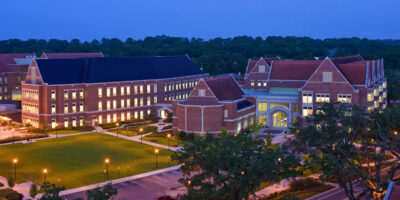
The Florida International University Herbert Wertheim College of Medicine, known as FIU Medicine or HWCOM, is the public MD-granting medical school of Florida International University in Miami. The college was established in 2006, welcomed its first class of medical students in 2009 and earned full accreditation from the Liaison Committee on Medical Education in 2013. It was created to answer South Florida’s need for more patient-focused, community-centered physicians, and that purpose still drives how it teaches. Students at FIU Medical School learn to be capable, compassionate and socially accountable physicians.
This guide covers the 2026-2027 application cycle. That is the cycle for students who want to start medical school in summer 2027 as part of the Class of 2031. It explains who is eligible, what the school’s published admissions averages mean, what FIU Medicine costs for in-state and out-of-state students, how the StepUp Curriculum and the NeighborhoodHELP program work, how Early Decision differs from the Honors College Early Assurance Program, and how to answer every question on the current FIU secondary application, with a full illustrative answer and analysis for each one.
Whether you are interested in becoming a doctor, a physician assistant or a biomedical researcher, you have probably searched for “Miami medical schools,” “Florida medical schools” or “PA schools in Florida.” FIU Medicine appears in all of those searches because it offers an MD program, a Master in Physician Assistant Studies and a Ph.D. in Biomedical Science on one campus. This guide focuses on the MD program and was written specifically for FIU Medicine. Do not use it as a guide to any other medical school. Facts in this guide were checked on October 17, 2026.
Be an Informed Applicant
There is no easy way into a medical school of good standing. Applying takes stamina, attention to detail and a clear calendar. You need to know the deadlines, understand what numbers like “FIU Medical School acceptance rate” really measure, and know which requirements are firm and which are only typical. If you are already researching and putting the time in, that is a strong start. What usually helps next is guidance and practice.
Take time to read this guide, and return to it as the cycle moves forward. If you are applying to more than one school, IMA publishes medical school guides for programs across the country, with the same detail on requirements, costs and secondary essays.
Key Takeaways
- Eligibility is limited to U.S. citizens and permanent residents. International applicants and applicants with DACA status are not eligible. Florida residents are preferred, but well-qualified out-of-state applicants are considered.
- There are no minimum GPA or MCAT scores for regular admission. FIU Medicine’s published averages for accepted applicants are an MCAT of 510 (range 502 to 522), an overall GPA of 3.86 (range 3.27 to 4.00) and a science (BCPM) GPA of 3.80. For the 2025 entering class, the median accepted applicant had a 512 MCAT and a 3.9 GPA.
- Interviews are the real hurdle. For the 2025 entering class, FIU interviewed 458 of 6,013 verified applicants and enrolled 121 students, 110 of them Florida residents.
- Every verified AMCAS applicant receives the secondary. It costs $30 (waived for applicants approved for the AAMC Fee Assistance Program), and the secondary and letters are due January 15, 2027. The AMCAS deadline is December 1, 2026.
- No CASPer or PREview. FIU Medicine does not require a situational judgment test. It does require two virtual one-on-one interviews of about 30 minutes each.
- Admission is rolling. Offers begin after October 15, and decisions arrive about one month after the interview, so applying early matters.
- Costs for 2025-2026 (latest posted): tuition is $32,739 for Florida residents and $65,737 for out-of-state students. The full 12-month cost of attendance is $84,468 in state and $119,966 out of state.
- The training is built around community care. The StepUp Curriculum starts clinical training in the first year, every student completes a mentored research project, and the Green Family Foundation NeighborhoodHELP program places students on interprofessional teams that care for households across Miami-Dade.
- Next step: confirm your prerequisites against the current list, decide whether you meet the Early Decision minimums (3.70 overall GPA, 3.50 BCPM, 510 MCAT, August 1 deadline), and start drafting the four 1,200-character secondary essays before your invitation arrives.
Key Statistics About FIU Herbert Wertheim College of Medicine
The snapshot below collects the figures applicants ask about first. The median MCAT and GPA, the entering class size and the application and interview counts describe the 2025 entering class. The table also lists FIU Medicine’s own published averages for accepted applicants. The school does not attach a cohort year to those averages, so treat them as the school’s current published averages rather than the profile of one specific class. The match figures are for the Class of 2026. Cost figures are for the 2025-2026 academic year, the latest budget FIU Medicine has posted. The table lists the source and definition of each figure.

| Metric | Value | Year or cohort | Source and definition |
|---|---|---|---|
| School and degree | Florida International University Herbert Wertheim College of Medicine (FIU Medicine), four-year MD | Current | FIU Medicine; public school, Modesto A. Maidique Campus, Miami, FL |
| Accreditation | Full LCME accreditation (first granted in 2013) | Current | FIU Medicine Accreditation and About pages |
| Average MCAT, accepted applicants | 510 (range 502 to 522) | Cohort year not stated by the school | FIU Medicine MD FAQs; average and range, not a minimum |
| Average overall GPA, accepted applicants | 3.86 (range 3.27 to 4.00) | Cohort year not stated by the school | FIU Medicine MD FAQs |
| Average BCPM GPA, accepted applicants | 3.80 (range 3.22 to 4.00) | Cohort year not stated by the school | FIU Medicine MD FAQs; biology, chemistry, physics and math GPA |
| Minimum GPA and MCAT, regular admission | None stated | 2026-2027 cycle | FIU Medicine MD FAQs: “All applicants may be considered” |
| Early Decision minimums | 3.70 overall GPA, 3.50 BCPM, 510 MCAT | 2026-2027 cycle | FIU Medicine Early Decision Program page |
| Median MCAT, accepted applicants | 512 (section medians 128 / 127 / 128 / 129) | 2025 entering class | AAMC MSAR, 2026 edition; median of all accepted applicants |
| Median GPA, accepted applicants | 3.9 overall; 3.87 science | 2025 entering class | AAMC MSAR, 2026 edition; median of all accepted applicants |
| Entering class size | 121 matriculants (110 in state, 11 out of state) | 2025 entering class | AAMC MSAR, 2026 edition; first-year matriculants |
| Verified applications | 6,013 (2,600 in state, 3,407 out of state, 6 international) | 2025 entering class | AAMC MSAR, 2026 edition; verified AMCAS applications |
| Applicants interviewed | 458 (401 in state, 57 out of state); 458 of 6,013 verified applicants, about 7.6% interviewed/applicants | 2025 entering class | AAMC MSAR, 2026 edition; interview counts reported by the school |
| Acceptance rate (offers divided by applications) | Not published; no count of offers is reported | 2025 entering class | AAMC MSAR, 2026 edition; FIU Medicine admissions pages |
| Waitlist | 200 to 250 positions per cycle; 70 offers made from the waitlist | Per cycle | AAMC MSAR, 2026 edition |
| Residency placement | 100% (fourth consecutive year); 112 placements | Class of 2026 (Match 2026) | FIU Medicine Match Day page |
| Where graduates matched | 55% in Florida, 37% in South Florida, 43% in primary care; 22 specialties in 21 states | Class of 2026 | FIU Medicine Match Day page |
| Tuition | $32,739 in state; $65,737 out of state | 2025-2026 academic year | FIU Medicine Cost of Attendance, estimated budget for 2025-2026 |
| Total cost of attendance (12 months, off campus) | $84,468 in state; $119,966 out of state | 2025-2026 academic year | FIU Medicine Cost of Attendance; includes $3,802 health insurance and living costs |
| Students receiving financial aid | 87% | 2024-2025 academic year | AAMC MSAR, 2026 edition (LCME Part I-B); all enrolled and graduated students receiving any aid |
| Average graduate debt | $200,349 | 2024-2025 academic year | AAMC MSAR, 2026 edition (LCME Part I-B); average medical school debt of indebted graduates |
| Secondary fee | $30 (FAP fee waiver honored) | 2026-2027 cycle | FIU Medicine Application Process page |
For the 2025 entering class, FIU received 6,013 verified applications, interviewed 458 applicants and enrolled 121 students. The number of offers is not published, so a true acceptance rate cannot be calculated. Any “FIU acceptance rate” you see elsewhere is either an estimate or a different measure, such as the number of enrolled students divided by the number of applicants. That second figure is a matriculation ratio, not an acceptance rate, because some admitted applicants choose other schools and some seats are filled from the waitlist. The interview figure is the clearest signal of selectivity: about 7.6% of verified applicants were interviewed, about 15% of Florida residents and under 2% of out-of-state applicants. The most useful numbers for planning are the accepted-applicant averages and medians, the interview counts and the Early Decision minimums.
Averages and ranges are also easy to misread. An MCAT range of 502 to 522 means at least one accepted applicant scored 502. It does not mean 502 is typical. Most accepted applicants sit near or above the average of 510. Treat the low end of each range as evidence that FIU reads whole applications, not as a target. For a wider comparison, IMA’s table of medical school GPA and MCAT averages shows how FIU’s published averages compare with other MD programs.
How FIU Medicine Is Ranked and Recognized
Applicants often check national medical school rankings, which score schools on measures such as research, primary care, diversity and graduates practicing in underserved areas. Ranking methods change from year to year, so check the current edition of any ranking you rely on and read what it actually measures. A research rank tells you about funding and faculty output and very little about whether a school fits you.
Three school-reported outcomes are more useful for applicants. First, 100% of the Class of 2026 was placed in residency, the fourth year in a row. Second, the Class of 2026 set a Florida retention record, with 55% of placements in Florida and 37% in South Florida. Third, the Association of American Medical Colleges named FIU Medicine’s Road to Residency program the best medical career advising program in the country, with a Careers in Medicine Excellence Award in 2024. In the dean’s current message, Dr. Juan C. Cendan says, “Our medical students continue to thrive, matching into top residency programs and consistently outperforming national averages on licensing exams.”
Key Features at a Glance
- Location: the Modesto A. Maidique Campus in Miami, with clinical training across Miami-Dade and Broward counties.
- Accreditation: full LCME accreditation for the MD program. Florida International University is accredited by SACSCOC.
- Programs: the four-year MD, three combined degrees students apply to during medical school (MD/Healthcare MBA, MD/MPH and MD/MSHIA), plus a separate Master in Physician Assistant Studies and Ph.D. in Biomedical Science.
- Curriculum: the StepUp Curriculum, organized in four Steps and five longitudinal strands, with clinical training from the first year.
- Community care: the Green Family Foundation NeighborhoodHELP program, which places students on interprofessional household-care teams.
- Clinical partners: strategic affiliations with Baptist Health South Florida, Nicklaus Children’s Hospital, the Miami VA Healthcare System and Leon Medical Centers, plus other hospitals in the region.
- Growth: a new on-campus clinical and medical education building, built with Baptist Health and backed by a $212 million state investment, is scheduled to open in 2028.
Mission and Educational Priorities
The MD program at the Herbert Wertheim College of Medicine pays close attention to the social reasons people do not receive the health care they need. The goal is a generation of doctors who look beyond lab results and treat each patient as a whole person living in a specific home and neighborhood. The school also emphasizes research into what makes people in South Florida sick and what keeps them from getting better, with real patients and real needs at the center.
FIU Medicine’s current mission statement reads: “The Herbert Wertheim College of Medicine develops highly qualified, community-engaged, socially accountable healthcare professionals and serves our region, our nation and the greater world through transformative translational research, medical education and clinical programs that drive forward innovations in healthcare.” You can read the full statement on the school’s Mission, Vision and Values page.
Vision
The vision statement reads: “FIU Medicine exerts national and international impact in medical education, patient-oriented scientific inquiry and state-of-the-art care. Our vision is to create a healthier Florida by forging clinical innovation and the development of highly qualified healthcare professionals who are dedicated to the welfare of each patient and to the community they serve.”
Values
FIU Medicine lists “the conduct, ideals and ethics that drive our operations” as six values:
- Scholarship in Education and Research
- Research Innovation
- Healthcare Delivery Innovation
- Service to University and Community
- Integrity and Transparency
- Collaboration
What the mission means for applicants
Mission statements are easy to skim. This one gives applicants four practical signals.
Community engagement and social accountability come first. The mission names “community-engaged, socially accountable” professionals before it mentions research. The curriculum backs this up: NeighborhoodHELP runs through all four years, and FIU added social accountability to the competency domains it uses to assess students. Applicants who can show sustained service, especially with people who have limited access to care, fit this priority. The admissions FAQ calls community service and volunteer activities “essential to being a competitive applicant.”
Patient care must be hands-on. FIU says that consistent “hands-on” patient contact, through work, volunteering or community service, “is essential to be considered a competitive applicant.” That is stronger language than many schools use. Shadowing alone will not meet it.
Research matters, but it is not a gate. The mission highlights translational research, and every FIU student completes a mentored research project before residency. For admission, though, research “is not required but is strongly encouraged.”
The region matters. The vision is “a healthier Florida,” and Florida residents receive preference. Out-of-state applicants who can explain a real connection to South Florida, or a real reason to train in a diverse, multilingual community, give the committee something concrete to weigh.
The admissions office describes its goal this way: “There is much more to becoming a doctor than GPA’s and MCAT scores. FIU Medicine nurtures students with passion, empathy, resilience, humility and great communication skills to develop a truly great physician.” Read your application through that lens. Every activity description and essay should show at least one of those qualities in action.
Accreditation and Institutional Identity
The Doctor of Medicine program at FIU Medicine is fully accredited by the Liaison Committee on Medical Education (LCME), the accrediting body for MD programs in the United States and Canada. The college achieved full LCME accreditation in 2013, four years after its first class enrolled. Graduates of LCME-accredited schools are eligible for ACGME-accredited residency programs. Details are on the school’s accreditation page.
Other accreditations cover related programs. The Master in Physician Assistant Studies program is accredited by the Accreditation Review Commission on Education for the Physician Assistant (ARC-PA). The college is an accredited provider of continuing medical education through the ACCME. Florida International University as a whole is accredited by the Southern Association of Colleges and Schools Commission on Colleges (SACSCOC).
Names you will see. The college’s full name is the Florida International University Herbert Wertheim College of Medicine. The school calls itself FIU Medicine. You will also see HWCOM in course materials and on older pages, and many applicants simply say “FIU Medical School” or “FIU College of Medicine.” All of these refer to the same MD program. Do not confuse it with the University of Miami Miller School of Medicine or with Florida Atlantic University’s Charles E. Schmidt College of Medicine, which are separate schools in the same region.
Recent changes. FIU Medicine launched an academic alliance with Baptist Health South Florida in 2024 and then a partnership with Nicklaus Children’s Health System. FIU is now the sponsoring institution for joint graduate medical education programs with Baptist Health and works with the Miami VA Healthcare System on ACGME-accredited training. Construction is underway on a new clinical and medical education building, scheduled to open in 2028. For applicants, these changes mean more local residency options and more stable clinical training sites.
Accreditation is a baseline, not a ranking. It tells you the program meets national standards, and it lets graduates enter U.S. residency programs. It does not tell you whether FIU’s culture, curriculum and location fit you. The rest of this guide covers those questions.
Medical Programs and Affiliations
FIU Medicine offers one MD program on one campus, plus combined degrees that MD students apply to after they enroll. The college also runs a physician assistant program, a Ph.D. program and a post-baccalaureate certificate. Each has its own application, and only the MD program is covered by AMCAS.
Medical Doctor (MD)
The Doctor of Medicine program is a four-year program that leads to the MD degree. It prepares students for any specialty, including primary care. The curriculum moves students smoothly from the classroom into the medical community, and its attention to the social issues that affect health is a large part of what draws applicants to FIU. Because FIU Medicine is a community-based school, students train across many hospitals, clinics and practices under the supervision of faculty and practicing physicians. That means a wide range of patients to learn from.
The curriculum has four Steps, five longitudinal strands and both vertical and horizontal integration. Steps 1 and 2 make up the pre-clerkship phase, where the foundational sciences are taught. Steps 3 and 4 make up the clerkship phase, where students do hands-on clinical work and practice what they have learned. The Curriculum Overview below explains each phase.
5 Longitudinal Strands
Every course in the MD curriculum belongs to one of five strands:
- Human Biology and Disease: the foundational sciences, taught through integrated organ-system courses and revisited during clerkships.
- Clinical Medicine: patient care, built from clinical skills courses and primary care preceptorships in the first two years.
- Medicine and Society: includes NeighborhoodHELP and teaches students to weigh social and cultural factors and patient values in clinical decisions.
- Professional Development: professionalism, humanism and health systems science.
- Research: epidemiology, evidence-based medicine, translational medicine and research methods.
Combined Degree Programs
FIU Medicine offers three combined degrees. Students do not apply to them through AMCAS. Instead, MD students apply in the third period of medical study:
- MD and Professional MBA in Healthcare Management (MD/HCMBA), with the FIU College of Business
- MD and Master of Public Health (MD/MPH), with the FIU Stempel College of Public Health and Social Work
- MD and Master of Science in Health Informatics and Analytics (MD/MSHIA)
Combined degree students complete the first three years of the MD program. At the beginning of the fourth period, they pause their medical studies to take master’s coursework, then return to finish the MD. These programs suit students who want to work in health care leadership, public health or data and quality improvement. See the combined degrees page for details.
There is no BS/MD program at FIU Medicine. High school students cannot apply to a combined bachelor’s and MD program at FIU. The closest pathway is the Honors College Early Assurance Program, which FIU Honors College students apply to as sophomores and which is explained in the admissions section below. FIU also does not list an MD-PhD program. Students who want both research and clinical training usually complete the MD with the required Research Scholarship Course and additional research electives, or apply to MD-PhD programs at other schools.
Physician Assistant (PA)
The Master in Physician Assistant Studies (MPAS) program at FIU Medicine is a 27-month program accredited by ARC-PA. It trains physician assistants with an emphasis on primary care, social accountability, patient-centered care and community outreach. PA students take part in NeighborhoodHELP household visits and interprofessional workshops, train in the same simulation center and anatomy lab as MD students, and complete seven clerkship rotations: family medicine, internal medicine, surgery, OB/GYN, pediatrics, emergency medicine and psychiatry.
The PA program has its own application cycle (April to January) and its own requirements. FIU’s PA school requirements differ from the MD requirements, so read the MPAS program page carefully if you are weighing both careers. If you are still deciding, pre-PA internships and supervised patient care roles can help you see what physician assistants do day to day.
PhD in Biomedical Science
FIU Medicine offers a Ph.D. in Biomedical Science, a five-year, 75-credit program that admits students in the fall. It links the foundational sciences to the practice of medicine and trains students to turn research findings into new treatments. A newer translational medicine major pairs each student with a basic science advisor at FIU Medicine and a clinical advisor from Baptist Health or a similar medical facility, so students work on questions that come from real patients rather than hypotheticals.
The program lists these key research areas:
- Acute Lung Injury
- Drug Discovery and Nanotherapeutics
- Environmental Sciences and Toxicology
- Genetics and Cancer Biology
- Immunology and Neurological Disorders
- Mechanobiology
- Microbiology and Infectious Diseases
- Mitochondrial Biology and Metabolomics
- Pulmonary Vascular Disease
- Translational Glycobiology and Functional Glycomics
The Ph.D. is a separate graduate program, not an MD track. MD applicants interested in research should look instead at the Research Scholarship Course and the Summer Research Fellowship Program described below.
Graduate Certificate in Molecular and Biomedical Sciences
FIU Medicine also offers a Graduate Certificate in Molecular and Biomedical Sciences for post-baccalaureate students. The school describes it as a “Pathway to MD Degree” that reinforces basic science concepts and provides academic enhancement and professional development for applicants aiming at health professional programs. It is a separate application and does not guarantee MD admission.
Pre-medical pathway programs
FIU Medicine runs several programs for students who are not yet medical students:
- Doctors of Tomorrow is a free, six-day residential summer program for college students interested in medicine, especially those who have faced financial barriers or had limited exposure to health careers. It covers anatomy, ethics, clinical skills, simulations, mock interviews, personal statements, MCAT strategy and mentoring. Applicants must be Florida residents and U.S. citizens or permanent residents with at least 60 college credits, two semesters each of biology and chemistry, and a GPA of at least 3.0. With more than a decade of support from Florida Blue, the program has served more than 300 premedical students. The 2026 session ran May 17 to 22, with applications due March 9, 2026. Learn more on the Doctors of Tomorrow page.
- Albert E. Dotson Sr. Premedical Program, which prepares FIU undergraduates through mentorship, skill-building and community engagement.
- Challenges in Healthcare I and II, two FIU Honors College elective courses taught with the College of Medicine.
- Junior Doctors of Tomorrow, a week-long summer program for high school students from disadvantaged backgrounds, and STEM Saturdays for K-12 students. High school students who want hands-on exposure before college can also look at medical internships for high school students.
Clinical affiliations
FIU Medicine does not own a large university hospital. Instead, students train at affiliated health systems across Miami-Dade and Broward counties. The school’s four strategic clinical partners are Baptist Health South Florida, Nicklaus Children’s Hospital, the Miami VA Healthcare System and Leon Medical Centers. Other clinical sites include Broward Health, Cleveland Clinic Florida, Citrus Health Network, Jackson Health System, Memorial Healthcare System and Mount Sinai Medical Center. The Clinical Rotations section below explains which specialties each site supports.
Curriculum Overview
FIU Medicine calls its MD curriculum the StepUp Curriculum. It is an integrated four-year program that emphasizes patient-centered care, student well-being and the joining of foundational and clinical sciences. Clinical training starts in the first year. Throughout all four years, students train in the Albert and Debbie Taño Medical Simulation Center and the 7,000-square-foot Anatomy and 3D Printing Lab.
Pre-clerkship phase: Steps 1 and 2
Steps 1 and 2 cover the first two academic years. Coursework is multidisciplinary and uses active learning methods that build critical thinking, clinical application and links across the five strands. During both Steps, students take part in a longitudinal clinical preceptorship in the community and in NeighborhoodHELP with students from other FIU health programs.
Step 1, Foundations, spans the first semester of Year 1. It builds a base in genetics, cell biology, biochemistry, anatomy, physiology, pharmacology, immunology, microbiology and pathology. Students also begin clinical skills, medicine and society and professional development courses. During Step 1, students attend half-day primary care clinic visits, take part in medical simulations and practice with standardized patients.
Step 2, Organ Systems, begins in the second semester of Year 1 and runs through Year 2. It is a case-based, organ-system approach to human biology, disease, illness and injury. Pathology, physiology, anatomy, pharmacology, genetics and human behavior are taught together for each major system: hematopoietic and lymphoreticular, endocrine, reproductive, musculoskeletal, skin, gastrointestinal, renal and urinary, cardiovascular, respiratory and nervous. Students continue their clinical preceptorship visits, performing physical exams, forming differential diagnoses and learning to use laboratory and imaging data.
In Year 2, students also rotate at Leon Medical Centers as part of a Geriatrics Primary Care preceptorship. During Years 1 and 2, students may elect an emergency medicine experience at Baptist Hospital or South Miami Hospital.
Research Scholarship Course
At the same time as Step 1, every student starts the Research Scholarship Course. Through it, each student completes a mentored research project for presentation or publication before residency. This is a graduation expectation, not an elective. The Research strand supports it with courses in epidemiology, evidence-based medicine, translational medicine and research practices. Dr. Juan Manuel Lozano, a pediatrician and clinical epidemiologist, directs the course.
Clerkship phase: Steps 3 and 4
Step 3, Clinical Clerkships, includes core clerkships in family medicine, internal medicine, obstetrics and gynecology, pediatrics, psychiatry, radiology, neurology and surgery. Students care for patients under faculty supervision at hospitals, outpatient clinics and private practices across the region. Simulation, case-based teaching and virtual cases support the clinical work, and the internal medicine and surgery clerkships include selective time in subspecialties. Students also stay in NeighborhoodHELP and take a longitudinal course on self-directed learning and the integration of basic and health systems science.
Step 4, Advanced Clinicals, lets students build individual schedules around their career goals. Required elements are:
- a two-week career advising and professional development course
- a two-week geriatrics rotation
- a four-week emergency medicine rotation
- one four-week sub-internship
- electives
- a transition-to-residency capstone course
NeighborhoodHELP continues through Step 4.
Learning methods and assessment
FIU uses small-group learning, case-based sessions, simulation and standardized patients alongside lectures. Standardized patients are trained “patient actors” who portray a patient’s story and personal affect so students can practice histories, exams and difficult conversations before they face them with real patients. Clinical skills and assessment rooms in the simulation center record encounters, which supports feedback and objective structured clinical examinations (OSCEs).
The radiology clerkship is largely self-directed online study, assessed by multiple-choice exams. Other clerkships combine clinical evaluations with examinations. Course calendars and weekly schedules for each class are posted on the curriculum pages.
Early clinical exposure
Applicants often ask when FIU students first see patients. The answer is the first semester. Half-day primary care clinic visits begin in Step 1, the community preceptorship continues through Step 2, and NeighborhoodHELP household visits begin in the pre-clerkship years. By the time students start Step 3 clerkships, they have already taken histories, performed exams and worked on interprofessional teams in patients’ homes.
What this means for applicants
The StepUp structure rewards students who are comfortable learning in teams and in the community. Because research is required, applicants who have already asked a question and followed it through, even in a small quality improvement project, will be able to talk about the Research Scholarship Course with real understanding. Because clinical work starts early, committees want evidence that you already know what patient care looks like. Because NeighborhoodHELP brings students into homes, experience with home visits, community health work or social services is especially relevant. FIU does not accept transfer students, citing the integration of its curriculum, so plan to start in Year 1.
Admissions Requirements and Application Process
This section covers what every FIU MD applicant must have, what the school expects to see in a competitive application, and the exact sequence of steps and deadlines for the 2026-2027 cycle.
Selection factors: what FIU Medical School looks for in an applicant
The Admissions Committee wants applicants to know that a future doctor’s potential is more than an MCAT score or a GPA. FIU reviews each applicant as an individual with a story, using what the director of admissions describes as a holistic, mission-based admissions process. The school welcomes applicants from a wide range of backgrounds and life experiences, and an applicant’s background will never by itself stop them from moving through the process.
The qualities the school names most often are passion, empathy, resilience, humility and strong communication skills. The admissions FAQ adds three practical expectations: community service is essential, consistent hands-on patient contact is essential, and research is strongly encouraged. During Early Assurance interviews, the school evaluates qualities such as empathy, integrity, temperament, self-confidence and resourcefulness, which is a useful list for any FIU applicant to keep in mind.
Basic eligibility
Every applicant must meet these requirements:
- U.S. citizenship or permanent residency. International applicants and applicants with Deferred Action for Childhood Arrivals (DACA) status are not eligible for consideration.
- A bachelor’s degree by matriculation. All coursework must be completed at a regionally accredited institution in the United States or Canada. Applicants with a bachelor’s degree from outside the United States are considered case by case, but their prerequisites must be completed at an accredited U.S. or Canadian institution. If you are in a graduate or professional program, you should complete that degree before you start at FIU.
- Completed prerequisites by matriculation. You can apply with some courses in progress, as long as they are finished before you start.
- An MCAT score. See the MCAT rules below.
Residency. Florida residents receive preference, but well-qualified applicants from other states are considered. FIU uses two tuition rates. For tuition purposes, a Florida resident is someone who has established and maintained legal domicile in Florida for at least 12 months before the first day of orientation. Accepted applicants must submit documents to verify residency, and failing to provide valid documentation can lead to reclassification as a non-resident.
Technical standards. Candidates must be able to perform the essential functions of medical education, with or without reasonable accommodation. FIU’s technical standards cover observation skills; communication skills; motor skills and functioning; cognitive skills; professionalism, behavioral skills and ethical standards; and emotional skills. Each applicant attests to them on the secondary. Students who need accommodations work with the FIU Disability Resource Center.
Minimum GPA and MCAT requirements for the FIU College of Medicine
There is no minimum GPA or MCAT score for regular admission. In the school’s words, “All applicants may be considered.” FIU’s published averages for accepted applicants are:
- MCAT: 510 (range 502 to 522)
- Overall GPA: 3.86 (range 3.27 to 4.00)
- BCPM (science) GPA: 3.80 (range 3.22 to 4.00)
These are averages, so many accepted applicants scored higher and some scored lower. An application near the averages is competitive on numbers, and the rest of the file decides the outcome. Early Decision is different: it does have minimums, listed later in this section.
MCAT rules. The MCAT is required. Scores must come from exams taken within three years of the intended matriculation year and no later than September of the application year. For the 2027 entering class, only MCAT scores from 2024 or later are accepted. The last MCAT date for regular applicants is September 30, 2026. Early Decision applicants must test by June 30. If you have more than one score, the Admissions Committee considers your highest total, and all of your scores are visible to it.
Volunteer service and clinical experience
Volunteer work in the community and clinical experience of any kind strengthen a medical school application, and at FIU both are expected. The Admissions Committee wants to see that you have invested time in serving others. Service with medically underserved people in Florida, such as free clinics, food access programs or community health fairs, fits FIU’s mission especially well.
For your application to be competitive, you also need clinical experience. FIU does not publish a minimum number of hours. What it does say is that consistent hands-on patient contact “over a consistent period of time” is “essential to be considered a competitive applicant.” Hands-on means more than watching. Medical assistant, scribe, EMT, patient care technician, hospice volunteer, intake volunteer at a free clinic and certified nursing assistant roles all involve direct contact with patients. Shadowing physicians is useful, but it does not replace hands-on care.
Some applicants add supervised clinical work abroad, in culturally and linguistically different settings with mentors at their side. Clinical internships for pre-med students that include taking vitals, intake and triage under supervision can add depth to an application, as long as they come alongside sustained local service rather than replacing it. You can browse IMA’s healthcare internships abroad for the full list of programs and fields.
Research is not required, but FIU says it “is strongly encouraged and will help to further enhance your application.” Because every FIU student completes a research project, any research experience you have, including clinical, public health or quality improvement work, gives you something specific to discuss.
The FIU College of Medicine letters of recommendation
FIU Medicine requires a minimum of three letters of recommendation:
- two from science faculty (biology, chemistry, physics or math)
- one from any other faculty member who has taught you
If your school has a Health Professions Advisory Committee, FIU expects a committee letter, with the three faculty letters attached to it. You may also submit up to three supplemental letters from physicians, researchers, mentors, employers or others who know you well. Letters from friends or relatives are not considered.
Letters should be recent, written by people who know you well and can describe your personal qualities, and printed on official letterhead with a signature. All letters must go through the AMCAS Letter Service. Do not send letters directly to FIU. Letters are due January 15, 2027, but interviews are scheduled only when your file is complete, so ask your writers early. Good letters take time, so start the conversation with your writers before AMCAS opens.
Required and recommended coursework at FIU Medical School
Required prerequisites
- General Biology with laboratory: 2 semesters
- General Chemistry with laboratory: 2 semesters
- Organic Chemistry with laboratory: 2 semesters, which can be Organic Chemistry 1 and 2, or Organic Chemistry 1 and Biochemistry
- Physics with laboratory: 2 semesters
- Mathematics: 2 semesters of college mathematics or statistics
- Writing-intensive courses (for example, English, humanities or social sciences): 2 semesters
Applicants must also be proficient in spoken and written English.
Preferred coursework (not required)
The required courses are the minimum. FIU notes that accepted students typically have extensive coursework in the natural sciences, including many of these recommended courses:
- advanced sciences such as anatomy, biochemistry, cell biology, genetics, histology, immunology, microbiology and physiology
- statistics
- foreign languages
- humanities
- social sciences
Course policies
- CLEP and AICE credits are not accepted for any prerequisite.
- AP and IB credits for English, biology, math, physics and general chemistry are acceptable if they appear on a college transcript and are verified by AMCAS. FIU still strongly recommends additional graded coursework in those subjects.
- Online courses may be accepted case by case, but laboratory components must be completed in person.
- Community college courses are accepted for lower-division prerequisites. Upper-level science courses are encouraged as preparation for the MCAT and for medical school.
Spanish is not required, but foreign languages are on the recommended list, and Miami is a multilingual city. Clinical Spanish can help you communicate with many patients you will meet in training, and a medical internship in Peru is one way some students practice it in a clinical setting.
Does FIU Medical School require the CASPer exam?
No. FIU Medicine does not require CASPer, PREview or any other situational judgment test for the 2026-2027 cycle. None of the school’s admissions requirements, application process steps or deadlines include one. Your time is better spent on the secondary essays and interview preparation.
Application process and timeline
AMCAS primary application and FIU Medical School secondary application
FIU Medicine uses the American Medical College Application Service (AMCAS) to collect and process primary applications, transcripts and letters of recommendation. AMCAS opens in May, applications can be submitted in June, and FIU’s AMCAS deadline is December 1. The school encourages applicants to apply soon after AMCAS opens. IMA’s AMCAS application guide walks through each section of the primary, and you can review the AAMC’s own instructions on the AMCAS website.
Once AMCAS verifies your application, FIU sends you its secondary application. Every applicant with a verified AMCAS application receives the secondary. There is no screen before the secondary. The secondary includes:
- a $30 non-refundable fee (applicants approved for the AAMC Fee Assistance Program receive a fee waiver)
- directed essays that explore your interest in medicine and your fit with FIU Medicine (see the Secondary Application section below)
- a passport-style photo
- attestations that you will follow FIU Medicine’s rules, including the Code of Professional Conduct for Student-Faculty Relationships and the technical standards, and that you agree to Level I and Level II background checks and drug testing
The secondary, letters and any other supplemental materials are due January 15, 2027. Interviews are scheduled only for complete applications, so submit as soon as you can.

Early Decision Program
FIU Medicine participates in the AAMC Early Decision Program (EDP). Early Decision applicants apply only to FIU on AMCAS by the deadline and must meet these minimums:
- overall GPA of 3.70
- BCPM GPA of 3.50
- MCAT of 510 (combined score)
All materials are due August 1: the verified AMCAS application and official transcripts, the FIU secondary and three letters of recommendation. The MCAT must be taken by June 30. Selected Early Decision candidates interview in September, and results are announced by October 1. Early Decision is binding: applicants accepted through it must enroll at FIU Medicine. Applicants who are not accepted move automatically to the regular pool, and they may then apply to other schools.
Early Decision makes sense only if FIU is clearly your first choice and your numbers meet the minimums. Deadlines are strict, so do not wait.
FIU Honors College Early Assurance Program
The Early Assurance Program (EAP) is a different program. It is run by the FIU Honors College with the College of Medicine and is open only to FIU Honors College students. Students apply in the spring of their sophomore year. Requirements to apply include U.S. citizenship or permanent residency, at least 60 completed credits (24 of them at FIU), at least two semesters in the Honors College, a 3.6 overall GPA and a 3.5 BCPM GPA, and two letters of evaluation. The 2026 application deadline was March 31, 2026.
As many as 10 candidates may receive guaranteed conditional acceptance into a designated entering class. To keep their seat, EAP students must maintain a 3.6 overall and 3.5 BCPM GPA, take the MCAT by the end of June of the year before matriculation and score at least 505 or the 75th percentile (with no more than two attempts), submit AMCAS by August 1 of the year before matriculation, and continue research, service and clinical work. Students accepted through EAP agree not to pursue admission to other MD programs. See the Honors College Early Assurance page for the full rules.
In short: Early Decision is for any eligible applicant in the regular AMCAS cycle and has a 510 MCAT minimum. Early Assurance is for FIU Honors College sophomores, has GPA minimums at the time of application, and requires a 505 MCAT later.
Interviews, decisions and enrollment
Interview season runs from August to March. FIU uses rolling admission. Offers begin after October 15, and decisions are communicated about one month after the interview. Once notified, accepted applicants have two weeks to accept or decline. Enrollment deposits are not required until after April 30. The deposit is $100. It is non-refundable but is applied to tuition. FIU follows the AAMC Application and Acceptance Protocols.
Accepted applicants must complete Level I (AAMC and Certiphi, at no added cost) and Level II criminal background checks and a 10-panel drug screen before starting, and again before the third and fourth years. Applicants pay for drug testing. A failed background check or drug screen can lead to cancellation of an acceptance.
Deferrals are allowed only under special circumstances and are reviewed case by case. FIU does not accept transfer students.
2026-2027 timeline
| Date | Regular admission | Early Decision |
|---|---|---|
| May 2026 | AMCAS opens; transcripts may be sent | AMCAS opens |
| June 2026 | AMCAS submission opens | MCAT must be taken by June 30 |
| August 1, 2026 | Interview season begins in August | Deadline for AMCAS, transcripts, secondary and letters |
| September 2026 | Last MCAT date: September 30 | Early Decision interviews |
| October 1, 2026 | Submit FAFSA on or after this date | Decisions announced; submit FAFSA |
| October 15, 2026 | First offers; rolling decisions about one month after each interview | Applicants not accepted are in the regular pool |
| December 1, 2026 | AMCAS deadline | |
| January 15, 2027 | Deadline for secondary, letters and supplemental materials | |
| February 19, 2027 | “Plan to Enroll” option available (recommended) | |
| March 2027 | Interview season ends | |
| April 15, 2027 | AAMC protocols recommend narrowing to three offers | |
| April 30, 2027 | Applicants may hold only one acceptance; “Commit to Enroll” available | |
| June 15, 2027 | “Commit to Enroll” required for students matriculating at FIU | |
| Late July 2027 | Orientation (the Class of 2030 oriented the week of July 27, 2026); classes begin the first week of August |
Tuition, Cost of Attendance and Financial Aid
FIU Medicine posts one estimated cost of attendance budget each year. The latest posted budget is for the 2025-2026 academic year. A 2026-2027 budget had not been posted as of October 17, 2026. The figures below are a 12-month budget for a single student living off campus. Tuition and fees are set by the Florida Legislature, the Florida Board of Governors and the FIU Board of Trustees, and all figures are subject to change.
| Item | Florida resident | Out-of-state resident |
|---|---|---|
| Tuition | $32,739 | $65,737 |
| University fees | $5,275 | $6,775 |
| HWCOM technology fee | $681 | $681 |
| Books and supplies | $2,051 | $2,051 |
| Housing | $22,385 | $22,385 |
| Food | $5,687 | $5,687 |
| Transportation | $5,038 | $5,038 |
| Personal expenses | $5,313 | $5,313 |
| Health insurance | $3,802 | $3,802 |
| Medical student fees | $564 | $564 |
| Loan fees | $933 | $933 |
| Total | $84,468 | $119,966 |
Source: FIU Medicine Cost of Attendance, “Estimated Cost of Attendance Budget for 2025-2026.”
What the numbers mean
Tuition versus total cost. Tuition alone is $32,739 for Florida residents and $65,737 for out-of-state students in 2025-2026. Adding university fees and the technology fee brings direct charges to $38,695 in state and $73,193 out of state. The total cost of attendance adds books, housing, food, transportation, personal expenses, health insurance, medical student fees and loan fees. The total is what financial aid is based on.
One budget for every year. FIU publishes a single 12-month budget rather than a separate figure for each year of study. Tuition and fees are charged at a flat yearly rate no matter how many credits you take. In Years 1 to 3, tuition is billed one-third each in fall, spring and summer. In Year 4, it is billed half in fall and half in spring, because there is no summer semester. Multiplied by four years at 2025-2026 rates, the total cost of attendance would be about $337,872 for a Florida resident and about $479,864 for an out-of-state student, before any increases. Actual costs depend on future rates, your living choices and any scholarships.
What is inside the smaller lines. Medical student fees cover disability insurance, background checks, drug screens, immunizations and USMLE exam fees. Books and supplies include textbooks and first-year diagnostic tools such as a stethoscope, reflex hammer and lab coat. Health insurance may be reimbursed if you show proof of purchasing your own policy. Loan fees reflect the average federal Direct Loan origination fees.
Housing. On-campus housing is not available for medical students. The housing line assumes single occupancy of a rental unit near campus. FIU has worked with Very Apt to create a medical student housing guide based on student reviews, and the admissions team can connect incoming students with current students for advice. Living with family, sharing an apartment or living farther away can lower the housing line, but plan for transportation, since the transportation budget assumes a car.
Florida residency is worth checking early. The tuition gap between residents and non-residents is almost $33,000 a year. If you have lived in Florida, read the residency rules (12 months of legal domicile before orientation) and gather documents before you are accepted.
For a broader look at what medical school costs in the United States and Canada, see IMA’s Medical School Database of tuition and costs.
Financial aid and scholarships
Most FIU medical students use some combination of federal loans, scholarships and grants. FIU Medicine reports that 83% of its students borrow federal loans, 76% have received scholarship and grant assistance, and 86% are satisfied with its debt management program. These figures appear on the school’s financial assistance page without a year attached. In the 2024-2025 academic year, 87% of all FIU medical students received some form of financial aid, and indebted graduates left with an average of $200,349 in medical school debt.
To apply for aid, submit the FAFSA as soon as possible on or after October 1. The financial assistance team, led by Cristina Arabatzis, director of admissions and financial aid, advises applicants before admission on the FAFSA, award letters and disbursement. Incoming students attend a required financial assistance presentation during orientation, complete entrance counseling during their first semester, and can join debt management presentations throughout school and exit counseling before graduation. The team keeps an open-door policy for current students and alumni. MD aid questions go to [email protected].
Standard budgets cover a single student. Costs for a spouse or children are not included in the standard budget but are considered through the FAFSA need analysis.
Learning how medical school financing works, and using financial help when you need it, is part of planning for FIU. Before you commit, compare the full cost of attendance and any scholarship offers from each school that accepts you.
Campus Facilities and Student Life
FIU Medicine is located on FIU’s Modesto A. Maidique Campus in Miami. Admissions, student affairs and much of the teaching space are in the Academic Health Center buildings (AHC). The school does not provide housing for medical students, so most students rent nearby.
Facilities
Albert and Debbie Taño Medical Simulation Center. This multidisciplinary center on the fourth and fifth floors of AHC2 is a safe space for students to practice clinical skills. It has twenty clinical skills and assessment rooms, including two high-fidelity, multipurpose simulation suites, and two large procedural skills suites. Rooms are equipped with cameras and recording so students can review their performance. Equipment includes SimMan 3G and other adult manikins, the Victoria and Noelle childbirth simulators, the Harvey cardiopulmonary simulator, pediatric and newborn simulators, task trainers for central lines, lumbar punctures and other procedures, and several ultrasound systems. The center’s Standardized Patient (SP) program trains patient actors to portray a patient’s history, story and personal affect, so students can practice histories, exams and difficult conversations before they meet real patients. Student interest groups can also request simulation sessions.
Anatomy and 3D Printing Lab. A 7,000-square-foot lab used across all four years of the MD curriculum and by the PA program.
NeighborhoodHELP Mobile Health Center. Mobile health units bring primary care, screenings and health education to households and community events. Faculty such as Dr. Sarah Stumbar and Dr. Andres Rodriguez provide care aboard the Mobile Health Center, and students take part as members of the care teams.
FIU Health Faculty Group Practice. Faculty physicians see patients at the FIU Health Faculty Group Practice on the main campus, which also serves as a clinical teaching site.
New on-campus medical center. A new clinical and medical education building, built in collaboration with Baptist Health and backed by a $212 million state investment, is under construction and scheduled to open in 2028. It will serve as a hub for clinical care, education, research and innovation.
Student support and well-being
The Office of Student Affairs supports students from matriculation through graduation, with career and professional development, wellness programs and administrative services. It is led by Dr. Sarah Stumbar, associate dean for student affairs, and is reachable around the clock through an after-hours on-call line for current students.
- Student Well-being and Mental Health Services offers free, confidential counseling only for FIU medical students, including individual and couples counseling, crisis intervention, psychological and learning assessments, wellness sessions and workshops on stress, burnout, time management and sleep.
- Academic support services include a supplemental peer instruction program.
- Panther Communities, along with career advising and student organizations, are overseen by the assistant dean for student services.
- Road to Residency, FIU’s career advising program, received the AAMC Careers in Medicine Excellence Award in 2024.
- An ombudsman office gives students a place to raise concerns.
Student organizations
FIU Medicine supports student organizations, interest groups, honor societies and chapters of national organizations. Each is led by elected student officers and advised by faculty. Examples from the school’s current list include:
- Chapters of national organizations: American Medical Association and Florida Medical Association, American Medical Student Association, American Medical Women’s Association, Latino Medical Student Association, Student National Medical Association, Asian Pacific American Medical Student Association, Christian Medical and Dental Association, Global Surgery Student Alliance, Phi Delta Epsilon, Physicians for Social Responsibility and others.
- Specialty interest groups: from anesthesiology, surgery, orthopaedics and radiology to family medicine, internal medicine, pediatrics, psychiatry, emergency medicine, dermatology, cardiology and oncology.
- Culture and community groups: including the Jewish Medical Student Association, Middle Eastern and North African, and Muslims in Healthcare groups.
- Advocacy and interdisciplinary groups: Global Health, Policy and Healthcare, Medical Students Working to Improve Society and Health, Food as Medicine, Business and Medicine, Medical Humanities, Music and Medicine, Medical Education and a Pre-Medical Undergraduate Mentoring Program.
- Honor societies: the Alpha Omega Alpha Epsilon Chapter, founded at FIU in 2012, and the Gold Humanism Honor Society.
- Student government: the Medical Student Council, which distributes funding to student groups, and the Student Professionalism and Ethics Committee.
Student-led service
Several student-led initiatives put FIU’s mission into practice:
- Student Faculty Collaborative Clinic (SFCC): a student-run clinic at the Universal Heritage Institute, a free community clinic in Opa Locka, staffed by faculty and students at every level of training to care for uninsured patients.
- FIU HOME (Houseless Outreach for Medical Equity): street outreach that brings health care and resources to people experiencing homelessness in Miami-Dade County.
- Breast Health Initiative: raises funds through an annual art show to support diagnostic screenings through NeighborhoodHELP and to provide breast health education and navigation.
- Healthcare in Action Fellowship: a health policy fellowship with FIU in D.C. that ends with a fly-in to Washington to meet legislators and agencies.
- STEM Saturdays: medical students volunteer to teach hands-on science to K-12 students in NeighborhoodHELP communities.
Professional associations worth knowing
Pre-health students at FIU and elsewhere will meet several national associations during the application process. For MD applicants, the Association of American Medical Colleges (AAMC) runs AMCAS, the MCAT and the Fee Assistance Program. DO schools use their own application service, and other associations represent podiatric, veterinary, optometry and chiropractic schools and health administration programs. Professional associations such as the American Medical Association, the American Academy of Physician Associates and the American Public Health Association publish career information and run student chapters. FIU’s undergraduate campus also has its own pre-health student organizations; check FIU’s current student organization directory for active groups.
Life in Miami
FIU Medicine lists location as one of its top reasons to apply: Miami offers unique patient populations, a strong arts and dining scene and year-round warm weather. It is also a large, multilingual city, and NeighborhoodHELP publishes its household referral forms in English, Spanish and Haitian Creole. Plan for real costs: Miami rents are high, most students need a car, and hurricane season runs through the fall semester.
Clinical Rotations and Research Opportunities
FIU students train with a diverse population of patients in public and private hospitals, safety-net and federally qualified health centers, private practices and patients’ own homes. Students become familiar with large integrated systems, community hospitals and population health models. Clinical sites are spread across Miami-Dade and Broward counties, so expect to drive between sites.
Core clinical sites
| Health system | When and how students train there |
|---|---|
| Baptist Health South Florida (Baptist Hospital of Miami, South Miami Hospital, Doctors Hospital, Homestead Hospital, Mariners Hospital, West Kendall Baptist Hospital, Baptist Children’s Hospital and others) | Optional emergency medicine experience in Years 1 and 2; key site in Years 3 and 4 for internal medicine, surgery, family medicine, OB/GYN, geriatrics, emergency medicine and neurology; sub-internships and electives in Year 4 |
| Nicklaus Children’s Hospital | Primary learning site for pediatrics and its subspecialties in Years 3 and 4 |
| Miami VA Healthcare System | Internal medicine, family medicine, psychiatry and surgery in Year 3; sub-internships and electives in Year 4 |
| Leon Medical Centers | Geriatrics primary care preceptorship in Year 2 |
| Jackson Health System | Internal medicine and surgery and their subspecialties in Years 3 and 4 |
| Memorial Healthcare System | Internal medicine, surgery, neurology, OB/GYN and psychiatry in Years 3 and 4; sub-internships and electives |
| Mount Sinai Medical Center | Internal medicine, surgery and OB/GYN in Years 3 and 4; sub-internships and electives |
| Broward Health | Psychiatry, internal medicine and surgery in Years 3 and 4; some pediatrics opportunities in Year 4 |
| Cleveland Clinic Florida | Neurology in Year 3; internal medicine sub-internship and electives in Year 4 |
| Citrus Health Network | Psychiatry clerkship in Year 3 and psychiatry electives in Year 4; FIU is the academic affiliate for Citrus’ psychiatry residency and child and adolescent psychiatry fellowship |
Source: FIU Medicine Clinical Experience.
Students do not choose a single home hospital. Placements depend on the clerkship and on the school’s assignments, so a single year can include rotations in two counties. Applicants interested in psychiatry careers should note that FIU’s psychiatry training spans an FQHC and community mental health center (Citrus), the VA and several hospital systems.
Green Family Foundation NeighborhoodHELP
NeighborhoodHELP is FIU Medicine’s signature program and the platform for its community-engaged mission. Each medical student is assigned to households in Miami-Dade communities and visits them regularly as part of an interprofessional team that may include nursing, social work, physician assistant and law students, depending on each household’s needs. During household visits, teams conduct health assessments, provide health education, identify barriers to care and connect families with health care and community resources. The program also provides preventive care, primary care, telehealth and behavioral health services, runs a Mobile Health Unit and takes part in community events across South Florida.
Students take part from the pre-clerkship years through Steps 3 and 4. The program received a gift from the Green Family Foundation to expand in June 2026 and was honored for its impact on Miami-Dade families in August 2026. Dr. Sarah Suarez was named director in March 2026. Learn more on the NeighborhoodHELP page.
For applicants, NeighborhoodHELP is the clearest reason FIU’s secondary asks about communication, putting others first and the realities of patient care. Experience that shows you can listen to a family in their own setting and work with professionals outside medicine will connect directly to it.
Graduate medical education and Match outcomes
FIU is the sponsoring institution for joint FIU and Baptist Health residency programs, and five Class of 2026 graduates matched into joint FIU and Baptist programs. FIU faculty also lead residency teaching: for example, FIU is the academic affiliate for Citrus Health Network’s psychiatry residency and child and adolescent psychiatry fellowship.
The Class of 2026 achieved a 100% residency placement rate, the fourth year in a row. The class had 112 placements across 22 specialties in 21 states. Fifty-five percent of placements were in Florida, 37% in South Florida and 43% in primary care. The five most common specialties were internal medicine, general surgery, neurology, emergency medicine and family medicine.
Research opportunities
Every FIU student completes a mentored research project through the Research Scholarship Course. Beyond that requirement, students can explore research in clinical care, public health, basic and translational science and health policy through the Student and Trainee Research Support office, which matches students with mentors and provides access to statistics consulting, writing support and the institutional review board.
The Summer Research Fellowship Program is a competitive five-week program for current Year 1 and Year 2 medical students and for accepted students before they start. Fellows work in person 30 hours a week with a faculty mentor. Current students receive a $2,500 stipend, and pre-matriculants receive a $2,500 tuition waiver for the spring semester. In 2026, the program ran June 15 to July 17. Students present their work at events such as the annual FIU Medicine Research Symposium.
FIU’s faculty research ranges from arsenic biology and environmental toxicology to pulmonary disease, cancer biology and community health. The Ph.D. program’s research areas, listed earlier, give a good sense of the basic science strengths on campus. Clinical research often runs through the Baptist Health partnership and NeighborhoodHELP.
Global and community health
FIU Medicine has an Office of International Affairs, directed by Dr. Robert Levine, and students can build global health interests through the student-led Global Health interest group and the Global Surgery Student Alliance. Locally, the Student Faculty Collaborative Clinic, FIU HOME and NeighborhoodHELP give students sustained community service during medical school.
Notable Alumni, Faculty, Leadership and Admissions Staff
One of the main reasons FIU Medicine works well for its students is the faculty and staff who invest in their growth. The people below hold current roles listed on FIU Medicine’s official pages as of October 17, 2026. Knowing who leads the school, who runs admissions and who teaches in the strands you care about can help you write a specific “Why FIU” essay and ask better questions on interview day. Do not contact faculty to lobby for admission.
School leadership
Juan C. Cendan, M.D., Dean and Senior Vice President for Health Affairs. Dr. Cendan has led FIU Medicine and FIU’s health affairs since 2022 and is a tenured professor in the Department of Surgical Sciences. He joined FIU in 2021 as vice dean and executive associate dean for student affairs. Before that, he was a founding faculty member at the University of Central Florida College of Medicine from 2010 to 2021, where he served as dean for simulation and chair of medical education. A general surgeon trained at the University of Florida, he led 15 years of NIH-funded research on virtual humans and simulation. Under his leadership, FIU built its alliances with Baptist Health and Nicklaus Children’s. He was elected to the Academy of Science, Engineering and Medicine of Florida in 2025. For applicants, his background explains FIU’s investment in simulation and in local residency partnerships.
Rebecca L. Toonkel, M.D., Senior Associate Dean for Academic Affairs. Dr. Toonkel oversees all academic programs, including the MD program, the PA program and graduate medical education. She is a professor and practices as an intensivist at Baptist Hospital. She earned her MD at Johns Hopkins and trained in pulmonary and critical care medicine at Columbia and at the University of Miami and Jackson Memorial. She also advises FIU’s Alpha Omega Alpha chapter.
Sarah Stumbar, M.D., MPH, Associate Dean for Student Affairs. Dr. Stumbar leads the Office of Student Affairs, which supports students from matriculation through graduation. Since joining FIU in 2015, she has directed the Family Medicine Clerkship and served as assistant dean for clinical education. She provides primary care to Opa Locka and Miami Gardens families through NeighborhoodHELP, teaches a narrative medicine elective, advises the Student Faculty Collaborative Clinic and FIU HOME, and serves on the Admissions Committee. She has received the Leonard Tow Humanism in Medicine Award and was named FIU Medicine Faculty Mentor of the Year in 2016, 2017 and 2025.
Admissions staff
Cristina Arabatzis, MBA, Director of Admissions and Financial Aid. Ms. Arabatzis develops and runs FIU Medicine’s holistic, mission-based admissions process, manages recruitment and advises prospective students. She joined the FIU Medicine Admissions and Recruitment team in 2012 and also leads financial assistance. She is a member of the National Association of Advisors for Health Professions. Her office is the right contact for questions about your application status: [email protected] or 305-348-1519.
Maria Stevens, M.D., Assistant Dean of Academic Community Programs and Partnerships. Dr. Stevens is an associate professor, course director for Clinical Skills I and II, and leader of the Clinical Medicine strand. She serves on the FIU Medicine Admissions Committee and oversees premedical pathway programs. A board-certified family physician, she cares for uninsured patients at UHI CommunityCare Clinic, a free clinic in Miami-Dade, and advises the Student National Medical Association chapter. She was inducted into the Gold Humanism Honor Society in 2024.
Faculty
Shweta Akhouri, M.D., Assistant Dean for Clinical Education. Dr. Akhouri directs the Family Medicine Clerkship, oversees the clerkship phase and oversees student household visits through NeighborhoodHELP. She is board certified in family medicine and obesity medicine, sees patients at the FIU Health Faculty Group Practice and completed her undergraduate degree at FIU.
Sarah Suarez, Ph.D., MPH, Director of NeighborhoodHELP. Dr. Suarez, an assistant professor, was named director of the Green Family Foundation NeighborhoodHELP in March 2026. She leads the program’s clinical care, social services and student education for hundreds of households across Miami-Dade. Before FIU, she was chief transformation officer for Miami-Dade County. Her Ph.D. in public health is from FIU.
Juan Manuel Lozano, M.D., M.Sc., Research Strand Leader. Dr. Lozano is a professor, chief of the Division of Medical and Population Health Sciences, Education and Research, and director of the Research Scholarship Course that guides every student’s required research project. A pediatrician and clinical epidemiologist, he previously served as a medical officer for research at the World Health Organization’s Acute Respiratory Infections Control Programme and has published more than 100 journal articles.
Rebeca Martinez, M.D., Chief of OB/GYN. Dr. Martinez is vice chair of education, OB/GYN clerkship director, an associate professor and core faculty for the FIU and Baptist Health OB/GYN residency. She leads the Professional Development strand, teaches bioethics across all four years and mentors students applying to competitive residencies.
Robert Levine, M.D., Associate Dean of Affiliations. Dr. Levine is a professor in the Department of Internal Medicine, Division of Emergency Medicine, the associate dean of affiliations and the director of the Office of International Affairs. He trained in emergency medicine at Emory, internal medicine at Albert Einstein College of Medicine and critical care at the University of Pittsburgh, where he completed a research fellowship in cardiac arrest and resuscitation. His research covers heparin-induced thrombocytopenia, thromboembolism in critical illness, neurocardiology and emergency critical care. His affiliations role connects to the hospital partnerships where students train.
Francisco Kerdel, M.D., Vice-Chair of Education for Dermatology. Dr. Kerdel is a professor and residency advisor to students. He is a former president of the International Society of Dermatology (2011 to 2013) and a national and international speaker who has written more than 200 scientific articles and 37 books and chapters. Students interested in dermatology will likely meet him through residency advising.
Barry Rosen, Ph.D., Distinguished University Professor Emeritus. Dr. Rosen joined the new College of Medicine in 2009 as associate dean for basic science research and retired as a distinguished university professor in 2025. An international expert on arsenic, he produced nearly 400 publications, held research funding from the NIH and the National Science Foundation for more than 50 years and trained 22 doctoral students and 55 postdoctoral researchers. His career shows the depth of basic science research at FIU.
Enrique S. Fernandez, M.D., M.S.Ed., FAAFP, Adjunct Associate Professor. Dr. Fernandez holds an adjunct associate professor appointment in the Department of Medical Education.
Other faculty and staff applicants may meet include Dr. Emiri Uchiyama, director of the Taño Medical Simulation Center; Dr. Jenny Fortun, assistant dean for foundational sciences education; Dr. Nana Aisha Garba, leader of the Medicine and Society strand; and Dr. Hitendra Chand, director of the Ph.D. in Biomedical Science program and the Office of Research Support. Behind the scenes, many staff members keep the school running; for example, Patrick Downs works as a health technician on a temporary appointment.
Alumni
FIU Medicine graduated its early classes in the 2010s, so its alumni are still early in their careers. The school reports an expanding alumni network that provides mentorship and professional connections.
Andres L. Rodriguez, M.D., Class of 2015, Assistant Dean for Student Services. Dr. Rodriguez is a graduate of the FIU Medicine Class of 2015 and the founding chair of the college’s Alumni Advisory Board. He completed his family medicine residency in the FIU and West Kendall Baptist Hospital program in 2018 and earned his undergraduate degree at the FIU Honors College, which makes him a “triple Panther.” Today he is an associate professor who oversees career advising, student organizations and the Panther Communities, and he provides primary care aboard the NeighborhoodHELP Mobile Health Center. He received the AAMC’s Excellence in Medical Student Career Advising Program Award in 2024. For applicants, his path shows a full FIU pipeline, from Honors College to medical school to residency to faculty.
Admissions Statistics and Class Profile
FIU Medicine publishes average statistics for accepted applicants, its Early Decision minimums and its Match outcomes. The 2025 entering class adds medians, applicant and interview counts, the class size and a profile of who enrolled. No count of offers is published.
Published averages for accepted applicants
| Measure | Average | Range |
|---|---|---|
| MCAT total | 510 | 502 to 522 |
| Overall GPA | 3.86 | 3.27 to 4.00 |
| BCPM GPA | 3.80 | 3.22 to 4.00 |
Source: FIU Medicine MD FAQs. The school does not state the cohort year for these averages. They describe accepted applicants, not enrolled students, and they are averages, not minimums.
Medians for the 2025 entering class
| Measure | Median | Source |
|---|---|---|
| MCAT total | 512 | AAMC MSAR, 2026 edition |
| Chemical and Physical Foundations | 128 | AAMC MSAR, 2026 edition |
| Critical Analysis and Reasoning Skills | 127 | AAMC MSAR, 2026 edition |
| Biological and Biochemical Foundations | 128 | AAMC MSAR, 2026 edition |
| Psychological, Social and Biological Foundations | 129 | AAMC MSAR, 2026 edition |
| Overall GPA | 3.9 | AAMC MSAR, 2026 edition |
| Science GPA | 3.87 | AAMC MSAR, 2026 edition |
A median is the middle score: half of accepted applicants scored at or above it and half at or below it. It is a different measure from the school’s average, and it describes one specific cohort, the 2025 entering class. Neither the median nor the average is a cutoff. The MCAT committee looks at your highest total score, and every score you have taken is visible to it.
How to use these numbers. If your GPA and MCAT are at or above the averages, your numbers are competitive and your experiences, essays and interviews will decide the outcome. If you are below the averages but inside the ranges, your application can still succeed, especially with a strong upward trend, sustained clinical work and service in South Florida. If you are below the low end of a range, consider strengthening your record before applying, through post-baccalaureate coursework, a retake of the MCAT or a gap year of meaningful clinical work.
Early Decision benchmarks
The Early Decision minimums (3.70 overall GPA, 3.50 BCPM and 510 MCAT) sit close to the published averages for accepted applicants. They are firm minimums for Early Decision only. Regular applicants have no minimums.
Class size and selectivity
The 2025 entering class had 121 students. FIU expects about 125 new entrants in its next class, including one through Early Assurance and one through Early Decision. The Class of 2026 had 112 residency placements, which gives a sense of class size at graduation.
| Stage | Florida residents | Out of state | International | Total | Source |
|---|---|---|---|---|---|
| Verified applications | 2,600 | 3,407 | 6 | 6,013 | AAMC MSAR, 2026 edition |
| Interviewed | 401 | 57 | 0 | 458 | AAMC MSAR, 2026 edition |
| Matriculated | 110 | 11 | 0 | 121 | AAMC MSAR, 2026 edition |
| Deferred | 1 | 0 | 0 | 1 | AAMC MSAR, 2026 edition |
The interview stage is where most applicants stop. About 15% of Florida residents who applied were interviewed (401 of 2,600), compared with under 2% of out-of-state applicants (57 of 3,407). These are interviewed/applicants ratios, not acceptance rates, because the number of offers is not published. The waitlist matters too: FIU typically holds 200 to 250 applicants on its waitlist each cycle and has made 70 offers from it, and the waitlist stays active until orientation. Plan as if admission is highly competitive, apply early in the rolling cycle and build a balanced school list.
Some websites quote an “acceptance rate” for FIU calculated by dividing enrolled students by applicants. That figure is a matriculation ratio. It understates the share of applicants who receive offers, and it should not be compared with true acceptance rates.
Who enrolled in the 2025 entering class
- Gender: 45 men, 75 women and 1 student of another gender identity.
- Age: 70 students were 19 to 23 and 51 were 24 to 29 when they enrolled.
- Experience: 98% reported research or lab work, 98% physician shadowing or clinical observation, 95% community service, 91% medical or clinical volunteering and 73% paid clinical employment.
- Background: 72% majored in science or math, 3% held a graduate degree and 13 came from postbaccalaureate programs. 38% reported a disadvantaged background, and 24% grew up in a medically underserved area.
- States: the class came from California, Connecticut, Florida, Georgia, Maryland, New York and Tennessee.
The near-universal research and shadowing figures stand out. Research is not a formal requirement, but almost every student in this class had some, so treat it as expected rather than optional.
Residency mix and outcomes
Florida residents receive preference, but out-of-state applicants are considered and pay out-of-state tuition. In the 2025 entering class, 110 of 121 students (about 91%) were Florida residents. Match results show that the program serves Florida: 55% of the Class of 2026 matched in Florida and 37% in South Florida, and 43% entered primary care. In the 2025 Graduation Questionnaire, the most common specialty intentions among graduating students were internal medicine (21.8%), general surgery (10.1%), anesthesiology (8.4%), pediatrics (8.4%) and psychiatry (7.6%). Five percent of graduating seniors reported a global health experience during medical school.
For a national view of how FIU’s averages compare, see IMA’s guide to medical school GPA and MCAT averages and the medical schools in Florida comparison.
Tips and Strategies for Admission
The advice below comes from FIU’s published priorities: its mission, its admissions FAQ, its secondary questions and the structure of its curriculum. It is editorial guidance, not knowledge of a private scoring rubric.
1. Make hands-on patient care the center of your experiences
FIU calls consistent hands-on patient contact “essential.” Choose at least one role where you touch the work of patient care every week for a year or more: medical assistant, scribe, EMT, patient care technician, certified nursing assistant, hospice volunteer or bilingual intake volunteer at a free clinic. Two of the four 1,200-character secondary essays ask about patient care directly, so you need specific stories from real encounters. If your experience is thin, short supervised programs can help you see the work up close. Pre-med internships where interns take vitals and do intake under supervision can add stories and skills, but they work best on top of steady local work, not as a substitute for it.
2. Serve the community, preferably in South Florida
Community service is “essential” at FIU, and the mission puts community engagement first. Long-term service with people who have limited access to care is the strongest fit: free clinics, food banks, shelters, school health programs, tutoring in under-resourced schools or health fairs. If you live outside Florida, serve where you live and be ready to explain why South Florida in particular draws you.
3. Show that you communicate well across languages and cultures
The first required essay asks how your background shaped your approach to patient care and communication. Miami is multilingual, and NeighborhoodHELP sends students into homes. Keep notes on moments when you explained something to a patient or family member, used an interpreter, checked understanding or changed your approach because of someone’s culture or circumstances. Those notes become your essay material.
4. Plan your research story
Research is not required, but every FIU student completes a mentored research project before residency. If you have done research, be ready to explain your question, your role and what you learned. If you have not, a small quality improvement or community health project, done carefully, gives you something real to discuss.
5. Choose Early Decision only if FIU is your clear first choice
Early Decision is binding, has firm minimums (3.70, 3.50 and 510) and requires every document by August 1. If you meet the minimums and FIU is your first choice by a wide margin, it can give you an answer by October 1. If you are unsure, apply in the regular pool early instead. FIU Honors College students should talk with their advisors about the Early Assurance Program by their sophomore year.
6. Apply early in the rolling cycle
Offers begin after October 15 and continue on a rolling basis as interviews happen. Submit AMCAS in June or early July, return the secondary within about two weeks, and make sure your letters reach AMCAS early. Interviews are scheduled only for complete applications, so a missing letter can delay you by weeks.
7. Ask for the right letters
Two science faculty letters and one other faculty letter are required, plus a committee letter if your school has one. Ask science instructors who saw your work in small classes, labs or office hours. Use one of your optional supplemental letters for the physician, supervisor or clinic coordinator who saw your patient care. Letters from friends or relatives are not considered.
8. Plan your gap year with purpose
Many FIU applicants apply after graduating, and the secondary asks gap-year applicants what they have done and will do before matriculation. A strong gap year usually includes full-time clinical work, continued service, and one concrete project or skill. Some students also look at structured pre-med gap year programs that add supervised clinical experience abroad. Whatever you choose, be ready to describe your weekly hours and what you learned.
9. Reapplying
FIU does not publish a separate reapplicant essay for 2026-2027. If you are reapplying, change your application in ways that are easy to see: more clinical hours, new service, a stronger MCAT if needed and updated letters. Use the essays to show growth, not to repeat last year’s answers.
10. Research FIU in depth before you write
Before you answer “Why FIU,” learn the mission, vision and values, NeighborhoodHELP, the StepUp Curriculum, the clinical partners and the Research Scholarship Course. Connect each one to something you have already done. A specific link between your experience and one FIU program is worth more than a list of everything the school offers.
Secondary Application Questions, Example Responses and Analysis
FIU sends its secondary to every applicant with a verified AMCAS application. For the 2026-2027 cycle, secondaries began arriving in early July 2026. The secondary costs $30 (waived for FAP-approved applicants), asks for a passport-style photo and a set of attestations, and is due with your letters by January 15, 2027. Because interviews are scheduled only for complete files and admission is rolling, aim to submit within about two weeks of receiving it.
The 2026-2027 FIU secondary has seven questions:
| # | Question | Limit | Who answers |
|---|---|---|---|
| 1 | Please explain what you have been doing, or will be doing since graduation prior to your planned matriculation to medical school. | No stated limit | Only applicants taking a gap year |
| 2 | Describe how your experiences and background have influenced the way you approach patient care and communication. | 1,200 characters | All applicants |
| 3 | Why did you choose to apply to FIU Herbert Wertheim College of Medicine? | 1,200 characters | All applicants |
| 4 | Describe a time you put another person’s needs before your own. What did you do, and what motivated your actions? | 1,200 characters | All applicants |
| 5 | Describe a meaningful clinical or hands-on care experience. What did it teach you about the realities of patient care, including any challenges or limitations you observed? | 1,200 characters | All applicants |
| 6 | Use this area to explain any exception to the prerequisites at your institution. | 1,000 characters | Optional; applicants with a prerequisite exception |
| 7 | Is there any additional information about your academic record that you would like the Admissions Committee to know? Please include any academic difficulties or course withdrawals. | 1,000 characters | Optional; applicants with academic difficulties or withdrawals |
Character limits include spaces. Draft in a word processor that counts characters, then paste into the portal and check that the count matches. The current secondary has no separate COVID-19 question and no separate essay for non-Florida residents. Out-of-state applicants should show their connection to FIU or South Florida within the “Why FIU” answer. If you want to compare FIU’s questions with other schools, IMA keeps a database of medical school secondary essay prompts.
Before you write, make an inventory: your clinical roles with hours, your service, one or two moments where you changed how you communicated, a time you put someone else first, and one patient encounter that showed you a limit of the health system. Most strong answers come from experiences you already have. If the inventory shows little hands-on care, consider what you can still add before interviews, such as weekly clinic volunteering or internships for pre-med students that include supervised patient care. Do not write about anything that has not happened yet.
The examples below are original teaching material written for this guide. Each one is labeled. Do not copy them. Use them to see how an answer can meet every part of a question within the limit.
1. Please explain what you have been doing, or will be doing since graduation prior to your planned matriculation to medical school. (No stated limit; gap-year applicants only)
What it asks. A plain account of your time between graduation and matriculation: what you have done and what you will do.
Limit and who answers. This question applies only to applicants taking a gap year, and no character limit is stated. Keep it brief and factual, about 600 to 1,000 characters, and follow any limit shown in your portal. If you are still in college, skip it unless your portal asks you to answer.
Approach. Lead with your main role, dates and weekly hours. Add your secondary activities. End with your plans through the summer before orientation, so the committee can see there are no unexplained gaps.
Illustrative example, not an actual applicant essay
I graduated from the University of South Florida in May 2026 with a B.S. in biomedical sciences. Since June 2026 I have worked full time, about 40 hours a week, as a medical assistant at a family medicine practice in Kendall. I room patients, take vital signs, update medication lists, give vaccines under standing orders and call patients with normal lab results. On Saturday mornings I volunteer at a free clinic, where I do intake in English and Spanish. Through May 2027 I will keep both roles. I am also finishing an online statistics course to strengthen my research skills, and I plan to present the quality improvement project I started at the practice, which tracks how many diabetic patients receive a yearly eye exam referral. In June and July 2027 I will reduce my clinic hours and prepare to move closer to campus before orientation.
Worked response pattern. Role, employer type, start date and hours; three or four concrete duties; other commitments with hours; plans for each remaining season until matriculation.
Why this example works. It answers both halves of the question, “have been doing” and “will be doing,” with dates and hours. The duties show direct patient care. The quality improvement project and statistics course show steady growth without exaggeration, and the final sentence closes the timeline.
Mistakes to avoid. Writing a second personal statement. Leaving out months. Listing plans you have not arranged as if they were certain.
2. Describe how your experiences and background have influenced the way you approach patient care and communication. (1,200 characters)
What it asks. Two linked things: what in your background or experience shaped you, and how that shows up in the way you care for and talk with patients now. It replaces the older Miami diversity question, but it keeps the same idea: FIU trains students to communicate across cultures and languages.
Approach. Pick one formative experience from your background. Then show one or two current examples of how it changed your behavior with patients. End by connecting to how you would use that skill at FIU.
Illustrative example, not an actual applicant essay
I grew up translating for my grandmother at her dialysis visits in Hialeah. At eleven, a nurse asked me to explain fluid restriction in Spanish. I did not know the word, so I said “drink less water.” She drank less water and still came back two kilos over. That gap between what is said and what is understood shapes how I approach every patient conversation.
As a scribe in a family medicine clinic, I learned to notice when a patient nods too quickly. The physician I work with stops, asks the patient to explain the plan in their own words, and redraws it with times of day instead of “twice daily.” I now use that teach-back habit as a bilingual intake volunteer at a free clinic. When a man with new diabetes told me he took his pill “when he felt sugary,” I asked him to walk me through his day, and we found where the plan broke.
My background taught me that language access is more than translation. It means checking understanding, including the family member who came along, and slowing down when a visit feels rushed. I want to keep building that skill during FIU’s NeighborhoodHELP household visits, where communication happens at a kitchen table.
Why this example works. The opening story (translating fluid restriction as “drink less water”) shows the origin of the applicant’s concern in one concrete image. The middle paragraph answers “the way you approach patient care and communication” with specific behaviors: teach-back, rewriting instructions with times of day, asking a patient to walk through his day. The closing ties the skill to NeighborhoodHELP household visits, a verified FIU program, without turning the essay into a “Why FIU” answer.
Mistakes to avoid. Describing your background without saying how it changes your behavior. Claiming you “understand” every patient like you. Listing languages you speak without an example of using one with a patient.
3. Why did you choose to apply to FIU Herbert Wertheim College of Medicine? (1,200 characters)
What it asks. Your specific reasons for FIU. The committee wants to see that you know the school and that its programs fit what you have already done and what you want to do.
Approach. Choose two or three FIU features and connect each to your experience. NeighborhoodHELP, the StepUp Curriculum’s early clinical training, the Research Scholarship Course and the clinical partners are all verified starting points. If you are not a Florida resident, include your real connection to South Florida or your reason to train there.
Illustrative example, not an actual applicant essay
I want to train where the curriculum treats a household as part of the patient. FIU’s NeighborhoodHELP program sends students into homes with nursing, social work, PA and law students, starting early and continuing through Steps 3 and 4. At my free clinic, I have seen visits fail for reasons the exam room cannot fix: no ride to the pharmacy, an eviction notice, a caregiver working two jobs. I want to learn to find and address those barriers as part of a team, not after the fact.
The StepUp Curriculum also fits how I learn. Clinical training begins in the first year with primary care visits and standardized patients, so I can practice what I study while it is still fresh. The Research Scholarship Course would let me turn questions from my quality improvement work into a mentored project before residency.
Finally, I want to serve South Florida. I grew up in Miami-Dade, I speak Spanish with my patients every week, and I hope to practice primary care here. Training at Baptist Health, Jackson and Nicklaus Children’s would prepare me for the communities I plan to serve, and FIU’s record of keeping graduates in Florida tells me the school shares that goal.
Why this example works. Each paragraph links one FIU feature to evidence from the applicant’s own work: NeighborhoodHELP to barriers seen at a free clinic, early clinical training to the applicant’s learning style, the Research Scholarship Course to an existing quality improvement project. The last paragraph explains the regional tie (Miami-Dade, Spanish, primary care plans) and refers to FIU’s Florida retention record, which matches the school’s vision of “a healthier Florida.”
Mistakes to avoid. Praising Miami’s weather or culture without a link to medicine. Listing every program on the website. Naming faculty you have never worked with as if you have a relationship.
4. Describe a time you put another person’s needs before your own. What did you do, and what motivated your actions? (1,200 characters)
What it asks. Three parts: the situation, your actions and your motivation. The best answers also show a real cost to you, because putting someone first usually involves giving something up.
Approach. Tell one story with a clear moment of choice. Describe what you did in concrete steps. Explain why, ideally with a reason rooted in your own experience. End with what you learned about yourself or about medicine.
Illustrative example, not an actual applicant essay
During my junior year, I was a resident assistant in a first-year dorm. The night before my biochemistry final, a resident knocked on my door at 11 p.m. She had not slept in two days, her hands were shaking, and she said she could not do this anymore.
I had planned to study until 2 a.m. Instead I sat with her in the hallway, asked directly whether she was thinking of hurting herself, and listened. She said no, but she was overwhelmed and alone. I called the on-call counselor, waited with her until the counselor called back, and walked her to the counseling center when it opened at 8 a.m. I took my final at 10 a.m. on four hours of sleep and earned a B instead of the A I had hoped for. I would make the same choice again.
What motivated me was simple: she trusted me enough to knock, and I knew what it felt like to have no one to call. My first year, my mother was sick in Colombia and I kept it to myself until my grades slipped. A mentor noticed and made time for me. I wanted to be that person for someone else.
That night taught me that putting someone first often means accepting a cost and not resenting it. I expect medicine to ask for that often.
Why this example works. It answers “what did you do” with specific, responsible actions: asking directly about self-harm, calling the on-call counselor and walking the student to the counseling center. It names a real cost (a lower grade) without self-pity. It answers “what motivated your actions” with a personal reason, a mentor who once helped the writer, and closes by linking the lesson to the demands of medicine.
Mistakes to avoid. Choosing a story where the cost to you is trivial. Turning the other person into a prop for your heroism. Leaving out the motivation, which is a required part of the question.
5. Describe a meaningful clinical or hands-on care experience. What did it teach you about the realities of patient care, including any challenges or limitations you observed? (1,200 characters)
What it asks. One clinical experience where you gave care, then what it taught you about how patient care really works, including its challenges and limits. FIU wants honesty about the system, not only a moving story.
Approach. Set up your role briefly. Tell one patient story with a turning point. Then name the challenge or limitation plainly, and what you could and could not do about it. Close with how it shapes the physician you want to become.
Illustrative example, not an actual applicant essay
For eighteen months I have worked as an emergency department technician at a community hospital. I take vitals, run EKGs, draw blood and help patients to the bathroom when nurses are stretched thin.
One patient changed how I see that work. Mr. R, a 68-year-old with heart failure, came in four times in two months, each time short of breath with swollen legs. On his third visit, while I helped him into a gown, he told me he split his water pills with his wife because they could not afford two refills. Nobody had asked. I told his nurse, who brought in a social worker, and he left with a pharmacy assistance referral.
He was back three weeks later anyway. The referral needed paperwork he could not read well, and the clinic that could help him had a six-week wait.
That experience taught me that good care inside the hospital can still fail outside it. Our ED could treat his fluid overload in hours, but it had no way to follow him home. I also saw my own limits: I could notice and speak up, but I could not fix his insurance or his literacy. I want to train as a physician who asks the question nobody asked, and who works with teams built to follow patients home.
Why this example works. The applicant’s role is hands-on and specific (vitals, EKGs, blood draws). The story has a clear turning point: the applicant learns why the patient keeps returning and acts within their role by telling the nurse. The essay names two limitations, a referral system the patient could not use and an emergency department with no way to follow patients home, and also names the applicant’s own limits. It ends with a goal that fits FIU’s household-centered training without naming the school.
Mistakes to avoid. Writing only about how the experience made you feel. Blaming individual staff. Presenting yourself as having solved a problem that was outside your role. Using a patient’s full name or identifying details.
6. Use this area to explain any exception to the prerequisites at your institution. (Optional, 1,000 characters)
What it asks. An explanation if one of your prerequisites does not match FIU’s list in the usual way. Common examples are a lab completed online, a course covered by AP or IB credit, a combined course, or a school that names a course differently.
Approach. State the exception plainly with course name, term and grade. Explain why it happened. Show what you have done since to meet the expectation, and offer to complete anything the committee requires. If your situation is unusual, contact the Office of Admissions and Recruitment as well.
Illustrative example, not an actual applicant essay
My second semester of general physics lab (PHY 2049L) was completed online in spring 2021, when my university moved every lab section to a remote format for the full term. The lecture portion was graded normally, and I earned an A- in both the lecture and the online lab. My university did not offer an in-person make-up section, and the course appears on my transcript without any special notation.
I understand that FIU Medicine expects laboratory components to be completed in person. Since 2021 I have taken three upper-level, in-person science courses with laboratories: Biochemistry Lab (A), Cell Biology Lab (A) and Molecular Genetics Lab (B+). In the Cell Biology Lab, I learned to run gels, culture cells and keep a full lab notebook.
If the admissions committee would like me to repeat the physics lab in person before matriculation, I am prepared to do so at a local college in summer 2027.
Why this example works. It identifies the exact course and term, explains the cause (a university-wide move to remote labs) and acknowledges FIU’s in-person lab expectation directly. It then shows evidence of in-person lab skills since 2021 and offers a concrete remedy. The tone is factual and brief.
Mistakes to avoid. Using this space for a general essay. Leaving an exception unexplained and hoping no one notices. Claiming a course was in person when it was not.
7. Is there any additional information about your academic record that you would like the Admissions Committee to know? Please include any academic difficulties or course withdrawals. (Optional, 1,000 characters)
What it asks. Context for anything in your record that needs it: withdrawals, low grades, a gap in enrollment or a downward trend. The second sentence asks you to include difficulties and withdrawals specifically.
Approach. Name the course, term and outcome. Explain the cause in one or two sentences, without excessive detail. Show what you did afterward (a retake, a trend, new study habits). End with a sentence that looks forward.
Illustrative example, not an actual applicant essay
In the spring of my sophomore year, I withdrew from Organic Chemistry II and earned a C in Physics I. In February of that term, my father was hospitalized after a stroke. I am the oldest of three children, and for six weeks I drove my siblings to school and handled calls with his doctors while my mother worked. I withdrew from organic chemistry on the advice of my advisor so I could focus on my other courses.
That summer, once my father was in outpatient rehabilitation, I retook Organic Chemistry II and earned an A. Since then my science GPA has been 3.84 over 41 credits, including Biochemistry (A) and Physiology (A-). I also learned to ask for help early. I now meet with professors in the first weeks of each term and use a written weekly plan.
My father has recovered most of his function. Those months are part of why I want to practice neurology or family medicine, and why I believe I can manage medical school with steady habits and support.
Why this example works. It names both the withdrawal and the low grade, as the question asks. The cause is clear and brief. The evidence of recovery is specific (a retake with an A, a 3.84 science GPA over 41 credits) and the new habits are concrete. The last paragraph connects the experience to the applicant’s goals without asking for sympathy.
Mistakes to avoid. Skipping this question when you have a W or a low grade. Blaming instructors. Overexplaining personal details that do not help the committee understand your record.
Program-specific prompts
FIU Medicine does not have an MD-PhD program and does not run a separate secondary for its combined degrees, which students apply to after they enroll. Early Decision applicants complete the same secondary by August 1. No reapplicant-specific prompt was published for the 2026-2027 cycle, so reapplicants should answer exactly what appears in their portal and show growth within the standard questions.
Interview Format and Preparation
Interviews are one of the most important parts of the FIU process, and many applicants never get that far. For the 2026-2027 cycle, all FIU Medicine interviews are virtual. Interview season runs from August through March for regular applicants, and Early Decision interviews take place in September. In the 2026-2027 cycle, applicants reported first invitations in late August 2026.
What to expect on interview day
FIU uses a traditional one-on-one format. Each applicant has two separate one-on-one interviews of about 30 minutes each. Interviewers have access to your AMCAS primary application and your FIU secondary, and each submits an Interview Evaluation Form. The published schedule is:
| Time | Activity |
|---|---|
| 1:00 to 1:15 PM | Interview registration and check-in |
| 1:15 to 1:40 PM | Opening session |
| 1:45 to 2:15 PM | Interview I |
| 2:30 to 3:00 PM | Interview II |
| 3:00 to 3:20 PM | Closing session |
Before interview day, invited applicants can explore a virtual dashboard covering the curriculum, community engagement, student life and support, and life as a Panther. They can also meet current students during Virtual Cafecito Hour sessions. Interviews run through Zoom.
FIU’s own preparation checklist
FIU asks interviewees to:
- review their application and be ready to explain why they are pursuing medicine
- keep current on health care issues and medical ethics
- plan to be available from 1:00 PM to about 3:20 PM
- dress in conservative business attire
- test internet connection, webcam and audio, and find a quiet place
- pre-register using the Zoom information provided
- view the pre-recorded modules and the virtual dashboard
- have a state driver’s license ready for identification
- relax and be themselves
After the interview, FIU suggests attending a Virtual Cafecito Hour, revisiting the dashboard and sending thank-you messages to interviewers through the Office of Admissions and Recruitment at [email protected].
How to prepare
Because your interviewers have read your application, expect questions that go deeper into what you wrote. Reread your AMCAS activities and every secondary answer, and prepare a short, true story for each. Be ready to explain:
- why medicine, and why now
- why FIU, with reference to NeighborhoodHELP, the StepUp Curriculum or a clinical partner
- what you learned from your most meaningful clinical experience, including its limits
- how your background shapes the way you communicate with patients
- a current health care issue affecting South Florida, such as access to care, insurance coverage or heat and hurricane-related health risks
- an ethical situation you have seen or read about, and how you would think it through
General guidance on common questions is in IMA’s list of medical school interview questions.
Interviewers at most schools look for qualities like strong interpersonal skills, the ability to follow directions, careful listening, clear communication, self-confidence, compassion, awareness of social issues, a passion for medicine and a real desire to help others. FIU’s own descriptions of what it wants (passion, empathy, resilience, humility and communication) fit that list. Prepare a few thoughtful questions to ask your interviewers. Asking about NeighborhoodHELP households, research mentoring or how students balance the commute between clinical sites shows real interest.
Preparing for an interview can be stressful no matter how confident you are. Many applicants find it useful to do at least one full mock interview with timed answers on camera. IMA’s medical school admissions consulting team offers personalized coaching and mock interviews.
What is confirmed and what is general advice. The format, schedule, virtual setting, checklist and interviewer access to your application come from FIU Medicine’s application process page. The preparation topics above are editorial advice based on FIU’s mission and secondary questions, not a list of questions FIU has published.
Frequently Asked Questions
Does FIU Medical School require the CASPer exam?
No. FIU Medicine does not require CASPer, PREview or any other situational judgment test for the 2026-2027 cycle. Your application consists of the AMCAS primary, the FIU secondary with its essays, photo and attestations, and at least three letters of recommendation. Put the time you would have spent on a situational judgment test into your secondary essays and interview practice.
What is the FIU Medical School acceptance rate?
FIU Medicine does not publish an acceptance rate, and no count of offers is reported, so a true acceptance rate cannot be calculated. For the 2025 entering class, FIU received 6,013 verified applications, interviewed 458 applicants and enrolled 121 students. Figures quoted online are usually enrolled students divided by applicants, which is a matriculation ratio, not an acceptance rate. The useful benchmarks are the school’s averages for accepted applicants (MCAT 510, overall GPA 3.86, BCPM 3.80), the 2025 entering class medians (MCAT 512, GPA 3.9) and the Early Decision minimums. Plan as if admission is highly competitive and apply early in the rolling cycle.
How many students does FIU Medicine enroll each year?
The 2025 entering class had 121 students: 110 Florida residents and 11 from out of state. FIU expects about 125 new entrants in its next class. With roughly 6,000 verified applications a year, competition for those seats is intense, especially for out-of-state applicants.
How many applicants does FIU interview?
For the 2025 entering class, FIU interviewed 458 of 6,013 verified applicants, about 7.6%. Florida residents made up 401 of those interviews. Out-of-state applicants received 57 interviews from 3,407 applications, so a clear South Florida connection matters if you live elsewhere.
Does FIU Medicine have a waitlist?
Yes. The Admissions Committee votes to accept, not accept or place an applicant on the waitlist. FIU typically holds 200 to 250 applicants on its waitlist each cycle and has made 70 offers from it. Offers from the waitlist are made on a rolling basis, and the waitlist stays active until orientation. You can upload updates on new experiences or activities through the Documents tab of the FIU application portal; grade updates not verified by AMCAS are not considered.
What GPA and MCAT do I need for FIU Medicine?
There are no minimums for regular admission; FIU says all applicants may be considered. The school’s published averages for accepted applicants are an MCAT of 510 (range 502 to 522), an overall GPA of 3.86 (range 3.27 to 4.00) and a BCPM GPA of 3.80 (range 3.22 to 4.00). Early Decision does have minimums: 3.70 overall, 3.50 BCPM and a 510 MCAT. If you are well below the averages, strengthen your record before applying.
Is FIU Medicine only for Florida residents?
No, but Florida residents receive preference. Well-qualified out-of-state applicants are considered and pay out-of-state tuition, which was $65,737 in 2025-2026 compared with $32,739 for residents. To qualify as a Florida resident for tuition, you must have kept legal domicile in Florida for at least 12 months before the first day of orientation and document it after acceptance. Out-of-state applicants should explain their connection to South Florida in the “Why FIU” essay.
Can international students or DACA recipients apply to FIU Medicine?
No. FIU Medicine accepts only U.S. citizens and permanent residents. International applicants and applicants with DACA status are not eligible at this time. Applicants with a foreign bachelor’s degree who are citizens or permanent residents are considered case by case, but they must complete their prerequisites at an accredited U.S. or Canadian institution.
What is the difference between Early Decision and the Early Assurance Program?
They are separate programs. Early Decision is the AAMC program open to any eligible applicant who applies only to FIU by August 1, with minimums of a 3.70 GPA, 3.50 BCPM and 510 MCAT, and a decision by October 1. The Early Assurance Program is run with the FIU Honors College for Honors College sophomores with at least a 3.6 GPA and 3.5 BCPM. Up to 10 students receive conditional acceptance and must later score at least 505 on the MCAT. Both are binding.
Does FIU have a BS/MD program?
No. FIU Medicine does not offer a BS/MD program for high school students. The closest option is the Early Assurance Program for FIU Honors College sophomores, described above. High school students interested in medicine can look at FIU’s Junior Doctors of Tomorrow summer program, and FIU undergraduates can apply to Doctors of Tomorrow, the Dotson Premedical Program and the Honors College’s Challenges in Healthcare courses.
How much clinical experience do I need?
FIU does not set a minimum number of hours. It says consistent hands-on patient contact over time is essential to be a competitive applicant, and community service is essential too. In practice, aim for at least one long-term role with direct patient contact, such as medical assistant, scribe, EMT or free clinic volunteer, plus sustained service. Supervised medical internships for undergraduates can add experience, especially during summers, but should complement steady local work.
When should I submit my FIU secondary?
As soon as you can do it well, ideally within about two weeks of receiving it. The deadline is January 15, 2027, but FIU uses rolling admission and schedules interviews only for complete applications. Applicants who complete their files early have more interview dates available and can receive offers starting after October 15.
How many letters of recommendation does FIU require?
At least three: two from science faculty (biology, chemistry, physics or math) and one from another faculty member who taught you. If your school has a Health Professions Advisory Committee, FIU expects the committee letter with the three faculty letters attached. You may add up to three supplemental letters from physicians, researchers, mentors or employers. All letters go through the AMCAS Letter Service and are due January 15, 2027.
Are interviews at FIU virtual?
Yes. All interviews for the 2026-2027 cycle are virtual, through Zoom. You will have two one-on-one interviews of about 30 minutes each, between an opening session and a closing session, in an afternoon that runs from 1:00 to about 3:20 PM. Interviewers have read your AMCAS application and FIU secondary, so prepare to discuss anything you wrote.
How long does it take to hear back after the interview?
About one month. FIU uses rolling admission and communicates decisions roughly a month after each interview, with the first offers going out after October 15. Accepted applicants have two weeks to accept or decline. A deposit is not required until after April 30, and the deposit is applied to tuition.
How much does FIU Medicine cost?
For 2025-2026, the latest year posted, tuition was $32,739 for Florida residents and $65,737 for out-of-state students. The full 12-month cost of attendance, including fees, housing, food, transportation, health insurance and other expenses, was $84,468 in state and $119,966 out of state. FIU reports that 76% of its students have received scholarship and grant assistance. In 2024-2025, 87% of students received some form of financial aid, and indebted graduates owed an average of $200,349 in medical school debt.
Is on-campus housing available for medical students?
No. FIU Medicine does not offer on-campus housing for medical students. The school worked with Very Apt to build a housing guide based on student reviews, and admissions can connect incoming students with current students for advice. Most students rent near campus and drive, because clinical sites are spread across Miami-Dade and Broward counties.
Does FIU accept AP, community college or online courses for prerequisites?
Often yes, with limits. AP and IB credits are accepted for English, biology, math, physics and general chemistry if they appear on a college transcript and are verified by AMCAS. Community college courses are accepted. Online courses are considered case by case, but labs must be completed in person. CLEP and AICE credits are not accepted. If you have an exception, explain it in the optional prerequisite question on the secondary.
Is research required for admission?
No, but it is strongly encouraged and will strengthen your application. Once enrolled, every FIU student completes a mentored research project through the Research Scholarship Course before residency. Accepted students can also apply for the five-week Summer Research Fellowship Program before they start.
Does FIU Medicine accept transfer students?
No. Because its curriculum is closely integrated across all four years, FIU Medicine does not consider transfer requests. All students begin in Year 1.
Can I defer my enrollment?
Only under special circumstances. FIU reviews deferral requests case by case. If you expect a conflict, such as a research commitment or a family situation, raise it with the Office of Admissions and Recruitment as early as possible.
What is NeighborhoodHELP?
The Green Family Foundation Neighborhood Health Education Learning Program is FIU’s community-engaged program. Medical students are assigned to households in Miami-Dade and visit them regularly on interprofessional teams with nursing, social work, PA and law students. They assess health needs, provide education, identify barriers to care and connect families to services. It runs from the pre-clerkship years through Steps 3 and 4.
How can I make my application stronger before applying to FIU?
Build steady hands-on patient care, long-term community service and, if possible, a research or quality improvement project. Practice explaining health information to patients and families, since FIU’s secondary asks about communication. Summer is a good time to add depth: pre-med summer internships and local clinic roles both give you stories for the four required essays. Then apply early in the cycle.
Related Medical School Guides
Most FIU applicants apply to several Florida schools and a national list. These guides cover schools that share something useful with FIU, such as location, public or private status, or a community focus. None of them is a “safety” school.
- University of Miami Miller School of Medicine: the other MD school in Miami, a private research-intensive program, and the most direct local comparison for FIU applicants who want to stay in the city.
- NSU MD (Nova Southeastern University): a private MD program in Broward County, useful for applicants who want to stay in South Florida and compare a private school’s costs.
- Florida State University College of Medicine: a public, community-based MD program with regional campuses, close to FIU in its focus on serving Florida communities.
- Florida Atlantic University Charles E. Schmidt College of Medicine: a public MD school in Boca Raton, a short drive north, for applicants who want another public South Florida option with its own secondary questions.
- UF College of Medicine: Florida’s flagship public research medical school in Gainesville, a natural comparison for in-state applicants weighing research depth.
- USF Morsani College of Medicine: a public MD school in Tampa that many Florida applicants list alongside FIU.
- UCF College of Medicine: a newer public MD school in Orlando, for applicants comparing Florida’s younger public programs.
For every MD and DO option in the state, see IMA’s guide to medical schools in Florida.
Applying to other medical schools?
Whether you looked for medical schools in a different state or searched for “medical schools near me,” IMA publishes detailed guides to MD and DO programs across the United States. Each one covers requirements, costs, curriculum and secondary essays in the same depth as this guide.
- Morehouse School of Medicine
- Medical College of Georgia at Augusta University
- Mercer University School of Medicine (MUSM)
- Campbell University School of Osteopathic Medicine (CUSOM)
- ECU Brody School of Medicine
- Edward Via College of Osteopathic Medicine (VCOM)
- University of South Carolina Medical School
- Lewis Katz School of Medicine at Temple University
- Philadelphia College of Osteopathic Medicine (PCOM)
- Geisinger Commonwealth School of Medicine (GCSOM)
- Penn State Medical School
- CUNY School of Medicine
- SUNY Downstate Medical School
- NYIT College of Osteopathic Medicine
- NYU Long Island School of Medicine
- Albany Medical College
- TOURO College of Osteopathic Medicine
- Norton College of Medicine at Upstate Medical University
- Jacobs School of Medicine at the University at Buffalo
- Hofstra Zucker School of Medicine
- Weill Medical College of Cornell University
- University of Rochester Medical School
- Icahn School of Medicine at Mount Sinai
- Renaissance School of Medicine at Stony Brook University
- Albert Einstein College of Medicine
- Ohio University Heritage College of Osteopathic Medicine
- Northeast Ohio Medical University (NEOMED)
- University of Cincinnati College of Medicine
- University of Toledo College of Medicine
- Wright State University Boonshoft School of Medicine
- Ohio State University College of Medicine
- Rowan University School of Osteopathic Medicine
- Hackensack Meridian School of Medicine (HMSOM)
- Rutgers New Jersey Medical School (NJMS)
- Rutgers Robert Wood Johnson Medical School
- Cooper Medical School of Rowan University (CMSRU)
- A.T. Still University Kirksville College of Osteopathic Medicine
- Saint Louis University School of Medicine
- University of Missouri Medical School
- Kansas City University (KCU)
- UMKC School of Medicine
- New York Medical College
- University of Pittsburgh School of Medicine
- University of Wisconsin Medical School
- VCU School of Medicine
- University of Maryland School of Medicine
- Case Western Medical School
- University of North Carolina Medical School
- Emory University School of Medicine
- Boston University College of Medicine
- California University of Science and Medicine
- UC San Diego Medical School
- California Northstate University College of Medicine
- Touro University of California
- CHSU College of Osteopathic Medicine
- UC Davis School of Medicine
- Harvard Medical School
- UC Riverside School of Medicine
- USC Keck School of Medicine
- UT Southwestern Medical School
- Long School of Medicine at UT Health San Antonio
- University of the Incarnate Word School of Osteopathic Medicine
- UT Austin’s Dell Medical School
- UTMB School of Medicine
- McGovern Medical School at UT Health
- Johns Hopkins School of Medicine
- The University of Texas Rio Grande Valley School of Medicine
- UNT Texas College of Osteopathic Medicine
- University of Houston College of Medicine
- Texas A&M College of Medicine
- Baylor College of Medicine
- George Washington University School of Medicine
- Vanderbilt University School of Medicine
- St. George’s University School of Medicine
- Lake Erie College of Osteopathic Medicine (in Pennsylvania)
- Sidney Kimmel Medical College at Thomas Jefferson University
- Wake Forest University School of Medicine
- Western University of Health Sciences (in California)
- Drexel University College of Medicine
- Stritch School of Medicine at Loyola University Chicago
- Georgetown University School of Medicine
- Yale School of Medicine
- Perelman School of Medicine
- UCLA Medical School
- NYU Medical School
- Washington University School of Medicine
- Brown Medical School
How International Medical Aid Can Help
Researching, applying and interviewing for medical school takes hard work and dedication. International Medical Aid (IMA) helps pre-health students build the experience and the application that schools like FIU look for. IMA is independent of FIU and the Herbert Wertheim College of Medicine, and taking part in an IMA program does not create any admissions advantage at FIU or any other school.
Personalized help with your application. One-on-one, personalized help is one of the best ways to prepare for FIU. IMA’s medical school admissions consulting program helps applicants build a school list, write personal statements and secondaries, and prepare for interviews with mock sessions. For FIU, that means planning the four 1,200-character essays as a set so each one shows something new, and practicing the two 30-minute one-on-one interviews. If you have questions, contact us here, or schedule your first appointment.
Clinical internships abroad. IMA runs medical internships abroad in Kenya and other countries for pre-med and pre-health students. Interns take vital signs, do patient intake and triage, and help with direct patient care under the supervision of local clinicians. For FIU applicants, these pre-med internships abroad offer hands-on experience in culturally and linguistically different settings, a close look at how care works with fewer resources, and material for the secondary questions on communication and the realities of patient care. The program was designed for pre-medical and gap-year students who want to prepare as humanistic, globally minded future physicians.
What past participants say. Former participants describe how working with patients abroad changed their view of health care and of the kind of doctor they want to become.
Next step: if your application needs more hands-on patient care, look at IMA’s internship dates for the summer before you apply, and start your FIU secondary inventory now.
Final Thoughts and Sources
As you take your first steps toward FIU Medicine, remember what the school is built to do: train socially accountable physicians who care for patients in their homes and communities, with clinical training from the first year and a research project for every student. Admission is competitive, but what you can control is clear. Meet the prerequisites, earn an MCAT near the school’s published average, line up three faculty letters early, build steady hands-on patient care and service, and answer each secondary question with a specific, honest story. The Herbert Wertheim College of Medicine is a strong choice for applicants who want to serve South Florida, and we wish you the best of luck.
Your next step is to confirm your prerequisites against the current list, decide whether Early Decision fits, submit AMCAS early, and draft your four required secondary essays so you can return the secondary soon after it arrives.
Sources
All school sources were checked on October 17, 2026, and the MSAR profile on October 18, 2026. Cohort and year labels are shown with each figure in the article.
- FIU Medicine MD FAQs (accepted-applicant averages, MCAT recency, experience expectations, course policies, housing, transfers, deferrals, interviews): medicine.fiu.edu
- FIU Medicine Application Process (AMCAS, secondary, fee, photo, attestations, letters, background checks and drug testing, interview format and schedule, decisions): medicine.fiu.edu
- FIU Medicine Academic Requirements (eligibility, residency, prerequisites, recommended courses, MCAT): medicine.fiu.edu
- FIU Medicine Dates and Deadlines (regular and Early Decision timelines): medicine.fiu.edu
- FIU Medicine Early Decision Program: medicine.fiu.edu
- FIU Honors College, FIU Medicine Early Assurance (2026 deadline and program requirements): honors.fiu.edu
- FIU Medicine Cost of Attendance, “Estimated Cost of Attendance Budget for 2025-2026”: medicine.fiu.edu
- FIU Medicine Financial Assistance (aid statistics and staff): medicine.fiu.edu
- FIU Medicine About, Mission Vision Values, Accreditation and Message from the Dean pages: medicine.fiu.edu
- FIU Medicine Curriculum, Pre-Clerkship (Foundational Sciences), Clerkships, Integrated Curriculum and 5 Longitudinal Strands pages: medicine.fiu.edu
- FIU Medicine Clinical Experience (clinical sites by year): medicine.fiu.edu
- FIU Medicine Match Day 2026 results: medicine.fiu.edu
- FIU News, “Another perfect Match Day,” March 23, 2026 (joint FIU and Baptist Health residency matches): news.fiu.edu
- FIU Medicine Top 5 Reasons to Choose FIU Medicine, Accepted Students and Admissions pages: medicine.fiu.edu
- FIU Medicine Combined Degrees, MPAS, Ph.D. in Biomedical Science and Pre-Med Programs pages, including Doctors of Tomorrow: medicine.fiu.edu
- Green Family Foundation NeighborhoodHELP: medicine.fiu.edu
- FIU Medicine Taño Medical Simulation Center, Student Organizations and Interest Groups, Student Well-being and Mental Health Services, Summer Research Fellowship Program and Medical Research Opportunities pages: medicine.fiu.edu
- FIU Medicine Technical Standards: medicine.fiu.edu
- FIU Medicine Office of Student Affairs and Faculty and Staff directory, with individual profiles of Juan C. Cendan, Rebecca L. Toonkel, Sarah Stumbar, Cristina Arabatzis, Maria Stevens, Andres L. Rodriguez, Shweta Akhouri, Sarah Suarez, Juan Manuel Lozano, Rebeca Martinez, Robert Levine, Francisco Kerdel, Barry Rosen and Enrique S. Fernandez: medicine.fiu.edu
- AAMC Medical School Admission Requirements (MSAR), FIU Herbert Wertheim College of Medicine profile, 2026 edition, read October 18, 2026 (2025 entering class applications, interviews, matriculants, accepted-applicant medians and matriculant profile; waitlist and deposit; LCME 2024-2025 aid and debt; 2025 Graduation Questionnaire specialty intentions; AAMC Data Warehouse, October 29, 2025). MSAR is a paid AAMC subscription database.
- 2026-2027 secondary questions: FIU does not post its secondary prompts publicly. The wording and limits above were confirmed from three 2026-2027 applicant-reported compilations, the Student Doctor Network 2026-2027 FIU thread (July 2, 2026), the Med School Insiders 2026-2027 FIU listing and the MedCoach FIU listing marked verified for 2026-2027, checked October 17, 2026. Interview invitation and secondary timing for this cycle are applicant reports from the same thread.