In the quiet hamlet of Valhalla, New York, about 30 miles north of Manhattan, New York Medical College trains physicians on a suburban campus that sits next to Westchester Medical Center and connects to more than 30 clinical affiliates in seven states. Students learn in hospitals that range from a regional trauma center to an East Harlem public hospital, a hospice, a VA psychiatric hospital and community health centers. That range is one of the main reasons applicants choose NYMC.
This guide covers the New York Medical College School of Medicine MD program for the 2026-2027 application cycle, which fills the class that starts in July 2027. The school is private, accepts applicants from every state and Canada, and uses AMCAS, a supplemental application with CASPer, and a virtual multiple mini-interview (MMI). Getting in is competitive: the 2025 entering class had a median MCAT of 517 and a median GPA of 3.89, and the school received 9,599 applications for the Class of 2028.
Below you will find what matters for your decision and your application: deadlines, requirements, costs, the curriculum, clinical sites, the people who lead the school, what the supplemental application asks for, how the MMI works and answers to common questions. Facts were checked against the school’s own pages and its current admissions profile on November 13, 2026. If you’re applying to NY Medical College, consider bookmarking this page for easy reference.
Be an Informed Applicant
The admissions cycle involves a lot of steps, and you need accurate information at each one. Our site covers what to do in high school, how to prepare for the MCAT, what your application should look like and more. Requirements are only part of the picture. An admissions committee reads your personal statement, clinical experience, supplemental materials, letters of recommendation and test results together. If you are invited to interview, you get the chance to show who you are, why you want to practice medicine and why you would be a strong medical student. Until then, your written application is your first impression.
Our Ultimate Medical School Guides are written to give you the information and advice you need to put your best foot forward at each school you apply to.
Personalized Medical School Admissions Consulting
IMA’s medical school admissions consultants help prospective medical students get into the schools they want every year. Our advisers help with everything from overall application strategy to mock interviews and essay feedback, and we work with applicants at every stage.
Published guides are a good start, but nothing replaces individual attention and feedback. Our consultants get to know you, help you understand your strengths and weaknesses, and work with you to build a clear plan for each application. If you would like to learn more about our services, you can schedule a free consultation with one of our medical school admissions consultants.
Key Takeaways
- Who can apply: U.S. citizens, permanent residents, DACA recipients and Canadian citizens. Other international applicants are not eligible. NYMC is a national school with no state residency preference, and tuition is the same for everyone.
- Academic picture: The 2025 entering class had a median MCAT of 517 and a median GPA of 3.89. The Class of 2028 averaged a 516 MCAT and a 3.77 undergraduate GPA. There is no minimum GPA or MCAT for screening.
- MCAT window: Only scores from January 2024 through September 2026 count for 2027 entry, with no exceptions. The committee reviews your most recent score.
- Deadlines: AMCAS by December 15, 2026, and the full supplemental application (letters, $135 fee and a 2026-27 CASPer) by midnight Eastern on January 31, 2027. Early Decision applicants file AMCAS by August 1, 2026, and the supplemental by August 31, 2026.
- Supplemental application: For 2026-27 the school lists letters of evaluation, CASPer and the fee. It lists no essay questions. We cover what to expect and give practice material from recent cycles.
- Interview: Virtual multiple mini-interview (MMI), generally September through March, with rolling decisions.
- Cost: 2026-27 tuition is $67,710. A first-year student’s total cost of attendance is $98,560 on campus or $106,130 off campus, before health insurance.
- Distinctive training: A physician preceptor from the first weeks of school, a three-phase curriculum with Step 1 after 18 months, 12 fourth-year specialty tracks, 11 areas of concentration and 30+ affiliates from Valhalla to Manhattan, New Jersey and Florida.
- Next step: Register early for CASPer, confirm your letter plan against NYMC’s rules, and submit AMCAS early, because the school reviews files on a rolling basis.
Key Statistics About New York Medical College

| Measure | Value | Cohort or year | Source |
|---|---|---|---|
| School and degree | New York Medical College School of Medicine, MD (private; member of Touro University) | Current | NYMC |
| Campus | Valhalla, Westchester County, NY | Current | NYMC |
| Median MCAT, accepted applicants | 517 (mean 517.1) | 2025 entering class | AAMC MSAR |
| Median GPA | 3.89 | 2025 entering class | AAMC MSAR |
| Average MCAT and undergraduate GPA | 516 and 3.77 | Class of 2028 (entered 2024) | NYMC About the SOM |
| Applications received | 9,599 | Class of 2028 | NYMC About the SOM |
| Applicants interviewed | 1,013 (551 in-state, 448 out-of-state, 14 international) | 2025 entering class cycle | AAMC MSAR |
| First-year class | 233 students | 2025 entering class | AAMC MSAR |
| Acceptance rate | Not published | n/a | n/a |
| Tuition | $67,710 (same for all residencies) | 2026-2027 | NYMC Tuition |
| First-year cost of attendance | $98,560 on campus; $106,130 off campus; $87,630 with parent | 2026-2027 | NYMC Budgets and COA |
| Health insurance (if not waived) | $8,249 | 2025-2026 | AAMC MSAR (TSF) |
| Average debt of indebted graduates | $279,440 | 2024-2025 | AAMC MSAR (LCME Part I-B) |
| USMLE Step 1 pass rate | 98% | 2026 | NYMC Outcomes |
| LCME accreditation | Full, through 2032 | 2024 decision | NYMC Accreditation |
Read the cohorts carefully. The medians describe the class that started in 2025, while the school’s own averages describe the class that started in 2024. Neither number is a cutoff. The school does not publish an acceptance rate, and dividing matriculants by applicants does not produce one, so this guide does not give a rate.
Mission and Educational Priorities
The School of Medicine states its mission this way: “The NYMC School of Medicine improves health through medical education, biomedical research, as well as service to patients, their families and the community. This is accomplished through the skill and dedication of our faculty, learners and staff in true partnership with stakeholders and supporters.”
Its vision is that “The NYMC School of Medicine will be the flagship academic unit of a leading national health sciences college and international university system. We will positively impact our communities by continuously advancing educational excellence and scientific innovation, while improving health care.”
The wider college describes itself as “a member of Touro University,” “a health sciences College whose purpose is to educate clinical and public health professionals as well as researchers, to conduct biomedical and population-based research.” Its guiding values are excellence, human dignity, intellectual curiosity, service and integrity. Read the full statements on the NYMC mission, vision and values page.
Why New York Medical College?
New York Medical College is one of the oldest and largest private medical schools in the United States. Founded in 1860, it has a long history of educating physicians and leaders in health care. It was one of the first medical schools in the country to admit women and people of color: it accepted women by 1863, and its first African American graduate was valedictorian of the Class of 1870.
The school has built its identity around patient-focused learning. NYMC was one of the first medical schools to place first- and second-year students in community-based primary care settings, and that tradition continues: students are paired with a physician preceptor in the community starting in the first month of medical school. The school holds that a strong foundation in primary care prepares graduates for success in whatever field of medicine they choose. Applicants who want early, hands-on patient contact in a range of settings tend to find the program a good fit.
The affiliate network is demographically and clinically diverse. Rural, suburban, urban and specialty hospitals, academic medical centers and ambulatory care programs are all part of it, so students see a wide range of patient populations. The Valhalla campus is quiet and suburban, yet Midtown Manhattan is about a 30-minute train ride away, with its museums, theaters and research and clinical opportunities.
In addition to the School of Medicine, NYMC includes the Graduate School of Biomedical Sciences and the School of Health Sciences and Practice, and its campus is home to the Touro College of Dental Medicine and Touro’s nursing program.
What the mission means for your application
Three parts of the mission translate directly into what you should show.
Service to patients and the community. NYMC builds community-based service learning into the first phase of the curriculum. The admissions office says it reviews “the breadth and quality of extracurricular, community, research, and work experiences, obstacles overcome.” Sustained service with real responsibility, especially with people whose circumstances differ from yours, speaks to this.
Compassionate care. The school’s own description of its students is “Committed. Competent. Caring.” The admissions committee looks for professionalism, altruism, compassion, empathy, honesty, integrity, cultural competency and ethical grounding. These are the same qualities CASPer and the MMI are built to test, which is why NYMC uses both.
Biomedical research. Research is not required for the MD, but most students do some, and the school funds about 120 first-year students each summer. Applicants with research do not need to oversell it. Explain what question you worked on and what you did yourself.
The school also states a commitment to diversity in its admissions policy: it seeks “to admit a diverse class with respect to gender, cultural, and economic background and life experience” and believes a diverse student body “prepares its medical students for the real world of medical practice in a multicultural society.” Write honestly about the communities you have worked with and what you learned there.
Rankings and reputation
Rankings change every year, and the school does not post a numbered U.S. News rank on its admissions pages, so this guide does not list one. College Gazette’s list of the best medical schools in New York, last updated in 2022, includes NYMC at No. 10 as an editors’ pick. Use rankings as one input at most. For most applicants, clinical training sites, cost, location and curriculum structure matter more.
Accreditation and Institutional Identity
The New York Medical College School of Medicine is accredited by the Liaison Committee on Medical Education (LCME), the body recognized by the U.S. Department of Education to accredit MD programs in the United States and Canada. After a site visit on April 7 to 10, 2024, the LCME voted in October 2024 to fully reaccredit the school for the maximum period of eight years, through 2032. The college as a whole is also accredited by the Middle States Commission on Higher Education. The SOM accreditation page describes the self-study and site visit.
LCME accreditation matters in practical ways. It makes students eligible to take the USMLE, makes graduates eligible for ACGME-accredited residencies, and is a condition for licensure in most states. It is not a ranking or a guarantee of outcomes.
A few identity points help you read the school’s materials:
- Institution: New York Medical College (NYMC), a graduate health sciences college founded in 1860. The School of Medicine is one of three NYMC schools.
- Touro University: NYMC joined the Touro system in 2011. The college describes its campus as accommodating Jewish life (kosher food, an eruv, prayer space and a calendar aware of the Sabbath and Jewish holidays) while welcoming students of every background.
- Campus: A 54-acre campus in Valhalla, part of the larger Grasslands Reservation that is also home to Westchester Medical Center.
- Size: 908 medical students and 1,654 School of Medicine faculty.
- Graduate school name: The Graduate School of Basic Medical Sciences is now the Graduate School of Biomedical Sciences (GSBS).
NYMC is also a separate institution from Touro College of Osteopathic Medicine, which grants the DO. If you are applying to both, they use different application services and different curricula.
Medical Programs and Affiliations
MD programs at New York Medical College
The School of Medicine offers one entry route through AMCAS: the four-year Doctor of Medicine (MD). Two joint degrees, the MD-PhD and the MD/MPH, are open only to students already enrolled in the MD program, so you do not choose them on AMCAS. The program options are:
- Four-year Doctor of Medicine (MD)
- MD-PhD (apply after you enroll)
- MD/MPH (apply after you enroll)
- Areas of Concentration (elective certificate programs inside the MD)
Four-year MD program
The MD curriculum is built to prepare students for the demanding, often stressful setting of modern medicine by putting them in real clinical situations early and often, including regular contact with patients. The school pairs practical skills with theory in patient-focused learning, and it assesses students with a comprehensive, fair system so they always know where they stand. The program’s stated aim is to train “exceptional, self-directed, compassionate physician leaders dedicated to the health and well-being of all patients and populations.”
The curriculum gives every student a strong generalist foundation in the knowledge and skills any medical career requires, then lets students shape the final phase around a specialty track. It covers the basic sciences, the clinical sciences and the social and behavioral sciences, and it threads themes such as Health Systems Science, Racism and Bias in Medicine, Medical Imaging, Nutrition, Genetics and Women’s Health through all three phases. Alongside classroom work, students train in labs, in the Clinical Skills and Simulation Center and in clinical rotations, and they have room for research and service-learning projects that put classroom learning to work. The full structure is in the Curriculum Overview below.
Dual degrees
MD-PhD. The MD-PhD program is “only available to current medical students at NYMC.” Interested students meet the program director early in Phase One, usually do research in the summer after first year, and submit a complete application to the Graduate School of Biomedical Sciences admissions office by October 1 of second year. The application includes two personal statements (one on the applicant’s relationship to biomedical research and one outlining proposed research), transcripts and three letters, one from an NYMC principal investigator who agrees to support the student during the PhD. Final admission depends on finishing Phase One and passing Step 1. Students then start full-time graduate work in the summer after second year, complete about 13 to 18 graduate credits, defend a dissertation, and only then return to Phases Two and Three of the MD. The program provides a full tuition scholarship for graduate study plus a standard PhD stipend during full-time graduate work. PhD disciplines are Biochemistry and Molecular Biology, Cell Biology, Microbiology, Pathology, Pharmacology and Physiology.
MD/MPH. Enrolled students can apply to the School of Health Sciences and Practice for the MD/MPH Generalist program, which can be finished within the four years of medical school. The 42-credit MPH accepts 12 transfer credits from medical school coursework, leaving 30 credits (24 required and 6 elective) taken online and asynchronously so they do not conflict with the MD schedule. The program includes an applied practice experience and ends with a comprehensive exam. Students are encouraged to start in the spring of first year. MD tuition does not change, and MPH tuition is discounted 50% per credit (effective summer 2025), with no application fee for SOM students.
What this means for applicants: if you want a physician-scientist career, NYMC’s route lets you test research during medical school before committing. If you want a structured MD-PhD from day one with full funding for all years, compare programs that admit MD-PhD students through AMCAS.
Areas of Concentration
The Areas of Concentration (AOC) program lets students build depth in one field beyond the required curriculum. Each concentration requires a foundational elective in the summer between first and second year, regular AOC seminars during the preclinical phase, an advanced elective in fourth year, and a scholarly capstone project due in March of fourth year that should produce a paper ready to submit for publication. Students who finish earn a certificate. The current concentrations are:
- Biomedical Research
- Biomedical Ethics
- Children’s Environmental Health
- Drug Development (offered with Regeneron Pharmaceuticals)
- Global and Population Health
- Health Equity Leadership
- Health Policy
- Health Systems Management (using the administrative offices of Westchester Medical Center)
- Medical Education
- Nutrition and Culinary Medicine
- Quality Improvement
Touro Medical Honors Pathway
NYMC has academic articulation agreements with Touro’s Lander Colleges. The Touro Medical Honors Pathway, for graduating high school seniors, links bachelor’s study at Lander College for Men/Beis Medrash L’Talmud, Lander College of Arts and Sciences in Flatbush, or Lander College for Women/The Anna Ruth and Mark Hasten School to the NYMC MD. These are separate applications made in high school. Students exploring early medical pathways like this sometimes start building clinical experience early; our medical internships for high school students are one option for that stage.
Other medical programs at NYMC
New York Medical College includes the School of Medicine, the School of Health Sciences and Practice and the Graduate School of Biomedical Sciences. Beyond the MD programs above, New York Medical College offers the following degrees and certificates. These are separate programs with their own admissions, but they shape campus life, and some graduates of the master’s programs later apply to medical school.
New York Medical College School of Health Sciences and Practice
Master’s degrees: M.P.H. Generalist; M.S. in Bioethics; M.S. in Epidemiology; M.S. in Speech-Language Pathology.
Doctoral degrees: Doctor of Physical Therapy; Doctor of Public Health in Health Policy Management. Program costs and outcomes for the physical therapy program are on the college’s CAPTE financial fact sheet.
Joint degrees: M.D./M.P.H.; D.P.T./M.P.H.
Certificates: Children With Special Health Care Needs; Advanced Certificates in Emergency Management, Environmental Health Sciences, Global Health, Health Administration, Health Education, Industrial Hygiene, Public Health, Pediatric Dysphagia, Bioethics and Epidemiology.
Graduate School of Biomedical Sciences
The school formerly known as the Graduate School of Basic Medical Sciences is now the Graduate School of Biomedical Sciences.
Master’s degrees: M.S. in Biochemistry and Molecular Biology; Cell Biology; Microbiology and Immunology; Pathology; Pharmacology; Physiology; Accelerated Interdisciplinary Biomedical Sciences; Interdisciplinary Biomedical Sciences; Clinical Laboratory Sciences. A Dental Linker Program is also listed.
Doctor of Philosophy: Ph.D. in Biochemistry and Molecular Biology; Cell Biology; Microbiology and Immunology; Pathology; Pharmacology; Physiology. The M.D.-Ph.D. is the joint degree.
The Touro College of Dental Medicine (D.D.S.) and Touro’s R.N. to B.S.N. program also operate on the NYMC campus.
A practical note for reapplicants: the School of Medicine says many successful reapplicants complete a medical science master’s program and do well in it (minimum GPA 3.6). A master’s at NYMC or elsewhere does not guarantee admission, but strong graduate grades are one of the routes the school names.
Curriculum Overview
The MD program curriculum has three phases: Foundational Sciences, Core Clerkships and Advanced Practice. Preclinical courses are graded pass/fail, core third-year clerkships use Honors, High Pass, Pass and Fail, and electives are credit/no credit. Students are not ranked except for the quintiles reported in the Medical Student Performance Evaluation. Lectures are recorded, although students are expected at all scheduled classes and mandatory activities.
Phase One: Foundational Sciences (about 18 months)
Phase One is organized into six integrated courses that combine foundational, clinical and health systems sciences, taught through large-group and small-group sessions, labs, self-directed learning, standardized patient encounters and simulation. A sample first-year schedule runs:
- Transition to Medical School (late July) and a Health System Science Intersession
- Fundamental Processes of Life (August to mid-December)
- Introduction to Systems (January to March), with topics such as host defense, “bugs and drugs,” hematology and neoplasia
- Systems 1: Brain and Behavior (April to May), then summer break in June
- The History of Medicine, a spring course in first year on the interplay of gender, culture, religion and science over time
The second year continues with Systems 2: Cardiology (August and September), Systems 3: Renal/Reproduction/Endocrine (October to mid-December) and Systems 4: GI/Derm/MS/Rheum (mid-January to February), with Health System Science Intersessions throughout. Students take USMLE Step 1 in March of second year, after Phase One.
Early patient contact. From the first week, students practice interviewing, communication and physical examination in the Clinical Skills and Simulation Center and work with patients in community service learning programs and clinical settings. A longitudinal clinical preceptorship pairs each student with a community physician starting in the first month. Students also work with standardized patients and high-fidelity simulation in all four years.
Phase Two: Core Clerkships
Phase Two starts in April of second year with Transition to Clerkships, a course in procedural skills, communication with standardized patients, professionalism, patient safety, medical errors and health systems. Core clerkships are:
| Clerkship | Length |
|---|---|
| Internal Medicine | 6 weeks |
| Neurology and Rehabilitation Medicine | 4 weeks |
| Psychiatry | 4 weeks |
| Obstetrics and Gynecology | 6 weeks |
| Family Medicine | 4 weeks |
| Pediatrics | 6 weeks |
| Surgery | 6 weeks |
Phase Two also includes elective time for career exploration and a two-week “Flex” block for more exploration or well-being. Students work as members of interprofessional teams in inpatient and ambulatory settings and take Step 2 CK after Phase Two, in the spring of third year. A Transition to Fourth Year course closes the phase.
Phase Three: Advanced Practice
Phase Three is organized into specialty tracks so students can align their schedule with residency plans. The tracks are Emergency Medicine, Family Medicine, General Surgery, Internal Medicine, Neurosurgery, Obstetrics and Gynecology, Orthopedic Surgery, Pathology, Pediatrics, Psychiatry, Radiology and Undecided.
Each track requires a sub-internship (Internal Medicine, Emergency Medicine, Obstetrics and Gynecology, Surgery, Pediatrics, Neurosurgery or Orthopedics) and a selective (Emergency Medicine, Radiology and Diagnostic Medicine, Critical Care, Pathology or Psychiatry). Students add seven electives for nine clerkship rotations in total. With the transition courses, Phase Three totals 37 curricular weeks, and electives can be clinical, online or research. The phase ends with the one-week Transition to Residency capstone, where students in each specialty track practice procedures, handoffs and management of a critically ill patient.
How the curriculum differs by track
There is one MD curriculum. MD-PhD students pause after Phase One and Step 1 for full-time graduate work, keep a clinical preceptorship during the PhD, and return to Phases Two and Three after the dissertation defense. MD/MPH students take online MPH courses alongside the standard MD. AOC students add electives, seminars and a capstone. Research or a thesis is not required for the MD, though most students do research on campus or at sites around the New York metro area.
Admissions Requirements and Application Process
When to apply to New York Medical College
NYMC uses AMCAS and admits on a rolling basis. AMCAS opens in late May or early June; NYMC accepts primary applications through December 15, 2026, for the class starting in July 2027. After AMCAS verifies your application, NYMC emails you a link to its supplemental application. Everything (letters, CASPer and the $135 fee) must be complete by midnight Eastern on January 31, 2027. Interviews run from about September through March, and decisions are rolling.
| Step | Regular application | Early Decision |
|---|---|---|
| AMCAS primary application deadline | December 15, 2026 | August 1, 2026 |
| NYMC supplemental application deadline (letters, fee, CASPer) | January 31, 2027 | August 31, 2026 |
| Interviews (virtual MMI) | About September 2026 to March 2027 | September 2026 |
| Admissions decisions | Rolling, starting October 1, 2026 | By October 1, 2026 |
| Waitlist decisions | Mid-April to mid-July 2027 | Not applicable |
| Deposit and terms of acceptance | $100 refundable deposit and signed terms within 2 weeks of an offer made before April 30 | Same |
| Classes begin | Late July 2027 (July 19, 2027 is listed) | Same |
Because review is rolling and continuous, timing matters. The school “strongly advise[s]” completing the supplemental application early: “The earlier your application is complete, the earlier we can review your file.” After an interview, applicants should hear back within four to six weeks.
Eligibility
- U.S. citizens, holders of an unconditional permanent resident card, DACA recipients and Canadian citizens may apply. All other international applicants are ineligible.
- All coursework toward the bachelor’s degree must be completed at an accredited college or university in the United States or Canada, and you must hold a bachelor’s degree before you matriculate. Online bachelor’s degrees are not accepted.
- NYMC is a national school. No tie to New York is required.
- Anyone currently enrolled in a medical school, or who has withdrawn or been dismissed from one, is ineligible.
- NYMC no longer accepts transfer students into the third year.
- DACA applicants are eligible, but the school cannot provide scholarship funding or government-funded loans to them. Applicants who are not U.S. citizens or permanent residents must place tuition in escrow (four years, about $239,000, or two years plus a U.S. co-signer guarantee) before matriculation.
Selection factors: what NY Medical College looks for in a candidate
What goes into the selection process at New York Medical College? The Committee on Admissions has the hard task of choosing an entering class from thousands of qualified applicants, far more than it can admit. It conducts an individualized holistic review, which the AAMC defines as giving balanced consideration to experiences, attributes and academic metrics and how, together, they show what an applicant would contribute as a medical student and physician.
The committee starts with academics: “The best predictor of future academic success is demonstrated by past academic success,” so it reviews your undergraduate and any graduate coursework, GPA and MCAT. It then looks for personal attributes “such as professionalism, altruism, compassion, empathy, honesty, integrity, cultural competency, and ethical grounding,” along with foundational experiences. The admissions office says it reviews “the breadth and quality of extracurricular, community, research, and work experiences, obstacles overcome, letters of evaluation, your personal statement, and pre-screening CASPer results.” For interviewed applicants, impressions from the MMI “are also given serious consideration.”
Diversity is a stated goal of selection. The school seeks a class diverse in gender, culture, economic background and life experience, because it believes that prepares students for practice in a multicultural society. During selection and throughout medical school, NYMC aims for an environment that is respectful of and supportive of all students. Training doctors from many backgrounds also prepares a workforce that can care well for diverse and underserved patients.
Like most schools, NYMC uses the AAMC Core Competencies for Entering Medical Students as a guide. There are 15 competencies in four groups: Interpersonal, Intrapersonal, Thinking and Reasoning, and Science. Take a look at our article on the topic to understand what it takes to excel in AAMC’s Core Competencies. The MMI stations at NYMC are designed around the interpersonal and intrapersonal competencies.
Finally, applicants must meet the school’s technical standards. As New York Medical College explains, “An applicant must also demonstrate excellent observation and communication skills as well as the motor function and conceptual, integrative and quantitative skills required for the study of medicine. As a future physician, an applicant must have the physical capacity and emotional maturity to complete medical school and practice medicine independently.” The school encourages applicants to read the technical standards before applying and to assess whether they can meet them with or without reasonable accommodations.
Academic requirements
All applicants must earn a bachelor’s degree from an accredited college or university in the United States or Canada before matriculation. The degree can be in any field, and the admissions committee has no preference for a major. Your coursework will be reviewed to judge your academic strengths, so in addition to the required courses below, the school strongly recommends some upper-level science courses with laboratory work.
New York Medical College minimum GPA and MCAT requirements
NYMC has no minimum GPA or minimum MCAT score for screening. The MCAT is required, and only scores from January 2024 through September 2026 are accepted for 2027 entry: “No MCAT scores prior to January 2024 will be considered. In fairness to all applicants, there are no exceptions to these MCAT test date requirements.” The committee reviews your most recent MCAT, and taking the test more than once “is not considered a liability.”
If your MCAT score will arrive after you submit, the school encourages you to submit AMCAS anyway once everything else is complete; you will get a full review once the score is available. The supplemental application, including the MCAT score, must still be complete by January 31.
For applicants with a lower undergraduate GPA, NYMC considers postbaccalaureate or graduate GPAs when the undergraduate GPA is at least 3.0 and the applicant has at least 20 credits of that coursework, reviewed case by case.
Preparing for the MCAT? Take a look at our MCAT Sections Guide: Experts Explain the MCAT.
New York Medical College average MCAT score and GPA
For the 2025 entering class, the median MCAT among accepted applicants was 517 (mean 517.1) and the median GPA was 3.89. The Class of 2028, which entered in 2024, had an average MCAT of 516 and an average undergraduate GPA of 3.77. A 517 is roughly the 90th percentile of all test takers, which is how the school describes its typical class: a median MCAT score at about the 90th percentile.
Required coursework
The New York Medical College School of Medicine requires the following coursework, completed (or in progress) at an accredited U.S. or Canadian college:
| Course | Requirement |
|---|---|
| General Biology | 2 semesters (or equivalent) with lab |
| General Chemistry | 2 semesters (or equivalent) with lab |
| Organic Chemistry | 1 semester only (or equivalent) with lab |
| Biochemistry | 1 semester (or equivalent), with or without lab |
| General Physics | 2 semesters (or equivalent) with lab |
| English | 2 semesters (or equivalent, or successful completion of your undergraduate institution’s English requirement) |
Course policies to know:
- Prerequisites must be finished by May 2027, and the school highly recommends that they were taken within the last 10 years.
- Advanced Placement credit is accepted when your college accepts it toward a bachelor’s degree. Community college coursework is accepted.
- Pass/fail and online prerequisite courses are generally not accepted. The exception is coursework and labs from Winter 2020 and Spring 2020, when the school accepts pass/fail grades and online courses and labs.
- Completing upper-level science courses with labs will make your application more competitive.
Experience expectations
NYMC recommends, but does not require, shadowing. Its admissions committee “views shadowing as an activity that provides applicants a basic introduction to medicine” and strongly encourages “additional clinical experiences that extend beyond shadowing for which they have appropriate clinical training,” and adds: “This applies to international clinical experiences as well as those which take place in the United States.” In other words, NYMC wants hands-on clinical work at the level of your training, not just watching. Among recent matriculants, most reported physician shadowing, medical or clinical volunteering, paid clinical work, community service and research. Many applicants build that kind of hands-on time through local jobs and clinical internships for pre-med students where they work under supervision.
Letters of evaluation
Letters go through the AMCAS Letter Service. NYMC accepts 3 to 10 letters, all on official letterhead and signed (electronic signatures are fine). The rules:
- Committee letter (preferred): One undergraduate premedical committee letter satisfies the undergraduate requirement. It must be signed by at least one committee member.
- Without a committee: Three letters. Two must come from science faculty (biology, chemistry, physics, biomedical engineering or bioengineering) who taught you in a course or supervised research for credit in your science GPA. Math, health science, behavioral and social science and “natural science” courses do not count. The third must be academically oriented, such as a non-science course, a third science letter, research, clinical volunteer work or employment.
- Major department: One of the three must come from the department of your major listed on AMCAS.
- Graduate students: Add a graduate committee letter or one letter from a graduate faculty member who taught you or supervised your research. A graduate science letter can substitute for one undergraduate science letter. If you started a graduate program in summer or fall 2026, send one graduate letter after your first semester.
- Older graduates: If you graduated before 2024 and cannot get undergraduate letters, NYMC accepts other academically oriented letters.
- Optional letters: Strongly recommended from employers, research mentors and clinical or service supervisors where you spent significant time. They supplement, never replace, academic letters. Optional letters may come through AMCAS or as a PDF emailed to [email protected].
- Reapplicants must re-submit letters. Put your AMCAS ID on every letter and use the same name as on AMCAS. Paper letters by mail are not accepted.
Assessments: CASPer and PREview
All applicants, including reapplicants, must take a 2026-27 CASPer. NYMC requires only the CASPer test from the Altus Suite, not the other parts. Register for Altus Suite for Medicine (UME), CSP-10111 U.S. Medicine. NYMC does not use AAMC PREview scores. More detail is in the supplemental application section below.
AMCAS primary application and NY Medical College secondary application
For all but a handful of medical schools, you apply through the AMCAS application run by the Association of American Medical Colleges. AMCAS is your primary application, sent to every school on your list. After NYMC receives your verified AMCAS application, it invites you to complete its own supplemental application. If you are still unclear about the process, read our article on the difference between primary and secondary applications.
All applicants receive the NYMC supplemental application. You will get an email from WebAdmit for AMCAS ([email protected]) with a link to the “NYMC Activities Gateway.” For the 2026-27 cycle, the supplemental application consists of:
- Required letters of evaluation and any additional information the Office of Admissions requests
- Registration for and completion of CASPer
- The non-refundable $135 fee, waived for applicants approved for the AAMC Fee Assistance Program
Early Decision
NYMC offers an Early Decision Program for in-state and out-of-state applicants. Submit AMCAS by August 1, 2026, and the supplemental application by August 31, 2026. EDP interviews are held in September, and applicants hear by October 1. EDP applicants may not apply to other schools before they receive their EDP decision.
After you apply: interviews, decisions, deposits and the waitlist
Applicants under serious consideration are invited by email to a virtual MMI and offered alternate dates. Acceptance offers go out from October 1, 2026, through the start of classes. For offers made before April 30, the school asks for a $100 deposit, refundable through April 30, 2027, and signed non-binding terms within two weeks; after April 30, AAMC application and acceptance protocols apply. The deposit is credited to tuition.
NYMC does not rank its waitlist. A typical cycle has about 250 waitlist positions and about 50 offers from the waitlist, considered from mid-April to mid-July as seats open. All waitlisted applicants are considered when a seat opens. Updates and letters of continued interest go to [email protected], and the school asks applicants to keep their files current during the cycle.
Deferral: Accepted applicants may request a one-year deferral in writing before June 1 of the entry year, with a detailed plan for the year. Requests are case by case, deferred students cannot apply elsewhere, and students accepted from the waitlist cannot defer.
Reapplicants: “Applicants who reapply receive a full review and many are accepted each year.” The school says successful reapplicants usually improved their MCAT, did well in a medical science master’s program (minimum GPA 3.6) or gained meaningful clinical or research experience. Reapplicants go through the full process again, including new letters and a new CASPer. If you plan a year to strengthen your file, structured options such as pre-med gap year programs can add the supervised clinical exposure reapplicants often lack.
Tuition, Cost of Attendance and Financial Aid
New York Medical College is private, and tuition is the same for every student regardless of state. For 2026-2027, tuition is $67,710 for every class year. First-year fees are $4,004, including a mandatory meal plan; fees for second, third and fourth years are $2,700.
2026-2027 first-year cost of attendance
The Office of Student Financial Planning sets these budgets for the entering Class of 2030:
| Expense | On campus | With parent | Off campus |
|---|---|---|---|
| Tuition | $67,710 | $67,710 | $67,710 |
| Fees (includes medical supplies fee) | $4,004 | $4,004 | $4,004 |
| On-campus housing (10 months) | $14,496 | NA | NA |
| CIL fee | $700 | NA | NA |
| Books and supplies | $942 | $942 | $942 |
| Food | $5,794 | $2,000 | $5,794 |
| Off-campus housing (10 months) | NA | $7,750 | $20,064 |
| Utilities | NA | NA | $1,882 |
| Transportation | $2,125 | $2,620 | $2,620 |
| Personal | $1,785 | $1,600 | $2,110 |
| Computer (fall only) | $750 | $750 | $750 |
| Federal loan origination fees | $254 | $254 | $254 |
| Total | $98,560 | $87,630 | $106,130 |
Later years cost more because housing runs 12 months and exam fees are added. In 2026-27, the on-campus budget is $99,872 for second-year students (including $696 for Step 1), $104,030 for third-year students (including $1,020 for Step 2 CK) and $103,322 for fourth-year students. Off-campus budgets range from $109,121 to $112,810.
Health insurance is not in these budgets. All full-time students must have health insurance and can enroll in NYMC’s student plan if they have none. The first-year health insurance cost was $8,249 for 2025-26; it can be waived with comparable coverage. Add it to your estimate if you will need the school plan.
Over four years, an on-campus student following these budgets would face roughly $405,000 in cost of attendance before insurance, scholarships or tuition increases. The average debt of NYMC graduates who borrowed was $279,440 for 2024-25, and 72% of students received financial aid. For context on how this compares with other schools, see our guide to the cost of medical school in 2022.
Scholarships and need-based grants
NYMC funds a limited number of scholarships and need-based grants (NBG), largely from school funds and alumni gifts:
- Admissions scholarships support the college’s programmatic or strategic goals, which can change each year, and last one to four years depending on the award.
- Need-Based Grants are awarded each year based on demonstrated need. For 2026-2027, students must file the FAFSA with student (and spouse) 2024 income and assets, submit the NBG application, provide parental U.S. income through IRS tax transcripts, and borrow a combined “unit loan” of at least $65,000 to be considered. A student can receive NBG consideration once per class year, up to four times.
- Cap: NYMC admissions scholarships and NBG combined may not exceed $30,000 a year.
Because even the largest combined award covers less than half of tuition, most students borrow. The financial planning office counsels students on loans and debt before, during and after medical school, and the school states that its graduates have one of the lowest student loan default rates in the nation. MD-PhD students receive a full tuition scholarship for the graduate years and a stipend.
Campus Facilities and Student Life
The 54-acre campus sits in Valhalla, a suburban hamlet in Westchester County, inside the 565-acre Grasslands Reservation that also holds Westchester Medical Center. Students can reach Manhattan by car, train or bus, and the Midtown train ride is about 30 minutes. A driver’s license and a car are recommended, not required, because clinical sites are spread across the region.
Facilities. The Clinical Skills and Simulation Center occupies 27,000 square feet at 7 Dana Road, with 22 examination rooms for standardized patient encounters, a three-bed ward simulation suite, an ultrasound and procedural room, pediatric, labor and delivery, critical care and operative simulation suites, surgical and orthopedic skills labs, and classrooms. Its high-fidelity manikins include several Laerdal SimMan 3G Plus units and pediatric and newborn simulators. The Philip Capozzi, M.D., Library offers more than 100 databases and 25,000 journal titles, and the campus has 150,000 square feet of research space and BioInc@NYMC, a biotechnology incubator.
Housing. Most first- and second-year students live on campus in apartment-style residences, furnished or unfurnished, which builds a close student community. The Housing Office also keeps a list of off-campus options.
Clubs and organizations. NYMC has more than 100 clubs, from career-interest groups to cultural, religious, social and recreational clubs and chapters of national groups such as the American Medical Women’s Association and the American Association of Neurological Surgeons. Two organizations are only for medical students: the Iota Chapter of Alpha Omega Alpha and the Gold Humanism Honor Society. The 21-member School of Medicine Student Senate (five representatives per class plus a president) meets monthly with the deans.
Community involvement. The community involvement program connects students with service across Westchester, the Lower Hudson Valley and New York City:
- SAAVE (Sexual Assault Abuse and Victims Empowerment): students volunteer with Westchester Medical Center’s program to provide advocacy and crisis support.
- NYMC Center for Human Rights: trained students help with pro bono forensic medical evaluations for asylum seekers, in conjunction with Physicians for Human Rights.
- HOME (Homeless Outreach and Medical Education): medical, dental and graduate students provide preventive care, education, food and clothing through street outreach and shelters.
- Global Brigades NYMC chapter: students fundraise all year and run a spring medical brigade in Honduras.
- Food pantries, soup kitchens, blood drives, the Ronald McDonald House at Westchester Medical Center, and more.
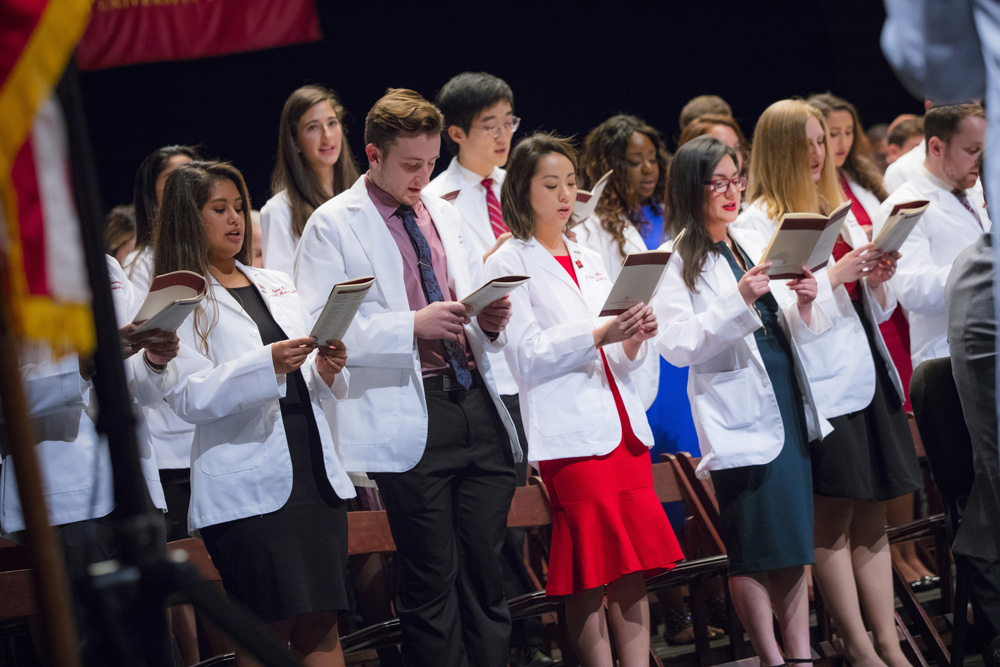
Support. The Office of Student Mental Health and Wellness provides free, confidential counseling, psychiatric evaluation, workshops and support groups. The Office of Student Academic Excellence includes academic support and the Division of Student Accommodations and Accessibility. Annual milestones include the White Coat Ceremony, where first-year students recite an oath they write themselves, and Match Day.
Clinical Rotations and Research Opportunities
Clinical teaching sites
NYMC’s network has “30+ affiliates in seven U.S. states,” from urban medical centers to suburban community hospitals and rural and specialty centers. During Phases Two and Three, students spend most of their time at these sites under clinical faculty supervision. Examples of training include pediatrics at Maria Fareri Children’s Hospital, urban emergency medicine at Metropolitan Hospital in East Harlem, chronic care at Terence Cardinal Cooke Health Care Center, mental health care at the Montrose VA, and hospice and palliative care at Calvary Hospital. The current list from the affiliated clinical sites page is below.
Major clinical affiliated sites
- Westchester Medical Center, member of the Westchester Medical Center Health Network (WMCHealth), Valhalla, N.Y.
- WMCHealth Maria Fareri Children’s Hospital, Valhalla, N.Y.
- NYC Health + Hospitals/Metropolitan, New York, N.Y.
Clinical affiliated sites
- Calvary Hospital, Bronx, N.Y.
- Greenwich Hospital, Greenwich, Conn.
- Hoboken University Medical Center, Hoboken, N.J.
- Hudson Regional Health Bayonne University Hospital, Bayonne, N.J.
- Hudson Regional Health Hoboken University Hospital, Hoboken, N.J.
- Hudson Regional Health Heights University Hospital, Jersey City, N.J.
- Hudson Regional Health Secaucus University Hospital, Secaucus, N.J.
- James J. Peters VA Medical Center, Bronx, N.Y.
- Keller Army Community Hospital, West Point, N.Y.
- Landmark Medical Center, Woonsocket, R.I.
- Lenox Hill Hospital, New York, N.Y.
- Lower Bucks Hospital, Bristol, Pa.
- Mount Sinai Medical Center, Miami Beach, Fla.
- Northern Westchester Hospital, Mount Kisco, N.Y.
- Nuvance Health, Hudson Valley Region, N.Y., and Fairfield and Litchfield Counties, Conn.
- NYC Health + Hospitals/Lincoln, Bronx, N.Y.
- Phelps Hospital Northwell Health, Sleepy Hollow, N.Y.
- Richmond University Medical Center, Staten Island, N.Y.
- Rome Memorial Hospital, Rome, N.Y.
- Roxborough Memorial Hospital, Philadelphia, Pa.
- Saint Clare’s Health, Denville, N.J.
- Saint Joseph’s Medical Center, Yonkers, N.Y.
- Saint Michael’s Medical Center, Newark, N.J.
- St. Mary’s General Hospital, Passaic, N.J.
- Terence Cardinal Cooke Health Care Center, New York, N.Y.
- VA Hudson Valley Health Care System, Montrose, N.Y.
- WMCHealth Good Samaritan Hospital, Suffern, N.Y.
- WMCHealth Health Alliance Hospital, Kingston, N.Y.
- WMCHealth MidHudson Regional Hospital, Poughkeepsie, N.Y.
Ambulatory care programs
- Care for the Homeless, New York, N.Y.
- ODA Primary Health Care Network, Brooklyn, N.Y.
- Open Door Care Network, Hudson Valley Region, N.Y.
- Optum (formerly CareMount Medical), Hudson Valley Region, N.Y.
- Refuah Health Center, Spring Valley, N.Y.
- Summit Health (formerly Westmed Medical Group), Westchester County, N.Y., and Fairfield County, Conn.
- Union Community Health, Bronx, N.Y.
- Westchester Institute for Human Development, Valhalla, N.Y.
What this means day to day. Clerkships take place across the tri-state area and beyond, so expect commuting and some time far from Valhalla. Third-year students work with attending physicians, residents, nurses and allied health professionals, join conferences and teaching rounds, and take on supervised patient care with regular feedback. The goal of the clerkships is to sharpen your skills in assessing and caring for patients, apply what you learned in the first two years, and broaden your understanding of disease through practice.
Research opportunities
Research is not required, but most students do it. NYMC offers three main routes:
- Medical Student Summer Research Fellowship. The Office of Medical Student Affairs funds about 120 first-year students each summer, with a $1,000 stipend for at least four weeks of full-time work with a faculty mentor. Priority goes to NYMC campus and affiliate projects. Shadowing does not count as scholarly work. The 2026 application deadline was May 10, 2026, and fellows present at the Medical Student Research Forum.
- Research electives in third and fourth year, approved by the associate dean for medical student research. Some students continue a summer project for a longitudinal experience.
- Medical Student Research Forum, planned by students, with oral and poster sessions and a keynote. The 30th forum drew more than 200 NYMC students.
Students find mentors through the Research Opportunities catalog and can contact faculty directly. Some receive external grants of $3,500 to $4,500 from the New York Academy of Medicine. NYMC’s research programs include cardiovascular disease, cancer, neuroscience and vaccine development, and the school reported $7,744,131 in direct federal research grants and contracts for fiscal year 2024.
Outcomes
NYMC’s Step 1 pass rate was 98% in 2026, and its Step 2 CK pass rate was 99% in 2025. In 2026, 196 students received PGY-1 and PGY-2 appointments: internal medicine was the largest field (61 students, 31%), followed by general surgery (16), emergency medicine (14), psychiatry (13), anesthesiology (11) and neurology (11). Sixty-one percent stayed in New York, and others matched in 19 other states, Washington, D.C., and Ontario. Programs on the 2026 list include Columbia, Weill Cornell, NYU Grossman, Mount Sinai, Yale-New Haven, Massachusetts General, Stanford and Westchester Medical Center. See the SOM outcomes page for the full list.
Only 4% of 2025 graduating seniors reported a global health experience during medical school, so applicants with international clinical interests should know most global work at NYMC is optional, through the Global and Population Health concentration or student groups such as Global Brigades.
Notable Alumni, Faculty, Leadership and Admissions Staff
The people below hold current roles at the School of Medicine or are graduates the college itself profiles. Titles were checked against the school’s leadership, program and history pages on November 13, 2026. Knowing who leads admissions, curriculum, research and student affairs helps you understand what the school values; it does not mean you should contact them about your application. Questions go to the Office of Admissions at [email protected].
School leadership
Neil W. Schluger, M.D., Dean of the School of Medicine. Dr. Schluger is dean and a professor of medicine. He led the school through its 2024 LCME review, which ended with full reaccreditation for the maximum eight years, and he publishes a regular Dean’s Update for the school community. For applicants, the deanship sets the direction you will train under: the three-phase curriculum, the specialty-track fourth year and the growth of the affiliate network all sit under the dean’s office.
Pamela I. Ludmer, M.D., Dean for Undergraduate Medical Education. Dr. Ludmer leads the office that oversees the MD curriculum and was the faculty accreditation lead for the 2024 LCME self-study. She also co-advises the Health Equity Leadership area of concentration. Her office supports the curriculum committees and the student assessment system, so it shapes how you will be taught and graded.
Jane M. Ponterio, M.D. ’81, Dean of Students. Dr. Ponterio is a graduate of NYMC and an associate professor of obstetrics and gynecology. As dean of students, she oversees student affairs, the office whose approval enrolled students need before applying to the MD-PhD and MD/MPH programs. Her long connection to the school, first as a student and now as a dean, is typical of NYMC, where several leaders are alumni.
Mill Etienne, M.D. ’02, M.P.H., FAAN, FAES, Vice Chancellor for Campus Engagement. Dr. Etienne is a neurologist, a professor of neurology and medicine, and an NYMC graduate. He co-advises the Health Equity Leadership concentration, which trains students to address racism, discrimination and bias in health care, and he is the school’s listed medical school contact in its admissions profile. Applicants interested in neurology or health equity will find his work a useful example of what the concentrations aim to produce.
Admissions staff
Karen M. Murray, M.D. ’99, Dean of Admissions. Dr. Murray graduated from NYMC’s School of Medicine and is an assistant professor of obstetrics and gynecology. She heads MD admissions, the office that runs holistic review, the supplemental application, CASPer and the MMI. Because she trained at the school she now admits students to, the qualities the admissions pages stress (competence, compassion, service and professionalism) are a good guide to what the office looks for.
Faculty and program leaders
Mary M. Petzke, Ph.D., Associate Dean for Medical Student Research. Dr. Petzke is an associate professor of pathology, microbiology and immunology. She approves third- and fourth-year research electives and advises the Biomedical Research area of concentration. If research is part of your plan, her office is where summer fellowships and research electives are coordinated.
Libor Velisek, M.D., Ph.D., MD-PhD Program Director. Dr. Velisek is a professor of cell and molecular physiology, assistant dean for basic medical sciences in the graduate school, and co-director of the Behavioral Phenotyping Core Facility. Enrolled students considering the MD-PhD are told to meet him early in Phase One.
Katharine Yamulla, M.H.E.A., CHSE, Director of the Clinical Skills and Simulation Center. Ms. Yamulla is assistant dean for clinical skills education and assessment and runs the 27,000-square-foot simulation center where students practice history taking, examinations and procedures from the first week of medical school. Standardized patient encounters there are recorded and assessed with checklists, so the center is central to how NYMC teaches and tests clinical skills.
Notable alumni
Jane Cooke Wright, M.D. ’45. Dr. Wright earned her MD with honors from NYMC in 1945 after an accelerated three-year program. She led the Cancer Research Foundation at Harlem Hospital, directed cancer chemotherapy research at NYU, served on President Lyndon B. Johnson’s Commission on Heart Disease, Cancer, and Stroke, and in 1967 became the first African American woman named associate dean of a nationally recognized medical school. She was a founding member of the American Society of Clinical Oncology. She died in 2013.
Myra Adele Logan, M.D. ’33. Dr. Logan was the first recipient of NYMC’s Walter Gray Crump Sr., M.D., Scholarship, created in 1928 to support minority medical students. As a surgeon at Harlem Hospital, she became in 1943 the first woman to perform open heart surgery, and she was one of the first African American women elected a fellow of the American College of Surgeons. She died in 1977.
Susan Smith McKinney Steward, M.D., Class of 1870. Dr. McKinney Steward graduated as valedictorian of the New York Medical College for Women in 1870, the first African American woman to earn a medical degree in New York State. She practiced in Brooklyn and Manhattan and founded The Women’s Hospital and Dispensary in Brooklyn. She died in 1918.
Marcus David Kogel, M.D. ’27. Dr. Kogel trained at Metropolitan Hospital, served as New York City Commissioner of Hospitals from 1949 to 1953, and became the founding dean of Albert Einstein College of Medicine, a post he held from 1955 to 1967. He died in 1989.
These alumni share a thread that runs through NYMC’s history: service to underserved patients in New York and leadership in academic medicine. Applicants do not need a famous story, but this history explains why the school stresses service and inclusion.
Admissions Statistics and Class Profile
Class profile and admissions statistics
| Measure | Value | Cohort | Source |
|---|---|---|---|
| Applications received | 9,599 | Class of 2028 (entered 2024) | NYMC About the SOM |
| Undergraduate institutions represented | 94 | Class of 2028 | NYMC About the SOM |
| Average MCAT | 516 | Class of 2028 | NYMC About the SOM |
| Average undergraduate GPA | 3.77 | Class of 2028 | NYMC About the SOM |
| Median MCAT, accepted applicants | 517 (mean 517.1, SD 3.9) | 2025 entering class | AAMC MSAR |
| Median section scores, accepted applicants | CPBS 129, CARS 128, BBLS 130, PSBB 130 | 2025 entering class | AAMC MSAR |
| Median GPA | 3.89 | 2025 entering class | AAMC MSAR |
| Applicants interviewed | 1,013 (551 in-state, 448 out-of-state, 14 international) | 2025 entering class cycle | AAMC MSAR |
| First-year students | 233 (110 men, 121 women, 1 another gender identity, 1 declined to answer) | 2025 entering class | AAMC MSAR |
| Estimated new entrants | 220 (206 MD, 5 early assurance, 9 other special program) | 2027 entering class | AAMC MSAR |
| Waitlist | About 250 positions; about 50 offers | Typical cycle | AAMC MSAR |
| Total medical students | 908 | Current | NYMC About the SOM |
| First-year gender | 47% male, 53% female | Current | NYMC About the SOM |
| States represented | 33 | Current | NYMC About the SOM |
| Average age | 27 | Current | NYMC About the SOM |
New York Medical College acceptance rate
The school does not publish an acceptance rate, and the offer count needed to compute one correctly is not available, so this guide does not state one. A rate is offers divided by applicants for the same cohort. Dividing the number of enrolled students by applications gives a much lower matriculation ratio, which is a different measure.
What the numbers do show is scale. With about 9,600 applications and roughly 1,000 interviews, about one applicant in ten was interviewed in recent cycles, and a first-year class of about 230 was built from that group. Since every applicant who meets the AMCAS requirements receives the supplemental application, the real screening happens at the interview invitation stage.
How to read these numbers
- Medians and averages are not minimums. NYMC has no GPA or MCAT cutoff. Applicants below the median are admitted every year when the rest of the file is strong.
- Residency mix. In the 2025 cycle, 551 of 1,013 interviewees were New York residents, but there is no in-state preference in tuition or eligibility. Out-of-state applicants should still show a reason to train in the New York region.
- Age and gap years. The average student age is 27, which suggests that many students take time between college and medical school. Gap years with real clinical or research work are common, not a weakness.
- Experience. Among recent matriculants, large majorities reported community service, physician shadowing, clinical volunteering, paid clinical work and research. These are the experiences the committee expects to see.
Tips and Strategies for Admission
1. Treat CASPer as part of the application, not an add-on. NYMC says it weighs personal attributes “in equal measure with academic metrics and foundational experiences,” and it uses CASPer as a pre-screen. Book an early 2026-27 test date, practice with the official sample scenarios, and write answers that consider every person involved before proposing a fair next step.
2. Submit early. Review is rolling and continuous, and the school asks for early completion. Aim to submit AMCAS in June and complete letters, CASPer and the fee within a few weeks of receiving the Gateway email.
3. Build a letter file that matches NYMC’s rules. Many strong applicants lose time because a letter does not count. Check that both science letters come from biology, chemistry, physics or bioengineering faculty who graded you, that one letter comes from your major department, and that graduate students include a graduate letter. Add one optional letter from a clinical supervisor who knows your work well.
4. Go beyond shadowing. NYMC says shadowing is only “a basic introduction to medicine” and wants clinical experience that goes further, at the level of your training, in the U.S. or abroad. Work as a medical assistant, EMT, scribe, patient care technician or hospice volunteer, or take part in supervised pre-med internships where you do real tasks for patients. Describe what you did and what you learned about patients, not just your hours.
5. Show service with responsibility. The curriculum starts with community-based service learning, and students run programs such as HOME, SAAVE and the Center for Human Rights. Long-term service with one community, especially where you took on more responsibility over time, fits the school’s mission better than many short activities.
6. Connect your goals to real NYMC programs. Even though the 2026-27 supplemental application has no essay, your personal statement, activities and MMI answers can show you understand the school. Mention specific features that matter to you: the community preceptorship in first year, the Global and Population Health or Health Equity Leadership concentrations, the fourth-year specialty tracks, or sites such as Metropolitan Hospital and Maria Fareri Children’s Hospital. Only name what genuinely fits your path.
7. Prepare for reflection, not scripts. The MMI stations test interpersonal and intrapersonal competencies such as ethical reasoning, teamwork and empathy. Practice thinking aloud about situations with no single right answer.
8. Plan your gap year with purpose. If you are reapplying, the school names three strengths that help: a better MCAT, a strong medical science master’s (GPA 3.6 or higher), or meaningful clinical or research experience. A gap year that combines paid clinical work with structured internships for pre-med students can add depth, as long as your role and responsibilities are clear.
9. Use the summer before you apply. Summer is the easiest time to add concentrated clinical hours, research or service. Many applicants use pre-med summer internships or summer research programs to fill gaps in their activities before AMCAS opens.
10. Keep your file current. NYMC accepts updates by email and reviews all waitlisted applicants when seats open. Send short, factual updates on new grades, publications or major responsibilities.
Secondary Application Questions, Example Responses and Analysis
New York Medical College secondary application: essay prompts, sample answers, and advice
For the 2026-2027 cycle, NYMC’s supplemental application lists three requirements: letters of evaluation, CASPer and the $135 fee. It lists no essay questions. NYMC calls this its “supplemental application,” and every applicant who submits AMCAS receives it. The 2025-2026 supplemental application also had no essays.
In recent cycles, though, the Gateway included a few short items: a 300-character question about COVID-19 disruptions, a social media question, a family-connection question and an attestation about the technical standards. They may or may not appear in your 2026-27 Gateway. Answer exactly what your Gateway shows. We include those recent questions below as practice, clearly labeled with their cycle, because they are short and easy to get wrong in a rush.
The examples below are each labeled “Illustrative example, not an actual applicant essay.” They show the level of detail and the limits that apply. Do not copy them; your answers must be your own and true.
Requirement 1 (2026-27): letters of evaluation
Wording: “Submit required letters of evaluation and any additional information requested by the NYMC Office of Admissions.”
Limit: No length limit. This is an administrative requirement. Who: All applicants; reapplicants must send new letters.
What it asks: NYMC checks that your required letters arrived through the AMCAS Letter Service and meet its rules (see Letters of Evaluation above). Use a written letter plan.
Illustrative example, not an actual applicant essay
Letter plan for the NYMC supplemental (worked response pattern) 1. Premedical committee letter from my university’s health professions committee (preferred route; signed by a committee member; my AMCAS ID on the letter). 2. If no committee: Letter A, science faculty, Biochemistry (BIOC 3501), graded course. Letter B, science faculty, Physics II with lab. Letter C, my major department (Public Health), academically oriented. 3. Graduate program: one letter from a faculty member in my M.S. department who taught me in a graded graduate course. 4. Optional: ED scribe supervisor (two years, about 900 hours) through the AMCAS Letter Service. Checks: every letter on letterhead and signed; same name as on AMCAS; required letters only through the AMCAS Letter Service; complete before January 31.
Analysis: The plan follows each official rule: committee letter first, otherwise two science faculty from graded courses, a third academic letter, and one letter from the major department, which can overlap with the others. It adds the graduate letter rule and uses an optional clinical letter only as a supplement, since work and volunteer references never replace academic ones. Mistakes to avoid: counting a math or psychology letter as a science letter, mailing a paper letter, a name that does not match AMCAS, or a missing AMCAS ID.
Requirement 2 (2026-27): CASPer
Wording: “Register and complete CASPer™ Assessment Tool. Applicants are required to take the CASPer test each cycle. CASPer tests from previous years are not accepted.”
Limit: Timed online test; no NYMC length limit. Who: All applicants, including reapplicants. Your file can move through review while your score is pending, as long as you have registered.
What is the CASPer exam for medical school?
CASPer (Computer-based Assessment for Sampling Personal Characteristics) is an online situational judgment test. You see a series of everyday scenarios in video or text form and type short responses to questions about each one. NYMC describes it as a way to evaluate “professionalism, ethical grounding, empathy, compassion, and cultural sensitivity,” and it notes that CASPer can help you prepare for the MMI, since both look at similar qualities. No studying is required, but Acuity Insights posts sample questions. The test fee is $85, which includes distribution to nine programs, with $20 for each additional distribution; both are waived for AAMC FAP applicants. When you register, you choose which schools receive your results. For a list of other schools that use it, see our guide to medical schools that require CASPer.
2026-27 test dates run from March 19, 2026, to January 5, 2027, with sessions at 1, 4, 6 or 8 p.m. Eastern depending on the date. The last fall dates are October 20, October 28, November 12 and December 3, 2026.
Illustrative example, not an actual applicant essay
CASPer plan for 2026-27 (worked response pattern) – Register on the Acuity Insights site for Altus Suite for Medicine (UME), CSP-10111 U.S. Medicine, and add NYMC as a distribution. – Book the first test date after AMCAS submission that leaves two weeks of practice (for example, a July or August 2026 date). – Practice with Acuity’s official sample scenarios: type for five minutes per scenario, then reread for whether each answer named the people involved, the facts still missing, and a fair next step. – Confirm FAP status at registration if approved, so the test fee is waived. – Record the confirmation, then finish letters and the $135 fee so the file is complete well before January 31, 2027.
Analysis: The plan uses the exact test NYMC names, books a 2026-27 date because older results are refused, and ties the test date to the January 31 completion rule. Mistakes to avoid: reusing a 2025-26 CASPer, taking parts of the Altus Suite NYMC does not need, or waiting for the January 5, 2027, date.
Practice item (2024-2025 cycle): COVID-19 disruptions
This question appeared in NYMC’s supplemental application from 2021-22 through 2024-25. It was not part of the 2025-26 application and is not on the 2026-27 list. Use it only as practice unless your Gateway shows it.
Wording (2024-2025): “Please share any disruptions in your academic, volunteer, work, and/or personal life related to COVID-19 that you would like the Admissions Committee to consider.”
Limit: 300 characters, including spaces, which is about the size of a short paragraph. Who: Optional in practice; answer only if a disruption needs explaining.
Here are some tips for approaching this kind of short-answer prompt:
- Prioritize what admissions needs to know. The limit means you cannot cover everything. Focus on what is not already explained in your AMCAS application, such as a major disruption to your studies or a health condition that flared during the pandemic.
- Keep it short. Get to the point fast. Pick the one or two effects most relevant to your application and your growth as a future physician. You might explain that clinical plans were postponed and completed later, that restrictions on in-person volunteering changed how you served, or that a forced move to remote coursework showed you how much you value learning communities.
- Use concrete details. Dates, hours and specific roles help a reader picture what happened and how you responded.
- Edit carefully. Every character counts, and a typo stands out in a short answer.
Illustrative example, not an actual applicant essay (267 characters)
In spring 2021 my hospital volunteer shifts stopped and my organic chemistry lab moved online. I took a contact tracing job with my county health department, 12 hours a week, and returned to ED volunteering in 2022. My upper-level science grades rose after that year.
A second illustrative example, not an actual applicant essay (242 characters)
Some of my grades suffered during the peak of the pandemic. I am a conversational learner, and in 2020-2021 most of my classes were online. I found new ways to engage, and my performance improved with time, as the rest of my transcript shows.
Analysis: The first example names the disruption (paused volunteering, an online lab), shows a concrete response (contact tracing, 12 hours a week) and points to evidence in the transcript. The second is a simpler academic explanation that ends by directing the reader to the trend in the grades. Both avoid complaint and stay well under 300 characters. Mistakes to avoid: listing every inconvenience, vague phrases like “challenging times,” and going over the limit once spaces are counted.
Practice item (2023-2024 cycle): social media
Wording (2023-2024): “Is there anything in your social media presence (past, or present) that would bring discredit or dishonor on you, the institution, the program or profession (if applicable) or that could be considered derogatory, hateful, or threatening? (Yes/ No) Please review the NYMC Social Media Policy. If you select YES, we ask that you please briefly explain what has been posted.”
Limit: Yes or no, with a brief explanation only if yes. Who: All applicants in 2022-23 and 2023-24.
Illustrative example, not an actual applicant essay
Answer pattern (worked response pattern) If nothing applies: select “No.” Do not add commentary. If something applies: select “Yes” and explain in two or three factual sentences, for example: “In 2019, at age 17, I posted a joke on a public account that mocked a classmate’s accent. I deleted it within a day, apologized to her directly, and have since completed my university’s bias training. I understand why it was hurtful and would not post anything like it today.”
Analysis: The pattern answers the yes or no question exactly as asked. Where an explanation is needed, it states what was posted, when, what the applicant did about it and what changed. Mistakes to avoid: answering no when a public post would be found, writing a long defense, or blaming others.
Practice item (2023-2024 cycle): family connection
Wording (2023-2024): “In this activity please indicate if you have/had a family member (Grandparent, Parent or Sibling) that attended the NYMC School of Medicine. Applicable to alumni from School of Medicine only.” Parallel items asked about family members who are full-time School of Medicine faculty or employees.
Limit: Factual entry. Who: Only applicants with a qualifying grandparent, parent or sibling; others skip it.
Illustrative example, not an actual applicant essay
Answer pattern (worked response pattern) If none apply: skip the section, as the instructions allow. If one applies, record only the facts requested, for example: “Parent: Maria Lopez, M.D., NYMC School of Medicine Class of 1996.” Do not list relatives who attended NYMC graduate or health sciences programs or an NYMC-sponsored residency, because those are excluded.
Analysis: The pattern gives only the relationship, name and class year and respects the item’s exclusions. Mistakes to avoid: listing cousins or family friends, or adding a paragraph about legacy.
Practice item (2023-24 and 2024-25 cycles): technical standards
Wording: “Please review the NYMC Technical Standards”
Limit: Attestation checkbox. Who: All applicants in 2023-24 and 2024-25.
Illustrative example, not an actual applicant essay
Answer pattern (worked response pattern) Read the NYMC School of Medicine Technical Standards in full before you attest. Then check the attestation box. If you would need an accommodation to meet any standard, attest truthfully and contact the Division of Student Accommodations and Accessibility after acceptance; the standards apply with or without reasonable accommodations.
Analysis: The pattern treats the attestation as a reading task, matching the school’s advice that applicants review the standards and assess their ability to meet them with or without accommodations. Mistakes to avoid: checking the box without reading, or treating a disability as something to hide.
MD-PhD and other tracks
There are no MD-PhD questions at the AMCAS stage, because NYMC’s MD-PhD is open only to enrolled students. They apply in the fall of second year with two personal statements: one on their relationship to biomedical research and one outlining proposed research. Early Decision applicants complete the same supplemental requirements by August 31, 2026.
Interview Format and Preparation
Format: NYMC uses the multiple mini-interview (MMI), and all interviews are virtual. You move through a circuit of short, timed, scenario-based stations. The school says the scenarios “are neither knowledge-based nor necessarily clinically-oriented.” They are designed to assess personal attributes based on the AAMC’s interpersonal and intrapersonal core competencies.
Timing: Interviews generally run from September through March, and invitations can arrive at any point because applications are reviewed throughout the cycle. Invitations come by email with alternate dates. Early Decision interviews take place in September. After the interview round, expect to hear back within four to six weeks.
The day: The program runs from 10:50 a.m. to about 4:00 p.m. Eastern. It starts with a group orientation with presentations from school leadership, student financial planning, admissions and current students, then moves to the MMI. The day has two goals: to give you first-hand information about NYMC and to let the admissions committee get to know you through the MMI.
How to prepare
What is confirmed: the format (virtual MMI), the competencies it targets and the schedule above. What follows is general preparation advice, not information about NYMC’s scoring.
- Practice the structure. Use a timer. Spend a short time reading the prompt, then speak for the full time. Practice with partners who can ask follow-up questions.
- Use a simple approach to ethical scenarios. Name the people affected, the facts you would want to know, the options, and a fair action, then explain why. Show respect for every person in the scenario.
- Prepare for teamwork and communication stations. Some MMI stations ask you to explain, persuade or work with someone else. Listen, check understanding and stay calm.
- Connect to your experiences when asked. Personal stations may ask about a challenge, a mistake or a time you worked with someone different from you. Choose clinical, service and work stories with real responsibility.
- Set up your space. A quiet room, a stable connection, a plain background and good lighting help you focus.
- Know why NYMC. Even in an MMI, you may be asked why you want to train there. Mention the early preceptorship, the range of clinical sites, a concentration you would pursue, or the service programs.
For practice MMI sessions with feedback, IMA’s medical school admissions consulting includes mock interviews.
Medical school admissions consulting
If you are feeling overwhelmed by the process, or just want to make sure each application is as strong as it can be, consider working with a medical school admissions consultant. Consultants give personal advice and guidance at every step, from choosing which schools to apply to through writing essays and preparing for interviews. Whether you have a lot of questions or only a few, we want to help.
Frequently Asked Questions
Does New York Medical College have secondary essays for 2026-27?
No essay questions are listed for the 2026-27 cycle. NYMC’s supplemental application asks for letters of evaluation, a 2026-27 CASPer and a $135 fee (waived with AAMC Fee Assistance), all due by midnight Eastern on January 31, 2027. Recent cycles included a 300-character COVID-19 question and short items on social media, family connections and the technical standards. Answer exactly what your Gateway shows, and finish all three required parts early because review is rolling.
What MCAT and GPA do I need for NYMC?
There is no minimum. The 2025 entering class had a median MCAT of 517 among accepted applicants and a median GPA of 3.89, and the Class of 2028 averaged a 516 MCAT and a 3.77 GPA. These describe admitted students, not cutoffs. If your numbers are lower, strong clinical experience, a good CASPer and an upward grade trend help. NYMC also considers postbaccalaureate or graduate work for applicants with an undergraduate GPA of at least 3.0 and at least 20 credits of that coursework.
How old can my MCAT score be?
For the class entering in 2027, NYMC accepts only scores from January 2024 through September 2026, with no exceptions. The admissions committee reviews your most recent score, and taking the test more than once is not held against you. If your score will come after you submit AMCAS, submit anyway once the rest of your application is ready; you will get a full review when the score arrives, but it must be in before January 31.
Can out-of-state and international applicants apply to NYMC?
Out-of-state applicants are welcome: NYMC is a national school with the same tuition for all students, and no tie to New York is required. U.S. permanent residents, DACA recipients and Canadian citizens can also apply. Other international applicants are not eligible. All bachelor’s coursework must be completed at an accredited U.S. or Canadian institution. DACA students are not eligible for school scholarships or government loans, and applicants who are not citizens or permanent residents must place tuition in escrow before enrolling.
Is CASPer required at NYMC?
Yes. Every applicant, including reapplicants, must take a 2026-27 CASPer from the Altus Suite (Altus Suite for Medicine, CSP-10111 U.S. Medicine). Tests from earlier cycles are not accepted. Only the CASPer test is required, not the other Altus parts. Your file can move forward while your score is pending as long as you have registered. Book an early test date and practice with the official sample scenarios.
What is the NYMC interview like?
NYMC uses a virtual multiple mini-interview. You rotate through short, timed scenario stations that test personal qualities such as ethics, empathy and communication rather than medical knowledge. The day runs from about 10:50 a.m. to 4:00 p.m. Eastern and starts with presentations from leadership, financial planning, admissions and students. Interviews run from about September through March, and most applicants hear back within four to six weeks.
How much does New York Medical College cost?
Tuition for 2026-27 is $67,710, the same for every student. A first-year student’s total cost of attendance is $98,560 on campus, $106,130 off campus or $87,630 living with a parent. Health insurance, about $8,249 in 2025-26, is extra unless you have comparable coverage. Scholarships and need-based grants are limited and capped at $30,000 a year combined, so most students borrow; the average debt of graduates who borrowed was $279,440 for 2024-25.
Does NYMC have Early Decision?
Yes. Submit AMCAS by August 1, 2026, and the supplemental application by August 31, 2026. Early Decision interviews are in September, and decisions come by October 1. You may apply to only NYMC while your Early Decision application is pending. It suits applicants for whom NYMC is a clear first choice and whose files are complete and competitive by summer.
Can I apply to the MD-PhD or MD/MPH program when I apply to NYMC?
No. Both are open only to students already enrolled in NYMC’s MD program. MD-PhD candidates apply in the fall of second year after discussing it with the dean for student affairs and the program director; they receive a full tuition scholarship for graduate study and a stipend. MD/MPH students apply to the School of Health Sciences and Practice, take online courses and can finish both degrees in four years with MPH tuition discounted 50%.
Does NYMC require shadowing or clinical experience?
Shadowing is recommended, not required, and the school calls it only a basic introduction to medicine. NYMC strongly encourages clinical experience beyond shadowing, appropriate to your training, in the United States or abroad. Most recent matriculants reported clinical volunteering, paid clinical work, shadowing and community service. Roles where you help patients directly under supervision, such as a medical assistant, EMT, scribe or pre-health internships with defined duties, show what NYMC is looking for.
Where will I do my clinical rotations?
Core clerkships take place at NYMC’s affiliated hospitals and ambulatory sites, mainly Westchester Medical Center and Maria Fareri Children’s Hospital in Valhalla and NYC Health + Hospitals/Metropolitan in Manhattan, plus more than 30 other affiliates in New York, New Jersey, Connecticut and beyond. Expect to commute, and plan on a car if you can. Fourth-year students choose a specialty track with a sub-internship, a selective and seven electives.
What are NYMC’s USMLE and match results?
NYMC reports a 98% Step 1 pass rate for 2026 and a 99% Step 2 CK pass rate for 2025. In 2026, 196 graduates received residency appointments; internal medicine was the largest specialty (31%), followed by general surgery, emergency medicine, psychiatry, anesthesiology and neurology. About 61% matched in New York. Outcomes depend on individual students, so use these numbers to judge the program, not to predict your own result.
Can I defer my acceptance to NYMC?
Possibly. Accepted applicants may request a one-year deferral in writing before June 1 of the entry year with a detailed plan for the year. Requests are decided case by case, deferred students cannot apply to other medical schools, and applicants accepted from the waitlist are not eligible to defer.
Does NYMC have a ranked waitlist?
No. NYMC does not rank its waitlist, and all waitlisted applicants are considered when a seat opens, usually from mid-April to mid-July. A typical cycle has about 250 waitlist positions and about 50 offers from the waitlist. Send brief, substantive updates and letters of continued interest to [email protected].
Related Medical School Guides
If NYMC is on your list, these New York schools are worth comparing. They differ in size, cost, location and curriculum, so read each one for fit rather than treating them as interchangeable.
- Weill Cornell Medicine: a Manhattan research school with a very different cost and aid model; compare if you want an urban academic medical center.
- Albert Einstein College of Medicine: a Bronx school whose founding dean was NYMC alumnus Marcus Kogel; strong for applicants focused on community-based urban care.
- Hofstra Zucker School of Medicine: a Long Island school whose Northwell hospitals also host many NYMC graduates in residency.
- SUNY Downstate Medical Center School of Medicine: a public option in Brooklyn with in-state tuition for New York residents, useful for cost comparison.
- Columbia Vagelos College of Physicians and Surgeons: a highly selective Manhattan school for applicants with top statistics and strong research.
- NYU Grossman School of Medicine and NYU Langone Health: covers NYU’s Manhattan and Long Island programs, including their tuition models.
- NYU Medical School: our separate guide focused on NYU Grossman admissions in Manhattan.
For every MD and DO program in the state, see our guide to medical schools in New York.
More medical school guides
- University of Pittsburgh School of Medicine
- University of Wisconsin Medical School
- VCU School of Medicine
- University of Maryland School of Medicine
- Case Western Medical School
- University of North Carolina Medical School
- University of Florida Medical School
- Emory University School of Medicine
- Boston University College of Medicine
- California University of Science and Medicine
- UC San Diego Medical School
- California Northstate University College of Medicine
- Touro University of California
- CHSU College of Osteopathic Medicine
- UC Davis School of Medicine
- Harvard Medical School
- UC Riverside School of Medicine
- USC Keck School of Medicine
- UT Southwestern Medical School
- Long School of Medicine at UT Health San Antonio
- University of the Incarnate Word School of Osteopathic Medicine
- UT Austin’s Dell Medical School
- UTMB School of Medicine
- McGovern Medical School at UT Health
- Johns Hopkins School of Medicine
- The University of Texas Rio Grande Valley School of Medicine
- UNT Texas College of Osteopathic Medicine
- University of Houston College of Medicine
- Texas A&M College of Medicine
- Baylor College of Medicine
- George Washington University School of Medicine
- Vanderbilt University School of Medicine
- St. George’s University School of Medicine
- Lake Erie College of Osteopathic Medicine (in Pennsylvania)
- Sidney Kimmel Medical College at Thomas Jefferson University
- Wake Forest University School of Medicine
- Western University of Health Sciences (in California)
- Drexel University College of Medicine
- Stritch School of Medicine at Loyola University Chicago
- Georgetown University School of Medicine
- Yale School of Medicine
- Perelman School of Medicine
- UCLA Medical School
- Washington University School of Medicine
- Brown Medical School
How International Medical Aid Can Help
Voluntary healthcare internships abroad
Hands-on clinical experience is one of the best ways to strengthen a medical school application, and NYMC says plainly that it wants clinical work beyond shadowing, in the United States or abroad. International Medical Aid (IMA) runs medical internships abroad for pre-health students in Kenya and other international sites. Interns work in clinics and hospitals under the supervision of local clinicians: they take vitals, do patient intake and triage, and help with direct care. Programs also include teaching sessions and responsible cultural excursions led by local guides and staff.
Our pre-med internships abroad are built for students who want supervised, patient-facing experience and a global view of health care in communities with limited resources. They are also open as medical internships for undergraduates during summer or winter breaks and for graduates in a gap year. When you return, you will have specific patient stories and reflections to bring to your activities section, CASPer and MMI. IMA is independent of New York Medical College, and an internship does not affect admission decisions; what matters is what you did and what you learned.
Explore all of our healthcare internships abroad, and if you want help with your school list, letters plan or MMI practice, our admissions consultants can work with you one on one.
Final Thoughts and Sources
Good luck to you!
New York Medical College offers early patient contact, a wide affiliate network around New York City and a flexible final year organized by specialty. It is also expensive and competitive. If it fits your goals, register for CASPer early, line up letters that meet its rules, submit AMCAS early and prepare for a virtual MMI. We hope this guide gives you the information and confidence you need to apply. If you have any questions, don’t hesitate to contact us.
Wishing you the best of luck in your journey to becoming a health care professional!
Sources and notes
Facts were checked on November 13, 2026.
- New York Medical College School of Medicine: Admissions and Aid; Supplemental Application (2026-27 letters, fee and CASPer requirements); M.D. Program curriculum; Clinical Years; Areas of Concentration; Affiliated Clinical Sites; M.D.-Ph.D.; M.D./M.P.H.; Clinical Skills and Simulation Center; Tuition and Fees 2026-2027; Budgets and Cost of Attendance 2026-2027; Scholarships and Need-Based Grants 2026-2027; Leadership; Accreditation; Outcomes (2026); About the School of Medicine (mission, vision and Class of 2028 statistics); Student Life; Student Research; Community Involvement.
- New York Medical College: About; Mission, Vision, and Values; Academics; Notable Historical Figures.
- AAMC Medical School Admission Requirements (MSAR), New York Medical College profile, 2026 edition (2025 entering class data; Tuition and Student Fees survey 2025-2026; LCME Part I-B 2024-2025), accessed November 13, 2026: median MCAT and GPA, MCAT section medians, interviews, first-year class, estimated new entrants, waitlist, deposit, health insurance, debt and aid.
- Prior-cycle supplemental questions (2021-22 through 2024-25) were checked against public applicant compilations; the 2026-27 requirements come from NYMC’s supplemental application page.
- College Gazette, Best Medical Schools in New York (last modified 2022).
- No acceptance rate is given because no verified offer count was available.
See more of our guides in your Google results: add International Medical Aid as a preferred source on Google.