
The Anne Burnett Marion School of Medicine at Texas Christian University (TCU), usually called the Burnett School of Medicine at TCU, is a private MD program in Fort Worth, Texas. It enrolled its first class in July 2019, earned full accreditation in 2023 and now trains about 240 medical students in Arnold Hall, a four-story medical education building in Fort Worth’s Medical Innovation District. Its mission is short and specific: to transform health care by inspiring Empathetic Scholars®, physicians who pair strong science with compassion, communication and lifelong learning.
This guide covers the 2026-2027 application cycle for students who plan to start medical school in summer 2027 as part of the Class of 2031. Burnett is a private Texas school, so you apply through AMCAS, not TMDSAS. The AMCAS deadline is November 15, 2026, and the secondary application, Casper scores and at least one letter are due December 15, 2026. All facts in this guide were checked on October 21, 2026.
Getting into the Burnett School of Medicine is competitive. The school received nearly 6,000 applications for the 61 seats in the class that entered in July 2026. That class averaged a 513 MCAT and a 3.81 overall GPA. In this guide we cover everything you need to know: the class profile, the 90-credit-hour and 150-hour experience requirements, prerequisites, the Empathetic Scholar® curriculum and its Longitudinal Integrated Clerkship, the MD/MPH and MD/PhD options, 2026-27 costs, both current secondary essays (plus the two MD/PhD essays) with full examples, and the virtual multiple mini-interview.
Like every medical school, Burnett has its own priorities, and the better you understand them, the better you can show the admissions committee who you are. Bookmark this page as you work through the cycle. If you have questions about the medical school application process, reach out to us. International Medical Aid has helped thousands of students prepare for medical school through our admissions consulting and healthcare internship programs.
Key Takeaways
- Apply through AMCAS, not TMDSAS. Burnett is a private medical school in Texas and does not take part in the TMDSAS system. AMCAS opened May 5, 2026, and closes November 15, 2026, at 11:59 p.m. CST. Files are reviewed on a rolling basis, so earlier is better.
- You do not need a bachelor’s degree. You need at least 90 semester hours at an accredited U.S. or Canadian college by the time you start, plus the school’s topic-based prerequisites with grades of B- or higher.
- Experience minimums are real. Burnett requires at least 150 hours in each of four categories: Service, Leadership, Physician/Patient Interaction and Personal Excellence. Successful applicants usually have well beyond that.
- Academic context. The class that entered in 2026 averaged a 513 MCAT and a 3.81 overall GPA. For the 2025 entering class, accepted applicants had a median 513 MCAT and a median 3.88 GPA. These are averages and medians, not cutoffs. Your MCAT must be from 2024, 2025 or 2026, and applicants with more than four MCAT attempts do not receive a secondary.
- Casper is required. Take Casper (code CSP-10111, U.S. Medicine) by December 3, 2026. Scores, the $100 secondary fee (waived for AAMC Fee Assistance recipients) and at least one letter are due December 15, 2026.
- Costs. For 2026-27, tuition and fees are $75,700 a year, with no difference for Texas residents. The first-year cost of attendance is $114,492 for a student living off campus.
- Distinctive training. Patient care starts in the first weeks with a primary care preceptor and a small panel of patients. The second year is a Longitudinal Integrated Clerkship across eight disciplines, and every student completes a four-year Scholarly Pursuit and Thesis.
- Next step. If you are in the 2026-2027 cycle, finish the two 250-to-300-word essays, schedule Casper and prepare for a three-day virtual visit with MMI stations. If you are planning for 2027-2028, build sustained hours in all four experience categories now.
Key Statistics About the Anne Burnett Marion School of Medicine at TCU
The snapshot and table below gather Burnett’s key numbers. Each figure carries its cohort or academic year, because the class profile, the cost of attendance and the residency match each describe a different group of students. The newest class profile is for the class that entered in July 2026 (the Class of 2030). Median scores and interview counts are for the 2025 entering class, the newest year with those figures. Costs are for the 2026-27 academic year.

| Measure | Value | Cohort, population and source |
|---|---|---|
| School and degree | Anne Burnett Marion School of Medicine at Texas Christian University (Burnett School of Medicine at TCU); Doctor of Medicine (MD) | Burnett School of Medicine at TCU |
| Location | Arnold Hall, corner of South Henderson and West Rosedale streets, Medical Innovation District, Fort Worth, Texas | Burnett SOM, Our Campus |
| School type | Private (part of Texas Christian University) | Burnett SOM, Admissions FAQ |
| First class enrolled | July 2019 | Burnett SOM, Our Story timeline |
| Accreditation | Full LCME accreditation, June 2023, for the full five years possible | Burnett SOM, Accreditation |
| Application service | AMCAS only (not TMDSAS) | 2026-2027 cycle, Burnett SOM Admissions FAQ |
| Entering class size | 61 | Class that entered July 2026 (White Coat Celebration, July 11, 2026) |
| Applications | Nearly 6,000 | Class that entered July 2026 (White Coat Celebration news release) |
| Applicants interviewed | 309 (73 Texas residents, 228 out-of-state, 8 international) | 2025 entering class (AAMC MSAR, 2026 edition) |
| Acceptance offers | Not published | Burnett SOM admissions pages; AAMC MSAR, 2026 edition |
| Acceptance rate | Not published (the number of offers is not reported) | Burnett SOM admissions pages; AAMC MSAR, 2026 edition |
| Average MCAT | 513 | Class that entered 2026 (Class of 2030), class average (2026 Class Profile) |
| Average overall GPA | 3.81 | Class that entered 2026 (Class of 2030), class average (2026 Class Profile) |
| Median MCAT | 513 (mean 513.5); section medians 129 Chem/Phys, 127 CARS, 129 Bio/Biochem, 129 Psych/Soc | Accepted applicants, 2025 entering class (AAMC MSAR, 2026 edition) |
| Median GPA | 3.88 | Accepted applicants, 2025 entering class (AAMC MSAR, 2026 edition) |
| Class mix | 18 states; 16 Texans; 23 California residents; nine TCU alumni; 61% women, 39% men; average age 23 | Class that entered 2026 (2026 Class Profile and White Coat news release) |
| Planned class size | 60 per class; 240 total enrollment | Burnett SOM, About Us FAQs |
| Tuition and fees | $75,700 per year, same for Texas residents and non-residents | 2026-27, MS1 through MS4 (Burnett SOM Cost of Attendance) |
| First-year cost of attendance | $114,492 | 2026-27, MS1 (Class of 2030), off-campus budget (Burnett SOM Cost of Attendance) |
| Students receiving financial aid | 100% | All enrolled and graduated students, 2024-25 (AAMC MSAR, LCME Part I-B) |
| Average graduate debt | $245,606 | Indebted graduates, 2024-25 (AAMC MSAR, LCME Part I-B) |
| Secondary fee | $100; waived for verified AAMC Fee Assistance Program recipients | 2026-2027 cycle (Burnett SOM How to Apply) |
| Key deadlines | AMCAS November 15, 2026; secondary, Casper scores and letters December 15, 2026 | 2026-2027 cycle (Burnett SOM How to Apply) |
| Early Decision Program | Not offered | 2026-2027 cycle (Burnett SOM How to Apply; AAMC MSAR, 2026 edition) |
| Applicants considered | U.S. applicants from any state, with no required tie to Texas; international, Canadian and DACA applicants not accepted | 2026-2027 cycle (AAMC MSAR, 2026 edition) |
| Acceptance notices | October 15, 2026 through July 5, 2027; no deposit required; deferral requests reviewed case by case; about 180 waitlist positions in a typical cycle | 2026-2027 cycle (AAMC MSAR, 2026 edition) |
| Combined degrees | MD/MPH with the University of Mary Hardin-Baylor; M.D., Ph.D. in Biomedical Engineering with UT Arlington | Burnett SOM, Graduate Programs |
| Residency match | 100% of the class of 2026 matched, the fourth straight year at 100% | Match Day 2026 (Burnett SOM news, March 2026) |
A few notes on reading these numbers. The 513 MCAT and 3.81 GPA are class averages for students who enrolled in 2026, not minimums, so many students were above and below them. Accepted applicants in the 2025 entering class had a median 513 MCAT and a median 3.88 GPA, and 309 applicants were interviewed for that class. The number of acceptance offers is not published, so there is no true acceptance rate to report. Dividing the class size by the number of applications gives a matriculation ratio, which is not the same thing, because some admitted applicants choose other schools. Tuition is the same for every student, which matters if you are comparing Burnett with Texas public schools that charge residents much less.
What Are Anne Burnett Marion School of Medicine at TCU’s Average MCAT and GPA?
Students who entered the Burnett School of Medicine at TCU in July 2026 averaged a 513 MCAT and a 3.81 overall GPA (Burnett School of Medicine at TCU, 2026 Class Profile). The class that entered in 2025 averaged a 512 MCAT and a 3.81 GPA. Accepted applicants for that 2025 class had a median 513 MCAT and a median 3.88 GPA, with section medians of 129 in Chemical and Physical Foundations, 127 in CARS, 129 in Biological and Biochemical Foundations and 129 in Psychological, Social and Biological Foundations. These are averages and medians, not cutoffs, and the school lists no minimum score.
To compare these numbers with other programs, see our list of the average GPA and MCAT score for every medical school in the US.
Mission and Educational Priorities
Burnett’s mission statement is one sentence:
“Our Mission is to transform health care by inspiring Empathetic Scholars®.”
The school defines an Empathetic Scholar® as a physician who is compassionate, empathetic and ready to discover new medical knowledge, with the tools to ask and answer the medical questions of the future. Its graduates are meant to be outstanding communicators and active listeners, lifelong learners, and physicians valued as colleagues, leaders and citizens in their communities. The mission shapes almost every part of the program, from the secondary essays to the curriculum and the interview day.
Vision, motto, values and pillars
The school’s vision is to be a leader in medical education, delivery of care and scholarship. It pursues that vision through what it calls a “constellation” of seven themes:
- Character: integrity, empathy, humanism and professionalism
- Content: medical knowledge, technology, innovation and integration
- Context: patient-centered models, cultural sensitivity, health care systems, finance, ambulatory settings, patient safety, and chronic disease prevention and management
- Creativity: innovation and inquisitive scholars
- Collaboration: team-based care, patient and family partnerships and shared decision-making
- Community: servant leadership, public education, partnership and leadership
- Communication: exceptional communicators and active listeners
The motto is “Learn, Apply, Serve.” The core values are integrity, empathy, collaboration, servant leadership, innovation and continuous improvement. The four pillars are education, patient and family-centered care, research and community.
What the mission means for your application
The mission is not decoration. It shows up in concrete admissions requirements and in the curriculum:
- Empathy is assessed directly. The first secondary essay asks you to choose among the eight traits the school uses to define empathic scholars (compassion, teachability, altruism, insight, humility, collaboration, integrity and respect), name the one you embody most and name the one you need to improve. The committee wants evidence and self-awareness, not adjectives.
- Communication is a curriculum, not a soft skill. Burnett runs a four-year physician communication program built with the Academy of Communication in Healthcare, plus medical Spanish and other language programs. Applicants who can show how they listen, explain and adapt to a patient or client stand out.
- Scholarship is required. Every student completes a four-year Scholarly Pursuit and Thesis. You do not need publications to apply, but you should show curiosity and an understanding of how questions become projects.
- Service and leadership are measured. The 150-hour minimums in Service and Leadership turn the mission’s servant leadership value into a requirement.
- Fort Worth is the classroom. Students go where the patients are, with a distributed model of clinical sites and a focus on ambulatory care. Experience with underserved or community-based care in your own city translates well.
Founding Dean Stuart D. Flynn, M.D., summarized the goal this way on the school’s home page: “As Fort Worth’s new M.D. school, we will train the next generation of physicians as Empathetic Scholars™ who are compassionate, excel in communication and inspired by life-long learning, with the patient at the center of our mission.” Ethical practice, empathy and patient-centered care guide every part of the education, and the school expects graduates to lead with compassion and integrity.
Accreditation and Institutional Identity
The Burnett School of Medicine is accredited by the Liaison Committee on Medical Education (LCME), the recognized accrediting body for programs leading to the MD degree in the United States and Canada. The school earned each stage in order:
- Preliminary accreditation: October 2018, which allowed the school to recruit its inaugural class
- Provisional accreditation: June 2021, after a virtual survey visit in February 2021
- Full accreditation: June 2023, granted for the full five years possible
LCME accreditation means graduates can take the USMLE and enter ACGME-accredited residency programs. It does not, on its own, say anything about fit, so read it as a baseline, not a ranking. TCU itself is accredited by the Southern Association of Colleges and Schools Commission on Colleges (SACSCOC), which approved the medical program as a substantive change in November 2018.
Names and history
The school’s name has changed as it has grown, which explains why you will see several versions online:
- 2015: Texas Christian University and the University of North Texas Health Science Center announced plans for a new MD school in Fort Worth.
- 2016: Stuart D. Flynn, M.D., was selected as founding dean.
- 2019: The first class, the Dorman Scholars, arrived in July. A gift from H. Paul Dorman covered their first-year tuition.
- 2022: Governance moved solely to TCU, and in July the school was named the Anne Burnett Marion School of Medicine in honor of the late Anne Burnett Marion. The school also reached a full enrollment of 240 students for the first time.
- 2023: The inaugural class graduated in May, and the LCME granted full accreditation in June.
- 2024: The school moved into Arnold Hall, its new building in the Medical Innovation District, with a dedication in September.
Today the official name is the Anne Burnett Marion School of Medicine at Texas Christian University, and the school uses “Burnett School of Medicine at TCU” in everyday materials. It is Fort Worth’s only allopathic (MD) medical school. Applicants sometimes confuse it with the Texas College of Osteopathic Medicine at UNT Health Science Center, which is a separate DO school in the same city.
Medical Programs and Affiliations
Burnett offers one entry-level medical degree, the MD, plus two combined-degree options and a graduate certificate.
MD program
The core program is the four-year Doctor of Medicine. It integrates medical science with early and continuous clinical experience, and it is organized into three phases: a 15-month Phase 1 of integrated basic and clinical sciences, a 13-month Phase 2 Longitudinal Integrated Clerkship, and an 18-month Phase 3 of residency preparation, electives and continued patient care. The curriculum emphasizes strong clinical skills, ethical decision-making and compassionate care. Each class has 60 students as planned (61 enrolled in 2026).
MD/MPH program
In partnership with the University of Mary Hardin-Baylor (UMHB) Public Health Program, Burnett offers an integrated path to the Master of Public Health without extending the time to the MD. The details on the program flier:
- The MPH has a Health Promotion concentration and requires 33 graduate credit hours in addition to the TCU MD curriculum.
- Students transfer 9 credit hours from Burnett School of Medicine courses toward the 42-credit-hour MPH.
- With the recommended course plan, students receive the MD and the MPH at the same time, in May of Year 4.
- UMHB’s public health courses align with Council on Education for Public Health (CEPH) criteria and the Certified Health Education Specialist (CHES®) areas of responsibility.
This dual degree suits students who want careers that bridge clinical practice and public health. Public health training covers epidemiology, biostatistics, health policy and community health, which prepares graduates to address public health problems locally and globally. Questions go to UMHB at [email protected] or to Jennifer Allie, Ph.D., M.P.A., Burnett’s Vice Dean for Faculty and Graduate Programs.
M.D., Ph.D. in Biomedical Engineering
The newest option pairs the Burnett MD with a Ph.D. in bioengineering at the University of Texas at Arlington (UTA). It is built to produce clinician-scientists who bridge medical practice and biomedical research. How it works:
- Years 1 and 2: Phase 1 of the MD (Mechanisms of Health and Disease, Clinical Skills, Preparation for Practice and FAB), an introductory bioengineering special studies course, mentor meet-ups at UTA and USMLE Step 1.
- Years 3 to 5: Full-time Ph.D. coursework and research at UTA, plus a one-credit Burnett clinical experiences course in an affiliated outpatient clinic so clinical skills stay sharp. The dissertation is defended before returning to the MD.
- Years 6 and 7: Phases 2 and 3 of the MD.
Applicants must meet the admission requirements of both Burnett and UTA’s bioengineering doctoral program. Calculus 1-2 (1-3 preferred) and differential equations are typically required, and at least one letter should speak to your ability to complete a Ph.D., ideally from a research mentor. Apply through AMCAS, preferably by August 30, 2026, and finish the MD/PhD secondary, which has two additional essays, before September 15, 2026. Review continues on a rolling basis after those dates. Most MD/PhD applicants hear by mid-November whether they are being considered, and then apply formally to UTA and interview virtually with its graduate admissions committee. Students who match with a funded UTA faculty mentor are typically employed as graduate research assistants, which covers in-state graduate tuition and pays a monthly stipend that depends on the mentor’s funding.
Health Professions Education Graduate Certificate
Burnett also lists a Health Professions Education Graduate Certificate, offered through TCU’s College of Education, among its graduate programs.
Clinical affiliations
Burnett has partnerships with hospitals and health systems across Fort Worth and North Texas. Students train in many disciplines and settings, with a focus on ambulatory care and a distributed model of clinical sites, so they see a wide range of patient populations. The school’s clinical partner map lists:
- Baylor Scott & White All Saints Medical Center
- Baylor Scott & White Grapevine
- Baylor Surgical Hospital at Fort Worth
- Cook Children’s Health Care System
- JPS Health Network
- Methodist Health System
- Texas Health Harris Methodist Hospital Alliance
- Texas Health Fort Worth
- Texas Health Harris Methodist Hospital Southwest Fort Worth
- Privia Medical Group, North Texas
- Mercy Clinic of Fort Worth
- Pittman Psychiatry and Recovery
- Eight Avenue Obstetrics and Gynecology
- KidCare (Omar A. Gomez, MD, PA)
- Kid Docs Pediatrics, Arlington
The school also works with hospitals to grow residency (graduate medical education) positions in North Texas. It partnered with Baylor Scott & White All Saints Medical Center Fort Worth on an ACGME-accredited residency program that began in 2021 with internal medicine and emergency medicine, expanded its affiliation with Texas Health Resources in 2021 to support residency programs in Fort Worth, Hurst-Euless-Bedford and Denton, and reached an agreement in 2018 with HCA to create up to 500 new residency positions in 14 Dallas-Fort Worth hospitals. JPS Health Network, the county hospital, trains residents in 10 academic programs.
Curriculum Overview
Burnett’s curriculum is divided into three phases across four years. The school’s design puts the student at the center: structured classroom time in Phase 1 is limited to about 20 hours a week, with roughly 20 more hours set aside for self-directed and independent study. Across all phases, students work through 24 educational program objectives in seven domains, with longitudinal themes in communication, critical thinking and design, and health care delivery systems.
Phase 1: integrated foundations (15 months)
Phase 1 begins with a two-week Introduction to Medicine course that helps new students adjust to the expectations of medical school in a low-stakes setting. After that, the basic, clinical and behavioral sciences are taught by organ system, mainly in structured small groups and flipped-classroom sessions:
| Course | Length | Focus |
|---|---|---|
| Introduction to Medicine | 2 weeks | Curriculum, learning environment, professional mindset |
| Mechanisms of Health and Disease 1 | 12 weeks | Foundations: “Health and Wellness,” “When Things Go Wrong,” “The Body’s Sentinels” |
| Mechanisms of Health and Disease 2 | 7 weeks | Endocrine, anatomy lab, musculoskeletal and integumentary systems |
| Mechanisms of Health and Disease 3 | 10 weeks | Cardiovascular, pulmonary and renal systems |
| Mechanisms of Health and Disease 4 | 10 weeks | Anatomy review, nervous system, behavior and psychiatry |
| Mechanisms of Health and Disease 5 | 8 weeks | Reproductive, gastrointestinal and nutritional science |
| USMLE Step 1 Preparation | 6 weeks | Directed independent study with faculty support |
Five longitudinal courses run alongside the organ-system blocks:
- Clinical Skills (27 weeks): history taking, physical examination, communication, documentation, oral presentation and clinical reasoning, taught with standardized patients and small groups. The average student-to-faculty ratio in sessions is about 3 to 1.
- Longitudinal Integrated Clerkship: Foundational Experience (21 weeks): each first-year student works with a designated primary care preceptor and follows a panel of continuity patients, with a focus on communication, patient education and advocacy. The school sums this up by saying students wait zero years before seeing patients.
- Future Accelerators of Medicine and Beyond, or FAB (3 weeks): Dean Flynn’s course on emerging ideas likely to change health care during a student’s career, including artificial intelligence, genomics, bioengineering and devices, and design thinking. One exercise has small groups pitch “assays of the future” to a panel, Shark Tank style.
- Scholarly Pursuit and Thesis 1 (19 weeks): students learn literature search and appraisal, choose a research mentor and write a prospectus for a four-year project.
- Preparation for Practice 1 (13 weeks): the business of medicine, ethics, health equity, health policy, patient safety, informatics, public and global health, communication and the compassionate practice, and team-based care.
Students also have academic and executive coaches through the school’s coaching program during this period of adjustment.
Phase 2: the Longitudinal Integrated Clerkship (13 months)
Phase 2 starts in the second year with a three-week Transition to Longitudinal Integrated Clerkships course. Then comes the hallmark of the program, the Longitudinal Integrated Clerkship (LIC). Instead of rotating through specialty blocks one at a time, students work in eight disciplines at the same time over most of a year:
- Emergency Medicine
- Family Medicine
- Internal Medicine
- Neurology
- Obstetrics and Gynecology
- Pediatrics
- Psychiatry
- Surgery
The LIC begins with 12 weeks of inpatient hospital immersions (three weeks each in internal medicine, obstetrics and gynecology, and surgery, and a shorter pediatrics immersion), followed by 38 weeks of ambulatory LIC work. Students are paired with a preceptor in each specialty who mentors them across the year, and they build and manage their own patient panel in each discipline. Shorter clusters of inpatient time, called Bursts, and outpatient clusters, called Experiences, round out each clerkship. Students also work emergency medicine shifts and one weekend of inpatient call per month, and every Thursday afternoon they meet for Learning, Application and Pondering Sessions (LeAPS) that connect basic science to the patients they are seeing. Flexible time lets students explore fields such as anesthesiology, pathology and radiology.
The LIC follows six guiding principles: continuity with patients, continuity with faculty, a continuous learning community, continuity of setting, longitudinal development and experiential learning. A Scholarly Pursuit and Thesis 2 course continues in parallel.
Phase 3: develop, focus and prepare (18 months)
Phase 3 runs from the third year to graduation in three stages:
- Develop: Preparation for Practice 2 groups students with faculty and community partners on team-based community impact projects that pair a Preparation for Practice theme with a societal issue. Students also keep caring for a small subset of their patient panel, including patients they met in Phase 1, through a Phase 3 LIC course in two disciplines.
- Focus: an individualized period with a four-week advanced inpatient sub-internship, a four-week critical care selective and at least 28 weeks of electives. Students have dedicated time to apply and interview for residency and to prepare for USMLE Step 2 CK.
- Prepare: a five-week Transition to Residency capstone covering advanced procedures, communication, leadership and team management. Students present their Scholarly Pursuit and Thesis projects at the annual research summit.
Teaching methods and technology
Burnett’s teaching relies on active learning: flipped classrooms, small-group application sessions and simulation. The simulation program uses life-sized manikins that breathe, speak and display vital signs, task trainers for skills such as intubation, ultrasound, IV placement and suturing, and Microsoft HoloLens mixed reality for anatomy. Anatomy combines cadaveric study with augmented reality. Interprofessional events have paired first-year medical students with TCU nursing and nurse anesthesia students. The Informatics theme of Preparation for Practice covers health information technology, clinical decision support, data analytics and cybersecurity.
Communication and the humanities
Communication is taught in all three phases, starting in Introduction to Medicine and ending in Transition to Residency. The Physician Communication team trains students in an evidence-based framework developed with the Academy of Communication in Healthcare, runs a Heroes for Healthcare active bystandership program, and offers a medical Spanish program built into Phase 1 for every level from beginner to advanced. Through the Communication Language Enhancement Opportunities (CLEO) initiative, students can test their proficiency in other languages and learn basic medical terms in languages such as Arabic, American Sign Language and Vietnamese. The school’s medical humanities program publishes student essays, poetry and art, and co-curricular events connect students with TCU’s College of Fine Arts.
Coaching
Every student is assigned a physician coach for all four years. Coaches meet with students each quarter to discuss professional growth, track progress across the LIC, mentor professionalism and refer students to support services. A separate learning support team helps with study strategies and board preparation.
Admissions Requirements and Application Process
Burnett describes its review as comprehensive and holistic, giving balanced consideration to academic and non-academic factors and to the personal attributes needed to succeed as a self-directed adult learner in its curriculum. The school says there is no exact “recipe” for admission, but it names four areas every applicant should prepare: professional readiness, personal readiness, academic readiness and institutional fit. The requirements below are the firm rules. The class profile in the next sections shows what admitted students typically bring.
Academic requirements and prerequisites
For the 2026-2027 cycle, you must complete at least 90 semester hours (or the quarter-hour equivalent) at a fully accredited college or university in the United States or Canada by the time you matriculate. A bachelor’s degree is not required. Every prerequisite must be passed with a grade of B- or higher. The committee accepts prerequisites earned through CLEP, Advanced Placement exams and courses graded pass/fail, and courses may be online, in person or blended, as long as they are from an accredited institution and cover the required topics.
| Topic | Courses | What the school expects you to know |
|---|---|---|
| Biochemistry | 1 | Amino acids, proteins and enzymes; enzyme kinetics; nucleotides and nucleic acids; bioenergetics and metabolism; biosignaling and oxidative phosphorylation |
| General sciences | 2 | Any two such as genetics, microbiology, comparative or human anatomy, biomedical engineering, neuroscience, physics, virology, immunology, medical botany or pharmacology (biochemistry does not count) |
| Statistics | 1 | Descriptive and inferential statistics, hypothesis testing, confidence intervals, parametric and nonparametric methods |
| English composition | 1 | Effective writing, rhetorical strategies, scholarly conventions, analysis and argument |
| Social and behavioral sciences | 2 | For example psychology, cultural anthropology, sociology, economics, public policy, public health, history, political science or social work |
| Humanities | 2 | For example art, music, theater, speech and communication, foreign language, philosophy, religion, ethics or literature |
Notice what is missing: Burnett does not list separate general chemistry, organic chemistry, biology or physics sequences. The school recognizes that course titles vary across more than 2,000 U.S. colleges and looks for exposure to topics instead. That said, the MCAT still tests those sciences, so most applicants take them anyway. You can apply before every course is done, but outstanding courses must be completed and posted to your transcript before June 1, 2027, and your final official transcript must arrive by June 8, 2027. Work with your college’s advisor to confirm which courses meet each topic.
MCAT requirements
A valid MCAT score is required. For the Class of 2031, that means a test taken in 2024, 2025 or 2026 (within three years of matriculation). Other MCAT rules:
- You can submit AMCAS before your score arrives, but review starts only once a score is in.
- If you indicate on AMCAS that you are retaking the exam, your file is reviewed once the new score arrives, regardless of earlier scores.
- If you have several scores, the highest one is used.
- The oldest MCAT accepted is from January 2024, and the latest test date considered for this cycle is September 12, 2026.
- Applicants with more than four MCAT attempts are not invited to the secondary.
The school lists no minimum MCAT score or GPA. Holistic review weighs academic performance with personal qualities and experiences, but the class averages (513 and 3.81 for the 2026 entering class) show that strong academics remain important.
Experience requirements: 150 hours in four categories
This is Burnett’s most distinctive requirement. The school requires at least 150 hours in each of four categories, and it says its most successful applicants go well beyond the minimum in every category. The school’s examples:
- Service: toy drives, food pantries, Peace Corps, mentoring incarcerated youth, hospital volunteering, Habitat for Humanity or a suicide hotline
- Leadership: tutoring or serving as a teaching assistant, editing a school newspaper, resident assistant, supervising high school students, student government, Greek life leadership, coaching youth sports, leading a Bible study, or becoming a manager or shift leader at work
- Physician/Patient Interaction: EMT, medical scribe, child life specialist, nurse or certified nursing assistant, shadowing or medical assistant work
- Personal Excellence: research, collegiate athletics, military service or employment
The school also says the number of hours matters less than what the experiences taught you. In professional readiness, it wants to see that you can work on a team, that you have observed the privilege of the patient-physician relationship, and that you can balance competing demands in life, work and school. If you are still building hours, clinical internships for pre-med students and steady local volunteering can both count, as long as you can describe what you did and what you learned.
Casper
All MD applicants must complete Casper, the 65-to-85-minute online situational judgment test from Acuity Insights, for the 2026-2027 cycle. Register with code CSP-10111 (U.S. Medicine) and include your AMCAS ID in your profile. The final test date for this cycle is December 3, 2026, at 8:00 p.m. CST, and scores must reach Burnett by December 15, 2026, at 11:59 p.m. CST. AAMC Fee Assistance Program recipients qualify for free support through Acuity Insights. Burnett does not list the AAMC PREview exam among its requirements.
Letters of recommendation
Submit at least one letter of recommendation by December 15, 2026. Three letters are encouraged. Individual letters, letter packets and committee letters are all accepted, and a committee letter counts as one letter. The school accepts letters from any author who can speak to your personal and professional readiness for medical school, so choose writers who know you well rather than writers with impressive titles. Letters from a clinical supervisor, a research mentor or a professor who has seen your teamwork and empathy are especially useful. MD/PhD applicants should make sure at least one letter speaks to their ability to finish a Ph.D.
Primary application: AMCAS
Apply through the American Medical College Application Service (AMCAS). Burnett is not on TMDSAS. AMCAS opened May 5, 2026, and the Burnett deadline is November 15, 2026, at 11:59 p.m. CST. Your primary application includes your coursework, MCAT scores, experiences and personal statement. If this is your first AMCAS cycle, our AMCAS application guide explains each section.
Secondary (supplemental) application
Burnett sends secondaries by invitation. To receive one, you must have four or fewer MCAT attempts and 90 credit hours at an accredited U.S. or Canadian institution. The secondary includes two essays of 250 to 300 words each (MD/PhD applicants write two more), Casper scores and a $100 submission fee, waived for verified AAMC Fee Assistance Program recipients. Everything is due December 15, 2026, at 11:59 p.m. CST. The prompts and full example responses are in the secondary section below.
Screening, interviews and decisions
Applications go through an extensive screening process that looks at the academic and non-academic traits of a future Empathetic Scholar®. Because many people are involved in the review, you receive an electronic notification when it is complete. While you wait, you can upload updates to your applicant portal, such as letters of intent, letters of interest, professional updates and letters of support. To withdraw, email [email protected].
Selected applicants are invited to a three-day virtual visit that includes multiple mini-interviews on the KIRA platform. Interview invitations begin in July, and there are no regional or in-person interviews. The Admissions Committee meets regularly and sends decisions on a rolling basis after October 15 until the class of 60 is filled in the spring. Acceptance notices go out from October 15, 2026, through July 5, 2027, and the time you have to respond depends on when in the cycle your offer arrives. Burnett does not require a deposit to hold a seat, and it reviews deferral requests case by case. Applicants on the alternate list are notified in the spring, and seats may be filled up to the first day of class. The waitlist typically holds about 180 applicants. Burnett reviews files on a rolling basis and does not offer an Early Decision Program.
Who can apply
Burnett recruits applicants from across the United States, and many students come from outside Texas: the class that entered in 2026 came from 18 states, with 23 California residents and 16 Texans. All 90 required credit hours must come from an accredited institution in the United States or Canada. Out-of-state applicants need no tie to Texas, and all are considered. For the 2026-2027 cycle, Burnett does not accept applications from international applicants, Canadian applicants or DACA recipients. Any international student enrolled at the school must carry the TCU student health insurance plan. If your citizenship or visa status is not straightforward, confirm your eligibility with the admissions office at [email protected] or 817-257-4212 before applying.
Background check, drug screen and technical standards
Admitted students must complete a criminal background check before matriculation and every year after, and a 10-panel drug screen before matriculation and yearly after that. Applicants must disclose any arrest or criminal charge at application or within five days of the incident. Students must show proof of immunizations, carry health insurance and meet the school’s technical standards with or without reasonable accommodation. Because Burnett uses distributed clinical sites, students need reliable transportation, and clinical training includes weekend, evening and overnight hours.
2026-2027 timeline
| Date | Step |
|---|---|
| May 5, 2026 | AMCAS opens |
| July 2026 | Interview invitations begin |
| August 30, 2026 | Recommended AMCAS submission date for MD/PhD applicants |
| September 15, 2026 | Recommended MD/PhD secondary submission date |
| September 12, 2026 | Latest MCAT test date considered |
| October 15, 2026 | Rolling acceptance notices begin |
| November 15, 2026, 11:59 p.m. CST | AMCAS deadline |
| December 3, 2026, 8:00 p.m. CST | Final Casper test date |
| December 15, 2026, 11:59 p.m. CST | Secondary, $100 fee, Casper scores and at least one letter due |
| Spring 2027 | Class filled; alternate list notified |
| Late April 2027 | AMCAS Plan to Enroll deadline (April 29 in the 2026 cycle) |
| June 1, 2027 | Outstanding prerequisites completed and posted |
| Early June 2027 | AMCAS Commit to Enroll deadline (June 1 in the 2026 cycle) |
| June 8, 2027 | Final official transcript due |
| July 5, 2027 | Classes begin for the Class of 2031; last date acceptance notices are sent |
Tuition, Cost of Attendance and Financial Aid
Medical school is a major investment, and Burnett is a private school with a single tuition rate. Unlike Texas public medical schools, it charges the same tuition to Texas residents and non-residents.
Tuition and fees for 2026-27
For the 2026-27 academic year, tuition and fees are $75,700 for every class, from MS1 (Class of 2030) through MS4 (Class of 2027). TCU splits tuition and fees evenly between the fall and spring payment periods and bills monthly. At least 20% of total basic charges (tuition, fees and health insurance, minus approved aid) is due by August 1 and January 1, with the rest due by the first of the next month to avoid enrollment in TCU’s payment plan and its fee.
Cost of attendance
The cost of attendance (COA) is the school’s estimate of a 12-month academic year. It includes tuition and fees, off-campus housing and food, books and supplies, transportation, USMLE Step exams and personal expenses. Your actual costs may differ.
| 2026-27 budget item | MS1 (Class of 2030) | MS2 (Class of 2029) | MS3 (Class of 2028) | MS4 (Class of 2027) |
|---|---|---|---|---|
| Tuition and fees | $75,700 | $75,700 | $75,700 | $75,700 |
| Housing and food | $29,208 | $29,208 | $29,208 | $24,340 |
| Books and supplies | $320 | $320 | $320 | $320 |
| Transportation | $1,560 | $2,216 | $2,216 | $1,866 |
| Laptop | $1,750 | Not budgeted | Not budgeted | Not budgeted |
| Loan origination fee (when borrowing) | $498 | $498 | $498 | $450 |
| Personal expenses | $4,760 | $4,760 | $4,760 | $4,000 |
| Step exam fees | $696 | Not budgeted | $696 | Not budgeted |
| Away rotations and residency interviews | Not budgeted | Not budgeted | Not budgeted | $8,000 |
| Total | $114,492 | $112,702 | $113,398 | $114,676 |
These budgets assume off-campus living. Students living on campus have a lower housing and food budget: $17,900 for MS1, $18,864 for MS2 and MS3, and $17,650 for MS4.
The year before, the 2025-26 first-year cost of attendance was $114,181, made up of $72,270 in tuition and fees, $39,062 in other expenses and $2,849 for health insurance, with no difference between Texas residents and non-residents. That puts the 2026-27 tuition and fees about $3,430 higher than in 2025-26.
Health insurance and tuition refund insurance are listed as optional costs for 2026-27: summer 2026 health insurance for MS1 students is $319, fall 2026 is $1,159 and spring/summer 2027 is $1,687, and tuition refund insurance is $146 per semester. Burnett requires every student to carry health insurance, so if you do not have other coverage you will add the TCU plan to your budget. International students must carry the TCU Student Health Insurance Plan and cannot waive it.
Financial aid
The Office of Financial Education and Scholarship offers one-on-one help with financial aid, billing, loans, debt counseling, credit advice, Public Service Loan Forgiveness and repayment planning. To apply for aid, file the FAFSA using TCU’s school code, 003636. The FAFSA opens October 1 each year, and the priority deadline is April 1. Students must maintain Satisfactory Academic Progress to receive federal aid. The office’s resource list includes federal loan information, a private loan comparison tool and, for Texas residents, the College Access Loan. Students facing special circumstances, such as major medical expenses, high residency interview costs or child care costs, can ask for a COA adjustment at [email protected].
At Burnett, 100% of enrolled and graduated students received financial aid in 2024-25. Graduates who borrowed left in 2024-25 with an average of $245,606 in medical school debt, so plan your borrowing with the full four-year budget in mind.
Scholarships and gifts
Burnett has a history of donor gifts that cover tuition for entire classes. The H. Paul Dorman Charter Scholarship Program paid first-year tuition for the inaugural class. Anonymous donors covered the second-year tuition of the class that entered in 2020, and an anonymous family paid its full 2022-23 tuition as well. In fall 2025, an anonymous family gave $1.8 million to cover spring 2026 tuition for the class of 2026. These gifts have been generous, but they are announced class by class and are not guaranteed, so plan your budget on the published COA. For 2025-26, most students could expect a Burnett School of Medicine grant covering 15% of tuition. Ask the financial aid office about current merit and need-based scholarships when you receive an offer.
Planning around a single tuition rate
Because Burnett charges every student $75,700 in tuition and fees, a Texas resident admitted to both Burnett and a Texas public school will usually face a very different bill. Compare total four-year costs, not just tuition, and use the AAMC’s Medical Loan Organizer and Calculator to estimate repayment. Out-of-state applicants, on the other hand, pay the same rate as Texans, which removes the usual non-resident premium.
Campus Facilities and Student Life
Arnold Hall and the Medical Innovation District
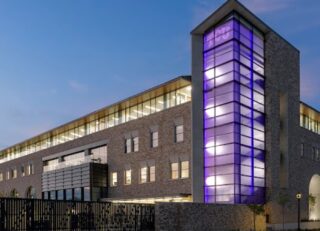
Burnett moved into Arnold Hall in 2024. The four-story medical education building, roughly 100,000 square feet on a 5.3-acre campus, sits at the northeast corner of South Henderson and West Rosedale streets in Fort Worth’s Near Southside, at the center of the city’s Medical Innovation District. Many of the school’s major clinical partners are within walking distance. The building is the academic hub for the school’s 240 medical students and hundreds of faculty and staff, and more facilities are part of the master plan. Students also spend time on TCU’s main campus: the Class of 2030’s two-week Introduction to Medicine split time between the main campus and Arnold Hall.
The simulation center lets students practice procedures and decisions in a controlled setting before they face real patients. Standardized patients, trained community members who portray patients, work with students on history taking, communication and physical exams, then give feedback from the patient’s point of view.
Living in Fort Worth
Fort Worth is a large and growing city, with a population of about 899,000 and a median age of 33.2. The school’s admissions pages describe eight entertainment districts with dining, museums, rodeos, a top zoo and outdoor recreation. The cost of living is relatively affordable compared with many large metro areas, which helps medical students live comfortably without the strain of the most expensive cities.
Housing
Most medical students live off campus, which is why the school’s COA uses an off-campus housing and food budget of $29,208 for MS1 to MS3. TCU’s Housing and Residence Life office publishes guidance on off-campus housing in Fort Worth, including an off-campus brochure, fall and spring off-campus housing fairs with local apartment complexes, and options near TCU for graduate students, such as Leibrock Village when space permits. The COA also lists a lower on-campus housing budget for students who live on campus. Because clinical sites are spread across the region, factor commuting time and parking into where you live, and plan to have a car.
Student support
The Office for Student Affairs aims to know its students, build community, remove barriers to learning and well-being, and partner with students on their careers. Support includes:
- Student Physician Coaching: each student is assigned a physician coach for all four years, with quarterly meetings.
- Student Academic Support, Success and Excellence (SASSE): learning specialists who help with study strategies and board preparation.
- Career advising: AAMC Careers in Medicine, self-assessments, CV and personal statement reviews, interview preparation, residency open houses and elective planning.
- Student Access and Accommodation: support for students with documented disabilities.
- “You Said, We Did!”: a page where the school reports changes made in response to student feedback.
Student government and committees
Students take part in the Burnett School of Medicine Senate, student interest groups (SIGs) and the school’s standing committees. Serving on a committee lets students advocate for their classmates and help improve the program. The current standing committees open to student representatives are the Assessment and Evaluation Subcommittee, the Course and Clerkship Review Subcommittee and the Curriculum Committee. Students join SIGs through TCU Engage, where they can also see student groups across TCU.
Student interest groups
Burnett has more than 40 student interest groups covering specialties, identity and faith communities, service and wellness. The groups below are the ones the school currently lists:
| Group | Focus |
|---|---|
| American Association of Neurological Surgeons (AANS) | Neurosurgery |
| American Medical Women’s Association (AMWA) | Women in medicine, mentorship and women’s health |
| American Muslim Medical Student Association (IMAN) | Community for Muslim students and service |
| AnatoSIG | Human anatomy |
| Anesthesiology Interest Group (AIG) | Early, regular exposure to anesthesiology with students, faculty and physicians |
| Asian Pacific American Medical Student Association (APAMSA) | Asian culture, diversity and health advocacy |
| Association of Women Surgeons (AWS) | Women interested in surgical careers |
| Business in Medicine | Health care management, economics and entrepreneurship |
| Cardiology Interest Group | Faculty mentorship, guest speakers, clinical experiences, conferences and service in cardiology |
| Christian Medical Association (CMA) | Faith and medicine |
| Culinary Medicine Student Interest Group | Food, nutrition and community service |
| Dermatology Interest Group | Dermatology |
| Emergency Medicine Interest Group (EMIG) | Emergency medicine |
| Exercise is Medicine | Physical activity as part of health care |
| Family Medicine Interest Group (FMIG) | Primary care and family medicine |
| First Gen in Medicine (FGiM) | Support for students without physicians in the family |
| Frog Docs Run Club | Running and fitness |
| FWMD Street Medicine | Care for people experiencing homelessness; coordinates student volunteers at the student-run free clinic at Mercy Clinic |
| Gastroenterology and Hepatology Interest Group | Digestive and liver disease |
| HEENT-Plastic Surgery | Otolaryngology, plastic surgery and ophthalmology |
| Humanities in Medicine (HuMed) | Literature, art and the human side of medicine |
| Internal Medicine SIG (IMIG) | Internal medicine |
| International Student Interest Group | International students and global perspectives |
| Jewish Student Interest Group | Community for Jewish students |
| Latino Medical Student Association (LMSA) | Latino students and health equity |
| Lifestyle Medicine Interest Group (LMIG) | Healthier lifestyles and the field of lifestyle medicine |
| Med Mentorship SIG | Peer and physician mentorship |
| Medical Ethics Group | Ethical questions in practice |
| Medical Innovation Student Interest Group (iSIG) | Innovation that challenges conventional medicine |
| Military Medicine Interest Group | Careers in military medicine |
| Mindfulness and Medicine | Mindfulness and well-being |
| Music Performance Arts Group | Music and performance |
| Obstetrics and Gynecology Student Interest Group (OGSIG) | Obstetrics and gynecology |
| Oncology Interest Group | Cancer care and research |
| Orthopedic Surgery Interest Group | Orthopedic surgery |
| Pediatric Student Interest Group | Child health |
| Physical Medicine and Rehabilitation Interest Group | PM&R |
| Pride Alliance | LGBTQ+ students and allies |
| Psychiatry SIG | Psychiatry and mental health |
| Rural, International and Global Health (RIG) | Health equity in rural and global settings |
| Ruth Jackson Orthopaedic Society | Women in orthopedic surgery |
| Sports Medicine SIG | Sports medicine |
| Student Interest Group in Neurology (SIGN) | Neurology |
| Student National Medical Association (SNMA) | Support for current and future underrepresented minority medical students |
| Surgery Interest Group | General surgery |
| Texas Medical Association-American Medical Association (TMA-AMA) | Organized medicine and advocacy |
| Volunteer Clinic Interest Group | Volunteer work in free clinics |
| Wilderness Medical Society Student Interest Group | Wilderness medicine, education and service |
A few groups stand out for applicants. FWMD Street Medicine and the Volunteer Clinic Interest Group give students regular patient contact with underserved neighbors in Fort Worth. The Rural, International and Global Health group lists activities such as standardized-patient practice in cultural sensitivity, ethics conversations about working abroad, international rotations (the group names India, South Africa and Taiwan), rural health volunteering in Texas and nearby states, and global health research. The Ruth Jackson Orthopaedic Society is named for Ruth Jackson, the first woman certified by the American Board of Orthopaedic Surgery, and supports women interested in the field.
Clinical Rotations and Research Opportunities
Clinical training from the first weeks
Clinical work at Burnett does not wait for the third year. In Phase 1, each student joins a primary care preceptor’s practice and follows a small panel of continuity patients, with a focus on communication, education and advocacy. Graduates often credit this early clinic time for their readiness on away rotations. Briana Collins, M.D., who matched in internal medicine at Stanford Health Care in 2023, said she was seeing patients at the JPS Stop Six clinic “from Day 1.” Service is part of the curriculum too: first-year students complete 10 hours of community service, and third-year students take part in a required community impact project.
The Longitudinal Integrated Clerkship
In Phase 2, students work in all eight core disciplines at once for about a year, after 12 weeks of inpatient immersions. They follow their own patient panels, see those patients through hospital stays and deliveries, and build relationships with preceptors who become advocates over time. The emergency medicine clerkship includes shifts in local emergency departments, the obstetrics and gynecology clerkship asks students to follow their pregnant patients into the hospital for delivery and to complete two subspecialty experiences, and the psychiatry clerkship includes shifts in a psychiatric emergency department.
The school’s clinical sites include JPS Health Network, the Tarrant County hospital system; Cook Children’s for pediatrics; Texas Health Resources and Baylor Scott & White hospitals; Methodist Health System; and community practices in family medicine, pediatrics, obstetrics and psychiatry. Burnett uses a distributed model, places students where patients are, and cannot honor every site request, so expect to drive.
Phase 3 electives and global health
In Phase 3, students choose at least 28 weeks of electives, complete a four-week critical care selective and a four-week sub-internship, and keep a small continuity panel. Elective time is used for away rotations and specialty exploration. Burnett has offered a four-week global health clinical elective in Bengaluru, India. Hari Raja, M.D., a professor at the school, said such an elective helps students appreciate their medical education in the United States. Among 2025 graduating seniors, 12% reported a global health experience during medical school.
Scholarly Pursuit and Thesis
Research is required. The Scholarly Pursuit and Thesis course runs through all four years: students are trained in literature searches, critical appraisal, human subjects research and responsible conduct of research, then choose a mentor and design a project by about the end of the first semester. They carry out the research in years two through four and submit a capstone thesis by about the end of the seventh semester. Projects can come from any field as long as they involve an intervention or examination, such as an experiment, chart review, product design or data collection, with a plan for analysis. Graduating students present their work at the Esch Family Scholarly Pursuit and Thesis Research Summit.
Recent projects listed by the school include studies of robotic rehabilitation in hemiplegic cerebral palsy, screening for young-onset colorectal cancer, sleep among incarcerated youth, a medical-legal partnership to reduce adverse birth outcomes, disparities in lung cancer screening at an urban safety-net system, and solar ventilation for homes with wood-burning ovens in rural Nicaragua. In 2026, graduates presented work on clusterin and neuroprotection in Parkinson’s disease, anesthesiologist familiarity and outcomes after pancreaticoduodenectomy, and a trust-based relational intervention for people with adverse childhood experiences.
Faculty research support is led by Gregory Kearns, PharmD, Ph.D., Associate Dean for Research. Mentors outside academia receive a faculty appointment with the school, so students can work with clinicians and scientists across Fort Worth.
Residency match
Every graduating class has matched at 100%. The class of 2026 marked the fourth straight year, with graduates headed to programs such as Yale School of Medicine, Rush University Medical Center, UCLA Medical Center and UT Southwestern Medical Center. The class will enter 16 residency programs in Texas, 12 of them in North Texas, and matched into competitive specialties including interventional radiology, ophthalmology, orthopedic surgery, plastic surgery and otolaryngology. Earlier classes matched at Mayo Clinic, Johns Hopkins Medicine, Vanderbilt University Medical Center, Stanford Health and UT Southwestern. The school’s Match Map shows where alumni have trained.
Notable Alumni, Faculty, Leadership and Admissions Staff
Burnett graduated its first class in 2023, so its alumni are early in their careers. The profiles below come from the school’s leadership pages, curriculum pages and news releases.
Leadership
Stuart D. Flynn, M.D., Founding Dean. Dr. Flynn was selected in 2016 to build the school and celebrated his 10th anniversary as founding dean in May 2026. Before TCU, he was founding dean of the University of Arizona College of Medicine – Phoenix and, earlier, a professor of pathology and surgery at Yale School of Medicine, where he directed the residency program, helped lead the curriculum and was a founding member of the Society of Distinguished Teachers. He earned his medical degree and trained in residency at the University of Michigan and completed a fellowship in oncologic pathology at Stanford. He has written more than 100 articles, books and monographs and served on National Board of Medical Examiners and USMLE Step 1 test committees. FAB is his creation, and every interviewing applicant meets him during the virtual visit. Under his leadership the school earned full accreditation, opened Arnold Hall, launched the North Texas Maternal Health Accelerator with UT Southwestern and posted four straight 100% match years.
Jo Anna Leuck, M.D., Senior Associate Dean for Academic Affairs. Dr. Leuck oversees academic affairs and directs Introduction to Medicine, the two-week course that opens Phase 1.
Jennifer Allie, Ph.D., M.P.A., Vice Dean for Faculty and Graduate Programs. Dr. Allie leads faculty affairs and the Office of Graduate Programs, which supports the MD/MPH and MD/PhD students. She is the contact for questions about the dual degrees.
Gregory Kearns, PharmD, Ph.D., Associate Dean for Research. Dr. Kearns is also Director of Faculty Scholarship and Research and Assistant Director for Scholarly Pursuit and Thesis, which links faculty research to the required student thesis.
Erin Nelson, Psy.D., Associate Dean for Physician Communication. Dr. Nelson joined the school in 2017, was the inaugural director of the Preparation for Practice course and leads the psychological and behavioral science curriculum. Her team builds the communication content that runs through all three phases.
Anant Patel, D.O., Assistant Dean for Student Affairs. Dr. Patel leads student affairs and career advising and has spoken publicly about building support for first-generation medical students.
Sandra Esparza, M.D., Assistant Dean for Clinical Curriculum. Dr. Esparza directs the Clinical Skills course in Phase 1 and the Transition to Longitudinal Integrated Clerkships course that starts Phase 2.
Admissions
Kevin Kidder, Ph.D., Associate Dean for Admissions. Dr. Kidder leads the Office of Admissions and is an assistant professor in the Department of Medical Education. In his welcome to applicants, he describes the office’s goal of admitting “a highly qualified, talented, and diverse class of 60 students” who embody the personal, professional and academic attributes in the school’s mission. The admissions office can be reached at [email protected] or 817-257-4212.
Faculty
Kollier Hinkle, M.D., Senior LIC Director. Dr. Hinkle directs the Phase 2 and Phase 3 Longitudinal Integrated Clerkships, the core of Burnett’s clinical training.
Mike Bernas, M.S., Course Director, Scholarly Pursuit and Thesis. Bernas directs all four years of the required research course and helps students find mentors and design projects.
Hari Raja, M.D., Professor. Dr. Raja is closely associated with the school’s global health clinical elective, which took five fourth-year students to Bengaluru, India, for four weeks.
Clerkship directors. Each LIC discipline has its own director, including Chinmay Patel, M.D. (emergency medicine), Nolan Mischel, M.D. (family medicine), Suresh Kankanala, M.D. (internal medicine), Melanie Lagomichos, M.D. (obstetrics and gynecology), Claudia Perez, M.D. (neurology), Ryan Gates, M.D. (pediatrics), Cheryl Hurd, M.D. (psychiatry) and Jennifer Grant, M.D. (surgery).
Faculty bring experience from clinical practice, research and health care leadership, and many collaborate with students on Scholarly Pursuit and Thesis projects. The school lists more than 1,700 faculty members.
Alumni
McKenna Chalman, M.D. (Class of 2023). A member of the inaugural class, Dr. Chalman began a general surgery residency at Rush University in Chicago. She was featured on a mural in Chicago created for TCU’s 150th anniversary, which carries the phrase “Where you find empathy, you find healing.”
Shelby Wildish (Class of 2023). A member of the inaugural class, Wildish wrote “Feel,” a short dramatic piece about a tired, self-critical medical student, published in the school’s medical humanities collection. It is a good example of the reflective writing the curriculum encourages.
Briana Collins, M.D. (Class of 2023). Dr. Collins matched at her first-choice program, internal medicine at Stanford Health Care, after an away rotation that faculty encouraged her to pursue. She credits her Phase 1 clinic time at JPS for her readiness.
Rebecca Sobolewski, M.D. (Class of 2024). Dr. Sobolewski, who grew up on Chicago’s West Side, is an emergency medicine resident at Vanderbilt University Medical Center. She was active in the Student National Medical Association and said her community work helped her stand out in residency interviews.
Sarah Person, M.D. (Class of 2024). Dr. Person, from Arlington, Texas, matched in internal medicine with Texas Health Resources and credits the school’s communication training for setting her apart.
Christopher Fernandes, M.D. (Class of 2024). Dr. Fernandes, originally from Durban, South Africa, is an emergency medicine resident at Stanford Medicine.
Nicole Jamieson, M.D. (Class of 2024). Dr. Jamieson matched in the Stanford Pediatrics Residency at Stanford Medicine.
Caden Duffy, M.D. (Class of 2024). Dr. Duffy matched in otolaryngology (head and neck surgery) at University of Iowa Health Care.
Thomas Redman, M.D. (Class of 2024). Dr. Redman is a psychiatry resident at John Peter Smith Hospital in Fort Worth and an advocate for people with disabilities.
Lauren Hui, M.D. (Class of 2026). Dr. Hui matched in vascular and interventional radiology at Yale School of Medicine and credits the LIC with preparing her for away rotations.
Cort Ewing, M.D. (Class of 2026). Dr. Ewing, a Gold Humanism Honor Society inductee, spoke for his class at commencement and matched in otolaryngology at the University of Oklahoma College of Medicine.
These alumni show the range of paths Burnett graduates take, from primary care in Texas to competitive specialties across the country, and each reflects the school’s focus on empathy, communication and leadership.
Admissions Statistics and Class Profile
Burnett publishes a class profile for every entering class on its admissions site. The profiles report averages and class composition. The tables below pair those profiles with medians, interview counts and premedical experience for the 2025 entering class. Acceptance offers are not published, so that row stays “not published.”
The class that entered in 2026 (Class of 2030)
| Measure | Value |
|---|---|
| Entering students | 61 |
| Applications | Nearly 6,000 |
| Average MCAT | 513 |
| Average overall GPA | 3.81 |
| Women / men | 61% / 39% |
| Average age | 23 |
| States represented | 18 |
| Texas residents | 16 |
| California residents | 23 |
| TCU graduates | 9 |
| Undergraduate areas of study | 31, including biomedical engineering, computer science, nursing, sports medicine, molecular and cell biology, and French and Francophone studies with biology |
| Acceptance offers and acceptance rate | Not published |
Sources: Burnett School of Medicine at TCU, 2026 Class Profile; White Coat Celebration news release, July 11, 2026.
Undergraduate schools in the 2026 class ranged from the University of Southern California, UCLA, Stanford, Columbia and Johns Hopkins to the University of Texas at Arlington, Texas Christian University, Baylor and Rice. California sent more students than Texas, which says a lot about how national the applicant pool is.
Accepted applicants and interviews, 2025 entering class
| Measure | Value | Population and source |
|---|---|---|
| Median MCAT | 513 (mean 513.5, standard deviation 4.3) | Accepted applicants (AAMC MSAR, 2026 edition) |
| MCAT section medians | 129 Chem/Phys, 127 CARS, 129 Bio/Biochem, 129 Psych/Soc | Accepted applicants (AAMC MSAR, 2026 edition) |
| Median GPA | 3.88 | Accepted applicants (AAMC MSAR, 2026 edition) |
| Applicants interviewed | 309: 73 Texas residents, 228 out-of-state, 8 international | Interviewed applicants (AAMC MSAR, 2026 edition, school-reported) |
| Community service or volunteering | 93% | Matriculants (AAMC MSAR, 2026 edition) |
| Research or lab experience | 93% | Matriculants (AAMC MSAR, 2026 edition) |
| Physician shadowing or clinical observation | 90% | Matriculants (AAMC MSAR, 2026 edition) |
| Medical or clinical volunteering | 85% | Matriculants (AAMC MSAR, 2026 edition) |
| Paid medical or clinical work | 79% | Matriculants (AAMC MSAR, 2026 edition) |
| Military service | 1% | Matriculants (AAMC MSAR, 2026 edition) |
Out-of-state applicants made up about three of every four interviews for the 2025 class, which matches the national makeup of each Burnett class. Nearly every matriculant had both service and research experience, and about four in five had paid clinical work, so a record that is thin in any of those areas will stand out.
Five-year trend
| Entering class | Average MCAT | Average overall GPA | Women / men | Texas residents | TCU graduates |
|---|---|---|---|---|---|
| 2026 (Class of 2030) | 513 | 3.81 | 61% / 39% | 16 | 9 |
| 2025 (Class of 2029) | 512 | 3.81 | 55% / 45% | Not shown | 10 |
| 2024 (Class of 2028) | 511 | 3.74 | 55% / 45% | 16 | 8 |
| 2023 (Class of 2027) | 511 | 3.77 | 55% / 45% | 15 | 12 |
| 2022 (Class of 2026) | 509 | 3.66 | 62% / 38% | 11 | 5 |
Source: Burnett School of Medicine at TCU class profiles, 2022 through 2026.
The averages have climbed steadily: four MCAT points and 0.15 GPA points in five years. The 2025 class also included 11 students with graduate degrees from seven institutions, and the 2023 class included 16 with graduate degrees from nine institutions, so a master’s degree or a postbaccalaureate record is common among admitted students.
How to read these numbers
- Averages are not cutoffs. Many students scored below the average. A 508 with a strong upward trend and deep experience can be competitive. A 520 with thin hours may not be.
- Applications are not acceptances. Nearly 6,000 applications for 61 seats does not equal a 1% acceptance rate. Many admitted applicants choose other schools, and Burnett does not report offers.
- Residency matters less here than at public Texas schools. Burnett is private, charges one tuition rate and draws heavily from outside Texas, so being a Texas resident is not the advantage it is at TMDSAS schools.
- TCU graduates are a visible group. Five to twelve TCU alumni have enrolled each year. A TCU degree is not required, and most students come from other colleges.
What the profile does not show
Acceptance offers, matriculants by residency and specialty choices of graduates are not published. Medians, interview counts, graduate debt and the share of students receiving aid appear in the tables above for the latest year available. Use the averages and medians as context for your own record, and judge your fit by the experience requirements and mission as much as by the numbers.
Tips and Strategies for Admission
Applying to Burnett takes careful planning and a clear understanding of the school’s mission. The strategies below translate what the school says it values into concrete choices for your application.
Understanding the mission and values
Align with the mission. Burnett exists to produce Empathetic Scholars®, so your application should show compassionate patient care backed by curiosity. Highlight experiences where you showed empathy, served people in need or helped a team care for someone well. Use the school’s own vocabulary carefully: the eight traits in Essay 1 (compassion, teachability, altruism, insight, humility, collaboration, integrity and respect) are a good checklist for your activities section.
Show you understand the people you serve. Dean Flynn describes Fort Worth as one of the most diverse health care communities in the country, and Burnett’s clinical partners include the county hospital and community clinics. If you have worked with diverse populations, through volunteering, work or your own life, include it. Show that you understand how social determinants of health shape a patient’s choices.
Meeting the 150-hour minimums with purpose
Treat the four experience categories as a planning grid. Write down your hours in Service, Leadership, Physician/Patient Interaction and Personal Excellence, and look for any category under 150. A common gap is leadership: many pre-meds have clinical and service hours but no role where others depended on them. Tutoring, supervising at work, coaching or running a student group all count.
For Physician/Patient Interaction, the school’s examples (EMT, scribe, CNA, medical assistant, child life and shadowing) all involve real patients. Hands-on roles such as medical internships for undergraduates, scribing or CNA work give you stories about specific patients, which are exactly what the secondary essays ask for. If your college schedule is full, pre-med summer internships and summer clinical jobs are a practical way to add concentrated hours.
Crafting a compelling personal statement
Tell a story. Your personal statement should go beyond a list of achievements. Explain why you chose medicine, what drives you and how your experiences have prepared you. Connect your values to those of the school without naming it, because AMCAS goes to every school.
Be reflective. Admissions committees value applicants who can reflect. Discuss what you did, what you learned and how it changed your decision to pursue medicine. Burnett’s interview day and secondary both reward self-awareness, so practice naming a weakness and the specific steps you are taking to address it.
Preparing for the multiple mini-interview
Practice common scenarios. The MMI tests how you think on your feet, communicate and handle ethical dilemmas. Practice ethical questions, difficult conversations and questions about teamwork and health care challenges.
Develop communication skills. Strong communication is central at Burnett. Practice speaking clearly, confidently and concisely under time pressure, and practice listening, too: in a role-play station, the best answer often starts with a question.
Securing strong letters of recommendation
Choose recommenders wisely. Burnett needs only one letter and encourages three. Pick people who know you well and can describe your empathy, reliability and growth. Letters from clinical supervisors, research mentors or professors are especially valuable.
Give your writers context. Share your personal statement, your activities list and the school’s mission with your recommenders. The more they know about your goals and values, the better they can support your application with specific examples.
Highlighting relevant experiences
Clinical experience. Show hands-on experience in health care, whether shadowing, volunteering, scribing or working as a CNA or EMT, and emphasize what you learned about patients and the health care system. International clinical experience can add perspective, too. Programs such as pre-med internships abroad place students in supervised clinical settings where they take vitals and help with patient care, which gives you concrete examples of cross-cultural communication.
Research involvement. If you have done research, describe your role, the skills you built and what the work taught you. Burnett requires a four-year thesis, so research experience helps you show you are ready for it. If you have none, show curiosity in other ways, such as a quality improvement project at work.
Community service. Burnett values community engagement. Highlight volunteering with underserved or disadvantaged populations, and explain how it shaped your understanding of health and health care.
Demonstrating academic excellence
Balance GPA and MCAT. Burnett uses holistic review, but academic strength still matters. If your GPA or MCAT is below the class averages, offset it with exceptional experiences, a strong upward trend and a clear narrative.
Address any academic weaknesses. If your record has a weak semester or year, address it honestly. Essay 2 is a natural place to explain context, such as working long hours, as long as you show how you grew.
Mind the MCAT rules. Your score must be from 2024, 2025 or 2026 for this cycle, and more than four attempts takes you out of consideration for the secondary. Plan retakes carefully.
Planning your timing
Burnett reviews files on a rolling basis, starts sending interview invitations in July and sends acceptance notices from October 15. Submit AMCAS early in the summer, take Casper well before the December 3 deadline and return the secondary quickly after it arrives, rather than waiting for December 15. If you are not admitted this cycle, use the gap to deepen experiences in your weakest category. Many applicants use pre-med gap year programs, full-time clinical jobs or research positions to strengthen a second application.
Secondary Application Questions, Example Responses and Analysis
Burnett publishes its 2026-2027 secondary essay prompts on its How to Prepare a Competitive Application page. Every invited MD applicant writes two essays. Applicants to the M.D., Ph.D. in Biomedical Engineering write two more.
Rules for every essay:
- Each essay must be at least 250 and no more than 300 words.
- The portal will not accept more than 300 words.
- Essay 1 has two questions, but the limit is still 300 words for the whole essay.
- The secondary is due December 15, 2026, at 11:59 p.m. CST, with Casper scores and the $100 fee (waived for AAMC Fee Assistance Program recipients).
The 250-word minimum is unusual. Do not stop at 240 words and assume it is close enough; check your count in the portal. For more prompts from other schools, see our medical school secondary essay prompts database.
Essay 1: The eight empathic scholar traits
Prompt (required, 250-300 words):
Essay Prompt #1: The Burnett School of Medicine defines empathic scholars with these eight traits: Compassion, Teachability, Altruism, Insight, Humility, Collaboration, Integrity, & Respect.
- Which trait do you think you embody most and how will that be valuable to patient care?
- Which trait might you need to improve upon? How will you improve in this area and how will this be of value in your role as a physician?
What it asks. This prompt has four tasks in 300 words: name your strongest trait, show its value to patient care, name a trait to improve, and explain how you will improve and why that matters for a physician. Most weak answers do the first task well and rush the rest.
How to approach it. Pick a strongest trait you can prove with one specific story, not a list. Pick a growth trait that is real but not alarming; avoid integrity or respect, which read as red flags. Spend roughly half the essay on each part, and give your improvement plan concrete steps you are already taking.
Illustrative example, not an actual applicant essay (274 words):
Mr. Alvarez came to our free clinic every other Thursday for blood pressure checks, and for months he barely spoke. As a clinic intake volunteer, I took his vitals, asked my questions and moved him along. One night he mentioned, almost in passing, that he split his pills in half to make them last. I stopped typing. We talked for twenty minutes about his job loss, his pride and his fear of asking for help. By the end, our physician had switched him to a cheaper generic and our social worker had enrolled him in a pharmacy program.
That night taught me that the trait I embody most is insight: noticing what sits behind a number and asking the next question. In patient care, insight is the difference between documenting “uncontrolled hypertension” and learning why it is uncontrolled. In Burnett’s first-year clinic with a primary care preceptor and a small panel of continuity patients, I want to practice that habit early, so it becomes reflex long before residency.
The trait I most need to improve is teachability. As a lab supervisor, I have sometimes defended my method instead of hearing a better one, and a junior student once caught an error I had dismissed. Since then I ask for one piece of critical feedback after every shift and write down what I will change. In the Longitudinal Integrated Clerkship, where the same preceptor watches me grow for a year, I want to bring that habit to every session, ask for correction early and act on it. A physician who can be taught keeps patients safer, because medicine changes faster than any one person’s certainty.
Why this example works. It answers all four parts in order. The strongest trait (insight) is shown through a single patient encounter with a clear outcome, not claimed in the abstract. It links the trait directly to patient care (“documenting ‘uncontrolled hypertension’ versus learning why”). The growth trait (teachability) is honest, includes a real mistake and names a habit already in place, which makes the plan credible. It also ties both traits to verified parts of Burnett’s curriculum, the first-year primary care preceptor and panel and the year-long LIC, without flattering the school.
Mistakes to avoid. Choosing a growth trait that is really a strength in disguise (“I care too much”). Using all eight trait names in a row. Writing 230 words: the portal requires at least 250. Spending 250 words on the first question and 50 on the second.
Essay 2: Characteristics of an aspiring MD
Prompt (required, 250-300 words):
Essay Prompt #2: Characteristics of an aspiring MD.
Describe any personal qualities and/or lived experiences that add context to your application that shape who you are as an individual and aspiring healthcare leader.
What it asks. This is a context and identity essay with a leadership angle. The committee wants to know what in your background explains your record and your goals, and how it makes you a future leader in health care, not only a future clinician.
How to approach it. Choose one or two threads that explain something the rest of your application does not: family responsibilities, work during college, a first-generation path, language, faith, military service, disability or a turning point. Then show how that thread led to an action where you led or organized others. Use it to address a weakness in your record if you have one, briefly and without excuses.
Illustrative example, not an actual applicant essay (273 words):
I grew up translating for my grandmother. At nine, I explained her diabetes medications to a pharmacist; at fifteen, I sat beside her while a cardiologist described a stent in words neither of us fully understood. I learned two things in those rooms. Patients often nod when they are lost, and the person who bridges language holds real responsibility.
That experience shaped what I chose to do next. In college I worked twenty hours a week as a certified nursing assistant on a night shift while carrying a full course load. Work was not optional for my family, and it taught me how to protect my sleep, plan my studying around twelve-hour shifts and still show up kind at 3 a.m. It also explains the dip in my sophomore grades, before I learned to ask for a lighter schedule and use office hours, and the upward trend that followed.
Leadership came from the same place. When our hospital’s Spanish-speaking families kept missing discharge instructions, I helped a charge nurse create a one-page bilingual checklist and trained six other aides to use it. It was a small project, but I learned that leading in health care often means noticing a gap, gathering the right people and following through.
These experiences shape who I am as an aspiring healthcare leader. I want to practice medicine where communication is treated as a clinical skill, and I am drawn to Burnett’s medical Spanish program and its four-year communication curriculum because they would sharpen something I have done informally all my life. I hope to lead by making sure no patient leaves an exam room nodding without understanding.
Why this example works. It gives context the activities list cannot: interpreting for family and working nights explain both the motivation and a grade dip, which the writer addresses in one sentence and then moves past. The “aspiring healthcare leader” part of the prompt is answered with a concrete project (a bilingual discharge checklist and training six aides), not a title. The closing connects to two verified Burnett programs, medical Spanish in Phase 1 and the four-year communication curriculum, and ends with a clear goal.
Mistakes to avoid. Retelling your personal statement. Listing hardships without showing what you did with them. Forgetting the leadership half of the prompt. Overexplaining a weak semester; one sentence of context and evidence of recovery is enough.
MD/PhD Essay 1: Why an MD/PhD in Biomedical Engineering
Prompt (required for MD/PhD applicants only, 250-300 words):
MD/PhD Essay Prompt #1: Tell us why you want an MD/PhD in Biomedical Engineering and how you envision valuing and using this degree in your professional career progression.
What it asks. Two things: why you need both degrees, specifically in biomedical engineering, and how you will use the combined training across your career.
How to approach it. Start with a problem that only someone with both clinical and engineering training could solve. Explain why one degree alone would fall short. Show you understand the program’s structure (MD Phase 1 first, then the UTA Ph.D., then the clinical phases), and finish with a realistic career picture.
Illustrative example, not an actual applicant essay (271 words):
My grandfather spent his last two years tethered to a home oxygen concentrator that alarmed so often he stopped trusting it. Watching him silence it at night, I realized the device was technically sound and practically unsafe, because no one had designed it around the person using it. That gap between a working device and a usable one is why I want an MD/PhD in Biomedical Engineering.
As a physician, I want to see the patients whose problems should drive engineering questions. As an engineer, I want the training to answer those questions rigorously: modeling, sensor design, testing and the statistics to prove a device helps. Separately, each degree would leave me halfway. Together, they would let me move a problem from the clinic to the lab and back again.
The structure of the TCU and UT Arlington program fits how I learn. Starting with Phase 1 of the MD means I will enter my doctoral research already knowing the physiology and the clinical setting, and the clinical experiences course during the Ph.D. years would keep me in touch with patients while I build. The Future Accelerators of Medicine and Beyond course, with its focus on design thinking and devices, is exactly the bridge I want between the two worlds.
In my career, I see the degree as a way to lead teams rather than to work alone. I hope to run a translational lab that develops home monitoring tools for chronic lung disease, test them with the patients I care for, and train students to value usability as much as accuracy. I would measure success by devices patients actually trust.
Why this example works. The opening problem (a device that is technically sound but practically unsafe) makes the need for both degrees obvious. The second paragraph answers “why both” directly. The third shows the writer understands the actual sequence of the TCU and UTA program and names a verified course, FAB, that connects medicine and devices. The ending answers the “career progression” part with a specific, believable goal.
Mistakes to avoid. Writing a generic “I love science and patients” essay that could fit any MD/PhD program. Ignoring biomedical engineering. Describing a career that needs only one of the two degrees.
MD/PhD Essay 2: Training and experience in biomedical engineering
Prompt (required for MD/PhD applicants only, 250-300 words):
MD/PhD Essay Prompt #2: Provide a summary of your past formal and informal training and experiences in biomedical engineering that will equip you to thrive in the doctoral program as a clinician-scientist.
What it asks. A summary of both formal training (coursework, degrees, research) and informal training (self-taught skills, side projects, work), and an argument that this preparation will help you succeed in a doctoral program.
How to approach it. Organize by type: formal coursework and degree, research, then informal experience. Name your specific role and skills in each, and close by tying them to the qualities a Ph.D. demands, such as persistence and careful methods. Mention required math, because the program typically expects calculus and differential equations.
Illustrative example, not an actual applicant essay (262 words):
My formal training began with a B.S. in biomedical engineering. Core courses in biomechanics, signals and systems, biomaterials and medical device design gave me the foundation, and my senior capstone required our four-person team to build and validate a low-cost pulse oximeter for use on darker skin tones. I wrote the signal-processing code, ran bench tests against a reference device and presented our error analysis to a panel of faculty and clinicians. I also completed calculus through differential equations, which prepared me for the modeling work a doctoral program demands.
My research training came from two years in a cardiovascular biomechanics lab. Under a postdoctoral mentor, I learned to fabricate silicone vessel models, run flow experiments and analyze pressure data in MATLAB. When our pump calibration drifted, I designed a check protocol that the lab still uses. That project became a first-author poster at a regional engineering conference and taught me how slow and careful real research is.
My informal training has been just as useful. I volunteered for a year at a hospital’s equipment loan program, where I fixed wheelchairs and walkers and heard patients explain exactly why a device failed them. I also taught myself basic 3D printing and printed custom grips for a neighbor with arthritis, then revised them three times based on her feedback.
Together, these experiences have given me technical depth, persistence through failed experiments and a habit of designing with the user in mind. I believe they prepare me to thrive in a doctoral program as a clinician-scientist who asks engineering questions that start with patients.
Why this example works. It covers both formal and informal training, as the prompt requires, and it gives the writer’s specific role in each project. It shows the math preparation the program expects, real research skills, a measurable contribution (a calibration protocol) and a habit of designing for users. The close answers the “thrive as a clinician-scientist” part directly.
Mistakes to avoid. Turning the essay into a list of courses. Claiming results without your role. Leaving out informal experience, which the prompt asks for by name.
Writing tips for the whole secondary
- Stay between 250 and 300 words for every essay. Count in a plain-text editor and again in the portal.
- Use different stories in Essay 1 and Essay 2, and avoid repeating your personal statement.
- Name real Burnett programs only when they connect to your story. The first-year primary care preceptor, the LIC, the Scholarly Pursuit and Thesis, FAB and the communication curriculum are all verified features.
- Return it early. Review is rolling, and decisions begin after October 15.
- Do not forget Casper. The secondary is not complete without Casper scores by December 15.
Interview Format and Preparation
The format
Selected applicants are invited to a three-day virtual visit:
- Sunday evening (optional): a student ambassador-led session on Zoom, a chance to ask current students about life at Burnett.
- Monday afternoon: multiple mini-interviews (MMI) on the KIRA platform, followed by a session with Founding Dean Stuart Flynn, M.D.
- Tuesday (mandatory): an open forum with deans and leaders from across the school.
The MMI assesses communication, ethical reasoning and critical thinking. Interview invitations begin in July, and 309 applicants were interviewed for the 2025 entering class. The school does not publish the number of stations, the timing of each station or its scoring, and it does not publish interview dates. Acceptance notices are sent on a rolling basis from October 15, 2026, through July 5, 2027.
How to prepare
- Practice short, timed responses. In an MMI on KIRA, you often read a scenario and respond with little prep time. Practice with a timer, aiming for structured two-to-five-minute answers: state the issue, consider each person’s perspective, choose an action and explain why.
- Know the eight traits. Burnett defines empathic scholars by compassion, teachability, altruism, insight, humility, collaboration, integrity and respect. Many ethics and teamwork scenarios map onto one or two of them.
- Prepare to talk about communication. It is central to the curriculum. Have an example ready of explaining something hard to a patient, family member or teammate.
- Know the curriculum. Be ready to explain why a Longitudinal Integrated Clerkship, a first-year patient panel and a four-year thesis fit how you learn. Have a question ready for the dean and for students.
- Set up your space. Use a quiet room, a neutral background, a wired connection if possible and a tested camera and microphone.
- Attend every required part. The Tuesday forum is mandatory.
Our list of the most common medical school interview questions is a useful bank for practice, especially the ethics and teamwork questions.
Frequently Asked Questions
What is the application deadline for TCU’s medical school?
The AMCAS deadline for the 2026-2027 cycle is November 15, 2026, at 11:59 p.m. CST. The secondary application, $100 fee, Casper scores and at least one letter of recommendation are due December 15, 2026, at 11:59 p.m. CST. Because Burnett reviews files on a rolling basis and starts sending decisions after October 15, submit both well before the deadlines.
Does the Burnett School of Medicine use TMDSAS or AMCAS?
AMCAS only. Burnett is a private medical school in Texas and does not participate in TMDSAS. If you are also applying to Texas public schools, you will file both a TMDSAS application and an AMCAS application.
What are the minimum GPA and MCAT requirements for admission?
Burnett lists no minimum GPA or MCAT score. It uses holistic review that weighs academic performance with personal qualities and experiences. Competitive applicants still have strong records: the class that entered in 2026 averaged a 513 MCAT and a 3.81 overall GPA, and accepted applicants for the 2025 entering class had a median 513 MCAT and a median 3.88 GPA. Your MCAT must be from 2024, 2025 or 2026, and prerequisite courses need a B- or better.
What is the acceptance rate at the Burnett School of Medicine?
The school does not publish an acceptance rate or the number of acceptance offers. It interviewed 309 applicants for the 2025 entering class and received nearly 6,000 applications for the 61 students who entered in 2026, but dividing those numbers gives a matriculation ratio, not an acceptance rate, because some admitted applicants enroll elsewhere.
Do I need a bachelor’s degree to attend?
No. You need at least 90 semester hours (or the quarter-hour equivalent) at an accredited U.S. or Canadian college or university by the time you matriculate, plus the school’s prerequisites. Most students do finish a degree first.
What are the 150-hour experience requirements?
Burnett requires at least 150 hours in each of four categories: Service, Leadership, Physician/Patient Interaction and Personal Excellence. The school says its most successful applicants go well beyond the minimum in every category. Log your hours by category early so you can fill any gap before you apply.
Is Casper required?
Yes. Every MD applicant must complete Casper (code CSP-10111, U.S. Medicine) for the 2026-2027 cycle. The last test date is December 3, 2026, at 8:00 p.m. CST, and scores must reach Burnett by December 15, 2026. PREview is not on the school’s list of requirements.
What makes TCU’s curriculum unique?
The curriculum is built to produce Empathetic Scholars® through a patient-centered approach. Students join a primary care practice and follow their own patients in the first year, spend the second year in a Longitudinal Integrated Clerkship across eight disciplines, and complete a required four-year Scholarly Pursuit and Thesis. Communication training runs through all four years, and a course called Future Accelerators of Medicine and Beyond covers artificial intelligence, genomics, devices and design thinking.
Can international students apply to TCU’s medical program?
Not for the 2026-2027 cycle. Burnett does not accept applications from international applicants, Canadian applicants or DACA recipients, while U.S. applicants from every state are considered. All 90 required credit hours must come from an accredited institution in the United States or Canada, and any international student enrolled at the school must carry the TCU student health insurance plan. If your citizenship or visa status is not straightforward, confirm eligibility with the admissions office at [email protected] before applying.
How much does it cost to attend the Burnett School of Medicine?
For 2026-27, tuition and fees are $75,700 a year for every student, regardless of state residency. The first-year cost of attendance, including off-campus housing and food, books, transportation, a laptop, loan fees, personal expenses and Step fees, is $114,492.
What financial aid options are available for medical students?
The Office of Financial Education and Scholarship helps students with federal and private loans, scholarships, budgeting, debt counseling and repayment planning. File the FAFSA with TCU’s school code, 003636; the priority deadline is April 1. In 2024-25, 100% of students received financial aid, and for 2025-26 most students could expect a Burnett grant covering 15% of tuition. Donors have paid tuition for entire classes in some years, but those gifts are not guaranteed.
What are the housing options for medical students?
Most students live off campus in Fort Worth, and the school’s budget assumes off-campus housing. TCU’s housing office publishes guidance on off-campus housing in Fort Worth, covered in the campus life section above. The cost of attendance also lists a lower on-campus housing budget. Because clinical sites are spread across North Texas, plan to have a car.
How does TCU support diversity and inclusion?
Burnett has student groups for many communities, including the Student National Medical Association, the Latino Medical Student Association, the Asian Pacific American Medical Student Association, First Gen in Medicine, the Pride Alliance, and faith-based groups for Christian, Muslim and Jewish students. The Office for Student Affairs, physician coaches and learning specialists support every student.
What clinical opportunities are available during the first year?
From the first weeks, each student works with a designated primary care preceptor and follows a panel of continuity patients in the Longitudinal Integrated Clerkship Foundational Experience. The focus is communication, patient education and advocacy, and it gives students real patient relationships long before the traditional third year.
What is the longitudinal integrated clerkship model?
In a Longitudinal Integrated Clerkship, students work in several core specialties at the same time over most of a year, instead of in back-to-back blocks. At Burnett, Phase 2 covers eight disciplines: emergency medicine, family medicine, internal medicine, neurology, obstetrics and gynecology, pediatrics, psychiatry and surgery. It starts with 12 weeks of inpatient immersions and continues with 38 weeks of ambulatory work with the same preceptors and patient panels.
What research opportunities are available to medical students?
Every student completes the four-year Scholarly Pursuit and Thesis. Students choose a mentor and design a project in the first year, carry out the research over the next three years, submit a thesis and present at the school’s research summit. Projects range from clinical outcomes and public health to device design and basic science.
How are students prepared for residency?
Students receive career advising through the AAMC Careers in Medicine program, CV and personal statement reviews, interview preparation, residency open houses and elective planning, plus a five-week Transition to Residency course. Every graduating class so far has matched at 100%, including the class of 2026.
How does TCU handle interview invitations?
Selected applicants are invited to a three-day virtual visit with a Monday multiple mini-interview on the KIRA platform, a session with the founding dean and a mandatory Tuesday open forum. Invitations begin in July, and 309 applicants were interviewed for the 2025 entering class. The school does not publish interview dates, and it sends acceptance notices on a rolling basis from October 15, 2026, through July 5, 2027.
Who is the founding dean of the Anne Burnett Marion School of Medicine at Texas Christian University?
Stuart D. Flynn, M.D., is the founding dean. He was selected in 2016 and marked 10 years in the role in 2026. Before TCU, he was founding dean of the University of Arizona College of Medicine – Phoenix and a professor of pathology and surgery at Yale School of Medicine. His vision centers on training physicians who are both skilled and deeply committed to empathetic patient care.
What is the Early Decision Program (EDP) at TCU?
Burnett does not offer an Early Decision Program for the 2026-2027 cycle. Instead, it reviews applications on a rolling basis and begins sending decisions after October 15, so applying early gives you a similar advantage without the binding commitment. Confirm with the admissions office if you are weighing EDP options at other schools.
What extracurricular activities are available to medical students?
Burnett has more than 40 student interest groups, from specialty groups such as surgery, emergency medicine and dermatology to service groups such as FWMD Street Medicine and the Volunteer Clinic Interest Group, plus wellness groups such as the Frog Docs Run Club. Students can also serve in the student senate and on curriculum committees.
What is the dress code for clinical rotations?
Burnett has a formal Dress Code Policy and a Student Dress Code in its published policies and guidelines, and clinical sites can add their own rules. Students are expected to dress professionally for patient care. Casual clothing is acceptable in non-clinical settings, but clothing must fit properly and be clean, pressed and modest. Torn, faded, frayed, ripped, tight, sheer or revealing clothing is not allowed. Read the current policy on the school’s Policies and Guidelines page before your first clinical day, and ask your clerkship director about any site-specific requirements.
How big is each class?
Burnett plans for 60 students per class and about 240 students in total. The class that entered in July 2026 had 61 students.
Does Burnett require a deposit, and can I defer admission?
No deposit is required to hold a seat. Deferral requests are reviewed case by case, so explain your reason and timeline in writing if you need one. Acceptance notices go out from October 15, 2026, through July 5, 2027, and the waitlist typically holds about 180 applicants.
What is the average debt for Burnett graduates?
Graduates who borrowed in 2024-25 left with an average of $245,606 in medical school debt. With 2026-27 tuition and fees of $75,700 and a first-year cost of attendance of $114,492, build a four-year borrowing plan before you accept an offer and meet with the Office of Financial Education and Scholarship early.
Can I visit the Burnett School of Medicine?
Yes. Prospective students can request an admissions tour of Arnold Hall by emailing [email protected], and the school posts a virtual tour of the building on its YouTube channel.
Related Medical School Guides
If Burnett is on your list, these guides cover schools that applicants often compare with it. These are comparisons, not predictions of equal selectivity.
- UT Tyler School of Medicine: another new Texas MD school with a community-focused mission, but a public school that uses TMDSAS.
- UTMB School of Medicine: Texas’s oldest medical school, a useful contrast to Burnett’s young program and LIC model.
- UTRGV School of Medicine: a newer Texas MD school with a strong regional and community health mission in the Rio Grande Valley.
- UT Austin Dell Medical School: another young Texas school with a nontraditional curriculum and early clinical immersion.
- UT Health San Antonio Long School of Medicine: a large public Texas option with lower resident tuition, worth comparing on cost.
- McGovern Medical School: a large Houston school that adds a major academic medical center to a Texas list.
To compare every program in the state, see our guide to medical schools in Texas, which explains how TMDSAS and AMCAS schools differ.
More schools to consider
It is wise to keep your options open and explore other medical schools that match your goals and values:
- Creighton University School of Medicine
- University of Nebraska College of Medicine
- Washington University in St. Louis School of Medicine
- Oakland University William Beaumont School of Medicine
- Wayne State University School of Medicine
- NYU Grossman School of Medicine (NYU Manhattan)
- Touro University California College of Osteopathic Medicine
- University of Massachusetts T.H. Chan School of Medicine
- Columbia University Vagelos College of Physicians and Surgeons
- Idaho College of Osteopathic Medicine
- Tufts University School of Medicine
- University of Louisville School of Medicine
- Michigan State University College of Human Medicine
- University of South Dakota Sanford School of Medicine
- University of Chicago Pritzker School of Medicine
- Carle Illinois College of Medicine
- Northwestern University Feinberg School of Medicine
- Chicago Medical School at Rosalind Franklin University
- Southern Illinois University School of Medicine
- Rush Medical College of Rush University Medical Center
- Central Michigan University College of Medicine
- Geisel School of Medicine at Dartmouth
- University of Minnesota Medical School
- Johns Hopkins School of Medicine
- Oklahoma State University College of Osteopathic Medicine
- University of Oklahoma College of Medicine
- Marshall University Joan C. Edwards School of Medicine
- Warren Alpert Medical School of Brown University
- Georgetown University Medical School
- Yale School of Medicine
Browse the Full List of Medical School Guides for every school we cover.
Helpful information
- Medical School Guides: detailed guides to programs across the United States and beyond, covering admissions requirements, curriculum, student life and financial aid.
- Medical School Secondary Essay Prompts: a database of current secondary prompts from many schools, with advice on approaching each type of question.
- Internships: Program Dates & Fees: dates and fees for International Medical Aid’s clinical internships, which give students hands-on clinical experience in different health care settings.
- Alumni Testimonials: first-hand accounts from past IMA participants about what they learned and how it shaped their path into medicine.
How International Medical Aid Can Help
Burnett asks for at least 150 hours of Physician/Patient Interaction and wants to see what those hours taught you. International Medical Aid (IMA) runs medical internships abroad in Kenya and other sites for students preparing for medical school. In IMA’s pre-health internships, interns work under the supervision of local clinicians, taking vitals, doing patient intake and triage and helping with direct patient care. Those hours count toward the kind of patient interaction Burnett describes, and they give you specific encounters to reflect on in secondary essays like Burnett’s eight-trait prompt.
Our internships for pre-med students also build the cross-cultural communication skills that Burnett’s curriculum emphasizes. If you are comparing options, our overview of healthcare internships abroad explains each program, and the program dates and fees page lists upcoming sessions. To hear from past participants, read our alumni testimonials.
IMA is independent of the Burnett School of Medicine at TCU and does not affect admissions decisions. What it offers is supervised clinical experience and, through admissions consulting, help turning that experience into clear, specific writing. Our pre-med internships page is the best next step if you want to add patient-facing hours before you apply.
Final Thoughts and Sources
The Anne Burnett Marion School of Medicine at TCU is a young, fully accredited private MD program built around one idea: physicians should be both excellent scientists and genuinely empathetic. That idea shapes everything an applicant sees, from the 150-hour experience minimums and the eight-trait secondary essay to the first-year patient panel, the Longitudinal Integrated Clerkship and the four-year thesis. Applicants who share that mission and can show it with specific experiences will find a supportive, close-knit program of about 60 students per class in the heart of Fort Worth.
Your next step: confirm you meet the 90-credit-hour rule, the prerequisites and the 150-hour minimums, submit AMCAS by November 15, 2026, take Casper by December 3 and return both secondary essays, at 250 to 300 words each, well before December 15.
Admissions and acceptance rates
Burnett’s admissions process is highly competitive. The school received nearly 6,000 applications for 61 seats in 2026 and looks for students who are academically ready and aligned with its mission of empathy in medicine. The TCU School of Medicine application process runs through AMCAS, followed by the invitation-only secondary, Casper and the virtual multiple mini-interview, which assesses ethical reasoning, communication and fit. For the 2025 entering class, 309 applicants were interviewed, and accepted applicants had a median 513 MCAT and a median 3.88 GPA. The school does not publish an acceptance rate, so treat any figure you see elsewhere with caution.
Financial considerations and tuition
The Anne Burnett Marion School of Medicine tuition reflects its status as a private institution: $75,700 in tuition and fees for 2026-27 for every student, with a first-year cost of attendance of $114,492. Indebted graduates in 2024-25 owed an average of $245,606. Prospective students should weigh the total cost of attendance, not only tuition, and should talk to the Office of Financial Education and Scholarship about aid.
Location and opportunities in Fort Worth
As the only MD school in Fort Worth, Burnett uses the city as its classroom. Fort Worth’s diverse population and wide range of health care systems, from the county hospital to children’s and community hospitals, give students many settings for clinical training and community involvement.
Academic programs and pathways
The Texas Christian University MD program is the core offering, with optional dual degrees in public health (with the University of Mary Hardin-Baylor) and biomedical engineering (the M.D., Ph.D. with UT Arlington). Understanding the TCU medical school admissions requirements, the cost of attendance and the Empathetic Scholar® curriculum will help you decide whether Burnett belongs on your list.
Sources
Facts in this guide were checked on October 21, 2026. Cohort labels follow each figure.
- Burnett School of Medicine at TCU, How to Apply: AMCAS and secondary deadlines, secondary eligibility and fee, letters, screening, interview format and decisions (2026-2027 cycle).
- Burnett School of Medicine at TCU, How to Prepare a Competitive Application: 150-hour categories, prerequisites, Casper, MCAT rules and the 2026-2027 secondary essay prompts and limits.
- Burnett School of Medicine at TCU, Admissions FAQ: AMCAS-only policy, MCAT years for the Class of 2031, transcript deadlines.
- Burnett School of Medicine at TCU, Class Profiles, 2022 through 2026: average MCAT, average overall GPA and class composition.
- Burnett School of Medicine at TCU, White Coat Celebration news release, July 11, 2026: class size, applications, states, Texans and TCU alumni for the class that entered in 2026.
- Burnett School of Medicine at TCU, Cost of Attendance: 2026-27 tuition, fees and budgets.
- Burnett School of Medicine at TCU, Financial Education and Scholarship: FAFSA code, billing and aid services.
- Burnett School of Medicine at TCU, Mission and Values and Accreditation.
- Burnett School of Medicine at TCU, Curriculum: phases, courses, LIC clerkships and course directors.
- Burnett School of Medicine at TCU, M.D., Ph.D. in Biomedical Engineering and the MD/MPH flier on the Graduate Programs page.
- Burnett School of Medicine at TCU, Clinical Partners and Senior Leadership.
- Burnett School of Medicine at TCU, Match Day 2026 news release, plus Class of 2023, 2024 and 2026 graduate news releases for alumni profiles.
- AAMC Medical School Admission Requirements (MSAR), 2026 edition, Anne Burnett Marion School of Medicine at Texas Christian University profile, accessed October 21, 2026: median MCAT and GPA and MCAT section medians for accepted applicants and premedical experience of matriculants (2025 entering class, AAMC Applicant Matriculant File as of October 29, 2025); applicants interviewed by residency; applicant eligibility, Early Decision Program, MCAT dates, acceptance notice window, deposit, deferral, waitlist and Plan to Enroll and Commit to Enroll dates; Tuition and Student Fees survey 2025-26; LCME Part I-B 2024-25 aid and graduate debt; community service requirement, dress code and global health participation.
- Liaison Committee on Medical Education (LCME), lcme.org.