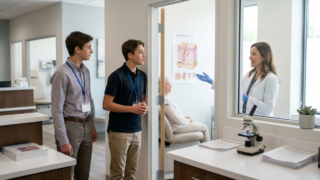
Dermatology is among the most competitive specialties in American medicine and among the least accessible to high school students seeking early clinical exposure. Students who pursue medical internships for high school students with an interest in dermatology as a potential career direction often find that direct access to dermatology-specific clinical settings is limited by age restrictions, liability considerations, and the sensitive nature of dermatological examinations. Understanding what access is realistic, what alternatives exist, and what preparation strengthens a future path toward dermatology gives students a more accurate and actionable roadmap than a general interest in the specialty alone.
For students who are still building their foundational understanding of how clinical observation works for minors, including what is permitted across different healthcare settings, this early healthcare exploration guide covers the baseline expectations that apply before entering any specialty-adjacent clinical environment.
What Dermatology Actually Involves as a Clinical Specialty
Dermatology is the branch of medicine concerned with the diagnosis and treatment of conditions affecting the skin, hair, nails, and mucous membranes. It is both a medical and procedural specialty. Dermatologists diagnose conditions ranging from common skin infections and inflammatory disorders like eczema and psoriasis to skin cancers, including melanoma and basal cell carcinoma. They perform procedures including biopsies, excisions, laser treatments, and phototherapy.
The specialty spans cosmetic and medical practice, which creates a clinical environment that looks different depending on the setting. Academic medical center dermatology involves complex diagnostic workups and the management of rare or severe skin conditions. Private practice dermatology may involve a higher proportion of cosmetic procedures and routine condition management. Dermatology in global health settings is particularly significant because skin conditions are among the most prevalent health problems in tropical and resource-limited environments, where infectious skin diseases, parasitic infestations, and conditions exacerbated by limited healthcare access are common.
Access Limitations for Teen Interns in Dermatology Settings
Dermatological examinations involve the inspection of skin across the full body surface, including areas that require significant patient privacy considerations. This makes dermatology one of the more access-restricted specialties for minor observers. Most dermatology practices and academic dermatology departments do not permit minor observers in examination rooms during patient encounters for this reason.
Students should understand that these restrictions are not arbitrary. They reflect the same patient dignity and privacy standards that apply across all clinical settings, with dermatology presenting a higher degree of exposure than many other specialties. This is also why any program that claims to offer high school students direct observation of full-body dermatological examinations should be approached with significant caution.
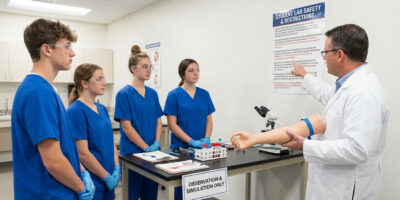
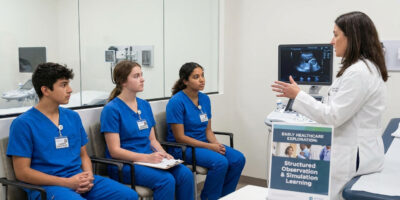
What is available to teen interns in dermatology-adjacent settings includes observation of patient intake processes and administrative workflows, educational sessions on dermatology organized for students by academic medical centers or professional organizations, global health clinical settings where skin health assessment is integrated into community health outreach, and clinical simulation components that include skin condition identification using case images and training models.
Global Health and Skin Health: A Relevant Connection for Teen Interns
In global health clinical settings, particularly in sub-Saharan Africa and Latin America where IMA operates programs, skin conditions are a significant component of primary care. Infectious diseases with dermatological manifestations, including fungal infections, scabies, impetigo, and conditions associated with HIV, are among the most commonly encountered presentations in community health clinics and hospital outpatient departments.
Teen interns who observe in these settings encounter dermatology not as an isolated specialty but as an integrated component of primary and community care. They observe how providers identify and manage common skin conditions in settings where specialist referral is not readily available. They observe how environmental and social factors, including access to clean water, housing conditions, and nutritional status, directly affect skin health outcomes at the community level.
This type of exposure is substantively different from observation in a private dermatology practice but is professionally relevant for students interested in dermatology precisely because it illustrates the global burden of skin disease and the significant need for dermatological expertise in under-resourced settings.
Academic Preparation That Strengthens a Dermatology Interest
Students with a genuine interest in dermatology benefit from building a specific academic foundation in high school that goes beyond the general pre-medical curriculum.
Biology coursework with a strong emphasis on cellular and molecular biology is directly relevant to dermatology, which involves a detailed understanding of skin cell biology, immune responses in the skin, and the mechanisms of carcinogenesis. Chemistry is similarly important for understanding pharmacological treatments and the mechanisms of dermatological procedures.
Art and visual training, though not a standard part of pre-medical preparation, is specifically noted by dermatology educators as relevant to the specialty’s heavy reliance on visual pattern recognition in diagnosis. Students with strong visual skills and the ability to describe and compare visual patterns analytically may find this a meaningful differentiator in a field where perceptual accuracy is clinically significant.
The American Academy of Dermatology provides public educational resources on common skin conditions, skin cancer identification, and dermatological health that give students a substantive introduction to the content of the specialty accessible at the high school level.
How to Discuss Dermatology Interest in College and Pre-Med Applications
Students applying to college or pre-medical programs with a stated interest in dermatology should be prepared to answer a simple question: What have you actually done to explore this interest?
The honest answer for most high school students will not involve direct dermatology clinical observation. It will involve a combination of educational engagement, global health clinical experience that includes skin health components, academic work relevant to the specialty, and a clear articulation of why this particular field is compelling to them.
Students who can describe a specific encounter in a global health clinic where they observed how a skin condition affected a patient’s quality of life, and connect that observation to a broader understanding of the specialty’s scope and significance, tell a more credible story than students who list dermatology as a career interest without any experiential grounding. The Skin of Color Society offers educational resources on dermatology for diverse patient populations that are directly relevant to students with clinical exposure in global or multicultural health settings and those considering dermatology as a specialty.
Frequently Asked Questions
Why is direct dermatology clinical access restricted for high school student observers?
Dermatological examinations involve inspection of skin across the full body surface, including areas that require significant patient privacy considerations. This makes dermatology one of the more access-restricted specialties for minor observers. Most dermatology practices and academic departments do not permit minor observers in examination rooms during patient encounters for this reason. The restriction reflects the same patient dignity and privacy standards that apply across all clinical settings, with dermatology presenting a higher degree of physical exposure than many other specialties.
What clinical exposure related to dermatology is actually available to high school students?
Available options for high school students include educational sessions on dermatology organized by academic medical centers or professional organizations, observation of patient intake and administrative workflows in dermatology adjacent settings, global health clinical programs where skin conditions are integrated into primary care and community outreach, and clinical simulation components that include skin condition identification using case images and training models. Students interested in dermatology benefit from global health programs particularly because skin diseases are among the most prevalent conditions in tropical and resource-limited settings where these programs operate.
How is dermatology relevant in global health settings?
In sub-Saharan Africa, Latin America, and other regions where global health programs operate, skin conditions are a significant component of primary care. Infectious diseases with dermatological manifestations, including fungal infections, scabies, impetigo, and conditions associated with HIV, are commonly encountered in community health clinics and hospital outpatient departments. Teen interns in these settings observe skin health assessment integrated into primary care in a way that illustrates the global burden of skin disease and the need for dermatological expertise in under-resourced settings, providing professional context that a domestic private practice observation could not replicate.
What academic preparation in high school is most relevant for a dermatology career?
Biology with emphasis on cellular and molecular biology is directly relevant because dermatology involves detailed understanding of skin cell biology, immune responses in the skin, and the mechanisms of carcinogenesis. Chemistry supports understanding of pharmacological treatments and dermatological procedures. Visual arts or training in visual description and pattern recognition, while not a standard pre-medical subject, is noted by dermatology educators as relevant to the specialty’s heavy reliance on visual diagnosis. Students who develop the ability to describe and compare visual patterns analytically have a meaningful skill for a field where perceptual accuracy is clinically significant.
How competitive is dermatology as a specialty and what does that mean for high school preparation?
Dermatology is consistently among the most competitive residency matches in US medicine. Matching into dermatology requires not only strong academic performance throughout medical school but a research record, clinical distinction, and often demonstrated commitment to the specialty through research or scholarly activity specifically in dermatology. For high school students, this means that the preparation required to reach this specialty is extensive and begins early. Academic excellence, research literacy, and a clearly articulated and substantiated interest in the specialty are all relevant to building the profile that competitive residency applicants present.
What is the difference between observing dermatology in a domestic vs. global health setting?
Observing dermatology in a domestic private practice, to the extent it is accessible to a minor, primarily involves common conditions in patients who have consistent healthcare access. Observing skin health in a global health clinical setting involves a broader and more severe spectrum of skin disease in patients whose conditions have often progressed further due to limited access to care, and where the social and environmental contributors to skin health are directly visible. Both contexts are professionally relevant, but the global health context provides a more complete picture of the specialty’s scope and the public health dimensions of skin disease.
How should a student with genuine dermatology interest describe it on a college application?
A student with genuine dermatology interest should describe specific activities that substantiate it: engagement with dermatology educational resources, global health clinical observation that included skin health components, visual or scientific coursework relevant to the specialty, and any research or independent study in related areas. The student should be able to articulate why dermatology specifically, rather than medicine generally, and connect that interest to observable preparation. Generic statements of specialty interest without supporting experience are common and not competitive. Specific, substantiated descriptions of how the interest developed and how the student has prepared for it are what distinguish a credible application narrative.