High school students who are serious about healthcare often feel pressure to “pick a specialty” early, especially as they start seeking real exposure beyond clubs and coursework. Parents usually want something more practical: which specialties a teen can actually observe, which environments are appropriate for minors, and how to avoid wasting time on unrealistic expectations. For many families, the first step is understanding what structured medical internships for high school students typically allow and what they cannot offer.
Once that baseline is clear, specialty exploration becomes much easier to plan. A strong approach starts with a planning resource for early exposure that helps students match interests to settings they can access ethically, then build experiences that show consistency instead of random sampling.
Why Specialty Choice Feels So Important So Early
Specialties sound like identity. “Pediatrics” suggests working with children. “Surgery” suggests technical skill and urgency. “Emergency medicine” suggests fast decisions. It is normal for teens to latch onto one label and start chasing anything connected to it.
The catch is that specialty work looks different up close than it does online. A student may love the idea of cardiology but feel bored by long clinic visits and detailed medication discussions. Another student may think they want surgery and then discover they are more interested in anesthesia, nursing workflow, imaging, or rehabilitation. Early specialty exploration is most useful when it is treated like a process of narrowing based on real observation, not a commitment.
Start With The Environment, Not The Specialty
In high school, the biggest limiter is usually the environment, not the student’s motivation. Some settings are easier for minors because privacy and workflow are more controllable. Others are difficult because the risk, sensitivity, and pace make teen observation harder to supervise.
A simple rule is that outpatient specialty clinics are often more realistic than inpatient specialty services for minors. Clinics have scheduled appointments, predictable staffing, and clearer consent moments. Hospital units have higher acuity, more interruptions, and more privacy-sensitive events.
This is why many students get their first real specialty exposure by observing outpatient clinics, such as pediatrics, family medicine, orthopedics, dermatology, sports medicine, or women’s health, that focus on routine care. These settings still teach the fundamentals of how clinicians think, communicate, and plan, without placing a teen in the middle of urgent care.
What Specialty Exploration Looks Like For Teens
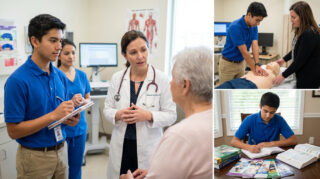
For high school students, specialty exploration usually occurs through three lanes: observation, team support, and simulation-based learning. A teen is not choosing a specialty by “doing the work.” They are choosing by watching how work actually unfolds and noticing what feels meaningful over time.
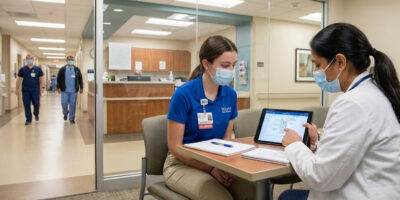
Observation is the most common lane. It might look like sitting in on clinic visits when patients agree, watching rounds from the edge of the group, or observing how a team discusses cases outside patient rooms. This is often called clinical observation for students, and it is the backbone of most healthcare internships for high school students.
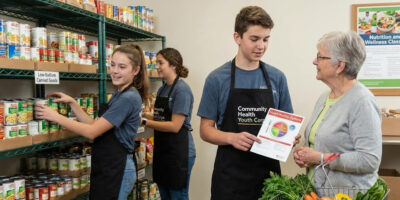
Team support is a second lane. In some programs, teens are close to clinical areas but contribute only in non-clinical ways, such as organizing patient education materials, helping with approved patient flow tasks, or supporting front-desk systems that keep clinics moving. This can still be valuable because it teaches real-world workflow and professional behavior in healthcare settings.
Simulation is the third lane and is often the safest way for teens to explore technical interests. Simulation allows students to practice concepts like sterile technique principles, knot-tying on models, or basic vitals practice under supervision, without turning “learning” into unlicensed patient care.
A Practical Way To Narrow Specialties Without Guessing
If you want a realistic process, start by sorting specialties into categories based on what you want to do day to day. Most high-school students can identify preferences once they see the right comparisons.
Some students are relationship-driven. They like longer conversations, follow-up, and continuity. These students often feel drawn to pediatrics, family medicine, internal medicine, adolescent medicine, or certain women’s health settings.
Some students are procedure-oriented. They like tools, precision, and clear steps. Surgery is the obvious label, but many non-surgical specialties are also procedural, including some cardiology work, endoscopy-focused gastroenterology, or interventional imaging fields. For teens, procedural curiosity is best explored through observation and simulation, not by chasing hands-on access.
Some students are pace-driven. They want variety, urgency, and quick decisions. Emergency medicine and urgent care fit this style, but so do some inpatient services where patient status changes rapidly. In high school, access to these spaces is often limited, so students may need to explore pace through adjacent areas like triage flow, urgent clinic operations, or structured hospital observer programs.
Some students are diagnostics-oriented. They like interpreting results, images, and data. Radiology, pathology, cardiology testing, and lab medicine fit this style, but teens can start exploring diagnostics through imaging observation, lab workflow observation, or structured experiences that show how diagnostic information drives decisions.
What To Do If You Think You Want Surgery
Surgery is one of the most common specialties teens mention first, and it is also one of the hardest to access safely as a minor. The operating room is not a classroom. It is a sterile, high-stakes environment where one extra person adds risk. Many hospitals do not allow minors in operating rooms at all.
If you are interested in surgery, the smartest strategy is to explore surgical care outside the OR first. You can learn a great deal by observing pre-op clinic visits, post-op follow-up appointments, wound care discussions, and inpatient rounds where surgical teams explain plans. You can also learn how imaging and labs guide surgical decisions, which often reveals whether you like the reasoning side of surgical care or only the idea of procedures.
If an OR observation opportunity becomes available later, students who have already shown discretion, calm behavior, and strong privacy habits are the ones most likely to be invited.
How To Avoid “Specialty Chasing” That Hurts Your Profile
Teens sometimes jump from specialty to specialty every few weeks because they think variety looks impressive. In practice, this often reads as scattered. Colleges tend to value depth, reliability, and clear motivation more than a long list of unrelated short exposures.
A better strategy is to build a layered experience where each step connects to the next. For example, a student might spend months in a clinic support role, add a structured observer program, and then pursue a supervised summer healthcare experience for teens that includes multiple departments. That progression looks intentional and credible.
Specialty interest can still show up, but it should be anchored by consistency. A student who wants to pursue pediatrics might volunteer in child-focused community settings and then seek pediatric clinic observation. A student interested in orthopedics might combine sports-injury-prevention volunteering with orthopedic clinic observation. Those combinations feel coherent and real.
Timing Matters More Than Most Students Expect
Hospital-based opportunities for teens are often limited and can fill fast when applications open, especially for programs that place minors near clinical areas. Some students spend months on waitlists or discover their local hospitals have strict age requirements that delay access.
Our programs provide an expansive alternative by arranging structured, supervised placements in partner clinical settings abroad with planned rotations and defined expectations, which can help students who cannot secure local opportunities or who want a more immersive schedule.
Questions That Help Families Evaluate Specialty Exposure
Families can avoid confusion by asking a short set of practical questions before committing to any program or placement. These questions reveal whether a specialty experience is real, supervised, and appropriate for a minor.
- Who is responsible for the student during clinical hours, and who is the on-site point of contact
- How patient consent is handled for teen observers
- Where the student will physically be during observation, and what areas are restricted
- What the program prohibits for minors, especially procedures, medications, and documentation access
- What training is required for privacy and safety before entering clinical spaces
If answers are vague, the program may be relying on marketing language rather than clear boundaries.
How To Use Early Experience To Make A Smart Specialty Choice
At the high-school level, the best specialty choice is often a direction, not a final label. Your goal is to learn how you respond in clinical environments, which kinds of patient interaction feel natural, and what pace and workflow you can handle.
A simple way to do this is to keep a short log after each experience that notes the setting, the role you observed, and what you noticed about communication, teamwork, and patient needs. Over a few months, patterns tend to emerge. Students start describing certain encounters with more detail and more interest, which is usually a sign to explore that space further.
Next Steps
Students who want to choose a specialty wisely in high school should focus on realistic settings, consistent involvement, and clear supervision rather than chasing the most dramatic department name. Outpatient clinics, structured observer programs, and simulation-based learning can provide credible specialty exposure without crossing boundaries. Over time, students who demonstrate reliability and discretion often earn access to more complex observation opportunities, even in specialties that are harder to enter early.