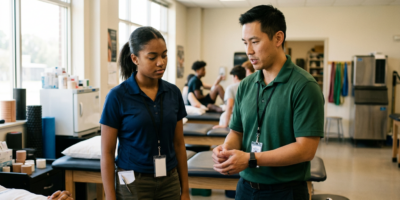
Most high school students who complete clinical internships walk away with something valuable: real exposure to healthcare, hours logged, and a supervisor who can vouch for their work. But when it comes time to write about that experience on a college or pre-health application, many students freeze. They know the experience mattered, but they struggle to put it into words that an admissions reader will actually care about. The gap between having the hours and writing about them well is where strong applications are built. Programs like medical research internships for high school students give students structured clinical exposure, but the real work of translating that exposure into compelling activity descriptions falls on the student.
This matters now more than ever for younger applicants. If you are a high school student or a parent helping one prepare, the activity section of a college application is not a formality. It is often the only place a student can show sustained commitment, intellectual curiosity, and the kind of maturity that admissions committees remember. Medical summer internships for high school students provide a strong foundation, but without clear, specific, well-written descriptions, those hours risk sounding generic. The goal of this article is practical: to help students take what they actually did, observed, and reflected on during an internship and turn it into descriptions that are honest, specific, and memorable.
Why Activity Descriptions Matter More Than Hour Counts
Admissions committees at competitive colleges and pre-health programs see thousands of applications from students who list “hospital volunteering” or “clinical shadowing.” The hours alone rarely stand out. What separates a strong entry from a forgettable one is the quality of the description, the specificity of detail, and the evidence that the student actually thought about what they saw.
The AMCAS application, used by most allopathic medical schools, allows applicants to list up to 15 experiences. Each entry gets 700 characters for a standard description and 1,325 characters for experiences marked as “most meaningful.” PA school applications through CASPA allow 10 experience entries with similar constraints. These are tight windows. Every sentence has to earn its place.
For high school students, the college application comes first, and the Common App activities section is even more limited. You get 150 characters for a description and 50 characters for a position title. That is roughly one to two sentences. If those sentences are vague (“helped in a clinic,” “shadowed doctors”), you have wasted the entry. If they are specific (“observed maternal health triage in a rural clinic; assisted with patient intake under supervision”), you have given the reader something concrete to remember.
The point is not to exaggerate. It is to be precise about what you actually did and what you took from it.
What High School Students Actually Do in Clinical Internships
Before you can write a strong description, you need an honest understanding of what your role was. High school students in clinical internships, whether domestic or international, do not practice medicine. They observe, support, and learn within clearly defined boundaries.
In a structured program, a typical day might include a morning briefing with clinical supervisors, followed by observation rounds with healthcare teams. Students may assist with patient intake tasks like recording basic information or, where approved and supervised, help collect vital signs. They observe procedures such as wound care or basic diagnostics. They sit in on community health education sessions. They participate in reflection and discussion with mentors at the end of the day.
This is not a limitation. It is the appropriate scope for a student at this stage. Admissions committees know this. They are not looking for a high schooler who performed surgery. They are looking for a student who watched carefully, asked good questions, and came away with a more grounded understanding of what healthcare work involves. When you write about your internship, you should describe your actual role honestly: observation, supervised support, reflection. That honesty is what makes the description credible.
For students who participated in international programs, there is an added layer. Observing healthcare delivery in a resource-limited setting, seeing how clinical officers or community health workers operate in systems very different from the United States, or encountering disease patterns uncommon in American hospitals; these are experiences worth naming specifically. An article on traditional and Western medicine in Tanzania illustrates how international clinical exposure can broaden a student’s perspective in ways that are difficult to replicate at home.
How to Write a Description That Stands Out in 150 Characters
The Common App gives you almost no room. That constraint is actually useful, because it forces you to cut everything that does not matter and keep only what does.
Start With What You Did, Not Why You Did It
Your motivation can come through in your essay or interview. In the activity description, lead with the action. What was your role? Where were you? What did the work look like on a daily basis?
Weak: “I interned at a clinic and learned a lot about healthcare and helping people.”
Stronger: “Observed maternal and pediatric care in a supervised clinical internship; assisted with patient intake documentation.”
The second version tells the reader exactly what happened. It is specific, credible, and uses the limited space efficiently.
Name the Setting and Scope
If your internship was in a rural clinic, say so. If it involved community health outreach, name it. If you observed a particular specialty, include that. Context makes your description real. “Clinic” could mean anything. “Rural primary care clinic serving agricultural communities” means something.
Include One Concrete Detail
Even one specific observation or task can elevate a description from generic to memorable. “Recorded patient histories during intake” is more useful than “assisted staff.” “Observed the use of rapid diagnostic testing for malaria in a pediatric ward” tells the reader you were paying attention.
Expanding Into Longer Application Formats
When you have more space, such as in the AMCAS 700-character description or a secondary essay, you can do more. But “more” does not mean padding. It means adding reflection, context, and connection.
Describe What You Observed, Then What You Understood
A strong longer description moves from action to insight. First, state what you did and saw. Then, explain what it taught you. This is where the reflection component of a good internship program pays off.
For example: “During a four-week clinical internship, I observed daily patient care in a primary care setting serving a low-income community. I assisted with intake documentation and sat in on health education sessions focused on nutrition and chronic disease prevention. Watching providers adapt treatment plans around patients’ financial and transportation barriers gave me a concrete understanding of how social determinants shape health outcomes.”
That description is specific, honest about the student’s role (observation and support, not independent care), and shows genuine learning.
Connect the Experience to a Larger Pattern
If your internship raised questions you continued to think about, say so. If it led you to pursue additional reading, coursework, or volunteering, mention the connection. Admissions committees value sustained engagement and intellectual follow-through, not just a single experience in isolation.
Students who want detailed guidance on how to document clinical experiences during high school for future applications will find it helpful to build a system early, logging observations and reflections as they go rather than trying to reconstruct everything months later.
Mistakes That Weaken Activity Descriptions
Knowing what to avoid is just as important as knowing what to include. These are the most common errors students make when writing about clinical internships.
Overstating Your Role
If you observed a procedure, do not describe yourself as having “assisted with” it unless you genuinely did. If you helped organize supplies, do not frame it as “managing clinical operations.” Admissions readers are experienced professionals. They know what a high school intern does and does not do. Inflating your role does not impress them; it raises doubts about your honesty.
Being Vague
“I gained valuable experience in a medical setting” tells the reader nothing. What setting? What did you see? What was the patient population? What stood out to you? Vague descriptions signal that the student either did not pay attention or cannot articulate what they learned. Neither is a good look.
Ignoring the Reflection
Listing tasks without any indication of what you learned makes the experience sound mechanical. You do not need to claim the internship changed your life. You do need to show that you thought about what you saw. Even a brief line, such as “This experience clarified my interest in primary care and raised questions about healthcare access that I continue to think about,” adds substance.
Forgetting the Practical Details
Supervisors’ names, contact information, exact dates, and accurate hour counts all matter. Many programs and schools will verify this information. The AAMC’s guidance on documenting clinical experiences makes it clear that verification is part of the process. Keep records from day one.
What Parents Should Know About Activity Descriptions
Parents often worry about whether an internship will “count” on an application. The honest answer is that any legitimate, supervised clinical experience can strengthen an application, but only if the student can write about it well.
If your student participated in an international program, you may also wonder how admissions committees view that type of experience. The short answer: positively, as long as the student describes it honestly and reflects meaningfully. Committees at schools like those described in the University of the Incarnate Word School of Osteopathic Medicine admissions guide value applicants who show genuine engagement with underserved communities and an understanding of health disparities. International exposure, when structured and supervised, can demonstrate both.
What committees do not want to see is a student who treats the experience as a resume line with no depth behind it. The best thing a parent can do is encourage their student to keep a journal during the internship, noting specific observations, questions, and moments that stood out. That raw material makes writing the activity description far easier later.
Safety and supervision also matter for how the experience reads on an application. A structured program with licensed supervisors, clear daily schedules, defined roles, and regular check-ins with families is easy to describe credibly. An unstructured trip with no clear supervision is harder to frame and harder for an admissions committee to take seriously. Programs that provide documentation of hours, supervisor evaluations, and certificates of completion give students the evidence they need to back up their descriptions.
Putting It All Together Before You Submit
Before you finalize any activity description, run it through three simple tests.
First, the specificity test: could this description apply to any student at any clinic anywhere? If yes, it needs more detail. Add the setting, the population, the specialty, or one concrete observation that makes it yours.
Second, the honesty test: does this description accurately reflect what you did and did not do? If an admissions reader called your supervisor, would the supervisor recognize the experience you described? If not, revise.
Third, the “so what” test: does the reader understand why this experience matters to you, even briefly? You do not need a dramatic revelation. A single sentence showing that you thought carefully about what you observed is enough.
The CASPA application guidelines for documenting healthcare experience follow similar principles. Whether you are applying to college now or preparing for professional school later, the skills you build writing these descriptions, specificity, honesty, and reflection, will serve you at every stage.
Strong activity descriptions are not about sounding impressive. They are about showing that you showed up, paid attention, and came away understanding something you did not understand before. That is what admissions committees remember. If your internship gave you that kind of clarity, even a 150-character description can make it visible. If you explore structured high school internship options, start thinking about documentation from the first day, not the last.
Frequently Asked Questions
How many characters do I have for an activity description on the Common App?
The Common App gives you 150 characters for the activity description and 50 characters for the position or leadership title. That is roughly one to two sentences. Every word needs to be specific and purposeful; cut filler phrases and lead with what you actually did.
Should I mention that my internship was international?
Yes, if it was. Naming the setting, whether it was a rural clinic in East Africa or a community health program in South America, adds specificity and context. Just be sure to describe the experience honestly, focusing on what you observed and learned rather than implying you provided direct patient care.
What if my internship was short and I did not have many hours?
A shorter experience can still produce a strong description if you write about it with specificity and reflection. Focus on what you observed, what questions the experience raised, and how it connects to your ongoing interest in healthcare. Quality of insight matters more than quantity of hours, especially at the high school level.