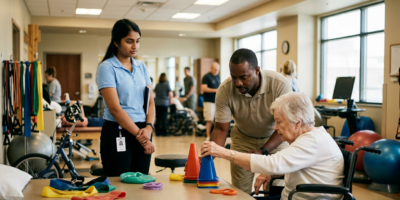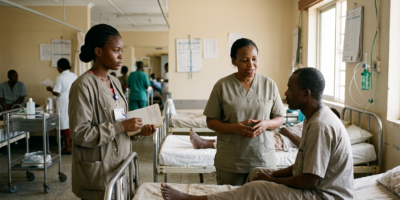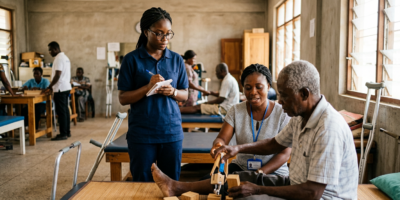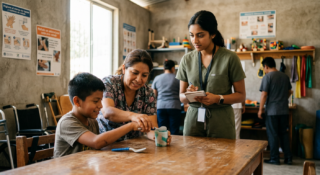
Occupational therapy in low-resource environments requires a specific set of skills that most pre-OT students have never been asked to practice. When standardized assessment tools are unavailable, when adaptive equipment doesn’t exist in a supply closet, and when cultural context shapes every clinical decision, the therapist’s ability to think on the fly becomes the most important tool in the room. For students preparing to enter the field, structured exposure to these settings can sharpen clinical reasoning in ways that complement, rather than replace, domestic training.
This matters right now because the profession is growing. The Bureau of Labor Statistics projects strong job growth for occupational therapists in the coming years, and the populations OTs serve are becoming more diverse. Admissions committees at OT programs want to see that applicants understand this diversity, not just in demographic terms, but in terms of the practical constraints that shape real-world practice. A pre-OT student who has spent time observing therapy delivered with limited resources, under supervision, in an unfamiliar system brings something specific and credible to their application and, eventually, to their career.
What “Low-Resource” Actually Means in an OT Context
The phrase “low-resource environment” gets used loosely, so it’s worth being precise. In clinical terms, it refers to settings where some combination of the following is true: there is limited access to standardized equipment, fewer trained OT practitioners per capita, less formal infrastructure for rehabilitation, and a higher reliance on community and family networks to sustain therapy outcomes.
In many low- and middle-income countries, occupational therapy as a distinct profession is still developing. The World Federation of Occupational Therapists (WFOT) has documented the uneven global distribution of OT training programs, with a heavy concentration in high-income countries. This means that in many parts of sub-Saharan Africa, South America, and Southeast Asia, the ratio of occupational therapists to people who need services is dramatically lower than what students see in the United States.
What does this look like on the ground? A therapist might fabricate a splint from locally available materials instead of ordering one from a catalog. Family members might be trained to carry out daily exercises because home health visits aren’t feasible. A community health worker, rather than a licensed OT, might be the primary point of contact for a child with cerebral palsy. These realities don’t represent failures of the system; they represent the system adapting to its constraints. And for a student learning to think like a clinician, observing that adaptation is deeply instructive.
Why Adaptive Thinking Matters More Than You Might Expect
In a well-funded U.S. clinic, a pre-OT student can observe excellent care. But the abundance of resources can mask the reasoning behind clinical decisions. When a therapist reaches for a specific tool, it’s easy to associate the tool with the outcome, rather than understanding the clinical logic that connects assessment to intervention. Strip away the tools, and the logic has to stand on its own.
This is where occupational therapy in low-resource environments teaches something distinct. Students who observe clinicians working with fewer resources often report that they start to see the “why” behind interventions more clearly. When a therapist in a rural clinic modifies an activity using household items, the student watches problem-solving happen in real time. That kind of observation builds what educators sometimes call “adaptive clinical thinking,” the capacity to adjust your approach based on what’s actually available, who the client is, and what the environment allows.
This skill isn’t just useful abroad. Back in the U.S., OTs routinely work with clients who can’t afford recommended equipment, who live in homes that aren’t easily modified, or who have cultural perspectives on disability that differ from clinical assumptions. The student who has already seen how care adapts to context has a head start in those situations.
If you’re thinking about how structured international experiences fit alongside your other clinical preparation, planning your gap year or summer with a focus on internships that build real skills is worth considering early in your timeline.
How IMA Structures OT Internships for Pre-OT Students
IMA’s approach to occupational therapy internships is built around observation, supervised participation, mentorship, and reflection. This is important to understand because the structure determines what a student actually gains.
Supervision and Scope
Pre-OT students are not licensed therapists. In IMA internships, students observe and assist within approved limits, always under the direct supervision of qualified healthcare professionals. They do not independently assess patients, prescribe interventions, or perform unsupervised therapy. This isn’t a limitation of the program; it’s the ethical standard that any responsible program should maintain.
What students do get is proximity to real clinical decision-making. They watch how a supervising therapist evaluates a patient’s functional abilities in a setting where standardized tools may not be available. They observe how treatment plans are communicated to families who will be carrying out much of the day-to-day work. They see how cultural context shapes what a “successful outcome” looks like for a particular client.
Reflection as a Structured Practice
One of the distinguishing features of well-designed international health programs is built-in reflection. IMA incorporates journaling, debriefing, and guided discussion into its internship structure. This isn’t filler. For pre-OT students, reflection is the mechanism that converts observation into learning. A student who watches a therapist improvise an adaptive device but never processes what happened, what the reasoning was, what the outcome suggested, loses most of the value.
Reflection also helps students confront their own assumptions. Many pre-OT students arrive with ideas about what “good” therapy looks like that are shaped entirely by U.S. clinical norms. Structured reflection creates space to examine those assumptions without judgment and to develop what many OT educators call cultural humility.
Clinical Settings and Community-Based Work
IMA placements can include hospitals, rehabilitation centers, and community-based programs. For OT students specifically, community-based rehabilitation is often where the richest learning happens. Occupational therapy is, by nature, concerned with how people function in their actual environments. Observing therapy delivered in a client’s home, in a school, or in a community center gives students a view of the profession that clinic-based observation alone doesn’t provide.
Students interested in how different types of clinical placements contribute to professional development might also find it useful to read about how clinical hours contribute to competitive applications, which covers the broader question of how admissions committees evaluate experience.
What Pre-OT Students Should Realistically Expect
Setting honest expectations matters more than generating excitement. Here is what a pre-OT student should understand before committing to an international OT internship.
You Will Primarily Observe
Especially in the early days of a placement, your role is to watch, listen, and learn. This can feel frustrating if you expected to be working directly with patients right away. But observation, when done with intention and structure, is one of the most effective ways to build clinical reasoning. You are learning to see patterns, to notice what a therapist prioritizes, and to understand how context shapes every clinical encounter.
The Conditions You See Will Differ from U.S. Norms
In many of the settings where IMA operates, the conditions presenting for OT intervention may include cerebral palsy, traumatic injuries, burns, developmental delays, and consequences of infectious disease. The prevalence and presentation of these conditions can differ significantly from what you’ve studied in textbooks written for U.S. audiences. The WHO’s reporting on global disability prevalence provides important context: over one billion people worldwide live with some form of disability, and a disproportionate number are in low- and middle-income countries with limited access to rehabilitation.
Language and Culture Will Challenge You
Even with basic language training, communication in a clinical setting requires patience and humility. You may rely on interpreters. You will encounter beliefs about health, disability, and family roles that differ from your own. This is not an obstacle to learning; it is part of the learning. The ability to provide effective OT services to people whose worldview differs from yours is a core professional competency, and it starts with the willingness to be uncomfortable.
You Will Not “Fix” Anything
This is perhaps the most important expectation to set. Pre-OT students are not going abroad to solve problems. They are going to observe, to support, to learn, and to develop perspective. The real impact of the experience is on the student, not on the healthcare system they briefly enter. Programs that frame student participation as a form of rescue are ethically questionable. IMA’s model is designed around learning, not service delivery by unqualified visitors.
How This Experience Strengthens an OT School Application
OT admissions committees look for specific qualities in applicants: critical thinking, cultural sensitivity, commitment to serving diverse populations, and genuine understanding of what the profession involves. An international OT internship, when structured well and reflected on thoughtfully, can provide evidence of all four.
Writing About It Effectively
The key to using this experience in a personal statement or application essay is specificity. Admissions reviewers can spot vague claims about “gaining perspective” or “being moved by the experience.” What stands out is a concrete story: the moment you watched a therapist teach a mother how to position her child using materials from the household, and what that taught you about client-centered care. The moment you realized that your assumptions about disability were shaped by a particular cultural lens, and how you intend to carry that awareness forward.
Students who write effectively about international experiences focus on what they observed, what they questioned, how their thinking changed, and what that means for how they plan to practice. They don’t overstate their role. They don’t claim credit for outcomes. They show growth through honesty.
If you’re building a broader strategy for your pre-health application, tracking clinical and volunteer hours effectively is a practical skill that applies across disciplines, including OT. For roles that build those hours, see our guide to occupational therapy volunteer experience.
What Admissions Committees Recognize
A well-structured international experience signals several things: that you took initiative, that you sought out unfamiliar challenges, that you can function in ambiguous situations, and that you care about equity in healthcare. None of these guarantee admission to any program, but they contribute to an application profile that demonstrates maturity and seriousness about the profession.
It’s also worth noting that admissions committees are sophisticated readers. They can tell the difference between a student who went abroad with a well-supervised, ethically structured program and one who participated in something closer to medical tourism. The structure and reputation of the program matter.
Ethical Responsibilities for Pre-OT Students Abroad
Any discussion of occupational therapy in low-resource environments has to address ethics directly. Pre-OT students working internationally carry specific responsibilities, and understanding them is part of professional development.
Patient Boundaries and Confidentiality
Students must maintain patient privacy at all times. This includes being thoughtful about photography, social media, and how they discuss cases, even informally. Obtaining informed consent before documenting anything is not optional; it is a baseline professional expectation.
Cultural Humility Over Cultural Competence
The field has increasingly moved toward the concept of cultural humility, which emphasizes ongoing self-reflection and recognition of power dynamics, rather than the idea that you can become “competent” in another culture through a short experience. Pre-OT students should approach international placements with the understanding that they are guests in a clinical and cultural context, not experts.
Emotional Wellbeing and Self-Care
Working in settings where resources are limited and needs are high can be emotionally difficult. Students should be prepared for this and should use the support structures the program provides, including supervision check-ins, peer debriefing, and access to program staff. Recognizing your own emotional limits is not a weakness; it is a professional skill.
The WHO’s framework for health workforce support emphasizes the importance of sustainable approaches to healthcare delivery, including attention to the wellbeing of all participants in the care system. That principle applies to students, too.
Making a Grounded Decision About an International OT Internship
Choosing to pursue an international internship as a pre-OT student is a significant decision, and it should be made thoughtfully. Here are the questions worth asking yourself before you commit.
First, are you genuinely interested in understanding how OT functions in different contexts, or are you primarily looking for a resume line? Both motivations are understandable, but the students who benefit most are the ones who are genuinely curious about the profession in a broader sense.
Second, are you prepared to be uncomfortable? Not in a dangerous way, but in the way that comes from being a beginner in an unfamiliar system. If you need to feel competent at all times, an international placement will challenge you. That’s the point, but it requires a certain readiness.
Third, have you looked carefully at the program’s structure? Supervision quality, ethical guidelines, reflection components, and housing and safety arrangements all matter. A program that cannot clearly articulate how it handles these things is not one you should trust with your time or safety.
IMA’s model is built around the idea that structured exposure, professional mentorship, and guided reflection produce better-prepared future clinicians. The experience is not a shortcut. It is a way to build the kind of thinking that will serve you throughout your career, in whatever setting you eventually practice.
Frequently Asked Questions
Do I need to be enrolled in an OT program to participate in an IMA internship?
No, IMA internships are designed for pre-OT students who are preparing to apply to OT programs, not only for those already enrolled. The experience is structured around observation and supervised learning, so you do not need clinical credentials to participate. Check IMA’s current program requirements for specific eligibility details.
Will I get to do hands-on therapy with patients during the internship?
Pre-OT interns are not licensed practitioners, so independent hands-on therapy is not part of the experience. You will observe qualified professionals, and you may assist with specific tasks within approved limits and under direct supervision. The focus is on building your clinical reasoning and understanding of the profession, not on performing therapy.
Can an international OT internship count toward my observation hours for OT school applications?
Policies on observation hours vary by OT program. Some programs accept international clinical observation; others have specific requirements about settings or supervision credentials. Before applying, contact the admissions offices of the programs you’re considering to ask how they view international experiences. IMA does not guarantee that hours will be accepted by any specific school.