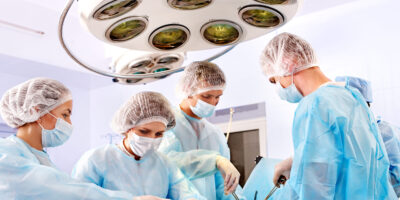

Global health experience before medical school can strengthen your application when it is observational, supervised by licensed local clinicians and paired with honest reflection. In one study of graduates from a public U.S. medical school, those who completed a global elective had a 22% greater prevalence of later working with underserved populations.
Placements that promise procedures, run pop-up clinics or invite you beyond your training do the opposite, and admissions readers recognize them quickly. If you are new to the ethics involved, our guide to ethical engagement in global health covers the principles in detail.
The New Bar for Medical School Acceptance
The path to medical school is competitive. Strong grades and a strong MCAT score open the door, but they do not decide the outcome on their own. Admissions committees want to see the personal and professional qualities that numbers cannot capture: how you treat people, how you handle uncertainty and why you want this work.
Interest in global health has grown for good reasons. Many aspiring physicians want broader clinical exposure and a chance to understand how care works in other health systems. At the same time, schools have become cautious about international programs that place unqualified students in clinical roles or operate without proper oversight. A poorly chosen program can raise serious ethical concerns, and it can follow you into your interviews.
This guide explains how medical schools read applications now, which competencies a well-run global health experience can help you show, who benefits from one and who should choose something else, and how to tell an ethical program from a risky one. The right placement is not just another line on your activity list. It can be a structured, mentored setting that gives you clear, defensible evidence of readiness for medical training.
How Medical Schools Read Applications Now
What Is Mission-Aligned Selection?
For years, admissions was described as a simple equation of grades and test scores. The AAMC now calls its framework mission-aligned selection and retention, the approach formerly known as holistic review. It describes a flexible, evidence-informed way of recruiting and assessing applicants by considering their experiences, attributes and academic metrics, so that schools select people who will succeed and contribute to their mission.
Context matters in this approach. Committees look at what you achieved, what opportunities you had and how you used them. They ask not only “what did you do?” but also “under what circumstances did you do it, and what did you learn?”
What Does the EAMC Model Look For?
The AAMC organizes this review around four parts, which it calls the Experiences, Attributes, Academic Metrics and Competencies model.
- Experiences: clinical exposure, shadowing, volunteering, research, work and leadership.
- Attributes: qualities such as motivation, maturity, resilience and the way you relate to people.
- Academic metrics: your GPA, your science GPA and your MCAT score.
- Competencies: the skills and behaviors the AAMC expects of entering medical students.
Strong metrics are not enough on their own. You also need credible, specific evidence for your experiences and attributes. The useful question is not whether you need experiences, but which experiences best show the qualities committees value.
The Competencies Global Health Can Help You Show
The AAMC lists 17 premed competencies for entering medical students, grouped into professional, thinking and reasoning, and science competencies. Your transcript and MCAT speak to the science and reasoning skills. The professional competencies need direct evidence from your experiences, essays and interviews. Our guide to the AAMC core competencies covers all 17.
Self-Awareness
Formerly called cultural humility, this competency asks you to examine your own assumptions and how they shape your interactions, look at issues from other perspectives and stay open to changing your views.
Understanding Others
Formerly called cultural awareness, this competency asks you to recognize that people’s backgrounds shape how they act and relate to others, to respect differences and to stay curious about how others see the world.
Resilience and Adaptability
This means persisting through difficult or uncertain situations by adjusting your approach, asking for help when you need it, recovering from setbacks and balancing your well-being with your responsibilities.
Service Orientation
This is commitment to something larger than yourself, shown through meaningful contributions that address community needs.
Ethical Responsibility to Self and Others
This means acting with honesty and integrity, weighing competing principles when you make decisions and resisting pressure to act unethically.
The Demonstration Gap
Typical domestic pre-med paths do not always produce distinctive material for these competencies. Basic hospital volunteering rarely asks you to confront your own assumptions. Reframing a poor grade can sound generic. Shadowing in a tightly regulated setting may not create situations that test ethical judgment in ways you can describe. Many applicants end up telling similar stories, and similar stories are hard to tell apart.
Global health experience is not the only way to close that gap, and it is not automatically a good one. A well-structured program can supply specific moments that test your judgment, your communication and your assumptions. A poorly structured one supplies the wrong kind of story.
What the Research Suggests
The evidence on global health experience comes mostly from medical students and residents, not pre-meds, so treat it as a signal rather than a promise. One observational study of graduates from a large public U.S. medical school, published in BMC Medical Education in 2021, surveyed graduates five to eight years after medical school. Of 161 respondents, 76 had completed a global elective during medical school.
Among those who completed one, 72.4% said the experience improved their cultural competency and 71.1% said it improved their understanding of public health topics and methods. After accounting for experiences before medical school, completing a global elective was associated with a 22% greater prevalence of working with underserved populations.
Those findings come with limits. They describe one school, they rely on graduates’ own reports and the authors note a moderately sized sample. Students already drawn to underserved care may also be the ones who choose global electives. Still, for admissions committees charged with advancing a mission, the pattern is a reasonable sign that well-run global experiences connect to later service.
How Supervised Fieldwork Maps to the Competencies
Resilience and Adaptability
Field settings often mean working with limited technology, variable resources and unfamiliar systems. Watching clinicians solve problems with what they have, and debriefing those moments with a mentor, gives you practice in flexible thinking and in managing your own stress in real conditions.
Self-Awareness and Understanding Others
Time inside a different health system exposes you to new clinical norms and to the social and economic factors that shape care. Guided reflection helps you notice your assumptions, adjust how you behave and communicate with respect.
Service Orientation
Ethical, community-focused work such as health education under local supervision builds a record of concrete contributions that match needs the community has identified, not needs a visitor assumed.
Ethical Responsibility to Self and Others
Clear scope rules, informed-consent norms and escalation pathways protect patients. You learn to recognize gray areas, ask your supervisor before acting and follow local protocols, which is exactly the judgment committees hope to see.
How to Frame the Experience in Your Application
- Start with clear context. Name the setting, your supervisor and your observational role.
- Show one specific moment. Pick a moment that tested a competency rather than listing everything you saw.
- Reflect on what changed. Explain what you now do differently with patients, teams or yourself.
This approach avoids generic claims and produces evidence that is specific without being overstated. Our AMCAS Work and Activities guide shows how to turn this into concise entries.
Who Benefits From Global Health Experience, and Who Should Choose Something Else
Global health experience before medical school suits some applicants far better than others. It helps most when it adds to a solid base rather than replacing one.
It tends to help students who:
- Already have, or are building, steady clinical experience at home
- Want to understand how health systems, resources and culture shape care
- Can commit at least two weeks and give the placement their full attention
- Are ready to reflect honestly, including on what they could not do
Another experience may serve you better if you:
- Have no clinical exposure at home yet. The AAMC guidelines for students abroad describe international experience as complementary, and stress that future U.S. physicians need to understand U.S. health care. Our guide to whether shadowing abroad counts for medical school explains how schools read it.
- Are hoping to perform procedures. No ethical program will offer that to a pre-med.
- Cannot meet the language requirement for the site you want. IMA’s Cusco program, for example, asks for at least two years of Spanish study.
- Need every available month for academic repair. In that case, fix the metrics first and plan global health for later.
If you are unsure, our guide to shadowing vs clinical experience can help you see where an international block fits among your other experiences.
The Ethical Pitfalls of Voluntourism
A global health trip strengthens an application only when the program’s structure is ethical and defensible. The same experience turns harmful if it markets false promises, disrupts local care or invites students to act beyond their training. Admissions readers have seen these patterns often enough to recognize them.
Deceptive Marketing
The clearest warning sign is advertising that tells pre-meds they will be “saving lives.” That message trades on good intentions and misrepresents what students can safely do. An organization that oversells impact is more interested in selling a trip than in matching visitors to patient-safe roles. Serious programs are honest about limits, supervision and scope.
Unsustainable Models
Short-term pop-up clinics can look impressive in photos while pulling patients and staff away from established hospitals and clinics. They can interrupt continuity of care, duplicate services and leave no one responsible for follow-up. Ethical programs place students inside existing systems, follow local protocols and support capacity that remains after visitors leave.
The Savior Frame
Unstructured placements can encourage the belief that outsiders know best. That mindset conflicts directly with self-awareness and understanding others, which ask you to listen, adjust to local norms and follow community priorities. Strong programs put local clinicians in charge and teach students to ask better questions instead of taking control.
Practicing Outside Your Scope
Nothing damages an application faster than performing clinical tasks without training or licensure. Patients can be harmed even when intentions are good, and a committee will read it as a failure of judgment and ethics. Out-of-scope activity does not show initiative. It shows risk-taking at the expense of patient safety and autonomy.
The Great Contradiction
Applicants sometimes feel pressure to tell a dramatic story about stepping up during a crisis. The better story is the opposite: you recognized your limits, deferred to licensed staff, supported the team appropriately and reflected on the ethical questions with a mentor. That story shows maturity, ethical responsibility and teachability.
The AAMC Baseline: Observation, Not Treatment
The AAMC’s guidelines for premedical and medical students in clinical experiences abroad are clear that the primary purpose of a student clinical experience is observation, not hands-on treatment. Observation done well is not passive. It involves case discussions, learning how the health system works and structured debriefs with your supervisor.
Essays that describe careful observation in a resource-limited setting, followed by mentor-guided analysis of ethics and equity, give far stronger evidence of critical thinking and professionalism than any account of procedures you were not qualified to do.
How to Choose an Ethical Program: What Must Be in Place
Role and supervision. Your role should be explicitly observational, with continuous on-site supervision by licensed local clinicians. Your duties and limits should be written down and repeated at orientation.
Ethics and cultural preparation. Quality programs prepare you before departure on scope of practice, confidentiality, consent, safety, self-awareness and power dynamics, and they build in structured reflection during and after the placement.
Sustainability and system fit. Student activity should take place within recognized hospitals or clinics that already serve the community. Work should match local priorities, follow local protocols and leave continuity of care intact after you go home.
Reciprocity and accountability. Benefits should flow to the host community, not only to visiting students. Look for transparent, long-term partnerships, clear fee usage and clear reporting on how the program supports local staff and institutions through training, equipment or long-term projects.
An Ethical Engagement Framework
The table below sets each principle beside what it means for a student and how IMA puts it into practice, using details published on IMA’s program and safety pages.
| Principle | What it means for you | How IMA implements it |
|---|---|---|
| Observation, not treatment | You learn by watching and asking, not by treating patients | Interns shadow licensed clinicians and do not diagnose, prescribe, perform procedures or stand in for local staff |
| Supervision | A licensed clinician is responsible for you at all times | Placements are in public teaching hospitals, with a Program Mentor assigned before departure |
| Preparation | You arrive knowing your limits and the local context | Physician-led orientation covers the AAMC guidelines for students abroad and Standard Precautions |
| Consent and respect | Patients choose whether a student is present | A patient can always decline to have a student in the room |
| System fit | You work inside care that already exists | Interns join established hospitals such as Coast General Teaching and Referral Hospital in Mombasa and Hospital Nacional Adolfo Guevara Velasco in Cusco |
| Skills practice | Skills are learned safely | Skills teaching happens in clinical simulation sessions |
| Honest records | Your experience is documented accurately | Hours are logged and signed, and each school decides how to count them |
What This Looks Like in Your Application
State your role, your supervision and your limits. Describe a specific moment that tested your ethics or communication, then show how you analyzed it with a mentor and what changed in how you approach patients and teams. Keep the health system and the patient at the center of the story, not yourself. Tie the experience to self-awareness, ethical responsibility, teamwork and resilience with concrete details rather than claims.
International Medical Aid: An Ethical Option
Built on an Ethical Foundation
International Medical Aid Foundation is a federally registered 501(c)(3) nonprofit, launched in 2012. IMA’s medical internships abroad are designed as observation-based programs that work inside existing public hospitals rather than alongside them. IMA also educates participants on ethical engagement before and during their placements.
Observation With Mentorship
IMA’s placements keep students within an appropriate scope. Interns shadow licensed providers and learn through structured observation, and skills teaching happens in simulation sessions. In the operating room you stand back from the table and watch. Each intern is assigned a Program Mentor before departure and has staff support throughout the placement.
What the Program Includes
- Department rotations. Observation across departments such as emergency medicine, maternity, pediatrics and surgery.
- Global Health Lecture Series. Lectures and clinical simulations that build critical thinking and public health understanding.
- Community clinics. Locally led clinics and hygiene and health education in schools.
- Weekly cultural activity. A chance to understand the community you are learning in.
Interns choose between Mombasa, Kenya, which runs year-round in English with lessons in medical Swahili, and Cusco, Peru, which runs fixed summer and winter sessions and asks for at least two years of Spanish. Our guide to the best country for a medical internship compares them.
Safety and Support
Before departure, interns receive detailed preparation and virtual meetings with local program staff and mentors. On arrival, each site runs a physician-led orientation that includes the AAMC guidelines for students abroad and Standard Precautions. Residences sit inside gated communities with 24/7 security staff, interns travel only in designated private transportation and U.S.-based support is available around the clock. See IMA’s full overview of program safety and security.
How to Prepare Before You Go
Preparation decides how much you learn. A few weeks of groundwork turn a placement from a series of impressions into material you can use.
- Set two or three learning goals. Choose questions you want answered, such as how a team decides which patients are seen first when beds are limited, or how clinicians explain a plan through an interpreter.
- Learn the local context. Read about the health system, the main health challenges in the region and basic phrases in the local language.
- Book your travel health visit early. For Kenya, the CDC advises travelers to see a doctor at least a month before the trip to get any vaccines or medicines they need.
- Plan your reflection. Decide when you will write each day and what you will record, and leave out anything that could identify a patient.
- Know your limits before you arrive. Read the program’s rules on scope, photography and consent so you never have to decide on the spot.
When you come home, write a fuller reflection within a week, while the details are fresh. That record is what you will draw on for activity entries, secondary essays and interviews.
Using Global Health Experience With a Lower GPA
For applicants whose academic metrics are not ideal, a high-quality global health placement can help, but only after the academic problem is addressed. Our guide to strategies to strengthen your application with a lower GPA covers the full plan.
Understanding the GPA Red Flag
Be honest about the numbers. A low GPA is a real obstacle, and committees look closely at your science GPA because it reflects performance in core sciences. An upward trend helps and can show persistence, but it does not offset a low cumulative GPA on its own. It needs to be paired with targeted academic work.
Academic Repair Comes First
A strong MCAT score. A strong score helps, within limits. AAMC data on IMA’s MCAT and GPA acceptance grid show that applicants with a total GPA of 3.00 to 3.19 and an MCAT score of 514 to 517 had a 43.3% acceptance rate, close to the 45.1% rate across all applicants, while applicants across that GPA band as a whole had a 15.9% rate. A strong score gets your file a closer look. It does not replace experiences and attributes.
Post-baccalaureate coursework. Undergraduate-level classes taken after your degree can raise your record and complete missing prerequisites. AMCAS includes postbaccalaureate coursework in your undergraduate total GPA and also reports a separate postbaccalaureate GPA.
Special master’s programs. One to two years of graduate-level science, often modeled on first-year medical coursework, can show you handle demanding material. AMCAS reports graduate coursework as a separate graduate GPA, so a special master’s program does not change your undergraduate GPA.
Building the Attribute Case
Academic repair is necessary but not sufficient. Committees still want to know why you struggled and what changed. Your application needs evidence of resilience and adaptability and of commitment to learning and growth. A supervised global health placement can supply specific examples, as long as you describe them honestly.
A Weak Narrative and a Stronger One
The two examples below are illustrations, not real applicants.
Weak: “My GPA was 3.2. I completed a post-baccalaureate program and earned a 3.9. Please accept me.”
Stronger: “My 3.2 GPA was a setback that made me rethink how I learn and when I ask for help. I completed a post-baccalaureate program with a 3.9 to show I was ready academically. I then spent four weeks observing physicians in a public hospital in Mombasa, where I watched clinicians make careful decisions with limited tests. Debriefing those cases with my mentor changed how I think about my own assumptions, and it strengthened my commitment to working with underserved patients.”
The stronger version treats the weakness as the starting point for growth and connects the experience to the competencies committees value, without claiming responsibility the student did not have.
From Applicant to Future Physician
An ethical global health experience is more than a resume line. It can shape your interests and your sense of who you want to serve, and the research above suggests a link between global electives and later work with underserved populations. That is the aim of mission-aligned selection: to admit students who are strong academically and who will serve with judgment, resilience and respect.
IMA can support you at both ends of that path. Our pre-med internships abroad provide supervised, observation-based placements, and our medical school admissions consulting team helps applicants review primaries and secondaries, strengthen their narratives and connect experiences to each school’s mission.
Final Thoughts
Mission-aligned selection rewards evidence of judgment, resilience, self-awareness and service. If your metrics need work, address them first with targeted coursework and a strong MCAT. Then use a supervised, observation-based global health placement to create specific moments that connect to the AAMC competencies. In your application, state your role and supervision, name the moment that tested you and show how your approach changed. That is the clearest path from an experience abroad to evidence an admissions committee can trust.
Frequently Asked Questions
How Does Mission-Aligned Selection Change What Pre-Meds Should Prioritize?
It weighs academic metrics alongside experiences, attributes and competencies. Strong grades and MCAT scores still matter, but committees also look for judgment, self-awareness, resilience, teamwork and service, so build experiences you can describe with a clear role, a specific challenge and what changed.
What Counts as an Ethical Global Health Experience for a Pre-Med?
Your role should be observational, with on-site supervision by licensed local clinicians. Duties and limits should be written down and repeated at orientation, and the placement should sit inside established hospitals or clinics that follow local protocols and community priorities.
Does Global Health Experience Replace Clinical Experience at Home?
No. The AAMC guidelines for students abroad treat international experience as complementary, and schools want to see that future U.S. physicians understand U.S. health care. Build steady clinical experience at home and add a global placement to it.
I Have a Lower GPA. Can Global Health Still Help My Application?
Yes, when it follows academic repair. Raise your recent science grades through post-baccalaureate courses or a special master’s program and aim for a strong MCAT, then use a supervised placement to show resilience, self-awareness and service with specific moments you can describe.
How Do I Prepare for Interviews So My Experiences Translate Into Strong Answers?
Practice competency-based stories. Start with the setting and your role, describe the moment that tested you, explain what you did and why, and end with how it changed your approach to patients and teams. IMA’s admissions consulting team offers mock interviews and essay review.
Where Should I Begin if I Need Clinical Exposure That Is Credible and Safe?
Check supervision, scope, hospital partnerships, consent practices, privacy rules and safety procedures before you commit. Favor placements inside existing health systems with physician-led orientation and structured reflection, and keep patient safety and local standards first.
Do I Need to Speak the Local Language?
It depends on the site. IMA’s Kenya program runs in English with lessons in medical Swahili, while the Cusco, Peru program asks for at least two years of Spanish study.
How Do I Plan My Application Timeline Around a Global Health Placement?
Work backward from when you plan to submit your primary application. Lock in transcripts and letters early, schedule clinical experience and interview practice, and leave time to reflect on and write about your placement. Our med school application guide maps the key dates.