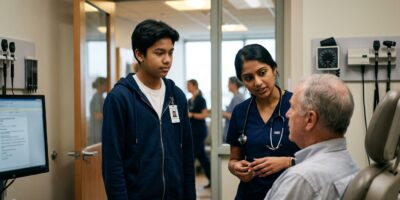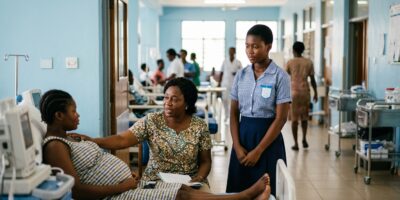
Watching a medical team manage a critically ill patient is unlike any other experience in healthcare. For high school students interested in medicine, nursing, or other clinical careers, observing an ICU offers a direct look at high-acuity care, teamwork under pressure, and the realities of life-and-death decision-making. But this kind of exposure demands preparation. Students who walk into an ICU without understanding what they will see, feel, and be expected to do are more likely to feel overwhelmed than inspired. That is why the best medical research internships for high school students build in structured preparation well before any student steps foot in a critical care unit. When teens prepare for critical care observation the right way, they are positioned to absorb more, reflect more deeply, and represent themselves well in a demanding clinical environment.
Parents often have understandable concerns about their teenager observing critically ill patients. Those concerns are valid, and this article addresses them directly. The goal is not to minimize what ICU observation involves; it is to help both students and families make informed, realistic decisions about readiness. Many medical summer internships for high school students include ICU or high-acuity rotations as part of broader clinical exposure, and the students who benefit most are the ones who have thought carefully about preparation before they arrive. This article covers what that preparation actually looks like: the emotional, practical, and logistical steps that matter.
What Critical Care Observation Actually Involves for High School Students
Before preparing for ICU observation, it helps to understand what you will and will not be doing. High school students in critical care settings observe. They do not perform procedures, administer medications, or make clinical decisions. This is not a limitation; it is the appropriate and ethical scope for a student at this stage. Observation in an ICU typically includes watching multidisciplinary rounds, seeing how vital signs are monitored and documented, learning about medical equipment such as ventilators and infusion pumps, and witnessing how care teams communicate with each other and with families.
In well-structured programs, students also participate in hand hygiene and infection control demonstrations, attend debriefing sessions, and spend time reflecting on what they have observed. This is where the real learning happens. A student who watches a team manage a patient in respiratory distress and then reflects on the roles each person played, the decisions that were made, and the emotional weight of the situation, that student gains something meaningful. One without a framework for reflection simply watches a stressful event and moves on.
For students considering how high-acuity settings differ from general clinical observation, an article on ICU exposure for high school students and what is realistic provides useful context on expectations and boundaries.
Emotional Readiness Is the Prep Work Most Students Skip
The most common gap in student preparation is not medical knowledge. It is emotional readiness. ICU patients are often critically ill, unconscious, intubated, or dying. Students may witness cardiac arrests, end-of-life conversations, or families receiving devastating news. According to the CDC’s data on hospital utilization, the average ICU stay is about 3.3 days, meaning the patient population turns over quickly and the acuity is consistently high. Students are exposed to a concentrated version of the most serious scenarios in medicine.
Emotional preparation does not mean eliminating the discomfort. It means building the capacity to process it. Before entering a critical care environment, students should honestly consider whether they have experienced situations involving illness, injury, or loss. They should think about how they respond to stress and whether they tend to internalize difficult emotions or process them openly. Having a conversation with a parent, counselor, or mentor about these tendencies is a practical first step.
Programs with strong supervision structures typically include pre-departure counseling or orientation sessions that address death, suffering, and psychological stress. They also provide daily debriefing sessions during the experience itself. Students should look for these features when evaluating any program that includes ICU exposure. If a program does not mention psychological support or emotional processing, that is worth asking about.
When a Student Is Not Ready
There is no shame in deciding that critical care observation is not the right fit right now. Maturity is not just about age; it is about self-awareness. A student who feels deeply anxious about witnessing suffering, or who has recently experienced a personal loss, may benefit from starting with less acute clinical settings, such as outpatient clinics or community health programs. Readiness is not a fixed trait. It develops over time, and waiting a year can make a significant difference.
Practical Steps for Prep Before Arriving at the ICU
Once a student has assessed their emotional readiness, there are concrete, practical steps that make ICU observation more productive and less disorienting.
Learn Basic Medical Terminology
Students do not need to memorize a textbook, but familiarity with common ICU terms makes it much easier to follow rounds and understand what clinicians are discussing. Terms like “intubation,” “ventilation,” “hemodynamics,” “sedation,” and “code” come up constantly. A basic medical terminology guide or a few hours with free online resources from the National Institutes of Health can help students build a working vocabulary before they arrive.
Understand Infection Control Basics
Critical care units house immunocompromised patients, and infection control is non-negotiable. Students should understand hand hygiene protocols, the purpose of personal protective equipment (PPE), and why certain patients are in isolation. Knowing these basics before arrival means students can focus on learning rather than scrambling to understand basic safety procedures in the moment.
Get Immunizations in Order
Most structured clinical programs require up-to-date immunizations, including hepatitis B, and some international programs require additional vaccinations depending on destination. The CDC’s traveler health page is a reliable source for destination-specific immunization recommendations. Students and parents should check these requirements well in advance, as some vaccine series take months to complete.
Practice Professional Behavior
ICU observation is not casual. Students should be prepared to dress appropriately, silence their phones, maintain a respectful distance from patients and families, and follow the instructions of supervising clinicians without exception. Practicing these behaviors in less intense settings, such as a local hospital volunteer shift or a primary care shadowing experience, helps students build habits before entering a high-stakes environment.
What Parents Should Ask Before Saying Yes
Parents play a critical role in evaluating whether a program is well-structured and safe. Here are the questions that matter most.
Supervision and Safety
What is the student-to-supervisor ratio in the ICU? Who is supervising, and what are their qualifications? Is there 24/7 access to a program coordinator or staff member? What happens if a student becomes overwhelmed or needs to leave the clinical setting? Programs that take high school students into critical care settings should have clear, documented answers to all of these questions. If the answers are vague, that is a red flag.
Communication With Families
How often will parents receive updates? Is there a point of contact for emergencies? Can parents reach the program staff at any time? For international programs, parents should also ask about time zone communication logistics and whether the program provides regular check-ins.
Housing and Daily Structure
Where will the student stay, and who else will be in the housing? What does a typical day look like? How much free time is unsupervised? Structure matters, especially for minors in unfamiliar settings. Programs that clearly outline daily schedules, housing arrangements, and supervision outside of clinical hours demonstrate a level of planning that parents should expect.
Emotional Support
Does the program include pre-departure orientation addressing the emotional realities of ICU observation? Are there daily debriefing sessions? Is there access to a counselor or mental health support if needed? These are not extras. For high school students entering critical care environments, they are essential components of responsible programming.
How This Experience Fits Into a Longer Path
ICU observation is not a box to check on a college or medical school application. It is one piece of a much larger picture. According to the AAMC’s guidance on preparing for medical school, admissions committees value clinical experience that demonstrates reflection, ethical awareness, and an understanding of healthcare teams. A student who can write or speak thoughtfully about what they observed in an ICU, what they found difficult, what surprised them, and how it shaped their thinking, that student stands out.
This is why reflection is just as important as the observation itself. Students should keep a journal during the experience, noting not just what they saw but what they thought and felt. After the experience, reviewing those notes and discussing them with a mentor or advisor helps the student integrate what they learned into their broader understanding of healthcare.
For students interested in how clinical exposure connects to the medical school admissions process, IMA’s article on primary vs. secondary applications and their differences offers a useful look at how experiences like ICU observation eventually appear in application materials. Students planning even further ahead may also benefit from understanding the multiple mini interview format, since ethical reasoning and reflection on clinical encounters are common themes in those interviews.
Preparing to Learn, Not Just to Watch
The difference between a student who gets something lasting from critical care observation and one who simply endures it often comes down to preparation. Students who take the time to build emotional awareness, learn basic terminology, understand safety protocols, and set realistic expectations are not just better observers. They are better positioned to reflect meaningfully, discuss their experience honestly, and carry what they learned into their next steps.
Parents who ask the right questions, evaluate program structures carefully, and talk openly with their teenager about readiness are doing the most important work of all. Critical care observation is serious, and it should be treated seriously. But with the right preparation, it can be one of the most grounding and clarifying experiences a young person has on the road to a healthcare career.
Students who want to see how IMA structures its programs for high school participants, including supervision, daily schedules, and the range of clinical settings available, can review the high school internship program details to understand what a well-organized experience looks like in practice.
Frequently Asked Questions
Will my teenager be performing any medical procedures during ICU observation?
No. High school students in critical care settings observe and learn. They do not perform procedures, administer treatments, or provide hands-on patient care. All observation takes place under the direct supervision of licensed healthcare professionals, and students are expected to maintain appropriate boundaries at all times.
How can I tell if my teenager is emotionally ready for ICU observation?
Consider whether your teenager has some experience with difficult or stressful situations and how they typically process strong emotions. Have an honest conversation about what they might see, including seriously ill patients and end-of-life scenarios. If your teenager can discuss these realities openly and shows willingness to ask for support when needed, those are positive signs. If either of you has significant hesitation, starting with a less acute clinical setting is a reasonable choice.
Does ICU observation in high school actually help with medical school admissions?
Clinical observation, including ICU exposure, can strengthen a future application when paired with genuine reflection. Medical school admissions committees are not looking for a list of clinical settings visited. They want evidence that a student thought critically about what they saw, engaged with ethical questions, and developed a grounded understanding of patient care. The experience matters most when students can articulate what they learned and how it shaped their perspective.