Case Western Reserve University School of Medicine (often shortened to CWRU SOM) is a private medical school in Cleveland, Ohio, whose first classes began in the fall of 1843. It grants the MD through three separate programs that share one AMCAS application and one secondary: the four-year University Program, the five-year Lerner College Program based at Cleveland Clinic, and the MD/PhD Medical Scientist Training Program (MSTP). This guide is written for applicants to the University Program, the school’s oldest and largest MD track, and it explains where the other two programs differ.
The guide covers the 2026-2027 application cycle, which leads to an entering class that starts medical school in early July 2027. School information in this guide was checked against the school’s own admissions, curriculum and financial aid pages on October 18, 2026. Clinical training in the University Program takes place across Cleveland’s four major hospital systems: University Hospitals, Cleveland Clinic, MetroHealth and the Louis Stokes Cleveland VA Medical Center.
Case Western is a national school. It has no in-state quota, charges every student the same tuition and draws its class from dozens of states. That makes it a realistic option whether you live in Ohio or not, as long as you understand what the school asks for: a most recent MCAT of at least 502 before you can even see the secondary, strong science letters, a clear interest in research and reflective essays that show how you think about patients and the conditions of their lives. We have organized all the key information you need to apply with confidence, from requirements and costs to every current secondary prompt with a worked example. Consider bookmarking this page for easy access during your application process.
Key Takeaways
- Three MD programs, one application. You pick the University Program, the Lerner College Program, the MSTP or a combination inside the secondary, and that choice decides which essays you see. The University Program enrolls about 170 students a year; it enrolled 172 in the entering class of 2026.
- A hard MCAT screen. You need at least a 502 on your most recent MCAT to receive the secondary. Scores from January 2023 through the September 12, 2026 test date count for this cycle. There is no published GPA minimum.
- A strong class profile. The entering class of 2026 averaged a 518 MCAT (median 517) and a 3.87 cumulative GPA. The school received 10,647 applications across its three programs and enrolled 216 students. For the 2025 entering class, all accepted applicants had a median MCAT of 518 and a median GPA of 3.94.
- No Ohio preference. The school has a national pool and no in-state quota. Only 14% of the 2026 entering class were Ohio residents. International (including Canadian) and DACA applicants may apply to the University Program.
- Deadlines that have already passed or are close. The AMCAS deadline was October 15, 2026, and the secondary plus every other part of the application is due November 15, 2026, at 11:59 p.m. EST. Interviews run from September 2026 to February 2027.
- Cost is high and the same for everyone. University Program tuition is $72,526 for 2026-27, and the first-year cost of attendance is $115,226. Plan your borrowing and scholarship search early.
- Research is part of the degree. Every University Program student completes a 12-week mentored research project in the summer after year one and submits an MD thesis in January of year two. Research is not required to apply, but you must show interest in doing it.
- Next step. If you are applying this cycle, finish your secondary well before November 15. If you are planning for a future cycle, build clinical, service and research experience you can write about with specific detail.
Key Statistics About Case Western Reserve University School of Medicine
The snapshot below collects the school’s newest published admissions and cost figures, and the table adds the medians for all accepted applicants and the full application funnel for the 2025 entering class. Each number is labeled with the class or academic year it describes. Applications, interviews and matriculants are reported, but the number of offers is not, so no true acceptance rate can be calculated.

| Metric | Value | Cohort or year | Source |
|---|---|---|---|
| School and degree | Case Western Reserve University School of Medicine; MD (University Program, 4 years) | Current | CWRU University Program About page |
| Location and type | Cleveland, Ohio; private; Health Education Campus opened 2019 | Current | CWRU School of Medicine About page |
| Accreditation | LCME, full accreditation; next full survey 2032-33 | LCME directory updated October 14, 2026 | LCME Directory of Accredited U.S. Programs |
| Entering class size | 216 (University Program 172, Lerner College Program 32, MSTP 12) | Entering class of 2026 | CWRU Entering Class 2026 profile |
| University Program average class | 170 per year (not including MSTP) | Current | CWRU University Program Fast Facts |
| Average MCAT | 518 average; 517 median; range 510-527 (n = 195 with MCAT data) | Entering class of 2026, all CWRU MD programs | CWRU MCAT requirements page |
| Average GPA | 3.87 cumulative (range 2.9-4.00); 3.85 science (range 3.13-4.00) | Entering class of 2026 | CWRU admission requirements page |
| Median MCAT and GPA, accepted applicants | 518 MCAT (mean 518.2); 3.94 total GPA (mean 3.90); 3.93 science GPA (mean 3.87) | 2025 entering class, all accepted applicants, all CWRU MD programs | AAMC MSAR (2026 edition) |
| Applications | 10,647 across all three programs (up 13%); University Program 8,272 | Entering class of 2026 | CWRU Entering Class 2026 profile |
| University Program interviews | 799 interviewed of 8,272 applications (about 9.7%) | Entering class of 2026 | CWRU Entering Class 2026 profile |
| Verified applications, interviewed, matriculated | 9,454 verified applications; 1,111 interviewed (about 11.8% of verified applications); 216 matriculated | 2025 entering class, all CWRU MD programs | AAMC MSAR (2026 edition) |
| Acceptance rate | Not published (offers are not reported) | Entering classes of 2025 and 2026 | CWRU Entering Class 2026 profile; AAMC MSAR (2026 edition) |
| Minimum MCAT for a secondary | 502 on the most recent exam | 2026-2027 cycle | CWRU MCAT requirements page |
| Ohio residents | 14% in state, 86% out of state; 38 states represented | Entering class of 2026 | CWRU Entering Class 2026 profile |
| Ohio, out-of-state and international applicants | Verified applications 779 / 7,931 / 744; interviewed 128 / 970 / 13; matriculated 32 / 177 / 7 | 2025 entering class, all CWRU MD programs | AAMC MSAR (2026 edition) |
| Tuition | $72,526, same for every student | 2026-27, University Program | CWRU 2026-27 Estimated Cost of Attendance |
| Tuition and required fees | $74,542 | 2026-27, University Program | CWRU 2026-27 Estimated Cost of Attendance |
| First-year cost of attendance | $115,226 (includes $4,220 Student Medical Plan, which can be waived, and loan fees) | 2026-27, Class of 2030, 11.25 months | CWRU 2026-27 Estimated Cost of Attendance |
| Graduate debt and aid | $228,497 average medical school debt of indebted graduates; 77% of students receive financial aid | 2024-25 academic year | AAMC MSAR (2026 edition) |
| Primary application | AMCAS; deadline October 15, 2026 | 2026-2027 cycle | CWRU 2026-2027 Admissions Timeline |
| Secondary deadline | November 15, 2026, 11:59 p.m. EST | 2026-2027 cycle | CWRU 2026-2027 Admissions Timeline |
| Secondary application fee | $100; fee waiver available | 2026-2027 cycle | AAMC MSAR (2026 edition) |
| Deposit, early decision and deferral | No deposit; no Early Decision Program; deferral requests considered case by case (4 deferrals in the 2025 entering class) | 2026-2027 cycle; 2025 entering class for deferrals | CWRU Acceptance Protocols; AAMC MSAR (2026 edition) |
| Who may apply | U.S. applicants from any state; international (including Canadian) and DACA applicants for the University Program and Lerner College Program; MSTP limited to U.S. citizens, noncitizen nationals and permanent residents | Current | CWRU MD Admissions FAQs |
Two notes on reading these numbers. First, the MCAT and GPA figures are class averages, not cutoffs. Applicants invited to interview ranged from a 2.8 to a 4.00 cumulative GPA and from a 502 to a 528 MCAT, so a single number below the average does not end your chances. Second, the interview share is interviews divided by applications. It is not an acceptance rate, because the number of offers is not reported, and some admitted applicants choose other schools. Third, the accepted-applicant medians (518 MCAT and 3.94 GPA for the 2025 entering class) describe everyone offered a seat, a slightly different group from the students who enrolled.
Mission and Educational Priorities
Located in Cleveland, Ohio, near the shores of Lake Erie, Case Western’s campus is home to regional leadership in medicine, research, engineering, bioethics and more. The School of Medicine is the largest biomedical research institution in Ohio, measured by funding from the National Institutes of Health, and it trains students across four hospital systems. Those facts shape what the school asks of applicants, but the clearest guide to its priorities is the mission it wrote for the University Program:
“To develop compassionate, reflective, and clinically expert physicians through collaborative, human-centered education that advances breakthrough discoveries, honors each patient’s unique story, and prepares graduates to understand the contexts that shape health.”
The University Program lists three values beneath that mission. Curiosity and inquiry means promoting critical thinking and a lifelong growth mindset. Compassionate connection means prioritizing ethics, patient partnerships and adaptability to deliver optimal patient care. Collaborative leadership means building a collegial environment in which classmates learn and grow together and new ideas can improve communities locally, nationally and globally. The broader School of Medicine mission adds a research focus: “To improve health globally by linking groundbreaking innovation and research directly to patients and populations within a world-class medical and education ecosystem.”
The University Program mission and values page is short, but each phrase points to something concrete in the curriculum and the application.
“Contexts that shape health.” The WR2 curriculum unites medicine and public health. Its first block, Becoming a Doctor, spends five weeks on population health, epidemiology, biostatistics, health disparities and social determinants of health before the organ systems begin. The secondary asks every applicant a Context of Care question about how a person’s health relates to the conditions of their life. An applicant who has watched housing, transportation, work schedules or insurance change a patient’s outcome, and has thought about it, is answering the mission directly.
“Reflective.” The school’s admissions pages say that interpersonal skills, exposure to medicine, well-roundedness, professionalism, empathy and leadership matter as much as strong academic credentials. The Personal Challenge essay asks what you learned about yourself, not just what happened. The school’s own note on AI tools makes the same point: it expects original writing that shows your own voice and reflection.
“Breakthrough discoveries.” Research and scholarship is one of the four cornerstones of the curriculum, alongside clinical mastery, leadership and civic professionalism. The University Program does not require research to apply, but a successful applicant must show interest in doing a research project as a medical student, and every student completes a mentored MD thesis.
“Collaborative.” About half of the first two years happens in small groups. The main learning vehicle is the InQuiry Team, a group of nine or ten students with a faculty facilitator. Applicants who can describe working well on a team, and what they learned when a team struggled, show the school something it uses every week.
For applicants, the practical takeaway is to choose experiences and stories that show these four habits in action. A long list of activities matters less than two or three experiences you can explain well: what you saw, what you did, what you learned and how it changed the way you think about patients.
Accreditation and Institutional Identity
Case Western Reserve University School of Medicine is accredited by the Liaison Committee on Medical Education (LCME), the accreditor for MD programs in the United States and Canada. The LCME directory, updated October 14, 2026, lists the school with full accreditation and its next full survey in 2032-33. In 2002 the school’s education program became only the third institution in history to receive the best review possible from the LCME. Accreditation confirms that a program meets national standards; it is not a ranking.
A few points of identity matter when you apply:
- One school, three MD programs. The University Program, the Lerner College Program and the MSTP all grant the CWRU MD. The Cleveland Clinic Lerner College of Medicine is a program of Case Western Reserve University, so it shares the school’s LCME accreditation, AMCAS listing and secondary.
- A long history of firsts. The first classes began in the fall of 1843. It created the first MD/PhD dual degree program in the country, the model the NIH and others later followed, and launched an integrated, organ-systems curriculum with team teaching in 1952. It was also among the first medical schools to employ full-time instructors for teaching and research.
- A shared Health Education Campus. In 2019 the school opened a 485,000-square-foot Health Education Campus that brings students from several health professions together under one roof. The University Program admissions office is in the Samson Pavilion on that campus, at 9501 Euclid Avenue.
- A research-heavy institution. It receives more NIH funding than all other Ohio medical schools combined. Its By the Numbers page lists it 23rd in NIH funding among U.S. medical schools and 16th among private medical schools (Blue Ridge Institute for Medical Research), and 16th worldwide for biomedical and health sciences in the Leiden ranking. The same page counts about 8,900 faculty members, 25 centers and institutes and 970 medical students.
Case Western Reserve University as a whole is a private research university in University Circle, a neighborhood of museums, parks and hospitals on Cleveland’s east side. Published magazine rankings change every year and use their own methods, so treat any ranking as one input. What matters more for your application is how the school’s research scale, hospital partners and curriculum fit the training you want.
Medical Programs and Affiliations
The CWRU School of Medicine offers a wide range of programs for medical students: three MD programs, five dual degree options paired with the MD, nine pathways that add focused training on top of the core curriculum and several linkage agreements for post-baccalaureate and graduate students. Candidates look forward to mentor-led or self-directed research, focused instruction and hands-on clinical experience at Cleveland’s major hospitals.
The three MD programs
| Program | Length | Seats | What makes it different | How you apply |
|---|---|---|---|---|
| University Program | 4 years | About 170 a year (172 in 2026) | WR2 curriculum, InQuiry Teams, 12-week MD thesis, clerkships at four hospital systems | AMCAS plus CWRU secondary; select University Program |
| Lerner College Program (Cleveland Clinic Lerner College of Medicine) | 5 years | 32 a year | Physician-investigator training at Cleveland Clinic, full-tuition scholarship for every student, no grades, MD with special qualification in biomedical research | Same AMCAS and secondary; select Lerner College Program; more than two summers of hypothesis-driven research expected |
| Medical Scientist Training Program (MD/PhD) | About 8 years | 10 to 12 a year | NIH-funded physician-scientist training; the country’s first MD/PhD program | Same AMCAS and secondary; select MSTP; extra prerequisites and essays |
You may select more than one program in the secondary. The school asks applicants to be thoughtful and intentional about how each program fits their interests and goals, and it gives you one response for each shared prompt, so you do not write the Personal Challenge or Context of Care essay twice.
University Program (4-year MD)
The University Program is the school’s oldest and largest MD program. Its four cornerstones are clinical mastery, research and scholarship, leadership and civic professionalism. Students are graded pass/fail during the first two years, and the school does not rank students. About half of the preclinical teaching happens in small groups and half in lectures. Every student completes an MD thesis. The curriculum is described in detail in the next section.
MD with Special Qualification in Biomedical Research (Lerner College Program)
The CWRU School of Medicine offers an MD with special qualification in biomedical research through the Cleveland Clinic Lerner College of Medicine. Its mission is “to educate students to become physician investigators who advance biomedical research, deliver exceptional clinical care and promote health.” The program offers a distinct focus in medical research and the scientific method while providing core MD clinical experiences and doctoring skills, and it favors self-directed students with deep research experience and a passion for clinical investigation. Every matriculant receives a full-tuition scholarship but must still cover living expenses. Students are evaluated by competencies rather than grades.
The two programs differ in practical ways that should shape your choice:
- Research expectation. The University Program does not require research. The Lerner College Program expects more than two summers of hypothesis-driven research, and its required Research essay asks you to explain a hypothesis, methods, results and interpretation.
- Letters. The University Program recommends a research advisor letter if applicable. The Lerner College Program has additional research letter requirements, and it requires both science letters to come from professors.
- Interviews and decisions. University Program interviewees meet one health education professional and one medical student; Lerner interviewees meet two faculty members and one student. The University Program admits on a rolling basis; the College Program notifies applicants at two points in the cycle.
- Length and cost. The Lerner program takes five years, with a research year, and covers tuition. The University Program takes four years and charges full tuition.
If research is the center of your career plan, read our separate guide to the Cleveland Clinic Lerner College of Medicine, listed in the Related Medical School Guides section below. If you want a four-year MD with research built in but not dominant, the University Program is the better fit.
PhD/MD and dual degrees
The Case Western Reserve School of Medicine offers an MD/PhD program (MSTP) and five dual degree programs with the MD. Candidates apply to each program separately. The MSTP application is part of the secondary. For the other dual degrees, students usually apply after they are accepted to medical school, because there is enough time after an acceptance to begin the second application, and accepted students’ applications are usually expedited.
MD/PhD in Biomedical Research (MSTP)
Students with exceptional academics and rich research experience are invited to apply to Case Western Reserve’s Medical Scientist Training Program. This combined MD/PhD program trains physician-scientists to become leaders in biomedical research, and its mission is to train leaders “who can accelerate rigorous basic, translational, clinical and multidisciplinary research.” MSTP applicants meet all University Program requirements and also need one semester of advanced biology and two semesters (or three quarters) of calculus or statistics. Because the program is funded by NIH training grants, trainees must be U.S. citizens, noncitizen nationals or permanent residents, so international and DACA applicants are not eligible. Over the past ten years, the program reports that its students averaged a 3.75 GPA and a 91.6 MCAT percentile. Its alumni include two Nobel laureates, Alfred Gilman and Ferid Murad.
MD/MA in Bioethics and Medical Humanities
CWRU is home to one of the nation’s leading bioethics departments and offers MD students a master’s degree that fits inside the usual four-year MD timeline, with no additional time required. The 30-credit-hour program includes a 12-credit-hour foundations course taken during the first year of medical school. It emphasizes the interdisciplinary and interprofessional nature of the field, and students analyze moral issues in health, health care and health policy at local, national and international levels.
MD/MPH (Master of Public Health)
Case Western’s MD/MPH prepares physicians to analyze, diagnose and prevent public health problems. It is a five-year, 42-hour program, and graduates are qualified to work in health departments, universities, hospitals, ambulatory centers, nonprofits and industry. The program offers five concentrations: health promotion and disease prevention, population health research, health policy and management, global health, and health informatics.
MD/MS in Applied Anatomy
This 30-hour program gives advanced training in the anatomical sciences. Students may begin in the fall or spring of the first year of medical school. Required graduate courses include the anatomical sciences core curriculum, completed during the first two years, and an advanced surgical anatomy course in the fourth year. A thesis is optional; students may take independent research as electives, and a thesis-based track is also available. Students apply through the Department of Anatomy.
MD/MS in Biomedical Engineering
Case Western’s MD/MS prepares physicians to lead the development and clinical use of new technology and to work on technology-based translational research teams. Current students in either the University Program or the Lerner College Program may apply. Six credit hours of medical coursework count toward the MS, and students take four graduate engineering courses, attend monthly seminars on engineering and medicine and complete training in the responsible conduct of research. The thesis has medical and engineering components and also fulfills the MD research requirement. Students apply through the Biomedical Engineering department.
MD/MA in Anthropology
The dual degree in medicine and anthropology is a four-year course of study for students interested in medical anthropology, from ethnomedicine and international health to urban health, psychiatric and psychological anthropology, cross-cultural aging, human adaptation and disease and nutritional anthropology. Physician-anthropologists study the relationships between medicine, ecology, population, psychology, culture and disease, including cultural factors that shape access to health care around the world.
MD/MBA and MD/MS in Biomedical Investigation
The school’s current dual degree list does not include an MD/MBA or an MD/MS in Biomedical Investigation. An MD/MBA is designed for physicians who want management skills for leadership roles such as health care consulting, hospital administration or practice management, and a biomedical investigation master’s adds structured research training in a chosen field. If either interests you, ask the admissions office whether a joint or sequential option is available for your entering class before you plan around it.
Pathways Programs for MD students
The Pathways Programs are parallel programs that give MD students individualized enrichment beyond the core curriculum. Pathway students meet weekly or biweekly during the preclerkship years and complete mentored projects or scholarly work. There are nine active pathways:
- Addiction Pathway. Launched in 2023, it is a four- to five-year longitudinal experience in the prevention, identification, treatment and study of substance use disorders, with a faculty adviser board-certified in addiction medicine or addiction psychiatry, a research adviser and an optional mentor in stable recovery.
- Advocacy and Public Health Pathway. Builds on the five-week foundation in epidemiology, biostatistics, bioethics, health systems science and health disparities with interprofessional experiences alongside community organizations, for students who want to use their skills and knowledge to advocate for social, economic and political change.
- Andrew B. Kaufman Global Health Pathway (formerly called the World Medicine Pathway). Prepares students for careers that address global health challenges through seminars and simulations in the preclerkship years, then a mentored experience in research, clinical care, capacity building or global health policy, including international elective time with funding support.
- Climate and Health Pathway. Explores how a changing climate affects patients and communities and how changes in health care delivery can reduce environmental harm.
- Humanities Pathway. Investigates what it means to be human and a health care professional, drawing on the history of medicine, the arts and social medicine.
- Jack, Joseph, and Morton Mandel Wellness and Preventive Care Pathway. Teaches holistic wellness, nutrition, exercise and culinary and lifestyle medicine, now with a teaching kitchen that has 12 cooking stations.
- Stephen Gehlbach, MD, MPH Medical Education Scholars Pathway. Supports students as teachers and educational scholars who co-create curricula with faculty.
- Dr. Edward J. and Nancy M. Mueller Health Innovation and Entrepreneurship Pathway. Focuses on solving health care problems through a hands-on understanding of need, with mentorship from School of Medicine leadership and advisors.
- Urban Health Pathway. Develops students’ approach to doctoring in urban communities through health policy, advocacy, care for medically vulnerable populations, leadership development, community engagement and clinical rotations focused on urban health.
Dual-degree students at the Lerner College Program cannot join the pathways. You do not apply to a pathway in the secondary, but naming one that fits your real experience can make a Context of Care or Additional Information answer more specific.
Linkage programs
The University Program guarantees an interview to students in four CWRU programs who meet set benchmarks: the Master of Science in Applied Anatomy, the Master of Science in Medical Physiology, the Master of Science in Molecular and Cellular Biology of Disease and the PRIME post-baccalaureate program. The benchmarks are an undergraduate cumulative GPA of at least 3.4, a qualifying program GPA, an MCAT of at least 515 and the highest levels of personal and professional conduct. Linkage applicants must submit a complete application by October 15 and finish interviews by December 15, and the guarantee applies only to students who have not interviewed with the admissions committee before. The University Program also has linkage agreements with the Goucher College and Bryn Mawr post-baccalaureate programs and a guaranteed-interview partnership with SOFtoSOM for U.S. Special Operations Forces veterans.
Clinical affiliations
Case Western Reserve University School of Medicine is affiliated with four teaching hospital systems: Cleveland Clinic, University Hospitals, MetroHealth (Cuyahoga County’s safety-net system) and the Louis Stokes Cleveland VA Medical Center. The school links health education and research across Cleveland’s academic medical centers, and its clinical faculty provide more than 80% of the patient care in Northeast Ohio. Each hospital system has a senior associate dean who links it to the school. The school does not accept transfer students into any MD program; its only advanced standing route is the Oral-Maxillofacial Surgery/MD program for dental graduates.
Curriculum Overview
The University Program teaches the Western Reserve2 (WR2) Curriculum, a single integrated program that unites medicine and public health. It trains students to study how the biology of disease interacts with the social and behavioral contexts of illness, linking the care of individual patients with the health of the public. The school built the curriculum on four themes: research and scholarship, clinical mastery, leadership and civic professionalism. It also continues a long tradition: the school’s 1952 curriculum introduced clinical training in the first year, organ-systems teaching and pass/fail grading, with faculty treating students as junior colleagues. Today WR2 keeps a graduate-school atmosphere built on flexibility, independent study and collegial work with faculty. Years 1 and 2 are graded pass/fail, and individual assessments are used in years 3 and 4. Patient-based learning starts early and recurs often.
Years 1 and 2: Foundations of Medicine and Health
The social and behavioral contexts of disease and the foundations of health and medicine are the focus of the first two years. Longitudinal themes include bioethics, pharmacology, health systems science, diversity and professionalism. Each block ends with assessment days or an assessment week. The school’s year-by-year curriculum sheet lays out the blocks:
| Block | Length | Content |
|---|---|---|
| Block 1: Becoming a Doctor | 5 weeks | Community health-related experiences, population health, epidemiology, biostatistics, health systems science, medical error, health disparities, social determinants of health; immersive two-week cadaveric anatomy dissection |
| Block 2: The Human Blueprint | 11 weeks | Endocrinology, reproduction, development, genetics, molecular biology, cancer biology |
| Block 3: Food to Fuel | 10 weeks | Gastrointestinal system, nutrition, energy, metabolism, biochemistry |
| Block 4: Homeostasis | 14 weeks | Cardiovascular, pulmonary, renal, cell regulation, pharmacology, cell physiology; includes a one-week clinical immersion |
| Summer after year 1 | 12 weeks | Mentored MD thesis research |
| Block 5: Host Defense and Host Response | 14 weeks | Immunology, microbiology, hematology, oncology, infectious diseases, rheumatology, musculoskeletal system, dermatology |
| Block 6: Cognition, Sensation and Movement | 13 weeks | Neurology and the mind; MD thesis due |
| Block 7: Structure | Longitudinal | Anatomy, histopathology and radiology across all blocks |
| Block 8: Foundations of Clinical Medicine | Longitudinal | Tuesday seminars, medical communication, procedures, physical diagnosis, patient-based experiences |
| Step 1 study | 6 weeks | Dedicated board preparation |
The week has a steady rhythm. InQuiry Teams meet Monday, Wednesday and Friday mornings for two hours. Each IQ Team has nine or ten students and a faculty facilitator. On Monday the team opens a patient case with no advance notice of the topic, much as a physician meets a new patient, and the group writes its own learning objectives. Students research those objectives during the week and teach each other on Wednesday and Friday. Team roles rotate: a scribe captures questions on the whiteboard, a leader keeps the session on time and the group closes with a check-out that gives feedback on how the team worked. Late mornings hold lectures or team-based learning, structure sessions and the Research and Scholarship course. Afternoons are for clinical skills training, self-directed study, electives, interprofessional education, pathways and graduate classes.
The school also uses mixed reality HoloAnatomy and bedside ultrasound training, and students practice in the Clinical Skills and Simulation Center on the Health Education Campus. Block 1 field experiences and the Student-Run Health Clinic connect first-year students to underserved communities in Cleveland.
The MD thesis
Every University Program student completes a mentored research project and a written MD thesis to graduate. The Research and Scholarship course runs through the first year. Students then spend 12 weeks of the summer between the first and second years on faculty-mentored research in any area of biomedical or health science: basic, translational, clinical or population-based. Mentors can come from CWRU faculty at the School of Medicine, University Hospitals, Cleveland Clinic, MetroHealth or the VA, and projects may involve outside collaborators as long as a CWRU faculty member is involved. Students submit a manuscript-style paper for a pass/fail grade in January of the second year and can present at the annual Student Research Day. The thesis is not master’s-level work, though many students reach that depth. Students who want more research can begin in their first year, continue after the required block and take up to 12 weeks of research electives, in four-week blocks, across the third and fourth years.
Year 3: Clerkships
Clerkship rotations begin in late spring of the second year and cover 40 weeks of clinical experience, graded Honors, Commendable, Satisfactory or Unsatisfactory. Students choose one of three formats:
- Traditional Clerkship Rotations. Two 12-week and two 8-week rotations at University Hospitals, MetroHealth or the Louis Stokes Cleveland VA: internal medicine, family medicine and aging (12 weeks); OB/GYN and pediatrics (12 weeks); neuroscience and psychiatry (8 weeks); and surgery and emergency medicine (8 weeks). Students can submit preferences for a clerkship location, and acting internships or electives are available throughout Cleveland, including at Cleveland Clinic.
- Cleveland Clinic Longitudinal Clerkship. All rotations take place at Cleveland Clinic over 40 weeks: Team-Based Care blocks in neurology and psychiatry (8 weeks), internal medicine and surgery (12 weeks) and pediatrics and OB/GYN (8 weeks), plus a 12-week Longitudinal Ambulatory Block in internal medicine, palliative medicine, emergency medicine, family medicine, women’s health and geriatrics.
- MetroHealth Longitudinal Clerkship. A 12-month longitudinal integrated clerkship inside the MetroHealth System, with electives that can take place at other Cleveland hospital partners or as a visiting student elsewhere.
Alongside the clerkships, the third-year Sciences and Art of Medicine course uses small groups and undifferentiated patient cases, each built around health care disparities, to sharpen clinical reasoning, decision making and communication with direct observation and feedback.
Year 4: Advanced Clinical and Scientific Studies
The final year of the University Program includes:
- Eight weeks of dedicated Step 2 study time.
- Two four-week acting internships: one in internal medicine, pediatrics, surgery or inpatient family medicine, and one in a specialty at a hospital of the student’s choice. At least one must be completed at a CWRU-affiliated hospital.
- Clinical, international and research electives, locally or at other institutions.
- A medical education elective, such as facilitating an IQ Team or helping develop curriculum.
- Capstone: Transitioning to Residency, a two-week residency boot camp on teamwork, leadership, communication and skills such as IV and central line placement and ACLS protocols.
- Time to prepare residency applications and travel to interviews.
Elements of the curriculum may change as medical education evolves, so confirm block lengths with the current year-by-year sheet when you enroll.
How the Lerner College Program curriculum differs
The Lerner College Program follows its own five-year curriculum at Cleveland Clinic, with no grades, a competency-based assessment system and a dedicated research year that ends in a thesis. It does not use the WR2 block schedule described above. Our Lerner College guide covers that curriculum in detail.
Admissions Requirements and Application Process
In this section, we provide an overview of the admissions requirements published by the CWRU School of Medicine for the 2026-2027 cycle. The same core requirements apply to all three MD programs, with extra rules for the Lerner College Program and the MSTP noted where they apply. Strong academic credentials are important, and interpersonal skills, exposure to medicine, well-roundedness and qualities such as professionalism, empathy and leadership are equally important.
Degree and coursework
Candidates must complete a baccalaureate degree at an accredited college or university in the United States or Canada before matriculation. If your undergraduate degree is from outside the U.S. or Canada, you must complete at least one year of advanced science coursework at an accredited U.S. institution before you apply. A master’s or PhD, a formal post-baccalaureate program or a set of upper-level science courses all qualify. For the University Program, a graduate of a non-U.S. institution is considered after one or two years of science coursework at an accredited four-year U.S. or Canadian school and a demonstrated ability to perform well in the U.S. academic environment.
The admissions committee favors applicants with a broad and deep record of study, from the sciences to the humanities. As a guideline, successful non-science majors usually have at least 40 science credit hours at the time of application, science majors at least 55, and post-baccalaureate students at least 32. These are guidelines, and exceptions occur.
Here is the minimum coursework the school requires for all MD and MSTP programs, as listed on the CWRU admission requirements page:
| Course | Requirement | AP/IB credit |
|---|---|---|
| General chemistry | 2 semesters or 3 quarters, with 2 semesters of lab | Accepted |
| Organic chemistry | 1 semester, with 1 semester of lab | Not accepted |
| Biochemistry (must include metabolism) | 1 semester; lab not required. One quarter is acceptable, but a second quarter is recommended for the MCAT and the curriculum | Not stated |
| Writing or college English | 1 semester; other expository writing courses in the humanities, or science courses with extensive writing, also count | Not accepted |
| MSTP only: advanced biology or a biology subfield | 1 semester; lab not required | Not accepted |
| MSTP only: calculus or statistics | 2 semesters or 3 quarters | Accepted |
When prerequisites must be finished. These are the minimum courses you must complete by the time you matriculate, not necessarily by the time you apply. In practice, finishing as many as possible before the MCAT strengthens both your score and your application. You cannot substitute two semesters of organic chemistry for biochemistry; every applicant needs a biochemistry course that includes metabolism.
Community college and older coursework. Community college credits are evaluated case by case. If all of your science prerequisites came from a community college, the school strongly recommends at least a year of upper-level science at an accredited four-year university in the U.S. or Canada. Science courses do not expire, but the committee prefers to see some recent science coursework.
Recommended coursework. The admissions committee recommends cellular biology, physics, genetics, biostatistics and social and behavioral sciences such as psychology, anthropology and sociology. You can also cover this content through research experience.
MCAT
All applicants must take the MCAT, and the MCAT works as a screen at Case Western:
- You need a score of at least 502 on your most recent MCAT to receive the secondary. If you scored 502 or higher and then retook the test and scored below 502, you will not receive a secondary.
- For the 2026-2027 cycle, the oldest accepted score is from January 2023 and the latest accepted test date is September 12, 2026. The school does not accept MCAT scores more than three years old, and January 2027 scores will not be considered for this cycle.
- You may submit AMCAS before your score posts, but you will not get a secondary until a qualifying score arrives, and your application will not be reviewed or considered for an interview without an MCAT score.
- If you list a future MCAT date in AMCAS and then change it, you must recertify and resubmit AMCAS for the change to count. If you decide to retake after saying you would not, email the admissions office by mid-August so it can hold your file.
- The committee looks at all attempts but generally weighs the most recent score. It is common for successful applicants to have taken the MCAT more than once, but more than two or three attempts are generally viewed less favorably.
The school has no published minimum GPA. It reviews academic performance in the context of the entire application.
Residency, citizenship and international applicants
Case Western has a national applicant pool and no in-state quota, so Ohio residents receive no preference. The University Program and the Lerner College Program accept applications from all international students, including Canadians, and from applicants with DACA status, and they evaluate these applicants in the same way as U.S. citizens and permanent residents. The MSTP accepts only U.S. citizens, noncitizen nationals and permanent residents because of its NIH funding.
International and DACA applicants to the University Program should plan their financing early. The financial aid office cannot offer need-based aid or federal loans to students who are not U.S. citizens or permanent residents, and accepted international applicants must show proof of payment for one year before matriculation. Students in this situation often use private loans, which must be cosigned by a U.S. citizen.
Experience the school looks for
The admissions committee evaluates academic success, letters, extracurricular activities, leadership, clinical experiences, research, volunteer work and demonstrated commitment to medicine. The school asks you to show that you have carefully considered a career in medicine by describing your medically related experiences, your interactions with physicians and other patient care or health-related work. No single major is preferred. The 2026 entering class included biology and neuroscience majors alongside students from the humanities, arts, languages, economics, engineering, computer science and public health.
The class profile shows what that looks like in practice. In the 2026 entering class, 87% reported volunteer medical experiences, 72% paid medical experiences, 90% physician shadowing or clinical observation, 82% other volunteer work, 60% leadership and 62% teaching or tutoring. If your hands-on patient contact is thin, clinical internships for pre-med students are one way to add supervised hours to the scribe, medical assistant, EMT or hospital volunteer roles that most applicants already hold.
Research. Research is not required for the University Program, but a successful applicant must be able to show interest in doing a research project as a medical student. Research is broadly defined as scholarly work and can come from any discipline, including a senior capstone or honors thesis. If you have none, the school asks you to say so plainly in the secondary. The Lerner College Program requires more than two summers of hypothesis-driven research, and the MSTP requires substantive research during summers, the school year or post-baccalaureate time. In the 2026 entering class, 93% reported research experiences and 31% reported publications.
Letters of recommendation
Letters are very important in the school’s decisions. Case Western requires three to five letters for all programs, with at least two from science professors or instructors and/or a research PI. All letters must come through AMCAS, and your file will not be reviewed until every letter has arrived.
- Committee letters. A comprehensive pre-medical committee packet is accepted in place of the three to five individual letters. If your committee writes a single letter with nothing attached, you must add two letters, with at least one from a science professor or research PI. The other can come from anyone of your choosing.
- What counts as science. Letters from life sciences, physics, chemistry, mathematics (including statistics and biostatistics), engineering, exercise science or physiology and nursing satisfy the science requirement. Psychology, earth sciences and computer science letters do not count as science letters but can be added as extra letters.
- Teaching assistants. The University Program accepts one science letter from a graduate teaching assistant if you had little contact with the professor, as long as the other science letter comes from a professor in another class. The Lerner College Program requires both science letters from professors, and the MSTP requires both from research faculty or professors.
- Research letters. The University Program recommends a letter from a research advisor if you have one. The Lerner College Program has additional research letter requirements, and research advisor letters are especially important for the MSTP. We suggest a research advisor letter for any Case Western program if you have done research.
- Who should write. Letters should come from people who know you well and can judge your performance objectively, not family members or family friends. Confidential letters and a statement that you are in good standing are preferred. If you have been out of school for a while, letters from science faculty in a post-baccalaureate or master’s program carry more weight than letters from an employer alone.
Tests and other requirements
Case Western does not require CASPer, PREview or any Altus Suite component (Duet or Snapshot) for any of its MD or MD/PhD programs this cycle. Accepted students must meet the school’s technical standards for medical education.
AMCAS primary application and the Case Western secondary
The AMCAS is your primary medical school application, which is sent to all the schools you apply to. Case Western reviews only verified AMCAS applications. About two weeks after your verified AMCAS arrives, and once you have a qualifying MCAT, the school emails an invitation with a unique URL and password for its secondary website. For this cycle, invitations began going out the week of July 13, 2026. In the secondary you choose your MD programs, and that choice determines which essays appear. If you still have questions, we are here to help you understand the differences between primary and secondary medical school applications.
Your application is complete and ready for review when the school has all of the following: a verified AMCAS application, a submitted CWRU secondary, the paid CWRU secondary fee, a most recent MCAT of 502 or higher and all letters of recommendation. Letters are not needed to receive the secondary, and you can send them to AMCAS early. The secondary fee is $100, and a fee waiver is available, so check your eligibility before you pay. Case Western does not offer an Early Decision Program.
2026-2027 timeline
| Date | What happens |
|---|---|
| May 5, 2026 | AMCAS 2026-2027 application opened |
| May 28, 2026 | Earliest date to submit the AMCAS application |
| June 26, 2026 | First date medical schools received verified AMCAS applications |
| Week of July 13, 2026 | Secondary invitations began for verified applicants with an MCAT of 502 or higher |
| July to October 15, 2026 | School receives verified AMCAS applications and sends secondary invitations |
| August to November 15, 2026 | Completed applications reviewed; interview invitations sent by email |
| September 12, 2026 | Last MCAT test date accepted this cycle |
| September 2026 to February 2027 | Interview season (all programs) |
| October 15, 2026 | AMCAS primary deadline; first day allopathic schools can send acceptances; linkage applicants must be complete |
| November 15, 2026, 11:59 p.m. EST | Deadline for the secondary and every part of the application, all programs |
| December 15, 2026 | Linkage applicants must have completed interviews |
| February, March and April 2027 | University Program open house events for accepted applicants |
| February 19, 2027 | Plan to Enroll opens in the AMCAS Choose Your Medical School tool |
| April 15, 2027 | Hold no more than three acceptances |
| April 30, 2027 | Plan to Enroll required if CWRU is your first choice; Commit to Enroll opens |
| April to July 2027 | Offers to applicants on the alternate list |
| May 20, 2027, noon EST | Commit to Enroll deadline for all CWRU programs |
| Early July 2027 | Classes begin; White Coat Ceremony at Severance Hall, usually the Sunday after the first day |
Decisions, deposits and the alternate list
The University Program uses rolling admissions and accepts applicants throughout the year, while spacing offers so that people who interview late in the season have an equal chance. After your interview day, the admissions committee meets and votes for one of three outcomes: acceptance, the alternate list or denial. You hear electronically within a month after that meeting. All admissions decisions are made by the admissions committee, not by the admissions office staff.
The school does not require a deposit to hold a seat. Accepted applicants are asked to respond within two weeks during the cycle, and applicants accepted from the alternate list are given a specific date. Requests to defer entry are considered case by case; four members of the 2025 entering cohort deferred. Its alternate list is not ranked; when seats open, the school offers acceptances to individual students on the list, and many students who eventually enroll are accepted from it. If you hold a CWRU acceptance and receive another offer between April 30 and the May 20 Commit to Enroll deadline, you must email the University Program admissions office within 24 hours with the name of the school and your response deadline. Withdrawals are made through your iApply status page.
Tuition, Cost of Attendance and Financial Aid
The following information breaks down the estimated cost of attending Case Western Medical School in the 2026-27 academic year. These figures come from the school’s 2026-27 Estimated Cost of Attendance for the University Program. Tuition is the same for every student, whatever your state of residence.
| Item | Class of 2030 (year 1, 11.25 months) | Class of 2029 (year 2, 11.75 months) | Class of 2028 (year 3, 11.5 months) | Class of 2027 (year 4, 10 months) |
|---|---|---|---|---|
| Tuition | $72,526 | $72,526 | $72,526 | $72,526 |
| Required fees (council $40, RTA transit $140, activity $50, disability insurance $80, technology $1,016, educational materials $690) | $2,016 | $2,016 | $2,016 | $2,016 |
| Direct expenses subtotal | $74,542 | $74,542 | $74,542 | $74,542 |
| Living expenses (food, housing, personal) | $25,950 | $27,104 | $26,528 | $23,066 |
| Transportation | $6,100 | $6,372 | $6,236 | $5,422 |
| Travel for clinical training | None | None | $3,554 | $3,090 |
| Other educational expenses (drug test, USMLE Step 1 and 2 CK fees, books and supplies, residency applications, graduation) | $1,858 | $1,720 | $1,740 | $5,687 |
| Student Medical Plan (can be waived with comparable coverage) | $4,220 | $4,220 | $4,220 | $4,220 |
| Estimated loan fees | $2,556 | $2,556 | $2,556 | $2,556 |
| Total estimated cost of attendance | $115,226 | $116,514 | $119,376 | $118,583 |
A few details in the budget are worth knowing before you compare schools:
- Tuition versus total cost. Tuition alone is $72,526. Tuition plus required fees is $74,542. The total cost of attendance, which adds living costs, insurance, books and loan fees, is $115,226 for a first-year student. Summed across the four columns above, the 2026-27 budgets total about $469,700, but tuition and living costs are reset every year, so your actual four-year cost will differ.
- Health insurance. All enrolled students must carry the Student Medical Plan (serviced through Aetna) or a comparable outside plan. The $4,220 charge can be waived with proof of other coverage. The 2026-27 rate was still awaiting state insurance approval when the budget was posted.
- Housing. The living expense line is based on the average cost of an eleven-month off-campus rental. The school encourages students to look in the Cleveland Heights area near the main campus. Apartments closer to the Health Education Campus are not assumed to be student housing, and the budget will not be raised to cover more expensive options. Single students whose housing costs exceed the budget cannot receive additional aid for that reason.
- What the budget will not cover. Student budgets may not include buying or maintaining a car, supporting parents or siblings, repaying earlier loans, relocation costs, furnishing an apartment or commercial board prep courses. You can petition for documented increases for a computer purchase, child care when a spouse works or studies, and extraordinary costs such as uninsured medical or dental bills.
- A fifth year. Eight semesters of full tuition are required for the MD. University Program students who take a fifth year for research or another independent project pay a reduced tuition rate for each semester beyond the eighth. Dual degree students are billed based on the length of their program.
Financial aid and scholarships
Case Western lists the following aid for University Program students: need-based scholarships, Federal Direct Unsubsidized and Additional Unsubsidized loans, private educational loans, Federal Direct Graduate PLUS loans for students who qualify as legacy borrowers only and need-based university loans for students admitted in fall 2022 or earlier. Newer students should therefore expect a different federal loan mix than earlier classes had, and should budget for private loans if federal limits fall short of the cost of attendance. University Program aid is based on demonstrated financial need, and merit scholarships are not offered. Aid applications open in January, with awards made in April. In the 2024-25 academic year, 77% of the school’s students received financial aid, and indebted graduates left with an average medical school debt of $228,497. Ask the financial aid office during your interview day which scholarships an incoming University Program student can receive and whether any require a separate application.
The Lerner College Program is the major exception to the cost picture. Every Lerner matriculant receives a full-tuition scholarship, which covers the $72,526 tuition, but students still pay living expenses, fees and insurance. Its 2026-27 first-year cost of attendance before the scholarship is $111,212 for 10.75 months.
International and DACA students in the University Program cannot receive federal loans or need-based aid and must document one year of funding before they enroll. For a broader look at how tuition, fees and living costs add up, read IMA’s guide to the cost of medical school.
Campus Facilities and Student Life
University Program students learn on the Health Education Campus, a 485,000-square-foot campus the School of Medicine opened in 2019. The Samson Pavilion houses the MD admissions office, and the campus brings students from several health professions together under one roof to promote interprofessional education and collaborative practice. It includes the Mt. Sinai Skills and Simulation Center and a satellite of the Cleveland Health Sciences Library. Research labs and basic science departments are on the School of Medicine’s research campus at 2109 Adelbert Road, and teaching hospitals are a short distance away in University Circle and across the city.
Academic societies and advising
Since 2003, every CWRU medical student has belonged to an academic society for the whole of medical school and beyond. Each society has a dean who mentors students, helps them through the curriculum and gives career advice. The seven societies are named for people who shaped the school:
- Blackwell-McKinley Society, for Emily Blackwell, an 1854 alumna and one of the first women in the country to earn a medical degree, and Elizabeth McKinley, the society’s first dean.
- Caughey Society, for John “Jack” Caughey Jr., who helped lead the 1952 curriculum overhaul and personally interviewed applicants for decades.
- Gerberding Society, for alumna Julie Gerberding, the first woman to lead the CDC.
- Geiger Society, for H. Jack Geiger, a 1958 graduate credited with the national model for community health centers.
- Robbins Society, for Nobel laureate and former dean Frederick Robbins.
- Satcher Society, for David Satcher, a 1970 MD and PhD graduate and former U.S. surgeon general.
- Wearn Society, for Joseph Wearn, the dean who led the 1952 curriculum.
Student organizations and service
The Committee of Student Representatives, the medical student government, keeps the full list of student groups and helps sponsor and fund new ones. Groups range from specialty interest groups to service projects and non-medical clubs. The Student-Run Health Clinic and Block 1 field experiences let students provide health care and education to underserved populations in Cleveland. The school’s academic societies also oversee student-run consult services and a tutoring program.
Students who plan international electives or research go through a structured process: an International Program Form signed by their society dean, a health and safety pre-departure orientation and university travel and liability coverage. That process matters if you are interested in the Andrew B. Kaufman Global Health Pathway or international electives, and it is one reason applicants with pre-med internships abroad often have useful reflections to bring into their essays. Students drawn to Spanish-language care and global health can also look at a medical internship in Peru before medical school.
Life in Cleveland
Case Western is in University Circle, about 550 park-like acres of museums, gardens, concert halls and hospitals on Cleveland’s east side. Severance Hall, home of the White Coat Ceremony, is in the same neighborhood, and the student budget includes an RTA transportation fee for Cleveland’s public transit system. The cost of living is lower than in many large coastal cities, and the school’s budget assumes students will rent off campus, often in Cleveland Heights. Winters are cold and snowy near Lake Erie, and summers are mild.
Who your classmates will be
The 2026 entering class came from 38 states and two countries outside the United States, and from 79 colleges and universities. The class was 53.2% women and 45.8% men, with an average age of 23 years and 10 months and an age range of 21 to 38. Eighty-one percent took at least one gap year, 5% were first-generation college students, 24 held graduate degrees and three were service members. About three-quarters of the school’s students have a year or more between college and medical school, so applicants who have worked, served or studied after college are common.
Clinical Rotations and Research Opportunities
Core clinical training
Clinical rotations begin after the second-year blocks and include 40 weeks of required clerkships. University Program students choose among three formats, described in the curriculum section: traditional rotations at University Hospitals Cleveland Medical Center, MetroHealth Medical Center or the Louis Stokes Cleveland VA, the Cleveland Clinic Longitudinal Clerkship or the MetroHealth Longitudinal Clerkship. The format you choose decides where you spend most of your third year and how your rotations are arranged: block by block or alongside the same patients and preceptors over many months.
Each partner brings something different:
- University Hospitals, founded in 1866, runs an integrated network of 21 hospitals and more than 50 health centers in northern Ohio, with more than 3,200 active clinical trials and studies.
- Cleveland Clinic, founded in 1921, is a nonprofit multispecialty academic medical center with 23 hospitals and 280 outpatient facilities worldwide.
- MetroHealth, founded in 1837, is Cuyahoga County’s safety-net system and cares for anyone regardless of ability to pay through four hospitals and more than 20 health centers.
- The Louis Stokes Cleveland VA Medical Center provides primary and specialty care for veterans, including mental health, women’s health, prosthetics, pain management and dialysis.
In the fourth year, students complete two acting internships, at least one at a CWRU-affiliated hospital, plus clinical, research and international electives in Cleveland or elsewhere. Students can submit location preferences for traditional clerkships, but placement depends on capacity. Plan for travel: the budget adds $3,554 for clinical travel in year three and $3,090 in year four.
Research routes
Throughout its history, researchers at Case Western and its hospital partners have contributed to major medical advances, and research is an integral part of education in all three programs. For students, the scale translates into many chances to work side by side with investigators who lead their fields. Ways to take part include:
- The required MD thesis, a 12-week mentored project in the summer after year one with a manuscript-style thesis due in January of year two.
- Research electives of up to 12 weeks in the third and fourth years, in four-week blocks.
- Extracurricular research at any point, supported by the Office of Medical Student Research, which keeps a database of faculty projects across all five campuses and a list of outside opportunities.
- Student Research Day, an annual event where students present basic science, clinical and health policy work.
- Centers and institutes, including the Case Comprehensive Cancer Center (a partnership with University Hospitals and Cleveland Clinic), the Center for Global Health and Diseases, the Cleveland Brain Health Initiative and the Digestive Health Research Institute.
- A fifth year for research or enrichment, billed at a reduced tuition rate for each semester after the eighth.
Service and community clinics
Service opportunities start in Block 1, when students go into Cleveland communities for health-related field experiences. The Student-Run Health Clinic gives students ongoing contact with patients who face barriers to care. MetroHealth’s safety-net mission and the VA’s veteran population give clerkship students experience with patients whose health is shaped by income, insurance, disability and military service. The Urban Health, Advocacy and Public Health and Addiction pathways add structured community work for students who want more.
Notable Alumni, Faculty, Leadership and Admissions Staff
The people below hold verified roles at the School of Medicine or are documented graduates of its MD or MD/PhD programs. Roles were checked on the school’s own pages on October 18, 2026. Meeting a person on this list in a lecture or interview is not guaranteed, and none of them should be described in your essays as a reason you expect special treatment. Use them to understand the school’s priorities.
School leadership
Stanton L. Gerson, MD, Dean. Dr. Gerson is dean of the School of Medicine and the university’s senior vice president for medical affairs, with oversight of faculty appointed at University Hospitals, Cleveland Clinic, MetroHealth and the VA. He also directs the National Center for Regenerative Medicine and holds the Shiverick professorship in hematological oncology. His research covers DNA repair as a target for cancer therapy, stem cell biology and early-phase cancer trials, and he led the Case Comprehensive Cancer Center from 2004. A Harvard College and Harvard Medical School graduate, he trained in hematology and oncology at the Hospital of the University of Pennsylvania. For applicants, his career shows how closely the school ties clinical care, research and the hospital partners together.
Lia Logio, MD, Vice Dean (medical education). Dr. Logio welcomes prospective students on the School of Medicine’s medical education page, which covers the MD, physician assistant and anesthesiologist assistant programs. Her message highlights tools that University Program students use, such as mixed reality HoloAnatomy, bedside ultrasound training and hands-on learning. Applicants interested in how the WR2 curriculum is taught and updated will find the medical education pages a useful companion to the curriculum sheet.
Steven Ricanati, MD, Associate Dean for Student Affairs. Dr. Ricanati leads the health and safety pre-departure orientation that University Program students complete before international electives or research, and he is dean of the Wearn Society. If you hope to do global health work in medical school, his office is part of that process.
Stacey Jolly, MD, MAS, FACP, Assistant Dean for Student Affairs. Dr. Jolly is an associate professor of medicine and dean of the Caughey Society, the seventh academic society, named in 2025. Society deans advise students through the curriculum and career planning.
Admissions leadership and staff
Lina Mehta, MD, Associate Dean for Admissions. Dr. Mehta leads the Office of Admissions and presents the school’s Entering Class 2026 profile, the source of the class statistics in this guide. The interview day includes a meeting with the dean and/or the director of admissions, so applicants may hear from the admissions leadership directly about how the school evaluates candidates.
Christian Essman, MS, Senior Director of Admissions and Financial Aid. Essman has nearly 20 years of admissions experience and hosts the school’s All Access: Med School Admissions podcast, which interviews admissions deans and directors from medical schools across the country about what they look for. Applicants who want to hear how admissions professionals talk about gap years, interviews and personal statements can start with the early episodes.
The admissions office team. The office also includes Assistant Director Tom McKenzie, Admissions Counselor Kathy Lee, PhD, and Admissions and Financial Aid Coordinator Irene Foster, MS. The University Program admissions office is reachable at [email protected] or 216.368.3450.
Faculty
Ted Parran, MD, Addiction Pathway co-lead. Dr. Parran co-leads the Addiction Pathway, the school’s ninth and newest pathway, launched in 2023. The pathway pairs each student with a faculty adviser board-certified in addiction medicine or addiction psychiatry, a research adviser and, if the student wants, a mentor in stable recovery. Applicants with experience in harm reduction, recovery support or behavioral health will see where that interest can go.
Erin Gentry Lamb, PhD, Humanities Pathway lead. Dr. Lamb leads the Humanities Pathway, which studies the history of medicine, the arts and social medicine and asks what it means to be human and a health care professional. Applicants from the humanities, arts and languages, 22% of the 2026 entering class, can see a structured place for that background.
Suet Kam Lam, MD, MPH, MS, Global Health Pathway lead. Dr. Lam leads the Andrew B. Kaufman Global Health Pathway, which combines preclerkship seminars and simulations with a mentored clinical-years experience in research, clinical care, capacity building or policy, including funded international elective time.
Lisa Navracruz, MD, Urban Health Pathway lead. Dr. Navracruz leads the Urban Health Pathway, where community experts, patients and mentors help students develop their role as physicians in urban communities through leadership development, community engagement and focused clinical rotations.
Frederick Robbins, MD (historical faculty and former dean). Dr. Robbins shared the 1954 Nobel Prize in Physiology or Medicine for discovering how to grow poliovirus in a test tube, work that led to effective polio vaccines. He joined the faculty in 1952, served as dean from 1966 to 1980 and helped build the school’s collaboration with Uganda and Makerere University. A student academic society carries his name.
Notable alumni
Emily Blackwell, MD (1854). Emily Blackwell was the second woman to earn a medical degree at what is now Case Western Reserve and the third woman to earn one in the United States. She helped her sister, Elizabeth Blackwell, establish the New York Infirmary for Women and Children and its Women’s Medical College, where she later served as dean.
H. Jack Geiger, MD (1958). A graduate of Western Reserve University School of Medicine, Dr. Geiger is credited with establishing a national model for the community health center. He was a founding member of Physicians for Human Rights and Physicians for Social Responsibility, both of which received the Nobel Peace Prize, and he received the Institute of Medicine’s Lienhard Award for outstanding contributions to minority health.
David Satcher, MD, PhD (1970). Dr. Satcher, a double alumnus, served as U.S. surgeon general from 1998 to 2002, directed the Centers for Disease Control and Prevention and was president of Meharry Medical College in Nashville. His career connects directly to the school’s emphasis on public health and the contexts that shape health.
Julie Gerberding, MD, MPH. Dr. Gerberding earned both her bachelor’s and medical degrees at Case Western Reserve. After residency at the University of California, San Francisco, where she worked in HIV care and infectious diseases, she joined the CDC and in 2002 became the first woman to lead the agency, during SARS, avian influenza and Hurricane Katrina. She later joined Merck as president of its vaccines division and became an executive vice president and chief patient officer. She is also a CWRU trustee.
Alfred Gilman and Ferid Murad (MSTP alumni). The MSTP counts two Nobel laureates among its graduates, Alfred Gilman and Ferid Murad. Their careers illustrate what the country’s first MD/PhD program was built to produce: physician-scientists whose lab discoveries change medicine.
Gina D. Jefferson, MD, MPH, FAACS (MD 2000). Dr. Jefferson received the medical alumni association’s Robert L. Haynie Community Impact Award, which honors work that addresses bias and expands opportunity for groups underrepresented in health care. Her recognition shows the kind of community leadership the school celebrates among its graduates.
Other recent alumni award recipients. The medical alumni association’s current award list includes Suzanne Rose, MD, MSEd (MD 1985), Distinguished Alumni Award; Steven Seelig, MD, PhD (MD and PhD 1976), Distinguished Alumni Award for PhD or MD/PhD graduates; Jeffrey L. Ponsky, MD (MD 1971), Lifetime Achievement Award; and Lachelle Weeks, MD, PhD (PhD 2014, MD 2015), Early Career Leadership Award. The range, from clinical educators to physician-scientists, mirrors the school’s three MD programs.
Admissions Statistics and Class Profile
Admissions statistics give candidates a better idea of what a competitive applicant looks like and how selective the school is. Here is an overview of the CWRU School of Medicine’s newest published figures, all for the entering class of 2026, which began in July 2026. The University Program and the other two programs report separately, and GPA and MCAT figures cover the whole entering class.
Applications, interviews and matriculants
| Program | Applications | Interviews | Interviewed share of applications | Matriculants |
|---|---|---|---|---|
| University Program (4-year MD) | 8,272 | 799 | About 9.7% | 172 |
| Lerner College Program (5-year MD) | 2,954 | 217 | About 7.3% | 32 |
| MSTP (MD/PhD) | 544 | 103 | About 18.9% | 12 |
| All CWRU MD programs | 10,647 (up 13%) | Not reported as a total | Not calculated | 216 |
Program application counts add up to more than 10,647 because many applicants apply to more than one program. Nationally, medical schools received 54,931 applications for the same cycle, up 5%. Each year the school receives more than 10,000 applications and conducts around 1,100 interviews across its three programs.
Why there is no acceptance rate here. An acceptance rate is the number of applicants offered admission divided by the number who applied. Case Western does not publish its offer count, so the true acceptance rate cannot be calculated from its data. Dividing 172 matriculants by 8,272 applications (about 2.1%) gives a matriculation ratio, which understates the acceptance rate because some admitted applicants choose another school. IMA’s guide to medical school acceptance rates explains how to compare these figures across schools.
The 2025 entering class by residency
The full funnel for the 2025 entering class, across all three MD programs, shows how open the school is to applicants from outside Ohio. Offers are not reported for this class either, so these figures show interviews and enrollment, not acceptances.
| 2025 entering class | Ohio | Out of state | International | Total |
|---|---|---|---|---|
| Verified applications | 779 | 7,931 | 744 | 9,454 |
| Interviewed | 128 | 970 | 13 | 1,111 |
| Interviewed share of verified applications | About 16.4% | About 12.2% | About 1.7% | About 11.8% |
| Deferred | 1 | 3 | 0 | 4 |
| Matriculated | 32 | 177 | 7 | 216 |
Ohio applicants were interviewed at a somewhat higher rate than out-of-state applicants, but out-of-state students made up 177 of the 216 matriculants. International applicants faced the steepest odds, with 13 interviews from 744 verified applications. The 2025 entering class also included 21 students through early assurance and 12 MD/PhD students.
MCAT and GPA
| Metric | Entering class of 2026 | Range | National average for 2025 matriculants |
|---|---|---|---|
| Average MCAT | 518 (95th percentile); median 517; mode 517 | 510 to 527 | 512.1 |
| Average cumulative GPA | 3.87 | 2.9 to 4.00 | 3.81 |
| Average science GPA | 3.85 | 3.13 to 4.00 | 3.75 |
The MCAT figures describe the 195 students with MCAT data in the class. Applicants invited to interview had a wider range: cumulative GPA 2.8 to 4.00, science GPA 2.38 to 4.00 and MCAT 502 to 528. Most accepted candidates rank in the top third of their college classes.
Medians for all accepted applicants
| Metric, 2025 entering class | Median | Mean (standard deviation) |
|---|---|---|
| MCAT total | 518 | 518.2 (3.7) |
| Chemical and Physical Foundations | 130 | 129.8 (1.5) |
| Critical Analysis and Reasoning Skills | 128 | 128.2 (1.9) |
| Biological and Biochemical Foundations | 130 | 129.8 (1.5) |
| Psychological, Social and Biological Foundations | 131 | 130.4 (1.3) |
| Total GPA | 3.94 | 3.90 (0.13) |
| Science GPA | 3.93 | 3.87 (0.17) |
These figures cover every applicant accepted to any of the three CWRU MD programs for the 2025 entering class, using each applicant’s most recent MCAT. Exact 10th and 90th percentile values are not published as numbers. The section medians show a balanced profile, with CARS the lowest section at a median of 128, so a strong CARS score helps you stand out.
Residency, background and experience
- Residency: 14% Ohio residents and 86% from out of state; 38 states and two countries outside the U.S. (China and India).
- Gender and age: 53.2% women, 45.8% men; average age 23 years and 10 months; range 21 to 38.
- Path to medicine: 81% took at least one gap year; 24 held graduate degrees; 5% were first-generation college students; 2% came from rural areas; three were service members.
- Education: 79 colleges and universities. The most common were Case Western Reserve University (29), the University of Michigan (12) and Ohio State (9). Undergraduate majors were 64% biological and life sciences, 22% humanities, arts and languages and 14% quantitative and applied fields.
Experience: 93% research, 90% physician shadowing or clinical observation, 87% volunteer medical experience, 82% other volunteer work, 72% paid medical experience, 62% teaching or tutoring, 60% leadership, 31% publications, 15% artistic pursuits and 6% intercollegiate athletics.
2025 entering class background: 27% reported disadvantaged status, 12% held a graduate degree, 71% were science or math majors and 22 entered from post-baccalaureate programs, including CWRU PRIME and Bryn Mawr.
- Outcomes: 41% of 2025 graduates entered residency training in primary care fields (internal medicine, pediatrics, OB/GYN and family medicine), and 11% of 2025 graduating seniors reported a global health experience during medical school.
These percentages describe the whole entering class across all three programs, not the University Program alone. They are a picture of the people who enrolled, not a list of requirements.
Tips and Strategies for Admission
To stand out at Case Western, we recommend taking the time to understand the school’s programs, values, admissions requirements and teaching approach before you write a word. While metrics such as GPA and MCAT scores represent your academic abilities, admissions committees work to understand who you are as a person and what makes you fit for a career in medicine. With some preparatory research, you will better understand what the CWRU School of Medicine looks for in a candidate and can focus your secondary and interview responses. Here is how to turn the school’s stated priorities into a stronger application.
1. Clear the MCAT screen with room to spare, and time it well. A 502 gets you the secondary; the class averages 518. Because the school reviews on a rolling basis and starts offering seats by the end of October, a September MCAT puts you at a disadvantage. Take the exam when you are ready, but aim to have your score in hand before you submit AMCAS, and avoid retaking more than once or twice without a clear reason.
2. Choose your program on purpose. Select the Lerner College Program or the MSTP only if your research record and goals fit them. The school specifically asks applicants to be intentional, and an unconvincing Lerner research essay can weaken an otherwise strong University Program file. If you apply to both the University Program and Lerner, your research answer defaults to the Lerner essay, so write it to the Lerner standard.
3. Show the context of care, not just the care. The mission asks graduates to “understand the contexts that shape health,” and the required Context of Care essay tests whether you already notice them. Keep notes during clinical work: when did a patient’s job, housing, language, transportation or insurance change what happened? Those notes become your best material.
4. Build steady, hands-on clinical experience. Most of the 2026 entering class had volunteer and paid medical experience in addition to shadowing. Look for roles where you spend real time with patients over months, such as scribing, medical assisting, EMT work, hospice volunteering or a free clinic. Structured pre-med internships can add supervised patient contact if your schedule or location limits local options, and medical internships for undergraduates that include vitals, intake and triage give you concrete moments to reflect on in your essays.
5. Do research you can explain, even if you do not need it. Research is not required for the University Program, but 93% of the 2026 entering class reported it, and every student writes an MD thesis. A single project you can describe clearly, including what went wrong and how your team handled it, is worth more than several where you only ran samples. The optional research questions ask about your role, what you learned, team dynamics and challenges, so collect those details while the project is happening.
6. Line up letters early and match the rules. Get two science letters from professors or a research PI, plus a research advisor letter if you have one. Check whether your premed committee sends a full packet or a single letter, because a single letter means you need two more. Remember that psychology and computer science letters do not count toward the science requirement.
7. Use your summers and gap years deliberately. Eighty-one percent of the 2026 entering class took at least one gap year. Use summers before you apply to fill gaps: pre-med summer internships for clinical exposure, a research program if your record is thin or a job that gives you real responsibility. If you take a growth year, choose work that strengthens the weakest part of your application.
8. Write in your own voice. Relying on large language models leads to essays that sound the same and show little reflection, and it expects original writing. Draft from your own notes, read your essays aloud and cut anything that could appear in any applicant’s file.
9. Name specific CWRU features only when they connect to you. The WR2 curriculum, IQ Teams, the MD thesis, the nine pathways, the three clerkship formats and the four hospital systems are all real reasons to choose Case Western. Mention one only when your own experience gives it meaning. A sentence connecting your free clinic work to the Student-Run Health Clinic or the Urban Health Pathway is stronger than a paragraph listing features.
10. Submit the secondary promptly and completely. The school recommends finishing the secondary as soon as possible without sacrificing quality, and your file is not reviewed until the secondary, the fee and every letter have arrived. For a typical applicant, two weeks from invitation to submission is a reasonable goal. The prompts are posted on the school’s site in early June, so you can draft before the invitation arrives.
Secondary Application Questions, Example Responses and Analysis
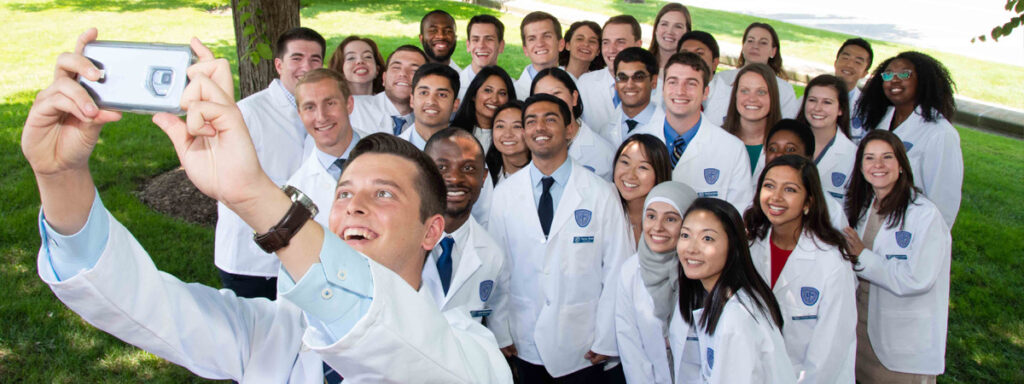
The written components of your secondary application are often the only chance you have to give a well-rounded picture of your skills, experience and goals. While your AMCAS application shows many of your qualifications, the secondary essays show who you are as a person and why you are well prepared to grow as a physician. Your responses should show a commitment to service, sound doctoring values, dedication to lifelong learning and resilience in the face of adversity. They should also show specific interest in the CWRU School of Medicine’s programs and opportunities, but only where that interest is real.
Take your time writing your secondary essays. Try not to repeat what is already in your AMCAS application, but use the space to expand on details that show your strengths as a candidate.
How the 2026-2027 secondary works
Case Western posted its 2026-2027 secondary application questions on June 3, 2026, well before invitations went out, so applicants can draft early. Key rules:
- Who receives it. Applicants with a verified AMCAS application and a most recent MCAT of at least 502. Invitations began the week of July 13, 2026.
- Program selection decides the prompts. After you open the secondary, you choose the University Program, the Lerner College Program, the MSTP or a combination. The prompts shown depend on that choice.
- One response per shared prompt. If you apply to more than one program, you write the shared prompts (Personal Challenge, Context of Care, Gap Year and Additional Information) once, and every program sees that response.
- Research defaults to Lerner. The four-part research questions are only for applicants applying to the University Program alone. If you also apply to the Lerner College Program, you answer the required Lerner Research essay instead.
- Characters, not words. Every limit is in characters, and spaces count as characters in the school’s platform. Write in a plain text editor with a character counter, then paste.
- Original writing. The school asks for original writing that reflects your own ideas and experiences, and warns that large language models produce essays that sound alike and show little reflection.
- Deadline. The secondary, the fee and all letters must be in by November 15, 2026, at 11:59 p.m. EST.
| Prompt | Limit | University Program | Lerner College Program | MSTP |
|---|---|---|---|---|
| Personal Challenge | 2,000 characters | Required | Required | Required |
| Context of Care | 1,500 characters | Required | Required | Required |
| Research/Scholarly Work (Yes or No, then parts A to D) | 600 characters per part | Optional (University Program only applicants) | Not shown | Not shown |
| Gap Year(s) | 1,000 characters | Optional, if applicable | Optional, if applicable | Optional, if applicable |
| Additional Information | 2,000 characters | Optional | Optional | Optional |
| Research (one project) | 3,500 characters | Not shown | Required | Not shown |
| Career Goals | 1,000 characters | Not shown | Required | Not shown |
| PhD Advisor | 800 characters | Not shown | Not shown | Required |
| Area of Interest | 800 characters | Not shown | Not shown | Required |
| Hardest academic or research challenge | 1,000 characters | Not shown | Not shown | Required |
Every example below is original teaching material written for this guide. Each is labeled “Illustrative example, not an actual applicant essay,” and each fits the school’s exact character limit. Use them to see how a response can answer every part of a prompt; do not copy them, and never submit anything that is not your own experience.
Personal Challenge (all programs, required)
Prompt: “Personal Challenge: The Admissions Committee is interested in gaining more insight into you as a person. Please describe a significant personal challenge you have faced that helped shape you as a person. Examples may include a moral or ethical dilemma, a situation of personal adversity, or a hurdle in your life that you worked hard to overcome. Please include how you got through the experience and what you learned about yourself as a result. (2,000 character limit)”
Limit and eligibility: 2,000 characters, including spaces. Required for University Program, Lerner College Program and MSTP applicants; one shared response.
What it asks. This is the school’s version of the adversity essay, and the wording has changed: the current prompt asks how you got through the experience and what you learned about yourself, in 2,000 characters. Relating experiences with adversity can communicate a lot about your values, how you handle stress and what kind of person you are. Perhaps most importantly, it shows your capacity to learn from hard situations. Everyone’s life is different, and the most important thing is an honest account of a meaningful experience.
How to approach it. Pick one real difficulty, such as an ethical dilemma, a personal or family hardship or a hurdle you worked to overcome, and spend most of your characters on what you did and what changed in you. Reviewers want self-awareness and growth, not the drama of the event. Structure the story so it is easy to follow: the situation, the hardest moment, how you responded, what you learned and how you act differently now. A useful test is whether you can name, in one sentence, a habit you have today because of the experience. If you are choosing between topics, consider one where you would handle something differently today; showing how your judgment has matured is often more convincing than showing that you endured.
Illustrative example, not an actual applicant essay (1,742 characters including spaces)
The spring my father’s hardware store closed, I was a sophomore taking organic chemistry and working twenty hours a week at a grocery deli. He had run the store for nineteen years. When the lease ended, he went quiet, and my mother asked me to handle the paperwork because his English is stronger on the phone than on forms.
For six weeks I filed his unemployment claim, called the bank about the business loan and translated letters at the kitchen table after my shifts. My grades slipped. I failed my second organic exam with a 54 and told no one, because I believed asking for help would mean I could not handle what my family needed.
The turning point was small. My lab TA noticed I was asleep at the bench and asked what was going on. I told her the truth for the first time. She walked me to the dean of students, who helped me set up a reduced course load for the summer and pointed me to a campus legal clinic that reviewed the loan letters for free. I retook organic chemistry that summer and earned an A minus.
The harder lesson was about my father. I had been treating him like a problem to solve. One night I asked him what he missed about the store, and he talked for an hour about the regulars who came in for one bolt and stayed to talk. A month later he took a job at a lumber yard, partly because I stopped filling out his forms for him and started sitting with him while he did it.
I learned that I default to carrying things alone, and that this habit makes me slower, not stronger. I now tell people early when I am stretched thin, and I ask what someone wants before I decide what they need. I expect both habits to matter on a team where I am the most junior person and the patient is the one whose life has changed.
Analysis. The prompt has three parts: a significant challenge that shaped you, how you got through it and what you learned about yourself. The example covers all three in order. The challenge is specific (a family business closing, a failed exam, a parent who needed help) without turning into a list of hardships. The middle shows how the writer got through it, including the uncomfortable fact that they hid the problem and needed someone else to notice. The ending names two concrete lessons, asking for help early and asking what someone wants before deciding what they need, and links them to working on a medical team. It avoids blaming anyone, keeps the focus on the writer’s own growth and uses about 1,740 of the 2,000 characters, leaving room for paragraph breaks.
Mistakes to avoid. Telling a story where the challenge is someone else’s illness and you are only a bystander; ending without a specific lesson; moralizing about other people; picking an event so recent that you have not yet reflected on it; and using all 2,000 characters on background.
Context of Care (all programs, required)
Prompt: “Context of Care: Describe an experience (or experiences) that changed how you understand the relationship between a person’s health and the conditions of their life. (1,500 character limit)”
Limit and eligibility: 1,500 characters, including spaces. Required for all three programs; one shared response.
What it asks. This prompt tests the phrase at the end of the University Program mission: preparing graduates “to understand the contexts that shape health.” It asks for an experience that changed your understanding, so the essay needs a before and an after.
How to approach it. Lead with one concrete experience, name the social or structural factor explicitly (housing, food access, work hours, transportation, insurance, language, immigration status, disability or stigma) and explain how it changed what you notice or how you will practice. You can draw on clinical work, community service, your own life or your family’s experience. Keep patient details private and avoid casting anyone as a symbol. One verified connection to Case Western, such as Block 1 community health experiences, the Student-Run Health Clinic or the Urban Health or Advocacy and Public Health pathways, can close the essay if it fits your story.
Illustrative example, not an actual applicant essay (1,368 characters including spaces)
I met Mr. D. while volunteering at a free clinic’s diabetes education night. His A1c had climbed for a year, and the resident’s note read “nonadherent.” When I sat with him to review his log, he explained that he works overnight at a warehouse and eats from a vending machine because the nearest grocery store closes before his shift ends. His insulin sat in a cooler in his car because his rented room has no refrigerator he can use.
Nothing about his care plan was wrong on paper. It just assumed a kitchen, a daytime schedule and a place to keep medicine cold. The word “nonadherent” put the failure on him when the barriers were his housing, his job and his neighborhood.
The clinic’s social worker connected him to a pharmacy program that switched him to a pen he could carry, and a food bank that delivers boxes on weekends. Three months later his numbers had started to come down. I did not fix anything myself. What changed was that someone asked how he lived before deciding what he should do.
I now read a chart differently. A missed appointment makes me wonder about bus routes, and an uncontrolled number makes me ask what a patient’s day looks like. I want to train somewhere that treats those questions as part of medicine from the first week, which is why the population health and community experiences in Block 1 of the WR2 curriculum appeal to me.
Analysis. The prompt asks for an experience that changed how you understand the link between a person’s health and the conditions of their life. The example names the conditions exactly (overnight work, no refrigerator, store hours) and shows the before-and-after change in the writer’s thinking: from accepting the label “nonadherent” to asking how a patient lives. It credits the social worker rather than claiming to have solved the problem, which keeps it honest. The last paragraph connects the lesson to a verified part of the WR2 curriculum, the population health and community work in Block 1, in one sentence rather than a paragraph of praise. Initials protect the patient’s privacy. The response uses about 1,370 of 1,500 characters.
Mistakes to avoid. Writing a general essay on social determinants of health with no experience at its center; describing a patient’s hardship without showing what you learned; presenting yourself as the person who fixed it; and listing statistics instead of telling one story.
Research/Scholarly Work (University Program only applicants, optional)
Prompt: “Research/Scholarly Work (if applying to University Program only): One of the four pillars of the Western Reserve2 Curriculum is Research and Scholarship. While research is not a required prerequisite for the University Program, if you have participated in research or other scholarly project (capstone project, honors thesis, etc.), please reflect on the prompts below where relevant. Have you participated in research or a scholarly project (capstone project, honors thesis, etc.)? (Yes or No)”
The school then asks four questions for applicants who answer Yes, each with a 600-character maximum:
- A. “A. Briefly describe your research/scholarly project and your role in it. If you have participated in multiple projects, choose one to discuss. (600 characters max)”
- B. “B. What did you learn from the project? (600 characters max)”
- C. “C. If you worked in a team, what did you learn about team dynamics? (600 characters max)”
- D. “D. What challenges, if any, manifested during the project and how were they overcome? (600 characters max)”
Eligibility. Optional, and shown only to applicants applying to the University Program alone. If you also apply to the Lerner College Program, your research answer is the required Lerner Research essay below.
What it asks. Accounts of research should show curiosity, attention to detail and a working grasp of how research is done. Four short parts make this easier to answer well: a project and your role, what you learned, what you learned about teams and how you handled challenges. Remember that research is broad and can include a senior capstone, an honors thesis, a humanities or social science project or a quality improvement project.
How to approach it. Choose one project. In part A, quickly state the purpose of the research, then define your role precisely. In parts B to D, give one specific moment for each answer. Use numbers where they help (participants, samples, months) and avoid jargon that a reader outside your field would not follow. Although the questions are optional, 93% of the 2026 entering class reported research, and every University Program student will complete an MD thesis, so a clear answer shows you are ready for that requirement.
Worked response for the Yes or No field:
Yes
Analysis. This is a factual field. Answer Yes only if you have done research or a scholarly project such as a capstone or honors thesis; the school defines research broadly and asks applicants with none to say so plainly. If you answer No, you skip parts A to D, and the school’s FAQ makes clear that research is not required for the University Program.
Part A: Your project and role (600 characters)
Illustrative example, not an actual applicant essay (408 characters including spaces)
I spent two years in a sleep and memory lab studying whether short daytime naps improve word-list recall in college students. I recruited and screened 64 participants, ran the nap and wake sessions, scored recall tests blind to condition and built the spreadsheet our PI used for analysis. In my second year I wrote the first draft of the methods section for a poster at our undergraduate research symposium.
Analysis. Part A asks for a brief description of one project and your role. The example states the research question in one sentence, then lists the writer’s actual tasks with numbers (64 participants, blind scoring, a methods draft). It does not explain the field’s background or claim credit for the PI’s analysis. At about 410 of 600 characters, it leaves the other parts to carry the reflection, which is how the prompt is structured.
Part B: What you learned (600 characters)
Illustrative example, not an actual applicant essay (477 characters including spaces)
I learned that most of research is protecting the question from your own hopes. Halfway through, our nap group looked better, and I wanted to stop recruiting. My PI asked me to write down our planned sample size before looking again, and the effect shrank once we reached it. I also learned how much a clean protocol matters: two sessions run with a different alarm sound had to be excluded. I now read results sections asking how the authors guarded against the same mistakes.
Analysis. Part B asks what you learned. The example gives one scientific lesson (pre-registering a sample size protected the result from wishful thinking) and one practical lesson (protocol consistency), each tied to a specific moment. It closes by showing how the lesson changed the way the writer reads research, which signals the habit the MD thesis will build. It stays under 600 characters by avoiding general statements such as “research taught me perseverance.”
Part C: Team dynamics (600 characters)
Illustrative example, not an actual applicant essay (477 characters including spaces)
Our team was a PI, a graduate student and four undergraduates on different schedules. I learned that good teams write things down. After two participants were double-booked, I proposed a shared calendar and a short handoff note after every session, and errors stopped. I also learned to raise problems early. When I noticed a scoring rule was being applied two ways, I brought it to our weekly meeting instead of quietly fixing my own data, and we rescored everything together.
Analysis. Part C asks about team dynamics if you worked in a team. The example names the team, describes one coordination problem and the writer’s fix, and then gives a second, more mature example: raising an inconsistency openly instead of quietly correcting their own data. That second point speaks to the school’s value of collaborative leadership. If you worked alone, say so briefly or describe how you worked with a mentor.
Part D: Challenges and how they were overcome (600 characters)
Illustrative example, not an actual applicant essay (467 characters including spaces)
Recruitment stalled during finals, and we were twenty participants short of our target with a month left. I asked our PI if we could add an evening session, then emailed student organizations and posted in residence halls with a plain description of what participation involved. We finished on time. A second challenge was a faulty recording device that lost three sessions. I wrote a checklist for testing equipment before each session, and we had no further losses.
Analysis. Part D asks what challenges arose and how they were overcome. The example chooses two ordinary challenges, slow recruitment and a broken device, and shows a concrete response to each, with results. Ordinary problems handled well are more convincing than dramatic ones, and they are what admissions readers see in real labs. The answer avoids blaming lab members and stays within 600 characters.
Mistakes to avoid. Writing about several projects across the four parts; repeating the same lesson in B, C and D; inflating your role; and leaving the questions blank when you have a capstone or thesis you could describe.
Gap Year(s) (all programs, optional if applicable)
Prompt: “Gap Year(s) if applicable: If applicable, please reflect on the time you are taking between college graduation and medical school matriculation, including why you chose to take a gap/growth year(s) and what you will be doing or have done during this time. (1,000 character limit)”
Limit and eligibility: 1,000 characters, including spaces. Optional and only for applicants with time between college graduation and matriculation; shared across programs.
What it asks. It is very common for students to take time off before medical school; 81% of Case Western’s 2026 entering class took at least one gap year. The prompt asks why you chose the time and what you will do or have done. Many applicants use this time for clinical work, research, service, further coursework or pre-med gap year programs that add supervised patient care.
How to approach it. Use this space to explain your roles and responsibilities, the skills you are building and why they matter for medicine, how your plans strengthen your path and what you will do between now and July. Give a reason that sounds like a decision, not a delay. If your plans change after you submit, the interview is a good place to update the school.
Illustrative example, not an actual applicant essay (948 characters including spaces)
I graduated in May and am working full time as an emergency department scribe at a community hospital while I apply. I chose a growth year for two reasons. First, my clinical experience in college came in short volunteer shifts, and I wanted to see how physicians think across an entire workday. Scribing has taught me how a differential narrows as results return and how often the plan depends on whether a patient has a ride home or a pharmacy that is open.
Second, I wanted to finish my research poster and take biochemistry with full attention instead of squeezing it into a crowded senior year. I completed both last fall.
Outside work, I tutor high school students in chemistry two evenings a week through a library program. Teaching has made me better at explaining ideas simply, which I now practice when a physician asks me to read back a discharge plan. I will keep scribing until matriculation and plan to start in July ready to learn.
Analysis. The prompt asks why you chose a gap or growth year and what you are doing or have done. The example gives two clear reasons (longer clinical exposure and finishing research and a course with full attention), then describes current work with one specific lesson from each activity. It does not apologize for the gap year, which is common at Case Western, where 81% of the 2026 entering class took at least one. It ends with plans through matriculation, answering the “will be doing” part of the prompt, at about 950 of 1,000 characters.
Mistakes to avoid. Apologizing for taking time off; listing activities without saying what you learned; describing plans you have not confirmed; and leaving out what you will do between submission and matriculation.
Additional Information (all programs, optional)
Prompt: “Additional Information: Is there any further information that you wish to share with the Admissions Committee that may not be captured in the rest of your application? (2,000 character limit)”
Limit and eligibility: 2,000 characters, including spaces. Optional; shared across programs.
What it asks. We strongly recommend considering “anything else?” prompts. Look back over your application and identify what is missing. Which strengths have you not quite communicated? Which experiences need context, such as a hard semester, a withdrawal, an MCAT retake or a gap in your timeline? This is also a good place to show skills from other areas of work or service, because leadership, teamwork and compassion are not built only in health care settings.
How to approach it. Use the space for one or two things, not a second personal statement. Explain any red flag briefly and factually, show what happened afterward and connect the experience to medicine if it fits. If you have pre-written responses from other applications that add something new, they can be a starting point, but adapt them to Case Western and check that you are not repeating your other essays. If there is genuinely nothing to add, leaving this blank is acceptable.
Illustrative example, not an actual applicant essay (1,282 characters including spaces)
My transcript shows a withdrawal from physics in the fall of my junior year and a lower semester GPA that term. I want to explain it briefly because the context matters.
That October my younger brother was hospitalized for three weeks with a severe asthma exacerbation, and I drove home every weekend to stay with him so my parents could keep working. I withdrew from physics on my advisor’s advice to protect my other courses, then retook it the next summer and earned a B plus. My grades in every semester since have been above a 3.8.
I do not share this to ask for special consideration. I share it because those weeks are part of why I want to practice medicine. I watched a respiratory therapist teach my brother how to use a spacer with more patience than anyone else in the building, and I saw how much my parents relied on a nurse who called them each evening with an update. They were the people I wanted to be.
I also want to add one activity that did not fit in my AMCAS list. For the past year I have volunteered on Saturday mornings with a refugee resettlement group, helping families read school and clinic forms. It has taught me how much a form can stand between a person and care, a lesson I expect to carry into the advocacy work I hope to do in medical school.
Analysis. This optional prompt is the place to explain something the rest of the application does not, or to add something important that did not fit. The example does one explanation and one addition. It explains a withdrawal briefly and factually, shows the recovery with grades, and avoids asking for sympathy. It then turns the experience into motivation through specific people (a respiratory therapist and a nurse), and adds a missing activity with a clear connection to the school’s advocacy and public health emphasis. It does not repeat the personal statement or list every activity again. It uses about 1,280 of 2,000 characters; shorter is fine when the point is made.
Mistakes to avoid. Repeating activities already in AMCAS; making excuses or blaming others; writing about a topic covered by another prompt; and filling the space because it is there.
Lerner College Program prompts (5-year MD applicants only)
The Lerner College Program at Cleveland Clinic appeals to many students who want to build research skills without an eight-year MD/PhD. Its applicants answer the shared Personal Challenge and Context of Care prompts plus two program-specific essays. These suit applicants whose career is clearly research-driven: the program expects more than two summers of hypothesis-driven research, and applicants without a clear research trajectory will find it hard to compete for this track. Our separate Lerner College guide covers its admissions in more depth.
Research (Lerner College Program, required)
Prompt: “Research: Please tell us about ONE research project to which you made a significant contribution. In your essay, describe your role on the project, the hypothesis of your research and whether you contributed to hypothesis generation, why the methods were selected to answer that hypothesis, your results, and interpretation of your results with respect to future findings. In addition, please briefly share your motivation for pursuing this research project and reflect on how this experience affected your future career goals. (3,500 character limit)”
Limit and eligibility: 3,500 characters, including spaces. Required for Lerner College Program applicants only. It replaces the University Program research questions if you apply to both programs.
How to approach it. Answer each required element in order: your role, the hypothesis and whether you helped generate it, why the methods fit, results, interpretation and future directions, motivation and the effect on your career goals. Write for a scientifically literate reader outside your field. Be exact about your contribution and honest about limits.
Illustrative example, not an actual applicant essay (3,209 characters including spaces)
In my junior year I joined a cardiovascular physiology lab studying why some patients with heart failure with preserved ejection fraction (HFpEF) tolerate exercise poorly despite normal resting cardiac output. Our lab’s working hypothesis was that impaired skeletal muscle oxygen extraction, not cardiac limitation alone, drives exercise intolerance in a subset of these patients.
My role grew over two years. I began by processing near-infrared spectroscopy (NIRS) data from cardiopulmonary exercise tests already collected in the lab’s registry. After six months, I noticed that patients with obesity had lower muscle oxygen desaturation during exercise even when their peak oxygen consumption was similar to that of other patients. I brought this to my PI, and together we refined a sub-hypothesis: that in HFpEF patients with a BMI over 35, reduced muscle oxygen extraction would account for a larger share of exercise limitation than in leaner patients. I contributed to generating that hypothesis and wrote the analysis plan with a postdoctoral fellow.
We chose a retrospective cohort design because the registry already held paired NIRS and gas exchange data for 212 patients, allowing a powered comparison without new recruitment. We used the Fick principle to estimate the arteriovenous oxygen difference at peak exercise and compared it across BMI groups with linear models adjusted for age, sex, hemoglobin and beta blocker use. I learned to write these models in R, checked assumptions with residual plots and ran sensitivity analyses excluding patients with atrial fibrillation, whose heart rate response could distort the results.
Our results supported the sub-hypothesis. Patients with a BMI over 35 had a significantly smaller peak arteriovenous oxygen difference, and this difference persisted after adjustment. Cardiac output at peak did not differ meaningfully between groups. I presented the findings as a poster at a regional physiology meeting and am a middle author on a manuscript in preparation.
We interpreted the results cautiously. A retrospective design cannot show that muscle changes cause exercise intolerance, and NIRS measures only superficial muscle. Our findings suggest that a prospective study pairing NIRS with muscle biopsy could test whether capillary density or mitochondrial function explains the gap, and whether supervised exercise training improves extraction in this subgroup. I helped draft the aims for that proposal.
I pursued this project because my grandmother lived with HFpEF, and I remember her doctors telling her that her heart looked fine while she could not climb her porch stairs. The research gave a physiological shape to that frustration. It also changed my career plans. I came in expecting to enjoy the lab work and leave it behind for clinical practice. Instead, I found that the most satisfying moment was noticing a pattern in data from real patients and turning it into a testable question. I want a career in which I see patients like my grandmother in clinic and bring their unanswered questions back to a research team, and a program that builds investigation into every year of training is the setting where I can learn to do both.
Analysis. The Lerner College Program Research prompt has many required parts: your role, the hypothesis and whether you helped generate it, why the methods fit, results, interpretation for future work, motivation and how the experience affected your career goals. The example answers each in order, almost as a structured abstract, which makes it easy for faculty readers to check. It states the writer’s specific contribution to hypothesis generation, explains the choice of a retrospective design and the statistical approach, reports results honestly with limits, proposes a clear next study and closes with motivation and a career goal that fits a physician-investigator program. It uses about 3,210 of 3,500 characters. Avoid overstating authorship, using jargon without explanation or skipping the limitations.
Career Goals (Lerner College Program, required)
Prompt: “Career Goals: What does your ideal career entail fifteen years after medical school graduation? (1,000 character limit)”
Limit and eligibility: 1,000 characters, including spaces. Required for Lerner College Program applicants only.
Illustrative example, not an actual applicant essay (994 characters including spaces)
Fifteen years after graduation, I see myself as a heart failure cardiologist at an academic medical center, spending most of my time in clinic and protected time leading a small clinical research group. My clinic would focus on patients with heart failure with preserved ejection fraction, a condition where treatment options are still limited and where patients often hear that their tests look normal while they feel unwell.
My research would test practical interventions, such as supervised exercise programs and nutrition support, in prospective trials that include patients who are often left out of studies, including older adults and people with obesity. I would like to mentor medical students and residents through their first projects, the way my undergraduate mentors guided me.
I also hope to help run community heart screenings in neighborhoods with high rates of hypertension. Success, for me, would mean that a question a patient asks in clinic becomes a study my team answers.
Analysis. The prompt asks what your ideal career looks like fifteen years after graduation. The example names a specialty, a patient population, a split between clinic and research, the kind of research questions, a mentoring role and a community commitment, all in under 1,000 characters. It fits the Lerner mission of training physician investigators without claiming certainty about a match or a job. Avoid vague answers (“I want to help people and do research”) and avoid listing so many roles that none feels real.
MSTP prompts (MD/PhD applicants only)
MSTP applicants answer the shared Personal Challenge and Context of Care prompts plus three program-specific questions. The MSTP is open only to U.S. citizens, noncitizen nationals and permanent residents.
PhD Advisor (MSTP, required)
Prompt: “PhD Advisor: What do you look for in a PhD advisor, and who at CWRU would interest you? (800 character limit)”
Limit and eligibility: 800 characters, including spaces. Required for MSTP applicants only.
Illustrative example, not an actual applicant essay (733 characters including spaces)
I look for an advisor who meets regularly, gives direct feedback and expects students to defend their reasoning. In my undergraduate lab, the weekly one-on-one meeting where my PI asked me to explain a failed experiment taught me more than any course. I also value an advisor whose former students have gone on to independent careers, because it shows a commitment to mentorship beyond the lab’s own output.
At CWRU, I am drawn to labs in the Case Comprehensive Cancer Center studying DNA repair and resistance to chemotherapy, the area where my undergraduate work on mismatch repair began. I would plan to use rotations to meet investigators in that field and compare how each lab trains its students before choosing a thesis home.
Analysis. The prompt has two parts: what you look for in a PhD advisor and who at CWRU would interest you. The example answers the first with specific mentoring behaviors tied to the writer’s own experience, and the second by naming a verified CWRU research area (DNA repair and chemotherapy resistance through the Case Comprehensive Cancer Center) without inventing names or claiming a relationship with a faculty member. When you write your own, name real investigators only after reading their current lab pages, and explain why each fits. The example uses about 730 of 800 characters.
Area of Interest (MSTP, required)
Prompt: “Area of Interest: What is your specific interest in the MSTP at CWRU? (800 character limit)”
Limit and eligibility: 800 characters, including spaces. Required for MSTP applicants only.
Illustrative example, not an actual applicant essay (795 characters including spaces)
My interest is in how tumors repair DNA damage caused by chemotherapy and how that repair can be blocked to make treatment work longer. In college I spent three years characterizing mismatch repair variants in colorectal cancer cell lines, and in clinic shadowing I saw patients whose cancer returned after an initial response.
The CWRU MSTP fits that interest for three reasons. First, its research strength spans basic science departments and the Case Comprehensive Cancer Center, a partnership with University Hospitals and Cleveland Clinic. Second, the program trains students in the same city as four major hospital systems, so translational questions are close at hand. Third, it was the first MD/PhD program in the country, and I want training built by people who have done this longest.
Analysis. The prompt asks for your specific interest in the CWRU MSTP. The example states the scientific interest first, backs it with three years of related work and a clinical observation, and gives three CWRU-specific reasons that are verified on school pages: research across departments and the cancer center, four hospital systems in one city and the program’s history as the country’s first MD/PhD program. It stays close to the 800-character limit without filler.
Hardest academic or research challenge (MSTP, required)
Prompt: “What is the hardest academic or research challenge you’ve faced so far? How did you handle it? (1000 character limit)”
Limit and eligibility: 1,000 characters, including spaces. Required for MSTP applicants only.
Illustrative example, not an actual applicant essay (922 characters including spaces)
My hardest research challenge came when a year of my data did not replicate. I had shown that a mismatch repair variant made cells more sensitive to a chemotherapy drug, but when a new graduate student repeated the experiment in a fresh batch of cells, the effect disappeared.
My first instinct was to look for a mistake in her work. Instead, my PI asked us to repeat the experiment side by side. We found that my original cell line had been passaged far longer than recorded and had drifted. The result I was proud of was an artifact.
I handled it by writing up exactly what happened for our lab meeting, authenticating every line we used and setting a passage limit in our protocol. We repeated the study over the next six months, and the true effect was smaller but real. I learned to treat a surprising result as a question to check before it becomes a conclusion, and to be grateful when someone else tests my work.
Analysis. The prompt asks for the hardest academic or research challenge you have faced and how you handled it. The example picks a failed replication, a challenge every physician-scientist meets, and is honest that the writer’s own result was wrong. It shows the handling step by step (side-by-side repeat, root cause, lab meeting write-up, protocol change) and ends with the lesson and a result. This is the kind of integrity the MSTP’s research mission depends on. It uses about 920 of 1,000 characters.
Prompts that are not part of this cycle
The 2026-2027 secondary does not include a COVID-19 impact essay, a list of pass/no pass courses, a separate personal growth essay or a “Why CCLCM” essay. If you see those prompts in older compilations, they are not part of this cycle. The current University Program set is the five prompts above: Personal Challenge, Context of Care, the optional research questions, Gap Year(s) and Additional Information.
Interview Format and Preparation
Format and logistics (confirmed for 2026-2027)
Case Western interviews applicants once their application is complete, and interviews are at the admissions committee’s discretion. All MD program interviews are virtual, conducted on Zoom, and a personal interview remains an essential part of selection. Interviewers, including medical student interviewers, receive training in online interviewing and sign confidentiality agreements.
- Days. The University Program interviews on Mondays, Wednesdays and Thursdays; the College Program on Tuesdays and Thursdays. You choose a date from the options in your email invitation.
- Interviews. University Program applicants have two interviews: one with a health education professional (a faculty member or member of the medical education team) and one with a current medical student. College Program applicants have two faculty interviews and one student interview.
- The rest of the day. A full agenda of information sessions, a meeting with the dean and/or director of admissions, curriculum and financial aid sessions, a lunch or brunch with current students and a virtual tour of the Health Education Campus.
- Technology. You need a device with a camera and microphone (a headset usually sounds better), a strong internet connection and a quiet space. If any of these is a barrier, the school will work with you on alternate arrangements.
- Season and decisions. Interviews run from September 2026 to February 2027. The committee meets after your interview day and votes to accept, place on the alternate list or deny, and you are notified within a month of that meeting. Accepted applicants are invited to campus visit events each spring.
How to prepare (general practice guidance)
The school does not publish a scoring rubric, so the advice below is general preparation based on the school’s published values, not a description of how interviewers grade.
- Know your file cold. Interviewers may have read your application. Be ready to expand on any activity, your secondary essays, your research and any gap in your record.
- Prepare for two different conversations. A faculty or medical education interviewer may ask how you think about patients, ethics or teamwork. A medical student interviewer may ask why Case Western and how you would handle the IQ Team format, pass/fail grading and self-directed learning.
- Practice explaining the WR2 fit. Be ready to say why a curriculum that unites medicine and public health, teaches through small-group cases and requires a thesis suits the way you learn. Use one or two specific examples from your experience.
- Have a Context of Care story ready to extend. Your secondary essay may come up. Think about what you would do differently now and how you would explain it to a patient.
- Know which clerkship format and pathway interest you. You do not need to choose, but knowing the difference between traditional rotations and the Cleveland Clinic or MetroHealth longitudinal clerkships shows you have done your research.
- Treat the Zoom setting as real. Test your setup, look at the camera, keep notes off screen and plan for a quiet, well-lit space. A practice run with a friend on the same platform helps.
- Bring questions. Ask students about IQ Teams, research mentors, advising societies or life in Cleveland. Ask the financial aid session about scholarships and loan options for your situation.
Applying to medical school is a demanding process with many moving parts. It requires strong organization and writing skills, steady focus and extensive research. If you want structured practice, our medical school admissions consulting gives comprehensive guidance and expert support built around your own skills and goals. At International Medical Aid, we draw on experienced advisors in medicine and education to help students put their best foot forward, from in-depth application reviews to mock medical school interviews.
Frequently Asked Questions
Does Case Western use AMCAS?
Yes. All three CWRU MD programs use AMCAS as the primary application. For the 2026-2027 cycle, AMCAS opened May 5, 2026, schools began receiving verified applications June 26, 2026, and the AMCAS deadline for Case Western was October 15, 2026. After AMCAS verifies your application and a qualifying MCAT posts, Case Western emails a secondary invitation, usually about two weeks later. The secondary, fee and letters are due November 15, 2026, at 11:59 p.m. EST. If you are planning for a later cycle, submit AMCAS early in the summer so your secondary can be done before most interview slots fill.
What is the median MCAT and GPA at Case Western?
The entering class of 2026 had a median MCAT of 517 and an average of 518, with a range of 510 to 527. The average cumulative GPA was 3.87 (range 2.9 to 4.00) and the average science GPA 3.85. These figures cover the whole entering class across all three MD programs. Case Western also requires a most recent MCAT of at least 502 before it sends a secondary. For the 2025 entering class, all accepted applicants had a median MCAT of 518 and a median total GPA of 3.94 (science GPA median 3.93). Treat these numbers as context, not cutoffs: applicants invited to interview had MCAT scores from 502 to 528 and cumulative GPAs from 2.8 to 4.00.
What is the difference between the University Program and the Lerner College?
The University Program is the four-year MD, with about 170 students a year, the WR2 curriculum taught through InQuiry Team small groups and lectures, pass/fail grading in the first two years and a required 12-week MD thesis that begins in the summer after year one. The Cleveland Clinic Lerner College of Medicine is a five-year MD with 32 students a year, a full-tuition scholarship for every student, no grades, a dedicated research year and an MD with special qualification in biomedical research. You can apply to one, both or all three programs (including the MSTP) through the same secondary by selecting them. Apply to the Lerner program only if your research record and goals clearly fit it.
Does Case Western accept international applicants? DACA?
Yes to both for the University Program and the Lerner College Program. They accept international applicants, including Canadians, and DACA recipients, and evaluate them the same way as U.S. citizens and permanent residents. The MSTP is limited to U.S. citizens, noncitizen nationals and permanent residents because it is funded by NIH training grants. International and DACA students in the University Program cannot receive federal loans or need-based aid and must show proof of payment for one year before matriculation, often through private loans with a U.S. citizen cosigner. Applicants with a degree from outside the U.S. or Canada need at least a year of advanced science coursework at an accredited U.S. institution before applying.
What is Case Western’s acceptance rate?
Case Western does not publish the number of offers it makes, so its acceptance rate cannot be calculated from school data. For the entering class of 2026, the University Program received 8,272 applications, interviewed 799 applicants (about 9.7%) and enrolled 172 students. Across all three programs, the school received 10,647 applications and enrolled 216. For the 2025 entering class, there were 9,454 verified applications, 1,111 interviews (about 11.8%) and 216 matriculants, again with no offer count. Dividing enrolled students by applications gives a matriculation ratio, not an acceptance rate, because some admitted applicants go elsewhere. The practical takeaway: an interview invitation is the main hurdle, so focus on a complete, early and well-written secondary.
What MCAT score do I need to get a Case Western secondary?
You need at least a 502 on your most recent MCAT. The school sends secondaries only after a qualifying score posts. If you scored 502 or higher and then retook the exam and scored lower, you will not receive a secondary, because the school uses your most recent attempt. For the 2026-2027 cycle, scores from January 2023 through the September 12, 2026 test date count. January 2027 scores do not. If you are near 502, think carefully before retaking, and take the exam only when your practice scores are stable.
Does Case Western prefer Ohio residents?
No. The school has a national applicant pool and no in-state admissions quota, so Ohio residents receive no preference. Tuition is also the same for every student. In the 2026 entering class, only 14% were Ohio residents, and students came from 38 states. If you are an Ohio resident, Case Western is a strong option, but compare it with the public Ohio schools, which have different residency rules and lower in-state tuition.
Is research required for the University Program?
No. Research is not required to apply to the University Program, but a successful applicant must show interest in doing a research project as a medical student. Every University Program student completes a 12-week mentored research project and an MD thesis, so the school wants to see curiosity and readiness. If you have done research or a scholarly project, use the optional research questions in the secondary. If not, say so plainly. Research is required for the Lerner College Program (more than two summers of hypothesis-driven research) and the MSTP.
When do I have to finish my prerequisites?
By matriculation. Case Western lists its required courses (general chemistry with lab, organic chemistry with lab, biochemistry with metabolism and a writing course, plus advanced biology and calculus or statistics for the MSTP) as the minimum you must complete by the time you enroll, not necessarily when you apply. It is still to your advantage to finish as many as possible before the MCAT and before you apply. AP or IB credit counts for general chemistry, and for calculus or statistics for MSTP applicants, but not for organic chemistry, writing or advanced biology.
How many letters of recommendation does Case Western require?
Three to five, with at least two from science professors or instructors and/or a research PI. A full premed committee packet can replace individual letters. If your committee sends a single letter with nothing attached, add two more letters, at least one from a science professor or research PI. The University Program recommends a research advisor letter if you have one and accepts one science letter from a graduate teaching assistant. Psychology, earth science and computer science letters do not count as science letters. Your application is not reviewed until every letter arrives through AMCAS.
Does Case Western require CASPer or PREview?
No. For the 2026-2027 cycle, Case Western does not require CASPer, PREview or any Altus Suite component, such as Duet or Snapshot, for any of its MD or MD/PhD programs. Your application is complete with a verified AMCAS application, the CWRU secondary and fee, a qualifying MCAT and all letters. Put your preparation time into the secondary essays and interview practice instead.
Are Case Western interviews in person or virtual?
Virtual. Case Western conducts interviews for all of its MD programs on Zoom. University Program applicants have one interview with a health education professional and one with a current medical student, along with information sessions, a meeting with the dean and/or director of admissions, a session with students and a virtual tour of the Health Education Campus. University Program interviews are on Mondays, Wednesdays and Thursdays from September through February. Accepted applicants can visit campus in the spring.
How much does Case Western medical school cost?
University Program tuition is $72,526 for 2026-27, and tuition plus required fees is $74,542. The first-year total cost of attendance, including living expenses, the Student Medical Plan and loan fees, is $115,226. Costs for the other three classes range from $116,514 to $119,376. Tuition is the same for every student regardless of residency. The Lerner College Program gives every student a full-tuition scholarship, but students still pay living costs. University Program aid is need-based, with no merit scholarships, and indebted graduates in 2024-25 left with an average medical school debt of $228,497. Compare schools by total cost of attendance, not tuition alone.
Does Case Western require a deposit, and is the alternate list ranked?
No deposit is required to hold your seat. The alternate list is not ranked; when positions open after the interview season, the school offers acceptances to individual students on the list, and many students who enroll are accepted from it. Accepted applicants must select Plan to Enroll by April 30, 2027, hold no more than three acceptances after April 15, 2027, and select Commit to Enroll by noon EST on May 20, 2027. During the cycle, accepted applicants are asked to respond within two weeks. There is no Early Decision Program.
How much is the Case Western secondary fee, and can it be waived?
The secondary fee is $100 for the 2026-2027 cycle, and a fee waiver is available. Your application is not reviewed until the fee is paid or waived, along with the secondary and every letter. Look for the waiver option in the secondary portal before you pay, and contact the admissions office if your eligibility is unclear.
Can I defer my Case Western acceptance?
Deferral requests are considered case by case. Four members of the 2025 entering cohort deferred entry, one from Ohio and three from out of state. If you expect to need a deferral, contact the admissions office as soon as you accept, and do not assume a request will be approved.
Can I transfer into Case Western’s MD program?
No. The University Program, the Lerner College Program and the MSTP do not accept transfer students. A current medical student who wants to attend must apply as a new first-year student. The only advanced standing route is the Oral-Maxillofacial Surgery/MD program for graduates of accredited dental schools.
Does Case Western have linkage or early assurance programs?
The school’s admissions pages describe linkage programs rather than an early assurance program. The University Program guarantees an interview to qualifying students in four CWRU graduate and post-baccalaureate programs: the MS in Applied Anatomy, MS in Medical Physiology, MS in Molecular and Cellular Biology of Disease and the PRIME post-baccalaureate program. The benchmarks are an undergraduate GPA of at least 3.4, an MCAT of at least 515 and strong professional conduct. Separate agreements cover the Goucher College and Bryn Mawr post-baccalaureate programs and SOFtoSOM for Special Operations veterans.
How much clinical experience do I need?
Case Western does not set a minimum number of clinical hours, but it asks applicants to show they have carefully considered medicine through medically related experiences, time with physicians and patient care work. In the 2026 entering class, 87% had volunteer medical experience, 72% paid medical experience and 90% shadowing. Aim for sustained, hands-on roles where you can describe specific patients and what you learned. Supervised internships for pre-med students can help when local options are limited, alongside regular volunteering near home.
Is the MD thesis hard to complete alongside classes?
The thesis is built into the schedule. Students spend 12 weeks of the summer after the first year on mentored research and submit a manuscript-style paper, graded pass/fail, in January of the second year. Mentors come from CWRU faculty across the School of Medicine and all four hospital systems, and the Office of Medical Student Research helps students find projects. The thesis is not master’s-level work, though many students reach that depth. Students who want more can take up to 12 weeks of research electives later.
Related Medical School Guides
Case Western competes for applicants with every Ohio medical school, and many applicants apply to several. These guides cover schools that share its state, its MD degree or its applicant pool:
- University of Cincinnati College of Medicine: a public Ohio MD school whose 2026 class was about two-thirds Ohio residents and which publishes its acceptance numbers, useful if you want a public-school cost comparison.
- Northeast Ohio Medical University (NEOMED): a public MD school in Rootstown, in Northeast Ohio, whose Fall 2026 class was about three-quarters Ohio residents; a natural comparison for applicants who want to stay in the region at a public-school price.
- The Ohio State University College of Medicine: a public MD program in Columbus that received 10,116 applications for a 2026 entering class of 214, a volume close to Case Western’s.
- University of Toledo College of Medicine and Life Sciences: a public MD school in northwest Ohio that welcomes nonresidents and offers lower tuition for Ohio residents.
- Wright State University Boonshoft School of Medicine: a community-based MD school in Dayton whose admissions committee looks for potential for medical service in underserved areas of Ohio.
- How to get into the Cleveland Clinic Lerner College of Medicine, Case Western’s five-year research MD: the separate guide to the Lerner College Program, with its own prompts, research expectations and full-tuition scholarship explained in depth.
For a side-by-side look at every MD and DO option in the state, read our guide to medical schools in Ohio.
More medical school guides
We have many other complete medical school guides for you to explore:
- University of North Carolina Medical School
- University of Florida Medical School
- Emory University School of Medicine
- Boston University School of Medicine
- California University of Science and Medicine
- UC San Diego Medical School
- California Northstate University College of Medicine
- Touro University of California
- CHSU College of Osteopathic Medicine
- UC Davis School of Medicine
- Harvard Medical School
- UC Riverside School of Medicine
- USC Keck School of Medicine
- UT Southwestern Medical School
- Long School of Medicine at UT Health San Antonio
- University of the Incarnate Word School of Osteopathic Medicine
- UT Austin’s Dell Medical School
- UTMB School of Medicine
- McGovern Medical School at UT Health
- Johns Hopkins School of Medicine
- The University of Texas Rio Grande Valley School of Medicine
- UNT Texas College of Osteopathic Medicine
- University of Houston College of Medicine
- Texas A&M College of Medicine
- Baylor College of Medicine
- George Washington University School of Medicine
- Vanderbilt University School of Medicine
- St. George’s University School of Medicine
- Lake Erie College of Osteopathic Medicine (in Pennsylvania)
- Sidney Kimmel Medical College at Thomas Jefferson University
- Wake Forest University School of Medicine
- Western University of Health Sciences (in California)
- Drexel University College of Medicine
- Stritch School of Medicine at Loyola University Chicago
- Georgetown University School of Medicine
- Yale School of Medicine
- Perelman School of Medicine
- UCLA Medical School
- NYU Medical School
- Washington University School of Medicine
- Brown Medical School
How International Medical Aid Can Help
Your experience in health care is one of the most important parts of your candidacy, and hands-on, health-related activity is expected by nearly every medical school. Case Western’s own class profile shows it: most of its 2026 entering class had volunteer and paid medical experience, and its Context of Care prompt rewards applicants who have seen how a patient’s circumstances shape their health.
International Medical Aid runs medical internships abroad in Kenya and other countries for students preparing for health careers. Our pre-health internships place students in clinical settings where, under the supervision of local health professionals, they take vitals, do patient intake and triage and help with direct patient care. Students work in health systems very different from those in the United States, an experience that can give real substance to a Context of Care or Personal Challenge essay. Our healthcare internships abroad also include programs for students interested in other health professions.
An IMA internship does not carry any affiliation with Case Western or any other medical school, and it does not guarantee admission anywhere. What it can do is give you sustained, supervised patient contact and stories you understand well enough to reflect on, which is what Case Western’s essays and interviews ask for. Our interns go on to medical schools across the country and carry experiences that shape how they think about compassion, service and leadership.
If you want help with the application itself, our medical school admissions consulting team can review your AMCAS and secondary drafts, help you choose between the University Program and the Lerner College Program and run mock interviews in the Zoom format Case Western uses. A good next step is to book a complimentary consultation and bring your list of schools.
Final Thoughts and Sources
Case Western rewards applicants who can show three things: academic readiness (a most recent MCAT of at least 502 and a record that holds up beside a class averaging 518 and 3.87), real experience with patients and the conditions of their lives, and curiosity that will carry them through an MD thesis. If you are applying this cycle, finish the secondary and letters well before November 15, 2026, and prepare for a virtual interview. If you are planning ahead, choose your program on purpose and build the clinical, service and research experiences you will write about. We truly wish you the best of luck on your journey to becoming a physician.
International Medical Aid is here to help whenever you need us. Medical school is within reach, and with the right preparation you will be on your way.
Sources
All sources were checked on October 18, 2026. Class statistics describe the entering class of 2026 unless marked 2025; costs describe the 2026-27 academic year; deadlines and prompts describe the 2026-2027 application cycle.
- Case Western Reserve University School of Medicine, 26-27 Secondary Application Questions (updated June 3, 2026).
- CWRU School of Medicine, MCAT requirements and letters of recommendation.
- CWRU School of Medicine, 2026-2027 Admissions Timeline and Acceptance Protocols.
- CWRU School of Medicine, Interviews, Application Year 2026-2027.
- CWRU School of Medicine, MD Admissions FAQs, Linkage Programs and Transfers and Advanced Standing.
- CWRU School of Medicine, Class Profiles, including the Entering Class 2026 profile presented by Dr. Lina Mehta.
- CWRU School of Medicine, University Program curriculum, the 2024-2025 year-by-year curriculum sheet, InQuiry Teams, Clinical Training, Dual Degrees and Pathways Programs.
- CWRU School of Medicine, Medical Student Research and Student Research pages.
- CWRU School of Medicine, 2026-27 Estimated Cost of Attendance and Types of Aid (Office of Financial Aid).
- CWRU School of Medicine, About, History, Meet the Dean, Hospital Partners and By the Numbers.
- CWRU School of Medicine, University Program Faculty and Staff Directory, Medical Education page, Student Life, Academic Societies and Alumni Recognition and Awards.
- CWRU Medical Scientist Training Program, Admissions and Outcomes.
- Liaison Committee on Medical Education, Directory of Accredited U.S. Programs (updated October 14, 2026).
- Cleveland Clinic Lerner College of Medicine of Case Western Reserve University homepage.
- AAMC Medical School Admission Requirements (MSAR), Case Western Reserve University School of Medicine profile, 2026 edition (accessed October 18, 2026): accepted-applicant MCAT and GPA medians and the application, interview, deferral and matriculation counts for the 2025 entering class; secondary fee, fee waiver, deposit, early decision and deferral policies for the 2026-2027 cycle; 2024-25 financial aid and graduate debt; 2025 graduate outcomes. The profile combines the University Program, Lerner College Program and MSTP.