The Cleveland Clinic Lerner College of Medicine of Case Western Reserve University (CCLCM) is a five-year MD program built for one kind of student: the future physician investigator. It was founded in 2002 as a partnership between Cleveland Clinic and Case Western Reserve University (CWRU), made possible by a $100 million gift from Al and Norma Lerner. Al Lerner died shortly after the college was founded, and the college carries his name. The first class enrolled in 2004 and graduated in 2009. CWRU pages often call it the “Lerner College Program” or the “College Program.”
CCLCM is small and unusual. Each class has 32 students. Every student receives a full-tuition scholarship. There are no grades and no class rank. Students learn through problem-based learning, are assessed with portfolios, and complete a 12-month, master’s-level research thesis before they graduate with an MD with Special Qualification in Biomedical Research from CWRU. Teaching in the first two years takes place at the Health Education Campus in Cleveland, Ohio, close to Cleveland Clinic’s main campus, labs and clinics.
This guide covers the 2026-2027 application cycle, which fills the class that starts in July 2027 (the Class of 2032). It explains how CCLCM differs from CWRU’s four-year University Program, what the admissions committee asks for, how the research requirement works, what each of the six Lerner College Program secondary prompts asks, and how the virtual interview day runs. Every figure is labeled with its year and group, and the sources are listed at the end. Facts were checked on October 17, 2026.
So what is CCLCM, and why would an applicant choose it? The short answer is that it is a training ground for physicians who want research to be a real part of their careers. The college attracts applicants who already love asking questions and who want five years, a research advisor from day one and a protected thesis year to learn how to answer them. If that describes you, the rest of this guide shows how to prove it on paper and in the interview.
Key Takeaways
- It is a separate program inside CWRU. You apply through AMCAS by choosing “Case Western Reserve University School of Medicine” and the regular MD program, then select the Lerner College Program in the CWRU secondary. Choosing CCLCM does not automatically put you in the running for the University Program or the MSTP; you must select each one.
- Research experience is required. Applicants need at least two summers (or the equivalent) of hypothesis-driven research in a medical or non-medical field, plus a required letter from a research advisor. Publications are not required.
- The secondary has six prompts for CCLCM applicants: four required (Personal Challenge, Research, Context of Care, Career Goals) and two optional (Gap Year(s), Additional Information). The Research and Career Goals essays are unique to CCLCM.
- The numbers are small. For the 2026 entering class, the Lerner College Program received 2,954 applications, interviewed 217 applicants and enrolled 32 students.
- CCLCM does not publish its own GPA or MCAT figures. CWRU reports class statistics for all of its MD programs together. A score of at least 502 on your most recent MCAT is needed to receive the secondary.
- Tuition is covered for everyone. Tuition for 2026-27 is $72,526 a year, and the CCLCM full-tuition scholarship covers it for every student, including international students. Living costs, health insurance and some fees are not covered.
- Key dates for 2026-2027: AMCAS deadline October 15, 2026; secondary deadline November 15, 2026; interviews September through January; first-choice applicants must choose “Plan to Enroll” by April 30, 2027; classes start in July 2027.
- Next step: if your research record already meets the two-summer rule, finish your AMCAS early, line up a research advisor letter that matches the project in your Research essay, and draft the secondary essays now.
Key Statistics About Cleveland Clinic Lerner College of Medicine

The table below collects the figures applicants ask about most. CCLCM-only figures and figures for all CWRU MD programs combined are labeled separately, because CCLCM does not report its own GPA and MCAT statistics.
| Item | Value | Year and group | Source |
|---|---|---|---|
| Degree | MD with Special Qualification in Biomedical Research (five years) | Current | CCLCM |
| Class size | 32 students per class | Current; 32 matriculants in the 2026 entering class | CCLCM; CWRU class profile |
| Applications | 2,954 | 2026 entering class, Lerner College Program only | CWRU Entering Class 2026 profile |
| Interviews | 217 (interviewed / applicants: 217 of 2,954) | 2026 entering class, Lerner College Program only | CWRU Entering Class 2026 profile |
| Matriculants | 32 | 2026 entering class, Lerner College Program only | CWRU Entering Class 2026 profile |
| Acceptance rate | Not published (the number of offers is not reported) | 2026 entering class | CWRU Entering Class 2026 profile; AAMC MSAR |
| CCLCM median GPA and MCAT | Not published separately | Current | CCLCM admissions FAQ; AAMC MSAR |
| Average MCAT, all CWRU MD programs combined | 518 (median 517, range 510-527) | 2026 entering class, all CWRU MD programs (not CCLCM only) | CWRU MCAT page |
| Average cumulative GPA, all CWRU MD programs combined | 3.87 (range 2.9-4.00); science GPA 3.85 | 2026 entering class, all CWRU MD programs (not CCLCM only) | CWRU admission requirements page |
| Minimum MCAT to receive the secondary | 502 on the most recent attempt | 2026-2027 cycle, all CWRU MD programs | CWRU MCAT page |
| Secondary application fee | $100; fee waivers available | 2026-2027 cycle, all CWRU MD programs including the Lerner College Program | AAMC MSAR |
| Deposit to hold a seat | None required | 2026-2027 cycle, all CWRU MD programs | CWRU admissions FAQs; AAMC MSAR |
| Deferred entry | Requests considered case by case | 2026-2027 cycle, all CWRU MD programs | AAMC MSAR |
| Early decision | Not offered | 2026-2027 cycle | CCLCM admissions FAQ; AAMC MSAR |
| Tuition | $72,526 per year, covered in full by the CCLCM full-tuition scholarship | 2026-27, all class years, no residency difference | CCLCM cost of attendance |
| Estimated cost of attendance (first year) | $111,212 (includes the covered tuition and the optional $4,220 Student Medical Plan) | 2026-27, Class of 2031 (10.75 months) | CCLCM cost of attendance |
| Ohio residency preference | None | Current | CCLCM admissions FAQ |
| Application deadlines | AMCAS October 15, 2026; secondary November 15, 2026 | 2026-2027 cycle | CCLCM how to apply; CWRU timeline |
| Classes begin | July 2027 | Class entering 2027 | CWRU timeline |
Three points help you read the table. First, the interview figure is a share of applications, not an acceptance rate. CWRU does not report how many Lerner College Program offers it made, so no true acceptance rate can be calculated. Dividing matriculants by applications gives a much smaller number than the real acceptance rate, because some admitted applicants enroll elsewhere. Second, the combined GPA and MCAT figures describe about 216 students across three programs, of whom 32 are CCLCM students, so treat them as context, not a CCLCM target. Third, the cost of attendance includes tuition even though the scholarship pays it, so what a student actually borrows or pays is much lower than the headline total. The tuition section below breaks this down.
Mission and Educational Priorities
The official mission reads: “The mission of the Cleveland Clinic Lerner College of Medicine is to educate students to become physician investigators who advance biomedical research, deliver exceptional clinical care and promote health.”
That sentence has three parts, and each one shows up in how the college admits and trains students.
Advance biomedical research. This is the reason the program lasts five years. Research is woven through all five years, starting on the first day, and every student completes a master’s-level thesis. In admissions, this is why research experience is a requirement rather than a plus, why a research advisor letter is mandatory, and why the secondary includes a 3,500-character Research essay that asks about your hypothesis, methods and results.
Deliver exceptional clinical care. CCLCM students start seeing patients in Year 1 with a longitudinal primary care preceptor. Core clinical requirements in Years 3 through 5 are the same as those of CWRU’s University Program, so a CCLCM graduate is trained as a full clinician, not only as a scientist. In admissions, the committee still looks for clinical or shadowing experience and for evidence that you understand what doctors do every day.
Promote health. The college’s values speak of excellence in education, research and the health of its communities. In practice, that shows up in the Art and Practice of Medicine courses, in first-year community partnerships with Cleveland organizations and in the new Context of Care secondary prompt, which asks how your experiences changed your understanding of the link between a person’s health and the conditions of their life.
The college also lists a philosophy and guiding principles. It aims to foster a passion for scientific inquiry and critical thinking through an integrated curriculum in basic sciences, clinical care, research and medical humanities; to cultivate self-directed and reflective learners who pursue careers as physician investigators; to promote collaboration and interactive learning; and to respect the perspectives of everyone involved in training physician investigators.
What the mission means for applicants
Read the mission as a description of the student CCLCM wants to admit. The college describes its ideal students as self-starters, motivated learners and collaborative team members who can work in groups with people from all backgrounds, who embrace self-reflection and personal growth, and who thrive on finding new approaches to a problem even when the path to an answer is unclear.
The admissions committee uses the AAMC premed competencies as its framework. It assesses applicants through academic preparation (GPA, coursework, MCAT), research activity, secondary essays, letters, experiences, leadership, service, clinical or shadowing experience and demonstrated commitment to medicine. It names curiosity, passion for learning, humility, integrity and professionalism as key traits.
A practical way to use this: before you write anything, list two or three moments when you worked without clear instructions, formed a question on your own, or changed your mind because of data. Those moments are the evidence the mission is asking for. Applicants who only want a tuition-free MD, or who see research as a box to check, tend to have a hard time showing fit in the Research essay and the interview.
CCLCM students are also described as partners in the mission of Cleveland Clinic: “Caring for Life, Researching for Health, Educating Those Who Serve.” The college’s own values add a commitment to excellence in education, research and the health of its communities.
Accreditation and Institutional Identity
CCLCM does not hold its own separate accreditation. The MD is granted by Case Western Reserve University School of Medicine, which is accredited by the Liaison Committee on Medical Education (LCME). CWRU School of Medicine received full LCME accreditation for the maximum eight-year term in 2025, and its next full survey is listed for 2032-33. That accreditation covers all of CWRU’s MD programs, including the Lerner College Program.
The institutional picture can be confusing, so here it is plainly:
- Degree-granting school: Case Western Reserve University School of Medicine (CWRU SOM).
- Program: Cleveland Clinic Lerner College of Medicine of Case Western Reserve University, one of three MD-granting programs at CWRU SOM. The other two are the four-year University Program and the Medical Scientist Training Program (MSTP), which awards the MD/PhD.
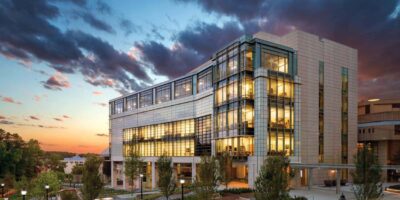
- Where teaching happens: Years 1 and 2 are taught at the Health Education Campus (HEC), a four-story, 477,000-square-foot building that opened in 2019 and that CCLCM shares with CWRU’s University Program and with CWRU nursing, dental medicine and physician assistant students. Most of the college’s teaching faculty are Cleveland Clinic staff physicians and researchers.
- Degree title: MD with Special Qualification in Biomedical Research.
Accreditation tells you the degree meets national standards. It is not a ranking and does not guarantee any particular outcome. What matters more for you is the program design, which the next sections cover.
Medical Programs and Affiliations
The five-year MD at CCLCM
CCLCM offers one program: a five-year MD focused on training physician investigators. Every part of it, from admissions criteria and financial aid to curriculum design and student assessment, is built to help students develop the self-directed learning skills that matter in both clinical medicine and research. The college summarizes its program this way:
- A small class of 32 students a year, with close mentoring from a faculty drawn from more than 3,500 Cleveland Clinic staff physicians and scientists.
- Problem-based learning (PBL), seminars, problem sets, electronic curriculum and labs instead of traditional lectures.
- No comprehensive exams or grades; competency-based assessment and a portfolio system instead.
- A 12-month, master’s-level research thesis.
- Time for graduate courses during the independent study time built into the schedule.
- The option of a master’s degree (MS, MPH or MA) alongside the MD.
- A physician advisor and a research advisor for every student.
- Clinical learning with real patients under a longitudinal preceptor in Years 1 and 2.
- A full-tuition scholarship for all students.
Research-intensive curriculum. Students carry out a basic or translational research project in the first summer and a clinical research project in the second summer, then spend a contiguous research thesis year, usually Year 4.
Patient volume and diversity. Core clerkships take place at Cleveland Clinic, and electives can be taken at any CWRU-affiliated teaching hospital in Cleveland. That gives students exposure to a wide range of conditions and patient populations.
Facilities. Students use Cleveland Clinic’s educational, clinical and research resources, including the HEC’s simulation center and anatomy suite (described in the campus section).
Medical humanities. Required humanities coursework balances the technical and scientific sides of medicine with its ethical, historical and human dimensions.
CCLCM is not an MD/PhD
This is a common point of confusion. CCLCM is not an MD/PhD program. A thesis is required to graduate, but no second degree is granted automatically. Applicants who want a funded PhD alongside the MD apply to CWRU’s MSTP, which is a separate program with its own secondary essays. You can select more than one program in the CWRU secondary, but each selection is a separate application.
Combined MD and master’s degrees
Students who want more formal research or policy training can earn a master’s degree alongside the MD. Students do not apply for these programs until after they matriculate and have permission from their physician advisor. They may begin graduate courses, with guidance from that advisor, in September of Year 1 as long as they stay in good standing, and most students make a degree decision in the first semester of Year 2.
Options listed by the college include:
- MD in Biomedical Investigation with tracks in biochemistry, clinical research scholars, informatics, epidemiology and biostatistics, nutrition, pathology, pharmacology, physiology and biotechnology.
- MD/MPH (public health).
- MD/MA in bioethics.
- MD/MS in biomedical engineering.
Most of these programs require three to nine extra courses, usually concentrated in the first two years, and some MD courses count toward the master’s degree. Students are encouraged to design one thesis project that satisfies both the MD and master’s requirements, with the remaining master’s work fitted into Years 3 through 5. Most master’s programs are designed to be finished within the five years at no extra tuition cost. Students still pay their own fees, housing and living costs. Christine Moravec, PhD, Director of Graduate Programs, oversees students pursuing an MA, MS, MPH or PhD while at CCLCM.
The benefits are practical. A master’s degree adds structured training in methods such as biostatistics or bioethics, it can be finished inside the five years, and it gives your thesis a second audience. It is optional, and many students graduate with the MD alone.
Recent graduates have also taken part in special pathways. The college’s Class of 2026 celebration recognized students who completed the Jack, Joseph, and Morton Mandel Wellness and Preventive Care Pathway Program, in addition to graduates who earned a second degree.
Education technology
CCLCM builds technology into learning, research and patient care. Students use a customizable Student Web Portal that holds their schedule, small-group assignments and the full five-year syllabus; an online patient-based experience system for logging patient encounters, reviewing weekly clinical skills objectives and receiving formative feedback; and a CV builder that produces formatted CVs for grant, fellowship and residency applications. In the research year, students continue logging the patients they see in their half day per week of clinic.
Affiliations
Cleveland Clinic (primary clinical and research home). Cleveland Clinic provides the core clerkships, most of the teaching faculty and the research environment. Within Cleveland Clinic Research there are more than 230 laboratories, and in 2025 Cleveland Clinic reported $479 million in federal research funding, including more than $157 million from the NIH. Students have access to thousands of IRB-approved clinical studies. The Lerner Research Institute, home to many of the college’s basic science faculty, is part of this research enterprise.
Case Western Reserve University School of Medicine (degree-granting school). CWRU awards the degree and runs the shared admissions process. CCLCM students have access to the resources available to other CWRU medical students, including shared events such as the White Coat Ceremony, Match Day and Commencement, and they train alongside CWRU nursing, dental and physician assistant students at the HEC through interprofessional education.
CWRU-affiliated teaching hospitals. Core clinical requirements in Years 3 through 5 match those of the University Program, and students from both programs may rotate to the major teaching hospitals in the CWRU system. Electives can be taken at any CWRU-affiliated teaching hospital in Cleveland, which includes University Hospitals Cleveland Medical Center, the MetroHealth System and the Louis Stokes Cleveland VA Medical Center. Thesis mentors may come from Cleveland Clinic, CWRU School of Medicine, University Hospitals, MetroHealth or the VA.
Separate applications. If you want the University Program or MSTP as well, you must select each one in the secondary. It is possible to be interviewed by and receive offers from both CCLCM and the University Program.
Curriculum Overview
How the five years fit together
CCLCM’s curriculum is organized around three threads that run through all five years: basic science, clinical training and research. Humanities and professional development run alongside them through the Art and Practice of Medicine (APM) courses. The program is five years long so that the research thesis does not crowd out clinical training.
Years 1 and 2: foundations and early clinical exposure.
- Basic science. The basic science curriculum is organized by organ system, such as cardio-respiratory or renal biology, with 17 curricular threads basic to medicine (for example physiology, anatomy and embryology, cell biology, biostatistics and epidemiology, ethics and humanities) woven through each course. Year 1 focuses on normal cell and organ function. Year 2 emphasizes abnormal function and disease while reinforcing Year 1. Weekly themes, such as “The Heart as a Pump” in the Year 1 cardio-respiratory course, organize the learning.
- Problem-based learning. A PBL case provides the core of each week’s learning objectives. Each case is completed in three parts over a week, and small groups set their own learning objectives and resolve them before moving on. Interactive seminars and problem sets apply the same concepts. The approach rests on adult learning principles: students take responsibility for their own learning and for that of their classmates.
- Anatomy. Anatomy is case-directed. Clinical cases introduce the concepts, and students then study prosected fresh cadavers that are not preserved, so tissue texture, color and spatial relationships stay true to life. Students rotate through four prosected cadaver stations, review matched imaging, and can sign out virtual reality headsets for the academic year. The imaging curriculum is led by radiologists, and advanced surgical anatomy electives are available in Years 3 through 5.
- Clinical skills. In Year 1, each student meets a primary care physician for half-day longitudinal sessions every other week. In Year 2, the sessions become weekly. Students evaluate new patients, follow returning patients, and build a close mentoring relationship with their preceptor. Standardized patients, simulation and reviewed video sessions support the physical diagnosis and communication skills sessions.
- Research. Summer 1 is a basic or translational research block with a mock research proposal and an oral presentation, taught alongside Fundamentals in Molecular Medicine. Summer 2 is a clinical research project with courses in applied biostatistics and epidemiology, ending with a written and presented clinical research protocol. Weekly Advanced Research in Medicine (ARM) seminars in Years 1 and 2 are tied to the basic science content.
- Schedule. Each week of Years 1 and 2 includes dedicated time for basic science, PBL, labs, seminars and problem sets, with added clinical and research hours. Students have most afternoons free to review material, explore topics in more depth, work toward a master’s degree or take part in extracurricular activities.
Year 3: core clinical training. CCLCM students take the Cleveland Clinic Longitudinal Clerkship, a set of team-based inpatient blocks and a longitudinal ambulatory block in which students follow patients with the same preceptors across several specialties. The core clerkship covers internal medicine, family medicine, pediatrics, surgery, obstetrics and gynecology, psychiatry, neurology, emergency care and geriatrics. Didactic sessions and longitudinal learning groups cover core clinical topics, health systems science and professional development. ARM sessions in Year 3 focus on the advanced skills students will need for the thesis.
Year 4: the research thesis year. Students conduct research on a basic science, translational, clinical or health systems topic. The thesis research rotation is a contiguous 52-week block that allows up to four weeks of vacation, and any variation must be approved by the Research Education Committee. Students keep their clinical skills current with about a half day of clinical work each week. ARM 4 includes seminars and panels on current topics in research, and APM sessions focus on professional identity and career planning.
Year 5: advanced clinical training. Students complete acting internships (at least one at a CWRU-affiliated medical center in Cleveland), electives chosen around their career and research goals, and a two-week Capstone course that prepares them for residency. ARM 5 offers advice on building a career that includes research. Cleveland Clinic offers more than 55 elective rotations in specialty areas.
Learning methods and assessment
There are no formal grades or class rank. Students are promoted by meeting the performance standards for each of CCLCM’s nine competencies. These include research and scholarship, personal and professional development, and teamwork and interprofessional collaboration, along with competencies that mirror those used in residency training. The only grades given are for courses that count toward a master’s degree.
Each student keeps an electronic portfolio that documents evidence of progress. The portfolio is used in regular formative reviews with the physician advisor and in summative reviews for promotion and graduation. Students learn to judge their own strengths and weaknesses and write their own learning plans, which builds the habits of self-assessment the college values. Students also write concept appraisal essays as part of their assessment.
The college describes this as a non-competitive, collaborative learning environment. Because classmates are not ranked against each other, the culture rewards teaching your peers and sharing resources.
Research seminars and journal club
During the summers of Years 1 and 2, students take part in journal club. The class is split into two groups. Each week one student presents a paper and the others come prepared with questions. Each student presents one paper each summer, after reviewing it with a faculty facilitator. Feedback from faculty and classmates sharpens their ability to read research critically and talk about it clearly.
Medical humanities
Since it opened, CCLCM has required medical humanities coursework. Eric Kodish, MD, directs the APM courses, which cover arts and humanities, bioethics, health systems, disability studies and factors that shape health outcomes. Students explore health and illness through theater, visual arts, poetry, history and film, and use reflective writing throughout the five years. Physician preceptors guide large- and small-group discussions and develop longitudinal mentoring relationships with students.
Katherine Burke, MFA, leads the Program in Medical Humanities, which offers curricular and extracurricular opportunities. Highlights include:
- The John P. Murphy Fellowship in Medical Humanities, a two-year fellowship that helps MD, PhD and other terminal-degree professionals build expertise in designing, running and evaluating medical humanities education and publishing research in the field.
- The John P. Murphy Medical Humanities Symposium, an annual event that showcases student work and brings in leading scholars.
- Story Slam, a student-organized evening where Cleveland’s medical students present original stories, poems and music about the challenges and joys of training.
- First-year community partnerships, a student-led initiative in which students work on creative projects with Cleveland organizations. Past partners include Edwins Leadership and Restaurant, which trains formerly incarcerated adults in the culinary and hospitality industries; Refresh Collective, a youth hip-hop and design organization; and Vel’s Purple Oasis, an urban farm in the Fairfax neighborhood.
- Stethos, the college’s medical humanities journal, a place for students to publish creative work such as writing, poetry, visual art and photography.
Graduation requirements
To graduate, a CCLCM student must:
- Satisfactorily complete all program requirements and educational program objectives.
- Pass USMLE Step 1 and Step 2 CK.
- Pass or remediate the clinical skills exam.
- Satisfactorily complete the MD Research Thesis.
- Meet financial obligations to the university.
- Be approved for graduation by the appropriate committee.
Why the design matters to you
The curriculum asks a lot of self-direction. With no lectures to sit through and no grades to chase, students who do well are those who set their own learning goals, ask for feedback and use free afternoons well. If you have thrived in independent research or seminar-style courses, say so in your essays and interview, with examples. If you have mostly learned through lectures and exams, think about what evidence you have that you can learn well without that structure. Students follow a business casual dress code and are expected to dress professionally in clinical and simulation settings.
Admissions Requirements and Application Process
CCLCM looks for intellectual achievement, interpersonal skills, research interest and experience, and a range of personal and professional journeys. The college seeks students from the widest variety of backgrounds who will shape the future of medical care. Below are the formal requirements for the 2026-2027 cycle, drawn from the college’s How to Apply page and criteria pages, followed by the step-by-step process and a timeline.
Who can apply
- Degree. You must complete a bachelor’s degree at an accredited US or Canadian college or university before you matriculate. If your undergraduate degree is from outside the US or Canada, you must complete at least one year of advanced science coursework at an accredited US institution before you apply. A master’s or PhD, a formal post-baccalaureate program or a set of upper-level science courses all count.
- International applicants. CCLCM accepts international applicants, including Canadians, and gives them the same full-tuition scholarship. International students need proof that they can cover living expenses, health insurance and other costs for one year. Federal aid is not available to non-US citizens, so international students often take loans that must be cosigned by a US citizen. CWRU adds that, for the Lerner College Program, one degree (bachelor’s, master’s or PhD) must come from a school in the US or Canada and the applicant must have lived in the US or Canada for one to two years.
- DACA. CCLCM accepts students with DACA status.
- Residency. There is no preference for Ohio residents.
- Early decision and transfers. There is no early decision program, and CCLCM does not accept transfer or advanced-standing students.
- Major. There is no preferred major. Many students majored in science, but the college has admitted majors in philosophy, music, mathematics, languages and other fields.
Required and recommended coursework
These are the minimum courses you must complete by matriculation, not necessarily by the time you apply. Finishing most of them before the MCAT is still a good idea.
| Course | Required or recommended | Lab | Semesters | AP/IB credit | Online | Community college |
|---|---|---|---|---|---|---|
| General chemistry | Required | Yes | 2 | Yes | No | Case by case |
| Organic chemistry | Required | Yes | 1 | No | No | Case by case |
| Biochemistry or molecular biology including metabolism | Required | No | 1 | No | Case by case | Case by case |
| Writing or college English | Required | N/A | 1 | No | No | Case by case |
| Biology | Recommended | Yes | 2 | No | No | Case by case |
| Physics | Recommended | Yes | 2 | Yes | No | Case by case |
| Psychology, social sciences, behavioral sciences | Recommended | N/A | 1 each | No | No | Case by case |
| Biostatistics | Recommended | N/A | 1 | No | No | Case by case |
| Research experience | Required | At least two summers (or the equivalent) of hypothesis-driven research | ||||
A few course details matter. Biochemistry may still be in progress when you apply, but it must be finished before you start. AP credit is accepted for mathematics, physics and general chemistry but not for organic chemistry or biology; if you have AP biology credit, the college suggests adding upper-level biology in college. If a few science prerequisites came from a community college, they are reviewed case by case; if all of them did, the college strongly recommends a year of upper-level science at a four-year US or Canadian university. Online biochemistry and some other online courses are acceptable, but a fully online curriculum is not recommended, because the program depends on students being comfortable working in a classroom team. Laboratory courses are considered prerequisites.
The research requirement
Research is the one requirement that sets CCLCM apart. Applicants must have a minimum of two summers (or the equivalent) of hypothesis-driven research experience in either a medical or non-medical field. The college ties this rule to its mission of training physician investigators through a research-intensive curriculum.
Three details help you plan:
- “Hypothesis-driven” is the key phrase. Work in which you tested a question with data counts. A field can be outside medicine, such as chemistry, engineering, psychology or ecology. Purely clerical or data-entry roles are weaker evidence, even if they took place in a lab.
- “Or the equivalent” allows for school-year research. Two semesters of steady part-time research, a senior thesis, a post-baccalaureate research job or a master’s thesis can add up to the equivalent of two summers.
- Publications are not required. Posters, talks and papers strengthen an application, but the college says plainly that they are not necessary. As part of admissions, CCLCM contacts the research advisor references applicants provide.
If you are a sophomore or junior planning ahead, the simplest route is two full summers in the same lab, plus some school-year continuation. That gives you a project deep enough to write about in the 3,500-character Research essay and a mentor who knows your work well enough to write the required letter. If your research is thin, a gap year in a full-time research role is the most common fix.
MCAT
- Minimum to receive the secondary: 502 or higher on your most recent MCAT. If you score 502 or more and then retake and score below 502, you will not receive the secondary.
- Test window for 2026-2027: the oldest accepted score is from January 2023 and the latest accepted test date is September 12, 2026. January 2027 scores are not accepted for this cycle.
- Pending scores: you can submit AMCAS before your score posts, but you will not receive the secondary until a qualifying score arrives, and you will not be invited to interview without an MCAT score.
- Timing: CCLCM suggests testing between January and August so you can apply in the summer. Testing later than August will likely put you at a disadvantage.
- Retakes: taking the MCAT more than once is common among successful applicants, but more than two or three attempts are generally viewed less favorably. The most recent score usually carries the most weight.
CASPer, PREview and other tests
CWRU does not require CASPer, PREview or any other part of the Altus Suite (Duet or Snapshot) for any of its three MD and MD/PhD programs.
Experiences the committee looks for
Beyond research, the committee considers leadership, service, clinical or shadowing experience and demonstrated commitment to medicine. CWRU asks every applicant to show that they have carefully considered a career in medicine by describing medically related experiences and interactions with physicians. Shadowing alone rarely tells a committee whether you can work with patients, so hands-on roles such as scribing, medical assisting, EMT work, free clinic volunteering or clinical internships for pre-med students give stronger evidence. The college describes the qualities it values in plain terms: self-starters and motivated learners, collaborative team members, people who embrace self-reflection and personal growth, and people who like finding new approaches to complex problems. Because the secondary asks for several essays, clear written expression matters too.
Letters of recommendation
CCLCM requires three to five letters, all submitted through AMCAS. There are two acceptable ways to meet the requirement.
Option 1: individual letters
- One letter from a research advisor (required). The college strongly recommends that this letter relate to the project you describe in your Research essay.
- Two letters from faculty who taught your science courses (required).
- Up to two additional letters from other people (optional).
Option 2: premedical committee evaluation
- One letter from a research advisor (required), again ideally tied to your Research essay.
- A premedical committee evaluation, which must include two letters from faculty who taught your science courses.
- Up to two additional letters from other people (optional).
Some rules apply to both options:
- The research advisor letter cannot count as a science faculty letter. Science faculty letters must come from someone other than your research advisor, even if your research advisor also taught you in a science course.
- A science faculty member who was also a research mentor can write a science letter, but that letter should focus on your performance in the course, not on your research.
- Optional letters are welcome from people who have seen you outside a classroom and can speak to interpersonal skills, professionalism, integrity, leadership, service and teamwork.
- Letters should come from people who know you well and can judge you objectively; no family members or family friends. Confidential letters are preferred, and a specific statement that you are in good standing is highly preferred.
- There is no letter deadline, but your application is not complete, and will not be reviewed, until every letter has arrived at AMCAS. A late letter can delay your review.
You can use the same letters for CCLCM, the University Program and the MSTP, as long as you include a research advisor letter.
Step-by-step application process
Step 1: AMCAS. Apply through AMCAS and select “Case Western Reserve University School of Medicine” and the “regular M.D. program.” This covers the CCLCM application. Because CCLCM admits few students and can interview only a limited number, the college strongly recommends applying in June or July. AMCAS verification can take four to eight weeks after your application and transcripts arrive, and longer at peak times.
Step 2: screening and invitation. CWRU emails a secondary invitation to applicants with a verified AMCAS application and an MCAT of 502 or higher, about two weeks after it receives the verified application. For the 2026-2027 cycle, the first invitations went out the week of July 13, 2026. The email contains a unique URL and password for the iApply system.
Step 3: the secondary. In the CWRU secondary you choose the program or programs you are applying to: the five-year CCLCM, the four-year University Program, both, and/or the MSTP. Your choice controls which essay prompts appear. Shared prompts are answered once, and every program you select sees that answer. The secondary application fee is $100, and fee waivers are available. The full secondary is due November 15, 2026, at 11:59 p.m. Eastern, but the college asks applicants to complete it as soon as possible.
Step 4: complete file and review. Your application is complete when CWRU has your verified AMCAS application, your submitted secondary for CCLCM, the paid secondary fee, your MCAT score and all letters. The admissions committee then reviews complete files and selects applicants to interview.
Step 5: interview and decision. Interviews are virtual and take place from September through January. After interviews, the committee meets and evaluates all applicants. Offers are made on a rolling basis, with all initial offers made by mid-February. Applicants who are not accepted right away may be placed on hold for continued consideration or on the alternate list.
Updates, alternate list and second look
You can send updates only if you are invited to interview, placed on hold after an interview, or placed on the alternate list. If your application is in one of those groups, an upload option appears on your iApply status page. The alternate list is not ranked. As places open, CCLCM offers acceptance to alternate-list applicants one at a time, and some students who eventually enroll are accepted from that list, so an alternate-list decision should not be read as a rejection. Accepted applicants may be invited to an in-person Second Look in the spring, with panels, a reception and a tour of Cleveland. CWRU lists the CCLCM accepted student weekend for March 2027. Letters of intent or interest are welcome after the interview and from applicants on the alternate list. No deposit is required to hold a place in the class, and requests to defer entry are considered case by case.
2026-2027 timeline
| Date | What happens |
|---|---|
| May 5, 2026 | AMCAS 2026-2027 application opens |
| June 26, 2026 | Medical schools begin receiving verified AMCAS applications |
| Week of July 13, 2026 | First CWRU secondary invitations emailed to eligible applicants |
| July 2026 to October 15, 2026 | CWRU receives verified AMCAS applications and sends secondary invitations |
| July to December 2026 | Admissions reviews complete applications and invites applicants to interview |
| Mid to late August 2026 | CWRU begins sending interview invitations |
| September 2026 to January 2027 | CCLCM interviews (Tuesdays and Thursdays) |
| October 15, 2026 | Latest date to submit the AMCAS application to CWRU; first date MD schools may send acceptances |
| November 15, 2026, 11:59 p.m. ET | Secondary deadline for all CWRU MD programs, including the Lerner College Program |
| Mid-February 2027 | All initial CCLCM offers made |
| February 19 to April 30, 2027 | Accepted applicants can select “Plan to Enroll” in the AMCAS Choose Your Medical School Tool |
| March 2027 | CCLCM accepted student weekend |
| March to July 2027 | Admissions may accept students from the alternate list |
| April 15, 2027 | Applicants may not hold more than three acceptances after this date |
| April 30, 2027 | Applicants whose first choice is CCLCM must select “Plan to Enroll” by this date and withdraw other acceptances (alternate lists may be kept); “Commit to Enroll” opens |
| May 20, 2027, noon ET | Deadline to select “Commit to Enroll” for CCLCM and withdraw from all other acceptances and alternate lists |
| July 2027 | Classes begin |
Two CCLCM-specific rules are easy to miss. First, if CCLCM is your first choice, you must choose “Plan to Enroll” by April 30, 2027, or your offer may be rescinded. Second, if you are holding a place in the CCLCM class and receive another acceptance after April 30, you must notify CCLCM by email within 24 hours. If you decide to attend another school or another CWRU program, withdraw your CCLCM acceptance through your iApply status page.
The research requirement also shapes your timeline. Summer research takes place before the cycle you apply in, so plan pre-med summer internships and research summers together. A common pattern is one research summer after sophomore year, a second after junior year, and a clinical role during the school year.
Contact
CCLCM admissions can be reached at 866.735.1912 or 216.445.7170, and by email at [email protected] or [email protected]. The Office of Admissions and Student Affairs is at 9501 Euclid Ave./EC10, Cleveland, OH 44195.
Tuition, Cost of Attendance and Financial Aid
The full-tuition scholarship
CCLCM gives a full-tuition scholarship to every student, a policy Cleveland Clinic began in 2008. In the research thesis year, a continuation fee equal to 5 percent of tuition is charged, and the scholarship covers that as well. Several fees are also covered by the college. International students receive the same scholarship. CCLCM is one of a small group of programs that cover tuition for every student; IMA’s guide to tuition-free medical schools in the US compares what each one covers.
The scholarship does not cover living expenses, books, transportation, travel for clinical training, health insurance, exam fees or residency application costs. Students who need help with these costs usually borrow, so “free tuition” does not mean “free medical school.”
2026-2027 estimated cost of attendance
The 2026-2027 cost of attendance budget is shown below. Cost of attendance budgets are approved each year by CWRU School of Medicine and are based on surveys of what current students actually spend on books, supplies, housing, food, personal costs and transportation. They do not include living costs for periods when school is not in session or costs for spouses and dependents. Tuition and fees can change each year.
| Expense | Class of 2031 (Year 1, 10.75 months) | Class of 2030 (Year 2, 11.25 months) | Class of 2029 (Year 3, 11.5 months) | Class of 2028 (Year 4 research, 11.5 months) | Class of 2027 (Year 5, 10 months) |
|---|---|---|---|---|---|
| Tuition (covered by CCLCM full-tuition scholarship) | $72,526 | $72,526 | $72,526 | $72,526 | $72,526 |
| Graduate Student Council Fee (CCLCM subsidy) | $40 | $40 | $40 | $40 | $40 |
| Educational Materials Fee (CCLCM subsidy) | $690 | $690 | $690 | $0 | $690 |
| Technology Fee (CCLCM subsidy) | $1,016 | $1,016 | $1,016 | $0 | $1,016 |
| Medical Activity Fee (CCLCM subsidy) | $50 | $50 | $50 | $50 | $50 |
| Disability insurance | $80 | $80 | $80 | $80 | $80 |
| RTA pass | $140 | $140 | $140 | $140 | $140 |
| Total direct expenses | $74,542 | $74,542 | $74,542 | $72,836 | $74,542 |
| Living expenses (food, housing, personal) | $24,798 | $25,951 | $26,528 | $26,548 | $23,006 |
| Books and supplies | $954 | $1,026 | $514 | $514 | $514 |
| Transportation | $5,830 | $6,100 | $6,236 | $6,236 | $5,424 |
| Travel for clinical training | $542 | $542 | $3,554 | $1,084 | $3,092 |
| Total indirect expenses | $32,124 | $33,619 | $36,832 | $34,382 | $32,096 |
| Residency applications and interviews | $0 | $0 | $0 | $0 | $5,000 |
| USMLE Step 1 and 2 exam fees | $0 | $695 | $695 | $0 | $0 |
| Estimated Direct Loan origination fees | $326 | $326 | $326 | $326 | $326 |
| Graduation cap and gown rental | $0 | $0 | $0 | $0 | $187 |
| Total other educational expenses | $326 | $1,021 | $1,066 | $326 | $5,513 |
| Student Medical Plan (optional; may be waived) | $4,220 | $4,220 | $4,220 | $4,220 | $4,220 |
| Total estimated cost of attendance | $111,212 | $113,402 | $116,660 | $111,764 | $116,371 |
Notes on the table: the Graduate Student Council Fee is charged to students admitted in fall 2015 and later. The Educational Materials and Technology fees are not charged in the research year. The Student Medical Plan may be waived with proof of other coverage. The insurance rates were still pending state approval when the budget was posted.
What students actually pay
Because the scholarship covers tuition and the college subsidizes the GSC, educational materials, technology and medical activity fees, the costs a student must fund are mainly the indirect expenses (about $32,000 to $37,000 a year in this budget), disability insurance, the RTA pass, exam and residency costs, loan fees, and health insurance unless it is waived. CCLCM does not publish an official “net cost” figure, so build your own estimate from the budget lines that apply to you. A tuition-free program still requires careful planning for five years of living costs, one year longer than a four-year MD.
Applying for aid
- Complete the FAFSA each year and add CWRU’s federal school code, 003137.
- Complete the CWRU Financial Aid Application for CCLCM students through the My Financial Aid portal.
- If you are selected for federal verification, return the verification form with all required documents. No federal aid is paid until verification is done.
- Review and accept your aid offer in the portal. Aid is disbursed each semester, and any amount above your direct charges is refunded to you after the semester starts. Students who need uneven disbursements between semesters can ask the financial aid office.
First-time medical school borrowers must sign a Master Promissory Note and complete entrance counseling. Students must meet satisfactory academic progress standards to keep receiving federal aid. Disbursement dates are posted by the financial aid office.
Scholarships and loans
- Full-tuition scholarship: covers tuition and the research-year continuation fee for all CCLCM students.
- Outside scholarships: CWRU School of Medicine keeps an outside scholarship inventory. A useful habit is to track scholarships you will qualify for in later years so you do not miss them.
- Service-based programs: information is available on the Armed Forces Health Professions Scholarship, the National Health Service Corps scholarship and loan repayment programs.
- Federal Direct Unsubsidized and Additional Unsubsidized Loans: the main federal option for living costs. Interest rates and borrowing limits are set each year by the federal government, and federal rules for new professional students changed in July 2026, so check the current rate and limits on studentaid.gov and with the financial aid office before you borrow.
- Private loans: an alternative to federal loans, including health professions loans and residency relocation loans for graduating students. Private loans can be denied for credit reasons.
The financial aid office can be reached at 216.445.7170 or [email protected]. The college also offers financial wellness and debt management resources.
Campus Facilities and Student Life
The Health Education Campus
CCLCM’s first two years are taught at the Health Education Campus (HEC), next to Cleveland Clinic’s main campus. The HEC opened in 2019 for about 2,200 students. The HEC brings together CCLCM, CWRU’s University Program and CWRU’s nursing, dental medicine and physician assistant students, and CWRU social work students take part in some interprofessional activities there. A second HEC building houses a dental clinic that serves about 19,000 patients a year. In 2020 the atrium was briefly outfitted as “Hope Hospital,” a 300-bed COVID-19 surge site that was never needed, and the building also hosted the 2020 presidential debate.
Learning spaces at the HEC include:
- 26 classrooms, including two-story “Case Method” classrooms and team-based learning classrooms with large video walls and sound systems that let every student be heard.
- A 7,000-square-foot auditorium and a 4,800-square-foot lecture hall.
- A Digital Anatomy Suite, where students use augmented-reality technology to learn anatomy.
- A Medical Simulation Center with 20 patient exam rooms, four acute care spaces and three debriefing rooms.
Because most teaching faculty are Cleveland Clinic staff physicians and researchers, the HEC puts students close to research labs, clinical space and faculty offices. Students also have access to Cleveland Clinic resources such as the Floyd Loop Alumni Library, dining, storage space, free wellness events, pharmacies and banking. Inside the HEC there are dining options, a library and spaces for studying and relaxing.
Other everyday amenities:
- Student lounge. Health professions students have 24/7 access to a large shared lounge on the fourth floor of the HEC, with kitchenettes, comfortable seating, lockers and a ping pong table.
- Dining. The HEC has a cafeteria and coffee bar, and Cleveland Clinic’s main campus has Subway, Panera and Starbucks locations. Many restaurants sit in the neighborhoods around CWRU and Cleveland Clinic.
- Fitness. The Walker Fitness Center on Cleveland Clinic’s main campus offers memberships at an affordable rate. CWRU offers free fitness activities, from swimming to squash and fencing, and the private One To One Fitness Center is on the CWRU campus.
Interprofessional education is part of daily life here. Learning next to future nurses, dentists and physician assistants prepares students for team-based care. Applicants interested in how nursing and physician roles fit together sometimes explore nursing internships abroad before medical school to see team care from another angle.
Clubs, service and creative outlets
CCLCM students have access to all resources available to other CWRU medical students. Shared social events start at orientation and include the White Coat Ceremony, Match Day and Commencement. Students take part in Doc Opera, special interest groups, panels and other activities throughout the year.
Academic and social groups. Many students join groups ranging from the Student National Medical Association to the Internal Medicine Interest Group. These groups help students build medical knowledge, leadership skills and relationships with classmates and faculty.
Helping those in need. The Global Health Interest Group helps students learn about health systems around the world and take part in global health work in places with limited access to care. In Cleveland, students work with patients in community settings such as the Free Clinic from early in training, and groups such as the Community Health Initiative and the Women In Need (WIN) Clinic focus on underserved patients.
Creative outlets. The annual Doc Opera show lets students perform while raising money for the Student Run Health Clinic. The Stethos journal, published since 2011, prints student writing, poetry, images and photography.
Activities. The college lists a wide range of community, social and school-related activities, including:
- Arts and Medicine Group at Cleveland Clinic and the Arts of Health Committee
- Basic Science Education Committee, Clinical Education Committee, CCLCM Admissions Committee and the CCLCM College Board of Student Representatives
- BLAST, which teaches Cleveland elementary students about mental health
- Cardiology, Internal Medicine, Ob/Gyn and Surgery interest groups
- Students Interested in Neurological, Neurosurgical and Psychiatric Sciences (SINNAPS)
- Community Health Initiative (CHI) and the Women In Need (WIN) Clinic
- Doc Opera, the Cleveland Clinic Concert Band and the Medical Book Club
- Ethics in Medicine, the Health Policy Interest Group and the HIV/AIDS Action Group
- Lutheran Metropolitan Ministry Men’s Shelter volunteering
- PAMSA (Asian Pacific American Medical Students Association)
- Peru Health Outreach Project
- Women in Medicine and the CCF Leadership Development for Women in Health Care Conference Committee
Student organizations. Medically related organizations open to students include the American Academy of Neurology, American College of Physicians, American College of Surgeons, American Medical Association, American Medical Student Association, Christian Medical Dental Association, Latino Medical Student Association and Student National Medical Association, along with CWRU School of Medicine groups. For more on campus-wide student life, see CWRU’s student life website, and ask current students on interview day which groups are most active this year.
Community, belonging and wellbeing
The Student Engagement and Wellbeing office works with the dean’s office to build a welcoming learning environment, make mentoring available to every student, shape a curriculum that represents care of all communities, and train students to give culturally sensitive care. It also hosts monthly student dinners where classmates share their family traditions and the personal and professional journeys that brought them to medicine. The office can be reached at 216.444.2414.
The college describes a commitment to engagement in education, healthcare and its communities, and it invites applicants to ask about its approach. Current programs include virtual information sessions for prospective students, mentoring connections, student panels on interview day, faculty-student Action Groups focused on belonging, wellbeing, respect and engagement, Student Community Cultural Dinners where students share the journeys that brought them to medicine, and service-learning partnerships with Cleveland-area communities. The college has said it plans to expand mentoring and community partnerships further.
Monica Yepes-Rios, MD, Assistant Dean for Student Affairs and Director of Wellbeing, leads student support, and Jazmine Oliver, MD, an alumna, is Director of Admissions and Recruitment. Their profiles appear in the people section below. The college also maintains the Darlene Gray Student Life Emergency Fund for students in urgent financial need.
Living in Cleveland
Cleveland is home to several top chef restaurants and many independent and international restaurants, plus nightlife, major league sports, cultural events and outdoor recreation across Northeast Ohio. University Circle, close to both Cleveland Clinic and CWRU, holds the Cleveland Museum of Art, the Cleveland Historical Society, Severance Hall (home of the Cleveland Orchestra), the Cleveland Institute of Music, the Cleveland Museum of Natural History and the Cleveland Botanical Garden. The RTA pass in the cost of attendance covers local public transit.
Housing
CCLCM students arrange their own housing. The college points students to Case Western Reserve University Housing for housing options in Northeast Ohio. The living-expense line in the 2026-27 budget ($24,798 for Year 1) is the best guide to what students actually spend on food, rent and personal costs. Ask current students on interview day which neighborhoods are popular and how far they commute to the HEC and to clinical sites.
Clinical Rotations and Research Opportunities
Clinical training across five years
Clinical training at CCLCM starts in Year 1, not Year 3. The program’s clinical curriculum is designed so that every graduate develops broad clinical skills.
- Years 1 and 2: half-day sessions with a longitudinal primary care preceptor (every other week in Year 1, weekly in Year 2), plus standardized patients, simulation and observed physical diagnosis and communication sessions. Students maintain patient logs that track the breadth of their clinical exposure, and faculty use ongoing assessment to shape each student’s clinical experiences around their needs and interests. Students also learn hands-on skills such as suturing.
- Year 3: the Cleveland Clinic Longitudinal Clerkship at Cleveland Clinic, with team-based inpatient blocks and a longitudinal ambulatory block.
- Year 4: about a half day of clinical work each week during the thesis year.
- Year 5: acting internships, electives and a Capstone course to prepare for residency.
Core clinical requirements in Years 3 through 5 are the same as those for University Program students, and students from both programs may rotate at the major CWRU teaching hospitals. CCLCM students take their core clerkship at Cleveland Clinic and may take clinical electives at any CWRU-affiliated teaching hospital in Cleveland. Cleveland Clinic also offers more than 55 advanced elective rotations in specialty areas, usually taken in later years, which are open to CWRU students and visiting students from around the country when space allows.
The research curriculum
The research curriculum begins on the first day and runs through all five years. Students learn how basic discoveries become changes in clinical care and how clinical observations can open new directions in basic science. Along the way they learn research design and data analysis; ethics, including the use of animals and the protection of human subjects; critical review of the basic and clinical literature; and grant writing and oral presentation skills.
| Stage | What students do | Mentor |
|---|---|---|
| Summer 1 | Basic or translational research project, mock research proposal and oral presentation; Fundamentals in Molecular Medicine course; journal club | Assigned basic science researcher |
| Summer 2 | Clinical research project with applied biostatistics and epidemiology; written and presented clinical research protocol; journal club | Clinical investigator chosen by the student |
| Years 1-2 | Weekly Advanced Research in Medicine (ARM) seminars tied to the basic science curriculum | Physician investigators and basic scientists |
| Year 3 | ARM sessions on advanced research skills | Research advisor |
| Year 4 | Contiguous 52-week thesis research rotation (up to four weeks of vacation), master’s-level thesis and defense | Thesis mentor and committee |
| Year 5 | ARM 5 career planning for physician investigators; thesis presented at Research Day | Research advisor |
Each student is assigned a research advisor who helps them through the research curriculum. Thesis committees mentor students through every phase of the project, from refining questions and choosing methods to IRB approval, manuscripts and presentations at national and international meetings. The Research Education Committee designs the research curriculum, approves thesis proposals and monitors student progress.
Where thesis research happens
Thesis research takes place at Cleveland Clinic, CWRU or an affiliated institution. Mentors may be CCLCM faculty at Cleveland Clinic or CWRU faculty based at the School of Medicine, University Hospitals, MetroHealth or the VA. Only students who win an NIH, Fulbright, Okinawa Institute of Science and Technology or Sarnoff fellowship may complete the research year outside Cleveland, apart from the Cleveland Clinic Florida Research and Innovation Center. Topics can be basic science, translational, clinical or health systems research.
Research scale and output
Cleveland Clinic Research has more than 230 laboratories and reported $479 million in federal funding in 2025, including more than $157 million from the NIH. Basic scientists and physicians work in close collaboration across disease-focused research programs, and there are thousands of active IRB-approved human research protocols. CWRU School of Medicine adds its own research programs across basic science and clinical disciplines, and University Hospitals, MetroHealth and the Louis Stokes Cleveland VA Medical Center offer further research settings.
The output of CCLCM students is substantial. The 33 graduates of the Class of 2026 were credited with more than 300 unique peer-reviewed publications, more than 475 abstracts and presentations, and nine elite fellowships, including the NIH Medical Research Scholars Program, the Sarnoff Fellowship and the Okinawa Institute of Science and Technology fellowship.
Self-directed learning and research time
During Years 1 and 2, most afternoons are free. Students use that time to review, read more deeply, take graduate courses toward a master’s degree, work on research or take part in activities. The structure rewards students who can manage open time well, which is one reason the secondary and interview look for evidence of self-direction.
For applicants, the message is simple: CCLCM expects you to arrive already comfortable in a research setting and ready to build on that experience every year. If you are still looking for research, IMA’s guide to How to Get Research Experience in Undergrad explains how undergraduates find lab positions, summer programs and research fellowships.
Notable Alumni, Faculty, Leadership and Admissions Staff
CCLCM’s first class graduated in 2009, so its alumni are still early and mid-career physicians. The people below have verified CCLCM roles or degrees. A separate group lists well-known Cleveland Clinic residency and fellowship graduates, who trained at Cleveland Clinic but did not earn their MD at CCLCM.
School leadership
Christine Warren, MD, MS, FAAD (CCLCM 2009), Interim Executive Dean and Associate Dean of Admissions and Student Affairs. Dr. Warren is an Associate Professor of Dermatology and a medical dermatologist. She was a member of CCLCM’s inaugural class and received her MD in 2009. As Associate Dean of Admissions and Student Affairs, she oversees the admissions process, and she now also serves as Interim Executive Dean. In a 2026 column, she wrote that prospective students often tell her they are drawn to CCLCM because of the dedicated research year, even though it lengthens their training. For applicants, her career shows the path the college aims for: a graduate who stayed in academic medicine and now helps choose future classes.
J. Harry (Bud) Isaacson, MD, former Executive Dean. Dr. Isaacson, Professor of Medicine, served as Executive Dean of CCLCM for seven years. At the Class of 2026 celebration, the college recognized his service, including the 2025 LCME accreditation of CWRU School of Medicine for the maximum eight-year term.
James B. Young, MD, Executive Director of Academic Affairs, Cleveland Clinic. Dr. Young, a cardiologist and Professor of Medicine, was Executive Dean of CCLCM from 2009 to 2018 and Cleveland Clinic’s Chief Academic Officer from 2018 to 2020. He co-founded the Kaufman Center for Heart Failure in the Heart, Vascular and Thoracic Institute and holds the George and Linda Kaufman Chair. He has said he is most proud of his contributions to CCLCM’s curriculum.
Stanton L. Gerson, MD, Dean, CWRU School of Medicine. Dr. Gerson is dean of the degree-granting school and senior vice president for medical affairs at CWRU. He oversees appointed faculty at University Hospitals, Cleveland Clinic, MetroHealth and the VA, directs the NCI-designated Case Comprehensive Cancer Center and the National Center for Regenerative Medicine, and is a hematologic oncologist and cancer researcher.
Serpil Erzurum, MD, Chief Research and Academic Officer, Cleveland Clinic. Dr. Erzurum, a practicing pulmonologist and Professor of Medicine, became Chief Research and Academic Officer in 2020 after chairing the Lerner Research Institute from 2016. She holds the Alfred Lerner Memorial Chair in Innovative Biomedical Research, has published more than 200 peer-reviewed articles, and has led more than 20 federal grants. She received an NHLBI MERIT award and the American Thoracic Society’s Elizabeth Rich Award for advancing the careers of women in medicine and science. Her role links the college to Cleveland Clinic’s research enterprise, where students find thesis mentors.
Neil Mehta, MBBS, MS, Associate Dean for Curricular Affairs. Dr. Mehta, Professor of Medicine and a practicing internist, directs the Center for Technology-Enhanced Knowledge and Instruction and holds the Jones Day Endowed Chair in Medical Education. He previously served as Assistant Dean of Education Informatics and Technology and is known internationally for work on the use of technology in health professions education. His office shapes the PBL-based curriculum applicants will experience.
Gene H. Barnett, MD, MBA, Associate Dean of Faculty Affairs. Dr. Barnett, Professor of Neurological Surgery, oversees faculty appointments and promotions and directs Cleveland Clinic’s Brain Tumor and Neuro-Oncology Center and Gamma Knife Center.
Admissions and student affairs staff
Jazmine Oliver, MD (CCLCM 2012), Director of Admissions and Recruitment. Dr. Oliver is a Youngstown, Ohio, native who earned her undergraduate degree at Duke University, her MD at CCLCM, and completed internal medicine residency and a chief resident year at Beth Israel Deaconess Medical Center in Boston. After two years as a hospitalist there, she joined Cleveland Clinic’s Department of Hospital Medicine in July 2017. As Director of Admissions and Recruitment she supports prospective applicants, so she is a useful person to hear from at information sessions.
Monica Yepes-Rios, MD, Assistant Dean for Student Affairs and Director of Wellbeing. Dr. Yepes-Rios is an Associate Professor of Medicine with more than 30 years of experience in medical education and internal medicine. She earned her bachelor’s degree at Duke University and her MD at George Washington University, completed internal medicine residency at George Washington University Medical Center, and was a Robert Wood Johnson Clinical Scholar at Yale. She leads efforts to create a welcoming environment that supports community engagement, wellness and excellence in medical education.
Lina Mehta, MD, Associate Dean for Admissions, CWRU School of Medicine. Dr. Mehta presented the Entering Class 2026 profile that reports application, interview and matriculant figures for all three CWRU MD programs, including the Lerner College Program.
Faculty
Linda Graham, MD, Assistant Dean for Research Education. Dr. Graham, Professor of Surgery and a vascular surgeon, has chaired the CCLCM Research Education Committee since the program opened in 2004. That committee oversees the research curriculum and approves thesis proposals. She is also an adjunct professor in CWRU’s Department of Biomedical Engineering and was previously a tenured professor at the University of Michigan and at CWRU.
Christine S. Moravec, PhD, Assistant Dean of Basic Science Education and Director of Graduate Programs. Dr. Moravec, Professor of Molecular Medicine and a researcher in the Lerner Research Institute, has been part of CCLCM since its start, as physiology thread leader, course director, admissions committee member and now leader of preclinical science. She oversees students pursuing an MA, MS, MPH or PhD during CCLCM and directs research education and training for the Lerner Research Institute. She received CCLCM’s Kaiser Permanente Teaching Award in 2009.
Craig Nielsen, MD, FACP, Assistant Dean of Clinical Education. Dr. Nielsen, Associate Professor of Medicine and a general internist, spent ten years as program director of Cleveland Clinic’s internal medicine residency before moving to CCLCM. He oversees the clinical side of the curriculum.
Eric Kodish, MD, Director of the Art and Practice of Medicine courses. Dr. Kodish leads the humanities, bioethics and health systems courses that run through all five years.
Georges Nakhoul, MD, MEd, and David Gugliotti, MD. Dr. Nakhoul (Associate Professor of Medicine) and Dr. Gugliotti (Clinical Assistant Professor of Medicine) received the 2026 Kaiser-Permanente Excellence in Teaching Awards for the Lerner College Program, for preclinical and clinical teaching respectively, chosen by the graduating class.
Gustavo Heresi, MD, MS. Dr. Heresi is a Cleveland Clinic pulmonologist who directs the Pulmonary Vascular and Chronic Thromboembolic Pulmonary Hypertension (CTEPH) program and holds a CCLCM faculty appointment. He completed Cleveland Clinic’s pulmonary and critical care fellowship in 2008 and later earned an NIH K23 award. He is a Cleveland Clinic fellowship graduate, not a CCLCM MD graduate.
CCLCM alumni
- Christine Warren, MD, MS (2009) and Jazmine Oliver, MD (2012), profiled above, show alumni returning to lead the college.
- Renee Salas, MD (2009), a member of the first graduating class, received the Cleveland Clinic Alumni Association’s Early Career Alumnus Award in 2022.
- Bradley Gill, MD, MS (2012) completed his MD at CCLCM and went on to surgical and urology training at Cleveland Clinic. He practices as a urologic surgeon at Cleveland Clinic and received the Alumni Association’s Early Career Alumnus Award in 2024.
- Gustavo Roversi, MD (2024) received the first Alfred and Norma Stoller Award for Virtue-Based Leadership in Medical School in 2024. The award, open only to CCLCM students, recognizes an accomplishment that reflects virtues such as trust, compassion, hope, justice, wisdom, temperance and courage.
- Chineme Onwubueke, MD (2025) and Jeffrey Shu, MD (2026) received the same Stoller award in 2025 and 2026.
Cleveland Clinic residency and fellowship alumni
Cleveland Clinic’s Alumni Association honors trainees from all of its graduate programs, not only CCLCM. These physicians are Cleveland Clinic residency or fellowship graduates and award winners; they did not earn their MD at CCLCM, and their class years are training years.
- Spring 2024 trainee awards. Erika Schmidt, MD, a surgery resident, received the 2024 Graduate Level-One Award for an outstanding first-year resident. Alice Sonnino, MD, an internal medicine trainee, received the 2024 Dr. Satoru and Grace Nakamoto Award for the Development of Leadership in Medical Humanities and Arts. Akshay Sharma, MD, a neurosurgery resident, received the 2024 Alfred and Norma Stoller Award for Virtue-Based Leadership in Graduate Medical Education.
- Pulmonary and critical care fellowship graduates. Roberto Machado, MD (fellowship class of 2003), is listed as the Dr. Calvin H. English Professor of Medicine and chief of the Division of Pulmonary, Critical Care, Sleep and Occupational Medicine at Indiana University. Amit Banga, MD (2014), is listed at UT Southwestern Medical Center as medical director of ex vivo lung perfusion after circulatory death programs. Anupam Kumar, MD (2016), is listed as an assistant professor in pulmonary and critical care at Spectrum Health-Michigan State University College of Human Medicine. Gustavo Heresi, MD, MS (2008), profiled above, stayed at Cleveland Clinic.
These careers show the breadth of the Cleveland Clinic training community that CCLCM students join, but they are not evidence about CCLCM admissions.
Why these profiles matter
Several of the people who review and teach CCLCM applicants are themselves graduates or long-serving research educators. That fits what the application asks for: clear evidence of research, honest reflection and the kind of self-direction the college has valued since 2004. Profiles describe public roles only; they do not tell you how any individual evaluates applicants.
Admissions Statistics and Class Profile
Lerner College Program funnel, 2026 entering class
| Program | Applications | Interviews | Matriculants |
|---|---|---|---|
| Lerner College Program (CCLCM, five-year MD) | 2,954 | 217 | 32 |
| University Program (four-year MD) | 8,272 | 799 | 172 |
| MSTP (MD/PhD) | 544 | 103 | 12 |
| All CWRU School of Medicine | 10,647 total applications | Not totaled | 216 (entering class size) |
Source: CWRU School of Medicine Entering Class 2026 profile. Applicants who applied to more than one program are counted in each program they chose, so the program rows add up to more than the CWRU total.
How to read these numbers:
- Interviewed / applicants: 217 of 2,954 (about 7.3 percent). This is the share of Lerner College Program applications that led to an interview. It is not an acceptance rate.
- Acceptance rate: not published. CWRU does not report how many CCLCM offers it made. Because some admitted applicants choose other schools, the number of offers is larger than 32, so a true acceptance rate would be higher than matriculants divided by applications. That ratio (about 1.1 percent) should not be quoted as an acceptance rate.
- Class size: 32 matriculants, matching the college’s limit of 32 students per class. The Class of 2026 had 33 graduates.
GPA and MCAT
CCLCM does not publish GPA or MCAT figures for its own students. Because admissions data are reported together for all CWRU MD programs, the college says these statistics are not available separately for the Lerner College Program. The figures below cover all CWRU MD programs combined, of which CCLCM is a small part.
| Metric | Value | Group and year |
|---|---|---|
| Average MCAT | 518 (95th percentile) | 2026 entering class, all CWRU MD programs (reported n = 195) |
| Median MCAT | 517 (94th percentile); mode 517 | 2026 entering class, all CWRU MD programs |
| MCAT range | 510-527 | 2026 entering class, all CWRU MD programs |
| Average cumulative GPA | 3.87 (range 2.9-4.00) | 2026 entering class, all CWRU MD programs |
| Average science GPA | 3.85 (range 3.13-4.00) | 2026 entering class, all CWRU MD programs |
| Metrics of applicants invited to interview | Cumulative GPA 2.8-4.00; science GPA 2.38-4.00; MCAT 502-528 | Most recent cycle, all CWRU MD programs |
| Minimum MCAT to receive the secondary | 502 on the most recent attempt | 2026-2027 cycle, all CWRU MD programs |
For comparison, CWRU lists the national average MCAT for 2025 matriculants as 512.1. IMA’s table of the average GPA and MCAT score for every medical school lets you compare these figures with other programs. Ranges matter as much as averages: the interview range shows that applicants with numbers well below the averages do get interviews when the rest of the file is strong, and research depth carries special weight at CCLCM. If your MCAT is a concern, IMA’s list of Medical Schools Accepting Low MCAT Scores can help you build a balanced school list, and MCAT Cost: The Definitive Guide explains the registration fees and other costs of a retake.
Who enrolled: the 2026 entering class (all CWRU MD programs)
These characteristics describe all 216 students who entered CWRU’s MD programs in 2026, not CCLCM alone:
- 53.2 percent women and 45.8 percent men.
- Average age 23 years and 10 months, with a range of 21 to 38.
- 81 percent took at least one gap year.
- 5 percent were first-generation college students; 2 percent came from rural areas of the US; three were service members.
- 14 percent Ohio residents and 86 percent from out of state, from 38 states and two countries outside the US.
- Students came from 79 colleges and universities.
- 93 percent had research experience and 31 percent had publications.
Two points stand out for CCLCM applicants. First, more than four out of five entering students took at least one gap year, so applying after graduation is the norm, not a weakness. Many CCLCM applicants use that time to reach the two-summer research standard or to add a full-time research role. Second, with 86 percent of the class from out of state and no Ohio preference at CCLCM, residency is not a factor in your chances.
Outcomes
CWRU reports that its graduates match well and publishes match lists for all of its MD programs, including Match Day 2026 results. CCLCM keeps an interactive match map showing where its graduates have matched for residency. The research output of the Class of 2026, with more than 300 peer-reviewed publications across 33 graduates, gives a sense of how research-heavy the program’s graduates are when they apply to residency. Cleveland Clinic’s CEO has also told graduating classes that they will always have a job at Cleveland Clinic after residency.
Tips and Strategies for Admission
CCLCM is one of the most research-focused MD programs in the country, and its applicant pool reflects that. These strategies translate what the college says it values into concrete steps. They are editorial advice, not a description of any private scoring rubric.
1. Meet the research requirement with depth, not just hours
The rule is at least two summers (or the equivalent) of hypothesis-driven research. Committees read research for depth: did you understand the question, contribute to the design, troubleshoot, and interpret results? A single project you can explain from hypothesis to limitations is worth more than several short placements. Highlight your contributions to research projects, any publications or presentations, and the skills you developed. If your experience is spread across short stints, choose one for the Research essay and make sure that project’s mentor writes your research advisor letter.
2. Make your research advisor letter match your Research essay
The college strongly recommends that the required research advisor letter relate to the project in your Research essay. Give your mentor a short summary of the project as you will describe it in the essay, your specific contributions and your plans, so the letter and essay reinforce each other. CCLCM also contacts research references directly, so choose someone who knows your work well.
3. Show clinical commitment alongside research
CCLCM trains full clinicians, and the committee considers clinical and shadowing experience and demonstrated commitment to medicine. Experience in healthcare settings, such as clinical volunteering, shadowing physicians or working in clinical roles, shows dedication to the profession. In your descriptions, focus on what you learned, how you interacted with patients and health care teams, and how those experiences shaped your decision. Research-heavy applicants sometimes have thin patient contact. If that is you, add steady, hands-on clinical work before you apply. Well-structured pre-med internships can add supervised patient contact over a concentrated period, and they work best when paired with ongoing local clinical work.
4. Prepare for the Context of Care prompt now
The secondary asks how an experience changed your understanding of the relationship between a person’s health and the conditions of their life. You cannot write that essay well without having worked closely with patients or communities. Keep notes during clinical work about moments where housing, work, money, language, transportation or family shaped someone’s health. Experiences in other health systems can also sharpen this understanding; internships for pre-med students that place you in clinics serving low-resource communities often produce exactly the kind of observation this prompt asks for, as long as you write about what you learned rather than what you “gave.”
5. Show leadership and service
Medical schools value applicants who have led and served. Highlight leadership roles in student organizations, community groups or work settings, and explain the effect you had. Service with underserved populations, especially health-related service, fits the college’s commitment to the health of its communities. Applicants with an interest in global health or Spanish-language care sometimes build that experience through a medical internship in Peru or similar programs, then connect it to local work at home.
6. Show that you can learn without lectures or grades
CCLCM uses PBL, portfolios and self-assessment, with no grades or class rank. The admissions committee wants evidence you will thrive in that system. Good evidence includes independent research, seminar courses, a thesis, teaching or tutoring, and any time you set your own learning goals and met them. Name these experiences directly in your secondary and interview answers.
7. Write a focused personal statement
Your AMCAS personal statement is your chance to explain why you want to be a physician investigator, not only a physician. Reflect on your experiences, challenges and motivations, and show how they shaped your path. Be authentic and honest, and make sure the story fits the college’s mission. The CWRU secondary asks for original writing in your own voice, and the same standard applies to the personal statement.
8. Keep academics strong
Strong performance in science courses and a competitive MCAT remain essential. Take upper-level science where you can, especially if you used AP credit for introductory courses. Ranges for interviewed applicants show that a perfect record is not required, but a weak record needs a strong explanation and recent evidence of improvement.
9. Apply early
The college strongly recommends applying in June or July, because it can interview only a limited number of applicants and having all materials in during the summer improves your chance of an interview. Submit AMCAS early, request letters in spring, take the MCAT by early summer if you can, and turn the secondary around quickly. Pre-writing the six CCLCM essays is realistic because CWRU publishes the prompts before invitations go out.
10. Use a gap year with purpose
With 81 percent of the 2026 entering class taking at least one gap year, a growth year is normal. The strongest gap years for CCLCM add research depth (a full-time research coordinator or research assistant role), clinical depth, or both. Structured pre-med gap year programs can fill a few months with supervised clinical work, but most CCLCM applicants will want a longer research role as the core of the year. If you are reapplying, use the year to fix the weakest part of your previous application and say so plainly in the optional Gap Year essay.
11. Choose programs deliberately
In the CWRU secondary, you choose CCLCM, the University Program, the MSTP or a mix. CWRU asks applicants to be thoughtful about how each program fits their interests, experiences and goals. Apply to CCLCM because you want a five-year, research-intensive MD, not because the tuition is covered. If you also choose the University Program, be ready to explain in interviews why each program appeals to you.
12. Prepare thoroughly for the interview
CCLCM interviews are one-on-one conversations, not MMI stations. Practice explaining your research to a non-specialist and to an expert, discussing what went wrong in your project, and describing how you learn on your own. Mock interviews with peers, mentors or advisors help you answer clearly, show empathy and walk through your problem-solving.
13. Line up strong letters
Beyond the required research and science letters, consider optional letters from people who have watched you work with patients or lead a team. Give each writer your CV, a summary of what you hope they can speak to, and enough time. Letters from faculty, research mentors or clinical supervisors who know you well strengthen an application far more than letters from well-known names who do not.
14. Apply broadly
Even if CCLCM is your first choice, a balanced school list is essential with only 32 seats a year. Consider factors such as location, curriculum, research opportunities and community engagement when you evaluate other programs. The related guides near the end of this page include other Ohio programs and research-focused schools.
Secondary Application Questions, Example Responses and Analysis
CWRU published its 2026-2027 secondary prompts on June 3, 2026, before invitations went out. After you receive the secondary, you select the MD programs you are applying to, and that choice controls which prompts appear. Spaces count as characters. Shared prompts are answered once, and every program you select can read that response. The college asks for original writing that reflects your own ideas and experiences, in your own voice.
Lerner College Program (five-year MD) applicants answer six prompts:
| Prompt | Limit | Required? | Shared with |
|---|---|---|---|
| Personal Challenge | 2,000 characters | Required | University Program and MSTP |
| Research | 3,500 characters | Required | CCLCM only |
| Context of Care | 1,500 characters | Required | University Program and MSTP |
| Career Goals | 1,000 characters | Required | CCLCM only |
| Gap Year(s), if applicable | 1,000 characters | Optional | University Program and MSTP |
| Additional Information | 2,000 characters | Optional | University Program and MSTP |
Not for CCLCM applicants. The CWRU secondary also contains prompts that appear only for other programs. The four-part Research/Scholarly Work questions (600 characters each) are optional and only for applicants applying to the University Program alone. The MSTP adds its own essays about PhD advisors, interest in the MSTP and a hard academic or research challenge. If you select CCLCM, your research is covered by the 3,500-character Research essay instead. IMA’s medical school secondary essay prompts database collects prompts for other schools if you are planning several secondaries at once.
The examples below are original teaching material. Each follows one fictional applicant with a consistent story, so you can see how the essays fit together without repeating each other. Do not copy them; your essays must come from your own experiences.
Prompt 1: Personal Challenge (required, 2,000 characters)
Personal Challenge: The Admissions Committee is interested in gaining more insight into you as a person. Please describe a significant personal challenge you have faced that helped shape you as a person. Examples may include a moral or ethical dilemma, a situation of personal adversity, or a hurdle in your life that you worked hard to overcome. Please include how you got through the experience and what you learned about yourself as a result. (2,000 character limit)
Who answers: all CCLCM applicants (one shared response if you also apply to the University Program or the MSTP).
What it asks: three things: the challenge, how you got through it, and what you learned about yourself. The prompt says “as a person,” so the committee wants insight into character, not a list of achievements.
Approach: choose a challenge in which your own actions or attitude changed. Spend about a quarter of your space on the situation, half on what you did, and a quarter on what you learned. Name the uncomfortable part honestly.
Illustrative example, not an actual applicant essay (1,890 characters including spaces):
In my second year of college, my younger brother was diagnosed with type 1 diabetes, and my parents, who both worked night shifts, asked me to move home for a semester. I said yes, and I resented it. I was a lab assistant in a protein folding group, I had just been trusted with my own assay, and I felt my plans slipping away.
The hard part was not the move. It was admitting that I was angry at someone who was sick. For the first month I did the tasks and nothing more: I checked his glucose log, packed his lunches, and drove him to the endocrinology clinic. I took two online courses and told my research mentor I would be back in January as if nothing had changed.
The turning point came when my brother hid a low reading because he did not want to be a burden. I realized he had learned that from me. That night I stopped treating the semester as time lost. I asked his nurse educator to teach both of us carbohydrate counting, and I made a simple chart we filled out together after dinner. Within six weeks he was adjusting his own doses with her approval, and he started joking about my handwriting.
I also wrote to my mentor honestly. Instead of pretending, I asked whether I could analyze existing data remotely. She agreed, and I learned more statistics that semester than in any class.
I learned three things about myself. First, my first reaction to a setback can be self-centered, and I need to notice it before it shapes how I treat people. Second, I work better when I say what I can and cannot do, rather than hiding a problem until it grows. Third, teaching someone to manage his own care was more satisfying than doing it for him. That last lesson is why the longitudinal patient relationships in medicine appeal to me. I want to be the kind of physician who helps a patient take charge of a disease, and I now know that starts with being honest about my own limits.
Why this example works:
- The challenge is specific and personal. It describes one semester, one family situation and one emotional reaction, rather than a vague hardship.
- It answers “how you got through it” with actions. The writer asks the nurse educator for training, builds a shared log with the brother and writes honestly to the research mentor. Each action is concrete.
- It is honest about a flaw. Admitting resentment is risky, but the essay shows the writer noticing that reaction and changing course, which is the kind of self-reflection CCLCM’s portfolio system depends on.
- The lessons are clear and earned. Three short lessons each connect to something that happened earlier in the essay.
- It connects to medicine without forcing it. The final lines link the experience to longitudinal patient relationships, which mirrors CCLCM’s longitudinal preceptor model, in one or two sentences.
Mistakes to avoid: writing about someone else’s hardship with no role for yourself; choosing a minor academic setback with no real stakes; spending most of the space on the problem and little on what you learned; ending with a generic statement about resilience.
Prompt 2: Research (required, CCLCM only, 3,500 characters)
Research: Please tell us about ONE research project to which you made a significant contribution. In your essay, describe your role on the project, the hypothesis of your research and whether you contributed to hypothesis generation, why the methods were selected to answer that hypothesis, your results, and interpretation of your results with respect to future findings. In addition, please briefly share your motivation for pursuing this research project and reflect on how this experience affected your future career goals. (3,500 character limit)
Who answers: Lerner College Program applicants only.
What it asks: this prompt has nine parts: (1) one project, (2) your role, (3) the hypothesis, (4) whether you helped form it, (5) why the methods fit the hypothesis, (6) results, (7) interpretation with respect to future work, (8) your motivation and (9) how it affected your career goals. Readers will check each one.
Approach: write it almost like a short structured abstract with reflection added. Be exact about what you did and what others did. Use plain language a non-specialist faculty member could follow, but keep enough technical detail to show you understood the work. Make sure your research advisor letter describes the same project.
Illustrative example, not an actual applicant essay (3,340 characters including spaces):
As a junior, I joined a microbiology lab studying how Pseudomonas aeruginosa survives antibiotics in the airways of people with cystic fibrosis. I worked there for two summers and two academic years, about 20 hours a week during the semester.
My project asked whether low oxygen, like the conditions inside thick airway mucus, increases tolerance to tobramycin by slowing bacterial metabolism. The lab had already shown that biofilms grown in low oxygen were harder to kill. I contributed to the hypothesis: while reading for journal club, I noticed that several papers linked tolerance to reduced activity of the electron transport chain, and I suggested we test whether metabolic slowing, rather than the biofilm structure itself, explained the effect. My mentor helped me sharpen that into a testable claim: if slowed metabolism drives tolerance, then restoring metabolic activity in low oxygen should restore killing.
We chose methods that could separate metabolism from structure. I grew planktonic cultures, not biofilms, in normal and low oxygen so that structure would not confuse the result. I measured metabolic activity with a resazurin reduction assay and killing with colony counts after tobramycin exposure. To restore activity, I added nitrate, which the bacteria can use instead of oxygen. I ran each condition in triplicate on three separate days and analyzed the results with a two-way ANOVA, which I learned to run in R with help from a graduate student.
In low oxygen, metabolic activity fell by about half and survival after tobramycin rose roughly tenfold. Adding nitrate restored most of the metabolic activity and reduced survival close to the level seen in normal oxygen. One result surprised me: nitrate did not fully restore killing at the highest antibiotic dose, which suggests a second mechanism we did not measure. I presented the work at our undergraduate research symposium, and it is part of a manuscript in preparation on which I will be a middle author.
My interpretation is careful. Planktonic cultures in a plate are not a patient’s airway, so these results support the idea that metabolism matters, but they do not show that changing oxygen or nitrate in patients would help. The next steps would be to repeat the nitrate experiment in biofilms and in clinical isolates, and to test whether the partial effect at high doses involves stress response genes.
My motivation was personal at first. A close friend from high school has cystic fibrosis, and I wanted to understand why her infections kept coming back even when she took her medicines exactly as told. The longer I worked on the project, the more the question itself held my attention. I liked that a small observation in a journal club could become an experiment, and that a result I did not expect could open a new question.
This experience changed my career goals. I used to picture research as something I would watch from a distance as a clinician. Now I want a career in which I see patients with chronic lung infections and also run studies that ask why treatments fail. A program that builds research into every year, with a dedicated thesis year and a research advisor from the start, fits the way I learned best in this lab: by forming a question, testing it carefully, and staying honest about what the data do and do not show.
Why this example works:
- Every required part is answered in order. Role and time commitment come first; then the hypothesis and the writer’s part in forming it; then methods and why they were chosen; then results; then interpretation; then motivation and career effect.
- It is honest about contribution. The writer says exactly what they proposed and that the mentor helped sharpen it, and they describe their likely authorship role without overstating it.
- The methods are justified, not just listed. Choosing planktonic cultures to separate metabolism from biofilm structure, and adding nitrate to test the hypothesis directly, shows the kind of reasoning CCLCM’s research curriculum builds.
- It shows scientific maturity. The essay reports a surprising result, names the limits of the model, and proposes next experiments.
- The career reflection is concrete. It describes a specific career shape (clinic plus a research group) and ties it to a program with a research advisor from the start and a dedicated thesis year.
Mistakes to avoid: describing the lab’s overall program instead of your project; hiding your actual role behind “we”; listing techniques without saying why they answered the question; claiming results you cannot defend; skipping the career reflection because you ran out of characters. Draft the science first, then trim it to leave room for the last two parts.
Prompt 3: Context of Care (required, 1,500 characters)
Context of Care: Describe an experience (or experiences) that changed how you understand the relationship between a person’s health and the conditions of their life. (1,500 character limit)
Who answers: all CCLCM applicants (shared with the University Program and the MSTP).
What it asks: an experience, and how it changed your understanding. The word “changed” matters: the committee wants to see a before and an after.
Approach: use one patient or community story, told with respect. Show what you believed before, what you saw, what happened next, and how you now think differently. Keep identifying details out.
Illustrative example, not an actual applicant essay (1,422 characters including spaces):
For a year I volunteered at a free clinic, checking patients in and later taking blood pressures under a nurse’s supervision. One man, a line cook in his fifties, came in every month with readings above 170. Each visit we reviewed his medicines and told him to cut salt. Each visit, nothing changed.
In the third month I asked him, while we waited for the nurse, what he usually ate. He laughed. He worked double shifts, ate the staff meal at the restaurant, and slept in his car two nights a week because he could not make rent. He kept his pills in the glove box, where summer heat had ruined some of them. He was not ignoring our advice. Our advice did not fit his life.
I told the nurse, and she connected him with the clinic’s social worker, who helped him apply for housing assistance and found a pharmacy that offered blister packs he could keep in his backpack. His pressure did not become normal right away, but it came down, and he started keeping his appointments.
That year changed how I see a vital sign. A blood pressure reading is also a record of where someone sleeps, what they can afford to eat, and how their job is organized. I had thought of social conditions as background. Now I see them as part of the history I am responsible for taking. As a future physician and researcher, I want to ask about those conditions early and to study interventions that work in real lives, not only in ideal ones.
Why this example works:
- It shows a clear change in understanding. The writer begins by giving the same advice every month and ends by seeing a blood pressure reading as a record of a person’s living conditions.
- The writer stays within their role. They take vital signs under supervision, ask a question, and pass the information to the nurse; the social worker and nurse do the work that belongs to them.
- It respects the patient. Details are limited to what matters, and the patient is not blamed or pitied.
- It looks forward. The last sentences connect the lesson to taking a fuller history and to research on interventions that work in real lives, which fits CCLCM’s physician investigator focus.
Mistakes to avoid: a story about a trip where you “helped” without learning anything; lecturing about social determinants in general terms; making yourself the hero; describing a patient in ways that could identify them.
Prompt 4: Career Goals (required, CCLCM only, 1,000 characters)
Career Goals: What does your ideal career entail fifteen years after medical school graduation? (1,000 character limit)
Who answers: Lerner College Program applicants only.
What it asks: a picture of your ideal career fifteen years after you finish medical school. Because CCLCM trains physician investigators, the committee will read for how research fits into that picture.
Approach: describe how your time is divided, what patients you see, what questions you study and how you teach or lead. It is fine if your specialty changes later; the committee is reading for how you think about your career.
Illustrative example, not an actual applicant essay (956 characters including spaces):
Fifteen years after graduation, I hope to be a pulmonologist at an academic medical center who spends about half of my time in clinic and half running a research group. In clinic, I want to care for adults with cystic fibrosis and other chronic lung infections over many years, so that I know my patients well enough to notice when a treatment plan no longer fits their lives.
In research, I want to study why antibiotics fail in chronic infections, moving between laboratory models and clinical data, and I want my group to include medical students and residents who are doing their first projects, the way I did as an undergraduate.
I also want to teach. I picture leading small-group case discussions for preclinical students and mentoring trainees through their first grant applications. Success, to me, would be patients who feel known, findings that change at least one treatment decision, and trainees who go on to ask better questions than I did.
Why this example works:
- It is concrete. A time split, a patient population and a research question make the career easy to picture.
- Research and clinical care are both real. The essay matches the physician investigator mission without pretending the writer will stop seeing patients.
- It includes teaching. Mentoring trainees fits the small-group, mentor-heavy culture of CCLCM.
- It defines success in human terms. Patients who feel known and trainees who ask better questions say more than titles or awards.
- It connects to the Research essay. The interest in antibiotic failure in chronic infections grows from the lab project, so the two essays read as one story.
Mistakes to avoid: naming a prestigious job title with no description of the work; describing a purely clinical career with no research role; listing every possible goal; writing about the next five years instead of fifteen.
Prompt 5: Gap Year(s), if applicable (optional, 1,000 characters)
Gap Year(s) if applicable: If applicable, please reflect on the time you are taking between college graduation and medical school matriculation, including why you chose to take a gap/growth year(s) and what you will be doing or have done during this time. (1,000 character limit)
Who answers: applicants who have graduated or will graduate before matriculating with time in between. Optional, and shared with the other programs.
What it asks: why you chose a gap or growth year, what you have done, and what you will do before matriculation. The prompt asks you to “reflect,” so a schedule alone is not enough.
Approach: give the reason in one sentence, then the activities with dates and responsibilities, then one or two sentences on what the time has taught you, then your plan until matriculation.
Illustrative example, not an actual applicant essay (996 characters including spaces):
I chose to take two growth years after graduation because I wanted clinical experience that matched my research experience. In college I spent most of my time in a laboratory, and I realized I had never followed patients over time or seen how research questions look from the clinic.
Since June 2025 I have worked full time as a clinical research coordinator in a pulmonary clinic. I screen and consent patients for an observational study, collect data during visits, and track follow-up. I also volunteer one evening a week at a free clinic, where I take vital signs and help with intake under a nurse’s supervision.
These years have shown me how much of research depends on trust between patients and the people who ask them to take part. They have also given me time to finish my manuscript from college. Before matriculation, I will complete my coordinator role, present our enrollment data at a regional meeting, and take a biostatistics course to prepare for the clinical research summer.
Why this example works:
- The reason is clear and honest. The writer identifies a real gap in their preparation (clinical exposure) and explains how the years fill it.
- It is specific. Start date, job title, duties and weekly volunteering give the committee facts it can check against the activities section.
- It reflects. The lesson about trust in research is short but genuine.
- It answers “will be doing.” The plan through matriculation, including a biostatistics course before the clinical research summer, shows the writer understands CCLCM’s curriculum.
Mistakes to avoid: apologizing for taking time off; repeating your activities list word for word; leaving out the plan for the months before school starts. If you are applying straight from college, leave this optional prompt blank.
Prompt 6: Additional Information (optional, 2,000 characters)
Additional Information: Is there any further information that you wish to share with the Admissions Committee that may not be captured in the rest of your application? (2,000 character limit)
Who answers: any applicant with something important that is not covered elsewhere. Optional and shared.
What it asks: new information. It is not a place to repeat your personal statement.
Approach: use it for context on a weak spot (a grade, a gap, an MCAT retake), for an important update, or for one meaningful experience that did not fit anywhere else. Be brief and factual about problems, and spend more of your space on what you did next.
Illustrative example, not an actual applicant essay (1,781 characters including spaces):
I want to explain one part of my record and add one experience that does not appear elsewhere.
In the fall of my sophomore year my transcript shows a C in organic chemistry. That was the semester I moved home to help care for my brother after his diabetes diagnosis, which I describe in my personal challenge essay. I took the course online while managing his schedule, and I did not ask for help early enough. When I returned to campus, I took organic chemistry II and biochemistry in person and earned an A in both. I also tutored first-year chemistry students for two years. I share this so that the grade is read in context, not to excuse it. The lesson I took from it, to ask for help before a problem grows, has shaped how I work in the lab and with patients.
The experience I want to add is my role as a peer facilitator in a student-run discussion group on chronic illness. Over three years I organized monthly sessions in which students living with conditions such as diabetes, cystic fibrosis and Crohn’s disease talked with premedical and nursing students about what it is like to be a patient on a college campus. I did not lead the conversations. My job was to schedule rooms, invite speakers, and make sure the format felt safe for the people sharing their stories.
This work taught me to listen without rushing to solutions. Several speakers said the hardest part of their illness was not the symptoms but explaining them again and again to people who did not have time to listen. I think about that when I imagine working with a longitudinal preceptor and seeing the same patients over two years. I want my patients to feel that they do not have to start over every time they see me.
Thank you for considering this context along with the rest of my application.
Why this example works:
- It addresses a weakness directly. The essay explains a low grade with dates, takes responsibility and shows a strong recovery.
- It adds something new. The peer facilitation work shows listening and organizing skills that the activities list might not capture.
- It stays consistent. The details match the Personal Challenge essay without retelling it.
- It ties back to the program. The closing thought about not making patients start over connects to the longitudinal preceptor model in Years 1 and 2.
Mistakes to avoid: using the space for a second personal statement; making excuses; listing awards already in your application; feeling obliged to fill it. If you have nothing important to add, leave it blank.
General advice for the CWRU secondary
- Draft early. CWRU posts the prompts before invitations go out, so you can draft all six CCLCM essays in June.
- Count characters, not words. The limits are in characters with spaces. Paste drafts into a character counter before you upload, and leave a small margin.
- Make the essays work as a set. Your Research and Career Goals essays should point in the same direction, and your Personal Challenge and Context of Care essays should show different sides of you.
- Choose programs carefully. If you select both CCLCM and the University Program, your shared essays will be read by both. Write them so that they fit either program.
- Use your own voice. The school asks for original writing that reflects your own ideas and experiences.
Interview Format and Preparation
What is confirmed
- Format: virtual interviews over Zoom for all CWRU MD programs. CCLCM uses traditional one-on-one interviews, not the multiple mini interview (MMI).
- Number and length: three 40-minute interviews, two with faculty or staff on the Admissions team and one with a current CCLCM student.
- Days: College Program interviews are held on Tuesdays and Thursdays. (The University Program interviews on Mondays, Wednesdays and Thursdays.)
- Season: interview invitations begin going out in mid to late August 2026, and interviews are scheduled from September through January.
- The day: the virtual interview day runs from 10 a.m. ET to about 3:30 p.m. ET. It starts with an orientation to the curriculum, includes an activity that shows how CCLCM’s small-group process works, and offers a question-and-answer session with current medical students. The three interviews take place in the afternoon.
- Volume: 217 applicants interviewed for the Lerner College Program for the 2026 entering class.
- Technology: you need a device with a camera and microphone that supports Zoom (a headset usually sounds better) and a quiet place with few distractions. CWRU says it will work with applicants for whom these requirements are a problem. All interviewers, including students, are trained for online interviews and sign confidentiality agreements.
- Who gets an interview: interviews are granted at the discretion of the Admissions Committee once a file is complete, and the schedule cannot accommodate every strong applicant. Having all materials in during the summer improves your chances.
- After the interview: the committee meets and evaluates applicants. CCLCM makes offers on a rolling basis, with all initial offers by mid-February. Applicants who are not accepted right away may be placed on hold or on the alternate list, and only applicants in those groups (or invited to interview) can upload updates.
- Second Look: accepted applicants may be invited to an in-person visit in the spring, listed for March 2027.
A personal interview is an essential part of selection. Granting an interview is entirely at the committee’s discretion, and it does not interview applicants who do not yet have an MCAT score.
How to prepare (general guidance)
The points below are practical advice, not a description of how interviewers score you.
Know your research cold. Expect detailed questions about the project in your Research essay: why you chose the methods, what went wrong, what you would do next, and what the limits of your conclusions are. Practice two versions: a two-minute explanation for a non-specialist and a deeper version for a scientist. Faculty interviewers may come from very different fields.
Prepare for the small-group activity. The process activity shows how PBL works. Interviewers and students may notice how you work with others: whether you listen, build on other people’s ideas, admit what you do not know and help the group reach a plan. Treat it as a chance to show collaboration rather than a contest.
Explain why CCLCM specifically. Be ready to say why you want a five-year program with a thesis year, no grades and a portfolio system, and why you are not applying only to a four-year MD or an MD/PhD. If you also applied to the University Program, explain what draws you to each.
Show how you learn on your own. Prepare one or two stories about times you set your own learning goals, used feedback to improve, or managed open time well. These map directly onto the college’s self-directed learning culture.
Expect standard questions too. Why medicine, a challenge you faced, teamwork, an ethical dilemma, and your view of current issues in health care all come up. IMA’s guides to the Most Common Medical School Interview Questions and to preparing for ethical challenge questions in medical school interviews are good places to start.
Use the student interview well. The student interviewer is part of your evaluation, not an informal chat. Be as prepared and professional as you are with faculty, and use the chance to ask honest questions about life at CCLCM.
Ask good questions. Thoughtful questions about thesis mentoring, the research year, the longitudinal preceptor, master’s options or community partnerships show that you have studied the program.
Practice on Zoom. Run a mock interview on the same device and in the same room you will use. Check lighting, sound and your internet connection, and keep notes off screen. Practicing with peers, mentors or advisors helps you sound clear and natural. If you want structured practice, IMA’s medical school admissions consulting includes mock interviews and feedback.
Frequently Asked Questions
What is the median MCAT score for admitted students?
CCLCM does not publish a median MCAT for its own students. CWRU reports MCAT statistics for all of its MD programs together: for the 2026 entering class, the average was 518 and the median 517, with a range of 510 to 527. Those numbers describe about 216 students across three programs, of whom 32 are in CCLCM, so treat them as general context. The firm rule is a score of at least 502 on your most recent MCAT to receive the secondary. If your score is within the interview range (502 to 528 in the most recent cycle) and your research record is strong, the MCAT alone should not stop you from applying.
Does CCLCM offer a full-tuition scholarship?
Yes. Every CCLCM student receives a full-tuition scholarship, including international students. For 2026-27, tuition is $72,526 a year, and the scholarship covers it in all five years, along with the 5 percent continuation fee in the research year and several fees. Students still pay for living expenses, books, transportation, travel for clinical training, health insurance (unless waived), exam fees and residency applications. In the 2026-27 budget, indirect costs alone run about $32,000 to $37,000 a year, so plan for borrowing or savings even with free tuition.
What makes CCLCM’s curriculum unique?
Four features stand out. First, it lasts five years, with a 12-month master’s-level research thesis, usually in Year 4. Second, there are no grades or class rank; students are promoted by meeting standards in nine competencies, documented in a portfolio. Third, learning is built around problem-based learning, seminars and problem sets rather than lectures. Fourth, research and clinical work start in Year 1, with summer research projects and a longitudinal primary care preceptor. Graduates receive an MD with Special Qualification in Biomedical Research.
What are the benefits of a small class size at CCLCM?
With 32 students per class, every student gets close attention from faculty, including a dedicated physician advisor and research advisor. Small PBL groups mean you cannot hide in a lecture hall, and faculty know your strengths and weaknesses well. The small class also tends to feel like a close community; the college describes classes as feeling like a family. The tradeoff is that you will be very visible, so the program suits students who are comfortable speaking up and taking responsibility for their own learning.
How can I learn more about CCLCM’s programs and admissions process?
Start with the college’s official admissions pages and CWRU School of Medicine’s admissions pages, both listed in the sources at the end of this guide. They post the current timeline, letter requirements, cost of attendance and secondary prompts each cycle. CCLCM also runs virtual information sessions for prospective students, and the admissions office can be reached at 866.735.1912 or 216.445.7170. Listening to current students during interview day panels is another good way to hear about life in the program.
What is the Cleveland Clinic Lerner College of Medicine?
It is a five-year MD program of Case Western Reserve University School of Medicine, run in partnership with Cleveland Clinic. It was founded in 2002 with a $100 million gift from Al and Norma Lerner, enrolled its first class in 2004 and graduated its first class in 2009. It trains physician investigators: doctors who deliver clinical care and do research. It admits 32 students a year, covers tuition for all of them and teaches the first two years at the Health Education Campus in Cleveland.
What is the relationship between the Cleveland Clinic Lerner College of Medicine and Case Western Reserve University (CWRU)?
CCLCM is one of three MD programs at CWRU School of Medicine, which grants the degree. The other two are the four-year University Program and the MSTP (MD/PhD). Cleveland Clinic provides most of the teaching faculty, the core clinical training and the research environment, while CWRU provides the degree, shared admissions and access to CWRU resources. All three programs share the Health Education Campus and milestone events such as the White Coat Ceremony, Match Day and Commencement.
What is the acceptance rate for the Cleveland Clinic Lerner College of Medicine?
There is no published acceptance rate. For the 2026 entering class, the Lerner College Program received 2,954 applications, interviewed 217 applicants and enrolled 32 students, but CWRU does not report how many offers it made. Dividing enrolled students by applications gives about 1.1 percent, but that is a matriculation ratio, not an acceptance rate, because some admitted applicants go elsewhere. The clearest published measure is that 217 of 2,954 applicants (about 7.3 percent) were interviewed. Either way, CCLCM is among the most selective MD programs, so apply broadly.
How does one apply to the Cleveland Clinic Lerner College of Medicine?
Submit the AMCAS application, choosing “Case Western Reserve University School of Medicine” and the regular MD program, by October 15, 2026. If your most recent MCAT is 502 or higher, CWRU emails a secondary invitation about two weeks after it receives your verified application. In the secondary, select the Lerner College Program (and any other CWRU programs you want), answer the six CCLCM prompts and pay the fee by November 15, 2026. Your file is reviewed once your MCAT score and all letters, including a research advisor letter and two science faculty letters, have arrived. Apply in June or July if you can.
What is the curriculum like at the Cleveland Clinic Lerner College of Medicine?
Years 1 and 2 cover organ-system basic science through weekly PBL cases, seminars and labs, with fresh-tissue anatomy, a longitudinal primary care preceptor, a basic science research summer and a clinical research summer. Year 3 is the Cleveland Clinic Longitudinal Clerkship. Year 4 is a contiguous research thesis year with a half day of clinic each week. Year 5 brings acting internships, electives and a Capstone course. Humanities run through all five years in the Art and Practice of Medicine courses. Most afternoons in Years 1 and 2 are free for independent study, research or graduate courses.
How is the Cleveland Clinic Lerner College of Medicine ranked?
CCLCM is not ranked separately from CWRU School of Medicine. Case Western Reserve University, of which CCLCM is a part, was placed in the top tier for research in U.S. News & World Report’s 2026 “Best Medical Schools.” Rankings say little about fit, though. A better test is whether you want what CCLCM is built around: research in every year, a thesis year, a small class, no grades and full tuition coverage. CCLCM graduates’ research output, more than 300 peer-reviewed publications across the 33 members of the Class of 2026, is a more direct sign of what the program produces.
What are the strengths of the Cleveland Clinic Lerner College of Medicine?
Its main strengths are structured research training with protected time, access to Cleveland Clinic’s research enterprise (more than 230 labs and $479 million in federal funding in 2025), early and continuous clinical training, close mentoring in a 32-student class, a collaborative no-grades environment and full tuition coverage. Students can also earn a master’s degree within the five years at no extra tuition cost. The main tradeoffs are an extra year of training and living costs, and a curriculum that demands a high level of self-direction.
What is the Lerner College of Medicine known for?
It is best known for training physician investigators through a research-intensive, five-year curriculum. Research and clinical training begin in Year 1 and continue through a master’s-level thesis. It is also known for problem-based learning, portfolio assessment with no grades or class rank, its tie to Cleveland Clinic and its full-tuition scholarship for every student.
What is the Cleveland Clinic Lerner?
“Cleveland Clinic Lerner” is usually shorthand for the Cleveland Clinic Lerner College of Medicine of Case Western Reserve University. The Lerner name comes from Al and Norma Lerner, whose $100 million gift founded the college in 2002. Cleveland Clinic also has a separate research arm, the Lerner Research Institute, where many of the college’s basic science faculty work; students often do research there, but it is not the medical school itself.
Is research experience required to apply to CCLCM?
Yes. Applicants need at least two summers (or the equivalent) of hypothesis-driven research in a medical or non-medical field. You also need a letter from a research advisor, ideally about the project in your Research essay, and CCLCM contacts research references as part of admissions. Publications are not required, but posters, talks and papers strengthen an application. If you are short on research, a full-time research year before applying is the most common solution.
Is CCLCM an MD/PhD program?
No. CCLCM awards an MD with Special Qualification in Biomedical Research. A master’s-level thesis is required, but no second degree is granted automatically. Students may apply, after matriculating and with their physician advisor’s permission, to earn a master’s degree (MS, MPH or MA) within the five years. Applicants who want a funded MD/PhD should apply to CWRU’s MSTP, which is a separate program with its own essays.
Can I apply to both CCLCM and the CWRU University Program?
Yes. In the CWRU secondary you select each program you want, and you can choose both CCLCM and the University Program (and the MSTP). Selecting CCLCM does not automatically make you a University Program applicant. Shared prompts are answered once and read by each program you select. It is possible to be interviewed by and receive offers from both programs. CWRU asks applicants to be thoughtful and intentional about how each program fits their goals.
Does CCLCM prefer Ohio residents or accept international students?
There is no Ohio residency preference. International applicants, including Canadians, can apply if they meet the degree rules: a bachelor’s degree from an accredited US or Canadian school before matriculation, or at least a year of advanced science coursework in the US if the degree is from elsewhere. International students receive the full-tuition scholarship but must show funds for one year of living costs and often need a US-citizen cosigner for loans. CCLCM also accepts students with DACA status.
How many secondary essays does CCLCM require?
Six prompts appear for Lerner College Program applicants in 2026-2027. Four are required: Personal Challenge (2,000 characters), Research (3,500 characters), Context of Care (1,500 characters) and Career Goals (1,000 characters). Two are optional: Gap Year(s) (1,000 characters) and Additional Information (2,000 characters). Spaces count as characters. The Research and Career Goals essays are unique to CCLCM; the others are shared with the University Program and MSTP.
What is the CCLCM interview like?
It is a virtual interview day on Zoom, held on Tuesdays and Thursdays between September and January. The day runs from 10 a.m. to about 3:30 p.m. ET and includes a curriculum orientation, a small-group activity that shows how PBL works, a Q&A with current students and, in the afternoon, three 40-minute interviews: two with faculty or staff and one with a current CCLCM student. Expect detailed questions about your research.
What does CCLCM actually cost after the scholarship?
CCLCM does not publish a net cost. The 2026-27 cost of attendance runs from $111,212 to $116,660 a year depending on class year, but that includes the $72,526 tuition the scholarship pays and several subsidized fees. What remains for students is mainly living expenses, books, transportation, clinical travel, disability insurance, the transit pass, exam and residency costs, loan fees and health insurance unless waived. Over five years, that adds up, so build a budget from the cost of attendance table before you decide.
Is there a secondary fee or a deposit for CCLCM?
The CWRU secondary, which covers the Lerner College Program, has a $100 application fee, and fee waivers are available. No deposit is required to hold a place once you are accepted, and requests to defer entry are considered case by case. There is no early decision program.
How competitive do I need to be for CCLCM?
There is no published cutoff beyond the 502 MCAT minimum for the secondary and the research requirement. CWRU’s combined MD class averages (MCAT 518, GPA 3.87) and the small number of seats suggest a very competitive pool. Strength in research is the most distinctive factor: a deep, well-explained project, a strong research advisor letter and clear evidence that you want a research career matter at least as much as a few MCAT points. Clinical exposure, service and strong writing complete the picture.
Related Medical School Guides
These schools are worth comparing for different reasons. None of these comparisons means equal selectivity or a “safety” option.
- Case Western Reserve University School of Medicine (University Program guide): the four-year MD at the same degree-granting school, with a shared AMCAS application, shared secondary and the same Health Education Campus, so many CCLCM applicants apply to both.
- Northeast Ohio Medical University (NEOMED): a public MD school in the same region of Northeast Ohio, useful for Ohio residents who want a state-school option near Cleveland.
- The Ohio State University College of Medicine: a large public research medical school in Columbus, a good comparison for research-minded applicants who want a four-year program.
- University of Cincinnati College of Medicine: a public academic medical center in southwest Ohio with strong research programs and its own Ohio applicant considerations.
- University of Toledo College of Medicine: a public MD program in northwest Ohio, another same-state option with a different size and mission.
- Wright State University Boonshoft School of Medicine: a community-focused MD school in Dayton, useful for Ohio applicants who want a more clinically and community-oriented program.
For a statewide comparison of all of these programs, see IMA’s guide to medical schools in Ohio.
More medical school guides to explore
Applying to a range of schools increases your chances and gives you options. Consider location, curriculum, research opportunities and community engagement as you compare programs. Here is a broader list of guides:
- Uniformed Services University of the Health Sciences (USUHS)
- University of Kentucky College of Medicine
- Creighton University School of Medicine
- University of Nebraska College of Medicine
- Washington University in St. Louis School of Medicine
- Oakland University William Beaumont School of Medicine
- Wayne State University School of Medicine
- NYU Grossman School of Medicine (NYU Manhattan)
- Touro University California College of Osteopathic Medicine
- University of Massachusetts T.H. Chan School of Medicine
- Columbia University Vagelos College of Physicians and Surgeons
- Idaho College of Osteopathic Medicine
- Tufts University School of Medicine
- University of Louisville School of Medicine
- Michigan State University College of Human Medicine
- University of South Dakota Sanford School of Medicine
- University of Chicago Pritzker School of Medicine
- Carle Illinois College of Medicine
- Northwestern University Feinberg School of Medicine
- Chicago Medical School at Rosalind Franklin University
- Southern Illinois University School of Medicine
- Rush Medical College of Rush University Medical Center
- Central Michigan University College of Medicine
- Geisel School of Medicine at Dartmouth
- University of Minnesota Medical School
- Johns Hopkins School of Medicine
- Oklahoma State University College of Osteopathic Medicine
- University of Oklahoma College of Medicine
- Marshall University Joan C. Edwards School of Medicine
- Warren Alpert Medical School of Brown University
- Georgetown University Medical School
- Yale School of Medicine
- Full List of Medical School Guides
How International Medical Aid Can Help
CCLCM asks for a lot before you apply: two summers of real research, meaningful clinical exposure, and essays that reflect on patients’ lives and your own growth. International Medical Aid (IMA) can help with the clinical and reflective parts of that picture.
Clinical experience abroad. IMA runs medical internships abroad for pre-health students, with sites in Kenya and other countries. Interns work under the supervision of local clinicians, taking vitals, doing patient intake and triage, and helping with direct patient care. IMA’s pre-med internships abroad are designed for students who want concentrated, supervised patient contact, and they are also open as medical internships for undergraduates who are still building toward an application. Students in other health tracks can explore IMA’s broader pre-health internships and the full range of healthcare internships abroad. You can read more about how placements work on IMA’s Medical Internship Opportunities page.
Material for your essays. Experiences in clinics that serve communities with limited resources often lead directly to the kind of reflection CCLCM’s Context of Care prompt asks for. The value comes from what you notice and how you write about it, so keep a journal during any clinical placement.
Admissions advising. IMA’s medical school admissions consulting helps applicants strengthen their profiles, plan research and clinical timelines, write personal statements and secondary essays, and prepare for interviews.
IMA is independent of CCLCM, Cleveland Clinic and Case Western Reserve University. An IMA internship does not give any admissions advantage, and CCLCM’s research requirement still has to be met through hypothesis-driven research. Treat clinical experience abroad as one part of a well-rounded record.
Next step: if you are a year or more from applying, map out your research summers first, then add clinical experience that fits around them.
Final Thoughts and Sources
CCLCM is built for applicants who want research to be a real part of their medical careers. In return for a fifth year, it offers full tuition coverage, a 32-student class, a no-grades learning environment, research mentoring from the first day and a dedicated thesis year inside one of the country’s largest research hospitals. The admissions bar is high: at least two summers of hypothesis-driven research, a research advisor letter, six thoughtful secondary essays and a strong overall record.
If CCLCM fits your goals, your next steps are clear: confirm that your research meets the two-summer standard, secure a research advisor letter tied to your Research essay, submit AMCAS early (by October 15, 2026 at the latest), and draft the six secondary essays before your invitation arrives so you can submit well before November 15, 2026.
Sources
All sources were checked on October 17 or 18, 2026.
- Cleveland Clinic Lerner College of Medicine, homepage and About: mission, history, administration and staff.
- CCLCM, How to Apply (2026-2027 timeline, letters, interview day), Admissions FAQ and Criteria and Requirements.
- CCLCM, Academics and Curriculum.
- CCLCM, Estimated cost of attendance, 2026-2027 academic year, Types of Financial Assistance and Financial Aid.
- CCLCM, Student Life and About Our Students.
- Case Western Reserve University School of Medicine, 26-27 Secondary Application Questions (updated June 3, 2026).
- CWRU School of Medicine, Class Profiles (Entering Class 2026 profile, including Lerner College Program applications, interviews and matriculants).
- CWRU School of Medicine, Admission Requirements, MCAT, Interviews, 2026-2027 Admissions Timeline and Admissions FAQs.
- AAMC Medical School Admission Requirements (MSAR), Case Western Reserve University School of Medicine profile, which covers the Lerner College Program (5-Year MD) within the CWRU entry (2026 edition, 2025 entering class data; subscription database, accessed October 18, 2026). Used for the secondary fee, fee waivers, deposit, deferral and interview invitation timing.
- Liaison Committee on Medical Education, Directory of Accredited MD Programs.
- Cleveland Clinic Newsroom, We Celebrate the Lerner College of Medicine Class of 2026 (May 20, 2026) and From the Dean’s Desk: Our Research Advisors Ignite Curiosity and Instill Confidence in Students (April 15, 2026).
- Cleveland Clinic Alumni Association, Alumni Association Awards, and Cleveland Clinic Pulmonary and Critical Care Fellowship, Alumni Profiles.
Statistics labeled “2026 entering class” come from CWRU’s Entering Class 2026 profile; costs are for the 2026-27 academic year; dates are for the 2026-2027 application cycle. CCLCM-only GPA and MCAT figures are not published.