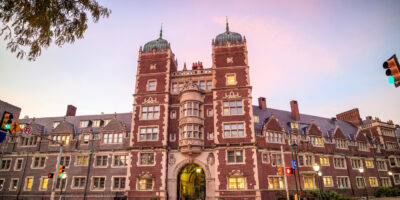
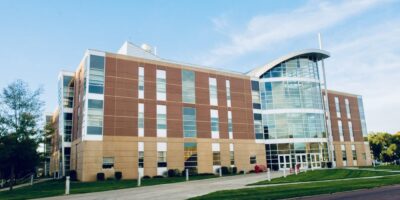
Creighton University School of Medicine is a private, Jesuit, Catholic medical school that awards the Doctor of Medicine (MD) degree on two campuses: its main campus in Omaha, Nebraska, and a full four-year regional campus in Phoenix, Arizona. Creighton physicians have been healing and teaching since 1892. The school is built around the Jesuit value of cura personalis, or “care for the whole person,” and it expects its students to serve others long before they wear a white coat.
This guide covers the 2026-2027 application cycle, which fills the class that begins orientation in late July 2027 (the Class of 2031). You submit one application for both campuses and state your campus preference on the secondary. The guide explains who is eligible, what the newest class looks like, what each current secondary prompt asks and how to answer it, how the virtual interview works and what it costs to attend.
Creighton is known for a few things that shape strategy. Only U.S. citizens and permanent residents are eligible. There are no required prerequisite courses. Every applicant with a verified AMCAS application and an MCAT of 500 or higher receives a secondary, so the essays and your record of non-medical service carry real weight. Every figure below is labeled with its year or cohort, and sources are listed at the end. Facts were checked on October 17 and 18, 2026.
Key Takeaways
- Who can apply: U.S. citizens and U.S. permanent residents only. International and Canadian citizens are not eligible, and required coursework must come from an accredited four-year college in the United States or Canada. You need a bachelor’s degree before you matriculate.
- Academic context: There are no required prerequisites, but Creighton recommends recent biology and chemistry (including biochemistry), English, humanities and statistics, and 40 to 45 total credit hours in biology, chemistry, physics and math. The Class of 2030 had an average MCAT of 512 and a median cumulative GPA of 3.88. Accepted applicants for the 2025 entering class had a median MCAT of 514 and a median total GPA of 3.9.
- Selectivity: For the Class of 2030, Creighton received 7,253 applications and interviewed 999 applicants. For the 2025 entering class, 1,007 of 6,162 verified applicants were interviewed and 250 matriculated. The school admits about 250 students each year across both campuses. No acceptance rate is published, because no count of offers is released.
- Mission: The school’s mission is to improve the human condition in its Jesuit, Catholic tradition. In practice, the admissions committee looks closely for direct, non-medical service to others, especially underserved people.
- Key dates: AMCAS is due November 1, transcripts to AMCAS by November 15, and the secondary, letters and all credentials by January 15, 2027. Secondaries go out from July to every verified applicant with an MCAT of 500 or higher. Decisions are rolling from October 15.
- Campus choice: One application covers Omaha and Phoenix. You mark Omaha, Phoenix or either on the secondary. The curriculum is essentially the same on both campuses.
- Costs: 2026-2027 tuition is $70,094 for every student, with no in-state discount. The first-year cost of attendance budget is $111,938. Indebted graduates in 2024-2025 left with an average of $268,393 in medical school debt.
- Next action: Draft the seven core secondary answers now (each up to 2,000 characters), decide on a campus preference, and decide whether to apply to the Arrupe Global Scholars MD/MPH program, which adds five essays and one letter.
Key Statistics About Creighton University School of Medicine
The snapshot and the table below come from the same fact record as every number in this guide. Class figures describe the Class of 2030, which entered in 2026 and is the newest class Creighton has profiled. Median MCAT and GPA for accepted applicants, the residency split and debt figures come from the 2025 entering class and the 2024-2025 aid year, and each row says which. Costs are the school’s 2026-2027 budget. Creighton reports an average MCAT and a median GPA for its newest class, and the table labels each one accordingly.

| Metric | Value | Year and group | Source |
|---|---|---|---|
| School and degree | Creighton University School of Medicine, MD | Omaha, Neb. (main campus) and Phoenix, Ariz. (four-year regional campus since fall 2021) | Creighton MD FAQ and Medicine MD pages |
| Students admitted each year | About 250 | Current, both campuses | Creighton MD Admissions Requirements |
| Applications | 7,253 | Class of 2030 (entered 2026) | Creighton MD Class Profile |
| Applicants interviewed | 999 | Class of 2030 | Creighton MD Class Profile |
| Average MCAT | 512 | Class of 2030, entering class | Creighton MD Class Profile |
| Median cumulative GPA | 3.88 | Class of 2030, entering class | Creighton MD Class Profile |
| Median MCAT | 514 (mean 514.4) | 2025 entering class, all accepted applicants | AAMC MSAR |
| Median total GPA | 3.9 (science GPA median 3.87) | 2025 entering class, all accepted applicants | AAMC MSAR |
| Verified applications | 6,162 (179 Nebraska residents, 5,951 out of state, 32 international) | 2025 entering class | AAMC MSAR |
| Applicants interviewed | 1,007 (45 in state, 959 out of state, 3 international) | 2025 entering class | AAMC MSAR |
| Matriculants | 250 (10 in state, 239 out of state, 1 international) | 2025 entering class | AAMC MSAR |
| Minimum MCAT for a secondary | 500 (no pre-screen) | 2026-2027 cycle | Creighton MD Application Process and Admissions Requirements |
| Acceptance rate | Not published (no offer count released) | Not available for the Class of 2030 or the 2025 entering class | Creighton MD Class Profile; AAMC MSAR |
| Tuition | $70,094 per year, same for all students | 2026-2027, M1 to M4 | Creighton Medicine MD Costs 2026-2027 |
| First-year mandatory fees | $4,232 (university fee $1,676, technology fee $646, mobile device fee $1,910) | 2026-2027, M1 | Creighton Medicine MD Costs 2026-2027 |
| First-year cost of attendance | $111,938 (10 months) | 2026-2027, M1, one budget for both campuses | Creighton Medicine MD Costs 2026-2027 |
| Average debt of indebted graduates | $268,393 | 2024-2025 | AAMC MSAR (LCME Part I-B) |
| Students receiving financial aid | 80% | 2024-2025, all enrolled and graduated students | AAMC MSAR (LCME Part I-B) |
| Medical students enrolled | 876 | Current, both campuses | Creighton School of Medicine About page |
| Residency Match | 226 students; 95% matched into their first-choice specialty | Match 2026 (Class of 2026) | Creighton Residency Match page |
| One useful distinction | One application for two campuses; choose Omaha, Phoenix or either on the secondary | Current | Creighton MD FAQ |
Read the class figures carefully. The figure of 251 “accepted” students for the Class of 2030 matches the size of one entering class, not the total number of offers Creighton made. No offer count is released for the Class of 2030 or for the 2025 entering class, so no true acceptance rate can be calculated. Dividing class size by applications gives a matriculation ratio, which understates your odds of receiving an offer. What can be measured is the interview stage: about one in six verified applicants (1,007 of 6,162, or 16.3 percent) was interviewed for the 2025 entering class, and 999 of 7,253 applicants (13.8 percent) were interviewed for the Class of 2030.
To compare Creighton’s averages with other schools, IMA keeps a table of average GPA and MCAT scores by medical school.
Mission and Educational Priorities
Before learning anything else about Creighton University School of Medicine, it helps to know the phrase cura personalis. It means “care for the whole person,” and it shapes nearly everything about how Creighton forms doctors. The school describes its work as forming medical students “mind, body and soul,” and Creighton physicians are expected to care for a patient’s spiritual and emotional needs as well as the physical complaint.
The School of Medicine’s current mission statement reads:
“In Creighton’s Jesuit, Catholic tradition, the mission of the School of Medicine is to improve the human condition with a diverse body of students, faculty and staff who provide excellence in educating learners, healthcare professionals, and the public; advancing knowledge; and, providing comprehensive patient care.”
Its vision statement reads:
“United by our Jesuit, Catholic identity, we transform learners into exceptional healthcare professionals and scientists who are leaders in advancing medicine, health, and well-being.”
The mission sits inside Creighton University’s broader Jesuit mission, which emphasizes the development of the whole person, academic excellence, ethical practice and service to others. That university mission guides the educational philosophy of the medical school.
What the mission means for applicants
Creighton translates the mission into specific admissions expectations:
- Service to others, outside medicine. The committee requires a foundation in “service of others” through non-medical volunteer activities. Creighton states that “of critical importance, we look for direct non-medical service to others, especially underserved populations, to ensure you fit the culture of a Jesuit institution.” This is the clearest signal on the page: clinical hours alone will not show fit.
- Personal qualities. The Committee on Admissions considers intellectual curiosity, emotional maturity, honesty, motivation and proven scholastic ability. Those five qualities are worth reflecting on as you write your secondaries.
- Formation, not only training. Creighton describes medicine as “a sacred calling” and names Ignatian values that guide students: cura personalis, a faith that does justice, and magis, “the more,” which drives excellence in the service of others. It also states that “Creighton physicians recognize that healthcare inequity is immoral and unethical.” Applicants do not have to be Catholic, but they should be ready to engage with these ideas thoughtfully.
- Holistic review. Creighton says it wants “to read about your story and journey to medicine.” Grades and MCAT scores show you can handle the coursework; clinical experience and shadowing show you understand the work; service shows you fit the culture.
The dean, Robert W. (Bo) Dunlay, MD, sums up the school’s view this way: “We are in the business of character formation for women and men who become exceptional Creighton physicians.” Several of the 2026-2027 secondary prompts, including the new professionalism prompt and the rewritten “Women and Men for and with Others” prompt, test exactly that kind of character and reflection.
Practical implications
If your record is heavy on research and clinical work but light on direct service, start a sustained, non-medical commitment now and keep it going through the cycle. Creighton invites updates once your file is complete, and “non-medical service experiences” are on its list of welcome updates. If you already have strong service, make sure your secondaries explain what you learned from it, not only what you did.
Accreditation and Institutional Identity
Creighton University School of Medicine is fully accredited by the Liaison Committee on Medical Education (LCME), the accrediting body for MD programs in the United States and Canada. The program holds full accreditation, was first accredited on or before 1942 and has its next full LCME survey in the 2027-2028 academic year (see the LCME directory of accredited programs). Accreditation confirms that a program meets national standards for curriculum, faculty, student services and facilities. It is not a ranking.
The School of Medicine is part of Creighton University, a private Jesuit, Catholic university in Omaha. Creighton describes itself as one of the nation’s largest Catholic health professions educators. The medical school has formed students in the Catholic, Jesuit tradition for more than 130 years.
One school, two campuses
Creighton’s MD is one accredited program delivered on two campuses:
- Omaha, Nebraska (main campus). The CL and Rachel Werner Center for Health Sciences Education opened in 2023. The 145,000-square-foot building brings future physicians, nurses, occupational and physical therapists, physician assistants and EMS technicians together, with simulation labs, exam rooms, a skills lab, study and social lounges and a dedicated medical student locker room. Omaha’s primary clinical partner is CHI Health.
- Phoenix, Arizona (four-year regional campus). Creighton medical students began clinical rotations at Dignity Health St. Joseph’s Hospital and Medical Center in 2005. As of fall 2021, Phoenix became a full four-year regional campus, housed in the 195,000-square-foot Virginia G. Piper Charitable Trust Health Sciences Building at Park Central in midtown Phoenix. Clinical training runs through the Creighton University Arizona Health Education Alliance, which has united Creighton, Dignity Health St. Joseph’s Hospital and Medical Center, Valleywise Health and District Medical Group since 2017.
Applicants sometimes ask whether the Phoenix campus is a separate school. It is not. Creighton explains that, “per LCME accreditation requirements, the curriculum and other aspects of the medical educational experience must be essentially the same” on both campuses. For anyone interested in practicing medicine in the Southwest, the Phoenix campus offers the same degree in a fast-growing region that faces a shortage of healthcare professionals.
Recognition
Creighton points to a few markers of its standing. Ninety-nine percent of residency program directors surveyed say they are happy to have additional Creighton graduates in their programs. The school reports that 95 percent of its 2026 graduates matched into their first-choice specialty. Its graduates practice in all 50 states, and its alumni network numbers more than 7,200 alumni in 50 states and 10 countries. Faculty research covers bacterial resistance, cancer, hearing loss and conditions that affect bone health and loss. The school is also known for interprofessional education, since its health sciences students learn side by side on both campuses.
Medical Programs and Affiliations
Creighton University School of Medicine offers a diverse range of programs. Here are the ones most relevant to future physicians.
MD program (Omaha or Phoenix)
The four-year Doctor of Medicine program is the core of the school. It integrates basic and clinical sciences with Jesuit values, and the degree meets the educational requirements for licensure in all 50 states, the District of Columbia and Puerto Rico. You apply once through AMCAS and choose Omaha, Phoenix or either on the secondary. There is no early decision, early assurance or linkage program listed on the MD admissions pages.
Six joint-degree programs
Creighton students can earn an MD and an advanced degree through one of six joint-degree programs:
- MD/PhD in one of three areas: Biomedical Sciences, Medical Microbiology and Immunology, or Pharmacology and Neuroscience. The secondary asks whether you are applying to the MD/PhD program, and MD/PhD interviews begin September 1 along with regular MD interviews.
- MD/MBA (Business Administration).
- MD/MS (Integrative Health and Wellness; the MD program page also lists Bioethics).
- MD/MA (Medical Humanities and Ethics).
- MD/MPH (Public Health).
- MD/MPH through the Arrupe Global Scholars and Partnerships Program.
For most joint degrees, students add the second degree after admission to the MD. The Arrupe program is the exception, because you apply on the secondary itself.
Arrupe Global Scholars and Partnerships Program (MD/MPH)
The Arrupe program is a partially funded, five-year MD/MPH for students interested in global health and health equity. Scholars:
- Earn an MD and an MPH in five years, with the MPH year as Year 3 (between M2 and the M3 clinical year).
- Receive scholarship funding that covers part of medical school tuition and the full cost of MPH tuition.
- Take part in five fully funded international immersions with partners in Rwanda (University of Global Health Equity), the Dominican Republic (Pontificia Universidad Catolica Madre y Maestra), Ecuador (Pontificia Universidad Catolica del Ecuador) and Nepal (Kathmandu University and Dhulikhel Hospital).
- Start about three weeks before M1 with an orientation and cultural immersion at Creighton’s Institute for Latin American Concern (ILAC) in the Dominican Republic, and spend eight weeks abroad during the MPH year on a practicum and capstone project.
- Complete M3 rotations in Omaha or Phoenix, then present capstone findings to local partners, communities and the Ministry of Health during M4.
To apply, you answer “yes” to the Arrupe question on the secondary, write five additional essays (each 2,000 characters for 2026-2027) and send one more letter of recommendation through the AMCAS Letter Service that addresses your work with marginalized populations and your interest in global health. Applicants chosen to advance interview with a selection committee. Applying to Arrupe does not remove you from the regular MD applicant pool. The GRE normally required for the MPH is waived. The program’s inaugural executive director is Jason Beste, MD, MPH, PhD, a Creighton graduate (see the faculty and alumni section below).
Physician assistant, master’s and PhD programs
The School of Medicine also runs physician assistant (PA) programs, which appear in its program menu for Omaha and Phoenix; the Phoenix campus offers a 28-month Master of Physician Assistant Studies. These programs train competent, compassionate PAs with an emphasis on clinical skills, ethical practice and service, and they have their own admissions process separate from the MD. If you are weighing medicine against PA school, IMA’s pre-PA internships offer supervised clinical experience in a PA-track setting.
Creighton’s master’s and graduate certificate options advance knowledge in specialized areas of medicine and healthcare. They include master’s degrees in Biomedical Sciences, Medical Sciences, Pharmacology and Neuroscience, Medical Microbiology and Immunology, Integrative Health and Wellness, Public Health, and Medical Humanities and Ethics, plus certificates in Lifestyle Medicine and Bioethics. PhD programs in Biomedical Sciences, Pharmacology and Neuroscience, and Medical Microbiology and Immunology provide advanced research training for careers in academic research and teaching.
A pathway for gap-year applicants: MS in Medical Sciences
One program matters to many pre-meds. Creighton’s Master of Science in Medical Sciences is a 10-month, 34-credit program built for students “looking to fill a gap year.” Coursework includes human gross anatomy, microscopic anatomy, physiology, embryology, neuroanatomy, medical ethics and humanities, clinical rotations and a capstone, along with a teaching practicum in gross anatomy. Students in good academic standing after the first semester are guaranteed an interview at Creighton’s School of Medicine in March for possible admission the next fall, and top graduates can earn scholarships to attend the School of Medicine. An interview is not an offer, but it is a defined route for applicants who need to strengthen a science record.
Clinical affiliations
- CHI Health (Omaha). CHI Health Creighton University Medical Center-Bergan Mercy is one of the region’s academic medical centers, and CHI Health is the area’s largest healthcare provider. Students train at a range of CHI Health hospitals and clinics.
- Creighton University Arizona Health Education Alliance (Phoenix). Dignity Health St. Joseph’s Hospital and Medical Center, Valleywise Health and District Medical Group. Phoenix students also serve the community through partners such as St. Vincent de Paul Clinic.
- Graduate medical education. The school supports 591 residents and fellows, including more than 340 in 19 programs in Arizona.
Curriculum Overview
Creighton’s MD curriculum is four years long and divided into four Components. The first two make up the New ERA Curriculum, which integrates basic science, clinical skills and reflection. Students on both campuses follow the same structure, and the 2026-2027 School of Medicine catalog lists most courses for both Omaha (OMA) and Phoenix (PHX).
Program objectives
Creighton’s faculty define the competencies every graduate must reach in domains that correspond to those of the Accreditation Council for Graduate Medical Education (ACGME), plus objectives particular to Creighton:
- Patient Care: gather and present a history and physical, and use clinical reasoning to form a differential diagnosis and plan.
- Medical Knowledge: understand normal structure and function, disease mechanisms and evidence-based guidelines.
- Practice-Based Learning and Improvement: assess the medical literature critically and improve through feedback and self-reflection.
- Interpersonal and Communication Skills: communicate concisely and collaboratively with patients, families and teams.
- Professionalism: act ethically and compassionately and work well on interprofessional teams.
- System-Based Knowledge: improve patient safety, understand health policy and finance, and apply an understanding of diverse populations and societal problems to care.
- Personal and Professional Identity Development: build habits of reflection, resilience and wellness, and learn to serve and care for others as whole persons, “particularly those most in need.”
That last domain is unusual. It is the curricular version of cura personalis, and it is the reason Creighton’s secondary asks so much about reflection and service.
Component I: first year
Component I includes eight required Clinically Integrated Blocks (CIBs), interprofessional education and selectives. The year opens with a five-week Foundational Science Block covering social and basic sciences, then moves through seven blocks generally organized by organ system, such as musculoskeletal and integumentary, cardiovascular, respiratory, HEENT and infectious disease. The curriculum is integrated vertically (by organ system) and horizontally (by discipline). Students start seeing patients in M1, in the simulation lab and through early inpatient and primary care experiences, with patient interaction beginning in the first semester. Courses are graded Honors/Pass/Fail, students are not ranked, lecture attendance is optional and lectures are available online.
Component II: second year
Component II has seven more Clinically Integrated Blocks, beginning with the renal system and continuing through blocks such as gastrointestinal, endocrine, reproductive and a multisystem disease and clinical decision-making block. Teaching uses small-group, case-based and team-based learning, and the clinical skills curriculum continues with ambulatory clinic experience, early hospital experience, interviewing and simulation. After the blocks, students enter a structured review period with guided instruction and self-directed study, then take the USMLE Step 1 exam. The year ends with orientation and clinical skills training for the third year.
GOLD selectives
During the first two years, students choose GOLD Selectives in four categories: Student Interest Selectives in the humanities and special topics, Guided Research Selectives, Career Exploration Selectives and Mission Outreach Selectives. Each is worth 0.5 to 1.0 credit hour, and students must complete 1.5 credit hours (including one Student Interest Selective) before Component III. Recent titles include Compassion Science, Making Mistakes in Medical Practice, Religion and Medicine, and Food Insecurity, Climate Change, and Public Health. These range from creative and reflective seminars to guided research and mission outreach.
Component III: third year
Component III is organized into eight clerkships (emergency medicine, family medicine, internal medicine, neurology, obstetrics and gynecology, pediatrics, psychiatry and surgery) and two electives. It runs from early May to April and ends with a two-week Step 2 guided review course. All clerkships take place at Creighton-affiliated hospitals and clinics, and they are offered on both campuses.
Component IV: fourth year
The fourth year prepares students for residency and lets them explore their interests. Each student completes at least 42 credits (and may take up to 46). Fourteen are required: a critical care selective (4 credits), a sub-internship (4 credits, or a second critical care selective), a capstone (4 credits) and a residency application and interviewing course (2 credits). The other 28 credits can be any mix of critical care selectives, sub-internships and clinical electives, with up to 8 credits of non-clinical electives and up to 12 credits of extramural electives. Beginning in 2026-2027, students must schedule their residency interviewing month between October and January.
Clinical Education and Simulation Center
Creighton’s Simulation Education Center helps health sciences faculty design, run and evaluate teaching sessions. It gives students a safe place to demonstrate clinical competence, practice teamwork and build professional behavior aligned with Creighton’s mission before they care for real patients. On the Phoenix campus, the Piper building alone includes nine inpatient hospital environments, a trauma bay and operating room, 16 exam suites and more than 38,000 square feet of simulation labs and classrooms.
Through this structured and integrated curriculum, Creighton aims to graduate physicians who are leaders in advancing medicine, health and well-being, which is the language of its vision statement.
Admissions Requirements and Application Process
Creighton evaluates applicants holistically, but it publishes clear minimums and recommendations. This section separates what is required from what is typical.
Eligibility and citizenship
To qualify for admission, applicants must be United States citizens or United States permanent residents. Creighton does not accept international students, including Canadian citizens who are not U.S. permanent residents. Required coursework must be completed at an accredited four-year institution in the United States or Canada, and Creighton will not consider an undergraduate degree completed outside the U.S. or Canada. As a private school, Creighton gives no preference based on state of residence, and tuition is the same for everyone. Applicants who complete their pre-professional (undergraduate) education at Creighton are given preference for admission. In the 2025 entering class, 240 of 250 matriculants came from outside Nebraska (239 from other states and 1 international).
You must complete a bachelor’s degree before you matriculate. If you are enrolled in any degree-granting program (bachelor’s, master’s, PhD or certificate), you must finish it before starting at Creighton.
Academic requirements and recommended coursework
Creighton University School of Medicine has no defined prerequisite course requirements. As preparation for the MCAT and the medical curriculum, it recommends recent coursework (within the past three years) at an accredited four-year college in the U.S. or Canada:
- A strong background in biology, including introductory and advanced courses such as physiology, immunology and genetics.
- A strong background in chemistry, including introductory and advanced courses such as biochemistry.
- Coursework in English, humanities and statistics, which Creighton “strongly” recommends.
- A minimum of 40 to 45 total credit hours in biology, chemistry, physics and math.
There is no minimum undergraduate GPA. If your undergraduate GPA is lower, strong postbaccalaureate or graduate coursework can show recent academic ability, which is why the MS in Medical Sciences described above appeals to many reapplicants. Creighton considers postbaccalaureate or graduate science (BCPM) coursework regardless of your undergraduate science GPA. How much coursework it needs depends on your story, your GPA trend and your time away from school, and it prefers formal remediation programs, postbaccalaureate programs with a certificate or degree, or master’s programs, which typically run 30 or more credit hours.
MCAT
The minimum MCAT for a secondary invitation is 500. Creighton uses your most recent MCAT score and has no section cutoffs. You can complete the secondary while waiting for a score, and secondaries also go to applicants who have a future MCAT date scheduled. To prepare, Creighton suggests courses in general biology, general chemistry, organic chemistry, general physics, biochemistry, psychology, sociology and statistics.
Creighton recommends taking the MCAT in the spring or summer of the year you apply. It will not consider scores older than the oldest date in this table or newer than the latest date.
| Entry year | Oldest MCAT accepted | Newest MCAT accepted |
|---|---|---|
| Fall 2027 (2026-2027 cycle) | January 2024 | September 2026 |
| Fall 2028 (2027-2028 cycle) | January 2025 | September 2027 |
Experience requirements
The Committee on Admissions requires a foundation in three kinds of activity:
- Commitment to “service of others” through non-medical volunteer activities.
- Diverse clinical experiences, including direct physician shadowing.
- Patient contact through clinical or medical experiences.
Scientific research is not required, but the committee “highly” values it. Creighton does not publish minimum hour counts. A sensible target is sustained involvement in each category rather than a long list of one-time events. If you need more patient contact, clinical internships for pre-med students can add supervised, hands-on hours, but they work best alongside local, ongoing service rather than in place of it.
Letters of recommendation
Creighton requires at least three and no more than six letters, submitted through the AMCAS Letter Service by January 15. A committee letter is preferred if your school offers one, but it is not required. Without a committee letter, Creighton suggests two letters from science faculty and one from a non-science faculty member, while leaving the final choice to you. The best letters come from people who can “honestly and accurately attest to your performance, character, personal qualities, and aptitudes from direct knowledge.” Arrupe MD/MPH applicants need one additional letter that addresses their work with marginalized populations and their interest in global health.
Primary application (AMCAS)
Creighton participates in AMCAS. You can submit from June 1, the AMCAS deadline is November 1 and transcripts must reach AMCAS by November 15. Applicants who miss these deadlines are not considered for the fall class.
Secondary application
Creighton does not pre-screen. Every applicant who submits a verified AMCAS application to Creighton and has an MCAT of 500 or higher (or a scheduled future MCAT) receives an emailed invitation to the secondary. The process begins in July. Your secondary file includes:
- The secondary application form, with the essays covered below, your campus preference and supplementary questions such as felony or misdemeanor disclosure and the technical standards question.
- Letters of recommendation.
- A non-refundable application fee of $100. Confirm the exact amount shown in your portal when you pay.
- A recent digital photograph.
Fee waivers: Creighton honors the AAMC Fee Assistance Program (FAP). To qualify for a secondary fee waiver, you must be approved for FAP before you submit your AMCAS application. Creighton will not waive the fee for applicants who apply for FAP after submitting AMCAS.
Technical standards: When you answer the question that refers to “reasonable accommodations,” do not disclose any accommodation request yet. Requests are made after acceptance. Answering that you cannot complete the curriculum withdraws your application.
Background check: Creighton requires a background check for all students. List any felony or misdemeanor conviction or no-contest plea on the secondary form, with an explanation if you wish. Accepted students also complete a 12-panel drug screen the summer before matriculation.
Completed file, status and updates
Your file is complete when Creighton has your verified AMCAS, MCAT score, secondary, letters, photograph and fee. The Office of Medical Admissions confirms completion by email; if you do not hear within 30 days of submitting everything, contact [email protected]. All credentials must arrive by January 15, 2027. Creighton reviews applications on a rolling basis and states that applicants who complete early “have a better chance of receiving both an interview and acceptance.”
Once your file is complete, you can check your status and upload updates through the Secondary Application Portal (Check Status/Next Steps, then Update Materials). The committee welcomes grade updates, new shadowing, clinical experience and non-medical service. Creighton communicates mainly by email, so add creighton.edu to your safe senders and watch your spam folder.
Decisions, deposits and the alternate pool
Regular MD applicants begin receiving decisions on October 15, and decisions continue on a rolling basis. Outcomes are acceptance, placement in the alternate pool, or rejection. The alternate pool is unranked and is reviewed after the April 30 deposit deadline. Acceptance notices go out from October 15, 2026 through July 5, 2027, and you have two weeks from the date of your acceptance letter to respond. Creighton has no Early Decision Program, and it considers requests to defer entrance case by case. Accepted students pay a $100 enrollment reservation deposit, credited to tuition, and can withdraw by April 30 for a refund. Accepted students must send official transcripts from every college attended to the Office of Medical Admissions by July 15 of the year they enroll.
2026-2027 timeline
| Date | Step |
|---|---|
| June 1, 2026 | AMCAS submission opens |
| July 2026 onward | Secondary invitations emailed to verified applicants with MCAT 500+ or a scheduled test |
| September 1, 2026 | Regular MD and MD/PhD interviews begin (virtual; September through March) |
| September 2026 | Last MCAT administration accepted for Fall 2027 entry |
| October 15, 2026 | First admission decisions for regular MD applicants |
| November 1, 2026 | AMCAS deadline |
| November 15, 2026 | Transcripts due to AMCAS |
| January 15, 2027 | Secondary, letters and all credentials due |
| February 22, 2027 | AMCAS “Plan to Enroll” available (recommended) |
| April 15, 2027 | AAMC protocols recommend narrowing to three offers |
| April 30, 2027 | Deposit refund deadline; “Commit to Enroll” opens; alternate pool review begins |
| June 15, 2027 | “Commit to Enroll” required for matriculating students |
| July 15, 2027 | Final official transcripts due |
| July 26-30, 2027 | Orientation; White Coat Ceremonies July 29 (Omaha) and July 30 (Phoenix) |
Reapplicants and transfers
For reapplicants, Creighton “closely examine[s] how the application has been improved since the previous submission.” Show concrete change: new coursework, a higher MCAT, sustained service or new clinical work. Many successful Creighton applicants take a gap year, though it is not required, and Creighton advises applying when you are ready. If you are planning a year to build experience, pre-med gap year programs are one way to add structured clinical time, and the secondary’s current-activities question gives you space to describe that year.
Creighton accepts transfers with advanced standing only into the third year, and only from LCME-accredited schools. Openings are few because attrition is low, and Creighton knows around May whether any M3 positions will open.
Tuition, Cost of Attendance and Financial Aid
Creighton is private, so every student pays the same tuition regardless of state. For 2026-2027, tuition is $70,094 per year in all four years, up from $68,384 in 2025-2026. Creighton bills tuition and fees by semester.
2026-2027 cost of attendance by year
| Item | Year 1 (10 months) | Year 2 (10 months) | Year 3 (12 months) | Year 4 (12 months) |
|---|---|---|---|---|
| Tuition | $70,094 | $70,094 | $70,094 | $70,094 |
| University fee | $1,676 | $1,676 | $1,676 | $1,676 |
| University technology fee | $646 | $646 | $646 | $646 |
| Other required items | $1,910 mobile device fee | $450 UWorld Step fee | $629 UWorld Step fee | $70 yearbook fee |
| Housing | $11,500 | $11,500 | $13,800 | $13,800 |
| Food | $5,410 | $5,410 | $6,492 | $6,492 |
| Personal expenses | $12,030 | $12,030 | $14,436 | $14,436 |
| Transportation | $3,580 | $3,580 | $4,296 | $4,296 |
| Health insurance | $4,424 | $4,424 | $4,424 | $4,424 |
| Board exam materials and fees | None budgeted | $865 | $965 | None budgeted |
| Residency interviews and suit | None budgeted | None budgeted | None budgeted | $2,000 |
| Loan fees | $530 | $3,200 | $3,200 | $3,200 |
| HUB fee | $138 | None budgeted | None budgeted | None budgeted |
| Total cost of attendance | $111,938 | $113,875 | $120,658 | $121,134 |
Three numbers are worth separating. Tuition alone is $70,094. Tuition plus the first-year mandatory fees (university fee, technology fee and the one-time mobile device fee) is $74,326. The full first-year cost of attendance, which adds a living-expense budget, insurance and loan fees, is $111,938. Adding the four published annual budgets gives about $467,605 for the degree at 2026-2027 prices; this sum is not a Creighton figure, and tuition usually rises each year.
Creighton publishes one budget for both campuses. Its 2026-2027 catalog lists the same tuition in Omaha and Phoenix, with Phoenix students paying a combined Phoenix technology and university fee and a Phoenix parking permit fee. Housing costs differ between the two cities, so build your own estimate for the campus you prefer. Creighton notes that Omaha’s cost of living runs below the national average.
Health insurance
The budget includes $4,424 per year for health insurance. Creighton’s admitted-student pages explain student health insurance and immunization requirements after acceptance. If you already have qualifying coverage, ask the Office of Medical Admissions how waivers work before you budget.
Financial aid
The first step is the Free Application for Federal Student Aid (FAFSA). Creighton’s federal school code is 002542. Creighton does not require parental information on the FAFSA unless you want to be considered for a Primary Care Loan, and including it does not affect federal loan eligibility. After the FAFSA is processed, Creighton’s Financial Aid Office sends an award letter and you accept aid through your Creighton NEST account. You do not have to accept every loan offered, and Creighton recommends building a spending plan first.
Sources of aid include:
- Institutional scholarships. Creighton offers scholarships based on academic accomplishment and financial need. Contact the Office of Medical Admissions or the financial aid office for current scholarship details.
- Arrupe scholarship. Arrupe MD/MPH scholars receive scholarship funding toward part of medical school tuition and the full MPH tuition.
- National Health Service Corps (NHSC) Scholarship. For students committed to primary care. It covers tuition and fees, reasonable educational expenses and a monthly stipend, in exchange for service in a health professional shortage area (one year per year of support, two-year minimum).
- Armed Forces Health Professions Scholarship Program (HPSP). Each branch offers a service-based scholarship that covers tuition and fees, health insurance, books and a stipend, with one year of service per year of support (two-year minimum; three years for the Air Force).
- Federal loans and residency interview loans. Federal loans fund most students. Private residency interview and relocation loans are available in the fourth year for costs outside the budget; Creighton advises keeping private borrowing to a minimum.
Creighton runs mandatory financial literacy presentations, and its financial aid counselor for medical students, Shawn Irving, is available for one-on-one advice. The school’s reasoning is practical: “students who make wise decisions about financial issues will have greater freedom in specialty choice and lifestyle.” In 2024-2025, 80 percent of enrolled and graduated Creighton medical students received financial aid, and indebted graduates left with an average of $268,393 in medical school debt. Scholarships are limited and go to students who are academically qualified and have strong records of service to others, so most students rely on federal loans. Use the debt figure, not just the first-year budget, when you compare Creighton with lower-cost public options.
Campus Facilities and Student Life
Creighton’s two urban campuses offer access to diverse communities and professional opportunities. Each has a modern health sciences building, and both are designed so medical students learn alongside other health professions students.
Omaha campus
The Office of Medical Admissions is in the CL and Rachel Werner Center for Health Sciences Education, 2616 Burt Street, Omaha, NE 68178. The Werner Center, opened in 2023, includes simulation labs, exam rooms, a skills lab, study spaces, lounges and an outdoor terrace. Omaha’s metro area has nearly 1,000,000 people, and Creighton points out that the cost of living is about 8 percent below the national average. Students complete clinical work at CHI Health hospitals and clinics across the area. Creighton has limited graduate housing on campus in Omaha, and many students rent apartments in renovated historic buildings near campus and the Old Market.
Phoenix campus
The Phoenix Health Sciences Campus at Park Central is reachable by the Valley Metro Rail and sits in a walkable, bike-friendly neighborhood. Nearly 1,000 students across six programs (medicine, nursing, pharmacy, physical therapy, occupational therapy and physician assistant studies) learn there together. Phoenix students also connect with community partners such as St. Vincent de Paul Clinic, the Phoenix Dream Center, the International Rescue Committee and Huger Mercy Living Center. One recent graduate described learning early clinical practice at the Virginia G. Piper Medical Clinic, where students saw how medicine integrates with dentistry and social work. Because the Phoenix building hosts nurses, PTs, OTs, pharmacists and PAs, interprofessional teamwork is part of daily life; students drawn to that model sometimes explore nursing internships abroad to see team-based care from another angle before medical school. There is no on-campus graduate housing in Phoenix, so Phoenix students rent in the neighborhoods near the health sciences campus and clinical sites.
Student support
Creighton offers academic advising, academic success resources, career development, wellness and lifestyle resources, student affairs support and financial aid counseling. The school has a formal mentoring program that involves both students and faculty, and its Vital Signs Mentoring program is listed among current-student resources. The Office of Student Affairs is led by Associate Dean Michael G. Kavan, PhD.
Service and student-run clinics
Every Creighton medical student participates in community service, and two Creighton-affiliated, student-run clinics offer care at no charge. Key service options:
- Magis Clinic (Omaha). Founded by Creighton medical students, it provides acute care, physical exams, mental health care, immunizations, lab services and referrals to people experiencing homelessness and the medically uninsured. It is the only free medical clinic in Omaha open on Saturdays for this population.
- Street Medicine Coalition (Phoenix). Students bring basic healthcare necessities to people experiencing homelessness on street runs.
- Project CURA. M1 students provide health education and prevention services in the Omaha area and can spend part of the M1 summer abroad in places such as Gambia, Ghana, Cambodia, Peru, India and Romania.
- Institute for Latin American Concern (ILAC). Founded by Creighton, ILAC sends health sciences students, faculty and alumni to the Dominican Republic each summer. The three-week ILAC Summer Health Program is open to M1s and M3s, and a four-week women’s health elective is open to M4s.
Learn more on Creighton’s service opportunities page.
Student organizations
Creighton University School of Medicine offers many student organizations, from service groups and honor societies to specialty interest groups and recreational clubs. They let students explore their interests, build community and gain leadership experience. Groups on the current list include:
- Service-based organizations: Maya Community Health Collaborative, which serves Maya communities through care, health education and outreach; Project CURA; Street Medicine Coalition; Partners Against Cancer.
- Honor societies and professional groups: Alpha Omega Alpha (AOA), the national medical honor society, whose motto is “Worthy to serve the suffering”; Phi Chi Chi Upsilon Medical Fraternity; Phi Rho Sigma Medical Society; AMA Medical Student Section; American Medical Women’s Association.
- Specialty interest groups: Internal Medicine Interest Group, Ophthalmology Interest Group, Orthopaedic Surgery Interest Group, Pediatric Interest Group, Surgery Club, the Creighton University Medical School Obstetrics and Gynecology Society and, in Omaha, an Emergency Medicine Interest Group.
- Student government and community: Creighton Medical Student Government; Creighton Medical Student Alumni Ambassadors, which connects students with alumni for mentoring and career advice; Hiking Club; Married to Medicine (M2M), which supports students who are married, engaged or in relationships.
- Cultural, faith and advocacy groups: Catholic Medical Student Association, which brings together faith, ethics and service; Multicultural Health Sciences Student Association (MHSSA); Student National Medical Association (SNMA); Military Medical Student Association.
- Clinical and research groups: Clinical Skills Club, for hands-on workshops and peer teaching; Medical Student Research Collaborative, which helps students find mentors and present their work.
- Language and humanities groups: Medical Spanish Club in Omaha and Phoenix Spanish Skills in Phoenix, both for building medically relevant Spanish; Humanities in Medicine and the Medical Humanities Club in Phoenix, which explore literature, history and art in patient care.
Phoenix also lists groups such as Medical Student Advocates for Disability Rights, Scrubs Addressing the Firearm Epidemic, a Make-A-Wish club and Students for a National Health Program. For the full list, see the Creighton University School of Medicine student organizations page.
Diversity, inclusion and belonging
Creighton’s Office of Diversity, Inclusion and Belonging in Medicine (ODIB) supports students, faculty and community members on both campuses. It runs pathway programs for students in grades 4 through 12 from groups underrepresented in medicine, rural areas and first-generation families, and it focuses on attracting applicants whose parents have not completed a four-year degree. Ten percent of the Class of 2030 are first-generation college students.
The school’s affinity groups include the Asian Pacific American Medical Student Association, CUSOM Advocates, Do JuSTIce, Health Together, Justice in Medicine, the Latino Multicultural Student Association, Medical Student Advocates for Disability Rights, SNMA and White Coats for Black Lives; see Creighton’s affinity groups in medicine. Health Sciences Multicultural and Community Affairs (HS-MACA) also supports organizations such as MHSSA and the Medicine Gender and Sexuality Alliance (see its student life page). Questions about diversity programs can go to the ODIB office or to the Office of Medical Admissions.
Clinical Rotations and Research Opportunities
Core rotations and sites
All eight core clerkships and two electives in Component III take place at Creighton-affiliated hospitals and clinics. Omaha students train mainly through CHI Health, including CHI Health Creighton University Medical Center-Bergan Mercy. Phoenix students train through the Arizona Health Education Alliance at Dignity Health St. Joseph’s, Valleywise Health and District Medical Group, along with other Phoenix-area partners. Recent Phoenix graduates describe rotations such as developmental pediatrics at Phoenix Children’s, part of the Barrow Neurological Institute, arranged through Creighton. Your campus choice determines where you do most required clinical work, so think about the patient population and city where you want to spend four years.
In the fourth year, students can take up to 12 credits of extramural (away) electives and choose among many critical care selectives, sub-internships and clinical electives on either campus.
International rotations
On average, 30 to 40 percent of Creighton students complete an international rotation, during the M1 summer or the M4 year. Options include Project CURA sites in Gambia, Ghana, Cambodia, Peru, India and Romania and ILAC programs in the Dominican Republic. Arrupe scholars complete five international immersions with their partner sites. On the 2025 AAMC Graduation Questionnaire, 22 percent of Creighton’s graduating seniors reported a global health experience during medical school. For applicants, this means global health interest is common in Creighton classes. Experience abroad before medical school, such as supervised pre-med internships abroad, can help you judge whether that work fits you, but Creighton values local, sustained service just as much.
Match results
The Class of 2026, with 226 students from Omaha and Phoenix, matched on March 20, 2026. Ninety-five percent matched into their first-choice specialty, and 100 percent are pursuing residencies or research fellowships in 20 specialty areas. Seventy-two students (32 percent) matched into primary care: internal medicine (34), pediatrics (24), family medicine (11) and medicine-pediatrics (3).
The most popular specialties were internal medicine (34), pediatrics (24), psychiatry (21), anesthesiology (19) and diagnostic radiology (19), followed by obstetrics and gynecology (17), general surgery (15), family medicine (11), emergency medicine (10), neurology (10) and orthopaedic surgery (10). Graduates matched in 36 states, led by Arizona (39), California (33) and Nebraska (19), at programs including Creighton University, Barrow Neurological Institute, Mayo Clinic, Barnes-Jewish/WashU, Johns Hopkins, Mass General Brigham, Cleveland Clinic, UCSF and Stanford. Creighton graduates also match into very competitive fields such as dermatology, ophthalmology, otolaryngology and orthopedic surgery. Faculty and alumni mentor fourth-year students through the match.
Research
Research is not required for admission or graduation, but it is common: 78 percent of Creighton medical students do research with faculty. Faculty work spans bacterial resistance, cancer, hearing loss and bone health. Students can begin research early, including through Guided Research Selectives in the first two years.
- Summer Medical Student Fellowship Program. After M1, students can spend the summer on clinical or basic science research and present at national meetings and the Midwest Student Biomedical Research Forum.
- Center of Excellence Summer Research Program. A summer research program for medical students from groups underrepresented in medicine.
- Lynch Cancer Research Center and basic science departments. Faculty such as Laura A. Hansen, PhD, chair of Biomedical Sciences, run active labs.
- Arrupe MPH capstones. Arrupe scholars complete a capstone project and work toward a scholarly publication during M3.
Service clinics
Required clinical training is complemented by optional service in the Magis Clinic in Omaha and the Street Medicine Coalition in Phoenix. These are where students practice the mission most directly, under physician supervision.
Notable Alumni, Faculty, Leadership and Admissions Staff
Creighton University School of Medicine has a long history and more than 7,200 living alumni. The profiles below are limited to people whose connection to the School of Medicine is documented by Creighton. Roles were checked on October 17, 2026.
Alumni
Jason Beste, MD, MPH, PhD. A two-time Creighton graduate, Dr. Beste earned his undergraduate degree from Creighton’s College of Arts and Sciences and his MD from the School of Medicine. After residency in internal medicine and social medicine at Albert Einstein College of Medicine/Montefiore Medical Center, he trained in infectious diseases and earned an MPH and a PhD in global health implementation science at the University of Washington. He served as medical director and chief medical officer for Partners In Health in Liberia and Malawi and held faculty posts at Harvard Medical School and the University of Washington. In 2022 he returned to Creighton as the inaugural executive director of the Arrupe Global Scholars and Partnerships Program, and he practices infectious diseases at Valleywise and Dignity Health St. Joseph’s. His career shows what the Arrupe track is built to produce.
Shana Ofori, MD (2025). A recent Creighton graduate now in family medicine residency in Phoenix’s south-central district. She has described a rotation in developmental pediatrics at Phoenix Children’s, part of the Barrow Neurological Institute, as an opportunity “you typically wouldn’t get at another school.” Her path illustrates how the Phoenix campus prepares graduates to stay and serve in Arizona, where 51 percent of Creighton’s graduate medical education graduates continue training or practice.
Erik Steinberger, MD (2025). A Creighton graduate twice over (BS 2013, MD 2025) and now a psychiatry resident. He credits early clinical practice at the Virginia G. Piper Medical Clinic, alongside dentistry, social work and other disciplines, with teaching him how to know his community.
For a broader, university-wide list, see the list of Creighton University alumni on Wikipedia, which covers all Creighton schools, and Creighton’s National Alumni Board page.
School leadership
Robert W. (Bo) Dunlay, MD, Dean. A nephrologist and professor in the Department of Medicine, Dr. Dunlay leads the School of Medicine. His research has focused on dialysis care, including metabolic syndrome in new dialysis patients and medication safety in hemodialysis. His description of Creighton as being “in the business of character formation” is a useful lens for reading the secondary prompts.
Randy R. Richardson, MD, Regional Dean, Phoenix Campus. A professor of radiology who specializes in pediatric cardiovascular imaging, Dr. Richardson wrote the Atlas of Pediatric Cardiac CTA (2013), the Atlas of Acquired Cardiovascular Disease Imaging in Children (2017) and the Atlas of Pediatric CTA of Coronary Artery Anomalies (2020). He leads the four-year Phoenix campus, so his work matters to anyone choosing Phoenix.
Thomas M. Svolos, MD, Executive Vice Dean. A professor of psychiatry and author of Twenty-first Century Psychoanalysis (2018) and Culture and Politics on the Couch (2024), Dr. Svolos represents the reflective, humanistic thread in Creighton’s leadership.
Michael G. Del Core, MD, Senior Associate Dean for Medical Education. An interventional cardiologist and professor, Dr. Del Core oversees medical education, including the four-component curriculum described above.
Claudia S. Chambers, MD, Associate Dean, Medicine Program – Phoenix. An obstetrician-gynecologist, Dr. Chambers leads the MD program in Phoenix. Her recent co-authored research looks at how discrimination and resilience relate to birth weight among Black, Latina and White women in the Phoenix area, which reflects the campus’s focus on community health.
Cassie A. H. Eno, PhD, Program Director, Medicine Program – Omaha. Dr. Eno directs the Omaha MD program and studies medical education, including a “Learning How to Learn” orientation activity published in Academic Medicine (2023), humanities and ethics in the curriculum, and medical student wellness.
Michael G. Kavan, PhD, Associate Dean for Student Affairs. A professor of family and community medicine, Dr. Kavan leads student affairs. He has published on the medical student performance evaluation (the dean’s letter), the Gold Humanism Honor Society and family medicine topics such as acute stress and grief.
Faculty
Laura A. Hansen, PhD, Chair of Biomedical Sciences. Dr. Hansen’s lab at the Lynch Cancer Research Center studies how environmental exposures reprogram molecular pathways to cause skin cancer, including checkpoint signaling, estrogen receptor signaling and “Flower” cell competition. Her work shows the kind of basic science research open to students.
Nicole Piemonte, PhD, Associate Dean for Faculty Leadership. A medical humanities scholar with a PhD from the University of Texas Medical Branch, Dr. Piemonte brings the humanities into medical education. She wrote Afflicted: How Vulnerability Can Heal Medical Education and Practice (MIT Press, 2018) and Death and Dying (MIT Press).
Admissions and financial aid staff
Admissions questions go to the Office of Medical Admissions at [email protected], 402.280.2799 or 800.325.4405. Its address is the CL and Rachel Werner Center for Health Sciences Education, 2616 Burt Street, Omaha, NE 68178. Final transcripts go to Criss II, Room 102, Omaha, NE 68178-0408. For aid questions, the MD financial aid counselor is Shawn Irving (602.812.7269).
These people do not make individual admissions promises, and nothing here implies access or mentorship. The profiles help you understand the school’s priorities and the people shaping the education you would receive.
Admissions Statistics and Class Profile
Creighton’s newest class profile describes the Class of 2030, which entered in 2026. The school admits about 250 students each year across both campuses.
Applications and interviews
| Measure | Value | Notes |
|---|---|---|
| Applications | 7,253 | Class of 2030 |
| Interviewed | 999 | Class of 2030 |
| Interviewed/applicants | 13.8% | 999 divided by 7,253; this is an interview ratio, not an acceptance rate |
| Listed as “accepted” | 251 | Matches the size of one class; not a count of all offers |
| Acceptance rate | Not published | No offer count released |
The 2025 entering class adds a residency breakdown. “In state” here means Nebraska residents under the AAMC classification.
| Measure | In state | Out of state | International | Total | Source |
|---|---|---|---|---|---|
| Verified applications | 179 | 5,951 | 32 | 6,162 | AAMC MSAR |
| Interviewed | 45 | 959 | 3 | 1,007 | AAMC MSAR |
| Matriculated | 10 | 239 | 1 | 250 | AAMC MSAR |
| Deferred | 0 | 1 | 0 | 1 | AAMC MSAR |
| Interviewed/verified applications | 25.1% | 16.1% | 9.4% | 16.3% | Computed from the rows above; an interview ratio, not an acceptance rate |
Because Creighton sends a secondary to every verified applicant with an MCAT of 500 or higher, its applicant pool is large. About one in seven applicants in the Class of 2030 cycle received an interview, and about one in six in the 2025 cycle. Ninety-six percent of 2025 matriculants came from outside Nebraska, so out-of-state applicants are the norm, not the exception. Interviews are where most of the selection happens, which is why the secondary essays (read in full by interviewers in Creighton’s open-file format) matter so much.
Academic profile
- Average MCAT: 512 (Class of 2030).
- Median cumulative GPA: 3.88 (Class of 2030).
- Advanced degrees: 17 students already held an advanced degree.
For the 2025 entering class, the scores of all accepted applicants looked like this:
| Measure | Median | Mean (standard deviation) | Source |
|---|---|---|---|
| MCAT total | 514 | 514.4 (4) | AAMC MSAR |
| Chemical and Physical Foundations | 129 | 128.6 (1.7) | AAMC MSAR |
| Critical Analysis and Reasoning Skills | 127 | 127.4 (1.9) | AAMC MSAR |
| Biological and Biochemical Foundations | 129 | 128.8 (1.5) | AAMC MSAR |
| Psychological, Social and Biological Foundations | 130 | 129.6 (1.5) | AAMC MSAR |
| Total GPA | 3.9 | 3.85 (0.15) | AAMC MSAR |
| Science GPA | 3.87 | 3.81 (0.19) | AAMC MSAR |
The accepted-applicant median (514) sits a little above the Class of 2030 average (512) because the two figures describe different groups and years: everyone who received an offer in the 2025 cycle versus the students who enrolled in 2026. CARS is the lowest section median, at 127, so a balanced score with a solid CARS result fits the class well.
Remember that an average is not a minimum. Students below the average are admitted every year, and Creighton has no minimum GPA. The only hard academic threshold is the MCAT of 500 needed to receive a secondary.
Demographics
- Gender: 51 percent male and 49 percent female.
- Age: median age 23; 28 students were 26 or older.
- First-generation: 10 percent (26 students) are first-generation college students.
- Underrepresented in medicine: 10 percent come from communities currently underrepresented in medicine.
- Languages and origins: 34 languages spoken and 13 countries of birth.
The 2025 entering class (250 students) gives a second view. It had 107 men and 143 women. By age, 137 students were 19 to 23, 110 were 24 to 29 and 3 were 30 to 39. Twenty-six percent indicated disadvantaged status, and 19 percent said they grew up in a medically underserved area. The class came from 34 states and Canada.
Undergraduate background
The Class of 2030 studied in 69 undergraduate areas at 93 colleges and universities. The most common majors were biology, neuroscience, molecular biology, biochemistry and non-STEM fields. Non-science majors are welcome as long as they complete the recommended science coursework. In the 2025 entering class, 75 percent were science or math majors, 8 percent already held a graduate degree and 5 percent entered from postbaccalaureate programs.
Key attributes evaluated
Creighton’s pages point to the same priorities throughout:
- Academic readiness: grades and MCAT scores that show you can handle the coursework.
- Clinical exposure: shadowing and direct patient contact.
- Service: direct, non-medical service to others, especially underserved populations.
- Research: valued but not required.
- Personal qualities: intellectual curiosity, emotional maturity, honesty, motivation and scholastic ability.
What is not published
No count of offers is released for either class, so there is no acceptance rate, and there are no separate Omaha and Phoenix statistics; the figures above cover both campuses together. Use the figures above with their labels, and treat any acceptance rate you see elsewhere with caution unless it is based on offers.
Tips and Strategies for Admission
Applying to Creighton University School of Medicine takes a thoughtful, deliberate approach. Creighton’s mission to form compassionate, skilled physicians through Jesuit values means your application should show that you share those values in practice.
Reflect on your commitment to holistic medicine
Explain why you want to practice medicine and how that motivation connects with cura personalis. Highlight experiences that made you care about the whole patient, not only the diagnosis: a conversation about cost, a family’s fears, a patient’s faith. Creighton’s secondaries ask you to reflect, so practice turning experiences into lessons. A useful habit is to write a few sentences after each significant clinical or service shift: what happened, what you noticed and what you would do differently.
Make non-medical service a sustained commitment
Creighton says service to others outside medicine is “of critical importance.” A few hours of service spread over many organizations is weaker than two years with one food pantry, shelter, tutoring program or refugee agency. If your service is thin, start now, keep going after you submit and send updates once your file is complete. Be ready to describe what you did, who you served and how it changed you.
Show academic resilience and excellence
A strong GPA and MCAT matter, but Creighton also gives you room to explain a hard semester or an upward trend in the optional “anything else” essay. If your undergraduate record has weak spots, recent coursework in biology and chemistry (Creighton recommends within the past three years) can show readiness. The MS in Medical Sciences is one route that comes with a guaranteed March interview for students in good standing.
Engage in relevant extracurricular activities
Focus on quality over quantity. Health-related volunteering, leadership in student organizations and community projects all help, especially when they show you serving others and growing as a leader. Leadership and teamwork are crucial for physicians, so highlight roles where you organized people, resolved conflict or took responsibility for an outcome.
Gain hands-on clinical experience
Clinical experience shows that you understand the work. Creighton requires physician shadowing and patient contact. Scribing, medical assisting, EMT work, hospice volunteering and clinical research with patient contact all count. Hands-on internships, volunteering and shadowing in different settings give you valuable insight and make your application stronger. Students who need a block of patient-facing hours sometimes use pre-med summer internships between academic years, then build on them with local work during the school year. International experience can also help: IMA’s international healthcare internships place students in clinics where they take vitals, do intake and triage and help with care under supervision. Whatever you choose, be specific about what you did and what you learned.
Highlight unique aspects of your background
Your experiences, perspectives and identity add to the Creighton community. Reflect on how your background has shaped your goals, and say so in your secondaries where it fits. Creighton’s Class of 2030 spoke 34 languages and included students from 13 countries of birth, many first-generation students and 28 students aged 26 or older, so nontraditional paths are well represented.
Prepare the secondary thoughtfully and early
Creighton reviews on a rolling basis and says early completion improves your chances of an interview and acceptance. Pre-write the seven core essays in June so you can submit within a week or two of your invitation. Use the secondary to complement the primary application rather than repeat it, and make each answer reflect Creighton’s mission and your fit within its community. Decide your campus preference before you write, because it affects your “why Creighton” essay. If you are applying to several schools, reuse ideas carefully: prompts from other schools may look similar but ask different questions, so always answer Creighton’s exact wording.
Choose your campus with care
You can choose Omaha, Phoenix or either. “Either” keeps you open to both, but a specific preference with a clear reason can strengthen your “why Creighton” answer. Think about where you want to live, the patient populations you want to serve and where you hope to do residency; Creighton’s 2026 graduates matched most often in Arizona, California and Nebraska.
Understand the demands of medical practice
Show awareness of the physical, emotional and ethical demands of medicine. The new professionalism prompt asks for exactly this. Familiarize yourself with Creighton’s requirements and expectations so you can show that you are prepared and genuinely interested in its program.
Ask for the right letters
A committee letter is preferred. If you do not have one, follow Creighton’s suggestion of two science faculty and one non-science faculty letter, then add letters from a clinical supervisor or service leader who knows you well, up to six in total. Arrupe applicants need a letter that speaks to their work with marginalized populations.
Plan the timeline around January 15
The January 15 deadline is late compared with many schools, but rolling review rewards early completion. A strong file completed in August is better positioned than the same file completed in December. If you are building experience after graduation, structured pre-med internships can fit into a gap year without delaying your timeline, and Creighton’s current-activities question lets you describe that year.
Secondary Application Questions, Example Responses and Analysis
Creighton’s 2026-2027 secondary has seven core items for MD applicants and five more for applicants to the Arrupe Global Scholars MD/MPH program. Each essay has a 2,000-character limit (spaces count). The professionalism prompt is new this cycle, and the “Women and Men for and with Others” prompt has been rewritten. Creighton does not post its prompts publicly, so check the wording and limits in your portal and follow the portal if anything differs.
Three related items are not confirmed for 2026-2027:
- MD/PhD essays. The 2026-2027 MD/PhD essay questions are not confirmed. If you answer yes to the MD/PhD question, write to the questions and limits your portal shows.
- Non-medical service hours list. Creighton has long asked applicants to list non-medical community service since high school, with a short description, dates and hours for each activity, including activities already listed on AMCAS. Applicants this cycle report that the section still exists, but its current wording and limit are not confirmed. Prepare a list of every non-medical service activity with dates, hours and a two-sentence description, and enter it exactly as the portal requests.
- Institutional action question. Any question about institutional actions is not confirmed for 2026-2027. If your portal asks, answer it honestly and briefly.
Every example below is original and written for this guide. Each is labeled “Illustrative example, not an actual applicant essay.” Use them to understand what each prompt asks, then write your own answer from your own experiences.
Prompt 1: Why Creighton
Please state your reasons for applying to Creighton University School of Medicine.
Limit: 2,000 characters. Who answers: All MD applicants.
What it asks: A direct statement of why you want to attend Creighton. Because the same application covers Omaha and Phoenix, this is also the natural place to explain your campus preference.
How to approach it: Choose three or four reasons that are specific to Creighton and that connect to your own record. Good material includes first-year patient contact, the student-run clinics, Project CURA and ILAC, GOLD selectives, the Arrupe program, the Phoenix or Omaha clinical partners and Creighton’s emphasis on non-medical service. For each reason, add a sentence of evidence from your own life.
Illustrative example, not an actual applicant essay (1,923 characters including spaces)
I first heard the phrase cura personalis from a physician I scribed for in a Tucson emergency department. She used it to explain why she always asked patients how they would get home. After two years at her side, I want a medical education that treats that question as part of medicine, not an afterthought. That is why I am applying to Creighton.
Three parts of Creighton fit what I have learned. First, students see patients in the first year, in simulation and in early inpatient and primary care settings. As a scribe I saw how much a good history depends on trust. I want to practice building that trust early, with feedback, long before clerkships.
Second, service at Creighton is part of the culture, not a side project. Every medical student takes part in community service, and the student-run clinics give that service a clinical shape. In Phoenix, the Street Medicine Coalition brings basic care to people living on the street. For four years I have served meals and sorted donations at a Tucson day center for adults without housing. I would like to learn to offer those same neighbors a blood pressure check and a referral, under supervision, while I am still a student.
Third, I hope to train on the Phoenix campus. I grew up in Arizona, I speak Spanish at home, and I plan to practice here. Clinical training through the Creighton University Arizona Health Education Alliance, with St. Joseph’s and Valleywise, would let me learn in the communities I want to serve. I would also join Phoenix Spanish Skills to move my kitchen-table Spanish toward clinical precision.
Finally, Jesuit reflection matters to me. Scribing taught me to notice what I missed in a chart. Creighton’s formation, including Mission Outreach Selectives and its focus on the whole person, would teach me to notice what I miss in myself. I want to become a physician who asks how patients will get home, and then helps them get there.
Why this example works: The prompt asks only for reasons, so the essay gives four, each tied to something specific and verifiable at Creighton: first-year patient contact, a culture of service with student-run clinics (the Street Medicine Coalition in Phoenix), the Phoenix campus and its Arizona Health Education Alliance partners, and Jesuit formation through Mission Outreach Selectives. Every reason is paired with evidence from the applicant’s own record (scribing, four years at a day center, Spanish at home), so the reader sees fit rather than flattery. The opening and closing use one concrete image, the question about getting home, which turns cura personalis from a slogan into a habit the applicant already practices. The campus paragraph also does practical work: Creighton asks for a campus preference on the secondary, and this essay explains the Phoenix choice with roots and career plans. Note what the essay avoids: rankings, prestige and a list of every program on the website.
Mistakes to avoid: Listing programs without saying what you would do in them. Praising Creighton’s reputation instead of explaining fit. Copying a paragraph from another school’s “why us” essay and changing the name. Naming a campus preference here that contradicts the preference you mark elsewhere on the secondary.
Prompt 2: Experiences with disadvantaged or underserved populations
Using an example or examples, describe the effect that your experience(s) engaging with disadvantaged and/or underserved populations have had on you own growth and development. Reflect on how this/these experience(s) will impact your career as a future physician.
Limit: 2,000 characters. Who answers: All MD applicants.
What it asks: Two things: how an experience with disadvantaged or underserved people affected your own growth, and how it will shape your career as a physician. The prompt says “you own growth” in its official wording; read it as “your own growth.”
How to approach it: Use one or two concrete examples rather than a résumé of service. Spend most of the space on what changed in you: a belief you revised, a skill you built, a habit you now practice. Then connect that change to a specific way you will practice medicine.
Illustrative example, not an actual applicant essay (1,847 characters including spaces)
For two years I volunteered at the intake desk of a free evening clinic in Kansas City that serves uninsured adults. My job was simple: check people in, take a phone number, and ask what brought them in. I thought of it as paperwork. One patient changed that.
Mr. R. was in his fifties and came in for a foot sore. On the intake form he wrote that he took insulin “most days.” I almost moved on. Instead I asked what “most days” meant. He said he skipped doses near the end of each month so the vial would last until payday. He had never told a doctor because no one had asked, and he was embarrassed.
I told the nurse, and the clinic connected him with a lower-cost insulin and a social worker. His sore healed over the next two months. What stayed with me was how close I came to treating his answer as a box to check.
That night changed how I work. I stopped seeing intake as the boring part. I began asking open questions and leaving silence for the answer. I learned that patients often protect their dignity by giving the answer they think we want. My job is to make the true answer safe to say. I also learned something less comfortable about myself: I had assumed that people who missed doses did not care about their health. Mr. R. cared a great deal. He was rationing because he cared.
As a physician I will see many patients whose barriers are invisible on the chart: cost, transportation, work schedules, fear. This experience taught me to ask about them directly and without judgment, and to treat the answers as clinical data. I want to practice primary care in a community like the one that clinic served, and I want my patients to feel that the hardest truths can be said in my exam room. I also hope to teach students what Mr. R. taught me: the most important question is often the one that comes after the form is filled out.
Why this example works: The prompt has two parts and the example answers both in order. The first part asks for the effect on “you own growth and development” (the typo is in the official wording; do not correct it in your head into a question about the patient). The essay names three specific changes in the writer: asking open questions, seeing intake as clinical work, and confronting a mistaken assumption about nonadherence. The second part asks how the experience will affect a career as a physician, and the last paragraph answers that directly with a practice habit (asking about cost and logistics as clinical data) and a career direction (primary care in a similar community). One patient story, told with a privacy-protecting initial, carries the essay. That focus leaves room for reflection, which is what the prompt rewards, and it fits Creighton’s emphasis on service to underserved populations without lecturing about health disparities.
Mistakes to avoid: Making the patient the hero and leaving out your own growth, which is half of the question. Describing a population in sweeping or pitying terms. Using identifying details about real patients. Ending with general statements about health equity instead of a concrete change in how you will practice.
Prompt 3: Personal challenge or major obstacle
Describe how you have dealt with a personal challenge or major obstacle that you have overcome. Focus on what you learned about yourself and how it will help you during the challenges you might face in medical school.
Limit: 2,000 characters. Who answers: All MD applicants.
What it asks: How you handled a significant challenge you have already overcome, what you learned about yourself and how that will help you in medical school.
How to approach it: Pick a challenge that is resolved and that you can discuss calmly. Keep the setup brief. Give most of the space to your actions and your lessons, then name the medical school situations where those lessons will apply.
Illustrative example, not an actual applicant essay (1,854 characters including spaces)
I have stuttered since I was six. By high school I had learned to hide it. I swapped hard words for easy ones, let friends order for me, and chose classes where I would not have to present. The stutter was manageable. The hiding was the real obstacle, because it decided what I was willing to try.
In my second year of college I applied to be a campus tour guide. I did it partly out of stubbornness and partly because I knew that a future in medicine would mean talking to strangers every day. I blocked twice during my interview and was sure I had failed. The coordinator hired me anyway and said I was the only applicant who had asked a visitor a question.
The first month was hard. I rehearsed scripts until I sounded like a recording, and I still blocked on the names of buildings. A speech therapist at the campus clinic helped me change my approach. Instead of avoiding hard sounds, I practiced easing into them, and I learned to pause on purpose. I also started telling tour groups at the start that I stutter and that they could wait for me. To my surprise, the groups relaxed. People asked more questions, and my tours ran longer than anyone else’s.
I learned three things about myself. First, avoidance costs me more than the thing I avoid. Second, I do better when I name a difficulty early and plainly. Third, the strategies that work for me come from steady practice with honest feedback, not from waiting until I feel ready.
Medical school will test each of these. I expect to stutter while presenting on rounds, while giving bad news, and while answering a question I am unsure about. I will not hide from those moments. I will prepare, ask for feedback, and say what I need. Most of all, I hope my own experience makes me patient with patients who struggle to get their words out, because I know how much it means when someone waits.
Why this example works: This prompt asks for three things: how you dealt with the challenge, what you learned about yourself, and how that will help in medical school. The example spends one paragraph on the obstacle, two on the actions taken (applying, working with a speech therapist, disclosing to tour groups), one on three named lessons, and one on specific medical school situations (rounds, difficult conversations, uncertainty). The challenge is real and personal but does not ask for sympathy; the essay is about behavior change. Naming the lessons as a short numbered set makes them easy for a reader to find. The final sentence links the challenge to patient care without overreaching. This structure works for many kinds of obstacles: keep the setup short and give most of the space to what you did and learned.
Mistakes to avoid: Spending most of the essay describing the hardship and only a sentence on what you learned. Choosing a challenge that is not yet resolved or that reflects poor judgment you have not owned. Offering lessons that could belong to anyone (“I learned resilience”) without showing how they changed your actions. Forgetting the medical school half of the question.
Prompt 4: Professionalism (new for 2026-2027)
Medicine requires individuals to uphold professional standards even in difficult situations. Describe a personal experience that influenced your understanding of professionalism and explain how it will guide your conduct in medical school.
Limit: 2,000 characters. Who answers: All MD applicants.
What it asks: A personal experience that shaped your understanding of professionalism, and how that understanding will guide your conduct as a medical student.
How to approach it: Choose a moment when the right action was not the easy one: honesty in documentation, confidentiality, speaking up about safety, admitting a mistake or disagreeing respectfully with someone senior. Describe what you did, what you learned and the specific behaviors you will carry into medical school.
Illustrative example, not an actual applicant essay (1,955 characters including spaces)
I learned what professionalism means at two in the morning, in the back of an ambulance, when nobody would have known if I cut a corner.
I was an EMT on a rural Iowa crew. We had transported an older woman with chest pain to the regional hospital, and our handoff was smooth. Afterward, my partner, who had trained me and whom I admired, started the run report. He suggested we record a second set of vital signs at the time we “would have” taken them, since we had been too busy to repeat them on the drive. Everyone did it, he said, and the numbers would have been about the same.
I felt the pressure of the late hour and of disagreeing with someone more senior. I also knew the receiving team would read our report as fact. I told him I was not comfortable writing numbers we had not measured. I suggested we note that a second set was not obtained and why. He was annoyed and said I was making a big deal out of nothing. We wrote it my way.
Two weeks later our crew lead reviewed the call. The hospital had flagged a drop in the patient’s blood pressure soon after arrival. Because our report was accurate, the team knew the drop was new, not something we had missed and charted over. My partner later told me he was glad we had done it that way.
That night changed my understanding of professionalism. I used to think of it as appearance and manners. Now I see it as honesty in the small, unglamorous tasks, especially when you are tired, when no one is watching, and when the person asking you to bend is someone you respect. It also means disagreeing respectfully and then letting the work speak.
In medical school I will document only what I have done and observed. When I do not know something on rounds, I will say so and then find out. When I see a shortcut that could affect a patient, I will raise it calmly, with the patient’s safety as the reason. I expect to be tired and unsure many times. My standards will not depend on how I feel.
Why this example works: This prompt is new for the 2026-2027 cycle, so there is no stock answer to imitate. It asks for one personal experience that shaped your understanding of professionalism and for how that understanding will guide your conduct as a student. The example uses a clear, low-drama dilemma (charting vital signs that were not measured), shows the pressure honestly (late hour, a respected senior partner), and shows the applicant acting with respect rather than self-righteousness. The outcome paragraph matters: it demonstrates why accurate documentation protects patients, without turning the applicant into a hero. The reflection names a changed definition of professionalism, and the final paragraph commits to three specific behaviors in medical school (honest documentation, admitting uncertainty, raising safety concerns). That pairing of a concrete story with concrete commitments is what makes the answer complete.
Mistakes to avoid: Choosing a story where someone else behaved badly and you only watched. Defining professionalism as dress, punctuality or manners only. Embellishing a dilemma or exaggerating harm to make the story dramatic. Writing a vague promise to “always be professional” instead of naming behaviors you will practice as a student.
Prompt 5: Anything else (optional)
Please reflect on your entire application, is there anything you would like to further share with the Admissions Committee? Gap(s) in your education, personal and/or academic challenges, etc.
Limit: 2,000 characters. Who answers: Any MD applicant; optional.
What it asks: Anything the committee needs to read your application accurately: gaps in education, academic or personal challenges, or important context.
How to approach it: Use it if something in your record needs explaining. State the facts, take responsibility, show what changed and give evidence. If nothing needs explaining, you can leave it blank or add one significant update.
Illustrative example, not an actual applicant essay (1,282 characters including spaces)
I would like to give context for my first-year grades. I began college as a mechanical engineering major because my family saw it as a safe path. I earned a C in Calculus II and a C+ in Physics I that spring, and my GPA for the year was 3.12. The grades reflect a mismatch more than a lack of effort. I was studying hard for a career I did not want, while spending my free time volunteering at a hospice and reading about medicine.
That summer I talked with my advisor and my parents and changed my major to biochemistry. I also changed how I study. I moved from long weekend sessions to daily practice problems, I went to office hours every week, and I joined a peer study group. Since then my GPA has been 3.86 across six semesters, including A grades in Biochemistry I and II, Organic Chemistry II and Statistics.
I also want to explain my current gap year. I am working full time as a clinical research assistant in a pediatric asthma study, and I volunteer on weekends at a food pantry. I chose to apply after graduation so that I could apply with a full record of clinical and service work rather than rushing.
I share this not as an excuse but so the Committee can read my transcript accurately. I am grateful for the semester that pushed me to choose medicine on purpose.
Why this example works: This prompt is optional, and the best use of it is to explain something in the record that a reader might otherwise misread. The example addresses one issue (a weak first year) and one fact (a gap year), both of which the prompt names. It gives exact numbers and courses, a cause stated without blame, the specific changes the student made, and evidence that the changes worked (later GPA and named courses). It is shorter than the limit on purpose: an optional answer should be as long as the explanation needs and no longer. The closing sentence takes responsibility and returns the focus to the decision to pursue medicine. If your application has no gaps or anomalies, it is fine to leave this blank or to add one significant update that does not fit elsewhere.
Mistakes to avoid: Repeating your personal statement. Making excuses or blaming others. Explaining small things that need no explanation. Using the space for a second “why Creighton” essay. Leaving out the evidence that a past problem has been resolved.
Prompt 6: Current activities (if not a full-time student)
Please describe your current activities/employment if you are not currently enrolled as a fulltime student.
Limit: No limit has been published for this item. Follow the limit your portal shows, and keep your answer under 2,000 characters. Who answers: Applicants who are not currently enrolled as full-time students.
What it asks: What you are doing now, whether that is work, research, service, caregiving or study.
How to approach it: Treat it as a factual description. Give your role, dates and hours, then short lines on each activity, and end with your plans until matriculation.
Illustrative example, not an actual applicant essay (910 characters including spaces)
Since graduating in May 2026, I have worked full time (40 hours per week) as a clinical research assistant in the Department of Pediatrics at a children’s hospital in Denver.
Research: I screen and consent families for a study of school-based asthma action plans, collect spirometry data under the supervision of a respiratory therapist, and enter data into REDCap. I have enrolled 64 families so far, about a third of them in Spanish.
Clinical exposure: Two mornings a month I shadow the study’s pulmonologist in clinic, which has shown me how asthma control depends on housing, school nurses and pharmacy access.
Service: On Saturdays (about 4 hours per week) I volunteer at a neighborhood food pantry, where I coordinate the youth volunteer schedule.
Other: I am finishing an online course in biostatistics (expected December 2026) and will continue in my research role until matriculation in July 2027.
Why this example works: This item is factual and applies only to applicants who are not full-time students. No word or character limit has been published for it, so follow whatever limit the portal displays and keep your answer well under 2,000 characters. The example uses a worked response pattern: start with your role, employer type, dates and hours, then give short labeled lines for each area of activity, each with one or two specific details (numbers enrolled, languages, supervision). It ends with what you will be doing until matriculation, which answers the question the committee is really asking: how will you spend the time before medical school? Use plain statements, not a mini personal statement. If you are a full-time student, this item does not apply to you.
Mistakes to avoid: Writing a narrative essay when a clear description is wanted. Leaving out hours, dates or your plans until matriculation. Inflating a role (call it what your employer calls it). Forgetting non-clinical commitments such as caregiving or a second job, which are legitimate and worth stating.
Prompt 7: Women and Men for and with Others
“Women and Men for and with Others” is a fundamental Jesuit value and an important part of the Creighton University School of Medicine mission. Reflect on a meaningful service experience or community engagement activity that shaped your understanding of serving others. What did you learn about yourself, others, and your role in the community through this experience?
Limit: 2,000 characters. Who answers: All MD applicants.
What it asks: A reflection on one meaningful service or community engagement experience and what it taught you about yourself, others and your role in your community.
How to approach it: Choose service you did over time, ideally non-medical. Answer all three “what did you learn” questions explicitly. Show the difference between doing things for people and working with them.
Illustrative example, not an actual applicant essay (1,868 characters including spaces)
For two years I tutored adults preparing for the GED at my city’s public library. I signed up thinking I would be the teacher. I ended up being taught.
My longest partnership was with Ms. D., a grandmother raising two grandsons, who had left school at fifteen. We met every Tuesday night. At first I came with worksheets and a plan, and I corrected her math the way my teachers had corrected mine. She was polite and quiet, and after three weeks she missed two sessions.
When she came back, she told me she felt like a child in our sessions. That stung, and it was fair. I asked what would help. She said she wanted to learn the math she used every day: budgeting, measuring for a sewing business she hoped to start, and reading her grandsons’ report cards. We rebuilt the plan around her goals. She brought real receipts and fabric measurements, and we worked through them together. Fractions stopped being an obstacle and became a tool. Eleven months later she passed the math section on her second try.
About myself, I learned that my instinct to help can turn into control, and that service done for someone can quietly take away their dignity. About others, I learned that people arrive with expertise I may not see. Ms. D. understood budgeting under pressure far better than I did. About my role in my community, I learned that I am most useful as a partner who shows up every week, listens and adjusts, not as a rescuer who arrives with answers.
That is what “for and with” means to me now. “For” is the commitment to show up. “With” is the humility to let the other person shape the work. I want to bring both to medicine, where patients know their own lives better than any chart. At Creighton I hope to keep doing service outside the clinic as well, because the habits I learned at a library table are the same habits a good physician needs at a bedside.
Why this example works: The 2026-2027 version of this prompt is rewritten and now asks three explicit questions: what you learned about yourself, about others, and about your role in the community. The example answers each one in its own sentence group, signposted with “About myself,” “About others” and “About my role,” which makes the structure easy for a reader to check. The experience is non-medical service, which suits Creighton’s stated emphasis on service to others beyond clinical work. The story includes a mistake and a correction, so the reflection feels earned. The closing paragraph interprets the Jesuit phrase in the applicant’s own words (“for” as commitment, “with” as shared ownership), which shows understanding of the value rather than repeating it.
Mistakes to avoid: Answering only one or two of the three questions. Describing a one-day event that could not plausibly shape your understanding. Treating the people you served as props in your story. Quoting the Jesuit value without explaining what it means to you in practice.
Arrupe Global Scholars MD/MPH essays
If you answer yes to the question “Will you be applying to The Arrupe Global Scholars and Partnerships Program?” you write five more essays, each limited to 2,000 characters for 2026-2027. Applying does not exclude you from the regular MD pool. Write these essays as a set: each one should add something new, and together they should show sustained interest in global health, experience with marginalized communities and a clear sense of why a five-year MD/MPH fits your goals.
Arrupe Prompt A: What global health means to you
What does global health mean to you and how does it apply to your professional goals? (Reflect on your previous experiences in Global Health or share your future aspirations in this field.)
Limit: 2,000 characters. Who answers: Arrupe MD/MPH applicants.
How to approach it: Define global health in your own words, ground the definition in experience and connect it to a specific professional goal.
Illustrative example, not an actual applicant essay (1,768 characters including spaces)
To me, global health means working for health equity wherever the gap between need and care is widest, and doing it in partnership with the people who live there. It is not defined by distance. The same forces that shape care abroad, such as poverty, unsafe water, weak supply chains and decisions made far from the community, shape care in my own city.
I learned this in two places. In college I spent a semester in Quito studying public health in Spanish, and I helped a community health worker record household water sources for a small survey. The work was ordinary: knocking on doors, writing neatly, coming back when people were not home. But it showed me that good data begins with trust, and that the health worker, not the visiting student, held that trust.
Back home I volunteered at a refugee resettlement agency, helping newly arrived families schedule first medical appointments. Many families had been treated for tuberculosis or malnutrition in camps, and their records were scattered across countries. Watching caseworkers rebuild those histories taught me that global health does not stop at the border.
My professional goal is to become an infectious diseases physician who also does implementation research: studying how proven treatments actually reach people, and why they sometimes do not. I want to work in long-term partnerships with health systems abroad, and to bring the lessons back to underserved patients in the United States.
The Arrupe program fits this goal because its partnerships are long term and partner led, and because its MPH would give me the research methods I lack. I want to learn to ask the right questions with partners, not for them, and to build a career where the communities I work with shape the projects I join.
Why this example works: This prompt has two parts: a personal definition of global health and its connection to professional goals. The example opens with a clear definition in one sentence, then grounds it in two experiences (field survey work abroad and refugee resettlement at home). That pairing shows a mature view that global health includes local work, which fits a program built on partnerships rather than short trips. The goals paragraph is specific (infectious diseases plus implementation research) and the final paragraph links it to the Arrupe program’s partner-led model and MPH training. The parenthetical in the prompt lets you reflect on past experience or future aspirations; the example does both, and it avoids presenting the applicant as rescuing anyone.
Mistakes to avoid: Defining global health as medical trips abroad. Describing a short service trip as transformational without showing what you actually did and learned. Writing about “helping” communities without mentioning partners or local leadership. Leaving out professional goals.
Arrupe Prompt B: How Arrupe differs from a traditional MD
Discuss how the Arrupe Global Scholars and Partnerships Program will prepare you differently than a traditional MD program for a future in Global Health.
Limit: 2,000 characters. Who answers: Arrupe MD/MPH applicants.
How to approach it: Compare directly. Name what the traditional MD gives you, then explain three or four program features that would prepare you differently and why each matters to you.
Illustrative example, not an actual applicant essay (1,863 characters including spaces)
A traditional MD program would give me the clinical foundation I need. It would not, on its own, teach me how to work as a long-term partner with health systems abroad. The Arrupe program would prepare me differently in four ways.
First, repetition with the same partners. Five funded immersions over five years, beginning with orientation through ILAC in the Dominican Republic, would let me return to people and projects instead of visiting once. Global health work depends on relationships, and relationships take time. Most medical students who go abroad do so once, for a few weeks.
Second, research methods built into the degree. The MPH year, with eight weeks abroad for a practicum and capstone, would teach me epidemiology and program evaluation while I work on a project that a partner has identified as a priority. I would not have to fit that training into scattered summers.
Third, accountability to the community. Presenting a capstone to local partners, communities and the Ministry of Health in my fourth year would require me to produce something useful to them, not only a line on my CV. I have never had to report back to the people a project was meant to serve, and I want to learn how.
Fourth, formation and critical reflection. The program’s curriculum on decolonizing global health, racism in medicine, liberation medicine and cultural humility, along with its Ignatian formation seminars and retreats, would give me language and habits to question my own role. Paired mentors at Creighton and at a partner institution, such as the University of Global Health Equity in Rwanda or Kathmandu University and Dhulikhel Hospital in Nepal, would help me see projects from both sides.
Together, these differences would prepare me to be a physician who can practice medicine, measure what works and stay in a partnership long enough to matter.
Why this example works: The prompt asks for a comparison, so the example starts by naming what a traditional MD provides and what it lacks, then gives four specific differences. Each difference is tied to a verified feature of the program: five funded immersions with partner institutions, the MPH year with an eight-week practicum and capstone, the fourth-year presentation to partners and the Ministry of Health, the global health equity curriculum and Ignatian formation, and paired mentors. The essay also says why each feature matters to the applicant, which keeps it from reading like a brochure. Numbered paragraphs make the comparison easy to follow in a 2,000-character space. Use only program features you can confirm on Creighton’s MD/MPH page, and check them again before you submit.
Mistakes to avoid: Listing program features without explaining why they matter to you. Criticizing traditional MD programs. Naming partner sites or details you have not confirmed. Answering a different question, such as why you like global health in general.
Arrupe Prompt C: Value of the additional MPH year
Explain why the additional program year obtaining an MPH degree is valuable for your future goals.
Limit: 2,000 characters. Who answers: Arrupe MD/MPH applicants.
How to approach it: Start with your goal, show the gap an MD alone leaves and explain how the MPH year fills it. Address the extra year directly.
Illustrative example, not an actual applicant essay (1,732 characters including spaces)
My future goal is to lead implementation research on infectious diseases in partnership with health systems abroad and with underserved clinics at home. I can learn to diagnose and treat infections in medical school. I cannot learn there, in any depth, how to design a study, measure whether a program works, or explain results to a ministry of health. That is why the additional MPH year is valuable to me.
First, I need methods. As a research assistant I collected survey data and ran simple analyses, but I relied on others to design the studies and choose the outcomes. A full year of MPH coursework in epidemiology, biostatistics and program evaluation would let me lead those decisions with partners instead of only carrying out someone else’s plan.
Second, I need time. Squeezing public health training into summers would give me pieces, not a coherent skill set. A dedicated year, between M2 and clinical rotations, lets me focus fully and then carry what I learn into my clerkships, where I will see how health systems succeed and fail at the bedside.
Third, I need practice in real settings. An eight-week practicum and capstone with an international partner would let me apply methods to a question that matters to that community. Continuing the capstone during my third year and presenting it to partners in my fourth would teach me to finish what I start.
Finally, the year is an investment in the kind of physician I want to be. Many of the patients I hope to serve are harmed less by a lack of medical knowledge than by systems that fail to deliver it. An MPH would help me work on those systems. The extra year is not a delay in my career. It is the part of my training that makes the rest of it useful at scale.
Why this example works: This prompt asks why the extra year is worth it for you, so the example opens with a clear goal and identifies the gap a traditional MD leaves. It then gives three reasons (methods, time, real-world practice) and a closing reason about career identity. Each reason refers to the applicant’s past experience or to verified features of the five-year structure: the MPH year after M2, the eight weeks abroad for the practicum and capstone, and the fourth-year presentation to partners. The final line reframes the extra year as part of the plan rather than a delay, which answers an unspoken worry about adding time. Keep claims about MPH coursework general unless you have checked Creighton’s MPH curriculum.
Mistakes to avoid: Treating the MPH as a credential to make you competitive for residency. Repeating your answer to the global health definition prompt. Ignoring the cost of an extra year in time; show that you have thought about it. Being vague about your goals.
Arrupe Prompt D: Cultural humility
Describe how your personal experiences have shaped your understanding of cultural humility. Explain why cultural humility is important for your future in the field of Global Health or important for physicians working in Global Health.
Limit: 2,000 characters. Who answers: Arrupe MD/MPH applicants.
How to approach it: Show how your understanding developed, including a moment when it was challenged. Then explain why cultural humility matters for physicians in global health.
Illustrative example, not an actual applicant essay (1,820 characters including spaces)
I grew up interpreting for my parents, who moved from Vietnam before I was born. At twelve I translated my mother’s mammogram results. At fifteen I explained my father’s new blood pressure medicine. I was proud to help, but I also saw how often clinicians spoke past my parents, as if their beliefs were obstacles to remove.
So I assumed I already understood cultural humility. I learned otherwise during a summer volunteering with a health education program for Somali families in my city. I prepared a talk on diabetes and diet using what I knew about immigrant families, and I mentioned fasting only in passing. A community elder kindly pointed out that I had planned around assumptions instead of asking. Ramadan practice, family meal patterns and trust in the local imam mattered more than anything on my slides. My own experience had taught me to recognize disrespect, but not to stop making assumptions about other people.
From that I learned that cultural humility is not knowledge about a culture. It is a stance: assuming I do not know, asking before advising, examining my own biases, and accepting that the community is the expert on its own life. It also means noticing power. In that room, I was the one with the slides and the clinic connections, and that gave my assumptions weight they had not earned.
This matters even more in global health. Physicians who work abroad often bring money, credentials and research agendas, and they can do harm by deciding what a community needs. Cultural humility keeps the partner in charge of priorities and keeps the physician learning. It also makes the work better: projects shaped by local knowledge are more likely to last after visitors leave. For me, it means arriving at every partner site ready to listen first and to be corrected, as I was by that elder.
Why this example works: The prompt has two parts: how your experiences shaped your understanding of cultural humility, and why it matters for global health. The example uses two experiences that build on each other. The first (interpreting for immigrant parents) gives the applicant insight into disrespect; the second (an assumption corrected by a community elder) shows the limits of that insight. That sequence demonstrates the core of cultural humility, which is ongoing self-examination, rather than claiming expertise. The essay then defines the idea in the applicant’s own words, adds the dimension of power that the Arrupe curriculum emphasizes, and closes with why it matters for physicians abroad: priorities, harm and sustainability. The final sentence ties back to the corrective story.
Mistakes to avoid: Confusing cultural humility with cultural competence (a list of facts about groups). Claiming you have mastered it. Describing a community with stereotypes while trying to show respect. Leaving out the second part of the prompt about global health.
Arrupe Prompt E: Anticipated challenges
What aspects of the Arrupe Global Scholars and Partnerships program do you foresee to be the most challenging and how would you respond to those challenges?
Limit: 2,000 characters. Who answers: Arrupe MD/MPH applicants.
How to approach it: Name two or three real challenges and pair each with a specific plan drawn from your past habits and from the program’s supports.
Illustrative example, not an actual applicant essay (1,722 characters including spaces)
I expect three parts of the Arrupe program to challenge me, and I have thought about how I would respond to each.
The first is balance. The program adds immersions, seminars and a capstone to the full MD curriculum. Medical school alone will be demanding, and summers that other students use for rest will include travel and research. I would respond the way I handled working twenty hours a week during college: a weekly planning hour, honest check-ins with mentors when I am falling behind, and protecting sleep and exercise as non-negotiable. I would also lean on upper-level Arrupe students, who have done this before.
The second is the MPH year itself. Much of the MPH coursework is done asynchronously, while classmates move ahead into clerkships. I work well with structure, so self-directed study will stretch me. I would set fixed study hours, join or form a study group with other scholars, and keep regular meetings with both my Creighton mentor and my international faculty mentor.
The third, and the hardest, is the emotional and ethical weight of the work. I will see poverty and preventable illness up close, and I will be a visitor with power in someone else’s community. I may feel useless, or I may be tempted to do more than my role allows. I would respond by remembering that partners set the priorities, by staying within my training, and by using the program’s reflection and Ignatian formation, including retreats, to process what I see rather than carrying it alone. I would also expect to be wrong at times and to learn from it.
Naming these challenges does not make me hesitant. It helps me arrive prepared. I want a program that asks this much, because global health work will ask even more.
Why this example works: The prompt asks you to anticipate challenges and describe responses, so the example names three challenges and pairs each with a concrete plan drawn from the applicant’s past habits and from verified program supports (upper-level students, paired mentors, asynchronous MPH coursework, reflection and Ignatian formation). The challenges are realistic, not humble-brags, and the third one (power and emotional weight) shows insight into ethical risks in global health. The essay stays positive without being glib: the last paragraph explains why naming challenges reflects readiness. A strong answer to this prompt shows self-knowledge and a plan, not fear and not overconfidence.
Mistakes to avoid: Naming a strength disguised as a challenge (“I care too much”). Choosing challenges that suggest you may not finish the program. Giving responses with no detail. Ignoring the ethical and emotional side of work in partner communities.
Final checks before you submit
- Count characters, including spaces, in a tool that matches the portal, and leave a small margin.
- Read each prompt again after drafting. Several Creighton prompts have two or three parts.
- Make sure your campus preference and your “why Creighton” essay agree.
- Have your non-medical service list ready, with dates and hours, before you open the portal.
- Remember that interviewers read your whole file, including these essays, so be ready to discuss anything you wrote.
Interview Format and Preparation
Format and timing
All Creighton MD interviews are virtual. Interview invitations begin going out in early August. Interviews run from September through March, with regular MD and MD/PhD interviews beginning September 1. Applicants selected to interview are notified by email with the details. The two interviews take place during the week, and the interview week closes with a live Friday wrap-up session. Admitted applicants are later invited to an in-person Admitted Student Day on campus.
Creighton uses an “open file” format: interviewers can review your entire application, including AMCAS, your secondary and your letters. Each applicant has two one-on-one interviews of about 30 minutes each: one with a faculty or staff member and one with a current Creighton medical student. Arrupe MD/MPH applicants who advance also interview with a selection committee. The format is two one-on-one conversations, not a multiple mini interview (MMI) circuit.
What open-file interviews mean for you
The format details above are Creighton’s. The preparation advice below is general guidance based on that format.
Because your interviewers have read your essays and letters, expect specific questions about what you wrote. Re-read your full application before the interview. Be ready to go deeper on:
- Your reasons for choosing Creighton and your campus preference.
- Your non-medical service: what you did, for how long and what it taught you.
- The underserved-populations, challenge and professionalism stories from your secondary.
- What cura personalis and “for and with others” mean in your own practice.
- For Arrupe applicants, your global health experiences and goals.
The student interview
The interview with a current medical student is a chance to show how you would be as a classmate. Expect a conversational tone and questions about teamwork, wellness and why Creighton. It is also your chance to ask about daily life, the campus and student support. Treat it as seriously as the faculty or staff interview.
Preparing for a virtual interview
- Test your camera, microphone and internet connection in advance, and choose a quiet, well-lit space.
- Dress professionally and arrive early to the video link.
- Practice concise answers out loud, ideally recorded, and watch your eye contact with the camera.
- Prepare two or three thoughtful questions for each interviewer.
- Communicate clearly and thoughtfully, and keep answers focused.
After the interview
Decisions are made on a rolling basis starting October 15. Once your file is complete, Creighton welcomes updates through the portal on grades, shadowing, clinical experience and non-medical service, plus honors, awards and research. Creighton also accepts letters of intent from interviewed applicants and letters of interest. Send meaningful updates rather than frequent short notes.
If you want structured practice, IMA’s medical school admissions consulting services include mock interviews and feedback on how to present your experiences clearly.
Frequently Asked Questions
What is the median MCAT score for Creighton University School of Medicine?
The median MCAT for all accepted applicants in the 2025 entering class was 514 (mean 514.4), with section medians of 129, 127, 129 and 130. For the Class of 2030, which entered in 2026, Creighton reports an average MCAT of 512 and a median cumulative GPA of 3.88. The minimum MCAT to receive a secondary is 500, and Creighton uses your most recent score with no section cutoffs. If your score is below the class average, you can still be competitive with strong service, clinical experience and secondary essays. Plan to test by September 2026 for Fall 2027 entry.
Does Creighton University School of Medicine accept out-of-state or international students?
Creighton accepts out-of-state applicants and gives no preference based on state of residence; as a private school, it charges the same tuition to everyone. It does not accept international students. Applicants must be U.S. citizens or U.S. permanent residents, and that includes Canadian citizens, who are eligible only if they hold U.S. permanent residence. Required coursework must come from an accredited four-year college in the United States or Canada. If you are unsure about a specific immigration status, contact the Office of Medical Admissions before applying.
What combined degree programs are offered at Creighton University School of Medicine?
Creighton offers six joint-degree programs: MD/PhD (Biomedical Sciences, Medical Microbiology and Immunology, or Pharmacology and Neuroscience), MD/MBA, MD/MS (Integrative Health and Wellness), MD/MA (Medical Humanities and Ethics), MD/MPH (Public Health) and the five-year MD/MPH through the Arrupe Global Scholars and Partnerships Program. You apply to the MD/PhD and Arrupe programs through questions on the secondary. Arrupe applicants write five extra essays and send one more letter.
How much is the tuition at Creighton University School of Medicine?
Tuition for 2026-2027 is $70,094 per year for all students, in-state or out-of-state. First-year mandatory fees add $4,232 (university fee, technology fee and a one-time mobile device fee), bringing tuition plus first-year fees to $74,326. The full first-year cost of attendance, including living costs and health insurance, is $111,938. Tuition was $68,384 in 2025-2026, so expect increases over four years.
What is the mission of Creighton University School of Medicine?
“In Creighton’s Jesuit, Catholic tradition, the mission of the School of Medicine is to improve the human condition with a diverse body of students, faculty and staff who provide excellence in educating learners, healthcare professionals, and the public; advancing knowledge; and, providing comprehensive patient care.” In admissions, this shows up as a strong emphasis on non-medical service to others, especially underserved people, and on reflection in the secondary essays.
When do classes begin for the incoming class at Creighton University School of Medicine?
For students entering in 2027, orientation runs July 26-30, 2027. The White Coat Ceremony is July 29, 2027 in Omaha and July 30, 2027 in Phoenix. Before then, accepted students must select “Commit to Enroll” by June 15, 2027, send final transcripts by July 15, 2027 and complete a 12-panel drug screen. Arrupe scholars start about three weeks earlier with an orientation in the Dominican Republic.
How many students are enrolled at Creighton University School of Medicine?
Creighton reports 876 medical students across its Omaha and Phoenix campuses, along with 591 residents and fellows. Each entering class has about 250 students. The school has more than 7,200 alumni practicing in all 50 states and 10 countries.
Does Creighton University offer postbaccalaureate programs?
Creighton offers a Master of Science in Medical Sciences, a 10-month, 34-credit program designed for students filling a gap year before medical or dental school. Students in good academic standing after the first semester are guaranteed an interview at Creighton’s School of Medicine in March, and top graduates can earn School of Medicine scholarships. An interview is not a guarantee of admission. Creighton’s Office of Health Sciences Multicultural and Community Affairs also administers pathway programs, including a premedical postbaccalaureate program, as part of its diversity programs. For current postbaccalaureate options and eligibility, ask Creighton’s graduate admissions office or the Office of Medical Admissions.
What is the application deadline for Creighton University School of Medicine?
For the 2026-2027 cycle, the AMCAS deadline is November 1, 2026, transcripts must reach AMCAS by November 15, 2026, and the secondary, letters and all credentials are due January 15, 2027. Because Creighton reviews applications on a rolling basis, submit as early as you can. Secondaries go out from July.
What financial aid options are available at Creighton University School of Medicine?
Aid includes federal loans through the FAFSA (school code 002542), institutional scholarships based on merit and need, Arrupe program scholarship funding, the National Health Service Corps Scholarship for future primary care physicians and the Armed Forces Health Professions Scholarship Program. Parental information on the FAFSA is needed only for the Primary Care Loan. Creighton’s MD financial aid counselor offers one-on-one advice, and the school runs mandatory financial literacy sessions. In 2024-2025, 80 percent of students received financial aid, and indebted graduates averaged $268,393 in medical school debt.
Is there a minimum GPA required for applying to Creighton University School of Medicine?
No. Creighton has no minimum undergraduate GPA. The Class of 2030’s median cumulative GPA was 3.88, and accepted applicants in the 2025 entering class had a median total GPA of 3.9 and a median science GPA of 3.87, but a median is not a cutoff. Creighton considers postbaccalaureate or graduate science coursework regardless of your undergraduate science GPA. If your undergraduate GPA is lower, recent strong coursework in biology and chemistry, or graduate work such as Creighton’s MS in Medical Sciences, can show that you are ready. Use the optional “anything else” essay to explain an upward trend.
What are the letter of evaluation requirements for Creighton University School of Medicine?
Send at least three and no more than six letters through the AMCAS Letter Service by January 15. A committee letter is preferred but not required. Without one, Creighton suggests two science faculty letters and one non-science faculty letter. Choose writers who know you well enough to describe your character and abilities directly. Arrupe applicants need one more letter about their work with marginalized populations.
Does Creighton University School of Medicine require a criminal background check?
Yes. Creighton requires a background check for all students to protect patients and meet clinical and licensing requirements. List any felony or misdemeanor conviction or no-contest plea on the secondary form; you can add an explanation. Accepted students also complete a 12-panel drug screen the summer before matriculation.
Are interviews conducted virtually for Creighton University School of Medicine?
Yes. All interviews are virtual. Each applicant has two one-on-one interviews of about 30 minutes, one with a current medical student, in an open-file format where interviewers have read your full application. Interviews run September through March, invitations begin in early August, and the interview week ends with a live Friday wrap-up session. Admitted applicants are invited to an in-person Admitted Student Day later in the cycle.
What is the total cost of attendance at Creighton University School of Medicine?
The 2026-2027 cost of attendance budget is $111,938 for the first year (10 months), $113,875 for the second year, $120,658 for the third year and $121,134 for the fourth year. These budgets include tuition, fees, housing, food, personal expenses, transportation, health insurance and loan fees. Adding the four years gives about $467,605 at 2026-2027 prices, before any tuition increases.
What kind of campus environment does Creighton University School of Medicine offer?
Both campuses are urban and interprofessional. Omaha students learn in the CL and Rachel Werner Center for Health Sciences Education (opened 2023), and Phoenix students in the Virginia G. Piper Charitable Trust Health Sciences Building at Park Central (opened 2021). Medical students study alongside nursing, pharmacy, therapy and PA students. Service is part of the culture: every student participates in community service, and students staff free care at the Magis Clinic in Omaha and on street runs in Phoenix.
Who can I contact for more information about diversity and inclusion at Creighton University School of Medicine?
Contact the School of Medicine’s Office of Diversity, Inclusion and Belonging in Medicine (ODIB), which runs pathway programs and supports affinity groups such as SNMA, LMSA, APAMSA and White Coats for Black Lives. You can also reach the Office of Medical Admissions at [email protected] or 402.280.2799, and staff can direct your question.
Does Creighton University School of Medicine offer summer programs?
For medical students, yes. Options include the Summer Medical Student Fellowship Program in research after M1, the Center of Excellence Summer Research Program for students from groups underrepresented in medicine, Project CURA trips abroad in the M1 summer and the three-week ILAC Summer Health Program in the Dominican Republic for M1s and M3s. ODIB also runs pathway programs for students in grades 4 through 12. For college students, contact the Office of Medical Admissions to ask about any current pre-medical summer programs.
What is the vision of Creighton University School of Medicine?
“United by our Jesuit, Catholic identity, we transform learners into exceptional healthcare professionals and scientists who are leaders in advancing medicine, health, and well-being.” The vision emphasizes leadership and the formation of both clinicians and scientists, which is reflected in the joint-degree programs and in the 78 percent of students who do research with faculty.
Where can I find more information about the combined degree programs at Creighton University School of Medicine?
Creighton’s School of Medicine lists its joint-degree programs, including MD/PhD, MD/MBA, MD/MS, MD/MA and both MD/MPH routes, on its PhD, master’s and certificate programs page, and the Arrupe program has its own page with application details. This guide’s Medical Programs section summarizes each program and links to those pages.
Can I choose between the Omaha and Phoenix campuses?
Yes. Creighton has a single application, and on the secondary you indicate whether you prefer Omaha, Phoenix or either. The curriculum and educational experience are essentially the same on both campuses, as accreditation requires. Phoenix became a full four-year campus in fall 2021. Choose based on where you want to train and live, and explain a specific preference in your “why Creighton” essay.
Does Creighton screen applicants before sending secondaries?
No. Creighton does not pre-screen. Every applicant with a verified AMCAS application and an MCAT of 500 or higher, or a scheduled future MCAT, receives an emailed secondary invitation. The secondary fee is $100, waived only for AAMC Fee Assistance Program participants approved before they submit AMCAS.
What are the 2026-2027 secondary essay prompts?
All MD applicants answer six essay-style items, each up to 2,000 characters: why Creighton; experiences with disadvantaged or underserved populations; a personal challenge; professionalism (new this cycle); an optional “anything else” essay; and “Women and Men for and with Others” (rewritten). Applicants who are not full-time students also describe their current activities. Arrupe MD/MPH applicants write five more essays. The MD/PhD essays and the wording of the non-medical service list are not confirmed for this cycle.
Does Creighton require prerequisites or the CASPer test?
Creighton has no defined prerequisite courses, though it recommends recent biology and chemistry (including biochemistry), English, humanities, statistics and 40 to 45 credit hours of science and math. Creighton’s MD admissions pages do not list CASPer or PREview among the materials needed for a complete file, which are the verified AMCAS, MCAT, secondary, letters, photograph and fee. Creighton does not use AAMC PREview scores in admissions and requires no additional situational judgment or other assessments for the 2026-2027 cycle.
How much clinical and service experience do I need for Creighton?
Creighton requires a foundation in non-medical service, diverse clinical experience including physician shadowing, and patient contact, but it does not publish minimum hours. Aim for sustained involvement over time in each area. If you need more hands-on clinical time, internships for pre-med students can add supervised patient-facing hours, ideally alongside long-term local service. Keep a log of dates and hours, since Creighton’s secondary asks for service details.
Does Creighton accept transfer students?
Only into the third year, and only from LCME-accredited medical schools. Because attrition is low, openings are few, and Creighton knows around May whether any M3 positions will be available.
What is the acceptance rate at Creighton University School of Medicine?
No acceptance rate is published, because no count of offers is released. A true acceptance rate needs offers divided by applications. What is known: for the 2025 entering class, 6,162 verified applicants applied, 1,007 were interviewed and 250 matriculated; for the Class of 2030, 7,253 applied and 999 were interviewed. Dividing matriculants by applicants gives a matriculation ratio, which understates your chance of an offer because some admitted applicants enroll elsewhere.
Does Creighton give preference to Creighton undergraduates or Nebraska residents?
Creighton gives preference to applicants who complete their undergraduate pre-professional education at Creighton. It gives no preference based on state of residence. In the 2025 entering class, only 10 of 250 matriculants were Nebraska residents, and in-state and out-of-state applicants go through the same process and pay the same tuition.
Can I defer my admission to Creighton?
Creighton considers requests to defer entrance case by case; one student in the 2025 entering class deferred. Ask the Office of Medical Admissions before you accept if you expect to need a deferral, and have a specific plan for the year. Once you are accepted, you have two weeks from the date of your acceptance letter to respond, and the $100 deposit is credited to tuition.
Related Medical School Guides
As you build your school list, explore other institutions that match your goals. Creighton’s two-campus model connects it to both Nebraska and Arizona, so the most useful comparisons are schools in those states and private, mission-driven schools elsewhere.
- University of Nebraska College of Medicine: Creighton’s in-state neighbor in Omaha and Nebraska’s public MD option, worth comparing if you want to train in the same city at a public university.
- Mayo Clinic Alix School of Medicine: Another MD option with an Arizona campus, useful for applicants who chose Creighton’s Phoenix campus and want a second Arizona route.
- University of Arizona College of Medicine-Phoenix: A public MD school in downtown Phoenix, close to Creighton’s Phoenix campus and its clinical partners.
- University of Arizona College of Medicine-Tucson: Arizona’s original public MD program, a fit for applicants who want to practice in the Southwest.
- Cleveland Clinic Lerner College of Medicine: A Midwest MD program with a very different, research-focused model, a useful contrast if research matters as much to you as service.
- Loma Linda University School of Medicine: A faith-based private MD school in the West that, like Creighton, puts whole-person care and service at the center of its mission.
For state-level comparisons, see IMA’s guides to medical schools in Nebraska and medical schools in Arizona.
More medical school guides
These guides cover other schools that Creighton applicants often research, from Midwest neighbors to national programs:
- Washington University in St. Louis School of Medicine
- Oakland University William Beaumont School of Medicine
- Wayne State University School of Medicine
- NYU Grossman School of Medicine (NYU Manhattan)
- Touro University California College of Osteopathic Medicine
- University of Massachusetts T.H. Chan School of Medicine
- Columbia University Vagelos College of Physicians and Surgeons
- Idaho College of Osteopathic Medicine
- Tufts University School of Medicine
- University of Louisville School of Medicine
- Michigan State University College of Human Medicine
- University of South Dakota Sanford School of Medicine
- University of Chicago Pritzker School of Medicine
- Carle Illinois College of Medicine
- Northwestern University Feinberg School of Medicine
- Chicago Medical School at Rosalind Franklin University
- Southern Illinois University School of Medicine
- Rush Medical College of Rush University Medical Center
- Central Michigan University College of Medicine
- Geisel School of Medicine at Dartmouth
- University of Minnesota Medical School
- Johns Hopkins School of Medicine
- Oklahoma State University College of Osteopathic Medicine
- University of Oklahoma College of Medicine
- Marshall University Joan C. Edwards School of Medicine
- Warren Alpert Medical School of Brown University
- Georgetown University Medical School
- Yale School of Medicine
- Full List of Medical School Guides
How International Medical Aid Can Help
International Medical Aid (IMA) runs supervised clinical internships abroad for pre-health students, with sites in Kenya and other countries. IMA is not affiliated with Creighton, and taking part does not give any admissions advantage. What it can give you is real patient-facing experience and material for reflection, both of which Creighton’s secondaries ask you to show.
Clinical experience under supervision
IMA interns take vitals, do intake and triage and help with direct patient care under the supervision of local clinicians. For students looking for medical internships for undergraduates, this adds hands-on hours in resource-limited settings, where interns see how culture, cost and distance shape care. Those are the same themes Creighton asks about in its underserved-populations and “for and with others” prompts. IMA’s global healthcare internships also help students build cultural awareness and empathy by working with patients whose lives differ from their own.
Global health internships can take students to rural clinics and busy urban hospitals, where they apply what they have learned in real situations and develop adaptability and problem-solving skills. They work best when you approach them with humility, reflect on what you saw and connect the experience to sustained service at home. That combination is what Creighton’s mission asks of its applicants.
Building leadership and reflection
Work in resource-limited settings asks interns to think critically, adapt and work across language and cultural barriers. These experiences can build resilience and leadership. The value for an application comes from what you learned and how you describe it, not from the trip itself.
Admissions support
IMA’s medical school admissions consulting helps applicants present their experiences clearly: choosing which stories to tell in Creighton’s secondaries, explaining what an internship taught them and preparing for open-file interviews. Consultants help students connect their experiences to their goals without overstating them.
IMA internship programs
IMA offers medical internships abroad across several health fields and pre-health internships for students still choosing a path:
- Medicine/Pre-Medicine Internship: designed for pre-medical students seeking practical clinical experience. Discover the Medicine/Pre-Medicine Internship
- Pre-PA/Physician Assistant Internship: clinical experience for aspiring physician assistants. Explore the Pre-PA/Physician Assistant Internship
- Pre-Nursing/Nursing Internship: experience alongside nurses in hospitals and clinics. Find out more about the Pre-Nursing/Nursing Internship
- Pre-Dentistry/Dentistry Internship: hands-on experience for pre-dental students. Learn more about the Pre-Dentistry/Dentistry Internship
- Mental Health & Psychology Internship: practical experience in mental health care settings, useful for students drawn to psychiatry, one of the most common specialties among Creighton’s 2026 graduates. Explore the Mental Health & Psychology Internship
- Physical Therapy Internship: experience in rehabilitation settings. Discover the Physical Therapy Internship
- Midwifery Internship: experience in prenatal, labor and postpartum care. Find out more about the Midwifery Internship
- Nutrition Placement & Dietetic Internship: practical training in nutrition and dietetics. Learn more about the Nutrition Placement & Dietetic Internship
- Healthcare Internships in Peru: healthcare in a Spanish-speaking setting, a good fit for students building the medical Spanish that Creighton’s Medical Spanish Club and Phoenix Spanish Skills support. Learn more about this medical internship in Peru.
For schedules, see Check Program Dates & Fees.
Next step: Compare your clinical and service hours with Creighton’s three experience requirements. If patient contact is your gap, look at the pre-medicine internship; if service is your gap, start a weekly local commitment this month.
Final Thoughts and Sources
Creighton University School of Medicine is dedicated to training doctors who will make a difference in the world, and the Jesuit value of cura personalis is central to how it educates and how its graduates practice. It suits applicants who want rigorous training on either of two modern campuses, early patient contact and a culture where service is expected. Its admissions process is open (every applicant with an MCAT of 500 or higher gets a secondary) but selective at the interview stage, so your essays and your record of non-medical service carry real weight. Whether you are drawn to primary care, a competitive specialty or academic research, Creighton offers a supportive environment and strong residency outcomes.
Your next steps: confirm you are a U.S. citizen or permanent resident, check that your MCAT falls between January 2024 and September 2026, decide on Omaha, Phoenix or either, and draft your seven core secondary answers before your invitation arrives. If global health is central to your goals, decide early whether to apply to the Arrupe MD/MPH program.
Sources
All facts were checked on October 17 and 18, 2026. Class statistics are for the Class of 2030 (entered 2026) unless labeled as the 2025 entering class; costs are for the 2026-2027 academic year; aid and debt figures are for 2024-2025; Match data are for Match 2026; dates are for the 2026-2027 application cycle (entry in 2027).
- Creighton University School of Medicine, MD Class Profile (Class of 2030: applications, interviews, average MCAT, median GPA, demographics).
- Creighton, MD Admissions Requirements (citizenship, recommended coursework, experiences, MCAT minimum and dates, 250 admitted each year).
- Creighton, MD Application Process (dates, secondary process, fee and fee waivers, letters, background check, interviews, decisions).
- Creighton, MD Frequently Asked Questions (campus choice, Phoenix campus, international applicants, reapplicants, transfers, international rotations).
- Creighton, Admitted Students (2027 enrollment dates, orientation, drug screening) and Application Status (updates).
- Creighton, Medicine MD Tuition, Fees and Cost of Attendance 2026-2027, and the MD Financial Information page.
- Creighton, Mission and Vision, About, Leadership, Omaha, and Creighton in Phoenix pages; Medicine MD program pages.
- Creighton, PhD, Master’s and Certificate Programs (joint degrees), MD/MPH Arrupe Global Scholars and Partnerships Program and Medical Sciences (MS) program page.
- Creighton, Residency Match (Match Day 2026).
- Creighton University 2026-2027 School of Medicine Catalog, Doctor of Medicine curriculum and Tuition and Fees.
- Creighton campus directory profiles for the leaders and faculty named above; Organizations, Service Opportunities, Affinity Groups and ODIB pages.
- LCME, Directory of Accredited MD Programs (accessed October 17, 2026).
- AAMC Medical School Admission Requirements (MSAR), 2026 edition, Creighton University School of Medicine profile (one profile for Omaha and Phoenix), accessed October 18, 2026: 2025 entering class applications, interviews, matriculants by residency, accepted-applicant MCAT and GPA, class background and demographics; LCME Part I-B aid and debt (2024-2025); 2025 Graduation Questionnaire; interview, offer, deposit, deferral, PREview and GPA policies; grading and housing.
- Secondary prompts for 2026-2027: Creighton does not publish its prompts publicly. The wording above was checked against current-cycle prompt compilations (Med School Insiders, MedCoach, Shemmassian Academic Consulting) and the 2026-2027 Student Doctor Network Creighton applicant thread on October 17, 2026.
Example essays in this guide are original illustrations written for IMA readers. They are labeled “Illustrative example, not an actual applicant essay” and should not be copied or submitted.