For families weighing medical research internships for high school students, questions about what happens during an emergency overseas are among the most important ones to ask. A strong program doesn’t just hope for the best. It builds detailed systems, from trained on-site staff and pre-established relationships with local hospitals to clear communication protocols and mandatory insurance coverage, so that when something goes wrong, the response is fast, coordinated, and transparent. Understanding how programs support teens in emergencies overseas is essential for both the student who wants to participate and the parent who needs to feel confident their child is protected.
Most families start their research by comparing medical summer internships for high school students on the basis of destination, clinical exposure, or cost. Those are valid considerations. But the real differentiator between a responsible program and a risky one is what happens in the moments that don’t appear in the brochure: when a student gets sick, when a natural disaster disrupts travel, when a political situation shifts, or when a minor injury needs quick, competent attention. The U.S. Department of State provides guidance for students traveling internationally, including clear recommendations on insurance, emergency planning, and consular services. That guidance offers a useful baseline, but the best programs go well beyond minimum standards.
What a Real Emergency Plan Looks Like on the Ground
A credible emergency plan is not a paragraph buried in a handbook. It is a living set of procedures that on-site staff rehearse, update, and can execute under pressure. For high school programs, this means the plan accounts for the fact that participants are minors, that parents are not present, and that decisions may need to happen quickly with clear lines of authority.
At a minimum, a solid emergency plan covers three categories: medical incidents (illness, injury, allergic reactions), security events (political unrest, crime, natural disasters), and logistical disruptions (flight cancellations, transportation failures, facility closures). Each category requires its own set of procedures. A student who develops a high fever at 2 a.m. needs a different response than one who is caught in a region-wide transportation shutdown, and both differ from a student experiencing severe homesickness or anxiety. Good programs anticipate all three types and have protocols written out, shared with families before departure, and reviewed with students during orientation.
Staff training is central. On-site coordinators in well-run programs know the fastest routes to vetted hospitals and private clinics, carry emergency contact lists at all times, and are trained in basic first aid. They know which local facilities are equipped for more serious care and which are better suited for minor issues. In many program destinations, private hospitals in major cities provide a higher level of emergency care than rural public clinics, and experienced staff know how to match the situation to the right facility without delay.
On-Site Staff and the 24/7 Supervision Standard
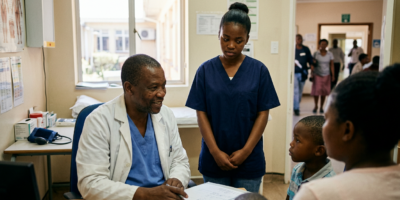
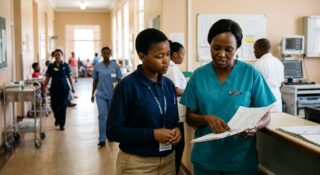
For parents, one of the most pressing questions is simple: who is with my child, and are they qualified? In responsible high school programs, on-site staff are present around the clock. They are not volunteers passing through. They are experienced coordinators, often locals or long-term residents, who speak the local language, understand the culture, and have established relationships with healthcare providers, transportation services, and local authorities.
This matters for emergencies in a very practical way. A staff member who has lived in Cusco or Nairobi for years knows which hospital to call, which roads to avoid during heavy rains, and how to communicate with local police or medical providers without confusion. That kind of embedded, local knowledge is not something a program can improvise. It is built over time through consistent operations in a given location.
During clinical observation hours, students are also supervised by local healthcare professionals who serve as preceptors. These preceptors guide what students observe, answer questions, and ensure students stay within their observational role. If a student feels unwell during a clinical session, the preceptor and on-site coordinator work together to respond immediately, whether that means a short rest, a visit to a local clinic, or a return to the program’s accommodation. As outlined in IMA’s overview of safety and supervision for teen medical interns, the combination of program staff and clinical preceptors creates overlapping layers of accountability.
It is worth emphasizing: high school students in these programs do not provide patient care. They observe. They support within clearly defined, supervised boundaries. They do not diagnose, treat, or perform procedures. This boundary is not just an ethical standard; it is also a safety measure. Students who stay within their role are far less likely to encounter situations that put them or patients at risk.
How Parents Are Contacted and Kept Informed
A program’s communication plan during an emergency is one of the clearest indicators of how seriously it takes parent involvement. The question is not just whether parents are contacted, but how quickly, through what channels, and with what level of detail.
Strong programs establish a communication tree before departure. Parents receive dedicated emergency phone numbers, typically for both the on-site coordinator and a home-office contact who can provide updates during off-hours in the parent’s time zone. If an incident occurs, the program initiates contact with parents as soon as the student is safe and the situation is assessed. This means parents should expect a direct phone call, not a text, and not an email sent hours later. The call should include what happened, what steps are being taken, and what comes next.
Between emergencies, regular communication also matters. Many programs schedule check-ins or provide parents with periodic updates on the group’s activities. Some offer a parent portal or shared communication channel where general updates are posted. While students benefit from some independence, parents of minors should always have a reliable way to reach staff directly if they have concerns between scheduled updates.
One common worry parents raise is what happens if communication infrastructure itself fails, for example during a power outage or natural disaster. Responsible programs have backup communication methods, including satellite phones or secondary phone lines, and contingency meeting points for students and staff. If you are evaluating a program, asking specifically about backup communication is a reasonable and important step. IMA addresses many of these questions directly in its parent guide to high school teen medical internships.
Insurance, Medical Evacuation, and What Coverage Actually Means
Travel insurance is not optional for a responsible teen program. It is mandatory. But not all insurance policies are equal, and families should understand what comprehensive coverage includes before departure.
At a minimum, a program should require coverage that includes emergency medical treatment abroad, emergency medical evacuation to the nearest appropriate facility or back to the student’s home country, repatriation of remains (a difficult but necessary consideration), trip interruption or cancellation, and 24-hour assistance hotlines staffed by professionals who can coordinate care across borders. The U.S. Department of State strongly recommends that all citizens traveling abroad carry medical evacuation insurance, noting that the cost of an international medical evacuation can run into tens of thousands of dollars or more.
A common misconception among families is that their domestic health insurance will cover emergencies overseas. Most U.S. health insurance plans provide limited or no coverage outside the country. Even plans that offer some international benefits may not cover evacuation, which is often the most expensive and logistically complex part of an overseas medical emergency. Good programs either include comprehensive travel insurance in their fees or require proof of adequate coverage before a student is allowed to participate.
The CDC’s travelers’ health resources also provide guidance on pre-travel health preparation, including recommended vaccinations and region-specific health advisories. A program that takes insurance and health preparation seriously will share this information proactively and verify that each student has completed appropriate medical consultations before departure.
What Medical Evacuation Actually Involves
Medical evacuation is not simply booking the next flight home. Depending on the student’s condition and location, evacuation may involve ground transport to a better-equipped hospital within the country, an air ambulance to a regional medical center, or a commercial medical escort flight back to the student’s home city. The program’s insurance and on-site staff coordinate with the insurance provider’s assistance team to determine the safest, fastest course of action.
Parents should ask programs directly: what is your evacuation protocol? Who makes the decision to evacuate? How quickly can it be initiated? Who coordinates logistics? These are fair questions, and any program that cannot answer them clearly is not ready to supervise minors abroad.
What Good Programs Guarantee, and What They Cannot
No responsible program guarantees that nothing will go wrong. Travel involves inherent risk, whether domestic or international. What a good program does guarantee is a set of commitments: vetted housing with security measures, structured transportation arranged by the program rather than left to students, 24/7 staff availability, established relationships with local medical providers, mandatory comprehensive insurance, clear emergency communication protocols, and pre-departure orientation that covers health, safety, cultural norms, and behavioral expectations.
What programs cannot guarantee includes specific outcomes like admission to medical school, a certain number of clinical hours, or the absence of any health incident. They also cannot guarantee that every moment will be comfortable. Being in an unfamiliar country, adjusting to different food, managing jet lag, and witnessing healthcare delivered with fewer resources than a U.S. hospital are all part of the experience. These challenges are valuable for building resilience and perspective, but they are real, and both students and parents should consider them honestly.
For families evaluating programs, the article on safety standards that high school global health programs should meet provides a detailed framework for what to look for and what questions to ask. Using that framework can help families distinguish between programs that have genuine safety infrastructure and those that use vague reassurances without substance.
Maturity, Readiness, and Honest Self-Assessment
Not every high school student is ready for an international program, and that is not a criticism. Maturity matters. A student who participates in a structured overseas experience needs to follow rules consistently, communicate openly with staff when something feels wrong, respect cultural boundaries, and manage the emotional demands of being far from home. These are real skills, and families should assess them honestly rather than assuming the experience itself will develop them.
Students who tend to do well in these programs are those who can follow group expectations without constant reminders, speak up when they are unwell or uncomfortable, respect the observational boundaries of their role, and approach unfamiliar situations with curiosity rather than anxiety. Parents know their children, and that knowledge is valuable in making this decision. If a student is not yet ready, waiting a year and participating later is a perfectly good outcome.
Programs also play a role here. A responsible program includes a screening or application process that assesses readiness, not just enthusiasm. It sets clear behavioral expectations before departure, reviews them during orientation, and enforces them consistently throughout the program. NAFSA’s guidelines on health, safety, and security in education abroad reinforce the importance of pre-departure preparation and the role of both families and programs in ensuring students are genuinely prepared.
Questions to Ask Before Committing to Any Program
Before a family commits to a program, there are specific questions that reveal the depth of its emergency preparedness. Ask about the staff-to-student ratio. Ask who is on call overnight. Ask what happens if a student needs to visit a hospital at 3 a.m. Ask how quickly parents are contacted in an emergency and by whom. Ask whether insurance is included or must be arranged independently, and request a summary of what the policy covers. Ask about evacuation procedures. Ask how the program monitors U.S. State Department travel advisories and what triggers a program cancellation or relocation.
A program that answers these questions readily, with specifics rather than generalities, is one that has done the work. A program that deflects, gives vague answers, or seems irritated by the questions is one to approach with caution. Families can also review IMA’s blog post on what makes a teen medical internship high quality for additional criteria to evaluate before making a decision.
Emergency preparedness is not the most exciting part of choosing a program. But for a parent sending a minor overseas and for a student stepping into an unfamiliar environment, it is the part that matters most. The right program earns trust not through promises, but through systems, transparency, and a track record of taking care of its participants when it counts.
Frequently Asked Questions
What should a program’s medical emergency plan include for high school students?
A comprehensive plan should cover medical incidents, security events, and logistical disruptions. It should specify vetted local hospitals and clinics, staff responsibilities, communication protocols with parents, backup communication methods, evacuation procedures, and mandatory travel insurance requirements. The plan should be shared with families before departure and reviewed with students during orientation.
Will my domestic health insurance cover my teen in an emergency abroad?
Most U.S. health insurance plans provide limited or no coverage for medical care outside the country, and they rarely cover medical evacuation, which can cost tens of thousands of dollars. Responsible programs either include comprehensive international travel and medical insurance in their fees or require families to arrange adequate coverage independently before the student departs.
How quickly will I be contacted if my teen has an emergency during the program?
In a well-run program, parents are contacted by phone as soon as the student is safe and the situation has been assessed. Programs should provide families with dedicated emergency phone numbers for both on-site staff and a home-office contact before the program begins. The initial call should include what happened, what steps are being taken, and what to expect next.