A dental internship in Peru does not look like a typical shadowing arrangement at a private practice back home. The daily rhythm is different, the patient population is different, and the clinical conditions you observe will likely fall outside the range of what you have seen so far. For pre-dental students trying to figure out whether this kind of experience fits their goals, the most useful thing is a clear picture of what actually happens during a given day, week, and program cycle. That is what this article provides.
Peru presents a specific kind of clinical environment. Public dental care reaches many communities, but rural and underserved areas still face real gaps in access. Dental caries remain highly prevalent, particularly among children. Periodontal disease is common in adults, often compounded by limited preventive care. According to the WHO oral health fact sheet, oral diseases affect nearly 3.5 billion people worldwide, with the heaviest burden falling on low- and middle-income populations. When you spend time in a Peruvian dental clinic, you see these patterns firsthand rather than reading about them in a textbook. That context matters, both for your understanding of global oral health and for the way you talk about your experience in dental school applications.
What the Morning Looks Like at the Clinic
Most structured dental programs in Peru begin the clinical day early. Students typically arrive at the clinic by 8:00 AM, sometimes earlier. The first activity is usually a briefing with the supervising dentist and the local dental team. This is where you hear about the day’s schedule: which patients are expected, what procedures are planned, and what each student’s role will be during those appointments.
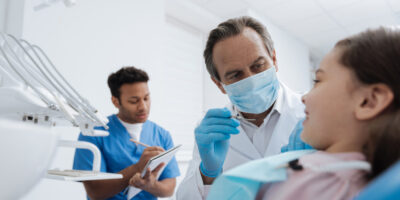
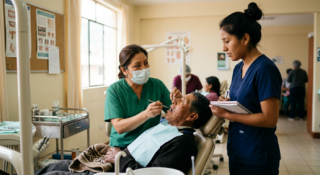
After the briefing, the clinical session begins. Mornings are often the busiest part of the day, with back-to-back patient appointments. You may observe a range of procedures depending on the clinic, including extractions, restorations, cleanings, and occasionally root canal treatments. In public or community-based clinics, extractions and fillings tend to make up a significant portion of the caseload, reflecting the needs of the patient population.
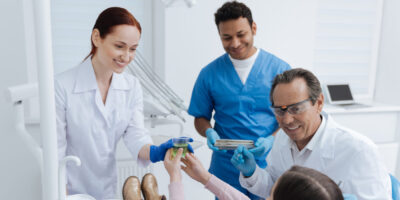
Your role during these sessions is to observe closely and assist within clearly defined boundaries. That might mean helping prepare materials, organizing instruments before and after sterilization, or providing chairside support as directed by the supervising dentist. You are not performing procedures. You are positioned to watch technique, ask questions at appropriate moments, and understand the clinical reasoning behind each decision. This kind of supervised exposure is exactly what programs like IMA’s are designed to offer. If you want a broader sense of how dental experiences abroad compare to other structured options, the IMA blog has a useful post on internship, externship, and volunteering opportunities for dental students that breaks down the differences.
Afternoon Sessions, Outreach, and Patient Education
The afternoon schedule varies more than the morning. Some days follow the same clinical structure, with additional patient appointments running from roughly 1:30 PM to 4:30 PM. Other days include community outreach activities, especially in programs that partner with schools or local organizations.
Community outreach typically involves oral health education. You might visit a school and teach children about brushing technique, the role of diet in cavity prevention, or when to seek dental care. These sessions are usually planned in advance and supervised by both the dental team and IMA staff. They require you to communicate clearly, often through a translator or with basic Spanish, and to think about how to make health information accessible to a young audience. That skill, translating clinical knowledge into something a patient or community member can use, is central to clinical practice and something dental school admissions committees consistently want to see evidence of.
Some afternoons also include time for case discussion. After patients have been seen, the supervising dentist may walk students through what was observed that day: why a particular treatment plan was chosen, what the alternatives were, what the patient’s history suggested. These informal teaching moments are where a lot of the real learning happens. They also give you practice articulating clinical thinking, which directly supports your ability to write and speak about dentistry with specificity later on.
How Language Factors Into the Daily Experience
Most dental clinics in Peru operate in Spanish. Programs typically provide translation support so students can follow conversations and understand patient interactions, but having at least a basic working knowledge of Spanish makes the experience significantly richer. You do not need to be fluent. But if you can greet patients, understand simple instructions, and follow the general flow of a conversation, you will feel more engaged and more useful.
Language also matters for patient education. If you are helping explain oral hygiene practices to a group of schoolchildren, even a few phrases in Spanish build trust and demonstrate respect. For students who do not speak Spanish at all, the experience still works; you just rely more heavily on observation during patient encounters and on translation during outreach. Either way, you come away with a clearer understanding of how language shapes clinical communication, a theme that will come up repeatedly in dental school and in practice.
What You Actually See Clinically, and Why It Matters
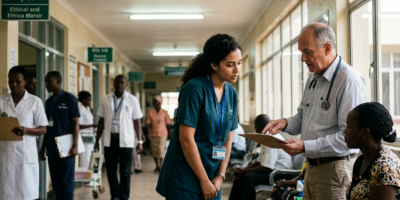
The clinical conditions you encounter in a Peruvian dental setting are likely to be different from what you have observed domestically. In many of the communities where these programs operate, patients present with advanced dental caries, significant periodontal disease, and conditions that have gone untreated for months or years. You may see teeth that need extraction because restorative options are no longer viable. You may see children with extensive decay that reflects both dietary patterns and limited access to fluoride or preventive care.
This is not presented to shock you or to frame the experience as dramatic. It is presented because these are the clinical realities that shape oral health globally, and understanding them is part of becoming a thoughtful dentist. The ADEA official site outlines competencies that dental schools expect applicants and students to develop, including cultural competency, ethical reasoning, and an appreciation for health disparities. Spending time in a setting where those disparities are visible, and where you can see how local providers respond to them, gives you something concrete to reflect on.
You may also notice differences in clinical workflow and resource availability. Clinics may not have the same equipment or materials you have seen in US settings. Watching a dentist adapt their approach based on what is available teaches you something about clinical judgment that goes beyond any single technique. It also helps you develop a more grounded understanding of what dentistry looks like outside of well-resourced environments.
The Role of Supervision, Boundaries, and Ethical Practice
One of the most important things to understand about a structured dental internship abroad is where the boundaries are. You are not practicing dentistry. You are observing and assisting under the direct supervision of a licensed dentist. This is not a limitation; it is the correct and ethical structure for a pre-dental student in a clinical setting.
IMA programs are built around professional supervision. The supervising dentist determines what tasks are appropriate for students based on the student’s level of training, the clinical situation, and local regulations. You will not be asked to perform procedures you are not qualified to perform. You will not be left unsupervised with patients. This structure protects both you and the patients you are there to learn from.
For students who want to understand what responsible clinical programs look like in practice, the IMA blog covers safety standards in international clinical programs in more detail. Infection control is another area where you will gain practical awareness. Clinics follow sterilization and PPE protocols, and you will be expected to follow them as well: gloves, masks, proper handling of sharps, and careful hygiene practices. These are habits that carry directly into dental school and clinical rotations.
Ethical practice also means respecting patient autonomy and confidentiality. You will see patients who may be meeting a dental professional for the first time in years. Treating those interactions with respect, patience, and genuine care is not optional. It is the baseline expectation.
How This Experience Connects to Dental School Preparation
A dental internship in Peru does not replace the academic prerequisites for dental school. It does not substitute for DAT preparation, coursework in biology and chemistry, or the formal application process. What it does is add a dimension to your profile that coursework alone cannot provide.
Dental school admissions committees, as reflected in guidance from the ADEA’s resources for applicants, consistently value applicants who demonstrate genuine engagement with clinical settings, an understanding of underserved populations, and the ability to reflect meaningfully on their experiences. A structured international dental experience gives you material for your personal statement, interview responses, and secondary essays that goes beyond “I shadowed a dentist for 50 hours.” You can speak to specific clinical encounters, describe how you saw providers make decisions under constraints, and articulate what you learned about your own readiness for the profession.
That said, the experience is only as useful as the reflection you put into it. Students who take notes each day, ask questions during debriefs, and think critically about what they observe will get more out of the experience than those who treat it as a checkbox. If you are wondering how to approach any pre-health internship with that kind of intentionality, the IMA blog has practical advice in a post about making the most of a pre-med internship abroad that applies equally well to dental students.
What to Write Down and What to Reflect On
Keep a daily log. Record the procedures you observed, the conditions patients presented with, and any clinical reasoning the supervising dentist shared. Note moments that surprised you, challenged your assumptions, or made you think differently about access to care. Write down specific interactions, not general impressions.
When it comes time to write application essays or prepare for interviews, these notes become your source material. Admissions readers respond to specificity. Saying “I observed an extraction of a severely decayed molar in a patient who had not seen a dentist in over three years, and the supervising dentist explained why preservation was no longer an option” is far more compelling than “I gained exposure to dental care in an underserved setting.”
Also reflect on what was hard. Maybe the language barrier frustrated you. Maybe seeing the extent of untreated disease was difficult. Maybe you felt uncertain about your own readiness for clinical work. Those honest reflections, when processed thoughtfully, show maturity. Dental schools are not looking for students who pretend everything was easy. They are looking for students who can sit with complexity and keep moving forward.
Setting Realistic Expectations Before You Go
The most common source of disappointment in any international clinical experience is a mismatch between expectations and reality. If you arrive in Peru expecting to perform procedures, you will be frustrated. If you arrive expecting a US-standard clinic with the latest technology, you will be caught off guard. If you arrive expecting to become fluent in Spanish in two weeks, that will not happen either.
What you should expect is this: a structured, supervised environment where you observe real clinical care, interact with patients and staff in a cross-cultural setting, participate in community health activities, and develop a much more grounded understanding of what dentistry looks like in a global context. You should expect early mornings, long days, moments of uncertainty, and the kind of learning that happens when you pay close attention to something you care about.
You should also expect logistical realities. Housing is arranged through the program, but it will not be a hotel. Meals may be simple. Transportation may be different from what you are used to. These are not hardships; they are part of the experience of being in a different country and working in a different system. Students who approach these details with flexibility tend to get more out of the program overall.
How to Decide If Peru Is the Right Fit
Not every destination is right for every student. Peru is a strong fit if you are genuinely interested in oral health disparities, if you want clinical exposure in a public health context, and if you are comfortable with the idea of working in a setting where resources are limited and patient needs are high. It is also a good fit if you have some interest in Spanish or Latin American culture, even if your language skills are still developing.
If you are primarily looking for exposure to high-tech specialty procedures or a clinical environment that mirrors a US private practice, this is probably not the right match. That is not a criticism of either setting. It is about fit. The right experience is the one that aligns with your goals, your readiness, and what you want to bring to your dental career.
Frequently Asked Questions
Will I be able to perform dental procedures during a dental internship in Peru?
No. Pre-dental students observe and assist under the direct supervision of a licensed dentist. You will not perform procedures independently. Your role involves watching clinical care, assisting with preparation and organization, participating in patient education, and learning through guided observation and debriefs. This is the appropriate and ethical structure for students who have not yet entered dental school.
Do I need to speak Spanish to participate?
You do not need to be fluent, but basic Spanish skills are helpful. Programs typically provide translation support so you can follow patient interactions and clinical discussions. Having some familiarity with Spanish, even at a beginner level, will make communication easier and help you connect more naturally with patients and clinic staff.
How does a dental internship in Peru strengthen a dental school application?
It provides concrete, specific clinical exposure in an underserved setting, which gives you material for personal statements and interviews that goes beyond standard domestic shadowing. You can speak to real patient encounters, describe how providers made clinical decisions under resource constraints, and demonstrate cultural competency and ethical awareness. However, no experience guarantees admission; its value depends on how thoughtfully you engage with and reflect on it.