
To choose a pre-med internship, compare specific programs on five things: supervision, setting, schedule, documentation and in-country support. In a survey of medical schools by an AAMC admissions committee, 73% highly recommended or required clinical observation experience, so the right internship is one that gives you real learning within appropriate limits.
If you are still deciding which kind of experience you need, start with our guide to what internships a pre-med student should do. This article assumes you know the type of experience you want and now need to judge individual programs.
Key Points
- Define what “fit” means for you before you compare destinations or programs.
- Supervision and clear limits matter more than how much a program promises you will do.
- Ask for evidence in writing: schedules, supervision, hour logs and a safety policy.
- Admissions committees look for consistency, variety, reflection and maturity, not a total number of hours.
- The best programs leave room for coursework and MCAT preparation.
- No program can guarantee admission to medical school, and a good one says so.
Why Internships Matter for Pre-Med Students
Building Clinical Exposure
Medical schools want to see that you have tested your interest in medicine firsthand. An executive summary from the AAMC Group on Student Affairs Committee on Admissions, based on a survey completed by 43% of AAMC member schools, reported that 73% of schools highly recommend or require applicants to have clinical observation experience. The same summary reported that 87% of respondents said applicants without clinical experience may be disadvantaged.
Shadowing is not the only route. The AAMC’s fact sheet on five ways to gain experience without shadowing reports that 87% of survey respondents accept an alternate activity, and it lists hospice volunteering, work as a certified nursing assistant, volunteer EMT work, hospital scribing and caring for an ill family member.
Gaining Perspective on Patient Care
A good internship lets you watch medicine from the inside. You see how physicians explain a diagnosis, how nurses and doctors hand off information and how a team decides what to do when the first plan does not work. Watching those moments closely builds the communication skills, compassion and resilience that admissions officers look for, even when your own role is to observe.
Strengthening Your Application
Your application asks you to explain why you want to practice medicine. Specific moments from an internship give that answer credibility. A short scene you watched on a ward, the question you asked afterward and what it changed in your thinking will say more than a list of departments. The same experiences give you material for interviews and help a supervising clinician write a detailed letter if you stay in touch.
Define Fit Before You Compare Programs
What Does Fit Mean for a Pre-Med Internship?
Fit means the program answers a question you actually have. Write down your main goal before you open a single program page. Common goals include:
- Confirming that you want to work in clinical medicine at all
- Seeing a particular specialty or setting, such as emergency medicine or maternity care
- Building research experience alongside clinical exposure
- Understanding how care works with fewer resources than a U.S. hospital
A program that suits one goal may be wrong for another. A research fellowship will not show you a busy emergency department, and a hospital observation program will not produce a publication.
A Worked Example
Consider a hypothetical sophomore, Maya, who wants to confirm her interest in emergency medicine before committing to the MCAT. She compares two options. The first is a lab position on campus with flexible hours. The second is a four-week hospital observation program with a published schedule, a named mentor and rotations that begin in the emergency department. For her goal, the second program fits better, even though the lab job is closer to home. If her goal were research experience, the choice would reverse.
Supervision: The First Thing to Check
Who Supervises You Day to Day?
Ask who you will be with in the hospital, who sets your schedule and who you can go to with a question or a concern. A specific answer, such as a named mentor role and a licensed clinician in each department, is a good sign.
Ask equally clearly what you will not do. The same AAMC admissions committee summary reported that 45 to 50% of responding schools described applicant involvement in invasive procedures in international settings as harmful to, or of no value to, an application. That concern persisted at 35 to 40% even when a health professional supervised the procedure. A program that offers procedures to pre-med students is a risk to patients and to your application.
Setting, Schedule and Length
How Many Hours a Day Will You Spend in the Hospital?
Look for a published daily schedule. Hours in the hospital, time for teaching and time for reflection should all be visible. If you are balancing coursework or MCAT preparation, check whether the schedule leaves room for it.
Consider the setting too. A teaching hospital shows you rounds, handoffs and many specialties. A community clinic shows you prevention, follow-up and the practical barriers patients face. Both are useful, and many students benefit from seeing each. If you are still choosing between professions, start with our guide to picking a pre-health internship when you are undecided.
Length matters less than continuity and reflection. A shorter program with daily supervision and structured teaching can teach more than a longer one where you mostly wait. Our guide to clinical hours for medical school explains how schools look at hours.
Documentation You Should Request
What Records Will You Leave With?
Before you commit, ask what you will receive at the end. Useful records include a signed hour log, a certificate of completion and the name and credentials of the clinicians who supervised you, in case you later need a letter.
Be realistic about how those hours will be used. Each medical school decides how to classify an experience, and observation does not automatically count as direct patient care. Academic credit is your university’s decision. Our guide to shadowing hours for medical school covers how to describe observation honestly.
Safety and In-Country Support
Who Helps You When Something Goes Wrong?
Supervision in the hospital is only half of the picture. Away from the wards you also need a safe place to live, reliable transport and someone to call at any hour. Ask each program:
- Who meets you on arrival, and who is your daily point of contact?
- Where will you live, and how is the residence secured?
- How do you get to and from the hospital each day?
- Who is on call at night and on weekends, and how can your family reach the program?
- What happens if you become ill, and what medical insurance applies while you are abroad?
- Does orientation cover hospital safety and infection control before your first rotation?
A program that answers these questions in writing has planned for the days that do not go to plan. Vague answers are a reason to keep looking.
Evidence to Request Before You Commit
| What a program claims | Evidence to ask for |
|---|---|
| “Structured clinical experience” | A sample weekly schedule by department |
| “Supervised by licensed clinicians” | Who supervises, and how often you meet a mentor |
| “Ethical and safe” | Written limits on student activity and a safety policy |
| “Hours that count” | A sample signed hour log and a clear statement that schools classify hours |
| “Fully supported” | Who is on call around the clock, how housing is secured and how families can reach staff |
| “Strengthens your application” | No promise of admission, and examples of what students reflect on |
What Admissions Committees Look For
Admissions officers are not just counting hours. When they read about an internship, they are weighing four things:
- Consistency: Did you keep up clinical and service experience over months or years, rather than in one short burst?
- Variety: Did you see more than one specialty or care setting?
- Reflection: Can you explain how the experience shaped your decision to pursue medicine?
- Maturity: Did you stay within your role and respect ethical boundaries?
An internship that lets you show all four will stand out more than one where you simply logged time. Choose programs that make reflection part of the week, and keep notes you can draw on later.
Types of Pre-Med Internships
Hospital and Clinical Observation Programs
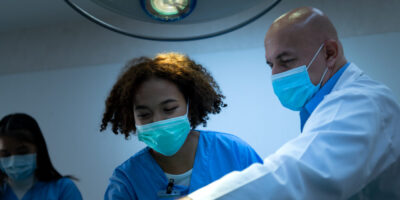
These place you beside physicians in hospitals or clinics. They are the most traditional option and often the easiest to find. Expect to observe consultations, rounds and procedures from an appropriate distance, with supervision keeping you within limits. The exposure is broad, which makes these programs a good first step if you are still testing your interest.
Research Internships
Research programs build analytical skills and show academic curiosity, and some lead to posters or presentations. Well-known examples include the Mayo Clinic Summer Undergraduate Research Fellowship, a 10-week program at three campuses for current college students, and Stanford’s SIMR program, an eight-week program for high school juniors and seniors. Many university hospitals, medical schools and federal research agencies run their own summer programs, so check eligibility and deadlines on each official site.
Our directory of pre-med internships lists more, and our guide to research hours for medical school explains how they fit an application. Pairing research with clinical exposure gives admissions committees a fuller picture than either alone.
Global Health Internships
Programs abroad show you care delivered with different resources, languages and systems. You may see conditions that are rare in U.S. hospitals and watch clinicians adapt when equipment or staff are limited. They are valuable when they are supervised, observation-based and honest about what students can contribute. Our guide to ethical global health internships lists the questions to ask.
Community Health Internships
Free clinics, mobile health programs and nonprofits expose you to underserved populations and show a commitment to service, which many medical schools value.
The Value of International Internships
An internship abroad adds a different angle to your application. You learn how a public hospital runs with heavy patient loads, how culture and economics shape the decisions patients make and how to communicate when you do not share a first language. Those lessons show admissions committees that you can adapt to unfamiliar environments and think about health beyond one system.
International experience is most valuable when it emphasizes supervision, ethics and appropriate roles for pre-health students. Observing physicians, joining structured community health work and meeting a mentor regularly keep the experience safe for patients and useful for you. It works best alongside clinical experience at home, not instead of it.
How IMA’s Program Answers These Questions
IMA’s pre-med internships abroad place interns in teaching hospitals in Mombasa, Kenya and Cusco, Peru. According to the program page:
- Stays start at two weeks. Kenya runs year-round for 2 to 12 weeks, and Cusco runs fixed sessions of two to four weeks.
- A physician-led orientation comes first, covering the local health system, safety and infection control. Rotations of one department a week follow, for six to eight hours a weekday.
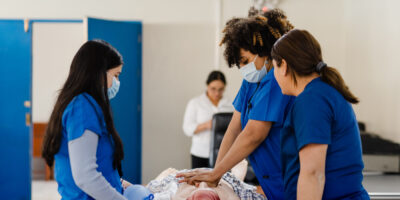
- Clinical simulations, a Global Health Lecture Series, community medical clinics and hygiene education in local schools fill the rest of the week.
- A Program Mentor checks in daily and meets each intern one-on-one every week.
- Interns live in a gated program residence with daily transport, staff are on call 24/7, and families have a single U.S. point of contact.
- Interns follow the AAMC guidelines for premedical students abroad and do not diagnose, prescribe or perform procedures.
- Hours are logged and signed, and the page states that no program can guarantee medical school admission.
Kenya’s wards run largely in English, with medical Swahili lessons. In Cusco the wards run in Spanish, and the program page asks for at least two years of Spanish study. Current session dates are on the program dates page.
Applying What You Learn
Once you have chosen, plan how you will use the experience. Keep notes each day, ask for feedback from your mentor and write a short reflection each week. Our guide to building a strong pre-med internship application covers the application side.
Related Opportunities for High School Students
If you are still in high school, you can start earlier than many people think. IMA offers structured high school medical internships abroad where students shadow physicians, observe patient care and learn about global health under close supervision.
Final Thoughts
An internship is more than a line on your application. It is a chance to confirm that medicine is right for you and to build the habits of observation and reflection you will use for the rest of your career. Whichever type you choose, pick a program by its supervision, structure and honesty, stay within your role and write down what you learn while it is fresh. That combination will strengthen your application and your confidence in the path ahead.
Frequently Asked Questions
Do I Need an Internship to Get Into Medical School?
No single internship is required, but many schools strongly prefer clinical exposure. An AAMC admissions committee survey reported that 73% of responding schools highly recommend or require clinical observation experience.
How Many Clinical Hours Should I Aim For?
There is no universal number. Consistent, well-described experience matters more than a total. Our clinical hours guide explains how schools look at hours and how to plan them.
Are International Pre-Med Internships Worth It?
They can be when they are supervised, observation-based and honest about student limits. Many admissions officers view invasive procedures by pre-med students abroad as harmful to an application.
Can a Research Program Count as an Internship?
Yes. Research internships show analytical skills and curiosity. Pairing research with clinical exposure gives admissions committees a fuller picture of your interests.
Should I Do Several Short Internships or One Longer One?
Depth usually matters more than the number of programs. Choose experiences you can describe in detail and reflect on honestly.
Can an Internship Guarantee Medical School Admission?
No. Each school makes its own decisions, and a trustworthy program will say clearly that it cannot guarantee admission.