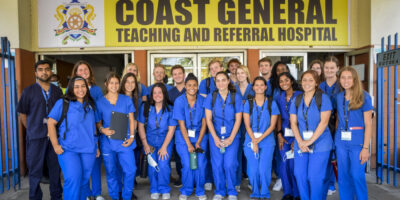
After a pre-med program ends, do four things within two weeks: thank the people who taught you, write down what you saw and learned while it is fresh, collect contact details and any certificate or letter, and choose your next step. Over the following months, stay in touch with mentors and fellow participants, list the program on your applications with specific details, and build on it with a school-year activity or a second program with more responsibility, such as one of the medical summer programs for high schoolers that include research or hospital time.
The medical industry encompasses several fields, although the skills required in the different healthcare professions are often the same. Skills like patient care, understanding regulations, data analysis, and operating medical tools are universally needed. So are soft skills like time management, communication, leadership, and critical thinking.
If you want to become part of the over 18 million workers in the healthcare sector, strive to develop such skills as early as possible. As a high school student, you can access pre-med programs to determine whether a career in the sector is worth pursuing.
Here is how pre-med programs help you gain and enhance the skills that improve your future career and life, and what to do once a program ends.
Understanding Pre-Med Programs
According to the American Association of Medical Colleges or AAMC, only 36% of medical school applicants were accepted in 2022.
Participating in a pre-med program for high school students helps increase your chances of being accepted to the school of your choice. These short-term programs are offered in different settings, including schools, hospitals, laboratories, and research centers. Some organizations facilitate medical internships abroad, even for high school students.
Often, these programs are a mix of lectures and seminars, with hands-on training included. Some programs are focused on research studies, with participants forming part of a research team, while others require young students to perform clerical and basic clinical work. Ultimately, these programs offer hands-on training and experience in multiple medical fields.
How to Network and Grow As a Pre-Med Program Participant
The healthcare sector is one of the fastest-growing industries worldwide. In the United States alone, 58,000 healthcare jobs were added in January 2023, according to the Bureau of Labor Statistics (BLS). The agency likewise reported that, on average, 47,000 jobs were added to the monthly in 2022. These figures indicate a great demand for medical workers, making it an attractive profession for young people.
Here are some tips to ensure a successful path toward your chosen high school pre-med program career growth:
1. Connect with Mentors, Teachers, and Fellow Students
High school pre-med program networking is crucial to increase your chances of acceptance. Program applicants must submit reference letters from academic contacts who can attest to their internship qualifications. If you haven’t established good relations with your science advisor or school administrator, they’re unlikely to support your application.
But the networking opportunity doesn’t end there. After getting in, attend lectures and seminars conducted by professors and medical practitioners. Absorb the lessons and theories shared and participate in discussions actively to get noticed. Who knows, they might be interested in mentoring you.
Similarly, talking with your fellow participants helps you make new friends, enrich your knowledge, and establish lasting relationships with fellow students and alums.
Some programs offer a complete package, where participants receive professional development workshops and guidance in their college applications and navigating medical schools, all of which effectively help in building relationships in healthcare.
2. Grab Every Opportunity to Learn Invaluable Career and Life Lessons
Most pre-med programs last a few weeks, so find every opportunity to learn from every activity. Signing up for a college-based program, you’d experience the life of a medical student and witness the university’s culture. You can then decide whether the program and the school are right for you or if it’s best to move forward with another school or career path.
For your hands-on training and simulations, you’ll discover how to handle difficult patients and challenging situations, especially if you’re in a developing country. Such experience will stick with you for life and make you a better person. Eventually, the lessons learned can also shape your career as a healthcare worker.
3. Be Independent But Work With a Team
Being independent and mature are two of the best indicators you’re growing through pre-med programs. Whether inter-state or overseas, a pre-med program will teach you to solve problems and deal with situations independently.
Almost all settings, from laboratory studies, dissections, case studies, and other projects, require at least two people or a small group to complete, so you must be a team player and a good leader. Doing so can be applied in almost all work settings, whether you decide to pursue a medical career or not.
4. Hone Your Critical-Thinking Skills
Critical thinking should be inherent to all medical practitioners, who use it daily to improve their services and patient outcomes. Doctors need it to form diagnoses about a patient’s sickness, later validating them through diagnostic and screening procedures. Nurses likewise require critical thinking to address patients’ problems and develop the best interventions for patient care.
The same can be said for high school students taking completing pre-med programs, as they’re expected to ask questions and dive deeper into their understanding of current health and medical issues.
What Should You Do Right After a Pre-Med Program Ends?
The first two weeks after a program matter most, because names, cases and details fade quickly. Use this checklist before school starts again:
- Send thank-you notes or emails to the clinicians, instructors and staff who taught you. Mention one specific thing you learned from each person.
- Write a reflection of one to two pages: the three moments that stayed with you, what surprised you and what you want to learn next.
- Save your certificate, schedule, the departments or labs you worked in and the total hours, so you can describe the program accurately later.
- Collect contact details for your mentor and two or three fellow participants, with permission.
- If a mentor or supervisor knew your work well, ask whether they would be willing to write a recommendation later, and send them a short summary of what you did.
How Do You Use a Pre-Med Program’s Alumni Network?
Treat the alumni network as a group of people a few steps ahead of you. Ask program staff whether there is an alumni list, newsletter or reunion event, and reach out to past participants who are now in college pre-med or medical school with one specific question. Long-running programs have large networks: Stanford’s Medical Youth Science Program counted more than 700 alumni by its 30th year, many of them now in health professions.
Fellow participants are part of the network too. Students you met in a lab, a simulation group or on a hospital rotation will apply to college and medical school at the same time you do, and they are often the best source of news about programs, deadlines and opportunities.
When Should You Ask for a Recommendation Letter?
Ask while the program is fresh, ideally in the last week or within a month of finishing, even if you will not need the letter for a year. Give your recommender your dates, what you worked on and two or three things you hope they can speak to. Some programs build this in: every student in IMA’s high school medical internship receives a personalized, physician-authored recommendation letter along with a certificate of completion.
How Do You List a Pre-Med Program on a College Application?
List it in the activities section with the program name, your role, dates, hours and one line on what you did. The Common App gives you 50 characters for your position, 100 for the organization and 150 for details, so lead with verbs and specifics: the departments you rotated through, the skills you practiced or the project you presented. Save the full story for an essay if it shaped why you want to study medicine.
What Comes Next After Your First Pre-Med Program?
Build on the program rather than repeating it. If your first program was a one-week academy, the next step might be steady hospital volunteering during the school year, a research internship or a multi-week hospital program. If it was a research program, add patient-facing experience. These guides cover each step:
- Pre-med programs for high schoolers during the school year
- Pre-med mentorship programs for high school students
- How to get into a competitive summer medical program
- What to expect from a summer medical internship, day by day
Frequently Asked Questions
How soon after a pre-med program should I send thank-you notes?
Within a week. A short, specific note sent while people still remember you is more useful than a long one sent a month later, and it keeps the door open for a recommendation or future questions.
Should I do the same pre-med program twice?
Usually it is better to choose a new program that adds responsibility or a different setting, such as research after a classroom academy or hospital time after a research program. Returning makes sense when the program offers an advanced level or a new role, such as a peer mentor.
Can I stay in touch with a physician I met during a program?
Yes, if you keep it professional and occasional. Send a short update a few times a year about what you are doing and what you learned, and ask a specific question when you have one. Many mentorships grow out of this kind of follow-up.
Final Thoughts
A medical career isn’t for everyone, and a pre-med program will help young students decide whether to pursue a healthcare profession. Besides helping hone young students’ skills, participating in one increases their chances of admission exponentially. Most importantly, it helps build their character no matter which path they choose.