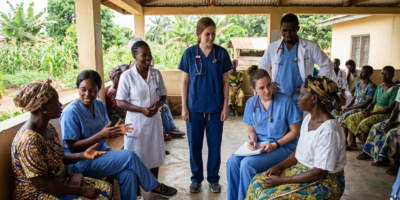
When your teenager asks to spend part of their summer in a clinical setting overseas, your first reaction is probably a mix of pride and worry. That instinct to ask hard questions before saying yes is exactly the right one. Knowing what parents should ask before overseas placement is the difference between sending your child into a well-run, structured program and making an expensive, stressful mistake. The number of medical summer internships for high school students has grown substantially in recent years, and not all of them meet the same standards for safety, supervision, or ethical engagement. Your job is to separate the serious programs from the ones that look good on a website but fall apart on the ground.
The good news is that strong programs do exist, and they welcome tough questions from parents. In fact, the willingness of an organization to answer your questions in detail, without deflecting or getting vague, is itself one of the most reliable signals of quality. The best medical internships for high school students are designed with the understanding that these are minors, that clinical settings carry real responsibilities, and that parents deserve transparency. This article gives you a concrete set of questions to ask any program before you approve your teen’s participation, organized around the areas that matter most: safety, supervision, clinical boundaries, housing, communication, and ethical standards.
Questions About Supervision Structure and Staff-to-Student Ratios
The single most important thing to understand about any overseas program for minors is who is responsible for your child, at every point in the day. Do not accept vague answers like “our staff is always nearby.” You need specifics.
Ask the program to describe the exact supervision structure. How many staff members accompany students during clinical placements? Is there a dedicated program coordinator in-country whose sole job is managing the student experience, or is supervision shared with other duties? What is the staff-to-student ratio during clinical hours, during travel, and during free time? A strong program will have a clear, multi-layered system: local clinical supervisors such as doctors and nurses at the placement site, plus program-specific coordinators who are not part of the hospital staff and whose primary responsibility is the students.
Ask what happens during non-clinical hours. Is there a curfew? How is it enforced? Are students ever left unsupervised in the evenings or on weekends? For high school students, the answer should be that structured supervision is constant, with minimal unsupervised time. If a program describes significant blocks of unstructured free time for minors in a foreign country, that is a red flag. A helpful resource on this topic is IMA’s guide for parents, which covers safety and support expectations for teen medical internships in detail.
Questions About Emergency Protocols and Health Precautions
No parent wants to think about emergencies, but this is exactly where preparation matters most. Ask the program to walk you through its emergency protocols step by step. What happens if your child gets sick? Who is the first point of contact? How quickly can they access medical care, and at what kind of facility? Is there a local physician or clinic designated for non-emergency health concerns among students?
Go further. Ask about evacuation plans. If there is a natural disaster or a security incident, what is the procedure? Does the program carry emergency evacuation insurance, or is that the family’s responsibility? Does the program require travel health insurance, and if so, what does it need to cover? The CDC’s Travelers’ Health page is a useful starting point for understanding the vaccinations and health precautions recommended for specific regions, and any serious program should provide pre-departure health guidance that aligns with current CDC recommendations.
Ask about transportation. How do students get from their housing to the clinical site each day? Are vehicles program-vetted, with known drivers, or are students expected to arrange their own transport? For minors, program-arranged transport with staff present should be standard.
Finally, ask about the program’s relationship with the U.S. Department of State’s international travel resources. Does the program monitor travel advisories for its destinations? What level of advisory would trigger a program cancellation or modification? A responsible organization will have clear thresholds and will not send students into regions with active safety warnings.
Questions About Clinical Boundaries and What Students Actually Do
This is the area where parents need to be most direct, because it is also the area where some programs are most likely to exaggerate. Ask the program to describe, in concrete terms, what your high school student will do in a clinical setting on a typical day.
For minors, the answer should center on observation and structured learning. Your teen should be shadowing physicians, nurses, and other healthcare professionals during rounds, consultations, and community outreach. They should be learning about diagnostic processes, disease patterns, and public health challenges specific to the region. Under direct supervision, they may assist with very basic support tasks, such as helping organize supplies or observing patient intake. But they should never be diagnosing patients, administering medications, performing procedures, or providing unsupervised care of any kind. If a program implies that high school students will be doing hands-on clinical work, walk away. That is not safe, not ethical, and not legal in most jurisdictions.
Ask about informed consent. Are patients at the clinical site made aware that student observers will be present? Do patients have the option to decline? A program that takes this seriously will have a clear process for ensuring that patients consent to the presence of learners.
Ask how the program handles confidentiality. Students will observe real patients with real health conditions. Are students trained on confidentiality expectations before they enter a clinical setting? Are there clear rules about what can and cannot be discussed outside the facility, and about photography? IMA’s blog post on confidentiality and respect in sensitive clinical settings for teen interns outlines the kind of training and expectations that should be standard.
How to Spot Ethical Red Flags
Pay attention to how a program describes the student’s role in its marketing materials. Language like “make a real impact on patients’ lives” or “practice medicine in a developing country” should raise serious concerns when applied to minors. Ethical programs are clear about the observational nature of the experience and frame the value in terms of learning, perspective, and professional development, not in terms of what the student will do to or for patients.
Also ask whether the program’s presence benefits the local healthcare facility or creates a burden on it. Strong programs work in genuine partnership with local institutions, where the facility welcomes learners because the arrangement is mutually respectful. Programs that rotate large numbers of untrained students through understaffed clinics without clear educational structure risk disrupting care rather than supporting it. For a broader look at what responsible engagement looks like, the WHO’s fact sheets on health workforce challenges provide useful context on the realities facing healthcare systems in lower-resource settings.
Questions About Housing, Daily Structure, and Communication with Parents
Where your child sleeps, eats, and spends their evenings matters as much as what happens during clinical hours. Ask the program to describe the housing arrangement in detail. Is it a vetted host family, a guesthouse, or a dormitory-style setup? What security measures are in place? Are there locks, security personnel, or house rules? Who else lives in or uses the facility?
If the program uses host families, ask how those families are selected and vetted. How long has the program worked with each family? Is there a process for addressing problems, such as a student feeling uncomfortable or unsafe in a particular household?
Ask for the daily schedule. A well-structured program will have a clear plan for every part of the day, from morning travel to clinical observation, from afternoon educational sessions or cultural activities to evening debriefs and a set curfew. Structured debriefing is especially important for high school students. Observing healthcare in resource-limited settings can be emotionally challenging, and regular group discussions led by trained staff help students process what they see in a healthy, supported way.
Communication is another critical area. Ask how and how often your child can contact you. Will they have access to Wi-Fi, a local SIM card, or a program phone? What is the protocol for parent communication in an emergency? Who contacts you, and how quickly? A reliable program will have a designated parent contact and a clear communication plan that does not leave you guessing for days at a time.
Questions About Pre-Departure Preparation and Maturity Assessment
A strong program does not just accept students and put them on a plane. Ask what happens between enrollment and departure. Is there a pre-departure orientation, and what does it cover? It should include safety protocols, cultural norms, health precautions, clinical expectations, confidentiality rules, and behavioral guidelines. Students should arrive in-country already understanding what is expected of them.
Ask whether the program assesses student readiness as part of its application or enrollment process. Research from the National Institutes of Health confirms that executive functions like planning, impulse control, and decision-making continue developing well into the mid-twenties. For high school students, this means that structure and supervision are not optional extras; they are essential. A program that does not screen for maturity, or that accepts any student willing to pay, is not taking the experience seriously.
As a parent, be honest with yourself about your teen’s readiness. Can they follow rules consistently, even when adults are not watching? Can they handle being away from home for an extended period? Can they cope with seeing patients in difficult circumstances without becoming overwhelmed or acting impulsively? These are not criticisms of your child; they are practical considerations that affect both safety and the quality of the experience. For parents looking at the broader picture of how to evaluate programs, understanding the safety standards high school global health programs should meet is a strong starting point.
What Maturity Looks Like in This Context
Maturity for a high school intern abroad does not mean acting like an adult. It means being able to follow instructions, respect boundaries, ask questions when confused, manage discomfort without shutting down, and treat local staff, patients, and peers with consistent respect. If your teen is still working on some of these skills, that does not mean they can never participate. It may mean that this particular summer is not the right time, or that a shorter, closer-to-home experience would be a better first step.
Questions About Cost, Value, and What the Program Does Not Include
Ask for a full, itemized breakdown of costs. What is included in the program fee, and what is not? Common exclusions include flights, travel insurance, vaccinations, visa fees, and personal spending money. Knowing the total out-of-pocket cost upfront prevents surprises.
Then ask about value. What does your teen actually receive for the price? A strong program should offer structured clinical observation, educational sessions, cultural programming, supervised housing, in-country transportation, pre-departure preparation, daily support from trained staff, and post-program documentation such as a letter or certificate of completion. If a program charges a significant fee but cannot clearly articulate what it provides beyond “the experience,” that is worth questioning.
Ask whether the program provides any documentation that your teen can use later, such as a supervisor evaluation or a letter confirming the hours and nature of their participation. This kind of documentation is useful when students eventually apply to college or professional school, because it gives them a credible reference point for describing what they did. That said, no single experience guarantees admission anywhere, and any program that implies otherwise is overpromising. What matters is the quality of the experience and the student’s ability to reflect on it honestly.
A Final Word on Trusting Your Judgment
You do not need to be a global health expert to vet a program effectively. You need to ask clear questions and expect clear answers. Programs that welcome your scrutiny, provide detailed responses, and make supervision and safety a visible priority are the ones worth your trust and your teen’s time. Programs that get defensive, vague, or impatient when parents ask hard questions are telling you something important.
Your teen’s interest in healthcare is worth supporting. The fact that they want to see how medicine works in a different context, with different resources and different challenges, reflects genuine curiosity and ambition. Your role is to make sure the program they join respects that ambition by keeping them safe, setting appropriate boundaries, and giving them something real to learn from. For more on what makes a teen medical internship high quality, IMA’s detailed breakdown is worth reading before you make a final decision.
Frequently Asked Questions
Should I be concerned if a program says my high school student will do “hands-on” clinical work?
Yes. For high school students, clinical involvement should be observational and closely supervised. Students may assist with very basic tasks like organizing supplies under direct supervision, but they should never perform procedures, administer medications, or provide unsupervised patient care. If a program markets hands-on clinical work for minors, that is a significant ethical and safety concern.
How can I verify that a program’s safety protocols are real and not just marketing language?
Ask for specifics. Request the name and role of the in-country program coordinator, the staff-to-student ratio, the emergency evacuation plan, and the name of the medical facility students would use if they needed care. Ask for references from parents of past participants. A credible program will provide this information readily and in detail.
Will an overseas placement like this help my teen get into medical school later?
An observational international experience can be a meaningful part of a student’s overall profile, particularly when they can reflect thoughtfully on what they learned about healthcare systems, cultural context, and their own professional interests. However, no single experience guarantees admission to any school. Admissions committees value authenticity, ethical engagement, and genuine reflection far more than a line item on a resume.