How to Get Into CHSU College of Osteopathic Medicine: The Definitive Guide (2026)
California Health Sciences University College of Osteopathic Medicine (CHSU-COM) is one of the strongest DO schools in California and one of only three osteopathic medical schools in the state. Located in Clovis, adjacent to Fresno, CHSU-COM was founded to address the healthcare gap in Central California’s San Joaquin Valley. The school focuses on treating the whole body rather than a single issue, and its mission centers on training physicians who will serve underserved communities in the region.
Since its inaugural class matriculated in 2020, CHSU-COM has grown quickly and earned significant milestones. In April 2024, the American Osteopathic Association’s Commission on Osteopathic College Accreditation (COCA) granted CHSU-COM full accreditation, valid for seven years. And the school has now achieved a 100% residency match rate for three consecutive graduating classes (2024, 2025, and 2026). For a school that is still relatively young, those outcomes are worth serious attention.
CHSU-COM uses a curriculum built around hands-on learning, technology-forward instruction, and a commitment to primary care in resource-limited areas. Instead of relying solely on traditional lab settings with cadavers and dissections, the school incorporates HoloLens software for augmented reality anatomy instruction, a simulation center with hospital-style inpatient and outpatient areas, and a Teaching and Demonstration Kitchen that supports nutrition and culinary medicine coursework.
If you are considering osteopathic medical schools and want to know what it actually takes to get into CHSU-COM in 2026, this guide covers everything you need. Keep reading for details on:
- Programs that CHSU-COM currently offers
- Cost of attendance for 2025-2026
- Acceptance rates and class profiles
- Prerequisites, GPA, and MCAT requirements
- The supplemental essays you will need to write (with samples)
- The interview process and what to expect
- Residency match outcomes
Programs Offered at CHSU in 2026
- Doctor of Osteopathic Medicine (DO)
- Master of Science in Biomedical Sciences (MSBS)
- Graduate Medical Education
Master of Science in Biomedical Sciences (MSBS)
CHSU now offers a Master of Science in Biomedical Sciences program with two tracks. The one-year, non-thesis track (30 credits) provides clinically relevant biomedical science courses at the graduate level and offers evening and weekend scheduling for flexibility. The two-year thesis track (50 credits) includes additional bench research training. The program has already graduated its first two cohorts in 2024 and 2025.
For students who are working to strengthen their academic profile before applying to medical school, the MSBS program is worth considering. Enrolled MSBS students who apply to the CHSU-COM DO program may be eligible for Guaranteed Acceptance or Guaranteed Interview pathways, depending on their academic performance. If you are weighing whether a graduate degree can help your medical school candidacy, our article on whether grad school helps you get into medical school breaks that question down in detail.
Graduate Medical Education and Residency Matching
The Graduate Medical Education department focuses on matching students to residency programs. This department has produced strong results. CHSU-COM’s Class of 2024 (65 students) achieved a 100% match rate, with 65% matching into primary care and 34% placing into Central Valley residencies. The Class of 2025 (109 students) matched at 100% as well, with 60% going into primary care and 23% staying in the Central Valley. And in March 2026, CHSU-COM celebrated a third consecutive year of 100% residency match results for its Class of 2026.
For a school that only graduated its first class two years ago, three straight years of full match results is a strong signal. It suggests that the curriculum, clinical training, and advising at CHSU-COM are preparing students well for the transition to residency.
Doctor of Osteopathic Medicine
CHSU College of Osteopathic Medicine has a distinctive approach to teaching osteopathic medicine. Rather than relying solely on lecture-based instruction, the curriculum emphasizes hands-on experience from the start. Here are some of the instructional methods CHSU-COM incorporates:
- Hands-on learning of Osteopathic Manipulative Treatment (OMT) techniques
- Nutrition and Culinary Medicine
- Simulation Center with a 7-bed inpatient area and 12-room outpatient area
- HoloLens Virtual Anatomy
If you want to understand more about OMT and how it fits into modern medical practice, our article on explaining osteopathic manipulative medicine to skeptics is a useful resource.
The curriculum for CHSU-COM is as follows:
Year 1
- Molecular and Cellular Mechanisms
- Musculoskeletal System
- Host Defense Mechanisms
- Cardiopulmonary System
- Renal System
- Endocrine and Reproductive System
- Gastrointestinal System
- Neurological System
- Mechanisms of Disease
You will also take Interprofessional Education, Osteopathic Principles and Practices, Physician’s Role in Health Systems, and Medical Spanish. These courses run throughout Year 1.
Year 2
- Mechanisms of Disease II
- Musculoskeletal Medicine
- Endocrinology and Reproductive Medicine
- Gastroenterology
- Neurology
- Hematology and Oncology
- Cardiology
- Pulmonology
- Nephrology
- Behavioral Health and Psychology
Interprofessional Education, Osteopathic Principles and Practice, The Practicing Physician, Physician’s Role in Health System, and Advanced Medical Spanish are the courses you will take that run all year.
Year 3
This is when your clerkships will begin. Your clerkships will take place at regional hospitals, clinics, and healthcare facilities. Your clerkships will be in the following subjects:
- Family Medicine
- Internal Medicine
- Surgery
- Obstetrics and Gynecology
- Pediatrics
- Behavioral Medicine
Year 4
During your fourth year, the following clerkships are required:
- Emergency Medicine
- Community Health Center
- Primary Care
- Specialty Medicine
By the time you finish your fourth year, you will have completed all the coursework and clerkships necessary to graduate from medical school. MD candidates typically need to pass USMLE Step 1 before clerkships and USMLE Step 2 CK before residency. But for DO candidates, the USMLE exams are not required. Instead, you will be expected to pass COMLEX-USA exams. DO candidates who successfully complete the curriculum and the COMLEX exams will go on to residency and ultimately become doctors of osteopathic medicine.
Why CHSU-COM’s Mission Matters for Your Application
CHSU-COM was founded with a specific purpose: to train physicians who will practice in California’s Central Valley, a region that has long faced physician shortages and significant health disparities. Understanding this mission is not just background reading. It is central to writing a strong application.
The San Joaquin Valley has some of the highest rates of chronic disease, poverty, and limited healthcare access in California. According to the Health Resources and Services Administration (HRSA), much of the Central Valley qualifies as a Health Professional Shortage Area (HPSA) for primary care. Residents often face long travel times to reach specialists, and preventive care is harder to access in rural and semi-rural communities.
CHSU-COM’s curriculum, essay prompts, and admissions criteria all reflect this focus. If you can demonstrate a genuine understanding of rural or underserved healthcare challenges, and if you can articulate why you want to practice in this type of setting, your application will be much stronger. Generic statements about “helping people” will not carry the same weight as specific knowledge of Central Valley health issues and a clear reason for wanting to be there. For more on why rural and underserved medicine matters, our article on why practice rural medicine covers the topic in depth.
Cost of Attendance at CHSU-COM
The cost of attendance at CHSU-COM has increased since the school opened. Below are the most recently available figures. Note that the exact 2025-2026 tuition and fee amounts are published in chart format on the official CHSU catalog page; applicants should verify the current numbers directly with the school.
Based on available data, the estimated total cost of student loans over four years at CHSU-COM, including tuition, fees, locally adjusted cost of living expenses, incidentals, and interest, is approximately $431,613, according to the Student Doctor Network school database. The San Joaquin Valley Medical Scholarship, one of the financial aid options available to CHSU-COM students, covers up to $55,000 annually toward tuition, which suggests that annual tuition is in the range of $55,000.
Federal Student Loan Eligibility: A Major Change
One of the most significant recent changes at CHSU-COM is that students are now eligible to apply for federal student loans. This was not the case during the school’s early years. CHSU-COM students can now apply for the Direct Unsubsidized Loan and the Graduate PLUS Loan by completing a FAFSA at studentaid.gov. The CHSU school code is 042814.
This is a meaningful improvement for applicants who were previously concerned about financing their education at CHSU-COM through private loans alone. Federal loans generally offer more favorable repayment terms, income-driven repayment options, and potential eligibility for Public Service Loan Forgiveness (PSLF) for graduates who work in qualifying public service or nonprofit roles after residency.
Scholarships and Financial Aid
In addition to federal loans, CHSU-COM offers institutional scholarships and participates in external scholarship programs. The San Joaquin Valley Medical Scholarship is particularly notable for students who commit to practicing in the Central Valley after residency. Applicants should contact the CHSU-COM financial aid office directly for the most current list of available scholarships and eligibility requirements.
Given the total cost of a DO education, financial planning is an important part of choosing any medical school. Compare costs carefully across programs and factor in the total loan burden, not just the sticker price of tuition. Consider which schools offer the clinical training sites, match rates, and geographic placement that align with your career goals.
CHSU College of Osteopathic Medicine Acceptance Rate
CHSU-COM has grown substantially since its inaugural class. Here is how the numbers have changed over time:
- Class of 2024 (inaugural): Approximately 4,000 applicants; 79 students matriculated (roughly 2% matriculation rate)
- Class of 2025: Approximately 4,000 applicants; 121 students matriculated
- Class of 2026: 157 students matriculated
- Class of 2027: 160 students matriculated
- Class of 2028: Approximately 2,800 applicants; 156 students matriculated
- Class of 2029: Approximately 3,300 applicants; 162 students matriculated
The approved maximum class size is now 150 students, and the school currently enrolls over 630 medical students across all four years.
Class of 2029 Profile (Most Recent Available)
Here are the key statistics for the most recently matriculated class:
- Average age: 25
- Average MCAT score: 505.3
- Average overall GPA: 3.57
- Approximately 3,300 applicants
- 162 matriculants
- 37 languages spoken
- 34% speak Spanish
- 91% from California
For comparison, the Class of 2028 had an average MCAT of 504.1, an average overall GPA of 3.54, an average science GPA of 3.45, and a class size of 156 from approximately 2,800 applicants. Across all cohorts, CHSU-COM has maintained competitive MCAT and GPA averages, with most classes averaging between 504 and 507 on the MCAT and between 3.39 and 3.57 for overall GPA.
Even though the class size has grown, CHSU-COM remains competitive. A strong application with solid academics, meaningful clinical experience, and a clear connection to the school’s mission will be important. If you are looking for guidance on what MCAT score you need to get into medical school, that resource can help you benchmark your preparation.
The Admissions Process
To attend CHSU College of Osteopathic Medicine, you will need to submit your application through the American Association of Colleges of Osteopathic Medicine Application Service (AACOMAS). This is the osteopathic equivalent of the allopathic AMCAS application. Before you submit, make sure you meet all of the minimum requirements. CHSU-COM’s website states that any student who does not meet the minimum criteria will not be considered for admission.
Minimum Requirements
- Bachelor’s degree from an accredited, four-year institution
- 3.0/4.0 minimum overall cumulative and science GPA (recent class average is 3.57)
- 500+ MCAT score, with no subsection score below the 25th percentile (recent class average is 505.3)
- MCAT must have been taken within the past four calendar years
- 2 Letters of Recommendation
- U.S. citizen, permanent resident, or DACA recipient (CHSU-COM does not accept international students; note that CHSU cannot guarantee licensure for DACA students by state licensing boards)
Note that the minimum MCAT score has increased from the previously listed 498 to 500, and the subsection floor (no score below the 25th percentile) is a firm requirement. The number of required letters of recommendation has also changed from three to two.
Prerequisite Courses
- Behavioral Sciences (3 semester hours / 4 quarter hours)
- Biology (8 semester hours / 12 quarter hours)
- Inorganic or General Chemistry (8 semester hours / 12 quarter hours)
- Organic Chemistry (8 semester hours / 12 quarter hours)
- Physics (8 semester hours / 12 quarter hours)
- English (6 semester hours / 9 quarter hours)
- Microbiology (recommended)
- Biochemistry (recommended)
- Anatomy (recommended)
- Physiology (recommended)
- Genetics (recommended)
- Immunology (recommended)
For a prerequisite to be accepted, the following criteria must be met:
- Courses must be taken at an accredited college or university.
- Courses must be completed by the deadline.
- You must earn a “C” or higher grade. Grades of “C-“, pass/no pass, and credit/no credit will not be accepted.
- Courses cannot be more than 10 years old.
Note that COVID-era exceptions for pass/fail grading and online lab courses are no longer listed on the current admissions page. According to AACOM, pass/fail grades may still be accepted for courses taken during semesters directly affected by COVID, but you should verify this directly with the admissions office if it applies to your transcript.
In addition to the required prerequisites, CHSU College of Osteopathic Medicine emphasizes the importance of gaining hands-on clinical exposure and being involved in your community. International Medical Aid offers structured healthcare experiences for pre-med students, including programs in East Africa, South America, and the Caribbean. These experiences give you the kind of supervised clinical exposure and cross-cultural perspective that can strengthen your application. Visit our website for more information.
Letters of Recommendation
To be considered for admission, you must submit two letters of recommendation. The requirements are as follows:
- One letter from a science faculty member who has taught you
- One additional letter of recommendation; a letter from a physician (MD or DO) detailing your ability to be successful in a medical setting is preferred
The following types of letters will not be accepted:
- Letters from relatives, spouses, or family friends
- Letters from your family physician
CHSU-COM accepts letters of recommendation through AACOMAS and Interfolio.
Submitting Your Application
After submitting your AACOMAS application, CHSU-COM will review it. If they are interested in your candidacy, they will invite you to complete their supplemental application. The supplemental application includes two 250-word essays, an evaluator identification verification, and payment of the supplemental application fee. This fee is required unless AACOMAS has waived it for you. For the Class of 2030, you must submit your application and all required materials by March 1, 2026.
After reviewing your supplemental application, the admissions committee will decide whether to invite you for an interview. Per CHSU-COM’s admissions policy, the interview may be conducted in person or remotely, by one or more members of the faculty. Interviewers will not receive any information about your scores, grades, experiences, or application before the interview. The purpose of the interview is to assess oral communication skills, professionalism, and your ability to complete the program successfully and advance in osteopathic medicine.
We have covered both traditional and MMI interview formats comprehensively, so you can prepare regardless of the format. We also offer mock interview preparation through our medical school admissions consulting. You can schedule an appointment with us to get started.
Fresno State Early Acceptance and Guaranteed Interview Programs
CHSU-COM has a partnership with Fresno State that offers eligible undergraduate students two distinct pathways. The Early Acceptance Program allows qualifying Fresno State students to secure early acceptance into CHSU-COM’s medical school, provided they meet specific academic requirements, participate in interviews, and demonstrate a commitment to healthcare. There is also a Guaranteed Interview Program for eligible Fresno State students.
If you are currently an undergraduate at Fresno State and considering a career in osteopathic medicine, this partnership is worth investigating early in your academic career. Contact both Fresno State’s pre-health advising office and the CHSU-COM admissions office for current eligibility criteria and timelines.
Supplemental Essay Questions
Question #1
“CHSU-COM values a diverse student body that reflects our region and our world. Please explain how you personally would contribute to diversity at CHSU-COM.”
Diversity is genuinely important in medicine. You will treat patients from many different backgrounds, and the ability to relate to your patients and understand their perspectives directly affects the quality of care you provide. For CHSU-COM specifically, you will want to show that you understand the cultural and linguistic diversity of the Central Valley, where over 100 languages are spoken and a large portion of the population is Hispanic/Latino.
Here is an example:
Hailing from Fresno itself, I’ve wanted to practice osteopathic medicine for as long as I can remember. My grandfather was an osteopathic physician who treated my mother when she was a little girl. She was diagnosed with leukemia, and he oversaw every part of her care that he could. I grew up hearing the stories of how much he helped her fight. To this day, she still talks about the courage and bravery he helped her have.
My mom is from South Korea, and my father is from Japan. They met at UC San Diego and relocated to Fresno for my father’s job when my mom was pregnant with me. They’re both California natives. Their parents emigrated to the United States many years ago. Growing up with two different cultures has provided me with a rich heritage that I treasure. Every year, my family celebrates every holiday from both of their cultures. Sports Day is one of my favorite holidays!
I will contribute to the diversity at CHSU COM by continually learning more about different cultures. I believe that, as a person and a future doctor, I should never stop broadening my horizons so that I can be the best me possible.
This essay comes in at just over 200 words, so it is within the 250-word limit. This applicant successfully answers the question by showing how her life has been shaped by cultural diversity and how she wants to continue expanding her perspective. As a future doctor, she will be able to relate to many of her patients.
Question #2
“Describe some common healthcare disparities that may be found in a resource-limited area, such as the California Central Valley. How might the presence of CHSU-COM help to alleviate those disparities?”
CHSU-COM was founded specifically to address the issues that the Fresno area and the broader Central Valley face. Having real knowledge of the healthcare disparities in the region shows that you care about the school’s mission and that you have done your homework. If you are not familiar with the specific health challenges in the Central Valley, research them before writing this essay. Topics worth understanding include physician shortage designations, rates of chronic disease (diabetes, asthma, cardiovascular disease), agricultural worker health, poverty rates, and barriers to accessing specialty care.
Here is an example:
Preventative healthcare is crucial for catching things before they become a problem. For areas like the California Central Valley, there are higher rates of disease, disability, death, and pain and suffering. People who live far away from a doctor don’t always have the resources they need. The cost of travel and inflexible work schedules can keep someone from getting to the nearest doctor, especially if that doctor is far away in a bigger city.
The biggest issue with a remote area is the lack of subspecialties. For example, what if your child requires a cardiothoracic surgeon? That kind of subspecialist will likely work at a larger hospital where they can treat more patients. When getting treatment for your child, you have to factor transportation and lodging into your medical expenses.
CHSU COM can help fill this gap by graduating diverse students who are committed to practicing medicine in the Central Valley. The more doctors there are, the fewer disparities there will be. Patients won’t have to travel as far, which will make healthcare easier to access. And subspecialists will be closer, which will drastically reduce medical costs for sick individuals.
I want to practice medicine in the Central Valley. So, if you accept me into your next incoming class, you’ll have one more doctor in an underserved area. I’m not sure what I want my subspecialty to be, but I know I want to help as many people as possible.
This response comes in at 240 words, so it makes the cut.
How to Strengthen Your CHSU-COM Application
Getting into CHSU-COM requires more than meeting the minimum GPA and MCAT thresholds. Here are several concrete ways to make your application more competitive:
Show a Connection to the Central Valley or Underserved Healthcare
CHSU-COM’s mission is rooted in serving the San Joaquin Valley. If you have ties to the Central Valley, whether through upbringing, family, volunteer work, or clinical experiences in the region, make that clear in your application. If you do not have a direct geographic connection, demonstrate that you understand and are committed to practicing in underserved or rural areas. The school’s essay prompts are designed to assess exactly this.
Gain Meaningful Clinical Experience
Shadowing, clinical volunteering, and structured pre-health experiences all matter. The admissions committee wants to see that you have spent time in clinical environments, that you understand what physicians actually do, and that your decision to pursue osteopathic medicine is informed by real exposure. If you are still building clinical hours, early clinical exposure can help you develop the perspective and language you need for your application.
Understand Osteopathic Medicine Specifically
CHSU-COM is a DO school, not an MD school. The admissions committee will expect you to articulate why you are choosing osteopathic medicine over allopathic medicine. If you have shadowed a DO, learned about OMT, or have a personal connection to osteopathic care, include that in your application. Vague statements about “treating the whole person” without specific examples will not stand out.
Language Skills
With 34% of recent matriculants speaking Spanish and 37 languages represented in the Class of 2029, CHSU-COM clearly values linguistic diversity. If you speak Spanish or another language commonly spoken in the Central Valley, mention it. Language skills are directly relevant to patient care in this region.
Consider the MSBS Pathway
If your GPA or MCAT score falls near the minimum thresholds, CHSU’s MSBS program may offer a structured way to strengthen your academic record before applying to the DO program. The guaranteed acceptance and guaranteed interview pathways for MSBS students who apply to CHSU-COM are a meaningful advantage. This is not a shortcut; it is a serious academic program that requires strong performance. But it is a legitimate option worth evaluating.
Comparing CHSU-COM to Other DO Schools
If you are applying to osteopathic medical schools, you should be applying broadly. Each DO school has its own admissions profile, mission, and strengths. Here are a few factors to consider when comparing CHSU-COM to other programs:
- Mission fit: CHSU-COM is specifically focused on training physicians for the Central Valley. If that matches your goals, it is a strong fit. If not, other schools may align better with your plans.
- Accreditation status: CHSU-COM now holds full seven-year accreditation from COCA, placing it on equal footing with more established programs.
- Match rates: Three years of 100% match rates is an excellent track record, especially for a newer school.
- Cost: With estimated four-year loan totals around $431,613, CHSU-COM is on the higher end. Compare this carefully against schools that may offer lower tuition or more robust scholarship opportunities.
- Class size and feel: With approximately 150-162 students per class, CHSU-COM is mid-sized. Some students prefer smaller cohorts; others want a larger peer group.
For comparison with other osteopathic programs, you may want to read our guides to Noorda College of Osteopathic Medicine, Sam Houston State University College of Osteopathic Medicine, or Kansas City University College of Osteopathic Medicine.
Campus and Facilities
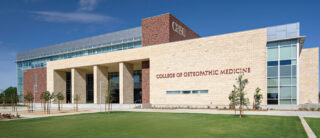
The CHSU-COM campus is located at 2500 Alluvial Avenue in Clovis, California, adjacent to Fresno. The three-story building opened in 2020 and features views of the Sierra Nevada mountains. Campus facilities include large classrooms, an Osteopathic Skills lab, a library, private and collaborative study spaces, spacious student lounges, a Teaching and Demonstration Kitchen, and a Simulation Center. The Simulation Center uses leading-edge technology and includes a 7-bed inpatient area that resembles a hospital environment and a 12-room outpatient area.
The campus is purpose-built for medical education, and the simulation and OMT lab spaces are central to the hands-on approach that defines CHSU-COM’s curriculum.
Other Medical Schools Worth Considering
CHSU College of Osteopathic Medicine is a strong option, but it should not be the only school on your list. Applying broadly increases your chances of acceptance. Here at International Medical Aid, we have compiled guides to many medical schools across the country. Here are some you may want to explore:
- UC Davis School of Medicine
- Harvard Medical School
- UC Riverside School of Medicine
- USC Keck School of Medicine
- UT Southwestern Medical School
- Long School of Medicine at UT Health San Antonio
- University of the Incarnate Word School of Osteopathic Medicine
- UT Austin’s Dell Medical School
- UTMB School of Medicine
- McGovern Medical School at UT Health
- Johns Hopkins School of Medicine
- The University of Texas Rio Grande Valley School of Medicine
- UNT Texas College of Osteopathic Medicine
- University of Houston College of Medicine
- Texas A&M College of Medicine
- Baylor College of Medicine
- George Washington University School of Medicine
- Vanderbilt University School of Medicine
- St. George’s University School of Medicine
- Lake Erie College of Osteopathic Medicine (in Pennsylvania)
- Sidney Kimmel Medical College at Thomas Jefferson University
- Wake Forest University School of Medicine
- Western University of Health Sciences (in California)
- Drexel University College of Medicine
- Stritch School of Medicine at Loyola University Chicago
- Georgetown University School of Medicine
- Yale School of Medicine
- Perelman School of Medicine
- UCLA Medical School
- NYU Medical School
- Washington University School of Medicine
- Brown Medical School
We wish you the best as you work toward becoming an osteopathic physician. The process is demanding, but if CHSU-COM’s mission resonates with you and your qualifications are competitive, it is a school that deserves a serious look. Take the time to research each school you are considering, write thoughtful applications, and prepare thoroughly for interviews. The effort you put in now will serve you well.