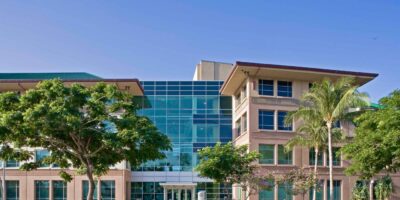

For those seeking a career in medicine within the islands of Hawaii, options might seem limited, but the opportunities are rich. The Aloha State, known for its natural beauty and unique cultural heritage, offers one path to an MD degree: the John A. Burns School of Medicine (JABSOM) at the University of Hawaiʻi at Mānoa in Honolulu. It is complemented by a physician assistant (PA) program at Hawaiʻi Pacific University, also in Honolulu.
This guide covers everything a Hawaii applicant, or a mainland applicant with ties to the islands, needs to know for the 2026-2027 cycle: the current roster of programs, JABSOM’s latest class statistics, what the first year costs for residents and nonresidents, how the residency screen works, the requirements and timeline, and practical ways to strengthen your application. The JABSOM section links to IMA’s full admissions guide for the school, with its secondary essays, interview format and much more.
Key Takeaways
- Hawaii has one medical school: JABSOM, the state’s only MD program, accredited by the LCME. There is no osteopathic (DO) medical school in Hawaii, and no new MD or DO school is in the accreditation pipeline.
- JABSOM admitted 77 new entrants in July 2026. The class averaged a 513 MCAT and a 3.79 cumulative GPA, and 70 of the 77 students were Hawaii residents.
- In the 2026 applicant pool, 297 of 2,658 applicants were interviewed: 198 of 298 in-state applicants and 99 of 2,360 out-of-state applicants. These are interview counts, not an acceptance rate.
- The class holds 67 resident seats and about 10 nonresident seats. Residency for application purposes is decided by a screen that requires two of five ties to Hawaii or the Pacific Islands.
- For 2026-27, JABSOM tuition is $36,672 for Hawaii residents and $71,328 for nonresidents, plus $794 in fees. The estimated first-year cost of attendance is $73,193 for residents living off campus and $107,849 for nonresidents.
- JABSOM placed in Tier 1 for primary care in the latest U.S. News & World Report rankings for the third year in a row, and 56% of the Class of 2026 matched into primary care fields.
- Hawaiʻi Pacific University’s Master of Medical Science in Physician Assistant (MMS-PA) program holds Accreditation-Provisional status from the ARC-PA. Its first cohort started in January 2025 and graduates in December 2026.

Hawaii Medical and PA Programs at a Glance
Hawaii’s roster is short, so the comparison below sets JABSOM next to the state’s PA program. The MD and PA degrees lead to different careers, but many Hawaii pre-health students weigh both, and the two programs draw on the same local clinical sites and the same pool of applicants.
Hawaii Programs Admissions Profile
| Program | Degree, type and campus | Average MCAT | Average GPA | Class size | Applicants and interviews | Class or cohort | Source |
|---|---|---|---|---|---|---|---|
| John A. Burns School of Medicine (JABSOM) | MD, public; Kakaʻako campus, Honolulu, Oʻahu; Kauaʻi Medical Training Track; clerkships at affiliated hospitals statewide | 513 (average) | 3.79 cumulative; 3.73 science | 77 (70 Hawaii residents, 7 out-of-state) | 2,658 applicants; 297 interviewed | 2026 entering class (entered July 13, 2026) | JABSOM 2026 Admitted Class Profile, checked November 13, 2026 |
| Hawaiʻi Pacific University MMS-PA | Master of Medical Science in Physician Assistant, private; hybrid program with immersions on HPU’s downtown Honolulu campus; ARC-PA Accreditation-Provisional | No MCAT or GRE required | Not published (minimum 3.0 cumulative and 3.0 science) | Not published | Not published | First cohort entered January 2025 | HPU MMS-PA program, admissions and accreditation pages, checked November 13, 2026 |
Hawaii Programs Cost and Residency Rules
| Program | First-year tuition | First-year cost | Who may apply | Hawaii residents in the latest class | Source |
|---|---|---|---|---|---|
| JABSOM | $36,672 resident; $55,008 Pacific Institutional Exemption; $71,328 nonresident; plus $794 in fees (2026-27) | $73,193 resident living off campus; $107,849 nonresident (estimated MS1 budget, 2026-27) | First priority to residents with strong ties to Hawaii or the Pacific Islands; about 10 nonresident seats; international applicants considered with 90 U.S. or Canadian credits | 70 of 77 (2026 entering class) | JABSOM Tuition & Financial Support; [Est] 2026-2027 Student Budget; Steps to Apply; Admissions FAQs; 2026 Admitted Class Profile, checked November 13, 2026 |
| HPU MMS-PA | $60,522 in year 1 (January to December 2027) for students admitted 2026-27; tuition stays the same for the cohort | $65,502 total direct costs in year 1 (tuition plus program, kit, orientation, technology and health fees) | Open to all applicants with a bachelor’s degree; extra preference points for Hawaii residents, people born in Hawaii and Hawaii high school or college graduates | Not published | HPU 2026-2027 Cost of Attendance (Physician Assistant table); MMS-PA Tuition and Financial Aid and Admissions pages, checked November 13, 2026 |
Totals for medical school always vary with housing, travel and personal choices. For a national comparison of tuition, fees and living costs, see IMA’s guide to the total cost of medical school.
John A. Burns School of Medicine (JABSOM) at the University of Hawaii
John A. Burns School of Medicine (JABSOM) at the University of Hawaii at Manoa is the only accredited MD program in Hawaii, offering a rigorous curriculum and strong research opportunities.
- Recognition: Tier 1 for primary care in the latest U.S. News & World Report “Best Medical Schools” rankings (reported April 2026, third year in a row); Tier 3 for research; 42nd for most graduates practicing in rural areas
- Location: Kakaʻako campus, 651 Ilalo Street, Honolulu, HI 96813
- 2026-27 Tuition: $36,672 (Hawaii residents), $71,328 (nonresidents), plus $794 in student fees
- Avg. GPA: 3.79 cumulative, 3.73 science (2026 entering class)
- Avg. MCAT: 513 (2026 entering class)
- First-Year Class Size: 77 (2026 entering class)
- Website: https://jabsom.hawaii.edu/
- Application Deadlines (2026-27 cycle): AMCAS Early Decision, August 3, 2026; AMCAS Regular, November 2, 2026; AMCAS transcripts, November 16, 2026. JABSOM does not publish a separate secondary deadline.
John A. Burns School of Medicine at the University of Hawaiʻi stands out as a pivotal institution in medical education, particularly in the Pacific region. It opened in 1965 as a two-year program of basic medical sciences based at Lēʻahi Hospital, and it is named after Governor John A. Burns, who saw the potential for a medical school in Hawaii and founded it. Deans Windsor Cutting and Terry Rogers led the effort to turn the two-year program into a fully accredited four-year school in 1973. The school’s mission is deeply rooted in serving the health needs of Hawaii and the Pacific, emphasizing education, research and high-quality health care.
JABSOM’s campus sits in Kakaʻako, right in front of Kakaʻako Waterfront Park in urban Honolulu. The 9.9-acre complex, which opened in 2005, houses the Medical Education Building and the Biomedical Sciences Building, and the University of Hawaiʻi Cancer Center and the UH Clinics at Kakaʻako share the campus. At the center of the campus is the Māla Lāʻau Lapaʻau, a garden of 35 indigenous and endemic plants used in Native Hawaiian medicine, created by the Department of Native Hawaiian Health as an outdoor place of learning. Honolulu’s cultural diversity gives students easy access to varied health care settings, which enriches the practical learning experience.
JABSOM is a community-based medical school. Instead of owning a university hospital, it partners with hospitals and clinics across the islands, including The Queen’s Medical Center, Kapiʻolani Medical Center for Women and Children, Kuakini Medical Center, Straub Medical Center, Pali Momi Medical Center, Kaiser Permanente Hawaiʻi, Tripler Army Medical Center, Hilo Medical Center and Maui Health, with Wilcox Medical Center as the main site for the Kauaʻi track. Students meet patients from a wide range of social, cultural and ethnic backgrounds, and third-year students may be assigned a clerkship site on a neighbor island.
The school is noted for its focus on tropical medicine, Asian and Pacific health and its commitment to serving Hawaii’s diverse communities. It is home to the first clinical department in an accredited U.S. medical school focused on the health disparities of an Indigenous population, the Department of Native Hawaiian Health. It also houses the largest biomedical research facility in Hawaii, and its researchers are known for work in reproductive biology (including the Honolulu Technique for cloning mice in 1998), infectious disease, heart disease, aging, mental health and Native Hawaiian health. JABSOM secures about $50 million in external funding a year, most of it for research.
The MD curriculum prepares students for the challenges of modern medicine through foundational medical sciences, clinical skills training and rotations across the specialties. JABSOM was one of the first U.S. medical schools to make problem-based learning (PBL) its core teaching method, and a 1992 Harvard University study identified it as one of ten leaders in medical education reform. The first two years run on small-group PBL tutorials supported by lectures, labs, standardized patients and simulation, alongside a Community Health course and a two-year Longitudinal Clinical Preceptorship with a physician in the community. Learning communities connect students across all four classes with a longitudinal mentor.
Faculty across JABSOM’s departments highlight the school’s commitment to academic excellence. Dr. Jeffrey Okamoto, a University of Hawaiʻi medical graduate who trained in pediatrics at Kaiser Los Angeles Medical Center, is an assistant professor in the Department of Pediatrics whose clinical work centers on autism spectrum disorder, intellectual disabilities and other developmental disabilities; the department gave him its Faculty Excellence of Preceptor Teaching Award in 2018. Dr. Michele Carbone, a researcher at the University of Hawaiʻi Cancer Center on the same Kakaʻako campus, received the 2026 Szent-Györgyi Prize for Progress in Cancer Research for discovering that inherited BAP1 mutations raise susceptibility to mesothelioma and other cancers. The JABSOM community also remembers Dr. Clayton Chong, who died in November 2022 at age 68. A University of Hawaiʻi medical graduate who completed his residency at JABSOM, he led oncology at The Queen’s Medical Center for many years, was an associate professor of medicine in the Department of Native Hawaiian Health and helped found ʻAhahui o nā Kauka, the Association of Native Hawaiian Physicians. JABSOM also has a vibrant student life, with clubs, interest groups and traditions such as the annual medical school lūʻau that support students’ personal and professional growth.
JABSOM’s admissions process is competitive, with a focus on candidates who demonstrate academic excellence and a commitment to serving Hawaii’s diverse communities. The 2026 entering class averaged a 513 MCAT and a 3.79 cumulative GPA. JABSOM welcomes applicants from in-state, out-of-state and international backgrounds, though Hawaii residents fill most of the class: 70 of the 77 new entrants in 2026 were Hawaii residents. More than 4,000 physicians have earned an MD or completed residency through JABSOM, and about half of all practicing physicians in Hawaii are JABSOM MD graduates, completed one of its residency or fellowship programs, or serve on its faculty.
The school’s financial aid options include scholarships, grants and loans. As of April 2026, 93% of JABSOM students receive some form of financial aid or scholarship, 47% of graduates leave with no medical debt, and graduates who do borrow carry an average of $152,127 in medical school debt. Tuition and fees for Hawaii residents total $37,466 for 2026-27 ($36,672 tuition plus $794 in fees), while nonresident tuition is $71,328. Students from the Republic of the Marshall Islands, the Federated States of Micronesia and the Republic of Palau who enrolled from Spring 2024 onward pay the resident rate under the Compact of Free Association (COFA), and the university recognizes other tuition exemptions as well.
JABSOM’s commitment to research and community service, along with its curriculum focused on the health needs of the Pacific region, makes it an ideal place for students seeking a medical education that joins clinical excellence with cultural sensitivity and community engagement. The school provides a dynamic environment where students can learn, grow and prepare to become competent and compassionate health care professionals. Read IMA’s complete JABSOM admissions guide for the 2026-2027 secondary essays with example answers, the three-interview format and a full breakdown of the class profile.
Programs and Pathways at JABSOM
JABSOM offers one MD program and no dual or joint degrees, but several pathways change where and how you train:
- Kauaʻi Medical Training Track (KMTT). Six students in each incoming class live and train on Kauaʻi for about 15 months across all four years, with Wilcox Medical Center in Līhuʻe as the main clinical site. Every KMTT student receives a four-year scholarship covering in-state tuition and fees, and the program provides housing, utilities, airfare and car shipping while students are on Kauaʻi. In return, graduates commit to practice on Kauaʻi for four years after residency. Any applicant invited to interview at JABSOM, resident or nonresident, may apply to the KMTT.
- ʻImi Hoʻōla Post-Baccalaureate Program. This post-baccalaureate program at JABSOM is for applicants who have shown strong leadership, humanism, motivation and a commitment to serving communities in Hawaii and the Pacific, and it prepares them for the rigor of medical school. Applicants must apply to JABSOM through AMCAS in the same cycle and submit a separate ʻImi Hoʻōla application; for the class of 2027-2028, the deadline was November 2, 2026.
- Rural and neighbor-island training. Beyond the KMTT, JABSOM’s Rural Health Program gives students the chance to complete pre-clinical units and clinical rotations in rural neighbor-island communities in all four years, and students with a strong interest can pursue the Dean’s Certificate of Distinction in Rural Health. The school also recently launched a family medicine residency on Kauaʻi to strengthen the neighbor-island physician workforce.
- No early assurance program. JABSOM’s Doctor of Medicine Early Acceptance Program (DMEAP) is no longer available and is not accepting applications.
Which Hawaii Medical Schools Admit Nonresidents?
With one MD school in the state, the real question is how JABSOM treats nonresidents. The answer has two parts: residency for application purposes and residency for tuition purposes.
Residency for application purposes. JABSOM’s first priority is to admit resident applicants with strong ties to Hawaii or the Pacific Islands (American Samoa, the Commonwealth of the Northern Mariana Islands, the Cook Islands, the Federated States of Micronesia, Guam, Kiribati, Nauru, Niue, Rapa Nui, Palau, the Marshall Islands, the Solomon Islands, Tokelau, Tonga, Tuvalu, Vanuatu, Wallis and Futuna). Every applicant goes through a residency screen scored on five criteria:
- Your legal residence
- Your parents’ legal residence
- Your birthplace
- Where you graduated from high school
- Where you attended college or university
You need at least two of the five to count as a “resident” for application purposes, and the secondary application gives you space to explain your ties. The screen sorts applicants; it does not eliminate anyone at that stage. An applicant who grew up in Hawaii and attended college on the mainland, for example, can still meet two criteria through birthplace and high school.
How many nonresidents get in. The class has 67 resident seats. Nonresident candidates “must be highly ranked, preferably with some ties to Hawaiʻi,” and about 10 nonresidents (roughly 13% of a class of 77) may be admitted. In the 2026 entering class, 7 of 77 students were out-of-state residents. The interview numbers show how steep that path is: 198 of 298 in-state applicants (66.4%) were interviewed, compared with 99 of 2,360 out-of-state applicants (4.2%).
International and DACA applicants. JABSOM’s nonresident pool can include international applicants, who must complete at least 90 semester credits at an accredited school in the United States or Canada. Applicants who are undocumented or have DACA status are considered without regard to country of origin and are eligible for resident tuition status. Federal loans are available only to U.S. citizens and permanent residents. For a national list of programs that consider international applicants, see IMA’s guide to medical schools that accept international students.
Residency for tuition purposes. Resident tuition requires bona fide Hawaii residency for at least one calendar year (365 days) before the semester in question, and you must not have been claimed as a tax dependent by parents or guardians who are not Hawaii residents. COFA students pay the resident rate, and the university recognizes several other categories of nonresidents who may pay in-state tuition.
If you live outside Hawaii and have no ties to the islands, plan your school list on the assumption that JABSOM is a reach. IMA’s guide on building a medical school list can help you decide how many programs to add, and the West Coast hubs below are a natural next step.
Physician Assistant (PA) Programs in Hawaii
For those interested in a PA career, Hawaii offers a program on Oʻahu: Hawaiʻi Pacific University’s Master of Medical Science in Physician Assistant (MMS-PA). It is a full-time, 24-month program based in Honolulu, known for its focus on clinical training and on communities in Hawaii and underserved populations. The didactic phase is hybrid, combining remote instruction with one- to two-week immersions on HPU’s downtown Honolulu campus for hands-on physical examination and clinical skills. The clinical phase includes supervised rotations in emergency medicine, surgery, internal medicine, behavioral medicine, family medicine, women’s health and pediatrics, plus an elective. The University of Hawaiʻi at Mānoa and JABSOM do not offer a PA degree.
Hawaii’s unique position in the Pacific and its diverse cultural landscape make JABSOM and the PA programs in Hawaii not just educational institutions but hubs for cultural learning and community engagement. These programs give aspiring health care professionals the skills and experiences needed to meet Hawaii’s specific health care needs, emphasizing cultural sensitivity and community-oriented care.
- Location: Honolulu, HI (hybrid, with on-campus immersions at HPU’s downtown campus)
- Accreditation: Accreditation-Provisional from the ARC-PA; the first cohort matriculated in January 2025 and graduates in December 2026
- Year 1 Tuition: $60,522 for students admitted 2026-27 (January to December 2027); total year 1 direct costs $65,502
- GPA Minimum: 3.0 cumulative and 3.0 science (an applicant with a cumulative GPA below 3.0 stays eligible with a science GPA above 3.3)
- Entrance Exam: No GRE or MCAT required
- Patient Care Experience: At least 500 hours of direct, hands-on health care experience in the U.S.
- Website: HPU Master of Medical Science Physician Assistant
- Application Deadlines (2026 CASPA cycle): CASPA opened April 30, 2026; submission deadline August 1, 2026; verification deadline September 1, 2026; classes begin January 2027
HPU interviews selected applicants virtually in a multiple mini interview (MMI) format. It awards extra screening points to applicants who live in or were born in Hawaii, who graduated from a Hawaii high school or college, or whose patient care hours were completed in Hawaii. Students who are still deciding between the MD and PA paths can gain hands-on exposure to both roles through pre-PA internships before committing.
University of Hawaiʻi students can also use the UH Mānoa Pre-Health/Pre-Law Advising Center’s guide to applying to PA school, which explains the CASPA application, secondary forms, CASPer and interviews.
Medical Schools in Hawaii: DO Programs
There are currently no accredited DO programs in Hawaii. The September 2026 directory of colleges of osteopathic medicine lists no Hawaii campus, and no Hawaii program appears on the list of proposed schools seeking candidate status. Exploring DO programs in other states like California or Nevada can broaden your options:
- California. IMA’s guide to medical schools in California compares the state’s MD and DO programs, including Touro University California College of Osteopathic Medicine in Vallejo.
- Nevada. The guide to medical schools in Nevada covers the state’s programs, including Touro University Nevada College of Osteopathic Medicine in Henderson and the University of Nevada, Reno School of Medicine.
DO schools use a separate application service. IMA’s AACOMAS guide explains how it differs from AMCAS.
Additional Resources
- JABSOM Admissions
- UH Mānoa Pre-Health/Pre-Law Advising Center: Apply to PA School
- Association of American Medical Colleges (AAMC), home of AMCAS
- AACOMAS: DO Program Application Service (IMA guide)
- Physician Assistant Education Association
Important Points
- Admission to any of these programs in Hawaii is highly competitive. In 2026, JABSOM interviewed 297 of 2,658 applicants for 77 seats.
- Strong academics, relevant scores (MCAT for JABSOM; no entrance exam for HPU’s PA program) and experience are crucial.
- Residency matters. JABSOM reserves 67 seats for applicants who pass its residency screen, and HPU awards extra points for Hawaii ties.
- Carefully research each program’s requirements and deadlines. JABSOM’s secondary fee of $150 cannot be waived, and HPU’s CASPA deadline falls on August 1.
Understanding Medical School Requirements in Hawaii
The journey to becoming a doctor in Hawaii begins with understanding the requirements of the John A. Burns School of Medicine at the University of Hawaiʻi. There are four primary requirements to keep in mind:
MCAT Scores: JABSOM requires valid MCAT scores, and you must take the MCAT within three years of your anticipated year of matriculation. For the 2027 entering class (the 2026-27 cycle), tests taken from January 2024 to September 30, 2026 are considered (May 31, 2026 for Early Decision). Tests taken in October 2026 or later are not valid for this cycle.
AAMC PREview Professional Readiness Exam: This exam, previously known as the AAMC Situational Judgment Test, evaluates your understanding of effective pre-professional behavior across eight core competencies. JABSOM requires it.
Credit Hours: Applicants must have completed at least 90 college-level semester credit hours (equivalent to 135 quarter hours) from a regionally accredited U.S. institution or a similarly accredited institution in Canada. Credit from institutions outside the U.S. and Canada is not accepted, and JABSOM does not accept third-party credit evaluations.
Science Coursework Prerequisites: JABSOM has a list of specific science courses that you must complete before matriculation. It also recommends additional courses to better prepare you for the medical school’s challenging curriculum.
Successfully meeting these requirements is critical for your application to JABSOM. Here is what each one involves.
MCAT Scores for Medical Schools in Hawaii
The Medical College Admission Test (MCAT) is a fundamental part of your medical school application. JABSOM requires that your test scores are no more than three years old relative to your planned enrollment year, and it uses your most recent MCAT scores for screening. JABSOM does not set a minimum MCAT or GPA.
For context, the 2026 entering class averaged 513 overall, with section averages of 129 in Chemical and Physical Foundations, 127 in Critical Analysis and Reasoning Skills, 129 in Biological and Biochemical Foundations and 129 in Psychological, Social and Biological Foundations. To see how those numbers compare nationally, IMA keeps a list of medical school GPA and MCAT averages for every U.S. school.
AAMC PREview Professional Readiness Exam
This test assesses your understanding of pre-professional behaviors and is a required part of your JABSOM application. It is designed to evaluate your readiness for the professional demands of medical school. For the 2027 entering class, JABSOM considers PREview exams taken from January 2024 to October 31, 2026 (July 31, 2026 for Early Decision). The 2026 entering class posted an average PREview total score of 7.
JABSOM Science Prerequisites
JABSOM specifies science courses that every applicant must complete by July 1 of the year of matriculation (you can apply with courses still in progress):
| Required course | Amount |
|---|---|
| General biology with lab | One academic year |
| General physics with lab (non-calculus is acceptable) | One academic year |
| General chemistry with lab | One academic year |
| Organic chemistry with lab | One academic year |
| Biochemistry (no lab required) | One course |
One academic year is two semesters or three quarters. JABSOM accepts online lecture and lab courses, community college courses from accredited U.S. or Canadian schools, AP or IB credit verified on a college transcript, and prerequisites taken pass/fail. Prerequisites do not expire, though refresher courses are recommended when needed.
JABSOM also recommends other courses to strengthen your preparation for the demanding curriculum. These courses include anatomy, calculus, cell and molecular biology, genetics, immunology, microbiology, physiology and statistics. Taking them will not only round out your science background but also give you a solid foundation for your medical education.
Letters, Secondary Application and Interviews
- Letters of recommendation. JABSOM requires a committee or composite letter, or at least two individual letters, submitted only through the AMCAS Letter Service. Most applicants send four to six, and AMCAS allows up to ten.
- Secondary application. Every applicant who pays the one-time $150 secondary fee receives the web-based secondary, usually within five days. JABSOM does not waive the fee and does not accept the AMCAS Fee Assistance Program waiver. The secondary includes supplementary essays, a science prerequisite verification and a list of your letter writers. IMA’s JABSOM guide covers each 2026-2027 essay prompt with an example answer.
- Interviews. All interviews are virtual. Invited applicants complete three: two assigned interviews with a faculty member, physician, alumnus, community physician or fourth-year student, and a final interview with the Director of Admissions or an Admissions Committee member.
- Decisions. JABSOM does not use rolling admissions. Most decisions go out at the end of the review, with a few highly rated applicants offered acceptance early. No deposit is required to hold a seat.
2026-2027 Application Timeline for JABSOM
| Date | Step |
|---|---|
| June 26, 2026 | Earliest date schools receive verified AMCAS applications |
| July 2026 | JABSOM begins sending secondary applications; ʻImi Hoʻōla applications open |
| August 3, 2026 | AMCAS Early Decision Program deadline; EDP interview invitations begin |
| September 2026 | Regular interview invitations sent; September 30 is the last MCAT date for this cycle |
| October 1, 2026 | EDP applicants notified |
| October 31, 2026 | Last PREview date for this cycle |
| November 2, 2026 | AMCAS Regular deadline and ʻImi Hoʻōla deadline |
| November 16, 2026 | AMCAS Regular transcript deadline |
| February 5, 2027 | All interviews completed |
| March 12, 2027 | Admissions decisions sent |
| May 14, 2027 | Accepted students select “Commit to Enroll” |
| July 12, 2027 | Entering 2027 class begins |
The 2026-27 AMCAS deadlines have now passed. If you are planning for the next cycle, treat this calendar as a model: take the MCAT and PREview in the spring or early summer, submit AMCAS in June and return the secondary within about two weeks. The summer before you apply is also a good window for pre-med summer internships or local clinical work once your exams are behind you.
Maximizing Your Chances of Acceptance to JABSOM
Gaining admission to JABSOM is competitive. The school does not publish an acceptance rate, but its numbers show the scale: 2,658 applicants competed for 77 seats in 2026, and 297 were interviewed. To enhance your likelihood of acceptance:
Exceed Minimum Academic Requirements: Aim to surpass JABSOM’s academic standards. Review the average cumulative GPA (3.79), science GPA (3.73) and MCAT score (513) of the 2026 entering class and strive to meet or exceed these benchmarks. IMA’s Medical School GPA Calculator shows where your AMCAS cumulative and science GPAs stand.
Apply Early: Stay ahead of important dates and deadlines. Early application gives you enough time to compile all necessary materials and to seek strong letters of recommendation. Because JABSOM sends secondaries in July and starts interviews in August, an application submitted in June or early July reaches reviewers while every interview slot is still open.
Show Your Ties to Hawaii and the Pacific: Use the secondary to explain your connections to the islands clearly. The residency screen counts specific ties, and the mission rewards applicants who intend to serve Hawaii’s communities, from rural neighbor islands to Native Hawaiian and Pacific Islander populations. Nearly 90% of JABSOM medical students were born in Hawaii, and the school ranks first in the nation in keeping its combined MD and residency graduates practicing in-state.
Engage in Meaningful Extracurriculars: Participate in activities like medical shadowing, clinical experience, research and volunteering. These experiences not only enrich your application but also expand your professional network. Admissions committees want evidence that you understand patient care, and clinical internships for pre-med students can add structured, supervised hours to the work you do at home. Students drawn to JABSOM’s Pacific and global health focus can also consider pre-med internships abroad, where patient populations and health systems differ from those in the United States.
Highlight Your Individuality: Use sections like the AMCAS Work and Activities and the personal statement to showcase your unique qualities. Well-written personal statements and strong letters of recommendation can significantly boost your application.
Plan a Strong Reapplication if Needed: Many successful physicians did not get in on their first try. If you are reapplying or taking time off before applying, use the year to address the weakest part of your application, whether that is your MCAT, your science GPA or your clinical hours. Pre-med gap year programs are one way to add patient contact during that year.
For one-on-one help with strategy, essays and mock interviews, IMA’s medical school admissions consulting team works with applicants at every stage.
Frequently Asked Questions About Medical Schools in Hawaii
Here are some commonly asked questions about medical education in Hawaii:
What is JABSOM’s ranking?
JABSOM placed in Tier 1 for primary care in the latest U.S. News & World Report “Best Medical Schools” rankings, reported by the school in April 2026, for the third year in a row. It placed in Tier 3 for research and 42nd for most graduates practicing in rural areas. In the older 2023-24 edition, JABSOM ranked 81st of 138 U.S. medical schools for research.
How many medical schools are in Hawaii?
JABSOM is the sole MD-granting medical school in Hawaii, and there is no DO school in the state. Hawaiʻi Pacific University offers the state’s physician assistant program, which is a separate degree and career.
Is the University of Hawaii a good medical school?
Yes, especially for those interested in primary care. JABSOM holds full LCME accreditation for eight years (reported April 2026), sits in Tier 1 for primary care, and matched 56% of its Class of 2026 into internal medicine, family medicine, pediatrics and OB-GYN, with 33% of the class staying in Hawaii for residency. It is also highly selective: in 2026 it interviewed 297 of 2,658 applicants for 77 seats.
Where can I study medicine in Hawaii?
JABSOM is located at 651 Ilalo Street, Honolulu, on its Kakaʻako campus. Students also train at affiliated hospitals across Oʻahu and on neighbor islands, and students in the Kauaʻi Medical Training Track spend about 15 months on Kauaʻi.
How can I find out about financial aid and scholarships?
Visit or contact JABSOM’s Financial Aid and Scholarships Office (part of the Office of Student Affairs) and the University of Hawaiʻi Financial Aid Services Office. Complete the FAFSA, which opens October 1, by the February 1 priority deadline to be considered for the most aid. As of April 2026, 93% of JABSOM students receive aid or scholarships.
What is JABSOM’s MD curriculum like?
JABSOM runs a four-year program. The first two pre-clerkship years are built around problem-based learning tutorials, with clinical skills courses, a Community Health course and a two-year preceptorship with a community physician. The third year uses longitudinal clerkships in family medicine, internal medicine, OB-GYN, pediatrics, psychiatry and surgery, and the fourth year adds emergency medicine and geriatrics and palliative care requirements with up to 24 weeks of electives.
Does JABSOM accept out-of-state students?
Yes, but in small numbers. About 10 seats (roughly 13% of the class) may go to nonresidents, who must be highly ranked and preferably have ties to Hawaii. In 2026, 7 of 77 entrants were out-of-state residents, and 99 of 2,360 out-of-state applicants were interviewed.
Is there a DO school in Hawaii?
No. No college of osteopathic medicine operates or is seeking candidate status in Hawaii. Applicants interested in DO programs usually look at schools in California, Nevada and other Western states, which apply through AACOMAS.
How much does JABSOM cost?
For 2026-27, tuition is $36,672 for Hawaii residents, $55,008 for students with Pacific Institutional Exemption status and $71,328 for nonresidents, plus $794 in fees. The estimated first-year cost of attendance is $73,193 for residents living off campus and $107,849 for nonresidents.
What MCAT and GPA do I need for JABSOM?
JABSOM sets no minimum MCAT or GPA. Its 2026 entering class averaged a 513 MCAT, a 3.79 cumulative GPA and a 3.73 science GPA. Your MCAT must be no more than three years old, and the most recent score is used for screening.
Does JABSOM accept international students?
Yes. International applicants are part of the nonresident pool and must complete at least 90 semester credits at an accredited U.S. or Canadian school. Federal loans are open only to U.S. citizens and permanent residents, so international students should plan other funding.
Is there a physician assistant program in Hawaii?
Yes. Hawaiʻi Pacific University’s 24-month MMS-PA program in Honolulu holds Accreditation-Provisional status from the ARC-PA. It requires a bachelor’s degree, a 3.0 minimum GPA and at least 500 hours of direct patient care, and it does not require the GRE or MCAT.
When is the JABSOM application deadline?
For the 2026-27 cycle, the AMCAS Early Decision deadline was August 3, 2026, the AMCAS Regular deadline was November 2, 2026 and the transcript deadline was November 16, 2026. JABSOM sends admissions decisions on March 12, 2027.
Does JABSOM waive the secondary application fee?
No. The $150 secondary fee is required of every applicant, and JABSOM does not accept the AMCAS Fee Assistance Program waiver. If you need more time to pay, contact the admissions office.
Does JABSOM have an Early Decision Program?
Yes. JABSOM takes part in the AMCAS Early Decision Program. For the 2026-27 cycle the EDP deadline was August 3, 2026, EDP applicants needed MCAT scores by May 31 and PREview scores by July 31, 2026, and accepted EDP applicants were notified by October 1.
What is the Kauaʻi Medical Training Track?
It is a rural track for six students in each JABSOM class. KMTT students live and train on Kauaʻi for about 15 months over four years, receive a four-year scholarship covering in-state tuition and fees, and commit to practicing on Kauaʻi for four years after residency. Any applicant invited to interview, resident or nonresident, may apply.
How much clinical experience do Hawaii medical schools want?
JABSOM does not publish an hour count, but it looks for real patient contact, shadowing, research and service, and it reviews each applicant’s commitment to Hawaii’s communities. HPU’s PA program requires at least 500 hours of direct patient care. Supervised programs such as IMA’s pre-health internships can add hands-on hours alongside clinical work in Hawaii.
Embarking on Your Medical Career
We encourage aspiring medical professionals to explore the opportunities offered by Hawaii’s medical school and PA program. Whether your interest lies in a specific medical field or a more general approach to health care, the state’s educational landscape provides the foundation for a successful medical career.
International Medical Aid (IMA) offers useful tools and memorable experiences to pre-health students. IMA’s pre-med internships place students in teaching hospitals in Mombasa, Kenya and Cusco, Peru, where they work with patients who lack access to consistent, quality medical care. These internships for pre-med students are hands-on: interns take vitals, do intake and triage and help with direct care under the supervision of local physicians and nurses, and they never perform tasks that would require a medical license in the United States. College students who are still building clinical hours often start with medical internships for undergraduates during summer or winter breaks.
IMA’s medical internships abroad also include programs for nursing, pre-PA, mental health and other health careers. Our healthcare internships abroad page describes every track. IMA programs do not carry any affiliation with JABSOM or HPU, and they do not guarantee admission anywhere; what they offer is direct patient experience you can reflect on in your application and interviews.
For more information on the medical school admissions process and internship opportunities, apply with International Medical Aid today. With the right guidance and preparation, you can confidently pursue your dream of becoming a health care professional in Hawaii’s dynamic medical environment. Another resource worth bookmarking is IMA’s Medical School Secondary Essay Prompts Database, and our full library of medical school guides covers schools in every state.
Achieving Your Medical Dream in Hawaii
Hawaii offers a unique setting for medical education at JABSOM, where the focus is on serving and understanding diverse communities across the islands and the Pacific. To maximize your chances of acceptance, aim to exceed academic benchmarks, be mindful of important deadlines, show your ties to Hawaii honestly and engage in meaningful extracurricular activities. If a PA career fits you better, HPU’s program offers a Honolulu-based path with its own requirements and timeline. Good luck in your pursuit of a fulfilling medical career in Hawaii!
Sources
- John A. Burns School of Medicine, University of Hawaiʻi at Mānoa: 2026 Admitted Class Profile; Tuition & Financial Support (2025-2026 and 2026-2027); [Est] 2026-2027 Student Budget; 2027 Admissions Cycle Timeline; Steps to Apply; Admission Requirements; Admissions FAQs; Residency Screening; History; Facts & Figures; MD Program; Kauaʻi Medical Training Track; Rural Health Program; ʻImi Hoʻōla Post-Baccalaureate Program; Kakaʻako Campus; Affiliated Healthcare Facilities; Department of Pediatrics faculty page (Jeffrey Okamoto, M.D.). Checked November 13, 2026.
- JABSOM news: “JABSOM ranked among the nation’s best in training physicians, 3 years in a row” (April 2026); “JABSOM Class of 2026 Committed to Primary Care” (April 2026); “The Power of Belief: JABSOM Scholarships Invest in Our Future” (April 2026). Checked November 13, 2026.
- University of Hawaiʻi News, “International cancer research award honors UH researcher’s pioneering discoveries” (May 21, 2026); Honolulu Star-Advertiser obituary for Clayton Chong (December 25, 2022).
- Hawaiʻi Pacific University: Master of Medical Science Physician Assistant program, Admissions, Accreditation and Outcomes, and Tuition and Financial Aid pages; 2026-2027 Cost of Attendance (Physician Assistant table). Checked November 13, 2026.
- University of Hawaiʻi at Mānoa Pre-Health/Pre-Law Advising Center, Apply to Physician Assistant School. Checked November 13, 2026.
- Liaison Committee on Medical Education, Directory of Accredited Programs and Directory of Applicant and Candidate Programs (updated April 15, 2026).
- American Osteopathic Association, Commission on Osteopathic College Accreditation: Colleges of Osteopathic Medicine directory (September 2026) and candidate-status list. Checked November 13, 2026.
See more of our guides in your Google results: add International Medical Aid as a preferred source on Google.