Medical school admissions committees are not checking a box for “international experience.” They are reading your application for evidence that you can think critically about healthcare, reflect honestly on what you observed, and articulate why those experiences shaped your understanding of medicine. The distinction between a global health elective and a clinical volunteering stint matters less than most pre-med students assume. What matters is the structure of the experience, the depth of your engagement, and the clarity of your reflection. If you are comparing global health electives vs clinical volunteering for your medical school application, the real question is not which one looks better on paper. It is which one will actually give you something meaningful to write and talk about.
Heading into the 2026 application cycle, that question is more pressing than ever. The AAMC’s core competencies for entering medical students explicitly call for service orientation, cultural competence, and demonstrated empathy. At the same time, admissions committees have grown sharper at spotting shallow experiences dressed up in dramatic language. A two-week trip where you held babies and posed for photos will not carry the same weight as a structured clinical observation program where you shadowed physicians, participated in guided debriefs, and came away with a genuine understanding of healthcare delivery under resource constraints. The difference often comes down to how the experience was designed, not just where it took place.
What “Global Health Elective” and “Clinical Volunteering” Actually Mean
These two terms get used loosely, sometimes interchangeably, and that creates confusion. They are not the same thing, and understanding the difference will help you evaluate programs, set expectations, and present your experience accurately on your application.
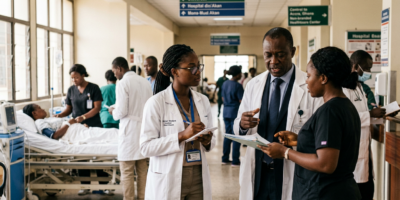
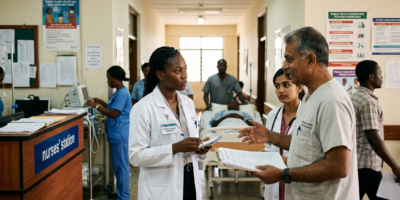
A global health elective typically refers to a structured educational experience, often embedded in a clinical setting abroad, where students observe healthcare delivery, participate in supervised activities, attend educational sessions, and engage with the health challenges specific to a particular region. The emphasis is on learning within a framework: mentorship, reflection, exposure to different disease profiles, and an understanding of how health systems function outside the United States. These experiences are usually organized by a university, a hospital, or an educational organization with established clinical partnerships.
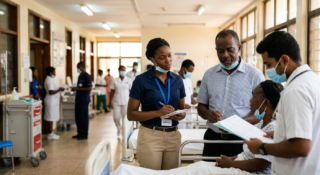
Clinical volunteering, by contrast, can mean almost anything. It might be a well-organized domestic hospital volunteer program where you log hundreds of hours over a year. It could be a short-term international trip organized by a nonprofit where your role is limited to non-clinical community outreach. Or it could be something in between. The defining feature of volunteering is the service orientation: you are offering your time, usually without pay, to support a healthcare-related cause. The quality, supervision, and educational value of that volunteering varies enormously depending on the organization running it.
Neither category is inherently stronger than the other on your application. The structure, supervision, and your ability to reflect on what you experienced are what admissions committees weigh. A well-run global health elective can be outstanding. So can sustained, thoughtful clinical volunteering at a community health center in your hometown. What undermines either one is a lack of depth: showing up, doing surface-level tasks, and walking away without any real understanding of what you saw.
What Admissions Committees Are Actually Evaluating
There is a persistent myth among pre-med students that admissions committees have a ranked list of experience types, with international clinical experiences near the top. That is not how it works. Committees evaluate experiences based on a set of qualities that are well documented in admissions literature, and those qualities have nothing to do with geography.
Meaningful Engagement Over Impressive Locations
The AAMC’s Matriculating Student Questionnaire consistently shows that the vast majority of matriculants report some form of healthcare experience prior to enrollment. The average amount of volunteer clinical experience hovers around 250 hours. But hours alone do not tell the story. Admissions committees want to see that you were genuinely engaged: that you paid attention, asked questions, grappled with difficult situations, and came away with a more informed perspective on what it means to care for patients. If you compare two applications, one from a student who spent 300 hours volunteering at a local free clinic and one from a student who spent three weeks shadowing abroad, the student with 300 hours of consistent engagement and thoughtful reflection will almost always have a stronger narrative. That is not because domestic is better than international. It is because depth beats brevity.
Demonstrated Learning and Honest Reflection
An admissions committee member reading your personal statement or your experience descriptions is looking for evidence that you actually processed what you saw. Can you describe a specific patient interaction (without violating confidentiality) and explain what it taught you about empathy, systemic barriers, or the limits of medicine? Can you talk about a moment that challenged your assumptions? Students who participate in structured global health programs with built-in reflection components, such as guided journaling, faculty-led debriefs, or case discussions, often find it easier to develop this kind of reflective capacity. But the reflection itself is what matters, not the mechanism that produced it. If you are weighing your options, it is worth asking yourself a pointed question: which experience will push you to think harder about what healthcare actually involves? For a thorough comparison of how international and domestic clinical experiences stack up for pre-med applicants, the IMA blog’s analysis of abroad vs. U.S. clinical experience lays out the practical distinctions worth considering.
Cultural Humility, Not Just Cultural Exposure
Medical schools are placing increasing emphasis on cultural competence, and for good reason. Physicians in the United States treat patients from every background imaginable, and the ability to approach unfamiliar cultural contexts with humility and curiosity is a clinical skill, not just a personality trait. Global health electives can be especially effective at building this capacity, provided the program takes cultural engagement seriously. Observing healthcare in a setting where resources are constrained, where disease profiles differ from what you see in U.S. hospitals, and where communication requires sensitivity to local norms and languages, all of this can accelerate your understanding of the social determinants of health. But a poorly structured international trip where you never interact meaningfully with local staff or patients will not achieve this. And domestic experiences working with underserved or diverse populations can build cultural humility just as effectively if you approach them with intention.
The Ethics Question That Separates Strong Programs from Weak Ones
This is the part of the conversation that too many pre-med students skip, and it is the part that admissions committees care about more than you might expect. Global health experiences, and to some extent all clinical volunteering, raise legitimate ethical questions. How you engage with those questions says a lot about your readiness for medical school.
Supervision, Boundaries, and What Students Should Not Be Doing
In any reputable clinical setting, whether domestic or international, pre-med students are there to observe and learn, not to practice medicine. This sounds obvious, but some programs, particularly loosely organized international volunteer trips, create situations where students are asked to perform tasks beyond their training. Taking vitals without supervision, administering medications, or conducting patient assessments independently are not appropriate activities for an undergraduate student, regardless of the setting. Admissions committees are aware that these situations exist, and if your application describes unsupervised clinical activities, it raises a red flag rather than a green one.
Strong programs are transparent about the student’s role. You shadow. You observe. You may assist within clearly defined, supervised limits. You learn from licensed professionals who are responsible for patient care. And the program provides structured opportunities to discuss what you observed, ask questions, and connect your experience to broader themes in healthcare delivery. When you are evaluating a program, whether it is a global health elective or a domestic clinical volunteering position, ask about supervision ratios, the credentials of the staff overseeing students, and the specific boundaries around student participation. If a program cannot answer those questions clearly, that should give you pause.
The Voluntourism Problem and How to Avoid It
The term “voluntourism” describes short-term international volunteer experiences that prioritize the volunteer’s experience over the community’s actual needs. These trips often involve unskilled labor, minimal training, and a troubling dynamic where vulnerable communities become backdrops for personal growth narratives. Medical schools are well aware of this pattern, and some admissions committee members have spoken publicly about their skepticism toward short-term international experiences that lack structure. This does not mean all international health experiences are suspect. It means you need to evaluate whether the program you are considering exists primarily to serve students or whether it has a genuine, ongoing relationship with the community and healthcare facilities it works with.
The WHO’s publications on global health workforce challenges make clear that health worker shortages in low- and middle-income countries are a structural issue, not something that short-term volunteers can solve. A responsible program acknowledges this reality and frames the student’s role as a learner, not a rescuer. If you are considering whether to pursue a global health experience before medical school, it is worth reading IMA’s blog post on whether you should pursue global health before med school, which addresses this tension directly.
How Each Type of Experience Shows Up on Your Application
Your medical school application has several places where clinical and volunteer experiences appear: the work and activities section, your personal statement, secondary essays, and interviews. The way you present an experience matters as much as the experience itself, and global health electives and clinical volunteering lend themselves to different kinds of storytelling.
Work and Activities Section
In the AMCAS, AACOMAS, or TMDSAS work and activities section, you have limited space to describe each experience. What admissions readers look for here is specificity: your role, the setting, the duration, and a brief description of what you did and what you took away. A global health elective might appear as a clinical observation experience abroad, with details about the healthcare setting, the supervision you received, and the patient populations you encountered. Clinical volunteering might appear as a long-term commitment at a domestic healthcare facility, with details about your responsibilities and the consistency of your involvement. In both cases, vague descriptions hurt you. “Helped patients in a developing country” is not useful. “Observed primary care and maternal health consultations at a district hospital in a resource-limited setting under the supervision of licensed physicians” is specific, honest, and informative.
Personal Statement and Secondary Essays
This is where the real differentiation happens. A global health elective gives you material to write about healthcare disparities, resource constraints, cultural differences in how health and illness are understood, and the complexity of providing care in settings very different from U.S. hospitals. Sustained clinical volunteering gives you material to write about longitudinal relationships with patients and staff, the slow work of building trust in a clinical environment, and the day-to-day realities of healthcare delivery in your own community. Both can produce compelling essays. The question is not which experience generates a better story; it is whether you did enough reflecting during and after the experience to have a story worth telling. The IMA blog has a useful resource on what makes a medical school personal statement compelling versus average, and the principles apply regardless of where your experience took place.
Interviews
During interviews, admissions committee members will ask you about your experiences, and they will probe. If you participated in a global health elective, expect questions about what you learned about healthcare delivery in that specific context, how the experience affected your understanding of health equity, and what ethical considerations you encountered. If your primary clinical exposure is domestic volunteering, expect questions about what you observed, how you interacted with patients, and what you learned about the healthcare system. In either case, the students who perform best in interviews are the ones who can speak honestly about what surprised them, what challenged them, and what they still do not fully understand. Admissions committees are not looking for polished speeches. They are looking for evidence of genuine intellectual and emotional engagement.
Comparing Structure: What to Look for in Either Type of Program
Not all global health electives are created equal, and not all clinical volunteering positions offer the same level of learning. Here are the structural elements that separate a strong experience from a weak one, regardless of category.
Mentorship and Professional Guidance
A program that pairs you with experienced healthcare professionals who are willing to teach, answer questions, and provide context for what you are observing is significantly more valuable than one where you are left to figure things out on your own. In a global health elective, this might mean being assigned to a supervising physician who walks you through cases and explains treatment decisions in the context of local resources. In a domestic volunteer role, this might mean a clinical coordinator who checks in with you regularly and helps you understand the patient population you are serving.
Reflection and Debriefing
Structured reflection is not a luxury add-on; it is what converts raw experience into understanding. Programs that include regular debriefing sessions, reflective writing prompts, or case discussions give you the tools to process what you are seeing and connect it to larger themes in healthcare. Without this structure, even the most intense clinical exposure can remain surface-level. When evaluating programs, ask whether reflection is built into the schedule or left entirely to the student.
Duration and Continuity
The length of your experience matters, but not in a simple “more is better” way. A three-week global health elective with daily clinical observation, structured education, and guided reflection can be more valuable than six months of sporadic volunteering where you show up once a week and fold towels. Conversely, a year of consistent weekly volunteering at a free clinic, where you build relationships with staff and patients and see the same community health challenges over time, can be more valuable than a brief international rotation. Consider what kind of continuity each option offers and how that continuity will affect your ability to tell a coherent story on your application.
Housing, Support, and Logistics
For international programs, practical logistics matter more than many students realize. Where you live, how you get to and from the clinical site, who is available to help if something goes wrong, and whether the program provides orientation and safety briefings all affect your ability to focus on learning. A program with solid infrastructure frees you to engage fully with the clinical and educational components. A program that leaves you scrambling to figure out transportation or housing distracts from the purpose of being there in the first place.
Making This Decision: Practical Factors That Should Drive Your Choice
Given everything above, here is how to think about the choice between a global health elective and clinical volunteering in practical terms.
Your Timeline and Application Cycle
If you are applying to medical school in 2026, the timing of your experience matters. A global health elective that takes place during winter or summer break can fit into a busy academic schedule, but you need time afterward to reflect and integrate the experience into your application materials. Clinical volunteering, especially the sustained kind that admissions committees value, requires a longer runway. Ideally, you would start volunteering well before your application year so that you have enough hours and enough stories to draw from. If you are early in your pre-med career, you may have time for both. If your application cycle is imminent, focus on the option that gives you the most substantive material in the time available.
Your Financial Situation
This is a real consideration that does not get enough attention. Global health electives, particularly international ones, involve costs: program fees, travel, vaccines, housing, and time away from paid work. Clinical volunteering at a local hospital or clinic is usually free, though it still requires your time. The median debt for medical school graduates is substantial; the AAMC reports that the median educational debt for 2022 graduates was approximately $200,000. Adding significant pre-med expenses on top of that is a decision worth thinking through carefully. An admissions committee will never penalize you for choosing a local experience over an international one because of cost. What they care about is the quality of your engagement, not your travel itinerary.
Your Existing Gaps
Look at your application as a whole. If you already have hundreds of hours of domestic clinical volunteering but no exposure to healthcare in a different cultural or resource context, a global health elective might add a genuinely new dimension. If you have limited clinical exposure of any kind, a sustained domestic volunteering commitment might be the most efficient way to build a foundation. Your decision should be driven by what your application needs, not by what sounds most impressive in the abstract.
Your Genuine Interests
This might sound soft, but it is not. If you are genuinely interested in global health, health equity, or practicing medicine in underserved settings, a global health elective aligns with your narrative and gives you material that supports your stated goals. If your interests are more focused on a specific specialty, a specific patient population, or a specific community issue, clinical volunteering in a setting that connects to those interests will produce a more coherent application. Admissions committees can tell when an experience was chosen for strategic reasons rather than genuine interest, and authenticity always reads better than optimization.
What a Strong 2026 Application Actually Looks Like
There is no single formula, but the strongest applications share certain qualities regardless of whether they include global health electives, clinical volunteering, or both.
They show sustained commitment to something, not a scattershot list of short-term activities. They demonstrate that the applicant has reflected seriously on what they observed and learned. They present experiences with specificity and honesty, without exaggeration or vague superlatives. They reveal an applicant who understands the realities of healthcare, including its limitations, ethical complexities, and systemic challenges.
Whether your clinical experience comes from a structured global health elective in East Africa or from a year of volunteering at a community health center in your own city, the work of making that experience meaningful is the same. Pay attention. Ask good questions. Respect the patients and professionals you encounter. Reflect on what you see. And when it comes time to write about it, be specific, be honest, and trust that substance speaks louder than spectacle.
The distinction between global health electives and clinical volunteering is worth understanding, but it is not the most important distinction in your application. The most important distinction is between experiences you actually engaged with and experiences you simply showed up for. Focus on the former, and the rest will follow.
Frequently Asked Questions
Do medical schools prefer international clinical experience over domestic volunteering?
No. Medical schools evaluate the quality, depth, and reflection associated with an experience, not its location. A sustained domestic volunteering commitment with genuine engagement and thoughtful reflection can be just as strong, or stronger, than a short-term international program. What admissions committees look for is evidence that you learned something meaningful and can articulate it clearly.
Can a global health elective count as clinical hours on my application?
It depends on the nature of the experience and how your application service defines clinical hours. If you were observing patient care under the supervision of licensed healthcare professionals in a clinical setting, many applicants categorize this as clinical experience. However, you should describe your role honestly, noting that you observed and assisted within supervised limits. Do not overstate your level of involvement, and be prepared to discuss the experience in detail during interviews.
How do I tell the difference between a reputable global health program and voluntourism?
Look for programs that have established, long-term relationships with local healthcare facilities and professionals. Ask about supervision structure, student boundaries, educational components, and how the program benefits the host community. A reputable program will be transparent about what students can and cannot do, will emphasize learning over “helping,” and will include reflection and mentorship as core elements. If a program markets itself primarily through emotional appeals and vacation-like imagery, proceed with caution.