Choosing a safe ethical overseas medical program requires more than browsing photos and reading testimonials. For high school students interested in healthcare, an international experience can build perspective, strengthen maturity, and offer early exposure to clinical environments. But the quality, safety, and ethics of these programs vary widely. Some are carefully structured, supervised, and educational. Others cut corners on supervision, blur ethical lines, or make promises no responsible organization should make to a minor. Both students and parents need to know how to tell the difference. If you are comparing medical internships for high school students, the criteria below will help you evaluate what is real, what is responsible, and what should raise concerns.
The growth in summer medical internships for high school students reflects a broader trend: pre-health students are seeking clinical exposure earlier, and families are willing to invest in experiences that go beyond the classroom. The Bureau of Labor Statistics projects 13% growth in healthcare occupations from 2022 to 2032, which means interest in healthcare careers will only continue to rise. That is a good thing. But more demand also means more programs entering the market, and not all of them operate with the same commitment to student safety or ethical engagement. Understanding what separates a well-run program from a risky one is the first step toward making a smart, informed decision.
What “Ethical” Actually Means in an Overseas Medical Program
Ethics in this context is not abstract. It comes down to specific, observable practices. An ethical program is honest about what high school students can and cannot do in a clinical setting. It does not promise hands-on patient care to minors. It does not suggest that a teenager will assist in surgery, administer medication, or diagnose patients. These activities require years of professional training, licensure, and legal authority that no high school student has.
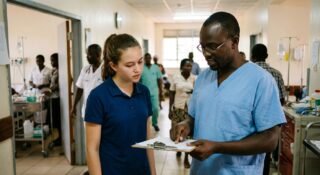
In a responsible program, students observe. They shadow licensed local healthcare professionals during rounds, consultations, and procedures. They watch, ask questions, and learn from what they see. Some programs also offer structured educational components like anatomy workshops, medical ethics seminars, or practice skills sessions using simulation models. These are appropriate and valuable. What is not appropriate is placing an untrained minor in a role that could compromise patient safety or create a false sense of competence.
Ethical engagement also means respecting the communities and healthcare systems the program operates within. Students should not be consuming local resources, displacing local staff, or treating patients as learning props. A good program partners with local institutions, supports local professionals, and ensures that the presence of students adds value rather than burden. IMA’s approach to this is detailed in their post on ethical engagement in global health and what every pre-health student should know, which outlines the principles that should guide any student considering this type of experience.
Red Flags That Should Concern Parents and Students
Not every program that markets itself as a medical internship operates responsibly. Some warning signs are easy to spot if you know what to look for.
Promises of Hands-On Clinical Work for Minors
This is the most serious red flag. If a program suggests that high school students will suture wounds on real patients, assist in surgeries, deliver babies, or perform any form of direct patient care, walk away. No reputable program allows this. It is unsafe for the patient and inappropriate for the student. Ethical programs are clear that the student’s role is observational, supported by structured learning activities that do not involve patient contact beyond what is supervised, approved, and safe.
Vague or Missing Supervision Details
Parents should be able to get specific answers about who supervises their child, how many staff members are present, what the staff-to-student ratio looks like, and whether supervision is continuous, including evenings and weekends. Programs that dodge these questions or give vague responses like “students are accompanied during activities” without naming specific supervisory roles and protocols should not be trusted. Look for programs that provide 24/7 in-country supervision by trained, named staff and that pair students with licensed local medical professionals during clinical observation.
No Pre-Departure Preparation
A well-structured program prepares students before they leave home. This includes orientation materials on safety protocols, cultural expectations, appropriate behavior in clinical settings, health precautions, and emergency procedures. If a program skips this step or treats pre-departure preparation as optional, it signals a lack of seriousness about student welfare. IMA’s blog post on red flags for teens considering medical programs offers a more detailed breakdown of what to watch for during the evaluation process.
Non-Transparent Costs and Itineraries
You should know exactly what your money covers and exactly what each day looks like. Programs that hide costs, add surprise fees, or present only a vague outline of the schedule may not have the organizational structure to deliver a safe, educational experience. Ask for a detailed itinerary, a clear breakdown of inclusions, and written policies on refunds, cancellations, and emergency procedures.
What Parents Should Ask Before Saying Yes
Parents are right to ask hard questions. A responsible organization welcomes them.
Start with supervision. Ask how many staff members will be present in the country, what their qualifications are, and whether they are employed by the organization or contracted locally. Ask whether staff live in the same housing as students or are available on call. Ask what the protocol is if a student becomes ill or injured, and whether the program has relationships with local medical facilities for student care. Ask about emergency evacuation plans.
Then ask about the clinical component. What does observation look like in practice? Which departments or facilities will students visit? Who are the local medical professionals overseeing the experience? Are those professionals aware that the students are minors with no clinical training? Are patients informed and consenting to being observed?
Ask about communication. Will you be able to reach your child? Will the program provide regular updates? Is there a designated emergency contact available around the clock? These are not unreasonable demands. They are baseline expectations.
Housing matters too. Ask where students will stay, who manages the housing, what security measures are in place, and whether students are housed separately from unvetted adults. Ask about meals, transportation, and curfews. For families weighing these decisions, IMA’s parent guide to high school medical internships, safety, and support addresses many of these concerns in detail.
What Students Actually Gain from Ethical Observation
Some students worry that an observational role will not be “impressive enough” for future applications. That concern misses the point. Medical school admissions committees, PA program reviewers, and other health professional school evaluators are not looking for teenagers who performed surgery abroad. They are looking for students who can reflect meaningfully on what they observed, articulate what they learned, and demonstrate maturity, cultural sensitivity, and ethical awareness.
The AAMC’s guidance on cultural competence in medical education underscores how much admissions committees value the ability to work with diverse populations and understand health disparities. An international observational experience, when approached seriously, can demonstrate exactly those qualities.
Students who observe in international settings often encounter healthcare realities they would not see in a U.S. hospital. They may watch providers work with limited diagnostic equipment, treat conditions rarely seen domestically, or manage high patient volumes with minimal staff. They may observe how cultural beliefs shape patient decisions, or how public health systems operate in resource-constrained environments. The WHO’s data on global health challenges provides context for the scale of these issues, including the rising burden of non-communicable diseases worldwide.
These observations become powerful when students reflect on them honestly. Writing about a moment that challenged your assumptions, a clinical interaction that raised ethical questions, or a gap in care that made you think differently about your own goals carries far more weight in an application than inflated claims about clinical duties you did not actually perform. Admissions reviewers can tell the difference. Students interested in how global health internships prepare high school students for future applications will find that the most valuable takeaway is almost always perspective, not a list of procedures.
Maturity, Readiness, and Honest Self-Assessment
Not every high school student is ready for an overseas medical program, and that is completely fine. Readiness is not about age alone. It involves emotional maturity, the ability to follow rules and respect boundaries, comfort with unfamiliar environments, and a genuine interest in learning rather than just adding a line to a resume.
Students should ask themselves some honest questions. Can I handle seeing people who are seriously ill or injured without becoming so distressed that I cannot function? Am I willing to follow strict rules about what I can and cannot do, even if it feels limiting? Can I be respectful and professional in a culture very different from my own? Am I doing this because I genuinely want to learn, or because I think it will look good on an application?
Parents should consider these questions too. You know your child. If they are not ready to be away from home, to follow structured rules without pushback, or to handle emotionally difficult situations with support from staff rather than family, it may be worth waiting a year. A program taken at the right time, with the right mindset, will be far more valuable than one taken too early.
Programs that assess readiness before accepting students are generally more trustworthy than those that accept anyone who can pay. Look for organizations that have an application process, ask about the student’s motivations, and set clear expectations about behavior and participation.
How to Compare Programs Side by Side
When you have narrowed your options to two or three programs, compare them on specifics, not marketing language. Create a simple checklist.
Does the program clearly state that students observe and do not practice? Does it name its supervisory staff and describe the staff-to-student ratio? Does it provide a detailed daily itinerary? Does it explain its relationship with local healthcare facilities? Does it offer pre-departure orientation? Does it have a written emergency plan? Does it address age-appropriate programming for minors specifically? Does it explain how it engages with and supports local communities?
Programs that answer all of these questions clearly and specifically are worth your time. Programs that rely on emotional language, vague promises, or impressive-sounding but unverifiable claims deserve more scrutiny.
Cost is a factor, but it should not be the only factor. A cheaper program is not a better value if it cuts corners on supervision or safety. A more expensive program is not automatically better if the extra cost goes to marketing rather than student support. Ask what the fee covers and compare the specifics.
Finally, look for programs with a track record. How long have they been operating? Can they connect you with families who have participated? Do they have partnerships with recognized organizations? IMA, for example, partners with HOSA for global pre-health internships for high school students, which reflects a level of institutional credibility that newer or less established programs may not have.
Making a Decision You Can Stand Behind
The goal is not to find a perfect program. It is to find a responsible one that matches your student’s readiness, your family’s values, and a standard of safety and ethics you can trust. The best programs are honest about what they offer and what they do not. They do not promise outcomes they cannot guarantee. They do not blur the line between observation and practice. They treat students as learners, not as volunteers performing clinical work.
For the student, the takeaway should be perspective: a clearer understanding of what healthcare looks like in different parts of the world, what it takes to serve patients responsibly, and whether this path is the right fit. For the parent, the takeaway should be confidence: confidence that your child is supervised, safe, supported, and learning within boundaries that protect both them and the patients they observe.
Take the time to ask the right questions, compare programs honestly, and make a decision based on substance rather than marketing. That kind of careful thinking is exactly the skill that serves students well, whether they are preparing for a future in medicine or simply trying to understand the world a little better.
Frequently Asked Questions
Should high school students expect to perform any medical procedures during an overseas program?
No. In any responsible program, high school students observe licensed healthcare professionals and do not perform clinical procedures. Their role is to watch, learn, and ask questions under direct supervision. Programs that promise hands-on patient care to minors are not operating ethically and should be avoided.
How can parents verify that an overseas medical program is safe?
Ask specific questions about supervision ratios, staff qualifications, housing security, emergency protocols, and communication policies. Request a detailed itinerary and written safety procedures. Look for programs that have established partnerships with recognized institutions and that can connect you with families of past participants. If a program cannot provide clear, specific answers, that is a warning sign.
Will an observational experience abroad actually help with medical school or PA school applications?
Observational experience can strengthen an application when the student reflects meaningfully on what they learned. Admissions committees value cultural competency, ethical awareness, and the ability to think critically about healthcare disparities. What matters most is not the number of procedures witnessed but the quality of insight gained and how honestly the student can discuss the experience.