Kansas, responding to a growing health care sector, is home to two medical schools that are enrolling students today, a third osteopathic school in development and physician assistant programs built for aspiring health care professionals. The University of Kansas School of Medicine is the state’s only MD program, and it teaches on three campuses in Kansas City, Wichita and Salina. The Kansas College of Osteopathic Medicine (KansasCOM) in Wichita is the state’s first and only accredited osteopathic (DO) school, and its inaugural class graduated and matched into residency in 2026. Benedictine College in Atchison is planning a third school, the Benedictine College School of Osteopathic Medicine, which earned candidate status from the osteopathic accreditor in August 2026 and cannot yet accept applications.
These institutions prepare students to meet the health care demands of the state, from the urban hospitals of Kansas City and Wichita to the small towns of central and western Kansas. This guide compares them side by side: where each one teaches, the latest class numbers each school publishes, what a year of tuition costs in 2026-27 and the rule that matters most for many applicants, which schools admit students from outside Kansas. Each school section links to IMA’s full admissions guide for that school.
Key Takeaways
- Kansas has one MD program, the University of Kansas (KU) School of Medicine, and one accredited DO program, KansasCOM in Wichita. A second DO school, at Benedictine College in Atchison, holds candidate status and projects its first class for fall 2028.
- KU gives primary consideration to Kansas residents and applicants with a “Kansas tie.” Of the 211 students who matriculated in its 2024 entering class, 180 were Kansas residents, 19 were nonresidents with a Kansas tie and 12 were nonresidents with no tie.
- KU’s Class of 2030 has 211 new students: 175 in Kansas City, 28 in Wichita and 8 in Salina. Ninety-one percent have ties to Kansas.
- KU charges Kansas residents $21,842.80 per semester in tuition on the Kansas City campus for 2026-27 ($21,206.60 in Wichita and Salina) and nonresidents $36,452.90 per semester on every campus.
- KansasCOM charges every student the same tuition, $61,754 for 2026-27, and most of its first-year students come from outside Kansas (151 of 176 in 2024-2025).
- KansasCOM’s inaugural class matched into residency at a 97.3% rate on Match Day 2026.
- Kansas City University (KCU), often mentioned alongside Kansas schools, is in Kansas City, Missouri, with a second campus in Joplin, Missouri. It is a short drive from Kansas but is not a Kansas school.

MD Programs in Kansas
The University of Kansas School of Medicine, with its campuses in Kansas City, Wichita and Salina, is the state’s only MD program and a strong example of MD education in Kansas. It opened on September 6, 1905, added a community-based clinical campus in Wichita in 1971 and opened its Salina campus in 2011 to produce primary care doctors for underserved areas. Students apply to one MD program rather than to a campus, then indicate their campus preferences after they are admitted. KU holds full accreditation from the Liaison Committee on Medical Education (LCME), and its next full survey is scheduled for the 2029-30 academic year.
The curriculum is rigorous, and the school places a strong focus on preparing physicians for every part of the state, including critical areas like rural medicine. Its Office of Rural Medical Education runs a Rural Enrichment Week that places first-year students in a rural family medicine practice at least 45 miles from Kansas City, and its Salina campus admits eight students a year who want to practice in rural areas. Students who want to combine medicine with research or leadership can pursue the MD/PhD Physician Scientist Training Program, the MD/Master of Public Health or the MD/Master of Health Services Administration.
Like most MD programs, KU looks for strong academic achievers with competitive GPA and MCAT scores. It also values applicants who have demonstrated a commitment to community service, medical research or other health care experience, and it requires every applicant to have health care experience through shadowing, volunteer work or employment, without setting a specific number of hours. The school asks applicants to show an understanding of health care in Kansas, a plan for serving Kansas communities and a service mindset, regardless of where they live. KU aims to deliver a comprehensive medical education that covers a wide range of medical fields and specialties.
DO Schools in Kansas and PA Programs in Kansas
Apart from the MD program, Kansas has one accredited osteopathic medical school: the Kansas College of Osteopathic Medicine in Wichita, part of Kansas Health Science University. It enrolled its first students in 2022, graduated its inaugural class in 2026 and holds Accreditation with Warning from the Commission on Osteopathic College Accreditation (COCA), the body that accredits DO programs. KansasCOM integrates osteopathic principles and osteopathic manipulative medicine (OMM) into its curriculum and takes a whole-person approach to patient care. A second osteopathic school, the proposed Benedictine College School of Osteopathic Medicine in Atchison, holds COCA candidate status and is profiled later in this guide.
Many applicants also look at the Kansas City University College of Osteopathic Medicine. KCU’s main campus is in Kansas City, Missouri, and its second campus is in Joplin, Missouri, close to the Kansas border, so it is a nearby option for Kansas residents rather than a Kansas school. IMA’s guide to Kansas City University College of Osteopathic Medicine covers its admissions in detail.
Kansas also houses respected physician assistant programs. Wichita State University offers a 26-month Master of Physician Associate degree that focuses on primary care and rural, underserved and diverse populations, and the University of Kansas pre-health advising office points students toward the PA programs at Kansas State University and Wichita State. These programs prepare students for vital roles in a range of health care settings, with hands-on clinical training and a team approach to patient care. Students weighing a PA career next to medicine can explore pre-PA internships to see how PAs work on a clinical team.
Meeting Kansas’s Health Care Needs
The medical schools in Kansas are built to meet the changing health care needs of the state. Kansas ranks 40th in the United States in active physicians per capita, and both enrolling schools describe service to underserved Kansas communities as part of their purpose. They offer a blend of classroom knowledge and practical experience so that graduates are ready to work in many kinds of health care settings. Whether you are interested in an MD program, DO schools in Kansas or a PA program, the state’s schools provide the tools and opportunities you need to start a successful medical career.
As Kansas continues to address its health care challenges, these schools play a critical role in training the next generation of medical professionals. KU’s Wichita campus trains students at Robert J. Dole VA Medical Center, Wesley Medical Center and Ascension Via Christi, and a new Wichita Biomedical Campus is scheduled to open in downtown Wichita in fall 2027. KansasCOM describes its downtown Wichita campus as essential to meeting the medical needs of rural communities. With a commitment to excellence in medical education, Kansas’s institutions are well positioned to produce skilled practitioners who will contribute to the state’s health care for decades.
List of Medical Schools in Kansas
The tables below compare the two Kansas medical schools that are enrolling students, plus the proposed Benedictine school. “Not published” means the school does not post the figure. Each row names its source page and the date it was checked.
Kansas Medical Schools Admissions Profile
| School | Degree, type and campuses | Accreditation | Average MCAT | Average GPA | Class size | Applications and outcomes | Source |
|---|---|---|---|---|---|---|---|
| University of Kansas School of Medicine | MD, public; Kansas City, Wichita and Salina | LCME full accreditation; next full survey 2029-30 | Not published | Not published | 211 (Class of 2030: 175 Kansas City, 28 Wichita, 8 Salina) | Over 4,700 applications, 473 interviewed and 211 matriculated (2024 entering class) | KU SOM Selection Process; KUMC 2026 White Coat Ceremony story; LCME directory, checked November 11, 2026 |
| Kansas College of Osteopathic Medicine (KansasCOM) | DO, private nonprofit; Wichita | COCA Accreditation with Warning; next visit Spring 2028 | 496.9 (mean; cohort not stated) | 3.53 (mean cumulative; cohort not stated) | 176 first-year matriculants (2024-2025) | Not published | AACOM Choose DO Explorer KansasCOM profile (2026-2027 cycle); COCA directory (September 2026), checked November 11, 2026 |
| Benedictine College School of Osteopathic Medicine (proposed) | DO, private; Atchison | COCA candidate status (August 2026); may not recruit or accept applications yet | No class yet | No class yet | Plans to train 180 students per year; first class projected fall 2028 | Not applicable | COCA candidate-status list; Benedictine College medical school page and FAQ, checked November 11, 2026 |
Kansas Medical Schools Cost and Residency Rules
| School | Tuition, 2026-27 | Cost of attendance | Who may apply | Kansas residents in the latest class | Source |
|---|---|---|---|---|---|
| University of Kansas School of Medicine | Per semester: $21,842.80 in-state and $36,452.90 out-of-state (Kansas City); $21,206.60 in-state and $36,452.90 out-of-state (Wichita and Salina); campus fees $349.88 to $446.91 per semester | Not published as an MD budget | Primary consideration to Kansas residents and applicants with a Kansas tie; U.S. citizens, permanent residents and approved DACA recipients | 180 of 211 (2024 entering class); 91% with Kansas ties (Class of 2030) | KUMC School of Medicine Tuition and Fees Guide 2026-2027; KU SOM Eligibility and Selection Process pages, checked November 11, 2026 |
| Kansas College of Osteopathic Medicine | $61,754 for every student, plus $3,000 in annual fees | $106,451 (2026-27) | No state requirement; in-state-only Early Decision; no international or DACA applicants | 25 of 176 first-year matriculants (2024-2025) | KansasCOM 2026-2027 Cost of Attendance and Admissions FAQs; AACOM Choose DO Explorer, checked November 11, 2026 |
| Benedictine College School of Osteopathic Medicine (proposed) | Not published | Not published | Not yet accepting applications; the college projects that students may be able to apply by late spring 2027 if its accreditation timeline holds | No class yet | Benedictine College medical school FAQ, checked November 11, 2026 |
A few notes on reading these tables. An acceptance rate is the number of applicants offered admission divided by the number who applied. KU publishes applications, interviews and matriculants, but not offers, so its acceptance rate cannot be calculated from its own figures: dividing matriculants by applicants understates the real rate, because some admitted students enroll elsewhere. KU’s interview figures do show how much residency matters. Of the 473 applicants it interviewed for the 2024 entering class, 296 were Kansas residents, 73 were nonresidents with a Kansas tie and 104 were nonresidents with no tie. KansasCOM does not publish its applicant or offer counts. KU’s tuition guide lists rates per semester, so a fall and spring semester together come to $43,685.60 for a Kansas resident in Kansas City and $72,905.80 for a nonresident, before campus fees. IMA’s guide to the cost of medical school explains how tuition, fees and living costs add up over four years.
Physician Assistant Programs in Kansas at a Glance
| Program | Location | Degree and length | Accreditation | Source |
|---|---|---|---|---|
| Wichita State University Physician Associate Program | Wichita | Master of Physician Associate (MPA); 26 months, 93 credit hours; 14 months in the classroom and 12 months of clinical rotations | ARC-PA Accreditation-Continued; next validation review about March 2028 | Wichita State PA program pages, checked November 11, 2026 |
Which Kansas Medical Schools Admit Nonresidents?
Residency shapes your chances in Kansas more than almost any other factor. Here is where each program stands for the 2026-27 cycle:
- University of Kansas School of Medicine: priority for Kansas residents and applicants with a Kansas tie. KU is a state-supported school that gives primary consideration to Kansas residents and those with strong ties to Kansas. Its admissions committee defines a Kansas tie as a nonresident who currently lives and works in Kansas, has a parent who lives in Kansas, graduated from a Kansas high school or a Kansas four-year college, or has a parent who graduated from or teaches at the KU School of Medicine. Residents and Kansas-tie applicants with an MCAT of at least 502 and a BCPM GPA of at least 3.4, and no red flags, are offered an interview automatically in Regular Decision. Nonresidents without a tie are still considered, and KU says its focus with out-of-state applicants is to select people who add to the depth and breadth of backgrounds in the class. In the 2024 entering class, 12 of 211 matriculants were nonresidents with no tie. Nonresidents also pay a $50 supplemental application fee that Kansas residents do not, unless they have an AMCAS fee waiver.
- Kansas College of Osteopathic Medicine: no state requirement. KansasCOM charges one tuition rate, and in 2024-2025, 151 of its 176 first-year matriculants came from outside Kansas. Its Early Decision Program is open only to Kansas residents. KansasCOM does not accept international students or students under the Deferred Action for Childhood Arrivals (DACA) program.
- Benedictine College School of Osteopathic Medicine: not yet accepting applicants. COCA rules bar a candidate-status school from recruiting or accepting applications. The college plans to send its graduates to Catholic hospitals around the country, and it will publish admissions details after it reaches pre-accreditation.
If you live outside Kansas, KansasCOM is your most open door, and KU is realistic mainly if you have a Kansas tie or a strong reason to serve the state. If you are a Kansas resident, you can apply to both, and KU’s automatic interview rule rewards a 502 MCAT and a 3.4 science GPA. Residents should still add schools in nearby states: IMA’s guide on how many medical schools to apply to can help you decide how many belong on your list, and IMA’s hubs on medical schools in Missouri, medical schools in Nebraska and medical schools in Oklahoma cover the closest out-of-state options.
Kansas offers a strong platform for medical education, with institutions that provide comprehensive training and build the skills needed to thrive in health care. Whether you are pursuing an MD, a DO or a PA degree, Kansas’s educational landscape provides real opportunities to start a successful career in medicine.
Medical Schools in Kansas Nurturing Future Health Care Professionals
Kansas Medical Schools Emphasize Diverse Medical Training
Medical schools in Kansas provide a variety of programs that focus on different areas of medicine. Training ranges from primary care to specialized fields such as neurology, cardiology and surgery, and both KU and KansasCOM place students in hospitals and clinics across urban and rural settings. KansasCOM lets third- and fourth-year students choose between a core-site pathway, which keeps them within a single health system, and a distributed model that exposes them to multiple hospitals, specialties and patient populations. This range of training helps students find a path that fits their career goals, whether they aim to work in patient care, medical research or health care administration.
Specialized Training Programs
Kansas medical schools are known for training in areas such as family medicine, pediatrics and emergency medicine. KansasCOM’s first graduating class shows how that plays out: on Match Day 2026, its graduates matched in 13 specialties across 31 states, and including post-Match placements the class reached a 98.67% graduate medical education placement rate. KU’s Salina campus and rural clerkship options give students who want to practice in small communities focused preparation. These programs emphasize practical skills and in-depth training to prepare students for careers across medical specialties.
Patient-Centered Care
A key feature of medical education in Kansas is the focus on patient-centered care. This approach considers every aspect of a patient’s well-being, including physical, emotional and environmental factors, and it fits with modern health care trends that emphasize preventive care and comprehensive patient management. Osteopathic training adds hands-on evaluation of the musculoskeletal system, and KU asks applicants to show how they plan to serve the people of Kansas. Applicants who have already worked with patients, through clinical internships for pre-med students or local health care jobs, can describe this kind of care from experience.
Physician Assistant (PA) Programs in Kansas
Kansas also offers excellent PA programs. These programs prepare students to work as physician assistants, who play a critical role in many health care settings, and they focus on comprehensive training in medical knowledge, clinical skills and hands-on experience. Wichita State’s program places every student in at least two rotations in rural or underserved communities, and its graduates practice in rural and underserved areas at nearly three times the national rate. IMA’s guide to PA schools in Kansas compares the options in more detail.
Choosing the Right Medical School in Kansas
When selecting a medical school in Kansas, consider the program’s focus, the expertise of the faculty, campus facilities and how well the school fits your career goals and interests. At KU, that also means thinking about campus: Kansas City is the flagship campus, with the Health Education Building and The University of Kansas Health System next door; Wichita offers community-based training; and Salina offers a small, rural-focused setting with eight students a year. Researching and visiting schools, attending information sessions and speaking with current students and alumni can give you valuable insights. IMA’s interview with a second-year KU medical student offers one student’s view of the experience.
Additional Resources for Aspiring Medical Professionals in Kansas
- Kansas Board of Healing Arts: provides information on medical licensure and practice in Kansas.
- Association of American Medical Colleges (AAMC): offers resources for medical school applicants, including information on the MCAT and the AMCAS application.
- American Medical Association (AMA): a resource for medical students, with guidance on many aspects of medical education and career planning.
Path to Medical School in Kansas
The path to medical school in Kansas involves preparing a strong application, excelling in prerequisite courses, performing well on the MCAT and showing a commitment to health care through volunteer work or clinical experience. KU requires two semesters each of biology, general chemistry with lab, organic chemistry with at least one lab, physics with lab and English composition or writing-intensive courses, and it strongly encourages immunology, biochemistry, anatomy and physiology and social determinants of health. KansasCOM requires 51 semester hours of prerequisites, including anatomy with lab and biochemistry. Seeking mentorship and guidance through pre-med programs can improve your chances of admission.
Health care experience is required at both schools, so plan for it early. KU accepts job shadowing, volunteer work or employment, and KansasCOM lists work in fields such as EMT, nursing, scribing, medical assisting or CNA, plus volunteer and research experience, among the items that make an application more competitive. College students who are still building these experiences can look at medical internships for undergraduates alongside local clinical jobs and volunteer roles. If you are planning around the MCAT, the summer after your test date is often a good window for pre-med summer internships or a few months of hospital work.
Kansas residents who are still in college should also know about KU’s Scholars in Health program. It identifies undergraduates from rural and urban Kansas who want to practice in those communities, pairs them with a mentor for 100 hours of shadowing during their junior and senior years and, once they complete the program and KU’s requirements, guarantees them admission to the next entering class after graduation. KansasCOM runs a similar 3+4 Partner Program with Friends University, Kansas Wesleyan University, Newman University, Fort Hays State University, Southwestern College, Wichita State University, Rockhurst University and Hesston College, and the MCAT requirement is waived for applicants in that program.
Global Health Care Opportunities
For those looking to broaden their experience, global healthcare internships can provide valuable exposure to different health care systems and practices. These experiences can be particularly useful for medical school applications, because they show a commitment to understanding global health challenges. IMA’s pre-med internships abroad place interns in hospitals where they take vitals, help with patient intake and triage and assist with direct care under the supervision of local physicians and nurses. KansasCOM even lists a domestic or international study or mission trip among the experiences that strengthen an application.
Embarking on a Medical Career in Kansas
Exploring the medical schools in Kansas opens the door to a rewarding career in health care. Whether your interest lies in a specific medical field or a broader approach to health care, Kansas’s schools offer the foundation you need for a successful medical career.
For more information on medical schools in Kansas, aspiring medical professionals can consult the following:
- Kansas Association of Osteopathic Medicine: offers information on osteopathic medicine in Kansas.
- Pre-med advising programs at International Medical Aid: provides guidance and resources for students preparing for medical school.
- Dedicated MCAT prep courses and resources: available through many educational institutions and IMA, including IMA’s MCAT score calculator guide.
With the right preparation and guidance, you can confidently pursue your goal of becoming a health care professional in Kansas.

University of Kansas School of Medicine
Standing out among Kansas medical schools, the University of Kansas School of Medicine anchors the state’s health care workforce. Its three campuses in Kansas City, Wichita and Salina offer distinct learning environments shaped by regional needs. The Kansas City campus, the flagship since 1905, shares its grounds with The University of Kansas Health System, a regional leader in patient care, and its students spend much of their time in the Health Education Building, with classrooms, learning studios and simulation labs. The Wichita campus, in place since 1971, gives students community-based training at Robert J. Dole VA Medical Center, Wesley Medical Center and Ascension Via Christi. The Salina campus champions primary care and rural health care for students dedicated to serving underserved communities, and with eight students admitted each year, KU calls it the smallest four-year medical education site in the country.
Beyond location, the University of Kansas School of Medicine is known for academic rigor. Its MD program challenges students with a comprehensive curriculum, varied clinical rotations and research opportunities. Aspiring physician-scientists can pursue the MD/PhD Physician Scientist Training Program, in which students spend about seven to eight years on average, and future health care leaders can add a Master of Public Health or a Master of Health Services Administration to the MD.
KU does not publish the average MCAT or GPA of its entering class. What it does publish shows a large and mostly Kansas-connected class: the Class of 2030 has 211 new students, 91% of them with ties to Kansas, from 18 states, 75 undergraduate colleges and universities and 66 undergraduate majors. In fall 2026, 614 MD students were enrolled in Kansas City, 195 in Wichita and 34 in Salina. KU’s rolling process is conservative: it offers admission to a few applicants each month of Regular Decision interviews, and most interviewees learn their final status in mid-March. For more information and helpful tips about applying, read IMA’s guide to the University of Kansas School of Medicine.
University of Kansas School of Medicine at a Glance
- Locations: Kansas City, Wichita and Salina
- Tuition per semester (2026-27): Kansas City, $21,842.80 in-state and $36,452.90 out-of-state; Wichita and Salina, $21,206.60 in-state and $36,452.90 out-of-state; tuition is charged for a minimum of eight semesters
- Average GPA and MCAT: not published by the school
- New students: 211 (Class of 2030)
- Applications, interviews and matriculants: over 4,700, 473 and 211 (2024 entering class)
- MCAT rules: scores of 496 or below are not considered; scores from 2024, 2025 and 2026 are accepted for the 2027 entering class
- Citizenship: U.S. citizens, permanent residents and approved DACA recipients
- Letters: three to five, with five strongly recommended
- Website: University of Kansas School of Medicine
- Application deadlines for the 2027 entering class: Early Decision AMCAS application and transcripts by August 1, 2026, with letters and the supplemental application by August 15; Regular Decision AMCAS application by October 15, 2026 (September 1 strongly encouraged), with letters and the supplemental application by November 15, 2026; MD/PhD AMCAS application and file by October 15, 2026
Wichita State University Physician Assistant Program
In addition to the University of Kansas School of Medicine, Wichita State University offers a respected physician assistant program, which it calls the Physician Associate Program. Located in Wichita, Kansas’s largest city, it is known for its emphasis on primary care and rural health care, and it trains graduates to serve diverse patient populations, particularly in underserved areas.
PA Schools in Kansas: Wichita State University Physician Assistant Program
- Location: Wichita
- Degree: Master of Physician Associate (MPA), a 26-month, 93-credit-hour program
- Structure: 14 months of classroom courses, simulation and experiential learning, then 12 months of clinical rotations, including nine rotations and at least two in rural or underserved communities
- Accreditation: Accreditation-Continued from the Accreditation Review Commission on Education for the Physician Assistant (ARC-PA), with the next validation review expected around March 2028
- GRE: not required
- Website: Wichita State University PA Program
- More: IMA’s guide to PA Schools in Kansas Wichita State University Physician Assistant Program and other Kansas PA options
The program is known for strong clinical training, hands-on experience in many health care settings and a focus on interprofessional learning that encourages a team approach to patient care. Its preceptors work throughout Kansas and surrounding states, and the program advises students not to expect to work while enrolled.
Pre-Physician Assistant Advising at the University of Kansas
The University of Kansas supports students on the PA path through its pre-physician assistant curriculum and pre-health advising office. KU’s advising pages compare the expectations of two Kansas programs, at Kansas State University and Wichita State, and give students a clear picture of how much experience each one wants.
University of Kansas Pre-Health Professions: Physician Assistant Advising
- Letters: Kansas State requires three letters of reference from faculty, coaches, employers, patients or health care providers, and Wichita State also requires three letters
- Shadowing: not required for Kansas State; preferred but not required for Wichita State
- Health care experience: Kansas State prefers at least 750 hours of direct patient care; Wichita State strongly prefers, but does not require, health care experience
- Community service and leadership: Kansas State prefers at least 250 hours of community service and at least a year of leadership experience
- Standardized tests: not required for Kansas State or Wichita State
- Application service: CASPA, typically open from late April to early August or early September
- Website: University of Kansas PA Program advising page
For those exploring osteopathic medicine or additional PA programs in Kansas, resources such as AACOMAS, the Physician Assistant Education Association, the Kansas Medical Society and the Wichita Medical Society offer extensive information and guidance. These resources are valuable for prospective students working through medical education in Kansas and beyond.
The medical and PA programs in Kansas, particularly at the University of Kansas School of Medicine, Wichita State University and the Kansas College of Osteopathic Medicine, provide comprehensive and varied educational experiences. They prepare future health care professionals to meet the changing health care needs of Kansas and to contribute effectively to their communities and to medicine at large.
Kansas College of Osteopathic Medicine
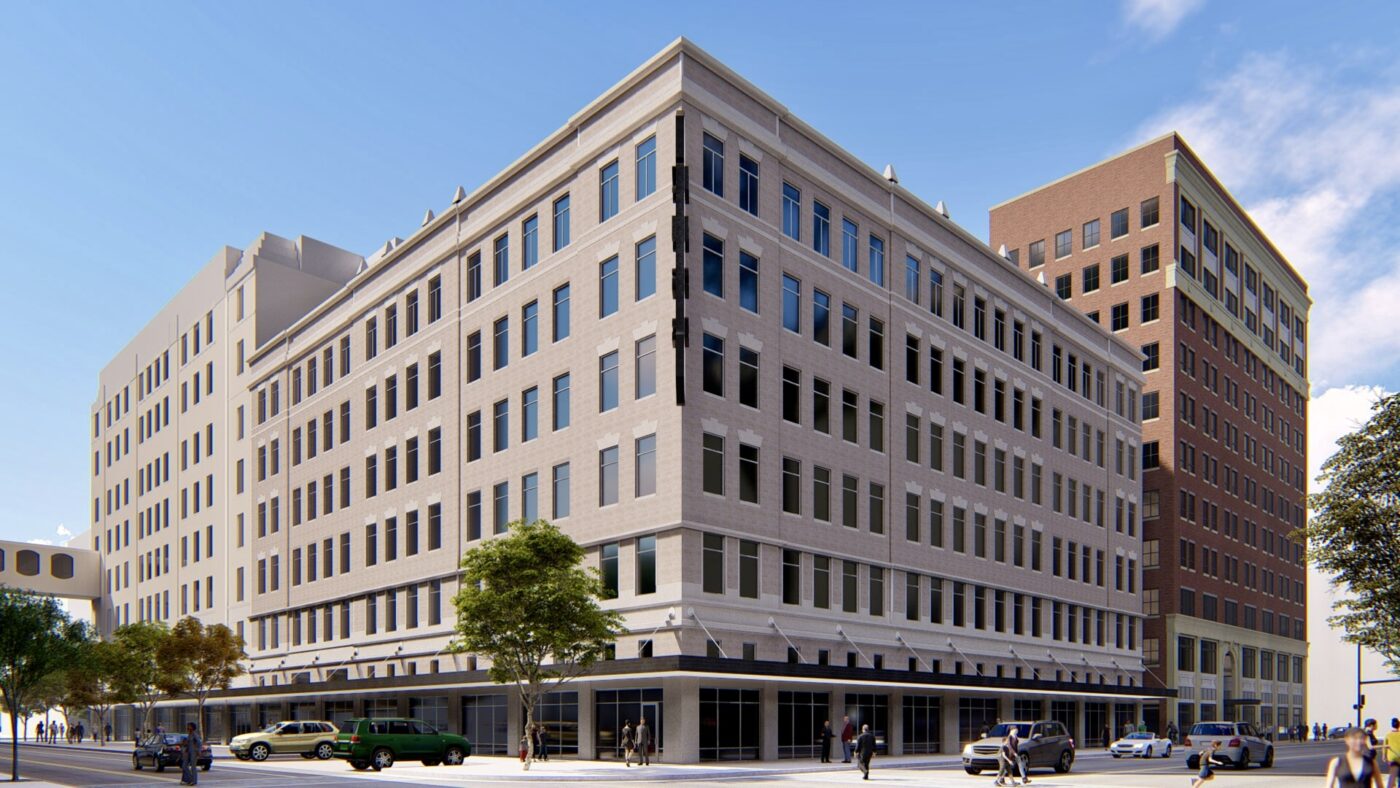
The Kansas College of Osteopathic Medicine (KansasCOM), located in downtown Wichita, is the state’s first osteopathic medical school. It is part of Kansas Health Science University, which has held institutional accreditation from the WASC Senior College and University Commission (WSCUC) since 2026, and it is a member of The Community Solution Education System, a nonprofit network of colleges and universities. KansasCOM stands out for its emphasis on whole-person patient care and community involvement, and its mission is “to train the Osteopathic physician of the future to provide effective, empathic, and innovative care to optimize the health of patients and their communities.”
Osteopathic Medical Schools in Kansas: Key Attributes of KansasCOM
Admission profile. KansasCOM looks for candidates who combine academic ability, shown through GPA and MCAT scores, with qualities like empathy and a commitment to community service. It states that grades and MCAT scores are important because they are among the best predictors of success in medical school, and it also considers an applicant’s entire academic record and application.
Curriculum focus. The curriculum blends academic study, clinical experience and board preparation, preparing students for the many parts of modern medicine. A distinctive feature is training in Osteopathic Manipulative Medicine (OMM), taught in a dedicated OMM lab, which gives students hands-on treatment skills. Students also train in point-of-care ultrasound.
Diversity and community engagement. KansasCOM describes itself as deeply committed to cultivating diversity and inclusion on its campus, and it aims to help increase health care resources for underserved communities across Kansas and beyond.
Key Statistics and Admission Details
- First-year matriculants: 176 (2024-2025), 25 from Kansas and 151 from out of state
- Total enrollment: 399 (2024-2025)
- Mean MCAT: 496.9 and mean cumulative GPA: 3.53 (reported for the 2026-27 cycle; the cohort is not stated)
- Applicants and acceptance rate: not published
- Tuition and fees (2026-27): $61,754 in tuition plus $3,000 in annual fees, the same for in-state and out-of-state students
- Estimated cost of attendance (2026-27): $106,451
- Match 2026: 97.3% of the inaugural Class of 2026 matched, compared with a national DO average of 93.2%
Programs and College Affiliations
KansasCOM offers the Doctor of Osteopathic Medicine degree. Its 3+4 Partner Program gives students at eight regional colleges an early-acceptance route: Friends University, Kansas Wesleyan University, Newman University, Fort Hays State University, Southwestern College, Wichita State University, Rockhurst University and Hesston College. Students in the program are interviewed first by their own pre-medical or pre-health committees, which recommend candidates to KansasCOM’s Director of Admissions, and the MCAT requirement is waived for them.
Admissions Process and Consulting
For the 2026-27 cycle, KansasCOM accepted AACOMAS applications from May 4, 2026, and the primary application deadline is April 30, 2027, with submission at least four weeks earlier recommended for best consideration. Secondary applications are sent automatically to applicants with a science and overall GPA of 3.0 or higher and an MCAT of 500 or higher, and others are reviewed individually. The secondary costs $50, is best submitted within 30 days of the invitation and is due by May 15, 2027. Applicants need a cumulative and science GPA of at least 3.0 and an MCAT from no earlier than January 2024; a score of 500 or above is recommended. Two letters are required, one from a pre-med adviser or committee (or a science faculty member) and one from a physician (DO or MD). Kansas residents can apply through Early Decision by January 15, 2027.
Interviews are virtual and include two one-on-one interviews and a faculty panel, with a mix of traditional and multiple mini interview (MMI) style questions. Interviews run from fall through May, and decisions are emailed on a rolling basis within four to six weeks. For aspiring students, International Medical Aid offers admissions consulting, with help on essay writing, interview preparation and medical school requirements.
Facilities and Student Life
The campus is a 116,000-square-foot facility at 217 East Douglas Avenue in Wichita, with a two-story main lecture hall, a second lecture hall, an OMM lab, 27 group study rooms, a podcast studio and a cafe. The entrance is marked by Chester I. Lewis Reflection Square Park, a tribute to the Dockum sit-ins. KansasCOM does not provide campus housing, but it helps students find housing in Wichita, where it says rental rates are nearly 30% below the national average.
Career and Clinical Opportunities
Clinical education. In the third and fourth years, students choose between a core-site pathway within one health system and a distributed model that rotates them through several hospitals, specialties and patient populations in urban and rural communities.
Career services. KansasCOM supports students’ professional development with resources for residency and post-graduation planning. Its first graduates matched into programs including the University of Kansas School of Medicine in Kansas City and Wichita, the University of Missouri-Kansas City and the Mayo Clinic School of Graduate Medical Education in Florida.
The Kansas College of Osteopathic Medicine offers a full path for aspiring osteopathic physicians, with modern facilities, a focus on whole-person care and a first class that matched well above the national DO rate. For those looking to explore this path further, KansasCOM is a strong option in Kansas health care education.
Benedictine College School of Osteopathic Medicine (Proposed)
Benedictine College, a Catholic, Benedictine liberal arts college founded in 1858 in Atchison, is developing a third Kansas medical school. The proposed Benedictine College School of Osteopathic Medicine earned candidate status from COCA in August 2026. Candidate status is the second step toward accreditation, and schools at this stage may not recruit, accept applications or fees, admit students or begin instruction.
The college says that it expects to reach pre-accreditation, the stage at which it can talk with prospective students, in spring 2027, that students may be able to apply by late spring 2027 if that timeline holds and that its first class is projected to start in fall 2028. It plans to train 180 medical students a year and to send graduates to Catholic hospitals in urban centers, rural communities and underserved areas around the country. Benedictine has purchased a 30,000-square-foot historic building at 518 Unity Street in Atchison, three blocks from its main campus, and plans a Health Sciences Complex for the medical school and its School of Nursing, with construction planned from fall 2026 through early 2028. Clinical rotations in the third and fourth years will take place in a network of affiliated hospitals and clinics. Because Benedictine cannot accept applications yet, applicants for 2027 should focus on KU and KansasCOM.
Conquering Kansas Medical School Admissions with International Medical Aid
Dreaming of a rewarding medical career in the heartland? Kansas medical schools and their supportive learning environments are a great place to start your career as a medical professional. However, competitive acceptance rates, lengthy medical school applications and intimidating interview processes can at times feel overwhelming. That’s where International Medical Aid Medical School Application Consulting comes in.
Master the MCAT and Craft Compelling Essays
MCAT mastery. Our coaches analyze your strengths and weaknesses and give you personalized strategies and proven tactics for the MCAT. At KU, a 502 paired with a 3.4 BCPM GPA earns Kansas residents and Kansas-tie applicants an automatic interview, so every point counts.
Storytelling. We help you write essays that show your unique story, motivations and commitment to medicine, so that you stand out. For KU, that includes showing an understanding of health care in Kansas and how you plan to serve Kansas communities.
Highlight Your Strengths and Get Noticed
Academic advantage. We guide you in presenting your academic achievements in a way that shows your dedication and potential.
Extracurricular edge. We help you turn your extracurricular activities and volunteer experiences into clear narratives that show your range and your passion for service. Students who still need patient contact can look at pre-med internships and other supervised clinical roles before they apply.
Inside strategies. Learn proven strategies to personalize your application, from choosing strong letter writers to preparing interview responses for each school.
Plan the Path to Success
Financial aid planning. We help explain tuition costs and financial aid options so that medical school is within reach.
Residency roadmap. We guide you through the residency programs available in Kansas so that you can find the right fit for your career goals.
Graduate wisdom. Gain insights from successful Kansas medical school graduates who have walked the path before you.
International Medical Aid is your partner in conquering Kansas medical school admissions. Our support system helps you:
- Maximize your potential. Our personalized approach helps you present your best self in every part of the application.
- Reduce stress and save time. Focus on what matters most, your studies and preparation, while we help with application logistics.
- Strengthen your application. Get expert guidance and insight from people who know the process well.
Don’t let the competitive landscape hold you back. Take control of your future with International Medical Aid. Contact us today, and let’s make your dream of becoming a Kansas doctor a reality! Schedule Your Complimentary 30-Minute Session Today. Questions? Feel free to reach out by email at [email protected].
Bonus tip: We offer personalized school-specific consultations to help you fit your application to each school’s strengths and programs. Applicants who want hands-on clinical experience before they apply can also explore IMA’s medical internships abroad and our healthcare internships abroad for other health careers.
Frequently Asked Questions
How many medical schools are in Kansas?
Kansas has two medical schools enrolling students: the University of Kansas School of Medicine, an MD program with campuses in Kansas City, Wichita and Salina, and the Kansas College of Osteopathic Medicine, a DO program in Wichita. A third, the proposed Benedictine College School of Osteopathic Medicine in Atchison, holds candidate status from the Commission on Osteopathic College Accreditation and cannot accept applications yet.
Is there a DO school in Kansas?
Yes. The Kansas College of Osteopathic Medicine in Wichita is the state’s first and only accredited osteopathic medical school. It holds Accreditation with Warning from COCA, enrolled its first students in 2022 and graduated its inaugural class in 2026. Benedictine College is developing a second DO school, with a first class projected for fall 2028.
Is Kansas City University in Kansas?
No. Kansas City University’s College of Osteopathic Medicine is in Kansas City, Missouri, and its second campus is in Joplin, Missouri. It is close to the Kansas border and popular with Kansas applicants, but it is a Missouri school.
Does KU School of Medicine accept out-of-state applicants?
Yes, but it gives primary consideration to Kansas residents and applicants with a Kansas tie. In the 2024 entering class, 180 of 211 matriculants were Kansas residents, 19 were nonresidents with a Kansas tie and 12 were nonresidents with no tie. Nonresidents pay a $50 supplemental application fee and $36,452.90 per semester in tuition in 2026-27.
What counts as a Kansas tie at KU?
KU defines a Kansas tie as a nonresident applicant who currently lives and works in Kansas, has a parent who lives in Kansas, graduated from a Kansas high school or a Kansas four-year college, or has a parent who graduated from or is on the faculty of the KU School of Medicine. Applicants with a tie get the same priority review for interviews as Kansas residents.
What MCAT score do I need for medical school in Kansas?
KU does not consider applications with an MCAT of 496 or below, and Kansas residents and Kansas-tie applicants with a 502 or higher and a BCPM GPA of 3.4 or higher, with no red flags, receive an automatic interview in Regular Decision. KU does not publish its class average. KansasCOM recommends an MCAT of 500 or above, sends secondaries automatically at 500 or higher with a 3.0 GPA and reports a mean MCAT of 496.9 for the 2026-27 cycle, without naming the entering class.
What GPA do I need for medical school in Kansas?
KansasCOM requires a cumulative and science GPA of at least 3.0 and reports a mean cumulative GPA of 3.53 for the 2026-27 cycle. KU’s automatic interview rule for Kansas residents and Kansas-tie applicants uses a BCPM GPA of 3.4, and KU does not publish its class average GPA.
How much does medical school in Kansas cost?
For 2026-27, KU charges Kansas residents $21,842.80 per semester in tuition on the Kansas City campus and $21,206.60 in Wichita and Salina, and nonresidents $36,452.90 per semester on every campus, plus campus fees. KansasCOM charges $61,754 in tuition plus $3,000 in fees for every student, with an estimated total cost of attendance of $106,451.
Do Kansas medical schools accept international or DACA students?
KU considers U.S. citizens, permanent residents and applicants with an approved DACA status, and it does not consider other international applicants. KansasCOM does not accept international students or DACA recipients.
Which KU campus will I attend?
You apply to the KU MD program, not to a campus. After you are admitted, you indicate your campus preferences, and KU assigns campuses through its own process. Because capacity differs by campus, your first choice is not guaranteed. Salina admits eight students a year, and the Class of 2030 has 175 students in Kansas City and 28 in Wichita.
Can I apply to Benedictine College’s medical school now?
Not yet. Schools with COCA candidate status may not recruit or accept applications. Benedictine expects to reach pre-accreditation in spring 2027, says students may be able to apply by late spring 2027 if its timeline holds and projects its first class for fall 2028.
What physician assistant programs are in Kansas?
Wichita State University offers a 26-month Master of Physician Associate degree with ARC-PA Accreditation-Continued status, and Kansas State University also runs a PA program that KU’s pre-health advisors cover. IMA’s guide to PA schools in Kansas compares the options.
How much clinical experience do Kansas medical schools want?
Neither school sets a minimum number of hours. KU requires health care experience through shadowing, volunteering or employment, and KansasCOM requires health care experience and lists clinical jobs such as EMT, scribe, medical assistant or CNA among the experiences that make an application more competitive. Applicants taking time between college and medical school often use pre-med gap year programs and local clinical jobs to build these hours, and internships for pre-med students can add supervised patient contact. Students who want structured clinical roles before they apply can also consider pre-health internships.
Sources
- University of Kansas School of Medicine: Selection Process; Eligibility and Application Requirements; How to Apply; Application Timeline; MD Admission and Aid; Premedical Requirements; Campuses, Salina and Wichita campus pages; Accreditation; MD program; MD-PhD program; Office of Rural Medical Education student programs; Prospective Student Programs; History; MD Financial Aid; KUMC School of Medicine Tuition and Fees Guide 2026-2027; KUMC degree programs; KUMC news, “2026 White Coat Ceremony” (July 24, 2026). Checked November 11, 2026.
- University of Kansas Pre-Health Professions: Physician Assistant advising and pre-PA curriculum pages. Checked November 11, 2026.
- Kansas College of Osteopathic Medicine: 2026-2027 Cost of Attendance (updated July 23, 2026); Admission Requirements; Application Process and Timeline; Admissions FAQs; Accreditation; About; Mission and Values; Location and Facilities; Clinical Education; Curriculum; Housing; Career Services; Residency Match Day Results (Match 2026); AACOM Choose DO Explorer KansasCOM profile (2026-2027 cycle). Checked November 11, 2026.
- Benedictine College: proposed School of Osteopathic Medicine page and FAQ. Checked November 11, 2026.
- Wichita State University Physician Associate Program: program home, About, MPA degree, admission information and financial aid pages. Checked November 11, 2026.
- Liaison Committee on Medical Education, Directory of Accredited Programs (updated November 2, 2026).
- Commission on Osteopathic College Accreditation, Colleges of Osteopathic Medicine directory (September 2026) and Candidate Status directory. Checked November 11, 2026.
See more of our guides in your Google results: add International Medical Aid as a preferred source on Google.