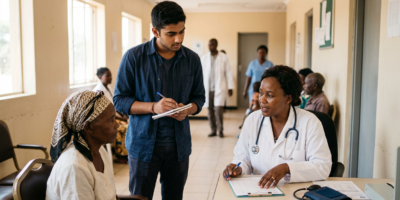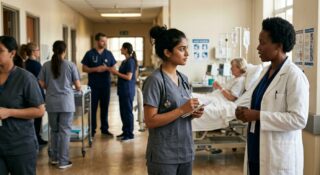
If you are applying to medical school, PA school, dental school, nursing school, or an OT program, you need clinical experience. That is not a soft recommendation. It is a baseline expectation. Admissions committees want proof that you have spent real time around patients, that you understand what healthcare work looks and feels like, and that your decision to pursue this career is grounded in exposure rather than assumption. Knowing how to get clinical experience, and how to make it meaningful, is one of the most important parts of building a competitive application.
The challenge for most students is not a lack of options. It is figuring out which options count, which are worth the time, and how to combine different types of experience into a profile that shows depth. What follows are ten concrete paths to clinical experience, with honest notes on what each one offers, what its limitations are, and how admissions committees tend to view it.
1. Physician Shadowing
Shadowing is the most common entry point. You observe a licensed physician during patient encounters, rounds, or procedures. You do not treat, diagnose, or intervene. Your role is to watch, listen, and learn how a doctor thinks, communicates, and manages a day.
Most medical schools expect some shadowing hours. The AAMC’s guidance on preparing for medical school emphasizes gaining clinical exposure that helps you confirm your commitment to the profession. However, shadowing alone rarely satisfies the full clinical experience expectation. It shows interest, not investment. If you only shadow, you may struggle to demonstrate the kind of sustained patient interaction that committees want to see.
To get shadowing hours, contact physicians directly. Start with your own doctors, your university’s pre-health advising office, or local hospitals with volunteer and shadowing programs. Shadow across specialties if possible. Primary care, surgery, psychiatry, and emergency medicine each show a different side of the profession.
2. Certified Nursing Assistant (CNA) Work
Working as a CNA is one of the strongest forms of clinical experience you can get, especially for PA school applicants, because it involves direct patient care. You assist patients with daily activities, take vital signs, communicate with nursing staff, and spend extended time at the bedside.
CNA certification programs typically take four to twelve weeks, depending on the state. The investment pays off. PA programs in particular place significant weight on direct patient care hours, and the PAEA’s CASPA applicant data reports show that accepted PA students often accumulate thousands of hours of patient care experience. CNA work generates those hours reliably, and it shows committees that you are comfortable with the physical, emotional, and logistical realities of patient care.
This role also provides strong material for personal statements and interviews. You will have specific stories about patients, about moments where you noticed something important, about what it means to be present for someone during a vulnerable time.
3. Emergency Medical Technician (EMT) Certification and Work
Becoming an EMT provides high-acuity, hands-on patient contact. You respond to emergencies, assess patients in the field, stabilize conditions, and transport patients to medical facilities. The training is intensive but accessible, usually requiring 120 to 150 hours of coursework followed by a national certification exam.
For pre-med students, EMT work offers something that few other roles provide: decision-making under pressure with real consequences. You learn to assess a scene, take a patient history quickly, and communicate with hospital teams during handoffs. These are the kinds of experiences that stand out in applications because they demonstrate composure, clinical thinking, and responsibility.
Many students work as EMTs part-time during college or full-time during gap years. If you are trying to understand what clinical hours medical school applicants actually report, EMT work can contribute significantly to your total.
4. Medical Scribing
Scribes work alongside physicians in real time, documenting patient encounters in the electronic health record. You hear the chief complaint, the history, the physical exam findings, and the assessment and plan. You are, in effect, learning the language of medicine by recording it.
Scribing is particularly popular among pre-med students because it provides sustained exposure to clinical reasoning without requiring a separate healthcare certification. Companies like ScribeAmerica and PhysAssist hire and train scribes nationally, and many hospital systems run their own programs.
The limitation is that scribing does not involve direct patient care. You are documenting, not treating. Some PA programs may not count scribe hours as patient care experience, though many medical schools view scribing favorably. Check with the specific programs you are targeting.
5. Medical Assisting
Medical assistants work in outpatient clinics and physician offices, performing both clinical and administrative tasks. On the clinical side, this can include taking vital signs, preparing patients for exams, drawing blood, and assisting with minor procedures. The BLS occupational outlook for medical assistants projects strong job growth, and the role offers broad exposure to primary care workflows.
You can become a medical assistant through a certificate program, an associate degree, or, in some states, on-the-job training. For students who want direct patient interaction in an outpatient setting, this is a practical and accessible option. The variety of tasks you handle also gives you a well-rounded understanding of how a clinic functions day to day.
6. Hospital Volunteering
Volunteering at a hospital is often the first clinical experience students pursue, and for good reason. It is widely available, does not require certification, and puts you in a healthcare environment where you interact with patients, families, and staff.
Typical volunteer roles include patient transport, front desk assistance, comfort rounding, and helping in specific departments like the emergency room or surgical waiting areas. The direct patient care component is limited, so volunteering alone will not satisfy the clinical experience expectations of most programs. But it is a solid starting point, especially for students who are early in their pre-health journey and want to confirm their interest before committing to a certification.
To make volunteer hours meaningful, stick with it over time. Admissions committees are more impressed by consistent weekly volunteering over a year than by a single week of intensive hours. Sustained commitment signals genuine interest.
7. Phlebotomy
Phlebotomy is a focused, certifiable clinical skill that involves drawing blood from patients for lab tests, transfusions, or donations. Training programs are short, often six to twelve weeks, and the certification opens doors to paid positions in hospitals, clinics, and blood banks.
For pre-med and pre-PA students, phlebotomy offers direct patient interaction in a very specific context. You learn to put patients at ease, manage a technical procedure efficiently, and deal with the reality that not every stick goes smoothly. It is a narrow skill set, but it generates patient care hours and demonstrates comfort with clinical procedures.
8. Clinical Research
Research positions in clinical settings, such as academic medical centers or teaching hospitals, combine scientific inquiry with patient exposure. As a clinical research assistant or coordinator, you may recruit patients for studies, collect data during visits, or help administer study protocols alongside physicians and nurses.
This type of experience is especially valuable for students interested in academic medicine or for those applying to MD/PhD programs. It also helps you understand how evidence-based practice works from the inside. Not all research roles involve patient contact, so if clinical exposure is your goal, look specifically for positions tied to clinical trials or patient-facing studies.
9. Structured International Clinical Programs
Structured programs abroad offer a different kind of clinical exposure. Rather than accumulating hours in a single US hospital, you observe healthcare delivery in settings where resources are limited, disease patterns differ, and the healthcare system operates under different constraints.
Programs like those offered by International Medical Aid place students in supervised clinical environments where they shadow local physicians, clinical officers, nurses, and other professionals. Students observe patient assessments, participate in community health outreach, and engage in guided discussions about the cases and systems they encounter. The experience is observational, with clear boundaries and direct supervision.
International clinical experience can be especially compelling in applications because it demonstrates cultural competency, adaptability, and a willingness to engage with healthcare challenges beyond your home context. For a thorough comparison of how domestic and international clinical settings differ, the IMA blog covers the topic in detail in its guide comparing abroad and U.S. clinical experience.
One important note: pursuing any healthcare career involves significant financial planning. The cost of clinical programs, certifications, and eventually professional school tuition adds up. If you are starting to think about how education debt fits into your long-term picture, IMA’s student loan repayment calculator can help you run realistic scenarios. For a broader look at financing medical education, the Medical School Loans: The Complete 2026 Guide breaks down loan types, repayment plans, and strategies.
10. Dental, Nursing, and OT-Specific Clinical Exposure
If you are pre-dental, pre-nursing, or pre-OT, your clinical experience strategy should reflect the specific profession you are pursuing. ADEA’s guidance on gaining experience for dental school highlights that dental school applicants benefit from shadowing dentists across specialties, volunteering in community dental clinics, and gaining hands-on exposure in dental offices as dental assistants.
Pre-nursing students often start as CNAs or volunteer in hospital settings where they can observe nursing workflows. Pre-OT students should seek observation hours with licensed occupational therapists in settings like rehabilitation centers, schools, or outpatient clinics, since many OT programs require a set number of supervised observation hours for admission.
The key principle across all of these paths is the same: admissions committees want to see that you understand the profession you are applying to, not just healthcare in general. If you are applying to dental school, your clinical experience should include meaningful time in dental settings. If you are applying to OT programs, you should have logged observation hours with practicing occupational therapists.
What Actually Makes Clinical Experience “Meaningful”
Admissions committees at medical, PA, dental, and other health professional schools are not simply counting hours. They are looking for evidence that you paid attention, that you reflected on what you saw, and that the experience shaped your understanding of the profession.
Meaningful clinical experience usually has a few characteristics. First, it is sustained. A few hours of shadowing over a single weekend does not carry the same weight as months of weekly shifts in an emergency room. Second, it involves genuine patient proximity. You should be close enough to the patient experience to understand what patients go through, what clinicians do, and how the two interact. Third, you can articulate what you learned. If you cannot describe a specific moment, patient interaction, or observation that changed how you think about healthcare, the hours on your resume will feel hollow.
When you sit down to write about these experiences in your applications, specificity matters. Committees read thousands of essays about “wanting to help people.” What sets strong applicants apart is the ability to describe a particular patient, a conversation with a supervising physician, or a situation that challenged their assumptions, and then to explain what they took from it. For a detailed look at what medical school admissions committees actually value in clinical experience, IMA’s clinical experience matrix breaks down the components that carry the most weight.
Building a Clinical Experience Plan That Fits Your Timeline
Not every student starts building clinical experience at the same point. Some begin in high school with hospital volunteering. Others do not start until junior year of college and need to accelerate. There is no single correct timeline, but there are practical principles that apply to everyone.
Start with what is accessible. If you have no certifications, begin with shadowing or hospital volunteering. These require no prerequisites and help you confirm your interest before investing time and money in a CNA or EMT course. Once you have confirmed your direction, pursue a role that provides direct patient care hours. CNA, EMT, medical assistant, and phlebotomy work all serve this purpose.
Layer different types of experience over time. A student who has shadowed three specialties, worked as a CNA for a year, and completed a structured international clinical program presents a much more complete picture than someone who only shadowed. Diversity of experience shows breadth of understanding.
If you are on a compressed timeline, a gap year dedicated to clinical work can make a significant difference. Many successful medical and PA school applicants use their gap year to work full-time in a clinical role, accumulating hundreds or thousands of patient care hours while also gaining maturity and perspective.
Finally, document everything. Keep a running log of your hours, the settings you worked in, the professionals who supervised you, and the key observations or moments that stood out. This log will be invaluable when you fill out your applications and need to recall specifics from experiences that may be months or years in the past.
Frequently Asked Questions
How many clinical hours do I need for medical school?
There is no universal minimum. The AAMC does not mandate a specific number, though accepted MD applicants often report a median around 150 to 200 shadowing hours, with additional patient care hours on top of that. Quality and consistency matter more than a single number. Focus on sustained, reflective involvement rather than racing to hit a particular hour count.
Does shadowing count as clinical experience for PA school?
Most PA programs distinguish between patient care experience (PCE) and healthcare experience (HCE). Shadowing typically falls under HCE or may not count at all, since you are observing rather than participating in care. PA programs generally expect substantial PCE, which means direct, hands-on patient interaction in a role like CNA, EMT, or medical assistant. Always check the requirements of each program you are applying to.
Can international clinical experience count toward my application?
Yes, many admissions committees value structured international clinical experience, particularly when it demonstrates cultural competency, exposure to different healthcare systems, and the ability to observe and reflect in unfamiliar settings. The experience should be supervised, ethically structured, and clearly documented. It complements domestic clinical hours rather than replacing them, and it can provide distinctive material for personal statements and interviews.