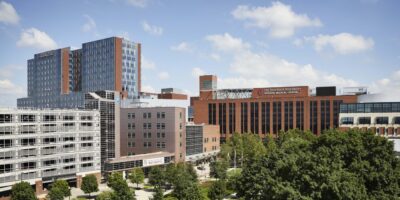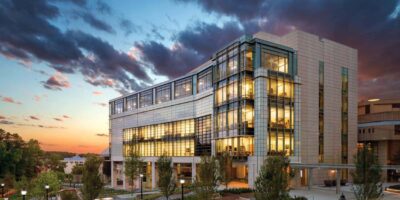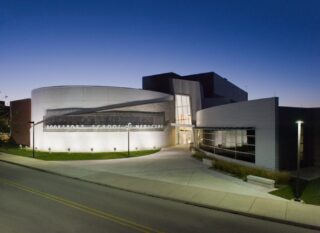

Wright State University Boonshoft School of Medicine is a public, community-based medical school in Dayton, Ohio, that grants the M.D. degree. It has no university hospital of its own. Students train instead across eight teaching hospitals in the Miami Valley, from the region’s only Level I trauma center to a Veterans Affairs medical center and an Air Force medical center. The school is known for its social mission, and it ranks No. 1 in Ohio for producing primary care physicians in the 2026 U.S. News & World Report Best Graduate Schools rankings. Many aspiring physicians in Dayton and the surrounding areas consider it one of the top medical schools near me.
Like every medical school, Wright State has school-specific requirements, priorities and deadlines. To put your best foot forward, you need to understand the school’s identity, its programs and what its admissions committee looks for. This guide covers the 2026-2027 application cycle, for students who want to start medical school in July 2027 as the Class of 2031. It explains the two-phase WrightCurriculum, the M.D. in Three and dual-degree options, the Class of 2028 profile, admissions data for the 2025 entering class, 2026-27 tuition and cost of attendance, prerequisites and deadlines, the virtual interview and all 16 current secondary questions, each with an illustrative example response and analysis. Facts were checked on October 17 and 18, 2026. Bookmark this page if you are applying or planning to apply to the Boonshoft School of Medicine.
Key Takeaways
- Who can apply: U.S. citizens, permanent residents and non-citizens with an I-94 showing refugee or asylum granted status. Ohio residents and non-residents are both considered, and about 20 percent of students in recent incoming classes were classified as out-of-state. Transfer applications are not being accepted.
- Academic context: the Class of 2028 matriculants averaged a 3.68 undergraduate BCPM (science) GPA and a 508.76 highest MCAT score. The minimum MCAT composite is 495. To receive a secondary you need at least a 3.0 undergraduate BCPM GPA, or a 3.3 BCPM GPA in at least 24 postbaccalaureate or 12 graduate hours. Accepted applicants in the 2025 entering class had a median 510 MCAT and a median 3.89 total GPA.
- Mission fit matters: the committee looks for intellectual ability, dedication to human concerns, communication skills, maturity, motivation and potential for medical service in an underserved area of Ohio.
- Key dates for 2026-2027: AMCAS closes November 1, 2026 (the school recommends submitting by October 15). The secondary, its $80 fee and your letters are due December 1, 2026. Offers go out on a rolling basis starting October 15, 2026, and no enrollment deposit is required.
- Costs: first-year tuition and fees for 2026-27 are $54,671 for Ohio residents and $87,263 for non-residents. The school’s 2026-27 first-year budget for a resident, including living expenses, is $92,796.45.
- Distinctive training: a two-phase WrightCurriculum (Foundations of Clinical Practice, 73 weeks; Doctoring Phase, 102 weeks), Team-Based Learning, a required scholarly project, the M.D. in Three for family medicine and pediatrics, and rural and global health scholars programs.
- Interviews are virtual: two one-to-one interviews of about 45 minutes each, plus a student panel.
- Next step: submit AMCAS early, line up three to five letters through the AMCAS Letter Service, and draft your answers to the “why Wright State” and rural experience questions now, before the secondary arrives.
Key Statistics About Wright State University Boonshoft School of Medicine
The snapshot below gathers the figures applicants ask about first. The school’s class profile is for the Class of 2028, which entered in 2024 and is the newest profile the school has posted. Medians, applications, interviews and class demographics are for the 2025 entering class. The entering class figure is from July 2026, costs are for the 2026-27 academic year and deadlines are for the 2026-2027 application cycle.

| Metric | Value | Year or cohort | Source and definition |
|---|---|---|---|
| School and degree | Wright State University Boonshoft School of Medicine, M.D. (also M.D./Ph.D., M.D./M.B.A., M.D./M.P.H. and M.D./M.S.) | Current | School About and Dual Degree Programs pages; Dayton, Ohio |
| Accreditation | Full LCME accreditation; next survey 2026-27 | Current (initial accreditation 1976) | School Accreditation page |
| Applicants | 6,338 | Class of 2028 (entered 2024) | School Prerequisites and Application page, Profile of the Class of 2028 |
| Interviews granted | 468 (interviews granted / applicants: 7.4%) | Class of 2028 | Same profile. This is an interview ratio, not an acceptance rate |
| Matriculated | 130 | Class of 2028 | Same profile |
| Entering class | 130 students | Entering class, July 2026 (Class of 2030) | Wright State Newsroom, 51st Convocation and White Coat Ceremony, July 22, 2026 |
| Average highest MCAT | 508.76 | Class of 2028 matriculants | School profile: average highest MCAT (2015 version) score. Minimum composite for applicants: 495 |
| Average BCPM GPA | 3.68 | Class of 2028 matriculants | School profile: average undergraduate biology, chemistry, physics and math GPA. Minimum for a secondary: 3.0 undergraduate BCPM (or 3.3 postbaccalaureate or graduate BCPM) |
| Median MCAT | 510 (mean 510.5) | 2025 entering class, accepted applicants | AAMC MSAR, 2026 edition: median total MCAT of all accepted applicants (most recent score) |
| Median GPA | 3.89 total; 3.84 science | 2025 entering class, accepted applicants | AAMC MSAR, 2026 edition: median total and science (BCPM) GPA of all accepted applicants |
| Verified applications | 5,986 (1,137 in-state, 4,832 out-of-state, 17 international) | 2025 entering class | AAMC MSAR, 2026 edition: verified AMCAS applications by AAMC residency classification |
| Applicants interviewed | 459 (283 in-state, 176 out-of-state); interviewed / applications: 7.7% | 2025 entering class | AAMC MSAR, 2026 edition (interview counts provided by the school). An interview ratio, not an acceptance rate |
| Matriculated | 128 (14 through Early Decision) | 2025 entering class | AAMC MSAR, 2026 edition: first-year matriculants |
| Matriculants from Ohio | 66% (30% from Raider Country) | Class of 2028 | School profile. About 20% of recent incoming classes were classified as out-of-state |
| Acceptance rate | Not published | n/a | School profile and AAMC MSAR, 2026 edition: applicants, interviews and matriculants are published, offers are not. Matriculants divided by applicants is not an acceptance rate |
| Secondary fee | $80 (waived for AMCAS Fee Assistance Program recipients) | 2026-2027 cycle | AAMC MSAR, 2026 edition; fee waiver from the school’s Prerequisites and Application page |
| Enrollment deposit | None required | 2026-2027 cycle | AAMC MSAR, 2026 edition |
| First-year tuition and fees | $54,671 (Ohio resident); $87,263 (non-resident) | 2026-27 academic year, first-year students | School Financial Aid page: tuition (instructional and general) plus other fees |
| First-year student expense budget | $92,796.45 (Ohio resident) | 2026-27 academic year, year 1 | School Cost of Attendance 2026-27 worksheet: tuition, fees, insurance, educational charges and living expenses |
| Students receiving financial aid | 79% | 2024-25 academic year | AAMC MSAR, 2026 edition (LCME Part I-B): all enrolled and graduated students |
| Average graduate debt | $235,147 | 2024-25 academic year | AAMC MSAR, 2026 edition (LCME Part I-B): average medical school debt of indebted graduates |
| Match outcomes | 129 graduates; 51% training in Ohio; 41% in primary care | Match Day 2026 | Wright State Newsroom, March 20, 2026 |
| Primary care ranking | No. 1 in Ohio and 43rd of 172 schools for primary care graduates; No. 2 in Ohio for rural practice | 2026 Best Graduate Schools | U.S. News & World Report, reported by the Wright State Newsroom, April 9, 2026 |
Treat the interview ratio (7.4 percent for the Class of 2028, 7.7 percent for the 2025 entering class) as a sense of scale, not a forecast. The committee reviews every applicant who completes a secondary for an interview, and the interview itself is weighed in the context of the whole application. What separates applicants at Wright State is less a single number than a convincing record of service, communication and commitment to Ohio’s communities.
Mission and Educational Priorities
The school states its mission in two sentences: “We transform lives through our commitment to outstanding education, innovative research, community partnerships, and exemplary clinical care. We amplify diversity and belonging as we advance health in Ohio’s communities and beyond” (see the Vision and Mission page).
The mission is not decoration. It shows up in how the school selects and trains students:
- Community partnerships are the training model. The vision for a medical school at Wright State came from Dayton-area physicians and community leaders who saw that using existing hospitals and clinical resources would be a cost-effective model for medical education. In return, the school’s community involvement would strengthen health care across the region. That bargain still defines the school: students learn in community hospitals and practices, taught by full-time faculty and more than 1,280 voluntary faculty physicians and health professionals.
- Ohio’s underserved communities are named in the admissions criteria. The committee looks for “potential for medical service in an underserved area of Ohio.” The secondary reflects this with questions about rural experience, connection to Ohio and the patient populations you want to serve.
- Primary care is a strength, not a ceiling. Over the past five years, nearly 40 percent of graduates entered primary care fields and 45 percent stayed in Ohio. In the 2026 Match, 41 percent of the class matched into primary care. The rest matched in 16 other specialties, from dermatology to plastic surgery.
- Diversity and belonging are part of the mission statement. The committee selects a heterogeneous class, with students of diverse life experiences, academic preparation, learning styles and demographic backgrounds.
Social mission and points of pride
One of the school’s top points of pride is its social mission. A 2010 study published in the Annals of Internal Medicine, “The Social Mission of Medical Education: Ranking the Schools,” ranked the Boonshoft School of Medicine fourth in the nation for its social mission. The study scored schools on the share of graduates who practice primary care, work in health professional shortage areas and are from underrepresented minority groups, using graduates from 1999 to 2001. It is an older study, but it remains a useful description of the school’s identity.
Other points of pride include:
- Two AAFP Top Ten Awards since 2013. The American Academy of Family Physicians honored the school for the share of graduates entering family medicine. In the 2014 award, 15.9 percent of graduates over three years had entered family medicine.
- Best Doctors. Thirty-eight Wright State physicians and faculty were named to the 2017-2018 Best Doctors in America list, 88 percent of the 43 Dayton-area doctors named.
- First in Team-Based Learning. The school was the first medical school in the nation to implement Team-Based Learning, and its faculty have trained more than 40 U.S. medical and health professions schools in the method.
- A pioneer in emergency medicine. Wright State created the fourth academic Department of Emergency Medicine in the United States and started one of the first 10 emergency medicine residencies, which graduated its first class in 1980.
- Civilian-military residency training. For more than 30 years, the school, Dayton Children’s Hospital and the U.S. Air Force have run the nation’s only civilian-military integrated pediatric residency, one of six civilian-military residency programs at Wright State.
What the mission means for your application
Read the mission as a list of things to show, not words to repeat. Service in underserved settings, steady clinical work with real patients, teamwork and an honest connection to Ohio all carry weight here. Applicants from outside Ohio can still be strong candidates, but they need to explain their ties in the secondary. The school also values the kind of person who learns well in teams: Team-Based Learning puts you in a small group defending your reasoning to classmates from the first weeks of school.
Accreditation and Institutional Identity
The Boonshoft School of Medicine’s M.D. program holds full accreditation from the Liaison Committee on Medical Education (LCME), the accreditor for U.S. M.D. programs. The school’s initial year of accreditation was 1976, and its next full survey is scheduled for 2026-27 (see the Accreditation page). Graduates meet the educational requirements for licensure in Ohio and in all other states, although testing and graduate medical education rules vary by state.
Some quick facts about the institution:
- Parent university: Wright State University, a Carnegie-classified research university in Dayton that became an independent university in 1967. The medical school is one of its eight colleges and three schools.
- History: the school was established in 1974, admitted its first students in 1976, and its first class graduated in 1980. It was renamed the Boonshoft School of Medicine in 2005 in recognition of the Oscar Boonshoft family, who donated $28.5 million to the school. In July 2026 the school welcomed its 51st entering class while celebrating its 50th anniversary.
- Size: the school supports more than 500 medical students and about 420 residency and fellowship positions across 29 programs. It also offers master’s programs in pharmacology and toxicology and in public health.
- Community-based model: like about one-fifth of U.S. M.D. schools, Wright State does not own or operate a university hospital. It partners with six major teaching hospitals and two federal institutions, and it has formal affiliation agreements with more than 25 other health care institutions in the Miami Valley.
- Clinical partner: Premier Health is the school’s main clinical partner. Since March 2025 the dean of the medical school has also served as chief academic officer at Premier Health.
Rankings
Rankings are only one input, and none of them measures fit. For applicants who want them, here is where the school stands in the 2026 U.S. News & World Report Best Graduate Schools rankings, as reported by the Wright State Newsroom on April 9, 2026:
- No. 1 in Ohio for producing primary care physicians
- 43rd nationally, among 172 medical schools, for primary care graduates (top 25 percent)
- Second tier nationally for primary care, the highest tier earned by any Ohio medical school
- No. 2 in Ohio for producing physicians who practice in rural areas
The primary care ranking reflects graduates who entered primary care fields from 2017 to 2019, and the rural ranking reflects graduates practicing in rural areas over the same period.
Medical Programs and Affiliations
Before applying, research the programs a school offers. At Wright State, every student enters through the same M.D. admissions process. The combined and accelerated options below are chosen after you enroll, usually during the first year, so they do not require a separate application when you apply through AMCAS.
Four-year M.D. program
The four-year M.D. follows the WrightCurriculum, described in the next section. Class sizes are small for a public school: 130 students entered in July 2026. Students learn in small teams through Team-Based Learning, begin clinical learning early and complete a scholarly project before graduation. Many students also pursue a second degree.
M.D. in Three
The M.D. in Three puts students on a faster track to their M.D. It follows the WrightCurriculum in a condensed format and offers direct progression to residency in a Boonshoft School of Medicine residency program. Students may also apply to other programs through the NRMP and must still register for the Match.
- Tracks: Family Medicine, Rural Family Medicine and Pediatrics. For other specialties, students follow the traditional curriculum.
- Seats: up to 10 students per cohort.
- When to apply: only during the first year of medical school. For the most recent cohort, the application opened January 12, 2026, and closed February 15, with interviews in February and March and decisions by April 1.
- Requirements to stay in the track: pass USMLE Step 1 and Step 2 on the first attempt, earn Pass or Honors in every module and clerkship, complete monthly clinical shifts during the second year of the Foundations curriculum, advance without delays or leaves and complete at least 130 weeks of curriculum.
- Benefits: one fewer year of tuition and fees, fewer away-rotation and interview costs, and more certainty about residency. Students can return to the four-year curriculum at no penalty.
- Who it fits: students who already know family medicine or pediatrics is their path and who plan to train and practice in Ohio. The M.D. in Three can be combined with the rural track, but not with the Global Health Scholars Program.
Combined M.D./Ph.D.
The M.D./Ph.D. lets students earn both degrees in seven years. It is run jointly by the Boonshoft School of Medicine and the College of Science and Mathematics, with the Ph.D. in Biomedical Sciences. Years 1 and 2 cover the preclinical medical curriculum, summer research rotations and USMLE Step 1. Years 3 through 5 focus on dissertation research, and years 6 and 7 complete the clinical curriculum and Step 2.
To apply, you must first be accepted to the Boonshoft School of Medicine. You then apply separately to the Biomedical Sciences Ph.D. program through the Wright State Graduate School by March 1 for the following fall. Your MCAT can replace the GRE, and you may reuse your medical school letters. Top students accepted into the M.D./Ph.D. receive some combination of stipend and tuition remission during the Ph.D. years. Details are on the M.D./Ph.D. page.
Physician Leadership Development Program: M.D./M.B.A. and M.D./M.P.H.
The M.D./M.B.A. and M.D./M.P.H. are the two options of the five-year Physician Leadership Development Program (PLDP). Students complete the master’s degree in one year during medical school, along with applied leadership sessions throughout the program. Medical students apply and are accepted into the PLDP during their first year, and no prior business or public health coursework is required.
- M.D./M.B.A.: combines medicine with the business side of health care, through the AACSB-accredited Raj Soin College of Business, with online, hybrid and in-person classes and an optional health care administration internship at an area hospital.
- M.D./M.P.H.: builds skills in epidemiology and population health management through the school’s Master of Public Health program, with evening courses, community internships and capstone projects. Students will focus on how the health of populations affects the health of individuals, and the reverse.
M.D./M.S. in Clinical Investigation
The Clinical Investigation dual degree (M.D./M.S.) grants a Master of Science in Pharmacology and Toxicology. It is open only to students enrolled in the M.D. program. Students gain hands-on experience in patient-centered clinical research alongside physicians and staff at the Pharmacology Translational Unit and attend department seminars (see the Dual Degree Programs page).
Scholars programs and pathways
- Wright Rural Medical Scholars (WRMS). The Wright Rural Medical Scholars program aims to build the rural health workforce, especially in rural west central Ohio. Students can join the Rural Pathway, a more intensive experience with required clinical, scholarship and extracurricular activities, or take stand-alone rural rotations. WRMS works with Wright State’s Lake Campus in Celina, on Grand Lake St. Marys, about 90 miles northwest of Dayton, and it is funded by Ohio Area Health Education Center funds. It builds on the Wright Rural Health Initiative, which has placed students in rural areas since 2013.
- Global Health Scholars Program. All students can take a global health clinical elective in their third or fourth year. First-year students can apply to join a select Global Health Scholars cohort with additional longitudinal training, and students can align their goals with a global health M.D./M.P.H. certificate (see the Global Health Scholars Program page).
- Prematriculation Program. A June summer program for committed incoming students that introduces study strategies, critical thinking and test-taking skills, with team learning to prepare for the Foundations of Clinical Practice. It is open to all committed students and is suggested for students with non-science majors, career changers and those who have been out of school for a while.
Horizons in Medicine (high school pipeline)
Horizons in Medicine is a month-long summer program for students entering their junior or senior year of high school, with entering college freshmen also considered. Participants learn medical terminology and key concepts from biochemistry, anatomy, histology and pharmacology, spend afternoons shadowing in hospitals and community clinics, and complete a group research paper or project under the direction of a Wright State medical student. The program has more than 600 alumni. Applications for the 2027 program open in December 2026 and close in April 2027. The 2026-2027 M.D. secondary now asks whether you took part, so alumni should be ready to describe it. High school students exploring medicine more broadly can also compare medical internships for high school students that include supervised clinical work.
Wright State does not list an early assurance or BS/MD linkage program on its medical admissions pages. The early admission route is the Early Decision Program for Ohio residents, covered below.
Curriculum Overview
The WrightCurriculum began in 2017 with the entering Class of 2021, after years of planning, prioritizing content and field-testing teaching methods. It rests on three design principles:
- Students become self-directed learners with specific skills in critical thinking, finding the best evidence for decisions and continuing to learn throughout a life of service.
- The design, structure and teaching strategies are evidence-based and linked to the science of learning.
- The curriculum keeps evolving as faculty and students learn together what works best, in a learning environment of collaboration, respect and integrity.
Two phases
The WrightCurriculum has two phases:
| Phase | Length | What it covers |
|---|---|---|
| Foundations of Clinical Practice | 73 weeks | Biomedical, clinical and health care sciences integrated step by step, taught largely through Team-Based Learning, with early opportunities to learn in clinical settings |
| Doctoring Phase | 102 weeks | Clinical experiences in hospitals, clinics and practices, including core clerkships, followed by elective time to clarify your specialty choice and advanced clinical experiences that prepare you for residency |
Medical schools in the United States all cover the same content. The difference lies in how the content is presented, sequenced and integrated. At Wright State, the Foundations phase builds the biomedical sciences around clinical problems rather than teaching them in isolation, and the Doctoring Phase moves students into the school’s community network of hospitals and practices. The later part of the Doctoring Phase includes advanced doctoring electives that help you choose and prepare for a specialty.
How you learn
- Team-Based Learning (TBL). Wright State was the first U.S. medical school to implement TBL. Students work closely in small, stable teams to master material, apply it to clinical cases and defend their diagnoses and treatment plans. Class time is devoted to solving authentic problems with peers, guided by faculty.
- A collaborative culture. Students repeatedly describe teamwork and team building, not competition, as what stands out. Classmates and faculty support each other, the student-to-faculty ratio is low and small class sizes make it easy to know everyone.
- Lecture recordings and testing. Digital recordings of lectures are posted and archived, and computerized tests mimic USMLE board exams with immediate scoring and error review.
- Early clinical exposure. The curriculum offers early opportunities to learn in clinical settings, along with community service and outreach throughout all four years.
Scholarship and research
All students complete a scholarly project before graduation. It teaches hypothesis generation, data collection, literature review and publication. Students can join the Research Learning Community, a collaboration among students, faculty and the Office of Research Affairs that includes electives, advising and the annual Medical Student Research Symposium, and the Medical Student Research Club.
Licensing exams and timeline
The WrightCurriculum is designed to give you the knowledge and skills to succeed on the national licensing exams. In the M.D. in Three, the same curriculum is condensed to at least 130 weeks, and students must pass Step 1 and Step 2 on the first attempt to stay in the track. M.D./Ph.D. students complete the Foundations material, then their Ph.D. years, then the clinical curriculum. PLDP students add one graduate year, for five years in total.
How tracks differ
| Track | Length | When you join | Key difference |
|---|---|---|---|
| M.D. | Four years | At admission | Standard WrightCurriculum |
| M.D. in Three | Three years (at least 130 weeks of curriculum) | First year | Family medicine, rural family medicine or pediatrics; direct progression to a Wright State residency |
| M.D./M.B.A. or M.D./M.P.H. (PLDP) | Five years | First year | One graduate year plus leadership sessions |
| M.D./Ph.D. | Seven years | After M.D. acceptance; Ph.D. application by March 1 | Three research years between preclinical and clinical training |
| M.D./M.S. Clinical Investigation | Combined with the M.D. | While enrolled | Clinical research at the Pharmacology Translational Unit |
Admissions Requirements and Application Process
Wright State has specific academic and application criteria that every applicant must meet. This section covers what the committee looks for, the required coursework, the MCAT, letters, the AMCAS and secondary applications and the full timeline.
Selection factors: what Wright State looks for in an applicant
Curious about what the school looks for beyond GPA and MCAT scores? Like most medical schools, Wright State takes a holistic approach. That means the committee evaluates your entire application to get a picture of who you are as a candidate and as a person. The AAMC Core Competencies for Entering Medical Students are a helpful guide to the qualities most schools, including this one, review.
At Wright State, the committee states its priorities directly. It looks for evidence of:
- Intellectual ability
- Dedication to human concerns
- Communication skills
- Maturity
- Motivation
- Potential for medical service in an underserved area of Ohio
The committee also names the factors it rates. Academic factors include your undergraduate school or schools, science GPA and trend, the difficulty of your major and course load, MCAT scores, honors and awards for academic achievement and research experience. Humanistic factors include pre-college and college extracurricular activities, hours worked while attending school, work experience, volunteer experience, honors and awards for non-academic achievement and letters of recommendation.
Two items on that list deserve attention. “Hours worked while attending school” means a job you held to pay your way counts in your favor, so describe it fully in AMCAS. And “pre-college” activities count, which is one reason the secondary now asks about Horizons in Medicine. Strong interpersonal skills, work with diverse groups of people, leadership, research literacy and volunteer service all fit within these factors. If you want personalized help matching your experiences to them, IMA offers personalized help with every stage of the application.
GPA and MCAT requirements
Wright State screens on science GPA before sending secondaries. To receive a secondary, you need one of the following:
- A 3.0 undergraduate BCPM (biology, chemistry, physics and math) GPA
- A 3.3 postbaccalaureate BCPM GPA over at least 24 hours
- A 3.3 graduate BCPM GPA over at least 12 hours
Graduate and postbaccalaureate BCPM GPAs are evaluated regardless of your undergraduate GPA, so a strong postbac or science master’s can open the door if your college grades fell short. The minimums are only the floor. Class of 2028 matriculants averaged a 3.68 undergraduate BCPM (science) GPA, and accepted applicants in the 2025 entering class had a median total GPA of 3.89 and a median science GPA of 3.84.
The MCAT rules are strict:
- The minimum composite score is 495.
- Your MCAT must be taken no more than three years before you submit your application, and only the 2015 version or later is accepted.
- You must take it no later than September of the year you apply. For the 2026-2027 cycle, that means September 2026. Scores from tests after that month cannot be considered.
- The school recommends taking the MCAT in April of your application year.
- Only scores available at the time of review are considered. For the 2026-2027 cycle, scores from June 2023 through September 30, 2026 are accepted.
- The committee can see all of your MCAT scores and considers every score when it makes a decision, not only your highest.
Class of 2028 matriculants averaged a 508.76 highest MCAT score, and accepted applicants in the 2025 entering class had a median MCAT of 510 (section medians: 128 in Chemical and Physical Foundations, 126 in Critical Analysis and Reasoning Skills, 128 in Biological and Biochemical Foundations and 128 in Psychological, Social and Biological Foundations). A score near 495 meets the minimum but sits well below the class average, so the rest of your application will need to carry more weight.
Required coursework
The MCAT and three years (90 semester hours or 135 quarter hours) of preparation at an approved college or university in the United States or Canada are required. You do not need a finished bachelor’s degree to apply, but a strong application will take precedence over an early one. Applicants should present the usual premedical preparation, including:
| Subject | Requirement |
|---|---|
| Biology | Two semesters or three quarters, with labs |
| General chemistry | Two semesters or three quarters, with labs |
| Organic chemistry | Two semesters or three quarters, with labs |
| Physics | Two semesters or three quarters, with labs |
| Mathematics | Two semesters or three quarters, through trigonometry (calculus preferred) |
| English | Two semesters or three quarters |
| Biochemistry | One semester or two quarters |
Course policies:
- AP credit counts if your university accepted it for credit and it appears on your transcript.
- Community college credit is accepted if the course includes a lab and is comparable in content to a four-year college course.
- Online courses: math and English may be completed online, and so may science lectures. Science labs must be completed in person. Online science labs taken between January 2020 and August 2021 are still accepted.
- No time limit: there is no required time frame for prerequisites, but most applicants find that courses taken more than 10 years ago will not prepare them well for the MCAT.
- Coursework outside the U.S. or Canada: applicants who completed prerequisites elsewhere need an advanced degree from an approved U.S. college or university, or from an international institution fully accredited by an established U.S. higher education certifying agency.
You do not have to major in pre-med. Entering students have majored in biology, chemistry, engineering, health, English, foreign languages, anthropology, psychology and physics, among others. A basic understanding of the physical and biological sciences is important, but a broad appreciation of individuals and their social, cultural and artistic efforts is equally necessary, and each applicant’s credentials are reviewed individually.
Citizenship and residency
To be considered, you must be a U.S. citizen, hold a permanent resident visa or be a non-citizen with an I-94 Form from the Department of Homeland Security showing “Refugee” or “Asylum Granted” status. International applicants on other visas, Canadian applicants who are not U.S. citizens or permanent residents and applicants with DACA status are not eligible. Ohio residents and non-residents are both considered, and about 20 percent of students in recent incoming classes were classified as out-of-state. Wright State is not accepting transfer applications.
Letters of recommendation
Letters are a key part of a competitive application. Wright State requires at least three and no more than five letters, submitted through the AMCAS Letter Service. Letters may come from anyone you choose, but the school strongly encourages writers who know you well and can speak to your ability to handle the academic rigor of medical school and to your character.
A committee letter packet from your premedical advising office is not required, but it fully meets the requirement on its own because it includes multiple authors. Whether you send individual letters or a committee packet, every letter must:
- Be submitted through the AMCAS Letter Service, not directly to the school
- Be on official letterhead and signed by the author
- Arrive by August 31 for Early Decision applicants, or December 1 for Regular Decision applicants
A practical mix is two science faculty who taught you, one supervisor from clinical or service work, and one or two letters from people who have watched you work with patients or teams. Non-traditional applicants should choose writers who can speak to the competencies medical school requires, such as a supervisor who has seen your work over time. If your college offers a committee letter, it is the simplest way to meet the requirement. If it does not, including at least two letters from science faculty who taught you is a safe choice.
Does Wright State require the CASPer exam?
The CASPer Exam is an online situational judgment test that assesses non-cognitive and interpersonal skills, designed to complement traditional admissions measures. Wright State does not list Casper, PREview or any other situational judgment test among its requirements for the 2026-2027 cycle. PREview scores are not used, and no additional assessment is required for admission. Focus your time on the secondary and on interview preparation instead.
Experience: clinical, service and research
The school publishes no minimum hours. Shadowing is recommended as evidence that you understand the daily work of a physician, and other clinical experiences serve the same purpose. In the 2025 entering class, 95 percent of matriculants reported research or lab experience, 92 percent physician shadowing or clinical observation, 89 percent community service, 86 percent clinical volunteering and 78 percent paid clinical employment. Its humanistic factors, however, reward sustained work, volunteering and service, and its mission points toward underserved Ohio communities. Direct patient care counts most, because it shows you understand what physicians and care teams actually do. Jobs such as STNA, EMT, medical assistant or scribe, steady volunteering at a free clinic and clinical internships for pre-med students in which you work with patients under supervision all build that record. Research experience appears among the academic factors, and every student completes a scholarly project, so a research role helps but is not required.
AMCAS primary application and the Wright State secondary
The AMCAS primary application is used by most U.S. M.D. schools. Your primary goes to every M.D. school you choose, so it cannot say much about any one school. For a refresher on how AMCAS works, see our AMCAS application guide.
Applications to Wright State must be made through AMCAS and are due by November 1. To allow time for processing, submit to AMCAS no later than October 15. After the school receives and reviews your AMCAS application, it emails you instructions for completing the secondary application and paying the fee online. The secondary fee is $80, and applicants who received the AMCAS Fee Assistance Program waiver do not pay it. The secondary and its fee are due by December 1.
Each secondary is unique to its school, so many of its questions reflect the values that school holds most important. At Wright State, every applicant who receives and completes a secondary is considered for an interview. The secondary is your chance to show the committee the Ohio ties, rural experience, service and fit that a primary cannot. If you want more on how the two stages differ, read our article about understanding the difference between primary and secondary applications.

Early Decision Program (Ohio residents only)
Wright State offers an Early Decision Program for Ohio residents. You must submit your AMCAS application by August 1 of the year before you plan to enroll, and all supporting materials, including letters, must reach the admissions office by August 31. Early Decision applicants are interviewed in September and notified by October 1. Under AAMC rules, an Early Decision applicant applies to only one school until that school decides, and Early Decision applicants may not apply to other schools. In the 2025 entering class, 14 students matriculated through Early Decision, and the school estimates 11 Early Decision entrants and 114 regular M.D. entrants, 125 in all, for the next class. For the 2026-2027 cycle, the Early Decision deadlines have already passed.
Letters of intent and updates
You can send letters of intent, updates and notices of significant achievements by email at any time during the cycle, as a single PDF to [email protected]. A letter of intent affirms that Wright State is your top choice, explains how your goals fit its mission if your application does not already say so, and states that you will enroll if accepted. Updates can include new clinical, research, academic or community experiences and achievements such as publications, awards or certifications. Label each submission clearly.
Decisions, waitlist and enrollment
After the initial review, the leading candidates are invited to interview. Those not invited are notified by email after the December 1 deadline and before interviews end in March. Interviewed applicants are discussed by the committee and assigned numerical ratings based on academic and humanistic factors. Applicants with the highest ratings receive acceptances first, and acceptances continue until the class is filled. When interviewing ends, normally by the end of March, the committee prepares an alternate list of highly rated applicants who have not yet received offers.
Offers are sent electronically on a rolling basis beginning October 15. They are conditional on a satisfactory criminal background check. Offers can continue through July 9, 2027. No enrollment deposit is required. Requests to defer entrance are considered case by case, and five applicants for the 2025 entering class were granted deferred entrance. You have two weeks to respond to an offer; if you do not respond, the offer is withdrawn (see the Policies and Procedures page).
2026-2027 admissions timeline
The dates below apply the school’s admissions timetable to the 2026-2027 cycle, for entry in July 2027.
| Date | Activity |
|---|---|
| January 1 to September 30, 2026 | Register for and take the MCAT (taking it in April is recommended) |
| June 1 to August 1, 2026 | Submit the Early Decision Program application (Ohio residents) |
| June 1 to November 1, 2026 | File your AMCAS application; submit by October 15 to allow processing time |
| June 1 to December 1, 2026 | Submit letters of recommendation and complete the secondary application |
| August 31, 2026 | Early Decision letters and secondary due |
| September 1, 2026 to March 1, 2027 | Interviews conducted (Early Decision interviews in September) |
| October 1, 2026 | Early Decision applicants notified |
| October 15, 2026 | Earliest date offers go to regular applicants; offers continue until the class is filled |
| November 1, 2026 | AMCAS application deadline |
| December 1, 2026 | Secondary application, secondary fee and letters due |
| January 1 to March 1, 2027 | File the FAFSA (school code 003078) |
| April 30, 2027 | Select “Plan to Enroll” in the AAMC Choose Your Medical School tool |
| June 30, 2027 | Select “Commit to Enroll” |
| June 2027 | Prematriculation Program (optional, for committed students) |
| July 2027 | Convocation and White Coat Ceremony, Honor Code pledge and mandatory Year 1 orientation |
If you are planning further ahead, build your timeline backward from these dates. Most applicants use the summers before applying for steady clinical work, research or pre-med summer internships, take the MCAT in the spring of the application year and submit AMCAS in early summer so the secondary arrives well before the December 1 deadline.
Tuition, Cost of Attendance and Financial Aid
As a public school, Wright State charges Ohio residents much less than non-residents. Beyond tuition, plan for fees, health insurance, books and exam costs, and living expenses in the Dayton area.
First-year tuition and fees, 2026-27
| Annual expense | Ohio resident | Non-resident |
|---|---|---|
| Tuition (instructional and general) | $48,930 | $81,522 |
| Other fees | $5,741 | $5,741 |
| Total | $54,671 | $87,263 |
The table above is from the school’s Financial Aid page. Other fees include student health insurance, listed at $3,647 for 2026-27 and still pending state approval, along with smaller charges such as disability and life insurance, a clinical assessment fee, a technology fee, NBME exam fees, campus and lab fees, parking and legal services.
Four-year student expense budget, 2026-27 (Ohio residents)
The school’s Cost of Attendance worksheet for 2026-27, finalized in June 2026, lays out the full budget for each year. Year 3 costs more because it runs longer and carries a higher instructional fee.
| Budget line | Year 1 | Year 2 | Year 3 | Year 4 |
|---|---|---|---|---|
| Tuition and fees (resident) | $54,658.45 | $54,652.45 | $70,498.45 | $53,801.45 |
| Educational charges not billed by the school (books, diagnostic tools, Step study materials, exam fees) | $2,496 | $1,406 | $1,182 | $260 |
| Room and board | $27,955 | $30,838 | $33,196 | $27,955 |
| Transportation, loan fees and personal | $7,687 | $8,096 | $9,863 | $9,353 |
| Total budget | $92,796.45 | $94,992.45 | $114,739.45 | $91,369.45 |
Living expenses, $35,642 in year 1, are the same for residents and non-residents. For non-residents, start from the first-year tuition and fees of $87,263 above and add the same educational and living costs. Ask the financial aid office for the non-resident budget for your year when you receive an offer.
Out-of-state students pay considerably more: $32,592 more in first-year tuition than Ohio residents. Non-residents should check the state’s residency rules for tuition purposes before assuming they will pay non-resident rates for all four years, and should ask the financial aid office how those rules apply to medical students.
Financial aid and scholarships
The Financial Aid Office sits with the Office of Student Affairs and Admissions in 190 White Hall. It offers financial counseling and advice on funding your education through scholarships and loans (937-775-2934, [email protected]).
- FAFSA: file the FAFSA (school code 003078) to be considered for federal loans and institutional need-based scholarships. Federal loan rules for graduate and professional students are changing under the One Big Beautiful Bill Act, and the school is posting updates as the Department of Education releases guidance, so check the current loan options with the financial aid office.
- Institutional scholarships: no application is needed. The school selects recipients using information from your AMCAS application and FAFSA, and you are automatically considered for every Boonshoft scholarship you qualify for. Scholarship awards are determined in April, and loan awards are generated in mid-April.
- External scholarships: awards from employers, churches, clubs and other outside donors.
- Service commitment scholarships: the Armed Forces Health Professions Scholarship Program (Army, Navy and Air Force) and the National Health Service Corps Scholarship pay tuition and living expenses in exchange for a work commitment after residency, usually one year of service for each year of support. With Wright-Patterson Air Force Base and six civilian-military residency programs nearby, military scholarships are a real option for some students.
- Cost-saving tracks: the M.D. in Three removes a full year of tuition and fees.
In 2024-25, 79 percent of all enrolled and graduated students received financial aid, and graduates who borrowed left with an average of $235,147 in medical school debt. Tuition scholarships rarely cover the full budget. Even with an award, plan to fund living expenses through loans or savings, and use the AAMC FIRST tools to estimate repayment before you commit.
Campus Facilities and Student Life
The Boonshoft School of Medicine is based on Wright State’s Dayton Campus. Preclinical students spend most of their time in White Hall; clinical students spread out across the region’s hospitals and practices.
Study and research facilities
- Gandhi Medical Education Center (White Hall). The center has what students need for the first two years: two lecture halls with large screens, cameras for remote conferencing and student response devices; an anatomy lab with an integrated audio-video system and downdraft ventilation for up to 16 tables; computerized testing with immediate scoring; recorded lectures posted and archived for online viewing; wireless internet; and 24/7 access.
- Neuroscience Engineering Collaboration Building. Opened in spring 2015, this $37 million building has more than 55,000 square feet of research space. It brings together basic scientists, clinical researchers and engineers from the Wright State University and Premier Health Neuroscience Institute, a University System of Ohio Center of Excellence.
- Center for Immersive Medical Education and Research. Listed among the school’s core facilities and partners.
- Office of Student Affairs and Admissions. On the first floor of White Hall next to the Atrium, open 8:30 a.m. to 5 p.m. on weekdays. Its mission is to “recruit, support, empower, develop and graduate those looking to become the most competent, compassionate, inclusive and innovative physicians in healthcare,” and it supports students from application through residency placement. Financial aid is in the same suite, 190 White Hall.
A collaborative, close-knit culture
Intense competition is not the culture here. The school describes an atmosphere of support and encouragement in which students, faculty and staff work together, helped by small class sizes and accessible faculty. Team-Based Learning reinforces this, because your grade often depends on how well your team reasons together. Alumni say the same: John Corker, M.D. ’14, chose the school for its “strong culture of support, teamwork and positivity.” Incoming students receive a First-Year Survival Guide, and every class takes the Medical Student Honor Code Pledge at the Convocation and White Coat Ceremony in July.
Service and community outreach
Service is built into student life. Students can volunteer at a free clinic for the uninsured and underserved, provide free school physicals and give classroom presentations to local students. The school also runs the Dayton Street Medicine program, co-directed by faculty member Sydney Silverstein, Ph.D. These activities connect directly to the committee’s interest in service to underserved Ohio communities, and they are worth asking about at your interview.
Global health
Global health education has been part of the school for two decades. Students can take global health clinical electives, join the Global Health Scholars cohort, take part in “glocal” partnerships with local communities and international partnerships abroad, and earn class credit for international clinical experiences. The Global Health Initiative Fund helps sponsor student travel.
Living in Dayton
Dayton sits midway between Columbus and Cincinnati, with a metro area of almost a million people that mixes urban, suburban and rural communities. The school highlights its low cost of living and short commutes. The 2026-27 budget assumes $20,080 for rent and utilities and $7,875 for board in year 1. Because clinical sites range from downtown Dayton to Xenia, St. Marys and Coldwater, most students should plan on reliable transportation; the budget includes $5,022 for transportation in year 1 and $7,109 in year 3.
Clinical Rotations and Research Opportunities
A community-based clinical network
Instead of training in one academic medical center, Boonshoft students rotate through a network of teaching hospitals, clinics and practices across the Miami Valley and west central Ohio. The school is affiliated with six major teaching hospitals and two federal institutions, plus formal agreements with more than 25 other health care institutions. Its clinical faculty provide care for almost half a million patient visits each year.
The eight major teaching hospitals are:
| Hospital | Location | What students should know |
|---|---|---|
| Miami Valley Hospital (Premier Health) | Dayton | The region’s only Level I trauma center and home of CareFlight; home to the general surgery, internal medicine, neurology, OB/GYN and orthopaedic surgery residencies |
| Dayton Children’s Hospital | Dayton | Regional pediatric referral center for a 20-county area; home of the Department of Pediatrics |
| Kettering Health Main Campus | Kettering | Level II trauma center; home of the Department of Emergency Medicine |
| Dayton Veterans Affairs Medical Center | Dayton | One of the three original VA facilities, first admitting patients in 1867; inpatient, outpatient, mental health and rehabilitation care |
| Wright-Patterson Medical Center (88th Medical Group) | Wright-Patterson Air Force Base | One of the Air Force’s largest medical treatment facilities |
| Greene Memorial Hospital (Kettering Health) | Xenia | Community hospital in Greene County |
| Joint Township District Memorial Hospital | St. Marys | Rural community hospital in Auglaize County |
| Mercer County Community Hospital (Mercer Health) | Coldwater | Rural community hospital in Mercer County |
This model means you will see a diverse patient base: urban trauma, rural family medicine, veterans’ care and military medicine within one school. It also means you will move between sites and work with many different attending physicians. Alumni say the community exposure prepared them well for residency. The surgery faculty make the same point: in the Premier Health network, learners work directly with practicing physicians who also serve as clinical faculty, and mentors can give direct, individual support.
Core clerkships, electives and rural rotations
Core clerkships take place in the Doctoring Phase, followed by advanced doctoring electives that help you explore and prepare for your specialty. Students interested in rural medicine can take stand-alone rural rotations or join the Wright Rural Medical Scholars Rural Pathway, which places students in rural west central Ohio through the Lake Campus in Celina. All students can take a global health clinical elective in the third or fourth year, and 24 percent of 2025 graduating seniors reported a global health experience during medical school. If you want to see how care works in low-resource settings before medical school, pre-med internships abroad with supervised patient care can give you a first look at the kind of work global health electives involve.
Research routes for medical students
The school’s research programs are known for interdisciplinary teamwork and community collaboration, with nationally recognized centers of excellence in genomics, toxicology, neuroscience, substance abuse and treatment, and human growth and development. Research efforts include multi-state clinical trials, NIH-funded program project grants and translational research.
Student research routes include:
- The required scholarly project, completed by every student before graduation.
- The Research Learning Community, with research electives, advising and the annual Medical Student Research Symposium, supported by the Office of Research Affairs.
- The Medical Student Research Club.
- Dual degrees: the M.D./Ph.D. in Biomedical Sciences and the M.D./M.S. in Clinical Investigation at the Pharmacology Translational Unit.
- Faculty mentorship in clinical departments. A 2026 graduate, Omar Zayed, M.D., matched into a highly competitive otolaryngology residency at Case Western Reserve University after research and mentorship from surgery faculty and Premier Health surgeons.
Where graduates match
At Match Day 2026, 129 graduating students learned where they would train. Fifty-one percent will train in Ohio and 22 percent in Dayton, including at Premier Health, Dayton Children’s, Kettering Health and Wright-Patterson Medical Center. Twenty-six graduates will train in Wright State programs. Graduates matched at Wright State, Johns Hopkins, UCLA Medical Center, Seattle Children’s Hospital, University of Miami-Jackson, Duke, University of Michigan and Baylor College of Medicine, and at every major teaching institution in Ohio: Cleveland Clinic, Case Western University Hospitals, the University of Cincinnati and Ohio State.
| Specialty group | Share of class |
|---|---|
| Internal medicine | 18.6% |
| Pediatrics | 11.6% |
| Family medicine | 10.1% |
| Internal medicine/pediatrics | 0.8% |
| Obstetrics and gynecology | 7.8% |
| Psychiatry | 7.8% |
| Emergency medicine | 7.0% |
| Surgery | 7.0% |
| Anesthesiology | 6.2% |
| Neurology | 4.7% |
| Radiology | 3.9% |
| Orthopedic surgery and interventional radiology | 3.1% each |
| Dermatology and urology | 1.6% each |
| Child neurology, ophthalmology, otolaryngology, pathology and plastic surgery | 0.8% each |
Graduates’ stated plans show a similar spread. Among 2025 graduates, the most common intended specialties were family medicine (16.5 percent), emergency medicine (14.4 percent), internal medicine (13.4 percent), psychiatry (8.2 percent) and pediatrics (7.2 percent).
Six students matched into military residencies, including programs at Navy Medical Center Portsmouth, Travis Air Force Base, Brooke Army Medical Center and Wright-Patterson Air Force Base. The primary care focus does not limit residency choice: graduates enter a wide range of specialties and competitive programs across the country.
Notable Alumni, Faculty, Leadership and Admissions Staff
The people below hold verified roles at the school or are verified graduates of its M.D. program. Their profiles explain what they do and why their work matters to applicants. None of them speaks for the admissions committee, and contact with any of them is not part of the application.
School leadership
Raj Mitra, M.D., Dean. Dr. Mitra became dean of the Boonshoft School of Medicine and chief academic officer at Premier Health in March 2025 (see About the Dean). He specializes in physical medicine and rehabilitation with a focus on pain management. He earned his M.D. at Michigan State University’s College of Human Medicine and completed residency and fellowship training in physical medicine and rehabilitation and pain management at Harvard Medical School. Before Wright State, he was professor of medicine and associate dean of clinical affairs at the University of Central Florida College of Medicine and chief medical officer at UCF Health; the Senator Robert J. Dole professor and chair of rehabilitation medicine at the University of Kansas Medical Center; and director of the Interventional Spine Center and chief of physical medicine and rehabilitation at Stanford. His research covers new percutaneous pain and spine interventions, alternatives to opioids and population-based analysis of disability, and he has advised the CDC and CMS on the opioid epidemic. He is editor-in-chief of the textbook Principles of Rehabilitation Medicine and held a Fulbright-Nehru Distinguished Chair in 2017. Why it matters: his stated goal is to tighten the integration of academic and clinical services to address the physician shortage in southern Ohio. At Match Day 2026 he pointed to the 51 percent of graduates staying in Ohio as a reflection of the mission. Expect that message in how the school describes itself.
Chasity O’Malley, Ph.D., Associate Dean for Medical Education (interim). Dr. O’Malley is the contact for the WrightCurriculum and leads medical education at the school. Why it matters: questions about curriculum structure, the two phases and how Team-Based Learning works are her office’s domain, and interview-day student panels are a good place to ask how the curriculum feels in practice.
Jason Massengill, M.D., Associate Dean for Military and Veterans Affairs. Since August 1, 2025, Dr. Massengill has served as associate dean for military and veterans affairs and assistant designated institutional official at the school, and as system liaison for military and veterans affairs at Premier Health. He is the main liaison between the school and Wright-Patterson Air Force Base, the Dayton VA Medical Center and local guard and reserve units. He joined the Department of Obstetrics and Gynecology in 2013, is a professor and continues to see patients at Premier OB/GYN, Sugar Camp. A recently retired U.S. Air Force colonel, he earned his M.D. at the Uniformed Services University and completed his OB/GYN residency at Wright-Patterson through the Wright State integrated residency program. Why it matters: applicants with military backgrounds, HPSP plans or an interest in veterans’ care will find an unusually developed military medicine network here.
Admissions and pathway staff
Gwyn Stump, Ed.D., Acting Associate Dean of Student Affairs and Admissions. Dr. Stump leads the Office of Student Affairs and Admissions in 190 White Hall, the office that runs admissions and supports students from application through graduation. Why it matters: this is the office that sends your secondary instructions, receives your updates and letters of intent and manages offers.
Kaelin Locker, Director of Admissions. In October 2026 the school hosted Ohio Medical Education Day, bringing nearly 200 undergraduate students to campus for sessions on the application process, the personal statement, the MCAT and paying for medical school. Wright State last hosted the event in 2014. Speaking for the school as director of admissions, Locker said it hoped students would leave better prepared to apply and “with a deeper understanding of what makes the Boonshoft School of Medicine a place where they can learn, grow and prepare to serve Ohio communities.” Why it matters: the phrase “serve Ohio communities” is a fair summary of what the admissions office looks for.
Mel L. Brown, Jr., M.Ed., M.S., Manager, Physician Pathway Programs. Brown manages Horizons in Medicine and the Prematriculation Program from 190 White Hall. Why it matters: if you are a Horizons alumnus answering the new secondary question, or a committed student deciding whether to join the June Prematriculation Program, his office runs both.
Faculty
Sydney M. Silverstein, Ph.D., Associate Professor, Population and Public Health Sciences. Dr. Silverstein co-directs the Global Health Scholars Program and the Dayton Street Medicine program. An anthropologist, she earned her Ph.D. at Emory University and spent 18 months on dissertation research on substance use in Iquitos, Peru, with a Fulbright-Hays fellowship. She continues to research substance use, mental health and maternal health in Peru with the Institution for Amazonian Research (IIAP). Why it matters: her work shows how the school links global and local health. Applicants drawn to Latin American health or street medicine have a natural fit with her programs, and a medical internship in Peru is one way pre-meds explore health care in the region before medical school.
Steven J. Repas, M.D., Co-Director, Global Health Scholars Program. Dr. Repas holds an M.D. and an M.S. in Pharmacology and Toxicology from the Boonshoft School of Medicine and an M.B.A. from Wright State’s Raj Soin College of Business, after a B.S. in Pharmacology from Ohio State. His first global health experience was a trip to Haiti after the 2010 earthquake, and he has since done point-of-care ultrasound in pop-up clinics in the Haitian countryside. Why it matters: he is both an alumnus and a faculty leader, and his path through the M.D./M.S. and an M.B.A. shows how the school’s dual-degree options can combine.
Randy Woods, M.D., Professor and Chair, Department of Surgery. Dr. Woods leads surgical education. In June 2026 he described the Wright State and Premier Health partnership as “a highly personalized support system for students and residents” in which mentors give direct, individual support. Why it matters: applicants worried that a primary care school cannot prepare them for surgery should look at the school’s surgical match record and its mentorship model.
Priti Parikh, Ph.D., Professor of Surgery and Vice Chair for Research Education and Professional Development. Dr. Parikh guides student and resident research in surgery. A 2026 graduate who matched into otolaryngology at Case Western credited her with finding research opportunities and connecting him with mentors. Why it matters: research mentorship is available even for students who start a competitive specialty late.
Mill Miller, Ph.D., Director, Biomedical Sciences Ph.D. Program. Dr. Miller directs the Ph.D. program that M.D./Ph.D. students join and is the program contact for the combined degree ([email protected]). Why it matters: M.D./Ph.D. applicants need to apply to his program separately, by March 1, after M.D. acceptance.
Alumni
John Corker, M.D. ’14, Emergency Physician. Dr. Corker is a partner with Emergency Medicine Specialists, an independent physician-owned practice serving 12 Kettering Health emergency departments, and runs a health care consulting business. He applied to medical school two years after graduating from Notre Dame, after working at a free clinic and shadowing emergency physicians. As a student he co-founded the award-winning medical talk show Radio Rounds, which aired on WYSO 91.3 FM and online from 2009 to 2018. He completed emergency medicine residency at Parkland Memorial Hospital in Dallas, was named one of the Emergency Medicine Residents’ Association’s “25 under 45” influencers, received the inaugural Physician Mentor Award from the Ohio State Medical Association’s Medical Student Section and is the 2026 Boonshoft School of Medicine Outstanding Alumnus. Why it matters: his path, a gap after college, free clinic work and a career built back in the Dayton region, is a good picture of the applicant the school serves well.
James Augustine, M.D. ’83, Emergency Physician. Dr. Augustine completed medical school and emergency medicine residency at Wright State and is a clinical professor of emergency medicine at the school. As of his 2024 Outstanding Alumnus award, he was an emergency physician with U.S. Acute Care Solutions. He was the first chair of the Ohio EMS board, later served as medical director for Atlanta Fire Rescue and as assistant fire chief and medical director of the Washington, D.C., Fire-EMS Department, completed two terms on the board of the American College of Emergency Physicians and has served for 30 years as vice president of the Emergency Department Benchmarking Alliance. Why it matters: he trained in one of the first emergency medicine residencies in the country, a program Wright State started, and he shows the reach of the school’s emergency medicine tradition.
Admissions Statistics and Class Profile
The school posts a profile of its most recent class on the Prerequisites and Application page. The newest one is for the Class of 2028, which entered in summer 2024.
| Measure | Value | What it means |
|---|---|---|
| Applicants | 6,338 | Everyone who submitted an AMCAS application to Wright State |
| Interviews granted | 468 | About 7.4% of applicants (interviews granted / applicants) |
| Matriculated | 130 | Students who enrolled |
| Matriculants from Ohio | 66% | Share of the entering class from Ohio |
| Matriculants from Raider Country | 30% | Share of the entering class from the region around Wright State that the school calls Raider Country |
| Average undergraduate BCPM GPA | 3.68 | Average science GPA (biology, chemistry, physics and math) of matriculants |
| Average highest MCAT (2015 version) | 508.76 | Average of each matriculant’s highest score |
How to read these numbers
- The figures are averages, not cutoffs. The only firm academic floor is the 495 MCAT composite. Matriculants below the average are part of every class.
- The MCAT average uses each matriculant’s highest score. Only scores available at the time of review are considered, so plan any retake to finish by September of your application year.
- The interview ratio is not an acceptance rate. About 7.4 percent of Class of 2028 applicants received interviews, and 7.7 percent of verified applicants were interviewed for the 2025 entering class. The number of offers is not published for either class, so no acceptance rate can be calculated. Dividing matriculants by applicants gives a matriculation ratio, not the share of applicants offered a seat.
- Ohio ties matter. Two-thirds of the Class of 2028 came from Ohio, and nearly a third from the immediate region. Non-residents are admitted, but they need to show a real connection to the state or a convincing reason to train and practice there.
- The class size is steady. The Class of 2028 had 130 matriculants, and 130 students received white coats in July 2026.
The 2025 entering class
Admissions data for the class that entered in 2025 add medians and a breakdown by residency.
| Measure | In-state | Out-of-state | International | Total |
|---|---|---|---|---|
| Verified applications | 1,137 | 4,832 | 17 | 5,986 |
| Interviewed | 283 | 176 | 0 | 459 |
| Measure | Median | Mean (standard deviation) |
|---|---|---|
| MCAT total | 510 | 510.5 (6) |
| Chemical and Physical Foundations | 128 | 127.6 (2.1) |
| Critical Analysis and Reasoning Skills | 126 | 126.5 (2.3) |
| Biological and Biochemical Foundations | 128 | 127.8 (1.9) |
| Psychological, Social and Biological Foundations | 128 | 128.6 (1.9) |
| Total GPA | 3.89 | 3.82 (0.21) |
| Science (BCPM) GPA | 3.84 | 3.76 (0.27) |
In all, 128 students matriculated, 14 of them through Early Decision. Two points stand out. In-state applicants made up about 19 percent of verified applications but about 62 percent of those interviewed, which matches the school’s Ohio focus. And the medians for accepted applicants sit above the Class of 2028 matriculant averages, partly because they measure a different group (everyone accepted, using the most recent score) and a later year.
Who is in the class
The 2025 entering class of 128 included 76 women, 49 men, one student of another gender identity and two who declined to answer. Sixty students were 19 to 23 years old, 58 were 24 to 29, nine were 30 to 39 and one was 40 or older, so more than half the class was 24 or older at entry. By self-reported race and ethnicity (students could choose more than one), the class included 58 White, 47 Asian, 12 Middle Eastern or North African, nine Black or African American and two Hispanic or Latino students, with three selecting another category and six declining to respond.
The class also reflects the school’s social mission. Thirty-six percent of matriculants reported disadvantaged status, and 31 percent said they grew up in an area without enough health care providers. Fifteen percent already held a graduate degree, and 74 percent majored in science or math.
For a broader comparison across schools, see our list of average GPA and MCAT scores by medical school.
Tips and Strategies for Admission
These strategies translate the school’s stated priorities into practical choices. They are editorial advice, not a description of a private rubric.
1. Build a record of service in underserved settings
The committee names “potential for medical service in an underserved area of Ohio” in the same breath as intellectual ability. Show it with sustained work: a free clinic, a rural health department, a community health center, a hospice, a reentry program. One year of weekly service says more than a long list of one-day events. If you can serve in Ohio, even better.
2. Get real clinical experience, not just shadowing
Shadowing helps you understand the job, but the committee rates work and volunteer experience. Look for roles where you care for patients: STNA, EMT, medical assistant, patient care technician or scribe. Structured pre-med internships and other supervised clinical roles can add depth if they involve real duties like taking vitals and doing intake. Hours worked while attending school count among the humanistic factors, so a paid clinical job during college is doubly useful.
3. Prepare for the rural question even if you are not from a rural area
Every applicant now answers a question about rural experience. If you have rural ties, plan your answer early. If you do not, consider whether a rural rotation, a rural free clinic or a volunteer EMT role is realistic before you apply. An honest N/A is better than a stretched answer, but an applicant with no rural exposure at all may find the school’s rural mission harder to connect with.
4. Make your Ohio connection concrete
Ohio residents should still explain their ties to the region, especially if they are from Raider Country. Non-residents must answer the Ohio connection question. Clinical work, schooling, family health care or plans to practice in Ohio are stronger than tourism.
5. Show you learn well in teams
Team-Based Learning puts you in a small group defending your reasoning from the first weeks. Use your experiences to show collaboration: a study group you led, a research team, a work crew, a clinical team. Interviewers ask how you work with others, and the curriculum depends on it.
6. Plan your timeline around December 1, but do not wait for it
Offers go out on a rolling basis beginning October 15, and interviews run from September through early March. Submitting AMCAS by October 15 is the school’s own recommendation, and returning the secondary quickly puts your file in front of reviewers sooner. If you are still in college, use summers wisely: medical internships for undergraduates that include supervised patient care, research positions and paid clinical jobs all fit the school’s academic and humanistic factors.
7. Choose letters that know you
You need three to five letters through the AMCAS Letter Service, on letterhead and signed. Writers who know you well count more than famous names. A committee packet satisfies the requirement on its own; if your college has one, use it.
8. Consider the M.D. in Three only if you are sure
If you already know you want family medicine or pediatrics and plan to stay in Ohio, the M.D. in Three is a real advantage in cost and time. You apply during your first year, not now. In your secondary, it is fine to mention interest, but do not build your whole application on a track with 10 seats.
9. Use updates and a letter of intent carefully
The school accepts updates and letters of intent at any time as a single PDF. Send updates only when something meaningful changes: a new role, a publication, a new MCAT score, a completed degree. Send a letter of intent only if Wright State is truly your first choice and you would enroll if accepted.
10. Get feedback before you submit
Short answers are easy to underestimate. Have someone who knows the school read your “why Wright State” and rural answers for specificity. If you want structured feedback on your application strategy and essays, IMA’s personalized medical school admissions consulting can help you present your experiences clearly for each school on your list.
Secondary Application Questions, Example Responses and Analysis
Completing a school’s secondary application is a critical part of applying to medical school. The secondary gives you the chance to express your motivations, character and ambitions and to show what sets you apart. At Wright State, it is also where you explain your Ohio ties, your rural experience and how you would contribute to the school’s mission.
The 2026-2027 secondary has 16 items in five sections: Licenses/Certifications, Socioeconomic Background, Family Background, Application Background (which also holds the why Wright State, patient populations and rural experience questions) and Short Answers. Four are short factual fields of 100 characters. Ten have a 750-character limit. Two questions that are new this cycle, on rural experience and on Horizons in Medicine, have no posted limit: keep those near 750 characters and follow the limit shown in your portal. Only the patient populations question is labeled optional. Most of the others ask you to enter N/A if they do not apply, so answer every field. The secondary and its fee (the fee shown in the portal, waived for AMCAS Fee Assistance Program recipients) are due December 1, 2026. For questions from other schools, see our medical school secondary essay prompts database.
Character limits include spaces and punctuation. A 750-character answer is roughly 120 to 140 words, about one solid paragraph, so every sentence has to do work.
Tips for the Wright State secondary:
- Pay close attention to each prompt and answer every part. Several questions ask two things at once.
- Use concrete evidence from your academic, clinical, work and service experiences: places, roles, dates and numbers.
- Do not simply repeat your AMCAS. Use the secondary to explain what your experiences mean and what the primary could not cover.
- Write clearly and concisely, then proofread and edit. Count characters, not words.
- Keep your answers consistent with each other and with your AMCAS, especially hours, dates and plans to practice in Ohio.
- Enter N/A where a question does not apply. Do not force an answer.
- Consider admission consulting from IMA if you want a second reader for your answers.
Each example below is original and written for teaching. Every applicant detail in it is invented, and names shown as Doe or in brackets are placeholders. The examples are not essays to copy. Use them to see structure and level of detail, then write about your own experiences.
Question 1: Licenses/Certifications: hours worked (100 characters)
If you earned a medically related certificate/license, how many hours have you worked in that role since earning your certificate/license? If not, please enter N/A.
Who answers: Every applicant. Applicants without a medically related certificate or license enter N/A.
What it asks: A number: the hours you have worked in a certified or licensed role (for example STNA, EMT, phlebotomist, medical assistant, pharmacy technician) since you earned the credential. Hours before certification, such as clinical training hours for the course, do not belong here.
Approach: Name the credential, the state if it matters and the month and year you earned it, then give one total. Use the same hours you report in your AMCAS Work/Activities entry so the two match. If you hold two credentials, list both with separate totals. A plain line is all this field needs.
Illustrative example, not an actual applicant essay (89 characters)
Ohio STNA, certified May 2024: about 1,250 hours worked in that role since certification.
Analysis: The answer names the credential, the certifying state and the date, then gives one total that can be checked against the AMCAS activity entry. It stays well under 100 characters and does not try to tell a story in a field built for a number. Mistakes to avoid: counting training hours from the certification course, rounding to a number your AMCAS does not support, or writing a sentence about what the job taught you. Save that reflection for the essay prompts.
Question 2: Socioeconomic Background: economic hardship (750 characters)
If there has been a significant economic hardship, please explain the circumstances. If none, please enter N/A.
Who answers: Every applicant. Enter N/A if you have not faced significant economic hardship.
What it asks: The circumstances of a significant economic hardship. It is a chance to show how you handled financial strain, which often says something about how you will handle pressure in school and at work.
Approach: Give the facts first: what happened, when, and how it changed your family’s situation. Then show the practical effect on your education, such as work hours, a delayed course or a lost opportunity. End with what the experience means for you as a future physician. Do not inflate a minor setback, and do not use the space to complain. A clear, factual account is enough.
Illustrative example, not an actual applicant essay (686 characters)
When I was 15, my father’s hours at a Springfield parts plant were cut in half, and for two years our family of five lived on about $31,000 a year. We moved in with my grandmother, and I worked 20 hours a week at a grocery store to pay for my phone, gas and school fees. In college I kept working 18 to 25 hours a week, first as a cashier and then as an STNA, and I received a Pell Grant every year. Work limited my time for research, so I took organic chemistry over two summers to fit my shifts. It also taught me what patients mean when they say a copay decides whether a prescription gets filled. I now plan questions around that reality, not around what I assume people can afford.
Analysis: The example explains the circumstances with specific, checkable details (the cut in hours, family size, income, the move) and then connects them to the record the committee will read: steady work hours, a Pell Grant and a chemistry sequence stretched over two summers. Those details help the reader interpret the application, which is the purpose of this field. The last two sentences turn the hardship into a clinical insight about cost and adherence without overstating it. The committee lists hours worked while attending school among its humanistic factors, so naming the hours is useful. Mistakes to avoid: describing a hardship without saying how it affected your education, writing about general economic news that did not change your own situation, or using emotional language in place of facts.
Question 3: Family Background: parents who are WSU or BSOM graduates (100 characters)
If your parents are Wright State University or Boonshoft School of Medicine graduates, please list their name(s), indicate if WSU or BSOM, and graduation year(s). If not, please enter N/A.
Who answers: Every applicant. Most applicants enter N/A.
What it asks: Each parent who graduated from Wright State University (WSU) or the Boonshoft School of Medicine (BSOM), with the school and the year.
Approach: List each parent as name, school (WSU or BSOM) and year, separated by a semicolon. If a parent holds both a WSU undergraduate degree and a BSOM M.D., list both. Nothing else is needed.
Illustrative example, not an actual applicant essay (75 characters)
Jane Doe, BSOM (M.D.), 1998; John Doe, WSU (B.S. Biological Sciences), 1996
Analysis: The worked answer gives exactly the three pieces the prompt requests for each parent: name, WSU or BSOM, and graduation year, with the degree added for clarity. The names are placeholders; use your parents’ real names. Mistakes to avoid: listing grandparents or other relatives here (they belong in the next field), leaving out which school, or adding commentary about family ties.
Question 4: Family Background: relatives at WSU or BSOM (100 characters)
If you have relatives who are Wright State University or Boonshoft School of Medicine alumni, current students, faculty, or staff, please indicate if WSU or BSOM and list their name(s). If not, please enter N/A.
Who answers: Every applicant with relatives (other than the parents listed above) connected to WSU or BSOM as alumni, students, faculty or staff. Everyone else enters N/A.
What it asks: Which relatives are connected to WSU or BSOM, and in what role.
Approach: Group names by school and add the relationship and role in parentheses. Keep to the 100-character limit by dropping middle names and titles.
Illustrative example, not an actual applicant essay (79 characters)
BSOM: Sam Doe (aunt, M.D. 2009). WSU: Alex Doe (cousin, current undergraduate).
Analysis: The worked answer separates BSOM from WSU, as the prompt asks, and gives each relative’s relationship and role in a few characters. The names are placeholders. Mistakes to avoid: repeating your parents from the previous field, listing friends or mentors (they belong in the non-familial connection essay), or running out of space by writing full sentences.
Question 5: Application Background: previous application years (100 characters)
If you have applied to Wright State University Boonshoft School of Medicine in a previous cycle, please indicate the year(s) of your previous application(s). If not, please enter N/A.
Who answers: Every applicant. First-time applicants to Wright State enter N/A.
What it asks: The cycle or cycles in which you applied to this school before.
Approach: Give the application cycle, and the entry year if you want to avoid confusion. AMCAS cycles are named for the entry year, so a short clarification helps.
Illustrative example, not an actual applicant essay (61 characters)
2025-2026 application cycle (applied for entry in July 2026).
Analysis: The worked answer names the cycle and clarifies the entry year, which removes any doubt about which file the committee should look for. Mistakes to avoid: listing cycles in which you applied to other schools but not to Wright State, or leaving this blank when you did apply before. If you did reapply, the next field asks what changed.
Question 6: Application Background: re-applicant changes (750 characters)
If you are a re-applicant, how has your application changed since the previous cycle? If not, please enter N/A.
Who answers: Re-applicants. If this is your first application, enter N/A.
What it asks: What is different about your application now compared with your last one.
Approach: Name the weakness in your last application in one sentence, then spend the rest of the space on specific, dated changes: new roles, new hours, a retaken exam, a new letter writer, a rewritten personal statement. Numbers help. Do not blame luck or the admissions process.
Illustrative example, not an actual applicant essay (701 characters)
Last cycle I applied with a 503 MCAT and about 150 clinical hours, most of them shadowing, and I was not invited to interview. I took that as a clear message. Since June 2025 I have worked full time as an STNA at a skilled nursing facility in Troy, adding about 1,300 hours of direct patient care: vitals, bathing, feeding and repositioning patients who cannot move on their own. I retook the MCAT in April 2026 and scored 510. My new letter comes from the nurse manager who supervises my shifts. I also volunteer on Saturdays doing intake at a free clinic in Dayton for uninsured adults. My personal statement now explains why I want primary care through patients I have cared for, not through hopes.
Analysis: The example names the two weaknesses in one sentence (a low score and thin, mostly observational clinical hours) and then answers the question with measurable changes: a full-time direct care job with hours, a retake with a new score, a new letter writer who sees the applicant work and new service with an uninsured population. That last point matters at a school whose committee looks for potential for medical service in an underserved area of Ohio. The closing sentence shows the change reached the personal statement too. Mistakes to avoid: describing only what you plan to do, listing changes without numbers or dates, or sounding resentful about the last cycle.
Question 7: Why Wright State and contribution to mission (750 characters)
What is the primary reason that you have chosen to apply to the Wright State University Boonshoft School of Medicine, and how do you see yourself contributing to the mission and community of the Boonshoft School of Medicine?
Who answers: Every applicant.
What it asks: Two things: your primary reason for applying (one reason, not a list), and how you would contribute to the school’s mission and community. The second part is new for the 2026-2027 cycle.
Approach: Lead with a single primary reason that is true for you and specific to this school: the community-based model and its eight teaching hospitals, Team-Based Learning, the rural and primary care focus, the M.D. in Three, or a program such as the Wright Rural Medical Scholars or the Global Health Scholars Program. Back it with one fact from your own life. Then answer the contribution question with concrete actions: what you would do as a student and what kind of physician you plan to become. Tie both parts to the mission, which centers education, research, community partnerships and clinical care in Ohio’s communities.
Illustrative example, not an actual applicant essay (748 characters)
I grew up in Greenville, where my brother’s asthma specialist was an hour away in Dayton. Boonshoft is built for families like mine. Its community-based model trains students across eight teaching hospitals, from Miami Valley Hospital to Mercer County Community Hospital in Coldwater, and the Wright Rural Medical Scholars Rural Pathway would let me train close to home. Team-Based Learning fits how I learn: I led small-group chemistry tutoring for three years and saw that explaining my reasoning to peers exposed my gaps fast. I would contribute by bringing that habit to my TBL team, volunteering at a free clinic as a student and returning to Darke County as a family physician, the kind of service in Ohio’s communities the mission describes.
Analysis: The example gives one primary reason (a community-based school that trains students in the kind of region the applicant comes from) and supports it with a personal fact and verified school features: eight teaching hospitals, a named rural hospital, the Rural Pathway and Team-Based Learning. It then answers the new second question with three concrete contributions, one for the classroom, one for service and one for a career, and links the last to the mission’s focus on Ohio’s communities. Mistakes to avoid: answering only the first question, listing five reasons with no priority, quoting the mission without showing how you fit it, or praising rankings instead of explaining fit.
Question 8: Patient populations (optional) (750 characters)
Are there any specific patient populations that you desire to serve as a physician? If so how do you envision yourself serving those populations?
Who answers: Any applicant. The question is labeled optional.
What it asks: Whether there is a specific population you want to serve and, if so, how you would serve it. The second sentence is part of the current prompt, so a good answer covers the how, not just the who.
Approach: Answer it if you have a real, documented interest. Name the population, give the experience that created the interest and then describe a realistic plan: specialty, practice setting and one or two concrete things you would do differently for these patients. Connect the plan to training the school offers, such as the Dayton VA Medical Center, Dayton Children’s Hospital or rural sites. Skip it if you would only be guessing.
Illustrative example, not an actual applicant essay (742 characters)
Yes. I want to care for veterans and military families. My mother served 22 years in the Air Force, and I grew up near Wright-Patterson Air Force Base watching her friends manage back injuries, hearing loss and, for some, PTSD long after they left the service. Helping run a weekly veterans’ coffee hour at my church taught me that many veterans distrust systems before they distrust doctors, so the first visit is about trust. I see myself in internal medicine at a VA clinic or a community practice that accepts TRICARE, screening for service exposures that standard forms miss and connecting mental health care in the same visit. Clinical time at the Dayton VA Medical Center and Wright-Patterson Medical Center would be my starting point.
Analysis: The example names one population, grounds the interest in lived experience and a service activity, and then answers the how with a specialty, two practice settings and two specific practices (exposure screening and same-visit mental health referrals). It ties the plan to two of the school’s verified teaching sites, both federal institutions. Mistakes to avoid: naming several populations without depth, describing a population you have never worked with, or writing only about who without explaining how. Because the question is optional, a weak or generic answer can hurt more than leaving it blank.
Question 9: Rural communities or rural health care experiences (no posted limit)
Please describe any experiences you have had in rural communities or rural health care settings. How have these experiences influenced your understanding of health care delivery and patient needs in rural areas? If none, please enter N/A.
Who answers: Every applicant. Enter N/A if you have no rural experience. The question is new for the 2026-2027 cycle.
What it asks: Two things: the rural experiences you have had (living, working, volunteering or receiving care in a rural place), and how they shaped your understanding of rural health care delivery and patient needs.
Approach: Describe one or two concrete experiences with places and roles, then spend at least half your space on what you learned about access, distance, workforce or culture. Avoid treating rural patients as a problem to fix. If your experience is limited, describe it honestly and keep the answer short; do not stretch a weekend trip into a commitment. Plan to stay near 750 characters, then follow the limit your portal shows.
Illustrative example, not an actual applicant essay (733 characters)
For three summers I worked at a farm supply cooperative outside Celina, and on Fridays I drove my grandfather 40 minutes to dialysis because the closer unit had closed. As a volunteer EMT with our township squad in 2025, I saw what that distance means: a farmer with chest pain waited 25 minutes for us, then 30 more for the ride to a hospital that could do a catheterization. These experiences changed how I think about rural care. Distance is a clinical factor, not just an inconvenience. Rural patients delay care to finish harvest, ration visits to save gas and rely on one family physician for nearly everything. I now see rural medicine as broad primary care, planned follow-up and honest plans for trips patients may not make.
Analysis: The example answers both parts. It gives two experiences with places, roles and times (summer work near Celina, a family dialysis commute and volunteer EMT service), then uses the second half to explain what the applicant learned about rural delivery: distance as a clinical factor, delayed care, cost and reliance on a single family physician. It avoids stereotypes by drawing each point from something the applicant saw. The rural focus fits a school ranked No. 2 in Ohio for producing physicians in rural areas and a rural program run with the Lake Campus in Celina. Mistakes to avoid: writing N/A when you have real rural ties, describing scenery instead of health care, or claiming a rural calling with no experience behind it.
Question 10: Short Answers: gap in education (750 characters)
If there has been or will be a gap in your education, please describe how you have/will use this time. If not, please enter N/A.
Who answers: Applicants with a past or planned gap between college (or a degree program) and medical school. Everyone else enters N/A.
What it asks: How you have used, or will use, any time away from formal education.
Approach: Give the dates of the gap, then list what you are doing with it in order of importance, with roles, hours and settings. Planned activities are fine if you say they are planned and are specific. End with what the time added to your readiness for medical school. If you are planning time off now, pre-med gap year programs that involve supervised patient care can be part of that year, but describe only what you actually did and plan to do.
Illustrative example, not an actual applicant essay (714 characters)
I graduate in May 2026 and plan to start medical school in July 2027, which leaves a gap year. I am using it to deepen my clinical work. Since June 2026 I have worked full time as a medical assistant at a family medicine practice in Springfield, where I room patients, take vitals, update medication lists and help with diabetic foot exams. With one of the physicians, I am finishing a review of missed follow-up visits at the practice, which we plan to present at a regional conference in spring 2027. On weekends I tutor two high school students in biology. The year has confirmed that I want primary care and has given me a clearer sense of how a practice actually runs, from scheduling to prior authorizations.
Analysis: The example gives exact dates, then answers how the time is used with three activities in order of weight: full-time clinical work with specific duties, a small research project with a planned outcome and steady tutoring. The final sentence names what the year added. Everything is concrete enough for an interviewer to ask about. Mistakes to avoid: calling the year a break without saying what you did, listing travel or rest as the main activity, or promising projects you have not started. If you spend part of a gap year in a structured clinical program, describe your real duties and hours here.
Question 11: Short Answers: non-traditional candidate (750 characters)
If you consider yourself a non-traditional candidate, please explain. If not, please enter N/A.
Who answers: Applicants who see themselves as non-traditional: career changers, older applicants, parents, veterans, applicants who took several years between college and medical school, and others whose path was not the usual straight line.
What it asks: Why you consider yourself non-traditional, and by implication, what that path brings to medicine.
Approach: State plainly what makes you non-traditional, give the timeline, then show what the earlier path taught you that will help as a medical student and physician. Address readiness for coursework if you have been out of school. Do not apologize for your path.
Illustrative example, not an actual applicant essay (673 characters)
Yes. I taught seventh-grade science in Dayton Public Schools for five years before returning to finish my premedical courses at night. Teaching was the right job until it was not. Each year more of my students came to class hungry, with untreated asthma or without glasses they needed, and I spent more time calling the school nurse than grading labs. I completed organic chemistry, physics and biochemistry while teaching full time and earned a 509 on the MCAT in 2025. Teaching gave me skills I will use as a student and physician: explaining hard ideas simply, reading a room and staying patient with people who are scared. I am 31, and I know exactly why I am applying.
Analysis: The example answers the question in its first sentence, gives a clear timeline and explains the turn toward medicine with specific observations from the classroom. It addresses academic readiness with recent coursework and a score, then names transferable skills that fit a Team-Based Learning curriculum. The closing line is confident without being defensive. Mistakes to avoid: listing every job you have held, explaining the previous career at such length that medicine gets one line, or framing the earlier path as wasted time. All committed incoming students can apply to the school’s June Prematriculation Program, which the school suggests for students with non-science majors, career changers and those who have been out of school for a while.
Question 12: Short Answers: extenuating circumstances (750 characters)
Briefly describe any extenuating circumstances which you believe are pertinent to your application (i.e., poor grades, withdrawn courses, life events). If none, please enter N/A.
Who answers: Applicants with something in the record that needs context: a weak term, a withdrawal, a leave or a major life event. Everyone else enters N/A.
What it asks: A brief explanation of circumstances that affected your record, such as poor grades, withdrawn courses or life events.
Approach: Name the circumstance, the term and the exact effect on your record. Then show recovery with evidence: retaken courses, later grades, a stable situation now. Keep the tone factual. The committee looks at science GPA and trend, so a clear upward trend after the event is the strongest thing you can show.
Illustrative example, not an actual applicant essay (664 characters)
In spring 2024 my mother was diagnosed with stage III colon cancer. I was her main driver for chemotherapy in Columbus, three days every other week, while carrying 16 credit hours. I withdrew from Physics II and earned a C in Biochemistry, the only grades below a B+ on my transcript. That summer I worked with my advisor on a lighter fall schedule and a plan for the rest of her treatment. I retook Physics II in fall 2024 and earned an A, and my science GPA has been 3.9 or higher in every term since. My mother finished treatment in December 2024 and is doing well. That semester taught me to ask for help early and to build a schedule that can absorb a crisis.
Analysis: The example is brief, as the prompt requests. It names the event, the term and the exact marks affected, so the reader does not have to guess. It then shows recovery with evidence the transcript will confirm (a retake with an A and a steady science GPA) and closes the loop on the family situation. That matters at a school whose committee rates science GPA and trend. Mistakes to avoid: explaining every B on the transcript, using this field for hardships that did not affect the record, or describing the event in detail but never showing recovery.
Question 13: Short Answers: prior attendance at an MD or DO school (750 characters)
If you have attended any allopathic or osteopathic medical school, as a candidate for an M.D. or D.O., please list the name of the school and explain the reason for separation. If not, please enter N/A.
Who answers: Applicants who previously matriculated at any M.D. or D.O. school. Almost everyone enters N/A.
What it asks: The name of the school and the reason you separated from it.
Approach: Give the school name, dates and your standing at separation in the first sentence. Explain the reason honestly and briefly, then show what has changed and why you are ready now. Make sure the facts match your AMCAS and anything the previous school would report.
Illustrative example, not an actual applicant essay (722 characters)
I attended [name of school], a D.O. program in Michigan, from July 2023 until I withdrew in good standing in October 2023. Six weeks into the first semester, my father had a stroke, and I was the only family member able to manage his care and my younger sister’s schooling. The school offered a leave, but his recovery timeline was uncertain, so I chose to withdraw rather than hold a seat. Since then I have worked as a medical assistant, helped my father through rehabilitation and retaken biochemistry, earning an A. He now lives independently with home health support, and my sister is in college. I have also reported this attendance on my AMCAS application, and the school’s dean of students can confirm my standing.
Analysis: The worked example opens with the facts the prompt asks for (school, dates, standing), explains the reason in two sentences and spends the rest on what has changed and why the applicant is ready now. Stating that the attendance is reported on AMCAS and offering a contact shows transparency. Replace the bracketed placeholder with the real school name. Mistakes to avoid: leaving out the school’s name, softening an academic or professionalism dismissal into something vaguer than the record shows, or giving a long account of the event with no evidence of readiness.
Question 14: Short Answers: connection to Ohio (non-residents) (750 characters)
If you are not a current resident of the state of Ohio, please describe your connection to Ohio. If not, please enter N/A.
Who answers: Applicants who are not current Ohio residents. Ohio residents enter N/A.
What it asks: Your connection to Ohio: family, schooling, work, clinical experience or plans to practice in the state.
Approach: Lead with your strongest, most concrete tie, then add one or two supporting ties and close with your plans after training. Clinical or service experience with Ohio patients is stronger than tourism. If your ties are thin, say what draws you to practice in Ohio and back it with something you have actually done.
Illustrative example, not an actual applicant essay (718 characters)
I am an Indiana resident from Richmond, about 40 miles west of Dayton, and my family has crossed the state line for care my whole life. My pediatrician practiced in Dayton, and my grandmother received her cancer treatment at Miami Valley Hospital. I earned my degree at Miami University in Oxford, Ohio, where I volunteered for three years at a free clinic in Hamilton and worked summers as a scribe in a Cincinnati emergency department. Most of my clinical hours have been with Ohio patients. I want to train where I already understand the health systems, the roads patients drive and the counties that need physicians. After residency I plan to practice in the Dayton region, where my family and my work already are.
Analysis: The example leads with geography and family use of Ohio care, adds four years of Ohio schooling, service and clinical work, and ends with a specific plan to practice in the Dayton region. Every tie is concrete and checkable against the application. Mistakes to avoid: relying on vacations alone (trips to Hocking Hills or the Rock and Roll Hall of Fame make a thin connection unless something more substantial goes with them), praising Ohio in general terms, or claiming plans to stay that nothing else in your file supports.
Question 15: Short Answers: non-familial connection to WSU or BSOM (750 characters)
If you have a non-familial connection to Wright State University or the Boonshoft School of Medicine, please describe your connection. If none, please enter N/A.
Who answers: Applicants with a personal, academic, work or clinical connection to Wright State or the Boonshoft School of Medicine that is not through family. This single prompt replaces the two separate connection questions used in earlier cycles.
What it asks: The nature of your connection to WSU or BSOM: for example, attending Wright State, working or doing research there, shadowing its faculty, or taking part in one of its programs.
Approach: List your connections from strongest to weakest, with dates and roles. A degree, a job or a research position counts more than attending an event. Explain briefly what each connection showed you about the school. Do not list someone as a connection unless you have a real working relationship with them.
Illustrative example, not an actual applicant essay (675 characters)
I earned my B.S. in Biological Sciences at Wright State in 2025, so the Dayton campus has been my home for four years. As a junior I worked as a research assistant in a Wright State lab studying cardiac muscle cells, and I presented our poster at a regional undergraduate conference. Through my pre-health advisor I met a Boonshoft graduate who practices family medicine in Fairborn, and I have shadowed her for 60 hours since 2024. She also teaches Boonshoft students as voluntary faculty, and watching her teach and treat patients in the same afternoon showed me how the school’s community-based model works. In October 2026 I attended Ohio Medical Education Day on campus.
Analysis: The example orders its connections from strongest (a Wright State degree and research job) to lightest (an event), gives dates and roles for each and explains what the shadowing relationship revealed about the community-based model, in which practicing physicians in the region serve as voluntary faculty. Mistakes to avoid: inflating a single campus visit into a connection, naming faculty you only met once, or repeating the family connections from the earlier fields.
Question 16: Short Answers: Horizons in Medicine participation (no posted limit)
If you participated in the Wright State University Horizons in Medicine program, please list the year(s) you participated and briefly describe your experience in the program. If not, enter N/A.
Who answers: Alumni of Wright State’s Horizons in Medicine summer program. Everyone else enters N/A. The question is new for the 2026-2027 cycle.
What it asks: The year or years you took part and a brief description of your experience.
Approach: Give the year first. Then describe what you did in the program (coursework, shadowing, the group project) and what it changed for you. Keep it brief, as the prompt says, and stay near 750 characters unless your portal shows a different limit.
Illustrative example, not an actual applicant essay (735 characters)
I participated in Horizons in Medicine in summer 2019, after my junior year of high school. For a month I learned medical terminology and basic concepts from anatomy, histology, biochemistry and pharmacology in the mornings, then spent afternoons shadowing at hospitals and community clinics in Dayton. My group of four, led by a Wright State medical student, wrote a research paper on why teenagers skip asthma controller medicines. Presenting it was the first time I explained science to adults who were not my teachers. The program showed me that medical students were ordinary people working very hard, which made medicine feel possible for a first-generation student like me. Two members of my group are now in health careers too.
Analysis: The example gives the year first, then describes the program’s three parts as the school describes them today (classroom concepts, afternoon shadowing and a group research paper guided by a Wright State medical student) and closes with what the experience changed. Describe the activities from your own year, since the program may have run differently then. Mistakes to avoid: entering a year without any description, overstating what you did as a high school student, or skipping this question if you participated.
Program-specific questions
There is no separate secondary for the M.D./Ph.D., the M.D. in Three or the dual-degree programs at the time you apply. M.D./Ph.D. candidates apply to the Biomedical Sciences Ph.D. program through the Wright State Graduate School after M.D. acceptance, and students apply to the M.D. in Three and the PLDP during their first year. Their questions are part of those later applications, not the 2026-2027 secondary.
Interview Format and Preparation
Interviews are by invitation of the Admissions Committee, and every applicant who completes a secondary is considered. Interviews run from September 1 through March 1, with Early Decision applicants interviewed in September.
What is confirmed about the format
- Live and virtual. The interview day is held online.
- Two one-to-one interviews of about 45 minutes each.
- A student panel where you can ask current students about the school.
- Preparation materials: the Office of Admissions sends supplemental videos and resources to view before the day, and you can meet students and staff virtually.
- Two sessions: a morning session from 9:30 a.m. to 1 p.m. (welcome at 9:30, interviews at 10 and 11, student panel at noon) or an afternoon session from 11:30 a.m. to 3 p.m. (welcome at 11:30, student panel at noon, interviews at 1 and 2). Details are on the Interview Day page.
- The interview’s purpose is to gather information about your preparation for a career as a physician and to share information about the program. It is not the committee’s primary source of information about you, but it is an integral part of the application, and it feeds into the committee rating that decides the order of offers.
How to prepare (general guidance)
The school does not publish its interview questions, and the points below are general preparation advice, not a description of Wright State’s rubric.
- Know your file cold. One-to-one interviews of 45 minutes usually go deep into your AMCAS and secondary. Be ready to expand on every activity, especially your rural experience, Ohio connection and the population you want to serve.
- Rehearse your “why Wright State” answer out loud, with the same primary reason you gave in the secondary. Be ready to name specific features: the community-based model, the eight teaching hospitals, Team-Based Learning, the M.D. in Three, the rural and global health scholars programs.
- Prepare examples of teamwork. In a TBL curriculum, collaboration is a daily skill, so expect to discuss a time you worked through a conflict in a team.
- Practice common questions on motivation, ethics, health disparities and resilience with our list of medical school interview questions.
- Use the student panel. Ask about clinical sites, travel between hospitals, research support and how students choose between the four-year track, the M.D. in Three and the PLDP.
- Set up your space. Test your camera, microphone and connection, choose a quiet, well-lit room and dress as you would for an in-person interview.
- Follow up appropriately. After the interview, send updates or a letter of intent only through the official channel, as a single PDF to [email protected].
Frequently Asked Questions
What is the acceptance rate at Wright State University Boonshoft School of Medicine?
No acceptance rate is published, because the reported figures cover applicants, interviews and matriculants but not the number of offers made. For the Class of 2028, there were 6,338 applicants, 468 interviews and 130 matriculants, and about 7.4 percent of applicants received an interview. For the 2025 entering class, there were 5,986 verified applications, 459 applicants interviewed (7.7 percent) and 128 matriculants. Use the interview ratio to understand the competition, and focus on the fit factors the committee names.
What GPA and MCAT do I need for Wright State?
The minimum MCAT composite is 495, and the test must be taken no more than three years before you apply and no later than September of your application year. To receive a secondary, you need at least a 3.0 undergraduate BCPM GPA, or a 3.3 BCPM GPA in at least 24 postbaccalaureate or 12 graduate hours. Class of 2028 matriculants averaged a 3.68 undergraduate BCPM GPA and a 508.76 highest MCAT score, and accepted applicants in the 2025 entering class had a median MCAT of 510 and a median total GPA of 3.89. If your numbers are below those averages, strong service, clinical work and Ohio ties become even more important.
Does Wright State accept out-of-state applicants?
Yes. Ohio residents and non-residents are both considered, and about 20 percent of students in recent incoming classes were classified as out-of-state. Non-residents answer a secondary question about their connection to Ohio, so plan a concrete answer. Early Decision is open only to Ohio residents.
Does Wright State accept international students or DACA recipients?
Applicants must be U.S. citizens, permanent residents or non-citizens with an I-94 showing refugee or asylum granted status. Applicants with DACA status, international applicants on student or other visas and Canadian applicants without U.S. citizenship or permanent residency are not eligible.
Does Wright State require the CASPer exam?
No. Casper, PREview and other situational judgment tests are not among Wright State’s requirements for the 2026-2027 cycle. The required elements are the AMCAS application, the MCAT, three to five letters and the secondary application. You can read more about the CASPer Exam if other schools on your list require it.
When is the secondary due, and what does it cost?
The secondary, its fee and your letters are due December 1, 2026. The school emails secondary instructions after reviewing your AMCAS application, and you pay the $80 secondary fee online. Applicants approved for the AMCAS Fee Assistance Program do not pay the secondary fee.
Does Wright State screen applicants before sending secondaries?
Yes. The school reviews your AMCAS application before emailing secondary instructions. To receive a secondary you need a 495 MCAT or higher, U.S. citizenship, permanent residency or refugee or asylee status, and at least a 3.0 undergraduate BCPM GPA (or a 3.3 BCPM GPA in at least 24 postbaccalaureate or 12 graduate hours). Every applicant who receives and completes a secondary is considered for an interview, so complete it carefully and on time.
How many secondary questions are there?
There are 16 items for 2026-2027. Four are short factual fields of 100 characters, ten have 750-character limits and two new questions (rural experience and Horizons in Medicine) have no posted limit. The “why Wright State” question is the one full essay every applicant writes, the patient populations question is optional and most of the others ask you to enter N/A if they do not apply.
Is Wright State a good school for primary care?
Yes. It ranks No. 1 in Ohio and 43rd nationally among 172 schools for producing primary care physicians in the 2026 U.S. News rankings, and 41 percent of the 2026 graduating class matched into primary care fields. Graduates also match into competitive specialties, so a primary care focus does not limit your options.
Will a primary care focus limit my residency choices?
No. In Match 2026, graduates matched into 20 specialties, including dermatology, plastic surgery, otolaryngology, ophthalmology, interventional radiology and orthopedic surgery, at programs such as Johns Hopkins, UCLA, Duke and the Cleveland Clinic. Over the past five years, about 40 percent of graduates entered primary care.
What is the M.D. in Three, and can I apply to it now?
The M.D. in Three is a three-year M.D. track in family medicine, rural family medicine or pediatrics, with direct progression to a Wright State residency and up to 10 students per cohort. You cannot apply to it when you apply to medical school. Students apply during their first year, and anyone in the track can return to the four-year program without penalty.
Does Wright State have its own hospital?
No. It is a community-based school that partners with six major teaching hospitals and two federal institutions, including Miami Valley Hospital, Dayton Children’s Hospital, the Dayton VA Medical Center and Wright-Patterson Medical Center. You will train at several sites and see a wide range of patients.
Do I have to major in pre-med or science?
No. Entering students have majored in biology, chemistry, engineering, health, English, foreign languages, anthropology, psychology and physics, among others. You must complete the prerequisite courses, including labs, and at least 90 semester hours at an approved U.S. or Canadian college.
Can I take prerequisites online or at a community college?
Partly. Math, English and science lectures can be online, but science labs must be completed in person (online labs taken between January 2020 and August 2021 are accepted). Community college courses count if they include a lab and are comparable to four-year college courses. AP credit counts if your university awarded credit and it appears on your transcript.
What kind of letters of recommendation does Wright State want?
Three to five letters through the AMCAS Letter Service, on letterhead and signed, due December 1 for Regular Decision. A committee packet from your premedical advising office satisfies the requirement on its own. Choose writers who know you well and can speak to your academic ability and character.
How do I get clinical experience that fits Wright State’s mission?
Look for sustained, hands-on roles with patients, ideally in underserved or rural Ohio communities: STNA or medical assistant jobs, EMT work, free clinic volunteering or a rural health role. Supervised programs abroad can also build skills such as taking vitals and doing intake, but they work best alongside steady local service. See our guide to pre-health internships for options.
What is the interview like?
It is live and virtual: two one-to-one interviews of about 45 minutes each and a student panel, in either a morning or an afternoon session. The school sends preparation videos beforehand. Interviews run from September through early March.
How long does it take to hear back after an interview?
Offers go out on a rolling basis starting October 15, based on committee ratings, with the highest-rated applicants receiving offers first. Interviewing and final review normally end by the end of March, when the committee prepares an alternate list. If you receive an offer, you have two weeks to respond.
What does Wright State cost?
For 2026-27, first-year tuition and fees are $54,671 for Ohio residents and $87,263 for non-residents. The school’s full year 1 budget for a resident, including living expenses, is $92,796.45. You are considered automatically for school scholarships when you file the FAFSA; no separate scholarship application is needed.
What is Raider Country?
It is the school’s name for the region around Wright State. In the Class of 2028, 30 percent of matriculants came from Raider Country, and 66 percent from Ohio overall. If you are from the region, say so in your secondary.
Does Wright State offer transfer admission?
No. The school is not accepting transfer applications at this time.
Does Wright State require a deposit to hold my seat?
No. No enrollment deposit is required. You return a committal form within two weeks of your offer, then select Plan to Enroll by April 30 and Commit to Enroll by June 30 in the AAMC Choose Your Medical School tool.
Can I defer admission to Wright State?
Requests to defer entrance are considered case by case. Five applicants for the 2025 entering class were granted deferred entrance. If you expect to need one, ask the admissions office early and explain the reason and the plan for your year.
How much debt do Wright State graduates have?
Graduates who borrowed in 2024-25 left with an average of $235,147 in medical school debt, and 79 percent of students received financial aid that year. Ohio residents pay much lower tuition, and the M.D. in Three removes a full year of costs, so your own total depends heavily on residency and track.
What are Wright State students like?
The 2025 entering class had 128 students, 76 women and 49 men, with more than half aged 24 or older. Thirty-six percent reported disadvantaged status, 15 percent held a graduate degree and almost all had research, shadowing and community service experience. The school also offers paid upper-class tutors, up to 10 hours a week, to any student who asks.
Related Medical School Guides
If you are applying to Wright State, these guides cover other schools worth comparing:
- University of Cincinnati College of Medicine: a public M.D. program about an hour south of Dayton, useful for applicants who want to stay in southwest Ohio.
- Northeast Ohio Medical University (NEOMED): a public M.D. school in Rootstown, a natural in-state comparison for Ohio residents.
- Ohio State University College of Medicine: a large public academic medical center in Columbus, a contrast with Wright State’s community-based model.
- University of Toledo College of Medicine: a public M.D. program in northwest Ohio, another in-state option with resident tuition.
- Case Western Reserve School of Medicine: a private, research-intensive school in Cleveland, worth comparing if research is central to your goals.
- Cleveland Clinic Lerner College of Medicine: a small physician-investigator program in Cleveland for applicants weighing a research career.
- Ohio University Heritage College of Osteopathic Medicine: an in-state D.O. option for applicants open to osteopathic medicine.
For a side-by-side look at every option in the state, read our guide to medical schools in Ohio.
We have ultimate guides for most medical schools on our site. If you are considering medical schools in other states, or you have been asking yourself, “What are the best medical schools near me?”, these guides are a good place to start:
- Rowan University School of Osteopathic Medicine
- Hackensack Meridian School of Medicine (HMSOM)
- Rutgers New Jersey Medical School (NJMS)
- Rutgers Robert Wood Johnson Medical School
- Cooper Medical School of Rowan University (CMSRU)
- A.T. Still University Kirksville College of Osteopathic Medicine
- Saint Louis University School of Medicine
- University of Missouri Medical School
- Kansas City University (KCU)
- UMKC School of Medicine
- New York Medical College
- University of Pittsburgh School of Medicine
- University of Wisconsin Medical School
- VCU School of Medicine
- University of Maryland School of Medicine
- University of North Carolina Medical School
- University of Florida Medical School
- Emory University School of Medicine
- Boston University College of Medicine
- California University of Science and Medicine
- UC San Diego Medical School
- California Northstate University College of Medicine
- Touro University of California
- CHSU College of Osteopathic Medicine
- UC Davis School of Medicine
- Harvard Medical School
- UC Riverside School of Medicine
- USC Keck School of Medicine
- UT Southwestern Medical School
- Long School of Medicine at UT Health San Antonio
- University of the Incarnate Word School of Osteopathic Medicine
- UT Austin’s Dell Medical School
- UTMB School of Medicine
- McGovern Medical School at UT Health
- Johns Hopkins School of Medicine
- The University of Texas Rio Grande Valley School of Medicine
- UNT Texas College of Osteopathic Medicine
- University of Houston College of Medicine
- Texas A&M College of Medicine
- Baylor College of Medicine
- George Washington University School of Medicine
- Vanderbilt University School of Medicine
- St. George’s University School of Medicine
- Lake Erie College of Osteopathic Medicine (in Pennsylvania)
- Sidney Kimmel Medical College at Thomas Jefferson University
- Wake Forest University School of Medicine
- Western University of Health Sciences (in California)
- Drexel University College of Medicine
- Stritch School of Medicine at Loyola University Chicago
- Georgetown University School of Medicine
- Yale School of Medicine
- Perelman School of Medicine
- UCLA Medical School
- NYU Medical School
- Washington University School of Medicine
- Brown Medical School
How International Medical Aid Can Help
At International Medical Aid (IMA), we make it a point to provide thorough, practical content for aspiring physicians. Applying to medical school is hard work, and we want you to succeed. IMA is an independent organization. We are not affiliated with Wright State University, and nothing we offer affects admissions decisions.
Admissions consulting
Medical school admissions consultants guide you through each step of the process and give feedback and personalized support. Whether you need help writing secondary essays, choosing schools, developing an application strategy or preparing for interviews, IMA can help you build an application that presents your strengths clearly for each school. For help with your application, your Wright State secondary or interview preparation, use IMA’s Admission Consulting Services. Many applicants start with a free consultation to talk through their timeline, and admission consulting can continue through interviews and decisions.
Clinical internships abroad
IMA runs medical internships abroad for pre-health students in Kenya and at other international sites. These are intense, patient-facing programs. Under the supervision of local physicians and nurses, interns take vitals, do patient intake and triage and help with direct patient care, and they shadow doctors in clinic and hospital settings.
For Wright State applicants, the value is practical. Supervised patient care builds the clinical skills and the understanding of underserved communities that the committee’s mission describes, and it gives you concrete stories for the secondary and interview. IMA’s internships for pre-med students are built around that kind of supervised, hands-on work, and they are open to students still deciding between medicine and other health careers. Any program abroad works best alongside steady service at home, especially in Ohio.
Next step: if you are applying this cycle, focus on finishing your secondary by December 1. If you are applying in a future cycle, map out the clinical and service experience you still need, and consider whether a supervised internship fits your timeline.
Final Thoughts and Sources
Good luck!
Wright State University Boonshoft School of Medicine is a strong choice for applicants who want to train in real community settings, care for patients across Ohio and learn in teams rather than in competition. It suits applicants with Ohio ties, an interest in primary care or rural medicine, or a military connection, and it still sends graduates into competitive specialties across the country. The secondary rewards honest, specific answers about service, rural experience and your connection to the school’s mission.
Take your time, ask for help when you need it and be strategic. Your next steps for the 2026-2027 cycle: submit AMCAS by October 15 if you can (the deadline is November 1, 2026), confirm your letters are in the AMCAS Letter Service and complete the secondary well before December 1, 2026. We wish you the best of luck with your application.
Sources
All figures were checked on October 17 and 18, 2026.
- Wright State University Boonshoft School of Medicine: Prerequisites and Application (Profile of the Class of 2028, prerequisites, MCAT policy, letters, FAQ and admissions timetable), Policies and Procedures, Interview Day, Office of Student Affairs and Admissions, Prematriculation Program, Welcome to the Incoming Class and Why Boonshoft School of Medicine pages.
- Wright State University Boonshoft School of Medicine: Financial Aid page (tuition and fees for first-year students, 2026-2027) and Cost of Attendance for 2026-27 worksheet (budget finalized June 2026).
- Wright State University Boonshoft School of Medicine: About (points of pride, history and social mission study), Accreditation, Vision and Mission, About the Dean, Major Teaching Hospitals, WrightCurriculum, M.D. in Three, M.D./Ph.D., Dual Degree Programs, Physician Leadership Development Program, Wright Rural Medical Scholars, Global Health Scholars Program and Horizons in Medicine pages.
- Wright State Newsroom: 51st Convocation and White Coat Ceremony (July 22, 2026); Match Day 2026 (March 20, 2026); U.S. News 2026 primary care ranking (April 9, 2026); “The Art of Medicine,” 2026 Outstanding Alumnus John Corker (May 7, 2026); ENT placements and Premier Health partnership (June 17, 2026); Jason Massengill joint role (September 3, 2025); 2024 Outstanding Alumni, James Augustine (February 26, 2024); Ohio Medical Education Day (October 1, 2026); AAFP Top Ten Award (May 9, 2014); 2017-2018 Best Doctors in America (January 25, 2018); “Wright State in the 1970s” (August 22, 2017) and “Wright State at 50” (September 25, 2017).
- Mullan F. et al., “The Social Mission of Medical Education: Ranking the Schools,” Annals of Internal Medicine, 2010.
- 2026-2027 secondary questions: Student Doctor Network, 2026-2027 Wright State University Boonshoft School of Medicine thread (July 27, 2026), and the Med School Insiders 2026-2027 secondary prompts database, with the fee waiver and deadline from the school’s Prerequisites and Application page.
- AAMC: MCAT information and the Medical School Admission Requirements (MSAR), 2026 edition, Wright State University Boonshoft School of Medicine profile, accessed October 18, 2026: 2025 entering class applications, interviews, matriculants, MCAT and GPA medians and demographics (AAMC Data Warehouse, October 29, 2025); secondary fee, GPA screening, MCAT, deposit, deferral, Early Decision and eligibility policies for the 2026-2027 cycle; financial aid and graduate debt (LCME Part I-B, 2024-25); specialty intentions and global health experience (Graduation Questionnaire, 2025); year established and tutoring.