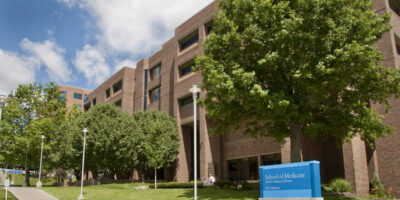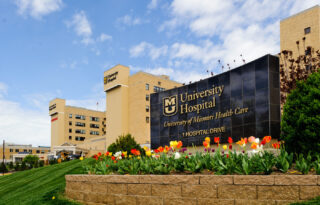

The University of Missouri School of Medicine, known as Mizzou Med or the MU School of Medicine, was the first publicly supported medical school west of the Mississippi River. It has trained physicians since 1872, and more Missouri physicians have earned their medical degree at MU than at any other university. Today it is one MD school with two campuses, in Columbia and Springfield, and it is known for patient-based learning: students work through real clinical cases in small groups from the first week of medical school.
This guide covers the 2026-2027 application cycle, which fills the class that starts medical school in 2027. Mizzou is a state school with a clear duty to Missouri. Most accepted students are Missouri residents, out-of-state applicants face a separate MCAT and GPA screen and an Out-Of-State Form, and Early Decision and MD-PhD are open to Missouri residents only. The 2027 entering class is also the first that can complete all four years in Springfield.
So what does it take to get into the University of Missouri School of Medicine? Below you will find the current class profile, mission, programs and pathways, curriculum, requirements and deadlines, costs, student life, clinical training and research, the people who lead the school, the 2026-2027 secondary questions with worked examples, the interview format and answers to common questions. If you are applying to Mizzou, consider bookmarking this page for easy reference.
Key Takeaways
- Who can apply: U.S. citizens and permanent residents with at least 90 semester hours from a U.S. college or university. Required courses must be taken at a U.S. school with a C- or better.
- Academic floor: An MCAT of at least 500, taken between January 2023 and September 2026, and an overall GPA of at least 3.0. Meeting only the minimum in both areas is unlikely to succeed.
- Missouri comes first: Around 85% of accepted students have a legal residence in Missouri. Out-of-state applicants must meet an MCAT and GPA grid, then complete a no-cost Out-Of-State Form before any secondary is offered.
- Key dates: AMCAS is due October 15, 2026, and the secondary and supporting materials by November 15, 2026. Early Decision (Missouri residents with a 3.75 GPA and a 508 MCAT) runs on an August 1 and September 1 schedule with an October 1 decision.
- Secondary: Three items for 2026-2027: a “why Mizzou” essay and an additional information essay, each 3,000 characters, plus a yes or no reapplicant question. The fee is $85, waived for AMCAS fee assistance recipients.
- Interviews: About 400 slots, all virtual, with at least two one-on-one interviews with Admissions Committee members. MD interviews run October through early March.
- Costs: For 2025-26, first-year tuition and fees are $49,786 for Missouri residents, plus $47,542 in out-of-state tuition. The first-year cost of attendance is $81,343 for residents and $128,885 for non-residents.
- Distinctive training: Patient-based learning, the Rural Scholars Program with nine rural training sites, two clinical campuses with a four-year Springfield option from 2027-28, the student-run MedZou clinic and four pre-admission pathways.
Key Statistics About University of Missouri School of Medicine

The snapshot and the table below come from the same fact record. For the Class of 2030, the school has published its class size, the number of applicants, and the share of students from Missouri and from rural areas. For the 2025 entering class, accepted applicants had a median MCAT of 512 and a median GPA of 3.9, and 426 applicants were interviewed. The number of acceptances is not published, so no acceptance rate is shown. Dividing matriculants by applicants would not give a true acceptance rate.
| Measure | Value | Cohort or year | Source |
|---|---|---|---|
| School and degree | University of Missouri School of Medicine, MD; campuses in Columbia and Springfield, Missouri | Current | MU School of Medicine, About and Campus Locations |
| Entering class | 136 first-year students | Class of 2030 (entered July 2026) | MU School of Medicine news, July 31, 2026 |
| Applicants | More than 2,600 | Class of 2030 | MU School of Medicine news, July 31, 2026 |
| Students from Missouri | 88% | Class of 2030 | MU School of Medicine news, July 31, 2026 |
| Students from rural areas | 15% | Class of 2030 | MU School of Medicine news, July 31, 2026 |
| Bryant Scholars in the class | 15 | Class of 2030 | MU School of Medicine news, July 31, 2026 |
| Seats per entering class | Up to 136 in Columbia and up to 32 in Springfield | Entering 2027 | MU School of Medicine, Campus Locations |
| Interview slots | 400 planned | Entering class of 2027 | MU School of Medicine, Application Process |
| Applicants interviewed | 426 (331 in-state, 95 out-of-state) | 2025 entering class cycle | AAMC MSAR school profile |
| Median MCAT, accepted applicants | 512 (mean 512.6); section medians 128 / 127 / 128 / 129 | 2025 entering class | AAMC MSAR school profile |
| Median GPA, accepted applicants | 3.9 | 2025 entering class | AAMC MSAR school profile |
| Acceptance rate | Not published | Not applicable | Acceptance counts not published |
| Typical alternate list size | 168 positions | Typical cycle | AAMC MSAR school profile |
| Minimum MCAT | 500 | Entering class 2027 | MU School of Medicine, Application Requirements |
| Tuition and fees, first year | $49,786 Missouri resident; $97,328 non-resident ($49,786 plus $47,542) | 2025-26, M1 | MU School of Medicine, Financial Aid and Tuition |
| Total cost of attendance, first year | $81,343 Missouri resident; $128,885 non-resident | 2025-26, M1, 10-month budget | MU School of Medicine, Financial Aid and Tuition |
| Students receiving aid | Nearly 87%, more than $27 million | 2023-24 | MU School of Medicine, Financial Aid and Tuition |
| Average graduate indebtedness | $199,792 | Academic year 2024-25 | AAMC MSAR school profile (LCME Part I-B) |
| Secondary fee | $85; fee waiver available | 2026-2027 cycle | MU School of Medicine, Application Process; AAMC MSAR school profile |
| Deposit | $100, refundable until April 30, 2027, applied to tuition | Entering class 2027 | AAMC MSAR school profile |
A note on scale: the school describes itself as receiving more than 3,000 applications every year, and the Class of 2030 was selected from more than 2,600 applicants. Either way, about 400 applicants are interviewed for roughly 136 to 168 seats (426 were interviewed in the 2025 entering class cycle), so the interview invitation is the main hurdle. The class is also strongly Missouri-based: 88% of the Class of 2030 came from the state, which matches the school’s statement that around 85% of accepted students are Missouri residents.
Mission and Educational Priorities
The School of Medicine states its mission, vision and values this way:
Mission: “To save and improve lives – through exemplary education, research and patient care.”
Vision: “We will be the premier and transformational academic health system for Missouri.”
Values: Respect, Responsibility, Discovery, Excellence, Service.
Two words in the vision tell you a great deal: “for Missouri.” Mizzou is a state-supported public school. Its admissions page says that, because of its responsibilities to the citizens of Missouri, preference goes to legal residents of the state and graduates of Missouri high schools. It also encourages applications from rural, minority and nontraditional candidates, including people from rural or underserved parts of the state and people changing careers after success in a health field or another profession. Its graduates treat patients in every county of the state, and 4,275 of its 8,315 physician alumni practice in Missouri.
The school’s Foundation Values for Medical Education add a second theme. The first value reads: “The health of our patients is our first priority. The highest quality health care is the environment for the highest quality education of future physicians.” Other values stress respect, honesty and constructive feedback, ethical conduct, professionalism, and “critical thinking, problem solving and analysis.” These ideas show up in the curriculum. Students learn science through real patient cases, take responsibility for their own learning, and work in small groups where they must explain their reasoning to peers.
The school also lists eight key characteristics it wants every graduate to have. Graduates should deliver effective patient-centered care, act with high ethical standards, know the biomedical sciences and the social and cultural issues that affect health, think critically, communicate well, collaborate with patients and health care teams, work to improve quality and safety, and commit to lifelong learning.
What this means for you as an applicant:
- Show a tie to Missouri, or a clear reason to serve it. The admissions screen counts “Missouri affiliation” as one of the areas reviewed. If you grew up, studied or worked in Missouri, make that connection concrete.
- Show patient-centered experience. Holistic review covers health care experience, altruism and leadership, research and “experiences that demonstrate an appreciation of social factors that influence health.” Experience where you worked directly with patients carries weight.
- Show that you learn by doing. A patient-based, small-group curriculum suits people who are curious, self-directed and comfortable thinking out loud. Give examples of times you taught yourself something hard or learned from a real problem.
- Show interest in rural or underserved care if it is real. The Rural Scholars Program, the Bryant Scholars pathway and MedZou all reflect the school’s priorities. Do not claim an interest you cannot support with experience.
Accreditation and Institutional Identity
The University of Missouri School of Medicine grants the MD degree and is part of the University of Missouri in Columbia. Both of its campuses deliver one curriculum accredited by the Liaison Committee on Medical Education (LCME), the accrediting body for MD programs in the United States and Canada. Students on both campuses have the same curriculum, the same academic standards and assessments, shared faculty and the same student support.
A few points help avoid confusion:
- Mizzou is not UMKC. The University of Missouri-Kansas City School of Medicine is a separate MD school in the same university system, with its own BA/MD program and its own admissions. If you are applying to both, treat them as two schools.
- Columbia and Springfield are one school. The Springfield campus opened in 2016 as a clinical campus in partnership with CoxHealth and Mercy. Beginning with the 2027-28 academic year it becomes a four-year regional campus, so students can complete all four years in southwest Missouri. Admitted students choose a campus preference at the time of application, and the Office of Admissions runs the campus assignment process.
- MU Health Care is the main teaching system in Columbia. It includes a Level I Trauma and STEMI center, a new children’s hospital and more than 20 primary care clinics.
The school’s size has grown steadily. It now counts 742 faculty, 528 medical students, 466 residents, 117 clinical fellows and 9,209 total alumni.
Accreditation tells you the MD program meets national standards. It is not a ranking and does not guarantee any outcome. If you want to see how a campus or track affects your training, read the curriculum and clinical sections below and ask about campus assignment during your interview day. If you are building your experience now, any of the pre-med internships or local clinical roles you choose should help you show the patient-centered skills this school values.
Medical Programs and Affiliations
The University of Missouri School of Medicine offers one MD degree, which you can enter through several routes. Students interested in research careers can add a PhD.
| Route | Who it is for | Key conditions |
|---|---|---|
| Regular MD admission | Missouri residents and out-of-state applicants | AMCAS by October 15, 2026; secondary by November 15, 2026; out-of-state applicants must meet the MCAT and GPA grid and pass the Out-Of-State Form |
| Early Decision Program | Missouri residents only | Cumulative GPA 3.75 or higher, MCAT 508 or higher; apply to one school only and attend if accepted |
| Tom and Anne Smith MD-PhD Program | Missouri residents only | Same academic requirements and deadlines as the MD program; no Early Decision; separate graduate interviews |
| Bryant Scholars Pre-Admissions Program | Undergraduates from rural backgrounds | Conditional acceptance; academic standards, professionalism and required activities; signed commitment to Bryant Scholars and the Rural Scholars Program |
| Pathways to Success (PAWS) Pre-Admission Program | First-generation and socioeconomically or educationally disadvantaged Mizzou undergraduates | Provisional acceptance; partnership with MU’s MedOpp Advising Office; applications open January 1 |
| Physician Engineers Pre-Admission Program | Engineering majors at Mizzou or Missouri S&T | Apply in the second semester of sophomore year; 3.30 cumulative and math/science GPA; engineering co-curriculum in medical school |
| Springfield Pre-Admission Program | Students at Drury University, Evangel University or Missouri State University (or Ozarks Technical Community College graduates moving to one of them) who graduated from a Missouri high school | Apply at the end of sophomore year; 3.30 cumulative and math/science GPA; provisional acceptance to the Springfield campus |
Four-year MD program
The MD program follows a four-year plan. Years one and two build the science foundation through patient-based learning, years three and four are the clinical phase, and all of it can be done in Columbia or, from 2027-28, entirely in Springfield. The curriculum section below covers each year.
Early Decision
Mizzou takes part in the AMCAS Early Decision Program. You may apply to only one school, and if accepted you must attend. Candidates need a cumulative undergraduate GPA of at least 3.75 and an MCAT score of at least 508, and they must be Missouri residents. Applicants with lower GPAs who have completed relevant graduate-level coursework may be considered. If you are not accepted through Early Decision, you may then apply to Mizzou and other schools as a regular candidate. Choose this route only if Mizzou is clearly your first choice and your file is ready by August 1.
Dual degree: the Tom and Anne Smith MD-PhD Program
The Tom and Anne Smith MD-PhD Program trains physician-scientists for careers in academic medicine. It is the combined degree listed on the school’s admissions pages. Students follow a seven- to eight-year course of study, and the typical plan is:
- Years 1-2: the School of Medicine’s patient-based learning curriculum
- Years 3-5: doctoral coursework
- Years 6-8: medical school clerkships and the doctoral dissertation
Scheduling is flexible and based on each student’s needs. PhD fields include Translational Biosciences, Biochemistry, Microbiology, Immunology, Pathology, and Pharmacology and Physiology. The school offers two full scholarships for incoming MD-PhD students, each covering four years of medical school tuition and a living stipend, and funded labs provide graduate support during the PhD years. Program elements include lab rotations, a summer research fellowship after the first year, journal clubs, MD-PhD grand rounds and monthly meetings with the program’s executive committee. MD-PhD students entering in 2027 start on June 7, 2027, so they can take part in the Summer Research Fellowship and rotate through labs.
The MD-PhD program admits Missouri residents only, offers no Early Decision, and admits students based on decisions from both the MD and PhD admissions committees. Applicants are considered only for the dual program.
Pre-admission pathways
Mizzou runs four pathways that offer undergraduates a conditional or provisional seat in medical school. The school counts three main preadmissions programs (Bryant Scholars, PAWS Scholars and Physician Engineers) and also runs the Springfield Pre-Admission Program for the Springfield campus.
- Lester R. Bryant Scholars Pre-Admissions Program. This program encourages young people from rural backgrounds to pursue medicine. It celebrated its 30th anniversary in 2025, and 15 members of the Class of 2030 entered through it. Bryant Scholars also have curricular requirements in medical school and commit to the Rural Scholars Program.
- Pathways to Success (PAWS). A partnership with the MedOpp Advising Office on the main campus for first-generation, socioeconomically disadvantaged or educationally disadvantaged Mizzou undergraduates. A junior version, J-PAWS, supports incoming and current freshmen.
- Physician Engineers. For engineering majors at Mizzou or Missouri S&T. Students need two semesters of calculus, find a research mentor, complete a capstone or structured research project, and later complete a medical engineering project by the end of the fourth year of medical school.
- Springfield Pre-Admission Program. Built to strengthen the physician workforce in Springfield and southwest Missouri. It requires 20 hours of patient-facing health care experience, 20 hours of physician shadowing and 8 hours of community service each program year, plus MedPrep I and II, an MCAT preparation course and a one-week summer retreat. The application opens January 1, and the deadline for the current posting is May 21, 2027.
These pathways are for students who are still in college, often in their first two years. If you are a high school or early college student thinking about this route, medical internships for undergraduates and local volunteering can help you build the patient-facing hours these programs require.
Other programs at the University of Missouri
The School of Medicine also trains master’s and doctoral students in the biomedical sciences, and it has more than 400 residents in 37 accredited residency specialty programs. Elsewhere on campus, the Mizzou Sinclair School of Nursing and the University of Missouri’s health professions school, now at healthsciences.missouri.edu, offer nursing, therapy, public health and other health degrees. These are separate schools with their own admissions, not routes into the MD program.
Clinical affiliations
In Columbia, students train mainly within MU Health Care. In Springfield, the campus partners with CoxHealth, a six-hospital system with more than 1,000 beds and 80 clinics, and Mercy Springfield Communities. Both Springfield systems have Level 1 Trauma Centers. The Rural Scholars Program adds community hospitals across five regions of the state, listed in the clinical rotations section.
Curriculum Overview
“The health of our patients is our first priority.” That is the first of Mizzou’s Foundation Values for Medical Education, and the curriculum is built around it. The foundation of the MD curriculum is patient-based learning, a style of medical education the school describes as “largely pioneered at MU.” Students work through real clinical cases, alone and in interdisciplinary teams, with an emphasis on clinical reasoning, self-directed and collaborative learning and early clinical experience.
This approach has a practical meaning. In years one and two there are no department- or discipline-based courses and minimal lecture-based learning. Instead of separate anatomy, biochemistry and pharmacology courses, you meet those subjects through the patient in front of your small group each week. Mizzou believes this is more engaging and more effective than lecture alone, and it lets students practice the skills they will use as physicians from the start.
Years one and two: the preclerkship phase
Year one (M1) and year two (M2) each have four nine-week blocks. Weeks one through eight are for learning, week nine is for evaluation, and week ten is a break. Each block has two parts:
- Basic Science and Patient-based Learning (BSci/PBL). Each week, students work through one real clinical case in a small group with a trained faculty facilitator, moving toward a diagnosis and a care plan. A typical week has about 10 hours of patient-based learning and about 10 hours of traditional teaching such as lectures.
- Introduction to Patient Care (IPC). Themes change with each block and cover clinical skills such as history taking and physical examination, psychosocial issues, epidemiology, diagnostic tests and psychopathology. It also relies on small groups with supporting lectures and labs.
In the first year, blocks cover the structure and function of the human body, basic doctoring, biopsychosocial aspects of medicine, and clinical epidemiology and preventive medicine. Students also complete the Ambulatory Clinical Experience (ACE) during two blocks, spending a half-day three times per block with a faculty or community physician-preceptor.
In the second year, blocks address pathophysiology, diagnostic tests and medical decisions, psychopathology and behavioral medicine, the clinical practicum and the doctor as a person. Advanced Physical Diagnosis (APD) runs during the final three blocks and pairs each student with a clinician mentor for the year, with meetings recommended at least twice a month.
Two other features stand out. COMPASS (Contemplating Medicine, Patients, Self and Society) uses faculty-facilitated small groups across all four years to address professional formation. And two half-days each week are protected for independent, student-directed learning, with no faculty activities allowed. Attendance matters: students are expected to be present and engaged in all block activities, with absences only in unusual situations.
Year three: core clerkships
The third year has seven required core clerkships: family medicine, internal medicine, neurology, obstetrics and gynecology, pediatrics, psychiatry and surgery. Neurology lasts five weeks, psychiatry six weeks and the others seven weeks each. All are taken in Columbia, in Springfield, or at partner sites through the Rural Scholars Program. Clerkships must be supervised by MU School of Medicine faculty, who assess each student’s competencies. During these clerkships, students learn the fundamentals of good patient care.
Year four: selectives, electives and advanced science
During year four, each student works with an adviser to build a program around career goals, strengths and needs. The year requires:
- Three four-week advanced clinical selectives, or sub-internships, in core disciplines. One must be surgical, one must be medical and the third can be either. Students take on more patient care responsibility than in third year.
- Four four-week general electives (16 weeks). Some are offered at rural sites through the Rural Elective Program and at the Springfield campus.
- One four-week Advanced Biomedical Sciences course, which revisits basic science through a patient, disease or problem. Options include a literature-based paper or presentation, original research with a mentor, co-facilitating patient-based learning or writing a case, or a global or public health experience.
At least four fourth-year courses, including one advanced selective, must be supervised by MU faculty. Electives can be completed in Columbia, in Springfield or on an approved away rotation. An integrated residency option lets strong students learn residency responsibilities in their chosen field during fourth year, though it does not shorten training or guarantee a residency spot. The fourth year is a time to gain practical experience in your chosen field, see how different physicians approach patient care and refine your skills for residency.
Summer between first and second year
The school offers several competitive summer programs for first-year and rising second-year students, lasting four to ten weeks. For the 2026 summer they were:
| Program | Stipend |
|---|---|
| Family Medicine Summer Clinical Externship | $1,800 |
| Medicine Summer Clinical Externship | $1,800 |
| High School mini Medical School Facilitator | $2,250 |
| Pre-Professional Pathway & Outreach Summer Program Assistant | $2,000 |
| Orientation & White Coat Ceremony Leader | $1,230 |
| Summer Research Fellowship, Research Experience for Medical Students (SRF-REMS) | $3,000 |
Applications open in early February, with rounds for clinical and medical education positions and a separate research fellowship application. Rural Scholars also complete a four-week Summer Community Program in a rural primary care practice after the first year.
What is changing: MOmentum
The school is redesigning its curriculum through a project called MOmentum. Its guiding principles include building on problem-based learning with other active methods (case-based learning, team-based learning, peer instruction and the flipped classroom), frequent formative assessment, restructured summative exams and a shorter preclinical phase so students move into clerkships and career exploration earlier. The school has not yet posted a start date for the new curriculum. Ask about the timeline on your interview day, because it may affect your class.
How the curriculum shapes your application
Patient-based learning rewards students who come prepared to learn from patients, ask good questions and explain their thinking to a group. Admissions readers will look for evidence that you can do this. Concrete examples help: a time you worked through a confusing clinical situation with a supervisor, taught peers in a study group, or changed your approach after feedback. Hands-on clinical roles, whether at home or through internships for pre-med students, give you those stories.
Admissions Requirements and Application Process
Medical schools often look for similar qualifications, such as MCAT scores, GPA, clinical experience and the AAMC’s Core Competencies. Each school is still different in its mission and approach. At Mizzou, the requirements below are firm floors, and the holistic review described later decides who is invited to interview. Requirements are for the class entering in 2027.
Eligibility
Applicants must be U.S. citizens or permanent residents. You must complete at least 90 semester hours at a U.S. college or university, and all required coursework must also be taken at a U.S. college or university.
Required and recommended coursework
| Subject | Requirement | Status |
|---|---|---|
| College English composition or writing intensive | Six credit hours or one year | Required, C- or better |
| Mathematics (college algebra or above) | Three credit hours or one semester | Required, C- or better |
| Biologic sciences (for example biology, genetics, cell biology, animal physiology, molecular biology, histology) | Six credit hours or one year | Required, C- or better |
| Chemistry (through organic chemistry) | Twelve credit hours or two years | Required, C- or better |
| General physics | Six credit hours or one year | Required, C- or better |
| Biochemistry | Three to six credit hours | Recommended |
| Biology beyond introductory courses | Three to six credit hours | Recommended |
| Chemistry beyond introductory courses | Three to six credit hours | Recommended |
| Statistics | Three credit hours or one semester | Recommended |
If your coursework does not fit the standard list, the Dean of Student Affairs and the Office of Admissions can review it and decide whether it meets the academic-equivalent qualifications. Coursework beyond the minimum, especially biochemistry and upper-level biology, is the best way to show you are ready for a curriculum that teaches science through cases rather than lectures.
MCAT
All MD, MD-PhD and Early Decision applicants must take the MCAT. For entry in 2027, the exam must be taken between January 2023 and September 2026, and you need a score of at least 500 to be considered. Scores from exams after September 2026 cannot be used for this cycle.
GPA
All applicants need an overall cumulative GPA of at least 3.0. The Admissions Committee will not consider applicants with either a science cumulative or an overall cumulative GPA below 3.0 unless they also have significant post-baccalaureate or graduate coursework. If your undergraduate GPA is under 3.0, the school highly recommends at least 15 credit hours of post-baccalaureate or graduate work. If your math and science GPA is below 3.0, that extra coursework should be in math and science, using the AMCAS course classification.
The school is direct about what the minimums mean: “A competitive applicant would need to have well above the minimum in either their MCAT score or GPA. Meeting only the minimum requirements in both areas is unlikely to result in a successful application.”
Out-of-state applicants
Non-residents are welcome to apply, but the bar is different. Because MU is state funded, around 85% of accepted students have a legal residence in Missouri. To be considered, out-of-state applicants must meet one of these MCAT and undergraduate cumulative GPA combinations:
| MCAT score | Undergraduate cumulative GPA |
|---|---|
| 500-501 | 3.60 or greater |
| 502-505 | 3.40 or greater |
| 506-509 | 3.20 or greater |
| 510-528 | 3.00 or greater |
If you have significant post-baccalaureate or graduate coursework, your graduate cumulative GPA is considered individually when these combinations are not met. Applicants who meet the requirements are emailed an Out-Of-State Form at no cost. The form asks about your ties to Missouri. If it is approved, you receive the secondary application. In practice this means out-of-state applicants should be ready to explain specific Missouri connections, such as family, schooling, work or a concrete plan to practice in the state.
Early Decision and MD-PhD
Early Decision applicants need a 3.75 cumulative undergraduate GPA and an MCAT of at least 508 and must be Missouri residents. MD-PhD applicants follow the same academic requirements and deadlines as MD applicants, but the program admits Missouri residents only and has no Early Decision option.
Letters of evaluation
Mizzou accepts letters only through the AMCAS Letter Service. Letters mailed directly to the school are not accepted.
- Submit three letters of evaluation. You may add more, up to six in total, to support other parts of your application.
- Traditional applicants: one letter must come from a professor who taught you and gave you a grade. The school strongly recommends that this professor be from the science faculty. Letters from teaching assistants do not meet this requirement. You may send a pre-med committee or composite letter instead of three individual letters.
- Non-traditional applicants: if you completed your undergraduate degree before September 2024, send three letters from people who know your recent scientific work, study or professional experience.
Clinical and other experience
Mizzou does not publish a minimum number of clinical or shadowing hours for regular MD applicants. Its review covers health care experiences, altruism and leadership, research and experiences that show an appreciation of the social factors that influence health. The school’s own pre-admission programs give a useful benchmark for what it values: 20 hours of patient-facing health care experience, 20 hours of physician shadowing and 8 hours of community service each year. Regular applicants usually bring much more, built over several years.
Good options include work as a certified nursing assistant, medical assistant, scribe or EMT, hospital or hospice volunteering, free clinic work, and structured pre-med summer internships that put you in direct contact with patients. Shadowing physicians in Missouri, especially in primary care or rural settings, adds context the admissions committee will recognize.
Tests and technical standards
The school’s admissions pages do not list Casper, PREview or another situational judgment test as a requirement for the 2026-2027 cycle. Check your secondary instructions for any change. All admitted students must meet the school’s technical standards for medical students, which describe the abilities needed to complete the curriculum with or without reasonable accommodation.
AMCAS primary application and the Mizzou secondary
Nearly all U.S. MD schools, Mizzou included, accept primary applications through the AMCAS service. You submit one primary application, and AMCAS sends it to each school you choose. Students who show financial need may qualify for an AMCAS fee waiver. Before you submit, review the 10 Most Common Mistakes to Avoid on Your AMCAS Application. If you would like a more detailed breakdown of the differences between primary and secondary medical school applications, we discuss it here.
After your AMCAS application arrives:
- Missouri residents who meet the minimum requirements receive the secondary application.
- Out-of-state applicants who meet the MCAT and GPA grid are invited to submit the preliminary Out-Of-State Form. If it is approved, the secondary follows.
The secondary fee is $85. It is waived if you receive the AMCAS Fee Assistance Program waiver. For MD and MD-PhD applicants, the secondary and all supporting materials are due November 15, 2026. Make sure the fee is paid when you submit: an application is not complete without it. Questions about your status go to the admissions office at [email protected].
Selection: how the committees decide
The Admissions Screening Committee is made up of faculty who review initial applications and choose the candidates to invite for interviews. MCAT results and the academic record help them judge your readiness, but the school says the applicant’s personal characteristics and health care experiences are equally important. The holistic review covers academics, Missouri affiliation, the personal statement, altruism and leadership, health care experiences, research and experiences that show an appreciation of social factors that influence health.
After the interview, the Admissions Committee, which includes students, faculty and alumni, uses your letters, pre-medical community and educational activities and the interview to judge whether you have the personal characteristics and knowledge of health care to commit to a lifelong career as a patient-centered physician. Once all interviews are complete, each interviewed applicant is admitted, placed on the alternate list or denied. Interview slots are offered on a rolling basis, so applying early matters.
Timeline for the 2026-2027 cycle
| Step | Regular MD and MD-PhD | Early Decision |
|---|---|---|
| AMCAS application received by | October 15, 2026 | August 1, 2026 |
| Secondary application and materials received by | November 15, 2026 | September 1, 2026 |
| Interviews | MD: October through early March; MD-PhD: end of January | Late September 2026 (by invitation) |
| Decisions | After all interviews are completed (admit, alternate list or deny) | Notice of acceptance October 1, 2026 |
| Start of medical school | 2027 (MD-PhD students start June 7, 2027) | 2027 |
Because interview slots are filled on a rolling basis, plan to submit AMCAS early in the cycle and return the secondary within a week or two of receiving it. The school also offers free virtual information sessions during the cycle; the 2026 dates were August 13, September 3, November 5 and December 3 at noon Central time.
Tuition, Cost of Attendance and Financial Aid
Mizzou is one of the more affordable MD options for Missouri residents, but the cost for non-residents is much higher. The school’s newest published budget is for the 2025-26 academic year, and tuition is subject to change. You can find the full breakdown on the University of Missouri Medical School Financial Aid page. For a wider view, see our guide to the cost of medical school.
| Expense | M1 | M2 | M3 | M4 |
|---|---|---|---|---|
| Tuition and fees (Missouri resident) | $49,786 | $49,786 | $54,952 | $54,952 |
| Books and supplies | $931 | $1,325 | $1,237 | $1,036 |
| Room and board | $18,553 | $18,553 | $18,553 | $18,553 |
| Transportation | $8,280 | $8,280 | $8,280 | $8,280 |
| Personal | $3,663 | $3,663 | $3,663 | $3,663 |
| USMLE test | None | $670 | $670 | None |
| USMLE travel | None | $129 | $129 | None |
| Hepatitis B vaccination | $130 | None | None | None |
| Total, Missouri resident | $81,343 | $82,406 | $87,484 | $86,484 |
| Additional out-of-state tuition | $47,542 | $47,542 | $52,824 | $52,824 |
| Total, non-resident | $128,885 | $129,948 | $140,308 | $139,308 |
How to read this table:
- Tuition versus total cost. First-year tuition and fees are $49,786 for residents and $97,328 for non-residents. The total cost of attendance adds books, housing, food, transportation and personal costs, for $81,343 and $128,885.
- Year three and four cost more. M1 and M2 students are assessed 18 credit hours per term, and M3 and M4 students 20 credit hours, so tuition rises in the clinical years.
- Budgets cover 10 months. Summer aid is available if you are enrolled that term. Computer purchases, child care, major unreimbursed medical or dental costs, away rotations, residency interviews and study abroad can be added to your budget individually.
- Health insurance is not shown as a separate line in the school’s budget. Ask the financial aid office how coverage works for medical students before you enroll.
Over four years, a Missouri resident’s estimated budget comes to about $337,700 and a non-resident’s to about $538,400, using 2025-26 figures. Actual costs depend on your housing and on future tuition rates.
Residency for tuition
Non-residents should know that students can petition to become a Missouri resident after living and working in Missouri for 12 consecutive months. The University Registrar handles these petitions. Do not assume you will qualify. Ask early and plan your budget at the non-resident rate until a change is approved.
Financial aid and scholarships
The school makes need-based aid a priority. In 2023-24, nearly 87% of its students received more than $27 million in loans and scholarships from school, federal and private sources. Scholarships are gift aid. Admitted students receive a link to the Mizzou Med scholarship application after they are offered admission, and the deadline is June 30.
The aid to-do list is short:
- File the FAFSA at FAFSA.ed.gov by April 1, using school code 002516.
- Submit the Mizzou Med scholarship application by June 30.
- Research outside scholarships and service commitments.
- Accept your awards by July 1.
- Research credit-based loans and complete loan paperwork with your servicer.
The MD-PhD program offers two full scholarships for incoming students, covering four years of medical school tuition plus a living stipend. Rural Scholars receive a program completion scholarship in the fourth year and may receive scholarships from participating hospitals or health systems.
Service commitment programs
Some students pay back their education with service instead of money. Service programs such as the National Health Service Corps, the Armed Forces and the Indian Health Service can provide full tuition plus a living stipend in exchange for a period of service.
Borrowing wisely
The financial aid office’s advice is worth repeating. You will be offered loans up to the full cost of attendance, but accept only what you need. Make a budget, plan for once-a-year expenses, keep at least $500 for emergencies, pay credit cards in full and check your credit report. Know how much undergraduate debt you already have before you borrow more. For indebted graduates in academic year 2024-25, average medical school debt was $199,792. Summer program stipends, listed in the curriculum section, can also help with costs after the first year.
Campus Facilities and Student Life
Columbia
Most students train in Columbia, a city of about 130,000 in the center of the state. It offers city services with a small-town feel and sits a couple of hours from St. Louis, Kansas City and the Lake of the Ozarks. The area has 75 parks and more than 60 miles of trails, the True/False Film Festival, a summer concert series and Mizzou Athletics in the Southeastern Conference.
The admissions office and much of the early curriculum are based in the Patient-Centered Care Learning Center. The school also runs the Shelden Clinical Simulation Center for hands-on skills practice, and the clinical campus is MU Health Care, which includes a Level I Trauma and STEMI center, a new children’s hospital and more than 20 primary care clinics.
Springfield
The Springfield campus serves southwest Missouri through CoxHealth and Mercy. Springfield is Missouri’s third-largest city, with a metro population of more than 450,000. The school bought a 77,000-square-foot building there in 2025, and renovations are on track for completion in June 2027 to welcome the first class of first-year medical students. Up to 32 students per entering class can be admitted to Springfield. Students who like a mid-size city with lakes, trails and an affordable cost of living, or who want to practice in the Ozarks, should consider listing Springfield as their campus preference.
Student support and well-being
The school has a Chief Wellness Officer and a Well-Being Office, a faculty director of medical student well-being, learning specialists in the Office of Medical Education and an Office of Student Affairs led by an associate dean. The COMPASS small groups, which run through all four years, give students a regular place to talk about professional formation. The school also has a Women in Medicine and Medical Sciences group and offices for community, professional proficiency and student success.
Service: MedZou Community Health Clinic
Many applicants are excited to serve at MedZou Community Health Clinic, a faculty-sponsored clinic that provides free primary care, education and prevention for uninsured residents of central Missouri. MedZou opened in October 2008. Its mission is to provide high-quality, patient-centered care while teaching health care students how to work with underserved populations.
- Primary care clinic every Thursday from 5 to 9 p.m.
- Specialty clinics on most Monday evenings: dermatology, diabetes care (endocrinologists and eye doctors in one visit), ophthalmology, colposcopy, musculoskeletal care and neurology.
- Mental health care on the third Thursday of each month during the primary care clinic.
- Free services including medical visits, dietetics, pharmacy consultation, some medications and a patient assistance program, social work, HIV testing and flu shots, lab tests, EKGs, colon cancer screening, nerve and muscle testing and X-rays for musculoskeletal conditions.
- Case management for patients with chronic disease and complex social needs, especially diabetes, plus outreach to local homeless shelters.
MedZou works with students from medicine, nursing, social work, pharmacy, health administration, public health and other fields, so it is also a lesson in teamwork. If interprofessional care interests you, nursing internships abroad and local team-based clinical roles show how nurses and physicians share patient care.
Traditions and outreach
New students receive their first stethoscope at the Stethoscope Breakfast and their white coat at the White Coat Ceremony, where the class recites the Declaration of Geneva. Alumni and friends have donated stethoscopes and coats for 14 years. Medical students also teach in Mizzou Mini Med School for high school students, honor body donors at the annual Legacy Teachers ceremony and serve as student ambassadors who answer applicants’ questions.
Clinical Rotations and Research Opportunities
Core clinical training
Third-year students complete the seven core clerkships in Columbia, in Springfield, or at partner sites through the Rural Scholars Program. In Columbia, students train mostly within MU Health Care, which offers tertiary and quaternary care, strong research ties and many residency and fellowship programs. In Springfield, students work directly with attending physicians at CoxHealth and Mercy in high-volume, clinically diverse settings. Cox Medical Center South has Level 1 trauma, stroke and STEMI centers, and Mercy Hospital Springfield has a Level 1 Trauma and Burn Center and a comprehensive heart hospital. The Springfield campus has more than 450 physicians serving as Mizzou faculty in nearly every specialty.
The Rural Scholars Program
As the state’s leading educator of physicians practicing in Missouri, the school uses the Rural Scholars Program to improve the supply of physicians in rural Missouri. It is open to all first-year students, who apply during orientation. Selection is based mainly on interest in serving underserved people, learning about rural health disparities and potential rural practice. Up to 25 students are selected each year.
Rural Scholars:
- are assigned to one of five continuity regions and a training site for all clinical training programs;
- are matched with a rural physician mentor in their first year;
- attend six evening rural lectures during medical school;
- complete a four-week Summer Community Program after the first year, doing focused histories, physical exams and other tasks under a community physician’s supervision;
- complete three rural core clerkships at their continuity site, or the longitudinal integrated clerkship (LINC), plus a community integration project in the third year;
- complete one four-week rural elective in the fourth year.
Co-ed furnished student housing at rural sites is available at no charge, thanks to local health systems and the Missouri Area Health Education Centers. The school reports that Rural Scholars are more likely to choose primary care and twice as likely to choose family medicine as non-participants.
| Region | Sites |
|---|---|
| Mid-Missouri | Bothwell Regional Health Center, Sedalia (LINC); Lake Regional Health System, Osage Beach |
| Northeast Missouri | Hannibal Regional Hospital, Hannibal (LINC) |
| Northwest Missouri | Mosaic Life Care, St. Joseph (LINC) |
| Southeast Missouri | Parkland Health Center, Farmington; St. Francis Medical Center, Cape Girardeau |
| Southwest Missouri | Cox Health, Branson; Citizens Memorial Healthcare, Bolivar; Ozarks Medical Center, West Plains |
In the LINC model, students care for patients over time and meet core competencies in several disciplines at once, rather than in separate blocks. They follow their patients across settings of care. This is a distinctive training option, and it gives students a realistic view of the rewards and challenges of rural practice. For applicants, rural clinical exposure before medical school, such as shadowing a rural family physician or working in a critical access hospital, makes an interest in the program credible. You can learn more on the school’s Rural Clerkship Program page.
Fourth-year electives and away rotations
Fourth-year students choose from the Clinical Rotation Catalog and may take approved off-site rotations, which need sign-off from the adviser, the course director and the associate dean for curriculum and evaluation. The Advanced Biomedical Sciences course can include a global or public health experience. If global health interests you, programs such as a medical internship in Peru before medical school can help you decide whether that path fits.
Research
Mizzou is also known for its research. The school’s medical centers, labs, and institutes span basic, translational and clinical science, and research is led by a senior associate dean for research who also directs the NextGen Precision Health clinical and translational science unit. The MU Research Reactor, working with the medical school, is the largest U.S. producer of radioisotopes for biomedical and medical uses, and MU is one of 15 institutions selected for a Coulter Biomedical Accelerator partnership.
Ways for medical students to do research include:
- the Summer Research Fellowship (SRF-REMS) after the first year, with a $3,000 stipend;
- research rotations offered by most basic science and clinical departments, many listed in the Clinical Rotation Catalog;
- original research with a mentor in the fourth-year Advanced Biomedical Sciences course;
- the community integration project for Rural Scholars;
- the medical engineering project for Physician Engineer Scholars;
- the MD-PhD program for students who want research at the center of their careers.
Residency results
The school publishes a full match list each year. The 2026 list shows graduates matching in Missouri programs such as University Hospitals-Columbia, Barnes-Jewish Hospital, SSM Health/Saint Louis University and UMKC, and across the country at programs including Mayo Clinic, Johns Hopkins, UT Southwestern, Baylor College of Medicine, Rush and the University of Michigan. Specialties ranged from family medicine, internal medicine and pediatrics to radiology, orthopaedic surgery, otolaryngology and child neurology. Many graduates stay in Missouri, which fits the school’s mission.
Notable Alumni, Faculty, Leadership and Admissions Staff
The people below hold current roles listed on the School of Medicine’s own pages, or are graduates the school itself has featured. Titles were checked in November 2026. Knowing who leads the programs you care about helps you ask better questions on interview day. It does not mean any of them will review your file or mentor you.
School leadership
Ross Zafonte, DO, Interim Hugh E. and Sarah D. Stephenson Dean. Dr. Zafonte leads the School of Medicine as its interim dean, the first name on the school’s administration and leadership list. He leads the school during a period of large changes, including the move to a four-year Springfield campus in 2027-28 and the MOmentum curriculum redesign. A former Stephenson dean and former executive vice chancellor for health affairs, Richard J. Barohn, MD, opened the 2026 White Coat Ceremony and told the new class that the white coat signifies “a commitment – to knowledge, mutual respect and shared humanity.”
Kevin Kane, MD, MSPH, Senior Associate Dean for Medical Education. Dr. Kane oversees the MD curriculum. He is also a professor of family and community medicine and a member of the MOmentum steering committee, which is designing the next version of the curriculum. If you want to understand how patient-based learning will change under MOmentum, his office is the source of that plan.
David Haustein, MD, MBA, Associate Dean for Springfield Campus. Dr. Haustein leads the Springfield campus, which becomes a four-year regional campus starting in 2027-28. He is a professor of physical medicine and rehabilitation and sits on the MOmentum steering committee. Applicants weighing a Springfield campus preference should know that the campus trains through CoxHealth and Mercy, with more than 450 local physicians serving as Mizzou faculty.
Nathan Beucke, MD, Associate Dean for Student Affairs. Dr. Beucke, an associate professor of pediatrics, leads student affairs. The application requirements page notes that the Dean of Student Affairs and the Office of Admissions review applications that do not meet the standard course requirements, so this office matters if your coursework is unusual. He also serves on the MOmentum steering committee and its student success team.
Admissions and pre-admission staff
Laura Henderson Kelley, MD, MPH, Associate Dean for Preprofessional Programs. Dr. Henderson Kelley, an associate professor of medicine, leads the school’s preprofessional programs and serves on the MOmentum steering committee and its drivers of health outcomes team. Students in the pre-admission pathways are reviewed each June and February, and their MCAT scores go to the Preprofessional Scholars Program Committee, so students exploring Bryant Scholars, PAWS, Physician Engineers or the Springfield pathway will meet this side of the school early.
Matt Ridge, Admissions Coordinator. Matt Ridge is the admissions office contact named for questions about the school’s virtual information sessions for applicants. The office itself is reached at [email protected] or 573-882-9219 and sits in the Patient-Centered Care Learning Center in Columbia. Use the general email for status questions and keep messages short and specific. The office is led by Blair Whitney, Director of Admissions and Recruitment.
Faculty
Joel Shenker, MD, PhD, Associate Dean for Curriculum. Dr. Shenker is a professor of neurology and co-chairs the MOmentum steering committee and its biomedical sciences thread team. He helps shape how basic science is woven into patient cases, which is the heart of Mizzou’s curriculum. Applicants who enjoy neurology or medical education will find his work a useful reference point.
Whitney LeFevre, MD, Assistant Dean for Rural Programs. Dr. LeFevre is an associate professor of family and community medicine. Rural programs, including the Rural Scholars Program, are central to the school’s mission, and she serves on three MOmentum teams. If you are writing about rural health in your secondary, knowing that the school has a dean-level rural lead shows how seriously it treats this work. Jana Lee, MS, directs the Rural Scholars Program.
W. David Arnold, MD, and Timothy Domeier, PhD, Co-directors of the MD-PhD Program. Dr. Arnold and Dr. Domeier co-direct the Tom and Anne Smith MD-PhD Program, which pairs a physician with a basic scientist at the top of the program. That mix reflects the program’s design of co-mentors for both the clinical and scientific parts of training. The program has a program coordinator, Christa Smith, and a recruitment coordinator, Chelsea Stone, for applicant questions.
Alumni
Jane Knapp, MD (MD 1978). Dr. Knapp gave the keynote address at the 2026 White Coat Ceremony. She was one of the first two physicians in the United States to complete a fellowship in pediatric emergency medicine. She is a retired professor of pediatrics at Children’s Mercy Hospitals and Clinics in Kansas City and served as associate dean and chair of graduate medical education at the University of Missouri-Kansas City. Her career shows how a Mizzou degree can lead to pioneering work in a new specialty.
Steven Daniels, MD (MD 1987). Dr. Daniels is an anesthesiology specialist with Sanford Health in Fargo, North Dakota, and a member of Mizzou’s Dean’s Alumni Advisory Committee. He co-presented at the 2026 Stethoscope Breakfast. He is an example of alumni who stay connected to the school and its students long after graduation.
Adam Orf (Mizzou School of Medicine graduate). Dr. Orf grew up in Troy, Missouri, earned both his undergraduate and medical degrees at Mizzou, and is now a first-year family medicine resident in the school’s Department of Family and Community Medicine at MU Health Care’s Fayette Family Medicine Clinic. As a Rural Scholar, he completed the yearlong longitudinal clerkship in St. Joseph and later rotated at Fayette. His story shows exactly what the rural track is designed to do: train students in rural Missouri and keep them there.
Admissions Statistics and Class Profile
Class of 2030 (entered July 2026)
The School of Medicine’s Class of 2030 news release gives these figures:
- 136 first-year medical students, selected from more than 2,600 applicants.
- 88% from Missouri and 15% from rural areas.
- 15 students entered through the Lester R. Bryant Scholars Pre-Admissions Program.
For the class entering in 2027, the school plans 400 interview slots and can admit up to 136 students in Columbia and up to 32 in Springfield. Around 85% of accepted students typically have a legal residence in Missouri.
2025 entering class: scores, interviews and offers
- Median MCAT of accepted applicants: 512 (mean 512.6). Section medians were 128 in Chemical and Physical Foundations, 127 in Critical Analysis and Reasoning Skills, 128 in Biological and Biochemical Foundations and 129 in Psychological, Social, and Biological Foundations.
- Median GPA of accepted applicants: 3.9.
- 426 applicants interviewed: 331 Missouri residents and 95 out-of-state applicants. No international applicants were interviewed.
- 136 matriculants: 63 men, 72 women and 1 student of another gender identity.
For the class entering in 2027, the school expects 136 new entrants in Columbia: 112 through the regular MD program, 19 through early assurance (pre-admission) programs, 3 through Early Decision and 2 in the MD-PhD program. Acceptance offers go out from October 15, 2026 through August 2, 2027, and you have up to 14 days to respond. A $100 deposit, refundable until April 30, 2027, is applied to tuition. The alternate list typically holds about 168 applicants, who learn of their placement at the end of interview season and can be offered a seat up to the first day of class. Deferral requests are reviewed case by case.
What these numbers mean
- Interviews are the bottleneck. About 400 interviews for roughly 136 to 168 seats means one interview for every two to three seats. Most applicants are screened out before the interview stage.
- Residency is decisive. An out-of-state applicant faces both a stricter MCAT and GPA grid and the Out-Of-State Form, and competes for a small share of seats.
- Minimums are not targets. The MCAT minimum is 500 and the GPA minimum is 3.0, but the school warns that meeting only the minimums in both areas is unlikely to succeed. Accepted applicants in the 2025 entering class had a median MCAT of 512 and a median GPA of 3.9. Aim to be clearly above the minimum in at least one area, and ideally both.
- Rural backgrounds are well represented. About one in seven students in the Class of 2030 came from a rural area, and the Bryant pathway alone filled 15 seats.
What is not yet published for the Class of 2030
The Class of 2030’s MCAT and GPA figures, interview count and number of acceptances are not yet published, and no acceptance rate is published for any recent class. Use the 2025 entering class medians above as your benchmark, together with the school’s own statement that competitive applicants are well above the minimums.
Tips and Strategies for Admission
Researching Mizzou carefully is the best way to show fit. In addition to demonstrating fit, you must meet the school’s requirements and deadlines. These strategies come from the school’s own priorities.
1. Make your Missouri connection concrete
Missouri affiliation is one of the named areas in the holistic review. If you are a resident, say where you are from and how that place shaped your interest in medicine. If you are not, be ready to explain your ties clearly on the Out-Of-State Form: family in the state, high school or college in Missouri, work in a Missouri clinic, or a credible plan to practice there. A vague “I like the Midwest” will not carry much weight at a school that fills most seats with residents.
2. Build patient-centered clinical experience
The admissions committee wants to see that you have learned about medicine firsthand and seen the realities of health care. That can come from volunteering, working as a nurse aide, medical assistant or scribe, or shadowing physicians. The school’s pre-admission pathways ask for 20 hours of patient-facing experience and 20 hours of shadowing every year, which tells you it values steady, ongoing work over a single burst. Clinical internships for pre-med students can add hands-on experience such as vitals and intake to the clinical hours you build at home.
3. Show the personal qualities the school names
Letters and experiences should show leadership, a commitment to service, intellectual curiosity and creativity. Interpersonal skills, motivation and resilience matter too. The admissions committee looks for students who have challenged themselves and pushed beyond their comfort zone. Coursework beyond the minimum, such as biochemistry and upper-level biology, helps establish this.
4. Show cultural awareness through action
As a future physician, you will care for patients from many backgrounds. Experiences living or working in diverse settings, courses about other cultures and involvement with groups that welcome everyone all help. The school’s review specifically mentions “experiences that demonstrate an appreciation of social factors that influence health,” so reflect on what you learned about cost, transportation, insurance or rural distance when you worked with patients.
5. Prepare for patient-based learning
A curriculum built on small-group cases rewards students who are curious, prepared and willing to speak up. Give examples of times you learned something difficult on your own, taught a peer or changed your thinking after feedback. Interviewers in a curriculum like this pay attention to how you reason, not just what you know.
6. Pick letters with care
You need three letters through the AMCAS Letter Service, including one from a professor who graded you, ideally in science. A committee letter can replace the three. If you finished your degree before September 2024, your letters should come from people who know your recent scientific, academic or professional work. Ask writers who can describe how you work with people, not only your grades.
7. Apply early and finish fast
Interview slots are offered on a rolling basis, and the school strongly advises applicants to complete their applications early. Submit AMCAS in June or early July if you can, return the secondary within one to two weeks, and pay the $85 fee (or confirm your fee waiver) when you submit.
8. Use a gap year with purpose
If you need more clinical experience, a higher MCAT, or post-baccalaureate coursework to raise a GPA near 3.0, a gap year can help. Plan it around patient contact and measurable academic progress. Some students combine local work with pre-med gap year programs that include supervised clinical training. If you reapply, show clear growth since your last attempt.
9. Consider the rural and early pathways honestly
If you grew up in a rural area, the Bryant Scholars pathway and the Rural Scholars Program may fit you well. If you are an engineering major at Mizzou or Missouri S&T, look at Physician Engineers. If you study in Springfield, look at the Springfield Pre-Admission Program. Apply to these only if the commitments match your plans.
10. Get feedback before you submit
Researching a school on your own helps, but a second reader catches what you miss. IMA’s medical school admissions consulting offers one-on-one guidance throughout the application process, from addressing weaknesses to presenting your strengths clearly.
Secondary Application Questions, Example Responses and Analysis
Each year, thousands of people apply to the University of Missouri School of Medicine and about 136 to 168 enroll. The secondary is one of your best chances to show the admissions committee that you are not only academically qualified but also a good fit for this school. Beyond GPA and MCAT, clinical and volunteer experience and letters, the secondary essays let the committee see who you are as a person.
What makes a good secondary response
Admissions readers want to see critical thinking and clear writing. Be genuine, be specific and tell a story only you can tell. Keep these points in mind:
- Use the space well, but do not pad it. Mizzou’s two essays allow 3,000 characters each, about 450 to 500 words. Prioritize the most important, specific information.
- Do not repeat your AMCAS application. Build on your activities and personal statement instead of restating them.
- Be clear and easy to read. Readers see hundreds of files. Short paragraphs and plain language help.
- Use concrete examples. Real situations, real patients (without identifying details) and real outcomes show your points better than adjectives.
- Proofread carefully. Have someone else read for typos and errors you missed.
- Be thoughtful and introspective. Consider the prompt before writing, reflect on what experiences taught you, and show how you have grown.
- Be authentic. Connect what excites you about Mizzou to your real experiences. If a program, value or clinical site excites you, explain why.
Secondary logistics for 2026-2027
- Who receives it: Missouri residents who meet the minimum requirements. Out-of-state applicants first complete the no-cost Out-Of-State Form, and receive the secondary only if the form is approved.
- Fee: $85, waived for AMCAS Fee Assistance Program recipients.
- Deadline: November 15, 2026 for MD and MD-PhD applicants; September 1, 2026 for Early Decision.
- Timing: Interviews are offered on a rolling basis, so return the secondary within one to two weeks.
The 2026-2027 secondary has three items: two essays of up to 3,000 characters each and a yes or no reapplicant question. Character limits include spaces. Draft in a word processor that counts characters with spaces, then paste and check the count in the portal.
Essay 1: Why Mizzou
“Why are you interested in attending the University of Missouri School of Medicine?” (3,000 characters)
Who answers: every applicant who receives the secondary.
What it asks: This is a fit question. The committee wants to know what draws you to Mizzou specifically and why you would succeed there. A strong answer links the school’s actual features, such as patient-based learning, the Rural Scholars Program, the Springfield campus, MedZou or a pre-admission pathway, to your own experiences and goals.
How to approach it:
- Start with the reason that is truest for you. Did a Missouri physician, a family member’s care at MU Health Care or a rural upbringing put Mizzou on your radar? Say so plainly.
- Pick two or three specific features of the school and explain why each matters to you. Do not just list them. Connect each one to something you have done.
- Show that you understand patient-based learning. Give an example of how you learn best from real problems.
- If you are interested in rural medicine or Springfield, show evidence of that interest.
- End with what you hope to do as a physician and how Mizzou fits that goal.
Example response (2,561 characters with spaces):
Illustrative example, not an actual applicant essay
I grew up in Monroe County, where the nearest hospital with a labor unit is a forty-minute drive and our family doctor also covered the nursing home, the school physicals and the county jail. When my grandfather’s heart failure worsened, she was the one who noticed his ankles at a routine visit, called the cardiologist in Columbia herself and explained the plan to my grandmother twice, slowly, until it made sense. I want to be that kind of physician, and Mizzou is the school built to train her.
Three parts of the school drew me to apply. The first is patient-based learning. I learn best when a problem has a person attached to it. In my physiology course, I memorized the renin-angiotensin system for an exam and forgot most of it within a month. I relearned it for good while working as a certified nursing assistant, when a resident on furosemide became dizzy every morning and the nurse walked me through why. A curriculum where each week starts with a real case, worked through in a small group, matches how I already learn. I also like that Ambulatory Clinical Experience puts first-year students with a physician preceptor early, because I want to practice histories on patients long before third year.
The second is the Rural Scholars Program. I would apply in my first year, and I hope to be placed in Northeast Missouri. The longitudinal integrated clerkship at Hannibal Regional Hospital would let me follow the same patients across a year, which is exactly what I saw my family doctor do and what block rotations cannot show. The community integration project also fits a question I have carried since high school: why so many farmers in my county skip blood pressure checks until a crisis. I would like to study that question with the people who live it.
The third is service close to home. I have volunteered for two years at a free clinic in Moberly, mostly doing intake and checking blood pressures. Many patients there have diabetes they cannot afford to manage. MedZou’s diabetes clinic, where students work with endocrinologists and eye doctors in one visit, is the model I wish we had. I would want to help there in my first semester.
Finally, Mizzou is a public school with a duty to Missouri, and I share that duty. My plan is to return to a rural Missouri county, likely in family medicine, though I want to keep an open mind until clerkships. I am not applying to Mizzou only because it is close. I am applying because its curriculum, its rural training sites and its patients line up with the physician I am working to become.
Why this example works:
- It answers “why Mizzou” from the first paragraph. The opening story about a rural family doctor sets up a goal (rural primary care) that the rest of the essay ties to the school.
- It names real, verified features and explains each one. Patient-based learning with weekly small-group cases, Ambulatory Clinical Experience in the first year, the Rural Scholars Program with the Hannibal LINC site and community integration project, and MedZou’s diabetes clinic are all current parts of the school. Each is linked to something the writer did: CNA work, free clinic intake or a question from home.
- It shows how the writer learns. The renin-angiotensin example proves the writer understands why case-based learning suits them, which matters at a school that uses it as its foundation.
- It speaks to the mission. The closing paragraph connects the writer’s plans to the school’s duty to Missouri without sounding like a sales pitch, and it stays honest about keeping an open mind on specialty.
- It stays under the limit. At 2,561 characters it leaves room for the writer to adjust details without going over 3,000.
Mistakes to avoid:
- Listing programs you found on the website with no personal link to them.
- Claiming a rural or Springfield interest you cannot back up with experience.
- Praising rankings or reputation instead of explaining fit.
- Repeating your personal statement. Use new examples or go deeper on one.
- Out-of-state applicants: ignoring Missouri. Even after your Out-Of-State Form is approved, explain why you want to train, and ideally practice, in this state.
Essay 2: Anything not fully addressed, or updates
“Is there anything that was not fully addressed in your application and/or any additional updates since submitting the AMCAS application?” (3,000 characters)
Who answers: every applicant who receives the secondary.
What it asks: This is your chance to add new information and explain anything in your file that needs context. It has two parts: gaps in your application and updates since you submitted AMCAS. You may use either part or both.
How to approach it:
- Lead with real updates. New clinical roles, hours added, research accepted for presentation, new leadership or a completed degree are the best uses of this space.
- Explain, briefly, anything that needs context. A low semester, a gap in your timeline, an institutional action or a change in your path. State the facts, take responsibility, and show what you did next.
- Fill a real gap. If your application does not show something important, such as rural roots, caregiving duties or work that paid for school, this is the place.
- Do not write a second personal statement. Keep each item specific and short.
- It is fine to use less than the full space. A focused 1,500 to 2,000 characters often reads better than a padded 3,000.
Example response (1,985 characters with spaces):
Illustrative example, not an actual applicant essay
Two updates since I submitted my AMCAS application in June, and one context note.
Update 1: New clinical role. In August I started as a part-time medical scribe in the emergency department of a community hospital in Jefferson City. I work two evening shifts a week, about 16 hours, and I have logged 190 hours so far. The role has changed how I listen. Early on I tried to type every word. Now I write the history the way the physician thinks about it: onset, timing, what the patient has already tried. Last month a woman in her seventies came in for “weakness.” The physician kept asking about her medication bottles, and the answer turned out to be a new blood pressure pill doubled by mistake. Watching that careful, plain-language questioning taught me more about clinical reasoning than any course this year.
Update 2: Research presentation. The poster I listed as “in progress” on my application, a study of missed follow-up visits among patients with type 2 diabetes at our student-run clinic, was accepted for presentation at our university’s undergraduate research forum in October. My part was cleaning the visit data and running the comparison between patients with and without reliable transportation. Patients without a car missed follow-up visits at about twice the rate of patients with one. The finding was simple, but it gave our clinic a concrete reason to start a ride voucher pilot this fall.
Context note: My grades in spring of my sophomore year dropped, including a C+ in organic chemistry II. That semester my mother had surgery, and I drove home every weekend to help with my younger brothers. I do not offer this as an excuse. I offer it because the recovery is part of the record: I retook no courses, but I earned an A in biochemistry and an A- in physiology the next year while keeping my CNA job, and my science GPA has risen every semester since.
If anything changes between now and an interview, I will send an update through the admissions office.
Why this example works:
- It answers both parts of the prompt. Two labeled updates cover “additional updates since submitting the AMCAS application,” and the context note covers something “not fully addressed.”
- Each update shows growth, not just activity. The scribe update includes a specific case and a lesson about clinical reasoning. The research update explains the writer’s own role and a real result.
- It connects to Mizzou’s priorities without forcing it. Both updates show attention to social factors that influence health (medication errors in older adults, transportation and missed visits), which the school’s review names directly.
- It handles a weak semester well. The note is short, factual and forward-looking. It names the grade, gives the reason once, takes ownership and points to the recovery.
- It is focused. At 1,985 characters, it uses about two-thirds of the limit and every sentence earns its place.
Mistakes to avoid:
- Repeating activities already in your AMCAS application without new information.
- Writing a long, emotional explanation of a low grade. A few clear sentences are enough.
- Blaming professors or others for setbacks.
- Using the space to argue that the school should overlook a minimum it states clearly.
- Leaving it blank when you do have an update. New clinical hours alone are worth a short paragraph.
Reapplicant question
“Have you applied to the University of Missouri School of Medicine before? Yes/No”
Who answers: every applicant who receives the secondary. There is no character limit; it is a yes or no field.
Worked response pattern:
Illustrative example, not an actual applicant essay
- First-time applicant: No.
- Reapplicant: Yes. Then use Essay 2 to describe what has changed since your last application, for example: “I applied in the 2025-2026 cycle. Since then I have added 600 hours as an ED scribe, raised my MCAT from 503 to 511 and completed a post-baccalaureate biochemistry course with an A.”
Analysis: The question itself only needs a truthful yes or no. The 2026-2027 secondary does not include a separate reapplicant essay, so if you answer yes, Essay 2 is where you show growth. Be specific and measurable: new hours, higher scores, new coursework, new responsibility. Answer truthfully. If your portal shows a follow-up box after a “Yes,” answer it directly and stay within the limit shown there.
Out-Of-State Form
Out-of-state applicants who meet the MCAT and GPA grid receive a no-cost Out-Of-State Form before any secondary. The form determines your ties to Missouri, and it decides whether you receive the secondary at all. The questions for 2026-2027 are sent only to eligible applicants. Prepare in advance: list every real Missouri connection (family, schooling, work, service, plans to practice) and any other factors that would add to the class, such as a non-traditional path, military service, first-generation college status or a rural or socioeconomically disadvantaged background. Answer every category that applies to you with a specific explanation and follow the limits shown on the form.
MD-PhD and Early Decision applicants
No separate MD-PhD or Early Decision essay questions have been published for the 2026-2027 cycle, so answer the questions your portal shows and follow the limits listed there. MD-PhD applicants should expect separate graduate school interviews and should make their research goals clear in Essay 1, for example by naming a PhD field such as Translational Biosciences or Pharmacology and Physiology and explaining why the program’s co-mentoring model suits them.
Interview Format and Preparation
An interview invitation means you made a strong first impression on the admissions committee. In the school’s words, it is “quite an accomplishment,” and it is also your chance to decide whether Mizzou is right for you.
Format for 2026-2027
- All interviews are virtual. Invited applicants receive connection and preparation details from the Admissions Office.
- Two one-on-one interviews. You meet with at least two members of the Admissions Committee, which includes students, faculty and alumni. These are open-file interviews, so your interviewers can see your application.
- Schedule. Interviews take place Monday through Wednesday most weeks. The sample day runs from noon to about 3:05 p.m. Central time: a welcome and overview, a student ambassador panel, a short break and two interviews of about an hour each.
- Timing. Early Decision interviews are in late September. MD interviews run October through early March, and MD-PhD interviews take place at the end of January. Invitations begin in late September and continue through February, on a rolling basis.
- MD-PhD applicants also interview with the PhD Admissions Committee for the graduate school.
- Numbers. The school plans 400 interview slots for the class entering in 2027, and more may open. In the 2025 entering class cycle, 426 applicants were interviewed.
| Time | Activity |
|---|---|
| 12:00 p.m. | Admissions welcome and overview |
| 12:20 p.m. | Ambassador panel |
| 1:00 p.m. | Break |
| 1:15 p.m. | Interview with an Admissions Committee member |
| 2:15 p.m. | Interview with an Admissions Committee member |
| 3:05 p.m. | Interview day concludes |
How to prepare
The format above is confirmed. The advice below is general guidance for this format, not knowledge of the committee’s questions.
- Know your file well. In an open-file interview, expect questions about specific activities, a grade, a gap or something in your secondary. Reread everything you submitted.
- Prepare a clear “why Mizzou.” Be ready to explain, in your own words, why patient-based learning suits you, which campus you prefer and why, and what you would do with programs like Rural Scholars or MedZou.
- Tell patient stories. The committee judges whether you have the personal qualities and health care knowledge to commit to a career as a patient-centered physician. Have three or four short stories ready about patients you worked with and what you learned.
- Show how you think. Patient-based learning depends on clear reasoning in a group. If asked about an ethical or health system question, think out loud, weigh both sides and land on a clear answer.
- Know Missouri’s health needs. Rural access, physician shortages, distance to care and chronic disease are central to the school’s mission. Out-of-state applicants should be ready to discuss their Missouri ties again.
- Use the ambassador panel. Current students are there to answer questions. Ask about campus assignment, the Rural Scholars application, MOmentum and student life in Columbia and Springfield.
- Practice on video. Test your camera, lighting, sound and internet. Choose a quiet room, dress professionally and look at the camera when you speak.
- Follow up only when useful. Mizzou accepts notices of significant updates, such as a publication or a major honor, only before an interview offer. It does not accept update letters after you interview, and it does not accept letters of intent or interest at any stage. Send any real update before your interview, briefly.
After all interviews are complete, the Admissions Committee decides whether each applicant is admitted, placed on the alternate list or denied.
Frequently Asked Questions
Can out-of-state students get into the University of Missouri School of Medicine?
Yes, but it is harder. Around 85% of accepted students are Missouri residents, and 88% of the Class of 2030 came from the state. Out-of-state applicants must meet an MCAT and GPA grid (for example, a 3.60 GPA with a 500-501 MCAT, or a 3.00 GPA with a 510 or higher) and then complete a no-cost Out-Of-State Form about their ties to Missouri. Only if that form is approved do you receive the secondary. Apply if you have real Missouri connections or a concrete plan to practice in the state, and be ready to explain them in detail.
What MCAT and GPA do I need for Mizzou?
The firm minimums are an MCAT of 500 (taken between January 2023 and September 2026) and an overall GPA of 3.0. Science and overall GPAs below 3.0 are not considered unless you have significant post-baccalaureate or graduate work, and the school recommends at least 15 such credit hours. Early Decision requires a 3.75 GPA and a 508 MCAT. Treat these as floors. The school says meeting only the minimum in both areas is unlikely to succeed, so aim to be well above at least one of them. For the 2025 entering class, accepted applicants had a median MCAT of 512 and a median GPA of 3.9.
What are the secondary essays for 2026-2027, and how long are they?
There are three items: “Why are you interested in attending the University of Missouri School of Medicine?” (3,000 characters), “Is there anything that was not fully addressed in your application and/or any additional updates since submitting the AMCAS application?” (3,000 characters) and a yes or no question asking whether you have applied before. The fee is $85, waived for AMCAS fee assistance recipients, and the deadline is November 15, 2026. Return it within one to two weeks because interview slots are filled on a rolling basis.
Does Mizzou offer Early Decision?
Yes. Mizzou takes part in the AMCAS Early Decision Program for Missouri residents with a cumulative GPA of at least 3.75 and an MCAT of at least 508. AMCAS is due August 1, the secondary September 1, interviews are in late September and decisions arrive by October 1, 2026. You may apply to only one school through Early Decision and must attend if accepted. If you are not accepted, you can apply to Mizzou and other schools as a regular applicant.
Can I complete all four years at the Springfield campus?
Starting with the 2027-28 academic year, yes. Springfield becomes a four-year regional campus, so the class entering in 2027 is the first that can complete all of medical school in southwest Missouri. Up to 32 students per entering class can be admitted there, and up to 136 in Columbia. You select a campus preference when you apply, and the Office of Admissions runs the campus assignment process. Both campuses use the same curriculum, standards and assessments.
What is patient-based learning, and what is a week like in the first year?
Patient-based learning means you learn the basic sciences through real clinical cases. Each week in years one and two, your small group works through one case with a faculty facilitator, moving toward a diagnosis and care plan. A typical week has about 10 hours of patient-based learning and about 10 hours of lectures, plus Introduction to Patient Care sessions on clinical skills and two protected half-days for self-directed study. First-year students also spend half-days with a physician preceptor through the Ambulatory Clinical Experience.
How much clinical experience do I need for Mizzou?
The school does not publish a minimum number of hours for regular MD applicants. It reviews health care experience, altruism, leadership, research and your understanding of social factors that influence health. As a guide, its pre-admission pathways require 20 hours of patient-facing experience, 20 hours of physician shadowing and 8 hours of service every program year, which shows the school values steady involvement. Build direct patient contact over time, through work as a CNA, scribe or EMT, volunteering, or supervised clinical internships where you take vitals and help with intake, and reflect on what you learned.
Does Mizzou accept DACA or international applicants?
No. Applicants must be U.S. citizens or permanent residents, and required coursework must be completed at a U.S. college or university. If you hold another status, contact the admissions office before you apply, and consider schools that state they review DACA or international applicants.
Related Medical School Guides
Looking for other medical schools in Missouri, or interested in medical schools elsewhere? These guides are a good next step. They are suggested because of geography, degree type or a shared applicant consideration, not because they are equally selective.
- Washington University School of Medicine: a private, research-intensive MD school in St. Louis, worth comparing if you want a Missouri option without Mizzou’s residency preference.
- UMKC School of Medicine: Mizzou’s sister school in the University of Missouri System, with its own BA/MD program and admissions process.
- Saint Louis University School of Medicine: a private Catholic MD school in St. Louis that many Missouri applicants add to their list.
- University of Wisconsin Medical School: a public Midwestern MD school, a useful comparison if you are building a regional list of state schools.
- University of Iowa Carver College of Medicine: a neighboring state’s public MD school, relevant if you are building a Midwest public school list.
- University of South Dakota Sanford School of Medicine: another Midwestern public school with a strong in-state focus.
- Kansas City University (KCU): a DO option in Kansas City, for Missouri applicants applying to both MD and DO schools.
For a full overview of the state, read Medical Schools in Missouri: How to Get Accepted, which compares every MD and DO program in Missouri.
More medical school guides
Check out our growing catalog of Medical School Guides, including:
- New York Medical College
- University of Pittsburgh School of Medicine
- VCU School of Medicine
- University of Maryland School of Medicine
- Case Western Medical School
- University of North Carolina Medical School
- University of Florida Medical School
- Emory University School of Medicine
- Boston University College of Medicine
- California University of Science and Medicine
- UC San Diego Medical School
- California Northstate University College of Medicine
- Touro University of California
- CHSU College of Osteopathic Medicine
- UC Davis School of Medicine
- Harvard Medical School
- UC Riverside School of Medicine
- USC Keck School of Medicine
- UT Southwestern Medical School
- Long School of Medicine at UT Health San Antonio
- University of the Incarnate Word School of Osteopathic Medicine
- UT Austin’s Dell Medical School
- UTMB School of Medicine
- McGovern Medical School at UT Health
- Johns Hopkins School of Medicine
- The University of Texas Rio Grande Valley School of Medicine
- UNT Texas College of Osteopathic Medicine
- University of Houston College of Medicine
- Texas A&M College of Medicine
- Baylor College of Medicine
- George Washington University School of Medicine
- Vanderbilt University School of Medicine
- St. George’s University School of Medicine
- Lake Erie College of Osteopathic Medicine (in Pennsylvania)
- Sidney Kimmel Medical College at Thomas Jefferson University
- Wake Forest University School of Medicine
- Western University of Health Sciences (in California)
- Drexel University College of Medicine
- Stritch School of Medicine at Loyola University Chicago
- Georgetown University School of Medicine
- Yale School of Medicine
- Perelman School of Medicine
- UCLA Medical School
- NYU Medical School
- Brown Medical School
How International Medical Aid Can Help
Pre-med clinical experience is crucial for medical school applicants, and it matters even more at a school like Mizzou, where health care experience is reviewed as closely as academics and the curriculum starts with real patients. Understanding the day-to-day work of physicians and other health professionals is essential for anyone considering a career in medicine.
International Medical Aid (IMA) is a non-profit that runs pre-med internships abroad in Kenya and other sites. Interns take vitals, do intake and triage and help with direct patient care under the supervision of local clinicians. The programs also include physician shadowing, service learning, didactic sessions across several specialties, cultural and historic tours and 24/7 mentorship. The non-profit model keeps the focus on meaningful learning and on serving the patients who need care most. You can compare all of IMA’s international healthcare internships and its medical internships abroad by program and country, or start with pre-health internships designed for students preparing for medical, PA or other health programs.
An IMA internship is not affiliated with the University of Missouri and does not give an admissions advantage. What it can give you is supervised patient contact and material for honest reflection. Mizzou’s review asks about your appreciation of social factors that influence health, and seeing care in a setting with limited resources can sharpen that understanding. Write about it the way you would write about any clinical role: what you did, what you saw and what you learned.
Medical school admissions consulting
If you’re applying to the University of Missouri School of Medicine, this guide is just one of the resources we offer. Our pre-health blog is filled with general advice for your pre-med path, and our team of medical school admissions consultants provides personalized guidance based on your situation. We help you find the experience you need and build the most effective application you can, from your school list and personal statement to your Mizzou secondary and interview practice. Getting into medical school is hard enough, and you should not have to do it alone. Contact us today to learn more about how we can help you get into the University of Missouri School of Medicine.
Final Thoughts and Sources
The University of Missouri School of Medicine offers a patient-based curriculum, two campuses with a new four-year option in Springfield, one of the country’s most developed rural training programs and a strong commitment to the people of Missouri. For the 2026-2027 cycle, the steps are clear: confirm you meet the MCAT, GPA and residency requirements, submit AMCAS by October 15, 2026 (earlier is better), return the secondary and letters by November 15, 2026, and prepare for two virtual one-on-one interviews.
Whether you’re just starting your pre-med path or are ready to submit your application, we wish you the best of luck. We know how hard you’ve worked to get to this point, and we believe in your ability to reach your goals. If you need help along the way, please reach out. We’re here to help you succeed.
Sources and data notes
Information was checked on November 10, 2026. Class figures describe the Class of 2030 (entered July 2026); MCAT, GPA and interview figures describe the 2025 entering class, the newest in the MSAR. Costs are for the 2025-26 academic year, the newest budget the school has published. Admissions policies are for the 2026-2027 cycle (entering class 2027). Secondary questions are from 2026-2027 applicant reports (Student Doctor Network 2026-2027 University of Missouri – Columbia thread, July 7, 2026) and the Med School Insiders 2026-2027 prompt listing, which agree; the school does not publish its secondary questions.
- MU School of Medicine, Medical School Application Requirements and Medical School Application Process (entering class 2027), and the Admissions home page.
- MU School of Medicine, Class of 2030 news release (July 31, 2026), Campus Locations, About Us (mission, vision, values), Facts and Pride Points and Administration and Leadership pages.
- MU School of Medicine, Financial Aid and Tuition (2025-26 cost of attendance).
- MU School of Medicine, Medical Education Curriculum, First and Second Years, Third and Fourth Years, Key Characteristics, Summer Programs and Fellowships and MOmentum pages.
- MU School of Medicine, MD/PhD program, Rural Scholars Program, Rural Clerkship Program, MedZou Community Health Clinic, Bryant Scholars, PAWS, Physician Engineers and Springfield pre-admission program pages, and the 2026 Match List.
- AAMC, Medical School Admission Requirements (MSAR) school profile for the University of Missouri-Columbia School of Medicine, 2026 edition, read November 10, 2026: accepted-applicant MCAT and GPA medians and interview counts (2025 entering class), estimated new entrants, waitlist, deposit and offer policies, letters and update policy, TSF 2025-26 costs and LCME Part I-B 2024-25 debt.
- AAMC, Medical School Admission Requirements (MSAR) Report for Applicants and Advisors 2027: Interview Procedures and Secondary Application Policies.
See more of our guides in your Google results: add International Medical Aid as a preferred source on Google.