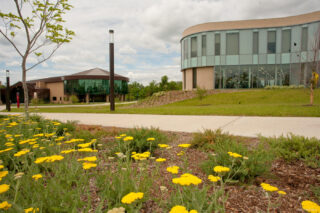

The founder of osteopathic medicine, Andrew Taylor Still, established the Kirksville College of Osteopathic Medicine in 1892. It was the first institution of osteopathic education in the world, and today, as A.T. Still University’s Kirksville College of Osteopathic Medicine (ATSU-KCOM), it has educated more than 23,000 osteopathic physicians. KCOM is a private, nonprofit college in Kirksville, a small city in rural northeast Missouri. Each year it enrolls a class of about 172 students in its Doctor of Osteopathic Medicine (DO) program.
KCOM trains students on its historic Kirksville campus for two years, then sends them to regional clinical sites across the country for the third and fourth years. Its graduates fill residencies in every field, and more than half of the Class of 2025 matched into family medicine, internal medicine or pediatrics.
This guide covers the 2026-2027 application cycle, for students who plan to start medical school in summer 2027. It covers KCOM’s admissions requirements, the application timeline, what the school looks for in an applicant, its curriculum and costs, the current secondary questions with full example answers, the interview and much more. Consider bookmarking this guide for easy access later on. Figures were checked on November 12, 2026.
Be an Informed Applicant
Every medical school is distinct, and every admissions committee has different priorities. As you work through the application process, remember that each school is looking for students who will thrive in its environment and contribute to its mission. This guide organizes the key information you need to focus your application to KCOM.
Nothing replaces individual guidance, though. If you want a plan built around your own record, our team offers one-on-one admissions advising; explore our services and reach out to us whether you need help with the details or the big picture.
Topics Covered in This Guide
You will find the key numbers first, then KCOM’s mission and history, accreditation, programs and pathways, the curriculum, admission requirements and the application timeline, tuition and cost of attendance, campus and student life in Kirksville, clinical rotations and outcomes, notable leaders and alumni, the class profile, strategies for admission, the 2026-2027 secondary questions with examples, interview preparation, frequently asked questions, related schools and ways to build clinical experience.
Key Takeaways
- Who it is for: KCOM recruits students from every part of the United States. It accepts only U.S. citizens and permanent residents and does not consider DACA applicants.
- Academic context: KCOM’s five-year averages for entering students are a 503 MCAT, a 3.68 cumulative GPA and a 3.61 science GPA. Applicants need at least a 2.80 cumulative and 2.80 science GPA to receive the secondary.
- Mission: KCOM trains highly competent osteopathic physicians and health care leaders in a research environment, with a long record in primary care and rural medicine.
- Key dates: AACOMAS opened May 4, 2026. KCOM’s application pages list February 1 as the AACOMAS deadline and March 1 for the secondary, and admission is rolling, so apply months earlier.
- Secondary: two 500-word essays, one on a significant life experience and one on your experiences with osteopathic medicine, plus short questions about prior applications and physician relatives. The fee is $70.
- Interview: in person in Kirksville, with three 30-minute one-on-one interviews (a basic science faculty member, a clinician and an admissions staff member), an osteopathic manipulation demonstration and a campus tour.
- Costs: Tuition is $68,960 for 2026-2027 for every student, and the first-year cost of attendance is $102,164.
- Next action: Shadow a DO in person, ask a physician for a letter, and submit AACOMAS early so your secondary and interview come early in the cycle.
Key Statistics About A.T. Still University Kirksville College of Osteopathic Medicine
The snapshot below collects the numbers applicants ask about first. MCAT and GPA are five-year averages for entering students from KCOM’s 2026-27 program sheet, and class size is KCOM’s yearly class. Tuition and cost of attendance are for the 2026-2027 academic year, and the placement rate is for the Class of 2026.

What Are KCOM’s Average MCAT and GPA?
KCOM’s 2026-27 DO program sheet reports five-year averages for entering students of a 503 MCAT, a 3.68 cumulative GPA and a 3.61 science GPA. KCOM does not set a minimum MCAT for applicants who will hold a bachelor’s degree, but it requires at least a 2.80 cumulative and science GPA, and the screening committee weighs every part of the file. Applicants who plan to start without a degree need a 3.5 cumulative GPA, a 3.5 science GPA and a 504 MCAT.
These are averages, not cutoffs. Many students in a class scored below them, and strong numbers alone do not earn a seat. KCOM screens for academic achievement, clinical involvement, interpersonal relations, leadership and service, perseverance, maturity, motivation, osteopathic awareness and direct exposure to medicine through DO shadowing. You can compare KCOM with other programs in our list of medical school GPA and MCAT averages.
| Metric | Value | Year or cohort | Source and definition |
|---|---|---|---|
| School and degree | A.T. Still University Kirksville College of Osteopathic Medicine (ATSU-KCOM); Doctor of Osteopathic Medicine (DO); Kirksville, Missouri | Current | Private, nonprofit; founded 1892; rural campus |
| Average MCAT | 503 | Five-year average | ATSU-KCOM DO Program Sheet 2026-27 |
| Average cumulative GPA | 3.68 | Five-year average | ATSU-KCOM DO Program Sheet 2026-27 |
| Average science GPA | 3.61 | Five-year average | ATSU-KCOM DO Program Sheet 2026-27 |
| Class size | 172 | Each entering class | ATSU-KCOM DO Program Sheet 2026-27; Fast Facts |
| Applications received | 4,060+ | 2023 | ATSU-KCOM Fast Facts |
| Acceptance rate | Not published | Not applicable | KCOM publishes applications received but not interviews or acceptances |
| Minimum GPA for the secondary | 2.80 cumulative and 2.80 science | 2026-2027 cycle | ATSU-KCOM Application Process; ATSU 2026-27 Catalog |
| Tuition | $68,960 per year, all residencies | 2026-2027 academic year | ATSU tuition and fees, ATSU-KCOM |
| Required fees | $1,484 student technology fee each year; $1,200 medical equipment fee in year 1 | 2026-2027 academic year | ATSU tuition and fees, ATSU-KCOM |
| Cost of attendance | $102,164 (year 1); $103,969 (year 2); $115,165 (year 3); $107,724 (year 4) | 2026-2027 academic year | ATSU cost of attendance, ATSU-KCOM DO |
| Secondary fee | $70 (waived with an AACOMAS fee waiver) | 2026-2027 cycle | AACOM Choose DO Explorer |
| Deposits after acceptance | $1,000 acceptance fee, $500 pre-matriculation fee, $500 pre-registration fee | 2026-2027 cycle | ATSU-KCOM Application Process |
| GME placement | 99.7% (158 of 159 seeking) | Class of 2026 | ATSU-KCOM Student Outcomes |
| Four-year rolling placement | 99.4% | Most recent four years | ATSU-KCOM Postgraduate Placement; Program Sheet 2026-27 |
| Graduates in primary care | 56.2% (family medicine, internal medicine, pediatrics) | Class of 2025 | ATSU-KCOM Fast Facts |
| COMLEX Level 1 first-time pass rate | 89.17% (national 90.23%) | 2025-2026 | ATSU-KCOM Student Outcomes |
| COMLEX Level 2-CE first-time pass rate | 94.81% (national 92.48%) | 2025-2026 | ATSU-KCOM Student Outcomes |
| Retention | 98% | Students who matriculated in 2025 | ATSU-KCOM Student Outcomes |
| Accreditation | COCA, accreditation with exceptional outcomes (April 2021); ATSU accredited by the Higher Learning Commission | Current; next COCA review 2030-2031 | AACOM Choose DO Explorer; Program Sheet 2026-27 |
| Interview | In person: three 30-minute one-on-one interviews | 2026-2027 cycle | ATSU-KCOM Application Process; AACOM Choose DO Explorer |
Student Profile
The average age of a KCOM student is 24. Students come from across the country; Missouri, Illinois, Michigan and Iowa send the most. Among first-year students in the 2024-2025 enrollment report, 85.9% majored in a science, 14.1% in another field, and 12.1% held a graduate degree. The student body that year was 46.2% White, 28.3% Asian, 9.9% Hispanic or Latino, 5.2% Black or African American, 4.7% multiple races, 0.2% American Indian or Alaska Native and 0.2% Native Hawaiian or Pacific Islander, with 4.1% undisclosed. Total DO enrollment was 671.
Mission and Educational Priorities
Mission Statement
KCOM’s mission, as stated by the college, is: “The mission of A.T. Still University-Kirksville College of Osteopathic Medicine (ATSU-KCOM) is to educate and train students to become highly competent osteopathic physicians and healthcare leaders. KCOM is committed to providing a quality osteopathic medical education in a research environment that prepares students for graduate medical training and clinical service.”
KCOM lists six values: innovation, whole-person healthcare, learning centeredness, scholarship, leadership and professionalism. A.T. Still University’s broader mission commits it to its osteopathic heritage and to whole person healthcare, scholarship, community health, interprofessional education, diversity and underserved populations.
The Founding School of Osteopathic Medicine
The college opened in 1892 as the American School of Osteopathy, founded by Andrew Taylor Still, DO, the founder of osteopathic medicine. It was the first school of osteopathic medicine anywhere. Still developed the osteopathic tradition in the 19th century in response to medical practices of his time that were often ineffective and sometimes harmful. One of his driving ambitions was a method of care that avoided unnecessary harm and treated the body as a unit.
Osteopathic theory and practice have evolved with modern science, but the profession still emphasizes prevention, whole-person care and the importance of the musculoskeletal system in overall health. KCOM’s campus keeps that history close: it is home to the Museum of Osteopathic Medicine, whose collection of books, tools, documents and photographs tells the story of the profession.
Serving the Underserved and Whole-Person Care
KCOM’s history draws many applicants, but its work goes beyond history. A.T. Still University believes the greatest challenges in health care relate to access, and it defines the underserved broadly:
- patients who do not physically fit standardized care environments
- children and adults with disabilities or autism spectrum disorder who some providers avoid
- heart patients on blood thinners who struggle to find dentists willing to treat them
- seniors with mobility or cognitive challenges
- people with limited access because of distance or insurance
- patients facing cultural, geographic or language barriers
KCOM teaches students to use modern technology and procedures while integrating osteopathic principles into patient care: treating body, mind and spirit and considering the social conditions that affect health. Students learn osteopathic manipulative techniques such as high velocity, low amplitude (thrust) treatment, muscle energy, counterstrain, myofascial release and cranial osteopathy.
A Record in Primary Care and Rural Medicine
U.S. News and World Report has recognized KCOM for leading the nation in graduates who practice in rural areas, in primary care and in underserved communities. Every student completes a required rural or underserved family medicine rotation, and 56.2% of the Class of 2025 matched into family medicine, internal medicine or pediatrics.
What the Mission Means for Your Application
Show the committee that you understand osteopathic medicine from experience, ideally from shadowing a DO in person, and that you have the clinical involvement, service and maturity the school screens for. KCOM’s research environment also means that scholarship is valued. If you have research experience, explain what you learned from it.
Accreditation and Institutional Identity
COCA Accreditation
KCOM’s DO program is accredited by the Commission on Osteopathic College Accreditation (COCA) of the American Osteopathic Association. In April 2021, KCOM earned COCA’s status of accreditation with exceptional outcomes, and its next accreditation review is scheduled for the 2030-2031 academic year. Graduates are eligible for the COMLEX-USA licensing exams.
University Accreditation
A.T. Still University of Health Sciences is accredited by the Higher Learning Commission. ATSU is a private, nonprofit university with campuses in Kirksville, Missouri; Mesa, Arizona; and California, plus online programs.
A.T. Still University’s Other Colleges
KCOM is one of several ATSU colleges. The university also runs the School of Osteopathic Medicine in Arizona, the Arizona School of Dentistry and Oral Health, the Missouri School of Dentistry and Oral Health, the Arizona School of Health Sciences, the College of Graduate Health Studies and the College for Healthy Communities. Across them, ATSU offers programs in athletic training, audiology, biomedical sciences, dental medicine, health administration, health education, health sciences, medical science, nursing, occupational therapy, orthodontics, osteopathic medicine, physical therapy, physician assistant studies, public health and speech-language pathology.
Why Accreditation and Identity Matter for Applicants
COCA’s exceptional outcomes status signals consistent results in the measures COCA reviews. The university connection gives KCOM students access to interprofessional education with dental and other health professions students, online master’s options and shared resources such as the A.T. Still Memorial Library and the A.T. Still Research Institute.
Medical Programs and Affiliations
Doctor of Osteopathic Medicine (DO)
KCOM’s core program is the four-year DO. Years one and two take place on the Kirksville campus; years three and four are clinical rotations at regional sites across the country. Graduates earn a minimum of 359.25 credit hours.
Enhanced Mastery Track
ATSU’s 2026-27 tuition schedule lists a five-year Enhanced Mastery Track for the DO, in which the second and third years are billed at a reduced rate of $51,720. It spreads the preclinical curriculum over more time. Ask the admissions office how students enter the track.
Master of Science in Biomedical Sciences
KCOM also offers a Master of Science in Biomedical Sciences in Kirksville. It prepares students for professional study in medicine or research, and graduate research projects usually involve anatomy, biochemistry, immunology, microbiology, pharmacology or physiology. An internal agreement between the MS and DO programs gives a guaranteed DO interview to MS candidates who meet set criteria and apply.
Concurrent DO/MHA and DO/MPH
DO students can earn a Master of Health Administration or a Master of Public Health online through ATSU while they complete the DO. Both programs aim to prepare physicians to lead in health care organizations and public health.
Still Scholars Early Acceptance Program
The Still Scholars Early Acceptance Program offers early conditional admission to strong undergraduates committed to osteopathic medicine. Applicants apply after their sophomore year with at least four semesters (45 semester hours) completed and two years of full-time coursework remaining, at least 75% of prerequisites finished with a B or better, a 3.4 cumulative and science GPA, at least 50 combined hours of clinical experience and shadowing, at least 50 combined hours of leadership and service, and three letters (a science faculty member or health professions advisor, a physician they have shadowed, and a service organization advisor). The 2026 application window ran May 18 through August 1, 2026, and selected students interview on campus in early fall. Scholars still take the MCAT, complete assigned activities and submit an AACOMAS application before matriculating.
Pre-Med/Med Accelerated Track With Truman State University
KCOM and Truman State University offer a “3+4” track. Selected Truman students in health science or exercise science complete three years at Truman, then start the DO program, earning both a bachelor’s degree and the DO. Candidates need a 3.5 cumulative and science GPA, all prerequisites by the end of the junior year, clinical shadowing and service, and U.S. citizenship or permanent residency.
Early Decision Program
For applicants who are sure KCOM is their first choice, the Early Decision Program requires a cumulative and science GPA of at least 3.5, an MCAT already taken with a competitive score, an AACOMAS application filed by August 1, and all secondary materials and a letter of intent filed in early September. Early Decision applicants must hold other medical school applications until KCOM decides. Interviews take place in early October, decisions come within two weeks, and accepted Early Decision students pay a $1,000 acceptance fee by December 15. Confirm the current score and date requirements with the admissions office before you apply.
Predoctoral Fellowships
KCOM offers predoctoral fellowships in anatomy, osteopathic manipulative medicine and medical education. Fellows teach and conduct research, which extends their training.
International Rotations
Fourth-year students may spend elective time at an international rotation site approved by Clinical Educational Affairs.
Curriculum Overview
KCOM’s curriculum is systems-based and patient-oriented. Each course uses several formats, including problem-based sessions, case-based presentations, web-based instruction, small-group labs and workshops. Osteopathic theory and methods are taught throughout the first two years, aligned with the basic science and clinical courses. The curriculum is linear: students must complete each section in sequence before moving on.
Years One and Two
Early in the first semester, students study the foundations of the basic medical sciences. They spend the rest of the first and second years learning clinical medicine and the evidence behind it, with clinical education starting in the first quarter of year one. The first year includes a clerkship with a primary care physician.
The 2026-27 catalog lists this typical schedule:
- First year, fall: Clinical Ultrasound I, Histology I, Human Biochemistry I, Human Gross and Developmental Anatomy/Radiology I, Immunology I, Medical Microbiology, Medical Pharmacology I, Medical Physiology I, Osteopathic Theory and Methods I, Pathology I and The Complete DOctor I.
- First year, spring: Clinical Experiences II, Clinical Ultrasound II, Histology II, Human Biochemistry II, Anatomy/Radiology II, Infectious Diseases I, Internal Medicine I, Medical Pharmacology II, Medical Physiology II, Osteopathic Theory and Methods II, Pathology II, Pediatrics I, Performance Assessment I, Principles of Surgery I and The Complete DOctor II.
- Second year, fall: Clinical Ultrasound III, Histology III, Human Biochemistry III, Immunology II, Infectious Diseases II, Internal Medicine II, Medical Pharmacology III, Medical Physiology III, Osteopathic Theory and Methods III, Pathology III, Pediatrics II, Principles of Surgery II, The Complete DOctor III and Women’s Health.
- Second year, spring: Clinical Ultrasound IV, COMLEX Level 1 Preparation, Dermatology, Infectious Diseases III, Neuroscience, Osteopathic Theory and Methods IV, Pediatrics III, Performance Assessment II, Principles of Surgery III and The Complete DOctor IV.
The Complete DOctor
The Complete DOctor is a course specific to KCOM that runs through the first two years. It combines early clinical experiences with study of physical exam skills, standardized patient encounters, human patient simulation, cultural diversity, communication, spirituality in medicine, medical law and ethics, and a primary care preceptorship.
Clinical Ultrasound and Simulation
KCOM has a fully integrated clinical ultrasound curriculum, with point-of-care ultrasound taught across all four preclinical semesters in the Daraban Ultrasound Center. Students practice on true-to-size, high-fidelity simulators in the Human Patient Simulation Center and are assessed on physical exam, osteopathic manipulation, interpersonal and clinical skills in the Performance Assessment Center.
Assessment and Board Preparation
Preclinical exams are comprehensive, integrated multiple-choice tests modeled on the national boards, plus performance assessments. Students must sit for COMLEX-USA Level 1 before starting clinical rotations, and they must pass the COMLEX series to graduate.
Years Three and Four
The last 94 weeks are clinical: 88 weeks of rotations plus six weeks for a third-year winter break, fourth-year flex time and commencement preparation. Students are based at a regional site chosen through an electronic match in the second year, which uses a personal statement, and they may trade sites after the initial match. Students also complete online coursework and clinical didactics.
- Core rotations (32 weeks): family medicine, rural or underserved family medicine, pediatrics, internal medicine, surgery, OB/GYN and psychiatry.
- Required rotations (12 weeks): family medicine, critical care/ICU and emergency medicine.
- Electives: 44 weeks, including fourth-year selectives in internal medicine, internal medicine or surgery, pediatrics, and orthopedics, neurology, OMM or physiatry.
- Advanced osteopathic principles and practice continues in both clinical years.
A comprehensive exam at the end of the third year tests knowledge and clinical skills, and fourth-year students complete a written case study.
Why the Curriculum Matters for Applicants
KCOM suits students who want a structured, systems-based preclinical program with heavy hands-on training in osteopathic methods, ultrasound and simulation, followed by community-based clinical years with a strong primary care core. Mention specific features, such as The Complete DOctor or the rural family medicine rotation, when they connect to your goals.
Admissions Requirements and Application Process
KCOM’s Admissions Committee seeks applicants who identify with the goals of ATSU’s and KCOM’s missions. Applicants are screened for academic achievement, clinical involvement, interpersonal relations, leadership and service, perseverance, maturity, motivation, osteopathic awareness and direct exposure to medicine through DO shadowing. Applicants who reach the final phase are invited to campus to interview, and everyone accepted is interviewed first.
Minimum GPA and MCAT Requirements
- GPA: a minimum 2.80 cumulative GPA and 2.80 science GPA on a 4.0 scale. All grades count; AACOMAS includes every attempt of a repeated course.
- MCAT: required and never waived. Scores must be no more than three years old, and the latest accepted score for the 2026-2027 cycle is from January 2027.
- Non-degree applicants: applicants who will not hold a degree at matriculation need a 3.5 cumulative GPA, a 3.5 science GPA and a 504 MCAT.
Degree and Required Coursework
Applicants must complete at least 90 semester hours, or three-fourths of the credit for a degree, at a regionally accredited college or university, with at least 30 hours at a four-year, degree-granting institution. Most accepted students have a bachelor’s degree, and KCOM recommends completing one. Each prerequisite needs a grade of C or better:
- English: 6 semester hours or 9 quarter hours
- Biology: 8 semester hours or 12 quarter hours, with lab, including a basic course in general biology or zoology
- Physics: 8 semester hours or 12 quarter hours, with lab, covering mechanics, sound, heat, magnetism, electricity and light
- General or inorganic chemistry: 8 semester hours or 12 quarter hours, with lab
- Organic chemistry: 8 semester hours or 12 quarter hours, with lab
KCOM encourages courses in molecular biology, genetics, behavioral sciences, biochemistry, human anatomy and physiology, and the humanities. Online coursework, including online labs, is accepted. Actual grades are strongly preferred over pass/fail unless a pass/fail grade was required.
Citizenship
KCOM accepts only U.S. citizens and permanent residents. Students who are not citizens or permanent residents are not eligible, and DACA applicants are not considered.
Letters of Evaluation
KCOM requires two letters of evaluation with the secondary application:
- Evaluation I: from a premedical advisor, premedical committee or a science faculty member with whom you received a grade and credit for coursework.
- Evaluation II: from a physician, MD or DO. KCOM strongly prefers a letter from a DO you have spent time with in a clinical setting.
Letters may come through AACOMAS, Interfolio, mail or email, and may not come from relatives. A good letter evaluates your academic and professional ability, speaks to your character and explains how well the writer knows you.
Shadowing and Clinical Experience
KCOM gives strong preference to applicants who have shadowed a DO in person. Virtual shadowing is accepted, but in-person time with an osteopathic physician carries more weight. Build varied clinical exposure that shows you understand patient care and the physician’s role. If you need more supervised patient contact, clinical internships for pre-med students are one way to add it alongside work and volunteering at home.
Key Steps in the Application Process
Step 1: Submit AACOMAS
AACOMAS opened May 4, 2026 for students entering in 2027. Submit your application, MCAT scores, official transcripts and the AACOMAS fee, and confirm with AACOMAS that everything has arrived. KCOM’s application pages list February 1 as the AACOMAS deadline, and KCOM reviews on a rolling basis, so apply months earlier. Our AACOMAS application guide walks through each section.
Step 2: Complete the Secondary
Applicants with at least a 2.80 cumulative and science GPA receive a link to the secondary application within about 24 hours of AACOMAS verification. The secondary includes biographical information, an optional dual degree section, test scores, clinical health experience, essay questions, a statement of disciplinary actions and a nondiscrimination statement, plus the $70 fee and your two letters. KCOM’s pages list March 1 as the secondary deadline. Do not copy essay material from AACOMAS or repeat KCOM’s own literature back to it.
Step 3: Screening
The Screening Committee reviews every complete file in its entirety. Contact the admissions office to confirm that your materials are complete, and check your status in the secondary portal.
Step 4: Interview
Interviews begin once the first complete applications arrive, typically in October, and run through March. Interviews are held in person in Kirksville.
Step 5: Decision and Deposits
Decisions are released based on when you interview. After acceptance you pay a $1,000 acceptance fee, a $500 pre-matriculation fee and a $500 pre-registration fee, all applied to tuition and non-refundable, on dates set by when you are accepted and following the AACOMAS traffic guidelines. Before matriculation, you submit a signed admission agreement, official transcripts, immunization records, a criminal background check and proof of health insurance.
Step 6: Orientation
Classes for students entering in 2027 start June 5, 2027, so plan to move to Kirksville in early summer.
Application Timeline for the 2026-2027 Cycle
| When | What happens |
|---|---|
| May 4, 2026 | AACOMAS opens |
| May to July 2026 | Best window to submit AACOMAS; secondaries arrive soon after verification |
| August 1, 2026 | Early Decision: AACOMAS application filed |
| Early September 2026 | Early Decision: secondary materials and letter of intent |
| October 2026 to March 2027 | In-person interviews in Kirksville |
| December 15, 2026 | Early Decision acceptance fee due |
| January 2027 | Latest MCAT accepted for this cycle |
| February 1, 2027 | AACOMAS deadline listed on KCOM’s application pages |
| March 1, 2027 | Secondary deadline listed on KCOM’s application pages |
| June 2027 | Orientation and start of classes |
Application Tips From KCOM’s Admissions Guidance
KCOM’s admissions office gives practical advice for the secondary: do not duplicate your AACOMAS essays, do not repeat KCOM’s literature, and read about osteopathic medicine so you can explain how it relates to you and your goals. These writing habits help:
- Proofread. Check grammar, spelling, punctuation, flow and impact.
- Consider your tone. Write in a genuine, interesting voice that shows who you are, and focus on your strengths rather than false modesty.
- Tie clinical experience to your reasons for medicine. Explain how specific experiences moved you toward medicine, and share what you felt.
- Write clearly. Use the active voice, a mix of simple and complex sentences, and correct medical terms. Use introductions and conclusions to frame your thoughts.
- Contextualize your accomplishments. Explain how activities, awards and leadership roles helped you grow.
- Brainstorm first. Decide which experiences and qualities you want to highlight before you write.
- Be specific and concise. Develop a few key points with evidence.
- Balance actions and feelings. Describe what you did and what it meant, without being vague or robotic.
- Do not reuse primary application writing. Revisit, do not repeat.
- Be yourself. No gimmicks.
Common Application Mistakes
- Not confirming that AACOMAS and the KCOM admissions office received all of your materials.
- Not spending enough time on the AACOMAS personal statement or asking for feedback.
- Not explaining a discrepancy in your record, or over-explaining it. Be forthcoming and concise.
- Starting too late on clinical experience or applications.
- Not being personal enough. Committees want the specific examples behind your experiences.
- Submitting letters from people who have not known you long.
- Behaving unprofessionally with the admissions office or on interview day.
- Not practicing interview skills.
- Not understanding osteopathic medicine, which shows most clearly in essays that repeat a school’s brochure. Study the history and principles of osteopathic medicine and reflect on what the field means to you.
Tuition, Cost of Attendance and Financial Aid
Tuition and Fees for 2026-2027
KCOM charges every DO student the same tuition, regardless of state residency: $68,960 per year in 2026-2027. Each year adds a $1,484 student technology fee, and first-year students also pay a $1,200 medical equipment fee. Tuition is billed in two installments, at the start of each semester, and delinquent balances accrue 1.5% per month. Health insurance is required; the school plan is listed at $4,376 for 2026-2027, subject to change.
Total Cost of Attendance
ATSU’s 2026-27 cost of attendance for KCOM DO students:
| Budget category | Class of 2030 (year 1) | Class of 2029 (year 2) | Class of 2028 (year 3) | Class of 2027 (year 4) |
|---|---|---|---|---|
| Tuition and fees | $71,644 | $70,444 | $70,444 | $70,444 |
| Computer, books and supplies | $3,420 | $6,425 | $5,781 | $4,830 |
| Living expenses | $27,100 | $27,100 | $38,940 | $32,450 |
| Total cost of attendance | $102,164 (10 months) | $103,969 (10 months) | $115,165 (12 months) | $107,724 (10 months) |
Adding the four yearly budgets gives about $429,000 at 2026-2027 prices, before interest and future increases. Enhanced Mastery Track students have a lower budget in their reduced-tuition years ($80,924 and $86,729 for 2026-2027). For context on borrowing, average graduate indebtedness is $335,904. See our guide to the total cost of medical school for how KCOM compares.
Financial Aid and Scholarships
ATSU’s Enrollment Services office handles federal Direct Unsubsidized and Grad PLUS loans for eligible students, and KCOM offers scholarships. Service-commitment scholarships, such as the National Health Service Corps Scholarship, the military Health Professions Scholarship Program, the VA Health Professions Scholarship Program, the Indian Health Service Scholarship and the Native Hawaiian Health Scholarship, can cover tuition, fees and a living stipend; KCOM graduates match into military residencies every year. Recent federal law changed graduate borrowing limits, so confirm your loan eligibility with Enrollment Services early.
Tips for Managing Costs
- Budget for a third-year move: living costs rise at regional clinical sites, and the third-year budget covers 12 months.
- Apply for service scholarships before you matriculate if a service career fits your goals.
- Use the expense worksheets ATSU posts for each year to compare the budget with your real costs.
- Remember the deposits after acceptance ($2,000 total), which are applied to tuition.
Campus Facilities and Student Life
The Kirksville Campus
KCOM’s campus in Kirksville has grown over more than 130 years. It includes classrooms and labs, the Human Patient Simulation Center with true-to-size, high-fidelity simulators, the Daraban Ultrasound Center, the Performance Assessment Center with rooms for standardized patient encounters, an anatomy laboratory, breakout study rooms with screens and whiteboards, Centennial Commons and an interprofessional education building. The campus is also home to ATSU’s Gutensohn Clinic, the Museum of Osteopathic Medicine, the A.T. Still Memorial Library, the Missouri Area Health Education Center program office, the A.T. Still Research Institute, on-campus housing and the Thompson Campus Center. Northeast Regional Medical Center is nearby.
Housing
KCOM offers a limited number of on-campus apartments. For off-campus housing, ATSU runs a website with listings from local landlords. Kirksville’s cost of living is modest, and the first- and second-year budget allows $27,100 for living expenses.
Student Life and Organizations
Students can join more than 70 registered student organizations across a wide range of interests. ATSU’s Student Life office supports student leaders and organizations, and the Student Ambassador Program connects applicants with current students; email [email protected] to talk with one.
Wellness and Academic Support
- Learning Resources: learning success advising and peer tutoring for residential students; learning specialists offer free one-on-one consultations.
- Accommodation Services: reasonable accommodations for students with disabilities.
- Behavioral Health and Wellness: individual counseling, referrals and consultation.
- Still-Well Student Wellness Program: encourages health in body, mind and spirit.
- Thompson Campus Center: free membership with basketball courts, an indoor track, racquetball, free weights, a climbing wall and fitness classes.
KCOM’s retention rate was 98% for students who matriculated in 2025.
What Students Say
KCOM students often mention the welcoming community. Current students describe feeling at home from interview day, a student body drawn from across the country and faculty who put students first.
Clinical Rotations and Research Opportunities
Regional Clinical Sites
KCOM students spend their third and fourth years at core regional sites across the country, with dedicated KCOM faculty in every clinical region. Current regional sites are in Arizona, California, Illinois, Indiana, Michigan, Missouri, New Jersey, Ohio, Pennsylvania, Texas and Utah. Sites are chosen through an electronic match in the second year, and students can trade sites after the match.
The Clinical Affairs department, led by Associate Dean Saroj Misra, DO, FACOFP, supports rotations, runs the regional site match, coordinates clinical activities and assessments at the regional sites and supports the residency match with Academic Affairs. See the clinical rotations page for the full requirements.
Residency Outcomes
KCOM students place well into graduate medical education. Its student outcomes page reports:
| Class | Seeking GME | Placed | ACGME | Military | Placement rate |
|---|---|---|---|---|---|
| 2026 | 159 | 158 | 156 | 2 | 99.7% |
| 2025 | 153 | 153 | 149 | 4 | 100% |
| 2024 | 154 | 153 | 146 | 7 | 99.4% |
| 2023 | 157 | 155 | 143 | 12 | 98.7% |
| 2022 | 172 | 172 | 165 | 7 | 100% |
| 2021 | 169 | 167 | 158 | 9 | 98.8% |
The four-year rolling average placement rate is 99.4%. In the Class of 2025, 56.2% matched into primary care. KCOM’s top residency fields are family medicine (29.4%), emergency medicine (16.99%), internal medicine (15.03%) and pediatrics (9.8%). Graduates match into primary care and selective specialties, and KCOM posts residency placement brochures for each class from 2021 to 2026. Program directors surveyed by KCOM answered “yes” 95% of the time when asked if they would accept a KCOM resident again.
COMLEX Performance
| Year | Level 1 (KCOM) | Level 1 (national) | Level 2-CE (KCOM) | Level 2-CE (national) |
|---|---|---|---|---|
| 2025-2026 | 89.17% | 90.23% | 94.81% | 92.48% |
| 2024-2025 | 91.57% | 90.25% | 95.42% | 91.33% |
| 2023-2024 | 96.13% | 93.05% | 92.99% | 92.51% |
| 2022-2023 | 90.50% | 90.60% | 95.70% | 94.50% |
KCOM’s COMLEX Level 3 first-time pass rate was 97.09% in 2025. The four-year completion rate for students who matriculated in 2021 was 81%, and the five-year completion rate for the 2019 and 2020 cohorts was 92%; four-year rates exclude students who chose an academic fellowship or the extended mastery track.
Research
KCOM’s mission places osteopathic education in a research environment. The A.T. Still Research Institute is on the Kirksville campus, students can take research electives in the first and fourth years, and predoctoral fellows in anatomy, OMM and medical education combine teaching with research. Master of Science in Biomedical Sciences students complete research projects in the basic sciences.
Notable Alumni, Faculty, Leadership and Admissions Staff
KCOM’s graduates practice in every U.S. state and several other countries, in every specialty and subspecialty. These are some of the people applicants are most likely to meet or hear about.
School Leadership
Margaret Wilson, DO
Dean of ATSU-KCOM and a KCOM graduate (Class of 1982). Dr. Wilson is a family physician who has served the Kirksville community for decades. In April 2026 the Missouri Society of the American College of Osteopathic Family Physicians named her Osteopathic Family Physician of the Year, its highest award, citing her role in shaping Missouri’s family medicine workforce. She has led nationally as chair of AACOM’s Board of Deans, beginning in July 2020, and as chair of AACOM’s Ethics and Professionalism Task Force, which created policies and curriculum on professional standards.
Saroj Misra, DO, FACOFP
Associate Dean of Clinical Affairs, leading the department that runs the third- and fourth-year rotations and the regional site match.
Jeffrey Davis, DO, CMD
Assistant Dean of Clinical Affairs, supporting students during their clinical years.
Tammy Kriegshauser, DHA
Director of Clinical Affairs, coordinating rotation logistics with the regional sites.
Founder
Andrew Taylor Still, DO
The founder of osteopathic medicine, who opened the American School of Osteopathy in Kirksville in 1892. His philosophy of treating the body as a unit still shapes KCOM’s curriculum.
Notable Alumni
Caitlin Rogers, DO
A KCOM graduate (Class of 2015) and president of the Missouri Society of the American College of Osteopathic Family Physicians Board of Governors for 2025-26.
Christopher Gasbarre, DO, FAAD, FACMS
A KCOM graduate and board-certified dermatologist and Fellow of the American College of Mohs Surgery. He practices with Monument Health in Spearfish, South Dakota, previously served on the staff of Cleveland Clinic’s Dermatology and Plastic Surgery Institute, has served as chief of staff of Monument Health Spearfish Hospital and sits on the board of trustees of the Idaho College of Osteopathic Medicine. Before medical school he spent two years in cancer biology research at the National Cancer Institute.
Admissions Office
KCOM’s admissions office is part of ATSU’s Department of Student Affairs. Reach it at 660.626.2237 (toll-free 866.626.2878, ext. 2237) or [email protected] to schedule a campus visit, ask about your file or connect with a student ambassador.
Why Faculty and Alumni Matter for Applicants
KCOM’s leaders are largely primary care physicians and longtime Kirksville clinicians, and its alumni include leaders of state osteopathic family medicine. That matches the school’s primary care and rural record. Knowing who leads clinical affairs helps you ask good questions about regional sites at your interview.
Admissions Statistics and Class Profile
Class Size and Applications
KCOM’s yearly class size is 172. Admissions received more than 4,060 applications in 2023.
MCAT and GPA
Five-year averages for entering students are a 503 MCAT, a 3.68 cumulative GPA and a 3.61 science GPA. The minimum to receive a secondary is a 2.80 cumulative and science GPA, and non-degree applicants need a 3.5 GPA and a 504 MCAT.
Acceptance Rate
KCOM publishes applications received but not the number of interviews or acceptances, so no verified acceptance rate exists. Figures quoted elsewhere, such as a 3% to 9% range, cannot be confirmed from KCOM or AACOM sources. Dividing class size by applications would not give an acceptance rate, because many accepted applicants enroll elsewhere. Use the averages, the minimums and your fit with KCOM’s screening factors to judge your chances.
Age and Background
The average KCOM student is 24. Students come from across the country, with Missouri, Illinois, Michigan and Iowa sending the most. In 2024-2025, 85.9% of first-year students were science majors and 12.1% held a graduate degree.

Tips and Strategies for Admission to KCOM
Key Components of a Competitive Application
A competitive KCOM applicant does more than understand osteopathic values. Strong candidates show the qualities KCOM screens for through their record:
- Impactful clinical exposure: significant, varied clinical experience that shows you understand patient care and the physician’s role.
- In-person DO shadowing and a DO letter: KCOM strongly prefers in-person DO shadowing and a physician letter from a DO you have worked with in a clinical setting.
- A letter about service: a letter from the leader of a medical outreach activity, such as a free clinic director or a mentor on a supervised service program, can show your commitment to underserved communities.
- Academic and time-management skills: show that you have handled challenging coursework, work, family responsibilities or other demands and still succeeded.
If you want to add clinical service with underserved communities, supervised pre-med internships abroad combine patient care experience, physician shadowing and mentorship. They are one option alongside clinical work at home.
Apply Early
KCOM reviews files on a rolling basis and starts interviewing in October. Submit AACOMAS in the first weeks after it opens, return the secondary quickly, and confirm your letters have arrived. Applicants who wait for the posted February deadline compete for far fewer seats.
Prepare Your Letters Early
Ask your science faculty member or advisor and your physician, ideally a DO, at least six weeks ahead. Give them your activity list, your reasons for osteopathic medicine and your interest in KCOM.
Show Osteopathic Awareness
Read about the history and principles of osteopathic medicine, shadow DOs in different settings, and be ready to describe osteopathic manipulative treatment you have actually seen. KCOM specifically warns against essays that repeat its brochures.
Plan Your Summers
If you are building clinical hours over the summer, pre-med summer internships with supervised patient contact can complement shadowing and work at home. If you are taking a year before applying, pre-med gap year programs can fill it with direct patient care.
Consider Early Pathways
If you are a college sophomore who is sure about KCOM, look at the Still Scholars Early Acceptance Program. If you are a Truman State student, ask about the 3+4 track. If you are already sure KCOM is your first choice as a senior applicant, consider Early Decision.
Study the AACOM Competencies
Applicants to osteopathic schools should know the AACOM core competencies for entering medical students, and applicants applying to both MD and DO schools should also study the AAMC Core Competencies for Entering Medical Students. Map your experiences to them before you write.
Secondary Application Questions, Example Responses and Analysis
KCOM sends its secondary to applicants with at least a 2.80 cumulative and science GPA, usually within a day of AACOMAS verification. The fee is $70, waived for applicants with an AACOMAS fee waiver. KCOM does not post its questions publicly; the 2026-2027 secondary includes the following fields, recorded word for word from applicants this cycle. Do not reuse AACOMAS essays, and do not repeat KCOM’s own literature.
Short Questions
“Have you applied to KCOM previously? if yes, list previous application year(s).”
“If yes, detail below what has changed since your last application.”
Worked response pattern: first-time applicants answer “No.” Reapplicants list every earlier cycle, then give a short, specific list of changes, for example: “Since my 2025-2026 application I raised my MCAT from 498 to 505, completed 1,100 hours as an emergency department scribe, and shadowed a family medicine DO for 60 hours, including office visits that used osteopathic manipulative treatment. I also completed upper-level biochemistry and physiology with A grades.”
“Please list any relatives that are osteopathic physicians:”
“Please list any relatives that are allopathic physicians:”
Worked response pattern: list relationship, name, degree and specialty, or write “None.” These fields are factual, and a relative in medicine does not replace your own exposure to osteopathic medicine.
Essay 1: Significant Life Experiences (500 words)
“Describe one or more significant life experiences that have meaningfully shaped your development as a potential future physician. What did you come to understand about yourself, and how has that insight altered your perspective or behavior?”
Who answers: every applicant who receives the secondary.
What it asks: three things: the experience, what you learned about yourself and how that insight changed your perspective or behavior. Many applicants answer only the first.
How to approach it: choose one experience, or two connected ones, that truly changed you. Spend at least half the essay on the insight and the change, with concrete examples of how you act differently now.
Example response (illustrative example, not an actual applicant essay; 388 words):
When I was nineteen, my father had a stroke two days after harvest. I was home from college for the weekend, and I was the one who noticed his speech slurring at the kitchen table. The nearest stroke center was ninety minutes away. He survived, but he came home unable to use his right hand, and for the next year I drove him to physical therapy twice a week while finishing my classes online.
Those drives taught me two things about myself. First, I had always thought of myself as patient, but I was not. I was efficient. I wanted to fix his hand on a schedule, and I pushed him through exercises he was too tired to do. One afternoon his therapist, a woman who had treated half our county, stopped me. She told me my father was not a project. He was grieving the work that defined him, and no amount of repetitions would help until someone acknowledged that.
I was embarrassed, and then I started listening differently. I asked my father what he missed. It was not the tractor. It was fixing things for neighbors. So his therapist built his exercises around a small engine he could take apart at the workbench. His grip improved faster in the next two months than in the four before.
Second, I learned that distance is a medical problem. My father’s outcome depended on a neighbor who drove fast, a nurse in a critical access hospital who recognized the stroke, and a therapist who knew our community. I started volunteering with our county health department’s blood pressure screenings at grain elevators and church dinners, and I have since worked two years as a certified nursing assistant in a rural long-term care facility, where I help residents with daily care and take vitals.
The insight changed my behavior in concrete ways. I ask patients what matters to them before I explain what they need to do. I slow down with families who are overwhelmed. And I measure success in a patient’s life, not only in a chart. I want to become a physician who treats the person in front of me and who practices where the nearest specialist is far away. That is the kind of family medicine I have seen work, and the kind I want to train for.
Why this example works: it answers all three parts. The experience is specific, the self-understanding is honest (efficiency mistaken for patience, and distance as a medical problem), and the behavior change is concrete: asking what matters to patients, service at screenings and CNA work. It points naturally toward rural primary care, a KCOM strength, without forcing the school’s name into every paragraph.
Mistakes to avoid: telling a dramatic story with no reflection, listing activities instead of insight, or describing someone else’s growth instead of your own.
Essay 2: Experiences With Osteopathic Medicine (500 words)
“Describe your experiences with osteopathic medicine and how they have influenced your decision to pursue a career as an osteopathic physician.”
Who answers: every applicant who receives the secondary.
What it asks: your actual exposure to osteopathic medicine and how it shaped your choice. KCOM’s admissions office warns that a lack of understanding of osteopathic medicine shows most clearly in essays that repeat its brochures.
How to approach it: describe specific encounters with DOs, with hours and settings, including osteopathic manipulative treatment you saw. Explain what you learned and how it changed your understanding of medicine. Show you understand that osteopathic physicians practice full-scope medicine.
Example response (illustrative example, not an actual applicant essay; 380 words):
My first real exposure to osteopathic medicine came from a DO in our town’s family practice, where I shadowed for 80 hours over two summers. I expected to see manipulation as a separate procedure. Instead, I saw it woven into ordinary visits. A farmer with chronic neck pain received a structural exam that started at his feet, because the DO wanted to know how he stood on uneven ground all day. A teenager with recurrent headaches had her posture, sleep and screen time examined before anyone discussed medication. After a treatment the DO explained to her mother exactly what she had found and why the plan included both a stretching routine and a follow-up visit.
What stayed with me was how her hands became part of the conversation. Patients who were guarded at the start of a visit relaxed when she examined them carefully. She told me that touch builds trust in a community where people often wait too long to come in. That changed how I understood whole-person care: not as a philosophy statement, but as a habit of examining the body, asking about the life around it and explaining both.
I also saw the limits. Manipulation was never a substitute for imaging when a red flag appeared, and she referred a patient with numbness in both legs the same day. Osteopathic medicine, as I watched it practiced, is full-scope medicine with an additional set of diagnostic and treatment skills, not an alternative to it.
Since then I have shadowed a second DO in an emergency department for 40 hours, where osteopathic manipulative treatment was used for rib dysfunction and acute low back pain, and I attended an OMM demonstration at a regional pre-osteopathic conference. I also read about Andrew Taylor Still’s founding of the first osteopathic school in Kirksville and his insistence that the body works as a unit.
These experiences decided my path. I want to be a family physician in a small community, and I want the extra tools that let me diagnose and treat musculoskeletal complaints in the office. Training where osteopathic medicine began, with osteopathic theory and methods throughout the first two years and a required rural or underserved family medicine rotation in the clinical years, fits the physician I am working to become.
Why this example works: it gives hour-counted exposure to two DOs and concrete encounters that show osteopathic practice, including its limits. It explains how those experiences changed the applicant’s understanding of whole-person care. The last paragraph uses verified KCOM features (the founding school, osteopathic theory and methods in the first two years and the required rural or underserved family medicine rotation) without repeating the school’s marketing language.
Mistakes to avoid: describing OMT you did not see, treating osteopathic medicine as alternative medicine, or filling the essay with history instead of your experience.
Optional: AACOMAS Updates
“Please list any changes or updates to your AACOMAS application. This section may be left blank if your AACOMAS application is complete and accurate.”
Worked response pattern: use short dated lines, for example “Fall 2026 grades: Biochemistry (A), Immunology (A-). Hours update: 220 additional scribe hours since July 2026 (total 1,320).” Leave it blank if nothing has changed.
Interview Format and Preparation
Interview Format
KCOM interviews in person in Kirksville. Each interview day has a morning group (about 8:45 a.m. to 2:00 p.m.) and an afternoon group (about 11:45 a.m. to 4:45 p.m.). Every candidate has three 30-minute, one-on-one, open-file interviews: one with a basic science faculty member, one with a clinician and one with a member of the admissions team. The day also includes lunch with current students, a demonstration of osteopathic manipulation, a curriculum presentation, a campus tour and a tour of the Museum of Osteopathic Medicine.
How to Prepare
- Know your file. Open-file interviewers will ask about specific experiences.
- Expect three perspectives. The basic scientist may ask how you learn and handle academic challenges, the clinician about patient care and osteopathic medicine, and the admissions member about fit and motivation.
- Explain why osteopathic medicine and why KCOM. Draw on your shadowing, and connect to KCOM features such as The Complete DOctor, ultrasound training, regional sites or the rural family medicine rotation.
- Practice behavioral questions. Prepare stories about teamwork, conflict, failure and ethical choices.
- Plan travel. Kirksville is a small city in rural northeast Missouri; plan your route and arrive the day before.
Our list of medical school interview questions is a good place to start.
After the Interview
Decisions are released based on when you interview; Early Decision candidates hear within two weeks. Be courteous and patient in every contact with the admissions office.
Frequently Asked Questions
What is the KCOM acceptance rate?
KCOM does not publish interview or acceptance counts, so there is no verified acceptance rate. It received more than 4,060 applications in 2023 for a class of about 172. Use the five-year averages (503 MCAT, 3.68 GPA) and the 2.80 minimum GPA to judge your fit.
What MCAT and GPA do I need for KCOM?
Five-year averages for entering students are a 503 MCAT, a 3.68 cumulative GPA and a 3.61 science GPA. You need at least a 2.80 cumulative and science GPA to receive the secondary. There is no minimum MCAT for degree holders, and non-degree applicants need a 504.
When should I apply to KCOM?
As early as possible. AACOMAS opened May 4, 2026, KCOM’s application pages list February 1 for AACOMAS and March 1 for the secondary, and interviews start in October. Rolling admission rewards early applicants.
Does KCOM accept international students?
No. Only U.S. citizens and permanent residents are eligible, and DACA applicants are not considered.
How many letters of recommendation does KCOM require?
Two: one from a premedical advisor, premedical committee or science faculty member who taught you, and one from a physician (MD or DO). KCOM strongly prefers a letter from a DO you have spent time with in a clinical setting.
Is DO shadowing required?
KCOM gives strong preference to applicants who have shadowed a DO in person. It accepts virtual shadowing, but in-person time with a DO is the stronger choice.
What is the secondary fee?
$70, non-refundable. It is waived for applicants who received an AACOMAS fee waiver.
Does KCOM have an Early Decision Program?
Yes. Applicants who choose KCOM first need a 3.5 cumulative and science GPA and a competitive MCAT, file AACOMAS by August 1 and secondary materials with a letter of intent in early September, and interview in early October.
What is the Still Scholars Early Acceptance Program?
An early conditional acceptance pathway for college sophomores with a 3.4 GPA, most prerequisites done with B grades or better, at least 50 hours of clinical experience and shadowing, and 50 hours of leadership and service. Scholars still take the MCAT and submit AACOMAS before matriculating.
What is KCOM’s tuition?
Tuition is $68,960 for 2026-2027 for every student, plus a $1,484 technology fee each year and a $1,200 first-year equipment fee. The first-year cost of attendance is $102,164.
What is the interview like?
Three 30-minute, one-on-one, open-file interviews in Kirksville with a basic science faculty member, a clinician and an admissions staff member, plus lunch with students, an osteopathic manipulation demonstration and campus and museum tours.
Where do KCOM students do clinical rotations?
At core regional sites in Arizona, California, Illinois, Indiana, Michigan, Missouri, New Jersey, Ohio, Pennsylvania, Texas and Utah, chosen through a match in the second year.
How do KCOM graduates do in the residency match?
KCOM placed 99.7% of the Class of 2026 seeking graduate medical education and has a 99.4% four-year rolling placement average. In the Class of 2025, 56.2% matched into primary care.
Is KCOM the oldest osteopathic medical school?
Yes. Andrew Taylor Still founded it in Kirksville in 1892 as the American School of Osteopathy, the first institution of osteopathic education in the world.
How is KCOM ranked?
U.S. News and World Report has recognized KCOM for leading the nation in graduates who practice in rural areas, in primary care and in underserved communities. Rankings change each year, so focus on fit, outcomes and cost.
Does KCOM offer dual degrees?
Yes. DO students can earn an online Master of Health Administration or Master of Public Health through ATSU, and KCOM also offers a Master of Science in Biomedical Sciences.
Related Medical School Guides
Other Osteopathic Medical Schools to Compare
If KCOM interests you, compare it with other Midwest DO schools. Look at class size, clinical site models, tuition and mission.
- Kansas City University College of Osteopathic Medicine: Missouri’s other private DO school, with campuses in Kansas City and Joplin, a natural in-state comparison.
- Chicago College of Osteopathic Medicine at Midwestern University: a large suburban Chicago DO school, useful if you are weighing KCOM’s small-city setting against a metro area.
- KansasCOM: a newer Wichita DO school focused on rural Kansas, for applicants drawn to KCOM’s rural record.
- Marian University College of Osteopathic Medicine: an Indianapolis DO school, a Midwest comparison with a different clinical model.
- Des Moines University College of Osteopathic Medicine: a long-established Iowa DO school, worth comparing for Midwest applicants who value history.
- Ohio University Heritage College of Osteopathic Medicine: a public, multi-campus DO school with a strong primary care focus.
For more DO programs, see our guide to osteopathic medical schools, and read our AACOMAS application guide before you build your list.
More Medical School Guides
Don’t forget to explore our growing catalog of definitive medical school guides:
- Saint Louis University School of Medicine
- University of Missouri Medical School
- UMKC School of Medicine
- New York Medical College
- University of Pittsburgh School of Medicine
- University of Wisconsin Medical School
- VCU School of Medicine
- University of Maryland School of Medicine
- Case Western Medical School
- University of North Carolina Medical School
- University of Florida Medical School
- Emory University School of Medicine
- Boston University College of Medicine
- California University of Science and Medicine
- UC San Diego Medical School
- California Northstate University College of Medicine
- Touro University of California
- CHSU College of Osteopathic Medicine
- UC Davis School of Medicine
- Harvard Medical School
- UC Riverside School of Medicine
- USC Keck School of Medicine
- UT Southwestern Medical School
- Long School of Medicine at UT Health San Antonio
- University of the Incarnate Word School of Osteopathic Medicine
- UT Austin’s Dell Medical School
- UTMB School of Medicine
- McGovern Medical School at UT Health
- Johns Hopkins School of Medicine
- The University of Texas Rio Grande Valley School of Medicine
- UNT Texas College of Osteopathic Medicine
- University of Houston College of Medicine
- Texas A&M College of Medicine
- Baylor College of Medicine
- George Washington University School of Medicine
- Vanderbilt University School of Medicine
- St. George’s University School of Medicine
- Lake Erie College of Osteopathic Medicine (in Pennsylvania)
- Sidney Kimmel Medical College at Thomas Jefferson University
- Wake Forest University School of Medicine
- Western University of Health Sciences (in California)
- Drexel University College of Medicine
- Stritch School of Medicine at Loyola University Chicago
- Georgetown University School of Medicine
- Yale School of Medicine
- Perelman School of Medicine
- UCLA Medical School
- NYU Medical School
- Washington University School of Medicine
- Brown Medical School
How International Medical Aid Can Help
Healthcare and Pre-Med Internships
Clinical experience and service to underserved communities are central to a competitive KCOM application.
We run pre-med internships in Kenya and other sites where students join clinical teams in underserved communities. Our pre-health internships place you alongside licensed clinicians: you take vitals, do patient intake and triage, and help with direct patient care under supervision. These medical internships for undergraduates combine service-learning, physician shadowing, specialty didactic sessions and mentorship, and our internships for pre-med students run in summer and gap-year sessions. Compare destinations across our healthcare internships abroad, and learn more about our medical internships abroad.
For KCOM applicants, this work connects to what the school screens for: clinical involvement, service, maturity and an understanding of care where resources are limited. A mentor who supervised your work can also write about your service. It is not a substitute for in-person DO shadowing, which KCOM strongly prefers, and it creates no affiliation with KCOM and no advantage in its admissions process.
Admissions Consulting
If you want help with your school list, AACOMAS personal statement, KCOM secondary or interview preparation, our medical school admissions consulting services offer one-on-one guidance, including mock interviews built around KCOM’s three-interview format.
Final Thoughts and Sources
Good Luck to You!
KCOM offers something no other school can: training at the founding college of osteopathic medicine, with modern tools such as integrated ultrasound and simulation, a strong primary care and rural record, and regional clinical years across the country. It is a strong fit if you want hands-on osteopathic training, a close-knit small-city campus and a path to primary care or a selective specialty. To stand out, shadow a DO in person, get a DO letter, submit AACOMAS early, answer both essays with real experience and reflection, and prepare for three conversations in Kirksville.
We hope this guide has given you the information and guidance you need to put together a strong application for KCOM. If you need help at any point, from admissions consulting to clinical internships, please reach out to us. We wish you the best of luck in your journey to becoming an osteopathic doctor!
Sources
Figures and program details were checked on November 12, 2026.
- ATSU-KCOM DO Program Sheet, academic year 2026-27 (five-year averages, class size, placement, accreditation): https://www.atsu.edu/pdf/KCOM_DO_Program_Sheet_2026_DIG.pdf
- ATSU 2026-27 University Catalog, KCOM Doctor of Osteopathic Medicine program (requirements, Early Decision, international policy, 3+4 track, curriculum and courses): https://www.atsu.edu/academic-catalog/kcom/doctor-of-osteopathic-medicine-program-kcom/
- ATSU-KCOM Application Process, Application Checklist and Still Scholars Admission Requirements (atsu.edu/kirksville-college-of-osteopathic-medicine/admissions)
- ATSU-KCOM Fast Facts, Our Mission, Founding College, Serving the Underserved and Postgraduate Placement (atsu.edu/kirksville-college-of-osteopathic-medicine/about-kcom)
- ATSU-KCOM Student Outcomes (retention, graduation, COMLEX, GME placement): https://www.atsu.edu/kirksville-college-of-osteopathic-medicine/about-kcom/student-outcomes
- ATSU-KCOM Clinical Rotations: https://www.atsu.edu/kirksville-college-of-osteopathic-medicine/academics/clinical-rotations
- ATSU tuition and fees, 2026-27, and cost of attendance, 2026-27: https://www.atsu.edu/tuition
- ATSU news: Dean Margaret Wilson honored as MSACOFP Osteopathic Family Physician of the Year (April 13, 2026); Dean Wilson elected AACOM Board of Deans chair (April 22, 2020)
- AACOM Choose DO Explorer, ATSU-KCOM profile (2026-2027 cycle, secondary fee and policies, interview format, health insurance, 2024-2025 demographics, accreditation status): https://www.aacom.org/detail-pages/com/a-t-still-university-of-health-sciences—kirksville-college-of-osteopathic-medicine
- Idaho College of Osteopathic Medicine Board of Trustees (Christopher Gasbarre, DO)
- 2026-2027 secondary questions: Med School Insiders ATSU-KCOM secondary prompts database and the Student Doctor Network 2026-2027 ATSU-KCOM applicant thread
See more of our guides in your Google results: add International Medical Aid as a preferred source on Google.