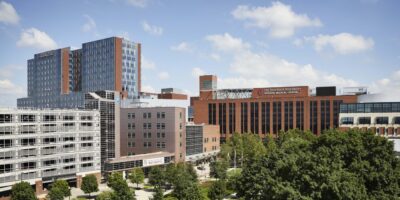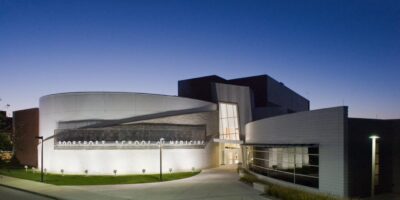

Have you asked yourself “what are the best medical schools near me?” If you live in Ohio, Michigan or anywhere in the Great Lakes region, the University of Toledo College of Medicine and Life Sciences belongs on your list. It is a public MD program on the university’s Health Science Campus in Toledo, Ohio. The medical school was founded in 1964 as the Toledo State College of Medicine, admitted its first class in 1969 and became part of the University of Toledo in 2006. Today it trains about 175 new medical students a year next to The University of Toledo Medical Center, where more of its graduates match into residency than at any other institution.
The school has well-known faculty, such as R. Travis Taylor, PhD, an associate professor of medical microbiology and immunology who studies West Nile, dengue and tick-borne encephalitis viruses. It also has a clear regional purpose: every student completes at least eight weeks of clinical training in a rural part of Ohio, and close to a quarter of each entering class comes from Northwest Ohio.
This guide covers the 2026-2027 application cycle, for students who want to start medical school in summer 2027. It explains the admission pathways, the Rocket Medicine curriculum, the latest official class profile and costs, the requirements and deadlines, the Multiple Mini-Interview and all six current secondary questions, each with a full illustrative example and analysis. Facts were checked on October 18, 2026. If you are considering the University of Toledo, bookmark this page for later reference.
Key Takeaways
- Eligibility is limited to U.S. citizens and permanent residents. Permanent residents must hold the green card when they apply. International applicants are not eligible, and non-Ohio residents are welcome: 38 percent of the 2026 entering class came from outside Ohio.
- The class is large and the applicant pool is larger. The 2026 entering class had 175 students drawn from 7,051 applications. Matriculants averaged a 3.81 total GPA, a 3.75 science GPA and a 510 MCAT. For the 2025 entering class, accepted applicants had a median 3.86 GPA and a median 510 MCAT, and 495 applicants were interviewed.
- Prerequisites changed for the 2027 cycle. You need one semester of biochemistry and one year each of biological sciences, organic chemistry with labs and physics, each with a C or higher. General chemistry is now on the highly recommended list instead of the required list.
- Your MCAT must be recent. Scores must be from within five years of the year you plan to start, and virtual or online lab courses are not accepted for prerequisites.
- Know the dates. Submit AMCAS between June 30 and November 15, 2026. Secondaries go to applicants who pass a screen on grades and MCAT, and the secondary is due December 15. Admission is rolling, with offers starting after October 15.
- The secondary has six prompts. Two are required (a mission and AAMC competencies essay and a resilience essay, 600 words each), two are optional (Northwest Ohio connections and record context, 400 words each) and two are conditional (gap period, 400 words, and reapplicant, 300 words).
- Interviews use the Multiple Mini-Interview (MMI). For 2026-2027, every interview is a live, virtual MMI, and there is no Early Decision option.
- Costs are significant, especially for non-residents. For 2025-26, the first-year budget was $68,352.80 for Ohio residents and $104,181.68 for non-residents. New borrowers from July 1, 2026, generally cannot use Grad PLUS loans.
- Training has a regional and rural core. Clerkships run across Toledo, Northwest Ohio, Southeast Michigan and Ohio, with at least eight weeks at a rural Area Health Education Center.
- Next step: if you have a real tie to Northwest Ohio, list it now. Then draft the two required essays before your secondary invitation arrives.
Key Statistics About the University of Toledo College of Medicine
The snapshot below gathers the figures applicants ask about first. Admissions figures describe the 2026 entering class, the newest class profile the school has posted. Costs come from the school’s 2025-26 cost of attendance budgets, the latest the school has published. Median scores, interview counts and graduate debt describe the 2025 entering class and the most recent reporting year. The number of offers is not reported, so the acceptance rate row says “not published.”

| Metric | Value | Year or cohort | Source and definition |
|---|---|---|---|
| School and degree | The University of Toledo College of Medicine and Life Sciences (UToledo COMLS), MD; Health Science Campus, Toledo, Ohio | Current | UToledo MD Admissions page |
| Accreditation | Full LCME accreditation for eight years | Announced October 25, 2021 | UToledo LCME Accreditation page |
| Entering class size | 175 students | 2026 entering class | UToledo 2026 Entering Class Profile (enrolled matriculants) |
| Applications received | 7,051 (1,217 Ohio residents; 5,834 non-Ohio residents) | 2026 entering class | UToledo 2026 Entering Class Profile |
| Average total GPA | 3.81 | 2026 entering class, matriculants | UToledo 2026 Entering Class Profile; an average, not a minimum |
| Average science GPA | 3.75 | 2026 entering class, matriculants | UToledo 2026 Entering Class Profile |
| Average total MCAT | 510 (79th percentile) | 2026 entering class, matriculants | UToledo 2026 Entering Class Profile; an average, not a minimum |
| Median total MCAT | 510 (mean 510.8) | 2025 entering class, all accepted applicants | AAMC MSAR; a median, not a minimum |
| Median total GPA | 3.86 (mean 3.80); science GPA median 3.80 | 2025 entering class, all accepted applicants | AAMC MSAR |
| Applicants interviewed | 495 (290 Ohio residents; 205 non-residents) | 2025 entering class | AAMC MSAR (interview counts provided by the school) |
| Screening minimums | 2.9 GPA; 496 MCAT | 2026-2027 cycle | AAMC MSAR GPA and MCAT screening policies |
| Acceptance rate | Not published | n/a | UToledo class profile and AAMC MSAR; offers are not reported. Enrolled students divided by applications is not an acceptance rate |
| Residency mix | 109 Ohio residents (62%), including 40 from Northwest Ohio (23%); 66 non-Ohio residents (38%) | 2026 entering class | UToledo 2026 Entering Class Profile |
| First-year tuition | $38,022.72 (Ohio resident); $73,851.60 with the $35,828.88 out-of-state surcharge | 2025-26 academic year | UToledo 2025-26 Cost of Attendance, Year One |
| First-year cost of attendance | $68,352.80 (Ohio resident); $104,181.68 (non-resident) | 2025-26 academic year | UToledo 2025-26 Cost of Attendance, Year One; tuition, fees and estimated living costs; health insurance not included |
| Secondary fee | $95; waived with AAMC Fee Assistance Program approval | 2026-2027 cycle | AAMC MSAR secondary application details |
| Average graduate debt | $229,627; 82% of students receive financial aid | 2024-25 academic year, indebted graduates | AAMC MSAR (LCME Part I-B questionnaire) |
| Match outcomes | 164 students matched in 24 specialties; 30% in primary care; 39% stayed in Ohio | Match Day 2026 | UToledo Match Day Results 2026 |
Read the averages and medians as a description of who was admitted, not a cutoff. The 2026 class averaged a 510 MCAT, and half of the applicants accepted for the 2025 entering class scored at or below the 510 median. The school screens every AMCAS application on academic record and MCAT before it sends secondaries, so the strongest move you can make is to submit early with a complete academic record and a clear reason for applying to Toledo.
Mission and Educational Priorities
The College of Medicine and Life Sciences states its mission in one sentence: “To improve health in the communities and region we serve by educating and training excellent clinicians and scientists, providing high-quality patient care and conducting nationally recognized research” (see the school’s mission, vision and values page). The vision describes the college as a leader in innovative education, research and clinical care. Its core values are collaboration, discovery, intellectual diversity, life-long learning, professionalism and service.
The mission matters more than usual at this school, because the 2026-2027 secondary quotes it directly. The required mission essay asks you to show how your experiences predict that you will contribute to education, patient care or research, and to reflect on the AAMC competencies tied to them. You cannot answer that well unless you understand what the mission looks like in practice.
Why the University of Toledo College of Medicine?
The University of Toledo’s roots go back to 1872, when Jesup Wakeman Scott, a Toledo newspaper editor and real estate broker, donated 160 acres as an endowment for a university to train the city’s young people. The Toledo University of Arts and Trades was incorporated that October as a small private school for painting and architectural drawing. It closed in 1878 for lack of funds and reopened in 1884 as the Toledo Manual Training School. After Jerome Raymond became the first president in 1908, the university affiliated with the Toledo Medical College, along with a conservatory of music and a law college. That early medical college closed in 1914 for not meeting new physician licensing standards, although the university kept a College of Pharmacy from the relationship.
Today’s medical school has a separate history. In the 1960s the United States faced a serious shortage of doctors, and in December 1964 Ohio created the Toledo State College of Medicine as a freestanding, state-supported school. It was renamed the Medical College of Ohio at Toledo in 1967. Its first class of 32 students, chosen from 400 applicants, began in 1969 in a renovated tuberculosis hospital. The school later became the Medical University of Ohio and merged with the University of Toledo in July 2006. The combined university is one of 14 state universities in Ohio.
The Health Science Campus sits three miles south of the university’s Main Campus. It was built starting in the early 1970s under a master plan by the architect of New York’s original World Trade Center. The University of Toledo Medical Center (UTMC) is on the campus. It serves southwest Toledo and the surrounding region, accepts patients from rural hospitals for advanced specialty care and is the region’s only transplant hospital, with a strong kidney transplant program. UTMC is also a popular residency choice: at Match Day 2026, 21 graduates (13 percent) matched at UToledo, more than at any other institution.
The school’s clinical reach goes well beyond its own hospital. The university approved an academic affiliation with the ProMedica health system in 2015, and in 2024 the two signed a new academic affiliation agreement to support medical education in greater Toledo for the next decade.
What the mission means for you as an applicant
Three practical points follow from the mission.
First, “the communities and region we serve” is specific. The school measures its regional ties. Its class profile reports how many students come from Northwest Ohio (40 in 2026), and its Match report counts how many graduates stay at UToledo, in Northwest Ohio and in Ohio. The secondary invites you to describe any Northwest Ohio connection. You do not need to be from Toledo to be admitted, but if you have a real regional tie, the school gives you room to say so.
Second, the school wants clinicians and scientists. The mission names both. The MD/PhD program has existed since the 1980s, the first-year curriculum includes a research and biostatistics block, and paid summer research preceptorships are open after the first year. Applicants with strong research records should show how they would use those routes. Applicants with clinical strengths should show the same depth in patient care.
Third, service and learning are part of the evaluation. The 2026-2027 mission essay names three AAMC Premed Competencies: Commitment to Learning and Growth, Scientific Inquiry and Service Orientation. Plan your activities and your reflections around evidence for those qualities, not just hours.
Accreditation and Institutional Identity
The MD program is accredited by the Liaison Committee on Medical Education (LCME), the accrediting body for MD programs in the United States and Canada. On October 25, 2021, then-dean Christopher J. Cooper, MD, announced that the medical school had received full accreditation from the LCME for the next eight years. In that letter he noted that, since the previous accreditation visit, the school had put in place a new foundational sciences curriculum and created its academic affiliation with ProMedica.
LCME accreditation is what makes students eligible to take the United States Medical Licensing Examination (USMLE) and to enter residencies accredited by the Accreditation Council for Graduate Medical Education (ACGME). It confirms that the program meets national standards. It is not a ranking and does not say anything on its own about how a school compares with others.
A few naming points help when you search for information:
- Official name: The University of Toledo College of Medicine and Life Sciences. You will also see UToledo COMLS, UTCOMLS and “UT College of Medicine.”
- Former names: Toledo State College of Medicine (1964), Medical College of Ohio (MCO) and Medical University of Ohio. Older alumni records often say MCO.
- Campus: the Health Science Campus in south Toledo, three miles from the Main Campus. Admissions visits, interviews and classes are on the Health Science Campus.
- Leadership: Imran Ali, MD, has been dean since March 2025 after serving as interim dean from July 2024.
- Hospital: The University of Toledo Medical Center is the university’s own hospital on the Health Science Campus. ProMedica is an academic affiliate, not part of the university.
Do not confuse the MD program with the university’s other health programs. The College of Medicine and Life Sciences also runs graduate programs in biomedical sciences, and the university has a separate physician assistant program and other health colleges. This guide covers only the MD program and its combined degrees.
Medical Programs and Affiliations
Like most medical schools across the United States, Ohio medical schools have school-specific requirements and guidelines. Understanding a school’s identity, programs and selection criteria helps you put your best foot forward and build a competitive application. Before you apply, research the different programs the school offers. That research helps you decide whether the school fits you and helps you write a focused application. The University of Toledo offers degrees in many biomedical fields, including cell and cancer biology, medical microbiology and immunology, molecular medicine, neurosciences and public health. This section focuses on the MD program, its combined degrees and the different ways into the MD class.
Four-Year MD Program
The traditional MD takes four years. The school’s curriculum, called Rocket Medicine, prepares students with the knowledge, skills and attitudes to practice medicine in the supervised setting of a residency program. It is split into a foundational sciences phase in the first two years and a clinical phase in years three and four. Key aspects include:
- Systems-based foundational sciences with clinical integration
- Early clinical care through the Integrated Clinical Experience (ICE)
- More emphasis on clinical reasoning and clinical skills in all four years
- Innovative teaching methods, including team-based learning, case-based learning and simulation
- A focus on interprofessional education, patient safety and career development
The curriculum section below explains each year in detail.
Dual Degrees and Concentrations
The University of Toledo offers five combined degree options with the MD:
- MD/MBA: The Doctor of Medicine and Master of Business Administration helps future physicians prepare for the business side of medicine, such as practice finances and health care administration.
- MD/JD: The Doctor of Medicine and Juris Doctor helps future physicians handle legal issues in hospitals, medical centers, the health care industry and physician offices.
- MD/PhD: The physician-scientist track, with PhD tracks in cell and cancer biology, molecular medicine, medical microbiology and immunology, neurosciences and neurological disorders, and bioinformatics and proteomics/genomics.
- MD/MSBS: The MD with a Master of Science in Biomedical Science trains students who want to do medical research, with tracks in bioinformatics and proteomics/genomics, cell and cancer biology, molecular medicine, and medical microbiology and immunology.
- MD/MPH: The MD with a Master of Public Health focuses on medicine in both the traditional patient setting and the broader population health context. Majors include environmental and occupational health and safety sciences, health promotion and education, health administration, epidemiology and nutrition.
The full list is on the school’s medical school degrees page. Ask the admissions office when and how to apply for the MBA, JD, MSBS or MPH portion, since these are combined with the MD rather than separate MD tracks.
The MD/PhD Program
The MD/PhD program began in the mid-1980s as an informal way to pursue both degrees at once, and its first student graduated in 1992. Most students admitted to the program receive full medical school tuition scholarships, plus tuition and a stipend at the NIH predoctoral level during their graduate school years. Finishing both degrees usually takes seven to eight years. About two students enter the MD/PhD track each year, so there are generally 14 to 16 students in the program at a time. The director is Robert Smith, MD, PhD, professor and chair of the Department of Neurosciences and Psychiatry.
The program’s stated goal is to train independent physician-scientists for careers in academic medicine and other paths. Because the program is small, MD/PhD applicants should show sustained research, a clear scientific question they care about and a realistic understanding of the physician-scientist career. The school has not published separate MD/PhD essay prompts for the 2026-2027 cycle. MD/PhD applicants should complete the MD secondary and follow any additional instructions in their portal or invitation email.
Admission Pathways Into the MD Class
UToledo has five routes into its MD program. Most applicants use regular acceptance, but the others are useful if you are still in high school or college, or if you need to strengthen your record.
Regular acceptance. You apply through AMCAS. The school begins processing verified AMCAS applications in mid-July, invites screened applicants to complete the UToledo secondary and reviews files for interviews starting in August. The secondary is due December 15.
MedStart (early assurance for college juniors). MedStart accepts strong students during their junior year at any accredited U.S. college or university and holds a seat for them in the following year’s MD class. “Junior” means you have two years of undergraduate school left. The application opens August 1 and closes October 1, with letters, test scores and transcripts due by October 15. You need at least three letters of recommendation and an ACT or SAT score. The program does not require the MCAT for acceptance, but it strongly encourages students to take it in their senior year, partly because several merit scholarships require a competitive score. It recommends a 3.7 cumulative GPA, a 3.5 science GPA and an ACT of 30 or SAT of 1350 or higher. Interviews use the MMI on a live web platform, and decisions usually go out by March 1. Accepted students attend a required summer program on the Health Science Campus between their junior and senior years. In 2024, 143 students applied and 16 were accepted, with an average GPA of 3.97. Read the rules carefully: submitting an AMCAS application to another medical school counts as withdrawing from MedStart. Students aiming for MedStart often use the summer after sophomore year to build clinical experience, and medical internships for undergraduates are one way to get supervised patient contact before the junior-year application.
BACC2MD (for high school seniors entering UToledo). BACC2MD is the university’s early medical school pathway for high-achieving high school students who enroll at UToledo as undergraduates. Entering students need at least a 3.8 unweighted high school GPA and an ACT of 30 or SAT of 1410 (superscores are not accepted). During college, students need a 3.7 UToledo GPA, an MCAT of 506 or higher taken by April 30 of the junior year and at least three letters. They complete an early assurance application from February 1 to May 15 of junior year, interview in June or July through the MMI on a web platform and receive decisions in the fall. Students with conditional offers must still submit AMCAS by November 15 and the secondary by December 15. High school students weighing this route often look at medical internships for high school students to test their interest in medicine before they commit to an early pathway.
MSBS in Medical Sciences. This one-year graduate program is for students who have finished their medical school prerequisites and want to deepen their biomedical science knowledge and strengthen their academic record before applying. About 50 students are accepted each year. Historically, 65 to 80 percent have gone on to enter a medical class the following year.
Transfer with advanced standing. In limited circumstances, students currently enrolled at another allopathic medical school can apply to transfer into the UToledo MD program.
Programs for Admitted Students and Younger Students
The school also runs pipeline programs. FUEL is a two-week summer program for admitted medical students who self-identify as economically and educationally disadvantaged, giving them an early look at the curriculum and community before classes begin. UTCOMLS Ambassadors give campus tours and one-on-one mentoring to admitted students. For high school students, CampMed is a two-day summer program for ninth graders, Toledo Starz is a year-long after-school health sciences program and REACH is a four-week summer research program. These programs are aimed at students from lower-income or disadvantaged backgrounds.
Clinical Affiliations
The University of Toledo Medical Center is the school’s home hospital. Third-year clerkships take place at UTMC and other local teaching hospitals, and students may also complete required clerkships at sites across Northwest Ohio, Southeast Michigan and the rest of Ohio. ProMedica is the school’s main academic affiliate in greater Toledo. All students also train at one of three rural Area Health Education Centers in Bryan, Lima or Sandusky. Plan for a car: the school says students need reliable personal transportation for sites in Northwest Ohio and Southeast Michigan and for more distant sites in Ohio.
Curriculum Overview
Rocket Medicine is a competency-based curriculum with early clinical experience and close integration of foundational and clinical sciences. The school’s goal is to develop “lifelong master adaptive learners” who can keep learning as medicine changes. The details of the Rocket Medicine curriculum were last updated on October 14, 2026.
Years One and Two: Foundational Sciences in Threads
The first two years teach the body by organ system. Systems are grouped into “threads” so that each block builds on the one before it. Teaching mixes active learning, team-based learning, case-based learning and simulation, and clinicians and foundational science faculty teach together so that the material stays clinically relevant. Students begin seeing patients early through the Integrated Clinical Experience.
The 2026-27 calendar shows how the threads are organized:
| Year | Thread | Systems and blocks (2026-27 dates) |
|---|---|---|
| M1 (Class of 2030) | Orientation | July 22-24, 2026; classes begin July 27, 2026 |
| M1 | Thread 1: Cellular Disease | Human Blueprint (July 27-September 9); Research/Biostatistics (September 10-18); Immunity; Infectious Disease; Hematology/Oncology; exams December 14-18 |
| M1 | Thread 2: Bones/Neuro/Behavior | Neuroscience in Health and Disease; Musculoskeletal; Behavioral Science and Psychiatric Medicine; exams May 10-14, 2027 |
| M2 (Class of 2029) | Thread 3: ECOS | Building Foundations; CardioRenal; CardioPulmonary; exams October 19-23, 2026 |
| M2 | Thread 4: Cycles and Vices | Gastrointestinal; Reproductive Anatomy (required in-person week); Repro/Endo; exams February 15-19, 2027 |
| M2 | Board preparation | USMLE Step 1 preparation February 22-April 9, 2027; Step 1 must be taken by April 9 to start clerkships on time |
| M2 | Transition | Bridge-to-Clerkships, April 19-30, 2027 |
Two features stand out. The M1 year includes a dedicated research and biostatistics block in its first thread, so every student gets formal training in study design early. And the M2 year ends with about seven weeks of dedicated Step 1 preparation, two qualifying NBME practice exams and a firm Step 1 deadline before clerkships begin. Dates are set each year and are subject to change.
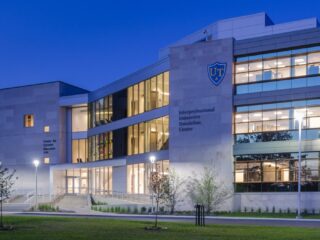
Students practice clinical skills from the first year in the Ruth M. Hillebrand Clinical Skills Center, where they interview standardized patients and later work toward developing and defending a diagnosis. In the clerkship years they take part in Objective Structured Clinical Examinations (OSCEs). The Interprofessional Immersive Simulation Center lets students practice as members of interdisciplinary teams on high-tech simulators, and it includes an immersive virtual room that can project the inside of the human body.
Scholarly Pathways of Excellence
The newest part of the curriculum is the Scholarly Pathways of Excellence, an elective, four-year longitudinal program with personal faculty mentorship. There are eight pathways:
- Academic Leadership
- Advanced Anatomy
- Data Science
- Health Disparities
- Humanities
- Machine Learning and Artificial Intelligence
- Medical Education
- Rural Health
Students apply during the first year. For the Class of 2030, the window ran from September 14 to October 4, 2026, and students hear by mid-November. Only students in their first attempt at the M1 year can apply, and they must score at least 75 percent in the first M1 course. Each applicant submits a CV and short answers for one preferred pathway, with an optional alternate, and some are interviewed. Students can join only one pathway, and space is limited. Staying in a pathway requires passing every thread, clerkship and USMLE Step exam on the first attempt.
The pathways matter for applicants in two ways. If one matches a real interest, such as rural health or health disparities, you can mention it as something you would explore, not as something you are promised. And the school’s own guidance is a useful reality check: it warns students to consider the four-year time commitment alongside activities such as the CommunityCare Clinic, student organizations and leadership roles.
Year Three: The Clerkship Phase
The third year is built around core clerkships in thematically linked pairs, or dyads: maternal-child health care, a biopsychosocial approach to care, medical and neurological care, and surgical care. Each dyad builds on what students learned in the foundational years. Rotations take place in major hospitals and clinics in Toledo and Northwest Ohio. The current required rotations are:
| Clerkship | Length |
|---|---|
| Family Medicine | 6 weeks |
| Internal Medicine | 8 weeks |
| Neurology | 4 weeks |
| Obstetrics and Gynecology | 6 weeks |
| Pediatrics | 6 weeks |
| Psychiatry | 6 weeks |
| Surgery | 8 weeks |
| Career exploration electives | Two 2-week blocks |
The family medicine clerkship is community based, with experienced family physician preceptors in private offices and in the university’s own clinics. Internal medicine combines intensive inpatient rotations with outpatient time at community preceptor sites and the department’s clinics. In surgery, students are not expected to gain significant operative technical skills, but they take an active part in the operating room under close supervision. The career exploration electives are a distinctive feature: students rotate through two specialties, such as ophthalmology, radiology, pathology, ENT, emergency medicine, orthopedics, anesthesia, dermatology or urology, for two weeks each and meet with an advisor about their career direction.
Year Four: Electives, Acting Internship and Rural Training
The fourth year has 44 weeks of elective clerkships, including a required basic science elective and a required Acting Internship. Students choose from a broad range of clinical electives, clinical research and public health electives. At least 12 weeks of electives must be at UToledo or its affiliated sites. Other electives can be done at any medical school in the United States or Canada with approval from a sponsoring UToledo department.
All students complete at least eight weeks of clerkships in a rural Area Health Education Center (AHEC): the Bryan, Lima or Sandusky AHEC. These regional centers work with schools, health departments and community organizations on local health concerns. Students spend a lot of one-on-one time with a preceptor and see day-to-day practice away from the academic medical center, and many host hospitals provide free housing and reduced-cost meals for AHEC students.
Assessment and Board Preparation
The pre-clerkship phase is assessed by thread, with an exam week at the end of each. Clerkships use NBME subject exams, clinical requirements and OSCEs. The school’s Academic Testing Center on campus lets students take USMLE computer-based exams without traveling elsewhere, and the Academic Enrichment Center offers tutoring, academic coaching, workshops and board exam resources.
For applicants, the practical message is that this curriculum rewards steady habits. Systems move quickly, threads end in exam weeks and the Step 1 date is fixed. Experiences that show you can study consistently and recover from a bad exam are directly relevant to the resilience essay in the secondary.
Admissions Requirements and Application Process
The University of Toledo College of Medicine and Life Sciences has specific academic criteria and admission requirements that applicants must meet before they receive an invitation to complete the secondary application. All applicants go through a preliminary screening based on the strength of their academic record and MCAT score, and applicants who do not meet the criteria are reviewed at the discretion of the admissions committee. There is no fee for this pre-screening of your AMCAS application.
Selection Factors: What the University of Toledo Looks for in an Applicant
What exactly is the University of Toledo College of Medicine looking for in candidates: MCAT scores, clinical experience or grades? Like most medical schools in the United States, it takes a holistic approach. The admissions committee reviews the whole application and tries to see who you are as a candidate and as a person, not just your numbers.
The AAMC competencies for entering medical students are a useful guide to that review, and UToledo uses them directly in its secondary. One required essay asks about resilience and adaptability, and the other asks about Commitment to Learning and Growth, Scientific Inquiry and Service Orientation. The AAMC now calls this framework the Premed Competencies for Entering Medical Students. If you want to be accepted, build your application around evidence for those competencies, choose letter writers who can speak to them and finish your prerequisites on time.
Eligibility and Core Requirements
For the 2027 cycle, the school lists these requirements for admission:
- Citizenship: you must be a U.S. citizen or a permanent resident with a green card. Permanent residents must hold that status when they apply and must submit a copy of the front and back of the card. This applies to every admission pathway, so international applicants are not eligible.
- Degree: a baccalaureate degree from an accredited U.S. college or university, completed before you matriculate. You do not need to finish your degree before you apply. You can major in anything: the school has admitted students who majored in history, music, law, business and education.
- MCAT: scores taken within five years of your anticipated matriculation year. Exceptions may be made for students accepted through one of the early assurance programs. When you check an older score, count back five years from 2027, and email the admissions office if your test date falls near the edge. For the 2026-2027 cycle, the oldest MCAT considered is from January 2022 and the latest test date considered is November 1, 2026.
- Secondary application: the UToledo secondary, sent by invitation.
- Letters: at least three letters of recommendation, submitted through AMCAS.
- Transcripts: final official transcripts from every undergraduate, graduate and professional school you attended, with degrees posted, before matriculation.
- Background check and standards: successful completion and review of a criminal records check, and the ability to meet the school’s Minimal Technical Standards.
- Matriculation forms: a Pre-Matriculation Health Requirement Form and, if you claim Ohio residency, the Residency Status for Subsidy and Tuition Surcharge Form.
GPA and MCAT Expectations
The preliminary screen uses a minimum 2.9 GPA and a minimum 496 MCAT. A postbaccalaureate or graduate GPA is not used to offset a lower undergraduate GPA, so your undergraduate record has to clear the screen on its own. The committee considers your highest total MCAT score, and all of your scores are visible to it. The school also points applicants to its class profile to see how their scores compare. For the 2026 entering class, matriculants averaged a 3.81 total GPA, a 3.75 science GPA and a 510 total MCAT (79th percentile). Students who also held graduate degrees averaged a 3.60 graduate GPA.
For the 2025 entering class, all accepted applicants had a median total GPA of 3.86 (mean 3.80), a median science GPA of 3.80 (mean 3.74) and a median total MCAT of 510 (mean 510.8). The median section scores were 128 in Chemical and Physical Foundations, 127 in Critical Analysis and Reasoning, 128 in Biological and Biochemical Foundations and 129 in Psychological, Social and Biological Foundations.
These are averages and medians, not cutoffs. Applicants with scores above and below them have been admitted. Still, because the secondary screen uses your academic record and MCAT, a file with scores well below the class average needs a strong upward trend, a strong reason for UToledo and an early submission to stand out. If you take the MCAT in January, the score is not reported for about a month, so it reaches the committee late in the cycle. Plan to test earlier when you can, because your file cannot move forward until your score is in.
Required Coursework
The following premedical coursework is required for the 2027 cycle and must be completed at an accredited institution:
- Biochemistry: one semester
- Biological Sciences: one year
- Organic Chemistry: one year with labs
- Physics: one year
You need a grade of C or higher in each prerequisite course. AP credit is accepted as long as it appears on an official college transcript. Virtual or online lab courses are not accepted. All prerequisites must be complete by matriculation, but a strong application takes precedence over an early one. If you can, wait until you have your grades in key courses before you submit.
Notice what is missing: general chemistry is no longer on the required list for the 2027 cycle. It now sits on the highly recommended list as “Chemistry.” In practice, most students take general chemistry before organic chemistry and biochemistry anyway, and the MCAT tests it, so treat it as expected preparation even though it is not a formal requirement.
Highly Recommended Coursework
These classes are not required, but the school highly recommends them, and having them on your transcript can make you a more competitive applicant:
- Anatomy
- Biostatistics
- Chemistry
- English
- Genetics
- Mathematics
- Medical Terminology
- Microbiology
- Physiology
- Psychology
- Social science courses
The school also encourages a broad undergraduate education that includes the arts, humanities and the behavioral and social sciences. Biostatistics and physiology are worth special attention, because the M1 year includes a research and biostatistics block and the foundational sciences are taught by organ system.
Does the University of Toledo Require the CASPer Exam?
The Casper test from Acuity Insights is an online situational judgment test that some medical schools require. It is designed to assess interpersonal and non-cognitive skills, such as ethics, empathy and communication, and complements a school’s traditional review of grades and scores. The University of Toledo’s list of admission requirements for the 2027 cycle does not include Casper, AAMC PREview or any other situational judgment test. The school assesses those qualities through the secondary essays and the MMI instead.
Clinical Experience, Service and Research
The school does not publish a required number of clinical, volunteer or research hours. Shadowing is recommended but not required, and the school values experiences that show meaningful learning and growth over a large number of activities. Its early assurance pages describe the qualities it looks for: superior motivation and enthusiasm for medicine shown through community service, health care activities, leadership and research, along with maturity, professionalism, collaboration and cultural competence. Use that list as a planning tool. Applicants usually need sustained, hands-on patient contact to write convincing answers to the mission and resilience essays, and internships for pre-med students that include supervised patient care can add to local volunteering and paid clinical work.
Letters of Recommendation
Part of being a competitive applicant includes strong letters of recommendation. Your letters should come from people who know you well and can describe your resilience, interpersonal skills, integrity, interest in medicine and academic ability. The school says meaningful letters address your personality, history and motivation in addition to your academic accomplishments.
The rules are specific:
- Submit a minimum of three letters and no more than six.
- All letters must go through AMCAS. Letters sent directly to the College of Medicine are not considered, and it is your job to tell your recommenders how to submit.
- The school accepts a premedical advisory committee letter, a letter packet or individual letters from the college or university you graduated from or will graduate from. Often these are from three faculty members you studied with.
- Letters from family members and family friends are strongly discouraged.
- If you are not a recent graduate, you still need three letters. They can come from former faculty or from someone who knows your activities since college, such as a job supervisor or volunteer director.
AMCAS Primary Application and the University of Toledo Secondary Application
The AMCAS application is the primary application for most MD programs in the United States. You complete it once, and it goes to every MD school you choose. Our AMCAS application guide walks through each section.
The AMCAS application opens for applicants in early May, and UToledo asks applicants to submit between June 30 and November 15. AMCAS verification takes about four to six weeks, and the school cannot see your application until verification is complete. The school’s preliminary processing of AMCAS applications runs from July through November 1, so submitting well before the November 15 deadline keeps your file inside that window. The school strongly encourages early submission. If you do not hear back within six weeks of submitting, do not be discouraged: verification time varies, and the committee reviews verified applications continually.
After your AMCAS is verified and screened, the school emails qualified applicants an invitation to complete the UToledo secondary application. The secondary includes questions the school feels are important to judge whether you fit the program. Students who do not meet the screening criteria are not automatically invited, though the committee may review them at its discretion. The secondary is due December 15. The secondary fee is $95. If you have AAMC Fee Assistance Program (FAP) approval, the secondary fee is waived.
For a refresher on what coursework the school requires, go back to the required coursework section of this guide, and note any recommended courses you have completed. If you need more clarification about primary and secondary applications, check out our article about understanding the differences between the two.
Interviews, Decisions and the Waitlist
The school reviews primary and secondary applications for interview eligibility starting in August and sends interview invitations on a rolling basis through March or April. Interviews use the Multiple Mini-Interview format, covered in detail below. For the 2026-2027 cycle, every interview is a synchronous, virtual MMI, and regional interviews are not offered. For the 2025 entering class, the school interviewed 495 applicants: 290 Ohio residents and 205 non-residents.
The school does not accept supplementary documents outside AMCAS and the secondary. If something significant changes after you apply, such as a publication, a major honor or new clinical or service work, you can upload a brief update of one page or less as a PDF in the document upload section of the secondary.
Admission is rolling. Candidates are accepted starting the fall before the year they would begin, until the class is full, which can be as late as New Student Orientation. Offers of acceptance for the next entering class go out starting after October 15. For this cycle, acceptance notices run from October 15, 2026 through July 26, 2027. Before April 30, you have two weeks to respond to an offer. No deposit is required, and requests to defer entry are considered case by case. UToledo does not offer an Early Decision Program. Because seats fill over time, a complete, early file has more seats available to it than one completed in winter. Accepted students are invited to Second Look Saturday in the spring (for 2026, the RSVP deadline was Monday, April 13), and financial aid packets are sent to accepted students in February. Students accepted after February receive their packets soon after admission.
The waitlist typically holds 75 to 150 applicants in a cycle, and about 20 waitlisted applicants receive acceptance offers. Waitlisted applicants can be considered up to the first day of orientation, and the number taken from the waitlist varies from year to year. If you are not offered a seat, the MedStart and BACC2MD pages note that the school does not penalize reapplicants, and the secondary has a dedicated reapplicant question.
2026-2027 Application Timeline
| Date | Step |
|---|---|
| Early May 2026 | AMCAS application opens for the 2027 entering class |
| June 30 to November 15, 2026 | Window to submit AMCAS to UToledo |
| Mid-July 2026 | UToledo begins processing verified AMCAS applications and sending secondary invitations to screened applicants |
| August 2026 | Review of primary and secondary applications for interview eligibility begins |
| After October 15, 2026 | Offers of acceptance begin, on a rolling basis |
| November 1, 2026 | End of preliminary AMCAS processing; latest MCAT test date considered |
| November 15, 2026 | AMCAS deadline |
| December 15, 2026 | UToledo secondary application deadline |
| Through March or April 2027 | Rolling interview invitations continue |
| February 2027 | Financial aid packets sent to accepted students |
| Spring 2027 | Second Look Saturday for accepted students |
| July 26, 2027 | Latest date acceptance notices are sent |
| On or before New Student Orientation, summer 2027 | Class filled |
If you are still a year or two away from applying, plan your summers backward from this table. Pre-med summer internships and research programs fit best in the summers before your application year, so that your AMCAS can describe them in June.
Tuition, Cost of Attendance and Financial Aid
Aside from tuition and fees, University of Toledo medical students should budget for housing, food, transportation, books, supplies and personal expenses. The school’s financial aid office publishes an estimated cost of attendance budget for each year of the program. The latest budgets on the MD financial aid page are for the 2025-26 academic year. Budgets for later years will be higher if tuition and living costs rise, so treat these as the newest official estimate, not your exact future bill.
2025-26 Cost of Attendance by Year
| Year (2025-26) | Ohio resident tuition | Out-of-state surcharge | Ohio resident total budget | Non-resident total budget |
|---|---|---|---|---|
| Year One | $38,022.72 | $35,828.88 | $68,352.80 | $104,181.68 |
| Year Two (includes summer term) | $46,553.55 | $43,867.40 | $79,571.25 | $123,438.65 |
| Year Three (includes summer term) | $46,553.55 | $43,867.40 | $89,388.30 | $133,255.70 |
| Year Four (includes summer term) | $46,553.55 | $43,867.40 | $90,076.40 | $133,943.80 |
The out-of-state surcharge applies to any student who has not established Ohio residency. In Year One, a non-resident’s tuition is $73,851.60 once the surcharge is added. Years Two through Four cost more than Year One because they include a summer term.
Adding the four 2025-26 budgets gives a rough total of about $327,389 for an Ohio resident and about $494,820 for a non-resident. That sum is IMA’s arithmetic, not a school figure, and actual four-year costs will differ as budgets change each year.
What the Year One Budget Includes
The 2025-26 Year One budget breaks down like this:
- Direct costs ($41,240.80 for Ohio residents): tuition ($38,022.72), general fee ($1,606.08), MD program fees ($1,144.00), MD program lab fees ($350.00), disability insurance ($53.00), debit ID card ($35.00) and new student registration ($30.00).
- Indirect costs ($27,112.00): books and supplies ($1,290.00), housing and food ($19,594.40), transportation ($3,178.80) and personal expenses ($3,048.80).
Year Two adds costs such as the USMLE Step 1 exam fee and a UWorld question bank subscription, and the Year Three and Year Four budgets include health insurance in their direct costs.
Health insurance. Student health insurance is not automatically included in the Year One and Year Two budgets. Based on 2024-25 rates, it cost $897 for fall and $1,398 for spring ($2,295 a year). If you already have insurance, you can waive the school plan in your myUT portal by the due date. If you cannot waive it, you can ask the financial aid office for a cost of attendance adjustment.
Loan fees. Loan origination fees are added to your budget only if you accept the loans.
Federal Loans and the Grad PLUS Change
Student loans are the main way most students pay for medical school. For the 2026-27 year, the federal Direct Unsubsidized Loan rate is 8.07 percent. The most important change for the class entering in 2027 is federal: due to changes in federal law, new graduate and professional student borrowers are no longer eligible for Federal Direct Graduate PLUS Loans first disbursed on or after July 1, 2026. Students who borrowed Grad PLUS before that date may keep access under grandfathering provisions, but new medical students who begin borrowing on or after July 1, 2026, generally cannot.
That means Direct Unsubsidized Loans will cover less of the total cost than they once did. Students who need more may look at private educational loans, and the financial aid office offers loan counseling appointments. Build your plan early: complete the FAFSA (UToledo’s school code is 003131), use the AAMC’s FIRST resources and compare your expected borrowing with the budgets above.
For context on borrowing, the average medical school debt of UToledo graduates who borrowed was $229,627 in the 2024-25 academic year, and 82 percent of enrolled and graduating students received financial aid that year. Aid is awarded on demonstrated financial need under the federal methodology, so every applicant who wants aid files the FAFSA.
Scholarships
UToledo offers more than 20 scholarships to incoming medical students and nearly 30 to continuing students. College of Medicine and Life Sciences scholarships are based on the criteria set for each award, and if you meet the criteria you are considered automatically. The school also encourages students to apply for outside scholarships and keeps an external scholarship list. MedStart students should note that several merit-based scholarships require competitive MCAT scores, which is one reason the school urges MedStart students to take the exam.
Most MD/PhD students receive full medical school tuition scholarships, plus a stipend at the NIH predoctoral level during their graduate years.
How Residency Affects Cost
Ohio residency is the single biggest factor in what you pay. In 2025-26, the out-of-state surcharge added $35,828.88 in Year One and $43,867.40 in each later year. The school asks students with residency questions to contact HSC Student Services, and students claiming Ohio residency submit a residency form before matriculation. If you are moving to Ohio for medical school, ask early whether and when you could qualify for in-state tuition.
Practical Cost Tips
- Compare the full cost of attendance, not just tuition, when you weigh offers.
- If you will rely on loans, plan for the end of Grad PLUS for new borrowers.
- AHEC rotations may lower costs for some weeks, since many host hospitals provide free housing and reduced-cost meals for AHEC students.
- Budget for a reliable car, because clerkship sites across Northwest Ohio, Southeast Michigan and Ohio require personal transportation.
Campus Facilities and Student Life
The College of Medicine and Life Sciences is on the University of Toledo’s Health Science Campus in south Toledo, three miles from the Main Campus. Interviewees who want to see it in person can email [email protected] to schedule a campus tour, and the university also offers a virtual tour.
Facilities
- The University of Toledo Medical Center: the university’s hospital on campus, home to clinical operations, graduate health programs and medical research.
- Ruth M. Hillebrand Clinical Skills Center: where students practice interviewing and examining standardized patients from the first year.
- Interprofessional Immersive Simulation Center: high-tech simulators and an immersive virtual room for team-based training with other health professions students.
- Academic Testing Center: an on-campus site where students take USMLE computer-based exams.
The dean’s welcome describes the college as student-centered and notes that faculty members are easily accessible, which applicants can test by asking students about faculty contact on interview day.
Student Support
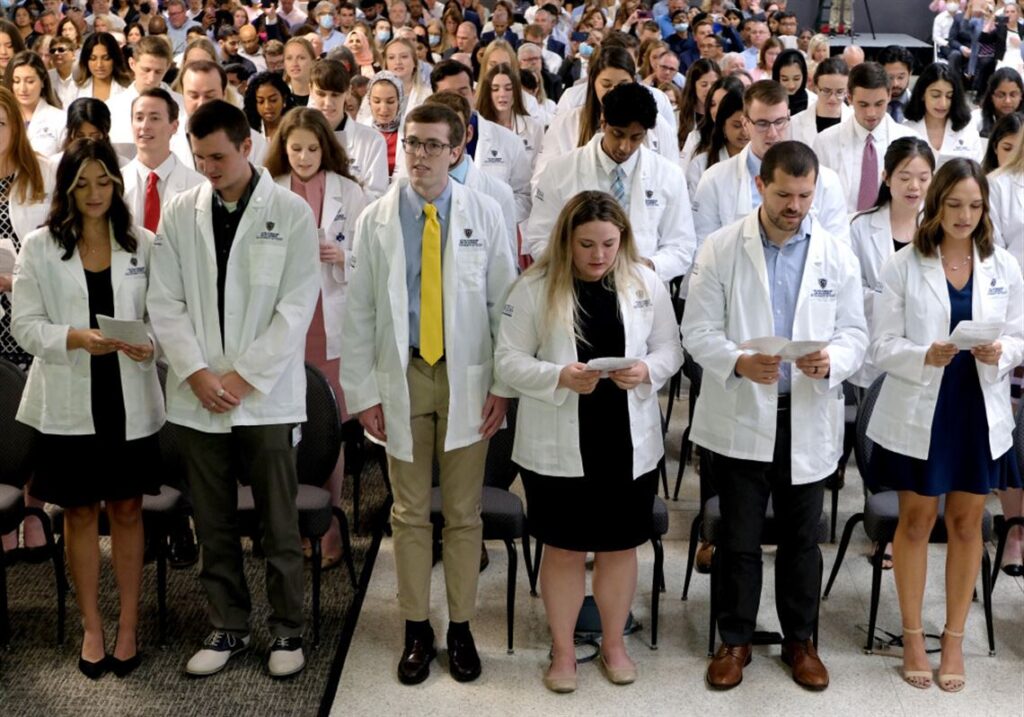
The Office of Student Affairs is usually the first stop for students with questions or concerns. It runs career advising, residency application support, the Match Day reception, orientation, the White Coat Ceremony, medical honor societies and USMLE preparation. The Academic Enrichment Center offers tutoring, academic coaching, workshops and board exam resources, and it helps qualified students with disabilities access accommodations. Admitted students also get one-on-one mentoring through the UTCOMLS Ambassador Program, and FUEL gives admitted students who self-identify as economically and educationally disadvantaged a two-week start before classes.
Student Organizations and Service
UToledo has more than 60 student organizations and activities for medical students, from the American Medical Association chapter to Students for Medical Missions and the Scribe Program. Two service options stand out:
- CommunityCare Clinic: many students volunteer at this clinic, which delivers free health care to underserved people in Toledo.
- Student-to-Student Program: medical students visit local elementary, junior high and high schools to talk about health topics.
Summer After the First Year
After the first year, many students take part in paid summer opportunities:
- Community Health Project: working with local social service agencies.
- Family Practice Preceptorship: learning in a family practice office in a rural or underserved area.
- Medical Education Preceptorship: helping gross anatomy faculty prepare dissected specimens and lesson plans.
- Summer Research Preceptorship: paid research side by side with a faculty member, in the lab or in clinical settings. Recent projects have included kidney disease outcomes in a renal artery stent trial, CD47-SIRPalpha interactions in xenotransplantation, pain scores among emergency department patients, ethics in paired kidney exchanges and communication with patients in spinal immobilization.
Life in Toledo
Toledo sits at the western end of Lake Erie, about an hour from Detroit and Ann Arbor. The school encourages accepted students to learn about the city during Second Look Saturday, and it offers a discount code with a nearby hotel for visitors. The school’s 2025-26 budget sets aside $19,594.40 for first-year housing and food, so plan carefully. During clerkships you may spend weeks at sites away from Toledo, and the school has a medical student housing policy for off-site rotations.
Clinical Rotations and Research Opportunities
Where Students Train
Third-year clerkships are completed at The University of Toledo Medical Center and other local teaching hospitals, with required clerkships also possible at specific sites across Northwest Ohio, Southeast Michigan and the state of Ohio. The current clerkship curriculum describes rotations in major hospitals and clinics in Toledo and Northwest Ohio. ProMedica is the school’s academic affiliate for clinical education in greater Toledo, under an agreement signed in 2024 that runs for a decade.
Because sites are spread across a wide area, the school says students need reliable personal transportation for clinical sites in Northwest Ohio and Southeast Michigan and for more distant sites in Ohio. Expect to drive, and expect some rotations to be an hour or more from campus.
Rural Training Through the AHECs
The most distinctive part of UToledo’s clinical training is rural. Every student completes at least eight weeks of clerkships at a rural Area Health Education Center: Bryan, Lima or Sandusky. Students work closely with a preceptor, see the daily realities of practice outside an academic medical center and often stay in housing provided by the host hospital. This requirement fits the school’s mission to improve health in the region it serves, and it is useful material for applicants interested in rural or primary care medicine.
Fourth-Year Electives and Global Health
The fourth year includes 44 weeks of electives, a required Acting Internship and a basic science elective requirement. At least 12 weeks must be at UToledo or its affiliates, and other electives can be at any U.S. or Canadian medical school with department approval. Students can also take global health electives at sites including Addis Ababa, Ethiopia; Amman, Jordan; Beijing, Chengdu and Shanghai, China; Delhi, India; Kitwe, Zambia; and Manila, Philippines. In the 2025 graduation survey, 15 percent of UToledo’s graduating seniors reported a global health experience during medical school, as an elective or as a volunteer.
If global health interests you, the fourth-year electives are where UToledo builds it into training. As an undergraduate, pre-med internships abroad with supervised clinical work can help you find out whether international health care is a long-term interest before you choose electives as a medical student.
Residency and Fellowship Programs on Site
UToledo sponsors residencies in anesthesiology, emergency medicine, family medicine, internal medicine, neurology, obstetrics and gynecology, orthopaedic surgery, pathology, pediatrics, physical medicine and rehabilitation, psychiatry, radiology, surgery and urology. Fellowships include cardiology, endocrinology, gastroenterology, geriatric medicine, infectious diseases, interventional cardiology, medical oncology, nephrology, movement disorders and vascular neurology, pain medicine, child and adolescent psychiatry, pulmonary and critical care medicine, and sleep medicine. Medical students learn alongside these residents and fellows during clerkships.
Match Outcomes
At Match Day 2026, 164 UToledo fourth-year students matched into positions in 24 specialties.
| Match Day 2026 outcome | Number (share) |
|---|---|
| Matched into primary care specialties (family medicine, internal medicine categorical, pediatrics) | 49 (30%) |
| Matched at UToledo | 21 (13%) |
| Matched in Northwest Ohio | 28 (17%) |
| Matched in Ohio | 64 (39%) |
| States where graduates will train | 34 |
The largest specialties were categorical internal medicine (26), family medicine (13), transitional year (13), anesthesiology (12), orthopedic surgery (12), psychiatry (12) and diagnostic radiology (11). Outside Ohio, the most common destination state was Michigan (26 students). The most popular institutions were The University of Toledo (21), University of Michigan (10), Mercy Health St. Vincent Medical Center (7), The Ohio State University (6), Henry Ford (5) and University Hospitals/Case Western (4).
The primary care share has varied in recent years, from 30 percent in 2026 and 35 percent in 2025 to 42 percent in 2021, so treat one year as a snapshot rather than a trend. Graduating students’ stated plans point the same way: internal medicine was the most common intended specialty in each of the three most recent graduation surveys reported, at 15.6 to 24.2 percent of respondents, with pediatrics and emergency medicine also near the top.
Research Opportunities
The MD has no required research project or thesis, and optional research projects are available. The college’s direct federal research grants and contracts totaled $9,193,866 in fiscal year 2024, with major funding areas in cardiovascular medicine and hypertension, cancer, neurosciences, and microbiology and immunology. Research is built into the program in several ways:
- The Research/Biostatistics block in Thread 1 of the M1 year.
- Paid Summer Research Preceptorships after the first year, working with a faculty member.
- The required basic science elective in the fourth year, plus clinical research electives.
- The Scholarly Pathways of Excellence, several of which (Data Science, Health Disparities, Machine Learning and Artificial Intelligence, Medical Education) involve scholarly work beyond the standard curriculum.
- The MD/PhD and MD/MSBS combined degrees.
The dean’s welcome notes that the university has a research budget of more than $56 million from the National Science Foundation, the National Institutes of Health and other sources, and that the College of Medicine increasingly collaborates with UToledo’s colleges of engineering, natural sciences and mathematics, health and human services, law and business.
Service Clinics
The CommunityCare Clinic gives students a way to provide free care to underserved Toledo residents throughout medical school. The Family Practice Preceptorship and Community Health Project summer programs add rural, underserved and community-agency experience after the first year.
Notable Alumni, Faculty, Leadership and Admissions Staff
The people below have verified roles at the College of Medicine and Life Sciences or are graduates the school has honored. They are listed so you can understand the school’s leadership and the kinds of careers its graduates build. Do not contact faculty to ask for admissions help, and do not assume any one person decides your application.
School Leadership
Imran Ali, MD, FAAN, FAES: Dean. Dr. Ali is dean of the College of Medicine and Life Sciences, vice provost for health education and professor of neurology. He was named interim dean in July 2024 and permanent dean in March 2025. He joined the faculty of the then Medical College of Ohio in 1996 and has held many education roles, including Clair Martig Endowed Chair in Neurology, vice dean for undergraduate medical education and inaugural chair of the Department of Medical Education. A board-certified neurologist in epilepsy and clinical neurophysiology, he earned his MD at Aga Khan University in Pakistan and trained at the University of North Carolina at Chapel Hill. He is a director of the American Board of Psychiatry and Neurology. His background in medical education helps explain the school’s focus on curriculum design.
Coral Matus, MD: Associate Dean for Foundational Sciences. Dr. Matus is associate dean for foundational sciences and professor of family medicine. She is the main faculty contact for the Rocket Medicine pre-clerkship curriculum, which is the phase you would enter as a new student. Her family medicine background matches the curriculum’s emphasis on clinical relevance in the first two years.
Admissions Leadership and Staff
Randall G. Worth, PhD: Senior Associate Dean of Student Affairs and Admissions. Dr. Worth leads both student affairs and admissions and is a professor in the Department of Medical Microbiology and Immunology. His dual role links admissions to student support after matriculation.
David Pearson, PhD, DABR: Associate Dean for Admissions and Strategic Enrollment. Dr. Pearson is a professor of radiation oncology and holds DABR certification from the American Board of Radiology. He oversees admissions and strategic enrollment planning.
Bindu Menon, PhD: Associate Dean for Admissions. Dr. Menon is an associate professor in the Department of Medical Education and an associate dean for admissions.
Hamoun Delaviz, MD, MS: Assistant Dean for Admissions and Director of MedStart. Dr. Delaviz is an associate professor of medical education. He directs the MedStart early assurance program, so college juniors considering MedStart will see his office’s work most directly.
Danielle Dougherty, MBA: Director of Admissions, COMLS Programs. Ms. Dougherty directs admissions operations for the college’s programs.
Bridget Sherman: Program Coordinator, Health Science Campus. Ms. Sherman is the coordinator at the admissions office phone number (419-383-3680), and she is often the first person applicants reach with logistics questions.
You can reach the admissions office at [email protected] or 419-383-3680.
Faculty and Researchers
Robert Smith, MD, PhD: MD/PhD Program Director. Dr. Smith directs the MD/PhD program and is professor and chair of the Department of Neurosciences and Psychiatry. MD/PhD applicants should read about his department’s work and the program’s five PhD tracks before writing about research fit.
R. Travis Taylor, PhD: Associate Professor of Medical Microbiology and Immunology. Dr. Taylor’s lab studies vector-borne flaviviruses, including West Nile virus, dengue virus and tick-borne encephalitis virus. By studying how viral and cellular proteins interact, his group has identified host proteins that are important to antiviral responses, with the long-term aim of developing flavivirus-specific therapies. He is a good example of the infectious disease research that M1 students meet in the Immunity and Infectious Disease blocks and that students can explore through summer research preceptorships.
Notable Alumni
The college honors graduates each year at Homecoming. These alumni show the range of careers UToledo and Medical College of Ohio graduates have built.
Lisa Lattanza, MD (Class of 1993). Dr. Lattanza is chair of orthopaedics and rehabilitation at Yale School of Medicine, after 20 years at the University of California, San Francisco. She specializes in post-traumatic and congenital reconstruction of the upper extremity in children and adults and is a leader in 3D surgical planning. She received the College of Medicine and Life Sciences Distinguished Alumni award, presented at the 2025 Homecoming Gala.
Jennifer Christner, MD (Class of 1995). Dr. Christner is senior dean of the Schools of Medicine and Health Professions at Baylor College of Medicine, after 20 years as an executive leader in clinical and education roles. She received the 2023 Distinguished Alumni Award. Her career is a reminder that UToledo graduates lead medical education nationally.
Ada D. Stewart, MD (Class of 2000). Dr. Stewart has been a family physician with Cooperative Health since 2012 and serves as its lead provider and HIV specialist. She has held state and national leadership roles in the American Academy of Family Physicians and has committed her career to access to care for uninsured and low-income families. She received the 2022 Distinguished Alumni Award.
Harry S. Clarke Jr., MD, PhD (PhD 1984, MD 1987). Dr. Clarke earned both degrees at the former Medical College of Ohio and completed his urology residency there. He joined the Medical University of South Carolina in 2002 as professor of urology and associate dean for graduate medical education, overseeing about 1,200 residents and fellows, and served as its ACGME Designated Institutional Official until 2013. He retired from academic practice in urologic oncology and reconstructive surgery in 2025 and received the 2025 Distinguished Alumni award.
Thomas Wakefield, MD. A graduate of the former Medical College of Ohio, Dr. Wakefield has led the vascular surgery section at the University of Michigan Medical Center since 2004. When the alumni association honored him in 2018, he was also the James C. Stanley Professor of Surgery and director of Michigan’s Frankel Cardiovascular Center. He has received the university’s Gold T and Blue T awards and served as president of the UToledo Alumni Association.
Ann Berger, MD (Class of 1988). When she received the 2019 Distinguished Alumni Award, Dr. Berger was chief of pain and palliative care at the National Institutes of Health. Her Homecoming lecture covered clinical care, education and research in palliative medicine.
Julian Kim, MD (Class of 1986). When he received the 2017 Gold T award, Dr. Kim was chief of oncologic surgery and chief medical officer at the Seidman Cancer Center of University Hospitals Cleveland Medical Center and the Charles Hubay Professor of Surgery at Case Western Reserve University. He holds a U.S. patent for adoptive immunotherapy of cancer, a process that activates a patient’s own immune cells in the lab before infusing them back.
The 2026 Distinguished Alumni Award recipients, to be honored at Homecoming in October 2026, are Dr. Patricia Metting, Dr. Pamela Schlembach and Dr. Amira Gohara.
Admissions Statistics and Class Profile
The University of Toledo posts a detailed class profile every year. The figures below describe the 2026 entering class, the newest profile available.
Applications and Enrollment
| 2026 entering class | Ohio residents | Non-Ohio residents | Total |
|---|---|---|---|
| Applications received | 1,217 | 5,834 | 7,051 |
| Students enrolled | 109 (62%) | 66 (38%) | 175 |
Of the 109 Ohio residents, 40 (23 percent of the class) came from Northwest Ohio and 69 (39 percent) from the rest of Ohio. Ohio residents made up 17 percent of applications but 62 percent of the class, so Ohio residency is a clear advantage here, as it is at most public medical schools. Non-residents are still a large part of every class.
Interview counts are available for the 2025 entering class, the newest class with complete interview data:
| 2025 entering class | Ohio residents | Non-Ohio residents | Total |
|---|---|---|---|
| Applications received | 1,163 | 5,414 | 6,577 |
| Applicants interviewed | 290 | 205 | 495 |
| Students enrolled | 111 (63%) | 64 (37%) | 175 |
About 7.5 percent of 2025 applications led to an interview (495 interviewed divided by 6,577 applications). That is an interview ratio, not an acceptance rate. Ohio residents were far more likely to be interviewed: about one in four Ohio applications reached the interview stage, compared with about one in 26 non-Ohio applications. No deferrals were granted for the 2025 class.
The number of applicants who received offers is not published, so the acceptance rate is not published. Dividing enrolled students by applications gives a matriculation ratio, not an acceptance rate, because some admitted applicants choose other schools. Use the raw numbers instead: 7,051 applications for 175 seats in 2026, and 495 interviews for 175 seats in 2025.
Academic Profile
| Measure (2026 entering class, matriculants) | Average |
|---|---|
| Total GPA | 3.81 |
| Total science GPA | 3.75 |
| Graduate GPA (students with graduate coursework) | 3.60 |
| Total MCAT | 510 (79th percentile) |
These are averages for students who enrolled. Medians for all accepted applicants are available for the 2025 entering class:
| Measure (2025 entering class, all accepted applicants) | Median | Mean (standard deviation) |
|---|---|---|
| Total GPA | 3.86 | 3.80 (0.19) |
| Science GPA | 3.80 | 3.74 (0.25) |
| Total MCAT | 510 | 510.8 (5) |
| Chemical and Physical Foundations | 128 | 127.8 (1.8) |
| Critical Analysis and Reasoning Skills | 127 | 126.7 (2.2) |
| Biological and Biochemical Foundations | 128 | 127.8 (1.8) |
| Psychological, Social and Biological Foundations | 129 | 128.6 (1.8) |
The median GPA sits above the mean, which tells you that a smaller group of accepted applicants with lower GPAs pulls the average down. In other words, most admitted students had GPAs near or above 3.8, but a GPA below 3.8 is not automatically out of reach when the rest of the file is strong, as long as it clears the 2.9 screen. For how these figures compare with other schools, see our list of the average GPA and MCAT score for every medical school, and for a broader view of score targets, read what MCAT score you need to get into medical school.
Demographics and Backgrounds
- Gender: 84 men (48%) and 89 women (51%).
- Age: average 23, ranging from 20 to 44.
- First-generation college students: 27 (15%).
- Pell Grant recipients: 44 (25%).
- Degrees: all 175 held bachelor’s degrees; 14 also held master’s degrees and 1 held a PhD.
- Colleges: 66 colleges represented, including 12 in Ohio. The list ranges from large public universities (The Ohio State University, University of Michigan, Michigan State University, The University of Toledo) to small liberal arts colleges (Kenyon, Albion, Macalester) and private research universities.
- Earlier preparation (2025 entering class): 9 percent of matriculants held a graduate degree, 81 percent were science or math majors and 14 entered from the school’s MSBS in Medical Sciences postbaccalaureate pathway. Another 14 entered through early assurance and 11 through BACC2MD.
- States: 19 states represented. After Ohio (109), the largest groups came from Michigan (25), California (9), Illinois (6) and Massachusetts (5).
How the Profile Has Changed
The school has posted class profiles every year since 2015. In 2022, the entering class had 176 students from 6,319 applications and averaged a 3.72 GPA, a 3.61 science GPA and a 509 MCAT. In 2025, it had 175 students from 6,577 applications, with a 3.78 GPA, a 3.71 science GPA and a 510 MCAT. By 2026, applications had risen to 7,051 and the averages to a 3.81 GPA and a 3.75 science GPA, with the MCAT average holding at 510 and the class size about the same. The class has become somewhat more academically competitive, and the Ohio share has stayed near 62 to 63 percent.
What These Numbers Mean for You
- If you are an Ohio resident, especially from Northwest Ohio, UToledo should be a serious option, and the optional regional essay is worth writing if you have a real tie.
- If you are from Michigan, you are in good company: Michigan sent 25 students in 2026, and clerkships reach Southeast Michigan.
- If you are from farther away, apply with a clear reason for Toledo, such as rural training, the AHEC requirement, a Scholarly Pathway or family ties.
- If your numbers are below the averages, focus on an upward trend, a strong MCAT section profile and the optional record context essay where it applies.
Tips and Strategies for Admission
The strategies below translate what UToledo publishes about its mission, curriculum and requirements into practical steps. They are editorial advice, not a description of the committee’s private scoring.
1. Submit early, and finish the secondary fast
The school strongly encourages early AMCAS submission, preliminary processing of AMCAS applications ends November 1, interview review starts in August and offers go out on a rolling basis from October 15. Every one of those facts points the same way. Aim to submit AMCAS in June or early July, prewrite the two required essays and return the secondary within one to two weeks of the invitation, well before the December 15 deadline.
2. Clear the screen with your academic record
Secondaries go only to applicants who pass a screen on academic record and MCAT. Make sure your transcript shows each prerequisite with a C or higher, your MCAT is within the five-year window and none of your prerequisite labs were online. If you have a weak semester, the optional record context essay is the place to explain it, but only after you have passed the screen, so your AMCAS needs to show an upward trend on its own.
3. Build evidence for three competencies
The 2026-2027 secondary asks directly about Commitment to Learning and Growth, Scientific Inquiry, Service Orientation, and resilience and adaptability. Look at your activities and ask which ones give you a specific story for each. A long list of hours without reflection will not help you here. One sustained clinical role, one research or inquiry experience and one service commitment where you changed something are worth more than a dozen short activities.
4. Get real patient contact
The school does not set an hours minimum, but both required essays reward experiences where you were responsible for something. Paid clinical work, such as a patient care technician, STNA, medical assistant or scribe role, gives you that. So can clinical internships for pre-med students where you take vitals, do intake and help with care under supervision. Shadowing is still useful for understanding a physician’s day, but it is not a substitute for hands-on work.
5. Show a regional connection only if it is real
Northwest Ohio matters to this school, and the optional regional essay gives you room to explain a tie. If you grew up in the region, have family there, went to college there or worked there, write it. If you have no tie, do not invent one. Explain instead why the school’s rural AHEC training, its clerkships in Northwest Ohio and Southeast Michigan or a specific Scholarly Pathway fits your goals in your mission essay.
6. Prepare for rural and community medicine questions
Every UToledo student completes at least eight weeks in a rural AHEC. Even if you plan a career in a city, think through what you would learn in Bryan, Lima or Sandusky and how you would handle being an hour from campus. Applicants who can talk about rural access, transportation and follow-up care sound like students who read the curriculum.
7. Choose letter writers strategically
You need at least three letters and can send up to six. A strong set usually includes two science faculty, one non-science faculty member or committee letter, and one supervisor from clinical work or research. Ask writers who can speak to the competencies above, and tell them the school accepts letters only through AMCAS.
8. Practice for the MMI
The MMI tests how you think and communicate in short scenarios, so practice out loud with a timer. Work through ethics, teamwork and communication stations, and rehearse explaining a recent health policy topic in plain language.
9. Plan your summers and gap years
If you are early in college, consider MedStart or a summer of clinical work. If you need more experience after graduation, a planned gap year with clinical employment is common, and the secondary has a dedicated question for it. Pre-med internships during the summer or a gap year can give you supervised clinical experience and material for the mission and resilience essays.
Personalized Help
Most students find medical school applications overwhelming. Every school has its own admissions process, and UToledo’s mix of screening, rolling offers and six secondary prompts is no exception. A medical school admissions consultant can guide you through each stage, give personalized feedback on your essays and help you shape your message for each school. If you are like most pre-medical students, you will benefit from IMA’s personalized medical school admissions consulting.
Secondary Application Questions, Example Responses and Analysis
Completing the secondary application is a crucial part of applying to medical school. The secondary gives you the chance to express your ambitions, character and motivations, and to show what makes you a strong fit for this school.
How the UToledo Secondary Works
- Who receives it: applicants who pass the preliminary screen on academic record and MCAT, by email invitation.
- Deadline: December 15, 2026.
- Fee: $95. AAMC Fee Assistance Program (FAP) approval waives it.
- Updates: a brief update of one page or less can be uploaded as a PDF in the secondary’s document upload section; other supplementary documents are not accepted.
- Prompts for 2026-2027: six in total. Two are required for everyone, two are optional for everyone and two appear only for some applicants.
| # | Prompt | Limit | Who answers |
|---|---|---|---|
| 1 | Connections to Northwest Ohio | 400 words | Optional, all applicants |
| 2 | Aspects of your record that need context | 400 words | Optional, all applicants |
| 3 | Mission and AAMC Premed Competencies | 600 words | Required, all applicants |
| 4 | Resilience and adaptability | 600 words | Required, all applicants |
| 5 | Activities between undergraduate school and medical school | 400 words | Conditional: applicants with time between college and medical school |
| 6 | Changes since applying previously | 300 words | Reapplicants only |
The school has not published separate MD/PhD essay prompts for the 2026-2027 cycle. MD/PhD applicants should complete these prompts and watch their portal for any additional instructions. To compare UToledo’s questions with other schools’ current prompts, see our medical school secondary essay prompts database.
Tips for a Strong UToledo Secondary
- Pay close attention to each prompt, read it carefully and answer every part of it.
- Use concrete evidence from your clinical, academic, research and service experiences.
- Do not repeat your AMCAS application. Use the secondary to expand on things you could not fully explain there and to show new parts of yourself.
- Proofread and edit everything. Write clearly and concisely, cut filler and stay on topic.
- Prewrite the two required 600-word essays in early summer, because they are the longest and cannot be reused word for word from other schools.
- Writing thousands of words for secondaries takes time. An admissions consultant can help you find the parts of your drafts that need work.
Each example below is original teaching material written for this guide. It shows one way to answer the prompt. Do not copy it or submit it: your answer has to come from your own experiences.
Prompt 1: Connections to Northwest Ohio (Optional, 400 Words)
We invite you to briefly discuss any connections you may have to the region of Northwest Ohio.
Limit: 400 words. Who answers: optional for all applicants.
What it asks. This prompt gives both in-state and out-of-state applicants a chance to describe any connection to the region of Northwest Ohio. The question is about the region as a whole, so ties to Toledo or to any of the surrounding counties count.
How to approach it. If you have a real tie, describe it concretely: where you lived, worked, studied or cared for patients, and what you learned there. Then connect it to what you want to do in the region as a physician. If you grew up in Toledo or nearby, you do not need to prove you love the city. Show that you understand the health needs of the people there. If you have family in Northwest Ohio, explain how that tie shapes your plans. If you have no tie, you can leave this optional prompt blank.
Illustrative example, not an actual applicant essay (word count: 345 of 400)
I grew up in Napoleon, in Henry County, where the Maumee River runs past grain elevators and most of my neighbors farm or work in food processing. When my father had chest pain during harvest in 2019, the closest cardiac catheterization lab was a 45-minute drive away in Toledo. He recovered, but that drive taught me that distance is a health problem in our part of the state.
That lesson shaped what I did next. During college I came home each summer and worked as a patient care technician on the medical-surgical floor of our county hospital. I took vitals, helped patients walk after surgery and listened to farmers explain why they had waited a week to come in: the soybeans were not going to plant themselves. I learned to ask about planting and harvest schedules before we talked about follow-up visits, because a plan that ignores the field calendar usually fails.
I also volunteered with a mobile blood pressure screening program that set up at grain cooperatives and church festivals in Henry and Williams counties. Many of the people we screened had not seen a primary care doctor in more than two years. Several left with a same-week appointment that our coordinator booked on the spot.
My connection to Northwest Ohio is not only where I am from. It is where I want to practice. UToledo’s requirement that every student complete at least eight weeks of clerkships in a rural Area Health Education Center matters to me, and the Bryan center is less than an hour from my parents’ house. I would welcome the chance to train in the kind of small hospital where I first saw how much one physician can carry for a whole county. I am also drawn to the Rural Health Scholarly Pathway of Excellence, because I want to study how follow-up care can fit around the work rhythms of farm families.
I plan to practice family medicine within an hour of the Maumee River. Training in Toledo would let me learn medicine in the region I intend to serve.
How this example answers the prompt. The prompt asks for connections to Northwest Ohio, nothing more, so the essay gives three kinds of connection in order: where the writer grew up (Henry County, with a concrete health event), what the writer did in the region (patient care technician work and blood pressure screening in two named counties), and what the writer plans to do there (family medicine near the Maumee). Each claim is something an interviewer could ask about. It ties the region to verified features of the school: the required eight weeks in a rural AHEC (Bryan, Lima or Sandusky) and the Rural Health Scholarly Pathway of Excellence. It does not claim the AHEC site can be chosen, and it mentions the pathway as an interest, not a plan the school has promised.
Why it works. The farm-calendar detail shows the writer learned something clinical from the region, not just that they lived there.
Mistakes to avoid. Listing landmarks (the zoo, a museum, a sports team) as if they were connections; inventing a tie you cannot discuss in an interview; leaving the question blank when you have a real tie, since the class profile shows 23 percent of the 2026 entering class came from Northwest Ohio; and, if you have no tie, writing a forced one. Out-of-region applicants with no real connection can skip this optional prompt.
Prompt 2: Aspects of Your Record That Need Context (Optional, 400 Words)
If you feel you have any aspects of your record that may potentially negatively influence your application to our medical school, we encourage you to use this space to discuss them in order to provide the admissions committee with further context about your application. (Examples of possible topics include MCAT scores lower than our class average, low grades, withdrawn course, institutional action/student conduct violation.)
Limit: 400 words. Who answers: optional for all applicants. Use it only if part of your record needs context.
What it asks. Applicants with low grades, a lower MCAT score, a withdrawn course or an institutional action can use this prompt to give the committee context. The school names those examples itself, so it expects some applicants to use the space.
How to approach it. Name the issue clearly in the first sentence or two. Explain what happened briefly and honestly, take responsibility for what was in your control and spend most of your words on what changed afterward, with evidence such as later grades or a retake score. Keep the tone factual. If you are thinking about how to present a lower GPA in your whole application, our guide on turning a lower GPA into a medical school acceptance covers the broader strategy.
Illustrative example, not an actual applicant essay (word count: 366 of 400)
My transcript shows a withdrawal from Physics II and a C+ in Organic Chemistry II in the spring of my sophomore year. I want to explain what happened and what changed.
That January, my mother had surgery for a spinal tumor and could not drive or lift for four months. I am the oldest of three, and my father works second shift at a parts plant. I moved home, drove my younger brothers to school, took my mother to physical therapy three mornings a week and kept my campus job at night so we could cover her lost income. I commuted 50 minutes each way and tried to carry a full science load. By March I was behind in both labs. I withdrew from Physics II before the deadline so I could pass the rest of my courses, and I finished Organic Chemistry II with a C+.
I do not think the grade reflects what I can do, but I also do not think it was bad luck. I made a planning mistake: I kept a schedule built for a student living on campus after my life had changed. I did not tell my advisor or my professors until it was too late for an incomplete.
The next fall, after my mother returned to work, I met with my advisor before registration and built a plan. I retook Physics II and earned an A-. I took Biochemistry, Physiology and Biostatistics the following year and earned A grades in all three, and my science GPA has risen every semester since. I now tell professors early when something outside class will affect my work, and I use a weekly planning sheet that includes family obligations, not just exams.
That semester also gave me something I use every week as a hospital volunteer. I spent months in waiting rooms as a family member who did not understand the plan of care. When I help a patient’s relative find a nurse or a social worker, I know what that confusion feels like.
I am proud of my record since then, and I would bring the same habits of planning and asking for help early to the pace of medical school.
How this example answers the prompt. The prompt invites context for anything that could hurt the application and names the usual cases (a below-average MCAT, low grades, a withdrawn course, an institutional action). The essay names the exact items in the first two sentences, so the reader does not have to hunt. It explains the cause briefly and factually, owns the part that was in the writer’s control (a planning mistake and not asking for help), and then spends most of the words on evidence of change: a retake grade, three later science grades and a rising science GPA. The UToledo link is practical: every prerequisite needs a C or higher, so the writer shows the C+ meets the rule and that the retaken Physics II now counts.
Why it works. The tone is calm and specific, and the closing ties the experience to a strength without asking for sympathy.
Mistakes to avoid. Using this space when nothing on your record needs context; writing a second personal statement; blaming a professor or a school; leaving out a required disclosure such as an institutional action (if you had one, state what happened, what you learned and what has changed, and keep your answer consistent with your AMCAS); and promising a future retake without a plan or date. If your MCAT is below the 2026 entering class average of 510, explain only if there is real context; a score within a normal range does not need an apology.
Prompt 3: Mission and AAMC Premed Competencies (Required, 600 Words)
The University of Toledo College of Medicine and Life Sciences’ mission is to “improve health in the communities and region we serve by educating and training excellent clinicians and scientists, providing high-quality patient care and conducting nationally recognized research”. Values contributing to this mission are the Association of American Medical Colleges (AAMC) Premed Competencies of: Commitment to Learning and Growth; Scientific Inquiry; Service Orientation. Please describe how your past experiences predict your potential to contribute to at least one of these mission areas, and reflect on how the corresponding AAMC Premed Competencies have shaped your personal and professional development.
Limit: 600 words. Who answers: required for all applicants.
What it asks. This prompt is new for 2026-2027. It quotes the school’s mission and links it to three AAMC Premed Competencies: Commitment to Learning and Growth, Scientific Inquiry and Service Orientation. It has two parts. First, describe how your past experiences predict that you could contribute to at least one mission area: educating and training clinicians and scientists, providing high-quality patient care or conducting research. Second, reflect on how the matching competencies have shaped your personal and professional development.
How to approach it. Pick one mission area and the competency that matches it best: patient care with Service Orientation, research with Scientific Inquiry, or education with Commitment to Learning and Growth. Choose one experience with a clear before and after, where you did something that made a difference and learned something you still use. Spend about half the essay on what you did and half on reflection and on how you would contribute at UToledo. You can mention a second competency briefly if it adds something real.
Illustrative example, not an actual applicant essay (word count: 545 of 600)
The mission area I can best speak to is high-quality patient care for people the system tends to lose, and the competency that has shaped me most is Service Orientation.
For three years I volunteered at a free clinic run out of a church basement in Lima. The clinic serves adults without insurance, many of whom work in warehouses or on temporary contracts. I started at the front desk. By my second year I was trained to check patients in, take blood pressure and weight, and enter intake histories for the volunteer physicians, always with a nurse checking my work.
Early on I thought service meant showing up. A patient named Mr. R. changed that. He came in with a blood pressure of 182 over 104 and told me he had stopped his medication because the pharmacy had moved and he had no ride. The physician restarted his prescription, but two weeks later he was back with the same numbers. Nothing in our process had followed the pill bottle out the door.
With the clinic coordinator’s approval, I built a simple follow-up list. Patients who started or changed a blood pressure medication got a phone call from a volunteer three days later, with three questions: Did you pick it up? Are you taking it? Is anything getting in the way? I recruited four other volunteers and wrote a one-page script. Over eight months we made 214 calls. The most common barrier was not cost but transportation, so the coordinator partnered with a church van ministry for Saturday pharmacy runs. When Mr. R. came back that winter, his pressure was 138 over 86, and he had a van schedule taped inside his wallet.
Service Orientation, as I understand it now, is not only a desire to help. It is a willingness to look at what happens to patients after they leave your sight and to change your own routine to fix it. That idea changed how I work. I stopped measuring a clinic night by how many people we saw and started asking who would be back.
The project also pushed me toward Commitment to Learning and Growth. I did not know how to design a call script or how to track outcomes without a computer system. I asked a public health professor to review my spreadsheet, and she showed me why I needed to record the patients we never reached, not just the ones we did. That feedback was uncomfortable, because it showed our early numbers looked better than they were. Learning to welcome correction has been one of the most useful habits I have built.
These experiences predict how I would contribute to UToledo’s patient care mission. I would want to volunteer at the CommunityCare Clinic, which offers free care to underserved people in Toledo, and I would bring the same question I learned in Lima: what happens after the visit? The required rural AHEC clerkship and clinical sites across Northwest Ohio would let me see that question play out in places where the nearest pharmacy can be 20 miles away. I hope to become a physician who notices the gap between a good plan and a patient’s real week, and who is willing to build a small fix and measure whether it works.
How this example answers the prompt. The prompt has two required parts. Part one asks how past experiences predict your potential to contribute to at least one mission area (educating clinicians and scientists, providing high-quality patient care, conducting research). The essay names one area in the first sentence (patient care) and gives a concrete record: three years of supervised direct care at a free clinic, a follow-up system the writer built, a measured result (214 calls) and a change the clinic made because of it. Part two asks you to reflect on how the corresponding AAMC Premed Competencies shaped your development. The essay names Service Orientation first and explains how its meaning changed for the writer, then adds Commitment to Learning and Growth with a specific moment of correction. The closing paragraph links to verified UToledo opportunities (the CommunityCare Clinic and the required rural AHEC clerkship) without overstating them.
Why it works. The patient story is short and serves the point, the numbers are modest and believable, and the reflection explains a change in behavior, not just a feeling.
Mistakes to avoid. Trying to cover all three competencies thinly; quoting the mission back without evidence; describing patient care you only watched as if you did it; inventing a statistic you cannot explain at the interview; and naming UToledo programs you have not read about. If research is your strongest area, pick the research mission and Scientific Inquiry instead, and show a question you asked, how you tested it and what you did with an unexpected result.
Prompt 4: Resilience and Adaptability (Required, 600 Words)
One of the AAMC Core Competencies for entering medical students involves resilience and adaptability. This competency involves the ability to tolerate stressful or changing environments or situations and adapt effectively to them. Additional characteristics of this competency are persistence and the ability to recover from setbacks. Discuss a specific experience from your life that you feel demonstrates your level of competence in resilience and adaptability as described above. As part of your discussion, explain how you feel this experience will help you meet new challenges you may face in medical school.
Limit: 600 words. Who answers: required for all applicants.
What it asks. UToledo wants you to explain and demonstrate how you reflect an AAMC competency in your own life, here resilience and adaptability. The answer options are nearly endless: any specific experience where you faced stress or change, kept going and recovered from a setback can work. The second half of the prompt matters as much as the first. You must explain how the experience will help you meet new challenges in medical school.
How to approach it. Choose one bounded experience with real stakes. Describe the setback briefly, be honest about your first reaction and then show what you did, step by step. End with the specific challenges you expect in medical school and how your experience prepares you. At UToledo, those challenges include thread exam weeks, a fixed Step 1 deadline before clerkships, rotating clinical sites across the region and a rural AHEC rotation away from campus.
Illustrative example, not an actual applicant essay (word count: 533 of 600)
In the fall of my junior year, a freezer failure in our microbiology lab destroyed 14 months of my work. I had been collecting bacterial isolates from hospital sink drains to study how biofilms protect them from disinfectants. One Saturday the freezer’s alarm failed, and by Monday every sample had thawed. My poster for a regional conference was due in nine weeks.
My first reaction was not resilience. I went home, skipped a lab meeting and spent two days convinced I should drop the project. I had built my research identity around those isolates, and I felt that losing them meant I had failed.
On the third day, my principal investigator asked me to come in and list what I still had. The list was longer than I expected: my protocols, my records of which drains produced the strongest biofilms, a working relationship with the hospital’s infection prevention team and, most important, a question that still mattered. We agreed that I could not rebuild 14 months of samples in nine weeks, so I changed the question. Instead of comparing many isolates over time, I would test whether a cleaning change the hospital had just made reduced biofilm formation on a smaller set of new samples.
The next nine weeks required adapting nearly every routine I had. I collected samples at 6 a.m. before the units got busy, learned a faster staining method from a graduate student and rewrote my analysis plan twice when early results were messy. I also changed how I protected the work. I set up a backup log in a second freezer, wrote down a checklist for alarm checks and shared it with the lab, which still uses it. I presented a smaller but honest poster on time. A judge asked why my sample size was low, and I explained the freezer failure and my redesign without apologizing for it.
What I learned is that resilience for me is not a mood. It is a sequence: let myself be upset for a short time, list what is still true, ask someone more experienced for help, change the plan to fit the new facts and build a safeguard so the same failure costs less next time. Persistence mattered, but so did letting go of the original version of the project.
I expect medical school to test that sequence often. UToledo’s Rocket Medicine curriculum moves through systems grouped into threads, and a hard exam in one system will not pause the next one. The dedicated Step 1 preparation period is followed by a firm exam deadline before clerkships start. In the clerkship year I will move between sites in Toledo and Northwest Ohio, and later through a rural AHEC rotation, learning a new team and new routines every few weeks. When a patient’s plan falls apart or a rotation goes badly, I want to respond the way I eventually did in the lab: take a short breath, take stock, ask for help early and rebuild with a better system than I had before.
The freezer failure did not make me fearless about setbacks. It made me faster at recovering from them, and that is the skill I want to bring to Toledo.
How this example answers the prompt. The prompt asks for one specific experience that shows resilience and adaptability, defined as tolerating stress or change, adapting effectively, persisting and recovering from setbacks, and then asks how the experience will help with new challenges in medical school. The essay picks one bounded event with a date, stakes and a deadline. It shows each element of the definition in turn: the stress (losing 14 months of work), an honest low point, the recovery (taking stock with the PI), adaptation (a redesigned question and new routines), persistence (nine weeks of early mornings) and a safeguard that helped others. The reflection turns the story into a repeatable method. The final section answers the second part with verified UToledo features: thread-based Rocket Medicine, the Step 1 period and deadline before clerkships, rotating clerkship sites and the rural AHEC requirement.
Why it works. Admitting a two-day stall makes the recovery believable, and the poster judge moment shows the writer can discuss a setback without defensiveness.
Mistakes to avoid. Picking a story where nothing really went wrong; spending 500 words on the hardship and 50 on what you did; claiming you never felt discouraged; choosing a trauma you are not ready to discuss in an interview; and closing with a generic line about medical school being hard instead of naming specific challenges at this school.
Prompt 5: Activities Between Undergraduate School and Medical School (Conditional, 400 Words)
Please briefly describe what activities you are/have been engaged in during the period between undergraduate school and medical school.
Limit: 400 words. Who answers: applicants with time between finishing their undergraduate degree and starting medical school. Answer it if it appears in your secondary.
What it asks. Many applicants will not need to answer this question. If you have taken or will take time between your bachelor’s degree and medical school, the committee wants to know what you are doing with it.
How to approach it. Be brief and organized. Give dates, your main roles and your weekly commitment, and add one specific lesson from each. Include what you will keep doing until you matriculate. If you are planning that time now, structured pre-med gap year programs with supervised clinical work, along with clinical employment and research, give you concrete activities to describe.
Illustrative example, not an actual applicant essay (word count: 309 of 400)
I graduated in May 2025 and planned two gap years to strengthen my clinical experience and test my commitment to primary care.
Since July 2025 I have worked full time as a State Tested Nurse Aide at a 120-bed skilled nursing and rehabilitation center in Sylvania. I care for eight to ten residents per shift: bathing, feeding, transfers, vital signs and turning patients who cannot move on their own. The work taught me how much of medicine happens between physician visits. I learned to notice when a resident who usually eats everything leaves half her tray, and to tell the charge nurse, because small changes like that have twice been the first sign of an infection.
In March 2026 I spent four weeks in a supervised clinical internship in Kenya. Working with Kenyan nurses and clinical officers in an outpatient clinic, I took vital signs, recorded intake histories with an interpreter and helped with triage on busy mornings, always with a licensed clinician reviewing my work. Seeing a clinic manage dozens of patients with one blood pressure cuff per room made me more careful with the equipment and time I have back home.
I also work eight hours a week as a research assistant for a family medicine study on fall prevention in older adults. I help screen charts and enter data, and I have learned how a clinical question becomes a study with rules about who counts.
Finally, I retook the MCAT in January 2026 after a disappointing first score, and I volunteer twice a month at a food pantry near my apartment.
These years have confirmed what I want: a career caring for adults over the long term, in a community I know. Between now and matriculation I will keep working as an STNA, finish my part of the fall prevention study and keep my volunteer shifts.
How this example answers the prompt. The prompt asks what you are doing or have done between undergraduate school and medical school. The essay states the dates up front and covers every activity with its time frame and weekly commitment: full-time STNA work, a four-week supervised clinical internship abroad, part-time research, an MCAT retake and volunteering. It ends with what the writer will keep doing until matriculation, which answers the ‘are’ half of ‘are/have been’. Each activity includes one specific lesson in a sentence or two, which is enough for a ‘briefly describe’ prompt. The internship abroad is described accurately as supervised direct care (vitals, intake and triage with a licensed clinician reviewing the work), not as watching.
Why it works. An admissions reader can see the gap years were planned and productive, and the writer connects them to a career goal without repeating the personal statement.
Mistakes to avoid. Leaving months unexplained; listing jobs without saying what you did; overstating your clinical role abroad or at home; turning this into a second resilience essay; and hiding an MCAT retake that the committee will see anyway. If you work a non-clinical job during your gap, say so plainly and explain what it taught you.
Prompt 6: Reapplicants (300 Words)
Please briefly describe how your application has changed since applying previously to our program.
Limit: 300 words. Who answers: reapplicants to the UToledo MD program.
What it asks. This question does not apply to every applicant. If you are a reapplicant, it is your chance to show how your application has changed and that you are now a stronger candidate.
How to approach it. Start with an honest, one-sentence view of what held back your last application. Then list the changes, each with evidence the committee can see in your new AMCAS: grades, MCAT, clinical hours, service and a clearer reason for UToledo. Keep it factual and forward-looking.
Illustrative example, not an actual applicant essay (word count: 244 of 300)
When I applied last cycle, I submitted my secondaries in December, applied to too few schools and had limited clinical experience. I have spent the past year fixing each of those problems.
My academics are stronger. I retook the MCAT in April 2026 and raised my score from 504 to 511. I also completed Physiology and Biostatistics, two courses UToledo highly recommends that I had not taken before, and earned A grades in both.
My clinical experience is deeper. Since August 2025 I have worked as an emergency department scribe at a hospital in Toledo, with more than 1,100 hours documenting patient encounters for physicians. Scribing taught me how emergency physicians organize a differential diagnosis under time pressure, and it gave me a clearer view of how many of our patients arrive because they lack a primary care doctor.
My service is more consistent. I now volunteer every other Saturday at a free clinic, where I check patients in and take vital signs under a nurse’s supervision.
My reasons for UToledo are clearer. I grew up in Monroe, Michigan, 25 minutes north of Toledo, and last year I wrote only that I wanted to stay close to home. This year I can explain why: I want to train in a system where clerkships reach both Northwest Ohio and Southeast Michigan, the two communities I hope to serve.
I also submitted my AMCAS application in June this year and returned my secondary within a week.
How this example answers the prompt. The prompt asks only how your application has changed. The essay opens with an honest diagnosis of the previous application (late secondaries, too few schools, thin clinical experience) and then answers with one change per paragraph, each with numbers and dates: an MCAT increase, two highly recommended courses from UToledo’s list, 1,100 scribe hours, regular supervised clinical volunteering and a sharper reason for this school based on its verified clerkship geography (Northwest Ohio and Southeast Michigan). It closes with the timing fix.
Why it works. It stays within 300 words, avoids defensiveness and gives the committee a quick checklist of improvements to verify in the new AMCAS.
Mistakes to avoid. Complaining about last cycle’s decision; listing changes that the committee cannot see in the application; repeating unchanged activities as if they were new; writing more about the past than about the improvements; and claiming a stronger connection to Toledo without evidence. MedStart and BACC2MD applicants who were not accepted can reapply through the regular process, and the school says it does not penalize reapplicants, so a clear, factual answer here is the right tone.
Interview Format and Preparation
What Is Confirmed
The University of Toledo uses the Multiple Mini-Interview (MMI) for MD admission. Review of applications for interview eligibility begins in August, and invitations go out on a rolling basis through March or April. The school’s early assurance programs, MedStart and BACC2MD, also use the MMI and run their interview days on a live, synchronous web platform. For the 2026-2027 cycle, all MD interviews are synchronous, virtual MMIs. Interviewers include faculty, senior staff, residents, community members and medical students. The interview day includes a presentation about the format and a two-hour MMI session with eight interviewees, and informal gatherings with student ambassadors, virtual tours and presentations from campus administrators mostly happen outside the interview day. Regional interviews are not offered. Your invitation email gives the date, technical requirements and access to the web platform, so read it closely as soon as it arrives.
If you are invited and want to see the campus in person, email [email protected] to schedule a tour of the Health Science Campus. Accepted students can attend Second Look Saturday in the spring for a full day on campus and in Toledo.
How the MMI Works
In an MMI, you rotate through a series of short stations instead of sitting for one or two long interviews. At each station you read a prompt, think briefly and then discuss it with an interviewer or act out a scenario. Stations commonly test ethical reasoning, communication, teamwork, empathy and how you handle uncertainty. The MMI session lasts about two hours with eight interviewees rotating through it. The number of stations, station length and scoring method are not published, so prepare for the format in general rather than for a specific script. Our guide to the Multiple Mini-Interview explains common station types in detail.
How to Prepare for UToledo’s MMI
- Practice out loud with a timer. Many MMI stations give you about two minutes to read and several minutes to respond. Practice organizing your answer quickly: state the issue, consider the people involved, weigh options and explain your choice.
- Know your own secondary. Interviewers may not see your file at every station, but be ready to talk about anything in your application, especially your resilience story and your mission essay.
- Rehearse rural and community scenarios. Given the school’s rural AHEC requirement and regional mission, practice scenarios about a patient who cannot get to follow-up, limited resources or a small community where everyone knows each other.
- Prepare for teamwork stations. Some MMI stations ask you to complete a task with another applicant or explain something to someone who cannot see it. Practice listening and giving clear instructions.
- Review current health topics. Be ready to explain a health policy or public health issue in plain language and to show you can see more than one side.
- Test your technology before interview day. Every 2026-2027 interview is online. Use a quiet room, a wired connection if possible, good lighting and a camera at eye level, and log in early.
- Prepare a few questions. Ask students about clerkship sites and travel, the AHEC rotation, the Scholarly Pathways or the CommunityCare Clinic.
For common questions to practice, see our list of the most common medical school interview questions. Mock MMI sessions with feedback are one of the most useful forms of preparation, and IMA’s admissions consulting team offers interview coaching. One of the best ways to strengthen your application at this stage is expert help, so take a moment to schedule a free consultation with IMA through our medical school admissions consulting page.
After the Interview
Admission is rolling, and offers start after October 15. Interviewing early gives you a chance at a seat before the class fills. Acceptance notices continue through July 26, 2027, and before April 30 you have two weeks to respond to an offer. If you are placed on the waitlist, you can still be admitted up to the first day of orientation; about 20 waitlisted applicants receive offers in a typical cycle. If you are accepted, financial aid packets arrive in February (or soon after admission if you are accepted later), and Second Look Saturday gives you a chance to compare the school with your other options before you commit.
Frequently Asked Questions
What is the acceptance rate at the University of Toledo College of Medicine?
The acceptance rate is not published, because the number of applicants offered seats is not reported. The 2026 entering class profile reports 7,051 applications and 175 enrolled students. For the 2025 entering class, 495 applicants were interviewed out of 6,577 applications, about 7.5 percent, which is an interview ratio rather than an acceptance rate. Dividing enrolled students by applications gives a matriculation ratio, not an acceptance rate, because some admitted applicants enroll elsewhere. What the numbers do show is a highly competitive pool: about 40 applications for every seat. Your next step is to compare your record with the class averages (3.81 GPA, 3.75 science GPA, 510 MCAT) and apply early.
What GPA and MCAT do I need for the University of Toledo?
Every AMCAS application is screened on academic record and MCAT before secondaries are sent, and the screen uses a minimum 2.9 GPA and a minimum 496 MCAT. Those are floors, not targets. The 2026 entering class averaged a 3.81 total GPA, a 3.75 science GPA and a 510 MCAT (79th percentile), and accepted applicants for the 2025 entering class had a median 3.86 GPA and a median 510 MCAT. These are averages and medians, so many admitted students scored below them. If your numbers are lower, an upward grade trend, strong recent coursework and a clear reason for UToledo matter more. Your MCAT must be from within five years of your planned start year.
Does the University of Toledo accept out-of-state applicants?
Yes. In the 2026 entering class, 66 of 175 students (38 percent) were non-Ohio residents, and the class came from 19 states. Michigan sent the most non-Ohio students (25). Ohio residents still make up most of each class, and non-residents pay a large out-of-state surcharge ($35,828.88 in the first year in 2025-26). If you are from outside Ohio, explain in your secondary why Toledo’s training, such as its rural AHEC requirement or regional clerkships, fits your goals.
Can international students or DACA recipients apply?
International students cannot apply. Every admission pathway requires U.S. citizenship or permanent resident status, and permanent residents must hold the green card when they apply. Applicants with DACA status are not accepted, and neither are Canadian applicants who are not U.S. permanent residents. If your status is changing, for example if a green card is pending, email the admissions office before you apply so you do not pay for an application you cannot use.
Is general chemistry still required?
Not for the 2027 cycle. The required courses are one semester of biochemistry and one year each of biological sciences, organic chemistry with labs and physics, each with a C or higher. Chemistry is now on the highly recommended list. Most students still take general chemistry because organic chemistry, biochemistry and the MCAT build on it. Online or virtual lab courses are not accepted, and AP credit counts only if it appears on your college transcript.
How old can my MCAT score be?
For the 2027 cycle, your MCAT must be from within five years of your anticipated matriculation year. Exceptions may be made for students accepted through an early assurance program. If your score is close to five years old, email the admissions office to confirm before you apply. If you plan to take the MCAT in January, the score is reported about a month later, which is late in the cycle.
Does UToledo require Casper or PREview?
No. The school’s list of admission requirements for the 2027 cycle does not include Casper, AAMC PREview or another situational judgment test. The school evaluates professional and interpersonal skills through its secondary essays, letters and the Multiple Mini-Interview. Spend that preparation time on your secondary essays and MMI practice instead.
When is the UToledo secondary due, and does everyone get one?
The secondary is due December 15, 2026. Not everyone receives one: the school screens every verified AMCAS application on academic record and MCAT, then emails qualified applicants an invitation. The committee may review applicants who do not meet the screen at its discretion. There is no fee for the pre-screen. The secondary itself costs $95, and AAMC Fee Assistance Program approval waives it. Return it within one to two weeks if you can.
How many secondary essays does UToledo have?
Six prompts for 2026-2027. Two are required for everyone: a 600-word essay on the school’s mission and the AAMC Premed Competencies and a 600-word essay on resilience and adaptability. Two are optional: a 400-word essay on connections to Northwest Ohio and a 400-word essay giving context for any weak part of your record. Two are conditional: a 400-word question on what you are doing between college and medical school, and a 300-word reapplicant question.
What is the interview format?
UToledo uses the Multiple Mini-Interview. You move through a series of short stations, each with a scenario or question, instead of one long conversation. For 2026-2027, every interview is a synchronous, virtual MMI, with a two-hour session for eight interviewees, and regional interviews are not offered. Interview invitations go out on a rolling basis from late summer through March or April, and your invitation email explains the format and logistics. Prepare by practicing timed stations out loud, especially ethics, teamwork and communication scenarios.
How much does UToledo medical school cost?
For 2025-26, the latest official budgets, first-year tuition was $38,022.72 for Ohio residents, with a $35,828.88 out-of-state surcharge. The full first-year cost of attendance was $68,352.80 for residents and $104,181.68 for non-residents. Later years cost more because they include summer terms: the Year Four budget was $90,076.40 for residents and $133,943.80 for non-residents. Health insurance is added if you do not waive it. Budgets for later years may be higher.
Can I still borrow Grad PLUS loans?
Generally not if you are a new borrower. Because of federal law changes, new graduate and professional student borrowers cannot receive Federal Direct Graduate PLUS Loans first disbursed on or after July 1, 2026. Students who borrowed Grad PLUS before then may keep access under grandfathering rules. Students who need more than their Direct Unsubsidized Loan eligibility may need private loans, so plan your financing and ask the financial aid office for loan counseling early.
How much debt do UToledo graduates have?
Graduates who borrowed for medical school left with an average of $229,627 in medical school debt in the 2024-25 academic year. That year, 82 percent of enrolled and graduating students received financial aid. Aid is based on demonstrated need, so file the FAFSA, and compare your expected borrowing with the 2025-26 budgets before you accept an offer.
Does UToledo have Early Decision, a deposit or deferrals?
UToledo does not offer an Early Decision Program. No deposit is required to hold a seat. Requests to defer entry are considered case by case, so if you are thinking about a deferral, ask the admissions office as soon as you are accepted. Before April 30, you have two weeks to respond to an offer.
Does UToledo have a waitlist?
Yes. The waitlist typically holds 75 to 150 applicants, and about 20 waitlisted applicants receive acceptance offers in a cycle. Waitlisted applicants can be considered up to the first day of orientation. If you have a significant update while you wait, such as a publication or a major honor, you can upload a brief update of one page or less as a PDF in the secondary’s document upload section.
What is MedStart, and who should apply?
MedStart is UToledo’s early assurance program for college juniors at any accredited U.S. college or university. If accepted, you enter the MD program the year after you finish your bachelor’s degree, without needing the MCAT for acceptance. It suits students with strong grades (a 3.7 GPA and 3.5 science GPA are recommended) and early, sustained clinical and service experience. The application runs from August 1 to October 1 of junior year. Applying elsewhere through AMCAS counts as withdrawing.
What is BACC2MD?
BACC2MD is an early pathway for high school seniors who enroll at the University of Toledo as undergraduates. It requires at least a 3.8 unweighted high school GPA and a 30 ACT or 1410 SAT. In college, students need a 3.7 UToledo GPA and an MCAT of at least 506 to earn an early interview after junior year. Students with conditional offers still submit AMCAS and the secondary. It fits high school students who are confident about medicine and want to stay in Toledo.
What is the rural AHEC requirement?
Every UToledo student completes at least eight weeks of clerkships at a rural Area Health Education Center in Bryan, Lima or Sandusky. Students work closely with a preceptor and see practice outside an academic medical center, and many host hospitals provide free housing and reduced-cost meals. Plan for a car, because clinical sites across the region require reliable personal transportation.
What are the Scholarly Pathways of Excellence?
They are an elective, four-year program that first-year students can apply to for mentored work in one of eight areas: Academic Leadership, Advanced Anatomy, Data Science, Health Disparities, Humanities, Machine Learning and Artificial Intelligence, Medical Education and Rural Health. Space is limited, and students apply during the fall of their first year. You can mention a pathway as an interest in your secondary, but you apply only after you enroll.
How much clinical experience do I need for UToledo?
The school does not publish a minimum number of hours. Its pages describe looking for motivation shown through community service, health care activities, leadership and research. In practice, you need enough sustained, hands-on patient contact to write specific answers to the mission and resilience essays. Paid clinical jobs, regular clinic volunteering and international healthcare internships with supervised patient care all count. Focus on depth and reflection over raw hours.
Does UToledo offer an MD/PhD program?
Yes. The MD/PhD program has existed since the mid-1980s and graduated its first student in 1992. About two students enter each year, most receive full medical school tuition scholarships plus a graduate stipend at the NIH predoctoral level, and finishing takes seven to eight years. PhD tracks include cell and cancer biology, molecular medicine, medical microbiology and immunology, neurosciences and bioinformatics. Separate MD/PhD essays have not been published for 2026-2027.
Where do UToledo graduates match?
At Match Day 2026, 164 students matched into 24 specialties in 34 states. Thirty percent matched in primary care specialties, 13 percent at UToledo, 17 percent in Northwest Ohio and 39 percent in Ohio. Internal medicine was the largest specialty, followed by family medicine, transitional year, anesthesiology, orthopedic surgery and psychiatry. Michigan was the top destination state outside Ohio, and the University of Michigan was the second most common institution after UToledo.
Related Medical School Guides
If you are considering applying to other medical schools in Ohio or nearby, these guides are a good place to compare. Each is a different school with different strengths, not a ranking or a list of “safety” options.
- University of Cincinnati College of Medicine: another large public MD program in Ohio with a strong urban clinical base, useful to compare with Toledo’s regional and rural focus.
- Northeast Ohio Medical University (NEOMED): a public Ohio medical school with a community-based mission and its own early pathway programs, worth comparing if you like UToledo’s MedStart and BACC2MD routes.
- Ohio State University College of Medicine: the medical school at Ohio’s flagship public university, a natural comparison for applicants weighing research depth and class size.
- Wright State University Boonshoft School of Medicine: a Dayton MD program with a community-based mission, similar in spirit to Toledo’s regional focus.
- Case Western Reserve School of Medicine: a private research-focused MD program in Cleveland, useful for applicants comparing public and private options in Ohio.
- Cleveland Clinic Lerner College of Medicine: a small, research-focused Ohio program for future physician-scientists, worth reading alongside UToledo’s MD/PhD section.
For a side-by-side look at every program in the state, read our guide to medical schools in Ohio.
More Medical School Guides
Whether you want to know how a medical school stacks up against other medical schools near you or just want to read guides to other programs, IMA has detailed guides for most medical schools:
- Rowan University School of Osteopathic Medicine
- Hackensack Meridian School of Medicine (HMSOM)
- Rutgers New Jersey Medical School (NJMS)
- Rutgers Robert Wood Johnson Medical School
- Cooper Medical School of Rowan University (CMSRU)
- A.T. Still University Kirksville College of Osteopathic Medicine
- Saint Louis University School of Medicine
- University of Missouri Medical School
- Kansas City University (KCU)
- UMKC School of Medicine
- New York Medical College
- University of Pittsburgh School of Medicine
- University of Wisconsin Medical School
- VCU School of Medicine
- University of Maryland School of Medicine
- University of North Carolina Medical School
- University of Florida Medical School
- Emory University School of Medicine
- Boston University College of Medicine
- California University of Science and Medicine
- UC San Diego Medical School
- California Northstate University College of Medicine
- Touro University of California
- CHSU College of Osteopathic Medicine
- UC Davis School of Medicine
- Harvard Medical School
- UC Riverside School of Medicine
- USC Keck School of Medicine
- UT Southwestern Medical School
- Long School of Medicine at UT Health San Antonio
- University of the Incarnate Word School of Osteopathic Medicine
- UT Austin’s Dell Medical School
- UTMB School of Medicine
- McGovern Medical School at UT Health
- Johns Hopkins School of Medicine
- The University of Texas Rio Grande Valley School of Medicine
- UNT Texas College of Osteopathic Medicine
- University of Houston College of Medicine
- Texas A&M College of Medicine
- Baylor College of Medicine
- George Washington University School of Medicine
- Vanderbilt University School of Medicine
- St. George’s University School of Medicine
- Lake Erie College of Osteopathic Medicine (in Pennsylvania)
- Sidney Kimmel Medical College at Thomas Jefferson University
- Wake Forest University School of Medicine
- Western University of Health Sciences (in California)
- Drexel University College of Medicine
- Stritch School of Medicine at Loyola University Chicago
- Georgetown University School of Medicine
- Yale School of Medicine
- Perelman School of Medicine
- UCLA Medical School
- NYU Medical School
- Washington University School of Medicine
- Brown Medical School
How International Medical Aid Can Help
At International Medical Aid, we make it a point to give aspiring medical professionals thorough and useful information. We understand that getting into medical school is hard work, and we want you to succeed. Whether you need guidance on your essays, an application strategy or preparation for the MMI, we are here to help.
Voluntary Healthcare Internships Abroad
IMA runs medical internships abroad for students preparing for careers in health care. All of our internships are intensive and patient-facing. Interns work in hospitals and clinics, where they take vital signs, do patient intake and triage and help with direct patient care under the supervision of licensed local clinicians. They also shadow doctors to see how care decisions are made. Through IMA’s healthcare internships abroad, aspiring medical students gain real clinical experience and become better prepared for medical school.
The internships go beyond building a medical school application. IMA’s programs serve communities and populations with limited access to care, so interning abroad lets you develop clinical skills, serve medically underserved patients and broaden your perspective. For UToledo applicants, that kind of experience can give you specific material for the Service Orientation essay and the resilience essay, as long as you describe your role accurately. Our pre-health internships are open to students on many paths, and there is a lot to learn about each program, so take the time to explore them on our website.
IMA is not affiliated with the University of Toledo, and taking part in an IMA program does not give you any admissions advantage there or at any other school. What it can give you is supervised patient contact and experiences worth reflecting on.
Medical School Admissions Consulting
One of the best ways to strengthen a medical school application is the expert help of an admissions consultant. IMA’s consultants can help you decide whether UToledo, MedStart or another pathway fits you, plan your timeline around the screening and rolling offers, review your two required essays and prepare you for the MMI. Our medical school admissions consulting service starts with a free consultation.
Your next step: list your clinical, research and service experiences against the three AAMC competencies in the mission essay, then decide whether you need more hands-on patient care before you apply.
Final Thoughts and Sources
Good luck as you work through the medical school application process. Remember to be strategic about your application, take your time and do not hesitate to ask for help. Applying to medical school is often stressful and overwhelming, especially for first-time applicants.
The University of Toledo College of Medicine and Life Sciences is a strong choice for applicants who want a large, regionally focused public MD program with rural training built in, several early pathways and a clear mission. To apply well: confirm that you meet the citizenship, prerequisite and MCAT rules for the 2027 cycle, submit AMCAS early, prewrite the two required 600-word essays and prepare for the MMI. If you need additional help with your application, essay responses or interview preparation, IMA’s consulting services are available. Good luck from IMA. We believe in you.
Sources
Facts in this guide were checked on October 18, 2026. Class statistics are for the 2026 entering class unless another year is stated. Medians, interview counts and screening minimums come from the AAMC MSAR profile (2025 entering class data and 2026-2027 cycle details). Costs are from the school’s 2025-26 cost of attendance budgets, the latest the school has posted.
- AAMC Medical School Admission Requirements (MSAR), The University of Toledo College of Medicine and Life Sciences profile, 2026 edition: 2025 entering class MCAT and GPA medians, applications, interviews and matriculants; 2026-2027 screening minimums, secondary fee, interview format, acceptance, deposit, deferral and waitlist policies; FY2024 federal research funding; 2024-25 aid and graduate debt; Graduation Questionnaire specialty intentions and global health (accessed October 18, 2026; subscription required)
- UToledo MD Admissions: requirements and 2027 cycle updates (last updated August 20, 2026)
- UToledo MD Application Process: letters, AMCAS processing, secondary invitation and MMI (June 17, 2026)
- UToledo MD Admissions FAQ (March 28, 2025)
- UToledo Medical School Admission Pathways: secondary deadline, interview timeline, MSBS and transfer (June 17, 2026)
- UToledo Acceptances: rolling admission (July 15, 2024)
- UToledo MD 2026 Entering Class Profile (September 10, 2026), with the 2025 and 2022 profiles for comparison
- UToledo MD Student Financial Aid: 2026-27 loan rates, Grad PLUS change and 2025-26 cost of attendance budgets (July 17, 2026), including the Year One, Year Two, Year Three and Year Four budgets
- UToledo Overview of Medical School: clerkship sites, fourth year, global health electives and rural AHEC (July 6, 2026)
- UToledo Curriculum Year 3: Clerkship Phase (June 8, 2026)
- UToledo Scholarly Pathways of Excellence (October 5, 2026)
- UToledo Match Day Results 2026 (May 11, 2026)
- UToledo MedStart Program (June 16, 2026) and BACC2MD Pathway (September 3, 2026)
- UToledo MD/PhD Program (March 27, 2026)
- UToledo LCME Accreditation (May 5, 2026)
- College of Medicine and Life Sciences History and UToledo History
- Office of the Dean (April 30, 2026), MD Admission Staff (September 15, 2026), Medical Microbiology and Immunology faculty and College of Medicine and Life Sciences Alumni (October 1, 2026)
- UToledo Academic Enrichment: student organizations, CommunityCare Clinic, summer programs and facilities and Pre-Medical School Programs
- Secondary prompt wording and limits for 2026-2027: Med School Insiders secondary prompts database, MedCoach secondary prompts and the Student Doctor Network 2026-2027 UToledo thread, checked October 17, 2026. The school does not post its prompts publicly.