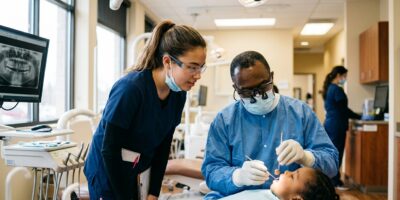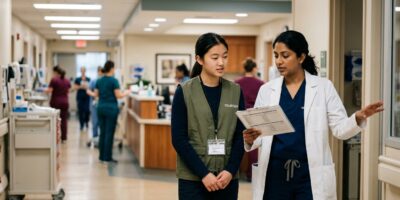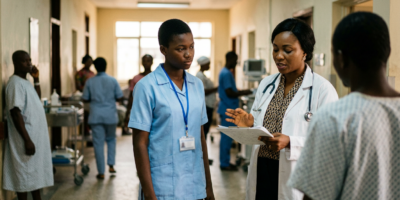
Yes, there are nursing programs for high school students, and they come in three main forms: one-week summer nursing camps on college campuses, such as Georgetown’s Nursing Academy and the NSLC Nursing program at Duke; nursing assistant courses offered through some high schools and community colleges; and hospital-based programs abroad, such as our pre-nursing track in Kenya and Peru for students 15 and older. You cannot work as a registered nurse at 16, but each of these lets you test the career before you apply to nursing school.
Nursing internships for high school students give teens a structured way to see what the profession actually looks like before committing to a nursing education path. Unlike informal job shadows or one-day hospital tours, a well-designed internship places students alongside licensed nurses in real clinical settings, with clear boundaries, professional supervision, and guided learning built into every day. For students weighing healthcare as a career, and for parents weighing whether their teen is ready, understanding what these programs involve is the first step. Many families begin by researching a high school pre-med internship abroad and comparing options across specialties, and nursing-focused programs stand out for the breadth of clinical exposure they can offer through observation alone.
The demand for nurses is real and well documented. According to the BLS occupational outlook for registered nurses, the profession is projected to grow 6% between 2022 and 2032, with roughly 193,100 new positions expected over that period. At the same time, nursing schools in the U.S. turned away more than 66,000 qualified applicants in 2022 due to limited faculty, clinical space, and funding. That combination of growing demand and competitive admissions makes early, structured exposure more relevant than ever. For teens who want a head start during the summer months, medical summer internships for high school students offer a concentrated window to observe nursing up close, build foundational knowledge, and test whether the profession is the right fit.
Are There Nursing Programs for High School Students?
Yes. The best-known summer nursing programs for high schoolers run for about a week on a university campus and mix simulation labs, lectures and site visits. Longer options place students in a working hospital. The table compares programs from their official pages for the 2026 and 2027 seasons; confirm dates and age rules with each program before you apply.
| Program | Who can apply | Length | What you do | Where |
|---|---|---|---|---|
| Georgetown Nursing Academy | Minimum age 15 | 1 week | Faculty-led classes, a lifelike patient simulator at the O’Neill Family Foundation Clinical Simulation Center, visits to nursing policy and advocacy organizations | Washington, DC (residential or commuter) |
| NSLC Nursing | Grades 9 to 12 | 9 days | Patient-care simulations, emergency scenarios, guest speakers, CPR certification | Duke University, Durham, NC |
| Outset Teen Nursing Program | Grades 9 to 12 | 1 week | Sessions on what nurses do, the training path and specialties, plus hands-on labs | US college campuses |
| IMA high school pre-nursing track | Age 15 and older; apply from 14 | 2 to 12 weeks (most stay four) | Shadow nurses on hospital wards, global health lectures and simulations, community clinics, daily medical Swahili or Spanish | Mombasa and Nairobi, Kenya; Cusco, Peru |
Campus camps suit students who want a short, structured first look. A hospital placement suits students who already lean toward nursing and want to spend full days on a ward. Many students do both: a camp in 10th grade, then a longer placement at 16 or 17. Our guide to nursing roles explained for high school students covers the jobs you will see on a ward, from bedside RNs to nurse educators.
Can You Be a Nurse at 16?
No, you cannot be a registered nurse at 16. Registered nurses complete an approved nursing program, usually an associate degree (ADN) or a bachelor of science in nursing (BSN), and then pass the NCLEX licensure exam. At 16 you can join a summer nursing program, shadow nurses, volunteer at a hospital, and in some states start nursing assistant training.
Nursing assistant (CNA) training is the closest a teen can get to paid patient care. According to the Bureau of Labor Statistics, nursing assistants complete a state-approved education program and pass a state competency exam. Minimum ages and course formats are set by each state, so ask your school counselor or your state’s nurse aide registry what applies where you live.
Nursing Programs for 16 and 17 Year Olds
Turning 16 opens more doors. Most hospital volunteer programs and international placements start at 16, and some sites ask for 17. Our high school program accepts students who will be 15 by their start date, with applications open from age 14. During the placement, interns work under the supervision of licensed nurses within their training level and assist with noninvasive tasks; they do not diagnose, prescribe or perform invasive procedures. Students who are drawn to advanced practice can read what it takes to become a nurse practitioner next.
What Is a Nursing Camp?
A nursing camp is a short pre-college program, usually one week, where high school students learn nursing basics in classrooms and simulation labs on a college campus. Expect practice on patient mannequins, CPR training, talks from working nurses and tours of nursing schools. Camps teach skills in a lab setting; they do not place you on a hospital ward with real patients.
That difference matters when you compare nursing camps for high schoolers with hospital programs. A camp shows you the training side of nursing. A ward placement shows you the job: shift handoffs, patient education, and how nurses work with doctors, physician assistants and pharmacists. If you are still choosing between those roles, our comparison of PA vs MD vs NP paths for teens lays out the training years side by side.
How Do You Shadow a Nurse in High School?
Start with the volunteer office at a local hospital, ask nurses you already know, or join a structured program that arranges shadowing for you. Many hospitals set a minimum age of 16 and ask for current vaccinations and a short orientation. Our step-by-step guide on how to shadow a nurse in high school includes sample emails and what to wear.
- Ask your school counselor or HOSA chapter advisor which local hospitals take student shadows.
- Email or call the hospital volunteer office and ask about student shadowing or junior volunteer programs.
- Prepare your vaccination records and any forms the hospital asks for before your first day.
- Keep a short journal of what you saw and what you asked, so you can describe it later in applications.
Dental vs Pre-Med in High School: How Do the Paths Differ?
In high school, both paths start the same way: strong biology and chemistry grades, steady volunteering and time watching professionals work. They split after college. Future dentists take the Dental Admission Test and apply through ADEA AADSAS; future doctors take the MCAT and apply through AMCAS. Dental school takes four years, while medicine adds a residency of three years or more.
Our side-by-side guide to pre-dental vs pre-med in high school goes further, and students who lean toward dentistry can start with dental internships for high school students. If neither medicine nor dentistry fits, our overview of allied health internships for high school students covers pharmacy, therapy and imaging careers.
What Nursing Observation Actually Looks Like for Minors
The most important thing to understand about nursing internships for high school students is what they are not. These programs do not involve administering medication, performing procedures, drawing blood, or providing direct patient care. For minors, the role is observational. Students watch licensed nurses work. They ask questions. They reflect on what they see. And they learn from a position of respectful distance, always under the supervision of a qualified professional.
In a well-structured program, a typical day might begin with a briefing from a clinical mentor, followed by several hours observing in a specific department. Students might watch nurses take vital signs, manage wound care, communicate with patients about treatment plans, or coordinate with physicians and other team members. After lunch, the focus might shift to a different unit or to an educational session on a topic like infection control, triage priorities, or patient privacy. Evenings often include group reflection, journaling, and discussions that help students process what they observed.
What makes this valuable is not the chance to “do” things. It is the chance to see how nursing works in practice: the pace, the decisions, the communication, the emotional weight. Students who go through a serious observation program come away with a much more grounded understanding of the profession than they could get from a textbook or a career day. For a closer look at how shadowing compares to more involved internship structures, IMA’s guide on nursing shadowing opportunities for high school students breaks down the differences clearly.
The Role of Mentorship in Observation Programs
Observation without guidance is just watching. What separates a strong internship from a passive experience is the mentor. In quality programs, each student is paired with a licensed healthcare professional, often a registered nurse or clinical officer, who explains what is happening, why decisions are being made, and what the student should pay attention to. This mentorship turns observation into active learning. It also creates a safe space for students to ask questions they might feel uncomfortable raising in a busy clinical environment.
Mentors also help students understand what they are emotionally processing. Watching a patient in pain, seeing a family receive difficult news, or observing the toll of understaffing on a nursing team can be heavy, especially for a teenager. A good mentor acknowledges that weight and helps the student work through it constructively.
Why Parents Are Right to Ask Hard Questions
Parents considering a nursing internship for their teen, especially an international one, should be asking detailed questions. Not because these programs are inherently risky, but because any experience that places a minor in a clinical setting requires clear structure, honest communication, and verifiable safeguards. That scrutiny is a sign of good parenting, not excessive caution.
The most common concerns parents raise center on safety, supervision, and age-appropriate exposure. These are legitimate. A responsible program will address them directly, not deflect with vague reassurances. Parents should expect to receive clear information about who supervises their child at the clinical site, who is responsible for them outside of clinical hours, what the housing arrangements look like, how emergencies are handled, and how communication works between the program and the family. IMA’s resource on safety and support for parents of teen medical interns addresses these topics in detail and is worth reviewing before any application.
Emotional readiness is another area parents should assess honestly. Nursing environments can involve exposure to serious illness, injury, and loss. While students are not involved in care, they will see things that may stay with them. Programs that include structured debriefing sessions and access to staff support help teens process these experiences in healthy ways, but families should also talk openly beforehand about what their teen might encounter and how they tend to handle stress.
What Supervision Should Look Like
For any program involving minors, supervision must be constant and specific. That means a designated adult is responsible for the student at all times, in the clinical setting and outside of it. In clinical environments, the student should never be left alone with patients. There should be explicit rules about what students can and cannot do, and those rules should be enforced consistently. Housing should be secure, transportation should be arranged by the program, and there should be a clear chain of communication for any issue that arises.
If a program is unable to describe its supervision structure in concrete terms, or if it relies on general statements about “safe environments” without specifics, that is a reason to keep looking.
How Nursing Internships Differ from Other Healthcare Observation Programs
Nursing is distinct from medicine, dentistry, or allied health in ways that matter for the observation experience. Nurses spend more sustained time with patients than most other professionals. They are often the first to notice changes in a patient’s condition, the ones managing pain and comfort, and the primary point of contact for families. Observing nursing gives students a view of healthcare that is relational, continuous, and deeply human.
In international settings, the nursing role can look different from what students see in U.S. hospitals. In many countries, nurses and mid-level practitioners carry a larger share of clinical responsibility, particularly in rural or underserved areas where physicians may be limited. Students observing in these contexts often see nurses managing a wider range of tasks, adapting to resource constraints, and making clinical decisions that reflect a different scope of practice. The WHO State of the World’s Nursing report documents these variations and underscores the central role nurses play in global health systems, with a projected global shortage of 9 million nurses and midwives by 2030.
For students who are still deciding between nursing and other health careers, an observation-focused internship can clarify the difference between what nurses do and what physicians, physician assistants, or therapists do. That clarity is one of the most practical outcomes a high school student can take away from the experience. IMA also offers context on how students can compare different healthcare career paths while still in high school, which can be useful for those who are still weighing their options.
What Nursing Schools and Admissions Committees Actually Care About
A nursing internship on a high school student’s resume does not guarantee admission anywhere, and any program that implies otherwise is overpromising. What it can do, when the student engages seriously, is provide evidence of genuine interest, maturity, and reflective thinking, qualities that admissions reviewers at nursing programs do value.
The key is how the student talks about the experience, not simply that they had it. Admissions committees are not impressed by a line on a resume that says “observed nursing procedures.” They are interested in what the student noticed, what surprised them, what challenged their assumptions, and how the experience shaped or confirmed their interest in nursing. A student who can describe a specific moment, like watching a nurse calmly explain a treatment plan to a frightened patient, and articulate why that moment mattered to them, is far more compelling than someone who lists hours logged.
According to the AACN’s data on nursing school enrollment and admissions, competition for seats in baccalaureate nursing programs continues to be significant. Students who apply with clear, specific, and honest accounts of their clinical observation experiences tend to present stronger applications than those who rely on generic descriptions of healthcare interest.
Writing About Observation Without Overstating It
One of the most common mistakes students make in applications is overstating their role. Saying “I assisted with patient care” when the actual experience was observation can raise red flags with experienced reviewers. It is better, and more effective, to be precise. “I observed a registered nurse perform wound care and debriefing afterward, and I asked about how she assessed the patient’s pain level” is more credible and more interesting than a vague claim of participation.
Students should also connect the experience to their broader trajectory. If the internship confirmed a long-held interest in nursing, they should say so and explain why. If it introduced new questions or uncertainties, that honesty is also valuable. Admissions committees appreciate students who are thoughtful about what they still need to figure out, not just those who project unwavering certainty.
Evaluating Programs: What Families Should Look For
Not all nursing internships for high school students are created equal, and families should evaluate programs carefully before committing time and money. A few markers of quality are worth keeping in mind.
First, the program should clearly define what students will and will not do. If the language is vague about “hands-on experience” or “clinical involvement” for minors, that is a concern. Ethical programs are upfront that high school students observe and support within defined boundaries. They do not practice medicine.
Second, look for structure. A well-designed program has a schedule, educational components beyond just standing in a hallway, assigned mentors, reflection sessions, and a clear orientation process. Structure is what turns observation into learning.
Third, ask about the staff. Who are the mentors? What are their qualifications? How are clinical sites vetted? What training do in-country staff receive for working with minors? These are not unreasonable questions, and a good program will answer them without hesitation.
Fourth, consider the program’s ethical framework. IMA’s blog on clinical ethics for high school students in medical settings provides a useful overview of the kinds of ethical considerations that should be part of any program involving minors in clinical environments. If a program does not address ethics at all, or treats it as an afterthought, that is a red flag.
Finally, talk to alumni or families who have been through the program. Ask them specifically about supervision, communication with parents, and whether the experience matched what was promised.
Making the Most of a Nursing Observation Experience
The students who get the most out of a nursing internship are the ones who prepare before they go and reflect seriously afterward. Before the program, students should read about the nursing profession, understand basic medical terminology, and think about specific questions they want answered. They should also discuss expectations with their parents and be honest with themselves about their readiness for what they might see.
During the program, the most important habit is paying close attention and asking thoughtful questions. Students should keep a journal, not just to record what happened, but to process their reactions, questions, and evolving understanding. What did the nurse do that they did not expect? What was harder than they imagined? What part of the work seemed most meaningful, and why?
After the program, the experience becomes most useful when it is integrated into the student’s broader path. That might mean pursuing additional coursework in science or health, volunteering locally in a healthcare-related role, or simply being more intentional about why they want to enter nursing. The internship is not an endpoint. It is an informed starting point.
More Guides on Nursing, Dental and Allied Health Paths
- Nursing shadowing opportunities for high school students
- Nursing roles explained for high school students
- So you want to be a nurse practitioner
- How teens can support nursing staff
- PA vs MD vs NP: comparing the paths early
- Physician assistant exposure for high school students
- Healthcare careers without med school
- Allied health internships for high school students
- Pharmacy internships for high school students
- Working in a pharmacy as a teenager
- Pre-dental experience: dental shadowing and internships for high school students
- Dental camps and summer programs for high school students
- Dental careers for high school students
- Building a dental activity profile in high school
- Pre-dental vs pre-med in high school
- Dentistry vs medicine for high school students
- How teens observe dental procedures
- Physical therapy careers for high school students
- Rehab careers beyond PT: OT, speech and athletic training
- Occupational therapy experience for high school students
- OT clinic observation for teens
- OT vs PT for high school students
- How teens support rehab and PT teams
- Turning OT exposure into career goals
- Building a sports health resume in high school
- Sports medicine careers: working with athletes as a teen
- Pediatric and women’s health experiences for high school students
- How teens observe OB care
- The High School Path to Medicine series
Frequently Asked Questions
Will my teen perform any medical procedures during a nursing internship?
No. High school students in nursing internships observe licensed professionals at work. They do not administer medication, perform procedures, draw blood, or provide direct patient care. All clinical observation is supervised by a qualified mentor, and the boundaries between observation and practice are clearly defined and enforced.
How do I know if my teenager is mature enough for this kind of experience?
Consider how your teen handles unfamiliar situations, emotional stress, and being in structured environments with clear rules. They will likely observe patients who are seriously ill or in pain, and they need to be able to process those experiences constructively. Honest family conversations about expectations, emotional readiness, and the realities of clinical settings are the best way to assess fit before applying.
Does a nursing internship in high school help with college or nursing school applications?
It can, but only if the student engages genuinely and reflects thoughtfully on the experience. Admissions reviewers are not simply looking for a line on a resume. They want to see evidence of curiosity, maturity, and honest reflection about what the student observed and learned. The way a student writes about the experience matters far more than the experience alone.
Are there nursing programs for high school students?
Yes. Options include one-week summer nursing camps on college campuses, such as the Georgetown Nursing Academy and NSLC Nursing at Duke, nursing assistant courses offered through some high schools, and hospital-based programs abroad, such as our pre-nursing track in Kenya and Peru for students 15 and older.
Can you be a nurse at 16?
Not a registered nurse. Registered nurses finish an approved nursing degree and pass the NCLEX licensure exam. At 16 you can join a summer nursing program, shadow nurses, volunteer at a hospital, and in some states begin nursing assistant training.