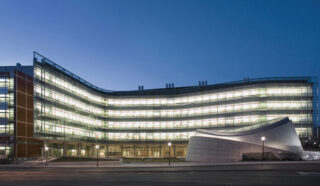

The University of Michigan Medical School is one of the oldest and most respected public medical schools in the United States. It was founded in 1850 in Ann Arbor, and it is part of Michigan Medicine, the university’s academic medical center. Students, faculty and alumni often call it UMMS, U-M Medical School or simply Michigan Med. The school is known for major research contributions, including the introduction of the electrocardiogram and the first human genetics program, and for a flexible curriculum that lets students shape their last two years around their career goals.
Michigan is also unusual among public schools in how many students it takes from outside the state. About half of each class comes from outside Michigan, and the school has encouraged applicants with DACA status to apply since 2012. It replaces a fixed list of required courses with core competencies, which means there is more than one path to admission. Each year it receives more than 10,000 applications for a class of about 170 students.
This guide covers the 2026-2027 application cycle, which fills the class that starts in August 2027. It walks you through Michigan’s mission and the attributes it looks for, its programs and dual degrees, the Trunk and Branches curriculum, admissions requirements and deadlines, 2026-27 costs, student life, clinical training and research, the people who lead the school and the admissions office, all four 2026-2027 secondary essays plus the MSTP essay with worked examples, and what to expect on interview day. At International Medical Aid, we believe that knowledge is power. Whether Michigan is a dream school or one of many on your list, this guide will help you submit the strongest application you can.
Key Takeaways
- Who can apply: You must be a U.S. citizen, a permanent resident or have DACA status. International applicants are not considered. You need at least 90 hours of college coursework, 60 of them from an accredited U.S. or Canadian school, plus the MCAT. Almost all admitted students have a bachelor’s degree, but it is not required.
- Competencies, not courses: Michigan does not require specific courses. It requires competency in humanities and social sciences, life and physical sciences (biology, chemistry and biochemistry, and physics), statistics, and analytical thinking.
- MCAT screen: Secondary applications go automatically to applicants at or above the 35th MCAT percentile. Others are screened for excellence in Michigan’s competencies and may still be invited. No Casper or PREview is required.
- Key dates: AMCAS closes September 15, 2026. The $95 secondary is due October 15, 2026, but Michigan advises submitting it within two to three weeks. Interviews are virtual and run from September through early February.
- Class profile: For the 2025 entering class, Michigan received 10,265 applications, interviewed 443 applicants and enrolled 168. Accepted applicants had a median MCAT of 518 and a median GPA of 3.9.
- Costs: 2026-27 tuition and fees are $60,495 for Michigan residents and $81,960 for non-residents in each of the first three years. The first-year cost of attendance is $102,431 for residents and $123,896 for non-residents. No deposit is ever required.
- Distinctive training: Students start core clerkships in the second year, then spend 19 months in a chosen Branch with room for research, a dual degree or electives, and every student completes a Capstone for Impact.
- Next step: Draft your four secondary essays now. The prompts are posted on Michigan’s website, and early, complete applications get earlier interview consideration.
Key Statistics About the University of Michigan Medical School

The snapshot and the table below come from the same fact record. Applicant, interview and class figures come from Michigan’s own 2025 entering class profile. No acceptance rate is shown. A real acceptance rate divides offers of admission by applications for the same cycle, and Michigan does not publish its number of offers. Dividing the class size by the number of applicants gives a matriculation rate, which is a different measure.
| Measure | Value | Cohort or year | Source |
|---|---|---|---|
| School and degree | University of Michigan Medical School, MD; Ann Arbor, Michigan | Current | UMMS Office of Admissions |
| Type and founding | Public; founded 1850 | Current | AAMC MSAR school profile |
| Applicants | 10,265 | 2025 entering class | UMMS 2025 Entering Class Profile |
| Interviewed | 443 | 2025 entering class | UMMS 2025 Entering Class Profile |
| Entering class | 168 (including 14 MSTP and 3 oral and maxillofacial surgery students) | 2025 entering class | UMMS 2025 Entering Class Profile |
| Residency mix | 55 Michigan residents (32.7%); 113 non-residents (67.3%) from 29 states and Washington, D.C. | 2025 entering class | UMMS 2025 Entering Class Profile |
| Median MCAT | 518 (mean 517.7); section medians 130 / 128 / 130 / 130 (Chem/Phys, CARS, Bio/Biochem, Psych/Soc) | 2025 entering class; all accepted applicants | AAMC MSAR school profile (2026 MSAR) |
| Median GPA | 3.9 | 2025 entering class; accepted applicants | AAMC MSAR school profile (2026 MSAR) |
| Class average GPA (science / total) | 3.81 / 3.85; class average MCAT percentile 92.61 | 2025 entering class | UMMS 2025 Entering Class Profile |
| Tuition and fees | $60,495 (resident); $81,960 (non-resident), Scientific Trunk year | 2026-27 academic year | UMMS Office of Financial Aid, 2026-2027 cost of attendance |
| First-year cost of attendance | $102,431 (resident); $123,896 (non-resident) | 2026-27 academic year | UMMS Office of Financial Aid |
| Secondary fee and deadline | $95 (waived for AAMC Fee Assistance Program and active-duty military); October 15, 2026 | 2026-2027 cycle | UMMS Admissions Timeline |
| Total enrollment | 773 students | October 2025 | AAMC MSAR school profile (2026 MSAR) |
| Primary care | About 38% of graduates matched into fields leading to primary care | Class of 2025 | AAMC MSAR school profile |
| Interview format | Virtual: two 30-minute conversations with Admissions Committee members and six 6-minute short-form interview stations | 2026-2027 cycle | UMMS Interview Day page |
Mission and Educational Priorities
Michigan’s mission is short and memorable: “To transform health through bold and innovative education, discovery and service.” The admissions office repeats it on its requirements page and tells applicants to know it. Its strategic pillars focus on people, discovery, education, care and service.
The school says it admits “individuals who not only have the potential to excel academically but also possess personal attributes and competencies that align with our mission and values.” Its admissions position is just as clear: “There is More Than One Path to Medical School.”
The attributes of a successful candidate
Michigan evaluates every applicant holistically across a set of attributes. Knowing them helps you decide what to emphasize in your essays, letters and interviews.
- Academic excellence: The ability to perform well in a challenging setting and to think creatively and critically. GPA and MCAT are only part of the picture. The committee also looks at the quality of your college, the rigor of your course load, improving grades and activities that build critical thinking.
- Altruism: Devotion to the needs of others, judged from your activities and your answers about your goals for a life of patient care.
- Desire to learn and dedication to medicine: Shown by a range of academic interests, documented interest in medicine and knowledge of current medical issues.
- Competency: Intellectual, technical and communication competency, along with cultural humility.
- Self-awareness and understanding others: Recognizing how your own assumptions shape your interactions, and respecting the beliefs, values and traditions of the patients you will serve.
- Integrity and ethics: Honesty and professionalism. Dishonesty anywhere in the application counts against you.
- Leadership: The ability to question the status quo, show the qualities of an effective leader and influence others appropriately.
- Reliability and dependability: Keeping commitments and taking responsibility.
- Resilience and adaptability: Handling stress and change and recovering from setbacks.
- Social and interpersonal skills and teamwork: Collaborating, resolving conflict and listening to others.
- Written and verbal communication: Shown through your personal statement, letters and interviews.
The school uses these attributes “not only at the time of application but throughout their medical school careers.” In other words, they describe the kind of student and physician Michigan wants you to become.
Empowerment, advocacy and change
One of this year’s secondary questions says Michigan “strives to be a place of empowerment, advocacy and change in health care.” The curriculum backs this up. Students choose a Branch, complete a Capstone for Impact and can join Paths of Excellence in health policy, global health and disparities, and other areas. If you have worked to help others gain a voice or access to care, Michigan is a school where that experience fits.
Accreditation and Institutional Identity
The University of Michigan Medical School’s MD program is accredited by the Liaison Committee on Medical Education (LCME), the national accrediting body for MD programs, and the school appears in the AAMC’s Medical School Admission Requirements, which lists LCME-accredited schools. Accreditation lets graduates take the USMLE, enter ACGME-accredited residencies and qualify for licensure.
Some names you will see:
- University of Michigan Medical School (UMMS): the medical school that grants the MD.
- Michigan Medicine: the academic medical center that includes the medical school and the U-M Health system.
- Medical Scientist Training Program (MSTP): Michigan’s MD-PhD program.
The University of Michigan was founded before Michigan became a state, and the Medical School opened in 1850, making it one of the oldest medical schools in the country. Its history of discovery includes the first synthetic penicillin breakthrough, the introduction of the electrocardiogram and the creation of the first human genetics program. In fiscal year 2024 it received more than $350 million in direct federal research grants and contracts.
US News rankings
U.S. News & World Report now places medical schools in tiers for research and primary care rather than assigning numbered ranks, so the numbered research, primary care and specialty rankings that older guides listed for Michigan are no longer published in that form. Michigan’s strengths in research and clinical care are better seen in its curriculum, research funding and training sites than in a single number.
Medical Programs and Affiliations

Michigan uses a holistic approach to medical education. Patient care, teamwork, research and the social and cultural forces that shape health are taught and practiced the way physicians actually encounter them. Here are the main programs.
Doctor of Medicine (MD)
The MD program is a four-year integrated curriculum that “promotes scientific and clinical proficiency throughout all four years of training, while emphasizing individualized professional development, leadership skills and interprofessional team building.” Students learn in a supportive community of peers, advisors, faculty coaches and mentors. The curriculum section below explains the Trunk and Branches structure.
Medical Scientist Training Program (MSTP)
The MSTP is a joint effort of Michigan’s graduate and medical schools for students who want careers as physician-scientists. About nine students are admitted each year, and fellows receive full tuition, a stipend and health insurance. The program usually takes seven years, though many fellows take eight.
MSTP fellows typically start with the two-year preclinical phase of the MD curriculum, plus graduate coursework and summer lab rotations. All fellows must pass USMLE Step 1 before becoming full-time graduate students. In the graduate phase they complete their PhD requirements and dissertation. They then return for the clinical phase, including clerkships, a sub-internship, electives and Step 2. The MD and PhD are conferred together after both are complete. Many doctoral programs are available, and fellows do not need to choose a field until midway through the second year.
MSTP applicants must be U.S. citizens or permanent residents. The MSTP considers an application complete only when it has the secondary and three to six letters of recommendation, and MSTP applicants answer an additional essay, covered in the secondary section below.
Dual degree programs
More than 15% of Michigan students add another degree, a group the school says is growing every year. Students usually take time during the Branch years to complete it, and a dual degree can fulfill the Capstone for Impact requirement. The formal options include:
- MD/MBA: a five-year integrated program with the Ross School of Business.
- MD/MPP: with the Ford School of Public Policy, for students who want to analyze and manage health programs and data.
- MD/MPH: with the School of Public Health, with study in biostatistics, environmental and industrial health, epidemiology, health behavior and health education, or health management and policy.
- MD/MS in Environment and Sustainability: with the School for Environment and Sustainability.
- MD/MSI: a 39- to 42-credit Master of Science in Information.
- MD/MS in Health Infrastructure and Learning Systems (HILS): a 27-credit, 12-month program, also available online.
Students may also seek leave to complete other master’s degrees, such as education, applied data science, design science or health professions education. The MD/MBA, MD/MPP and some MD/MPH programs share a degree citation and are conferred together.
Oral and Maxillofacial Surgery
Michigan also offers a six-year integrated program for dental graduates in oral and maxillofacial surgery. Graduates earn a Michigan MD, a certificate for a two-year general surgery internship and a specialty certificate in oral and maxillofacial surgery. Three applicants are selected each year through the Postdoctoral Application Support Service (PASS).
Leadership Program and Paths of Excellence
Two programs let students build a focus across all four years, and both can support the Capstone for Impact:
- The Leadership Program prepares students to lead change through team building, intentional patient care and work within complex health systems.
- Paths of Excellence give students specialized experience, networking and leadership skills in a field they care about. The current Paths are Ethics, Global Health and Disparities, Healthcare Innovation, Health Policy, Medical Humanities, Patient Safety and Quality Improvement, and Scientific Discovery.
Residency and fellowship programs
Michigan Medicine trains residents and fellows in almost every specialty and subspecialty, from anesthesiology, emergency medicine, family medicine, internal medicine, neurology, obstetrics and gynecology, pediatrics, psychiatry and radiology to surgery and its subspecialties. Medical students work alongside these trainees during clerkships and electives, and Michigan’s M4 Residency Prep Courses prepare students for the first day of residency.
Pathway programs
Michigan runs summer research programs for undergraduates and a post-baccalaureate premedical program, PostBac MedPrep. These can be useful if you need to strengthen your preparation before applying.
Curriculum Overview
Michigan’s curriculum uses a tree metaphor, in honor of the oak trees that gave Ann Arbor its name. Students build foundational knowledge in two “Trunk” phases and then move into the flexible “Branches.”
Year 1: Scientific Trunk
The Scientific Trunk is the preclinical year. Students complete six foundational and organ-system blocks in which normal and abnormal function are taught side by side. They also take longitudinal courses that build clinical skills, clinical reasoning and knowledge of health care systems, including the Doctoring course and Chief Concern, a course on clinical reasoning.
Much of the science content is delivered through prerecorded lectures, and attendance at active learning sessions is required. The first year is graded true pass/fail. First-year students work with standardized patients, observe health professionals in clinical settings and attend patient presentations.
Year 2: Clinical Trunk
Michigan starts core clinical rotations in the second year, earlier than most schools. The Clinical Trunk has two parts:
- Transition to Clerkships: linking scientific foundations to clinical skills and patient care.
- Core Clerkships: internal medicine; surgery and applied sciences (a combination of surgery, pathology, anesthesiology, anatomy and radiology); obstetrics and gynecology; pediatrics; family medicine; neurology; and psychiatry.
Clerkships use a criterion-referenced Honors, High Pass, Pass and Fail scale, so students are graded against specific criteria rather than against each other. Students are not ranked. You will need transportation to reach clinic sites in southeast Michigan during this year, so a driver’s license and car are recommended.
Years 3 and 4: The Branches
Just before the third year, each student chooses one of four Branches and works with a Branch Director:
- Patients and Populations: team-based care and population health, with a focus on public health, public policy and advocacy. Students can do a 6- or 12-month longitudinal clinic experience with a continuity panel of patients.
- Diagnostics and Therapeutics: patient-centered use of technology in diagnosis and therapy, including an ultrasound curriculum.
- Procedure-Based Care: the technical and procedural sides of complex care, with surgical and technical skills training.
- Hospital-Based Care: care of medically complex hospitalized patients, with a focus on outcomes, patient safety and quality improvement.
The Branches run in three phases:
- Discovery: a four-week Branch Launch, then more than 200 exploratory electives in two- to four-week blocks. Students who choose research can apply to an eight-week, NIH-funded Short Term Biomedical Research Training Program with a stipend and any U-M faculty mentor.
- Focus: intense clinical time, including one ICU sub-internship, one non-ICU sub-internship, an emergency medicine rotation and four four-week clinical electives from more than 20 departments.
- Finishing: more electives, residency interviews and completion of the Capstone for Impact.
At the end of the fourth year, every student takes a Residency Prep Course in procedures, obstetrics and gynecology, internal medicine, pediatrics, family medicine or emergency medicine. These four- to eight-week courses use simulated pages, mock codes and targeted teaching to prepare students for day one of residency. One student described the Branches this way: “We have 19 whole months to hash out our specialties and hone our clinical skills.”
Capstone for Impact
Every student completes a Capstone for Impact, a required project in which students make an impact on society based on their own interests and skills. Students can fulfill it through research, a dual degree, the Leadership Program, a Path of Excellence or another individualized project. Most students begin it in the early Branches.
M-Home
M-Home is Michigan’s learning community. It serves as each student’s academic and professional base and brings students from all classes together for social events. Through M-Home and the Michigan Medicine Office of Well-Being, students have access to free psychological and psychiatric services and peer support.
Admissions Requirements and Application Process
Basic eligibility
Each Michigan applicant must:
- Be a U.S. citizen or have permanent resident or DACA status. International applicants are not considered.
- Have completed at least 90 hours of college coursework, 60 of them from an accredited U.S. or Canadian institution. A bachelor’s degree is not required, though almost all admitted students have one.
- Have taken the MCAT.
All applicants must also attest that they have read the medical school’s technical standards.
Prerequisites and core competencies
Michigan does not require or prescribe specific courses. Instead, it requires competency in four areas, which you can show through coursework or, in some cases, other experiences.
1. Humanities and social sciences (including written and verbal communication). You should be able to analyze, form and communicate ideas in writing and speech; critically evaluate issues that affect society; deal with uncertainty and complexity in human behavior, ethics, history or art; and appreciate differences among people and cultures. Courses in anthropology, history, philosophy and ethics, psychology, sociology, literature and similar fields cover these skills, and so can clubs, leadership roles and work on social determinants of health.
2. Life and physical sciences. Michigan requires knowledge of:
- Biology: cell, molecular biology and genetics, typically covered in two semesters of college biology.
- Chemistry and biochemistry: acid/base chemistry, thermodynamics, macromolecular structure, enzymes, bioenergetics, metabolism and membrane biology, typically covered in a biochemistry course with chemistry prerequisites.
- Physical principles: mechanics, fluid dynamics, thermodynamics, electrostatics and electromagnetism, radiation, molecular movement and energy transfer, typically covered in two semesters of algebra-based physics or engineering.
Coursework is strongly encouraged but not required. You can also show these competencies through a postbaccalaureate or science-intensive master’s program or through CLEP exams. Immunology and physiology are not required, but the school says an introduction to them helps in the first year.
3. Statistics. Descriptive statistics and inference, probability and sampling, distributions and hypothesis testing, typically covered in a one-semester statistics course.
4. Analytical thought and problem solving. The ability to observe a problem, form a testable hypothesis, design a strategy to test it and refine it based on data. A science lab or a research project usually covers this.
Prerequisite competencies have no expiration date, and they must be completed by the time you matriculate. Michigan accepts AP credit, online courses, pass/fail grades and community college courses for its recommended subjects, though it wants community college work alongside rigorous coursework at a four-year school.
MCAT
The MCAT is required. For this cycle, Michigan considers scores from January 2024 through October 1, 2026. The admissions committee considers your highest total and can see all of your scores. There is no minimum MCAT for screening, but there is an important threshold for the secondary:
- Applicants at or above the 35th percentile receive a secondary automatically.
- Applicants below the 35th percentile are “screened for excellence within our competencies” and may receive a secondary after review.
GPA
Michigan has no minimum GPA for screening. It does consider postbaccalaureate or graduate GPAs when an applicant’s undergraduate GPA is lower.
Letters of recommendation
- MD: Michigan requests three or four letters or a committee packet. If you have more than four and are invited to interview, you choose which four the committee will consider after the interview. A committee cover letter counts as one of the four.
- MSTP: up to six letters, all submitted before your application is complete.
- All letters go through the AMCAS Letter Service. Never send letters directly to Michigan.
Your writers can be anyone who can objectively assess your integrity, reliability, teamwork, resilience, altruism and desire to learn. The MD program considers your file complete when your secondary arrives, so you do not need to wait for letters before submitting it.
Experience
Michigan does not require shadowing. The school says it prefers “that candidates get quality, active exposure in the field of medicine or related fields.” Hours and experiences from high school do not count, though you can mention them in your essays if they are part of your story.
Active, hands-on exposure is exactly what clinical internships for pre-med students offer. Supervised patient contact gives you real examples to write about in essays that ask how you will impact patient care.
No situational judgment tests
Michigan does not require Casper or AAMC PREview.
How the application works
- AMCAS. Michigan uses AMCAS. You can submit starting in late May, and the deadline for the MD and MSTP programs is September 15, 2026. Michigan begins reviewing applications in early July and recommends applying in June.
- Secondary application. Sent to applicants who meet the MCAT threshold or pass the competency screen. The fee is $95, waived for applicants approved for the AAMC Fee Assistance Program and for active-duty military members. The deadline is October 15, 2026, but Michigan advises submitting within two to three weeks of receiving it.
- Review. After your file is complete, Michigan reviews it multiple times, which can take several months. Check your Applicant Portal for updates, and upload updates as PDFs through the portal checklist.
- Interview invitations. The first MD invitations go out by email in early August. Michigan posts updates every Monday during interview season, on what it calls #UMichMedMondays. MSTP applicants are notified on a different schedule.
- Decisions. Michigan notifies applicants on a rolling basis, several weeks after their interviews.
To understand how the two stages fit together, read our article on understanding the differences between primary and secondary medical school applications.
Possible outcomes
After review, before any interview, there are three possible outcomes: an interview offer, preliminary screening (your file stays under review) or file closed. After the interview, there are four:
- Admitted. Your seat is held until the national decision date of April 30, and no deposit is ever required.
- Deferred decision. Not an offer, a waitlist or a rejection. Your file is held while Michigan reviews later interviewees, with a final review no later than March. Candidates are admitted from this pool, and those not admitted move to the waitlist.
- Waitlist. The number admitted from the waitlist varies; Michigan typically has about 80 waitlist positions and offers about 10 acceptances from the waitlist. Extra contacts with the office do not affect waitlist decisions.
- File closed.
Timeline for the 2026-2027 cycle
| When | What happens |
|---|---|
| May 28, 2026 | Earliest date to submit AMCAS |
| July 6, 2026 | Michigan begins reviewing applications |
| Early August 2026 | First MD interview invitations |
| September 8, 2026 to February 4, 2027 | Virtual MD interviews |
| September 15, 2026 | AMCAS deadline (MD and MSTP) |
| October 1, 2026 | Latest MCAT date considered |
| October 15, 2026 | Secondary deadline; earliest date acceptances are sent |
| February 15, 2027 | FAFSA and U-M financial aid application due for need-based scholarship consideration |
| March 2027 | Admissions scholarships awarded; deferred files receive a final review; waitlist formed |
| April 30, 2027 | National decision date |
| June 2027 | Last month to complete prerequisite competencies |
| August 2, 2027 | Classes begin |
Transfers
Michigan does not generally consider transfer requests. Rare exceptions require an established, current academic relationship with the University of Michigan.
Tuition, Cost of Attendance and Financial Aid
Michigan has two tuition rates: one for Michigan residents and one for non-residents. Residency is determined by the university’s Office of the Registrar. If you are applying for in-state tuition, submit your residency application at least three months before you enroll.
Here is the Office of Financial Aid’s 2026-27 cost of attendance. The Scientific Trunk is the first year, the Clinical Trunk the second, and the Branches the third and fourth.
Michigan residents, 2026-27
| Expense | Scientific Trunk (12 months) | Clinical Trunk (12 months) | Branch 1 (12 months) | Branch 2 (8 months) |
|---|---|---|---|---|
| Living expenses | $33,236 | $33,416 | $34,556 | $22,944 |
| Transportation | $2,100 | $4,140 | $4,140 | $2,760 |
| Books, course materials and supplies | $150 | $1,213 | $100 | $100 |
| Exam fees | $0 | $695 | $695 | $0 |
| Miscellaneous personal | $6,450 | $6,450 | $6,450 | $4,300 |
| Loan fees | $435 | $435 | $435 | $435 |
| Tuition and fees | $60,495 | $60,495 | $60,495 | $40,577 |
| Total | $102,431 | $106,409 | $106,436 | $70,681 |
Non-residents, 2026-27
| Expense | Scientific Trunk | Clinical Trunk | Branch 1 | Branch 2 |
|---|---|---|---|---|
| Tuition and fees | $81,960 | $81,960 | $81,960 | $54,640 |
| Total | $123,896 | $127,874 | $128,901 | $84,744 |
Non-resident living, transportation, book, exam, personal and loan-fee costs are the same as for residents. Living expenses include rent, food and utilities, and loan fees drop out of the budget if you do not borrow federal loans. The budget is subject to change.
Scholarships and aid
- Admissions scholarships: Every admitted student is automatically considered. Awards are based on a holistic review of your file, not just MCAT and GPA, though need is considered. They are emailed in March.
- Need-based aid: To be considered for need-based scholarships, submit the FAFSA and the University of Michigan Medical School Financial Aid Application by February 15. If you are admitted after February 15, you have two weeks from your admission date.
- How many receive aid: About 85% of students receive financial aid, including loans, and more than 60% receive a scholarship or grant, ranging from a few thousand dollars to full tuition.
- Debt: Michigan graduates’ debt ranks among the lower third of all medical school graduates. The Class of 2023 had an average medical school debt of $161,267, about $30,000 below the national average, which the school credits to small tuition increases and strong scholarship support.
- DACA students: Eligible for institutional aid, including long-term university loans, need-based institutional grants and need-based or admissions scholarships, though not federal aid.
- No deposit: Michigan never requires a deposit to hold your seat.
Campus Facilities and Student Life
Ann Arbor
The Medical School is within walking distance of the university’s main campus and downtown Ann Arbor. The city sits on the Huron River and has more than 150 parks, the Nichols Arboretum, miles of walking and biking paths and more than 300 restaurants. It is a short drive to Detroit and its international airport, and about four hours to Chicago and Toronto.
Housing
Most medical students live in apartments within walking distance of the medical campus. Free public transportation widens the options, and some students live in two active medical society chapter houses.
Community and wellness
Michigan describes its medical students as a close-knit community. More than 100 medical student groups cover social, academic, service and identity interests, and M-Home brings students from all four classes together. Students have free, confidential mental health care, including psychological and psychiatric services, and formal peer support programs.
Service groups include the Asylum Collaborative, Delonis, Docs of Tomorrow, the Galens Society, Health Equity Scholars, the Migrant Clinic, the Student-Run Free Clinic and Wolverines for Life. Groups such as LANAMA, which supports Latino and Native medical students, and OutMD also offer community.
Global health
Michigan students can rotate abroad during the Branches, and 23% of 2025 graduates reported a global health experience during medical school. Global Health and Disparities is also one of the Paths of Excellence. If you want global health experience before medical school, pre-med internships abroad can give you supervised clinical work in a different health system and a strong story for your essays.
Clinical Rotations and Research Opportunities
Clinical training
Michigan Medicine is a large academic medical center, and it partners with more than 15 other health care and nonprofit institutions. Students see urban and rural patients through programs with other hospitals, medical groups and agencies, and they may choose to rotate at other U.S. hospitals or abroad.
Key features of clinical training at Michigan:
- Early clerkships. Core clerkships begin in the second year, so students reach the Branches with a full clinical year behind them.
- Longitudinal clinics. In the Branches, students can join a 6- or 12-month longitudinal clinic with continuity of patients and preceptor.
- Sub-internships. Every student completes an ICU sub-internship and a non-ICU sub-internship.
- Residency preparation. Fourth-year Residency Prep Courses use simulation and mock pages to prepare students for internship.
- Primary care. About 38% of the 2025 graduating class matched into fields that lead to primary care.
Research
Research is woven through the curriculum. The Capstone for Impact gives every student a required project, the Scientific Discovery Path of Excellence supports students who want a research focus, and the Short Term Biomedical Research Training Program funds eight weeks of mentored research with a stipend in the early Branches. Students can work with any University of Michigan faculty member. Michigan received more than $350 million in direct federal research grants and contracts in fiscal year 2024, which means research mentors are available in nearly every field.
Many Michigan applicants come in with substantial research, and 98% of the 2025 entering class reported research or lab experience. Clinical experience matters just as much. Medical internships for undergraduates can balance a research-heavy activities list with supervised patient care.
Notable Alumni, Faculty, Leadership and Admissions Staff
These are some of the people who lead Michigan’s medical school, run its admissions process and teach its students. Roles were checked on November 12, 2026.
Leadership
Thomas J. Wang, M.D., Dean of the University of Michigan Medical School. Dr. Wang became the school’s dean on September 15, 2025, and is a tenured professor of internal medicine. He came from UT Southwestern Medical Center, where he chaired the Department of Internal Medicine. He trained in internal medicine and cardiology at Massachusetts General Hospital and later led the division of cardiovascular medicine at Vanderbilt. His research, continuously funded by the National Institutes of Health, has advanced understanding of the natriuretic peptide system, cardiovascular biomarkers and the prevention of cardiovascular disease. For applicants, his career shows the kind of path from clinical care to research leadership that Michigan supports.
Admissions
Deborah R. Berman, M.D., Assistant Dean for Admissions. Dr. Berman leads Michigan’s MD admissions. Her advice to prospective students is pointed: “Too many prospective medical students say, ‘I have to do this, this and this’ on their applications. They’re going through the actions they think they need to be good candidates for medical school, but not exploring what they need to become great physicians.” Take that to heart when you choose activities and write your essays.
Becky Weeks, M.A., Director of Admissions. Ms. Weeks runs the admissions office. Interviewees receive a welcome video from her with information about the school. She is also the contact for transfer questions and for admitted students who want to discuss deferring enrollment.
Erin Dennis, M.A., M.L.I.S., Assistant Director of Admissions. Ms. Dennis helps manage the admissions process. April Daniels, the MD admissions administrative specialist, and Maya Grumeretz, the projects and events specialist, round out the team. The office can be reached at 734-764-6317.
Faculty
Kate Klein, M.D., Professor of Radiology and Branch Director. Dr. Klein directs one of the four Branches, guiding third- and fourth-year students as they shape their clinical focus. She describes the goal of the Branches as equipping students “with the skills to become a leader in societal health and make a significant impact globally and locally.”
Notable alumni
Sanjay Gupta, M.D., Class of 1993. Dr. Gupta earned his bachelor’s degree from Michigan in 1990 and his MD in 1993, and he completed his residency at Michigan in 2000. He is CNN’s chief medical correspondent, and he gave the keynote address at Michigan Medical School’s 2026 commencement. Before the ceremony, he talked with a Michigan student about the unique bonds medical students form with each other and about where his interest in medical journalism and storytelling began.
Admissions Statistics and Class Profile
Applications, interviews and the class
| Measure | 2025 entering class |
|---|---|
| Applicants | 10,265 |
| Interviewed | 443 |
| Class size | 168 |
| MSTP students | 14 |
| Oral and maxillofacial surgery students | 3 |
| Michigan residents | 55 (32.7%) |
| Non-residents | 113 (67.3%), from 29 states and Washington, D.C. |
Michigan aims for about half of each class to come from outside Michigan, and in recent years non-residents have made up roughly half to two-thirds of the class. Michigan does not publish its number of offers, so a true acceptance rate is not available. About 4.3% of applicants received an interview.
MCAT and GPA
For the 2025 entering class, accepted applicants had a median MCAT of 518 (mean 517.7) and a median GPA of 3.9. Section medians were 130 (Chemical and Physical Foundations), 128 (Critical Analysis and Reasoning), 130 (Biological and Biochemical Foundations) and 130 (Psychological, Social and Biological Foundations).
Michigan’s own class profile reports a class average science GPA of 3.81, a total GPA of 3.85 and an average MCAT percentile of 92.61. Remember that medians and averages describe the middle of the class. They are not minimums.
Who the class is
From the 2025 entering class profile:
- Time since college: 11.3% came directly from college, 26.2% were one year out and 62.5% were two or more years out.
- Age: an average of 24.9, ranging from 21 to 34.
- Backgrounds: 14.3% first-generation college graduates, 21.4% socioeconomically disadvantaged by the AAMC definition, 20.2% AAMC Fee Assistance Program recipients and 1.8% with military experience.
- Education: students from 74 colleges, 22% double majors, 91.7% STEM majors, 14.3% with advanced degrees and 7.7% who completed a formal post-bacc program.
- Most common colleges: the University of Michigan (36 students) and Northwestern (7).
Notice how many students took time after college. If you are thinking about a gap year, Michigan’s class shows it is common and can strengthen your application.
Tips and Strategies for Admission
1. Apply early
Michigan uses rolling interview notifications and begins reviewing in early July. Submit AMCAS in June if you can, and return your secondary within two to three weeks of receiving it. You do not need to wait for letters.
2. Know your MCAT position
The 35th percentile threshold decides whether you get a secondary automatically. If you are below it, your competencies must be excellent. Either way, the median accepted applicant scored 518, so plan your test date and preparation carefully.
3. Show competencies, not checkboxes
Michigan is clear that prerequisites are “competencies to develop and not as specific course requirements,” and Dr. Berman warns against doing things just because you think you have to. Choose activities that genuinely build the attributes Michigan lists, such as leadership, teamwork, cultural humility and resilience, and be ready to explain what you learned.
4. Take advocacy seriously
The third secondary question asks about empowerment and advocacy for others, and the Patients and Populations Branch and the Health Policy Path build on that mission. Real, sustained work helping people gain access, voice or resources will give you a strong answer. Short-term or symbolic activities will not.
5. Get active clinical exposure
Michigan does not require shadowing and prefers active exposure. Roles where you work with patients, such as scribing, serving as an EMT, working as a medical assistant or volunteering in a free clinic, give you better material for essays about how you will improve patient care. Concentrated pre-med summer internships can add supervised, hands-on clinical experience if your school year is full.
6. Use a gap year well
Almost nine in ten of the 2025 entering class took at least one year after college. If you take one, use it to deepen clinical work, research or service. Structured pre-med gap year programs can be part of a strong year, as long as you can explain what you gained.
7. Use the “Other Impactful Experiences” essay if it applies
Michigan’s timeline advises applicants to complete the AMCAS “Other Impactful Experiences” essay if they have faced significant social, emotional, physical or economic hardship, because it “shows resilience.” Do not leave that context out.
8. Prepare for a mixed interview format
Michigan’s interview combines two long conversations with six short stations. Practice both: telling your story in depth and answering a short, unfamiliar prompt clearly in a few minutes.
Secondary Application Questions, Example Responses and Analysis
Michigan posts its secondary essay prompts on its admissions requirements page. For the 2026-2027 cycle, every MD applicant answers four essays, and MSTP applicants answer a fifth essay. Each essay has the same limit: do not exceed 1,500 characters including spaces (about 250 words). The application portal also lets every applicant add information about being a reapplicant if that applies to them.
Michigan’s own advice for the secondary:
- Write essays about who you are, not what you think Admissions wants to hear.
- Know the school’s mission: “To transform health through bold and innovative education, discovery and service.”
- You do not need to wait for your letters before submitting.
- Submit secondaries to the schools you are most interested in within two weeks.
Draft in a word processor and check your character count, including spaces. The examples below are original illustrations written for this guide. Use them to understand structure, not as text to copy.
Essay 1: Your impact on medicine
How do you hope to impact medicine and improve patient care in the future? Why do you need a medical degree to fulfill these goals? Do not exceed 1500 characters including spaces (about 250 words).
What it asks: Two things: the impact you hope to have on medicine and patient care, and why that requires an MD rather than another career.
How to approach it: Be specific about one or two goals rooted in what you have already seen. Then explain why an MD is the tool you need, for example the clinical authority to diagnose and treat, the training to run clinical research or the standing to change how care is delivered. Michigan’s timeline asks applicants to explain “Why is an MD the tool you need.” A Branch, a Path of Excellence or the Capstone for Impact can show how Michigan fits your plan.
Example response:
Illustrative example, not an actual applicant essay
As a scribe in a rural emergency department, I watched patients with heart failure come back again and again, often because they could not get to a clinic two hours away. I hope to improve care for patients like them by building better follow-up for people who live far from specialists.
I want to do this in two ways. As a clinician, I want to care for patients with chronic disease from diagnosis through the hard decisions near the end of life. As a researcher, I want to test whether home monitoring and telehealth visits keep rural patients out of the hospital.
I need a medical degree for both. A nurse, a social worker or a public health analyst can each improve parts of this problem, and I have learned from all of them. But I want to make diagnoses, adjust treatment and lead the clinical trials that decide what care should look like. That requires the training and responsibility of a physician.
At Michigan, the Patients and Populations Branch and a longitudinal clinic would let me follow a panel of patients over time, and the Capstone for Impact would let me start testing a follow-up model as a student.
Why it works:
- It answers both parts: the impact (better follow-up for rural patients) and why an MD is needed.
- The goal grows out of a real experience.
- It respects other professions while explaining what is unique to a physician.
- It names Michigan programs that fit the goal without listing them for their own sake.
- It is about 1,120 characters.
Mistakes to avoid: Vague goals like “help people,” ignoring the “why an MD” question or promising to cure a disease.
Essay 2: Identity and experiences
Please describe the impact of your identity and experiences on your growth and development, and how it may impact your career as a physician. Do not exceed 1500 characters including spaces (about 250 words).
What it asks: Three parts: an aspect of your identity or experience, how it shaped your growth, and how it will affect your work as a physician.
How to approach it: “Identity” is broad. It can mean your family, culture, faith, language, a disability, where you grew up, your work history or a role you have held for years. Pick the part of who you are that has most shaped you, give one concrete example and then connect it to the kind of physician you will be. This question reflects Michigan’s attribute of “self-awareness and understanding others.”
Example response:
Illustrative example, not an actual applicant essay
I grew up as the oldest of four children in a family that ran a small dairy farm in northern Michigan. By twelve I was milking before school, and by sixteen I was keeping the books when my father was too tired to look at them.
That life shaped me in ways I did not notice until I left. I learned to work through cold mornings and bad news without complaint. I also learned how much farmers hide pain. My father ignored a crushed hand for two weeks because a doctor’s visit meant a lost day and a bill he could not pay.
In college I was surprised to find that many of my classmates had never met someone like him. When I volunteered at a rural health fair, I found I could talk with farmers in a way that put them at ease. I knew why they waited and what made them finally come in.
As a physician, I want to use that understanding. I will ask about work, cost and distance before I make a plan, because a plan a patient cannot follow is not a good plan. I also want to help train other physicians to understand rural patients, so that people like my father do not have to choose between their health and their harvest.
Why it works:
- It answers all three parts: the identity, how it shaped the writer and how it will affect their practice.
- The details are specific: the farm, the books, the crushed hand.
- It shows self-awareness, including what the writer did not notice until leaving home.
- It ends with concrete commitments for patient care.
- It is about 1,120 characters.
Mistakes to avoid: Listing identity categories without a story, writing only about hardship without growth or forgetting the “career as a physician” part.
Essay 3: Empowerment and advocacy
The University of Michigan Medical School strives to be a place of empowerment, advocacy and change in health care. What experiences have you had in empowerment and advocacy for others that would help to advance this mission? Do not exceed 1500 characters including spaces (about 250 words).
What it asks: Real experiences where you helped others gain power, a voice or access, and how those experiences prepare you to advance Michigan’s mission.
How to approach it: Choose sustained work, not a single event. Show what the problem was, what you did, how you included the people affected and what changed. “Empowerment” means helping others act for themselves, so the best answers show you working with people, not just for them. Then link the experience to what you will do at Michigan.
Example response:
Illustrative example, not an actual applicant essay
At the free clinic where I volunteer, I noticed that many patients who spoke Arabic left without filling their prescriptions. When I asked, several told me they did not understand the instructions or were embarrassed to ask the pharmacist to repeat them.
I did not want to solve this alone, so I asked three patients and a community health worker to help. Together we created a simple bilingual medication guide and a short script patients could use to ask questions at the pharmacy. We tested the script in role-plays in the waiting room, and the patients rewrote parts that sounded unnatural.
Next, I brought the problem to the clinic’s leadership with data I had collected over two months. They agreed to schedule an interpreter at the pharmacy window on our busiest evening. Over the next semester, the share of Arabic-speaking patients who picked up their medications rose noticeably, and two of the patients who helped design the script began coaching others.
This work taught me that advocacy starts with listening and that empowerment means building skills that last after I leave. At Michigan, I would bring that approach to the Student-Run Free Clinic and to my Capstone for Impact, working with patients to change the systems that leave them behind.
Why it works:
- It shows sustained advocacy: identifying a problem, gathering data and changing clinic practice.
- It shows empowerment: patients helped design the solution and then taught others.
- It describes results honestly, without inventing precise statistics.
- It connects to specific Michigan opportunities.
- It is about 1,260 characters.
Mistakes to avoid: Describing a one-day event, making yourself the hero, treating people as passive recipients or claiming results you cannot support.
Essay 4: Curiosity outside medicine
Outside of medicine, and beyond what we can read in your application, tell us what you are curious about or what you have chosen to explore. Do not exceed 1500 characters including spaces (about 250 words).
What it asks: Something outside medicine that interests you and that does not already appear in your application.
How to approach it: Choose a real interest and show what you did with it. Specific actions, such as reading, building, practicing or traveling, make the answer believable. Michigan’s “desire to learn” attribute includes “exploring a diverse group of academic interests,” so this question is a direct chance to show it. Do not turn it back into a medical story.
Example response:
Illustrative example, not an actual applicant essay
I am curious about how old buildings were made. It started when my apartment’s radiator broke and the repair technician told me the building was over a century old and still had its original plaster. I wanted to know how plaster could last that long.
I began reading about historic building methods and took a weekend workshop on lime plaster repair at a local preservation society. My first patch cracked within a week because I let it dry too fast. On my second try I learned to mist the wall for days, and it held.
Since then I have volunteered with the society on two restoration projects, including a nineteenth-century schoolhouse in a nearby town. I learned to read a wall like a record: horsehair in the plaster tells you its age, and a patch of newer material tells you where water once got in.
What I love is that the work cannot be rushed. Lime takes its own time to cure, and good repair means respecting what the original builders did rather than covering it up. That patience has become part of how I approach anything I care about, from learning a new skill to understanding a person’s story.
Why it works:
- The interest is genuine, specific and outside medicine.
- It shows action and growth, including a failure and a fix.
- Vivid details, like horsehair in plaster, make it memorable.
- The final lesson about patience is personal without forcing a medical connection.
- It is about 1,110 characters.
Mistakes to avoid: Choosing something already in your activities, listing hobbies or ending every sentence with “and this is why I want to be a doctor.”
MSTP essay: Why the Michigan MSTP
Describe why you are applying to the University of Michigan MSTP. If you are interested in a specific department, program, area of research or faculty mentor for your PhD, please provide a brief explanation. We recognize that your interests may change. If relevant, please describe your gap/growth year plans. Do not exceed 1500 characters including spaces (about 250 words).
Who answers: MSTP applicants only, in addition to the four MD essays.
What it asks: Why Michigan’s MSTP, your research interests and possible departments or mentors, and, if you are taking time before medical school, your gap year plans.
How to approach it: Describe your research interests and the question that drives you. Name a field or department, and a mentor only if you have truly read their work. Explain what about Michigan’s program fits you, such as its structure or the breadth of its doctoral programs. Keep it honest and flexible, since the school recognizes that your interests may change.
Example response:
Illustrative example, not an actual applicant essay
I am applying to the Michigan MSTP because I want a career studying why some patients’ kidneys fail after a heart attack and others recover. I first saw this question as a research assistant in a cardiology lab, where I measured kidney injury markers in mouse models. Some animals recovered fully. I want to understand why.
For my PhD, I am most interested in molecular and integrative physiology. I have read work from Michigan’s nephrology and cardiovascular research groups on how inflammation spreads between organs, and I would value rotating in labs that study cross-organ injury. I know my interests may change during rotations, and I see that as a strength of a program where students do not choose a field until the second year.
Michigan’s structure suits me. Starting with the preclinical years keeps my research connected to patients, and returning for clerkships after the PhD will help me ask questions that matter at the bedside.
This year I am working full time as a research technician in the same lab. I am leading my first independent experiment, writing the methods for a manuscript and volunteering weekly at a dialysis center, where I talk with patients about their treatment.
Why it works:
- It answers every part: why Michigan, research interests, a possible field and gap year plans.
- It is specific about the research question and how the writer came to it.
- It names a field and research area without overclaiming a mentor relationship.
- It reflects the program’s real structure, including choosing a field in the second year.
- It is about 1,200 characters.
Mistakes to avoid: Naming faculty whose work you have not read, describing research without a question or leaving out gap year plans if you are taking time off.
Interview Format and Preparation
Get to Know Blue
Michigan calls its virtual interview experience “Get to Know Blue.” All interviews are virtual, and all interview events are required. The school’s goal is “to understand the type of person you are, what matters most to you and why you have chosen to become a physician.”
Your interview week has two parts:
- Michigan Monday Night Live (8 to 9 p.m. ET): an informal session with admissions staff and medical student ambassadors, where you also learn to use the interview platform. You will also receive a welcome video from Director of Admissions Becky Weeks.
- Thursday Get to Know Blue (noon to 5 p.m. ET): presentations by school and admissions leaders, Q&A and your interviews on Zoom.
The interviews include:
- Two 30-minute conversations with members of the Admissions Committee.
- Six 6-minute short-form interviews at interaction stations with members of the medical school community.
The Admissions Committee includes faculty, alumni, medical students and community members chosen to reflect a diverse population. Interviews begin the second Thursday after Labor Day and end in mid-February. For 2026-2027, interview days run from September 8, 2026, to February 4, 2027. Candidates have the same chance of admission whether they interview on the first day or the last.
How to prepare
- Practice both formats. For the long interviews, know your application in depth and be ready to talk about your goals, values and choices. For the short stations, practice answering an unfamiliar question in a few minutes: state your view, explain your reasoning and stay calm.
- Prepare your “why an MD” story. Michigan’s first secondary essay asks it, and interviewers will too.
- Know Michigan’s attributes. Have stories that show teamwork, resilience, leadership, cultural humility and integrity.
- Be yourself. The school says “Above all, we want you to be yourself.” Be ready to talk about your passions and what you will need to achieve them.
- Test your setup. Check your camera, microphone and connection, and choose a quiet, well-lit space.
- Use the Monday session. It is your best chance to ask current students about the Branches, M-Home and life in Ann Arbor.
Practice speaking about your clinical experiences out loud. Short stations reward clear, concise answers, and real patient encounters give you the best examples.
Frequently Asked Questions
What are the University of Michigan secondary essay prompts for 2026-2027?
All MD applicants answer four essays: how you hope to impact medicine and why you need a medical degree; how your identity and experiences shaped your growth and future career; your experiences in empowerment and advocacy for others; and what you are curious about outside medicine. MSTP applicants add an essay on why they are applying to the Michigan MSTP. Each has a 1,500-character limit including spaces.
When is the Michigan secondary due?
The secondary deadline is October 15, 2026, and the AMCAS deadline is September 15, 2026. Michigan advises submitting the secondary within two to three weeks of receiving it, because interview notifications are rolling.
Does everyone get a Michigan secondary?
No. Secondaries go automatically to applicants with an MCAT score at or above the 35th percentile. Applicants below that percentile are screened for excellence in Michigan’s competencies and may receive a secondary after review.
What MCAT and GPA do I need for Michigan?
There is no minimum MCAT or GPA. For the 2025 entering class, accepted applicants had a median MCAT of 518 and a median GPA of 3.9. The class average MCAT was in the 93rd percentile. These are typical figures, not cutoffs.
Does Michigan have required prerequisite courses?
No. Michigan requires competencies, not specific courses. You must show competency in humanities and social sciences, biology, chemistry and biochemistry, physics, statistics and analytical problem solving. Coursework is the usual way, but some competencies can be shown through post-bacc programs, CLEP or other experiences.
Does Michigan accept AP credit, online courses and pass/fail grades?
Yes. Michigan accepts AP credit, online coursework, pass/fail grades and community college coursework, though it expects community college work alongside rigorous coursework at a four-year school.
Does Michigan require Casper or PREview?
No. Michigan does not require Casper or AAMC PREview.
Does Michigan accept international or DACA applicants?
DACA applicants are welcome and are eligible for institutional financial aid, including grants, scholarships and university loans. International applicants are not considered. You must be a U.S. citizen, a permanent resident or have DACA status.
Is Michigan friendly to out-of-state applicants?
Yes. Michigan aims for about half of each class to come from outside Michigan, and non-residents made up 67.3% of the 2025 entering class. Non-residents pay higher tuition.
How much does the University of Michigan Medical School cost?
For 2026-27, tuition and fees are $60,495 for residents and $81,960 for non-residents in each of the first three years. The first-year cost of attendance is $102,431 for residents and $123,896 for non-residents.
Do I need a bachelor’s degree to attend Michigan?
No, but almost all admitted students have one. You need at least 90 hours of college coursework, 60 of them from an accredited U.S. or Canadian institution.
What is the Michigan interview like?
It is virtual. You attend a Monday evening session with students and staff and a Thursday afternoon interview day with presentations, two 30-minute interviews with Admissions Committee members and six 6-minute short-form interview stations.
Does Michigan use rolling admissions?
Michigan sends interview invitations on a rolling basis and notifies applicants several weeks after their interviews. Outcomes include admission, deferred decision, waitlist or file closed. Your chances are the same whether you interview early or late, but applying early gives you more interview dates to choose from.
Is a deposit required to hold my seat?
No. Michigan never requires a deposit. Your seat is held until the national decision date of April 30.
How many letters of recommendation does Michigan want?
The MD program asks for three or four letters or a committee packet. If you have more than four and are interviewed, you choose which four the committee considers. MSTP accepts up to six letters, and all must arrive before the MSTP application is complete.
What are the Branches?
The Branches are Michigan’s third and fourth years. Students choose one of four Branches (Patients and Populations, Diagnostics and Therapeutics, Procedure-Based Care or Hospital-Based Care) and spend 19 months on electives, sub-internships, research or a dual degree, and the Capstone for Impact.
Does Michigan require shadowing or clinical hours?
Michigan does not require shadowing or a set number of hours. It prefers quality, active exposure to medicine, and it does not count experiences from high school. Supervised clinical work where you interact with patients is the most useful experience to build.
Related Medical School Guides
Michigan should not be the only school on your list. These guides cover schools that Michigan applicants often consider, chosen for geography and applicant considerations rather than equal selectivity.
- Michigan State University College of Human Medicine: Michigan’s other large public MD school, with campuses across the state and a community-based model.
- Wayne State University School of Medicine: A public MD school in Detroit with a strong urban health focus, a good fit for Michigan residents who want city training.
- Western Michigan University Homer Stryker M.D. School of Medicine: A private MD school in Kalamazoo with a smaller class and a distinct curriculum.
- Oakland University William Beaumont School of Medicine: An MD school in suburban Detroit tied to a large hospital system, another in-state option.
- Washington University School of Medicine: A private, research-intensive Midwest school often on the same lists as Michigan.
- University of Nebraska College of Medicine: A public Midwest MD school, useful for comparing public-school costs and in-state preferences.
For every MD and DO school in the state, see our comprehensive guide to medical schools in Michigan. You can also browse all of our medical school guides.
More great options across the country, some of which we’ve covered on our blog:
- University of Wisconsin Medical School
- VCU School of Medicine
- University of Maryland School of Medicine
- Case Western Medical School
- University of North Carolina Medical School
- University of Florida Medical School
- Emory University School of Medicine
- Boston University College of Medicine
- California University of Science and Medicine
- UC San Diego Medical School
- California Northstate University College of Medicine
- Touro University of California
- CHSU College of Osteopathic Medicine
- UC Davis School of Medicine
- Harvard Medical School
- UC Riverside School of Medicine
- USC Keck School of Medicine
- UT Southwestern Medical School
- Long School of Medicine at UT Health San Antonio
- University of the Incarnate Word School of Osteopathic Medicine
- UT Austin’s Dell Medical School
- UTMB School of Medicine
- McGovern Medical School at UT Health
- Johns Hopkins School of Medicine
- The University of Texas Rio Grande Valley School of Medicine
- UNT Texas College of Osteopathic Medicine
- University of Houston College of Medicine
- Texas A&M College of Medicine
- Baylor College of Medicine
- George Washington University School of Medicine
- Vanderbilt University School of Medicine
- St. George’s University School of Medicine
- Lake Erie College of Osteopathic Medicine (in Pennsylvania)
- Sidney Kimmel Medical College at Thomas Jefferson University
- Wake Forest University School of Medicine
- Western University of Health Sciences (in California)
- Drexel University College of Medicine
- Stritch School of Medicine at Loyola University Chicago
- Georgetown University School of Medicine
- Yale School of Medicine
- Perelman School of Medicine
- UCLA Medical School
- NYU Medical School
- Brown Medical School
How International Medical Aid Can Help
Michigan prefers “quality, active exposure in the field of medicine,” and its essays ask how you will improve patient care and advocate for others. International Medical Aid runs pre-med internships at clinical sites in East Africa, including Kenya, and in other regions. Interns work alongside local clinicians and, under supervision, take vital signs, do patient intake and triage and help with direct patient care. These pre-health internships give you real patient encounters in places where access to care is limited, which can deepen your understanding of the barriers Michigan’s advocacy essay asks about.
If you want to compare programs and destinations first, start with IMA’s medical internships abroad or browse our full range of healthcare internships abroad. Spanish speakers and students building their Spanish may also consider a medical internship in Peru.
IMA programs are independent of the University of Michigan. Taking part does not create any affiliation with the school or any advantage in its admissions process. What it can give you is real experience that you can describe honestly in your AMCAS activities, secondary essays and interviews.
IMA also offers medical school admissions consulting. Our advisors can help you build your school list, plan your timeline, brainstorm and edit your four Michigan essays within the 1,500-character limit and practice for both the long interviews and the short stations Michigan uses.
Final Thoughts and Sources
The University of Michigan Medical School is a strong choice for applicants who want a public school with national reach, a curriculum that starts clerkships early and then gives you 19 months to shape your own path, and a culture built around advocacy and impact. It welcomes applicants from across the country and does not require specific courses, so you have room to show your own path to medicine.
Your next step: check your MCAT against the 35th percentile threshold and the accepted test window, line up three or four strong letters, and start drafting your four secondary essays now so you can submit within two to three weeks of your invitation. If you have questions, contact the University of Michigan Medical School Office of Admissions at 734-764-6317.
Good luck with your applications! Whether it is our pre-med internships or our admissions consulting, International Medical Aid is here to help you every step of the way.
Sources
Facts in this guide were checked on November 12, 2026, against these sources:
- University of Michigan Medical School, MD Admissions Requirements (eligibility, attributes, letters, secondary application and 2026-27 essay prompts, competencies, DACA information)
- University of Michigan Medical School, MD Admissions Timeline (deadlines, fee, review, outcomes, scholarships) and MD Admissions FAQs
- University of Michigan Medical School, Interview Day (2026-27 schedule and format) and Contact MD Admissions (admissions team)
- University of Michigan Medical School, MD Program Curriculum, MD Program Years 3 and 4 (the Branches) and MD Program Opportunities: Dual Degrees (dual degrees, MSTP, oral and maxillofacial surgery)
- University of Michigan Medical School, MD Program Tuition and Fees (2026-2027 cost of attendance and graduate debt)
- University of Michigan Medical School, Profiles and Demographics and the 2025 Entering Class Profile (updated August 12, 2025)
- Michigan Medicine, news release naming Thomas J. Wang dean (July 22, 2025), and Health Lab feature on Sanjay Gupta’s commencement address
- AAMC Medical School Admission Requirements (MSAR) school profile for the University of Michigan Medical School, 2026 MSAR (2025 entering class): MCAT and GPA medians, MCAT window, enrollment, assessments, waitlist, primary care match, research funding, global health, community service groups
- Secondary prompt wording is posted on the school’s requirements page; Student Doctor Network’s 2026-2027 Michigan thread and Med School Insiders’ 2026-2027 list match it, including the MSTP essay
See more of our guides in your Google results: add International Medical Aid as a preferred source on Google.