
What Is the Meritus School of Osteopathic Medicine?
The Meritus School of Osteopathic Medicine (MSOM) is a new osteopathic medical school in Hagerstown, Maryland, built on the campus of Meritus Health, about 70 miles from both Washington, D.C. and Baltimore. It grants the Doctor of Osteopathic Medicine (DO) degree. Its inaugural class of more than 90 students, the Class of 2029, started in July 2025, which makes MSOM the first new nonmilitary medical school in Maryland in more than a century and the first medical school in Western Maryland. Its second class arrived in July 2026, and future classes are planned at 180 students.
Applying to a school this new is a different exercise from applying to an established one. There is no match list to study, no alumni network and no long run of admissions data. What there is instead is a clearly published set of requirements, cost estimates that run three years forward, a hospital system that founded the school, and one financial consideration so significant that it belongs near the top of this guide.
This guide covers the 2026-2027 application cycle, for students who want to start medical school in July 2027. It explains MSOM’s accreditation and federal aid status, requirements, deadlines, the three current secondary questions with worked examples, cost of attendance for 2027-2028, the curriculum, clinical rotation sites, the interview and a long list of frequently asked questions. Figures were checked on November 12, 2026.
Be an Informed Applicant
For a school this new, a fair amount has not been published yet, such as applicant counts and outcomes. Where that is the case, this guide says so rather than filling the gap. Details about new schools change quickly from cycle to cycle, so confirm anything time-sensitive, such as fees and deadlines, on MSOM’s admissions pages before you act on it. The secondary fee, for example, is currently $50.
Research makes a real difference in your application. When you know a school’s mission, programs and sites, you can show fit in your essays and interview. If you want one-on-one help with your school list, essays or interviews, International Medical Aid (IMA) offers admissions consulting alongside our clinical internships abroad.
Key Takeaways
- Brand-new school: MSOM enrolled its first class (94 first-year students) in July 2025 and its second in July 2026. It holds pre-accreditation from the Commission on Osteopathic College Accreditation (COCA).
- Federal aid: MSOM is not yet approved for federal student aid. It applied in 2025, the application is under review, and the school anticipates offering federal loans midway through the 2026-2027 academic year. Until then, students borrow privately.
- Competitive profile: MSOM describes its most competitive candidates as having an overall GPA of 3.5 or higher, a science GPA of at least 3.5 and an MCAT at or above the 50th percentile. MCAT scores from January 1, 2023 or later are accepted. Its matriculants have a mean MCAT of 500.5 and an average GPA of 3.55.
- Eligibility: You must be a U.S. citizen or permanent resident and hold a bachelor’s degree from an accredited U.S. institution by the end of June 2027.
- Deadlines: Your AACOMAS application must be verified and received by April 30, 2027, and the secondary submitted by May 7, 2027. MSOM recommends returning the secondary within two weeks.
- Secondary: Three questions of 750 characters each (mission fit, reapplicant change, academic distress or gap) plus a short survey known as the Grit Scale. The fee is $50, waived with an AACOMAS fee waiver.
- Cost: For July 2027 entrants, 2027-2028 tuition is estimated at $59,500 and the total cost of attendance at $107,330. Students live in Meritus Commons for the first two years.
- Next step: Line up two letters (a physician and a science faculty member or committee), confirm your MCAT is at or above the 50th percentile, submit AACOMAS early, and talk to the financial aid office about loan options before you deposit.
Key Statistics About the Meritus School of Osteopathic Medicine
The snapshot below collects the numbers applicants ask about first. Because MSOM has enrolled only two classes, its data set is small. The class size comes from the inaugural Class of 2029; the mean MCAT and GPA are school-reported figures without a cohort label; and cost figures are MSOM’s estimates for 2027-2028, the year a student admitted this cycle would start.

What MCAT and GPA Does MSOM Want?
MSOM does not publish a hard minimum. Instead, it says its most competitive candidates have an overall GPA of at least 3.5, a science GPA of at least 3.5 and an MCAT at or above the 50th percentile. MSOM’s matriculants have a mean MCAT of 500.5 and an average cumulative GPA of 3.55 (no cohort is stated; at the time, the only enrolled class was the inaugural Class of 2029).
Read those two sets of numbers together. A 3.5/3.5 profile with a median-or-better MCAT is the shape of application MSOM is asking for. The reported mean MCAT of 500.5 tells you that the inaugural class included many students below the 50th percentile target, so a strong mission fit, clinical record and interview mattered. Going in materially below the competitive profile means relying on the rest of your file to carry more weight than it usually can.
| Metric | Value | Year or cohort | Source and definition |
|---|---|---|---|
| School and degree | Meritus School of Osteopathic Medicine (MSOM); Doctor of Osteopathic Medicine (DO); Hagerstown, Maryland | Current | Private, nonprofit; founded 2022; first class July 2025 |
| Inaugural class size | 94 first-year students (32 men, 61 women, 1 other) | Class of 2029, entered July 2025 | AACOM Choose DO Explorer, MSOM profile, 2025-2026 enrollment; MSOM describes “more than 90” |
| Inaugural class residency | 25 Maryland residents; 69 out of state | Class of 2029 | AACOM Choose DO Explorer, MSOM profile |
| Mean MCAT | 500.5 | Cohort not stated (2026-2027 profile) | AACOM Choose DO Explorer, MSOM profile (school-reported) |
| Average cumulative GPA | 3.55 | Cohort not stated (2026-2027 profile) | AACOM Choose DO Explorer, MSOM profile (school-reported) |
| Competitive candidate profile | 3.5 overall GPA, 3.5 science GPA, MCAT at or above the 50th percentile | 2026-2027 cycle | MSOM Admissions Requirements |
| Planned class size | 180 per class (720 at capacity) | Future classes | MSOM news, October 27, 2025 |
| Acceptance rate | Not published | n/a | MSOM does not publish applicant or offer counts |
| Tuition | $59,500 | 2027-2028 estimate (July 2027 entry) | MSOM Cost of Attendance |
| Total cost of attendance | $107,330 | 2027-2028 estimate | MSOM Cost of Attendance |
| Accreditation | COCA pre-accreditation | Current | MSOM 2026-2027 Academic Catalog |
| Federal student aid | Not yet approved; application under review | 2026-2027 | MSOM Applying for Aid; 2026-2027 Academic Catalog |
| Residency match, board pass rates | Not yet available | No graduating class until 2029 | MSOM Outcomes page |
Mission and Educational Priorities
Mission and Vision
MSOM states its mission and vision this way:
- Mission: “To prepare future generations of physicians who are professionally accomplished, socially responsible, and community-oriented.”
- Vision: “To be a leader in community-based medical education.”
The founding rationale is a workforce one. Meritus Health created the school to fill the need for physicians in Western Maryland and across the state. Dean Brian Kessler has pointed out that physicians tend to set up practice within 100 miles of where they train, which is why the school, its scholarships and its rotations all lean toward keeping graduates in the region.
What the Mission Means for Your Application
Take that framing seriously when you write your application. A school founded to address physician shortages in a specific region is looking for applicants who are plausible candidates to stay and practice in that kind of setting. If you have genuine ties to Western Maryland, the surrounding parts of Pennsylvania, West Virginia and Virginia, rural or small-city health care, or underserved communities more broadly, put that front and center rather than mentioning it in passing.
The mission also shapes the program:
- Research on social determinants of health: one day a week is set aside for team research projects, and every project includes the social determinants of health for marginalized populations.
- Clinical training in underserved areas: the 20 clinical clerkships emphasize underserved and rural communities and team-based care.
- Community engagement: MSOM students take part in service and outreach that is built into the curriculum, and the school has advocated for rural health care on Capitol Hill.
- Screening for grit: MSOM screens applicants for perseverance, maturity and grit, and its secondary includes a Grit Scale survey.
Social responsibility and community orientation appear directly in the first secondary question, so plan to answer them with evidence, not slogans.
Accreditation and Institutional Identity
Accreditation and Approval Status
MSOM holds pre-accreditation from the Commission on Osteopathic College Accreditation (COCA), the accrediting body for every osteopathic medical school in the United States. Pre-accreditation allows a new college to recruit and enroll students and begin teaching. Schools typically move from pre-accreditation to provisional accreditation and then to full accreditation as their first classes progress through the program. MSOM has not published a timeline for those steps. MSOM also holds conditional approval from the Maryland Higher Education Commission to operate as an in-state degree-granting institution.
Because accreditation status changes over time and affects licensure and residency eligibility, check MSOM’s current standing directly with COCA before applying. Any applicant to a pre-accreditation school should treat that as routine due diligence. MSOM’s own catalog invites anyone with questions to contact COCA directly.
MSOM’s dean, Brian Kessler, DO, serves on the COCA commission and was named its vice chairman in 2025. That is a credential, not a shortcut; COCA reviews each school on its own record.
Institutional Identity
- Founder and parent organization: Meritus Health, a community-based academic health system in Hagerstown with the 327-bed, level III trauma Meritus Medical Center, the 72-bed Brook Lane psychiatric hospital and the 250-provider Meritus Medical Group. Meritus Health’s president and CEO, Maulik Joshi, DrPH, is also president of MSOM.
- Status: private, nonprofit; founded in 2022; no university affiliation.
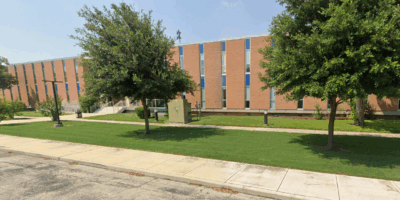
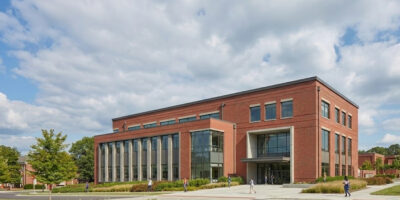
- Campus: students learn in the D.M. Bowman Academic Hall on the Meritus Health campus near Hagerstown, at 11120 Health Drive, and live in the adjacent Meritus Commons.
- Size: the inaugural Class of 2029 had 94 first-year students; future classes are planned at 180 students, for 720 students at capacity.
- Grading: pass/fail.
What MSOM Does Not Have Yet
Being honest about what does not exist yet helps you weigh the school fairly:
- No residency match data or board pass rates. The first class graduates in 2029. MSOM plans to publish COMLEX pass rates, match and placement data, graduation rates and retention rates in the future.
- No alumni. There are no MSOM graduates yet.
- No federal aid yet. See the financial aid section below.
- Limited admissions history. Only two classes have been admitted.
None of that makes MSOM a bad choice. A hospital-founded school with experienced leadership, a defined clinical network and Meritus Medical Center’s residency programs next door has real strengths. It does make MSOM a choice to make deliberately.
Medical Programs and Affiliations
The DO Program
MSOM offers one degree: the four-year Doctor of Osteopathic Medicine. There are no combined degree programs at this stage. High-achieving students can add certificate courses, such as Health Data Services and Health Equity and Quality Improvement, during the program.
The Pathways Program
The MSOM Pathways Program is a guaranteed interview partnership with selected undergraduate institutions. It is currently available to undergraduates and recent alumni of:
- University of Maryland
- Frostburg State University
- Harrisburg University of Science and Technology
- Samuel Merritt University
- Shepherd University
- Susquehanna University
To qualify, you must be enrolled at or have graduated within the last two years from a partner institution when you apply, be in good academic, professional and disciplinary standing, meet MSOM’s minimum academic requirements (coursework, GPA and MCAT expectations) and receive a strong letter of recommendation from the partner institution. Participants get a guaranteed interview for the DO program, opportunities to meet admissions staff and current students, priority access to MSOM pre-admission events such as MCAT and interview preparation workshops, and DO student shadowing opportunities. Fifteen percent of MSOM’s inaugural class were University of Maryland alumni.
A guaranteed interview is not a guaranteed seat, so treat the pathway as a head start, not a promise. If you attend one of the partner schools, contact your health professions advising office early.
Hospital Collaboration and Clinical Affiliates
MSOM’s defining affiliation is its parent health system. Meritus Medical Center is a Joint Commission-accredited academic medical center that already trains residents and nurses and hosts more than 1,000 health professions students each year. Clinical rotations extend to a network of hospitals and clinics across Maryland, Pennsylvania and West Virginia, described in the clinical rotations section below.
Curriculum Overview
Structure
MSOM uses a systems-based, clinically integrated curriculum built on team-based learning (TBL). In TBL, you prepare with pre-recorded lectures and readings, take readiness assurance tests in class, and then work through application exercises in teams with immediate feedback. The curriculum is aligned with the American Osteopathic Association’s seven osteopathic core competencies and graded pass/fail.
Pre-Clinical Phase (Years 1 and 2)
The first two years begin with an eight-week foundations in biomedical sciences course. You then move through the organ systems, studying normal structure and function first (anatomy, physiology and biochemistry) and then pathophysiology, microbiology, disease processes, pharmacotherapeutics and treatment. Across the two years you complete:
- 14 integrated systems courses
- 4 Osteopathic Principles and Practice courses
- Clinical Skills I to IV, covering the history and physical exam, documentation, order writing, basic procedures and case presentations, with early clinical exposure through standardized patients and simulation
- Interprofessional Education I to IV
- Research I to IV
- a capstone review and board preparation course
Topics such as pediatrics and geriatrics, research methods, community health and nutrition, social determinants of health and interprofessional education are woven through the preclinical years.
Distinctive Features
- Virtual anatomy: MSOM teaches anatomy with a mixed and augmented reality platform and holographic imaging rather than cadaver dissection, one of only a few osteopathic schools to do so.
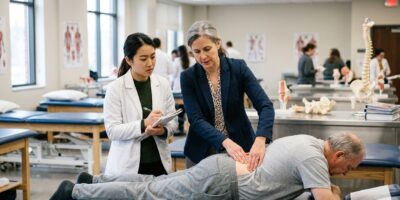
- Hands-on OMT: students learn the full osteopathic examination and osteopathic manipulative treatment in a dedicated lab, and OMT is expected throughout the clerkships. If you are new to the topic, our article on explaining osteopathic manipulative medicine to skeptics is a good primer.
- Simulation Center: scheduled simulations with manikins and standardized patients in a simulation hospital, a standardized patient center and a VR immersion room. MSOM received a $500,000 grant for its Simulation Center.
- Dedicated research time: one day per week for team research projects with faculty mentors. Students complete research ethics (CITI) training first, and all groups present their work.
- Embedded board preparation: COMLEX-style questions run from the first week to graduation, supported by TrueLearn COMBANK and ScholarRx, which are included in the comprehensive fee.
- Precision education: MSOM was one of 11 teams, and the only osteopathic school, to receive an American Medical Association precision education grant ($1.1 million over four years) to use data and technology to identify and close learning gaps early.
- Academic support: learning styles are assessed during orientation, and students work with educational skills specialists, academic advisors, tutors and a Students at Risk committee.
- Nutrition education: MSOM has joined a national nutrition education initiative, and its associate dean of academic affairs contributes to national COMAT nutrition exam development.
Clinical Phase (Years 3 and 4)
The third and fourth years consist of 20 clinical clerkships under the supervision of clinical faculty, ranging from preceptorships in physician offices to inpatient team roles. Rotations emphasize underserved and rural communities, team-based care, and the family and social circumstances that affect health. Osteopathic principles and practice are integrated into every required clerkship, and students return for grand rounds, OMM and clinical workshops, DO days and research days. Dedicated COMLEX preparation time is built into the curriculum.
Admissions Requirements and Application Process
Selection Factors, GPA and MCAT Requirements
For the 2026-2027 cycle, MSOM describes its requirements and its most competitive candidates as follows:
- Competitive academic profile: a minimum overall GPA of 3.5, a science GPA of at least 3.5, and an MCAT at or above the 50th percentile.
- MCAT window: scores from exams taken on or after January 1, 2023.
- Degree: a Bachelor of Arts or Science from a U.S. college or university accredited by a U.S. Department of Education-recognized agency, completed by the end of June 2027.
- Citizenship: U.S. citizen or permanent U.S. resident. MSOM does not accept students who need an F-1 visa, does not consider DACA applicants and is not seeking approval to accept international students.
- Technical standards: you must meet MSOM’s technical standards for admission and continued enrollment.
Note the phrasing. MSOM describes the GPA and MCAT figures as the profile of its most competitive candidates rather than as hard cutoffs. The practical reading is the same either way: a 3.5/3.5 with a median-or-better MCAT is the application the school is asking for.
Beyond the numbers, MSOM’s committee screens for academic achievement, clinical involvement, interpersonal skills, leadership, service, perseverance, maturity, grit and knowledge of the osteopathic profession. It considers your personal statement, letters, health-related work, research and volunteer experience. MSOM does not require CASPer, AAMC PREview or another situational judgment test, and it does not require a physician letter, although it prefers one. It accepts either virtual or in-person shadowing.
Letters of Recommendation
MSOM requires two letters:
- Preferably one from an osteopathic physician (DO) or an allopathic physician (MD).
- One from a premedical advisory committee, or from a science faculty member with a terminal degree in a relevant discipline at the institution where you earned your bachelor’s degree, who knows your academic work.
If you have been out of school for more than five years and cannot get a letter from a science faculty member or prehealth advisor, you may substitute a letter from a health care professional or supervisor who can speak to your academic aptitude, work ethic and readiness for medical school. Letters go through AACOMAS.
Two letters is fewer than many schools ask for, which raises the stakes on each one. A generic letter from a physician who barely knows you is worth less than a specific one from someone who supervised you closely. Ask early, and give your writers your personal statement, your activities list and a reminder of specific things you did with them.
Prerequisite Coursework
All prerequisites must be completed with a grade of C or better before May 2027.
| Course | Credits | Courses that qualify |
|---|---|---|
| English I and II | 3 each | Composition, creative writing, journalism, literature, poetry, rhetoric, technical or scientific writing, medical terminology |
| Physics I and II with lab | 4 each | General physics (algebra- or calculus-based) or physical chemistry, with labs |
| General Chemistry I and II with lab | 4 each | General, inorganic, physical or analytical chemistry, with labs |
| Biology/Zoology I and II with lab | 4 each | Biology, zoology, molecular or cell biology, anatomy and physiology, anatomy, physiology, microbiology or pathology, with labs |
| Organic Chemistry I and II with lab | 4 each | Organic chemistry, bioorganic chemistry or biochemistry, with labs |
Two things stand out. First, the qualifying-course lists are fairly broad: biochemistry with lab can count toward the organic chemistry requirement, and anatomy and physiology can count toward biology. Second, MSOM recommends electives in anatomy and physiology, behavioral science, biochemistry, genetics, immunology, microbiology, molecular biology, multicultural studies, physiology, public health or epidemiology, pathology and pharmacology, and it says that anatomy and physiology, biochemistry, microbiology and physiology are highly preferred. MSOM accepts online coursework, online labs and pass/fail prerequisite grades, but strong letter grades in the preferred upper-level sciences are the best evidence of readiness for an integrated systems curriculum.
Applying Through AACOMAS
MSOM participates in the centralized AACOMAS application service. The process:
- Submit AACOMAS. Send official transcripts from every institution directly to AACOMAS and release your MCAT scores to AACOMAS. MSOM does not accept transcripts from applicants. You can submit before your MCAT score is available, but your file is not complete until the score is on file.
- Verification. MSOM reviews your application once AACOMAS places it in Verified status. Check your AACOMAS portal often for missing items.
- Secondary application. MSOM sends every AACOMAS applicant an invitation to the secondary. Complete the short answers and the survey and pay the $50 fee, or submit your AACOMAS fee waiver documentation.
- Screening and interview. Applicants who pass screening are invited to interview. Interview day attendance is mandatory for admission.
- Decision. After the interview, the Admissions Committee reviews your full file and recommends acceptance, rejection or the waitlist to the Dean. Applicants are notified within four to six weeks after the Dean finalizes recommendations.
- Enrollment. Admitted applicants accept the offer and pay two enrollment deposits within the stated timeframe.
Your Application Timeline
| Step | Date |
|---|---|
| Earliest secondary submission | May 4, 2026 |
| Secondary invitations released | July 2026 (applicants reported receiving them from July 6) |
| Earliest acceptances | May 4, 2026 |
| AACOMAS application verified and received by MSOM | April 30, 2027, 11:59 p.m. EST |
| Secondary application submitted | May 7, 2027, 11:59 p.m. EST |
| Orientation and start | July 20, 2027 |
A practical month-by-month plan:
- Spring 2026 or earlier: take the MCAT so your score is at or above the 50th percentile and arrives early; ask your two letter writers.
- May to June: submit AACOMAS as soon as it opens; rolling review favors early files.
- July to August: complete the secondary within two weeks of the invitation.
- Fall and winter: prepare for interviews; send updates through AACOMAS academic update windows if you have new grades.
- Before you deposit: meet with financial aid about private loans and the status of federal aid.
Deposits and Deferral
Accepted students pay two enrollment deposits: a $2,500 acceptance deposit and a $1,000 additional deposit, both applied to tuition. MSOM describes the enrollment deposits as non-refundable. The standard osteopathic deposit schedule applies: applicants accepted before January 14 have 30 days, those accepted between January 15 and April 30 have 14 days, and those accepted after May 1 may be asked for an immediate deposit. Confirm the exact amounts and refund terms in your offer letter.
Tuition, Cost of Attendance and Financial Aid
Read This First: MSOM Is Not Yet Eligible for Federal Student Aid
This is the most consequential financial fact for MSOM applicants. MSOM is not yet approved to participate in federal student aid programs under Title IV of the Higher Education Act. The U.S. Department of Education does not allow a new school to apply until its program has started, so MSOM submitted its application in 2025, and that application is under review. MSOM anticipates being able to offer a federal student loan option midway through the 2026-2027 academic year, and it will notify students when approval comes through. Approval can take six to twelve months or longer.
Until then, students use private educational loans from lenders such as those on MSOM’s FastChoice list, local banks or credit unions, or pay out of pocket. Work through what that means before you apply:
- No federal Direct Unsubsidized Loans until approval. Private educational loans are the route instead.
- Private loans are credit-based. Approval and interest rate depend on your credit history, and many students need a creditworthy co-signer with documented income.
- In-school payments. MSOM notes that lenders may require a payment of $25 or $50 per month while you are enrolled.
- Income-driven repayment does not apply to private debt. The federal repayment plans that make six-figure borrowing manageable during residency are a feature of federal loans.
- Federal forgiveness programs generally do not cover private loans. If you plan to rely on Public Service Loan Forgiveness or a federal repayment program, private debt does not automatically qualify.
- No payment plans. MSOM does not offer payment plans, though you can prepay; tuition is billed by July 1 for fall and December 1 for spring.
Once MSOM is approved, students can file the FAFSA each year. For 2026-2027, the annual federal Direct Unsubsidized Loan limit for osteopathic medicine students is $50,000 (about $49,471 net after the loan fee). Federal loan limits for new borrowers have changed, so ask which limits will apply to you.
Confirm MSOM’s current Title IV status directly with the financial aid office before you deposit. Ask which academic years federal aid will cover, and what happens to private loans already taken if approval comes through mid-program.
Cost of Attendance
MSOM publishes estimated budgets for three academic years. If you are admitted this cycle, you start in July 2027, so the 2027/2028 estimate is the one that applies to your first year.
| Item | 2025/2026 | 2026/2027 | 2027/2028 |
|---|---|---|---|
| Tuition | $55,000 | $56,100 | $59,500 |
| Comprehensive fee | $3,500 | $4,500 | $4,500 |
| Housing (Meritus Commons) | $24,132 | $24,132 | $24,856 |
| Food (billed) | $4,000 | $4,000 | $2,000 |
| Federal Direct Loan fees | $430 | $430 | $529 |
| Direct cost total | $87,062 | $89,162 | $91,385 |
| Books and supplies | $1,500 | $1,500 | $1,500 |
| Food (additional) | $1,570 | $1,945 | $3,945 |
| Transportation | $300 | $500 | $500 |
| Personal care | $4,500 | $4,500 | $4,500 |
| Health insurance | $4,700 | $5,100 | $5,500 |
| Indirect cost total | $12,570 | $13,545 | $15,945 |
| Total estimated cost of attendance | $99,632 | $102,707 | $107,330 |
Source: MSOM Cost of Attendance. All costs are estimates and may increase each year at the discretion of MSOM and its Board of Directors.
A few things to notice:
- The comprehensive fee covers a lot. It includes a student laptop, software, virtual anatomy, library resources, medical equipment and curriculum supports such as TrueLearn and ScholarRx.
- Housing is built in. Students are required to live on campus in Meritus Commons for the first two years, so housing appears as a direct cost billed by MSOM.
- Tuition is the same for everyone. MSOM does not charge different rates for Maryland residents.
- The federal loan fee line reflects the cost of federal loans once MSOM is approved; it does not mean federal aid is available today.
Over four years, budget for well over $400,000 in total cost of attendance, before interest on loans.
Scholarships
MSOM lists scholarship options on its scholarship information page. CareFirst BlueCross BlueShield awarded MSOM a $400,000 grant that funds four partial merit scholarships for the 2026-2027 academic year, based on academic performance and MCAT scores, with $100,000 a year through 2027. Service-based programs such as the military Health Professions Scholarship Program and loan repayment programs for practice in shortage areas are also worth investigating, because they reward the kind of career MSOM’s mission encourages.
Financing Without Federal Loans: What to Actually Do
- Ask financial aid three questions before you deposit: Is Title IV approval in place yet? If not, what is the latest expected date? Will federal loans be available for my first year?
- Check your credit and line up a co-signer early if you will need one; compare at least three lenders on rate, fees, in-school payment requirements, deferment during residency and co-signer release.
- Borrow only what you need. Private loans have fewer protections, so build a lean budget, especially in the first year.
- Apply for every scholarship you can, including MSOM’s merit awards and outside scholarships.
- Plan for refinancing or consolidation once federal aid is available; ask how MSOM will handle students who borrowed privately before approval.
Campus Facilities and Student Life
Studying in Hagerstown
Hagerstown is the largest city in Western Maryland, set in a rural region where the Appalachian foothills meet farmland, about 70 miles from both Washington, D.C. and Baltimore. The cost of living is lower than in the big cities nearby, and you are within reach of the Appalachian Trail, the C&O Canal and Antietam National Battlefield. For applicants from the D.C. and Baltimore areas, it is close enough to stay connected while training in a smaller community.
Facilities
- D.M. Bowman Academic Hall: the academic building on the Meritus Health campus, with team-based learning classrooms, the virtual anatomy lab and the OMT lab.
- Simulation Center: a simulation hospital, standardized patient center and VR immersion room.
- Meritus Medical Center: the 327-bed teaching hospital next door, with a level III trauma program, primary stroke center, cancer center and advanced imaging and robotic surgery.
- Conference center, library and fitness center on campus.
Meritus Commons Housing
Students are required to live on campus for the first two years. The adjacent Meritus Commons provides student housing in 340 one- and two-bedroom apartments, with a clubhouse, commons area and dog park. Living together makes it easier to form study groups and support networks in a new school, but it also means your housing cost is fixed for the first two years. Factor that into your budget and any plans to live with a partner or family.
Student Life and Support
MSOM students lead the Student Government Association, serve as class representatives and join professional societies and interest groups. The school organizes students into Houses that build community through mentorship and friendly competition. Wellness resources include learning specialists, faculty advisors, career counselors, academic counseling and mental health services in person and virtually, wellness workshops, an on-site fitness center, and weekly yoga and meditation. Service and outreach are integrated into the curriculum, and the school has run a free MCAT boot camp for aspiring doctors and taken students to Capitol Hill to advocate for rural health care.
Clinical Rotations and Research Opportunities
Clinical Affiliates and Rotation Sites
MSOM lists these clinical partners for rotations:
Maryland:
- Meritus Medical Center, Hagerstown: more than 300 beds, level III trauma, primary stroke center, special care nursery, cancer center and advanced imaging and robotic surgery.
- Ascension Saint Agnes Hospital, Baltimore: a full-service teaching hospital and regional referral center.
- Brook Lane, Hagerstown: a nonprofit mental health system with a 58-bed hospital, partial hospitalization programs and outpatient services.
- CalvertHealth, Southern Maryland.
- Carroll Hospital, Westminster: a 168-bed hospital in the LifeBridge Health system.
- Greater Baltimore Medical Center (GBMC), Towson.
- Johns Hopkins Community Physicians, Hagerstown: family medicine, internal medicine, pediatrics and pediatric cardiology.
- Mountain Laurel Medical Center: a federally qualified health center serving rural Western Maryland.
- TidalHealth, Salisbury: about 300 beds on the Eastern Shore.
- UPMC Western Maryland, Cumberland: a 165-bed hospital serving Allegany and Garrett Counties and nearby West Virginia and Pennsylvania.
Pennsylvania:
- Fulton County Medical Center, McConnellsburg: a 21-bed critical access hospital.
- Keystone Health, Franklin County: the county’s only federally qualified community health center, founded to care for migrant agricultural workers.
West Virginia:
- VA Martinsburg Healthcare System: a 475-bed VA medical center serving more than 70,000 veterans.
The spread matters. Sites run from Baltimore to the Eastern Shore to rural Western Maryland and southern Pennsylvania, so expect to travel or relocate for some rotations. Ask at your interview how placements are assigned, how far students typically travel, whether housing is provided at distant sites, and how the school is adding capacity as classes grow from about 90 to 180 students.
Residency Preparation
MSOM has an Associate Dean of Graduate Medical Education, and Meritus Medical Center already sponsors residency programs. Because the first class has not reached the match yet, there is no residency placement data. When you compare MSOM with established schools, weigh its advising structure and hospital partners rather than a match list. To understand how the match works, see our guide to DO vs MD and what the difference means for your application.
Research
Research is unusually structured for a new school. One day each week is set aside for team research projects, with student groups assigned to faculty mentors. Every project includes research questions on the social determinants of health for marginalized populations. Students complete CITI training and introductory methods before starting, and all groups present their work, including at MSOM’s Scholar-Con research event. The Associate Dean of Research leads the program and the school’s AMA-funded precision education project.
Notable Alumni, Faculty, Leadership and Admissions Staff
MSOM has no alumni yet; its first class graduates in 2029. Leadership matters more at a new school than at an established one, and MSOM’s leaders have built and run osteopathic programs elsewhere.
Mission and Leadership
Brian Kessler, DO, DHA, FACOFP dist. Dean and Chief Academic Officer. Dr. Kessler previously served as dean and professor of family medicine at Campbell University’s Jerry M. Wallace School of Osteopathic Medicine in North Carolina, as dean at Lincoln Memorial University in Tennessee, and as director of medical education at Cleveland Clinic South Pointe Hospital in Ohio. He earned his DO and his Doctor of Healthcare Administration from the Lake Erie College of Osteopathic Medicine. He serves on the board of the National Board of Osteopathic Medical Examiners (NBOME) and on COCA, where he was named vice chairman in 2025, and he is immediate past president of the American College of Osteopathic Family Physicians.
Maulik Joshi, DrPH. President and Professor of MSOM and President and CEO of Meritus Health. He leads the health system that founded the school, which was a 2025 national finalist for the Malcolm Baldrige National Quality Award. He earned his DrPH and MHSA at the University of Michigan and co-edited The Healthcare Quality Book.
Dave Lehr. Chief Operating Officer of MSOM and Chief Strategy Officer of Meritus Health, and a commissioner on Maryland’s Community Health Resources Commission.
Josh Repac. Chief Financial Officer and Vice President for Meritus Health and MSOM, and a certified public accountant.
Academic and Clinical Deans
Aaron George, DO. Associate Dean of Clinical Education. A graduate of the Philadelphia College of Osteopathic Medicine, he completed family medicine residency at Duke University Medical Center and was an Andlinger Fellow in health policy. He oversees the clinical rotation network.
Samuel Kadavakollu, PhD. Associate Dean of Academic Affairs. He holds a PhD in medicinal chemistry and helped establish two start-up osteopathic schools, CHSU College of Osteopathic Medicine and Burrell College of Osteopathic Medicine. He leads the TBL curriculum and contributes to national COMAT nutrition exam development.
Bradley Miller, DO. Associate Dean of Graduate Medical Education. A PCOM graduate who trained in family medicine at Geisinger Medical Center, he is board certified in family medicine and a member of the American Society of Addiction Medicine.
Audrey Vasauskas, PhD. Associate Dean of Research. An NIH-funded pulmonary physiology researcher, she previously led research at Baptist Health Sciences University’s osteopathic college and the Alabama College of Osteopathic Medicine, and she is principal investigator on MSOM’s AMA precision education grant.
Admissions and Student Services
Chanté Richardson, PhD, MBA. Associate Dean of Student Services and Community Engagement. She leads student services and the Pathways Program partnerships, and she previously chaired the Institutional Diversity Council at the Alabama College of Osteopathic Medicine.
The Office of Admissions can be reached at [email protected] or (301) 790-8400. MSOM hosts tours and events during the cycle; attending one is a good way to meet staff before you apply.
Admissions Statistics and Class Profile
Class Size and Growth
- Inaugural class, July 2025: 94 first-year students in the Class of 2029, which MSOM describes as more than 90.
- Second class, July 2026: the Class of 2030 arrived in July 2026; MSOM has not published its size. With its second class, MSOM enrolls about 230 medical students.
- Planned future classes: 180 students, for 720 students at full capacity.
Doubling the class is a substantial scaling exercise and the right subject for questions on interview day. Clinical rotation capacity is the constraint that binds hardest when a medical school grows, so ask how many sites are secured, how placements are assigned and how the school is expanding faculty and student support alongside enrollment.
Inaugural Class Profile
The inaugural Class of 2029 at a glance:
- 94 first-year matriculants: 32 men, 61 women and 1 other
- 25 Maryland residents and 69 from out of state
- Self-reported race and ethnicity: 37.2% White, 34.0% Asian, 13.8% Black or African American, 6.4% multiple races, 5.3% Hispanic or Latino, 3.2% undisclosed
- 85.1% science majors and 14.9% non-science majors; 12.8% with graduate degrees
- 15% University of Maryland alumni (per MSOM’s Pathways announcement)
- mean MCAT 500.5 and average cumulative GPA 3.55 (school-reported, cohort not stated)
The out-of-state share is notable: nearly three in four inaugural students came from outside Maryland. MSOM is not a Maryland-residents school, but its mission rewards applicants who can explain why they would train and stay in the region.
Acceptance Rate
MSOM does not publish applicant, interview or offer counts, so there is no verified acceptance rate. Be wary of figures you see elsewhere; any acceptance rate for MSOM that is not published by the school is an estimate.
What MSOM’s Match Rate Is
There is no match rate yet. The first class graduates in 2029. MSOM’s Outcomes page is reserved for future COMLEX pass rates, match and placement data, and graduation and retention rates.
Tips and Strategies for Admission
Why Osteopathic Medicine, and Why That Question Matters
Every osteopathic school wants to know why you chose DO training, and a new school with a strong osteopathic identity will ask it in some form at the interview. Have a substantive answer that rests on experience: time with a DO, OMT you have seen or received, and a clear sense of how osteopathic training fits the kind of physician you want to be. Our guide on DO vs MD and what the difference means for your application can help you frame it without disparaging either path.
Is MSOM Right for You?
MSOM is a strong fit if:
- you want to practice in Western Maryland, the Mid-Atlantic or rural and small-city communities;
- you learn well in team-based, active formats and are comfortable with virtual anatomy instead of cadaver dissection;
- you want early, structured research on social determinants of health;
- you are comfortable joining a school while it builds its track record, and you have a plan to finance school with private loans if federal aid is delayed.
It may be a weaker fit if you need federal loans from day one, want a long match history before you commit, or strongly prefer cadaver-based anatomy.
Show Grit and Perseverance With Evidence
MSOM explicitly screens for perseverance, maturity and grit, and its secondary includes a Grit Scale survey. Your application should show sustained commitments: a job you kept through school, a volunteer role you held for years, or a setback you recovered from. Long-term clinical work is especially persuasive. Structured clinical internships for pre-med students, in which you take vitals, assist with intake and triage and help with patient care under supervision, can add depth to an experiences section that is otherwise thin.
Connect Your Story to Community Health
The first secondary question asks how your values align with being socially responsible and community-oriented. Collect specific examples now: free clinics, health fairs, community health workers you assisted, or service in rural areas. Global clinical experience can also count when you describe what you learned about access and continuity of care; many applicants use pre-med internships abroad to see how limited resources shape care.
Apply Early
MSOM sends every AACOMAS applicant a secondary and reviews files on a rolling basis. Submit AACOMAS in May or June, return the secondary within two weeks, and keep your AACOMAS portal clean so your file reaches Verified status quickly.
Use Your Summers Well
If you are a year or two from applying, plan pre-med summer internships or clinical jobs that build hours steadily, and line up a DO or MD who can write you a detailed letter.
If You Are Not Competitive Yet
If your GPA or MCAT sits well below MSOM’s competitive profile, the most efficient fixes are:
- Retake the MCAT after a structured study plan if you are below the 50th percentile.
- Add upper-level science coursework, ideally in MSOM’s highly preferred courses (anatomy and physiology, biochemistry, microbiology and physiology), through a post-baccalaureate or special master’s program.
- Build sustained clinical experience through a medical assistant, scribe or EMT job, or pre-med gap year programs that give you substantial patient contact.
- Reapply with a clear story of change. MSOM’s second secondary question asks reapplicants exactly what improved.
Secondary Application Questions, Example Responses and Analysis
Writing Your Secondary for a Workforce-Mission School
MSOM’s 2026-2027 secondary includes three short-answer questions of up to 750 characters each and a short survey that applicants call the Grit Scale. MSOM describes the secondary as including two required short answer questions and a short survey; the third question applies only if you have had notable academic distress or a gap in your education, and the reapplicant question needs a full answer only if you have applied before. The fee is $50, waived with an AACOMAS fee waiver. Return it within two weeks of receiving it, and no later than May 7, 2027.
Seven hundred fifty characters is about 110 to 130 words. Every sentence has to work. Use one concrete example per answer, skip introductions, and do not repeat your personal statement.
Question 1: Values and MSOM’s Mission (750 characters)
How do your values align with MSOM’s mission of preparing physicians to be socially responsible and community-oriented?
What it asks: How your values match two specific ideas in the mission. The committee wants evidence that you already act on them.
Approach: define each value through one thing you did; connect it to where and how you want to practice; name one MSOM feature that fits.
Worked example (illustrative example, not an actual applicant essay):
At the free clinic in Cumberland where I volunteered for two years, I checked in patients who had driven an hour for a blood pressure refill. Social responsibility, to me, means noticing those gaps and acting on them. I helped start a monthly evening clinic for shift workers and recruited classmates to staff it. Community orientation means staying. I am from Western Maryland, and I want to train where I hope to practice. MSOM’s rotations at Meritus Medical Center, Mountain Laurel and UPMC Western Maryland match that plan.
(527 characters including spaces.)
Why it works: It defines both values in action (spotting an access gap and starting an evening clinic; planning to stay in Western Maryland) and ties the plan to real MSOM rotation sites. In 750 characters there is no room for a long story, so it uses one setting and one concrete action.
Mistakes to avoid: quoting the mission back without evidence, listing values with no example, naming sites you have not researched, and running past 750 characters.
Question 2: Reapplicants (750 characters)
Have you previously applied to MSOM? If yes, please describe how your application has changed or improved since your last submission.
What it asks: Whether you are a reapplicant and, if so, what is different. If you have not applied before, a simple “No” is enough.
Approach: name the weakness, show the fix and point to evidence.
Worked example (illustrative example, not an actual applicant essay):
Yes, I applied in the 2025-2026 cycle. My MCAT was below MSOM’s 50th percentile target, so I studied for six months and raised my score by eight points. I also lacked sustained clinical work. I now work full time as a medical assistant in a rural family practice in Hagerstown, rooming patients, taking vitals and helping a DO with procedure setup. Working beside her clarified why I want osteopathic training, and my new personal statement explains it with specific patients instead of general goals.
(501 characters including spaces.)
Why it works: It identifies two gaps, gives measurable changes and explains how the new experience changed the application itself.
Mistakes to avoid: listing activities without linking them to a weakness, blaming the prior cycle and vague claims of growth.
Question 3: Academic Distress or Education Gap (750 characters)
If you experienced a period of notable academic distress or a gap in your education (such as multiple course failures or complete withdrawal), please explain.
What it asks: An explanation of a significant academic disruption, if you had one. The examples in the prompt (multiple failures, complete withdrawal) set the threshold; a single B-minus does not need explaining.
Approach: state what happened in one or two sentences, show the repair, and end with what your record since then demonstrates.
Worked example (illustrative example, not an actual applicant essay):
In my sophomore spring, I withdrew from all classes after my father’s stroke so I could help care for him and run his small business. I returned that summer, retook organic chemistry and earned an A, and completed every science course since with a 3.8 GPA while working 15 hours a week. Caring for my father taught me to plan around limited time, and my steady record since then shows I can manage a demanding curriculum.
(421 characters including spaces.)
Why it works: It is brief and factual, shows recovery with numbers, and connects to the perseverance MSOM screens for.
Mistakes to avoid: oversharing medical details, sounding defensive, explaining minor dips that do not meet the threshold, and leaving out the recovery.
The Grit Scale Survey
Below the short answers, MSOM’s secondary includes a brief self-report questionnaire that applicants have described as a personality-style “Grit Scale.” Answer it honestly and consistently with the rest of your application. It is not something to game; the committee already screens for perseverance through your experiences and letters.
Interview Format and How to Prepare
Format
Invited students take part in a virtual and in-person interview, and interview day attendance is mandatory for admission. Expect a traditional, conversational interview, and follow the format and instructions in your invitation. MSOM describes interview day as a two-way process: the committee decides whether you fit MSOM, and you decide whether MSOM fits you.
How to Prepare
- Know why MSOM. Be specific: the Western Maryland mission, Meritus Health’s academic system, TBL and virtual anatomy, research day each week, and the rotation network.
- Know why osteopathic medicine. Expect the question in some form; answer with real experiences.
- Prepare for mission questions. Have examples of social responsibility, community engagement and perseverance.
- Prepare questions for them. Interview day is the place to ask about:
- federal aid approval timing and how students are financing their first year;
- accreditation progress and the timeline for provisional accreditation;
- how clinical rotation sites are assigned and how far students travel;
- how the school will support 180-student classes;
- residency advising for the first graduating class.
- Practice your setup for any virtual portion: camera, lighting, sound and a quiet room.
If you want structured practice, IMA’s admissions consulting includes mock interviews.
Frequently Asked Questions About the Meritus School of Osteopathic Medicine
Is MSOM accredited?
MSOM holds pre-accreditation from the Commission on Osteopathic College Accreditation (COCA), the status a new osteopathic college holds when it starts admitting and teaching students. Schools typically progress to provisional and then full accreditation as their first classes advance. Check MSOM’s current standing with COCA before you apply.
Can I get federal student loans at MSOM?
Not yet. MSOM applied to participate in federal student aid in 2025, and the application is under review. MSOM anticipates offering a federal loan option midway through the 2026-2027 academic year. Until approval, students use private educational loans or pay out of pocket. Confirm the current status with financial aid before you deposit.
How much does MSOM cost?
For students starting in July 2027, MSOM estimates 2027-2028 tuition of $59,500, a comprehensive fee of $4,500, and a total cost of attendance of $107,330, including required on-campus housing, food, health insurance and other costs.
What GPA and MCAT does MSOM want?
MSOM says its most competitive candidates have an overall GPA of at least 3.5, a science GPA of at least 3.5 and an MCAT at or above the 50th percentile. MCAT scores from January 1, 2023 or later are accepted. Its matriculants have a mean MCAT of 500.5 and an average GPA of 3.55.
How big is MSOM’s class?
The inaugural Class of 2029 had 94 first-year students. A second class started in July 2026, and future classes are planned at 180 students, for 720 students at capacity.
Does MSOM interview virtually or in person?
Invited applicants take part in a virtual and in-person interview, and interview day attendance is mandatory. Follow the format in your invitation.
What is the MSOM Pathways Program?
A guaranteed interview partnership for current students and recent alumni (within two years) of the University of Maryland, Frostburg State, Harrisburg University of Science and Technology, Samuel Merritt University, Shepherd University and Susquehanna University who meet MSOM’s academic requirements and receive a strong letter from their institution.
What prerequisites does MSOM require?
Two semesters each of English, physics with lab, general chemistry with lab, biology or zoology with lab, and organic chemistry with lab, with a C or better, completed before May 2027. Biochemistry with lab can count toward organic chemistry. Anatomy and physiology, biochemistry, microbiology and physiology are highly preferred.
How many letters of recommendation does MSOM need?
Two: preferably one from a DO or MD, and one from a premedical committee or a science faculty member at your degree-granting institution. If you have been out of school more than five years, a health care professional or supervisor can substitute for the academic letter.
How much is MSOM’s secondary application fee?
MSOM’s current admissions page lists a $50 non-refundable secondary fee, waived if you have an approved AACOMAS fee waiver. Confirm the amount shown in your secondary invitation.
How many secondary questions does MSOM ask?
Three short answers of up to 750 characters: how your values align with MSOM’s mission, whether you have applied before and what changed, and an explanation of any notable academic distress or gap. There is also a short Grit Scale survey.
Does MSOM accept international applicants?
No. Applicants must be U.S. citizens or permanent residents. MSOM does not accept students who need an F-1 visa, is not seeking approval to enroll international students and does not consider DACA applicants.
Where is MSOM located?
On the Meritus Health campus near Hagerstown, Maryland, about 70 miles from both Washington, D.C. and Baltimore. Students live in the adjacent Meritus Commons for the first two years.
What is MSOM’s match rate?
There isn’t one yet. The first class started in July 2025 and graduates in 2029, so no residency match data, board pass rates or graduate outcomes exist. MSOM will post them on its Outcomes page when they are available.
Who is the dean of MSOM?
Brian Kessler, DO, DHA, FACOFP dist., former dean of Campbell University’s osteopathic school, a COCA commissioner and vice chairman, and immediate past president of the American College of Osteopathic Family Physicians.
Does MSOM use cadavers?
No. MSOM teaches anatomy with virtual and holographic technology rather than cadaver dissection.
How can I strengthen my clinical experience before applying to MSOM?
Choose sustained, hands-on roles: medical assisting, scribing, EMT work or community clinic volunteering. Supervised clinical internships can add patient contact and stories about access to care that fit MSOM’s community-oriented mission.
Related Medical School Guides
Exploring Other Schools
MSOM should not be the only osteopathic program on your list, and a list built entirely of new colleges carries more risk than most applicants realize. Build a balanced list across new and established schools. Start with our DO school rankings, then compare these guides:
- Edward Via College of Osteopathic Medicine (VCOM): a large, established DO school with a Virginia campus and a rural, Appalachian service mission similar to MSOM’s.
- UIW School of Osteopathic Medicine: a mission-driven DO school serving underserved communities, useful for comparing a young school’s outcomes.
- Oklahoma State University College of Osteopathic Medicine: a public DO school known for rural medicine training.
- Arkansas College of Osteopathic Medicine (ARCOM): a newer DO school with a regional workforce mission.
- Alabama College of Osteopathic Medicine: a DO school focused on primary care in a rural region.
- Burrell College of Osteopathic Medicine: another school MSOM’s associate dean of academic affairs helped launch.
Other osteopathic programs and nearby medical schools worth comparing:
- Philadelphia College of Osteopathic Medicine (PCOM)
- Rowan University School of Osteopathic Medicine
- West Virginia School of Osteopathic Medicine
- NYIT College of Osteopathic Medicine
- Touro College of Osteopathic Medicine
- Ohio University Heritage College of Osteopathic Medicine
- Campbell University School of Osteopathic Medicine (CUSOM), where MSOM’s dean previously served as dean
- Marian University College of Osteopathic Medicine
- Des Moines University College of Osteopathic Medicine
- Kentucky College of Osteopathic Medicine (KYCOM)
- A.T. Still University Kirksville College of Osteopathic Medicine
- Rocky Vista University College of Osteopathic Medicine
- Idaho College of Osteopathic Medicine
- Lake Erie College of Osteopathic Medicine (PA)
Maryland and nearby MD schools:
- Johns Hopkins University School of Medicine, whose community physician practice in Hagerstown is an MSOM rotation site
- University of Maryland School of Medicine
- George Washington University School of Medicine
- Georgetown University School of Medicine
- Howard University College of Medicine
How International Medical Aid Can Help
Admissions Consulting and Healthcare Internships
MSOM’s committee screens for clinical involvement, service, perseverance and knowledge of osteopathic medicine. International Medical Aid helps applicants build and explain each of those.
- Supervised clinical experience: our pre-med internships place students in hospitals and clinics in East Africa, South America and other regions, where interns take vitals, help with patient intake and triage, and assist with direct patient care under the supervision of local clinicians. We offer internships for pre-med students at different stages, including medical internships for undergraduates during school breaks.
- Perspective on access and community care: medical internships abroad show how limited resources, distance and cost shape care, which connects naturally to MSOM’s rural and community mission. Explore our healthcare internships abroad or broader pre-health internships if you are still choosing a path.
- Admissions consulting: school list strategy for new and established DO schools, AACOMAS personal statement review, MSOM’s 750-character short answers and mock interviews.
IMA programs do not create any affiliation with MSOM or an admissions advantage. They give you real experience and stories you can describe honestly. Your next step: choose an internship session that finishes before you submit AACOMAS.
Final Thoughts and Sources
The Meritus School of Osteopathic Medicine offers something unusual: a DO program built inside a community academic health system, with experienced leaders, a clear regional mission and a defined clinical network. It also asks applicants to accept the realities of a school in its first years: pre-accreditation, no outcomes yet and, for now, private loans instead of federal aid. If you are drawn to community-based medicine in the Mid-Atlantic and can finance the first year responsibly, it deserves a serious look.
Next steps: confirm your GPA and MCAT against the 3.5/3.5/50th percentile profile, ask a DO or MD and a science faculty member for letters, submit AACOMAS early, return the secondary within two weeks, and ask financial aid about federal aid status before you deposit.
Sources
Figures in this guide were checked on November 12, 2026, against these sources:
- MSOM Admissions Requirements: 2026-2027 deadlines, competitive profile, prerequisites, MCAT window, letters, citizenship and secondary materials.
- MSOM Admissions FAQ: letters, fee waivers, interview format and deposits.
- MSOM Cost of Attendance: 2025/2026, 2026/2027 and 2027/2028 estimates.
- MSOM Applying for Aid page and the MSOM 2026-2027 Academic Catalog and Student Handbook: Title IV status, COCA pre-accreditation, admissions process and international applicants.
- MSOM Leadership, Mission and Vision, Curriculum, Clinical Affiliates and Rotations, Pathways Program and Outcomes pages.
- MSOM news releases of September 29, 2025 (COCA role), October 6, 2025 (University of Maryland Pathways partnership), October 27, 2025 (CareFirst scholarships and class sizes), January 13, 2026 (AMA grant) and July 16, 2026 (second class).
- AACOM Choose DO Explorer, MSOM profile: 2025-2026 enrollment, school-reported mean MCAT and GPA, cycle dates and deposits (data submitted by the college).
- Current-cycle (2026-2027) secondary prompt wording as posted by applicants and prompt databases; the questions appear in your MSOM secondary.
Statistics are labeled with their class or academic year throughout. Where MSOM has not published a figure, such as applicant counts or outcomes, the guide says so rather than estimating it.
See more of our guides in your Google results: add International Medical Aid as a preferred source on Google.