The Paul L. Foster School of Medicine (FSOM) is the MD program of Texas Tech University Health Sciences Center El Paso, which now calls itself Texas Tech Health El Paso. It is the only health sciences center on the U.S.-Mexico border, and it trains physicians in El Paso, one of the largest binational metropolitan areas in the country. The Foster School of Medicine matriculated its first class in July 2009 and has since graduated more than 1,200 physicians.
The 2026-2027 application cycle is for students who will start medical school in summer 2027 as the Class of 2031. Foster applications go through the Texas Medical and Dental Schools Application Service (TMDSAS), which opened on May 1, 2026, with a submission deadline of October 1, 2026. The Foster secondary application closes on December 1, 2026, at 5 p.m. Mountain time. All facts in this guide were checked on November 10, 2026.
Foster is a school built around its border location. Every student studies medical Spanish, the curriculum is organized around clinical presentations, and students care for patients at a free clinic in Sparks, a community in far East El Paso. This guide covers the class profile, prerequisites, CASPer, 2026-27 tuition, the curriculum, interviews and all three 2026-2027 secondary essays, each with an original example and analysis.
Be an Informed Applicant
Every medical school has its own requirements and priorities. Knowing what Foster values, and what it requires on paper, helps you decide whether it belongs on your list and how to present yourself once it does. Whether you’re just starting to consider medical school or are in the middle of the application process, this guide will help you understand what sets Foster apart, learn its application requirements and deadlines, explore its programs and student life, and decide whether the school fits your goals and values.
Key Takeaways
- Texas residents fill about 90% of the class. As a Texas state school, Foster admits an entering class that is approximately 90% Texas residents. Only U.S. citizens and legal permanent residents can be considered.
- Academic context. The 2026 entering class had an average MCAT of 509 (range 500 to 522) and an average GPA of 3.86 (range 3.0 to 4.0). These are averages, not minimums.
- CASPer is required. Your CASPer score must reach Foster before you can be considered for an interview, and a score from a previous year does not count.
- The mission is the border. Foster focuses on “the unique healthcare needs of socially and culturally diverse border populations.” Two of the three secondary essays ask you to connect your story to that mission and to the student honor code.
- Key dates for 2026-2027. TMDSAS deadline October 1, 2026; secondary closes December 1, 2026 (5 p.m. MST); interviews begin July 1; pre-match offers start October 15; the TMDSAS Match is February 12, 2027.
- Costs. First-year tuition and fees for 2026-27 are $24,491.34 for Texas residents and $39,703.34 for nonresidents, before housing, food, books and health insurance.
- Distinctive training. Medical Spanish in every year of the pre-clerkship phase, a curriculum built on about 77 clinical presentations, a blended longitudinal integrated clerkship in year three and the Medical Student Run Clinic in Sparks.
- Next step. Submit TMDSAS early, schedule CASPer right away, return the $100 secondary quickly and prepare for a virtual multiple mini-interview.
Key Statistics About TTUHSC Paul L. Foster School of Medicine
The snapshot and table below bring Foster’s key numbers together. Each figure carries its entering class or academic year. Foster reports averages for its entering classes, and the table adds medians for accepted applicants in the 2025 entering class. The newest school figures describe the 2026 entering class (Entry Year 2026), which started medical school in summer 2026. The school’s class profile page gives a fuller breakdown for the 2025 entering class.

| Measure | Value | Cohort, population and source |
|---|---|---|
| School and degree | Texas Tech University Health Sciences Center El Paso (Texas Tech Health El Paso) Paul L. Foster School of Medicine; Doctor of Medicine (MD) | Foster School of Medicine Admissions |
| Campus | Medical Education Building, 130 Rick Francis St., El Paso, Texas | Foster School of Medicine Admissions |
| Accreditation | Fully accredited by the LCME; institution accredited by SACSCOC | FSOM Office of Medical Education, Accreditation |
| Application service | TMDSAS; submission deadline October 1, 2026 | TMDSAS Deadlines, Entry Year 2027 |
| Secondary application | $100, nonrefundable; closes December 1 at 5 p.m. MST | FSOM How to Apply |
| Secondary fee waiver | Not available | 2026-2027 cycle (AAMC MSAR, 2026 edition) |
| Applicants | 5,213 | 2026 entering class (FSOM 2026 Admission Statistics) |
| Interviewed | 695 | 2026 entering class (FSOM 2026 Admission Statistics) |
| Interviewed by residency | 637 Texas residents; 58 out-of-state; 0 international (total 695) | School-reported interview data (AAMC MSAR, 2026 edition) |
| Interviewed out of applicants | About 13.3% (695 of 5,213) | 2026 entering class; calculated from school figures. This is an interview share, not an acceptance rate. |
| Available seats | 138 | 2026 entering class (FSOM 2026 Admission Statistics) |
| Interviewees who enrolled | 20% | 2026 entering class (FSOM 2026 Admission Statistics) |
| Reapplicants among matriculants | 39% | 2026 entering class (FSOM 2026 Admission Statistics) |
| Average MCAT, matriculants | 509 (range 500 to 522) | 2026 entering class (FSOM 2026 Admission Statistics) |
| Average GPA, matriculants | 3.86 (range 3.0 to 4.0) | 2026 entering class (FSOM 2026 Admission Statistics) |
| Average experience hours, matriculants | 1,895 clinical; 1,080 research; 541 community service | 2026 entering class (FSOM 2026 Admission Statistics) |
| Entering class and residency mix | 130 matriculants: 119 Texas residents, 11 non-Texas residents | Entry Year 2025 (FSOM Class Profile) |
| Average GPA and MCAT, matriculants | GPA 3.84 overall, 3.81 science; MCAT 509 | Entry Year 2025 (FSOM Class Profile) |
| Median MCAT, accepted applicants | 514 (sections: 129 Chem/Phys, 127 CARS, 129 Bio/Biochem, 129 Psych/Soc); mean 512.9 | 2025 entering class, all accepted applicants (AAMC MSAR, 2026 edition) |
| Median GPA, accepted applicants | 3.95 | 2025 entering class (AAMC MSAR, 2026 edition) |
| Gender, matriculants | 73 men, 57 women | 2025 entering class (AAMC MSAR, 2026 edition) |
| Estimated new entrants | 150 | Next entering class, Entry Year 2027 (AAMC MSAR, 2026 edition) |
| Acceptance rate | Not published (no count of acceptance offers is reported) | FSOM Admissions pages and AAMC MSAR, checked November 10, 2026 |
| Early decision; deferral | No early decision program; deferral requests considered case by case | 2026-2027 cycle (AAMC MSAR, 2026 edition) |
| Seat deposit | $125, nonrefundable, not applied to tuition; due May 15, 2027 | 2026-2027 cycle (AAMC MSAR, 2026 edition) |
| Waitlist | Typically 8 to 10 positions; 8 offers made from the waitlist | AAMC MSAR, 2026 edition |
| CASPer | Required; must be received before interview consideration; valid for one cycle | FSOM Admission Requirements |
| Tuition and fees, first year | $24,491.34 (Texas resident); $39,703.34 (nonresident) | First-year student, 2026-27 (Texas Tech Health El Paso Student Business Services) |
| Student health insurance | $2,930 (can be waived with comparable coverage) | First-year student, 2025-26 (AAMC MSAR, Tuition and Student Fees survey) |
| Projected first-year budget | $50,590 (Texas resident); $63,690 (nonresident), including estimated living expenses | FSOM Tuition, Fees and Projected Expenses (estimate, academic year not stated) |
| Students receiving financial aid; average graduate debt | 85%; $162,459 (indebted graduates) | LCME Part I-B, 2024-25 (AAMC MSAR, 2026 edition) |
| Direct federal research grants and contracts | $2,083,096 | Fiscal year 2024, LCME Part I-A (AAMC MSAR, 2026 edition) |
| Students enrolled; graduates to date | 449 enrolled; 1,211 graduates | Foster School of Medicine home page, checked November 10, 2026 |
| 2026 Match | 107 graduates matched; 16 matched at Texas Tech Health El Paso | Class of 2026, March 2026 (Texas Tech Health El Paso release) |
What Are the Average MCAT and GPA at the Paul L. Foster School of Medicine?
Matriculants in the 2026 entering class had an average MCAT score of 509, with scores from 500 to 522, and an average GPA of 3.86, with GPAs from 3.0 to 4.0 (Foster School of Medicine Admissions, 2026 Admission Statistics). The 2025 entering class looked almost the same: an average MCAT of 509, an average overall GPA of 3.84 and an average science GPA of 3.81 for 130 matriculants.
The wider ranges matter. A 3.0 GPA and a 500 MCAT both appear inside the 2026 class, so Foster does admit applicants below its averages when the rest of the file is strong. The average applicant in the 2025 cycle had a 506 MCAT and a 3.83 GPA, while interviewees averaged a 513 MCAT and a 3.94 GPA. In other words, academic strength helps you reach the interview, and the interview and the rest of the file decide the outcome.
Medians tell a similar story from a different group. Accepted applicants in the 2025 entering class had a median MCAT of 514 (mean 512.9) and a median GPA of 3.95. The median section scores were 129 in Chemical and Physical Foundations, 127 in Critical Analysis and Reasoning Skills, 129 in Biological and Biochemical Foundations and 129 in Psychological, Social and Biological Foundations. Accepted applicants include students who enrolled elsewhere, so these medians run higher than the matriculant averages.
Foster does not publish a count of acceptance offers, so no true acceptance rate can be calculated. Dividing matriculants by applicants gives a matriculation ratio, not an acceptance rate, because many admitted applicants choose other schools. For context on how other schools compare, see IMA’s list of average GPA and MCAT scores by medical school.
Mission and Educational Priorities
The mission of Texas Tech University Health Sciences Center at El Paso is “to improve the lives of people in our State and our community by focusing on the unique healthcare needs of socially and culturally diverse border populations through excellence in integrated education, research, and patient care” (Texas Tech Health El Paso Mission).
The Foster School of Medicine’s own mission appears word for word in the first secondary essay prompt. It commits the school to provide an outstanding education and development opportunities for a diverse group of students, residents, faculty and staff; to advance knowledge through innovation and research; and to serve the needs of socially and culturally diverse communities and the region.
Commitment to Education, Research, and Community Service
Each part of that mission shows up in the school’s daily work:
- Education. The curriculum integrates basic science with clinical practice from the first year. Students learn in a team-based environment with a focus on patient-centered care and social justice, and the school describes its curriculum as using pass/fail grading.
- Research. Texas Tech Health El Paso is home to four Centers of Emphasis, in cancer, diabetes and metabolism, infectious diseases and neuroscience. The school describes these as diseases that disproportionately affect its community, and its research focus is improving outcomes for Latino and border populations.
- Community service. The Medical Student Run Clinic in Sparks sees about 500 patients a year. Sparks is a far East El Paso community where access to care can be limited.
Alignment with Programs and Initiatives
The mission is not a slogan you can quote and move past. It shapes several things an applicant will see:
- Language. Nearly 70% of El Pasoans speak Spanish, and every Foster medical student takes medical Spanish through the pre-clerkship years. Conversational Spanish is not required for admission, but the school notes that it may be an advantage for students who intend to remain in the Southwest.
- Community-focused coursework. The Society, Community and the Individual course begins with a three-week summer immersion on community health and teaches how social, cultural, economic, political and environmental forces affect health.
- Scholarly work. The Scholarly Activity and Research Program (SARP) gives students mentored research and scholarly projects throughout medical school, with travel funding and internal grant support. Students with a strong research record can pursue an MD with Distinction in Research and Scholarship.
- Global and border health. The Office of Global Health and Societies runs educational programs, global health experiences, lectures, film series and conferences that explore health across cultural and geographic boundaries.
- Reach. Texas Tech Health El Paso serves 108 historically underserved West Texas counties.
What this means for applicants. Foster asks directly why you want to train on the U.S.-Mexico border. The strongest answers come from real experience with communities like El Paso: work in Spanish-speaking clinics, service in underserved neighborhoods, research on conditions such as diabetes, or a family history rooted in the border region. You do not need to be from El Paso. You do need to show that you understand what training here involves and why it fits the physician you want to become.
Accreditation and Institutional Identity
The Texas Tech Health El Paso Foster School of Medicine is fully accredited by the LCME (Liaison Committee on Medical Education), the accrediting body for programs leading to the MD degree in the United States and Canada (FSOM Office of Medical Education, Accreditation). The university itself, Texas Tech University Health Sciences Center El Paso, is accredited by the Southern Association of Colleges and Schools Commission on Colleges (SACSCOC) to award baccalaureate, master’s and doctoral degrees. Its institutional record is also listed with the Council for Higher Education Accreditation.
Main Accreditations
LCME accreditation means Foster meets the national standards for an MD program: its mission and governance, academic environment, faculty, curriculum and student services. The LCME framework includes 12 standards, each supported by multiple elements. Once accredited, a medical school undergoes a full reaccreditation review every eight years, built around a self-study, an independent student analysis and a site visit.
Importance of Accreditation
Accreditation matters for practical reasons. LCME accreditation allows Foster students to sit for the United States Medical Licensing Examination, to enter residency programs accredited by the Accreditation Council for Graduate Medical Education (ACGME) and to qualify for licensure in most states. It is a baseline of quality, not a ranking, so use it to confirm eligibility rather than to compare schools.
Verification Details
You can confirm Foster’s status on the school’s accreditation page and through the LCME’s public list of accredited programs. To keep its status, Foster takes part in the LCME’s continuous review process, including the self-study and periodic site visits.
Institutional Identity: El Paso and Lubbock Are Separate Universities
The name causes confusion, so it helps to be clear. Texas Tech University Health Sciences Center El Paso became an independent university in the Texas Tech University System in 2013, and it now uses the name Texas Tech Health El Paso. Texas Tech University Health Sciences Center in Lubbock is a separate university with its own School of Medicine, its own TMDSAS listing and its own secondary application.
The history is shared. The Texas Tech School of Medicine was established in 1969 for the West Texas region, El Paso hosted a regional campus from 1973, and the Foster School of Medicine matriculated its first four-year class in El Paso in July 2009. Today, though, the two schools admit separately. Student organizations, alumni and programs at the Lubbock campus, or at TTUHSC campuses in Amarillo, Abilene and Dallas, are not part of the Foster School of Medicine. If you apply to both, you complete two secondaries and are evaluated twice.
Medical Programs and Affiliations
The Foster School of Medicine provides a range of academic programs, from the four-year MD to dual degrees, academic distinctions and pathways that start before medical school. Each one has its own eligibility rules and, for the dual degrees, a separate application.
Doctor of Medicine (MD) Program
The core offering is the four-year Doctor of Medicine program. It integrates foundational medical sciences with clinical skills from the first year and prepares graduates for any specialty.
Unique Aspects of the MD Program
- Clinical presentation curriculum. The centerpiece course, Scientific Principles of Medicine, is organized around roughly 77 clinical presentations, such as sore throat, abdominal pain and chest discomfort.
- Early clinical exposure. Patient interaction begins in the first year, through the Medical Skills course, standardized patients and community preceptors.
- Required medical Spanish. All medical and dental students take medical Spanish, which the school describes as the first program of its kind.
- Scholarly activity. Every student takes part in the Scholarly Activity and Research Program as a longitudinal element of the curriculum.
Combined Degree Programs
Foster offers two dual-degree options. Both require separate admission to a partner institution.
MD/MBA (Doctor of Medicine/Master of Business Administration)
Foster and the Texas Tech University Rawls College of Business offer an MD/MBA for students who want to combine clinical training with business and healthcare management. Students complete the four-course Health Organization Management concentration, earn separate MD and MBA degrees, and finish both within the four-year medical curriculum. The MBA component is 42 credit hours over about 18 months. Rawls coursework begins in the summer, continues in the summers before and after the first year of medical school, and is completed online by December of the second year. Applicants must be accepted by both Foster and Rawls, enter the MBA in the Summer I term and meet the Rawls deadline of May 1.
MD/MPH (Doctor of Medicine/Master of Public Health)
Foster and the UTHealth Houston School of Public Health in El Paso offer a dual degree leading to the MD and the Master of Public Health. It is open to students matched to Foster who also apply to and are admitted by UTHealth Houston. Students enroll at both universities, and coordinated coursework reduces duplication. The school encourages students to apply to the MPH in the spring before medical school so they can begin public health coursework in the summer. Taking part does not affect a student’s match position at Foster or scholarships offered for MD studies.
MD/PhD (Doctor of Medicine/Doctor of Philosophy)
Foster does not list an MD/PhD program among its current degree options. Students who want physician-scientist training at Foster can pursue SARP and the MD with Distinction in Research and Scholarship. Applicants set on a formal MD/PhD should compare Texas schools that run one.
Academic Distinction Programs
Foster lists two distinction tracks within the MD:
- Doctor of Medicine with Distinction in Anatomy
- Doctor of Medicine with Distinction in Research and Scholarship (DIRS)
These are earned during medical school, not separate applications at the TMDSAS stage.
Post-Baccalaureate Certificate Program
The Francis Graduate School of Biomedical Sciences offers a one-year post-baccalaureate certificate with a biomedical studies core curriculum, including laboratory methods and the responsible conduct of research. To be accepted, applicants must meet all admission requirements for either the Foster School of Medicine or the Hunt School of Dental Medicine. Acceptance to the certificate program guarantees a one-time interview at Foster or Hunt, depending on the track, offered on successful completion of the program. It is a guaranteed interview, not a guaranteed seat.
Pathways and Pipeline Programs
- Joint Admission Medical Program (JAMP). JAMP is a statewide program created by the Texas Legislature for highly qualified Texas students who have experienced economic disadvantage. It provides undergraduate scholarships and stipends, mentoring, summer internships, MCAT preparation and guaranteed admission to a participating Texas medical school for students who meet every requirement. Foster hosts about 20 JAMP students from across Texas for a second summer enrichment experience.
- El Paso Pre-Medical Development Society (EPPMDS). An invitation-only honor society hosted by Foster that helps prospective students prepare to apply. Its annual conference, held each February on the El Paso campus, covers TMDSAS applications, personal statements, the interview process and questions for current medical students.
- Military scholarships. Foster students may be eligible for the Army, Navy and Air Force Health Professions Scholarship Programs, which provide tuition support and other benefits in exchange for service as a commissioned officer.
Collaborations and Affiliations
Foster’s educational programs depend on strong clinical partnerships and community involvement.
Clinical Partnerships
- University Medical Center of El Paso provides most of the clinical experience for Texas Tech Health El Paso residents and is the main teaching hospital.
- El Paso Children’s Hospital is a partner for pediatric training.
- The Hospitals of Providence are partners, and the Transmountain campus is an academic affiliate for MS3 and MS4 clinical clerkship rotations.
- William Beaumont Army Medical Center hosts an orthopedic surgery residency for which the Foster School of Medicine is a major participating institution.
- Texas Tech Physicians of El Paso, the school’s clinical practice, gives faculty physicians a base for teaching and patient care.
Research Collaborations
Students can work alongside faculty in the Centers of Emphasis and through SARP, which offers mentorship, didactic and hands-on research training, and grant support for internal research.
Community Engagement
Community engagement is a cornerstone of the mission. Students volunteer at the Medical Student Run Clinic, work with community preceptors in the Society, Community and the Individual course and join outreach programs such as the Summer Medical Camp and Medventure for Your Future, which introduce younger students to health careers.
Curriculum Overview
The Foster curriculum integrates basic sciences with clinical practice and is built around how patients actually present. It has a two-year pre-clerkship phase and a two-year clerkship phase, joined by longitudinal elements that run through all four years.
Years 1 and 2: The Pre-Clerkship Phase
The pre-clerkship curriculum has four main courses, all highly integrated with one another:
- Scientific Principles of Medicine (SPM). The centerpiece, organized around roughly 77 clinical presentations, each assigned to an organ system block or unit. An expert clinician presents each one as a clinical scheme, which then guides the basic science teaching. Students learn physiology, pathology and pharmacology in the context of the problems patients bring to a physician.
- Medical Skills. Closely aligned with SPM, this course teaches focused histories and physical examinations for the same clinical problems. When students study chest discomfort in SPM, they practice examining standardized patients with chest pain. Most of this course takes place in a clinical skills and simulation laboratory with standardized patients, partial task trainers and high-fidelity simulators.
- Society, Community and the Individual (SCI). SCI is the first course students take. It begins with a three-week summer immersion on community health themes and covers the social foundations of medicine, biostatistics and epidemiology, the interpretation of clinical research and conversational and medical Spanish. Students also work with community physicians and other healthcare providers.
- Masters Colloquium. Foster organizes students into learning communities called colleges, led by college masters. The weekly colloquium is discussion-based and focuses on the art and science of medicine, with an emphasis on professionalism.
Two longitudinal programs run alongside these courses. The Integrated Curricular Elements (ICE) program spans the pre-clerkship and clerkship phases. Its main requirement is the eight-week Clerkship Prep Course at the end of the second year, which includes Advanced Cardiovascular Life Support training, Tankside Grand Rounds, an Objective Structured Clinical Examination, a self-directed learning phase and the NBME Comprehensive Basic Science Exam. The Scholarly Activity and Research Program (SARP) provides mentored research and scholarly projects throughout medical school.
The Spanish Language Program
Foster’s medical Spanish program grew from a clear need: nearly 70% of El Pasoans speak Spanish, and El Paso is one of only 22 U.S. cities and towns with more Spanish speakers than English speakers. During the summer immersion, teaching focuses on Spanish foundations and conversational Spanish. During the regular semesters, it focuses on medical Spanish. Instruction is adjusted to each student’s level. The program’s goals include building rapport with Spanish-speaking patients and recognizing when a language gap is serious enough to require a skilled interpreter. Applicants who want to build Spanish skills abroad before medical school can look at IMA’s medical internship in Peru, where clinical work happens in a Spanish-speaking setting.
Year 3: The Blended Longitudinal Integrated Clerkship
The third year follows a blended longitudinal integrated clerkship model. It has two 23-week clerkship blocks and four weeks of intersession.
- Block 1: internal medicine, psychiatry, family medicine and neurology.
- Block 2: obstetrics and gynecology, pediatrics and surgery.
- Longitudinal: family medicine and emergency medicine run across the whole year.
Half the class starts in Block 1 and half in Block 2, and the groups switch at the end of the fall semester. Although several disciplines are taught together in each block, students receive an individual grade for each clerkship. The design builds cross-disciplinary teaching and continuity with patients.
Year 4: Preparing for Residency
The fourth year is flexible and student-centered, with a focus on the first day of residency. Required experiences include a sub-internship, critical care, a two-week boot camp and 22 weeks of electives, including one elective in the basic sciences or research. Electives can be taken at Foster or away. Flexible time can be used for study, extra electives, test preparation, vacation and travel for residency interviews. Students also finalize their scholarly projects, and the Office of Student Affairs supports the residency application process.
Assessment and Grading
Foster uses pass/fail grading, and the school notes that its clinical orientation was commended by the LCME. The Clerkship Prep Course includes the NBME Comprehensive Basic Science Exam before students start clerkships, and third-year clerkships are graded individually even inside the integrated blocks.
Unique Opportunities
- Border health focus. Coursework and clinical training address health issues common in border communities.
- Global health. The Office of Global Health and Societies offers global health experiences and international travel resources.
- Simulation training. Students practice in a clinical skills and simulation laboratory with high-fidelity human body simulators.
Admissions Requirements and Application Process
Foster’s admissions process blends clear requirements with holistic review. Applicants apply through TMDSAS, complete a school-specific secondary, take CASPer and, if invited, interview. The Admissions Committee reviews the complete file, including the interview, before making decisions through the TMDSAS match and pre-match process.
Eligibility: Citizenship and Residency
- Citizenship. Foster can review and consider applications only from U.S. citizens or legal permanent residents of the United States (FSOM Admission Requirements). International applicants are not eligible.
- Texas residency. As a Texas state institution, Foster must admit an entering class that is approximately 90% Texas residents, with a limited number of out-of-state seats. In the 2025 entering class, 119 of 130 matriculants were Texas residents.
- Educational background. Applicants must complete at least 90 semester hours, including all prerequisites, at an accredited college or university in the United States or Canada, and must earn a bachelor’s degree or equivalent before matriculation.
Prerequisite Coursework
| Course | Required hours |
|---|---|
| Biology | 12 semester hours |
| Biology laboratories | 2 semester hours |
| Biochemistry | 3 semester hours |
| General chemistry with laboratories | 8 semester hours |
| Organic chemistry with laboratories | 8 semester hours |
| Physics with laboratories | 8 semester hours |
| Statistics | 3 semester hours |
| English | 6 semester hours |
Course policies to know:
- Grades. A grade of C or better is required for every prerequisite course or AP credit.
- Biochemistry. The 3 required hours of biochemistry may count toward the general biology or general chemistry requirement.
- Recommended coursework. Foster recommends 12 semester hours in the humanities, social sciences or behavioral sciences, plus immunology, genetics and cellular or molecular biology. The Admissions Committee considers the breadth of each applicant’s education.
- Language. Competence in spoken and written English is necessary. Conversational Spanish may be an advantage for students who intend to remain in the Southwest.
- Course listings. TMDSAS publishes prescribed course listings by university, which help you check whether a course at your school counts.
MCAT
The MCAT is required. Foster evaluates your best score from the past five years, so you do not need to retake a score inside that window. Only your highest total score counts. For the 2026-2027 cycle, the latest MCAT accepted is the September 1, 2026, test date. Foster has no minimum MCAT or GPA for screening, and it reviews postbaccalaureate or graduate coursework for strength in upper-level courses and an upward trend. The 2026 entering class ranged from 500 to 522, with an average of 509.
CASPer
Foster requires the CASPer online assessment, which measures non-cognitive skills and interpersonal characteristics. Three rules matter:
- Timing. Your CASPer score must be received before you can be considered for an interview. A late CASPer delays your file.
- Release. You must release your score to Texas Tech Health El Paso.
- One cycle only. Results are valid for one admissions cycle, so reapplicants must retake CASPer.
Register through takeCASPer.com and book a test date as soon as you know you will apply.
Experience
Foster does not publish minimum hours, but its matriculants bring a great deal of experience. Students in the 2026 entering class averaged 1,895 clinical hours, 1,080 research hours and 541 community service hours. Those are averages, not requirements, and a few hundred hours of deep, reflective work counts for more than a long list of brief roles. Clinical work where you talk with patients is especially useful here, because Foster’s essays and interviews ask how you relate to people and to the border community. Structured pre-med internships can add supervised, hands-on patient contact to the shadowing and volunteering you do at home.
Letters of Evaluation
Letters go through TMDSAS, which accepts a committee letter or packet from your institution, or individual letters. Strong letters are critical:
- Committee letters are preferred where your school offers them, because they give a full institutional view.
- Letter packets assembled by your institution are also accepted.
- Individual letters can come from professors, physicians and supervisors who know you well.
Plan for at least one letter from a science faculty member, plus letters from supervisors or mentors who can speak to your character and experience. TMDSAS asks medical applicants to upload or postmark letters by October 15, and some schools will not extend an interview offer until all letters and test scores are received.
Primary Application: TMDSAS
Applicants to the Foster School of Medicine apply through the TMDSAS application, the shared service for Texas public medical, dental and veterinary schools. For Entry Year 2027:
- May 1, 2026: the TMDSAS application becomes available.
- May 15, 2026: submission opens at 8 a.m. CST.
- October 1, 2026: submission deadline at 11:59 p.m. CST. TMDSAS does not grant extensions, and payment must be submitted with the application.
Foster does not take part in a TMDSAS Early Decision Program, so every Foster applicant applies through the regular cycle.
Secondary Application
The Foster secondary is independent of the TMDSAS application and becomes available after May 1. Applicants receive an email invitation with instructions after their TMDSAS application is received. The secondary fee is $100 and is nonrefundable, with no fee waiver available, and the secondary closes at 5 p.m. MST on December 1 (FSOM How to Apply). Official transcripts go to [email protected]. For 2026-2027, the secondary has three required essays of 300 words or less each. They are covered in full, with examples, later in this guide.
Timeline for the 2026-2027 Cycle
| Date | What happens | Notes |
|---|---|---|
| May 1, 2026 | TMDSAS application available; Foster secondary opens | Secondary invitations are emailed after your TMDSAS application is received |
| May 15, 2026 | TMDSAS submission opens | Submit early; Foster reviews and interviews on a rolling basis |
| July 1, 2026 | Interview period begins | Selected applicants may be invited from this date |
| October 1, 2026 | TMDSAS submission deadline | 11:59 p.m. CST; no extensions |
| October 15, 2026 | Pre-match offer period begins; letters due at TMDSAS | Pre-match offers go to Texas and non-Texas residents |
| December 1, 2026 | Foster secondary closes | 5 p.m. MST |
| January 29, 2027 | TMDSAS match ranking deadline | Rank your school preferences online by 5 p.m. CST |
| January 31, 2027 | Pre-match offer period ends for Texas residents | |
| February 12, 2027 | TMDSAS match results announced | Rolling admissions then fills remaining positions |
| April 30, 2027 | Applicants with multiple offers choose one school | Withdraw from other schools |
| May 15, 2027 | Seat deposit deadline | Deposit to hold a seat in the incoming class |
The school’s dates page describes these as the typical Foster cycle pattern and notes that exact dates shift slightly from year to year, so confirm each date on TMDSAS’s deadlines page. Plan your MCAT, CASPer and letters with the timeline in mind, and use the spring before you apply for pre-med summer internships or other clinical work you still need.
How Applications Are Reviewed
Foster’s admissions process has five steps:
- Application review. Completed applications are reviewed using TMDSAS and the Foster secondary, including coursework, test scores, experiences, service, leadership, personal statements and letters.
- Interview consideration. Selected applicants are invited to interview.
- Admissions Committee review. The committee considers each interviewed applicant’s complete file and interview.
- Admissions decision. Decisions follow the TMDSAS procedures for pre-match offers, the match, the waitlist and acceptances.
- Pre-matriculation requirements. Accepted applicants complete documentation, final transcripts, a criminal background check, immunizations, proof of health insurance, a pre-entry physical and required training.
Decisions, Pre-Match Offers and the Waitlist
TMDSAS schools can make pre-match offers beginning October 15. Foster’s pre-match period for Texas residents ends on January 31. Every applicant still in the process ranks schools by the match deadline, and the TMDSAS match results come out on February 12, 2027. After the match, a rolling process fills remaining seats. Applicants holding multiple offers must choose one by April 30, and after May 15 medical schools can no longer make offers to Texas applicants who hold another seat. Foster’s seat deposit deadline is May 15.
For the 2026-2027 cycle, Foster sends acceptance offers from October 15, 2026, through June 1, 2027, and allows up to two weeks to respond to an offer. The seat deposit is $125 for Texas and out-of-state applicants; it is nonrefundable and is not applied to tuition. Applicants learn of alternate status after the TMDSAS match. The waitlist typically holds 8 to 10 positions, and 8 acceptance offers went to waitlisted applicants in the most recent cycle. Deferred entry requests are considered case by case. Foster does not accept letters of intent or letters of interest; send any update or additional document through TMDSAS, not directly to the Office of Admissions.
Technical Standards and Background Checks
All students must meet Foster’s technical standards, with or without reasonable accommodation. The standards cover observation, communication, psychomotor skills, intellectual and cognitive abilities, and behavioral and social skills. Students who accept an offer sign a form acknowledging the standards, and accommodation requests go through the Texas Tech Health El Paso Student Services Accessibility office. Texas Tech Health El Paso also requires criminal background checks for all entering students.
Advanced Standing (Transfer)
Foster considers transfer applicants for advanced standing into the third year only when space is available. Applicants must be in good standing at an LCME-accredited medical school, have finished the second year by mid-May, have passed USMLE Step 1 and submit a completed application by January 15. Texas residents are preferred, and Foster does not consider transfers into the second year.
Tuition, Cost of Attendance and Financial Aid
Foster is one of the more affordable medical schools in the country for Texas residents, but the full cost of attendance is much higher than tuition. Budget for both.
Tuition Costs and Fees
In-State Tuition and Fees
For a first-year Texas resident in the 2026-2027 academic year, estimated tuition is $18,413 and fees are $6,078.34, for a total of $24,491.34 (Texas Tech Health El Paso Student Business Services, 2026-2027). Tuition includes statutory tuition of $6,550, designated tuition of $11,435 and differential tuition of $428.
Out-of-State Tuition and Fees
For a first-year nonresident in 2026-27, estimated tuition is $33,625 and fees are $6,078.34, for a total of $39,703.34. The difference comes from statutory tuition ($19,650 for nonresidents) and a designated nonresident supplemental tuition of $2,112.
What the Fees Cover
The largest fees are the clinical simulation fee ($1,731.43), the electronic educational resources fee ($605), the educational technology fee ($508), the NBME testing program support fee ($450), the student services fee ($434.39), the learning resources fee ($432) and the information technology fee ($444). Smaller fees cover long-term disability insurance, malpractice insurance, immunizations, records, the student union and other services.
Other Expenses
Tuition and fees do not include housing, food, books or personal expenses. Students are also required to enroll in the student health insurance plan unless they submit a waiver showing other qualifying coverage each semester. The student health insurance premium for a first-year student was $2,930 in 2025-26. The Foster admissions office projects total first-year student fees and estimated expenses at $50,590 for Texas residents and $63,690 for nonresidents. That page does not state its academic year, and the Board of Regents adjusts tuition and fees every year, so treat it as a planning estimate and confirm current figures with the Office of Admissions.
Total Cost of Attendance
Cost of attendance is the budget financial aid uses to set your borrowing limit. It includes tuition, fees and estimated living expenses. Ask the Office of Student Financial Aid for the current Foster budget when you receive an offer, and build your own budget from El Paso rents, a car or transit costs, and the health insurance premium.
Scholarships and Grants
Internal Scholarship Opportunities
Foster offers competitive academic scholarships awarded on merit by the Foster School of Medicine Scholarship Committee. Many do not require a separate application and are awarded before matriculation. They are renewable for up to four years if the student passes all subjects and advances to the next year. The number of awards and their amounts vary.
External Scholarships and Grants
- JAMP. JAMP students who meet all program requirements receive scholarship support for medical school.
- Military HPSP. The Army, Navy and Air Force Health Professions Scholarship Programs can cover tuition and required fees and pay a monthly stipend in exchange for active-duty service after training. Terms vary by branch and specialty, so confirm them with a recruiter.
- National Health Service Corps. The NHSC Scholarship Program supports students who commit to serving in underserved communities.
- Private organizations. Medical associations, foundations and community organizations, including groups focused on Hispanic students and Texas medical students, offer scholarships. Search early, because deadlines vary.
Financial Aid Options
Federal Loans
Eligible medical students may qualify for a Federal Direct Unsubsidized Loan. The school states the annual limit is generally $20,500, though the amount offered may be lower depending on federal requirements, prior borrowing and eligibility (Texas Tech Health El Paso, School of Medicine Financial Aid). Some students may also apply for a Direct PLUS Loan for graduate or professional students. Federal loan rules change, so check current limits on studentaid.gov before you borrow.
To start, complete the FAFSA for the correct academic year with Texas Tech Health El Paso’s school code, 042808. First-time borrowers complete entrance counseling and a Master Promissory Note. For 2026-27, first-year aid is scheduled to disburse on June 27, 2026, and December 26, 2026.
Loan Repayment Programs
Graduates may qualify for loan repayment or forgiveness programs by working in underserved areas or meeting other service requirements. Fourth-year students can also borrow residency relocation loans within 180 days before or after graduation.
Employment Opportunities
The medical curriculum is demanding, and full-time work during medical school is not realistic. If you plan to rely on part-time income, discuss it with Student Affairs before you commit.
Debt
In the LCME’s 2024-25 financial aid survey, 85% of Foster students received financial aid, and the average medical school debt of indebted graduates was $162,459. The school discourages employment during medical school; once you are accepted, the Office of Student Financial Aid helps you plan your aid.
Cost of Attendance Estimates
Budgeting
Create a detailed personal budget that includes tuition, fees, living expenses and other costs such as books, equipment and board exams. Use the AAMC’s MedLoans Organizer and Calculator to project what you will owe at graduation.
Financial Counseling
The Office of Student Financial Aid helps students with applications, award letters, loan requirements and budgeting, and it runs a financial literacy program.
Scholarships at TTUHSC Paul L. Foster School of Medicine
Application Timing
Most Foster scholarships are awarded before matriculation, and many need no separate application. For pathway, military and outside scholarships, start preparing as soon as you apply, because their deadlines do not follow the TMDSAS calendar.
Requirements
External scholarship applications typically ask for an essay about your goals, letters of recommendation and proof of eligibility, such as transcripts or financial need documentation.
Deadlines
Deadlines vary by program. Keep a list with each scholarship’s due date and submit early.
Campus Facilities and Student Life
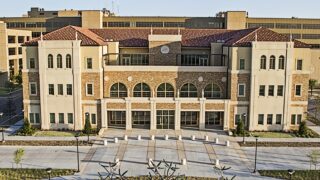
Foster students learn on the Texas Tech Health El Paso campus at 130 Rick Francis Street in El Paso. The campus brings together the Foster School of Medicine, the Hunt School of Dental Medicine, the Hunt School of Nursing and the Francis Graduate School of Biomedical Sciences, which creates real opportunities for interprofessional learning.
Location and Campus Setting
El Paso sits on the U.S.-Mexico border across from Ciudad Juárez, in one of the largest binational metropolitan areas in the country. The urban campus gives students a rich cultural experience and exposure to a diverse, largely Spanish-speaking patient population. The setting offers training opportunities in binational health issues and engagement with a multicultural community.
Campus Facilities
- Medical Education Building. Home to the Office of Admissions and much of the medical school’s teaching space.
- Medical Sciences Building II. Hosts large events, including the EPPMDS conference and Match Day.
- Clinical skills and simulation laboratory. Students practice with standardized patients, partial task trainers and high-fidelity human body simulators.
- Library. The Texas Tech Health El Paso libraries offer medical library resources, study space and research support.
Learning Communities
Foster places students into learning communities called colleges, each led by a college master. The weekly Masters Colloquium gives each college a home for discussion about professionalism and the art of medicine, and the colleges give students a smaller group inside the larger class.
Student Organizations and Activities
Foster students lead and join organizations focused on service, specialty interests, culture and wellness. The best-documented example is the Medical Student Run Clinic.
- Medical Student Run Clinic. Students help coordinate patient care and clinic operations under physician supervision at a free clinic in Sparks. The clinic has offered primary care, screenings, health education and preventive care since 2013, and it partners with organizations such as the American Breast Cancer Foundation for clinical breast exams and mammogram drives. Students also practice communicating with patients in Spanish.
- Admissions Ambassadors. Selected students represent the school to prospective students and families, work on community outreach projects and attend Office of Admissions events.
- Outreach programs. The Office of Admissions runs the Summer Medical Camp for high school students, which recruits summer mentors, and the Medventure for Your Future event each January.
- Global health. The Office of Global Health and Societies offers lectures, film series, conferences and global health experiences, along with a student lounge for its programs.
When you visit or interview, ask current students which specialty interest groups and cultural organizations are most active. The mix changes each year with student leadership.
Housing Options
Foster has no on-campus housing, but affordable housing is widely available within about 15 miles of campus. Plan your housing early. Ask Student Affairs and current students for neighborhood advice before you sign a lease, and build rent, utilities and transportation into your budget. Most clinical sites are in El Paso, so a reliable way to get between the campus and hospitals matters.
Support Services Available to Students
- Academic support. Tutoring, mentoring and academic advising through Student Affairs and the colleges.
- Wellness services. Student counseling and mental health services, plus a career development and wellness fee that supports programs.
- Career services. Student Affairs includes a career development specialist and guides students through residency applications.
- Accessibility. Student Services Accessibility handles accommodation requests.
Campus Environment and Culture
- Collaborative atmosphere. Team-based learning and learning communities emphasize teamwork and peer support.
- Community engagement. Service at the student-run clinic and in outreach programs is part of student culture.
- Cultural diversity. The border setting creates a multicultural environment, and the class itself is diverse.
Clinical Rotations and Research Opportunities
Foster emphasizes diverse, hands-on clinical training that prepares students for the complexities of modern medicine, especially in communities that look like El Paso.
Affiliated Hospitals
Students complete clinical rotations at El Paso hospitals and clinics, including:
- University Medical Center of El Paso, where most residents’ clinical experience takes place.
- El Paso Children’s Hospital, for pediatric care.
- The Hospitals of Providence, including the Transmountain campus, an academic affiliate for MS3 and MS4 clerkships.
- William Beaumont Army Medical Center, where Foster is a major participating institution for the orthopedic surgery residency.
- Texas Tech Physicians of El Paso clinics, where faculty physicians see patients.
The El Paso Psychiatric Center, a Texas state hospital within walking distance of campus, is also an affiliated hospital. Ask the Office of Medical Education where psychiatry clerkship time is currently scheduled.
Core Clerkships
The third-year blended longitudinal integrated clerkship covers internal medicine, psychiatry, family medicine and neurology in Block 1, and obstetrics and gynecology, pediatrics and surgery in Block 2. Family medicine and emergency medicine run through the whole year. In the fourth year, students complete a sub-internship and critical care and choose 22 weeks of electives, which can include away rotations.
Residency Programs at Texas Tech Health El Paso
Residents train alongside Foster students. The Alberta campus offers residencies in emergency medicine, family medicine, internal medicine, neurology, obstetrics and gynecology, orthopaedic surgery, pathology, pediatrics, psychiatry, radiology and surgery. The Transmountain campus offers internal medicine, family medicine, psychiatry and a transitional year. Fellowships include body imaging, cardiology, child and adolescent psychiatry, forensic psychiatry, gastroenterology, interventional neurology, pulmonary and critical care, sports medicine, surgical critical care, tactical medicine and women’s imaging (Texas Tech Health El Paso GME programs). In the 2026 Match, 16 Foster graduates matched into Texas Tech Health El Paso programs.
Research Opportunities
- Scholarly Activity and Research Program (SARP). SARP is a longitudinal part of the curriculum. Its mission is to build the self-efficacy and professional identity of future physician-scientists through mentorship, didactic and hands-on research training, travel funding and internal grant support. The program is also building thematic research pipelines and a distinction program in molecular medicine. Learn more on the Scholarly Activity in Research Project page.
- Centers of Emphasis. The four Centers of Emphasis focus on cancer (including endocrine-related cancers and those prevalent in Hispanic populations), diabetes and metabolism, infectious diseases (including influenza, HIV, vector-borne illnesses and vaccine development) and neuroscience.
- Distinction in Research and Scholarship. The DIRS program recognizes students who complete substantial research.
- Biostatistics support. The Biostatistics and Epidemiology Consulting Lab supports research across the institution.
- Research funding and core labs. Direct federal research grants and contracts totaled $2,083,096 in fiscal year 2024. Core laboratories in proteomics, genomics, histology and cytometry support the Centers of Emphasis.
- Global health. In the 2025 graduation questionnaire, 21% of graduating seniors reported a global health experience during medical school.
If you have little research experience, you can still be a strong Foster applicant. Matriculants average more than 1,000 research hours, but those averages include students with graduate degrees and long lab careers. Research experience helps most when you can explain the question you studied and what you learned. Many students build that experience in college labs, summer programs or medical internships for undergraduates that pair clinical work with reflection on health systems.
Service Clinics and Community Training
The Medical Student Run Clinic in Sparks is the main student-run service site. It serves patients of all ages, operates largely through outside funding and has run mammogram drives with grant support. Community preceptors in the Society, Community and the Individual course give first- and second-year students further time in community practices.
Notable Alumni, Faculty, Leadership and Admissions Staff
The people below hold verified roles at the Foster School of Medicine or Texas Tech Health El Paso, or are verified Foster graduates. Titles were checked on official pages on November 10, 2026, unless a different date is given. This list explains who does what. It does not imply that any person will mentor a particular student or influence an admissions decision.
School Leadership
Eric M. Rohren, M.D., Ph.D., FACR, Dean. Dr. Rohren is dean of the Paul L. Foster School of Medicine. The 2026 Match, held in March 2026, was his first as dean. In the school’s Match Day release, he described the day as “the moment our students take the next step toward becoming the physicians our communities need.” As dean, he leads the medical school’s education, research and clinical missions. For applicants, his public statements are a useful window into how the school frames its priorities: training physicians for El Paso and similar communities, whether graduates stay in the region or train elsewhere.
Richard Lange, M.D., M.B.A., President. Dr. Lange is president of Texas Tech University Health Sciences Center El Paso, the fourth and newest university in the Texas Tech University System, and also serves as interim vice president for academic affairs. He leads the whole university, including the medical, dental, nursing and graduate schools. His role matters to applicants because many of Foster’s distinctive features, from the Spanish program to interprofessional education, are university-wide.
Maureen D. Francis, M.D., M.S.-H.P.Ed., MACP, Associate Dean for Medical Education. Dr. Francis leads the Office of Medical Education and is a professor in the Department of Medical Education and a clinical professor of internal medicine. The office oversees the curriculum, assessment and the LCME accreditation process. Her office is where questions about curriculum structure, the integrated clerkship and program policies are answered.
Charmaine A. Martin, M.D., Associate Dean of Student Affairs. Dr. Martin is an associate professor and the associate dean of student affairs. The Office of Student Affairs supports students from orientation through Match, including academic and career advising, wellness resources and residency applications, and it posts each year’s Match Day results.
J. Manuel de la Rosa, M.D., Vice President for Outreach and Community Engagement. Dr. de la Rosa leads Texas Tech Health El Paso’s outreach and community engagement and serves as interim chair and professor of the Foster School of Medicine Department of Pediatrics. His dual role links the university’s community programs with pediatric care for El Paso children, a useful connection for applicants interested in community health or pediatrics.
Faculty
Tanis E. Hogg, Dr. rer. nat., Chair, Department of Medical Education. Dr. Hogg is assistant dean for medical education and professor and chair of the Department of Medical Education, and a clinical professor in the Department of Molecular and Translational Medicine. His department leads the planning, development and delivery of the pre-clerkship curriculum, including the clinical presentation model, the Spanish program and SARP. Applicants who want to understand how Foster teaches basic science in clinical context are learning about his department’s work.
Rajkumar Lakshmanaswamy, Ph.D., Dean, Francis Graduate School of Biomedical Sciences. Dr. Lakshmanaswamy is a cancer biologist whose research has focused on the physiological and molecular mechanisms of cancer prevention and progression. He is now dean of the L. Frederick Francis Graduate School of Biomedical Sciences and interim vice president for research. The graduate school runs the post-baccalaureate certificate program, and his research office oversees the environment in which Foster students do scholarly work.
Lee Rosenthal, SCI Director of Community-Based Education. Lee Rosenthal directs community-based education in the Society, Community and the Individual course and coordinates the MD/MPH dual degree with UTHealth Houston School of Public Health. SCI is the first course Foster students take, so this role shapes how new students first meet El Paso’s communities and community physicians.
Admissions Staff
Cynthia N. Perry, Ph.D., Associate Academic Dean for Admissions. Dr. Perry leads the Foster Office of Admissions. The admissions office’s stated mission is to promote Foster as a preferred choice, recruit competitive and diverse applicants and serve as a holistic admissions portal consonant with the school’s mission.
Laura Olivas, M.B.A., Senior Director of Admissions. Laura Olivas is senior director of admissions and the listed contact for admissions questions about the MD/MPH option. Questions about application status and admissions policy often go through her office.
Yolanda Betancourt, M.B.A., Director of Outreach and Pathways Programs. Yolanda Betancourt directs outreach and pathway programs and serves as Foster’s JAMP school coordinator. She is the contact for questions about Foster’s role in JAMP, including its summer enrichment program and application workshops.
Alumni
Foster has graduated more than 1,200 physicians since its first class finished in 2013. The school’s alumni include physicians who returned to El Paso to practice and teach.
Admissions Statistics and Class Profile
This section gathers Foster’s detailed numbers by cohort. Foster labels its figures by entry year, so “EY2026” means students who started medical school in 2026. School figures are averages; medians for accepted applicants are listed separately.
2026 Entering Class (EY2026)
- Applicants: 5,213
- Interviewed: 695, for 138 available spots
- Interviewed out of applicants: about 13.3%. This is an interview share, not an acceptance rate.
- Interviewees who enrolled: 20%
- Matriculants who were reapplicants: 39%
- Average MCAT: 509, range 500 to 522
- Average GPA: 3.86, range 3.0 to 4.0
- Average experience: 1,895 clinical hours, 1,080 research hours, 541 community service hours
2025 Entering Class (EY2025)
Median MCAT and GPA for accepted applicants in the 2025 entering class:
- Median MCAT: 514 (mean 512.9); section medians 129, 127, 129 and 129
- Median GPA: 3.95
- Gender of matriculants: 73 men and 57 women
School class profile averages for the same cohort:
| Group | Number | Average overall GPA | Average science GPA | Average MCAT |
|---|---|---|---|---|
| Applicants | 4,814 (4,085 Texas, 729 non-Texas) | 3.83 | 3.60 | 506 |
| Interviewees | 656 | 3.94 | 3.87 | 513 |
| Matriculants | 130 (119 Texas, 11 non-Texas) | 3.84 | 3.81 | 509 |
Source: FSOM Class Profile, Entry Year 2025.
Student Demographics
Matriculants in the 2026 entering class were 31.8% Asian, 31.2% Hispanic, 25.4% White, 2.9% African American and 1.4% multiple races, with 5% unreported. They were 54.3% men and 45.7% women, and ages ranged from 19 to 40. Students come from a range of academic majors, and nontraditional students are part of each class.
Class Size and Enrollment
The school reported 138 available spots for the 2026 entering class, up from 130 matriculants in EY2025. About 449 students are enrolled across the four years. About 150 new entrants are expected in the entering class of 2027. Of the 695 applicants interviewed, 637 were Texas residents and 58 were from out of state.
How to Read These Numbers
- Averages and medians are not minimums. Half the class is not necessarily above 509, and the 514 median describes accepted applicants, not the enrolled class. The ranges show that Foster admits students across a wide band.
- Interview share. Roughly 13% of applicants received an interview in each of the last two cycles. The interview is the real gate.
- Interviewees who enrolled. Twenty percent of 2026 interviewees enrolled. That figure reflects both admission decisions and applicants choosing other schools, so it is not an acceptance rate either.
- Reapplicants. With 39% of the 2026 class made up of reapplicants, a first rejection is common and often not final.
- Residency. Non-Texas applicants made up about 15% of the 2025 applicant pool but about 8% of matriculants, consistent with the 90% Texas resident rule.
Tips and Strategies for Admission
Aligning with the Mission of Texas Tech University Health Sciences Center Paul L. Foster School of Medicine
Foster’s mission centers on diverse border communities. To stand out, your application should show, with real experiences, that you understand what serving those communities requires. Use your personal statement, secondary essays and interview to show your commitment to vulnerable populations, health disparities and culturally aware care. Name what you did, what you saw and what you learned. Avoid general claims about diversity that any applicant could write.
Preparing Thoroughly for the Admissions Journey
- Apply early. Foster interviews from July 1 and reviews applications as they become complete. Submit TMDSAS in May or June, take CASPer early and return the secondary within a week or two.
- Know the dates. Mark October 1 (TMDSAS), October 15 (letters and pre-match offers) and December 1 (secondary) on your calendar.
- Get expert help if you need it. IMA’s Medical School Admissions Consulting Services offer guidance on essays, interviews and application strategy.
Fully Engaging in Meaningful Opportunities
- Clinical work with patients. Foster’s matriculants average almost 1,900 clinical hours. You do not need that number, but you need enough sustained patient contact to write and speak with specific detail. Supervised clinical internships for pre-med students can add hands-on experience in vitals, intake and patient interaction to your clinical record.
- Service in underserved communities. Volunteering at a free clinic, a community health fair or a shelter maps directly onto the work Foster students do in Sparks.
- Spanish. Spanish is not required, but it is useful in El Paso. If you have studied Spanish, show how you use it. If you have not, show that you understand why it matters and how you would work with interpreters.
- Research. Research is valued but not mandatory. If you have it, explain the question and your role. If you do not, focus on depth in clinical and service work.
- Global perspective. Healthcare internships abroad can broaden your understanding of how resource limits and culture shape care, which connects naturally to border health.
Building Resilience for the Journey Ahead
Resilience is a key attribute for any future physician. With 39% of the 2026 entering class made up of reapplicants, Foster clearly values growth between cycles. If you are not admitted, find out what to strengthen. You may need a higher MCAT score, more clinical experience or a clearer personal statement. A planned year of work or service, such as one of IMA’s pre-med gap year programs, can give you new experiences to write about. Remember that CASPer must be retaken every cycle.
Letters and Essays
- Letters. Ask for letters from people who have seen your work with patients, your reliability and your integrity. The honor code essay asks about integrity, and a supervisor’s letter that shows the same quality reinforces your story.
- Essays. Write the “why Foster” essay last, after you have researched the curriculum. Name specific features, such as SCI, medical Spanish, the student-run clinic in Sparks or the integrated third year, and connect each one to your experience.
Attend Admissions Events
Foster’s Office of Admissions offers pre-med advising appointments and typically holds an Application Workshop for first-time applicants and a Re-application Workshop for returning applicants each spring. Email [email protected] to ask about advising. If you qualify for EPPMDS or JAMP events, attend them.
Keeping Your Options Open
Most Texas applicants apply to several TMDSAS schools, and many apply to out-of-state schools through AMCAS. A balanced list reflects your academics, your mission fit and where you want to train. For a full comparison of Texas schools, see IMA’s guide to medical schools in Texas.
Secondary Application Questions, Example Responses and Analysis
Secondary Essays at TTUHSC Paul L. Foster School of Medicine
The Foster secondary is separate from TMDSAS. It opens after May 1, invitations are emailed once your TMDSAS application is received, the fee is $100 and the secondary closes at 5 p.m. MST on December 1. For the 2026-2027 cycle, it has three essays:
- Essay 1: why you are interested in Foster, given its mission and its location on the U.S.-Mexico border (300 words or less, required).
- Essay 2: past experiences or personal attributes that reflect your affinity with the Foster student honor code (300 words or less, required).
- Essay 3: any unique personal experiences or disadvantage and their significance in your pursuit of a medical degree (300 words or less, required).
All three questions are required, and the wording is the same as in the 2025-2026 cycle. There are no separate prompts for dual-degree applicants: MD/MBA and MD/MPH applicants apply to the partner school separately. Write to 300 words and follow the limit shown in your portal. Foster interviews from July 1 and reviews on a rolling basis, so aim to submit within one to two weeks of receiving the invitation.
The examples below are original illustrations, each labeled as an illustrative example, not an actual applicant essay. Use them to understand structure and depth, then write from your own experiences. Do not copy them. For prompts from other schools, see IMA’s medical school secondary essay prompts database.
Secondary Essay #1: Why Foster, given its mission and border location
“1. The mission of the Texas Tech University Health Sciences Center El Paso Paul L. Foster School of Medicine is to provide an outstanding education and development opportunities for a diverse group of students, residents, faculty, and staff; advance knowledge through innovation and research; and serve the needs of our socially and culturally diverse communities and region.” Recognizing the components of this mission and that PLFSOM is located on the US/Mexico border, please describe why you are interested in applying to our school. (300 words or less)”
What it asks. Two things: show that you understand the components of Foster’s mission (education for a diverse group of people, research and innovation, and service to socially and culturally diverse communities and the region), and explain why you want to train at a school on the U.S.-Mexico border. The prompt says “recognizing the components,” so a strong answer touches more than one part of the mission.
How to approach it. Start with a real experience that connects you to border or Spanish-speaking communities, or to the health problems common there. Then name two or three specific Foster features and explain why each matters to you. Good choices include the Society, Community and the Individual course, required medical Spanish, the Medical Student Run Clinic in Sparks, the integrated third-year clerkship or a Center of Emphasis that fits your interests. End with the physician you want to become.
Illustrative example, not an actual applicant essay
My grandmother crossed the bridge from Juárez every month for her diabetes checkups, and I usually went with her to translate. I was twelve the first time I explained “A1C” to her in Spanish. The doctor was kind, but each visit ran on my vocabulary, and I knew I was leaving things out.
That memory brought me to a free clinic near my home in El Paso, where I have volunteered for three years taking vital signs, doing intake and walking patients through follow-up instructions. Most of our patients have diabetes or hypertension, and many split their lives between two countries. I have learned that a care plan only works if it fits a patient’s language, schedule and budget.
Foster’s mission asks future physicians to serve “socially and culturally diverse communities,” and El Paso is the community I want to learn from. Three parts of the curriculum stand out to me. First, Society, Community and the Individual begins with a summer immersion on community health, so I would start medical school by studying the forces behind the diseases I have seen. Second, medical Spanish continues through the pre-clerkship years, and I want formal training so that I never again leave a patient half-informed. Third, the Medical Student Run Clinic in Sparks would let me keep doing the work that brought me to medicine, this time with the skills to do more.
I am also drawn to the Center of Emphasis in Diabetes and Metabolism. I would like to join a SARP project on early detection, because late diagnosis is the pattern I saw in my grandmother and see every week at the clinic.
I want to become a physician who practices on the border by choice, and Foster is where I want to learn how.
Why this example works.
- A specific opening. The story of translating at a twelve-year-old’s level shows the language gap without lecturing about it.
- Evidence of commitment. Three years of clinic work with vital signs and intake shows the writer has done the work, not just observed it.
- Mission components. It addresses service to diverse communities (the clinic and El Paso), education (SCI and medical Spanish) and research (SARP and the Center of Emphasis in Diabetes and Metabolism).
- Border location. It explains why the border specifically matters: patients who live across two countries, and a family history tied to Juárez.
- Specific to Foster. Every program named is a verified Foster feature, and each one is tied to a reason.
- A clear close. The last line answers “why us” in one sentence.
Mistakes to avoid. Listing features from the website without connecting them to your story. Writing about “diversity” in general terms. Treating the border as a hardship you will rescue rather than a community you want to learn from. Ignoring the mission and writing only about El Paso’s weather or cost. Claiming fluency in Spanish you do not have.
Secondary Essay #2: Affinity with the honor code
“2. The Foster SOM student honor code states “In my capacity as a Texas Tech University Health Sciences Center El Paso School of Medicine medical student, I will uphold the dignity of the medical profession. I will, to the best of my ability, avoid actions which might result in harm to my patients. I will protect the dignity of my patients and the deceased, and will protect their confidential information in accordance with the prevailing standards of medical practice. I will not lie, cheat, or steal. I will enter into professional relationships with my colleagues, teachers, and other health care professionals in a manner that is respectful and reflective of the high standards and expectations of my profession. I will not tolerate violations of this Code by others and will report such violations to the appropriate authorities.” Please describe past experiences or personal attributes that reflect your affinity with this honor code. (300 words or less)”
What it asks. The honor code has several parts: upholding the dignity of the profession, avoiding harm, protecting patients’ dignity and confidential information, not lying, cheating or stealing, respectful professional relationships and not tolerating violations by others. The prompt asks for past experiences or personal attributes that reflect your affinity with the code. You do not need to cover every clause. Pick one or two parts and show them in action.
How to approach it. Choose a real moment when honesty, confidentiality or respect cost you something. Describe what happened, what you did and why. Then connect it to a specific clause of the code. The hardest clause, reporting violations by others, is also the one many applicants avoid, so addressing it thoughtfully can help. Applicants in the 2026-2027 cycle have asked whether ethical dilemmas are in scope. They are: the code is about ethical conduct, so an ethical choice you made is a natural topic.
Illustrative example, not an actual applicant essay
Two years ago I worked as a medical scribe in a busy family practice. One afternoon a coworker asked me to sign into the electronic record under my login and enter notes for a patient she had seen, so she could leave early for her daughter’s recital. It seemed small. She was tired, she was a friend, and the notes were already written on paper.
I said no, and I explained why. My login records who documented what, and a patient’s record has to show the truth about who cared for them. Then I offered what I could honestly do: I stayed late and helped her finish her own entries before she left. She was annoyed with me that day. A week later she thanked me, because an audit had flagged another office for exactly that shortcut.
The honor code asks students to protect patients’ confidential information and to “not lie, cheat, or steal.” For me, those promises are tested in ordinary moments like that one, when the honest choice is inconvenient and the person asking is someone I like. I have learned to separate respect for a colleague from agreement with what they ask, and to look for an honest way to help.
The code also asks students not to tolerate violations by others. That is harder, and I take it seriously. In a chemistry course, I saw a group sharing answers on a take-home exam. I declined to join and told the professor that the exam was circulating, without naming classmates I was not sure about. She changed the format for the next exam.
I know I will make mistakes in medical school. When I do, I want to be the student who reports them. Honesty with peers is practice for honesty with patients.
Why this example works.
- A realistic dilemma. The request comes from a friend and seems harmless, which makes the choice meaningful.
- Specific clauses. It ties the story to honesty, protecting records and “not lie, cheat, or steal,” and quotes the code accurately.
- Kindness with integrity. Staying late to help shows the writer can refuse a request and still respect a colleague, which matches the code’s call for respectful professional relationships.
- The hard clause. The second example addresses reporting violations, and it shows judgment by reporting the problem without accusing uncertain individuals.
- Forward-looking close. The ending admits future mistakes and commits to honesty about them.
Mistakes to avoid. Saying “I have always been honest” without a story. Describing a dramatic incident that makes you look like a hero and others look like villains. Choosing an example that involves a real HIPAA violation by you. Writing about a time you cheated without showing clear growth.
Secondary Essay #3: Unique personal experiences or disadvantage
“3. Please describe any unique personal experiences or disadvantage (educational, financial or otherwise) and their significance to you in your pursuit of a medical degree. (300 words or less)”
What it asks. Two parts: describe a unique personal experience or a disadvantage (educational, financial or otherwise), and explain its significance to your pursuit of a medical degree. The word “or” means you do not need a disadvantage. A distinctive experience, such as caregiving, military service, immigration, a career change or growing up bilingual, also fits.
How to approach it. Describe the experience briefly and concretely. Spend more than half the essay on significance: what you learned, how it changed your choices and how it will shape the physician you become. If you write about an academic setback, show the recovery with facts, such as improved grades. Avoid repeating your personal statement. Choose a different angle or a different experience.
Illustrative example, not an actual applicant essay
I am the first person in my family to attend college. My parents run a small upholstery shop in the Segundo Barrio, and from age fourteen I worked there after school and on Saturdays. When my father hurt his back lifting a sofa, I ran the front counter for a semester while finishing high school.
That year taught me two things. First, I learned to manage time out of necessity. I studied for AP Biology between customers and finished homework after closing. Second, I watched my father delay care because he had no insurance and could not close the shop for a weekday appointment. He took pain pills from a friend for months before a community health worker connected him with a sliding-scale clinic.
In college, the disadvantage looked different. I did not know what office hours were for, and I earned a C in my first chemistry course because I did not ask for help until it was too late. I rebuilt my chemistry foundation through tutoring, joined a first-generation student group and began mentoring high school students from my neighborhood who were applying to college. My science grades rose every semester after that first year.
These experiences shape how I want to practice. I understand why a patient might miss an appointment, ration medication or trust a neighbor’s advice over a doctor’s. I do not see that as noncompliance. I see a problem to solve with the patient. My father’s story also showed me how much a community health worker can do, and I want to work closely with them.
Medicine is not an escape from where I grew up. It is a way to bring back what I learn. I want my training to make care easier to reach for families like mine.
Why this example works.
- Clear disadvantage. It names educational and financial disadvantage directly: first-generation status, work responsibilities and a family without insurance.
- Concrete details. The upholstery shop, the back injury and studying between customers make the story believable.
- Honest setback with recovery. The C in chemistry is explained, and rising grades show growth.
- Significance. Most of the essay explains how these experiences shape the writer’s view of patients, which answers the second half of the prompt.
- Mission fit. It shows understanding of barriers common in border communities, such as cost, time off and trust, without using the prompt as a plea for sympathy.
Mistakes to avoid. Treating the prompt as optional and leaving it blank. Exaggerating hardship. Writing only about the hardship and not its significance. Repeating your TMDSAS personal statement or optional essay word for word.
What to Know About Program-Specific Prompts
For the 2026-2027 cycle, Foster’s secondary has only these three essays. The school does not run separate MD/PhD or early decision tracks, and dual-degree applicants complete the partner school’s application rather than an additional Foster essay. Watch your portal for any additional questions, and answer them within their stated limits.
Interview Format and Preparation
Confirmed Format and Timing
The Foster School of Medicine invites selected applicants to interview after reviewing completed applications, and it sends instructions, dates and formats with each invitation. Interviews can begin on July 1. For the 2026-2027 cycle, Foster interviews are virtual multiple mini-interviews (MMIs). The interview day begins at 8:30 a.m. MST with an orientation to the school and video tours of the medical education facilities, and interviews take place in the afternoon after a lunch break, with the day ending around 3 p.m. MST.
What Interviewees Describe
Applicants who interviewed in the 2026-2027 cycle have described the following. Treat these as practical tips, not official rules:
- Stations. About nine MMI stations, with one minute to read each prompt and about six minutes to respond.
- Content. A mix of ethical scenarios and questions about your life experiences. Interviewers do not quiz you on your application, and there are no role-play stations.
- Scheduling. Interviews run on Tuesdays and Thursdays, with orientation held on Thursdays. If you interview on a Tuesday, your orientation may take place the Thursday before.
- Paperwork. The interview portal includes an agreement to submit on the day of your interview.
- After the interview. Interviewees received an invitation to an optional in-person campus tour, and some received a mailed letter from the school after the interview.
How to Prepare for Foster’s MMI
- Practice short, structured answers. With one minute to prepare, use a simple frame: what is the issue, who is affected, what are the options, what would you do and why.
- Prepare ethical reasoning. Practice scenarios about confidentiality, honesty with colleagues, patient autonomy and fair use of limited resources. These connect directly to the honor code essay.
- Have stories ready. Choose six to eight experiences you can use flexibly: a time you made a mistake, a conflict on a team, a patient who taught you something, a time you worked across a language or culture gap.
- Know the border context. Be ready to discuss health issues common in El Paso and other border communities, such as diabetes, access to care and language barriers, and how you would approach them as a student.
- Test your setup. Use a quiet room, a reliable connection and a camera at eye level. Have a backup device ready.
- Review common questions. IMA’s list of medical school interview questions is a useful starting point, and the AAMC offers a free Medical School Applicant Interview Preparation Guide.
Questions to Ask
Use any open time or the campus tour to ask about the integrated third-year clerkship, how students balance SARP with coursework, how the Spanish program adapts to different levels and how students get involved with the student-run clinic.
After the Interview
Interviewed applicants are reviewed by the Admissions Committee. Pre-match offers begin October 15, so early interviewees may hear in the fall, while others wait for the TMDSAS match on February 12, 2027. Keep monitoring the email address on your application and respond to the Office of Admissions by any stated deadline. IMA’s medical school admissions consulting includes mock interviews if you want structured practice.
Frequently Asked Questions About TTUHSC Paul L. Foster School of Medicine
What is the median MCAT score and GPA for accepted students at TTUHSC Foster SOM?
Accepted applicants in the 2025 entering class had a median MCAT of 514 and a median GPA of 3.95. Foster’s own figures are averages for matriculants: the 2026 entering class had an average MCAT of 509, with scores from 500 to 522, and an average GPA of 3.86, with GPAs from 3.0 to 4.0. The 2025 entering class had an average MCAT of 509, an average overall GPA of 3.84 and an average science GPA of 3.81. Interviewees in the 2025 cycle averaged a 513 MCAT and a 3.94 GPA, which suggests that strong academics help most at the interview stage. These numbers are not minimums. If your scores are below average, strengthen the rest of your application with clinical experience, service and clear essays, and apply early.
Does TTUHSC Foster SOM accept out-of-state applicants?
Yes, but seats are limited. As a Texas state school, Foster must admit an entering class that is approximately 90% Texas residents. In the 2025 entering class, 11 of 130 matriculants were non-Texas residents, from a pool of 729 non-Texas applicants. Of 695 applicants interviewed in the most recent cycle, 58 were from out of state. All applicants must be U.S. citizens or legal permanent residents. If you live outside Texas, apply to Foster only if you have a genuine reason to train on the border, and make that reason clear in your first secondary essay.
What is the application deadline for TTUHSC Foster SOM?
For the 2026-2027 cycle, the TMDSAS submission deadline is October 1, 2026, at 11:59 p.m. CST, with no extensions. The Foster secondary application closes at 5 p.m. MST on December 1, 2026. Letters of evaluation should reach TMDSAS by October 15. Those are final deadlines, not targets. Foster interviews from July 1 and reviews applications as they are completed, so submitting in May or June and returning the secondary quickly gives you the most interview dates to choose from.
What combined degree programs are available?
Foster offers two dual degrees. The MD/MBA, with the Texas Tech University Rawls College of Business, is completed within the four-year MD and includes a Health Organization Management concentration of 42 credit hours over about 18 months. The MD/MPH, with the UTHealth Houston School of Public Health in El Paso, lets students earn both degrees through coordinated coursework. Both require separate admission to the partner school. Foster does not currently list an MD/PhD program. Students interested in research can pursue the MD with Distinction in Research and Scholarship.
How Much is the cost of attendance?
The Foster admissions office projects total first-year student fees and estimated expenses at $50,590 for Texas residents and $63,690 for nonresidents, including estimated living costs. That page does not state its academic year, and tuition and fees change each year. For 2026-27, first-year tuition and fees alone are $24,491.34 for Texas residents and $39,703.34 for nonresidents. Ask the Office of Student Financial Aid for the official cost of attendance budget when you receive an offer, because it sets your federal borrowing limit.
What are the tuition and fees?
For first-year students in 2026-27, estimated tuition is $18,413 for Texas residents and $33,625 for nonresidents. Fees are $6,078.34 for both groups. Total tuition and fees are $24,491.34 for Texas residents and $39,703.34 for nonresidents. These figures do not include housing, food, books, personal expenses or the required student health insurance, which can be waived with other qualifying coverage. Rates are set annually by the Texas Tech University System Board of Regents.
What financial aid options are available?
Students can borrow Federal Direct Unsubsidized Loans, generally up to $20,500 a year, and may apply for Direct PLUS loans for graduate or professional students. Foster awards competitive merit scholarships through its Scholarship Committee; many need no application and renew for up to four years. JAMP participants receive scholarship support, and military Health Professions Scholarship Programs can cover tuition in exchange for service. Outside scholarships from foundations and medical associations add to these. Complete the FAFSA with school code 042808 as soon as it opens for your entry year.
Are there research opportunities available?
Yes. Every student takes part in the Scholarly Activity and Research Program, which provides mentored research and scholarly projects, travel funding and internal grant support. Students can work with faculty in the four Centers of Emphasis: cancer, diabetes and metabolism, infectious diseases and neuroscience. The fourth year requires one elective in the basic sciences or research, and students with substantial research can earn the MD with Distinction in Research and Scholarship. Research experience helps an application, but it is not required for admission.
What is the campus culture like?
Foster’s culture is collaborative and community-oriented. Students learn in teams, belong to learning communities called colleges and meet weekly in the Masters Colloquium. Many volunteer at the Medical Student Run Clinic in Sparks or mentor younger students through outreach programs. The class is diverse: in 2026, matriculants were 31.8% Asian, 31.2% Hispanic and 25.4% White, and they ranged in age from 19 to 40. Texas Tech Health El Paso offers support for students from all backgrounds, including accessibility services and counseling. Visit or talk with current students to get a feel for daily life.
What specialties do graduates pursue?
Foster graduates match into a wide range of specialties, from primary care fields such as family medicine, internal medicine and pediatrics to emergency medicine, psychiatry, neurology, obstetrics and gynecology, surgery, anesthesiology and dermatology. In the 2026 Match, 107 Foster graduates matched to residency programs across the country, and 16 matched at Texas Tech Health El Paso. The school posts Match Day results for each year on its Student Affairs pages, which is the best way to see the specialty mix in detail.
What residency programs are available at TTUHSC Paul L. Foster School of Medicine?
Texas Tech Health El Paso runs residencies on two campuses. The Alberta campus offers emergency medicine, family medicine, internal medicine, neurology, obstetrics and gynecology, orthopaedic surgery, pathology, pediatrics, psychiatry, radiology and surgery. The Transmountain campus offers internal medicine, family medicine, psychiatry and a transitional year. Medical students train alongside these residents. Residency positions are filled through the national Match, so attending Foster does not guarantee a residency at Texas Tech Health El Paso, though 16 graduates matched there in 2026.
How does the Texas Tech El Paso Pathology Residency stand out?
The pathology residency is one of the Alberta campus programs. Most of the clinical experience Alberta campus residents receive is provided at University Medical Center of El Paso, the main teaching hospital. Medical students interested in pathology can explore it through fourth-year electives and SARP projects. Residency details change often, so check the Department of Pathology’s residency page for current rotations and positions.
What makes the Texas Tech Pediatrics El Paso TX program unique?
The Department of Pediatrics trains residents and medical students in a region where most families speak Spanish at home or alongside English. El Paso Children’s Hospital is a key partner for pediatric training. The department’s interim chair, Dr. J. Manuel de la Rosa, also leads the university’s outreach and community engagement, which links pediatric care with community programs. For medical students, pediatrics is a core part of the Block 2 clerkship in the third year.
What opportunities does Texas Tech Neurology offer in El Paso?
Texas Tech Health El Paso runs a neurology residency on its Alberta campus and an interventional neurology fellowship. Medical students study neurology in the third-year Block 1 clerkship alongside internal medicine, psychiatry and family medicine, which reflects how often neurological problems overlap with other conditions. Students interested in the field can also look at the Center of Emphasis in Neuroscience, which studies genetic and environmental factors in psychiatric disorders, optic trauma and nervous system development, and at fourth-year electives.
What is included in the Texas Tech El Paso Internal Medicine Residency?
Internal medicine residencies run on both the Alberta and Transmountain campuses. Fellowships in cardiology, gastroenterology and pulmonary and critical care build on the internal medicine program. Residents care for patients in inpatient and outpatient settings, with most clinical experience at University Medical Center of El Paso and partnerships with The Hospitals of Providence. Medical students work with internal medicine teams in the third-year Block 1 clerkship and can choose a sub-internship in the fourth year.
What distinguishes Texas Tech Psychiatry in El Paso TX?
Psychiatry is offered as a residency on both the Alberta and Transmountain campuses, with fellowships in child and adolescent psychiatry and forensic psychiatry. A Stern Foundation gift created the department’s first endowed professorship, awarded to psychiatry residency program director Dr. Silvina Tonarelli to focus on improving mental health in the Borderland. Medical students complete psychiatry in the third-year Block 1 clerkship. Applicants interested in behavioral health can build related experience before medical school through counseling, crisis line or community mental health work.
Are there fellowship opportunities at Texas Tech University Health Sciences Center El Paso?
Yes. Fellowships include body imaging, cardiology, child and adolescent psychiatry, forensic psychiatry, gastroenterology, interventional neurology, pulmonary and critical care, sports medicine, surgical critical care, tactical medicine and women’s imaging. Fellowships are for physicians who have completed residency, so they are not open to medical students, but they shape the subspecialty teaching Foster students receive.
What is the role of Texas Tech OBGYN Physicians-El Paso?
Obstetrics and gynecology physicians at Texas Tech Health El Paso practice through Texas Tech Physicians of El Paso, the clinical practice of the Foster School of Medicine. Like all of its specialists, they hold faculty appointments at the medical school, where they teach residents in the obstetrics and gynecology residency and medical students in the third-year Block 2 clerkship. Women’s health is a major need in the border region, and students see a wide range of obstetric and gynecologic care during training.
What clinical training does the Texas Tech Family Medicine program offer?
Family medicine residencies run on both campuses, and a sports medicine fellowship builds on the program. For medical students, family medicine is central: it is part of the Block 1 clerkship and also runs as a longitudinal experience across the entire third year, so students follow patients over time. Family medicine faculty and community physicians also teach in the first-year Society, Community and the Individual course. Applicants interested in primary care should mention this continuity in their “why Foster” essay.
How does the PLFSOM (Paul L. Foster School of Medicine) support research?
Foster supports research through the Scholarly Activity and Research Program, which every student completes, and the four Centers of Emphasis in cancer, diabetes and metabolism, infectious diseases and neuroscience. SARP offers mentors, research training, travel funding for presentations and internal grants. The Biostatistics and Epidemiology Consulting Lab supports study design and analysis. Students can earn the MD with Distinction in Research and Scholarship, and a fourth-year research or basic science elective is required.
What specialties are covered in the TTUHSC Residency Programs?
At Texas Tech Health El Paso, residency programs cover emergency medicine, family medicine, internal medicine, neurology, obstetrics and gynecology, orthopaedic surgery, pathology, pediatrics, psychiatry, radiology, surgery and a transitional year. The orthopaedic surgery residency gives hands-on training in specialized surgical care, and Foster is also a major participating institution for the orthopedic surgery residency at William Beaumont Army Medical Center. Texas Tech University Health Sciences Center in Lubbock runs its own, separate residency programs.
What is the significance of the TTUHSC Match List 2024?
Foster’s Match lists show where graduates continue their training, and the school posts results for each year from 2022 onward. The newest results are from Match 2026, when 107 Foster graduates matched to residency programs across the country and 16 matched at Texas Tech Health El Paso. Lists do not include students who declined publicity, students pursuing research or students taking time off. Use the lists to see the range of specialties and regions, not as a promise of any particular outcome.
What is unique about the Texas Tech Obstetrics and Gynecology program?
The obstetrics and gynecology residency trains physicians to meet women’s health needs in a large, underserved border region. Medical students complete obstetrics and gynecology in the third-year Block 2 clerkship with pediatrics and surgery, which lets them see how prenatal, newborn and surgical care connect. Students who want more exposure can choose fourth-year electives, and SARP projects in maternal health are possible with faculty mentors.
How can I explore Texas Tech El Paso jobs in healthcare?
Texas Tech Health El Paso posts clinical, research, academic and staff positions on its Human Resources careers page. For pre-med students, the most useful roles are often in research labs, clinics and outreach programs, which can add experience to your application. The Office of Admissions also recruits summer volunteers to mentor high school students at its Summer Medical Camp. If you want hands-on clinical experience as a student, internships for pre-med students are another route to supervised patient care.
What benefits does the Texas Tech Pediatrics program in El Paso offer?
Pediatrics at Texas Tech Health El Paso gives trainees experience with children’s health challenges common in border communities, through the partnership with El Paso Children’s Hospital and Texas Tech Physicians of El Paso clinics. Medical students rotate in pediatrics during the third-year Block 2 clerkship, and residents train on the Alberta campus. Students who want more exposure can add fourth-year pediatric electives.
Related Medical School Guides
Foster is one of several Texas public medical schools that admit through TMDSAS. These related guides help you compare options. Each is a different school with its own mission and priorities, not a ranking or a list of safety schools.
Similar Schools in the Region
- UT Austin Dell Medical School. Another TMDSAS school with a strong focus on community health and a curriculum that rethinks the traditional four years.
- UT Health San Antonio Long School of Medicine. A large South Texas school serving a majority-Hispanic region, useful for applicants drawn to Foster’s population focus.
- McGovern Medical School. A large TMDSAS school in the Texas Medical Center in Houston, for applicants who want a big academic health system.
- University of Houston Tilman J. Fertitta College of Medicine. A newer TMDSAS school with an explicit primary care and underserved-community mission, similar in spirit to Foster.
- Baylor College of Medicine. A private Houston school that also admits through TMDSAS, worth comparing for research depth and cost.
- Texas A&M School of Medicine. A multi-campus TMDSAS school with rural health and special admissions programs.
- UTRGV School of Medicine. The other Texas medical school built for the U.S.-Mexico border, in the Rio Grande Valley.
- UT Southwestern Medical School. A research-intensive Dallas school, for applicants weighing research opportunities against Foster’s community focus.
- UT Tyler School of Medicine. A newer school focused on rural and underserved East Texas.
For a side-by-side comparison of every Texas program, see IMA’s guide to getting into Texas medical schools.
More Medical School Guides
When considering medical school applications, it’s vital to keep your options open and explore a variety of programs to find the one that aligns best with your goals, values and preferences. Applying to multiple schools increases your chances of acceptance and allows flexibility as your preferences change. These guides cover schools across the country with distinctive curricula, research strengths and clinical settings:
- Spencer Fox Eccles School of Medicine at the University of Utah
- University of Virginia School of Medicine
- Eastern Virginia Medical School (EVMS)
- Virginia Commonwealth University School of Medicine
- Virginia Tech Carilion School of Medicine
- Medical College of Wisconsin
- Washington State University Elson S. Floyd College of Medicine
- Western Michigan University Homer Stryker M.D. School of Medicine
- Perelman School of Medicine at the University of Pennsylvania
- NYU Grossman School of Medicine (NYU Langone Health)
- Cleveland Clinic Lerner College of Medicine
- Uniformed Services University of the Health Sciences (USUHS)
- University of Kentucky College of Medicine
- Creighton University School of Medicine
- University of Nebraska College of Medicine
- Washington University in St. Louis School of Medicine
- Oakland University William Beaumont School of Medicine
- Wayne State University School of Medicine
- NYU Grossman School of Medicine (NYU Manhattan)
- Touro University California College of Osteopathic Medicine
- University of Massachusetts T.H. Chan School of Medicine
- Columbia University Vagelos College of Physicians and Surgeons
- Idaho College of Osteopathic Medicine
- Tufts University School of Medicine
- University of Louisville School of Medicine
- Michigan State University College of Human Medicine
- University of South Dakota Sanford School of Medicine
- University of Chicago Pritzker School of Medicine
- Carle Illinois College of Medicine
- Northwestern University Feinberg School of Medicine
- Chicago Medical School at Rosalind Franklin University
- Southern Illinois University School of Medicine
- Rush Medical College of Rush University Medical Center
- Central Michigan University College of Medicine
- Geisel School of Medicine at Dartmouth
- University of Minnesota Medical School
- Johns Hopkins School of Medicine
- Oklahoma State University College of Osteopathic Medicine
- University of Oklahoma College of Medicine
- Marshall University Joan C. Edwards School of Medicine
- Warren Alpert Medical School of Brown University
- Georgetown University Medical School
- Yale School of Medicine
Browse the Full List of Medical School Guides for every school IMA covers.
How International Medical Aid Can Help
Leveraging International Medical Aid for Success
Foster looks for applicants who understand diverse communities and have real experience caring for patients. International Medical Aid (IMA) runs medical internships abroad for pre-health students in Kenya and other sites. Interns work under the supervision of local clinicians, taking vital signs, doing patient intake and triage and helping with direct patient care. That kind of hands-on work gives you concrete stories for Foster’s “why us” and honor code essays and for MMI questions about culture, resources and ethics.
- Clinical experience. IMA’s pre-med internships abroad place students in clinics and hospitals where they work directly with patients and clinical teams.
- Programs for every pre-health path. IMA’s pre-health internships suit students preparing for medicine and related careers, including during summers and gap years.
- Reflection. IMA programs build in time to reflect on what you see, which helps you write specific, honest essays.
- Admissions advising. IMA’s admissions consulting team helps with personal statements, secondary essays, school lists and mock interviews.
IMA programs do not carry any affiliation with the Foster School of Medicine and do not provide an admissions advantage at any school. Their value is the experience you gain and how you reflect on it. To get started, explore IMA’s internship programs and choose the dates that fit your application timeline.
Final Thoughts and Sources
Preparing for TTUHSC Paul L. Foster School of Medicine
The Paul L. Foster School of Medicine offers a unique and rewarding environment for future physicians. Its integrated curriculum, required medical Spanish, community clinic in Sparks and commitment to border communities prepare students to become compassionate and skilled physicians. If you want to serve diverse and underserved populations and to start clinical learning from the first year, Foster may be an ideal fit.
Securing a place requires more than academic strength. It takes real alignment with the mission, early and careful preparation, meaningful clinical and service experience, and resilience. Your next steps: submit TMDSAS before October 1 (ideally in May or June), schedule CASPer, write three honest 300-word secondary essays and practice for a virtual MMI.
Sources
All facts were checked on November 10, 2026.
- Foster School of Medicine Admissions: home page and 2026 Admission Statistics (2026 entering class); Admission Requirements; How to Apply; Admissions Process; Dates and Events; Class Profile (Entry Year 2025); Frequently Asked Questions; Tuition, Fees and Projected Expenses; Technical Standards and Policies; Contact Admissions; Pathways and Scholarships (JAMP, MD/MBA, MD/MPH, Military Scholarships, EPPMDS). ttuhscep.edu/som/admissions.
- Texas Tech Health El Paso Student Business Services: Foster School of Medicine Tuition and Fee Estimates, first-year student, academic year 2026-2027.
- Texas Tech Health El Paso: Mission; Leadership; Foster School of Medicine home page (enrollment, graduates, student-run clinic); School of Medicine Financial Aid; Office of Global Health and Societies; Medical Student Run Clinic.
- FSOM Office of Medical Education: Accreditation; Leadership; UME Information (Years 3 and 4). Department of Medical Education: pre-clerkship curriculum and SCI; Spanish Language Program; Scholarly Activity and Research Program. FSOM Degree Programs (distinction tracks). Francis Graduate School of Biomedical Sciences: Post-Baccalaureate Certificate.
- Texas Tech Health El Paso Graduate Medical Education: Residency and Fellowship Programs; Alberta campus; Transmountain campus. Centers of Emphasis.
- TMDSAS: Deadlines and Important Dates, Entry Year 2027. tmdsas.com.
- AAMC Medical School Admission Requirements (MSAR), 2026 edition school profile for the Paul L. Foster School of Medicine (2025 entering class data): median MCAT and GPA of accepted applicants, interviews by residency, gender, deposit, deferral, waitlist, fee waiver, MCAT dates, estimated new entrants, health insurance (TSF 2025-26), aid and debt (LCME Part I-B, 2024-25), research funding (FY2024), global health (2025 GQ), housing and affiliated hospitals. Accessed November 10, 2026.
- AAMC Medical School Admission Requirements public reports, 2027 edition: Interview Procedures; Secondary Application Policies; Debt Information (LCME Part I-B, 2023-24); Tuition, Fees and Insurance (Tuition and Student Fees survey, 2024-25). students-residents.aamc.org.
- Secondary essay prompts, 2026-2027 cycle: Med School Insiders, Texas Tech El Paso secondary essay prompts (2026-2027); Student Doctor Network, “2026-2027 Texas Tech El Paso (Foster School of Medicine)” applicant thread (posts of June 3 and June 8, 2026). Interview day descriptions: the same thread.
- Texas Tech Health El Paso news releases: Match Day 2026 (Newswise, March 2026); “Growing Our Own Starts Here” and Stern Foundation endowed professorship (Tech Talk El Paso).
- Council for Higher Education Accreditation, institution record for Texas Tech University Health Sciences Center El Paso.
The data snapshot and statistics table use the same fact record. Averages are school-reported for matriculants; medians are for accepted applicants (AAMC MSAR). No acceptance rate is shown because no count of acceptance offers is published.
See more of our guides in your Google results: add International Medical Aid as a preferred source on Google.