
The Virginia Tech Carilion School of Medicine (VTCSOM) is a public, four-year MD program in Roanoke, Virginia. It began as a partnership between Virginia Tech, a public research university, and Carilion Clinic, a private, not-for-profit health system, and it became Virginia Tech’s ninth college on July 1, 2018. Its charter class started in August 2010. Today the school is known for three things that shape almost every part of its admissions process: a problem-based learning curriculum built around small groups and real patient cases, a required research project that every student completes before graduation, and clinical training across Carilion Clinic’s hospitals and outpatient practices in western Virginia.
VTCSOM is also small and highly selective. The Class of 2030, which started in 2026, drew 6,542 AMCAS applications for 64 seats. The school admits both Virginia residents and out-of-state applicants, but only U.S. citizens and U.S. permanent residents can be considered. In August 2026, Virginia Tech also cut tuition for Virginia residents by $15,000, which changes the cost picture for in-state applicants this cycle.
This guide covers the 2026-2027 application cycle, for students who would start medical school in summer 2027. It walks through VTCSOM’s newest class statistics, the MCAT screen for secondary invitations, prerequisites, letters, deadlines, 2026-27 tuition and cost of attendance, the curriculum that took effect in 2024-25, research and clinical training, the leaders and admissions staff who run the school, all three current secondary essay prompts with original example answers, the interview day and a long list of frequently asked questions. Facts were checked on October 30, 2026.
Overview of the School
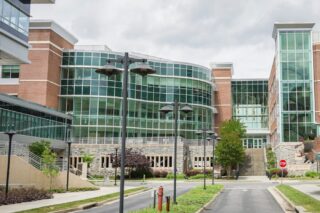
VTCSOM sits in Roanoke, an urban setting in the Blue Ridge Mountains with easy access to hiking, rivers and the Blue Ridge Parkway. The school shares the Virginia Tech Health Sciences and Technology campus with the Fralin Biomedical Research Institute at VTC, and the building is next to Carilion Roanoke Memorial Hospital. That layout matters in practice: classrooms, research labs and a Level I trauma center are a short walk apart.
Being part of Virginia Tech gives students access to the resources of a large public research university, while the small class keeps the school personal. The partnership with Carilion Clinic connects what students learn in research with what they see on the wards, so students learn to move ideas from the lab bench to the bedside. If you are building a list of medical schools in Virginia, VTCSOM is the option to look at if you want a small class, a research requirement and a problem-based curriculum in one place.
Purpose of the Guide
This guide is meant to give you a clear, detailed understanding of what it takes to be admitted to Virginia Tech Carilion School of Medicine. It moves from the key numbers and requirements to the curriculum, costs, people and campus life, then to practical strategy, the secondary essays and the interview. By the end, you should be able to decide whether VTCSOM fits your goals and know how to present yourself as a strong applicant.
Key Takeaways
- Eligibility comes first. VTCSOM considers only U.S. citizens and U.S. permanent residents. It does not accept international, DACA or transfer applicants, and it admits both Virginia residents and out-of-state students.
- There is an MCAT screen. You need a current MCAT of 504 or higher and a competitive GPA to be considered for a secondary. Applicants with a 501 to 503 and a 3.7 undergraduate GPA backed by an extremely competitive record may qualify. Tests must be taken between January 2023 and October 1, 2026.
- Class profile: the Class of 2030 had 6,542 AMCAS applications, 332 interviews and 64 matriculants, with an average undergraduate GPA of 3.66 and an average MCAT of 511. For the 2025 entering class, accepted applicants had a median MCAT of 513 and a median total GPA of 3.82.
- Deadlines: AMCAS by December 1, 2026, and the secondary by December 15, 2026. The secondary costs $70, with a discounted rate for AAMC Fee Assistance Program recipients. There is no Early Decision option.
- Secondary: three short essays for 2026-2027. The prompts ask about a trait you want to protect, a time doing the “right” thing conflicted with rules or authority, and your generation’s greatest challenge beyond AI. All three are below with example answers.
- Cost: 2026-27 tuition is $48,985 for Virginia residents and $63,985 for out-of-state students. The first-year cost of attendance is $82,197 in state and $97,197 out of state.
- Distinctive training: problem-based learning in small groups, a required hypothesis-driven research project written up for publication, early clinical and community immersion, and clinical training at Carilion Clinic.
- Interview: an in-person day with a timed Multiple Mini Interview and one traditional interview with a voting member of the admissions committee.
Key Statistics About Virginia Tech Carilion School of Medicine

| Metric | Value | Cohort or year | Source |
|---|---|---|---|
| Degree and campus | Doctor of Medicine (MD), Roanoke, Virginia; public; ninth college of Virginia Tech | Current | VTCSOM at a glance |
| Accreditation | LCME, full accreditation (eight-year term effective February 2019) | Next full survey 2026-27 | VTCSOM accreditation page |
| Matriculants | 64 | Class of 2030 (entered 2026) | VTCSOM class statistics |
| AMCAS applications | 6,542 | Class of 2030 | VTCSOM class statistics |
| Interviews conducted | 332 | Class of 2030 | VTCSOM class statistics |
| Interviews / applications | 332 of 6,542 (5.1%) | Class of 2030 | Calculated from VTCSOM class statistics |
| Average MCAT | 511 | Class of 2030 matriculants | VTCSOM class statistics |
| Average undergraduate GPA | 3.66 | Class of 2030 matriculants | VTCSOM class statistics |
| Median MCAT | 513 (mean 513.5) | 2025 entering class, accepted applicants | AAMC MSAR |
| Median total GPA | 3.82 (mean 3.76) | 2025 entering class, accepted applicants | AAMC MSAR |
| Median science GPA | 3.75 (mean 3.69) | 2025 entering class, accepted applicants | AAMC MSAR |
| Acceptance rate (offers / applications) | Not published | N/A | N/A |
| Tuition | $48,985 Virginia resident; $63,985 out-of-state | 2026-27, each year M1 to M4 | VTCSOM cost of attendance |
| First-year cost of attendance | $82,197 Virginia resident; $97,197 out-of-state | 2026-27, M1 | VTCSOM cost of attendance |
| Secondary fee and deadline | $70; December 15, 2026 | 2026-2027 cycle | VTCSOM application process |
| Students receiving aid | 100% | 2024-25 academic year | AAMC MSAR (LCME Part I-B) |
| Average graduate debt | $244,481 | 2024-25 academic year, indebted graduates | AAMC MSAR (LCME Part I-B) |
| Total MD enrollment | 219 | October 2025 | AAMC MSAR |
What Are the Average MCAT and GPA at VTCSOM?
VTCSOM publishes averages for each entering class. For the Class of 2030, the average MCAT was 511 and the average undergraduate GPA was 3.66. The Class of 2029 averaged 512 and 3.67, and the Class of 2028 averaged 512 and 3.69. The numbers have been steady for several years, so they are a reliable picture of the students who actually enroll.
Medians for accepted applicants run a little higher. For the 2025 entering class, accepted applicants had a median MCAT of 513 (mean 513.5), with section medians of 128 in Chemical and Physical Foundations, 127 in Critical Analysis and Reasoning, 129 in Biological and Biochemical Foundations and 130 in Psychological, Social and Biological Foundations. The median total GPA was 3.82 and the median science GPA was 3.75. Accepted applicants include people who chose other schools, which is why their numbers differ from the averages of the students who enrolled.
Neither figure is a cutoff. The real screen is an MCAT of 504, or 501 to 503 with a 3.7 GPA and an extremely competitive record. Use our list of average GPA and MCAT scores for every medical school to see where VTCSOM sits among the other schools on your list.
What Is the VTCSOM Acceptance Rate?
VTCSOM does not publish an acceptance rate, and the number of acceptances it offers each year is not published either. You will sometimes see a figure near 1% quoted for the school. That number divides matriculants by applications, which measures how many applicants enrolled, not how many were offered a seat. Because some admitted students choose other schools, the true acceptance rate is higher than matriculants divided by applicants.
What the school does publish is still useful. For the Class of 2030, VTCSOM interviewed 332 of 6,542 applicants, or about 5.1%. That is the most important hurdle: if you are not interviewed, you cannot be admitted. The rest of this guide focuses on how to clear it.
How Large Is the Class?
The Class of 2030 enrolled 64 students, the largest in the school’s history. VTCSOM began with 42 students per year, grew to 49 beginning with the Class of 2024, enrolled 51 in each of the Classes of 2027 and 2028 and 56 in the Class of 2029. Further growth is planned, and the state funding that came with the 2026 resident tuition cut was given in part to support enrollment growth and accelerated study pathways.
Mission and Educational Priorities
VTCSOM’s mission is “To prepare physician thought leaders through innovations in medical education and cutting-edge discovery to improve the health of our communities and transform health care.”
Its vision reads: “Virginia Tech Carilion School of Medicine will be a destination for innovators who aspire to establish the nation’s premier model of 21st century medical education. Through collaboration with our health system and community partners and anchored by the Virginia Tech motto of Ut Prosim (That I May Serve), we will create transformative medical education and research promoting world-class clinical care.”
The school’s core values are Collaboration and Excellence, Innovation and Discovery, Inclusive Excellence, and Humanism and Compassion.
What the Mission Means for Applicants
Three phrases in the mission tell you what VTCSOM is looking for.
“Physician thought leaders.” The school wants students who will lead change in medicine, whether in research, quality improvement, education or community health. VTCSOM looks for “clear evidence of leadership, scholarship, research, and motivation for a career in medicine” and for people “whose accomplishments reveal a capacity for independent, critical thinking.” Leadership here means initiative and ownership, not only titles.
“Cutting-edge discovery.” Research is not optional at VTCSOM. Every student completes an original, hypothesis-driven research project and writes it up for publication. Applicants who can show real research experience, or a strong aptitude for independent research, fit the school’s design. Research-like activities count, too: they “may be in traditional areas of biomedical research but could also be in the humanities, community service, education, or the arts.”
“Improve the health of our communities.” VTCSOM trains in partnership with Carilion Clinic, which serves about 1.7 million people across western Virginia, and its first-year students spend time in community sites such as the local health department and shelters. The Virginia Tech motto, Ut Prosim (That I May Serve), appears in the vision for a reason. Service to others, especially in underserved settings, is part of the fit.
The VTCSOM Identities
The curriculum is organized around a set of identities the school wants every graduate to develop: the patient-centered physician who is also a Scientist Physician, a System Citizen and a Lifelong Master Adaptive Learner. Those identities show up in course names, coaching and reflection. When you write your secondaries or talk with interviewers, it helps to show that you already think in these terms: curious about evidence, aware of how health systems shape care, and committed to keep learning.
Professional Attributes the School Expects
The admissions overview lists the professional attributes expected of medical students and physicians: commitment to engaged learning, compassion, conscientiousness, respect, self-awareness, self-care, sense of duty, social responsibility, teamwork and trustworthiness. Each of these can be shown through your experiences. Pick two or three that fit your story and give concrete examples, rather than claiming all ten.
Accreditation and Institutional Identity
Virginia Tech Carilion School of Medicine is fully accredited by the Liaison Committee on Medical Education (LCME), the national accrediting body for MD programs in the United States and Canada. The LCME visited in October 2018 to review changes linked to the school’s move into Virginia Tech, and effective February 2019 it continued full accreditation for an eight-year term. The next full LCME survey visit takes place in the 2026-27 academic year. Virginia Tech itself is accredited by the Southern Association of Colleges and Schools Commission on Colleges (SACSCOC).
Accreditation confirms that the school meets national standards for medical education. Graduates can enter residency through the National Resident Matching Program and pursue licensure. The MD program meets educational requirements for licensure in every U.S. state and territory listed.
History in Brief
- January 2007: Virginia Tech, Carilion Clinic and Virginia’s governor announce a public-private partnership to create a new medical school and research institute.
- 2008: Cynda Ann Johnson arrives as president and founding dean. Virginia’s General Assembly authorizes funding to build the school and research institute, and groundbreaking takes place in October. The school reports 2008 as its founding year.
- June 2009: The LCME grants preliminary accreditation, which allows the school to recruit students.
- August 2, 2010: The 42-member charter class begins classes as a private school.
- 2013: The Delta Dental of Virginia Foundation endows an oral health curriculum, the first for a U.S. medical school.
- 2014: The first Match Day (100% of the charter class matched), the first student research symposium, the first graduation and full LCME accreditation.
- July 1, 2018: VTCSOM becomes Virginia Tech’s ninth college.
- July 2019: Lee A. Learman, MD, PhD, begins as dean.
- 2026: The Commonwealth of Virginia makes its first direct General Fund appropriation to VTCSOM, and the school lowers tuition for Virginia residents by $15,000.
The school also received INSIGHT into Diversity magazine’s Health Professions Higher Education Excellence in Diversity (HEED) award in 2016 and 2018.
Public School, Private Partner
VTCSOM is a public medical school, but its main clinical partner is a private, not-for-profit health system. This is why you will see several names used for the same relationship. “VTCSOM” is the medical school. “Virginia Tech Carilion” or “VTC” usually refers to the broader partnership, which includes the school, the Fralin Biomedical Research Institute at VTC and Carilion Clinic. Carilion Clinic runs the hospitals and clinics where students train; Virginia Tech awards the degree.
Medical Programs and Affiliations
The MD Program
VTCSOM offers one degree program for new applicants: a four-year MD. There is no three-year MD pathway, no early assurance program and no baccalaureate/MD program, and the school does not admit applicants directly into dual degree programs. All applicants apply through AMCAS to the same MD program.
Advanced Degree Opportunities
After matriculation, VTCSOM students can add an advanced degree. The school lists four options:
- Master in Business Administration (MBA), through Virginia Tech, for students interested in health care leadership, administration and management.
- Master of Public Health (MPH), with the curriculum offered by Virginia Tech’s public health program, for students focused on population health and prevention.
- Master of Science (MS) in Translational Biology, Medicine, and Health (TBMH).
- Doctorate (PhD) in Translational Biology, Medicine and Health. This is the route for students who want MD and PhD training. There is no separate MD/PhD admissions track; the PhD is arranged after you enroll.
The details and timing of these programs are planned with Leslie LaConte, PhD, associate dean for educational affairs, and Amanda Murchison, MD, associate dean of student affairs. Questions about the MS or PhD in TBMH go to Veronica Van Montfrans, PhD. These programs are available only after matriculation, so you do not apply to them in your AMCAS application.
Each option fits a different career path. The MBA suits students who expect to lead clinical departments or health systems. The MPH suits students drawn to community health and prevention, which connects with VTCSOM’s health systems science curriculum. The TBMH degrees suit students who want a research career; they build on the research project every VTCSOM student completes.
Early Identification Program
Undergraduates at five Virginia schools can start their path to VTCSOM early. Each year, the school accepts three students into the Early Identification Program, which provides intensive preparation over two summers:
- Summer One (rising juniors or seniors): a 10-week program of hands-on, hypothesis-driven independent research at the Fralin Biomedical Research Institute at VTC, with an introduction to clinical skills and an MCAT overview.
- Summer Two (rising seniors or graduated seniors): six weeks of clinical rotations across departments at Carilion Clinic, intensive MCAT preparation and AMCAS advising.
To be eligible, you must be a current student at Virginia Tech, Virginia State University, James Madison University, Old Dominion University or the College of William & Mary; a U.S. citizen or permanent resident; a sophomore or junior in good standing with a GPA of 3.3 or higher; have completed one year of biology and/or one year of chemistry with lab; and express a sincere interest in medicine. Applications are due February 1 of your sophomore or junior year, with a transcript and two professional references, including one from a science faculty member. The 2027 application opens in fall 2026. The program is designed to help any participant become a competitive applicant, particularly participants who have faced disparate barriers. Valarie Roberts in the admissions office is the contact.
Two related summer options at the Fralin Biomedical Research Institute are also listed on the school’s research advice page: NeuroSURF (a translational neurobiology summer undergraduate research fellowship) and CardioSURF (with the American Heart Association). These are research programs, not admissions pathways, but they are a strong way to gain research experience close to the medical school.
Clinical Affiliation: Carilion Clinic
Carilion Clinic is the school’s clinical partner and the main site for training. Carilion operates seven not-for-profit hospitals and about 220 outpatient clinics serving roughly 1.7 million residents, and it is the only Level I Trauma Center and Pediatric Trauma Center in western Virginia. More than 750 Carilion physicians in over 60 specialties are available to teach students. Carilion Roanoke Memorial Hospital, next to the school, is the flagship hospital.
Research Affiliation: Fralin Biomedical Research Institute at VTC
The Fralin Biomedical Research Institute at VTC is connected to the medical school building. It opened in 2010 to build interdisciplinary research programs in preventing, diagnosing, treating and curing disease. Its research programs include cognitive and computational neuroscience, brain development and disease, addiction and substance use, brain cancer, cardiovascular sciences, wound healing, health behavior and human development, and immunology. Students can carry out their required research projects under the mentorship of faculty research team leaders at the institute.
Curriculum Overview
Educational Approach
VTCSOM uses a patient-centered, problem-based learning (PBL) curriculum. Small teams work through real patient cases under the guidance of facilitators, deciding what they need to learn and teaching one another. PBL remains the cornerstone of the curriculum after the modifications that began in academic year 2024-2025. Clinical skills are taught through lectures, panel discussions, workshops, simulation, standardized patients and real patients, and patient interaction begins in the first month of the first year.
The curriculum still rests on four value domains: basic science, clinical science, research and interprofessionalism. The school’s Health Systems Science and Interprofessional Practice curriculum teaches students to work with other health professionals and to understand how health systems shape care.
Preclinical courses are graded pass/fail, required clinical rotations are graded and the school does not rank students.
Key Components of the Curriculum
- Patient-centered learning: clinical and community experiences start in the first weeks of school.
- Problem-based learning: small-group discussion of real patient cases.
- Health systems science: interprofessional collaboration, population health and how health care is organized.
- Research requirement: an original, hypothesis-driven research project with a written manuscript of publishable quality.
- Oral health: a comprehensive oral health curriculum endowed in 2013, the first for a U.S. medical school.
Phase 1: Foundational Science Curriculum (Three Semesters)
Phase 1 now lasts three semesters and ends in January of the second year, when students move into clerkships. It follows Virginia Tech’s academic calendar, with exams and winter break in December and a spring break in March.
Semester 1 begins with orientation and an extended Profession of Medicine and Identities course. During the first two weeks, students explore the VTCSOM identities through immersion in the community and clinical environment, and each student is paired with a coach who supports self-reflective practice.
Semester 2 continues the five core courses and ends with three weeks of dedicated time to launch the mentored research study before summer break.
Semester 3 completes the core courses and adds a six-week dedicated research period. By the end, students are ready for clerkships and intersessions.
The five Phase 1 core courses are:
- Integrated Foundational Sciences (IFS): a clinical presentation model that weaves basic and clinical science together, so students learn the science in the context of how patients present for care.
- Health Systems Science and Interprofessional Practice (HSSIP): systems thinking, social determinants of health, population health, teaming and the structure of the U.S. health system. Communication, health equity, leadership and change agency run through the course. Patient safety topics, including human factors in healthcare, fit here as well.
- Profession of Medicine and Identities (POMI): professional development, master adaptive learner skills, longitudinal coaching and the integration of clinical medicine, inquiry and research.
- Community and Clinical Immersions (CCI): early exposure to patients and teams in community sites, such as the local health department and shelters, and in clinical settings, including ambulatory clinics and inpatient units. Students examine health care inequities and their effect on care.
- Research and Inquiry (R&I): the scientific method, research ethics, epidemiological design and biostatistics, leading each student to form an original research question and present it for peer and faculty feedback.
Phase 2: Clinical Clerkships
Phase 2 is organized into four paired clerkship clusters, separated by two-week intersessions:
- Family Medicine (4 weeks) and Surgery (6 weeks)
- Internal Medicine (8 weeks) and Neurology (2 weeks)
- Pediatrics (5 weeks) and Psychiatry (5 weeks)
- Obstetrics and Gynecology (6 weeks) and Research (4 weeks)
Most clinical teaching comes from Carilion Clinic faculty, who supervise students on the wards and in clinics. The research block inside the clerkship year keeps the research project moving while students build clinical skills.
Phase 3: UME-GME Transition and Electives
Phase 3 is the bridge from medical school to residency. Students choose from more than 150 electives, including subspecialty, research, international and global health options, and can complete up to three away rotations. They take the Emergency Medicine clerkship, gain advanced experience in settings such as the intensive care unit and design individualized schedules with faculty mentors, with structured guidance on specialty choice and residency applications. Phase 3 ends with Intersession 5: Transition to Residency Preparation, which covers advanced procedural skills, patient handoffs, clinical prioritization and day-one readiness for internship.
How the Curriculum Has Changed
Applicants who read older descriptions of VTCSOM will see a two-phase model with Year 1 split into four blocks (cells and tissues, two human body blocks and the nervous system) and Year 2 focused on pathobiology. The 2024-25 modifications replaced those blocks with the three-semester Phase 1 above and moved the start of clerkships earlier. The aims behind the old blocks, such as learning normal structure and function before disease and linking each organ system to physical exam skills, research methods and health systems topics, carry forward in the integrated courses.
Older descriptions also mention “Domain Days,” when students gathered during clerkships for research and health systems sessions. The current structure uses four two-week intersessions between clerkship clusters, and the transition-to-residency capstone continues as Intersession 5 in Phase 3. The school’s stated goals for the changes were to align the curriculum with patients’ needs, integrate its components, place students in clinical settings earlier, build self-directed learning and prepare graduates for residency. Pre-clerkship class hours were set at the national mean, and the pre-clerkship curriculum now ends in January of the second year instead of April. If you see a block schedule in a forum post or an older article, treat it as history, not as the current plan.
What This Means for Applicants
PBL rewards students who prepare independently, explain clearly and give and receive feedback well. The research requirement rewards students who already know how to form a question and see it through. Early clinical immersion rewards students who are comfortable with patients from the start. When you describe your experiences, show evidence of each: self-directed learning, inquiry and comfort in clinical settings. Our guide to Multiple Mini Interviews explains how the school’s interview format tests teamwork, which matters a great deal in a PBL classroom.
Admissions Requirements and Application Process
VTCSOM uses a holistic admissions process. It evaluates academic performance, clinical exposure, research, service, teamwork and leadership together, and it uses a rolling process, sending acceptances on several occasions throughout the cycle.
Admissions Overview
VTCSOM seeks applicants who show leadership, scholarship, research and a strong commitment to a career in medicine. The admissions process is highly selective. The school values people who are motivated by service to others and who have a capacity for independent, critical thinking.
The school offers a four-year MD and admits both Virginia residents and out-of-state applicants. Only U.S. citizens and U.S. permanent residents are considered, and the school does not accept transfer students. Canadian, international and DACA applicants are not eligible.
Key Attributes Considered in Applicants
Every applicant receives a holistic review of the entire record, including:
- Strong academic achievement, reflected in GPA and MCAT.
- Exposure to, and passion for, a medical career, such as hospital volunteering, physician shadowing, working as a scribe, working as an emergency medical technician or other volunteer or paid clinical experience.
- Research experience or a strong aptitude for independent research.
- Volunteer work in campus or community service.
- Teamwork.
- Leadership.
- Narratives in the personal statement and the short secondary essays.
- Strong letters of recommendation.
The school does not consider an applicant’s financial status in admissions decisions. In the 2025 entering class, 27% of matriculants reported a disadvantaged background and 16% said they grew up in a medically underserved area, so applicants from those backgrounds are part of every class. If that describes you, explain it in your AMCAS application and connect it to the communities you hope to serve.
Who Gets a Secondary Application?
Secondaries are screened. To be considered for one in the 2026-2027 cycle, you must have:
- A competitive undergraduate GPA.
- A competitive current MCAT score. In practice, that means a total of 504 or higher. Applicants with a 501 to 503 and an undergraduate GPA of 3.7, supported by an extremely competitive portfolio of experiences, may qualify.
- The ability to meet the VTCSOM Technical Standards for matriculation, promotion and graduation, with or without accommodation.
- U.S. citizenship or permanent residency.
- At matriculation, a bachelor’s degree from an institution in the United States or Canada approved by a U.S. regional accrediting body.
- No felony convictions.
The school also has a minimum GPA screen, though it does not publish a number beyond “competitive.” It will consider postbaccalaureate and graduate coursework for applicants whose undergraduate GPA is at least 2.8. If you plan to take or retake the MCAT, VTCSOM will hold your application until a qualifying score arrives, as long as a future test date is listed on your AMCAS application. When you have more than one score, the admissions committee considers your highest total, and it can see scores from the last three years.
MCAT Requirements
- Accepted test dates: January 2023 through October 1, 2026.
- Secondary screen: 504 or higher, or 501 to 503 with a 3.7 GPA and an extremely competitive record.
- Class of 2030 average: 511.
- 2025 entering class, accepted applicants: median 513.
A score of 504 makes you eligible for review. It does not make you competitive by itself. Most enrolled students score well above the screen, so if your score is near 504, the rest of your application has to carry more weight.
Degree Requirements
Every student must hold either an earned bachelor’s degree conferred before matriculation, or an earned combined master’s or doctoral degree conferred before matriculation that, by design, satisfied the university’s bachelor’s requirements. All coursework must be completed satisfactorily at an institution in the United States or Canada and/or approved by a U.S. regional accrediting body.
Required Coursework
VTCSOM requires the following coursework (or equivalent):
- General Biology with laboratory: 2 semesters
- General Inorganic Chemistry with laboratory: 2 semesters
- Organic Chemistry with laboratory: 2 semesters, or 1 semester of Organic Chemistry with lab and 1 semester of Biochemistry with lab
- Physics with laboratory: 2 semesters
- Mathematics: 2 semesters of calculus, or 1 semester each of Calculus and Statistics
- English/Writing: 2 semesters, or 1 semester each of English and Philosophy
A four-semester sequence of General Chemistry, Organic Chemistry I, Organic Chemistry II and Biochemistry, each with its lab, also satisfies the chemistry requirement. Writing-intensive courses may substitute for English/writing if the admissions office approves the syllabus. Our medical school prerequisites checklist can help you compare these requirements with the other schools on your list.
Course Policies That Trip Up Applicants
- Labs must be in person. Online science labs do not meet the requirement. The exception is labs completed online during the COVID-19 pandemic, from Spring 2020 through Summer 2021. If you took online lab courses outside that window, graded advanced courses in the same areas are highly recommended.
- Prerequisites are due by matriculation, not by the time you apply. Many applicants finish missing courses in the fall, spring or summer before they start. Your final official transcript is due no later than June 13 of the year you matriculate.
- Community college credit is accepted if the courses were completed satisfactorily at a regionally accredited institution.
- AP and IB credit is accepted for English, Biology, Math, Physics and Inorganic Chemistry, as long as it appears on your college transcript and is verified by AMCAS.
- CLEP credit is not accepted for any prerequisite.
- Grades matter after admission, too. A grade of C may require a written explanation and possible remediation. A grade of D or below triggers a re-evaluation of the application. Required courses should not be taken pass/fail or credit/no credit.
- There is no age limit on prerequisite coursework.
If you have questions about a course, email the admissions office with your unofficial transcript and the relevant syllabi.
Recommended Coursework
VTCSOM encourages applicants to sample a broad range of disciplines and to explore one or more areas in depth. Of particular interest are activities that show a spirit of discovery and inquiry and the potential to be a thought leader in some part of medicine. Graduating VTCSOM students have identified these courses as helpful, though none is required:
- Biochemistry
- Cell Biology
- Comparative Anatomy
- Genetics
- Microbiology
- Physiology
- Psychology
- Sociology
Situational Judgment Tests
VTCSOM does not use AAMC PREview scores and does not require any additional assessment, such as Casper, for admission. Your time is better spent on the MCAT, your experiences and your essays.
Letters of Recommendation
VTCSOM participates in the AMCAS Letters Service. The rules for the 2026-2027 cycle are:
- Minimum: three letters. The school recommends four to seven, and seven is the maximum.
- Required writer: at least one letter from a science or math faculty member.
- Strongly recommended: a letter from a medical professional and a letter from a research mentor or principal investigator.
- Committee letters and letter packets: accepted. A committee letter with a pre-health advisor’s endorsement, or three to seven individual letters, is enough.
Letters should reflect the breadth of your academic, medical and volunteer experiences. A physician letter is helpful but is not required; the required letter is from a science or math professor.
Background Check, Drug Screen and Immunizations
Admitted students complete a criminal background check through the AAMC’s group process with Certiphi Screening. Documented felony convictions are grounds for canceling an acceptance, and misdemeanors are reviewed case by case. A drug screen is completed during orientation through Carilion Occupational Medicine, and all students must show proof of required immunizations before classes or patient contact.
Application Process, Step by Step
Phase I: AMCAS application. Submit your primary application through the American Medical College Application Service. The portal opens in May, the earliest submission date for this cycle was May 28, 2026, and VTCSOM’s deadline is December 1, 2026. If you are new to the primary, our guide to applying to medical school with AMCAS covers each section.
Phase II: Secondary application. Invitations are sent by email with a link to the school’s secondary. The first invitations go out in July. A complete secondary includes the short essay prompts, an acknowledgement of the prerequisite requirements, receipt of your letters and a $70 non-refundable fee, with a discounted rate for applicants approved for the AAMC Fee Assistance Program. The secondary deadline is December 15, 2026.
Complete application. To be considered for an interview, you need a completed AMCAS application with a current MCAT, a completed VTCSOM secondary, at least three letters through AMCAS Letters, no felony convictions and a strong record of service, medical exposure, research, leadership and teamwork.
Phase III: Interview. Interview invitations begin in early August 2026, and the first round of interviews takes place in August and September. The interview day includes scenario interviews (the MMI) and a traditional interview, plus a curriculum presentation, a facilities tour and a tour of Roanoke.
Phase IV: Acceptance. Acceptances are sent on several occasions throughout the cycle. For this cycle, the earliest acceptance notices go out on October 15, 2026, and the latest on July 26, 2027. Some interviewed applicants are placed in an active status pool. Interviewed applicants who are not initially accepted are re-evaluated in April, and after April 30 the active status pool converts to a waitlist. You may remain on the waitlist until matriculation.
After an Acceptance
Once accepted, you confirm receipt of the offer, set up your student account and complete an Acknowledgement of Offer form. You have up to two weeks to respond to an offer, and no deposit is required. Requests to defer entry are considered case by case. Applicants can upload letters of intent, letters of interest or notices of significant updates in the applicant portal any time after completing the secondary. Matriculation depends on the school’s terms and conditions, including satisfactory completion of coursework, your degree, the background check and the drug screen.
Timeline for the 2026-2027 Cycle
| Date | Step |
|---|---|
| May 2026 | AMCAS opens; earliest submission May 28, 2026 |
| July 2026 | First secondary invitations sent; application review began July 27, 2026 |
| Early August 2026 | Interview invitations begin |
| August to September 2026 | First round of interviews |
| October 1, 2026 | Last MCAT date accepted for this cycle |
| October 15, 2026 | Earliest acceptance notices |
| December 1, 2026 | AMCAS primary deadline |
| December 15, 2026 | Secondary application deadline |
| March 15, 2027 | VTCSOM issues at least its required number of acceptances (AMCAS protocol) |
| April 2027 | Interviewed applicants not yet accepted are re-evaluated |
| April 15, 2027 | Applicants may hold no more than three acceptances (AMCAS protocol) |
| April 30, 2027 | Applicants may hold only one acceptance and may commit to enroll; active status pool becomes a waitlist |
| June 13, 2027 | Final official transcript due |
| Late July or early August 2027 | Matriculation and orientation |
Because VTCSOM uses rolling admissions and offers a limited number of interviews, timing matters. Submit AMCAS early in the summer, return the secondary within a week or two of receiving it and make sure your letters arrive early. Planning pre-med summer internships around the cycle, rather than in the middle of secondary season, keeps your summer of applying manageable.
Tuition, Cost of Attendance and Financial Aid
Tuition for 2026-27
VTCSOM’s 2026-27 tuition is $48,985 per year for Virginia residents and $63,985 per year for out-of-state students, for every year from M1 to M4. The resident rate is new this year. In April 2026, the Virginia Tech Board of Visitors set one rate of $63,985 for all students. After the Commonwealth’s 2026 Special Session gave Virginia Tech $6.5 million in General Fund support for the school, the board approved a $15,000 reduction for Virginia residents at its August 2026 meeting, starting in fall 2026. The new resident rate is $24,492.50 per semester and applies to all Virginia residents enrolled at VTCSOM. Out-of-state tuition did not change, because the state does not fund nonresident tuition.
For comparison, M1 tuition in 2025-26 was $62,158 for all students. A student who is in Virginia primarily to attend college is generally not considered a domiciled Virginia resident, so check your residency status before you count on the lower rate.
2026-27 Cost of Attendance
| Item | M1 | M2 | M3 | M4 |
|---|---|---|---|---|
| Months in academic year | 11 | 12 | 12 | 11 |
| Tuition, Virginia resident | $48,985 | $48,985 | $48,985 | $48,985 |
| Tuition, out-of-state | $63,985 | $63,985 | $63,985 | $63,985 |
| Fees billed by school | $1,652 | $1,677 | $1,652 | $1,777 |
| Board exams (projected) | None | $695 | $695 | None |
| Textbooks and equipment | $2,150 (includes computer) | $100 | $100 | $100 |
| Health insurance (estimated) | $4,235 | $4,235 | $4,235 | $4,235 |
| Residency interviewing | None | None | None | $5,000 travel; $380 applications |
| Living expenses | $16,412 | $17,904 | $17,904 | $16,412 |
| Transportation | $3,520 | $3,840 | $3,840 | $3,520 |
| Personal and miscellaneous | $4,015 | $4,380 | $4,380 | $4,015 |
| Loan fees | $528 | $498 | $498 | $474 |
| Total, Virginia resident | $82,197 | $82,314 | $82,289 | $84,898 |
| Total, out-of-state | $97,197 | $97,314 | $97,289 | $99,898 |
Adding the four years together, the published 2026-27 budgets come to about $331,700 for a Virginia resident and about $391,700 for an out-of-state student, before any scholarships and before future tuition changes. Tuition and fees are reviewed each year by the Board of Visitors, so treat this as an estimate. Our breakdown of the total cost of medical school shows how these figures compare nationally.
A few practical notes from the school’s budget: every student must carry health insurance, though you can keep an existing plan if you submit proof; students must have a laptop, and the M1 budget includes an estimated $2,150 for the computer; and the school strongly recommends paying July rent before fall financial aid arrives, so start with some savings.
Financial Aid
VTCSOM is committed to the principle that a student’s financial resources should not be a barrier to enrollment. Its aid package combines institutional scholarships with federal loans:
- Federal Direct Unsubsidized Loans are available to all students regardless of need, with a six-month grace period after graduation and the option of mandatory medical forbearance during residency.
- Direct Graduate PLUS Loans are available to returning students who qualify for the federal interim exception (legacy status), after they borrow the annual maximum in unsubsidized loans. New federal rules changed Grad PLUS eligibility, so incoming students should review the current options with the financial aid office.
- Private and alternative loans are also available, and students can normally borrow up to the full cost of attendance.
- Institutional scholarships include need-based awards. VTCSOM requires parental information for students who want to be considered for need-based scholarship funds, even though medical students are independent for federal aid.
Complete the FAFSA for each academic year, ideally by March 1, using Virginia Tech’s school code 003754. Named scholarships listed by the school include the Charter Class Scholarship, the Daniel and Katina Carusillo Scholarship, the Morgan Dana Harrington Memorial Scholarship, the Sam and Priscilla McCall Scholarship, the Caroline Osborne Memorial Scholarship and the Henrietta Lacks Excellence in Medicine Scholarship.
In 2024-25, 100% of VTCSOM students received financial aid, and the average medical school debt among indebted graduates was $244,481. The Office of Financial Aid offers help with budgeting, loan repayment options and debt management throughout the four years.
Scholarships for Currently Enrolled Virginia Residents
Along with the new resident tuition rate, Virginia Tech announced one-time FY2027 scholarships for Virginia residents already enrolled when the change took effect: $45,000 for M4 students, $30,000 for M3 students and $15,000 for M2 students. These awards apply to current students, not to applicants entering in 2027, but they show that the state’s investment is aimed at lowering costs for Virginians at the school.
Campus Facilities and Student Life
Campus and Facilities
VTCSOM is located at 2 Riverside Circle in Roanoke, on the Virginia Tech Health Sciences and Technology campus. The purpose-built medical school building was designed around the patient-centered curriculum. The campus tour highlights its PBL rooms, tiered and flipped classrooms, a lecture hall and auditorium, a wet anatomy lab, OSCE suites for clinical skills exams, a library, a student lounge and gym, a student commons and an atrium with a green roof and café.
- Fralin Biomedical Research Institute at VTC. The research institute is connected to the medical school and gives students access to faculty research teams in neuroscience, cancer, cardiovascular science and other fields.
- Carilion Clinic. Carilion Roanoke Memorial Hospital sits next to the school and is the main teaching hospital, part of a system of seven hospitals and about 220 outpatient clinics.
- Center for Simulation, Research, and Patient Safety. This center, home to the Parker Lab, supports simulation-based training and patient safety research, and it is part of the campus tour for applicants.
Student Organizations and Extracurriculars
VTCSOM encourages students to form VTC Student Clubs, join specialty interest groups and take part in regional and national medical organizations. The school’s current list includes dozens of clubs, organizations and interest groups.
Medical Student Council. The student government, listed as the VTC Medical Student Council, coordinates student activities with the Office of Student Affairs and represents students to the administration.
Specialty interest groups. Interest groups cover addiction medicine, anesthesiology, cardiothoracic surgery, dermatology, emergency medicine, family medicine, geriatrics and palliative medicine, internal medicine, interventional radiology, military medicine, neurology and neurosurgery, obstetrics and gynecology, ophthalmology, orthopaedics and sports medicine, otolaryngology, pediatrics, physical medicine and rehabilitation, plastic surgery, psychiatry, radiation oncology, radiology, surgery, urology and vascular surgery.
Community service initiatives. Service is a large part of student life. Students run or volunteer with the Bradley Free Clinic club, the Fralin Free Clinic, the International Health Clinic and Bringing Health Literacy to Roanoke, and they take part in the Virginia Harm Reduction Coalition liaison group, Medical Spanish, the VT-VTC Premed Mentorship Program and Mentoring in Medicine. Students participate in student-run, physician-supervised free clinics and other community service, even though community service is not a graduation requirement.
Identity and professional organizations. Chapters include the Student National Medical Association, the Latino Medical Student Association, the Asian Pacific American Medical Student Association, the American Muslim Medical Student Association, the Jewish Medical Student Association, the South Asian Student Medical Association, the Medical Student Pride Alliance, the Christian Medical and Dental Association, the Group on Women in Medicine and Science, the Association of Women Surgeons, the Medical Society of Virginia and AMA, and the AAMC Organization of Student Representatives.
Interests beyond medicine. Clubs include Wilderness Medicine, VTC Outdoors, Fishing, Gardening, a Social Run Club, Healing Through Harmony (music), Believe in Art and the History of Medicine Club. The school’s ARTiculation program also supports creativity in medicine.
Diversity and Inclusion
VTCSOM’s core values include Inclusive Excellence, and the school has received two HEED awards for diversity in the health professions (2016 and 2018). Support today runs through the school’s Center for Inclusion, the Office of Student Affairs and Virginia Tech’s LGBTQ+ Resource Center, which serves all Virginia Tech and VTC students. Students with disabilities can request accommodations through Virginia Tech’s Services for Students with Disabilities, and students should disclose and request support as early as possible. The associate dean for admissions also has direct responsibility for programs and pipelines aimed at student diversity goals, including the Early Identification Program.
Student Support and Resources
- Academic advising and tutoring: individual tutoring and faculty consultation are available, and each student has a coach from the first weeks of Phase 1.
- Career counseling: the Career Advising (Road to Residency) program supports specialty choice and residency applications.
- Well-being: the Office of Well-Being, led by a chief well-being officer, runs the student wellness program, and mental health resources are listed on the school’s learning environment pages.
- Financial aid counseling: budgeting, loan and debt management help from the Office of Financial Aid.
- Learning environment: a graduate ombuds office, a teacher-learner compact and a confidential reporting process for mistreatment.
Housing and Cost of Living
Students live off campus, renting apartments or houses in Roanoke and nearby neighborhoods, and the school points students to Virginia Tech’s off-campus housing site for the Roanoke campus, where you can search listings, sublets and roommates. Affordable options are a short drive, trolley or bicycle ride from campus. Typical rents run about $1,000 a month for a one-bedroom, one-bath apartment and about $1,500 a month for a two-bedroom, two-bath apartment.
Roanoke’s cost of living is lower than in many other urban areas, which helps. A car is recommended because clinical sites are spread across the region, though a driver’s license is not required. The 2026-27 budget includes $16,412 to $17,904 a year for living expenses and $3,520 to $3,840 for transportation.
Living in Roanoke
Roanoke combines a small-city downtown with quick access to the Blue Ridge Mountains, the Appalachian Trail and the Roanoke River greenways. The school describes itself as a close-knit community where classmates support each other while keeping high professional standards, and its campus culture statement leans on the Virginia Tech motto Ut Prosim. If you want outdoor recreation and a manageable commute between home, school and hospital, Roanoke is an easy place to settle for four years.
Clinical Rotations and Research Opportunities
Clinical Training at Carilion Clinic
Carilion Clinic is the primary site for clinical training. Students gain hands-on experience across inpatient units, ambulatory clinics, emergency departments and surgical services, starting with Community and Clinical Immersions in Phase 1 and continuing through the clerkships in Phase 2 and advanced rotations in Phase 3. Most clinical teaching is done by Carilion faculty.
Carilion’s scale gives students a broad mix of patients. As the only Level I Trauma Center and Pediatric Trauma Center in western Virginia, Carilion Roanoke Memorial Hospital sees serious trauma from a wide region, while Carilion’s outpatient clinics serve urban, suburban and rural communities across Southwest Virginia. Students see both high-acuity hospital medicine and the everyday primary care that rural patients depend on.
Clinical Rotation Sites
Core clerkships take place at Carilion Clinic hospitals and affiliated outpatient practices in the Roanoke region. In Phase 3, students can do up to three away rotations at other institutions and choose from more than 150 electives, including subspecialty, research, international and advanced clinical options. Global health electives are available for students who want cross-cultural clinical experience. In the most recent Graduation Questionnaire, 32% of VTCSOM’s graduating seniors reported a global health experience during medical school.
Commitment to Primary Care
Students take part in the Longitudinal Ambulatory Care Experience (LACE), the school’s longitudinal ambulatory care program, during the early years. All students also complete a Family Medicine clerkship that covers acute, chronic and preventive care across the lifespan, including geriatrics, sports medicine and community-based primary care. Students also see primary care in the internal medicine, pediatrics and obstetrics and gynecology clerkships, and rural medicine electives and primary care research projects are available in the later years. In the 2026 Match, eight graduates entered primary care fields.
Required Research Project
Research is a defining feature of VTCSOM. Every student must complete an original, hypothesis-driven research project before graduation, guided by a mentoring team. Students must produce a written manuscript of publishable quality and present their work in an appropriate venue, usually the school’s annual research symposium. The research curriculum is longitudinal:
- Phase 1: the Research and Inquiry course teaches research design, ethics and biostatistics. Students form an original research question, then use three weeks at the end of semester 2 and six weeks in semester 3 to launch the study.
- Phase 2: a four-week research block is paired with obstetrics and gynecology in the clerkship clusters.
- Phase 3: research electives and blocks can be added to students’ individualized schedules.
Projects can be basic, translational, clinical, health systems or education research. Students can work with faculty research team leaders at the Fralin Biomedical Research Institute at VTC. Institute faculty serve as principal investigators on research grants with an annual value of about $18 million, and VTCSOM reported $21.8 million in total direct federal research grants and contracts in fiscal year 2024.
Research Focus Areas
The Fralin Biomedical Research Institute has built research programs in:
- Cognitive and computational neuroscience
- Brain development and disease
- Addiction and substance use
- Brain cancer
- Cardiovascular sciences
- Wound healing
- Health behavior and human development
- Immunology
The school’s research enterprise also includes health systems science research labs and a Smart Healthcare Hub. If you have research experience in any of these areas, say so specifically in your application.
Research and Clinical Experience Before You Apply
For research, be proactive: start with courses and faculty at your own college, look for funding if a position is unpaid and keep a research journal so you can describe the work clearly in your AMCAS application. Virginia Tech students can look at the Early Identification Program and the Fralin institute’s NeuroSURF and CardioSURF summer fellowships.
Clinical experience should come first, though. Keep building a portfolio of working with patients through shadowing, clinic volunteering, EMT work or scribing. If your clinical hours are thin, structured medical internships for undergraduates can add supervised, hands-on patient contact. The AAMC also lists ways to gain clinical experience beyond shadowing, which is useful when shadowing spots are scarce.
Match and Residency Outcomes
VTCSOM participates in the National Resident Matching Program, and its match record is strong:
- 2026 Match: all 52 graduating members of the Class of 2026 matched (one elected a research fellowship), and two Class of 2025 graduates also matched. The class matched into programs in 23 states and Washington, D.C. The most common specialties were emergency medicine, obstetrics and gynecology, and internal medicine. Eight students matched into primary care, three into ophthalmology, two into orthopedic surgery and one into otolaryngology. Six students will complete all or part of their training in Virginia, including one who matched in emergency medicine at Carilion Clinic-Virginia Tech Carilion School of Medicine.
- Earlier classes: the school reports a 100% match rate for every class from 2014 through 2024 except the Class of 2021 (95%).
- Destinations: recent classes have matched at Johns Hopkins, Brown, the University of Michigan, the University of North Carolina at Chapel Hill, Washington University in St. Louis, Vanderbilt and other academic medical centers, as well as at Carilion Clinic.
Graduates who stay in Roanoke for residency train in programs run by Carilion Clinic with VTCSOM, which include emergency medicine, family medicine, general surgery, plastic surgery, neurosurgery and orthopaedic surgery, among others.
Notable Alumni, Faculty, Leadership and Admissions Staff
VTCSOM is a young school. Its first class graduated in 2014, so its alumni are early in their careers, but many have already returned to Roanoke to practice and teach. Graduates have matched at well-known academic medical centers across the country, and a Virginia Tech report found that about 20% of alumni were in Virginia for residency, fellowship or practice, with just over 8% in Roanoke. The faculty includes Carilion Clinic physicians and researchers at the Fralin Biomedical Research Institute at VTC.
The profiles below cover people whose roles and school connections are listed on official pages. They are useful to know because they lead the programs, offices and decisions you will deal with as an applicant and a student.
Alumni Accomplishments
- Residency placements: every class from 2014 through 2024 matched at or near 100%, and all 52 graduates of the Class of 2026 matched, at programs that include Johns Hopkins, Brown, the University of Michigan and Washington University in St. Louis.
- Returning to serve the region: several charter class graduates came back to Roanoke after residency and fellowship to practice at Carilion Clinic and teach VTCSOM students, which was one of the original goals of the school.
- Academic medicine: alumni now hold faculty appointments at the medical school, and recent graduates have completed combined MD and PhD training.
Notable Alumni of Virginia Tech Carilion School of Medicine
Matthew T. Joy, MD (Charter Class of 2014)
Matthew Joy graduated with VTCSOM’s charter class in 2014 and stayed for residency in plastic and reconstructive surgery at the same institution, finishing in 2020 as the first resident in Carilion’s integrated plastic surgery residency. After a reconstructive microsurgery fellowship at the University of Pennsylvania, he returned to Roanoke. He is now director of lymphatic and microsurgical reconstruction at Carilion Clinic and an assistant professor of plastic and reconstructive surgery at VTCSOM, with interests in head and neck, breast and extremity reconstruction, limb salvage and the surgical treatment of lymphedema.
His path is worth knowing if you are a nontraditional applicant. Before medicine, Joy earned a degree in studio jazz guitar performance from the University of Southern California and worked as a professional musician, then completed USC’s postbaccalaureate premedical program in 2009. VTCSOM’s average entering student is 25 years old, and his story shows that a later, unconventional start fits the school well.
Ashley W. Gerrish, MD (Charter Class)
Ashley Gerrish was a member of VTCSOM’s charter class and completed her surgical residency through VTCSOM and Carilion Clinic, followed by a minimally invasive surgery fellowship at Virginia Commonwealth University. She returned to Carilion Clinic as a general and bariatric surgeon and joined the medical school faculty. She has spoken about how the mentorship she received as a student shaped her decision to stay in Roanoke and teach. For applicants, her career shows the kind of continuity VTCSOM aims for: train here, specialize where it makes sense and come back to serve the region.
Other Charter Class Graduates Who Came Back
A 2021 Virginia Tech report on returning alumni described several other charter class members who practice in the region, including emergency physicians at Carilion Clinic and a hematologist-oncologist in Roanoke and Salem. One charter class member, Josh Eikenberg, took an extra year to earn a master’s in public health before graduating in 2015, an early example of the school’s MPH option in practice.
School Leadership
Lee A. Learman, MD, PhD, Dean
Lee Learman became dean of VTCSOM on July 1, 2019, after being selected in January 2019. As dean, he is the school’s chief academic and administrative officer. He earned his bachelor’s degree at UCLA, his MD at Harvard Medical School and a PhD in social psychology from Harvard University, and he completed residency in obstetrics and gynecology at UCLA. He has published more than 75 peer-reviewed papers in gynecology, obstetrics and medical education, serves in national roles with the American Board of Obstetrics and Gynecology and other specialty organizations, and has served on the USMLE/NBME Evidence-based Medicine Interdisciplinary Review Committee. His clinical work focuses on chronic pelvic pain. His background in both medicine and medical education research helps explain the school’s emphasis on how students learn, not only what they learn.
Rebecca R. Pauly, MD, FACP, Vice Dean
Rebecca Pauly serves as vice dean in the Office of the Dean. Under the school’s immunization policy, the vice dean decides when a student whose health and immunization records are incomplete may attend classes or clinical rotations, so admitted students should finish those forms well before orientation.
Leslie LaConte, PhD, Associate Dean for Educational Affairs
Leslie LaConte leads educational affairs, the office responsible for the curriculum, including the 2024-25 modifications. She is also one of two people the school names as contacts for the details and timing of advanced degrees such as the MBA, MPH and TBMH programs.
Amanda Murchison, MD, Associate Dean of Student Affairs
Amanda Murchison leads student affairs, which coordinates student organizations with the Medical Student Council and supports advising and student life. With LaConte, she is a named contact for planning an advanced degree alongside the MD.
Michael J. Friedlander, PhD, Senior Dean for Research
Michael Friedlander is VTCSOM’s senior dean for research and the founding executive director of the Fralin Biomedical Research Institute at VTC. He is also Virginia Tech’s vice president for health sciences and technology. The school’s interview day video describes applicants meeting the institute’s founding executive director to learn about the research curriculum and the basic, translational and clinical research open to students.
Denis A. Foretia, MD, MPH, MBA, FACS, Associate Dean for Global Health
Denis Foretia leads global health at VTCSOM. Phase 3 includes global health electives for students seeking cross-cultural clinical experience, and if you have international clinical or public health experience, global health is the part of the school most connected to it.
Other Members of the Dean’s Office
The leadership page also lists David B. Trinkle, MD, associate dean for community engagement; Paul R. Skolnik, MD, associate dean for research; Arthur T. Ollendorff, MD, associate dean for graduate medical education; Tarin A. Schmidt-Dalton, MD, associate dean for clinical science; Linda Chaudron, MD, MS, senior associate dean for faculty affairs; Shari Whicker, EdD, MEd, assistant dean for faculty development; and Lisa Uherick, MD, chief well-being officer.
Admissions Staff
Melanie K. Prusakowski, MD, Associate Dean for Admissions
Melanie Prusakowski leads VTCSOM admissions. Her office handles recruitment, applicant processing, the MMI interviews and the administration of the admissions committee, and it has direct responsibility for programs and pipelines aimed at student diversity goals. She reports to the dean. Clinically, she is an associate professor of emergency medicine and pediatrics, director of pediatric emergency medicine education and an assistant program director in emergency medicine. She trained in pediatrics at Robert Wood Johnson and in pediatric emergency medicine at the Children’s Hospital of Philadelphia. An emergency physician running an MMI-based process is a good reminder that the school values quick, clear reasoning under pressure.
Ron Bradbury, MA, Senior Director of Admissions
Ron Bradbury is the senior director of admissions and part of the team that applicants contact with questions about the process.
Hannah Greco, BA, CPACC, Assistant Director of Admissions
Hannah Greco is assistant director of admissions on the same team.
Valarie Roberts, MA, EdS, Admissions Operations Manager
Valarie Roberts manages admissions operations and is the contact for the Early Identification Program.
The admissions office can be reached at [email protected] or (540) 526-2560, in Riverside 1, Suite 106, 2 Riverside Circle, Roanoke.
Notable Faculty
VTCSOM’s faculty includes Carilion Clinic physicians who teach in the clerkships and serve as PBL facilitators, and Virginia Tech scientists at the Fralin Biomedical Research Institute who mentor student research projects. Many of the leaders above are also active faculty: Learman in obstetrics and gynecology, Prusakowski in emergency medicine and pediatrics, Joy in plastic surgery and Gerrish in surgery. When you research faculty for your essays or interview, look for people whose work matches your interests, especially possible research mentors at the Fralin institute.
Admissions Statistics and Class Profile
Class Statistics by Year
| Entering class | AMCAS applications | Interviews | Matriculants | Average GPA | Average MCAT | States represented |
|---|---|---|---|---|---|---|
| Class of 2030 (entered 2026) | 6,542 | 332 | 64 | 3.66 | 511 | 22 |
| Class of 2029 (entered 2025) | 6,371 | 303 | 56 | 3.67 | 512 | 20 |
| Class of 2028 (entered 2024) | 5,737 | 283 | 51 | 3.69 | 512 | 16 |
| Class of 2027 (entered 2023) | 6,184 | 287 | 51 | 3.62 | 513 | 16 |
| Class of 2026 (entered 2022) | 6,916 | 287 | 49 | 3.6 (mean) | 512 (mean) | Not published |
Source: VTCSOM Class Statistics page. GPA and MCAT are the averages the school publishes for matriculants.
Other Class of 2030 details: the average age was 25, and 16 students already held graduate degrees.
Applicants, Interviews and Matriculants by Residency
| Group | In-state | Out-of-state | International | Total | Source |
|---|---|---|---|---|---|
| Verified applications | 907 | 5,458 | 5 | 6,370 | AAMC MSAR |
| Interviewed | 60 | 243 | 0 | 303 | AAMC MSAR (school-provided) |
| Interviewed / verified applications | 6.6% | 4.5% | 0% | 4.8% | Calculated from AAMC MSAR |
| Matriculated | 12 | 43 | 0 | 55 (AAMC count) | AAMC MSAR |
| Deferred | 0 | 2 | 0 | 2 | AAMC MSAR |
Two points stand out. First, most of the applicant pool and most of the class come from outside Virginia: in the 2025 entering class, about 86% of applicants and about 78% of matriculants were out-of-state. Second, Virginia residents were interviewed at a somewhat higher rate (6.6% versus 4.5%). The school has no stated in-state preference, so treat that gap as one year’s data rather than a rule. Either way, out-of-state applicants should not be discouraged; they make up most of every class.
Accepted Applicant MCAT and GPA
| Measure | Mean (SD) | Median |
|---|---|---|
| MCAT total | 513.5 (5.1) | 513 |
| Chemical and Physical Foundations | 128.2 (1.9) | 128 |
| Critical Analysis and Reasoning | 127.4 (2.2) | 127 |
| Biological and Biochemical Foundations | 128.5 (1.8) | 129 |
| Psychological, Social and Biological Foundations | 129.4 (1.7) | 130 |
| Total GPA | 3.76 (0.21) | 3.82 |
| Science GPA | 3.69 (0.29) | 3.75 |
Source: AAMC MSAR, AAMC Data Warehouse as of October 29, 2025.
A standard deviation of about 5 points on the MCAT means accepted applicants span a real range, roughly 508 to 518 for the middle two-thirds. A science GPA standard deviation of 0.29 is also wide. VTCSOM admits students with a range of numbers when the rest of the application is strong.
Who Enrolls
- Gender: the 2025 entering class had 16 men and 39 women. The 2024 entering class had 24 men, 24 women, one student of another gender identity and one who declined to answer.
- Age: in the 2025 entering class, 17 students were 19 to 23, 36 were 24 to 29 and two were 30 to 39. The Class of 2030’s average age was 25.
- Graduate degrees: 15% of 2025 matriculants held a graduate degree, and 16 members of the Class of 2030 did.
- Majors: 80% of 2025 matriculants majored in science or math.
- Backgrounds: 27% reported a disadvantaged background, 16% came from a medically underserved area and one student entered from a postbaccalaureate program.
- Geography: the Class of 2030 came from 22 states.
The age profile is one of the most useful facts in this guide. Most VTCSOM students took time between college and medical school, and many used that time for research jobs, clinical work or graduate study. If you are considering a gap year, structured pre-med gap year programs and full-time research or clinical jobs both fit the profile of the students who enroll.
Successful Applicant Profiles
Students admitted to VTCSOM typically share four characteristics.
Strong academic backgrounds. Enrolled students average a 3.66 GPA and a 511 MCAT, and accepted applicants have a median of 3.82 and 513. Many have completed upper-level courses such as biochemistry, genetics and psychology, which match the school’s recommended coursework.
Research experience. Many successful applicants have done independent research and contributed to publications or presentations. The school wants students who show curiosity and a commitment to advancing medicine through inquiry, because every student will complete a research project.
Leadership and community service. Strong applicants often lead extracurricular or service projects. VTCSOM looks for students who will lead in their fields and communities. Volunteer work in health care settings or with underserved populations is highly valued.
Clinical experience. Successful applicants usually have substantial clinical experience from shadowing, scribing, EMT work or clinic volunteering. Exposure to several specialties shows a broad, informed interest in medicine.
Specialty Choices of Graduates
In the 2026 Match, the most common specialties were emergency medicine, obstetrics and gynecology, and internal medicine, with eight graduates in primary care, three in ophthalmology, two in orthopedic surgery and one in otolaryngology. Recent classes have also matched into anesthesiology, child neurology, diagnostic radiology, neurosurgery, pediatrics and physical medicine and rehabilitation. The school’s mix of a research requirement and broad clinical training produces graduates across the full range of specialties rather than in one area.
Tips and Strategies for Admission
VTCSOM reviews applicants holistically, so strong numbers alone are not enough. The tips below translate the school’s stated priorities into practical steps.
Excel Academically
Academic achievement is still essential. The MCAT screen is 504, but enrolled students average 511 and accepted applicants have a median of 513, so aim for a score in that range if you can. Strong grades in the required sciences show that you can handle a problem-based curriculum where much of the learning is self-directed. Take required courses for a letter grade, take science labs in person and avoid anything that leaves a C or below on a prerequisite.
Highlight Research Experience
VTCSOM emphasizes inquiry and discovery, and candidates with research experience are highly valued. In your AMCAS Work and Activities section, describe your role, the question you were testing, what you did, what you found and any publications or presentations. If your research was outside biomedicine, such as in education, public health, engineering or the humanities, explain how you formed a question and tested it. Inquiry in the humanities, community service, education or the arts can count.
Clinical Experience Is Key
Show your commitment to medicine through a variety of clinical experiences, such as:
- Physician shadowing
- Working as a scribe
- Volunteering in hospitals or clinics
- EMT work
Emphasize experiences with direct patient contact to show you are comfortable and capable in clinical settings. VTCSOM students begin seeing patients in the first month, so the school wants evidence that you already know what patient care involves. Supervised clinical internships for pre-med students are one way to add hands-on hours if local opportunities are limited.
Community Engagement and Leadership
VTCSOM values applicants who are committed to community service and leadership. Highlight experiences that show:
- Service to underserved populations or involvement in community health programs.
- Leadership roles that show you can organize, collaborate and make a positive difference.
- Global health experiences or health care initiatives connected to the school’s mission of improving the health of communities.
Long-term commitment matters more than a long list. Two or three activities you stayed with for years, with growing responsibility, say more than ten short ones.
Show That You Will Thrive in Problem-Based Learning
PBL works only when every member of the group prepares and participates. Show evidence that you learn independently, explain ideas clearly and work well on teams: tutoring, study groups you led, team research, group projects or work on interprofessional teams. If you have worked alongside nurses, pharmacists or therapists, describe it, because the school’s curriculum trains students in interprofessional practice. Experience with nursing internships abroad or other team-based clinical settings can give you concrete examples of how different professions share care.
Craft a Compelling Personal Statement
Your personal statement should show why you want to be a physician, your commitment to serving others and how your experiences prepared you. Focus on a few experiences that shaped your decision and what you learned from them. Be authentic, and make it clear why VTCSOM’s approach (small groups, research and community-focused training) fits you. Avoid repeating your activities list; use the statement to explain the thread that connects them.
Strong Letters of Recommendation
VTCSOM requires at least three letters, with at least one from a science or math faculty member, and recommends four to seven. A letter from a clinical mentor such as a physician and a letter from a research mentor are strongly recommended. Choose writers who know you well and can speak to your academic ability, work ethic, leadership and character. Give them your CV, your personal statement and a short note on what you hope they can address.
Apply Early and Return Your Secondary Quickly
Rolling admissions and a limited number of interview spots reward early, complete applications. Submit AMCAS in early summer, line up letters before you submit and return the secondary within about two weeks. A complete file in August has more interview spots available than one completed in December.
Use the Early Identification Program if You Are Eligible
If you are a sophomore or junior at Virginia Tech, Virginia State, James Madison, Old Dominion or William & Mary, apply to the Early Identification Program by February 1. Two summers of research at the Fralin institute and clinical rotations at Carilion give you exactly the experience the admissions committee looks for, and they introduce you to VTCSOM faculty.
Gain Meaningful Clinical Experience Abroad or at Home
VTCSOM does not require any particular kind of clinical experience. What it wants to see is that you have worked with patients and reflected on what you learned. Domestic clinical work, such as scribing or EMT shifts, and well-supervised pre-med internships abroad can both serve that purpose, as long as you describe what you actually did and how it changed your understanding of medicine.
If You Are Reapplying
VTCSOM offers application reviews only to applicants it interviewed, so most reapplicants have to assess their own files. The school’s advice: take a critical look at academics, service, clinical exposure, research and leadership; rewrite your personal statement and essays rather than reusing them; get at least one new letter that addresses earlier weaknesses; and consider waiting a full cycle if you need time to improve. Application cycles overlap, so reapplying immediately leaves little time to change anything meaningful.
Secondary Application Questions, Example Responses and Analysis
Once invited to submit a secondary, you will answer three short essay prompts. These essays let you show your fit for the program and highlight parts of your background that connect to the school’s mission. The most common mistake is failing to answer the question that was asked. Do not simply restate your AMCAS application; add a new perspective or new detail that responds to each prompt directly.
Secondary Essentials for 2026-2027
- Who receives it: screened applicants, invited by email with a link to the school’s secondary. Invitations start in July.
- What it includes: three short essays, an acknowledgement of the prerequisite requirements, your letters (through AMCAS Letters) and the fee.
- Fee: $70, non-refundable, with a discounted rate for AAMC Fee Assistance Program recipients.
- Deadline: December 15, 2026.
- Length: no word limit has been published for the 2026-2027 essays. Draft each response to about 400 words, the limit VTCSOM used in earlier cycles, and follow the limit shown in your secondary portal if it differs. All three examples below are written to stay under 400 words.
- Required: all three prompts are part of the secondary for every invited applicant.
- Turnaround: no official turnaround window is set, but with rolling admissions, returning the secondary within about two weeks keeps your file moving.
Before you write, reread the mission and the identities above. The three prompts ask about character, ethics and social awareness. Each one is a chance to show the qualities the school names: compassion, self-awareness, sense of duty, social responsibility, teamwork and trustworthiness. For other schools’ current prompts, see our medical school secondary essay prompts database.
Prompt 1: Reflect on a trait or characteristic you are proud of that you feel is most vulnerable to being lost on your journey to becoming a physician. How do you plan to protect it?
What it asks. This prompt has three parts: name a trait you are proud of, explain why the path to becoming a physician threatens it, and describe a concrete plan to protect it. It tests self-awareness and realism about medical training, two things the school’s coaching and Profession of Medicine and Identities course are built around.
How to approach it. Choose a trait that shows up in your experiences, not a generic virtue. Empathy, curiosity, humor, patience and a sense of wonder all work if you can show them in action. Then be honest about the threat: long hours, time pressure, burnout, hierarchy or the habit of seeing patients as tasks. Finally, make the plan specific. Name habits, people or parts of VTCSOM’s curriculum that would help, such as PBL, coaching, reflection or your research project.
Illustrative example, not an actual applicant essay:
The trait I am proudest of is the habit of asking “what else?” I learned it from my grandmother, who ran a small pharmacy counter in a mountain town and never let a customer leave without one more question. When I started volunteering in a free clinic, I found myself doing the same thing during intake. A man came in for a blood pressure check, and when I asked what else was going on, he told me he had stopped filling his prescription because he was choosing between it and gas money for his commute. The blood pressure reading made sense only after that second question.
I think this habit is vulnerable because medicine rewards speed. I have already felt the pull. As a scribe in a busy emergency department, I watched physicians I admire move from room to room with fifteen patients waiting, and I caught myself writing a chief complaint before the patient had finished describing it. Nobody told me to cut people off. The pace did it quietly. I worry that by residency, efficiency will feel like competence and curiosity will feel like a luxury.
I plan to protect it in three concrete ways. First, I want to train where curiosity is part of the method. Problem-based learning at Virginia Tech Carilion asks small groups to work a case by deciding what they do not yet know, which is the “what else?” question made into a curriculum. I would rather build the habit into how I learn than try to defend it against how I learn.
Second, I will keep asking one open question at the end of every patient encounter, even a rushed one, and I will write down what it changes. During the Phase 2 clerkships, that log will show me whether the habit is surviving or fading, and it will give me something honest to bring to reflection sessions.
Third, I will choose a research project for my required hypothesis-driven study that starts from a patient’s question rather than only a data set. Medication cost and adherence in Southwest Virginia is the kind of topic that grew out of my clinic shifts, and working with a mentoring team would keep that patient in front of me.
Curiosity is not a personality quirk I want to preserve for its own sake. It is how I found out what was actually wrong.
Why this example works. It names a specific trait and shows it in action with the blood pressure story, so the reader sees the trait instead of being told about it. It is honest about the threat, using a concrete scribe moment rather than abstract talk about burnout. The plan has three parts, each tied to something real at VTCSOM: problem-based learning, the Phase 2 clerkships with reflection and the required hypothesis-driven research project with a mentoring team. The closing line links the trait back to patient care, which answers the unspoken question of why it matters. At 396 words, it fits the 400-word target.
Mistakes to avoid.
- Picking a trait you cannot illustrate with a real story.
- Claiming the trait will never fade. The prompt assumes it is vulnerable; denying that misses the question.
- A vague plan such as “I will practice self-care.” Name actions you will take.
- Spending most of the essay on the trait and only a sentence on protecting it. Give the plan at least a third of your words.
Prompt 2: Describe a time when doing the “right” thing conflicted with rules, authority, or expectations. How did you handle it?
What it asks. This is an ethics and professionalism question. The school wants to see how you reason when values collide, whether you respect structure while still advocating for what is right, and whether you can act with maturity. The quotation marks around “right” are a signal: the school knows that what feels right is not always simple.
How to approach it. Pick a real situation with genuine tension. Describe the rule or expectation and why it existed, then explain the competing value. Show your reasoning, what you did and what happened. The strongest answers usually avoid two extremes: blindly following the rule and dramatically breaking it. Interviewers and readers want judgment, communication and follow-through. If you did break a rule, explain why, take responsibility and show what you learned.
Illustrative example, not an actual applicant essay:
At the community health center where I volunteered as a front-desk assistant, the policy was clear: volunteers could not interpret for patients. Only trained medical interpreters or the phone interpreter line could be used. I speak Spanish at home, so the rule frustrated me the first time it slowed down a visit.
The test came on a Friday afternoon. An older woman arrived with her twelve-year-old grandson, who was translating for her. The nurse was running behind, the phone line had a long hold time, and the grandson looked uncomfortable. When the nurse asked about bleeding, he went quiet and looked at the floor. The nurse turned to me and asked if I could “just help for a minute.”
Doing the right thing seemed obvious. The patient needed to be understood, I could understand her, and the rule was in the way. But I also knew why the rule existed. I am not trained in medical terminology, I could make an error nobody would catch, and I had no protection for the patient’s privacy. The child’s discomfort showed me that the person in the room who could translate was not always the right person.
I told the nurse I was not allowed to interpret, but I asked whether I could hold the line on another phone while she continued vital signs. That way the visit kept moving and the grandson could step out. I waited nine minutes for an interpreter, then brought the phone into the room. The woman explained her symptoms to a professional in full sentences, and the nurse arranged same-day follow-up.
Afterward I wrote a short note to the volunteer coordinator. I did not argue the policy was wrong. I described the wait time and the role the child had been put in, and I suggested that the clinic post the interpreter line number at each exam room so staff could start the call before a family member stepped in. Two months later, the signs were up.
I learned that the choice is not always between obeying and breaking a rule. Sometimes the right move is to respect the rule, solve the immediate problem another way, and then use the proper channel to make the system better. That is the kind of health systems thinking I hope to keep practicing at Virginia Tech Carilion, where patient safety and interprofessional teamwork are taught as skills, not slogans.
Why this example works. The conflict is real: the patient needed to be understood, and the applicant could help, but the rule existed for good reasons. The essay explains both sides before describing the action, which shows mature reasoning. The response solves the immediate problem without breaking the rule, then uses the proper channel to improve the system, and it reports a concrete result. It ends by connecting the lesson to patient safety and interprofessional teamwork, which are central to VTCSOM’s health systems science curriculum. At 399 words, it stays under the 400-word target.
Mistakes to avoid.
- Choosing a trivial conflict, such as a disagreement over a class rule, without real stakes.
- Casting yourself as the hero who defied authority with no thought about why the rule existed.
- Describing a situation that reveals poor judgment, such as violating patient privacy, unless you clearly own the mistake.
- Forgetting the second question. “How did you handle it?” needs a clear, specific answer.
Prompt 3: Beyond the rise of AI, what do you consider the greatest challenge facing your generation, and how do you plan to address it?
What it asks. The school wants to see how you think about the world beyond medicine, and whether you can connect a large problem to your own future role. “Beyond the rise of AI” rules out the most obvious answer, so you need to choose something else and justify it. The second half, “how do you plan to address it,” matters as much as the first.
How to approach it. Pick a challenge you have seen up close: climate and health, access to care in rural areas, mental health, loneliness, affordability, misinformation or another issue. Explain why it matters and how it touches health. Then give a realistic plan that combines your future work as a physician with what you will do in medical school. Avoid sweeping promises. A specific, honest plan is more convincing than a claim to solve a global problem.
Illustrative example, not an actual applicant essay:
I believe the greatest challenge facing my generation is the loss of trust in shared facts, and with it, trust in the people who are supposed to explain them. I see it in my own family group chat, where a cousin forwards a video claiming a common blood pressure drug causes cancer, and in the questions I hear at the health fairs where I check glucose levels. People are not short on information. They are short on sources they believe.
This matters for medicine because nearly everything a physician recommends depends on a patient trusting both the evidence and the person presenting it. When that trust fails, people skip vaccines, stop medications that work and wait too long to seek care. The damage often lands hardest in rural and low-income communities, where there are fewer clinicians to rebuild that relationship one visit at a time.
The answer is not to talk louder. During my junior year, I helped run a small study on how patients at a rural clinic decided whether to get a shingles vaccine. The most common reason for saying yes was not a statistic. It was “my doctor explained it and answered my questions.” Trust was built in conversation, by someone who knew the community.
My plan has three parts. First, I want to understand evidence well enough to explain its limits honestly. A research-intensive program where every student completes a hypothesis-driven project and writes it up for publication would train me to read studies as a producer, not only a consumer. Being able to say “here is what we know, and here is what we do not” builds more credibility than certainty I have not earned.
Second, I want to practice medicine close to the communities I serve. Training with Carilion Clinic, across hospitals and outpatient sites in western Virginia, would give me years of seeing how rural patients make health decisions, and the community immersion built into the first phase of the curriculum would let me start early.
Third, I will keep doing community education the way it worked at my clinic: in small groups, with time for questions, in partnership with people the community already trusts, such as pharmacists, pastors and teachers.
I cannot fix this alone. But I can be one physician whose patients leave a visit with a clearer picture and a reason to come back.
Why this example works. It names one clear challenge and explains why it matters for medicine, with a concrete, personal starting point. It uses evidence from the applicant’s own research to show insight rather than opinion. The plan has three realistic parts tied to VTCSOM: the required research project written up for publication, training across Carilion Clinic’s sites in western Virginia and the community immersion in Phase 1. It ends with humility, which fits the prompt and the school’s values. At 394 words, it fits the 400-word target.
Mistakes to avoid.
- Writing about AI anyway. The prompt asks you to look beyond it.
- Choosing a challenge with no link to your experiences or future work.
- Offering a plan that is only “raise awareness.” Explain what you will actually do.
- Turning the essay into a policy paper. Keep it personal and grounded.
Earlier VTCSOM Secondary Prompts for Practice
VTCSOM changes its prompts from cycle to cycle. Prompts the school used in earlier cycles, each with a 400-word limit, included:
- Describe how AI could affect the integrity of medical professionals.
- What can a recovering addict who didn’t finish high school teach their physician?
- Discuss a recent time when you were wrong. What made you change your mind and what did you do about it?
- Who is your role model, and why?
These are not part of the 2026-2027 secondary. They are still useful practice for the interview, because they test the same qualities as the MMI: ethical reasoning, humility and respect for patients.
Describe how AI could affect the integrity of medical professionals. A strong answer would discuss over-reliance on AI tools without critical review, the “black box” problem of algorithms that clinicians cannot explain, and patient data privacy. The best answers concluded that AI should support, not replace, clinical judgment, compassion and accountability. In a health system like Carilion Clinic, where physicians work in interdisciplinary teams, the point is that responsibility for the patient stays with the clinician.
What can a recovering addict who didn’t finish high school teach their physician? This prompt asked applicants to see patients as teachers. Good answers focused on resilience, the stigma patients face (sometimes from clinicians), the value of individualized and patient-centered care, how trust is built or lost and the power of hope. It is excellent practice for MMI stations about bias and respect.
Discuss a recent time when you were wrong. Strong answers described a real assumption, the moment it was challenged, and what the applicant did about it. A typical example: assuming that patients skipped preventive care because they lacked information, then learning from a patient that missing work or transportation was the real barrier, and helping a clinic add evening hours or transportation options. That arc shows humility and action.
Who is your role model, and why? Good answers chose someone whose specific actions the applicant could describe and connect to their own goals, and they explained what the applicant does differently because of that person. Applicants often chose physicians known for health equity or global health work, but a family member, mentor or clinician you worked with can be more convincing if the story is yours.
Interview Format and Preparation
Interview Day at VTCSOM
VTCSOM interviews are held in person in Roanoke. There are no regional or video interviews. Interview invitations begin in early August, and the first round of interviews runs in August and September. Plan to be available from 7:45 a.m. until about 3:30 p.m. Eastern time on your interview day.
A welcome event is held the night before for all interviewing candidates. It is a chance to meet admissions staff and current students in a relaxed setting and to ask the questions you might not ask on the interview day itself: where students live, what they do for fun and how involved they get clinically.
The interview day typically includes:
- A welcome and overview of the school and the patient-centered curriculum.
- The Multiple Mini Interview (MMI): a rotation through timed scenario stations.
- One traditional interview with a voting member of the admissions committee.
- Presentations on the curriculum, research and facilities, including the research opportunities open to students.
- A tour of the medical school led by current students and a tour of Roanoke.
How the MMI Works
In the MMI, you walk up to a door, read a scenario prompt for two minutes, then enter the room when a bell sounds and discuss the scenario with an interviewer. When the next bell sounds, you move on to the next station. The scenarios are designed to assess behavioral competencies such as communication, ethical and moral judgment, problem-solving and responsibility, as well as how you work in teams, which matters for VTCSOM’s small-group curriculum. Stations can ask how you work in teams, how you resolve conflict or how you reason through an ethical problem. No prior medical knowledge is required.
MMI interviewers include faculty, physicians and members of the Roanoke community who have a stake in the medical school. Expect people from varied backgrounds, and speak in plain language rather than medical jargon.
The Traditional Interview
The traditional interview is with a voting member of the admissions committee who has read your whole application. It is more conventional: expect questions about your experiences, your motivation for medicine and your readiness for medical school. Know every item in your AMCAS application and secondary well enough to discuss it in depth, especially research, clinical experiences and anything that could look like a weakness.
What Interviewers Are Looking For
VTCSOM wants to see that the accomplished applicants it invites also have strong interpersonal skills and real enthusiasm for a research-intensive, patient-centered, problem-based curriculum. In practice, that means three things:
- Interpersonal skill: listening, explaining and responding to the person in front of you.
- Fit with PBL and research: comfort learning in small groups and genuine interest in inquiry.
- Professionalism: respect, honesty, maturity and good judgment in every interaction, including with staff and students.
How to Prepare
- Practice MMI scenarios under time pressure. Use two minutes to read and plan, then speak for about six to eight minutes. Our guide to Multiple Mini Interviews explains the format in detail.
- Use a simple structure for ethical scenarios. Identify the people involved and their interests, name the core conflict, consider options and their consequences, choose a course of action and explain how you would follow up.
- Prepare for the traditional interview. Review your application, your secondary essays and your reasons for choosing VTCSOM. Practice common medical school interview questions out loud.
- Know the school. Be ready to explain why PBL, the research requirement, Carilion’s clinical training and Roanoke appeal to you.
- Practice the earlier VTCSOM prompts listed above as spoken answers. They are close to the style of ethical and reflective questions you may face.
- Treat the welcome event as part of the visit. It is informal, but professionalism still matters.
Practice Scenarios
These practice scenarios are modeled on the MMI format. They are not actual VTCSOM stations.
- Team conflict: You are in a small-group case discussion. One member consistently arrives unprepared, and the group is falling behind. What do you do?
- Ethics: A patient asks you, as a medical student, not to tell the attending about a medication they stopped taking. How do you respond?
- Health systems: A clinic’s patients often miss follow-up appointments. What questions would you ask, and what might you change?
- Personal reflection: Tell me about a time you received difficult feedback. How did you respond?
After the Interview
Interviewed applicants receive decisions on a rolling basis, with acceptances sent on several occasions throughout the cycle. Some applicants are placed in the active status pool, which becomes a waitlist after April 30. You can upload letters of intent, letters of interest or significant updates in the applicant portal. Accepted students are invited to VTC Acceptance Weekend in the spring, which includes a mock problem-based learning case, tours of the school and Roanoke and panel discussions with current students.
Frequently Asked Questions
What is the minimum MCAT score required?
VTCSOM considers applicants with a current MCAT total of 504 or higher for a secondary invitation. Applicants with a score of 501 to 503 may qualify if they have an undergraduate GPA of 3.7 supported by an extremely competitive portfolio of experiences. For the 2026-2027 cycle, only tests taken between January 2023 and October 1, 2026, count. Keep in mind that the screen is a floor, not a target: the Class of 2030 averaged 511.
Does VTCSOM accept international applicants?
No. VTCSOM considers only U.S. citizens and U.S. permanent residents. International applicants, Canadian applicants and DACA recipients are not eligible, and the school does not accept transfer students. If you are a permanent resident, make sure your status is shown correctly on your AMCAS application.
Is there a preference for in-state applicants?
VTCSOM has no stated preference for Virginia residents and admits both in-state and out-of-state applicants. Most students come from outside Virginia: in the 2025 entering class, 12 of 55 matriculants were Virginia residents. What has changed is cost. Starting in fall 2026, Virginia residents pay $48,985 a year in tuition, compared with $63,985 for out-of-state students.
Does VTCSOM offer Early Decision?
No. VTCSOM does not participate in the Early Decision Program. All applicants apply through the regular AMCAS process, with a December 1 primary deadline and a December 15 secondary deadline.
Can I reapply if I’m not accepted the first time?
Yes. Before reapplying, take an honest look at your academics, clinical exposure, research, service and leadership, and improve the areas that were weakest. VTCSOM recommends rewriting your personal statement and essays, adding at least one new letter that speaks to earlier weaknesses and considering waiting a full cycle if you need time to strengthen your record. The school offers application reviews only to applicants it interviewed.
What is the Virginia Tech Medical School mission statement?
The mission of the Virginia Tech Carilion School of Medicine is “To prepare physician thought leaders through innovations in medical education and cutting-edge discovery to improve the health of our communities and transform health care.” In practice, this means the school looks for applicants with leadership, research ability and a commitment to serving communities.
How do I apply to Virginia Tech Medical School?
Submit your primary application through AMCAS by December 1, 2026. If you pass the screen, you will receive an email link to the secondary, which includes three short essays, a prerequisite acknowledgement, your letters and a $70 fee, due December 15, 2026. You also need MCAT scores from the accepted window and at least three letters through AMCAS Letters. Selected applicants are invited to an in-person interview day in Roanoke.
What residency programs are offered at Virginia Tech Carilion School of Medicine?
VTCSOM is a medical school, so its students apply to residency programs after graduation through the Match. In Roanoke, residency programs are run by Carilion Clinic in partnership with VTCSOM, and the school has an associate dean for graduate medical education. Recent graduates have matched into Carilion Clinic-VTCSOM programs in emergency medicine, family medicine and neurosurgery, and Carilion also trains residents in general surgery, plastic surgery and orthopaedic surgery. For the full, current list of residency programs, check Carilion Clinic’s graduate medical education pages.
How do I get a Virginia Tech SOM letter of recommendation?
Letters for your VTCSOM application come from people who know you, not from the school itself. Ask professors, research mentors and clinical supervisors who can speak to your academic ability and commitment to medicine. You need at least three letters, and at least one must come from a science or math faculty member. Letters from a medical professional and a research mentor are strongly recommended. All letters are submitted through the AMCAS Letters Service.
What oncology training does Virginia Tech Carilion School of Medicine offer?
Students learn cancer biology and oncology care through problem-based cases in Phase 1 and through the internal medicine, surgery and obstetrics and gynecology clerkships in Phase 2. In Phase 3, more than 150 electives include subspecialty options, and students can do away rotations at other institutions. Brain cancer is one of the research programs at the Fralin Biomedical Research Institute at VTC, so students can choose oncology-related research projects. Students interested in the field can also join the Radiation Oncology Interest Group.
How does Virginia Tech Medical School help students with residency matching?
VTCSOM supports students through its Career Advising (Road to Residency) program, faculty mentors from students’ target specialties and a Phase 3 schedule designed for career exploration, acting internships, electives and away rotations. A Transition to Residency Preparation intersession prepares students for internship. The results are strong: all 52 graduates of the Class of 2026 matched.
How many letters of recommendation are required for Virginia Tech Medical School?
VTCSOM requires a minimum of three letters and recommends four to seven, with seven as the maximum. At least one letter must come from a science or math faculty member. A pre-health committee letter or letter packet is also accepted and counts as enough support for your application.
What is VT Carilion and its role in medical training?
VT Carilion, or VTC, refers to the partnership between Virginia Tech and Carilion Clinic that created the medical school and the research institute. Virginia Tech runs the medical school and awards the MD, and Carilion Clinic provides the hospitals, clinics and physician faculty where students train. The partnership lets students learn in a real health system while completing research grounded in a major university.
What research opportunities are available at Virginia Tech Carilion School of Medicine?
Every VTCSOM student completes an original, hypothesis-driven research project with a mentoring team and writes it up for publication. Students can work with faculty at the Fralin Biomedical Research Institute at VTC, whose programs include neuroscience, brain cancer, cardiovascular science, addiction, wound healing, health behavior and immunology. Projects can also be clinical, health systems or education research.
What is the difference between VTCSOM and Virginia Tech Carilion?
VTCSOM is the formal abbreviation for the Virginia Tech Carilion School of Medicine, the medical school itself. Virginia Tech Carilion, or VTC, usually refers to the broader partnership between Virginia Tech and Carilion Clinic, which includes the medical school, the Fralin Biomedical Research Institute at VTC and the clinical training sites at Carilion Clinic.
What are the Virginia Tech Radiation Oncology Residency Programs?
Radiation oncology is a residency specialty that physicians enter after medical school through the Match. It trains doctors to treat cancer with radiation therapy. VTCSOM itself is an MD program, not a residency program, so students interested in radiation oncology prepare during medical school through electives, research and the student Radiation Oncology Interest Group, then apply to residency programs nationally. Check Carilion Clinic’s graduate medical education pages for the residency programs currently offered in Roanoke.
How does Virginia Tech Med School prepare students for residency?
VTCSOM prepares students through early clinical immersion, clerkships across core specialties, a required research project and a Phase 3 built around the move to residency. Phase 3 includes advanced rotations in the emergency department and intensive care unit, electives, away rotations and a Transition to Residency Preparation intersession covering procedures, patient handoffs, clinical prioritization and day-one readiness for internship.
What clinical experience can students expect at Virginia Tech Hospital?
There is no hospital called Virginia Tech Hospital. VTCSOM students train at Carilion Clinic, whose flagship Carilion Roanoke Memorial Hospital sits next to the medical school and is the only Level I Trauma Center and Pediatric Trauma Center in western Virginia. Students also work in Carilion’s outpatient clinics and community sites, starting with clinical and community immersion in the first semester.
What is the role of Virginia Tech Carilion Clinic in medical training?
Carilion Clinic is the primary clinical training site for VTCSOM students. It operates seven hospitals and about 220 outpatient clinics, and more than 750 Carilion physicians in over 60 specialties teach students. Most clerkship teaching is done by Carilion faculty, and students gain hands-on experience in primary care, surgery, emergency medicine and many other specialties.
What is Carilion Virginia Tech and how does it relate to VTCSOM?
“Carilion Virginia Tech” is another way people refer to the partnership between Carilion Clinic and Virginia Tech. That partnership founded VTCSOM in 2007 and 2008 and still provides the clinical side of every student’s training. Since July 1, 2018, the medical school has been an official college of Virginia Tech, while Carilion Clinic remains its clinical partner.
How can I contact Virginia Tech SOM for application information?
Contact the VTCSOM admissions office by email at [email protected] or by phone at (540) 526-2560. The office is in Riverside 1, Suite 106, at 2 Riverside Circle, Roanoke, Virginia 24016. Questions about prerequisites should include your unofficial transcript and course syllabi.
What are the Virginia Tech Medical School residency match rates?
VTCSOM reports a 100% match rate for every graduating class from 2014 through 2024 except 2021, when the rate was 95%. In 2026, all 52 graduating students matched, compared with a national match rate of 93.5% for U.S. medical school seniors. The most common specialties in 2026 were emergency medicine, obstetrics and gynecology, and internal medicine.
How do I apply for Virginia Tech SOM letters of recommendation?
You do not apply to the school for letters. Instead, ask your chosen writers early, give them your CV and personal statement, and have them upload their letters through the AMCAS Letters Service. Make sure at least one writer is a science or math professor, and add a medical professional and a research mentor if you can.
What research opportunities are available at the Virginia Tech Carilion School of Medicine and Research Institute?
“Virginia Tech Carilion School of Medicine and Research Institute” was the original name of the combined school and research institute. The research institute is now the Fralin Biomedical Research Institute at VTC, connected to the medical school building. Students can conduct basic, translational and clinical research there as part of their required project, in fields such as neuroscience, cancer, cardiovascular science and immunology.
What job opportunities are available for graduates of Virginia Tech Carilion School of Medicine?
Graduates first complete residency, often followed by fellowship, before practicing independently. VTCSOM graduates have gone on to residencies across the country and then to clinical practice, academic medicine and research. Several charter class alumni returned to Roanoke to practice at Carilion Clinic and teach VTCSOM students, including surgeons and emergency physicians.
How does Virginia Tech Med School prepare students for a career in oncology?
Students build the foundation for oncology through problem-based cases, clerkships and electives, then choose oncology-related research or rotations in later years. Brain cancer research at the Fralin Biomedical Research Institute and the student Radiation Oncology Interest Group give interested students early exposure. Oncology careers require a residency, often in internal medicine, radiation oncology or surgery, followed by fellowship training.
Does VTCSOM require Casper or PREview?
No. VTCSOM does not use AAMC PREview scores and does not require Casper or any other additional assessment for admission.
Is there a word limit for the VTCSOM secondary essays?
No word limit has been published for the three 2026-2027 essays. Earlier VTCSOM prompts were limited to 400 words, so draft each response to about 400 words and follow any limit shown in your secondary portal.
Does VTCSOM have an MD/PhD program?
VTCSOM does not admit applicants into a separate MD/PhD track. Instead, enrolled students can add a PhD in Translational Biology, Medicine and Health after matriculation, and recent graduates have completed combined MD and PhD training. The details and timing are planned with the associate deans for educational affairs and student affairs.
What is the Early Identification Program?
The Early Identification Program accepts three undergraduates a year from Virginia Tech, Virginia State University, James Madison University, Old Dominion University and the College of William & Mary. Participants complete a 10-week research summer at the Fralin Biomedical Research Institute and a six-week clinical summer at Carilion Clinic, with MCAT and AMCAS preparation. Applications are due February 1 of the sophomore or junior year, and a 3.3 GPA is required.
Does VTCSOM accept AP credit or online labs?
AP and IB credit is accepted for English, Biology, Math, Physics and Inorganic Chemistry if it appears on your college transcript and is verified by AMCAS. Online science labs do not meet the requirement, except labs taken online from Spring 2020 through Summer 2021 during the COVID-19 pandemic. CLEP credit is not accepted.
How much does it cost to attend VTCSOM?
For 2026-27, tuition is $48,985 for Virginia residents and $63,985 for out-of-state students. The first-year cost of attendance, including fees, insurance, living expenses and other costs, is $82,197 for Virginia residents and $97,197 for out-of-state students. In 2024-25, the average debt of indebted graduates was $244,481.
How hard is it to get into Virginia Tech Carilion School of Medicine?
VTCSOM is highly selective. For the Class of 2030, it received 6,542 applications, interviewed 332 applicants and enrolled 64 students. It does not publish an acceptance rate. A competitive applicant typically has an MCAT near 511 or above, a GPA near 3.7 or above, research experience, substantial clinical exposure and a record of service and leadership.
Related Medical School Guides
When considering your options for medical school, it is worth exploring several institutions to find the best fit for your personal and professional goals. VTCSOM offers a research-intensive, problem-based curriculum, but comparing other schools gives you a broader view and helps you build a balanced list. These guides are a good starting point:
- Eastern Virginia Medical School (EVMS): another Virginia MD option, in Norfolk, worth comparing for in-state applicants who want a community-focused school.
- VCU School of Medicine: Virginia’s large public medical school in Richmond, a useful contrast to VTCSOM’s small class.
- University of Virginia School of Medicine: the state’s other major research-focused public MD program, in Charlottesville.
- UT Tyler School of Medicine: a newer MD school built around community and regional health, similar in spirit to VTCSOM’s regional mission.
- University of Georgia School of Medicine: a young public MD program in the Southeast for applicants drawn to newer schools.
- UNC Medical School: a nearby public research school in Chapel Hill for applicants comparing options in the region.
For a side-by-side look at every option in the state, see our overview of medical schools in Virginia.
More Medical School Guides to Explore
From schools with a strong emphasis on primary care to those that focus on research, a wide view of your options will help you make an informed decision. Here are more medical schools to consider:
- Medical College of Wisconsin
- Washington State University Elson S. Floyd College of Medicine
- Western Michigan University Homer Stryker M.D. School of Medicine
- Perelman School of Medicine at the University of Pennsylvania
- NYU Grossman School of Medicine (NYU Langone Health)
- Cleveland Clinic Lerner College of Medicine
- Uniformed Services University of the Health Sciences (USUHS)
- University of Kentucky College of Medicine
- Creighton University School of Medicine
- University of Nebraska College of Medicine
- Washington University in St. Louis School of Medicine
- Oakland University William Beaumont School of Medicine
- Wayne State University School of Medicine
- NYU Grossman School of Medicine (NYU Manhattan)
- Touro University California College of Osteopathic Medicine
- University of Massachusetts T.H. Chan School of Medicine
- Columbia University Vagelos College of Physicians and Surgeons
- Idaho College of Osteopathic Medicine
- Tufts University School of Medicine
- University of Louisville School of Medicine
- Michigan State University College of Human Medicine
- University of South Dakota Sanford School of Medicine
- University of Chicago Pritzker School of Medicine
- Carle Illinois College of Medicine
- Northwestern University Feinberg School of Medicine
- Chicago Medical School at Rosalind Franklin University
- Southern Illinois University School of Medicine
- Rush Medical College of Rush University Medical Center
- Central Michigan University College of Medicine
- Geisel School of Medicine at Dartmouth
- University of Minnesota Medical School
- Johns Hopkins School of Medicine
- Oklahoma State University College of Osteopathic Medicine
- University of Oklahoma College of Medicine
- Marshall University Joan C. Edwards School of Medicine
- Warren Alpert Medical School of Brown University
- Georgetown University Medical School
- Yale School of Medicine
- Full List of Medical School Guides
Remember, the journey to becoming a physician is challenging and deeply personal. Finding a school that supports your values, offers opportunities that match your career goals and provides a supportive environment is key to your success.
How International Medical Aid Can Help
VTCSOM looks for applicants who bring real patient care experience, service to underserved communities, leadership and the habit of asking questions. Those are the experiences International Medical Aid programs are built to provide.
Enhancing Medical Education Through Global Health Initiatives
VTCSOM’s mission centers on physician thought leaders with strong clinical and research skills, and its curriculum puts health systems science and interprofessional practice alongside basic and clinical science. Global health work connects naturally to those priorities. Seeing care delivered in a different health system, with fewer resources, makes the social determinants of health and the importance of teamwork concrete rather than abstract.
Global Internships and Experiences
We run medical internships abroad for students preparing for medical, PA, nursing and other health professions programs. Our pre-med internships abroad place students in clinics and hospitals in Kenya and other sites, where interns take vitals, do patient intake and triage and help with direct patient care under the supervision of licensed clinicians. IMA’s global health internships and our broader healthcare internships abroad run year-round, and our pre-health internships are open to students at different stages of preparation. Students interested in Spanish-language care and global health can also consider a medical internship in Peru.
These experiences fit VTCSOM’s emphasis on health systems science and interprofessional practice. Working in a low-resource clinic, you see how transportation, cost, staffing and supply limits shape care, which gives you concrete material for the school’s secondary prompt about your generation’s greatest challenge and for MMI stations about health systems. You also work alongside nurses, clinical officers and other professionals, which is good preparation for a curriculum built on teamwork. Mission trips abroad and outreach to underserved populations are among the kinds of service VTCSOM counts toward a record of helping others, and 32% of its graduating seniors reported a global health experience during medical school.
Participation in our programs does not imply any affiliation with VTCSOM or any admissions advantage. What it gives you is patient care experience, reflection and stories that are your own.
IMA Admissions Consulting
VTCSOM looks for candidates who show leadership, research ability and a commitment to serving communities. Our academic consulting services help applicants present those qualities clearly. Advisors help with school lists, AMCAS personal statements and Work and Activities entries, secondary essays such as VTCSOM’s three 2026-2027 prompts and interview preparation for MMI and traditional formats.
For example, an applicant who volunteered in a rural clinic might use that experience to show how barriers to care shaped their interest in patient-centered medicine and health systems. Framing an experience around what you learned, rather than what you saw, is what connects it to VTCSOM’s focus on inquiry and community health.
Fostering Innovation and Leadership
Clinical work in low-resource settings often asks students to adapt, solve problems and work across language and cultural differences. Those are the skills of a Lifelong Master Adaptive Learner and a System Citizen, two of the identities VTCSOM builds its curriculum around. Students who reflect carefully on these experiences return with a broader view of health care and a clearer sense of the kind of physician they want to be.
Final Thoughts and Sources
The Virginia Tech Carilion School of Medicine offers a research-driven, patient-centered education in a small class, with problem-based learning, a required research project and clinical training across Carilion Clinic’s hospitals and clinics in western Virginia. Its graduates match well, many into competitive specialties, and its new tuition rate makes it more affordable for Virginia residents. It is highly selective, and it looks for applicants who combine strong academics with research, clinical experience, leadership and service.
Your next steps: confirm that you meet the citizenship and MCAT requirements, check that your science labs were taken in person, line up at least three letters including one from a science or math professor, submit AMCAS early in the summer and draft your three secondary essays before the invitation arrives. Prepare for an in-person MMI and a traditional interview in Roanoke, and contact the admissions office with any questions about your prerequisites.
Personalized Support
To book a one-on-one appointment with an advisor who can help you prepare your medical school application and interview, schedule an appointment here.
Best Wishes for Your Journey Ahead
Becoming a physician takes years of preparation and commitment. We wish you the best with your applications and interviews, and we hope your hard work leads you to the career you want.
Sources
Facts in this guide were checked on October 30, 2026. Class figures are for the Class of 2030 (entered 2026) unless labeled otherwise; accepted-applicant medians and residency splits are for the 2025 entering class. Costs are for the 2026-27 academic year unless labeled otherwise.
- VTCSOM, Application Process: secondary eligibility, the three 2026-2027 prompts, fee, deadlines, letters, interview and acceptance process (prompt wording also matched to the GradPilot 2026-2027 prompt table).
- VTCSOM, Admissions Overview: holistic review, citizenship, MCAT screen and MCAT dates.
- VTCSOM, Academic Requirements and Additional Requirements: degree, prerequisites, lab and credit policies, background check, drug screen and immunizations.
- VTCSOM, Class Statistics: Classes of 2020 to 2030.
- VTCSOM, Timeline and Deadlines, Interview Day, VTC Acceptance Weekend, Advice for Applicants, Advice for Reapplicants, Gaining Research Experience and Early Identification Program pages.
- VTCSOM, Cost of Attendance 2026-2027, Financial Aid and Types of Aid pages; Virginia Tech News, Questions and Answers: VTCSOM Virginia resident tuition and scholarships (August 27, 2026).
- VTCSOM, Phase 1, Phase 2 and Phase 3 curriculum pages, Curriculum Modifications for AY 2024-25 and Advanced Degree Opportunities.
- VTCSOM, Vision, Mission, and Values, At a Glance, Accreditation, History (The First Ten Years), Leadership, Admissions Team, faculty profile pages, Student Clubs and Organizations, Housing, Student Life, Student Match Data and Residency Match History.
- Virginia Tech News, “A golden moment: VTCSOM Match Day 2026” (March 2026) and “Medical school alumni return to serve in Southwest Virginia” (January 5, 2021); Carilion Clinic provider profiles for Matthew T. Joy, MD, and Ashley W. Gerrish, MD.
- AAMC Medical School Admission Requirements (MSAR), Virginia Tech Carilion School of Medicine profile, accessed October 30, 2026: 2025 entering class MCAT, GPA, applications, interviews, matriculants and demographics (AAMC Data Warehouse, October 29, 2025); 2026 AMCAS cycle dates and policies; Tuition and Student Fees survey 2025-26; LCME Part I-B aid and debt 2024-25; LCME Part I-A research funding FY2024; Graduation Questionnaire, July 2025.