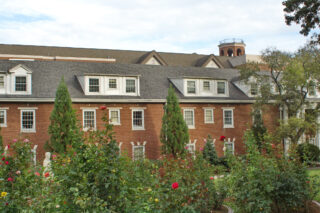

The Thomas F. Frist, Jr. College of Medicine at Belmont University (FCoM) in Nashville, Tennessee, is a private MD school committed to cultivating diverse physician leaders who embrace a whole-person approach to healing. It is one of the newest medical schools in the country. Belmont first announced the college in October 2020, opened its medical building in 2024 and welcomed its inaugural class of 50 students in July 2024. The college integrates basic and clinical sciences with a strong emphasis on character, service and community engagement, and its Christian-inspired mission shapes how it trains compassionate, competent physicians for diverse populations.
This guide covers the 2026-2027 application cycle, for students who want to start medical school in July 2027. It explains the current accreditation status, what the Class of 2030 profile tells you about competitiveness, what FCoM costs in 2026-27, how the three-phase curriculum works and what the school requires. It then walks through all four supplemental essay prompts with a full illustrative example and analysis for each, covers the virtual interview day and answers the questions applicants ask most.
Whether you are just starting your path toward medicine or are already in the middle of an application, the goal is the same: to help you understand FCoM’s mission, admissions process, curriculum and costs well enough to decide whether it fits you, and then to present your strongest application.
Key Takeaways
- FCoM is accredited, with probation. The LCME granted preliminary accreditation in October 2023. In summer 2026 it continued that preliminary accreditation with a designation of probation. The school remains accredited, its next scheduled LCME visit is in 2028, and it will inform every admitted applicant of its status before they make an enrollment decision.
- There is no residency preference. FCoM is a private school with no in-state or out-of-state requirement and welcomes applicants from across the nation. Out-of-state, Canadian, international and DACA applicants all go through the same admissions process. Applicants of any faith background are encouraged to apply.
- The academic screen is a 3.0 GPA and a 500 MCAT. These are the typical minimums for a supplemental invitation, not a picture of the class. The Class of 2030 had a median MCAT of 512 and an average GPA of 3.77.
- The school is growing fast and getting more selective. Applications rose from 1,368 for the inaugural Class of 2028 to 6,109 for the Class of 2030, while the class grew from 50 to 75 students. The school interviewed 423 applicants for the Class of 2030.
- Key dates for 2026-2027: AMCAS by November 16, 2026; supplemental application by December 16, 2026, ideally returned within 10 days of your invitation; virtual interviews from September 2026 through late February; first decisions on October 15, 2026.
- The supplemental has three required essays and one optional reapplicant essay, each with a maximum of 2,000 characters, plus a $75 fee (AMCAS fee waivers accepted).
- Costs are high and federal loan rules changed. Tuition for 2026-27 is $67,480, and the first-year cost of attendance is $106,592. Grad PLUS loans are not available to new students starting in 2026.
- Next step: request three letters now, take the PREview if you can, and draft your values and faith essays before your invitation arrives.
Key Statistics About Thomas F. Frist, Jr. College of Medicine
The snapshot below gathers the numbers applicants ask about first. Class figures are for the Class of 2030, which entered in 2026 and is the newest class profile FCoM has published. Cost figures are for the 2026-27 academic year. The table gives the cohort and source of every figure.

| Metric | Value | Year or cohort | Source and definition |
|---|---|---|---|
| School and degree | Thomas F. Frist, Jr. College of Medicine at Belmont University; MD only; one campus at 1900 Belmont Boulevard, Nashville | Current | FCoM website; private school |
| Accreditation | LCME preliminary accreditation (October 2023), continued with a designation of probation in summer 2026; next scheduled visit 2028 | October 2026 | FCoM Accreditation page and Accreditation Status FAQ |
| Median MCAT | 512 (10th to 90th percentile 506-518) | Class of 2030 | FCoM Class of 2030 profile; matriculants |
| Average GPA | 3.77 (range 3.27-4.0) | Class of 2030 | FCoM Class of 2030 profile; matriculants; an average, not a median |
| Applications and interviews | 6,109 AMCAS applications; 423 virtual interviews (6.9% of applicants) | Class of 2030 | FCoM Class of 2030 profile. Interviewed/applicants is not an acceptance rate |
| Class size | 75 students | Class of 2030 | FCoM Class of 2030 profile |
| Accepted applicants: MCAT and GPA | Median MCAT 512 (mean 512.8); median GPA 3.84 (mean 3.83); median science GPA 3.81 | 2025 entering class | AAMC MSAR; all accepted applicants |
| Applicants by residency | Tennessee residents: 427 applications, 60 interviewed, 12 enrolled. Out-of-state: 2,391 applications, 195 interviewed, 42 enrolled. International: 13 applications, none interviewed | 2025 entering class | AAMC MSAR; verified applications, interviewed applicants and matriculants |
| Acceptance rate | Not published | n/a | FCoM and AAMC MSAR report applications, interviews and matriculants, not offers |
| Early decision | Not offered | 2026-2027 cycle | AAMC MSAR |
| Deferred entry | Considered case by case | 2026-2027 cycle | AAMC MSAR |
| Secondary fee | $75; AMCAS fee waivers accepted | 2026-2027 cycle | FCoM Application Process page |
| Screening minimums | Typically a 3.0 GPA and 500 MCAT for a supplemental invitation | 2026-2027 cycle | FCoM Application Process and FAQ pages |
| Tuition | $67,480 per year, same for residents and non-residents | 2026-27, MS1-MS3 | FCoM Tuition & Fees page |
| Total cost of attendance | $106,592 (MS1, 10 months); $111,982 (MS2 and MS3, 12 months) | 2026-27 | FCoM Tuition & Fees page; tuition, fees and indirect expenses; health insurance of $3,275 extra if you lack adequate coverage |
| Prior-year tuition, fees and cost | Tuition and fees $69,602; total cost of attendance $105,639 | 2025-26 | AAMC MSAR (AAMC Tuition and Student Fees survey) |
| Students receiving aid | 68% | 2024-25 | AAMC MSAR (LCME financial aid questionnaire) |
| Average graduate debt and specialty choices | Not available yet; the first class enters the Match in 2028 | n/a | AAMC MSAR |
| Residency preference | None; out-of-state, Canadian, international and DACA applicants accepted | 2026-2027 cycle | FCoM Application FAQs; AAMC MSAR |
| Primary clinical affiliate | HCA Healthcare; clerkships typically in the HCA TriStar system in Nashville | Current | FCoM home and Curriculum pages |
The number of offers is not published for any FCoM class, so any “Belmont medical school acceptance rate” you see elsewhere is an estimate or a different ratio. The 423 interviews equal about 6.9% of the 6,109 applications for the Class of 2030, and the 75 students who enrolled equal about 1.2% of applications. Neither number is an acceptance rate, because some admitted students choose other schools and the offer count is not released. Note also that the MCAT figure is a median and the GPA figure is an average. Neither is a cutoff. For all accepted applicants in the 2025 entering class, the median MCAT was 512 and the median GPA was 3.84, which tells the same story: most admitted students are well above the screening floor.
Mission and Educational Priorities
FCoM’s mission statement reads: “The Thomas F. Frist, Jr. College of Medicine at Belmont University is dedicated to cultivating diverse physician leaders of character who embrace a whole-person approach to healing in a community of service-learning, inspired by the love and grace of Christ.” Its vision is about shaping medicine through whole-person care. You can read both, along with the history of the college’s namesake, on the FCoM About page.
The college is united by five value statements:
- Love Learning
- Lead by Serving
- Live with Integrity
- Heal Together in Humility
- Welcome Difference
These values matter to applicants in a concrete way. The first supplemental essay asks you to choose one of them and explain why it energizes you, so you should know what each one means in practice before you write.
FCoM’s mission and vision reflect a commitment to developing compassionate, competent physicians who consider the whole patient and serve diverse communities. FCoM’s teaching philosophy centers on a “collaborative spirit driven by faith, intellect, humility, curiosity and calling,” and it aims to form physicians who understand a patient’s “physical, emotional, social, and spiritual needs” and the socioeconomic and systems factors that affect care. In his letter to students, Dean Anderson Spickard names three guiding principles: Christian-centeredness, “unwavering hospitality” extended to all people, and a sense of calling to the work of medicine.
What does this mean for you as an applicant? Four things stand out.
First, the faith element is real, and it is open to everyone. The mission is explicitly Christian, and the second supplemental essay asks about your spiritual experiences, faith or personal beliefs. FCoM also states plainly that students of any faith background are encouraged to apply. You do not need to be Christian. You do need to be comfortable training in a place where faith is part of the conversation, and you should be ready to reflect honestly on what you believe and how it shapes the way you treat people.
Second, “whole person” is a curriculum, not a slogan. A full parallel course, Wonder and Wisdom in the World of Medicine (W3M), runs through the first two years and covers professional formation, ethics, health equity and healthcare systems. Applicants who can talk about patients as people, not just as diagnoses, fit this design.
Third, service is expected. “Lead by Serving” and the phrase “a community of service-learning” mean community engagement is built into the program. Integrated Clinical Practice includes service learning, and the Class of 2030 arrived with 39,608 total community service hours.
Fourth, a new school needs builders. FCoM’s third essay asks how you have handled ambiguity and helped build a culture of growth and collaboration. As a newer medical school, the college is still shaping its traditions, and applicants who have shown patience, flexibility and constructive feedback in a new or changing setting will have strong material for that essay.
Accreditation and Institutional Identity
FCoM is the medical school of Belmont University, a private Christian university in Nashville. It offers one degree, the MD, on one campus. It was established in alliance with HCA Healthcare, which the college describes as “one of the nation’s leading providers of health care services and one of the College of Medicine’s major clinical affiliates.”
Current status. In October 2023, the Liaison Committee on Medical Education (LCME), the accrediting body for MD programs in the United States and Canada, notified Belmont of the preliminary accreditation of its medical education program. In summer 2026, the LCME continued the college’s preliminary accreditation and placed it on probation. In the school’s words, “Preliminary Accreditation on Probation” means the LCME “determined that the College is not currently in full compliance with certain accreditation standards and has placed the program on probation while those issues are addressed.”
The decision followed a February 2026 survey visit, which evaluated data provided through November 2025. The school states that it “remains an LCME-accredited medical school,” that its students “remain eligible for residency placement and licensure,” and that probation allows it to keep enrolling and educating students while corrective actions are carried out.
What the LCME identified. The school’s FAQ groups the findings into three broad areas:
- Student resources and responsiveness. The school reports it has expanded career advising with a dedicated leadership position and 20 advising groups, increased specialty-specific mentoring and built a research strategic plan.
- Governance, policies and oversight, including how the curriculum is mapped and documented. The school notes that its curricular content, design and competencies were rated satisfactory, and it created an Office of Academic Affairs and new dean-level positions.
- Academic experience and learning environment, including student requests for more self-directed learning time and more research opportunities. The school is recruiting an Associate Dean for Research.
What comes next. The LCME’s review cycle means the next scheduled site visit, and the earliest opportunity to remove probation, is in 2028. FCoM states that every applicant offered admission “will be informed of the college’s accreditation status before making an enrollment decision,” and that it expects to follow its published admissions timeline. It also states that scholarship and financial aid programs are unchanged.
How to use this information. FCoM’s own advice is to weigh accreditation “as one real factor among several,” alongside fit, mission, cost, location and clinical opportunities. That is sensible. Read the school’s Accreditation Status FAQ before you apply, ask about progress during your interview day and read the status update the school sends with any offer. Questions can go to [email protected].
Medical Programs and Affiliations
Doctor of Medicine (MD)
The four-year MD is FCoM’s only degree program. It delivers a patient-centered medical education that integrates basic sciences with clinical practice and emphasizes compassionate care that considers the whole patient. The program focuses on clinical reasoning, ethics, interprofessional collaboration and service learning to prepare students for residency and for leadership in addressing healthcare challenges.
Several themes run through the program:
- Patient-centered care. FCoM trains physicians to understand the social determinants of health and their effect on outcomes, and to address the physical, emotional, social and spiritual needs of patients. The W3M course series makes health equity and healthcare systems part of the core curriculum.
- Integrated and experiential learning. Basic science is taught through cases from the start. Students learn in case-based and problem-based small groups and flipped classrooms, and they practice clinical skills in simulation and with standardized patients beginning in their first week.
- Respect for differences. “Welcome Difference” is one of the five values, and the school’s technical standards ask every student to care for people “whose culture, spiritual beliefs, physical or mental abilities, sexual orientation, or gender expression differ from their own” and to identify their own personal biases so those biases do not compromise patient care.
- Interprofessional collaboration. Medical students learn alongside Belmont’s established nursing, pharmacy, occupational therapy, physical therapy, public health and social work programs through case studies, simulations and panels. In the second year, students also work with health professions students from several Nashville campuses on team care of older adults.
- Research and scholarly work. The Scholarly Productivity & Innovation team in the Office of Academic Affairs provides structured research opportunities and mentorship (see Clinical Rotations and Research below).
There are no combined degree programs, such as MD/PhD or MD/MBA, at FCoM.
Pathway programs
FCoM runs three pathway programs. Each has its own application through the partner program, so read the details before you rely on one.
- Belmont HEALs (Healthcare Exploration for Aspiring Leaders). An early assurance program for Belmont pre-health students that combines career preparation with guaranteed interviews for Belmont’s graduate and professional programs. If you are a Belmont undergraduate interested in medicine, this is the most direct route, and it pairs well with medical internships for undergraduates that build hands-on patient care experience before you apply.
- Dr. Levi Watkins, Jr. Medical Accelerated Pathway Program. A seven-year accelerated program created with Tennessee State University’s College of Life and Physical Sciences. It is named for the TSU alumnus and cardiac surgeon who performed the first human implantation of an automatic defibrillator.
- Lipscomb University Biomolecular Science (BMS) pathway. For career changers and applicants who want to strengthen their academic record. Students who complete Lipscomb’s one-year BMS master’s program with at least a 3.5 GPA and a minimum MCAT of 505 are guaranteed an interview at FCoM.
A guaranteed interview is not a guaranteed seat. FCoM has no early decision program and does not accept transfer students or award advanced standing while it progresses through accreditation.
Clinical affiliations
HCA Healthcare is FCoM’s major clinical affiliate. Clerkship sites are throughout Nashville, “typically within the HCA TriStar System,” which lets students keep their housing during the clinical year. The longitudinal family medicine clerkship places students in community clinics across Nashville. Because clinical assignments can be anywhere in metro Nashville and Middle Tennessee, every student must have reliable personal transportation before matriculation (see Admissions Requirements).
The college’s namesake explains much of this relationship. Dr. Thomas F. “Tommy” Frist, Jr. co-founded Hospital Corporation of America, now HCA Healthcare, in 1968 with his father and Jack C. Massey, and he serves as its Chairman Emeritus.
Curriculum Overview
FCoM’s curriculum is designed to educate physicians whose clinical decision-making is firmly rooted in the foundational sciences and in whole-patient care. It integrates basic sciences, clinical medicine and the social determinants of health, and it emphasizes collaboration, humility and lifelong learning. The program has three phases over four years: the Foundation Phase, the Clerkship Phase and the Individualization Phase. A Curriculum Management Unit in the Office of Academic Affairs maps every course to the school’s Medical Education Program Objectives. Week-by-week schematics for each phase are on the FCoM curriculum page.
Foundation Phase (Years 1 and 2)
The Foundation Phase covers the first two academic years and is built from three parallel course types that run side by side.
Foundational science courses. Students start with a six-week Molecular & Cellular Foundations course, then move through organ-system courses:
- Year 1: Immunology, Microbiology & Dermatology (6 weeks); Hematology & Basic Principles of Oncology (5 weeks); Cardiovascular (8 weeks); Pulmonary (6 weeks); Musculoskeletal (5 weeks).
- Year 2: Gastrointestinal (5 weeks); Renal (5 weeks); Neurology & Behavioral Science (8 weeks); Endocrinology & Reproduction (9 weeks).
These courses are taught by teams of clinician educators and scientist educators through case-based learning, problem-based learning, donor-body anatomy labs and experiential pathology labs with microscopy and gross specimens. Students supplement full cadaver dissection with digital anatomy tables and virtual reality. The phase ends with a two-week Foundation Capstone, followed by six weeks of independent study for USMLE Step 1.
Integrated Clinical Practice (ICP). ICP trains students in clinical skills, professionalism and interprofessional collaboration. It includes clinical preceptorships, Objective Structured Clinical Examinations (OSCEs) and service learning. Medical students begin working in the Center for Interprofessional Engagement & Simulation in their first week and spend at least a half day each week there throughout the Foundation Phase, practicing with standardized patients and high-fidelity manikins. During the first two years, every student also has a longitudinal experience with a preceptor in a primary care setting, which students build on in the clerkships and fourth-year electives.
Wonder and Wisdom in the World of Medicine (W3M). W3M develops professional formation, biostatistics, medical ethics, health equity and an understanding of healthcare systems. It is where the moral, social and spiritual dimensions of medicine are taught, and where students reflect on their own beliefs and on caring for people from different backgrounds. Across the curriculum, weekly clinical cases put basic and clinical science in the context of social determinants of health, with the goal of training physicians who are aware of bias in themselves and in their communities and who address how it affects patient care.
Impact Weeks. Several one-week Impact Weeks are placed through the curriculum. They focus on interprofessional education with Belmont’s other health professions schools and give students a lighter schedule to focus on personal wellness.
Clerkship Phase (12 months, starting the summer of Year 2)
FCoM’s clerkship year begins in the summer after the second year, not at the start of the third year. It lasts 12 months and has seven core clerkships arranged as three blocks of paired rotations:
- Surgery (8 weeks) with Neurology (4 weeks)
- Internal Medicine (8 weeks) with Psychiatry (4 weeks)
- Pediatrics (6 weeks) with Obstetrics and Gynecology (6 weeks)
A longitudinal Family Medicine clerkship runs through all three semesters, giving students continuity with patients and preceptors in community clinics across Nashville. Impact Weeks between the paired blocks bring students back together to reflect on their clinical experiences in the context of health systems, whole-person care and advanced clinical reasoning. Students also have chances to rotate in subspecialties for career exploration.
Individualization Phase
The Individualization Phase is where students personalize their training around career goals. It happens in three windows:
- Summer after Year 1. Students can take two one-month electives in June and July, or a full summer elective for research.
- Winter of Year 3. An optional two- or four-week elective, or a break.
- Summer after Year 3 through Year 4. Required four-week rotations in Emergency Medicine, Critical Care and a Sub-Internship, plus electives, Step 2 preparation and break time. Over the phase, students complete 24 weeks of electives and 16 weeks of selectives.
The Sub-Internship places students in a role that closely mirrors a first-year resident: under supervision, they write notes, place orders and coordinate care. The phase ends with a required, month-long Transition to Residency course in March, which brings the class back together for Match Week. Students prepare for and take USMLE Step 2 during the fourth year, with career advisors helping to plan the sequence of rotations.
Learning support and assessment
The Office of Academic Affairs oversees curriculum design, assessment and evaluation, faculty development and accreditation work. Its Assessment and Curriculum Evaluation unit monitors how courses perform. Student Success programs offer academic coaching, learning specialists, board exam planning and peer-assisted learning, and they are free to every FCoM student.
Grading uses letter grades in the Foundation Phase and Honors, High Pass, Pass or No Credit in the clerkships. Students are not ranked. At least three half days each week are left free for study, personal appointments and wellness, and attendance is mandatory for cases, problem-based learning and simulation. Research is encouraged but not required.
What the curriculum means for your application
The design rewards three traits you can show before you apply. First, comfort with active learning: small-group cases mean you will teach and question classmates every week. Second, early comfort with patients: you will see standardized patients from your first week. Third, reflection: W3M and Impact Weeks expect you to think about ethics, equity and your own formation, and your essays are a preview of that habit.
Admissions Requirements and Application Process
FCoM uses a structured, holistic admissions process to find applicants who fit its mission of compassionate, community-focused care. Its holistic review balances “an applicant’s life experiences and qualities with their academic accomplishments” and looks at three things: your experiences (in medicine, jobs, volunteering, athletics, music “and everything in between”), your personal attributes and your academic readiness, measured by GPA and MCAT. All of it is read in light of the college’s mission.
Prerequisite coursework
You must complete these courses before you matriculate. They can be taken at any accredited institution.
| Course | Credit hours |
|---|---|
| Biology, including laboratory | 8 |
| Inorganic (General) Chemistry, including laboratory | 8 |
| Organic Chemistry, including laboratory | 8 |
| Physics, including laboratory | 8 |
| Biochemistry | 3 |
| English | 6 |
| Math | 3 |
FCoM recommends, but does not require, anatomy, physiology, molecular and/or cell biology, genetics, microbiology or immunology. It also looks for a broad education that includes upper-level science, psychology, statistics and humanities.
A few course policies are worth knowing:
- Community college, online and pass/fail courses. FCoM does not ban any format. It encourages you to “seek out the setting and grading” that will best prepare you for medical school. If you have a choice, a graded, in-person upper-level science course shows readiness more clearly.
- Older coursework. Prerequisites taken years ago are acceptable, but the school encourages some upper-division hard science coursework to be more recent.
- Post-baccalaureate and graduate work. FCoM uses a hybrid approach and relies more heavily on your most recent 60 credit hours. A strong recent record can offset a weaker early one.
MCAT policy
Every applicant must take the MCAT. FCoM accepts scores no older than three calendar years, so for 2027 matriculation the oldest accepted exam date is January 1, 2024. If you have taken the exam more than once, the school can see every score but uses your most recent one. The most competitive applicants have an upward trend. The minimum MCAT for a supplemental invitation is 500. For this cycle, the latest MCAT considered is September 30, 2026. Accepted applicants in the 2025 entering class had a median total score of 512, with section medians of 128 (Chemical and Physical Foundations), 127 (Critical Analysis and Reasoning), 129 (Biological and Biochemical Foundations) and 129 (Psychological, Social and Biological Foundations).
GPA
FCoM typically looks for a minimum GPA of 3.0 to invite an applicant to complete the supplemental application. That is a screening floor. The Class of 2030’s average GPA was 3.77. Accepted applicants in the 2025 entering class had a median overall GPA of 3.84 and a median science GPA of 3.81.
AAMC PREview
For the 2027 admissions cycle, the AAMC PREview professional readiness exam is encouraged but optional. FCoM uses it to study how professional readiness and personal attributes relate to performance in the curriculum, and it encourages applicants to sit for it within one year of applying. The exam runs on a fixed schedule, so plan ahead. The Class of 2029 had an average PREview score of 6 (range 4-9). For help preparing, see our guide to the AAMC PREview exam.
Casper and other Acuity Insights tests are not part of FCoM’s stated requirements. If you are applying broadly, our list of medical schools that require CASPer can help you plan the other schools on your list.
Residency, faith and citizenship
FCoM has no in-state or out-of-state requirement and welcomes applicants from across the nation. The Class of 2030 came from 24 states. Students of any faith background are encouraged to apply. Out-of-state, Canadian, international and DACA applicants are all accepted and go through the same admissions process as everyone else. In the 2025 entering class, 13 verified applications came from international applicants, and the class enrolled 12 Tennessee residents and 42 students from other states. Federal student loans have their own citizenship rules, so if you are not a U.S. citizen or permanent resident, email the admissions office at [email protected] before you pay the secondary fee and ask how students in your situation finance the program.
Experience
FCoM does not publish a minimum number of clinical, shadowing or service hours. Its class profiles show what successful applicants bring: the Class of 2030 reported 151,954 total hours of medical exposure and 39,608 hours of community service, and 88% had research experience. Strong applicants usually show sustained, hands-on patient contact, such as work as a scribe, medical assistant, EMT or nursing assistant, or pre-med internships where you take part in patient care under supervision. Because the mission centers on service-learning, consistent community service matters as much as hours in a hospital.
Technical standards
All applicants must meet FCoM’s technical standards, with or without reasonable accommodation. They cover five areas: observation; communication (in writing and verbally in English); motor and sensory function; intellectual, conceptual, integrative and quantitative ability; and attitudinal, behavioral, interpersonal and emotional characteristics. The last area includes the capacity to care, without judgment, for people whose beliefs and identities differ from your own.
Step 1: AMCAS primary application
FCoM uses the American Medical College Application Service (AMCAS), which opens each May. Admission is rolling, so the school encourages you to apply as early as possible. The AMCAS deadline for this cycle is November 16, 2026. Your personal statement goes in the AMCAS application; our collection of AMCAS Personal Statement Examples shows how to structure your story.
Step 2: Letters of evaluation
FCoM asks for three letters from people who know your work ethic, passion, drive and service. Ideally:
- One from a healthcare professional who has observed you in a clinical setting.
- One from a faculty member who has taught you in a hard science course.
- One from an additional faculty member or a supervisor in a service setting.
Letter packets and committee letters are also accepted. All letters must come through the AMCAS Letter Service. FCoM accepts a minimum of three and a maximum of five letters. If you send more than three, the extra letters stay in your file, but the committee focuses on the primary three, so choose your three strongest writers first. For advice on choosing and preparing your writers, see our College Recommendation Letter Samples & Writing Guide.
Step 3: Supplemental application (by invitation)
FCoM screens every AMCAS application before inviting applicants to the supplemental application. The screen typically includes a minimum 3.0 GPA and 500 MCAT. The supplemental includes three required essays and one optional reapplicant essay, each with a maximum of 2,000 characters. The processing fee is $75, and FCoM accepts AMCAS fee waivers. The deadline is December 16, 2026, but the school encourages you to return the supplemental within 10 days for best consideration. The prompts are covered in full in the secondary section below, and the official list of steps is on the FCoM Application Process page.
Step 4: Complete file and interview
Once your file is complete, the admissions committee reviews it for an interview invitation. You will receive email updates at each stage and can track your status in the applicant portal. Interviews are virtual and run from September 2026 through late February (see Interview Format and Preparation).
Step 5: Decisions and confirming your seat
Decisions are sent on a rolling basis within four weeks of your interview, with the first decisions going out on October 15, 2026. FCoM does not require a monetary deposit. Instead, accepted students accept their seat in the school’s application system, and FCoM uses the AAMC Choose Your Medical School tool. For students entering in July 2027 (the Class of 2031), Plan to Enroll is required by April 30, 2027, and Commit to Enroll by June 7, 2027. Response deadlines follow the AAMC’s application and acceptance protocols. Admitted students are invited to a Second Look event in April.
After the interview, candidates are offered admission, placed on the waitlist or released from the process. The waitlist is live and unranked: the admissions committee reviews it at every meeting, and a waitlisted candidate can be offered a seat at any point in the cycle. Requests to defer entry are considered case by case.
If you are waitlisted or want to reaffirm interest after an interview, a short, specific update letter can help. Our guide on How to Write an Excellent Medical School Letter of Intent or Letter of Interest explains when and how to send one.
Matriculation requirements
Every offer is conditional on:
- Confirmation of a bachelor’s degree from a regionally accredited institution recognized by the U.S. Department of Education and the Council for Higher Education Accreditation.
- A criminal background check.
- Evidence of health insurance.
- Completed health forms and required immunizations: MMR (two doses or titers), varicella (two doses or titer), Tdap within the past 10 years, three doses of hepatitis B vaccine, annual influenza vaccine, COVID-19 vaccination (boosters strongly recommended) and a two-step tuberculin skin test within the past 12 months.
Transportation. FCoM’s curriculum includes clinical experiences in all four years at sites across metro Nashville and Middle Tennessee. Students must secure reliable transportation before matriculation and pay for it themselves. Gas, mileage and parking are not reimbursed, the school does not coordinate rides, and placements near campus are not guaranteed. The cost of attendance includes a transportation allowance, but aid cannot be used to buy a vehicle.
Transfers. FCoM does not accept transfer students or award advanced standing while it progresses through accreditation.
Timeline for the 2026-2027 cycle
| Date | Step |
|---|---|
| May 2026 | AMCAS opens; apply early because admission is rolling |
| After AMCAS verification | FCoM screens applications and sends supplemental invitations; return within 10 days if you can |
| September 2026 | Virtual interviews begin |
| October 15, 2026 | First interview decisions sent |
| November 16, 2026 | AMCAS application deadline |
| December 16, 2026 | Supplemental application deadline |
| Within 4 weeks of each interview | Rolling decisions |
| Late February 2027 | Interviews end |
| April 30, 2027 | Choose Your Medical School: Plan to Enroll required |
| June 7, 2027 | Choose Your Medical School: Commit to Enroll required |
| July 2027 | First day at FCoM |
| May 1, 2027 | AMCAS opens for the following cycle |
If you are planning a year or more ahead, use the timeline backward. The MCAT and PREview need to be scheduled early, and pre-med summer internships are easiest to fit in the summer before you submit AMCAS, when you can still add the experience to your activities list.
Tuition, Cost of Attendance and Financial Aid
FCoM is a private school, so tuition is the same for Tennessee residents and non-residents. The tables below are for the 2026-27 academic year. The school publishes budgets for the first three years (MS1 is a 10-month year; MS2 and MS3 are 12-month years) and has not posted a fourth-year budget. Line-by-line figures are on the FCoM Tuition & Fees page.
Cost of attendance, 2026-27
| Item | MS1 (10 months) | MS2 (12 months) | MS3 (12 months) |
|---|---|---|---|
| Tuition | $67,480 | $67,480 | $67,480 |
| Fees | $4,590 | $4,544 | $4,344 |
| Tuition and fees | $72,070 | $72,024 | $71,824 |
| Housing and meals | $25,744 | $30,280 | $30,280 |
| Personal expenses | $4,150 | $4,930 | $4,930 |
| Transportation | $3,100 | $2,750 | $2,750 |
| Course materials, supplies and equipment | $1,000 | $1,500 | $1,500 |
| Loan origination fees | $528 | $498 | $498 |
| Indirect expenses total | $34,522 | $39,958 | $39,958 |
| Total cost of attendance | $106,592 | $111,982 | $111,982 |
The fees include a consolidated graduate student fee ($1,400 in MS1 and $2,100 in MS2 and MS3), liability, life and disability insurance, a needlestick rider, USMLE board preparation, a clinical access fee, AMSA membership and an activity fee each year. One-time items include an $850 technology fee, a $606 stethoscope kit and USMLE Step 1 registration ($695). Health insurance costs an additional $3,275 per year if you do not have adequate coverage, and it is not included in the totals above.
For comparison, tuition and fees in 2025-26 were $69,602 and the total cost of attendance was $105,639. In 2024-25, 68% of FCoM students received financial aid. Average graduate debt is not available yet because the school has no graduates.
Across the three published years, the cost of attendance adds up to $330,556 before the fourth year, health insurance or any tuition increase. That is why financing deserves as much planning as your essays.
Federal loans after the July 2025 law
Federal loan rules changed with legislation passed in July 2025, and FCoM’s aid page explains how they apply:
- Direct Unsubsidized loans are available to all borrowers. First-time borrowers in their degree program, such as the Class of 2030, may borrow up to $50,000 a year. Returning borrowers may borrow up to $40,500, prorated higher for enrollment periods longer than nine months.
- Grad PLUS loans are available only to returning FCoM students who already had a Direct Loan for their current program as of July 1, 2026. They are not available to the incoming Class of 2030, and applicants entering in 2027 should expect the same rule for new borrowers.
The practical effect is that a new student can no longer cover the full cost of attendance with federal loans alone. Compare $50,000 in annual Direct Unsubsidized borrowing with a first-year cost of attendance of $106,592. The gap must come from scholarships, savings, family support or private loans. Ask the financial aid office early how current students are filling it.
Steps to take. File the FAFSA as soon as possible (Belmont’s school code is 003479). Qualifying veterans may be eligible for the GI Bill or the Yellow Ribbon Program through Belmont’s Veterans Education Benefits office.
Scholarships and other funding
- Institutional scholarships. FCoM awards scholarships and financial aid through its established processes, and its scholarship programs, award criteria and funding commitments are unchanged by the accreditation decision. The inaugural class included four rural community scholarship recipients who intend to practice in rural areas after graduation.
- Need-based aid is determined through the federal needs analysis (FAFSA).
- Service scholarships. The National Health Service Corps Scholarship pays tuition and a stipend in exchange for service in a health professional shortage area, and the military Health Professions Scholarship Program (HPSP) covers tuition in exchange for service as a military physician. Both are competitive and come with binding service commitments.
- Private scholarships from foundations, community groups and professional organizations can help close smaller gaps.
How FCoM compares on cost in Tennessee
FCoM’s 2026-27 tuition of $67,480 is in the range of other private MD schools in the region. Tennessee’s public MD schools, the University of Tennessee Health Science Center and East Tennessee State University’s Quillen College of Medicine, charge lower tuition to state residents. If cost is a deciding factor, compare each school’s full cost of attendance, not only tuition, and compare the scholarship offers you actually receive.
Living costs in Nashville
The housing and meals line assumes $25,744 for the 10-month first year. The school can connect incoming students with classmates looking for a roommate, and it lists several apartment complexes within walking distance of campus on its Living in Nashville page. Remember the car: transportation is budgeted at $3,100 in the first year, and reliable transportation is a requirement, not an option.
Campus Facilities and Student Life
A building designed for team-based training
FCoM is housed in a new building that opened in 2024. The nearly 200,000-square-foot facility was designed for a fully interdisciplinary education, so that students in Belmont’s existing health programs work alongside future physicians, just as they would in a clinical setting. It sits within a block of Belmont’s Gordon E. Inman Center and McWhorter Hall, home to the university’s nursing, physical therapy, occupational therapy, social work and pharmacy programs. You can take a virtual tour on the FCoM Facilities page.
Learning spaces.
- Large lecture spaces designed for case-based learning.
- Two Learning Theaters with high-tech video, advanced sound and flexible seating that shifts between large lectures and small-group discussion.
- Three Learning Studios with two large screens, five group screens, whiteboards and modular furniture for hands-on team learning.
- Anatomy lab with full cadaver dissection supplemented by digital anatomy tables and virtual reality. A respite room next to the lab gives students a quiet place to center themselves before and after lab sessions.
- Pathology and histology lab for examining specimens.
Simulation and clinical training. The 50,000-square-foot Belmont University Center for Interprofessional Engagement & Simulation spans the third and fourth floors and uses virtual and augmented reality.
- Inpatient simulation. Eight simulation rooms replicate hospital settings, including a labor and delivery suite. High-fidelity manikins can breathe, dilate their pupils, have pulse points, seize and sweat.
- Assessment labs. Two labs with eight beds each and bedside vital sign monitors for practicing inpatient assessment.
- Simulated clinic. Twenty-four outpatient exam rooms with cameras and microphones, where standardized patients (paid professionals who portray medical problems) give students feedback. Students can review recordings with faculty right away in nearby debriefing suites.
- Apartment lab. A simulated home with a kitchen, bedroom and bathroom, used mainly by occupational and physical therapy students to prepare for in-home care.
- Simulated pharmacy on the outpatient floor.
Student spaces. The R. Milton & Denise Johnson Lobby is the building’s study and meeting hub. The Medical Library supports evidence-based learning with spaces and digital resources. The student lounge has a pool table, TVs and space to eat, and it opens onto the Tom and Judy Foster Sun Terrace with outdoor seating and greenspace. Study rooms of all sizes serve individual and group work, and a multipurpose event space with vaulted ceilings hosts conferences and community events.
Practical details. A 650-space, below-ground garage offers free parking for FCoM students. There is no formal dining in the building, but there are expanded vending options and many coffee shops and restaurants within walking distance.
Offices. The Dean’s office is on the sixth floor, and faculty offices are on the fifth and sixth floors with open-door policies. The James & Lois Archer Admissions Suite houses the Office of Student Affairs & Belonging, which supports recruitment, pathway programs, admissions, student engagement and wellness, enrollment services and student success.
Learning communities: the Frist Houses
Every student is placed into one of three Frist Houses: Hildegard House, Sushruta House and Apgar House, named for Hildegard von Bingen, the ancient Indian surgeon Sushruta and Dr. Virginia Apgar. Houses provide academic support, mentorship, professional development and community across class years. They also compete each year for the Dean’s Trophy in a weekend of events that has included dancing, a cooking contest and basketball.
Wellness and student support
- Wellness check-ins. Students meet once a semester with the Director of Student Engagement and Wellness.
- Student Wellness Committee. Students help design mental health programming, self-care events and mentoring.
- Wellness retreats with faculty speakers on resilience, themed for each class.
- Monthly lunch discussions with deans and faculty on topics such as imposter syndrome and staying focused.
- Faith and medicine. Monthly dinner discussions, support groups and celebrations for students from various faiths to talk about where faith meets medicine.
- Student Success. Academic coaching, learning specialists, board exam planning and peer-assisted learning, with learning style assessments to help students study well. These services are free.
Interprofessional and service opportunities
Belmont’s health sciences programs are long established, and FCoM students join existing interprofessional activities, including case studies, simulations, panel discussions and joint speaker events. Applicants who have worked closely with nurses, pharmacists or therapists will recognize the team model. If you are still deciding between nursing and medicine, IMA also runs nursing internships abroad for pre-nursing and nursing students.
Living in Nashville
The medical school is steps from Music Row and surrounded by the 12South, Hillsboro Village and Melrose neighborhoods, with restaurants, coffee shops and boutiques in walking distance. Nashville is a national healthcare business hub, home to HCA Healthcare and many other health companies, and it offers live music every night, professional sports within a few miles of campus, parks such as Radnor Lake and the Warner Parks, and more than 700 houses of worship.
Clinical Rotations and Research Opportunities
Where students train
FCoM students begin clinical skills training in their first week in the simulation center and work with patients early in the first year. The core clinical year takes place throughout Nashville, typically within HCA Healthcare’s TriStar system, so students can keep their housing. The longitudinal family medicine clerkship uses community clinics across Nashville. Other clinical assignments can be anywhere in metro Nashville and Middle Tennessee, which is why the transportation requirement exists.
Core clerkships
The seven core clerkships take place during the 12-month Clerkship Phase:
- Internal Medicine (8 weeks). Students diagnose and manage a wide range of adult illnesses in inpatient and outpatient settings across HCA Healthcare’s TriStar Division, with emphasis on clinical reasoning, evidence-based care and patient-centered communication.
- Surgery (8 weeks). Students take part in the full continuum of surgical care, from preoperative assessment to postoperative management, assist in procedures and interpret diagnostics in general and specialty surgery.
- Pediatrics (6 weeks). Students care for infants, children and adolescents, learn to communicate with families and focus on preventive care and developmental assessment.
- Obstetrics and Gynecology (6 weeks). Prenatal visits, labor and delivery, gynecologic procedures and reproductive care.
- Psychiatry (4 weeks). Psychiatric interviewing, mental status exams and treatment planning in a variety of care settings, with attention to ethics and team-based care.
- Neurology (4 weeks). Diagnosis and management of neurologic conditions in inpatient and outpatient settings, including the neurologic exam and lesion localization.
- Family Medicine (longitudinal). Three semesters of continuity with patients and preceptors in community clinics, focused on prevention, chronic disease and team-based primary care.
Fourth-year requirements and electives
After the core year, students complete required four-week rotations in Emergency Medicine, where they practice triage and rapid assessment and learn to prioritize care in a fast-paced setting, Critical Care, where they help manage critically ill ICU patients, ventilators and hemodynamic monitoring, and a Sub-Internship. They also complete 24 weeks of electives and 16 weeks of selectives, chosen with career advisors to explore specialties and strengthen residency applications. The year ends with the Transition to Residency course in March.
Research and scholarly work
FCoM defines scholarly productivity as “the process of asking a question, systematically finding an answer, and sharing what you’ve learned with the wider medical community.” That includes laboratory research but also quality improvement, education and other forms of scholarship. The Scholarly Productivity & Innovation team, led by Assistant Dean Jamaine Davis, provides structured research opportunities, dedicated research mentors and guidance on building a strong record for residency applications.
Research time is built into the calendar. The summer after the first year can be used as a full research elective, and students can use elective time in the third and fourth years for mentored scholarly work. A research thesis is not required.
Research is also one of the areas the LCME asked the school to strengthen. In response, the school has developed a research strategic plan, expanded research and mentorship opportunities and is recruiting a new Associate Dean for Research. If research matters to your career plans, ask current students on interview day how easy it has been to find a mentor and a project.
Career advising and mentorship
FCoM’s career advising program, Career Compass, offers individual advising meetings, a career planning framework, specialty exploration timelines, panels with practicing physicians, residency application strategy, interview preparation, connections to specialty advisors and mentors, and specialty interest groups. The school has expanded advising with a dedicated leadership position and 20 advising groups. Students considering the most competitive fields can start early; our overview of the 10 most competitive medical specialties explains what those residencies look for.
Outcomes
FCoM has no graduates yet. The inaugural Class of 2028 entered in July 2024 and is expected to graduate and enter the residency Match in 2028, so there are no match lists or residency outcomes to review. Treat any claim about where Belmont graduates match as speculation until the school publishes its first results. There is no specialty choice data for graduating students yet, and average graduate debt is not available.
Notable Alumni, Faculty, Leadership and Admissions Staff
Knowing who leads FCoM helps you understand its priorities and write more specific essays. The profiles below come from the school’s official leadership, admissions and faculty pages. Titles were checked on October 17, 2026.
Alumni
FCoM has no alumni yet. The inaugural class of 50 students entered in July 2024 and is expected to graduate in 2028. The school’s Class Profile page follows six members of that first class through medical school, which is the closest thing to an alumni perspective available today. If you want to hear from students, ask to speak with current students during your virtual interview day or at an information session.
The college’s namesake
Thomas F. “Tommy” Frist, Jr., MD. A Nashville native, Dr. Frist graduated from Montgomery Bell Academy and Vanderbilt University and earned his MD from Washington University School of Medicine in St. Louis in 1965. After surgical residency at Vanderbilt was interrupted by two years as an Air Force flight surgeon, he co-founded Hospital Corporation of America (now HCA Healthcare) in 1968 with his father, Dr. Thomas F. Frist, Sr., and Jack C. Massey. He served HCA as president, chief executive officer and chairman, and he is now Chairman Emeritus. He also founded The Frist Foundation, a Nashville grant maker. He is not a faculty member, but his name explains the college’s close relationship with HCA Healthcare, its major clinical affiliate.
School leadership
Anderson Spickard, III, MD, MS, Dean and Professor of Internal Medicine. Dr. Spickard earned his MD at Vanderbilt University School of Medicine, trained in internal medicine at the University of Washington and completed a fellowship and a master’s in epidemiology at the University of Virginia. He practiced internal medicine at Vanderbilt for 26 years, directed its Primary Care Clerkship for 16 years and its Internal Medicine Clerkship for 13 years, and was Vanderbilt’s first master clinical teacher. He joined Belmont in 2021 to help establish FCoM, became interim dean in 2022 and was appointed dean in 2023. For applicants, his background explains the school’s emphasis on teaching, clerkship design and educational technology, and his letter to students sets out the college’s three guiding principles.
Mark Beard, MD, MHA, FAAFP, Senior Associate Dean for Academic Affairs and Professor of Family Medicine. Dr. Beard is the chief officer of the MD program, responsible for designing, evaluating and improving the curriculum. He trained at the University of Missouri-Columbia and later served as Dean of Medical Student Education in South Dakota, where he led a statewide longitudinal integrated clerkship and worked on accreditation. He is also one of FCoM’s listed accreditation staff. His interests in interprofessional education, simulation and case-based learning are visible throughout FCoM’s curriculum, including its longitudinal family medicine clerkship.
Karen Lewis, EdD, Associate Dean for Student Affairs and Belonging and Assistant Professor of Health Systems Science. Dr. Lewis leads the office that supports students outside the classroom, from admissions and enrollment to wellness and student success. She earned her doctorate in higher education leadership and policy at Vanderbilt and has worked in student affairs and enrollment management at the AAMC, Morehouse School of Medicine, Meharry Medical College and Des Moines University. Her office is a good first contact for questions about student life.
Tanu Rana, MS, PhD, Associate Dean for Medical Education and Associate Professor of Microbiology & Immunology. Dr. Rana earned her PhD at the All India Institute of Medical Sciences in New Delhi, where she developed an assay to detect active tuberculosis, and trained and taught at Meharry Medical College before joining Belmont. She helps lead the medical education program and is listed with FCoM’s curriculum staff.
David J. Park, Associate Dean for Faculty Success and Professor of Family Medicine. Dr. Park is a family physician and former founding dean of Rocky Vista University’s Montana College of Osteopathic Medicine, and he has served as president of the American College of Osteopathic Family Physicians. He leads faculty development at FCoM. The school met the LCME standards for faculty size and recruitment, and the LCME will continue to monitor that growth, so his office’s work affects the teaching students receive.
Admissions and recruitment
Jean Shelton, MS, Assistant Dean for Admissions. Ms. Shelton leads FCoM admissions. She spent her career in health sciences admissions, including roles at Des Moines University and Rosalind Franklin University, and she was the founding director of admissions at Western Michigan University Homer Stryker M.D. School of Medicine, where she helped build its holistic review process and select its inaugural classes. That experience launching a new medical school’s admissions office is directly relevant to FCoM.
Caleb D. Marsh, EdD, Director of Pathway Programs and Recruitment. Dr. Marsh runs FCoM’s pathway programs and recruitment. He has more than 20 years of experience as a health professions advisor at Baylor University, the University of Texas at Austin and Temple University, and as Director of Health Professions Advising at Southern Methodist University. He has served on national advisor committees, including as co-chair of the NAAHP Postbac Committee. If you are interested in HEALs, the Levi Watkins program or the Lipscomb pathway, his team is your contact.
The admissions and recruitment team can be reached at [email protected] or 615-460-5700.
Faculty
Douglas P. Slakey, MD, MPH, FACS, HCA Healthcare Health Systems Science Endowed Chair and AI & Technology in Healthcare Section Lead. Dr. Slakey is a transplant surgeon and the founding chair of Health Systems Science at FCoM. He spent 21 years at Tulane University, rising to professor and chair of surgery, led surgical services across 27 hospitals at Advocate Aurora Health and wrote The Process Manifesto: Improving Healthcare in a Complex World. His work on healthcare value, systems and technology makes him a useful person to know for students interested in health systems, quality improvement or leadership.
Jamaine Davis, PhD, Assistant Dean for Scholarly Productivity and Innovation and Associate Professor of Biochemistry. Dr. Davis leads student and faculty research at FCoM. He earned his PhD in biochemistry and molecular biophysics at the University of Pennsylvania, completed a postdoctoral fellowship at the National Cancer Institute, runs an externally funded research lab and previously directed medical student research experiences. His office is the place to ask about student research projects and mentors.
Ryan Splittgerber, PhD, Interim Chair of the Department of Foundational and Clinical Sciences. Dr. Splittgerber is also Director of the Anatomy Program and Professor of Anatomy. He has taught medical gross anatomy at Vanderbilt, the University of Nebraska Medical Center and the University of Alabama at Birmingham, earned his PhD in neuroscience at UAB and is an author of Snell’s Clinical Neuroanatomy. He leads the department that teaches the foundational sciences in years 1 and 2.
Student support staff
John J. Muise, Director of Career Advising. Mr. Muise runs the Career Compass program. A Belmont alumnus, he spent 12 years at Meharry Medical College working in clinical skills, simulation and curricular support before joining FCoM.
Admissions Statistics and Class Profile
FCoM publishes a profile for each entering class. Three classes have now enrolled, and the numbers show a school that has grown quickly and become more competitive each year.
How competitive is FCoM?
| Metric | Class of 2028 (entered 2024) | Class of 2029 (entered 2025) | Class of 2030 (entered 2026) |
|---|---|---|---|
| AMCAS applications | 1,368 | 2,832 | 6,109 |
| Interviews | 230 | 257 (virtual) | 423 (virtual) |
| Interviewed / applicants | 16.8% | 9.1% | 6.9% |
| Class size | 50 | 54 | 75 |
| MCAT | Median 509 (range 497-521) | Median 510 (range 504-520) | Median 512 (10th-90th percentile 506-518) |
| GPA | Median 3.64 (range 3.1-4.0) | Median 3.81 (range 3.41-4.0) | Average 3.77 (range 3.27-4.0) |
| States of residence | 13 | 19 | 24 |
| Undergraduate institutions | 35 | 40 | 52 |
Sources: FCoM class profiles for the Classes of 2028, 2029 and 2030, linked from the FCoM Class Profile page. The “interviewed / applicants” row is calculated from the school’s figures.
The trend is the story. Applications more than quadrupled in two cycles, from 1,368 to 6,109, while the class grew from 50 to 75. The share of applicants interviewed fell from about one in six to about one in fifteen. FCoM does not publish the number of offers, so there is no official acceptance rate. The 75 matriculants in the Class of 2030 equal about 1.2% of applications, but that is a matriculation ratio, not an acceptance rate.
GPA and MCAT
The Class of 2030’s median MCAT was 512, with 80% of the class between 506 and 518. Its average GPA was 3.77, and the lowest GPA in the class was 3.27. Note the change in measure: the Class of 2028 and 2029 profiles report a median GPA, while the Class of 2030 profile reports an average.
The supplemental screening floor of a 3.0 GPA and 500 MCAT is far below the class figures. An applicant at the floor can be invited to write the supplemental, but most admitted students are well above it. If your MCAT is below 506, the 10th percentile for the class, the rest of your application needs to carry more weight, and an upward trend matters because FCoM uses your most recent score.
Who is in the class?
The Class of 2030 profile describes the class this way:
- Age: average 24.9, range 20 to 40, which suggests most students took time between college and medical school.
- Gender: 51% men and 49% women.
- Experience: 88% had research experience; 13% hold advanced degrees; together the class reported 151,954 hours of medical exposure and 39,608 hours of community service.
- Background: 24 students received fee waivers, 14 come from rural communities, 31 from low socioeconomic status backgrounds and 20 are first-generation college students. Students speak 23 languages.
- Geography: students come from 24 states. By region, 33 are from the South, 23 from the West, 10 from the Midwest and 9 from the Northeast.
- Colleges: 52 undergraduate institutions, led by Belmont University and the University of Georgia with four students each. Majors range from biology and chemistry to engineering, psychology, Spanish and music.
The Class of 2029 averaged a PREview score of 6, with a range of 4 to 9. That class, the 2025 entering class, also reported these figures:
- Background: 42% self-reported disadvantaged status (up from 34% in 2024), and 29% came from medically underserved areas.
- Preparation: 80% were science or math majors, and 13% held a graduate degree.
- Age and gender: 20 students were 19 to 23, 30 were 24 to 29 and 4 were 30 to 39; the class had 29 men and 25 women.
Residency
FCoM has no residency preference, and its classes are national. Only 33 of the 75 students in the Class of 2030 come from the South, which includes Tennessee. Out-of-state applicants should not hesitate to apply.
| Group | Verified applications | Interviewed | Enrolled | Source |
|---|---|---|---|---|
| Tennessee residents | 427 | 60 | 12 | AAMC MSAR |
| Out-of-state | 2,391 | 195 | 42 | AAMC MSAR |
| International | 13 | 0 | 0 | AAMC MSAR |
For the 2025 entering class, about 14% of Tennessee applicants were interviewed (60 of 427), compared with about 8% of out-of-state applicants (195 of 2,391). In-state applicants interviewed at a higher rate, but out-of-state students still made up 42 of the 54 seats. These are interview and enrollment ratios, not acceptance rates, because the number of offers is not reported.
What the numbers mean for your list
Use the class medians to place FCoM on your list honestly. If your MCAT is 510 or above and your GPA is near 3.7, FCoM is a realistic target. If you are closer to the screening floor, it can still be worth applying if your mission fit is strong, but balance it with other schools. Our table of average GPA and MCAT scores by medical school and our guide to medical school acceptance rates can help you compare. Whatever your numbers, the 151,954 total medical exposure hours of this class show that admitted students arrive with substantial patient contact, often built through jobs, volunteering or clinical internships for pre-med students.
Tips and Strategies for Admission
FCoM is a mission-driven school with a holistic review process. The tips below translate what the school says it values into concrete steps.
1. Understand the mission before you apply
Read the mission, vision and five values, and decide honestly whether you want to train in a Christian-inspired school that puts faith, service and whole-person care at the center. If you do, your essays and interview answers will come naturally. If you are unsure, attend a virtual information session or schedule a campus tour (tours are for registered guests only) before spending $75 on the supplemental.
2. Emphasize character and service
Medical schools like FCoM look for applicants whose actions match their stated values. “Lead by Serving” and “a community of service-learning” mean the committee wants to see sustained service, not a few one-time events. A year or more of steady work with one organization, where you can describe what you learned from the people you served, is stronger than a long list of short commitments. Service experiences with underserved communities give you real material for the values and faith essays.
3. Build hands-on clinical experience
The Class of 2030 averaged roughly 2,000 hours of medical exposure per student. You do not need that many, but you need enough patient contact to speak concretely about care. Paid clinical work as a scribe, medical assistant, EMT or nursing assistant is ideal. Structured internships for pre-med students can add supervised, hands-on experience, such as taking vital signs and helping with patient intake, along with exposure to how socioeconomic factors shape care. Shadowing is useful too, but on its own it rarely gives you the stories FCoM’s essays ask for.
4. Write a personal statement that shows who you are
Your AMCAS personal statement should tell the story of why you want to be a physician and show the qualities FCoM values, such as humility, integrity and curiosity, through specific moments. Avoid repeating your activities list. Use the statement to explain the thread that connects your experiences.
5. Strengthen your academic record where it is weakest
FCoM relies more heavily on your most recent 60 credit hours if you have post-baccalaureate or graduate work, and it uses your most recent MCAT. That makes it a good school for applicants with an upward trend. If your early grades were weak, a year of upper-level science with strong grades and a higher retake score can change how your application reads. Recent upper-division hard science also matters if your prerequisites are old.
6. Choose letter writers who know your work
FCoM’s ideal set is one clinical supervisor, one hard-science professor and one more faculty member or service supervisor. Ask writers who can describe specific things you did, not only your grades. Give them your CV, your personal statement draft and a short note on the qualities you hope they can address, such as service, integrity or teamwork.
7. Take the PREview if you can
The PREview is optional for this cycle, but FCoM encourages it and uses it to study how personal attributes relate to performance. Taking it shows you engaged with the school’s request, and it is good practice for situational judgment questions you may face elsewhere.
8. Prepare the essays before the invitation
FCoM’s prompts are published in advance, and the school encourages you to return the supplemental within 10 days. Draft all three required essays (and the reapplicant essay if it applies) over the summer. Each is limited to 2,000 characters, roughly 300 to 350 words, so every sentence needs to work.
9. Use a gap year with purpose
The average age of the Class of 2030 was 24.9, so most students took at least one year off. A gap year is most useful when it adds what your application is missing: clinical hours, research, service or stronger grades. Full-time clinical jobs, research positions and pre-med gap year programs that include supervised patient care can all strengthen a second-look application.
10. Show you can thrive in a new and changing school
FCoM is honest that it is still building, and the accreditation status confirms that. Applicants who have helped start something, adapted when plans changed or given useful feedback in a new setting fit the culture the school is trying to build. Use the third essay to show this, and be ready to discuss it in your interview.
11. Show professionalism at every step
Timeliness, attention to detail and courtesy are hallmarks of professionalism that medical schools notice. Meet every deadline early, keep an eye on your inbox (email is FCoM’s main form of communication, so check your spam filter), keep your applicant portal up to date and respond promptly to interview invitations.
12. Apply early
Admission is rolling, interviews begin in September and the first decisions go out on October 15. Submitting AMCAS in June and returning the supplemental within 10 days puts you in the early part of the interview season, when more seats are open.
Secondary Application Questions, Example Responses and Analysis
FCoM’s supplemental application is your chance to show who you are beyond your grades and scores. It is designed for you “to tell us more about who you are and your personal attributes.” The questions focus on the college’s values, faith and personal beliefs, and the ability to help build a new school’s culture, so thoughtful answers that connect your own experiences to FCoM’s mission carry real weight.
How FCoM’s supplemental application works
- Invitation only. FCoM screens every AMCAS application first. The screen typically includes a minimum 3.0 GPA and 500 MCAT.
- Four prompts for 2026-2027: three required essays for every invited applicant and one optional essay for reapplicants.
- Length: each essay has a maximum of 2,000 characters, including spaces. That is about 300 to 350 words.
- Fee: $75. FCoM accepts AMCAS fee waivers.
- Deadline: December 16, 2026. FCoM encourages you to return the supplemental within 10 days for best consideration.
- Prompts are public. FCoM posts the questions on its Application Process and FAQ pages, so you can draft before your invitation arrives.
For prompts from other schools on your list, see our medical school secondary essay prompts database.
The 2026-2027 questions at a glance
| # | Topic | Who answers | Limit |
|---|---|---|---|
| 1 | The FCoM value you find most energizing and how it has affected your life | All invited applicants | 2,000 characters |
| 2 | How your spiritual experiences, faith or personal beliefs shaped your life and your decision to pursue medicine | All invited applicants | 2,000 characters |
| 3 | Embracing ambiguity and helping build a culture of growth, collaboration and adaptability | All invited applicants | 2,000 characters |
| 4 | Changes to your application since a previous cycle | Reapplicants only (optional) | 2,000 characters |
A note on the examples below. Each one is an original illustrative response written for this guide to show one way to answer the prompt. The experiences belong to an imagined applicant. Do not copy them. Your essays must describe your own experiences in your own voice. Each example stays within the 2,000-character limit, and the character count is shown with it.
Question 1: Most energizing FCoM value (2,000 characters, required)
Prompt:
At FCoM, our mission, vision, and values shape our purpose, set our aspirations, and inform our decisions. Please select which value you find most energizing and why. Discuss how this value has impacted your life.
- We love learning
- Lead by serving
- Live with integrity
- Heal together in humility
- Welcome difference
What it asks. Three things: which of the five values you choose, why it energizes you and how it has affected your life. The word “energizing” matters. FCoM is not asking which value you think is most important in the abstract. It is asking which one gives you motivation, so the answer should show the value at work in something you did.
How to approach it. Pick the value you can prove with a real experience, not the one that sounds best. Then build the essay around one or two specific moments: what happened, what you did and what changed in how you act. End by connecting the value to how you would learn at FCoM, using a real part of the program such as Impact Weeks, the Frist Houses, the longitudinal family medicine clerkship or Integrated Clinical Practice. In earlier cycles this prompt asked about Belmont University’s five “ways of being.” The current prompt asks about the college’s own five values, so make sure you use the current list.
Illustrative example, not an actual applicant essay (1,947 characters):
The value I find most energizing is “Heal together in humility,” because I learned it from someone who had every reason not to practice it.
For two years I worked as an emergency department scribe at a community hospital in middle Tennessee. One night a man came in short of breath, and the physician I was following ordered a chest X-ray and a breathing treatment. A nurse named Denise, who had worked there for twenty years, quietly asked whether anyone had looked at his ankles. They were swollen. She had seen his empty pill organizer when she helped him undress, and she suspected he had stopped his heart failure medication. The physician thanked her, changed the plan and later told me that half of good medicine is listening to the people standing next to you.
That moment changed how I worked. I started asking nurses and techs what they had noticed before I finished a note, and my charts became more accurate. I also stopped treating my own small errors as something to hide. When I mixed up two patients’ medication lists, I told the physician right away, and we fixed it before discharge. Admitting that was uncomfortable, but it was the only safe choice.
Humility energizes me because it makes a team smarter than any one person in it. I want to train where that is built into the schedule, not left to chance. FCoM’s Impact Weeks, which bring medical students together with nursing, pharmacy and therapy students, and the time in the Center for Interprofessional Engagement & Simulation would let me practice the habit Denise taught me before I am the one writing orders. The longitudinal family medicine clerkship appeals to me for the same reason: seeing the same patients and preceptors over months rewards listening more than quick answers.
I expect to be wrong many times in medical school. I hope to be the kind of classmate and physician who says so early, asks the nurse what she saw and keeps the patient at the center.
Why this example works.
- It names the value in the first sentence and answers “why” right away. The reader knows the choice and the reason before the story begins.
- It shows the value through a specific moment. The nurse’s question about swollen ankles is concrete and medically plausible, and it demonstrates humility through someone else’s example before applying it to the writer.
- It answers “how has this value impacted your life” with changed behavior. The writer now asks nurses what they noticed and reports their own mistakes. Admitting the medication list error shows integrity as well as humility, without claiming perfection.
- It connects to real FCoM features. Impact Weeks, the Center for Interprofessional Engagement & Simulation and the longitudinal family medicine clerkship are actual parts of the curriculum, and the writer explains why each fits the value.
- It ends looking forward. The final paragraph shows self-awareness about being wrong in medical school, which fits a school that values humility.
Mistakes to avoid.
- Choosing a value and then writing a general essay about why it is important to physicians. The prompt asks about your life.
- Listing several values. Choose one.
- Using the old “ways of being” list (hope, inspiring character and so on). Those were Belmont University’s values in a past prompt, not FCoM’s current five.
- Ending with praise for FCoM that could apply to any school. Name a real program and explain the connection.
Question 2: Spiritual experiences, faith or personal beliefs (2,000 characters, required)
Prompt:
Our curriculum centers around a whole-person approach to healing in a community of service learning, inspired by the love and grace of Christ. Discuss how your spiritual experiences, faith, or personal beliefs have influenced your life and your decision to pursue medicine as a career.
What it asks. How your spiritual experiences, faith or personal beliefs have influenced two things: your life and your decision to pursue medicine. Both parts need an answer.
How to approach it. The prompt is open to every applicant. Students of any faith background are encouraged to apply to FCoM, and the prompt explicitly includes “personal beliefs.” A Christian applicant, an applicant of another faith and an applicant with no religious faith can all write a strong essay. What matters is honesty and reflection. Describe what you believe, where that belief came from, a moment when it was tested or became real in practice, and how it shapes the way you want to care for patients. Avoid preaching, and avoid hiding your beliefs to guess what the committee wants. The school wants to know how your inner life connects to the work of medicine.
Illustrative example, not an actual applicant essay (1,901 characters):
I grew up in a church that met in a rented school gym, and my faith has always been more about showing up than about the building. My mother brought meals to families after funerals and new babies, and I carried the dishes. I learned early that caring for someone usually starts with being present when it is inconvenient.
That belief was tested when my grandfather entered hospice at home during my sophomore year of college. I expected the hospice team to manage his symptoms, and they did. What I did not expect was how much of their work was spiritual. His nurse asked what gave him peace, and he talked about fishing with his brother. The chaplain prayed with him, but she also simply sat with my grandmother and let her be angry. I saw that medicine and faith were not competing for his attention. Both were trying to help him stay himself.
Afterward I joined a hospital volunteer program that pairs students with patients who have few visitors. Many of the patients I sat with did not share my beliefs, and some had none. My job was not to persuade anyone. It was to listen, to notice whether someone was in pain or afraid, and to tell the nurse. I learned that respecting another person’s beliefs is part of caring for the whole person.
This is why I want to become a physician. I believe every patient carries an inherent dignity, and I want a career that lets me protect it with skill, not only good intentions. My faith keeps me humble about how much I do not know and steady when outcomes are hard.
FCoM’s approach fits this. Wonder and Wisdom in the World of Medicine would give me a structured place to think through ethics and professional formation, and the monthly faith and medicine discussions would let me learn from classmates of different traditions. I hope to grow there into a doctor who can sit with a frightened family the way my grandfather’s hospice team sat with mine.
Why this example works.
- It answers both parts. The first half shows how faith shaped the writer’s life (bringing meals, being present). The second half connects it to the decision to pursue medicine (protecting patient dignity “with skill, not only good intentions”).
- It grounds belief in action. The essay never argues for a set of beliefs. It shows what the writer does because of them.
- It handles difference with respect. The volunteer role with patients who “did not share my beliefs, and some had none” shows the writer understands that caring for the whole person means respecting other people’s beliefs. That fits “Welcome Difference” and the school’s technical standards.
- It uses a real experience with spiritual care in medicine. Watching a hospice team address both symptoms and meaning shows the writer understands whole-person care.
- It connects to FCoM specifically. W3M covers ethics and professional formation, and the monthly faith and medicine discussions are a real part of student life.
Mistakes to avoid.
- Writing a statement of doctrine instead of a story about how beliefs shaped your actions.
- Implying that you would impose your beliefs on patients. FCoM’s technical standards require non-judgmental care for patients whose beliefs differ from yours.
- Pretending to a faith you do not hold. If your guiding beliefs are not religious, describe them honestly and show how they shaped your path.
- Skipping the “decision to pursue medicine” part.
Question 3: Embracing ambiguity and building culture (2,000 characters, required)
Prompt:
As a newer medical school, our students will help shape a new culture and build lasting community. Reflect on a time when you embraced ambiguity, sharing specific examples where you contributed to creating a culture of growth, collaboration, and adaptability.
What it asks. A time when you embraced ambiguity, with specific examples of how you helped create a culture of growth, collaboration and adaptability. This replaces an earlier FCoM prompt that asked how you handled an ambiguous problem and what feedback you received. The current version puts more weight on what you contributed to a group’s culture.
How to approach it. Choose a situation where the rules, roles or plan were unclear: a new organization, a new job site, a project without instructions or a team that had to change course. Describe the ambiguity briefly, then spend most of the essay on what you did to help the group work better, including feedback you sought or received. Show all three named qualities: growth (learning and improving), collaboration (bringing others in) and adaptability (changing the plan when it failed). End by connecting the experience to being a student at a school that is still building its culture.
Illustrative example, not an actual applicant essay (1,946 characters):
The summer after I graduated, I joined a new satellite clinic of a community health center as a medical assistant. We opened with three exam rooms, a part-time physician, a nurse practitioner and no written workflow for walk-in patients. On the first Monday, eleven people arrived without appointments, and the waiting room turned tense within an hour.
No one had assigned the problem to me, but I was the person at the intake desk. I asked the nurse practitioner which walk-in complaints she wanted to see first, then drafted a one-page triage checklist with her that afternoon. It was simple: vital signs and chief complaint within fifteen minutes, red-flag symptoms sent straight back, and a clear time estimate for everyone else. I tested it for a week and kept a tally of wait times on a whiteboard.
The first version failed in an obvious way. I had not included our front desk coordinator, who knew which patients needed interpreters and rides. She told me so, kindly but directly. I rewrote the checklist with her, and we started a five-minute huddle each morning where anyone could flag a problem from the day before. Within a month, average walk-in waits dropped from about seventy minutes to under forty, and the huddle became the place where new ideas started, including a reminder call system our physician proposed.
What I learned is that ambiguity is easier when people feel safe to say what is not working. My role was less about having the answer than about making a space where the team could build one together and adjust it.
At a newer school like FCoM, I expect parts of the experience to still be taking shape. I would bring the same approach: show up with a draft, ask who is missing from the conversation and keep a short feedback loop. I would gladly help with student-led efforts such as the Independent Student Analysis and support my Frist House by helping classmates in the years behind me find what worked for us.
Why this example works.
- The ambiguity is concrete. A new clinic site with no walk-in workflow and eleven unexpected patients is easy to picture.
- It shows initiative without heroics. The writer drafts a solution with the nurse practitioner, tests it and measures results.
- Feedback and failure are central. The first checklist missed the front desk coordinator’s knowledge, and the writer says so. That shows growth.
- It covers all three qualities the prompt names. Growth (a better checklist), collaboration (the morning huddle) and adaptability (revising after feedback).
- It connects to FCoM’s real situation. The essay acknowledges that a newer school is still taking shape and names the student-led Independent Student Analysis, which is part of the LCME accreditation process, and the Frist House learning communities.
Mistakes to avoid.
- Describing a problem you solved alone. The prompt is about culture, which means other people.
- Choosing a story with no real uncertainty, such as a well-defined class project.
- Spending most of the essay on the problem and only a sentence on what you did.
- Criticizing FCoM’s newness or accreditation status. You can acknowledge that a new school is still building without making it the focus.
Question 4: Reapplicant essay (2,000 characters, optional)
Prompt:
Reapplicants only – Describe the changes to your application from previous cycles – include developments to your academics, experiences, and/or personal attributes. You are welcome to submit this essay if you consider yourself a medical school reapplicant.
Who should answer. Anyone who considers themselves a medical school reapplicant. The wording is broad: you can submit it if you applied to any medical school before, not only to FCoM. It is optional, but if you are a reapplicant, it is the best place to show what changed.
What it asks. The changes to your application since your previous cycle or cycles, covering academics, experiences and personal attributes.
How to approach it. Start with an honest, brief look at what was weak last time. Then organize the essay around the three areas the prompt names, with specific evidence for each: new courses and grades, a new MCAT score, new hours and roles, and what you learned about yourself. Finish with how these changes make you a better fit for FCoM. Keep the tone factual and forward-looking.
Illustrative example, not an actual applicant essay (1,958 characters):
When I applied last cycle, I had a 3.52 GPA, a 501 MCAT and about 150 hours of clinical experience, mostly shadowing. Looking back, my application told schools I wanted to be a doctor but did not show that I understood the work or that I could handle the science at a high level.
Academics: I enrolled in upper-division courses as a non-degree student and earned A’s in biochemistry, immunology and cell biology while working full time. I retook the MCAT after changing how I studied, moving from rereading notes to timed practice passages and weekly review of every missed question. My new score is 508, and I improved most in the chemical and physical foundations section, which had been my weakest.
Experiences: I became a certified nursing assistant and have worked thirty-six hours a week on a medical and surgical floor for the past year, giving me more than 1,700 hours of direct patient care. I bathe and turn patients, take vital signs, help people eat and report changes to the nurses. I also took the AAMC PREview exam this year because I wanted feedback on my judgment in professional situations, not only on my test scores.
Personal attributes: Working nights taught me patience and humility. My first month, I missed that a patient’s blood pressure was trending down and only mentioned it at the end of my shift. The nurse explained why that delay mattered. Since then I report changes as soon as I see them, and I have become the aide newer staff ask for help with difficult transfers.
The biggest change is in how I understand medicine. Before, I talked about wanting to help people. Now I can describe what helping looks like at 3 a.m. on a short-staffed unit, and why a team that communicates well protects patients.
I am reapplying to FCoM because its whole-person approach matches what I see at the bedside, and the early clinical skills training through Integrated Clinical Practice would build on the work I already do every shift.
Why this example works.
- It names the weaknesses clearly and briefly. The opening paragraph shows honest self-assessment without excuses.
- It follows the prompt’s structure. Academics, experiences and personal attributes each get a labeled paragraph, which makes the changes easy to find.
- The evidence is specific. New grades in named courses, an MCAT increase with an explanation of how study methods changed, a defined job with hours and duties.
- The growth is real. The story about the missed blood pressure trend shows the writer learned from a mistake and changed how they work.
- It fits FCoM’s policies. FCoM uses your most recent MCAT and weighs your most recent 60 credit hours more heavily for post-baccalaureate work, so the upward trend described here counts.
Mistakes to avoid.
- Blaming the previous cycle on bad luck or on schools.
- Listing new activities without explaining what they taught you.
- Repeating your whole application. Focus on what changed.
- Skipping this essay as a reapplicant. It is optional, but it is the clearest place to show the committee your growth.
Final advice for the FCoM supplemental
The supplemental is your chance to stand out. Thoughtful, authentic responses that show your commitment to service, respect for others and personal growth make a lasting impression. Draft early, keep each essay under 2,000 characters, have someone who knows you read it for honesty and return it within 10 days. If you want feedback on drafts, IMA’s medical school admissions consulting team reviews secondary essays.
Interview Format and Preparation
What FCoM has confirmed
- All interviews are virtual. The 2026-2027 interview season runs from September 2026 through late February. Invited applicants receive email instructions for choosing and confirming a date.
- Two goals. FCoM describes the Virtual Interview Day as designed “for you to learn as much about us as possible and for us to get to meet you.”
- Preparation materials. About a week before your interview day, you receive videos, links and other materials to review. They are meant to shape the day around your interests and how they would fit at FCoM, so review them carefully.
- Two interviews. The day includes a 30-minute traditional open-file interview, where the interviewer has read your application, and a structured interview designed to learn more about your personal attributes. The open-file interview is with a faculty member or a member of the admissions committee. The structured interview is closed file: a member of the FCoM community asks standard questions without having seen any of your application materials. It also lasts about 30 minutes and may feel similar to a multiple mini interview (MMI).
- Zoom and timing. Interviews are held on Zoom, and most take place on Friday afternoons. The first invitations go out in August. The rest of the session is set aside for you to learn about FCoM and ask questions.
- Decisions. Admissions decisions are communicated on a rolling basis within four weeks of your interview.
How to prepare for the open-file interview
Because the interviewer has your file, expect questions that start from your application: your activities, your essays and your reasons for applying to FCoM. Reread your AMCAS application and supplemental essays the night before. Be ready to expand on any experience you listed, especially the ones you wrote about in your values and faith essays. Prepare a clear answer to “Why FCoM?” that names specific features, such as the longitudinal family medicine clerkship, W3M, the simulation center or the Frist Houses, and connects each to your own goals.
How to prepare for the structured interview
The structured interview focuses on personal attributes. In general, structured interviews ask every applicant the same set of questions, often behavioral (“Tell me about a time when…”) or situational (“What would you do if…”). FCoM has not published its questions, so prepare broadly. Build a short bank of stories that show teamwork, integrity, handling a mistake, responding to feedback, adapting to change and serving people different from you. Use a simple structure: the situation, what you did, the result and what you learned.
School-specific topics to expect
Based on FCoM’s mission and current situation, be ready to talk about:
- The mission and faith. How you would contribute to a Christian-inspired community, whatever your own beliefs, and how you would care for patients whose beliefs differ from yours.
- Building a new school. How you handle uncertainty, change and giving constructive feedback.
- Accreditation. It is reasonable to ask a respectful question about the school’s progress since the LCME decision. You can also ask current students how they experience the learning environment.
- Nashville and logistics. Whether you are ready for a clinical year spread across Nashville with your own transportation.
Virtual interview logistics
Test your camera, microphone and internet connection in advance. Choose a quiet room with a plain background and good light in front of you. Dress as you would for an in-person interview. Keep a short list of questions for students and faculty. Close other programs and silence your phone.
For practice, review the medical school interview questions applicants are asked most often. IMA’s admissions consulting also offers mock interviews, including practice for structured and open-file formats.
After the interview
Send a brief thank-you note if you have contact information, and keep checking your email and applicant portal. If you are placed on hold or the waitlist, a short update or letter of intent with real news, such as new grades or a new role, can show continued interest.
Frequently Asked Questions
What is the average MCAT score and GPA for accepted students?
FCoM’s own class profiles report enrolled students. For all accepted applicants in the 2025 entering class, the median MCAT was 512 (mean 512.8) and the median GPA was 3.84 (mean 3.83). Among enrolled students, the Class of 2030 had a median MCAT of 512, with the middle 80% of the class between 506 and 518, and an average GPA of 3.77, with a range of 3.27 to 4.0. The Class of 2029 had a median MCAT of 510 and a median GPA of 3.81. The screening floor for a supplemental invitation is much lower, typically a 3.0 GPA and 500 MCAT, so meeting it gets you to the supplemental, not to the middle of the class. Use the class medians to judge where FCoM fits on your list.
Does FCoM accept out-of-state applicants?
Yes. FCoM is a private school with no in-state or out-of-state requirement, and it welcomes applicants from across the nation. You do not need a connection to Tennessee. The Class of 2030 came from 24 states, and only 33 of its 75 students came from the South. Tuition is the same for Tennessee residents and non-residents.
Does FCoM accept international or DACA applicants?
Yes. International, Canadian and DACA applicants are accepted and go through the same admissions process as all other applicants. In the 2025 entering class, 13 verified applications came from international applicants, and none of them enrolled. If this applies to you, email the admissions office at [email protected] and ask about your situation before you submit the supplemental fee. Keep in mind that federal student loans, which most students rely on, have their own eligibility rules, so also ask how non-citizen students would finance the program.
Are there specific prerequisite courses required for admission?
Yes. You must complete biology, general chemistry, organic chemistry and physics, each with a laboratory and 8 credit hours, plus biochemistry (3 credit hours), English (6) and math (3) before you matriculate. They can be taken at any accredited institution. FCoM also recommends, but does not require, anatomy, physiology, cell or molecular biology, genetics, microbiology or immunology, and it values upper-level science, psychology, statistics and humanities. If your prerequisites are several years old, add some recent upper-division science.
What financial aid options are available?
FCoM students use federal Direct Unsubsidized loans, institutional scholarships, need-based aid determined through the FAFSA and outside scholarships such as the National Health Service Corps and the military Health Professions Scholarship Program. Veterans may qualify for the GI Bill and Yellow Ribbon Program. New students should plan carefully, because Grad PLUS loans are not available to new borrowers starting in 2026, and first-time borrowers can take up to $50,000 a year in Direct Unsubsidized loans against a first-year cost of attendance of $106,592. File the FAFSA early and ask the financial aid office how current students cover the gap. In 2024-25, 68% of FCoM students received financial aid.
How important is clinical experience in the admissions process?
Very important. FCoM’s mission centers on whole-person care and service, and its class profiles show how much patient contact admitted students bring: the Class of 2030 reported 151,954 total hours of medical exposure, about 2,000 hours per student on average. There is no published minimum, but you should have enough hands-on experience to describe real patients and real teamwork in your essays and interviews. Paid clinical jobs, volunteer roles with patient contact and supervised clinical internships all count. Shadowing helps you understand a physician’s day but should not be your only clinical experience.
What career opportunities are available for graduates of the Belmont School of Medicine?
FCoM does not have graduates yet. The inaugural class entered in July 2024 and is expected to graduate and enter the residency Match in 2028, so there are no match lists or alumni outcomes to review. The school prepares students for residency through the Career Compass advising program, specialty interest groups, a required Sub-Internship and a month-long Transition to Residency course. Its students remain eligible for residency placement and licensure while the school holds LCME accreditation. Until the first Match results are published, judge career preparation by the advising and clinical training on offer rather than by outcome claims.
How do Belmont University secondaries for 2026-2027 affect my application timeline?
Returning your supplemental quickly matters because FCoM uses rolling admission. The school encourages you to return supplemental materials within 10 days for best consideration, even though the final deadline is December 16, 2026. Interviews begin in September and first decisions go out on October 15, so early applicants are reviewed while more interview slots and seats are open. The prompts are published in advance, so draft your three required essays before your invitation arrives. The essays are your chance to connect your experiences to FCoM’s values, faith and service mission.
What unique opportunities does the Frist College of Medicine offer for pre-medical students?
FCoM offers three pathway programs for students who are not yet in medical school. Belmont undergraduates can join HEALs, an early assurance program with guaranteed interviews for Belmont’s graduate and professional programs. Tennessee State University students can join the seven-year Dr. Levi Watkins, Jr. Medical Accelerated Pathway Program. Students who complete Lipscomb University’s one-year Biomolecular Science master’s with a 3.5 GPA and an MCAT of at least 505 are guaranteed an FCoM interview. Any prospective student can also attend virtual information sessions or register for a campus tour.
How does Belmont’s tuition compare to other medical schools in Tennessee?
FCoM’s 2026-27 tuition is $67,480 for every student, and the first-year cost of attendance is $106,592. That is in line with other private medical schools in the region. Tennessee’s public MD schools, such as the University of Tennessee Health Science Center and East Tennessee State University, charge lower tuition to state residents, so Tennessee residents focused on cost should compare those options. In every case, compare full cost of attendance and actual scholarship offers rather than tuition alone.
Are there specific pathways for rural medicine at Belmont Medical School?
FCoM does not have a separate rural medicine track. Its curriculum includes community-based training, such as the longitudinal family medicine clerkship in clinics across Nashville, and students can use electives to explore other settings. The school does recruit students from rural backgrounds: 14 members of the Class of 2030 come from rural communities, and the inaugural class included four rural community scholarship recipients who intend to practice in rural areas after graduation. If rural practice is your goal, say so in your application and ask about elective options at your interview.
What role does Thomas F. Frist Jr. play in the mission of Belmont University Medical School?
Dr. Thomas F. “Tommy” Frist, Jr. is the college’s namesake. A Nashville native and 1965 graduate of Washington University School of Medicine, he co-founded Hospital Corporation of America, now HCA Healthcare, and serves as its Chairman Emeritus. His connection helps explain FCoM’s alliance with HCA Healthcare, its major clinical affiliate, and the clerkship year in HCA’s TriStar system. He is not a faculty member, and the college’s mission, curriculum and admissions are led by its dean and faculty.
How do Student Doctor Network threads help Belmont applicants?
Student Doctor Network hosts a school-specific thread each cycle where applicants share when they received secondaries, interview invitations and decisions. Those threads can give you a rough sense of timing and help you connect with other applicants. Treat them with care: posts are unverified, and only a fraction of applicants participate. For requirements, prompts, deadlines and accreditation updates, rely on FCoM’s own admissions pages and emails.
What distinguishes the Frist College of Medicine from other medical schools in Nashville?
FCoM is a new, Christian-inspired private MD school built around whole-person care. It integrates faith, ethics and health systems into a full parallel course, Wonder and Wisdom in the World of Medicine, and trains medical students in the same building as Belmont’s nursing, pharmacy and therapy students. Its clinical year runs mostly through HCA Healthcare’s TriStar system, and it starts in the summer after the second year. It also uses learning communities, the Frist Houses, for mentorship and wellness. Nashville’s other MD schools, Vanderbilt and Meharry, are long-established institutions with different missions, and you can compare them in the related guides below.
Is the Frist College of Medicine accredited?
Yes. The LCME granted preliminary accreditation in October 2023. In summer 2026, after a February 2026 survey visit, the LCME continued that preliminary accreditation with a designation of probation. The school remains LCME-accredited, and its students remain eligible for residency placement and licensure. The next scheduled site visit, and the earliest opportunity to remove probation, is in 2028.
What does probation mean for applicants?
It means the LCME found the college not currently in full compliance with certain standards and placed it on probation while those issues are addressed. The school can keep enrolling and educating students during that time. FCoM states it will inform every admitted applicant of its accreditation status before they make an enrollment decision, expects to follow its published admissions timeline and has not changed its scholarship or financial aid programs. Read the school’s accreditation FAQ, ask about progress at your interview and weigh the status alongside fit, cost and location.
Do I have to be Christian to attend FCoM?
No. FCoM’s mission is inspired by the love and grace of Christ, and the second supplemental essay asks about your spiritual experiences, faith or personal beliefs. But students of any faith background are encouraged to apply. What matters is that you can reflect honestly on your beliefs and that you are comfortable in a community where faith is part of the conversation.
What is FCoM’s acceptance rate?
FCoM does not publish an acceptance rate because it does not report the number of offers. For the Class of 2030, it received 6,109 AMCAS applications, held 423 virtual interviews and enrolled 75 students. Interviews equal about 6.9% of applications, and enrolled students equal about 1.2%, but neither figure is an acceptance rate. The offer count is not reported for the 2025 entering class either, so no true acceptance rate can be calculated for any FCoM class yet.
Is the PREview exam required?
No. For the 2027 admissions cycle, FCoM encourages applicants to take the AAMC PREview but does not require it. The school uses the exam to study how professional readiness relates to performance in its curriculum, and it suggests taking it within one year of applying. Casper is not part of FCoM’s stated requirements.
Does FCoM require a seat deposit?
No. Instead of a monetary deposit, accepted students accept their seat in FCoM’s application system. FCoM uses the AAMC Choose Your Medical School tool: for students entering in July 2027, Plan to Enroll is required by April 30, 2027, and Commit to Enroll by June 7, 2027.
Does FCoM have an early decision program?
No. FCoM does not offer early decision. All applicants apply through the regular AMCAS cycle, and because admission is rolling, applying early in the cycle is the best way to improve your timing.
Can I defer my admission to FCoM?
Requests to defer entry are considered case by case. If you are admitted and need to delay your start, contact the admissions office as soon as possible and explain your reason. No student in the 2025 entering class deferred.
How many letters of recommendation does FCoM accept?
FCoM asks for three letters and accepts a minimum of three and a maximum of five. Ideally, one comes from a healthcare professional who has seen you in a clinical setting, one from a hard science faculty member and one from another faculty member or a service supervisor. Committee letters and letter packets are accepted. If you send more than three letters, the committee focuses on the primary three.
How does the FCoM waitlist work?
The waitlist is live and unranked. The admissions committee reviews it at every meeting, and a waitlisted candidate can be offered a seat at any point in the cycle. A short update with real news, such as new grades or a new role, can show continued interest.
Can I transfer into FCoM from another medical school?
No. As a new medical school progressing through accreditation, FCoM does not accept transfer students or award advanced standing.
Do I need a car at FCoM?
Yes, in practice. Students must secure reliable transportation before matriculation because clinical sites are spread across metro Nashville and Middle Tennessee. Gas, mileage and parking are not reimbursed, and the school does not coordinate transportation. Reasonable transportation costs are included in the cost of attendance budget, but financial aid cannot be used to buy a vehicle.
What is the FCoM interview like?
All interviews are virtual, on Zoom, and most are on Friday afternoons. The day includes a 30-minute traditional open-file interview and a structured, closed-file interview of about the same length, in which the interviewer has not read your application and asks standard questions. It may feel similar to an MMI. You receive preparation materials about a week ahead, and decisions come within four weeks.
Related Medical School Guides
Keeping your options open is the best way through the application process. These guides can help you build a balanced list. They are chosen for geography, mission and pathway, not because the schools are equally selective.
- Vanderbilt University School of Medicine. Nashville’s long-established research medical school, a short drive from Belmont; FCoM’s dean spent 26 years on its faculty.
- Meharry Medical College. Nashville’s historically Black medical college, with a strong service mission and a long record of training physicians for underserved communities.
- University of Tennessee Health Science Center College of Medicine. Tennessee’s public flagship MD program, an important comparison for state residents focused on cost.
- East Tennessee State University James H. Quillen College of Medicine. A public Tennessee MD school known for community and rural primary care training.
- Texas A&M School of Medicine. A Southern MD option with multiple clinical campuses, worth comparing if you are applying across the region.
- UT Southwestern Medical School. A major Southern research medical school, useful as a reach comparison for applicants with strong metrics.
- Western Michigan University Homer Stryker M.D. School of Medicine. A newer private MD school whose founding admissions director now leads FCoM admissions.
For every school we cover, browse our Full List of Medical School Guides.
More medical school guides to compare
Newer and community-focused MD schools: University of Texas at Tyler School of Medicine, Carle Illinois College of Medicine, Washington State University Elson S. Floyd College of Medicine, Oakland University William Beaumont School of Medicine, Central Michigan University College of Medicine and Virginia Tech Carilion School of Medicine.
Southern and border-state schools: University of Kentucky College of Medicine, University of Louisville School of Medicine, Marshall University Joan C. Edwards School of Medicine, University of Virginia School of Medicine, Eastern Virginia Medical School (EVMS), Virginia Commonwealth University School of Medicine, Georgetown University Medical School, University of Oklahoma College of Medicine and Texas Tech University Health Sciences Center Paul L. Foster School of Medicine.
Faith-based and mission-driven schools: Creighton University School of Medicine, University of Nebraska College of Medicine, Uniformed Services University of the Health Sciences (USUHS), Ponce Health Sciences University School of Medicine and San Juan Bautista School of Medicine.
Midwest schools: Medical College of Wisconsin, Washington University in St. Louis School of Medicine, Wayne State University School of Medicine, Michigan State University College of Human Medicine, University of South Dakota Sanford School of Medicine, University of Minnesota Medical School, Cleveland Clinic Lerner College of Medicine, University of Chicago Pritzker School of Medicine, Northwestern University Feinberg School of Medicine, Chicago Medical School at Rosalind Franklin University, Southern Illinois University School of Medicine and Rush Medical College of Rush University Medical Center.
Northeast and highly selective research schools: Perelman School of Medicine at the University of Pennsylvania, NYU Grossman School of Medicine (NYU Langone Health), NYU Grossman School of Medicine (NYU Manhattan), Columbia University Vagelos College of Physicians and Surgeons, Yale School of Medicine, Johns Hopkins School of Medicine, Warren Alpert Medical School of Brown University, Geisel School of Medicine at Dartmouth, Tufts University School of Medicine and University of Massachusetts T.H. Chan School of Medicine.
Western schools and osteopathic options: Spencer Fox Eccles School of Medicine at the University of Utah, Touro University California College of Osteopathic Medicine, Idaho College of Osteopathic Medicine and Oklahoma State University College of Osteopathic Medicine.
How International Medical Aid Can Help
FCoM looks for applicants who have served others, understand patient care from the inside and can reflect honestly on what shaped them. International Medical Aid (IMA) helps pre-health students with both the experience and the application.
Clinical internships. IMA runs pre-health internships in Kenya and at other sites for students preparing for medicine and other health careers. Interns take vital signs, do patient intake and triage, and help with direct patient care under the supervision of local clinicians. That gives you hands-on skills and specific stories about service, humility and caring for people in low-resource settings, the kind of material FCoM’s values and faith essays ask for. Our pre-med internships abroad also show you how socioeconomic factors shape health, which connects directly to FCoM’s whole-person mission. You can learn more about IMA’s medical internships abroad or compare all of our healthcare internships abroad by field and location.
Admissions consulting. IMA’s medical school admissions consulting helps with school lists, personal statements, supplemental essays and interview practice, including structured and open-file mock interviews.
If you are deciding which step comes first, start with your timeline. Applicants who still need meaningful patient contact usually benefit most from clinical experience first. Applicants already applying this cycle usually benefit most from help with supplemental essays and interviews.
IMA is not affiliated with Belmont University or the Thomas F. Frist, Jr. College of Medicine, and no internship or consulting service can guarantee admission to any medical school. What we can do is help you gain real clinical experience and tell your story well.
Final Thoughts and Sources
The Thomas F. Frist, Jr. College of Medicine at Belmont University offers a distinctive opportunity for students who want a whole-person, service-centered medical education in Nashville. It is young, growing quickly and becoming more selective each year, and it is honest about the work its accreditation review requires. As a newer school, it also offers students the chance to help shape its culture and legacy.
Your plan for this cycle is clear. Decide whether FCoM’s mission fits you and read its accreditation update. Submit AMCAS early, line up three strong letters, take the PREview if you can and draft your values, faith and ambiguity essays before your invitation arrives, so you can return the supplemental within 10 days. Prepare for a virtual day with an open-file interview and a structured interview. Then compare FCoM’s cost and status with the other schools on your list and make an informed choice.
Source notes
Official school pages were checked on October 17, 2026, and the MSAR profile on October 18, 2026. Cohort and year labels are given with each figure in the article.
- Thomas F. Frist, Jr. College of Medicine, Application Process (2026-2027 supplemental prompts, fee, deadlines, interview day, decisions, Choose Your Medical School dates, matriculation and transportation requirements), Prerequisites & Requirements and Application FAQs, plus the FCoM Admissions overview and Events & Information Sessions pages.
- FCoM Class Profile page: Class of 2030 profile infographic, Class of 2029 profile (accessible text version) and inaugural Class of 2028 profile infographic; Belmont news story on the inaugural class (July 2024).
- FCoM Tuition & Fees, Academic Year 2026-2027 (tuition, fees, indirect expenses, cost of attendance, health insurance and federal loan changes).
- FCoM Accreditation page and Accreditation Status FAQ (LCME preliminary accreditation, October 2023; continued with probation, summer 2026; 2028 site visit).
- FCoM About (mission, vision, values and namesake), Meet the Dean, Leadership, Admissions Contact Us and Belmont faculty and staff profile pages.
- FCoM home page (HCA Healthcare alliance), Curriculum, Academic Affairs, Teaching Philosophy, Interprofessional Education, Scholarly Productivity & Innovation and Career Advising pages.
- FCoM Pathway Programs, Facilities, Wellness, Student Success and Living in Nashville pages.
- AAMC Medical School Admission Requirements (MSAR), 2026 edition, Thomas F. Frist, Jr. College of Medicine profile, read October 18, 2026: 2025 entering class applications, interviews and matriculants by residency; accepted-applicant MCAT and GPA; applicant eligibility, letters, deferral, early decision, interview format and waitlist policies; grading and schedule; 2025-26 tuition, fees and cost of attendance (AAMC Tuition and Student Fees survey); 2024-25 share of students receiving aid; graduate debt and specialty data (not yet available).