If you have searched for “best medical schools near me” from anywhere in North Carolina, the Brody School of Medicine at East Carolina University has almost certainly appeared on your results page. Brody is a public MD school in Greenville, North Carolina, created by the North Carolina legislature in 1974 to solve a specific problem: too few primary care doctors for the state, and especially for its rural east. Its charter class of 28 four-year MD students arrived in August 1977, and the following year Brody’s residency programs in psychiatric medicine, internal medicine, pediatrics, surgery, and obstetrics and gynecology were accredited. The school has kept the same purpose ever since.
That purpose shapes everything about applying. Brody considers only North Carolina residents and recent graduates of University of North Carolina System schools, it requires patient-facing experience before you apply, and its secondary essays ask about service, rural communities and where you plan to practice. Tuition is among the lowest of any MD program in the country, and a new seven-story medical education building is scheduled to open in 2027 so the school can grow its class.
The details below cover the 2026-2027 application cycle, for students who want to start medical school in August 2027 (Brody calls this the Entering Class of 2031). They include Brody’s minimum and average MCAT and GPA, every prerequisite, the Early Decision and Early Assurance routes, tuition and cost of attendance, the four current secondary essays with full example answers, the virtual interview and the people who lead the school. Every fact was checked against Brody’s own pages on October 23, 2026.
Key Takeaways
- Eligibility comes first: Brody admits only legal North Carolina residents and people who earned a bachelor’s degree from a UNC System school within the last five years. Every applicant must be a U.S. citizen or permanent resident.
- Hard minimums: Brody screens applications for a 500 MCAT and a 3.0 undergraduate science GPA. Applicants below the GPA minimum need at least 24 hours of graduate or post-baccalaureate coursework, with grades above the average, completed by the time they apply.
- Average stats: the 2026 incoming class averaged a 511 MCAT and a 3.74 undergraduate GPA (3.65 science GPA). Accepted applicants for the 2025 entering class had a median 513 MCAT and a median 3.87 GPA.
- Interviews are the narrow gate: 350 applicants were interviewed for the 2025 entering class, 340 of them North Carolina residents, and 91 students enrolled.
- Patient contact is required: every applicant must have patient-facing experience at the time of application, and Brody expects volunteer service on the application as well.
- Key dates: AMCAS closes October 1, 2026 for Regular Decision (August 3 for Early Decision). The secondary is due November 1, 2026. Brody accepts no updates, letters of intent or new hours after you apply.
- Low cost: 2025-26 tuition was $11,126 per semester ($22,252 per year), and tuition plus university fees came to $12,618.50 per semester.
- Mission-driven training: every third-year student completes an eight-week family medicine clerkship, and five Distinction Tracks let students go further in service, research, leadership, teaching or medical humanities.
- Next step: confirm your residency status through the North Carolina Residency Determination Service, line up two clinical letters, and plan your four 250-word secondary essays before the invitation arrives.
Key Statistics About ECU Brody School of Medicine
What Are ECU Brody School of Medicine’s Average MCAT and GPA?
Brody’s 2026 incoming class averaged a 511 MCAT, a 3.74 undergraduate GPA and a 3.65 science GPA (Brody Matriculants Dashboard, 2026). To be considered at all, applicants need at least a 500 MCAT and a 3.0 undergraduate science GPA (Brody Admission Requirements, 2026).
These are averages for the 96 students who started in 2026, the newest class Brody has published. Students who had completed graduate work averaged a 3.90 graduate GPA. The minimums are a screen, not a target: an application at 500 and 3.0 is eligible for review, but the class that enrolled sits well above both. Brody’s interviewers also see every MCAT you have taken. The committee evaluates the most recent score but considers all of them.
Accepted applicants for the 2025 entering class had a median MCAT of 513 (mean 512.8), a median overall GPA of 3.87 and a median science GPA of 3.83. Brody interviewed 350 applicants for that class, and 91 students enrolled, all of them North Carolina residents. The number of acceptance offers is not published, so no acceptance rate can be calculated.

| Metric | Value | Year or cohort | Source and definition |
|---|---|---|---|
| School and degree | The Brody School of Medicine at East Carolina University, MD; Greenville, North Carolina | Current | Brody Our Mission page; public, established 1974, first class 1977 |
| Average MCAT | 511 | 2026 incoming class | BSOM Matriculants Dashboard; matriculants |
| Average undergraduate GPA | 3.74 | 2026 incoming class | BSOM Matriculants Dashboard; matriculants |
| Average science GPA | 3.65 | 2026 incoming class | BSOM Matriculants Dashboard; matriculants |
| Average graduate GPA | 3.90 | 2026 incoming class | BSOM Matriculants Dashboard; matriculants with graduate coursework |
| Students matriculated | 96 | 2026 incoming class | BSOM Matriculants Dashboard |
| Applicants | 2,516 | 2026 | BSOM Matriculants Dashboard, “Applicants by Year” |
| Median MCAT | 513 (mean 512.8) | 2025 entering class | AAMC MSAR; all accepted applicants |
| Median overall GPA | 3.87 (mean 3.81) | 2025 entering class | AAMC MSAR; all accepted applicants |
| Median science GPA | 3.83 (mean 3.75) | 2025 entering class | AAMC MSAR; all accepted applicants |
| Applicants interviewed | 350 (340 in-state, 10 out-of-state) | 2025 entering class | AAMC MSAR; interview counts reported by the school |
| Students matriculated | 91 (all in-state) | 2025 entering class | AAMC MSAR; AAMC residency classification |
| Acceptance offers, acceptance rate | Not published | n/a | Number of acceptance offers not reported |
| Estimated new entrants | 100 (MD 90, Early Assurance 5, Early Decision 5) | 2027 entering class | AAMC MSAR, school-reported estimate |
| Total enrollment | 363 medical students | October 2025 | AAMC MSAR; actively enrolled students |
| Minimum MCAT | 500 | 2026-2027 cycle | Brody Admission Requirements |
| Minimum science GPA | 3.0 (undergraduate) | 2026-2027 cycle | Brody Admission Requirements |
| Tuition | $11,126 per semester ($22,252 per year) | 2025-26 (newest posted) | ECU Financial Services, BSOM Fall 2025/Spring 2026, full time |
| Tuition and university fees | $12,618.50 per semester | 2025-26 | ECU Financial Services; excludes health insurance and other required fees |
| Tuition and fees, in-state and out-of-state | $25,432 in-state; $56,872 out-of-state (first year) | 2025-2026 | AAMC MSAR, Tuition and Student Fees (TSF) survey |
| Cost of attendance | $62,169 (first year) to $58,973 (fourth year) | 2024-2025 (newest posted) | Brody Office of Student Affairs, Financial Aid |
| First-year total cost of attendance | $64,004 in-state; $95,444 out-of-state | 2025-2026 | AAMC MSAR, TSF survey |
| Average debt of indebted graduates | $135,349 | 2024-2025 | AAMC MSAR, LCME Part I-B; 89% of students received aid |
| Residency match | 100% (75 of 75 NRMP participants) | Class of 2026 | ECU News, Match Day 2026 |
| Deadlines | AMCAS October 1, 2026; secondary November 1, 2026 (Early Decision: August 3 and August 17) | 2026-2027 cycle | Brody Application Process and Timeline |
| Accreditation | LCME, full accreditation; next full survey 2027-28 | Current | LCME directory of accredited programs |
Mission and Educational Priorities
The North Carolina legislature established the East Carolina University School of Medicine, now the Brody School of Medicine, in 1974. Its mission today has three parts, word for word from the school:
- “To increase the supply of primary care physicians serving the state”
- “To improve the health and well-being of the region”
- “To train physicians who will meet the health care needs of the state.”
In its early years the school described a slightly different three-part mission: increasing the supply of primary care physicians, improving the health status of citizens in eastern North Carolina, and widening access to medical education for minority and disadvantaged students. The current wording keeps the first goal unchanged and states the regional and statewide goals in broader terms. Both versions point to the same idea: Brody exists to produce doctors who stay in North Carolina and care for the people who need them most.
The school backs that mission with results it publishes. Brody says it ranks in the top 10% of U.S. medical schools for graduating physicians who practice in the state, practice primary care and practice in underserved areas, and that approximately half of its graduates match into primary care specialties. At Match Day 2026, executive dean Dr. Jason Higginson put it plainly: “Our mission is to create doctors for North Carolina.” A little over 50 percent of that class matched in primary care, and 40 percent stayed in North Carolina for residency.
Brody has also been recognized outside the United States for this work. In 2016 it was one of seven schools worldwide to receive an ASPIRE to Excellence Award, given through the Association for Medical Education in Europe, in the social accountability category, for training students in primary care settings in local practices throughout all four years.
What the mission means for you as an applicant
The mission is not decoration on the website. It shows up in at least four concrete parts of the admissions process:
- Who can apply. Brody considers only North Carolina residents and recent UNC System graduates. A strong applicant from Virginia with no UNC System degree is simply not eligible.
- What experience counts. Patient-facing experience is required, and service is expected. Brody wants to see that you have already worked with patients and with communities.
- What the secondary asks. Three of the four 2026-2027 essays ask about service, rural communities and where you plan to practice. The fourth asks why Brody. Each one is an invitation to show that your goals fit the mission.
- What the school measures. Brody tracks how many of its graduates stay in the state, choose primary care and practice in underserved areas. Applicants whose plans support those outcomes are speaking the school’s language.
None of this means Brody admits only future family physicians. Brody’s own description says many of its students choose to become generalists, “but our graduates compete well for postgraduate appointments no matter what specialty they pursue.” The Class of 2026 included the school’s first neurosurgery match since 2017. What matters is that you understand the mission and can explain honestly how your path relates to it, whether you plan to practice family medicine in a rural county or to bring a specialty back to eastern North Carolina.
The school also describes the kind of education it offers. Its admissions overview says the faculty and administration emphasize “close personal attention to the needs of individual students, a firm and balanced foundation in scientific knowledge and humanistic patient care skills, and adherence to traditions of service, achievement and high ethical standards.” Brody calls its moderate size an advantage, because it lets students build close working relationships with classmates and faculty.
Accreditation and Institutional Identity
The Brody School of Medicine is the MD-granting medical school of East Carolina University, a public university in Greenville, North Carolina. ECU was chartered by the North Carolina General Assembly in 1907, enrolls more than 27,000 students and is one of the 16 constituent institutions of the University of North Carolina System. The medical school was renamed the Brody School of Medicine in 1999 in recognition of the continuous support of the Brody family, former owners of the Brody’s retail chain, who also established the Brody Scholars Program in 1983. The school received full LCME accreditation in 1981, the year its charter class graduated.
Brody’s MD program is accredited by the Liaison Committee on Medical Education (LCME), the accreditor for MD programs in the United States and Canada. The LCME directory lists Brody with full accreditation, an initial accreditation year of 1977 and its next full survey in the 2027-28 academic year. LCME accreditation means graduates are eligible for U.S. residency programs and licensure; it is a baseline, not a ranking.
The school sits at the center of an academic medical center. Brody describes itself as the centerpiece of a system with doctoral programs in the basic medical sciences, extensive research, residency programs and a patient referral network serving the eastern third of North Carolina. Its clinical partner is ECU Health, the health system formerly known as Vidant Health. ECU Health’s flagship hospital, ECU Health Medical Center in Greenville, is the school’s primary teaching hospital. The dean of the medical school, Dr. Michael Waldrum, is also the chief executive officer of ECU Health, so the school and its main clinical partner share leadership at the top.
Two name changes matter if you read older material. “Vidant Medical Center” is now ECU Health Medical Center, and the “Leaders in Innovative Care (LINC)” Distinction Track is now Health System Transformation and Leadership. Brody has one campus for its MD program, in Greenville, with clinical training across eastern North Carolina.
Medical Programs and Affiliations
Brody’s curriculum has been designed to keep pace with rapid change in medicine, pairing foundational science with steadily more demanding clinical work. Most applicants apply to the four-year MD program through AMCAS, either through Early Decision or Regular Decision. Around that core, Brody offers an Early Assurance route for undergraduates at three partner schools, five Distinction Tracks, a summer research program, two dual degrees and PhD programs in the biomedical sciences.
4-Year MD Program
The MD program runs four years in Greenville. The first two years build the scientific foundation in system-based courses alongside the Foundations of Doctoring sequence, which starts clinical skills in the first semester. The third year is built around six core clerkships, and the fourth year combines required rotations in emergency medicine, intensive care, neurology and an acting internship with 26 weeks of electives. The full curriculum is described in the Curriculum Overview below.
Early Decision Program
Brody participates in the AAMC Early Decision Program (EDP). EDP applicants apply only to Brody by August 3, 2026, complete the secondary by August 17, interview in September and receive a decision by October 1, 2026. Until that decision arrives, an EDP applicant cannot apply to other medical schools. If Brody does not accept you, you still have time to apply elsewhere for the same cycle. EDP makes sense only if Brody is your clear first choice and your application is complete and competitive by early August. The latest MCAT Brody considers for EDP is the July 11, 2026 test date.
Early Assurance Program
Brody has Early Assurance partnerships with East Carolina University’s Honors College, UNC Pembroke and North Carolina A&T State University. Early Assurance is a restricted program: the partner schools nominate and invite students, usually during their first or second year of college, and those accepted are offered a guaranteed seat in a future entering class if they keep meeting the requirements.
For UNC Pembroke scholars, Brody lists the requirements as a 3.5 undergraduate GPA and 3.5 science GPA (post-baccalaureate work does not count toward the average), a 500 MCAT or the current standard for regular admission, all prerequisites completed by the end of the third year, participation in required group and enrichment activities, and “an acceptable level of personal deportment.” Early Assurance scholars apply through AMCAS in the Early Decision process and are exempt from the secondary application fee. If you are a first- or second-year student at one of the three partner schools, ask your pre-health advisor how nominations work. Students building toward Early Assurance often look for medical internships for undergraduates during their first summers, since the program expects medical exposure and service throughout college.
Distinction Tracks
Brody’s Distinction Tracks are three-year, mentored programs that run alongside the regular curriculum and end with a capstone portfolio. Brody describes them as a way for motivated students to “pursue these interests in a rigorous, longitudinal approach.” Leadership is built into every track, organized around three themes: Leading Self, Leading Others and Leading Change. There are five tracks:
- Health System Transformation and Leadership: advanced work in patient safety, quality improvement and team-based care, with emphasis on leadership and change management. This track was formerly called Leaders in Innovative Care (LINC).
- Medical Education & Teaching: prepares students to be effective medical educators and builds interest in academic medicine.
- Medical Humanities & Ethics: the newest track, launched in summer 2025, explores the moral dimensions of medicine through reflection, critical thinking and creative work.
- Service-Learning: supports students who work with medically underserved, marginalized and rural populations, in the United States and abroad.
- Research: clinical, basic science and translational research into disease mechanisms and therapies.
Distinction Track students present at the Medical Student Scholarship Forum and are recognized on Distinction Day. A Distinction Track Programs Fund helps pay for conference travel, project supplies and event costs, and students can request travel and project funding.
Summer Scholars Research Program
Brody also offers an eight-week Summer Scholars Research Program for medical students between the first and second years. Students do hands-on clinical or basic science research with experienced faculty mentors. It is a natural starting point for students who later join the Research Distinction Track.
PhD Programs
Brody offers graduate programs in the basic biomedical sciences that lead to the PhD in seven areas:
- Anatomy and Cell Biology
- Biochemistry and Molecular Biology
- Interdisciplinary Program in Biomedicine
- Microbiology and Immunology
- Pathology and Laboratory Medicine
- Pharmacology and Toxicology
- Physiology
These programs give students the chance to pursue in-depth research on the medical questions that interest them most. Students accepted into a doctoral program receive a research assistantship of $25,000 per year, with tuition paid and health insurance provided. All the basic science departments are in the Brody Medical Sciences Building, next to ECU Health Medical Center. The PhD programs are separate graduate degrees with their own admissions; you can read more on the Brody PhD programs page. Brody does not list a combined MD-PhD program.
Dual Degree Programs
Both of Brody’s dual degrees are options for students already enrolled in the MD program. You do not apply to them through AMCAS.
MD/MBA Program
Students whose grades place them in the top three quartiles of their class may apply. The MBA classroom work usually happens between the second and third years of medical school, though students can request other time frames. Interested students meet first with the Associate Dean of Student Affairs to discuss eligibility, then submit a request for approval to the Office of Student Affairs by April 15 of the year they plan to start. Approved students complete an online ECU Graduate School application by May 1. That application requires official transcripts and the $70 graduate application fee, but no letters, essay or GMAT (“medical student – GMAT not required”). Students must pass USMLE Step 1 to stay in the dual degree.
MD/MPH Program
Students in the MD/MPH option take MPH courses during summer breaks, during a leave of absence between the second and third years, and through distance education. The MPH requirements are the same as for any other MPH student, and students can complete both degrees in five years. A leave of absence for the MPH is granted to students accepted into the MPH program who have completed USMLE Step 1 and are in good standing.
Master of Public Health (MPH)
ECU’s Department of Public Health offers the MPH, and medical students follow the same curriculum as other MPH students. North Carolina faces serious health challenges, especially in its underserved rural counties, and racial and ethnic minority communities in the state often do not receive the care they need. The MPH trains people to address those problems at the population level. Students choose one of three concentrations during the application process:
- Community Health & Health Behavior
- Epidemiology
- Health Policy, Administration & Leadership
For program rules, see the MPH Program Manual.
Affiliations and pipeline programs
Brody’s clinical training runs through ECU Health, with ECU Health Medical Center in Greenville as the flagship. The school also supports pipeline programs for North Carolina students. Its admissions site lists the Summer Program for Future Doctors and the Brody Scholars Program among its featured programs, and Brody’s past supplemental applications have asked applicants to list health professions enrichment programs they completed. If you took part in one of these programs, make sure it appears in your AMCAS experiences.
Curriculum Overview
Brody’s curriculum combines early clinical immersion with a strong scientific foundation. The four years build from foundational science and clinical skills to core clerkships and then to advanced rotations and electives. Health systems science, wellness and reflection run through the whole program. The school’s guiding principles for the curriculum include:
- Promoting early career exploration and readiness for residency.
- Preparing graduates to work in tomorrow’s health systems by teaching health systems science in every phase.
- Giving students chances to gain added expertise in a focused area.
- Integrating basic, clinical and health systems science to improve health and care delivery.
- Focusing on promoting and maintaining health, not only treating disease.
- Providing a network of peer and faculty mentoring across the Brody community.
- Using varied learning and assessment methods to build retention and competency.
- Building intellectual curiosity, critical thinking and lifelong learning.
- Developing leadership, professionalism, ethics, humanism and service to others.
First year: foundations
For the incoming class of 2030 (the 2026-2027 first-year class), the first fall term includes:
- Molecular Basis of Medicine
- System Structure and Function, with Anatomy and Embryology, Histology and Cell Biology, and Medical Physiology threads
- Foundations of Doctoring 1
- M1 Capstone
The spring term adds Neurologic Systems (with Behavioral Science and Medical Neuroscience threads), Foundations of Disease and Therapeutics (with Host-Microbe Interactions, Pathology and Pharmacology threads), and Ethics and Culture in Medicine, with Foundations of Doctoring 1 and the M1 Capstone continuing. Assessment blueprints for each term are published, so students know how exams are weighted.
Foundations of Doctoring is where clinical skills begin. Alumni describe the effect directly: “starting in your doctoring classes and your first clinical settings in your first year, and then from the experiences you have later working with preceptors, the emphasis is consistently on primary care,” Brody graduate Dr. Holly Stegall told ECU News. Through the first phase of training, the curriculum also focuses on professional identity formation, wellness, lifelong learning skills and reflection.
Second year: organ systems
The second year combines longitudinal courses with organ-system blocks:
- Longitudinal: Foundations of Doctoring II; Basic Psychiatry; Society, Culture, and Health Systems; M2 Capstone
- Systems: Heme and Renal; Cardiopulmonary; Nervous and Sensory; Musculoskeletal and Skin; GI/Nutrition/Multi-System; Endocrine and Reproductive
A Clinical Correlation Seminar connects the science to patient cases, and Brody offers Step preparation and remediation courses for students who need them.
Grading is pass/fail in the first two years. Third- and fourth-year courses are graded A, B, C or F, and class ranking begins in the third year.
Third year: core clerkships
The third year is built around six core clerkships, plus a year-long online radiology course:
| Clerkship | Length |
|---|---|
| Family Medicine | 8 weeks |
| Internal Medicine | 8 weeks |
| Obstetrics-Gynecology | 6 weeks |
| Pediatrics | 8 weeks |
| Psychiatric Medicine | 6 weeks |
| Surgery | 8 weeks |
| Radiology | Year-long online course |
The eight-week family medicine clerkship reflects the mission: every Brody student spends two months in family medicine, as long as in internal medicine or surgery. Third-year students also have time for career exploration electives, which they register for through the school’s elective forms.
Fourth year: advanced training and electives
Brody describes the senior year as a time to strengthen weak areas, explore specialties, build clinical judgment and get ready for residency. For the Class of 2024 and later, the fourth year requires:
| Requirement | Length | Location |
|---|---|---|
| Acting Internship | 4 weeks | Brody or away |
| Emergency Medicine | 4 weeks | Brody |
| Intensive Care Unit | 4 weeks | Brody or away |
| Neurology and Physical Medicine and Rehabilitation | 4 weeks | Brody |
| Electives | 26 weeks | Brody or away |
| Transition to M4 | 1 week | Brody |
| Transition to Residency Bootcamp / Foundational Science Capstone | 3 weeks | Brody |
| Flex (personal study or residency interviews) | 8 weeks | n/a |
| Vacation (fall and winter breaks) | 3 weeks | n/a |
The total is 57 weeks. With 26 weeks of electives, students have real room to explore their interests and build their own plan for clinical work before residency.
Distinction Tracks across the four years
Distinction Tracks start in the first phase of training and end with a capstone experience and Distinction Day in the final year. They are optional, but they are how many Brody students show sustained work in service, research, leadership, teaching or the humanities. If you already have years of commitment in one of those areas, the matching track is worth naming in your secondary essays.
Admissions Requirements and Application Process
Brody’s admissions committee looks at the whole applicant. Test scores and grades matter, but they do not decide an application on their own. The committee considers completed coursework, GPA and MCAT results, knowledge of the medical field, professionalism, flexibility, residency and citizenship, letters of recommendation and the experiences you list. The requirements below apply to both Early Decision and Regular Decision applicants.
Residency and citizenship
Brody considers two groups of applicants:
- Legal residents of North Carolina, and
- People who earned a bachelor’s degree from a UNC System institution within the last five years, even if they are not North Carolina residents.
All applicants must be U.S. citizens or U.S. permanent residents. North Carolina residents must complete the North Carolina Residency Application through the state’s Residency Determination Service to confirm their status. Brody does not accept transfer students.
MCAT
The MCAT is required. Brody asks applicants to take it in the spring, and no later than fall, of the year before they plan to start medical school. For the 2026-2027 cycle:
- The oldest scores considered are from 2023. Scores older than three years are not considered.
- The latest MCAT considered is August 22, 2026 for Regular Decision and July 11, 2026 for Early Decision.
- 2027 scores will not be considered. All materials, including MCAT scores, must be received by October 1, 2026.
- The minimum MCAT is 500.
Scoring takes about 30 days, which is why the last accepted test date falls about a month before the deadline. All scores are visible to the committee; it evaluates the most recent score but considers every attempt.
GPA
The minimum is a 3.0 undergraduate science GPA. If your undergraduate GPA is below the minimum, Brody requires graduate or post-baccalaureate coursework with grades above the average, and at least 24 hours must be complete when you apply. That is a firm rule, not a suggestion: plan a full year or more of upper-level science before applying if your science GPA is below 3.0. Those 24 hours must be basic science courses, not humanities, and the committee reviews graduate or post-baccalaureate grades separately from the undergraduate GPA.
Prerequisite coursework
A bachelor’s degree from a regionally accredited U.S. or Canadian institution is required. You can apply before finishing your degree, but the degree and every prerequisite must be complete by June 30 of the year you start. No specific major is required.
| Course | Semester hours | Lab required |
|---|---|---|
| General Biology or Advanced Biology | 8 | Yes |
| Organic Chemistry | 4 | Yes |
| Physics | 8 | Yes |
| Biochemistry | 3 | No |
| Statistics/Biostatistics | 3 | No |
| English | 6 | No |
| Social Sciences/Humanities | 3 | No |
Brody notes that two separate lab courses are required for the lab requirements in biology and physics. The course policies matter as much as the list:
- Grades: every prerequisite needs a C or better. A C- counts as lower than a C.
- Five-year limit: core science courses (biology, chemistry and biochemistry) must have been completed within the last five years. The five years count from your graduation date, not the date of the course. Outdated coursework can be refreshed with upper-level or graduate courses rather than by repeating the original classes.
- No AP credit: AP courses do not meet any prerequisite. Students with AP credit should take upper-level courses instead.
- No online prerequisites: Brody does not accept online courses for any prerequisite. Applicants with unusual circumstances should contact the Office of Admissions.
- Early college and community college: accepted if the course was taken for a letter grade. Community college courses taken before transferring to a four-year school are accepted, but Brody strongly encourages applicants who still need prerequisites to take them at a four-year college or university.
Brody no longer lists General Chemistry on its prerequisite table. You will still need a general chemistry foundation for organic chemistry, biochemistry and the MCAT, and upper-level biology such as anatomy, cell biology, genetics, histology, immunology, microbiology, molecular biology, neuroscience or physiology will help you in the first two years.
Clinical experience, service and research
Brody’s requirements here are clear:
- Patient-facing experience is required. “While we do not require any specific type of experience, all applicants to BSOM must have patient-facing experiences at the time of application.”
- Volunteer experience is expected. All applicants should have volunteer experience listed. Brody encourages experiences that are meaningful to you and your community.
- Research is encouraged, not required.
Because your clinical letters must come from people who saw you with patients, the patient-facing requirement and the letter requirement work together. Plan experiences where a physician, nurse or other clinical team member watches you work over weeks or months. Options include work as a medical assistant, CNA, EMT or scribe, hospital or clinic volunteering, and structured clinical internships for pre-med students. Many applicants also complete healthcare internships abroad, where they take vitals, help with intake and triage and assist with patient care under supervision, while living in a culture very different from their own.
Shadowing is worth doing, but Brody’s wording points beyond it: the requirement is for patient-facing work, not only watching. Shadowing is recommended as an introduction to the clinical environment, hands-on clinical care (for example as a CNA, EMT, medical assistant or scribe) is strongly encouraged, and clinical hours in primary care settings carry particular weight in review.
The 2025 entering class shows how common these experiences are among students who enroll: 93% reported research or lab work, 88% physician shadowing or clinical observation, 86% medical or clinical volunteering, 85% community service and 80% paid medical or clinical employment.
Letters of recommendation
Letters are accepted only through AMCAS and should reach AMCAS by October 1. Brody gives two options:
Option 1: three individual letters – Two clinical references, preferably from a physician or another member of a clinical team who can speak to your patient-facing experience, and – One professional or academic reference (a course instructor, research mentor, employer, advisor or other non-family member).
Option 2: committee letter plus one – One letter from your college’s Pre-Medical Advisory Committee, plus – One clinical letter, preferably from a physician or clinical team member.
Brody strongly recommends that at least one clinical letter come from a physician, but all clinical letters must come from members of the clinical team. Letters from research or professional mentors cannot meet the clinical requirement. Letters sent directly to Brody are not accepted, you cannot submit a letter on your writer’s behalf, and additional letters are not accepted after the deadline. You are responsible for making sure your letters are submitted and released to Brody in AMCAS. Brody accepts up to six letters through the AMCAS Letters Service, including committee letters, letter packets and individual letters.
Casper and other assessments
Brody does not list Casper, PREview or any other situational judgment test among its requirements for the 2026-2027 cycle.
Technical standards
Brody publishes technical standards, the physical, cognitive and behavioral abilities students need to complete the MD program with or without reasonable accommodation. Read them before you apply, and contact the school early if you expect to request accommodations.
AMCAS primary application
Brody uses the American Medical College Application Service (AMCAS) for the primary application and for letters. The application is web-based. AMCAS gathers your coursework, experiences and personal statement and checks the core facts before releasing your application to schools. For a step-by-step walk-through, see our AMCAS application guide.
Secondary (supplemental) application
When Brody receives your verified AMCAS application, the Office of Admissions checks North Carolina residency, minimum GPA and MCAT. Applicants who meet those requirements are invited to complete the Gateway Activities, which include the supplemental application. Not every applicant receives an invitation. The supplemental application link is e-mailed, the fee is $100 (non-refundable), and it is waived for applicants approved for the AAMC Fee Assistance Program. Paper applications are not accepted. The essays are covered in detail in the secondary section below.
After the Gateway Activities are complete, your file enters the review queue. An admissions team member checks it for completeness, including prerequisites and required letters, and then the admissions committee reviews complete applications for interviews.
No updates after you apply
Brody’s rule here is unusual and strict. It does not accept updates to your AMCAS application after submission: no new service hours, new clinical experiences, job updates, letters of intent, unsolicited letters of recommendation or new transcripts. The only exception is when the Office of Admissions contacts you for more information. Contact changes (phone, e-mail, address) go through AMCAS. Practically, this means your AMCAS application must be complete and current on the day you submit it.
Timeline for the 2026-2027 cycle
| Step | Early Decision | Regular Decision |
|---|---|---|
| AMCAS opens for submission | May 27, 2026 | May 27, 2026 |
| Verified applications sent to Brody | June 27, 2026 | June 27, 2026 |
| AMCAS deadline | August 3, 2026 | October 1, 2026 |
| Latest MCAT considered | July 11, 2026 | August 22, 2026 |
| Letters received by AMCAS | By the deadline | October 1, 2026 |
| Secondary deadline | August 17, 2026 | November 1, 2026 |
| Interviews | September 2026 | September 2026 to March 2027 |
| Offers | By October 1, 2026 | October 2026 to April 2027 |
Brody lists its AMCAS filing dates as May 1 to October 1, 2026, with AMCAS opening for submission on May 27, 2026. Interview invitations can begin as early as July, and classes for the entering class begin August 2, 2027.
Decisions, deposit and waitlist
After interviews, the admissions committee makes recommendations to the Admissions Selection Committee, which decides whether each applicant is accepted, placed on hold or not accepted. Decisions are made on a rolling basis from August through March.
- Acceptance: you hold your seat by paying a $100 deposit within two weeks of the offer. The deposit is non-refundable and is credited to tuition and fees when you enroll.
- Hold/waitlist: you receive an e-mail asking whether you want to stay on the waitlist. Final decisions for this group are made by late May, and waitlisted applicants may receive offers as accepted students withdraw. Brody notifies waitlisted applicants about open seats at the end of April. The waitlist typically holds 75 to 100 applicants, and about 40 acceptance offers go to waitlisted applicants in a cycle.
- Non-acceptance: Brody will not offer you a seat that cycle.
Under AAMC traffic rules, accepted applicants have through April 30 to make a final decision. Final transcripts for all coursework must reach the Office of Admissions by June 30 of the year you start, and offers depend on keeping up your academic performance and personal conduct until then. Requests to defer entrance are considered case by case; no students deferred entrance in the 2025 entering class.
Tuition, Cost of Attendance and Financial Aid
Brody is one of the least expensive MD programs in the United States, and that is part of its mission: low tuition lets graduates choose primary care and rural practice without crushing debt. Brody graduate Dr. Stephen Manning, a family physician in Williamston, said his loans from Brody “were low enough that I was able to pay them off in about eight years and had the flexibility to really choose my own path.”
Tuition and fees, 2025-26
ECU’s Office of Financial Services publishes the Brody tuition schedule. The newest posted schedule covers Fall 2025 and Spring 2026. The 2026-27 schedule had not been posted when these figures were checked on October 23, 2026.
| Charge (full time, 9 or more credit hours) | Per semester | Per year (two semesters) |
|---|---|---|
| Tuition | $11,126.00 | $22,252.00 |
| University fees | $1,089.00 | $2,178.00 |
| Educational/technology fee | $214.00 | $428.00 |
| Health service fee | $159.50 | $319.00 |
| Campus security fee | $30.00 | $60.00 |
| Total tuition and university fees | $12,618.50 | $25,237.00 |
Billing is capped at nine credit hours. Brody students also pay these required fees each semester:
- Clinical Assessment Fee: $47.50
- Disability Insurance: $39.30
- Lab Fee: $10.00
- Association of Student Governments fee: $0.50
All students are charged the Student Blue “Value Plan” health insurance unless they waive it with proof of other coverage. For Spring 2026 the Value Plan was $1,396.54 per semester, and the optional Premium Plan was $1,802.92 per semester. ECU’s financial aid office lists the 2026-2027 Student Blue graduate rate at $2,356.50 per semester ($4,713 per year).
Annual tuition was the same $22,252 in 2024-2025 and 2025-26.
In-state and out-of-state rates, 2025-2026
For 2025-2026, first-year tuition and fees came to $25,432 for in-state students, which is the schedule above plus the four required Brody fees for two semesters. Out-of-state students, such as recent UNC System graduates who are not North Carolina residents, paid $56,872 in first-year tuition and fees. The 2025-2026 first-year total cost of attendance was $64,004 in-state and $95,444 out-of-state, including $35,779 in other expenses and $2,793 for health insurance. If you qualify through a UNC System degree but not through residency, plan your budget around the out-of-state figures until the Residency Determination Service confirms your status.
Cost of attendance, 2024-2025
The cost of attendance (COA) is the budget financial aid uses to set how much you can borrow. Brody’s Office of Student Affairs posts the following budget, the newest it has published, for the 2024-2025 academic year:
| Item | M1 | M2 | M3 | M4 |
|---|---|---|---|---|
| Tuition | $22,252 | $22,252 | $22,252 | $22,252 |
| University fees | $2,848 | $2,848 | $2,848 | $2,848 |
| BSOM fees | $195 | $195 | $195 | $195 |
| Food | $5,935 | $7,122 | $7,122 | $5,935 |
| Housing | $14,620 | $17,544 | $17,544 | $14,620 |
| Books and supplies | $4,696 | $2,580 | $2,580 | $1,580 |
| Personal | $3,092 | $3,614 | $3,614 | $3,012 |
| Transportation | $4,712 | $5,514 | $5,514 | $4,712 |
| Insurance | $2,784 | $2,784 | $2,784 | $2,784 |
| Loan fees | $1,035 | $1,035 | $1,035 | $1,035 |
| Total | $62,169 | $65,488 | $65,488 | $58,973 |
Direct costs are the tuition and fees billed by ECU, plus the student health insurance plan for students who keep it. Indirect costs, such as books, rent, transportation and personal expenses, are estimates you control. The COA budget covers only the student; married students and students with dependents are expected to meet family living costs through other income, though they can request added loans for child care and other unusual expenses with documentation. The COA does not include car payments, credit cards or other debts from before medical school, and Brody advises paying those down before you start. Over four years, the 2024-2025 budget adds up to about $252,118.
In 2024-2025, 89% of Brody students received financial aid, and graduates who borrowed left with an average medical school debt of $135,349.
Learning how medical school costs work, and using financial aid where you need it, will save you money for years. For a wider comparison of what medical school costs across the United States and Canada, see our Medical School Database.
Federal and state aid
ECU’s Health Sciences Campus Office of Financial Aid serves Brody students from a satellite office in the Health Sciences Student Center. Key points:
- FAFSA: file starting October 1 and release it to ECU (school code 002923). Medical students are independent for federal aid, so Brody does not require parental income on the FAFSA. Brody has no FAFSA deadline but begins reviewing FAFSAs in March, so file early.
- Direct Unsubsidized Loans: up to $47,167 per academic year for medical students, with a $224,000 aggregate limit including undergraduate Stafford loans.
- Graduate PLUS Loans: credit-based loans up to the cost of attendance minus other aid.
- Forgivable Education Loans for Service (FELS): a North Carolina scholarship-loan for students who commit to working in the state in critical shortage fields. Brody students are eligible for $14,000 per year for four years, forgiven through qualifying service in North Carolina.
Scholarships
Brody scholarships are administered through the ECU Medical & Health Sciences Foundation and awarded on financial need, academic potential or both, with preference for students who fit the school’s mission. Current students apply through ECU’s online scholarship portal, ECUAWARD; the deadline is February 15 for the following academic year. Examples of named scholarships include:
- The Brody Scholars Scholarship: full tuition, renewable for up to four years with good academic progress. Each year the selection committee invites at least twelve accepted applicants to interview, judging scholarship ability, leadership, service, moral character and promise of distinction in medicine, with preference for residents of eastern North Carolina. The Brody Scholars Program describes itself as North Carolina’s most distinguished medical scholarship and funds summer enrichment and service projects as well.
- The Dr. Dean H. Hayek Distinguished Scholarship Fund: an award approaching or equal to 50% of tuition for each of four years for an incoming student, honoring Brody’s longtime dean of admissions.
- The Connell George Garrenton, MD Scholarship and the Rose Pully Scholarship Fund: need-based awards that favor students interested in family medicine and rural North Carolina practice.
- The Foy & Joyce Goforth Scholarship Fund: for students who show promise in primary care and a willingness to serve in eastern North Carolina, with first priority for students from Wilson, Greene or Lenoir counties.
- The John P. Holt Sr., MD Endowment Scholarship: need-based, for students who have shown initiative on health issues that disproportionately affect minority and disadvantaged groups.
- The Dr. and Mrs. Mark MacDonald Medical Scholarship: for students with academic excellence and financial need, preferably with prior military service.
Several scholarships give preference by county, so note your home county clearly in your application materials once you are admitted.
Campus Facilities and Student Life
Brody’s facilities sit on ECU’s Health Sciences Campus in Greenville, next to ECU Health Medical Center. Greenville is a city of about 90,000 people, roughly 80 miles east of Raleigh.
Facilities
- Brody Medical Sciences Building: home to the basic science departments, teaching space and research laboratories.
- William E. Laupus Health Sciences Library: the health sciences library for Brody and ECU’s other health colleges, with study space, computer resources and research help.
- Health Sciences Student Center: student services, including the financial aid satellite office.
- ECU Health Medical Center: the primary teaching hospital, described below.
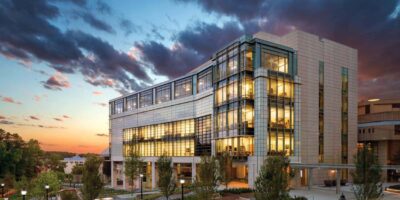
The new Brody Center for Medical Education
The biggest change on campus is under construction now. The State of North Carolina invested $265 million in the Brody Center for Medical Education, a seven-story, 195,000-square-foot building connected to the Brody Medical Sciences Building. Construction began in March 2025 and is expected to finish by August 2027, the month the 2026-2027 applicants would begin medical school. The building will support enrollment growth “from 100 up to 120 medical students each year.” Plans include:
- Two large learning studios that seat up to 500 people together or divide into classrooms of up to 136 each
- Huddle rooms, collaboration pods and small-group student spaces
- A new home for simulation and standardized patient programs
- Four student houses, common spaces with lockers, changing areas and study carrels shared by first- through fourth-year students
- A new gross anatomy space with 28 beds
- An instructional lab classroom for neurology, pathology and immunology seating up to 144
- A roof terrace, green space and a lawn for events, plus a new 500-car parking garage on the Health Sciences Campus
Dr. Michael Waldrum, dean of the school and CEO of ECU Health, said the new classrooms, study space, anatomy labs and simulation technology will help faculty “educate the next generation of North Carolina’s physicians to provide care in our region and across the state.”
ECU Health Medical Center
ECU Health Medical Center in Greenville is the flagship of ECU Health and the primary teaching hospital for Brody students. It has 974 beds, is one of the nation’s largest Level I trauma centers and serves a 29-county region that is home to more than 1.4 million people. That means Brody students train in a tertiary referral center that receives the most complex patients from across eastern North Carolina, including many from underserved rural counties.
Plan on having a car. Brody students are required to hold a current driver’s license and to have a vehicle, with reliable transportation during the preclerkship years and for clinical rotations.
High-tech research equipment
Brody’s research core facilities support faculty and student research. Core facilities and shared equipment include:
- Cell Imaging Core Facility
- Flow Cytometry Facility
- Genomics Core Facility
- Mass Spectrometry Core Facility
- Histology Laboratory
- Seahorse Extracellular Flux Analyzer
- LI-COR Odyssey Imaging System
- LI-COR Pearl Animal Imaging System
- Ultrasound Machine
Each facility page explains how to reserve time and what it costs.
Student organizations and service
Brody students run a wide range of medical student organizations, from specialty interest groups to free clinics. Brody’s Office of Student Affairs lists more than 50 BSOM student groups and professional organizations, including:
- Specialty interest groups: Anesthesiology, Dermatology, Emergency Medicine, Family Medicine, Internal Medicine, Lifestyle Medicine, Military Medicine, OB-GYN, Ophthalmology, Orthopedic Surgery, Otolaryngology, Pediatrics, Radiological Sciences, Sports Medicine, Psychiatry and Neurology, and Pathology interest groups, plus the Charles G. Rob Student Surgical Society and a Plastic and Reconstructive Surgery Journal Club
- Professional and identity-based associations: the Brody chapter of the Student National Medical Association, the Latino Medical Student Association, the Asian Pacific Medical Students Association, the Muslim Medical Student Association, the Rainbow Alliance of Medical Students and the Christian Medical Dental Association
- Service and community health: the Greenville Community Shelter Clinic, the Pitt County Care Clinic, Happy Hearts community CPR, Food is Medicine, the ECU chapter of the Food Recovery Network, Doctors for Harm Reduction, Brody Global Health Club, Brody Human Rights Initiative, Health Equity and Justice, Pirates Vs. Cancer and MedPals
- Student life and leadership: the Medical Student Council, Brody Ambassador, Brody Coaches Association, AI in Medicine, Brody InnovatED, Creativity in Medicine, Brody Lifts and Brody Club Pickle Ball
As ECU students, Brody students can also take part in the university’s Club Sports Program, run by ECU Campus Recreation & Wellness.
The most distinctive student activity at Brody is clinical service. Brody students manage two free clinics for uninsured people in Greenville:
- Greenville Community Shelter Clinic: Brody students first became involved with the Greenville community shelter in December 1988. The clinic offers basic medical care to people experiencing homelessness at no charge. First- and second-year students take an extended history and vital signs, learn the chief diagnosis and help build a medical plan for the attending physician’s approval. Women’s and pediatric clinics were added over time, and students run the clinic’s operations committee.
- Pitt County Care Clinic: Brody students team with undergraduate volunteers to provide health screening, health education and counseling to uninsured residents every other Sunday at the county health department. Second-year medical students administer the clinic with a faculty physician and community physician volunteers.
These clinics are a large part of why Brody’s service-centered secondary essays matter: once you enroll, the school expects you to keep serving.
Clinical Rotations and Research Opportunities
Core rotations and sites
Brody students complete their third-year core clerkships (family medicine, internal medicine, obstetrics-gynecology, pediatrics, psychiatric medicine and surgery) and much of their fourth year in Greenville at ECU Health Medical Center and its outpatient practices. Brody’s Department of Emergency Medicine describes the medical center’s emergency department as one with more than 120,000 patient visits a year and a wide range of trauma, including agricultural and industrial injuries, which is where every student completes the required fourth-year emergency medicine rotation. The fourth-year emergency medicine, neurology and PM&R rotations must be done at Brody, while the acting internship, ICU rotation and many electives can be done at Brody or away.
ECU Health community hospitals across eastern North Carolina also host Brody learners. Dr. Jon Kornegay, a 2008 Brody graduate, described how ECU Health Duplin Hospital in Kenansville takes Brody third- and fourth-year students on community rotations, along with ECU rural family medicine residents. Early clinical work in local practices across the four years is the reason Brody won its ASPIRE award for social accountability.
Research
Research is encouraged for applicants and available throughout medical school:
- Summer Scholars Research Program: eight weeks of mentored clinical or basic science research between the first and second years.
- Research Distinction Track: a three-year track in clinical, basic science or translational research, directed by David Tulis, PhD, ending in a capstone portfolio and presentation at the Medical Student Scholarship Forum.
- Core facilities: the imaging, flow cytometry, genomics, mass spectrometry and histology cores listed above.
- Institutes and programs: Brody’s leadership includes the East Carolina Diabetes and Obesity Institute, the North Carolina Agromedicine Institute, the ECU Center for Telepsychiatry and e-Behavioral Health and the North Carolina Statewide Telepsychiatry Program (NC-STeP).
Research is optional in the MD curriculum; there is no research or thesis requirement. The school held $8,022,368 in direct federal research grants and contracts in fiscal year 2024.
Brody also has a long record in surgical innovation. In May 2000, Dr. W. Randolph Chitwood Jr. and his team at ECU completed the first totally endoscopic and robotic mitral valve repair in North America, and the second in the world. By 2008 Chitwood had performed more than 400 robot-assisted mitral valve repairs, and he directed the East Carolina Heart Institute.
Service-learning and global health
The Service-Learning Distinction Track supports students who work with medically underserved, marginalized and rural populations at home and abroad. The Global Health and Underserved Populations program hosts talks by alumni such as Dr. Kornegay on the realities of rural practice. Brody’s free clinics give first- and second-year students hands-on experience with history-taking, vital signs and care planning long before the clerkships. Students who arrive with experience in pre-health internships or community clinics often find these programs a natural next step. In 2025, 11% of Brody’s graduating seniors reported a global health experience during medical school.
Residency and outcomes
All 75 members of the Class of 2026 who entered the National Resident Matching Program matched, a 100% match rate. A little over half matched in primary care, 40 percent stayed in North Carolina, and 12 percent matched with ECU Health. ECU Health and Brody also sponsor residency programs in Greenville, so many Brody graduates train for residency in the same hospital where they did their clerkships.
Graduating students’ own plans point the same way. In 2025, the specialties Brody’s graduating students most often said they planned to enter were internal medicine (24.5%), family medicine (15.1%) and emergency medicine (11.3%), followed by obstetrics and gynecology, pediatrics and psychiatry (7.5% each).
Notable Alumni, Faculty, Leadership and Admissions Staff
Knowing who leads Brody, and what its graduates have done, helps you understand what the school values. Every profile below is drawn from Brody’s own pages or ECU News, and roles are current as of the date shown.
Leadership
Michael Waldrum, MD, MSc, MBA: Dean of the Brody School of Medicine and CEO of ECU Health Dr. Waldrum leads both the medical school and its clinical partner. He is a critical care and pulmonary specialist trained in internal medicine, with a background in clinical effectiveness and health system management. Before coming to eastern North Carolina he was president and CEO of The University of Arizona Health Network and CEO of the University of Alabama Hospital at Birmingham. He chairs the Association of American Medical Colleges (AAMC) Board of Directors, where he has held board leadership roles since 2020. For applicants, his dual role explains why ECU Health and Brody move together on projects such as the new medical education building.
Jason Higginson, MD, MA, FAAP: Executive Dean Dr. Higginson was named executive dean of Brody and Chief Health Officer of ECU Health in June 2021. He still practices as a neonatologist in the neonatal intensive care unit at ECU Health Medical Center and is a professor of pediatrics and of bioethics and interdisciplinary studies. He came to Brody in 2012 after 13 years of active duty in the U.S. Navy, and before becoming executive dean he chaired the Department of Pediatrics and served as pediatrician-in-chief of Maynard Children’s Hospital. His statement at Match Day 2026, “Our mission is to create doctors for North Carolina,” is as clear a summary of what Brody wants as you will find.
Michelle Brooks, MSN, RN: Executive Vice Dean Brooks has served as executive vice dean since 2022, overseeing operations and serving as ECU’s legislative liaison on health care and workforce issues. She spent 30 years at ECU Health (formerly Vidant Health), from bedside nursing to executive leadership, and earned her Master of Science in Nursing at ECU. Her legislative role connects to the state funding behind Brody’s expansion.
David L. Eldridge, MD: Senior Associate Dean of Academic Affairs Dr. Eldridge oversees academic affairs for the MD program, the area responsible for curriculum and educational policy.
Admissions staff
Shaundreal Jamison, MD: Interim Associate Dean of Admissions Dr. Jamison leads the admissions function on Brody’s senior leadership team.
Tarrick C. Cox: Director of Admissions Cox directs the Office of Admissions, which screens applications for residency and minimum requirements, sends Gateway Activities invitations and runs the interview day. The office is reachable at [email protected] and 252-744-2202. Virginia R. Griffith is the office’s admissions officer and recruitment coordinator.
Faculty
Sheena Eagan, PhD: Director, Medical Humanities & Ethics Distinction Track Dr. Eagan directs Brody’s newest Distinction Track, launched in summer 2025, which uses reflection, critical thinking and creative work to explore the moral side of medicine. Applicants with backgrounds in philosophy, ethics, writing or the arts should know this track exists.
David Tulis, PhD: Director, Research Distinction Track Dr. Tulis directs the three-year Research Distinction Track, which guides students through clinical, basic science or translational projects to a capstone. Applicants with sustained research experience can point to this track when explaining how they will continue that work at Brody.
W. Randolph Chitwood Jr., MD: robotic heart surgery pioneer Dr. Chitwood completed the first totally endoscopic and robotic mitral valve repair in North America in May 2000. By 2008 he had performed more than 400 robot-assisted mitral valve repairs while serving as director of the East Carolina Heart Institute and professor of cardiovascular surgery at Brody. His work is part of why Brody describes itself as a school known for innovation, even with a primary care mission.
Alumni
Jon Kornegay, MD (Class of 2008) A Duplin County native, Dr. Kornegay has served his home county since 2012. As of 2023 he was hospitalist director at ECU Health Duplin, vice chief of staff and Duplin County EMS medical director, and his hospitalist group helped nearly triple patient encounters at the hospital in about 12 years. He was named one of ECU’s 2022 “40 Under Forty” honorees. His brothers also trained through Brody, and his story shows the mission in its plainest form: grow up in eastern North Carolina, train at Brody, return home to practice.
Stephen Manning, MD (Class of 2008) Dr. Manning, a Williamston native, earned his bachelor’s degree, MD and residency training at ECU. After residency he opened a family medicine practice in Martin County with the local hospital, then an independent, subscription-based family medicine practice in his hometown. He credits Brody’s small classes and low tuition for letting him choose primary care in an underserved community: “I was one of the people that this mission was designed for.”
Holly Stegall, MD (2012) Dr. Stegall grew up in rural Anson County and chose Brody for its low in-state tuition and primary care emphasis. After residency at Atrium Health Cabarrus Family Medicine, she returned to practice family medicine near home, where (as of 2022) she also served as a site director for a family medicine residency program and volunteered with her local health board, high school athletics and the Special Olympics.
Christina Peroutka, MD Dr. Peroutka earned her MD at Brody, completed residency training in pediatrics and genetics at The Johns Hopkins Hospital and a fellowship in medical biochemical genetics at the National Institutes of Health. She is board certified in pediatrics and in clinical, general and medical biochemical genetics, with expertise in inborn errors of metabolism and newborn screening. She returned to give the keynote at Brody’s 2025 Medical Education Day. Her career is a useful reminder that Brody graduates compete well for specialty training too.
Admissions Statistics and Class Profile
Brody publishes its class profile through a public Matriculants Dashboard maintained by its Office of Data Analysis and Strategy. The figures below are for the 2026 incoming class, the newest available. All demographic data are self-reported by matriculants.
2026 incoming class profile
| Measure | 2026 incoming class |
|---|---|
| Students matriculated | 96 |
| Average undergraduate GPA | 3.74 |
| Average science GPA | 3.65 |
| Average graduate GPA | 3.90 |
| Average MCAT | 511 |
| Gender | 50% male, 49% female, 1% other |
| Race and ethnicity | 66% White, 18% Asian, 6% two or more races, 5% Hispanic (any race), 3% Black or African American, 1% unknown |
| Disadvantaged socioeconomic status | 20% |
| First generation | 6% |
| From North Carolina Tier 1 (most distressed) counties | 16% |
| Average age at start | 24 |
| Top home counties | Wake 26%, Mecklenburg 9%, Pitt 5%, Forsyth 4%, Guilford 4% |
| Top undergraduate schools | UNC Chapel Hill 55%, NC State 13%, ECU 9%, Duke 6%, UNC Wilmington 5%, Appalachian State 3% |
| Top majors | Biology 33%, Psychology 7%, Neuroscience 6%, Chemistry 5%, Biochemistry 3% |
Applicants by year
| Year | Applicants |
|---|---|
| 2022 | 1,156 |
| 2023 | 1,095 |
| 2024 | 1,115 |
| 2025 | 2,265 |
| 2026 | 2,516 |
Applications to Brody roughly doubled between 2024 and 2025 and rose again in 2026. The number of acceptance offers is not published, so no acceptance rate can be calculated. Dividing matriculants by applicants gives a matriculation ratio, not an acceptance rate, because some accepted applicants enroll elsewhere.
2025 entering class: interviews, accepted applicants and matriculants
| Measure | 2025 entering class | Source |
|---|---|---|
| Verified applications by residency | 1,077 in-state; 1,187 out-of-state; 3 international | AAMC MSAR |
| Applicants interviewed | 350 (340 in-state, 10 out-of-state, 0 international) | AAMC MSAR, school-reported |
| Students matriculated | 91 (91 in-state) | AAMC MSAR |
| Early Assurance matriculants | 5 | AAMC MSAR |
| Deferred entrance | 0 | AAMC MSAR |
| Median MCAT, accepted applicants | 513 (mean 512.8) | AAMC MSAR |
| Median MCAT sections, accepted applicants | Chemical and Physical 128; CARS 127; Biological and Biochemical 128; Psychological and Social 129 | AAMC MSAR |
| Median overall GPA, accepted applicants | 3.87 (mean 3.81) | AAMC MSAR |
| Median science GPA, accepted applicants | 3.83 (mean 3.75) | AAMC MSAR |
| Matriculants with a graduate degree | 15% | AAMC MSAR, self-reported |
| Science or math majors | 74% | AAMC MSAR, self-reported |
| Self-reported disadvantaged status | 27% | AAMC MSAR |
| Grew up in a medically underserved area | 37% | AAMC MSAR, self-reported |
Two points stand out. First, residency drives the interview list: out-of-state applicants filed more than half of verified applications, yet only 10 of the 350 interviews went to out-of-state applicants, and every 2025 matriculant was classified as in-state. Out-of-state applicants who qualify through a UNC System degree are eligible, but the realistic path runs through North Carolina residency. Second, the 513 and 3.87 medians describe everyone accepted for the 2025 entering class, while the 511 and 3.74 averages describe the students who enrolled in 2026, so the two pairs measure different groups and are both useful targets.
How to read these numbers
- Averages, not cutoffs. The 511 MCAT and 3.74 GPA are averages for enrolled students. The cutoffs are 500 and a 3.0 science GPA.
- North Carolina’s whole map applies. Wake and Mecklenburg counties sent the most students, but 16% came from the state’s most economically distressed counties, and Brody gives preference to eastern North Carolina residents for its Brody Scholars awards.
- Where students went to college. More than half of the 2026 class came from UNC Chapel Hill. Students from smaller schools still enroll every year, especially through partnerships such as Early Assurance.
- Class size will grow. The 2026 class had 96 students. The estimate for the class entering in 2027 is 100 new students (90 through the regular MD route, 5 through Early Assurance and 5 through Early Decision), and the new Brody Center for Medical Education is built to support growth from 100 up to 120 students each year once it opens in 2027. Total enrollment was 363 medical students in October 2025.
Tips and Strategies for Admission
1. Settle eligibility before anything else
Brody will not review an application from an applicant who is neither a North Carolina resident nor a UNC System graduate within the last five years. If you are a North Carolina resident, complete the Residency Determination Service process early and keep your Residency Certification Number handy. If you are a UNC System graduate living out of state, count the five years from your bachelor’s degree to the start of your application cycle.
2. Check your coursework against Brody’s unusual rules
Brody’s course policies trip up strong applicants every year. Before you apply, confirm that:
- None of your prerequisites relies on AP credit.
- None was taken online.
- Your biology, chemistry and biochemistry coursework falls within five years of your graduation date.
- Your biology and physics labs come from two separate lab courses.
- Every prerequisite grade is a C or higher, not a C-.
If any of these fails, fix it with upper-level, in-person coursework before you apply.
3. Build patient-facing experience that produces clinical letters
Two of your three letters (or one, with a committee letter) must come from clinical team members who watched you with patients. That means your clinical experience needs depth, not just hours. Choose roles where you return week after week and where a physician, nurse or physician assistant can describe how you treat patients. Planning pre-med summer internships around these goals, rather than collecting short observation stints, gives you both the experience and the letter writers.
4. Make service a pattern, not an entry
Brody expects volunteer experience on every application, and one secondary essay is entirely about service. The strongest applicants show a commitment that lasted, ideally with people who are underserved. Free clinics, food security work, rural health fairs, tutoring in under-resourced schools and hospice volunteering all fit.
5. Spend real time in rural communities
The third secondary essay asks about your interactions with people from rural communities. If you grew up in a small town, you already have material. If you did not, look for ways to work alongside rural residents before you apply: a summer job on a farm or at a rural clinic, volunteering with a county health department, or service trips in eastern North Carolina. Brody can tell the difference between a visit and a relationship.
6. Know where you want to practice, and say so honestly
The career goals essay asks for a specialty and a location. You do not need certainty, but you do need a reasoned answer. Brody’s outcomes are about doctors who stay in North Carolina and serve where they are needed. If you hope to practice in a rural or underserved part of the state, explain why. If you hope to enter a specialty, explain how that specialty serves the region’s needs.
7. Submit a complete application, early
Brody accepts no updates after you submit: no new hours, no new experiences, no letters of intent. Submit AMCAS only when your experiences section is final, and submit as early in the cycle as you can, because Brody decides on a rolling basis from August through March. Return the secondary well before November 1. A one- to two-week turnaround is a sensible goal.
8. Use Early Decision only with a clear reason
EDP fits applicants whose first choice is Brody, whose MCAT is in hand by July 11, and whose application is complete by early August. If you are uncertain, Regular Decision keeps your options open.
9. If you are reapplying
Brody’s no-update rule means a reapplication is your chance to show growth. Many successful applicants spend a year between college and medical school working in clinical roles, completing post-baccalaureate science or serving in their communities. Structured pre-med gap year programs can add the patient-facing experience Brody requires. If your science GPA was below 3.0, the 24-hour graduate or post-baccalaureate requirement must be complete before you reapply.
10. Get help where it counts
Applying to medical school takes research, planning and close attention to detail as you follow application instructions, gather letters of recommendation and prepare for interviews. One-to-one help can make the process much more manageable. Our medical school admissions consulting team helps applicants plan coursework and experiences, edit essays and practice interviews, including mock interviews. Contact us here with questions.
Secondary Application Questions, Example Responses and Analysis

Brody’s supplemental application is part of its Gateway Activities. You receive the invitation by e-mail only if you pass the initial screen for North Carolina residency, minimum GPA and minimum MCAT. The fee is $100, waived for AAMC Fee Assistance Program participants, and the deadline is November 1, 2026 for Regular Decision (August 17, 2026 for Early Decision).
For the 2026-2027 cycle, the supplemental application has four essays, each limited to 250 words. All four are required for every applicant who receives the secondary. Write to the counter in the application form, and keep each answer at or under 250 words. Past versions of the supplemental also included short administrative questions, such as your North Carolina residency claim and any health professions enrichment programs you completed; answer every item the form shows, completely and accurately. For a broader set of examples from other schools, see our medical school secondary essay prompts database.
The examples below are original, written to show how a strong answer can be built. Each is labeled “Illustrative example, not an actual applicant essay.” Do not copy them; your essays must describe your own experiences.
Essay 1: Motivation for applying to Brody
Prompt: “Describe the key motivational factors in your decision to apply to the Brody School of Medicine.” (250 words maximum)
What it asks: the reasons behind your decision to apply. “Key motivational factors” invites two to four specific reasons, each tied to something real about Brody and something real about you.
How to approach it: start from Brody’s mission and build outward. Name specific, verified parts of the program, such as the eight-week family medicine clerkship, a Distinction Track or the student-run free clinics, and connect each to your own experience and goals. Avoid praise that could fit any school.
Illustrative example, not an actual applicant essay (235 words):
I grew up in Sampson County, where my mother drove forty minutes each way to see an endocrinologist and our family doctor of twenty years retired without a replacement. Brody’s mission, to increase the supply of primary care physicians serving the state and to improve the health and well-being of the region, describes the problem I watched from the passenger seat.
Three parts of Brody’s training answer that problem directly. First, every third-year student completes an eight-week family medicine clerkship, so primary care is a core part of training rather than an elective. Second, the Service-Learning Distinction Track would let me spend three years working with underserved and rural populations under a mentor and finish with a capstone portfolio. My service so far has been scattered across semesters, and I want to learn to sustain one project over years. Third, Brody students run two free clinics in Greenville. At the shelter clinic, first- and second-year students take histories and vital signs and help build a plan for the attending physician. After two years of intake work at a free clinic in Clinton, I know how much those early patient conversations teach.
Finally, Brody’s graduates stay. Forty percent of the Class of 2026 matched into North Carolina residencies, and I intend to be part of that number. I am applying to Brody because I want to train where the patients I plan to serve already live.
Why it works: the answer gives three reasons, each anchored in a verified Brody program (the family medicine clerkship, the Service-Learning Distinction Track and the shelter clinic) and each connected to a personal fact (a county without a family doctor, scattered service, free clinic intake). It quotes the mission accurately without copying it word for word, and it closes with a published outcome (40 percent staying in North Carolina) that matches the applicant’s goal. Every sentence answers “why Brody,” and nothing could be pasted unchanged into another school’s essay.
Mistakes to avoid: – Listing rankings, the school’s age or its building without saying why they matter to you. – Naming a Distinction Track you have no history with. – Writing about why you want to be a doctor instead of why you want Brody. – Running over 250 words; the form enforces the limit.
Essay 2: A meaningful service experience
Prompt: “At the Brody School of Medicine, our mission places a strong emphasis on serving the community – both within Brody and throughout Eastern North Carolina and the state. Can you describe a meaningful experience from your past that reflects your commitment to service, and how it shaped your understanding of its importance in healthcare?” (250 words maximum)
What it asks: two things. First, one meaningful service experience that shows commitment (not a list). Second, how that experience shaped your understanding of why service matters in health care.
How to approach it: pick one experience you sustained over time. Spend about half the answer on a specific scene and your role, and the other half on what it taught you about health care. Connect that lesson, briefly, to the community Brody serves.
Illustrative example, not an actual applicant essay (237 words):
For three summers I ran the blood pressure table at a monthly food distribution held in a church parking lot in rural Bladen County. Families waited in their cars for boxes of produce, and I walked down the line with a cuff and a clipboard.
The second summer, a man named Mr. Ellis had a reading of 188 over 110. He told me he had stopped his blood pressure pills because the pharmacy in his town had closed and the next one was 25 miles away. He did not need a lecture about salt. He needed a ride and a prescription that could be mailed. Our volunteer nurse called the county health department that afternoon, and by the next distribution he was back on medication delivered to his house. His reading was 142 over 88.
That experience changed what I think service means in health care. I had thought of service as giving time. I learned that it means staying long enough to find out what is really in the way, and then fixing that. A blood pressure reading is useful only if someone follows up on it.
I kept the table running through college and trained six new volunteers to ask about transportation and pharmacy access before giving advice. Brody’s free clinics and its Service-Learning Distinction Track are built on that same idea of continuity, and I want to keep practicing it in eastern North Carolina.
Why it works: it answers both halves of the prompt in order: a specific, sustained experience (three summers, a defined role, one patient story) and an explicit change in understanding (“I had thought… I learned…”). The patient story shows a real barrier common in rural health care, and the outcome is measured, not exaggerated. The last paragraph proves commitment through continued action and ties it, in one sentence, to Brody’s clinics and track. The patient is described respectfully and without identifying details beyond a surname, which applicants should change or omit in their own essays.
Mistakes to avoid: – Listing every volunteer role you have held. – Making yourself the hero of a story that belongs to the community. – Skipping the second half of the question about health care. – Using real names or identifying details of patients.
Essay 3: Experiences with rural communities
Prompt: “Can you describe any interactions or experiences you’ve had with individuals from rural communities? In what ways have these experiences influenced your understanding of the unique challenges and needs they face?” (250 words maximum)
What it asks: your real interactions with people from rural communities, and what those interactions taught you about the specific challenges rural residents face.
How to approach it: be honest about the depth of your experience. If you grew up rural, show it through specific people and problems, not nostalgia. If you did not, describe the most substantial rural experience you have and what you learned without overstating it. Name concrete challenges: distance, transportation, workforce shortages, broadband, occupational hazards, insurance, hospital and pharmacy closures.
Illustrative example, not an actual applicant essay (240 words):
I grew up in Raleigh, so my first real time in a rural community came at nineteen, when I took a summer job as an assistant at a farmworker health outreach program in Johnston and Harnett counties. Three evenings a week we drove a van to labor camps, checked blood sugar and blood pressure, and screened for heat illness after twelve-hour days in tobacco and sweet potato fields.
The workers taught me more than the protocols did. A crew leader explained that men skipped water breaks because the pay was by the bucket. A woman with a hand infection waited a week for care because the clinic closed at five and she had no car. Several men had diabetes but had never seen the same doctor twice.
These conversations changed how I understand rural health. I had assumed the main problem was distance. Distance is real, but so are work schedules, piece-rate pay, language, fear of losing a job and a shrinking number of clinicians who stay. Rural residents are not short on resilience. They are short on access that fits the way they live and work.
I returned for a second summer and helped the program move its evening visits to times the crews chose. I also learned enough Spanish to take a basic history. At Brody, I want to keep learning from rural patients in eastern North Carolina, including through community rotations in ECU Health hospitals outside Greenville.
Why it works: it is honest about the applicant’s urban background, then shows a substantial, repeated rural experience with specific details. It answers the second question directly by naming challenges the applicant did not expect (work schedules, piece-rate pay, language, workforce) and states a clear change in understanding. It shows respect (“not short on resilience”) and action (changing visit times, learning Spanish). The final sentence connects to verified Brody training without inflating it.
Mistakes to avoid: – Describing rural people as a monolith or as objects of pity. – Treating a single service trip as deep experience. – Writing only about the challenges without describing your interactions. – Claiming rural roots you do not have.
Essay 4: Career goals and Brody’s mission
Prompt: “Describe your future career goal(s) including your specialty(ies) of interest and the location where you hope to practice. How do you envision using the specialty(ies) you listed to advance the mission of Brody?” (250 words maximum)
What it asks: three answers in one: your specialty interest (one or more), where you hope to practice, and how that specialty would advance Brody’s mission.
How to approach it: be specific but honest about uncertainty. Name a specialty or two, a region, and a concrete way your work would serve Brody’s goals: more primary care, better health in the region, or meeting the state’s health care needs. Teaching future Brody students and serving in ECU Health communities are both direct ways to advance the mission.
Illustrative example, not an actual applicant essay (222 words):
I plan to become a family physician who provides prenatal and delivery care, and I hope to practice in northeastern North Carolina, in a county like Bertie or Washington where the nearest labor and delivery unit can be more than an hour away.
I chose family medicine after a year as a medical assistant in a rural health center, where the same physician treated a grandmother’s heart failure in the morning and her granddaughter’s ear infection in the afternoon. I saw how much a doctor who knows a whole family can prevent. I also saw pregnant patients miss visits because of the drive. A family physician trained in obstetrics could keep that care close to home.
I would advance Brody’s mission in three ways. First, by adding one more primary care physician to a part of the state that needs many. Second, by improving the region’s health through prenatal care that starts early and continues after delivery. Third, by teaching. I would like to precept Brody students during their family medicine clerkships, and the Medical Education & Teaching Distinction Track would help me learn to do that well.
I am open to what clerkships will teach me, and I may find another specialty I love. If I do, my location goal will stay the same: practicing where eastern North Carolinians need care.
Why it works: it answers each part of the prompt in order: specialty (family medicine with obstetrics), location (northeastern North Carolina, with a concrete reason), and three specific ways to advance the mission that match Brody’s three-part mission statement. It draws on a real experience to justify the specialty, names a verified Distinction Track, and shows an open mind without weakening the commitment to the region.
Mistakes to avoid: – Naming a specialty with no explanation of how you came to it. – Saying “anywhere” for location; Brody asks where. – Ignoring the second question about Brody’s mission. – Promising rural practice in a way the rest of your application does not support.
Program-specific essays
Brody does not list separate secondary essays for Early Decision, Early Assurance, the MD/MBA or the MD/MPH for the 2026-2027 cycle. Early Assurance scholars complete the same AMCAS and Early Decision process and are exempt from the secondary fee. The MD/MBA requires no essay; the ECU Graduate School application asks only for transcripts, the fee and a note that the GMAT is not required. If your portal shows an additional prompt, answer it completely and within the limit it states.
Interview Format and Preparation
Format
Brody’s interview day, held as either a morning or an afternoon session, includes:
- Two one-on-one interviews with members of the admissions committee
- A welcome and overview from the Office of Admissions leadership
- A panel discussion with current Brody students
For the 2026-2027 cycle, interviews will continue to be held virtually on Webex. Brody strongly encourages applicants to download Webex in advance and do a test run. Interviews are typically held between September and February; the published timeline runs from September 2026 to March 2027 for Regular Decision and September 2026 for Early Decision. Invitations can begin as early as July. Interviewed applicants can also join campus visit days, which include a student panel and a tour of the Brody School of Medicine and the ECU Health Sciences Campus.
Competition for an interview is real. Brody interviewed 350 applicants for the 2025 entering class, 340 of them North Carolina residents, from more than 2,200 applications.
Interviews give the committee a chance to learn about you beyond your application, and they give you a chance to meet faculty and students and get a feel for Brody. Brody encourages you to review information about the school before your interview day so you can ask clarifying questions.
What interviewers look for
Brody does not publish an interview rubric. Its mission, secondary essays and selection policies point to the qualities that matter most:
- Strong interpersonal skills and active listening
- Self-confidence without arrogance
- Compassion and social awareness
- A clear, honest motivation for medicine
- A desire to make a difference and to serve the people of North Carolina
How to prepare
- Know your application cold. With no updates allowed after submission, your interviewers see exactly what you sent. Be ready to discuss every experience and every secondary essay in detail.
- Prepare for mission questions. Expect to talk about primary care, rural and underserved communities, where you plan to practice and why Brody rather than another North Carolina school.
- Practice one-on-one conversation on video. Set up good lighting, a neutral background, a stable internet connection and a camera at eye level. Practice answering with a mock interviewer on the same kind of platform.
- Prepare questions for the student panel. Ask about the free clinics, the Distinction Tracks, community rotations and what the new building will change.
- Rehearse common questions. Our list of the most common medical school interview questions covers motivation, ethics, teamwork and personal challenges.
Preparing for an interview can feel overwhelming. Many applicants find personalized coaching and a full mock interview through our medical school admissions consulting services helpful.
After the interview
Decisions are rolling. You will hear that you are accepted, placed on hold (waitlisted) or not accepted. Brody does not accept letters of intent or updates after the interview, so let the interview and your application speak for you.
Frequently Asked Questions
Can out-of-state applicants apply to ECU Brody School of Medicine?
Only if they earned a bachelor’s degree from a University of North Carolina System institution within the last five years. Otherwise, Brody considers only legal North Carolina residents. All applicants must also be U.S. citizens or permanent residents.
What is the minimum MCAT and GPA for Brody?
The minimum MCAT is 500 and the minimum undergraduate science GPA is 3.0. Applicants below the GPA minimum must complete at least 24 hours of graduate or post-baccalaureate coursework, with grades above the average, before applying.
What are the average MCAT and GPA at Brody?
The 2026 incoming class averaged a 511 MCAT, a 3.74 undergraduate GPA and a 3.65 science GPA. These are averages for enrolled students, not minimums.
What is Brody’s acceptance rate?
The number of acceptance offers is not published, so an acceptance rate cannot be calculated. In 2026 Brody received 2,516 applications and enrolled 96 students. That matriculation ratio is not an acceptance rate, because some accepted applicants choose other schools. For the 2025 entering class, 350 applicants were interviewed and 91 enrolled.
How many applicants does Brody interview?
Brody interviewed 350 applicants for the 2025 entering class: 340 North Carolina residents and 10 out-of-state applicants. Each interviewed applicant has two one-on-one virtual interviews with members of the admissions committee.
What are the median MCAT and GPA of accepted applicants?
For the 2025 entering class, accepted applicants had a median MCAT of 513 and a median overall GPA of 3.87, with a median science GPA of 3.83. The enrolled 2026 class averaged a 511 MCAT and a 3.74 GPA.
Can I defer my acceptance to Brody?
Deferral requests are reviewed case by case. No students in the 2025 entering class deferred entrance, so plan to start the August after you are accepted.
How much debt do Brody graduates have?
Indebted graduates in 2024-2025 left with an average medical school debt of $135,349, and 89% of students received financial aid that year.
Does ECU Brody School of Medicine require the Casper exam?
No. Brody does not list Casper, PREview or any other situational judgment test among its requirements for the 2026-2027 cycle.
Does Brody require clinical experience?
Yes. Every applicant must have patient-facing experience at the time of application. Brody does not require a specific type, but research or professional mentors cannot write the required clinical letters, so your clinical roles should involve working directly with patients alongside a clinical team. Many applicants build these hours through jobs, hospital volunteering or pre-med internships where they help with patient care under supervision.
Does Brody accept AP credit or online courses for prerequisites?
No to both. AP courses do not meet any prerequisite, and online prerequisite courses are not accepted. Applicants with unusual circumstances that required an online course should contact the Office of Admissions.
How old can my prerequisite courses and MCAT be?
Core science courses must fall within five years of your graduation date. For the 2026-2027 cycle, MCAT scores from 2023 or later are accepted, and scores older than three years are not considered.
How many letters of recommendation does Brody require?
Either three individual letters (two clinical and one professional or academic) or a Pre-Medical Advisory Committee letter plus one clinical letter. All letters go through AMCAS and should arrive by October 1.
Can I send updates or a letter of intent?
No. Brody does not accept updates, new experiences, letters of intent or unsolicited letters after you submit, unless the Office of Admissions contacts you for more information. Contact information changes go through AMCAS.
Does Brody offer Early Decision?
Yes. Early Decision applicants submit AMCAS by August 3, 2026 and the secondary by August 17, interview in September and receive a decision by October 1, 2026. EDP applicants cannot apply elsewhere until Brody decides.
What is Brody’s Early Assurance Program?
A restricted program for undergraduates at ECU’s Honors College, UNC Pembroke and North Carolina A&T State University. Partner schools nominate students, who can earn a guaranteed seat if they keep meeting academic, MCAT, prerequisite and activity requirements. Early Assurance scholars apply through Early Decision and pay no secondary fee.
How much does Brody cost?
For 2025-26, tuition was $11,126 per semester and tuition plus university fees was $12,618.50 per semester. First-year tuition and fees for 2025-2026 totaled $25,432 in-state and $56,872 out-of-state. The newest posted cost of attendance, for 2024-2025, ranges from $58,973 in the fourth year to $65,488 in the second and third years.
Are interviews at Brody in person or virtual?
Virtual. For the 2026-2027 cycle, Brody holds interviews on Webex. Each interview day includes two one-on-one interviews, an overview from admissions leadership and a current-student panel.
When will I hear back after my interview?
Brody makes decisions on a rolling basis from August through March. You will be accepted, placed on hold or not accepted. Final decisions for applicants on hold are made by late May.
What is the Brody Scholars Program?
Brody’s most prestigious award, offering full tuition renewable for up to four years. Each year at least twelve accepted applicants are invited to interview, with selection based on scholarship, leadership, service, character and promise in medicine, and preference for eastern North Carolina residents.
Can I transfer into Brody from another medical school?
No. Brody does not accept transfer students.
Does Brody offer dual degrees?
Yes, for enrolled students: an MD/MBA with ECU’s College of Business and an MD/MPH with ECU’s Department of Public Health. Brody also offers PhD programs in seven biomedical science areas, but it does not list a combined MD-PhD program.
Related Medical School Guides
Because Brody considers only North Carolina residents and recent UNC System graduates, most of its applicants also apply to other North Carolina schools and to public schools in the region. Applying broadly is the surest way to improve your chances of getting into medical school. These guides are good places to start:
- UNC Medical School: North Carolina’s other public MD school, with a statewide mission and a strong preference for in-state applicants, the most direct comparison for Brody applicants.
- Wake Forest University School of Medicine: a private MD school in Winston-Salem that accepts out-of-state applicants, useful for North Carolina students who want a second in-state option.
- Duke School of Medicine: a research-focused private MD school in Durham with a distinctive three-year basic science and research structure, a contrast to Brody’s primary care mission.
- Tulane University School of Medicine: a southern MD school with strong public health ties, for applicants interested in Brody’s MD/MPH route.
- West Virginia University School of Medicine: a public school with a long rural health mission in Appalachia, close in spirit to Brody’s service to eastern North Carolina.
- LSU Health New Orleans School of Medicine: a public southern MD school that strongly favors in-state applicants and trains many of its state’s physicians, a useful model for comparing state-focused admissions.
For a side-by-side look at every option in the state, read our guide to medical schools in North Carolina.
Applicants in the Southeast often compare Brody with the University of South Carolina Medical School, VCU School of Medicine and the osteopathic option at Edward Via College of Osteopathic Medicine (VCOM), which has a campus in Spartanburg, South Carolina.
More medical school guides
If you are also looking at schools outside the Carolinas, compare programs by location, mission and cost. You can browse every school in our medical school guides collection. Here are more guides to MD and DO schools across the country:
- Lewis Katz School of Medicine at Temple University
- Philadelphia College of Osteopathic Medicine (PCOM)
- Geisinger Commonwealth School of Medicine (GCSOM)
- Penn State Medical School
- CUNY School of Medicine
- SUNY Downstate Medical School
- NYIT College of Osteopathic Medicine
- NYU Long Island School of Medicine
- Touro College of Osteopathic Medicine
- Albany Medical College
- Norton College of Medicine at Upstate Medical University
- Jacobs School of Medicine at the University at Buffalo
- Hofstra Zucker School of Medicine
- Weill Medical College of Cornell University
- University of Rochester Medical School
- Icahn School of Medicine at Mount Sinai
- Renaissance School of Medicine at Stony Brook University
- Albert Einstein College of Medicine
- Ohio University Heritage College of Osteopathic Medicine
- Northeast Ohio Medical University (NEOMED)
- University of Cincinnati College of Medicine
- University of Toledo College of Medicine
- Wright State University Boonshoft School of Medicine
- Ohio State University College of Medicine
- Rowan University School of Osteopathic Medicine
- Hackensack Meridian School of Medicine (HMSOM)
- Rutgers New Jersey Medical School (NJMS)
- Rutgers Robert Wood Johnson Medical School
- Cooper Medical School of Rowan University (CMSRU)
- A.T. Still University Kirksville College of Osteopathic Medicine
- Saint Louis University School of Medicine
- University of Missouri Medical School
- Kansas City University (KCU)
- UMKC School of Medicine
- New York Medical College
- University of Pittsburgh School of Medicine
- University of Wisconsin Medical School
- University of Maryland School of Medicine
- Case Western Medical School
- University of Florida Medical School
- Emory University School of Medicine
- Boston University College of Medicine
- California University of Science and Medicine
- UC San Diego Medical School
- California Northstate University College of Medicine
- Touro University of California
- CHSU College of Osteopathic Medicine
- UC Davis School of Medicine
- Harvard Medical School
- UC Riverside School of Medicine
- USC Keck School of Medicine
- UT Southwestern Medical School
- Long School of Medicine at UT Health San Antonio
- University of the Incarnate Word School of Osteopathic Medicine
- UT Austin’s Dell Medical School
- UTMB School of Medicine
- McGovern Medical School at UT Health
- Johns Hopkins School of Medicine
- The University of Texas Rio Grande Valley School of Medicine
- UNT Texas College of Osteopathic Medicine
- University of Houston College of Medicine
- Texas A&M College of Medicine
- Baylor College of Medicine
- George Washington University School of Medicine
- Vanderbilt University School of Medicine
- St. George’s University School of Medicine
- Lake Erie College of Osteopathic Medicine (in Pennsylvania)
- Sidney Kimmel Medical College at Thomas Jefferson University
- Western University of Health Sciences (in California)
- Drexel University College of Medicine
- Stritch School of Medicine at Loyola University Chicago
- Georgetown University School of Medicine
- Yale School of Medicine
- Perelman School of Medicine
- UCLA Medical School
- NYU Medical School
- Washington University School of Medicine
- Brown Medical School
How International Medical Aid Can Help
Few experiences teach as much as working beside skilled clinicians with real patients in a setting very different from your own. International Medical Aid (IMA) runs internships for pre-med students and other pre-health students who want that kind of hands-on clinical experience. IMA’s pre-med internships abroad place students in hospitals and clinics in Kenya and other sites, where interns take vitals, do patient intake and triage, and help with direct patient care under the supervision of local physicians and nurses. That is the kind of patient-facing experience Brody requires of every applicant.
IMA’s programs were designed for pre-medical and gap year students who want to prepare for their future as humanistic, globally minded physicians. Students interested in Spanish-language care can also consider a medical internship in Peru, a natural fit for applicants who plan to care for North Carolina’s Spanish-speaking patients. To see every destination and program, explore our medical internships abroad.
IMA is independent of the Brody School of Medicine. Our programs do not provide preferred admission, and what matters to Brody is what you learn and how you reflect on it.
When it is time to apply, our medical school admissions consulting team can help with your school list, AMCAS application, Brody’s four secondary essays and interview practice. Schedule a free consultation, or contact us with any questions about the application process, our clinical internships or our consulting services.
Final Thoughts and Sources
The Brody School of Medicine is a strong choice if you are a North Carolina resident or recent UNC System graduate who wants to train where patients need doctors most. It offers some of the lowest MD tuition in the country, an eight-week family medicine clerkship for every student, student-run free clinics from the first year, five Distinction Tracks and a new medical education building opening in 2027. In return, it expects patient-facing experience, a record of service and a clear sense of how your career will serve the state.
Your next step depends on where you are. If you are in the 2026-2027 cycle, return your secondary well before November 1, 2026 and prepare for a virtual interview with two committee members. If you are planning for 2027-2028, confirm your residency status, check every prerequisite against Brody’s rules on AP, online and five-year-old coursework, build patient-facing experience that will produce two strong clinical letters, and take the MCAT in the spring before you apply. As you take your first step toward Brody, we wish you the best of luck.
Sources
Facts were checked against these sources on October 23, 2026. Cohort and academic year labels appear with each figure above.
- Brody School of Medicine Office of Admissions: Admissions, Admissions Update for the Entering Class of 2031, Application Process and Timeline, Admission Requirements, Frequently Asked Questions, Interviews, Acceptance Procedure, Early Assurance Program, Our Mission and Staff.
- Brody School of Medicine: Administration, Dual Degree Programs, Brody Center for Medical Education, PhD Programs and Alumni.
- Brody Office of Medical Education: Distinction Track Programs, First Year, Second Year, Third Year and Fourth Year curriculum pages.
- AAMC Medical School Admission Requirements (MSAR), Brody School of Medicine at East Carolina University profile, 2026 edition (2025 entering class data; Tuition and Student Fees survey 2025-2026; LCME Part I-B 2024-2025; AAMC Graduation Questionnaire 2025), accessed October 23, 2026.
- Brody Office of Data Analysis and Strategy, Matriculants Dashboard (Incoming Class Year 2026; applicants by year).
- Brody Office of Student Affairs, Financial Aid (cost of attendance 2024-2025, loans, FELS, scholarships); Brody Office of Generalist Programs, Student Clinical Service Opportunities.
- ECU Office of Financial Services, Brody School of Medicine tuition and fees, Fall 2025/Spring 2026; ECU Office of Student Financial Aid, Estimated Cost of Attendance (2026-27 student health insurance rate).
- The Brody Scholars Program, Selection Process.
- ECU Department of Public Health, MPH Program.
- Liaison Committee on Medical Education, Directory of Accredited MD Programs.
- ECU Health, ECU Health Medical Center.
- ECU News: Match Day 2026 (March 20, 2026); U.S. News & World Report 2024 Best Medical Schools (July 22, 2024); ASPIRE to Excellence award (July 20, 2016); robotic mitral valve repair milestone (June 20, 2008); alumni profiles of Jon Kornegay (July 20, 2023), Stephen Manning and Holly Stegall (September 8, 2022).
- Brody Faculty Development, 2025 Medical Education Day agenda (Christina Peroutka).
- Secondary prompts: 2026-2027 wording as shown in the Brody supplemental application, checked October 23, 2026.