Located in Columbia, the state capital of South Carolina, the University of South Carolina Kay and C. Edward Floyd, M.D. School of Medicine has been educating physicians since it admitted its first class of 24 students in 1977. Until May 2026 it was known as the University of South Carolina School of Medicine Columbia. The new name honors the late surgeon and longtime USC trustee Dr. C. Edward “Eddie” Floyd and his wife, Kay Floyd, whose support of the university totals $30 million. This guide covers the Columbia MD program only. The University of South Carolina School of Medicine Greenville is a separate medical school with its own admissions process, class profile and costs, so do not use the figures here for Greenville.
If you’ve been searching for “medical schools near me” in South Carolina, the Floyd School of Medicine belongs on your list. It is a public, state-assisted school with one central purpose: educating physicians to serve the people of South Carolina. It admits approximately 105 students a year, gives primary consideration to South Carolina residents and to out-of-state applicants with significant ties to the state, and trains students across the Midlands and the Pee Dee. Its partners include Prisma Health – Midlands (formerly Palmetto Health), the Dorn VA Medical Center, Lexington Medical Center, the South Carolina Department of Mental Health and, at its Florence Regional Campus, McLeod Health, HopeHealth and MUSC Health Florence.
Beyond the four-year Doctor of Medicine (MD) program, the school offers an MD/PhD track, an Accelerated Undergraduate to M.D. program with the South Carolina Honors College, and graduate programs in biomedical sciences, genetic counseling, counseling and rehabilitation, nurse anesthesia and physician assistant (PA) studies. The PA program is one of its most competitive, admitting just 30 students a year. In 2006 the school became the first in the country to integrate ultrasound training throughout all four years of medical school, and it is now building a new home on USC’s Health Sciences Campus in Columbia’s BullStreet District.
It is difficult to get into any reputable medical school, and the Floyd School of Medicine is no exception. For the Class of 2030, the school received 3,254 applications for 102 seats. This guide covers the 2026-2027 application cycle, for students who plan to start medical school in August 2027. You’ll find the newest class statistics, admission requirements and deadlines, tuition and cost of attendance, the curriculum and clinical campuses, leadership, faculty and alumni profiles, the secondary essay questions with full example answers, the interview format and a long list of frequently asked questions. All figures were checked on November 13, 2026.
Be an Informed Applicant
If you’ve done your homework and researched the best medical schools in South Carolina, you’ve probably narrowed your list to a handful of schools that feel like a good fit. If the University of South Carolina’s medical school is one of them, you’ll need to follow the application instructions carefully and meet every deadline. The first step is to read this guide.
Our medical school guides will be an incredible asset to you during this process. We offer guides for a variety of medical school programs, in South Carolina and across the country, so if you’re applying to several schools you can compare them side by side. This guide was built specifically for the University of South Carolina Kay and C. Edward Floyd, M.D. School of Medicine in Columbia and should not be used as a guide for any other medical school, including USC’s Greenville campus. Each guide is unique and specific to its program.
Topics covered in this guide include why applicants choose the school, rankings, medical programs, facilities and student life, selection factors, admissions requirements, the acceptance rate and admissions statistics, tuition and cost of attendance, the AMCAS primary and secondary applications, the secondary essay prompts with sample answers, the interview process, admissions consulting and voluntary healthcare internships abroad.
Personalized Help
One-to-one, personalized assistance is one of the best ways to prepare for applying to the Floyd School of Medicine, or to any medical school. Our medical school admissions consulting program is designed to make this process as easy as possible for you and your family. Our experts will help you with your applications, give you feedback on your essay responses and prepare you for your interview, including mock interviews. Contact us here if you have any questions.
Key Takeaways
- This is the Columbia school, now named the Floyd School of Medicine. Since May 2026 the official name is the University of South Carolina Kay and C. Edward Floyd, M.D. School of Medicine. USC’s Greenville medical school is a different school with a different application.
- South Carolina comes first. The school gives primary consideration to state residents. About 25 percent of each class comes from outside South Carolina, and out-of-state applicants need close, significant ties to the state. For the Class of 2030, 78 of 102 new students were South Carolina residents.
- Only U.S. citizens and permanent residents can apply. International, Canadian and DACA applicants are not considered, and your premedical coursework must come from a college or university in the United States or Canada.
- There are no minimum scores or required courses. The school has no minimum GPA or MCAT and no course prerequisites, but it strongly recommends general biology, general chemistry, organic chemistry and biochemistry. The Class of 2030 averaged a 3.80 cumulative GPA and a 509 MCAT. Accepted applicants in the 2025 entering class had a median MCAT of 510 and a median GPA of 3.91.
- Every applicant receives a secondary. Secondary applications go out in the AMP system starting the week of July 6, 2026. The fee is $100, waived automatically for AAMC Fee Assistance Program recipients. The deadline for the secondary and letters is December 15, 2026, or August 15, 2026 for Early Decision.
- Key dates for 2026-2027: AMCAS closes November 2, 2026; the last MCAT date accepted is September 12, 2026; Early Decision (South Carolina residents only) closed August 1, 2026. Interviews run on Wednesday afternoons from September 9, 2026 to March 31, 2027, and offers go out on a rolling basis from October 15, 2026.
- Budget for the full cost. Tuition is $21,444 per semester for residents and $43,575 for nonresidents. The school estimates a first-year cost of attendance of $72,036 for residents and $116,298 for nonresidents, and out-of-state students can establish South Carolina residency after their first year.
- Distinctive training: point-of-care ultrasound in all four years, early patient contact in the Introduction to Clinical Medicine course, and the option to spend years three and four at the Florence Regional Campus in the Pee Dee region.
- Next step: confirm your residency status, submit AMCAS early, and start drafting answers to questions such as “What are your medical practice goals?” now so you can return the secondary quickly.
Key Statistics About the University of South Carolina School of Medicine
The Floyd School of Medicine is a mid-sized public school with a strong state mission. Its seats are reserved mostly for South Carolinians, which makes it far more selective for out-of-state applicants than its overall numbers suggest. The snapshot below shows the figures applicants ask about most often, followed by a fuller table with each figure’s year and source.

| Metric | Value | Year or cohort | Source |
|---|---|---|---|
| School and degree | University of South Carolina Kay and C. Edward Floyd, M.D. School of Medicine (formerly USC School of Medicine Columbia); Doctor of Medicine (MD) | Named May 2026 | University of South Carolina |
| Campus | Columbia, South Carolina, on the grounds of the Dorn VA Medical Center; Florence Regional Campus for years 3 and 4 (up to 20 students per class) | Current | Floyd School of Medicine |
| School type | Public, state-assisted; first class admitted 1977 | Current | Floyd School of Medicine; MSAR 2026 |
| Accreditation | Liaison Committee on Medical Education (LCME), fully accredited | Current | Floyd School of Medicine |
| Total applicants | 3,254 | Class of 2030 | Floyd School of Medicine class profile |
| New students | 102 (78 South Carolina residents, 24 nonresidents; 48 men, 54 women; average age 23.24) | Class of 2030 | Floyd School of Medicine class profile |
| Average GPA and MCAT | Cumulative GPA 3.80; science (BCPM) GPA 3.76; MCAT 509 | Class of 2030 | Floyd School of Medicine class profile |
| Median MCAT | 510 (mean 510.8; section medians 127, 127, 128 and 129) | 2025 entering class, all accepted applicants | MSAR 2026 |
| Median total GPA | 3.91 | 2025 entering class, all accepted applicants | MSAR 2026 |
| Applicants interviewed | 443 (314 in-state, 129 out-of-state) | 2026 MSAR edition | MSAR 2026 (school-reported) |
| Acceptance rate | Not published as a rate | Class of 2030 | Not published |
| Tuition | $21,444 per semester in-state ($42,888 per year); $43,575 per semester out-of-state ($87,150 per year) | Current published rate | Floyd School of Medicine tuition page |
| Estimated cost of attendance, year 1 | $72,036 in-state; $116,298 out-of-state | Current published estimate | Floyd School of Medicine tuition page |
| Tuition and fees, year 1 (AAMC survey) | $44,832 in-state; $89,094 out-of-state; total cost of attendance $75,756 and $120,018 | 2025-2026 | MSAR 2026 (AAMC TSF) |
| Required student health insurance | $4,000 for the academic year | 2026-2027 | USC Bursar |
| Average debt of indebted graduates | $225,010; 87% of students receive aid | 2024-2025 | MSAR 2026 (LCME Part I-B) |
| Residency match | 95 percent of the Class of 2026 matched | Class of 2026 | Floyd School of Medicine Match Day 2026 |
| Total MD enrollment | 408 | October 2025 | MSAR 2026 |
What Is the Minimum GPA and MCAT for the University of South Carolina?
The Floyd School of Medicine has no minimum GPA or MCAT score for interview consideration. That does not mean any score will do. The average cumulative GPA of the Class of 2030 was 3.80, the average science GPA was 3.76 and the average MCAT was 509. For the 2025 entering class, half of all accepted applicants scored 510 or higher on the MCAT, and the median total GPA was 3.91. If you plan to apply Early Decision, the school says you should at least meet the current averages of its matriculated students (3.8 GPA and 509 MCAT) to be considered for an Early Decision interview.
The school considers your highest composite MCAT score and looks at all of your scores and their trend. If your undergraduate GPA is lower, it will also consider post-baccalaureate or graduate coursework, as long as your undergraduate GPA is at least 3.0 and you have completed at least six credit hours of that later work. To see how these numbers compare with other programs, read our breakdown of medical school GPA and MCAT averages.
The University of South Carolina School of Medicine School Ranking
U.S. News and World Report publishes medical school lists for research and for primary care, along with measures of how many graduates practice in medically underserved areas, in primary care fields and in rural areas. Those are the measures where a mission-driven public school like this one is easiest to compare. Ranking methods and formats have changed in recent years, so check the current edition directly rather than relying on older numbers, and treat any rank as one data point at most. Our overview of the best medical schools in the US explains how medical school rankings work and what they measure.
For this school, two other measures tell you more than a rank does. Just under half of its graduates consistently choose residency training in a primary care specialty, and 95 percent of the Class of 2026 matched with a residency program on Match Day. If your goal is to practice primary care or to serve South Carolina communities, those outcomes matter more than any single list.
Mission and Educational Priorities
The Floyd School of Medicine Mission
The school states its mission in one sentence: “We serve the people of South Carolina and beyond through exemplary biomedical education, transformative research and compassionate care for all.”
Its vision is: “We are a promise in practice, leading toward a healthier South Carolina and beyond.”
These are the stated values of the Floyd School of Medicine:
- Excellence: “We are committed to achieving the highest levels of personal and professional performance in all our endeavors.”
- Professionalism: “We adhere to the highest standards of behavior guided by the values and practices of our professions.”
- Collaboration: “We partner with individuals, teams, institutions, and communities to enhance the value of our efforts.”
- Compassion: “We are resolute in our effort to relieve suffering and promote fairness.”
- Belonging: “We are committed to building and sustaining an atmosphere of trust and respect in which all people can experience meaningful connections with others and are enabled to thrive and flourish.”
The school’s 2023-26 strategic plan sets four priorities: a culture of belonging and respect, strong educational experiences that prepare learners to be leading health professionals and scientists, an environment for research and discovery, and the advancement of health equity through clinical partnerships.
What the Mission Means for Applicants
The mission explains almost every admissions policy you’ll read in this guide. Because the core purpose of the school is to serve the people of South Carolina, it primarily considers applicants who are state residents or who have a significant tie or connection to the state. Its secondary questions ask where you want to practice and what your medical practice goals are. Its curriculum puts students in touch with practicing physicians and community settings from the first year. Medical students also volunteer at local shelters and the Free Medical Clinics, and community service is required of every medical student.
When you write your essays and prepare for your interview, show how your experiences connect to the people you hope to serve. You don’t have to promise to spend your whole career in South Carolina, but the committee wants to understand why this school, with this mission, is the right place for you.
Why the University of South Carolina School of Medicine?
The school’s location is one reason students choose it. Columbia sits in the center of the state, close to state government, a large university and a growing health sciences district, and the school’s clinical partners give students access to urban, suburban and rural patients within a short drive.
Being community-focused, and preparing physicians and other health professionals to serve the people of South Carolina, including underserved and rural populations, is a key part of the school’s identity. Students rotate through clinical learning environments from the Midlands to the Pee Dee, in the hope that they will return to serve the state. Up to 20 students per class spend their third and fourth years at the Florence Regional Campus, which was created in part to address the shortage of primary care physicians in rural South Carolina.
Partnering with several health care systems has helped the school offer clinical experience in a wide range of specialties. Its affiliated hospitals include Prisma Health – Midlands, the WJB Dorn VA Medical Center, Lexington Medical Center, McLeod Regional Medical Center, MUSC Health Florence and facilities of the South Carolina Department of Mental Health.
If you are interested in research, the school is part of a Tier 1 research university. Its centers and institutes study cardiovascular disease, brain health, disability, dietary supplements and inflammation, complementary and integrative medicine, and rural and primary health care, and medical students can do summer research with faculty mentors through the SOAR program. Medical programs at the school are fully accredited and give students an integrated academic and clinical education.
Accreditation and Institutional Identity
Is the University of South Carolina School of Medicine Accredited?
Yes. The MD program is fully accredited by the Liaison Committee on Medical Education (LCME), the accrediting body for MD programs in the United States and Canada, which is sponsored by the American Medical Association and the Association of American Medical Colleges. The school received provisional LCME accreditation in 1976 and full accreditation in May 1981, when its charter class graduated.
The school’s other programs carry their own accreditation. The Genetic Counseling program is accredited by the Accreditation Council for Genetic Counseling (2022-2029). The USC/Prisma Health Graduate Program in Nurse Anesthesia is accredited by the Council on Accreditation of Nurse Anesthesia Educational Programs, with its next review scheduled for fall 2029. The Physician Assistant program holds Accreditation-Continued status from the ARC-PA, with its next validation review expected in June 2031. The Counseling and Rehabilitation master’s degree is accredited by CACREP through March 2029.
Institutional Identity and the New Name
The school’s history began in 1973, when the South Carolina Commission on Higher Education and the state legislature authorized the university to apply for a Veterans Administration grant to help develop a medical school. Faculty recruitment started in 1975, and the first class of 24 students arrived in the fall of 1977. Medical student class size has roughly quadrupled since then, and today almost 400 medical students are enrolled in the four-year program. Across all six of its programs, the school enrolls more than 750 students.
On May 22, 2026, the university announced that the school would be named the University of South Carolina Kay and C. Edward Floyd, M.D. School of Medicine. Dr. C. Edward “Eddie” Floyd was a general and vascular surgeon in Florence and the longest-serving member in the history of USC’s Board of Trustees, from 1982 to 2024. Kay Baker Floyd managed one of the largest farming operations in the state and served as business manager for one of South Carolina’s first vascular laboratories. The Floyd family’s giving funds scholarships for medical students and endowed faculty positions. You will see the school called the Floyd School of Medicine, USC SOM Columbia or SOMC in different places; they all refer to the same Columbia school.
The school is also about to move. Its current home is a complex of renovated historic buildings on the grounds of the Dorn VA Medical Center, about four miles from USC’s main campus. A new medical education and research facility of more than 300,000 square feet is under construction in Columbia’s BullStreet District, the site of USC’s 16-acre Health Sciences Campus, and the school expects to move there in fall 2027. The new campus will include modern classrooms, clinical simulation space and an ultrasound lab. If you apply this cycle, you could be one of the first classes to study there.
Medical Programs at the University of South Carolina Medical School
The Floyd School of Medicine has six programs: the Doctor of Medicine (MD), biomedical sciences (MS and PhD), genetic counseling, counseling and rehabilitation, nurse anesthesia and physician assistant studies. MD applicants can also pursue an MD/PhD track, and high school seniors can apply to an accelerated undergraduate-to-MD program.
University of South Carolina 4-Year MD Program
Students in the four-year MD program start with the basic medical sciences, taught through integrated courses rather than isolated subjects. The academic portion is thorough and demanding. Patient contact begins in the first semester through the Introduction to Clinical Medicine course, where students learn history-taking and physical examination with standardized patients and practicing physicians in inpatient, outpatient, community and rural settings. In the second half of the program, students move into full-time clinical training with real patients and a growing set of tools, including hand-held ultrasound.
The school has a long record in primary care. Faculty from primary care disciplines teach in all four years, every student completes clerkships in family medicine, internal medicine and pediatrics, and just under half of graduates consistently choose a primary care residency. The focus on serving underserved and rural residents runs throughout the program. Two features set the school apart from many others: the Florence Regional Campus and the integrated ultrasound curriculum. Both are described in detail below and in the curriculum section.
Florence Regional Campus
The Florence Regional Campus is the school’s regional clinical campus for third- and fourth-year medical students. Established in 2014, it has office and educational space in downtown Florence at Francis Marion University’s Luther F. Carter Center for Health Sciences, a building of roughly 50,000 square feet. Students train at two tertiary care hospitals (McLeod Regional Medical Center and MUSC Health Florence), at HopeHealth, a large federally qualified health center, and in multiple independent specialty practices.
The campus is capped at 20 students per class, and students follow the same curriculum as their classmates in Columbia. The small numbers mean mostly unopposed learning: students work one-on-one with attending physicians, take on procedures early and often earn strong letters of recommendation. “In Florence, I was first in line,” says Julie Flugel, MD, Class of 2022. Students can declare their interest in Florence as early as M-I orientation and up to April 1 of their second year if spots remain, and places are assigned on a first-come, first-served basis. Learning foundational patient care in this setting builds the skills a primary care physician needs in a rural region, and the campus also prepares students for competitive specialties.
Integrated Ultrasound
In 2006, the school became the first in the country to integrate ultrasound technology throughout a four-year medical curriculum. Since then it has worked with partners to create curricula, test new technologies and encourage clinicians around the world to use ultrasound to improve patient care. The idea is simple: ultrasound is a valuable tool in almost every medical field, so it should be a core skill in medical education. In a school survey, 90% of students said the ultrasound curriculum enhanced their overall medical education.
The Ultrasound Institute, founded in 2006 by Richard Hoppmann, MD, supports this training. The institute hosted the first World Congress on Ultrasound in Medical Education, founded the Society for Ultrasound in Medical Education, created the first primary care ultrasound fellowship and wrote the first textbook on understanding physiology with ultrasound. It also runs rural health initiatives that train South Carolina clinicians who practice in rural settings, where a portable ultrasound device can stand in for imaging that is otherwise far away.
Years One and Two
During the first two years, students study anatomy (gross anatomy and histology), behavioral science, biochemistry, microbiology, pathology, pharmacology and physiology through a series of integrated courses. In the first year, histology, gross anatomy and neuroanatomy are combined into one foundational course, Foundations of Medical Anatomy. Year two integrates microbiology, pathology and pharmacology into organ system blocks. These classes give students the scientific foundation for their clinical work. Throughout all four semesters, students practice history-taking and physical exams and learn to analyze research to decide on the best care for patients. All of these skills come into play when treating patients.
Years Three and Four
The second half of medical school is dedicated to hands-on clinical training. Third-year students complete clerkships in:
- Family Medicine
- Internal Medicine
- Neurology
- Obstetrics and Gynecology
- Pediatrics
- Psychiatry
- Surgery
Third-year students also complete two one-week electives and an intersession. Most students do their core clinical training at Columbia-area affiliated hospitals, while up to 20 per class train at the Florence Regional Campus. In the fourth year, students direct their paths toward their individual interests. The fourth year includes an Acting Internship, a Critical Care rotation, USMLE Step 2 preparation, at least 16 weeks of electives and Capstone, a course that prepares students for the move into residency training. In all, the fourth year totals at least 32 weeks of required and elective clinical work. Students schedule electives through the school’s online scheduling system, and the full list of options is available to enrolled students.
University of South Carolina MD/PhD Dual Degree Program
The MD/PhD program is for students who want a career as a physician-scientist. It integrates medical education with biomedical research, with mentorship from both clinical and research faculty, and it builds skills in experimental design, translational thinking and scientific communication while keeping students engaged in clinical care. The school describes it as offering all the research resources of a Tier 1 research institution.
To qualify, you must first be admitted to the MD program. You indicate interest in the MD/PhD program by checking a box in your AMCAS application. An interview is then scheduled before the start of your first year, and you must be admitted to the MD/PhD track before M1 begins, although official acceptance into the PhD program comes later through the USC Graduate School (its application deadline is December 15). Students accepted into the track receive physician-scientist training and mentorship from an MD/PhD committee from their first year. The school looks for a clear, sustained interest in integrating clinical medicine and research, clarity about research interests and a commitment to finishing the program. Prior research experience, such as internships in university departments, the NIH or the CDC, helps show that interest. Mentorship is a central part of the program, so it pays to figure out early where your research interests lie. For the 2026-2027 cycle, no separate MD/PhD essay questions have been published; follow the instructions in your AMCAS application and the AMP portal.
Accelerated Undergraduate to M.D. Program
The Accelerated Undergraduate to M.D. program (often called BARSC-MD) is a highly selective program for South Carolina Honors College students. Students complete all premedical and Honors requirements in three years, including a significant research and thesis component, and start medical school in the fourth year of the program, finishing both degrees in about seven years. Applications are by invitation only. To be eligible for an invitation for fall 2027 entry, students must apply to the University of South Carolina and the Honors College by November 15, 2026. Students in this program are not permitted to apply to other medical schools. If you are still in high school and want to test your interest first, IMA’s medical internships for high school students offer supervised exposure to clinical care.
University of South Carolina PA Program
The Physician Assistant program prepares students to treat patients in all settings and from diverse backgrounds and to work as collaborative members of an interprofessional health care team. Its 27-month curriculum combines rigorous classroom instruction with extensive hands-on clinical experience and access to modern technology, including ultrasound training. The program admits just 30 students a year to keep a small student-to-faculty ratio, which means a lot of personalized attention from experienced faculty. Applicants apply through CASPA and the USC Graduate School, and interviews are held each summer.
Graduates of the program can:
- Conduct physical exams
- Diagnose and treat illnesses
- Order and interpret tests
- Counsel on preventive health
- Assist in surgery
- Write prescriptions
Demand for PAs continues to grow across the United States. Graduates must pass the Physician Assistant National Certifying Exam (PANCE), and the program’s summative phase includes a PANCE review focused on exam preparation and professional readiness, along with comprehensive assessments and a PA Capstone Portfolio. The program publishes its PANCE pass rates and organizes its graduate competencies into areas such as medical knowledge, interpersonal skills and clinical and technical skills. Graduates are expected to apply basic science and pharmacology to patient care; recognize acute, chronic and life-threatening conditions across the lifespan; adapt communication to a patient’s health literacy and counsel patients on prevention; collaborate with interprofessional teams and present cases clearly; take a pertinent history and perform an appropriate physical exam; perform procedures such as informed consent, simple laceration repair, local anesthesia and injections; and document clinical findings accurately and concisely. If you are weighing the PA route, IMA’s pre-PA internships let you work in supervised clinical settings before you apply.
University of South Carolina Biomedical Sciences Program
The Biomedical Sciences program prepares students to become expert researchers whose work can improve health care in South Carolina and beyond. The PhD program dates to 1981 and the master’s program to 1998. Master’s students choose a thesis or non-thesis track and concentrations such as Health Professional Sciences and Applied Biotechnology, and each student is matched with a research mentor in pharmacology, physiology and neuroscience, cell biology and anatomy, or pathology, microbiology and immunology. That mentor relationship is a key part of the program. Some master’s graduates go on to a PhD, a research career or an MD, and the master’s program is the school’s listed postbaccalaureate option for future medical applicants.
University of South Carolina Nurse Anesthesia Program (CRNA)
The 36-month Doctor of Nurse Anesthesia Practice (DNAP) program integrates classroom learning, clinical experience and simulation with a broad base in the health sciences and a deep understanding of the mechanics of anesthesia. The program, run with Prisma Health, became a doctorate in 2022 after starting as a master’s program in 1994. Students take their first two semesters completely online, then move to in-person courses, in-house simulation training and clinical rotations. The coursework is intensive and full-time, so it is difficult to balance with outside work. After completing the program, graduates can sit for the National Certification Examination to become Certified Registered Nurse Anesthetists (CRNAs). If you’re looking for a “CRNA school near me” in South Carolina, this program is a strong contender.
University of South Carolina Genetic Counseling
The genetic counseling program began in 1985. It was the first genetic counseling program in the Southeast and the tenth in the nation, and it has graduated more than 250 genetic counselors, many of whom are leaders in the field. The program is highly competitive. Its curriculum combines coursework, fieldwork and summer and international rotations, community engagement and a thesis that every student completes. Recent outcomes include a 99% overall pass rate on the ABGC certification exam over the past 10 years and 98% of graduates employed within 12 months since 2021.
Counseling and Rehabilitation
The school’s Master of Arts in Counseling and Rehabilitation, with a specialization in clinical rehabilitation counseling, moved to the School of Medicine in 1994 and is accredited by CACREP. The program also offers coursework in psychiatric rehabilitation and runs a Clinic for Counseling and Assessment.
Curriculum Overview
How the MD Curriculum Is Built
The school’s curriculum is designed to provide education and training in the art and science of medicine and to prepare students for a wide range of careers. The first two years are organized in fall and spring semesters that pair basic science with clinically relevant coursework. An interdisciplinary, four-semester Introduction to Clinical Medicine (ICM) course links the two, exposing students to patients in inpatient, outpatient, community and rural settings. In their first two semesters, students also work with practicing physicians through a collaborative relationship with one of the school’s clinical providers, which supplements their work with standardized patients.
The pre-clerkship years are graded pass/fail. Required third-year clerkships and the fourth-year Acting Internship receive letter grades (A, B+, B, C+, C, D and F), and clinical electives are pass/fail. Instruction mixes lectures, small groups and problem-based learning.
Year One
The first-year fall semester includes Foundations of Medical Anatomy (12 credit hours), Introduction to Clinical Medicine I and Application of Clinical Evidence I (ACE), a course on using research evidence in patient care. The spring semester includes Biochemistry and Molecular Medicine, Medical Physiology, a second semester of ICM I and ACE I. Orientation begins one week before classes and includes Basic Life Support training and study skills development.
Year Two
The second year is organized by organ system. The fall semester covers General Principles, Cardiovascular, Pulmonary, Renal, Hematology and the Musculoskeletal System, along with ICM II and ACE II. The spring semester covers Gastrointestinal, Endocrine and Reproductive Systems, Neuroscience and Integrated Disease. Ultrasound is used during the systems-based second year to reinforce what students learn about anatomy and physiology.
Year Three
Third-year students rotate through required clerkships in family medicine, internal medicine and neurology (a combined 12-credit block), obstetrics and gynecology, pediatrics, psychiatry and surgery, plus two one-week electives and an intersession. Students are ranked during the third year.
Year Four
The fourth year is devoted to advanced clinical work, with 16 weeks of required rotations (an Acting Internship, a Critical Care rotation, USMLE Step 2 preparation and Capstone) and at least 16 weeks of electives.
Beyond the Core Curriculum
- Nutrition: the curriculum includes a dedicated nutrition component.
- AI in Medicine Extracurricular Track: an optional program, built on USC’s strength in computer science, that teaches core AI concepts and the technical foundations of AI applications in medicine. The school also hosts an annual AI Ethics in Medicine and Law Symposium, scheduled for January 8, 2027.
- Interdisciplinary work: students take classes and do research at the Arnold School of Public Health, the biology department in the College of Arts and Sciences and the College of Engineering.
- Community service: required of all medical students.
Admissions Requirements and Application Process
Selection Factors: What the University of South Carolina Medical School Looks for in an Applicant
The admissions committee looks for students who share the school’s vision of what good health care should look like and who are passionate, committed and community-minded. The committee itself is made up of physicians, administrators, researchers and medical students. The school actively recruits and encourages applications from members of groups underrepresented in medicine, and each applicant is evaluated on individual qualifications without regard to age, race, creed, national origin, sex or disability.
Selection is holistic. The committee compares all of the information in your file: MCAT scores, undergraduate and post-baccalaureate academic performance, letters of evaluation and the results of your interview. The AMCAS application is used for preliminary screening. On interview day, the committee evaluates both cognitive qualities (your GPAs over time and your MCAT) and non-cognitive qualities, which the school lists as motivation, maturity, integrity, sensitivity, interpersonal skills, warmth, intellectual curiosity, the ability to withstand stress, medically related experience and the basis for your decision to pursue medicine. Test scores and grades are important, but they do not make or break your application.
Earning admission is highly competitive, so follow the instructions, mind the timelines and get as much help as you can. These are the elements of your application the committee will pay attention to:
- Residency: The opportunity for admission is greatest for legal residents of South Carolina. Most students are state residents; about 25 percent of each class comes from out of state.
- Ties to South Carolina: Out-of-state applicants are considered only if they have close, significant ties to the state.
- Citizenship: You must be a U.S. citizen or a permanent resident. International, Canadian and DACA applicants are not eligible.
- Where you studied: Your undergraduate premedical education must be completed at a college or university in the United States or Canada.
- Bachelor’s degree: Preferred. The school occasionally admits students on the basis of 90 semester hours of outstanding undergraduate work.
- Health care experience: No minimum number of hours, but a meaningful amount of time in health care settings is expected.
- Excelling in science: A strong preparation in the natural sciences.
- MCAT scores, transcripts and GPA records.
- Community service, personal character and individuality.
- Letters of recommendation.
- Background check: A criminal background check is required for admission.
Admissions Requirements for the University of South Carolina Medical School
The school gives preference to applicants who will hold a bachelor’s degree when they enroll, but it occasionally admits students with 90 semester hours of outstanding undergraduate achievement. It does not have any course prerequisite requirements. For most applicants, though, a strong preparation in the natural sciences is highly recommended, and the committee expects to see that qualified candidates have done well in the recommended courses.
Online courses from an accredited college or university are acceptable, but the admissions committee prefers courses taken in a traditional classroom. Applicants who complete courses in the classroom are considered more competitive, so this can be a point that sways the committee toward one applicant over another. Community and technical college credits are accepted, as are AP credit and pass/fail courses in the recommended sciences. Coursework does not expire, and recommended coursework can be completed as late as July 2027 for this cycle.
Minimum GPA and MCAT Requirements for the University of South Carolina Medical School
There is no minimum MCAT and no minimum GPA for interview consideration. The average MCAT of the Class of 2030 was 509 and its average cumulative GPA was 3.80. All applicants must take the MCAT. Take it no earlier than four years before you apply and no later than September of the application year. For this cycle, the oldest MCAT considered is from September 2023, and the last test date accepted is September 12, 2026 for Regular Decision (July 11, 2026 for Early Decision). The school recommends taking the exam at least twice to help ensure you submit your best possible score, and it considers your highest composite score along with the trend of your scores. You may submit your secondary with an MCAT score pending; your file will be held until all pending scores arrive.
Volunteer Service and Clinical Experience
The admissions committee does not set a minimum number of hours for volunteer service or clinical experience, but it expects every applicant to have some health care experience at the time of application. It should be significant enough that you have a reasonable idea of what it means to pursue medicine. In-person shadowing is preferred, but virtual shadowing is accepted. The admissions office does not arrange clinical or shadowing experience, so work with your pre-med or pre-health adviser.
These are some ways to show the committee your experience:
- Volunteering at a free medical clinic, hospital or doctor’s office
- Shadowing a physician or another health professional
- Taking part in a supervised clinical program abroad, such as our international healthcare internships, or a similar program elsewhere
- Medical scribing
- EMT or CNA experience
- Participating in a medical research project
- Community service focused on health care
These experiences are common among admitted students. Most recent matriculants report community service, physician shadowing, clinical volunteering, paid clinical work and research in their AMCAS experiences. If you need more hands-on patient contact before you apply, clinical internships for pre-med students that let you take vitals and help with intake under supervision can add the direct patient care the committee wants to see.
University of South Carolina Medical School Letters of Recommendation
You must submit at least three letters of recommendation through the AMCAS Letter Service, and the school will consider a maximum of five. A committee letter (or composite letter) from your undergraduate pre-health committee or adviser fulfills the minimum requirement, and letter packets and individual letters are also accepted. The school does not require specific types of letters, but it highly recommends that two come from faculty in the sciences so the committee can understand your abilities in the basic sciences. Choose writers who know you well, such as a professor, a physician you have worked with closely or an employer, and who can comment on your work ethic, communication skills and passion for medicine. For Regular Decision, letters are due with the secondary by December 15, 2026. For more information about submitting letters, visit AMCAS.
Required and Recommended Coursework at the University of South Carolina Medical School
The school recommends the following coursework:
- English Composition with Literature (two semesters or three quarters)
- Biology with laboratory (general biology, general zoology or botany; two semesters or three quarters)
- General Inorganic and Organic Chemistry with laboratory (qualitative analysis, quantitative analysis or physical chemistry are acceptable; two semesters or three quarters)
- Social science (anthropology, archaeology, economics, geography, history, law, linguistics, politics, psychology or sociology; two semesters or three quarters)
- Biochemistry (at least one semester)
Further advanced study in the biological, physical and chemical sciences is encouraged. Courses such as physics, histology, biochemistry, genetics and molecular biology are also recommended, with at least one semester or two quarters and a lab.
Does the University of South Carolina Medical School Require the CASPer Exam?
No. The school does not require the CASPer exam or any other additional assessment, and it does not use AAMC PREview scores in the admissions process.
Technical Standards
All admitted students must meet the school’s technical standards, the physical and mental abilities needed to complete the program. Review them on the school’s technical standards page before you apply. Students with documented disabilities can contact the Center for Well-Being and Academic Support.
AMCAS Primary Application and the University of South Carolina Medical School Secondary Application
You apply through the American Medical College Application Service (AMCAS). For the 2026-2027 cycle, the AMCAS application opened May 1, 2026, and you could submit it from May 28, 2026. The deadline is November 2, 2026. The AMCAS verification process can take up to eight weeks before your application reaches the school, so apply early in the cycle. Our AMCAS application guide walks through each section.
The AMCAS application collects the information the school needs to determine your eligibility. Be thorough and authentic. You’ll also submit your letters through AMCAS, so follow the directions closely.
After the school receives your AMCAS application and completes a preliminary screening, it sends a secondary application to all applicants through its AMP system. Secondary applications begin going out the week of July 6, 2026. The secondary fee is $100 and is nonrefundable. The school waives it automatically if you are approved for the AAMC Fee Assistance Program; you do not need to ask. It also offers a very limited number of hardship waivers for state residents or applicants with significant ties who have a documented hardship listed in their AMCAS application. Send hardship requests to [email protected].
Early Decision
Early Decision is open only to current legal residents of South Carolina. It is designed for applicants who are sure the Floyd School of Medicine is their first choice and who have a competitive application. It is binding: Early Decision applicants may not apply to other medical schools until the school makes a final decision. If you are not accepted Early Decision, you would not be able to apply to other schools until October. There are no formal requirements, but you should at least meet the averages of current matriculants (3.8 GPA and 509 MCAT) to be considered for an Early Decision interview. The school expects about four new students per year through Early Decision. For the 2026-2027 cycle, the Early Decision AMCAS deadline was August 1, 2026, the secondary and letters were due August 15, 2026, and applicants will be notified no later than October 1, 2026.
Application Timeline for the 2026-2027 Cycle
| Milestone | Date |
|---|---|
| AMCAS application opens | May 1, 2026 |
| AMCAS submission window | May 28, 2026 to November 2, 2026 |
| Early Decision AMCAS window (South Carolina residents only) | May 28, 2026 to August 1, 2026 |
| Admissions office begins reviewing AMCAS applications | Week of June 29, 2026 |
| Secondary applications begin going out | Week of July 6, 2026 |
| Final MCAT date accepted, Early Decision | July 11, 2026 |
| Interview invitations begin (rolling) | Week of August 10, 2026 |
| Early Decision secondary and letters due | August 15, 2026 |
| Interviews (Wednesday afternoons, virtual) | September 9, 2026 to March 31, 2027 |
| Final MCAT date accepted, Regular Decision | September 12, 2026 |
| Early Decision applicants notified | No later than October 1, 2026 |
| Regular Decision offers | Beginning October 15, 2026, rolling through March 2027 |
| AMCAS deadline | November 2, 2026 |
| Regular Decision secondary and letters due | December 15, 2026 |
| Plan to Enroll opens in Choose Your Medical School | February 19, 2027 |
| Narrow acceptances to three | April 15, 2027 |
| Narrow acceptances to one; Commit to Enroll opens; $250 seat fee due with Plan to Enroll | April 30, 2027 |
| Final Commit to Enroll deadline | July 1, 2027 |
| Orientation and start of classes | To be announced; classes are expected to begin in early August 2027 |
Decisions, Deposits and the Waitlist
Offers go out on a rolling basis from October 15 through March, with the latest offers made as late as June 2027. Accepted applicants generally have two weeks to respond to an offer. A nonrefundable $250 seat fee is due with your Plan to Enroll selection by April 30, 2027; it is not applied to tuition. Applicants are told of their waitlist status in early April. Not every interviewed applicant is placed on the waitlist, and waitlist rankings are not shared. Deferred entrance requests are considered case by case.
You can update your file at any time through the Document Upload option in your AMP account, for example with new experiences, research or coursework. Only updates submitted before your interview date are considered by the committee in its review, and updates after your interview do not change your interview score or waitlist position. The school also accepts letters of intent from interviewed applicants and letters of interest.
Out-of-State Applicants and South Carolina Residency
Because the school is state-assisted, it gives primary consideration to South Carolina residents, and nonresidents must show close, significant ties to the state. Residency affects both tuition and scholarship eligibility, and the school itself does not decide it: the USC Residency Office makes all residency determinations. After admission, every student who claims South Carolina residency must complete the SC Residency Certification in Self Service Carolina, or be billed at nonresident rates. Out-of-state students may establish South Carolina residency during the first year and pay resident tuition for years two through four. State law also allows qualifying veterans, active-duty service members, National Guard members, reservists and their dependents to pay in-state rates without a waiting period.
Transfers and Reapplicants
The school accepts transfer applications into the second and third years, not the fourth, from January 1 to March 15 each year, depending on space. Transfer applicants must be in good standing at an LCME-accredited U.S. medical school, meet the regular admission requirements and be South Carolina residents or have a significant tie to the state. Acceptance into the third year depends on passing USMLE Step 1. If you are reapplying, show the committee clearly what has changed since your last application, such as new clinical experience, coursework or a stronger MCAT. A structured year of work or service through pre-med gap year programs can be one way to add new patient care experience.
Tuition, Cost of Attendance and Financial Aid
The University of South Carolina Medical School Tuition and Cost of Attendance
Because the school’s graduates make such a big impact on the health of South Carolina, it works to keep medical education within reach of deserving students. The current published tuition is $21,444 per semester for South Carolina residents and $43,575 per semester for nonresidents, or $42,888 and $87,150 for the year. The school’s tuition page lists these one-time and program fees:
- Secondary application fee: $100 (nonrefundable)
- Seat fee: $250 (nonrefundable)
- Matriculation fee: $80 (first year only)
- Gross anatomy fee: $1,000 (first semester of the first year only)
The school’s estimates of other expenditures (books, equipment and similar costs) are $8,098 for the first year, $2,966 for the second year, $6,898 for the third year and $4,156 for the fourth year. Fees are subject to change.
Cost of Attendance by Year
The school’s cost of attendance includes tuition, fees, a technology fee, books and supplies, housing, food, personal expenses, transportation, clinical travel, loan fees and other medical school costs such as USMLE fees in the second and third years and residency application costs in the fourth year.
| Year | South Carolina resident | Nonresident |
|---|---|---|
| Year 1 (includes $1,000 gross anatomy fee) | $72,036 | $116,298 |
| Year 2 | $73,620 | $117,882 |
| Year 3 (includes $4,200 clinical travel) | $80,356 | $124,618 |
| Year 4 | $73,432 | $117,694 |
| Four-year total | $299,444 | $476,492 |
In the first year, the resident budget includes $42,888 in tuition, $1,600 in fees, a $600 technology fee, the $1,000 gross anatomy fee, $796 for books and supplies, $12,330 for housing, $6,200 for food, $5,220 for personal expenses and $2,958 for transportation and clinical travel. The four-year totals above add the school’s yearly estimates at current rates; actual costs will change if tuition or living costs rise. Because out-of-state students can establish residency after the first year, a nonresident who qualifies would pay resident tuition in years two through four, which can lower the total substantially.
Health insurance is required. Starting in fall 2026, the university requires professional students in the Floyd School of Medicine who are enrolled in six or more credit hours to have health insurance, and the student health insurance fee for the 2026-27 academic year is $4,000. Check with the school about whether comparable coverage can be used instead.
Measured the standard national way, first-year tuition and fees for 2025-2026 were $44,832 for residents and $89,094 for nonresidents, with a total first-year cost of attendance (including $3,780 for health insurance) of $75,756 and $120,018. For more information on the cost of medical schools across the United States, visit our Medical School Database, where we offer detailed guidance.
Financial Aid and Scholarships
The school participates in all federally funded loan and scholarship programs and offers a school-sponsored low-interest loan program to students with proven need. Complete the FAFSA by April 1 (the school code is 003448) to apply for Federal Direct Unsubsidized and Grad PLUS loans. Students can get one-on-one and group financial aid counseling at the school, and many work with the main campus financial aid office as well. Accepted applicants are considered for school scholarships based on their admissions and supplemental applications. Because the school sits on the grounds of the Dorn VA Medical Center, students can also learn about VA scholarship programs such as the Health Professional Scholarship Program.
In the 2024-2025 academic year, 87% of students received financial aid, and the average debt of indebted graduates was $225,010. Students who want part-time jobs during medical school need prior approval from the Associate Dean for Student Affairs. Being informed can help you plan for these costs well before you enroll.
Facilities, Student Organizations, and More
Facilities
VA Campus (Main Campus)
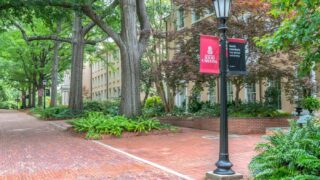
The school’s main campus is on the grounds of the WJB Dorn VA Medical Center in Columbia, about four miles east of USC’s main campus. It occupies the original buildings of the VA hospital, red brick structures with white columns and arched windows surrounded by lawns and oak trees. Most clinical departments are at the Richland Medical Park campus in central Columbia, close to the Prisma Health facilities where much of the clinical work takes place. Beginning in fall 2027, the school expects to move to its new building on the Health Sciences Campus in the BullStreet District.
Health and Wellness
The school wants students to take care of their own physical and mental health while they train to care for others. Students can use health and wellness resources on both the VA campus and USC’s main campus. The Center for Well-Being and Academic Support offers a faculty coach and an on-site mental health counselor, as well as tutoring and help sessions before major exams. Students also created the Gamecock Pantry, which provides food assistance and other resources. The associate dean for student affairs even teaches a cardio class in the school courtyard on the first Wednesday of every month.
Florence Regional Campus
Students at the Florence Regional Campus have office and educational space in the Luther F. Carter Center for Health Sciences at Francis Marion University in downtown Florence, a facility of roughly 50,000 square feet used for instruction, simulation and clinical skills training. Their clinical learning takes place at McLeod Regional Medical Center, MUSC Health Florence, HopeHealth and local specialty practices.
Housing and Transportation
Most students live in neighborhoods near the campus, and the Student Affairs Office can share housing information. Rents average about $1,200 a month. A driver’s license and a car are recommended, since clinical sites are spread across the region.
Student Organizations
Student Organizations and Activities
- Alpha Omega Alpha (AΩA), South Carolina Beta Chapter
- American Medical Student Association (AMSA)
- American Medical Women’s Association (AMWA)
- American Medical Association (AMA)
- Gold Humanism Honor Society (Saunders Chapter)
- Medical Student Association (MSA)
- Medical Students for Choice (MSFC)
- The Student National Medical Association (SNMA)
- Vertically Integrated Trainee Program (VITP)
Student Interest Groups
- Addiction Medicine Interest Group (AMIG)
- Allies of Sistercare
- Anesthesiology Interest Group
- Association of Women Surgeons (AWS)
- Biomedical Science Graduate Student Association (BSGSA)
- Business in Medicine
- Cardiology Interest Group
- Christian Medical and Dental Association
- Community Outreach Group (COG)
- Dermatology Interest Group
- Emergency Medicine Interest Group (EMIG)
- Family Medicine Interest Group (FMIG)
- Gastroenterology Interest Group
- Global Medicine Interest Group
- Healthy Eating and Active Lifestyles (HEAL)
- Infectious Disease Interest Group
- Innovation in Medicine
- Internal Medicine Interest Group
- Medical Musician Association (MMA)
- Military Medicine Interest Group (MMIG)
- Neurosurgery Interest Group
- Obstetrics and Gynecology Interest Group
- Oncology Interest Group (OIG)
- Orthopedic and Sports Medicine Interest Group (OSMIG)
- Otolaryngology Interest Group
- Pathology Interest Group
- Pediatrics Interest Group
- Physical Medicine and Rehabilitation Interest Group (PM&RIG)
- Plastic Surgery Interest Group (PSIG)
- PLUS
- Psychiatry Student Interest Group
- Radiology Interest Group
- Rural Health Interest Group
- Simulation and Clinical Skills Interest Group (SCSIG)
- Students for Environmental Awareness in Medicine (SEAM)
- Students Interest Group in Neurology (SIGN)
- Surgery Interest Group
- Ultrasound Interest Group (USIG)
- Wilderness Medicine Interest Group
Medical students can also join University organizations and cheer on the Gamecocks, who compete in the Southeastern Conference in 21 varsity sports. For LGBTQ+ students, the school has student interest groups, the Committee on Women in Science and Medicine and faculty and staff trained as Safe Zone Allies.
Centers and Institutes
- NIH Center for Complementary and Integrative Medicine
- NIH Center for Dietary Supplements and Inflammation
- Cardiovascular Translational Research Center
- Institute for Cardiovascular Disease Research
- Center for Clinical and Translational Research
- Center for Disability Resources
- Brain Health
- Research Center for Transforming Health
- S.C. Center for Rural and Primary Healthcare
- SC INBRE
- Clinical Skills Center and Standardized Patient Program
- Simulation and Interactive Learning Center
- Ultrasound Institute
Charles S. and Donna H. Bryan School of Medicine Library
The Charles S. and Donna H. Bryan School of Medicine Library is the school’s information gateway to more than 280,000 electronic journals, more than 1,400 electronic textbooks and more than 100 biomedical databases, including AccessMedicine, ClinicalKey, the Cochrane Library, Micromedex and Web of Science. These resources are vital for coursework and research, and students can use them on site or remotely. The library also houses the Center for Disability Resources Library, one of the largest collections on developmental disabilities in the country.
Clinical Rotations and Research Opportunities
Where Students Train
The school’s affiliated hospitals are Prisma Health – Midlands (including Prisma Health Richland and Prisma Health Baptist), the WJB Dorn VA Medical Center, Lexington Medical Center, McLeod Regional Medical Center, MUSC Health Florence and facilities of the South Carolina Department of Mental Health. Most students complete their core clerkships at Columbia-area hospitals; up to 20 per class train in Florence. Clinical rotations begin in the third year, but students meet patients in their first and second years through the Introduction to Clinical Medicine course and their work with practicing physicians.
Multiple urban and rural primary care offices and clinics, including the Florence campus, give third- and fourth-year students the chance to work closely with experienced primary care practitioners. Students can also take away rotations at other clinical partners across the state.
Research Opportunities
Research is part of the school’s mission, and students have several structured ways to take part:
- SOAR (Student Opportunities for Academic Achievement Through Research): a competitive, full-time, eight-week summer program for rising second-year students. Students work with a faculty mentor on basic science, translational, clinical, quality and patient safety, or educational research. Students and mentors apply in the fall and are matched by interest.
- QUEST (Quality Education and Systems Training): experiential learning in quality improvement, pairing health science students with faculty mentors and teams at Prisma Health – Midlands.
- PRISM (Praxis in Social Medicine): a collaboration between the school and the community around shared health and learning goals.
- MSLP (March Seabrook Leadership Program): a leadership program for selected medical students.
- AI in Medicine Extracurricular Track: hands-on training in artificial intelligence and its uses in medicine.
The school received $11,816,932 in direct federal research grants and contracts in fiscal year 2024. Students who want a research career can pursue the MD/PhD track or projects through SOAR and the school’s centers. SOAR students have presented award-winning work, including a project on racial differences in JAK3 cancer gene variants that won two awards at a Prisma Health research showcase.
Global Health
In the AAMC’s 2025 Graduation Questionnaire, 6% of the school’s graduating seniors reported a global health experience during medical school. If you want global health experience before medical school, IMA’s pre-med internships abroad place students in supervised clinical settings in Kenya and other sites.
Where Graduates Match
On Match Day 2026, 95 percent of the Class of 2026 matched with a residency program. The school publishes its full Match results each year, going back to 2007, on its MD program site, so you can see which specialties and programs graduates enter. Just under half of graduates consistently choose primary care.
Notable Alumni, Faculty, Leadership and Admissions Staff
Knowing who leads the school helps you understand its priorities and gives you context for your interview. These profiles come from the school’s own pages and were checked on November 13, 2026.
School Leadership
- Jamie P. Dwyer, MD, Dean. Dr. Dwyer was named dean of the Floyd School of Medicine in June 2026. A practicing nephrologist and professor of medicine, he is known for leading large multicenter clinical trials on chronic kidney disease and cardiovascular outcomes and has served as a consultant to the FDA’s CardioRenal Advisory Committee. He came from the University of Utah, where he was executive associate vice president for research and chief innovation officer. He earned his MD with distinction from Brown, trained in internal medicine at Mayo Clinic, where he was chief resident, and completed nephrology training at Vanderbilt. He follows Gerald Harmon, MD, who led the school as interim dean during the naming and construction of the new campus.
- Predrag “PK” Krajacic, MD, Senior Associate Dean of Medical Education. Dr. Krajacic joined the school in September 2024. He oversees undergraduate medical education, student affairs, clinical education, the regional campus, simulation and standardized patient programs. His past work includes leading curriculum renewal toward an organ system-based curriculum that integrates active learning, clinical skills, simulation, point-of-care ultrasound and student wellness, and he serves as lead faculty for a Harvard Macy Institute program on technology and AI in health professions education.
- Eric R. Williams, MD, Associate Dean for Student Affairs. A child and adolescent psychiatrist, Dr. Williams completed his psychiatry residency and fellowship through the USC School of Medicine and Palmetto Health Alliance, served as course director for ICM-I from 2014 to 2018 and co-authored the tenth edition of Kaplan & Sadock’s Study Guide and Self-Examination Review in Psychiatry.
- Alan G. Sechtin, MD, Associate Dean, Medical Education, Florence Regional Campus. Dr. Sechtin, a radiologist with family medicine training, joined the faculty in 2014 and has led medical student education in Florence since 2020. He previously served on the radiology faculty at Johns Hopkins.
Admissions Staff
- Robert Rhinehart, PhD, Associate Dean for Admissions and Student Recruitment. Dr. Rhinehart leads the Office of Admissions and is the school’s main admissions contact. The office is reachable at 803-216-3625 or [email protected].
Current Faculty
- Leonardo Bonilha, MD, PhD, Senior Associate Dean for Research and Dorothea Krebs Professor of Neurology. A physician-scientist and clinical director for USC Brain Health, Dr. Bonilha studies how brain networks adapt after injury, especially language recovery after stroke, and also helps lead the school’s AI in Medicine work.
- Edie Goldsmith, PhD, Chair of Cell Biology and Anatomy. Dr. Goldsmith is the biomedical science graduate director, directs SC INBRE and is the contact for the MD/PhD program. Her lab studies how fibroblasts and the extracellular matrix behave in heart development and cancer.
- Richard Hoppmann, MD, founder of the Ultrasound Institute. Dr. Hoppmann founded the institute in 2006 to bring point-of-care ultrasound into medical education, the work behind the school’s four-year ultrasound curriculum.
Notable Alumni
- Angelo Sarmiento, MD, Class of 2020. A Greenville native who worked as an EMT before medical school, Dr. Sarmiento spent his third and fourth years at the Florence Regional Campus and matched into ophthalmology at Cook County Health in Chicago.
- Julie Flugel, MD, Class of 2022. A Florence Regional Campus graduate who describes her clinical years as delivering many babies, first-assisting in the operating room and working one-on-one with attending physicians.
- Emma Gray, MD, Class of 2024. Featured by the school for the way she found her “why” for medicine and built on it during medical school, including her belief that giving patients an extra five minutes can change the relationship.
- Kylie Truong, MD, Class of 2025. A recent graduate featured by the MD program to describe the student experience.
Why These Profiles Matter
You won’t be asked to name the dean in your interview, but knowing the school’s direction helps. A new dean with a research and innovation background, a senior associate dean focused on curriculum and AI, a research dean leading brain health work and alumni who credit the Florence campus with their growth all point to the same message: this is a school that wants to keep its primary care and state service roots while growing its research and new campus.
Admissions Statistics and Class Profile
The University of South Carolina Medical School Acceptance Rate
The school does not publish an acceptance rate. You can still see how competitive it is. For the Class of 2030, 3,254 people applied and 102 new students enrolled. That enrollment ratio is about 3%, but it is not an acceptance rate, because more applicants receive offers than enroll. The school says it typically interviews about 375 of its 3,800 or more applicants, and in its most recent reported cycle it interviewed 443 applicants (314 in-state and 129 out-of-state). Interview invitations are the real bottleneck. Out-of-state applicants face especially steep odds, since most seats go to South Carolina residents.
Class of 2030 Profile
| Measure | Class of 2030 |
|---|---|
| Total applicants | 3,254 |
| New students matriculating | 102 |
| South Carolina residents | 78 |
| Nonresidents | 24 |
| Men / women | 48 / 54 |
| Average age | 23.24 |
| Average cumulative GPA | 3.80 |
| Average science (BCPM) GPA | 3.76 |
| Average MCAT | 509 |
| States represented | 16 |
| Undergraduate schools represented | 30+ |
| Undergraduate majors represented | 20+ |
New students in the Class of 2030 came from Arizona, California, Connecticut, Florida, Georgia, Illinois, Minnesota, New Jersey, New York, North Carolina, Ohio, Pennsylvania, South Carolina, Tennessee, Virginia and Wisconsin. Their undergraduate schools ranged from Clemson, Furman, Wofford, the College of Charleston and several USC campuses to Duke, Emory, Georgia Tech, Swarthmore and Xavier University of Louisiana. Their majors included biology, biochemistry, chemistry, biomedical and mechanical engineering, exercise science, nursing, public health, mathematics, physics, accounting and finance, as well as the accelerated BARSC/MD track.
GPA and MCAT of Accepted Applicants
For the 2025 entering class, accepted applicants had a median MCAT of 510 (mean 510.8) and a median total GPA of 3.91. Section medians were 127 for Chemical and Physical Foundations, 127 for Critical Analysis and Reasoning, 128 for Biological and Biochemical Foundations and 129 for Psychological, Social and Biological Foundations. These medians describe accepted applicants, while the Class of 2030 averages describe the students who enrolled the following year, so the two sets of numbers are not directly comparable.
How to Read These Numbers
A median is not a minimum, and an average is not a target. Many students are admitted below the median, and many applicants above it are turned down. For this school, your residency and ties to South Carolina, your health care experience and how well your application reflects the mission matter alongside your scores. About 100 seats are filled each year: in the 2026 profile the school estimated 88 through the regular MD program, 4 through Early Decision and 8 through the Accelerated Undergraduate to M.D. program.
Tips and Strategies for Admission to the University of South Carolina School of Medicine
1. Settle your residency question first
If you are not a South Carolina resident, write down your ties to the state before you apply: family, years lived or schooled in South Carolina, work or service here and plans to practice here. The school considers out-of-state applicants only when they have close, significant ties to South Carolina.
2. Apply early
AMCAS opened May 1, 2026, and the school starts reviewing applications the week of June 29. Interviews and offers are rolling, so a complete file in July puts you in line for the first interview dates in September and the first offers on October 15.
3. Return the secondary quickly
Every applicant receives a secondary. Pre-write your answers in June using the prompts in this guide, then finish and submit within one to two weeks of receiving yours.
4. Take the recommended courses in a classroom
There are no prerequisites, but the committee expects strong work in biology, general and organic chemistry and biochemistry and prefers in-person courses. Add English, social science and advanced science courses if you can.
5. Build real health care experience
Shadowing is expected, and the committee wants to see enough experience that you understand what medicine involves. Scribing, EMT or CNA work, clinical volunteering and research all count. If your schedule is tight during the school year, plan pre-med summer internships or other clinical work for the summer before you apply.
6. Show your connection to South Carolina communities
The mission is to serve the people of South Carolina. Service at free clinics, rural health projects and work with underserved patients in the state speak directly to it.
7. Ask for the right letters
Get at least three letters, two of them from science faculty if you can, or use a committee letter. Choose writers who know you well.
8. Prepare for a 45-minute conversation with two interviewers
The interview is long enough for real follow-up questions. Practice telling your stories in detail and explaining why this school fits you.
9. Learn about Florence and ultrasound
The Florence Regional Campus and the four-year ultrasound curriculum are the school’s two most distinctive features. Knowing how they work, and whether they fit your goals, will make your essays and interview more specific.
10. Use updates wisely
Upload meaningful updates in AMP before your interview, since only those count in the committee’s review.
The University of South Carolina Medical School Secondary Application: Essay Prompts, Sample Answers, and Advice
How the Secondary Works
Every applicant receives the Floyd School of Medicine secondary application after AMCAS verification and a preliminary screening. It arrives by email with a link to the school’s AMP system, starting the week of July 6, 2026. The fee is $100 (waived automatically for AAMC Fee Assistance Program recipients), and the secondary and your letters are due December 15, 2026 for Regular Decision. Admissions committee members read your answers before your interview, so treat the secondary as the first part of your interview.
The school does not post its secondary questions publicly, and the 2026-2027 questions have not been published outside the AMP portal. The seven questions below are the school’s exact wording from the 2025-2026 cycle, when each answer had a limit of 2,500 characters. The questions have changed very little from year to year: the same core set appeared in 2024-2025, and the last question is the one most likely to change. Use them to prepare, then answer the questions exactly as they appear in your AMP secondary and follow the limit shown there. Each example below is written to fit within 2,500 characters, including spaces.
| Question (2025-2026 cycle wording) | Limit | Who answers |
|---|---|---|
| What are your medical practice goals? | 2,500 characters | All applicants |
| Describe your employment status since you completed your bachelor’s degree (part-time, full-time, and dates) | 2,500 characters | Applicants who have finished a bachelor’s degree |
| In what region of the country do you want to practice medicine? Why? | 2,500 characters | All applicants |
| What area/specialty of medicine are you interested in at this time, if any? If you have an interest, what has led you to consider this area/specialty? | 2,500 characters | All applicants |
| Do you have any accomplishments or experiences that make you a unique applicant? | 2,500 characters | All applicants |
| Explain any impact that COVID-19 may have had on your educational, research, volunteering or employment plans. | 2,500 characters | All applicants (answer if it applies) |
| Working as part of a team is an important aspect of your medical education at our School of Medicine and as a practitioner in the future. Please share at least one experience where you worked as part of a team to accomplish a goal/objective. What was your role as a part of the team and what did you learn from working with others? How did you deal with conflict on the team and/or working with a team member who you disagreed with? | 2,500 characters | All applicants |
In the 2023-2024 cycle, the secondary also included two “if applicable” questions: “What additional qualifications have you acquired since your last application?” for reapplicants, and “Do you have any other ties to South Carolina that you would like the Admissions Committee to consider?” If your secondary includes either one, answer it directly. Reapplicants should name concrete changes since the last cycle, and out-of-state applicants should list specific, verifiable ties: family in the state, years you lived or studied here, work or service here and plans to practice here.
Each example below is an illustrative example, not an actual applicant essay. The applicants and their experiences are invented. Use the examples to see how an answer can be structured and specific to this school, and then write your own from your own experiences. For prompts from other schools, see our medical school secondary essay prompts database.
Essay #1: What are your medical practice goals? (2,500 characters)
What it asks: There are many appropriate answers here, but you must be genuine. The committee wants to know what kind of physician you hope to become, whom you want to serve and how you plan to practice. This is how the committee gets a feel for how you fit the mission, vision and values of the school, and it also gives you a chance to check whether the school is right for you.
How to approach it: Review the school’s values, then make a list of your own practice goals and see how they line up. Goals can include the populations you want to serve (for example, underserved or rural patients), the setting you picture (a community clinic, a hospital, an academic center), and roles beyond patient care, such as teaching, research or quality improvement. Ground each goal in an experience, and connect at least one goal to something specific at the school, such as the Florence Regional Campus, QUEST or the ultrasound curriculum. You do not need to name a specialty.
Illustrative example, not an actual applicant essay:
I want to practice primary care in a community health center in the Midlands, where a single physician can follow a family through diabetes, pregnancy and the ordinary emergencies of life. My goals have three parts: to be a clinician patients can reach, a physician who uses data to close gaps in care, and a teacher for the students who come after me.
The first goal comes from two years of Saturday shifts at a free clinic in Columbia. I checked patients in, took blood pressures and called people back about lab results. Many had waited months for an appointment elsewhere and arrived with three problems instead of one. A man named Curtis came in for a cough and left with a new diagnosis of hypertension and a plan for his insulin, because the physician took the time to ask what else was going on. I want my practice to work like that visit: unhurried, complete and honest about cost.
The second goal is about systems. As a public health major I built a spreadsheet that tracked which clinic patients were overdue for A1c checks, and the clinic now uses it to schedule outreach calls. That small project showed me that good care depends on follow-up as much as on diagnosis. In medical school I would like to join QUEST at Prisma Health – Midlands to learn formal quality improvement methods, so that as a physician I can measure whether my patients are actually getting better, not only whether they were seen.
The third goal is teaching. The volunteer physicians at the clinic let me explain blood pressure logs to patients, and I learned that a clear explanation can change whether someone takes a medicine. I hope to precept medical students and residents in a community setting one day, the way physicians in the Columbia area teach students during the Introduction to Clinical Medicine course.
Practicing in South Carolina matters to me. I grew up in Lexington County, my family is here, and the people I want to serve are my neighbors. Long term, I see myself as a board-certified family physician at a federally qualified health center, seeing patients four days a week and spending the fifth on teaching and quality work.
Why this example works: The essay names three goals in the first paragraph and then supports each one with a specific experience: free clinic shifts, a spreadsheet that improved follow-up and teaching patients about blood pressure logs. It connects the systems goal to a real school program (QUEST at Prisma Health – Midlands) and the teaching goal to the Introduction to Clinical Medicine course, without praising the school. The closing paragraph links the applicant’s plans to the school’s mission of serving South Carolina and gives a concrete picture of the career. The response is 2,140 characters, within the 2,500-character limit.
Mistakes to avoid:
- Writing only “I want to help people.” Every applicant wants that; show how.
- Naming a prestigious specialty with no experience behind it.
- Ignoring the state mission. If you want to practice in South Carolina, say so and explain why.
- Listing goals without evidence that you have started working toward them.
Essay #2: Describe your employment status since you completed your bachelor’s degree (part-time, full-time, and dates) (2,500 characters)
What it asks: This question applies if you have finished your bachelor’s degree. In earlier cycles it was framed for applicants more than six months past graduation. The committee wants a clear record of how you have spent your time and evidence that you have kept your focus on medicine.
How to approach it: Treat it as a factual record first. List each job or major commitment with dates, hours and whether it was part-time or full-time, then add a short reflection. If you have worked in a health care setting, such as medical scribing, clinic volunteering, research or a supervised clinical program, include it. Gaps are fine if you explain them honestly, for example caregiving or test preparation.
Illustrative example, not an actual applicant essay:
I completed my B.S. in Biology in May 2024. Since then I have worked continuously in health care.
June 2024 to present: Emergency department scribe, full-time (36 to 40 hours per week, three or four 10-hour shifts). I document histories, exams and procedures in real time for emergency physicians at a regional hospital. In my second year I became a scribe trainer and have trained 11 new scribes.
August 2024 to May 2025: Certified nursing assistant, part-time (8 hours per week, Sunday day shift) at a skilled nursing facility. I helped residents with bathing, feeding and mobility, took vital signs and reported changes to the charge nurse.
January 2025 to present: Volunteer, free medical clinic, about 4 hours every other Saturday. I take intake vitals and help patients complete medication assistance forms.
June 2025 to August 2025: Clinical internship abroad, 4 weeks, full-time. Under the supervision of local physicians and nurses, I took vital signs, helped with intake and triage and assisted with patient care in outpatient clinics.
Working full-time while volunteering taught me to manage my schedule the way I will need to in medical school. I study for exams in the same way I prepare for a shift: I plan ahead, I protect sleep, and I ask for help early. Scribing also gave me a working knowledge of how emergency physicians reason through a differential diagnosis, which helped me when I prepared for and took the MCAT in April 2026 while still working my regular schedule.
The two years between graduation and medical school have confirmed my decision. I have seen the satisfaction and the strain of a career in medicine up close, and I want it more now than I did as a senior in college.
Why this example works: It answers exactly what the question asks: status (full-time and part-time), employers by type and precise dates. Each entry includes hours and duties, so the committee can see the depth of clinical exposure without guessing. The short reflection at the end shows what the applicant learned and why the time strengthened the decision to apply. At 1,712 characters it leaves room to spare, and it does not repeat the AMCAS activities section word for word.
Mistakes to avoid:
- Leaving out dates or hours, which makes the record hard to read.
- Writing a second personal statement instead of answering the question.
- Hiding a gap. A short, honest explanation is better than silence.
- Answering when you have not yet graduated. If the question does not apply, follow the instructions in AMP.
Essay #3: In what region of the country do you want to practice medicine? Why? (2,500 characters)
What it asks: Before answering, consider the school’s strong focus on preparing physicians for the people of South Carolina. You do not have to commit to a lifetime of practicing in the state, but the committee will want to see whether you plan to work in South Carolina, especially in rural and underserved regions.
How to approach it: If practicing in South Carolina is a real goal, do some research into which regions of the state most need physicians, and explain why that region matters to you. Personal ties, such as family or the community where you grew up, carry weight. If you hope to practice elsewhere, be honest, but explain how training here prepares you to serve a similar population. Mention the Florence Regional Campus or rural training only if they genuinely fit your plans.
Illustrative example, not an actual applicant essay:
I want to practice in the rural Southeast, and specifically in the Pee Dee region of South Carolina, where I grew up.
My hometown in Marlboro County has one pharmacy and no hospital with labor and delivery. When my aunt went into early labor, the closest option was more than 40 minutes away. She and her baby were fine, but the drive is still the first thing my family mentions when that story comes up. For many people I know, distance is the main barrier to care. It shapes when they see a doctor, whether they fill a prescription and how long they wait before going to an emergency department.
I want to be part of shortening that distance. My plan is to train in family medicine with strong obstetrics experience, so that I can deliver babies and care for the same families afterward. In the rural counties around Florence, a physician who can manage prenatal care, chronic disease and minor procedures can change what is available to a whole town.
I am especially interested in the Florence Regional Campus because it would let me spend my third and fourth years in the region where I hope to work. Training at McLeod Regional Medical Center, HopeHealth and MUSC Health Florence would show me how care is delivered across hospital and community settings in the Pee Dee, and working one-on-one with attending physicians would help me build the procedural confidence a small-town physician needs. I would also bring the school’s ultrasound training with me. In a clinic without on-site imaging, a portable ultrasound device can answer questions that would otherwise require a long trip.
I know this region’s needs because I have lived them, and I know its strengths too. People look out for each other, churches organize rides to appointments, and local leaders show up when a clinic needs volunteers. I want to practice where that community already exists and help make sure good medical care is part of it. Ten years from now, I hope to be the family physician in a Pee Dee town who also teaches the medical students rotating through.
Why this example works: It names a specific region (the Pee Dee) and a specific reason (distance as the main barrier to care), shown through one family story. It links the applicant’s plan, family medicine with obstetrics, to the needs of that region. It refers accurately to the Florence Regional Campus, its partners (McLeod Regional Medical Center, HopeHealth and MUSC Health Florence) and the four-year ultrasound training, and explains how each would help. The final paragraph balances needs with community strengths, which keeps the tone respectful. It is 2,044 characters.
Mistakes to avoid:
- Saying “South Carolina” with no reason beyond the school’s mission.
- Describing rural communities only by their problems.
- Overpromising, such as vowing never to leave the state.
- Choosing a region you have never lived in or worked in without explaining the connection.
Essay #4: What area/specialty of medicine are you interested in at this time, if any? If you have an interest, what has led you to consider this area/specialty? (2,500 characters)
What it asks: This question is straightforward, but put some thought into it. The words “at this time, if any” tell you it is fine to be undecided. The committee wants to see curiosity, passion and that you have thought about your future, and it wants to get to know you as an individual.
How to approach it: If you have an interest, name it and explain the experiences that led you there, then show how you would explore it at this school. The school has long-standing strengths in primary care, including family medicine and internal medicine, as well as distinctive training in point-of-care ultrasound and a fourth-year critical care rotation. If you are undecided, say so and describe the kinds of medicine that draw you and why. Your focus can change later, and the committee knows it.
Illustrative example, not an actual applicant essay:
At this time I am most interested in emergency medicine, and I am also curious about critical care.
My interest started with my job as an EMT with a county service in the Upstate. On one call, a woman in her sixties was dizzy and short of breath at home. Her blood pressure was low, and we did not know why. At the hospital, the emergency physician placed an ultrasound probe on her chest within minutes of arrival and found fluid around her heart. She was treated quickly and went home a week later. I remember thinking that the physician had made a decision at the bedside that would have taken much longer any other way.
Since then I have looked for chances to understand that kind of decision-making. I shadowed two emergency physicians for a total of 60 hours, and I noticed how often they had to act with incomplete information, communicate clearly with frightened families and coordinate with nurses, technicians and consultants at the same time. I like that emergency medicine asks a physician to be calm, organized and kind in the same moment.
Several parts of the School of Medicine fit this interest. Learning point-of-care ultrasound across all four years would let me build, step by step, the skill I watched save that patient. The required critical care rotation in the fourth year would give me direct experience caring for the sickest patients, and I would like to join the Emergency Medicine Interest Group early to learn from residents and faculty.
I also know my interest may change. I have not yet completed a pediatrics or psychiatry rotation, and the clerkship year exists so that students can find out what fits. Whatever specialty I choose, I want it to involve acute care, teamwork and patients from every background. If I stay with emergency medicine, I hope to work in a South Carolina hospital that serves both a city and the rural counties around it.
Why this example works: It names an interest (emergency medicine, with curiosity about critical care) and answers the second part of the prompt with a specific patient story from EMT work, followed by 60 hours of shadowing that tested the interest. It connects the interest to verified parts of the school: four years of point-of-care ultrasound, the required fourth-year critical care rotation and the Emergency Medicine Interest Group. The final paragraph shows openness to change without sounding unsure, which fits the question’s “at this time.” It is 1,883 characters.
Mistakes to avoid:
- Claiming a specialty because of a television show or a single shadowing day.
- Sounding locked in; the question invites openness.
- Ignoring the “what has led you” part of the prompt.
- Mentioning programs the school does not have.
Essay #5: Do you have any accomplishments or experiences that make you a unique applicant? (2,500 characters)
What it asks: This may be one of the most important prompts in the secondary. It is where you introduce yourself to the committee as a person and show what you would add to the class. This is not about bragging. It is about showing how your experiences, character and perspective would contribute to the student body and to patient care.
How to approach it: Pick one or two experiences that are truly distinctive and that are not already the center of your personal statement. Then explain what the experience taught you and how it will shape the way you practice. Language skills, caregiving, first-generation status, military service, an unusual career, a sustained talent or a hardship you worked through can all be strong choices if you show their effect on you.
Illustrative example, not an actual applicant essay:
I am a first-generation college graduate and the only person in my family who speaks both Spanish and English fluently. Since I was ten, I have been the interpreter at my parents’ medical appointments, and that role shaped both my path to medicine and the way I listen.
As a child, I translated words I did not understand, like “biopsy” and “deductible.” I learned to ask the doctor to slow down, to repeat things back to my mother and to notice when she nodded without understanding. When my father was diagnosed with type 2 diabetes, I was the one who explained what an A1c meant and why his feet needed to be checked. I was fifteen.
In college I turned that experience into service. I completed a medical interpreter training course and became a certified volunteer interpreter at a free clinic, where I have interpreted for more than 300 patient visits over three years. I learned the difference between interpreting and helping: an interpreter gives the patient’s words to the physician exactly, even when I would have said it differently. That discipline has made me more careful and more patient in every conversation.
I also worked 20 hours a week throughout college at a grocery store to help my family with expenses, and I still graduated with honors in chemistry. Working nights and weekends taught me time management, but it also gave me a feel for the lives of patients who cannot take an afternoon off for an appointment.
These experiences are why I would bring something specific to the Floyd School of Medicine. South Carolina’s Spanish-speaking community is growing, and many families arrive at clinics the way mine did, relying on a child to explain a diagnosis. I hope to use my language skills during the Introduction to Clinical Medicine course and clinical rotations, to help classmates learn how to work with interpreters, and one day to make sure my own patients never need their children to translate for them.
Why this example works: The essay centers on one distinctive experience, serving as a family interpreter from age ten, and builds it into a sustained accomplishment: formal interpreter training and more than 300 interpreted visits. It adds a second point (working 20 hours a week while earning honors) that supports the same theme of understanding patients’ lives. The applicant explains a specific lesson, the difference between interpreting and helping, and ends with how this background would serve South Carolina’s growing Spanish-speaking community and classmates in the Introduction to Clinical Medicine course. It is 1,939 characters.
Another illustrative example, not an actual applicant essay:
One night in June, I was walking home late in my busy city neighborhood when I found a woman lying on the pavement near the street. She had been assaulted, and I was the first person there to hear what had happened. I called the police, and they arrived quickly to take care of her. One of the paramedics told me that assaults like this one are far more common in the poorest parts of the city and that very few are ever reported.
That night affected me deeply. It disturbed me, but I did not let it break me down. Instead, it gave me a determination to make a difference and to help people. The next day I began contacting clinics in the most underserved part of the city, and one took me on as a volunteer. My work there may have seemed small, but I knew I was supporting medical professionals who served people in real need. I also worked on a campus campaign that encouraged survivors of sexual assault to report and to seek care, whether they needed physical healing, emotional healing or both.
My calling is to become a physician who treats patients who often go unseen. I want to be a voice for people who feel alone, and to treat every patient with care and respect, whatever their life or background. Every person deserves respect and access to quality health care.
Why this second example works: It shows how a single, difficult experience can lead to sustained action: volunteering at a clinic and working on a campus campaign. The writer keeps the focus on what they did next and what they learned rather than on graphic detail. A stronger version would add specifics, such as how long the applicant volunteered and what their role was, and would connect the experience to the patients the applicant hopes to serve in South Carolina.
Mistakes to avoid:
- Repeating your personal statement.
- Listing awards without explaining what they say about you.
- Choosing a “unique” trait that every applicant has, such as being hardworking.
- Sharing a traumatic story without showing what you did with it.
Essay #6: Explain any impact that COVID-19 may have had on your educational, research, volunteering or employment plans. (2,500 characters)
What it asks: The committee wants context. If the pandemic changed your schooling, your clinical opportunities, your research or your work, this is the place to explain it. Many applicants in this cycle were in high school or early college in 2020 and 2021, so the effects may be modest, and that is fine.
How to approach it: Be brief and factual. Describe what changed, how you adapted and what, if anything, you learned. Avoid making the pandemic sound like a personal tragedy if it was not, and do not exaggerate. If it had no meaningful impact on you, a short answer saying so is appropriate if your portal allows it.
Illustrative example, not an actual applicant essay:
COVID-19 reached my education during my junior year of high school. My school moved online in March 2020, and the following year we attended in a hybrid schedule. The biggest effect was on my plans for clinical exposure: the hospital volunteer program I had signed up for at age 16 was suspended, and I could not shadow a physician in person until my first year of college.
I adjusted in two ways. First, I took a virtual certified nursing assistant prep course during the summer of 2021 and completed the clinical portion as soon as facilities reopened to students. That decision gave me paid patient care experience by my first year of college. Second, I helped my grandmother and two neighbors schedule vaccine appointments online when the sign-up systems were confusing. It was a small task, but it showed me how much access to care depends on simple things like internet access and someone willing to help.
In college, the pandemic shaped my research plans. I joined a public health lab studying vaccine uptake in rural South Carolina counties and helped code survey responses about why some residents delayed vaccination. The most common answers were trust and transportation, not opposition to vaccines. That work taught me to look for the practical barriers behind health decisions.
The pandemic delayed my clinical experiences by about a year, but I believe I made up that time, and I gained something I would not have learned otherwise. I saw how a health crisis falls hardest on people who already have the least access to care, and I want to practice medicine with that lesson in mind.
Why this example works: It states the impact plainly (a suspended volunteer program and delayed shadowing), then shows two specific adaptations: earning a CNA credential and helping neighbors register for vaccines. It connects the pandemic to later research on vaccine uptake in rural South Carolina counties, which turns a disruption into a lesson about practical barriers to care. The tone is honest and proportionate. It is 1,600 characters, well within the limit.
Mistakes to avoid:
- Writing a long essay when the impact was small.
- Blaming the pandemic for a weak grade without context.
- Repeating the same story you used in another essay.
Essay #7: Working as part of a team (2,500 characters)
The full prompt: “Working as part of a team is an important aspect of your medical education at our School of Medicine and as a practitioner in the future. Please share at least one experience where you worked as part of a team to accomplish a goal/objective. What was your role as a part of the team and what did you learn from working with others? How did you deal with conflict on the team and/or working with a team member who you disagreed with?”
What it asks: This prompt has four parts: the team experience and its goal, your role, what you learned and how you handled conflict or disagreement. Answer all four.
How to approach it: Choose one team with a clear goal and a real disagreement. Describe your role specifically, then spend the most space on the conflict: what each side wanted, how you approached it and how it was resolved. End with lessons you will use in medical school, where small groups and clinical teams are central.
Illustrative example, not an actual applicant essay:
During my junior year, I was one of five students on a team that planned a free health screening day with a church in a rural county outside Columbia. Our goal was to screen at least 100 adults for high blood pressure and diabetes and connect anyone with abnormal results to a clinic within two weeks.
My role was logistics lead. I recruited volunteer nurses through our university’s nursing school, arranged supplies and built a follow-up list so that every abnormal result had a name, a phone number and an appointment. Two teammates handled outreach, one managed the station layout and one worked with the church’s health ministry.
Our main conflict came three weeks before the event. One teammate wanted to add cholesterol testing, which meant more supplies, more volunteers and a longer wait for each person. I thought it would stretch us too thin and put follow-up at risk. Our discussion got tense in a group chat, so I suggested we meet in person. When we did, I asked her why cholesterol mattered to her. She explained that her father had a heart attack in his forties with no warning, and that many people in the community had never had a lipid panel. That changed how I saw her proposal. We agreed to a compromise: we would offer cholesterol testing only to adults over 40 who had not been tested in five years, and she would recruit two extra volunteers to run that station.
We screened 134 adults that day. Twenty-one had elevated blood pressure readings, and with the church’s help, 17 of them saw a clinician within two weeks.
I learned three things. A team works best when each person owns a clear piece of the job. Disagreements are easier to solve face to face, especially when I ask questions before I defend my own view. And the person who disagrees with me often understands something I do not. I expect to use those lessons in the School of Medicine’s small-group learning and on clinical teams, where nurses, residents and students each see a different part of the patient.
Why this example works: It answers every part of the prompt in order: the team and its measurable goal, the writer’s role as logistics lead, a specific disagreement and how it was resolved, the outcome and three clear lessons. The conflict section shows maturity: the writer moved a tense conversation offline, asked questions before defending a position and reached a compromise that kept the project on track. Numbers (134 adults screened, 17 connected to care) show the result. The ending ties the lessons to small-group learning and clinical teams. It is 2,000 characters.
Mistakes to avoid:
- Choosing a team with no real conflict, or describing a conflict you “won.”
- Blaming a teammate.
- Skipping the “what did you learn” part.
- Describing the team’s work without making your own role clear.
General Tips for the Secondary
- Pre-write. The core questions have been stable across recent cycles, so draft your answers in June and refine them when your secondary arrives.
- Stay specific. Mention real features of the school, such as Florence, ultrasound, ICM, SOAR or QUEST, only when they connect to your own story.
- Count characters. Count characters, including spaces, in a plain-text editor before you paste into AMP.
- Do not repeat yourself. Use each question to show something new.
- Proofread. Read every answer aloud before you submit.
South Carolina Medical School Interview Process
The Interview Format
Interviews are held virtually via Zoom in the school’s AMP application system, only on Wednesday afternoons. For the 2026-2027 cycle, interviews run from September 9, 2026 to March 31, 2027, and invitations go out on a rolling basis starting the week of August 10, 2026. The school says it is extremely selective at the interview stage.
The interview day runs from about 12:30 PM to 2:30 PM Eastern time. A tentative schedule:
- 12:30 PM to 1:10 PM: applicant introductions and a 40-minute question-and-answer session with current students from the Admissions Ambassadors group
- 1:10 PM to 1:20 PM: overview of the day with the Office of Admissions
- 1:20 PM to 1:30 PM: break
- 1:30 PM to 2:15 PM: one 45-minute interview with two members of the Admissions Committee
- 2:15 PM to 2:30 PM: wrap-up with the Office of Admissions
Ample time is allowed for you to ask the interviewers questions. Before interview day, applicants receive information about the admissions process, the curriculum and financial aid and scholarships. Each fall and spring the school also holds Open House events for accepted students and interviewed applicants, and its Day in the Life program offers campus visits.
What Interviewers Evaluate
The interview has two purposes: to evaluate your cognitive and non-cognitive qualities, and to recruit competitive applicants to the school. On the non-cognitive side, the school lists motivation, maturity, integrity, sensitivity, interpersonal skills, warmth, intellectual curiosity, the ability to withstand stress, medically related experience and the basis for your decision to pursue medicine. Other attributes the committee likes to see include:
- Superior interpersonal skills
- Good listening
- Self-confidence
- Compassion
- Social awareness
- Dedication and passion
- Knowledge about the school
How to Prepare
Getting to the interview stage is an accomplishment on its own, so make the most of it. Interviews help the committee get to know you as an individual, so let the interviewers see who you really are and feel free to ask questions.
- Know your file. Your interviewers will have read your application and secondary. Be ready to expand on any experience you listed.
- Prepare for depth. A 45-minute interview with two people allows follow-up questions. Practice telling each story with detail: what happened, what you did and what you learned.
- Know the school. Be able to explain why the Floyd School of Medicine fits you, including your thoughts on Florence, the ultrasound curriculum and practicing in South Carolina.
- Test your technology. Use a quiet room, a stable connection and a neutral background, and log in early.
- Prepare your questions. Ask about things that matter to you, such as the move to the new Health Sciences Campus, Florence placement or research options.
Many candidates find the interview to be the most stressful stage. Being as prepared as possible will help you feel more comfortable. Review our list of medical school interview questions to practice, and consider personalized coaching and a mock interview through our medical school admissions consulting services.
Frequently Asked Questions
Is the University of South Carolina School of Medicine the same as the Floyd School of Medicine?
Yes. In May 2026 the University of South Carolina School of Medicine in Columbia was officially named the University of South Carolina Kay and C. Edward Floyd, M.D. School of Medicine, in honor of the late surgeon and USC trustee Dr. C. Edward “Eddie” Floyd and his wife, Kay Floyd. It is the same Columbia school, with the same MD program. The University of South Carolina School of Medicine Greenville is a separate school with its own application.
Is it hard to get into the University of South Carolina medical school?
Yes. For the Class of 2030, the school received 3,254 applications and enrolled 102 new students, and it typically interviews only a few hundred applicants a year. It is most competitive for out-of-state applicants, since most seats go to South Carolina residents and nonresidents must have close, significant ties to the state.
What is the acceptance rate at the University of South Carolina School of Medicine?
The school does not publish an acceptance rate. About 3% of Class of 2030 applicants enrolled (102 of 3,254), but that is an enrollment figure, not an acceptance rate, because more applicants receive offers than enroll.
What GPA and MCAT do I need?
There is no minimum GPA or MCAT. The Class of 2030 averaged a 3.80 cumulative GPA, a 3.76 science GPA and a 509 MCAT. Accepted applicants in the 2025 entering class had a median MCAT of 510 and a median total GPA of 3.91. Early Decision applicants should at least meet the 3.8 GPA and 509 MCAT averages.
Does the school accept out-of-state applicants?
Yes, if they have close, significant ties to South Carolina. About 25 percent of each class comes from outside the state; the Class of 2030 had 24 nonresidents. Out-of-state students can establish South Carolina residency during their first year and pay resident tuition for years two through four.
Does the school accept international or DACA applicants?
No. The school accepts applications only from U.S. citizens and permanent residents. International, Canadian and DACA applicants are not considered, in part because international students are currently not eligible for medical licensure in South Carolina. Your premedical coursework must be completed at a college or university in the United States or Canada.
Are there prerequisite courses?
There are no required prerequisites. The school strongly recommends general biology, general chemistry, organic chemistry and biochemistry, along with English composition, social science and advanced science courses such as physics, histology, genetics and molecular biology. Classroom courses are preferred over online courses.
Does the University of South Carolina Medical School require the CASPer or PREview?
No. The school does not require CASPer or any other additional assessment and does not use PREview scores.
When are the deadlines for the 2026-2027 cycle?
The AMCAS deadline is November 2, 2026, and the secondary application and letters are due December 15, 2026. The last MCAT date accepted is September 12, 2026. For Early Decision, AMCAS was due August 1, 2026 and the secondary and letters August 15, 2026.
How much does the University of South Carolina medical school cost?
Current published tuition is $42,888 a year for South Carolina residents and $87,150 for nonresidents. The school estimates a first-year cost of attendance of $72,036 in-state and $116,298 out-of-state, and a four-year total of about $299,444 in-state at current rates. Required student health insurance is $4,000 for the 2026-27 academic year.
How many students does the school accept each year?
The school matriculates approximately 105 new students each year. The Class of 2030 had 102 new students: 78 South Carolina residents and 24 nonresidents.
Does every applicant get a secondary?
Yes. Every applicant receives a secondary application after preliminary screening. The fee is $100, waived automatically for AAMC Fee Assistance Program recipients.
What are the secondary essay questions?
The 2026-2027 questions appear in the school’s AMP portal. In the 2025-2026 cycle, the school asked seven questions with 2,500-character limits about your practice goals, employment since your degree, the region where you want to practice, your specialty interests, what makes you unique, the impact of COVID-19 and a teamwork experience. This guide includes full examples for each.
What is the University of South Carolina medical school interview like?
Interviews are virtual, on Wednesday afternoons, via Zoom in the AMP system. Each applicant has one 45-minute interview with two members of the Admissions Committee, plus a 40-minute session with current student ambassadors and time with the Office of Admissions.
Does the school require shadowing or clinical experience?
The school expects health care experience at the time of application but sets no minimum number of hours. Shadowing, clinical volunteering, scribing and EMT or CNA work all count, and virtual shadowing is accepted, though in-person shadowing is preferred. Internships for pre-med students that include supervised patient care are another way to build this experience.
Is Early Decision a good idea?
Only if you are a South Carolina resident, the school is clearly your first choice and your application is competitive. Early Decision is binding, so you cannot apply to other schools until you receive a decision. If you are not accepted, you cannot apply elsewhere until October.
What is the Florence Regional Campus?
It is the school’s clinical campus in Florence for third- and fourth-year students. Up to 20 students per class train there with McLeod Health, HopeHealth and MUSC Health Florence. Students choose Florence as early as M-I orientation, and places are assigned first come, first served.
Does the school have an MD/PhD program?
Yes. Admitted MD students who indicate interest in AMCAS interview for the MD/PhD track before their first year. The PhD application goes through the USC Graduate School.
Can I send updates or a letter of intent?
Yes. Upload updates through Document Upload in your AMP account. Only updates submitted before your interview date are considered in the committee’s review. The school also accepts letters of intent from interviewed applicants.
Does the school accept transfer students?
Yes, into the second and third years only, from January 1 to March 15 each year, depending on space. Transfer applicants must be in good standing at an LCME-accredited U.S. medical school and be South Carolina residents or have a significant tie to the state.
Is the school moving to a new campus?
Yes. The school is building a new medical education and research facility of more than 300,000 square feet on USC’s Health Sciences Campus in Columbia’s BullStreet District and expects to move there in fall 2027.
Related Medical School Guides
Are you considering other medical schools in South Carolina, or comparing this school with others in the Southeast? Our overview of medical schools in South Carolina compares every MD and DO program in the state. These guides are the most useful next reads for applicants to the Floyd School of Medicine:
- Medical University of South Carolina (MUSC): South Carolina’s other long-established public MD program, in Charleston, and the most common pairing for in-state applicants.
- Emory University School of Medicine: a private research-focused school in Atlanta, useful if you want to compare a public state-mission school with a national program in the region.
- Eastern Virginia Medical School: a community-focused MD school in the Southeast with a strong primary care tradition.
- VCU School of Medicine: a large public academic health center in Richmond, helpful for comparing cost and class profile.
- University of Virginia School of Medicine: a public flagship medical school with more seats for out-of-state students.
- Howard University College of Medicine: a historic MD program with a long commitment to serving underserved communities, a natural comparison for applicants drawn to this school’s mission.
More School Guides
Be sure to check out our other medical school guides, especially if you have been searching for the best medical schools near you:
- Lewis Katz School of Medicine at Temple University
- Philadelphia College of Osteopathic Medicine (PCOM)
- Geisinger Commonwealth School of Medicine (GCSOM)
- Penn State Medical School
- CUNY School of Medicine
- SUNY Downstate Medical School
- NYIT College of Osteopathic Medicine
- NYU Long Island School of Medicine
- Albany Medical College
- TOURO College of Osteopathic Medicine
- Norton College of Medicine at Upstate Medical University
- Jacobs School of Medicine at the University at Buffalo
- Hofstra Zucker School of Medicine
- Weill Medical College of Cornell University
- University of Rochester Medical School
- Icahn School of Medicine at Mount Sinai
- Renaissance School of Medicine at Stony Brook University
- Albert Einstein College of Medicine
- Ohio University Heritage College of Osteopathic Medicine
- Northeast Ohio Medical University (NEOMED)
- University of Cincinnati College of Medicine
- University of Toledo College of Medicine
- Wright State University Boonshoft School of Medicine
- Ohio State University College of Medicine
- Rowan University School of Osteopathic Medicine
- Hackensack Meridian School of Medicine (HMSOM)
- Rutgers New Jersey Medical School (NJMS)
- Rutgers Robert Wood Johnson Medical School
- Cooper Medical School of Rowan University (CMSRU)
- A.T. Still University Kirksville College of Osteopathic Medicine
- Saint Louis University School of Medicine
- University of Missouri Medical School
- Kansas City University (KCU)
- UMKC School of Medicine
- New York Medical College
- University of Pittsburgh School of Medicine
- University of Wisconsin Medical School
- VCU School of Medicine
- University of Maryland School of Medicine
- Case Western Medical School
- University of North Carolina Medical School
- University of Florida Medical School
- Emory University School of Medicine
- Boston University College of Medicine
- California University of Science and Medicine
- UC San Diego Medical School
- California Northstate University College of Medicine
- Touro University of California
- CHSU College of Osteopathic Medicine
- UC Davis School of Medicine
- Harvard Medical School
- UC Riverside School of Medicine
- USC Keck School of Medicine
- UT Southwestern Medical School
- Long School of Medicine at UT Health San Antonio
- University of the Incarnate Word School of Osteopathic Medicine
- UT Austin’s Dell Medical School
- UTMB School of Medicine
- McGovern Medical School at UT Health
- Johns Hopkins School of Medicine
- The University of Texas Rio Grande Valley School of Medicine
- UNT Texas College of Osteopathic Medicine
- University of Houston College of Medicine
- Texas A&M College of Medicine
- Baylor College of Medicine
- George Washington University School of Medicine
- Vanderbilt University School of Medicine
- St. George’s University School of Medicine
- Lake Erie College of Osteopathic Medicine (in Pennsylvania)
- Sidney Kimmel Medical College at Thomas Jefferson University
- Wake Forest University School of Medicine
- Western University of Health Sciences (in California)
- Drexel University College of Medicine
- Stritch School of Medicine at Loyola University Chicago
- Georgetown University School of Medicine
- Yale School of Medicine
- Perelman School of Medicine
- UCLA Medical School
- NYU Medical School
- Washington University School of Medicine
- Brown Medical School
How International Medical Aid Can Help
Medical School Admissions Consulting
Here at International Medical Aid, we believe that investing in future physicians and health professionals is investing in all of our futures. No matter who you are, you will one day need a good doctor or physician assistant, so it is vital that people who feel called to medicine can choose, apply to and enroll in a quality medical school. That is why we created our medical school admissions consulting program.
Our consulting services cover the entire application process, and many students find the interview help the most valuable. Whether or not you feel confident in your interview skills, preparation makes a difference. Our advisors can help you plan your timeline, review your personal statement and your answers to the Floyd School of Medicine secondary questions, think through your ties to South Carolina if you are applying from out of state, and run you through a mock virtual interview. Learn more about our medical school admissions consulting program, or take a moment to schedule a free consultation with one of our experts.
Voluntary Healthcare Internships Abroad
Working alongside experienced clinicians in a setting very different from home can enrich the life of any aspiring health professional. International Medical Aid’s pre-med internships place students in clinics and hospitals in Kenya and other sites, where, under the supervision of local physicians and nurses, interns take vital signs, help with patient intake and triage and assist with direct patient care for patients from extremely diverse backgrounds. Our healthcare internships abroad were designed for pre-medical and gap year students who want to prepare for their future as humanistic, globally minded physicians.
That experience gives you specific, honest material for the school’s secondary questions about unique experiences and teamwork, and for an interview that values compassion, social awareness and medically related experience. It does not create any affiliation with the Floyd School of Medicine or any admissions advantage; what matters is what you learn and how you reflect on it. IMA offers medical internships for undergraduates and recent graduates, and you can compare all of our medical internships abroad by location and dates. Please take a few minutes to explore the programs, and reach out if you have any questions.
Final Thoughts and Sources
Best of Luck!
We sincerely wish you the best of luck as you begin your application to the University of South Carolina Kay and C. Edward Floyd, M.D. School of Medicine. The process may seem daunting, but we hope this guide takes some of the stress away and answers many of your questions. For this school, success comes down to a few things: understand your residency status and ties to South Carolina, submit AMCAS early, return the secondary quickly, build real health care experience and prepare for a 45-minute conversation with two committee members. Above all, show how you will serve the people of South Carolina.
Whether you looked at medical schools in another state or searched for medical schools near you, the Floyd School of Medicine is a strong choice. If you’d like help with any part of the process, please contact us about our medical school admissions consulting program, our healthcare internships abroad or our medical school guides, and we will get you the support you need to feel confident.
Sources
All sources were checked on November 13, 2026. Statistics are labeled with their cohort or academic year where they appear.
- University of South Carolina Kay and C. Edward Floyd, M.D. School of Medicine, MD program pages: Admissions (requirements, Fall 2027 timeline and Class of 2030 profile); Application; Admissions FAQs; Interview Day; Tuition and Financial Aid; About Us; Curriculum, Pre-Clerkship Curriculum and Clerkship Curriculum; Integrated Ultrasound; Florence Regional Campus and Our Clinical Partners.
- Floyd School of Medicine: Mission, Vision, Values and Strategic Priorities; Accreditations; Our History; Health Sciences Campus; Leadership and faculty profiles (Jamie P. Dwyer, Predrag Krajacic, Robert Rhinehart, Eric Williams, Alan G. Sechtin, Leonardo Bonilha, Edie Goldsmith); M.D./Ph.D.; Ultrasound Institute; Student Organizations; Student Scholarly Opportunities and SOAR; AI in Medicine; Medical Library; Physician Assistant, Nurse Anesthesia, Genetic Counseling and Biomedical Sciences program pages; Match Day 2026 news (March 20, 2026); alumni features (Emma Gray, 2024; Angelo Sarmiento).
- University of South Carolina news: School of Medicine named for Kay and C. Edward Floyd (May 2026); Jamie Dwyer named dean (June 2, 2026). USC Bursar, Tuition and Required Fees (2026-2027 student health insurance). South Carolina Honors College, Accelerated Undergraduate to M.D. program.
- AAMC Medical School Admission Requirements (MSAR), University of South Carolina Kay and C. Edward Floyd, M.D. School of Medicine profile, 2026 edition: MCAT and GPA medians of all accepted applicants for the 2025 entering class (AAMC Data Warehouse, as of October 29, 2025); interviews; application, letter, Early Decision, deposit and waitlist policies; curriculum and grading; affiliated hospitals; Tuition and Student Fees survey (2025-2026); LCME Part I-B financial aid and debt data (2024-2025); LCME Part I-A research funding (fiscal year 2024); Graduation Questionnaire (2025).
- Secondary questions (2025-2026 cycle wording, 2024-2025 for comparison): Cracking Med School Admissions, USC Columbia secondary application questions; ProspectiveDoctor, University of South Carolina School of Medicine secondary questions.
- Francis Marion University, Luther F. Carter Center for Health Sciences (building size).
See more of our guides in your Google results: add International Medical Aid as a preferred source on Google.