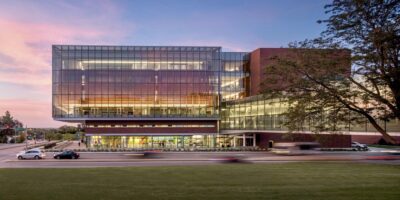

Oklahoma State University College of Osteopathic Medicine (OSU-COM) trains osteopathic physicians in two places: its main campus at the OSU Center for Health Sciences in Tulsa and the OSU College of Osteopathic Medicine at the Cherokee Nation in Tahlequah, the first tribally affiliated medical school in the country. Both campuses grant the same degree, the Doctor of Osteopathic Medicine (DO), through one application. The college was founded in 1972 with a legislative mandate to train physicians for rural Oklahoma, and that purpose still shapes almost every part of the program.
The admissions process looks for applicants who are academically ready and who show a real commitment to osteopathic principles and to rural, tribal and underserved communities. The committee reviews the whole applicant: academic record, clinical and community service experience, leadership, letters and the perspective each student brings. The curriculum is hands-on from the first semester. Students practice osteopathic manipulative medicine in year one, work with patients, patient models and simulation in years one and two, and then complete community-based clinical rotations across Oklahoma.
This guide covers the 2026-2027 application cycle, for students who want to start medical school in July 2027. It explains the mission, accreditation, campuses, elective tracks and dual degrees, the curriculum, every admissions requirement and deadline, tuition and cost of attendance, student life, clinical rotations and research, leadership and notable alumni, the class profile, the current secondary questions with original example answers, the interview day and a long list of frequently asked questions. Figures were checked on October 29, 2026.
Key Takeaways
- One DO program, two campuses: OSU-COM teaches the same DO curriculum in Tulsa and at the Cherokee Nation campus in Tahlequah. You choose a campus preference on the supplemental application and make your final campus choice when you are offered admission.
- Mission: the college “educates osteopathic primary care physicians with an emphasis on serving rural and underserved Oklahoma.” Oklahoma residents receive preference, and the majority of students are from Oklahoma.
- Academic picture: the college reports a mean MCAT of 500.9 and an average cumulative undergraduate GPA of 3.75 in its 2026-2027 profile. The minimums are a 3.0 cumulative GPA, a 2.75 pre-professional science GPA and a 492 MCAT. A competitive applicant has a 3.6 or higher GPA and an MCAT of 500 or higher.
- Key dates: AACOMAS is due February 28, 2027. The OSU-COM supplemental application and your letters are due March 30, 2027. Interviews run from August 2026 to April 2027 on a rolling basis, so early applicants have the most seats to compete for.
- Cost: 2025-2026 tuition is $25,796.60 for Oklahoma residents and $53,298.56 for non-residents. Admitted permanent residents of Arkansas, Kansas and Missouri with a 500 MCAT and a 3.5 GPA can receive an out-of-state tuition waiver.
- Distinctive training: elective Rural, Tribal, Urban Underserved and Global Health tracks; seven dual degree pathways; and required rotations that all take place in Oklahoma.
- Outcomes: the Class of 2025 had 168 graduates and a 100% GME placement rate, and OSU Center for Health Sciences ranks No. 1 in the nation for the percentage of graduates practicing in Health Professional Shortage Areas.
- Next step: submit AACOMAS early in the summer, line up two faculty or physician letters (or one committee letter), and return the supplemental promptly so your file is complete before interview season fills.
Key Statistics About Oklahoma State University College of Osteopathic Medicine
The snapshot below collects the figures applicants ask about most. The mean MCAT and GPA are the newest values the college has reported, but its 2026-2027 profile does not say which entering class they describe. The first-year count is for the 2024-2025 academic year on the Tulsa campus; the Cherokee Nation campus count for that year was not yet reported. Tuition is for 2025-2026, the newest year posted, and the GME placement rate is for the Class of 2025. OSU-COM does not publish applicant, interview or acceptance counts, so no acceptance rate is shown.

What Are OSU-COM’s Average MCAT and GPA?
OSU-COM’s mean MCAT is 500.9 and its average cumulative undergraduate GPA is 3.75, as reported in the college’s 2026-2027 profile. The profile does not name the entering class behind these numbers, so treat them as a recent picture of who enrolls rather than a label for one class. They are averages, not cutoffs: many students in the group scored below them.
The numbers that decide whether your file is reviewed are on the admissions requirements page. You need at least a 3.0 cumulative GPA, a 2.75 pre-professional science GPA and a 492 MCAT at the time of application. The college describes a competitive applicant as someone with a 3.6 cumulative GPA, a 3.6 science GPA and an MCAT of 500 or higher, plus three to five recent upper-division science courses and clinical and community experience.
| Metric | Value | Year or cohort | Source and definition |
|---|---|---|---|
| School and degree | Oklahoma State University College of Osteopathic Medicine (OSU-COM); Doctor of Osteopathic Medicine (DO); Tulsa main campus and OSU-COM at the Cherokee Nation, Tahlequah | Current | OSU-COM About page; AACOM Choose DO Explorer. Public institution; founded 1972 |
| Mean MCAT | 500.9 | Cohort not labeled (2026-2027 cycle profile) | AACOM Choose DO Explorer, OSU-COM profile, MCAT/GPA Information |
| Average cumulative undergraduate GPA | 3.75 | Cohort not labeled (2026-2027 cycle profile) | AACOM Choose DO Explorer, OSU-COM profile |
| First-year matriculants, Tulsa campus | 141 (99 in-state, 42 out-of-state; 76 women, 65 men) | 2024-2025 academic year | AACOM Choose DO Explorer, Student Demographics. Cherokee Nation first-year count listed as TBA |
| Total DO enrollment | 674 (465 Tulsa, 209 Cherokee Nation) | 2024-2025 academic year | AACOM Choose DO Explorer, Student Demographics |
| Applicants, interviews and acceptance rate | Not published | Not applicable | Neither the college nor its Choose DO profile publishes these counts |
| Minimum GPA and MCAT | 3.0 cumulative; 2.75 pre-professional science; MCAT 492 | Fall 2027 entry | OSU-COM Admissions Requirements |
| Competitive applicant criteria | 3.6 cumulative and 3.6 science GPA; MCAT 500 or higher | Fall 2027 entry | OSU-COM Admissions Requirements |
| Tuition | $25,796.60 Oklahoma residents; $53,298.56 non-residents | 2025-2026 (newest posted) | OSU-COM Cost of Attendance |
| Total cost of attendance, first year | $65,683.82 residents; $93,185.78 non-residents | 2025-2026 | OSU-COM Cost of Attendance, OMS I column, including loan origination fees |
| Average student loan debt | $175,713 | Class of 2025 | OSU-COM Average Student Debt (NSLDS data) |
| GME placement | 100% (168 graduates) | Class of 2025 | OSU-COM Our Graduates |
| COMLEX Level 1 first-time pass rate | 98.75% | 2025-2026 | OSU-COM Our Graduates |
| COMLEX Level 2 CE first-time pass rate | 96.15% | 2025-2026 | OSU-COM Our Graduates |
| Accreditation | Accredited by the Commission on Osteopathic College Accreditation (COCA) | Current | OSU-COM About page |
The 2024-2025 Tulsa first-year class was 54% women and 46% men. Its self-reported race and ethnicity was 48.2% White, 12.1% Asian, 11.3% Black or African American, 10.6% Hispanic or Latino, 10.6% multiple races and 4.3% American Indian or Alaska Native, with 2.8% undisclosed. About 85% were science majors and 5% held a graduate degree.
Mission and Educational Priorities
The official mission is short: “Oklahoma State University College of Osteopathic Medicine educates osteopathic primary care physicians with an emphasis on serving rural and underserved Oklahoma.” The OSU Center for Health Sciences states a broader version for the whole institution: it “educates and trains osteopathic physicians, research scientists and other health care professionals, with an emphasis on serving rural and underserved Oklahoma.”
The college’s vision lists five goals. It wants to be recognized for fulfilling the health care needs of rural and underserved Oklahoma; producing graduates who are dedicated, effective and compassionate community leaders; providing excellent care and health-related community service; being a leader and innovator in education; and being the medical school of choice.
What the mission means for applicants
Oklahoma comes first. The college places its emphasis on admitting students from Oklahoma and students who want to practice in Oklahoma, and the majority of OSU-COM students are Oklahomans. Out-of-state applicants are welcome, but they should show a specific, believable reason to train and possibly practice in Oklahoma or in similar communities.
Primary care is the core. Two-thirds of graduates practice in primary care: family practice, pediatrics, internal medicine and obstetrics and gynecology. The other third practice in specialties such as dermatology, neurology, surgery, ophthalmology, psychiatry, anesthesiology and gastroenterology. You do not have to promise a primary care career, but you should understand why the college cares so much about it.
Rural and underserved service is measurable. More than half of the college’s 3,000-plus graduates practice in Oklahoma, and nearly one in four practice in a community of 10,000 people or fewer. In June 2026, OSU Center for Health Sciences ranked No. 1 in the nation for the third consecutive year for the percentage of graduates practicing in Health Professional Shortage Areas, No. 8 for graduates practicing in rural areas and No. 13 for graduates in primary care.
Ethics and professionalism are explicit. Administration, faculty and staff follow the American Osteopathic Association Code of Ethics, which the college adopted in 2008, and students are expected to follow it too.
Education, research and patient care
The mission shows up in three linked areas. In education, the curriculum blends osteopathic principles with a strong biomedical foundation, builds in early hands-on clinical experience and simulation, and asks students to keep learning after graduation. In research, OSU Center for Health Sciences works on topics from rural health care delivery and addiction to biomedical science, and it tries to move findings into patient care. In patient care, faculty, residents and students care for patients through OSU Medicine clinics and the OSU Medical Center, with a strong emphasis on access for rural and underserved Oklahomans, preventive care and wellness.
The institution’s strength also comes from collaboration. It partners with the Cherokee Nation, rural hospitals, tribal health systems and community organizations, and it runs centers of excellence for rural health, health systems innovation, Indigenous health research and childhood adversity. For applicants, the practical lesson is simple: show the committee that you have already served people who have trouble getting care, and that you understand why place matters in medicine.
Accreditation and Institutional Identity
OSU-COM is accredited by the Commission on Osteopathic College Accreditation (COCA), the agency recognized to accredit colleges that train osteopathic physicians. The college’s professional licensure disclosure confirms that its DO program is COCA accredited and that students are eligible to sit for the Comprehensive Osteopathic Medical Licensing Examination (COMLEX-USA), which is required for licensure in the United States. The Oklahoma State Regents for Higher Education set standards for institutions in the Oklahoma State System of Higher Education, including OSU Center for Health Sciences.
A few names can be confusing, so here is how they fit together:
- Oklahoma State University Center for Health Sciences (OSU-CHS) is the Tulsa health sciences campus of Oklahoma State University. It houses the medical school, a Graduate College, a Physician Assistant program and other health programs.
- OSU College of Osteopathic Medicine (OSU-COM) is the medical school. It began as the Oklahoma College of Osteopathic Medicine and Surgery, joined the OSU system in 1988, and graduated its 50th class in May 2026.
- OSU College of Osteopathic Medicine at the Cherokee Nation (OSU-COM at CN) is an additional location in Tahlequah that opened in 2020 through a partnership between OSU-CHS and the Cherokee Nation. It offers the same DO program as the main campus, and you apply to it through the same application.
- OSU Medicine and OSU Medical Center are the clinical enterprise and teaching hospital in Tulsa where many students and residents train.
People searching for “OSU medical school” or “Oklahoma State University medical school” mean this college. Oklahoma State University does not have a separate MD program. The state’s MD school is the University of Oklahoma College of Medicine, which is a different university. If you are still deciding between degree types, read What is Osteopathic Medicine and How is it Different? for a plain explanation of the DO philosophy and training.
Accreditation confirms that a program meets national standards. It is not a ranking or a guarantee of any outcome, so use it alongside the outcome data in the statistics and graduates sections.
Medical Programs and Affiliations
OSU-COM’s central program is the four-year Doctor of Osteopathic Medicine. Around it, the college has built elective tracks, dual degrees and several alternative admission routes. Some of these need a separate application or a box checked on the supplemental, so read this section before you apply.
Doctor of Osteopathic Medicine (DO)
The DO program is the core of OSU-COM. It is designed to produce competent, compassionate osteopathic physicians ready to meet the health care needs of their communities. The curriculum integrates osteopathic principles and practice with the medical sciences, and students get hands-on clinical training from the early stages. Training sites include rural and underserved communities, which gives students a clear picture of the health problems those communities face. All required rotations take place in Oklahoma, and the college coordinates rotation schedules for every student.
Two campuses, one application
On the supplemental application you indicate a campus preference: the Center for Health Sciences in Tulsa or the Cherokee Nation campus in Tahlequah. Accepted students make a final campus selection when admission is offered.
- Tulsa: the OSU Center for Health Sciences campus sits on the west bank of the Arkansas River, minutes from downtown Tulsa, in a four-building complex on 16 acres. The A.R. & Marylouise Tandy Medical Academic Building adds lecture halls, clinical skills and OMM labs, study carrels, a conference center and a four-suite simulation center.
- Tahlequah: the Cherokee Nation campus is an 85,000-square-foot medical school with anatomy, clinical skills, osteopathic manipulative medicine and standardized patient labs, a simulation center with computer-programmable manikins, lecture halls, study carrels and a wellness center. Its student body has included members of more than 11 federally recognized tribes and students from 31 Oklahoma counties. Classes there are small; a 2026 graduate described a class of about 50 students.
Elective tracks
In addition to the traditional curriculum, OSU-COM offers elective tracks built around specific populations. The tracks combine population-based clinical education with a guided research component, and the secondary application asks which of four elective programs interests you.
- Rural Medical Track: prepares students for a rural primary care residency and practice in rural or underserved Oklahoma. Students indicate interest on the supplemental application and complete a separate Rural Medical Track application. Details are in the rotations section below.
- Tribal Medical Track: prepares students for a primary care residency at tribal facilities and a successful practice in tribal, rural and underserved Oklahoma, while learning about the cultures of American Indian communities.
- Urban Underserved Medical Track: prepares students to practice primary care in urban underserved communities and health systems, with a third-year urban clinic rotation reserved for track students and urban residency tours.
- Global Health Track: gives students international health experiences in resource-limited countries, under supervision, and connects to a Global Health Minor and graduate certificate.
Dual degree programs
OSU-COM offers seven dual degree pathways. Many let students apply between 9 and 30 credit hours from the DO curriculum toward the graduate degree.
| Pathway | What it adds | When it is completed |
|---|---|---|
| DO/MBA | Business administration through the Spears School of Business; up to 12 of 36 MBA credit hours can come from approved DO coursework and advanced standing | During medical school |
| DO/PhD in Biomedical Sciences | Physician-scientist training; the PhD is completed first, with deferred matriculation into the DO program | Before medical school |
| DO/MPH | Public health, epidemiology and population health; up to 13 of 42 credit hours from DO coursework | Before or during medical school |
| DO/MS in Biomedical Sciences | Graduate biomedical research coursework before the DO | Before medical school |
| DO/MS in Health Care Administration | Health systems leadership and management | Before or during medical school |
| DO/MS in Global Health | Global health systems, infectious disease and health equity; up to 10 of 32 credit hours from DO coursework | Before or during medical school |
| DO/MS in Medical Sciences | A 32-credit non-thesis master’s; 30 credits come from years one and two of the DO, plus a Capstone Experience | By invitation after year one |
Students interested in public health can also build that knowledge through the DO/MPH and the Global Health options, which cover epidemiology, health policy and community health.
Physician Assistant program
OSU Center for Health Sciences also runs a 28-month Physician Assistant program (13 months of didactic training and 15 months of clinical rotations) with a mission of increasing access in rural and underserved Oklahoma. The PA program is separate from the DO program and has its own application. You can compare it with other options in our guide to physician assistant schools in Oklahoma, and students weighing that path can build patient care hours through pre-PA internships.
Partnerships that support the mission
OSU-COM’s education depends on partners across the state. Examples include the Cherokee Nation and other tribal health partners; the Osteopathic Medical Education Consortium of Oklahoma (OMECO), which links training sites in communities such as Ada, Durant, Lawton, McAlester, Norman, Tahlequah, Talihina and Tulsa; Area Health Education Center offices in Oklahoma City, Enid, Lawton, McAlester and Tahlequah; and OSU’s own centers of excellence.
- Rural Health Association of Oklahoma (RHAO): a statewide group that works on rural health access and workforce issues. Learn more on RHAO’s website.
- Heartland Telehealth Resource Center (HTRC): a federally designated resource for telehealth programs in the region. Visit the HTRC website.
- Telehealth Alliance of Oklahoma (TAO): an alliance that promotes telehealth adoption across the state. See the Telehealth Alliance of Oklahoma website.
- OSU Center for Health Systems Innovation (CHSI): an OSU center for health systems research and data analytics. Discover CHSI’s projects.
- OSU Rural Renewal Initiative: an OSU effort focused on the challenges rural communities face. Explore the Rural Renewal Initiative website.
- OSU Center for Rural Health: develops rural health curriculum and rural medical track training, workforce programs, research and policy. Its work on rural healthcare delivery is the backbone of the rural track.
- Project ECHO: OSU-CHS’s telementoring program connects rural providers with specialist teams; it has organized 34 programs and served all 77 Oklahoma counties.
Through these partnerships the college contributes to health care across Oklahoma while preparing graduates to work in the communities that need them.
Alternative admission pathways
OSU-COM has an unusually large set of early and alternative routes. Each has its own deadlines and requirements.
- Freshman Med Bound Program: for high-achieving first-year students at Oklahoma State University in Stillwater. Applicants need a 3.75 high school GPA, an ACT of 27 or SAT of 1260, and must have graduated from high school in the prior 12 months. Applications are due October 1 of the freshman year. Provisionally accepted students complete three years at OSU and four at OSU-CHS, finishing both degrees in seven years.
- ROTC Med Bound Program: for OSU ROTC students in their freshman year, with a 3.8 unweighted high school GPA and an ACT super score of 30 or SAT of 1350. It guarantees an interview, and accepted students receive a mentor, clinical shadowing access and MCAT prep support.
- 3+1 Program: for students at approved Oklahoma partner universities. You apply by October 1 of your junior year with a 3.5 cumulative and science GPA and 500 hours in health-related settings. Provisionally accepted students finish their bachelor’s and DO degrees in seven years instead of eight.
- Guaranteed Interview Program: for students and recent graduates of partner universities in Oklahoma with at least a 3.5 GPA, a 502 MCAT, 500 hours in a health-related setting and first-time applicant status. Partners include Cameron, East Central, Mid-America Christian, Northeastern State, Northwestern Oklahoma State, Oklahoma Christian, Oklahoma City University, Oklahoma State, Oral Roberts, Rogers State, Southeastern Oklahoma State, Southwestern Oklahoma State and the University of Central Oklahoma.
- Academy Guaranteed Interview Program: for cadets and midshipmen at West Point, the Naval Academy and the Air Force Academy who hold a medical billet, a 3.5 GPA, a 500 MCAT and 100 health-related hours.
- Bridge Program: for high-potential students from economically or environmentally disadvantaged backgrounds, or those pursuing medicine as a second career with an interest in rural or underserved primary care. Accepted students complete the one-year Graduate Certificate in Medical Sciences and are guaranteed admission if they earn an A or B in each course and score at least 492 on the MCAT. Bridge minimums are a 2.5 GPA and a 483 MCAT.
- Guaranteed Admissions Program: applicants who interview and receive a referral to the Graduate Certificate Program are provisionally accepted for the following year if they earn an A or B in the certificate curriculum and score at least 498 on the MCAT.
- Transfer with advanced standing: students in good standing at another AOA-accredited college of osteopathic medicine may apply to enter the third year if seats exist, by December 1. OSU-COM does not consider transfers from LCME-accredited MD programs.
Financial considerations for out-of-state applicants
Admitted students who are permanent residents of Arkansas, Kansas or Missouri receive an out-of-state tuition waiver if they score at least 500 on the MCAT and have a 3.5 overall GPA. Admitted Texas residents who meet the same marks may be eligible for scholarships instead.
Curriculum Overview
The curriculum places significant focus on primary care. The four-year program integrates the biomedical sciences with clinical systems, and it includes early hands-on clinical experiences with patients, patient models and simulations. Instruction is student-centered and mixes traditional lecture, small group work and team-based learning. Problem-solving and information retrieval skills are emphasized so students keep learning throughout their careers, and the college encourages students to build academic relationships with faculty members and community physicians while working with classmates.
Year one
The fall semester opens with Medical Science Foundations, Clinical Anatomy and a Biomedical Foundations block: cell and tissue biology; molecular biology, genetics and developmental anatomy; medical biochemistry and pharmacology; and immunology. Students also begin Osteopathic Manual Medicine I. In the spring, they take Clinical Care Foundations I, microbiology and the first systems courses (cardiovascular, respiratory, hematology and genitourinary), plus Osteopathic Manual Medicine II and a Noteworthy Populations focus course. A short MAPS course runs each semester of the first two years.
Year two
The second year finishes the systems sequence: gastrointestinal and hepatic, nervous system, musculoskeletal, skin and connective tissue, endocrine, reproductive and psychiatry. Students take Clinical Problem Solving, Clinical Care Foundations II and III, Osteopathic Manual Medicine III and IV, two Caring for Our Communities courses, two Service Learning and Community Engagement courses, an Addiction Medicine focus course and ACLS. The year ends with the first didactic week and transition into rotations.
Every first- and second-year student is also paired with an older adult through the Senior Mentor Program, which builds communication skills and perspective beyond the student’s own generation. First-year students receive a second-year mentor and a faculty mentor as well.
Osteopathic principles and OMM
Osteopathic medicine is founded on the idea that the body’s systems are interrelated and depend on each other. DOs train in osteopathic manipulative medicine (OMM), using their hands to diagnose and treat musculoskeletal problems and support body function. At OSU-COM, students practice OMM skills as early as the first year, and OMM faculty consult with them on their assessments and treatments of patient models. The four OMM courses run through the first two years, and an OMM rotation is required in the clinical years. You can learn more about the department’s faculty on the college’s site.
Years three and four
The third and fourth years are a 22-month clerkship program of four-week blocks in hospitals and clinics, under the supervision of physician faculty. Students take part in the evaluation and treatment of patients. The required rotations are:
- Internal Medicine (two blocks)
- Pediatrics, Emergency Medicine, Psychiatry, OB/GYN, OMM, Surgery
- Community Hospital, Rural Clinic and Family Medicine Clinic
- Nine electives, one primary care elective and two wellness electives
- Three didactic weeks and two OSCE capstones (spring of year three and fall of year four)
Students on the elective tracks follow additional requirements. For example, Rural Medical Track students complete their third-year core rotations at community-based primary care residency sites and at least two sub-internships early in the fourth year.
Assessment and outcomes
Students take COMLEX-USA board exams. The college’s first-time pass rates for 2025-2026 were 98.75% for Level 1 and 96.15% for Level 2 CE; for 2025, the Level 3 rate was 98.66%. Retention for students who matriculated in 2025 was 98.8%, and the four-year graduation rate for the 2022 matriculants (Class of 2026) was 87.5%.
What the curriculum means for you
The curriculum rewards students who are comfortable learning by doing. Expect early patient contact, frequent hands-on OMM sessions and community-focused coursework from year one. The Caring for Our Communities, Service Learning and focus courses are where the mission becomes concrete. If you already have experience with underserved patients, these courses will feel familiar; if you do not, plan to get it before you apply.
Admissions Requirements and Application Process
OSU-COM looks for applicants who are academically prepared for medical school and who show empathy, leadership, a commitment to community service and a real understanding of osteopathic medicine. The admissions committee recommends applicants for admission, and the Dean makes the final selection. Every applicant must meet the minimum requirements to be considered.
Academic requirements
At the time of entry, you must have completed at least three years (90 semester hours) and at least 75 percent of the courses required for a bachelor’s degree at a regionally accredited college or university. You must also complete these courses with no grade below a C (2.0 on a 4.0 scale):
| Subject | Requirement |
|---|---|
| Biology | 2 semesters |
| Chemistry | 2 semesters |
| English | 2 semesters |
| Organic Chemistry | 2 semesters |
| Physics | 2 semesters |
| Upper-division science (3000 level or higher) | 1 semester: human or comparative anatomy, biochemistry, microbiology, genetics, molecular biology, histology, cellular biology, embryology or physiology |
| Science lab | 1 semester, in biology, chemistry, organic chemistry or physics; standalone or combined labs both count |
Prerequisites may be taken at a community college, and online coursework and online labs are accepted. Pass/fail prerequisite grades are accepted. Any major is welcome as long as you complete the required courses. Courses do not formally expire, but the college would like to see them completed within the last three years.
Foreign coursework only counts if a U.S. evaluation service approved by AACOMAS evaluates it as equivalent to coursework from a regionally accredited U.S. institution. Applicants must also meet the college’s technical standards.
Competitive and minimum criteria
| Competitive applicant | Minimum at time of application | |
|---|---|---|
| Cumulative GPA | 3.6 or higher | 3.0 |
| Pre-professional science GPA | 3.6 | 2.75 |
| MCAT | 500 or higher | 492 |
| Coursework | Multiple upper-division (3000-4000 level) science courses in the previous 12 months; 3 to 5 strongly preferred | Prerequisites above |
| Experience | Clinical experience and community involvement, such as physician shadowing, hands-on medical work, medical certifications and community service | Not specified |
| Timing | Early application, starting June 1 of the year before matriculation | Before the deadlines |
MCAT policy
OSU-COM only accepts MCAT scores earned within three years of the AACOMAS deadline for the cycle. For the 2026-2027 cycle, the oldest MCAT considered is from January 1, 2024, and January 2027 is the last month to sit for the exam. Scores must be received by the supplemental deadline, and your MCAT must be on file before an interview is granted. The college does not waive the MCAT and does not offer financial assistance for it, although the AAMC Fee Assistance Program does.
Residency, citizenship and international applicants
Preference is given to applicants from Oklahoma. Non-U.S. citizens who do not have a permanent resident visa at the time of application cannot be considered, so international students and DACA recipients are not eligible.
To be an Oklahoma resident for tuition, you must be a lawful U.S. resident and either be a dependent of a parent, stepparent or court-appointed guardian who is an Oklahoma resident and claimed you on the prior year’s federal tax return, or be independent and have lived in Oklahoma, other than as a full-time student, for at least 12 continuous months before matriculation.
Clinical, shadowing and research experience
There is no required number of shadowing or volunteer hours. The admissions team suggests shadowing physicians in several fields and keeping a journal of what you learn, since those notes help when you write your application. Both shadowing and volunteering matter: shadowing shows you a physician’s day, while volunteering usually involves more direct patient contact and hands-on work. Virtual and in-person shadowing are both accepted. The team prefers your most recent experiences over high school activities.
The college uses the AACOMAS definition of health care experience: paid or unpaid work in a health-related field where you may have patient contact without being directly responsible for care, such as working as a scribe, CNA, medical assistant or in a role that involves taking vitals. Research can strengthen an application but is not required. Supervised clinical internships for pre-med students are one way to add patient contact hours that you can describe in detail.
Letters of recommendation
Letters are due March 30, 2027, and should be submitted through AACOMAS. If you cannot use AACOMAS, letters may be sent through the applicant portal, by the evaluator, or through Liaison, Interfolio or VirtualEvals. All letters must be dated within the last two years, be on official letterhead and state the writer’s relationship to you. Choose one track:
- Track 1: two letters from faculty who taught you, or two letters from DO or MD physicians you shadowed, or one of each.
- Track 2: one letter from a college or university pre-professional or pre-med committee. It must represent a committee’s collective opinion; a letter from an adviser alone or a letter packet does not count.
A physician letter is optional. If you send one, it can come from an MD or a DO, although a DO is preferred. You can submit extra letters, but the team values quality over quantity.
Primary and secondary applications
- Take the MCAT and release scores to AACOMAS.
- Submit AACOMAS. AACOMAS opened in May 2026 (the earliest submission date was May 4, 2026). The deadline is February 28, 2027, at 11:00 pm Central. Complete applications include all undergraduate transcripts, and verification takes four to six weeks. Our Definitive Guide to the AACOMAS Application walks through each section.
- Submit the OSU-COM supplemental application. OSU-COM sends a supplemental link by e-mail to all applicants once it receives the AACOMAS application. The fee is $65, and AACOMAS fee waiver recipients receive a supplemental fee waiver (forward your waiver confirmation to the admissions office). The earliest supplemental submission date is June 15, 2026, and the deadline is March 30, 2027, at 11:00 pm Central. On the supplemental you choose your campus preference and check any special program box (Guaranteed Interview, Academy, 3+1 or Freshman Med Bound).
- Submit your letters by March 30, 2027.
- Interview on campus if invited. Interviews run from August through April.
Admission is rolling, so applicants are strongly encouraged to submit well before the deadlines. You can update a submitted application by e-mailing new information to the admissions office.
Decisions, deposits and deferrals
After the interview, applicants are notified of the decision by phone or e-mail. OSU-COM does not offer an Early Decision Program. Deposit deadlines follow the AACOMAS traffic guidelines: students accepted before November 15 have until December 14; those accepted between November 15 and January 14 have 30 days; those accepted between January 15 and April 30 have 14 days; and those accepted on or after May 1 may be asked for an immediate deposit. The acceptance deposit is $100, applied to tuition and fully refundable until April 15, 2027. Deferred entrance requests are considered. Orientation for first-year students begins July 26, 2027.
Admissions timeline for fall 2027 entry
| Step | Date |
|---|---|
| AACOMAS opens | May 2026 (earliest submission May 4, 2026) |
| OSU-COM supplemental opens | June 2026 (earliest submission June 15, 2026) |
| Interview season (rolling) | August 2026 to April 2027 |
| Last MCAT date offered in 2026 | September 2026 |
| Last month to take the MCAT for OSU-COM | January 2027 |
| Release MCAT scores, if applicable | February 2027 |
| AACOMAS deadline | February 28, 2027, 11:00 pm (CT) |
| Supplemental application deadline | March 30, 2027, 11:00 pm (CT) |
| Letters of recommendation deadline | March 30, 2027, 11:00 pm (CT) |
| Deposit refundable until | April 15, 2027 |
| Orientation begins | July 26, 2027 |
Building a strong application
- Personal statement: explain your path to medicine, the experiences that shaped it and why osteopathic medicine and service to underserved communities matter to you.
- Letters: choose writers who know your academic ability and character well enough to describe your potential as an osteopathic physician.
- Activities: highlight health care experience, community service and leadership, especially work with rural, tribal or urban underserved patients.
By starting early, writing a specific application and engaging with OSU-COM through recruitment events and advisement sessions, you can position yourself as a strong candidate.
Tuition, Cost of Attendance and Financial Aid
The college publishes a year-by-year cost of attendance. The newest posted budget is for 2025-2026; the 2026-2027 figures had not been posted as of October 29, 2026. Use the 2025-2026 numbers as a planning baseline and expect some change.
2025-2026 cost of attendance: Oklahoma residents
| Item | OMS I | OMS II | OMS III | OMS IV |
|---|---|---|---|---|
| Tuition | $25,796.60 | $25,796.60 | $25,796.60 | $25,796.60 |
| Fees | $3,087.22 | $2,977.22 | $2,882.22 | $2,922.22 |
| Housing | $10,258 | $12,540 | $13,055 | $10,880 |
| Food | $4,398 | $5,378 | $5,595 | $4,660 |
| Personal | $9,498 | $11,604 | $12,072 | $10,050 |
| Transportation | $2,984 | $3,654 | $3,876 | $3,230 |
| Health insurance | $3,654 | $3,654 | $3,654 | $3,654 |
| Books and supplies | $4,000 | $3,000 | $1,000 | $600 |
| Computer (one time) | $1,000 | N/A | N/A | N/A |
| Board exams | N/A | $660 (COMLEX Level 1) | $1,000 (Level 2) | N/A |
| Clerkship expenses | N/A | N/A | $1,000 | $3,000 |
| Residency application fees | N/A | N/A | N/A | $400 |
| Loan origination fees | $1,008 | $1,008 | $1,008 | $1,008 |
| Total | $65,683.82 | $70,271.82 | $70,938.82 | $66,200.82 |
2025-2026 cost of attendance: non-residents
Non-residents pay $53,298.56 in tuition each year. Every other line is the same as for residents, so the totals are $93,185.78 (OMS I), $97,773.78 (OMS II), $98,440.78 (OMS III) and $93,702.78 (OMS IV).
A few notes on the budget. The computer allowance is a one-time first-year amount; students who do not need a new computer should reduce their loan request. The loan origination fee assumes you borrow the full cost of attendance. Required health insurance is budgeted at $305 per month. Fees include health service, lab, student activities, student services, technology, clinical skills equipment, library and board exam preparation materials.
Over four years, an Oklahoma resident’s budget comes to about $273,095 and a non-resident’s to about $383,103, based on the 2025-2026 figures. Tuition is only part of that total: living costs, insurance, books and exam fees make up roughly $30,000 to $45,000 a year.
Financial aid and scholarships
The Office of Financial Aid helps students apply for federal aid (FAFSA school code G11282) and understand the cost of medical school. Aid types include scholarships, federal student loans, federal work-study and alternative loans. You must keep satisfactory academic progress to stay eligible.
OSU Center for Health Sciences awards nearly $1 million in scholarships every year. Students receive one application from the scholarship committee at the end of the fall semester. Named awards include the Center for Rural Health Annual Scholarship, the Chickasaw Nation Medical Student Scholarship, the George Kaiser Family Foundation Scholar in Urban Medicine, the Eastman Primary Care Endowed Scholarship, a DO/MBA scholarship, and the Anne and Henry Zarrow Foundation and Dr. Betty Louise Conrad early admissions scholarships, among many others. Amounts vary each year with available funding.
Students with unusual expenses, such as licensed day care, unreimbursed medical bills or emergency repairs, can ask the Office of Financial Aid about a cost of living increase with documentation. The standard budget covers only the student, so students with dependents should plan other support.
Debt and repayment
The average student loan debt for the Class of 2025 was $175,713, up from $161,806 for the Class of 2024. The student loan default rate has been 0.0% for each year from 2019 through 2022. The college offers loan counseling and financial literacy resources, including debt management modules for osteopathic students.
Ways to lower your cost
- Oklahoma residency cuts tuition by more than half.
- The out-of-state waiver for admitted Arkansas, Kansas and Missouri residents with a 500 MCAT and 3.5 GPA brings tuition down to the resident rate; Texas residents with the same marks may qualify for scholarships.
- Bridge students may have tuition waived during the certificate year (fees still apply).
- Service-based and tribal scholarships reward the same commitments the mission values.
Campus Facilities and Student Life
Campus life at OSU-COM goes well beyond the classroom. The college describes a student-centered philosophy and a supportive environment where students can explore their interests, and current students and recent graduates often describe the campus as close-knit.
Facilities
- Tulsa: the OSU Center for Health Sciences campus includes classrooms, basic and clinical science labs, research space, lecture halls, breakout rooms, a medical bookstore, a library and a cafe. The A.R. & Marylouise Tandy Medical Academic Building adds modern lecture halls, clinical skills and OMM labs, study carrels, a conference center and a four-suite simulation center. North Hall opened more recently as an additional campus building. The OSU Health Care Center is both a teaching clinic and a community resource, with 37 exam rooms, radiology, a student learning center and services that include general care, OMM, psychiatry and women’s health.
- Tahlequah: the Cherokee Nation campus has gross and neuro-anatomy labs, clinical skills and OMM labs, standardized patient labs, a simulation center with programmable manikins, lecture halls, a gym, mindfulness areas and a wellness center.
- Research space: the Helmerich Research Center in Tulsa, part of OSU-Tulsa, is one of the OSU research facilities students in the broader OSU community can connect with.
Housing
OSU-COM does not offer on-campus housing, but there are affordable apartments and houses within about 10 minutes of both campuses. In Tulsa, many students live near campus with easy access to downtown, the River Parks trails along the Arkansas River and the Gathering Place riverfront park. In Tahlequah, most students keep their commute under five minutes and live near restaurants and outdoor areas such as the Illinois River, Lake Tenkiller and Fort Gibson Lake. Tahlequah is the capital of the Cherokee Nation and sits about halfway between Tulsa and Fayetteville, Arkansas.
Student organizations and leadership
The Office of Student Life oversees more than 50 active clubs and interest groups that serve the Graduate College and the College of Osteopathic Medicine on both campuses. The Student Government Association governs student organizations and includes leaders for diversity, research, professionalism, public relations and wellness. Groups that appear in the college’s own materials include the Student Osteopathic Rural Medicine Club (STORM), which has volunteered with Habitat for Humanity, and student groups that march in Tulsa’s Native American Day Parade. Students can also start new organizations. The current list is on the college’s student organizations resource.
Support and wellness
Support services include the Office of Student Affairs, the Office of Academic Success, accessibility services, the Department of Wellness and student counseling services. The college also runs a Stress Management Program that builds mental resiliency, and wellness electives are part of the clinical years. Every first-year student gets a second-year student mentor and a faculty mentor.
OSU Center for Health Sciences is also home to the National Center for Wellness & Recovery and other clinical and research programs that bring addiction medicine and behavioral health into student training.
Service and community engagement
Service is built into the curriculum through two Service Learning and Community Engagement courses and two Caring for Our Communities courses. Students take part in health screenings, rural projects and community events, from helping a small town refresh its public spaces to school outreach in Tulsa. These experiences reflect the college’s emphasis on service and learning by doing.
Engagement with the OSU community
Students belong to the wider Oklahoma State University community, the “Cowboy family.” They can use OSU resources and events, from research centers in Tulsa to university athletics and alumni programs, and the college often describes its culture through the Cowboy Code. Students from both campuses meet at shared events such as Match Day, held in recent years at Cain’s Ballroom in Tulsa.
Clinical Rotations and Research Opportunities
The clinical years are run by the Office of Clinical Education and the clinical departments. They follow a 22-month clerkship program of four-week blocks, including one required four-week vacation and an optional second one. The Office of Clinical Education assigns required clerkships, and each rotation is one month of clinical experience. Rotations other than electives take place at institutions that have an affiliation agreement with the college or are managed by it.
Core clinical areas
Students receive education and primary care training in nine core areas:
- Emergency Medicine: respond to urgent and critical situations alongside experienced emergency teams.
- Family Medicine: build primary care skills and long-term relationships with patients of all ages.
- General Surgery: take part in surgical care, from preoperative evaluation through recovery.
- Internal Medicine: diagnose and manage complex conditions across organ systems.
- Obstetrics and Gynecology: care for patients across the life span, including labor and delivery.
- Osteopathic Manipulative Medicine (OMM): use hands-on techniques alongside other treatments to relieve pain and improve function.
- Pediatrics: develop the skills to care for children and their families.
- Psychiatry and Behavioral Sciences: learn the diagnosis and treatment of mental health conditions.
- Rural and Tribal Medical Education: serve rural and tribal communities and learn their specific health needs.
Students also complete required ACOFP OMT procedure modules assigned by each department while on rotation.
Training settings and specialties
Through the OSU Medical Center, OSU Medicine clinics and affiliated hospitals across Oklahoma, students see a wide range of patients. Primary and specialty care settings include the OSU Medicine network; rural health settings bring the mission to life; and community clinics emphasize primary care and prevention. OSU Medicine’s services give a sense of the specialties students can encounter, including internal medicine subspecialties, a surgical rotation setting, rotations in pediatrics and family medicine. Other OSU Medicine services include:
- Addiction Medicine
- Behavioral Medicine
- Cardiovascular Medicine
- Imaging
- Infectious Disease & HIV/AIDS
- Nephrology
- Neurology
- Obstetrics & Gynecology
- Osteopathic Manipulation
- Pain Management
- Pulmonology
- Sports Medicine
- Wound Care
Beyond the basics
On rotations you will work with physicians and residents, practice communication and teamwork, sharpen your clinical reasoning and see current treatments in practice. Many rotations happen in community hospitals and clinics in smaller Oklahoma towns, so expect to travel or relocate for some blocks. Because the college coordinates every student’s schedule and all required rotations are in-state, you do not have to arrange core rotations yourself.
Rural Medical Track rotations
The Rural Medical Track gives motivated students extra preparation for rural practice:
- Leadership: students can hold leadership positions in the Student Osteopathic Rural Medical Club and gain student membership in the National Rural Health Association.
- Research: students complete a guided, rural health-focused research project in years one and two.
- Early clinical experience: before year two, students interested in the track may shadow a rural physician for two weeks during a summer rural externship.
- Third-year training in rural Oklahoma: core rotations at community-based primary care residency sites.
- More hands-on time: limited enrollment means more one-on-one instruction.
- Sub-internships: at least two at a primary care residency site early in year four, which can serve as residency auditions.
- Selective rotations: at least three selective specialty rotations chosen by medical education staff.
Third-year rural clinic sites have included more than two dozen Oklahoma towns, such as Altus, Ardmore, Durant, Enid, Idabel, McAlester, Pawhuska, Poteau, Vinita and Woodward, plus Anthony, Kansas. Fourth-year community hospital rotations run in towns such as Ada, Duncan, Grove, Miami, Okmulgee, Ponca City, Stillwater and Talihina. Telehealth equipment at sites from Anadarko to Sallisaw lets students and physicians connect across distance.
Tribal and urban underserved training
Tribal Medical Track students train toward primary care residencies at tribal facilities with tribal partners such as the Cherokee Nation. Urban Underserved Medical Track students get a third-year rotation at an urban clinic reserved for the track, urban residency tours and training with physicians who know urban underserved health systems.
Global Health Track
The Global Health Track gives students supervised clinical experience in countries with limited resources. Students may apply during their first two years, and the track is limited to 15 students per year. The curriculum includes a summer global health externship and fall and winter global health selectives, with small group sessions about upcoming trips. Locations have included Uganda, Nepal, Cambodia, Belize, Guatemala, Mexico, Malawi and Greece. The broader Global Health Minor hosts three trips a year open to all OSU-COM students; in July 2026, students and faculty worked in a clinic in Guanacaste, Costa Rica, performing histories and exams under supervision. Applicants who want comparable experience before medical school can look at pre-med internships abroad, which place students in supervised clinical settings.
Research
Students can start research in their first year. OSU-COM offers research in wet labs, public health, medical education and addiction medicine, among other areas, and students can work with faculty who often become mentors. The Office of Research supports grant proposals, compliance (IRB, IACUC and IBC through Cayuse), lab safety and student research, and it hosts an annual Research Week. Research is not required for admission, but it is open to students who want it.
Research at OSU Center for Health Sciences covers a wide range. Investigators study neuroscience at the Hardesty Center for Clinical Research and Neuroscience, the microbiome under an NIH-funded center, pain, cardiovascular health and respiratory disease, and they run clinical trials. The campus is also home to forensic sciences and a paleontology program whose students have co-authored studies on ape evolution and prehistoric ecosystems. The OSU Center for Rural Health uses data and research to improve rural hospitals and health outcomes, and the Center for Indigenous Health Research and Policy works with tribal nations such as the Chickasaw Nation.
Graduate medical education
OSU Center for Health Sciences sponsors residency and fellowship training through OSU Medicine and the Osteopathic Medical Education Consortium of Oklahoma, which gives graduates a path to stay in the state. You can see the full list of programs and services on the GME site. In 2026, 55% of the 153 graduates matched to residencies in Oklahoma, and half entered primary care residencies.
Preparing future health care leaders
Through its clinical rotations, tracks and research options, OSU-COM equips students with the skills and experience to lead in health care. The balance of osteopathic principles and modern medical training prepares graduates to meet changing needs and serve communities with dedication.
Notable Alumni, Faculty, Leadership and Admissions Staff
OSU-COM’s leaders are unusually connected to the school: both medical school deans and the associate dean for tribal health affairs are OSU-COM graduates. The profiles below are drawn from the college’s leadership pages and OSU news releases. Roles were checked on October 29, 2026.
School leadership
Dennis Blankenship, D.O., Dean of the OSU College of Osteopathic Medicine. Dr. Blankenship leads the college and is a clinical professor of emergency medicine. He previously served as senior associate dean of academic affairs. He graduated with OSU-COM’s 25th class in 2001, and he has said that within minutes of his own interview day he knew it was where he wanted to train. He has been recognized for excellence in teaching and patient care. For applicants, his path from student to dean shows how closely the college ties its culture to its own graduates.
Natasha Bray, D.O., MSed, FACOI, FACP, Dean of OSU-COM at the Cherokee Nation. Dr. Bray leads the Tahlequah campus and also serves as associate dean for accreditation. She earned her DO at OSU-COM, completed her internship at the Philadelphia College of Osteopathic Medicine as chief intern and finished residency at Cambridge Health Alliance, a Harvard-affiliated hospital. Before returning to OSU-CHS she was associate dean of clinical medicine at the Arkansas College of Osteopathic Medicine and vice president of academic affairs at Broward Health in Florida. She has focused her career on using medical education to meet rural and underserved physician workforce needs. If you prefer the Cherokee Nation campus, her priorities describe the school you would join.
Johnny Stephens, Pharm.D., President of OSU Center for Health Sciences. Dr. Stephens was named president in September 2021 after serving as chief operating officer and senior vice president. He also serves as interim president of OSU-Tulsa and senior vice president of health affairs for Oklahoma State University. He has described the institution’s purpose as training physicians who will serve rural and underserved communities, a message that runs through the college’s rankings and planning.
Jeffrey S. Stroup, Pharm.D., FCCP, BCPS, Provost and Senior Vice President. Dr. Stroup is a professor of internal medicine and chief operating officer of the OSU Medical Authority and Trust, which oversees the OSU Medical Center in Tulsa. He is an active researcher who lectures on diabetes and antimicrobials. His dual role in academics and hospital operations matters to students because so much clinical training happens at the OSU Medical Center.
Douglas Nolan, D.O., Associate Dean of Tribal Health Affairs. Dr. Nolan is a 2000 graduate of OSU-COM. He began his career at W.W. Hastings Hospital in Tahlequah in 2003 and was its medical director from 2009 to 2016. He later served as diabetes program medical director, graduate education medical director and program director of the Family Medicine Residency, which trained many current Cherokee Nation Health Services physicians. He received the IHS National Director’s Award in 2009. At the Cherokee Nation campus, he focuses on student recruitment and retention, tribal residency development and tribal health care. Applicants interested in the Tribal Medical Track should know his work.
Christopher Thurman, D.O., Associate Dean of Clinical Education. Dr. Thurman oversees the clinical years, the stage where students rotate through hospitals and clinics across Oklahoma. His office assigns rotations and manages the clerkship program described above.
Carrie Gilstrap, D.O., FACR, FACOI, Associate Dean of Curriculum and Academic Success. Dr. Gilstrap leads the curriculum and academic support functions that shape the first two years, including the resources students use when they need help with coursework or board preparation.
Admissions staff
Nicole Ponkilla, Director of Admissions. Ms. Ponkilla directs the OSU-COM admissions office and is the listed contact for admissions questions, including transfer and advanced standing requests. The admissions office can be reached at 918-561-8324 or [email protected]. The Director of Admissions and the admissions committee notify early-pathway applicants, such as 3+1 and Freshman Med Bound students, of their decisions.
Jeff Hackler, JD, Associate Dean of Academic Affairs and Enrollment Management. Mr. Hackler oversees enrollment management at OSU Center for Health Sciences, the administrative area that includes admissions and registration. Applicants will mostly work with the admissions and recruitment teams, but his office sets the broader enrollment process.
Faculty
Amanda Cain, Clinical Associate Professor of Medical Education. Dr. Cain helps lead the Global Health Minor’s international trips. In July 2026 she supervised OSU-COM students in a clinic in Guanacaste, Costa Rica, as they took histories, performed exams and treated conditions such as dengue fever. Her work shows how the college builds clinical confidence through supervised global health experience.
Notable alumni
Chelsea Arnhart, OSU-COM alumna and adjunct faculty member. Dr. Arnhart returned to OSU-CHS as adjunct faculty and helped supervise students on the 2026 Costa Rica global health trip. She is an example of graduates who stay involved in teaching.
Corey Babb, D.O., OSU-COM alumnus. Dr. Babb practices women’s health in Tulsa, with a focus on menopause and hormonal health. He earned an undergraduate degree in music composition before attending OSU-COM, completed residency and then shifted his focus to reproductive endocrinology. He is a fellow of the American College of Osteopathic Obstetricians and Gynecologists, a fellow of the International Society for the Study of Women’s Sexual Health and a certified menopause practitioner, and he founded the Haven Center in 2022. His story is useful for nontraditional applicants: a non-science major can thrive at OSU-COM.
Dr. Blankenship, Dr. Bray and Dr. Nolan are also OSU-COM graduates. Together, these alumni show the range of careers the college produces: academic leadership, tribal health, rural and urban practice and specialty care. Over 3,000 physicians have graduated from the college, and more than half practice in Oklahoma.
Specialties and departments
OSU-COM has clinical and biomedical departments that cover primary care and specialty fields, from family medicine and pediatrics to psychiatry, surgery, emergency medicine and OMM. These departments direct the clerkships and provide faculty for the first two years. Faculty also conduct research and care for patients through OSU Medicine, so students learn from physicians who practice in the settings they teach about.
Admissions Statistics and Class Profile
OSU-COM publishes fewer admissions statistics than many schools. Here is what is available, with the cohort for each figure.
MCAT and GPA
The college reports a mean MCAT score of 500.9 and an average cumulative undergraduate GPA of 3.75 in its 2026-2027 profile. The profile does not label which entering class these describe. These are means, not minimums. The minimum MCAT is 492 and the minimum cumulative GPA is 3.0, and the college describes competitive applicants as having at least a 3.6 GPA and a 500 MCAT.
Class size and enrollment
In the 2024-2025 academic year, the Tulsa campus enrolled 141 first-year students: 99 from Oklahoma and 42 from out of state, 76 women and 65 men. The Cherokee Nation campus’s first-year count for that year was listed as not yet available. Total DO enrollment was 674: 465 students in Tulsa and 209 at the Cherokee Nation campus. Graduating classes give another view of size: 168 graduates in 2025, 155 in 2024 and 153 in 2026.
Applicants, interviews and acceptance rate
OSU-COM does not publish the number of applicants, interviews or acceptances, so no official acceptance rate exists. Any acceptance rate you see elsewhere is an estimate. Do not divide matriculants by applicants to make one, since that measures enrollment, not acceptance.
Residency mix and background
About 70% of the 2024-2025 Tulsa first-year class came from Oklahoma (99 of 141). About 85% were science majors, 15% non-science majors, and 5% held a graduate degree. Self-reported race and ethnicity was 48.2% White, 12.1% Asian, 11.3% Black or African American, 10.6% Hispanic or Latino, 10.6% multiple races, 4.3% American Indian or Alaska Native and 2.8% undisclosed. The Cherokee Nation campus has enrolled students from more than 11 federally recognized tribes.
Outcomes
| Outcome | Value | Cohort |
|---|---|---|
| GME placement | 100% (168 graduates) | Class of 2025 |
| GME placement | 100% (155 graduates) | Class of 2024 |
| Residency placement since 2016 | 100% each year | Classes of 2016 onward |
| Matched in Oklahoma | 55% of 153 graduates | Class of 2026 |
| Entered primary care residencies | About half of 153 graduates | Class of 2026 |
| COMLEX Level 1 first-time pass rate | 98.75% | 2025-2026 |
| COMLEX Level 2 CE first-time pass rate | 96.15% | 2025-2026 |
| COMLEX Level 3 pass rate | 98.66% | 2025 |
| Retention rate | 98.8% | 2025 matriculants |
| Four-year graduation rate | 87.5% | 2022 matriculants (Class of 2026) |
| Six-year graduation rate | 92.9% | 2020 matriculants (Class of 2024) |
How to read these numbers
The averages put OSU-COM in a range where a strong application with an MCAT around 500 and a GPA in the mid-3s or higher is realistic, especially for Oklahomans. But the mission-driven review means numbers alone do not decide outcomes. Ties to Oklahoma, clinical experience with underserved patients and a clear understanding of osteopathic medicine carry real weight. If your numbers are below the averages but above the minimums, look closely at the Guaranteed Admissions and Bridge pathways.
Tips and Strategies for Admission
OSU-COM’s admissions process looks for academic readiness and personal qualities that fit osteopathic primary care in Oklahoma. The strategies below turn the college’s stated priorities into concrete steps.
Apply early
Admission is rolling and interviews begin in August. The college recommends starting your application by June 1 of the year before you plan to matriculate. Submit AACOMAS in May or June, return the supplemental soon after you receive it and make sure your letters are uploaded. Your file must be complete, with MCAT scores, AACOMAS, the supplemental and letters, before an interview is considered.
Show your connection to Oklahoma or to communities like it
The college emphasizes admitting students from Oklahoma and students who want to practice there. If you are an Oklahoman, write specifically about the communities you know. If you are not, explain what draws you to rural, tribal or urban underserved care and why Oklahoma is a place you could build a career. Arkansas, Kansas and Missouri residents should also note the out-of-state tuition waiver.
Build recent, hands-on clinical experience
There is no hour minimum for the traditional route, but the competitive criteria include clinical experience, shadowing, hands-on medical work and certifications. Early pathways expect 500 health-related hours. Jobs such as EMT, CNA, medical assistant or scribe give you direct patient contact. If you are planning a gap year, pre-med gap year programs and paid clinical jobs can both add depth. Summers matter too: pre-med summer internships that place you in supervised clinical settings can fill a gap before you apply.
Shadow a DO and understand OMM
The secondary asks what motivated you toward osteopathic medicine, and interviewers will ask too. Shadow at least one DO, ideally one who uses OMM, and keep a reflection journal as the admissions team suggests. A DO letter is optional but preferred if you send a physician letter.
Take recent upper-division science
The competitive profile includes multiple upper-division science courses in the last 12 months, with three to five strongly preferred. Biochemistry, physiology, microbiology, anatomy and genetics are good choices. They also prepare you for the first-year Biomedical Foundations block.
Pick an elective track you can explain
The secondary asks which of the four elective programs interests you. Choose the one your experience supports and connect it to specific features: the Rural Medical Track’s research project and sub-internships, the Tribal Medical Track’s partnership with tribal facilities, the Urban Underserved track’s urban clinic rotation or the Global Health Track’s international selectives. If you are considering global health, supervised pre-med internships in other countries can give you real material to write about.
Decide on your campus preference
You choose Tulsa or the Cherokee Nation campus on the supplemental. Think about class size, location, your interest in tribal health and where you want to live. You will make the final choice when admitted, but a well-reasoned preference shows you have done your research.
Address weaknesses directly
If you have a weak semester, a low science GPA or an older MCAT, use the optional essay to explain briefly and show what changed. Recent strong upper-division grades are the best evidence. Reapplicants should show what they have done since the last cycle, such as new clinical work or volunteering, and can ask the admissions office for feedback or attend an admissions workshop after the cycle ends.
Use the early pathways if you qualify
Students at partner universities should look at the Guaranteed Interview and 3+1 programs. OSU Stillwater freshmen should consider Freshman Med Bound or ROTC Med Bound. Service academy cadets have the Academy Guaranteed Interview Program. Each has firm deadlines and GPA and hour requirements.
Prepare for a mission-focused conversation
Be ready to discuss why osteopathic medicine, why OSU-COM, what you know about Oklahoma’s health care needs and how your experiences prepared you. Our medical school admissions consulting services include mock interviews and essay review if you want structured feedback.
Explore related resources
- Mastering interview skills: Ace Your Osteopathic Medical School Interview with this Comprehensive Guide covers common questions, formats and preparation tips.
- Choosing the right school: DO School Rankings: Find the Best Osteopathic Medical School for You compares DO schools by tuition, curriculum, location and focus.
- MD vs. DO vs. Caribbean schools: MD, DO, or Caribbean: Launching Your Medical Journey with Confidence compares pathways, costs, accreditation and licensure.
Secondary Application Questions, Example Responses and Analysis

OSU-COM’s secondary is called the supplemental application. It is sent by e-mail to every applicant once the college receives your AACOMAS application. The fee is $65 (waived if you received an AACOMAS fee waiver), and the deadline is March 30, 2027, at 11:00 pm Central. The college does not set a turnaround time, but admission is rolling, so return it as soon as you can write strong answers. The supplemental is also where you choose your campus preference and check any special program box.
The 2026-2027 supplemental includes three written items: an elective program question, an essay on your motivation for osteopathic medicine and an optional essay. The prompts are quoted exactly below, followed by an original example and an analysis of each. The examples are teaching tools. Write your own answers from your own experiences.
Prompt 1: Elective program interest
“Which of the following Elective Programs are you interested in? Global Health/ Rural Medicine/Tribal Medicine/Urban Underserved. Please explain what interests you about this elective program?” (No word limit is listed.)
Who answers: all supplemental applicants. You choose one of the four programs.
What it asks: two things. First, pick a program. Second, explain what interests you about it. The best answers show you know what the track actually involves and that your experience points toward it.
Approach: choose the program you can support with real experience. Then name two or three verified features of that track and explain why each matters to you. Even without a limit, aim for 250 to 350 words; focused answers read better than long ones.
Illustrative example, not an actual applicant essay
I am most interested in the Rural Medical Track.
I grew up in a county of about 11,000 people in southeastern Oklahoma. Our hospital has 25 beds, and the nearest cardiologist is more than an hour away. For two years I have worked weekends as an EMT on a two-truck county service, and many of our longest calls are transfers: a patient stabilized by one family physician in our small emergency department, then driven to Tulsa because no one locally can provide the next level of care. On those drives I have learned how much depends on the generalist who sees the patient first.
The track interests me because it trains for exactly that role. The guided rural health research project in the first two years would let me study a question I keep running into, such as how long patients in my county wait between a positive cancer screening and a specialist visit. A summer rural externship with a rural physician before my second year would show me the clinic side of what I now see only from the ambulance. Completing third-year core rotations at community-based primary care residency sites, and at least two sub-internships early in the fourth year, would give me the hands-on time and residency exposure I need to return to a town like mine.
I also value the track’s small size and its link to the Student Osteopathic Rural Medical Club. I want to learn from classmates who plan to practice in places like the ones they grew up in. If my interests change during medical school, I would still choose training that prepares me to work where doctors are hardest to find.
Why this example works:
- It answers both parts. The first sentence names the track, and the rest explains the interest.
- It ties the choice to experience. The EMT transfers show why rural generalists matter, without long background.
- It uses real track features. The research project in years one and two, the summer rural externship, third-year rotations at community-based primary care residency sites, the sub-internships and the rural medical club are all part of the Rural Medical Track.
- It stays honest. The last paragraph acknowledges that interests can change while keeping the commitment to underserved care.
Mistakes to avoid: choosing a track you cannot connect to your experience; describing the track in generic terms; writing a long essay because there is no limit; repeating your personal statement.
Prompt 2: Motivation for osteopathic medicine
“What experiences have motivated you toward a career in osteopathic medicine? Please share a meaningful experience you have had while in the health professional field.” (300 words)
Who answers: all supplemental applicants.
What it asks: two connected things. First, the experiences that moved you toward osteopathic medicine specifically. Second, one meaningful experience from your time in a health care role.
Approach: pick one specific health care moment and tell it briefly. Then connect it to what you learned about osteopathic principles, ideally through a DO you shadowed or worked with. End with why the DO approach fits the physician you want to be.
Illustrative example, not an actual applicant essay
My path toward osteopathic medicine started on the back of an ambulance. As an EMT in a rural Oklahoma county, I spent many nights with patients during long transfers, and I learned that what I could do for them often came down to my hands, my words and close attention.
One night we carried an older farmer with a back injury forty miles to a regional hospital. He refused pain medication because he needed to drive his tractor in the morning. I could not change his medication choice, so I asked him to show me exactly where it hurt, adjusted the stretcher to support his lower back and kept talking with him about his farm. By the time we arrived, he was calmer and agreed to stay for imaging. It was a small moment, but it taught me that listening and careful positioning are part of treatment.
Shadowing a family physician who is a DO showed me where that lesson could lead. In her clinic, I watched her examine a patient’s lower back with her hands, explain the connection between his posture, his job and his pain, and treat him with osteopathic manipulative treatment before discussing medication. She treated the whole person in the context of his work and family. Seeing that approach in practice convinced me that osteopathic training fits the kind of physician I want to be.
My experiences have shown me that rural patients need doctors who see the full picture of a person’s life and can do a lot with limited resources. I want to become an osteopathic physician because the DO philosophy matches what I have already seen work in patient care: attention to the whole person, hands-on assessment and respect for how people live.
Why this example works:
- It answers both questions. The ambulance story is the meaningful health care experience, and the DO shadowing explains the osteopathic motivation.
- It shows osteopathic thinking. Whole-person care, hands-on assessment and attention to how a patient’s work affects his health are all core ideas.
- It is specific and modest. The story is small, but it shows reflection and growth.
- It fits the limit. The answer is 290 words.
Mistakes to avoid: writing about medicine in general without mentioning osteopathic medicine; describing OMM without connecting it to patients; listing many experiences instead of telling one well; going over 300 words.
Prompt 3: Optional additional information
“Optional: Is there any additional information you would like the college to know about you?” (500 words)
Who answers: any supplemental applicant who chooses to. It is optional.
What it asks: anything important that is not elsewhere in your application. Good uses include context for a weak semester, a family responsibility, an explanation of your campus preference, a nontraditional path or something you would bring to the class.
Approach: pick one or two topics. If you explain a weakness, state it plainly, give context briefly and spend most of the space on what changed. If you have nothing new to add, you can leave this item blank.
Illustrative example, not an actual applicant essay
I would like the committee to know about my sophomore spring semester, when my GPA dropped to 2.9, and about why I prefer the Cherokee Nation campus.
That spring my mother had surgery and then a long recovery. My father works night shifts, so I moved home, drove ninety minutes each way to campus three days a week and took over most of her care at home: medication schedules, wound checks, meals and rides to follow-up visits. I kept my full course load because I did not want to fall behind, and I earned a C in organic chemistry and a B-minus in physics. Those grades are on my transcript, and I do not want them to be the only part of the story.
The semester changed how I plan. Once my mother recovered, I met with my adviser, built a weekly schedule that I still use and chose not to retake those courses, because I wanted to prove myself in harder ones instead. Since then I have taken five upper-division sciences, including biochemistry, physiology and microbiology, and earned a 3.8 in them. I also studied for the MCAT on a fixed plan and scored above my practice average.
Caring for my mother also changed how I see patients. I learned what discharge instructions look like to a tired family member at the kitchen table, and I now explain things more slowly and check understanding when I talk with patients as an EMT. I learned that recovery happens at home, not only in the hospital, and that families in rural areas often travel long distances for every visit.
I chose the Cherokee Nation campus as my first preference for reasons tied to that experience. My hometown is within the Cherokee Nation Reservation, and many of the patients I transport are tribal citizens who receive care through tribal health facilities. I want to train in the community where I hope to practice, and I want to understand the health system that serves my neighbors. The smaller class size also suits how I learn best: in a group where I can ask questions, teach peers and work closely with faculty.
I have also thought about what I would bring. I can help classmates who are new to rural life understand distances, weather and the practical barriers patients face. I have taught CPR classes in two county schools, and I would like to continue community teaching through the service learning courses. I am ready for the workload of medical school, and the semester that tested me most also taught me how to handle pressure without losing sight of the people who depend on me.
Why this example works:
- It names the issue directly. The applicant states the GPA drop and the grades, without hiding them.
- It explains and then moves forward. The family context is short, and the evidence of recovery (upper-division grades, MCAT plan) gets more space.
- It adds new information. The campus preference and its reasons are useful to the committee and appear nowhere else.
- It connects to the mission. Rural distances, tribal health care and community teaching all fit OSU-COM’s priorities.
- It fits the limit. The answer is under 500 words.
Mistakes to avoid: making excuses; using this space to repeat your personal statement; writing about too many topics; filling it with general praise of the college.
Practice with last cycle’s enrollment question (2025-26)
The 2025-2026 supplemental also asked about your current enrollment. The 2026-2027 written prompts above do not include it, but check your portal: if it appears, here is how to answer it. This item is shown as prior-cycle practice from the 2025-2026 cycle.
“Are you currently enrolled in an academic program? Yes/No. If not, please describe your current activities.” (2025-26 cycle; 300 words)
Approach: answer Yes or No, then describe what you are doing. Gap year applicants should lead with clinical work and show how they are staying academically active.
Illustrative example, not an actual applicant essay
No. Since graduating in May with a degree in biology, I have worked full time as an emergency medical technician for a county ambulance service in northeastern Oklahoma. I work three 24-hour shifts each week, responding to medical calls, car accidents and long-distance transfers. In this role I take vital signs, perform patient assessments, give oxygen and assist the paramedic with medications and cardiac monitoring. Our service covers a large area with one small hospital, so I see how distance shapes outcomes.
On my days off, I volunteer four hours a week at a free clinic in a nearby town. I take patient histories in English and Spanish, check blood pressure and blood glucose, and help patients enroll in medication assistance programs. The clinic serves many uninsured workers, and I have learned to plan follow-up around their work schedules and transportation.
I am also completing an upper-division course in biochemistry online through my university to stay academically active and strengthen my preparation for medical school. I study for it on a set schedule around my shifts.
Finally, I have continued shadowing a family physician at a rural health clinic one afternoon each month. I watch how she manages chronic disease with limited specialist access, and I have started a reflection journal about each visit.
This year has confirmed my interest in rural primary care. It has also given me practical skills, a clearer sense of the patients I want to serve and the time management I will need as a medical student.
Why this example works: it answers the yes/no part first, describes activities with specific hours and duties, includes clinical work, service and academics, and ends with what the year taught. It is 252 words.
Mistakes to avoid: a vague list of activities; leaving out clinical experience; sounding like you are just waiting for medical school.
Questions from earlier cycles
Earlier OSU-COM supplementals asked other questions, such as “Please describe something you deserved but didn’t get and how you felt about it” (2023-2024) and “What has been your most humbling experience and how will that experience affect your interactions with your peers and patients?” (2022-2023). These are no longer on the current supplemental, but they make good interview practice.
Interview Format and Preparation
The interview is a key step at OSU-COM because it lets the committee see you beyond your scores. Interviews are by invitation only and in person on campus, conducted by clinical and biomedical faculty. They run from August through April. You must take part in the interview if invited to stay in consideration, and your interview results are weighed with the rest of your file to decide who has shown the scholarship, aptitude and motivation for admission.
What interview day looks like
If you are invited, you will spend the day with staff, faculty and students. You will learn more about OSU-COM, complete an individual interview and a group interview, have lunch with current students and tour the campus. The college describes its format as a blinded two-on-one faculty interview, a group interview and a one-on-one interview. “Blinded” generally means interviewers have not seen your full file, so be ready to introduce yourself and your story clearly.
What the interview focuses on
- More than academics: the interview explores your motivation, communication skills and readiness for medical school.
- Core qualities: compassion, teamwork, leadership and clear communication. Bring examples that show each one.
- Your “why”: be ready to explain why osteopathic medicine and why OSU-COM, and how the college’s mission fits your goals.
- Ethics and judgment: questions may test how you handle difficult situations and ethical gray areas.
How to prepare
- Research: know the mission, the two campuses, the elective tracks, the curriculum and the rural and tribal focus.
- Practice: prepare answers about your motivation, your experiences, ethical questions and personal challenges. Our guide to osteopathic medical school interview questions and formats is a good place to start.
- Group interview: practice working with others on a shared task or discussion. Listen, build on other people’s ideas and help the group reach a conclusion.
- Be authentic: interviewers want to meet you, not a script.
- Ask good questions: thoughtful questions about rotations, tracks, research or campus life show genuine interest.
Logistics
Plan for a full day on the Tulsa or Tahlequah campus. Dress professionally, bring copies of your application materials for your own reference and allow time to travel, especially if you are driving to Tahlequah from out of town. After the interview, you will be notified of the decision by phone or e-mail.
What is confirmed and what is general advice
The in-person format, the individual and group interviews, the faculty interviewers, the August to April window and the day’s schedule come from the college. The preparation tips above are general advice for medical school interviews. The college does not publish its interview scoring method.
Frequently Asked Questions
What are the requirements to apply to Oklahoma State University Medical School? (What is the average MCAT score for Oklahoma State University?)
You need at least three years (90 semester hours) of college, the prerequisite courses with no grade below C, a cumulative GPA of at least 3.0, a pre-professional science GPA of at least 2.75 and an MCAT of at least 492, taken within three years of the AACOMAS deadline. You apply through AACOMAS, then complete the OSU-COM supplemental application and submit two faculty or physician letters or one committee letter. The college reports a mean MCAT of 500.9 and an average GPA of 3.75 in its 2026-2027 profile. Competitive applicants usually have a 3.6 or higher GPA and an MCAT of 500 or more, plus clinical and community experience. Invited applicants then interview on campus.
Are the OSU Medical School requirements different from Oklahoma State University Medical School requirements?
No. “OSU Medical School” and “Oklahoma State University Medical School” refer to the same institution, the Oklahoma State University College of Osteopathic Medicine. The same requirements apply whichever name you use, and they are the same for the Tulsa and Cherokee Nation campuses. Oklahoma State University does not run a separate MD school, so there is no second set of requirements to compare.
Can you tell me more about the 3+1 Program at OSU-COM?
The 3+1 Program lets students at approved Oklahoma partner universities finish their bachelor’s and DO degrees in seven years instead of eight. You complete three years of undergraduate study, then start medical school at OSU-CHS, and your first year of medical school completes your bachelor’s degree. You apply by October 1 of your junior year with a 3.5 cumulative and science GPA, 500 hours in health-related settings and no more than five semesters completed after high school. Competitive applicants interview in the fall and hear by January 1. To keep provisional acceptance, you must finish your required coursework and score at least 492 on the MCAT by July 1. A separate Freshman Med Bound Program serves first-year students at OSU in Stillwater.
Who is Jamie Burrow, and what is their role at OSU-COM?
Jamie Burrow, LPN, has been listed in the college’s Office of Clinical Education as a clinical education coordinator. Coordinators in that office help organize the third- and fourth-year clerkship rotations, schedule students at affiliated hospitals and clinics, and keep students on track with rotation requirements. Staff titles and assignments change, so if you are an admitted student with a rotation question, contact the Office of Clinical Education through the college’s main directory for the current coordinator for your site. Applicants with admissions questions should contact the admissions office instead, at 918-561-8324 or [email protected].
What is the focus of the Rural Medicine Program at OSU-COM?
The Rural Medical Track prepares students for a rural primary care residency and practice in rural or underserved Oklahoma. Students indicate interest on the supplemental and complete a separate track application. The track includes a guided rural health research project in years one and two, an optional two-week rural physician shadowing experience before year two, third-year core rotations at community-based primary care residency sites, at least two fourth-year sub-internships and at least three selective specialty rotations. Enrollment is limited, which means more one-on-one teaching. Students can also take leadership roles in the Student Osteopathic Rural Medical Club and join the National Rural Health Association as student members.
Is Oklahoma State Medical School good?
OSU-COM is a well-established, COCA-accredited osteopathic school with strong outcomes for its mission. It has graduated over 3,000 physicians, its graduates have had 100% residency placement every year since 2016, and its 2025-2026 first-time COMLEX Level 1 pass rate was 98.75%. OSU Center for Health Sciences ranks No. 1 in the country for the share of graduates practicing in Health Professional Shortage Areas. Whether it is good for you depends on your goals. It is a particularly strong fit if you want primary care, rural or tribal medicine, or a career in Oklahoma.
What was the average MCAT score for accepted students at Oklahoma State University in the latest cycle?
The newest figure the college has reported is a mean MCAT of 500.9 for its matriculants, in its 2026-2027 profile, with an average cumulative GPA of 3.75. The profile does not say which entering class the numbers describe. OSU-COM does not publish a separate figure for accepted applicants. Treat 500 as a realistic target, since the college lists an MCAT of 500 or above as a competitive criterion, while the minimum is 492.
Does OSU-COM offer a pre-med shadowing study abroad program?
No. OSU-COM does not run a study abroad or shadowing program for pre-med students. Its Global Health Track and Global Health Minor trips are for enrolled medical students. Pre-med students who want international clinical exposure can join our medical internships abroad, where interns work in clinics and hospitals under the supervision of local physicians and nurses. Interns take vitals, do intake and triage and help with direct patient care. These programs are not affiliated with OSU-COM and do not affect admission, but they can give you real experiences to reflect on in your application.
How does OSU-COM compare with other Oklahoma medical schools?
Oklahoma has two medical schools: OSU-COM, which grants the DO degree, and the University of Oklahoma College of Medicine, which grants the MD degree. OSU-COM is known for its focus on rural and tribal medicine and primary care, its two campuses in Tulsa and Tahlequah, and its OMM training. The University of Oklahoma College of Medicine is an allopathic school with campuses in Oklahoma City and Tulsa. Both give preference to Oklahomans. Many Oklahoma applicants apply to both. Read our University of Oklahoma College of Medicine guide to compare them.
Is OSU-COM the only DO school in Oklahoma?
Yes. The Oklahoma State University College of Osteopathic Medicine is Oklahoma’s only college of osteopathic medicine. It teaches the DO program at two campuses, the main campus in Tulsa and OSU-COM at the Cherokee Nation in Tahlequah, which is the nation’s first tribally affiliated medical school. Both campuses share one application, one curriculum and one degree, so applicants choose a campus preference rather than applying to two schools.
How many medical schools are there in Oklahoma, and what are they?
Oklahoma has two medical schools: the Oklahoma State University College of Osteopathic Medicine (DO), with campuses in Tulsa and Tahlequah, and the University of Oklahoma College of Medicine (MD), with campuses in Oklahoma City and Tulsa. Our guide to medical schools in Oklahoma compares them in detail.
What is the OSU-COM acceptance rate?
OSU-COM does not publish its number of applicants, interviews or acceptances, so there is no official acceptance rate. Rates posted on other websites are estimates. A better way to judge your chances is to compare yourself with the college’s competitive criteria (a 3.6 GPA, a 500 MCAT, recent upper-division science and clinical experience) and with its reported averages of 500.9 and 3.75. Oklahoma residency, a connection to rural or underserved communities and an early application all help.
Does OSU-COM accept out-of-state students?
Yes. Oklahoma residents receive preference, but in 2024-2025, 42 of the 141 first-year students on the Tulsa campus came from out of state. Admitted permanent residents of Arkansas, Kansas and Missouri who score at least 500 on the MCAT and have a 3.5 GPA receive an out-of-state tuition waiver, and admitted Texas residents with the same marks may be eligible for scholarships. Out-of-state applicants should explain clearly why they want to train and serve in Oklahoma or in similar communities.
Does OSU-COM accept international or DACA applicants?
No. Non-U.S. citizens who do not hold a permanent resident visa at the time of application cannot be considered for admission. That means international students and DACA recipients are not eligible. Permanent residents can apply. If you completed coursework abroad, it must be evaluated by an approved U.S. evaluation service to count.
Does OSU-COM require CASPer or PREview?
Neither test appears in OSU-COM’s admissions requirements. The required materials are the AACOMAS application, the MCAT, the OSU-COM supplemental application and letters of recommendation. Check your supplemental instructions in case anything changes during the cycle.
When is the OSU-COM secondary due, and what does it cost?
The supplemental application is due March 30, 2027, at 11:00 pm Central, and the fee is $65. Applicants with an AACOMAS fee waiver receive a supplemental fee waiver. The college sends the supplemental to all applicants by e-mail after it receives your AACOMAS application. Because admission is rolling, submit it as early as you can.
Should I choose the Tulsa campus or the Cherokee Nation campus?
Both campuses teach the same DO curriculum and grant the same degree. Tulsa has the larger class, the OSU Medical Center and an urban setting. The Cherokee Nation campus in Tahlequah has a smaller class (a 2026 graduate described a class of about 50 students), a rural setting and a close connection to tribal health care. Think about where you learn best, where you want to live for two years and whether you are drawn to tribal medicine. You state a preference on the supplemental and make your final choice when you are offered admission.
What should reapplicants do?
The admissions team wants to see what you have done since your last application. If you are not currently working or volunteering in a clinical setting, find new opportunities to gain experience. You can contact the admissions office for feedback or attend an admissions workshop after the cycle ends. Retake the MCAT if your score is close to the minimum or more than three years old. Supervised international healthcare internships during a gap year can also give you new clinical experiences to discuss.
How much clinical experience do I need?
There is no required number of hours for the traditional application. The college lists clinical experience and community involvement among its competitive criteria, and the early pathways require 100 to 500 health-related hours. Aim for steady, recent experience with direct patient contact, such as work as an EMT, CNA, medical assistant or scribe, plus shadowing physicians in more than one specialty, including a DO. Supervised medical internships for undergraduates are another way to build patient care hours.
Can I take prerequisites at a community college or online?
Yes. OSU-COM accepts prerequisites from community colleges, and it accepts online coursework, online labs and pass/fail prerequisite grades. You still need at least one upper-division (3000-level or higher) science course, and the college prefers several recent upper-division sciences. Courses do not formally expire, but the college would like to see coursework completed in the last three years.
Related Medical School Guides
If OSU-COM is on your list, these osteopathic schools in the South and nearby regions are worth comparing. Each has a different mission, location or pathway.
- Edward Via College of Osteopathic Medicine (VCOM): a multi-campus DO school with a strong rural and Appalachian mission, useful for applicants who like OSU-COM’s rural focus.
- UIW School of Osteopathic Medicine: a San Antonio DO school with an underserved focus, worth a look for Texas applicants weighing OSU-COM’s Texas scholarship eligibility.
- Burrell College of Osteopathic Medicine: a DO school in Las Cruces, New Mexico, focused on the Southwest and border region, a useful comparison for applicants interested in underserved regional care.
- UNT Texas College of Osteopathic Medicine: a public DO school in Fort Worth with a primary care mission, close to Oklahoma.
- Kentucky College of Osteopathic Medicine (KYCOM): a DO school in eastern Kentucky focused on rural primary care, for applicants who want a small-town setting.
- Campbell University School of Osteopathic Medicine (CUSOM): a North Carolina DO school that trains physicians for rural and underserved communities in the Southeast.
- Arkansas College of Osteopathic Medicine (ARCOM): a Fort Smith DO school near the Oklahoma border, useful for Arkansas residents who may also qualify for OSU-COM’s tuition waiver.
- Kansas College of Osteopathic Medicine (KansasCOM): a newer Wichita DO school, a regional option for Kansas residents who also qualify for OSU-COM’s waiver.
For the full state picture, read our guide to medical schools in Oklahoma, which covers OSU-COM and the University of Oklahoma College of Medicine.
More medical school guides
As you consider your options for a DO, MD or PA education, knowing the full range of schools in Oklahoma and elsewhere can open new possibilities. The guides below cover medical schools across the country, each with its own strengths and programs.
- Marshall University Joan C. Edwards School of Medicine
- Warren Alpert Medical School of Brown University
- Georgetown University Medical School
- Yale School of Medicine
- West Virginia University School of Medicine
- West Virginia School of Osteopathic Medicine
- Indiana University School of Medicine
- Des Moines University College of Osteopathic Medicine
- University of Iowa Roy J. and Lucille A. Carver College of Medicine
- Marian University College of Osteopathic Medicine
- Meharry Medical College
- Howard University College of Medicine
- University of Kansas School of Medicine (KUMC)
- Charles R. Drew University of Medicine and Science College of Medicine
- Loma Linda University School of Medicine
- John A. Burns School of Medicine (JABSOM)
- UC Irvine School of Medicine
- Nova Southeastern University College of Allopathic Medicine
- Touro University Nevada College of Osteopathic Medicine
- University of Miami Miller School of Medicine
- University of Arkansas for Medical Sciences (UAMS)
- Tulane University School of Medicine
- LSU Health New Orleans School of Medicine
- LSU Shreveport Medical School
- Kirk Kerkorian School of Medicine at UNLV
- University of Nevada Reno School of Medicine
- University of Arizona College of Medicine-Tucson
- University of Arizona College of Medicine-Phoenix
- The University of New Mexico School of Medicine
- Alabama College of Osteopathic Medicine (ACOM)
- University of South Alabama College of Medicine
- University of Alabama School of Medicine
- FIU College of Medicine
- UCF College of Medicine
- USF Morsani College of Medicine
- Florida State University College of Medicine
- Morehouse School of Medicine
- Medical College of Georgia at Augusta University
- Mercer University School of Medicine (MUSM)
- ECU Brody School of Medicine
- University of South Carolina Medical School
- Lewis Katz School of Medicine at Temple University
- Philadelphia College of Osteopathic Medicine (PCOM)
- Geisinger Commonwealth School of Medicine (GCSOM)
- Penn State Medical School
- CUNY School of Medicine
- SUNY Downstate Medical School
- NYIT College of Osteopathic Medicine
- NYU Long Island School of Medicine
- Albany Medical College
- TOURO College of Osteopathic Medicine
- Norton College of Medicine at Upstate Medical University
- Jacobs School of Medicine at the University at Buffalo
- Hofstra Zucker School of Medicine
- Weill Medical College of Cornell University
- University of Rochester Medical School
- Icahn School of Medicine at Mount Sinai
- Renaissance School of Medicine at Stony Brook University
- Albert Einstein College of Medicine
- Ohio University Heritage College of Osteopathic Medicine
- Northeast Ohio Medical University (NEOMED)
- University of Cincinnati College of Medicine
- University of Toledo College of Medicine
- Wright State University Boonshoft School of Medicine
- Ohio State University College of Medicine
- Rowan University School of Osteopathic Medicine
- Hackensack Meridian School of Medicine (HMSOM)
- Rutgers New Jersey Medical School (NJMS)
- Rutgers Robert Wood Johnson Medical School
- Cooper Medical School of Rowan University (CMSRU)
- A.T. Still University Kirksville College of Osteopathic Medicine
- Saint Louis University School of Medicine
- University of Missouri Medical School
- Kansas City University (KCU)
- UMKC School of Medicine
- New York Medical College
- University of Pittsburgh School of Medicine
- University of Wisconsin Medical School
- VCU School of Medicine
- University of Maryland School of Medicine
- Case Western Medical School
- University of North Carolina Medical School
- University of Florida Medical School
- Emory University School of Medicine
- Boston University College of Medicine
- California University of Science and Medicine
- UC San Diego Medical School
- California Northstate University College of Medicine
- Touro University of California
- CHSU College of Osteopathic Medicine
- UC Davis School of Medicine
- Harvard Medical School
- UC Riverside School of Medicine
- USC Keck School of Medicine
- UT Southwestern Medical School
- Long School of Medicine at UT Health San Antonio
- UT Austin’s Dell Medical School
- UTMB School of Medicine
- McGovern Medical School at UT Health
- Johns Hopkins School of Medicine
- The University of Texas Rio Grande Valley School of Medicine
- University of Houston College of Medicine
- Texas A&M College of Medicine
- Baylor College of Medicine
- George Washington University School of Medicine
- Vanderbilt University School of Medicine
- St. George’s University School of Medicine
- Lake Erie College of Osteopathic Medicine (in Pennsylvania)
- Sidney Kimmel Medical College at Thomas Jefferson University
- Wake Forest University School of Medicine
- Western University of Health Sciences (in California)
- Drexel University College of Medicine
- Stritch School of Medicine at Loyola University Chicago
- Perelman School of Medicine
- UCLA Medical School
- NYU Medical School
- Washington University School of Medicine
How International Medical Aid Can Help
We help pre-health students build the clinical experience and application skills that schools like OSU-COM look for. OSU-COM trains doctors for rural and underserved communities, and our work focuses on health care in places with limited resources, so the two fit naturally. We are not affiliated with OSU-COM, and our programs do not affect admission decisions.
Clinical internships abroad
Our pre-health internships place students in clinics and hospitals in Kenya and other sites, working under the supervision of local physicians and nurses. Interns take vitals, do patient intake and triage, and help with direct patient care. They also join community health outreach and reflect on what they see. Our internships for pre-med students are one part of a wider set of healthcare internships abroad in medicine, nursing, pre-PA, mental health and other fields, supported by our global health initiatives.
For OSU-COM applicants, this kind of experience lines up with what the college values: hands-on health care experience, service to underserved communities and the cultural awareness to care for patients from many backgrounds. It can also help you answer the elective program question, especially if you are drawn to the Global Health Track, and it gives you specific patient stories for interviews.
Admissions consulting
Our medical school admissions consulting helps students applying to MD and DO programs. Advisers review your academic record and activities, identify strengths and gaps, and help with your AACOMAS personal statement, the OSU-COM supplemental essays and interview preparation, including group interview practice.
One clear next step
If OSU-COM is on your list, check that your MCAT is from January 2024 or later, ask two faculty members or physicians (or your pre-med committee) for letters, and plan to submit AACOMAS early in the summer. If you need more patient care hours first, a supervised clinical internship is a practical way to get them.
Final Thoughts and Sources
OSU-COM offers a clear mission, two distinct campuses, low resident tuition and strong outcomes in placing graduates where doctors are needed most. Its curriculum puts OMM and community care at the center from year one, and its elective tracks let you build a career in rural, tribal, urban underserved or global health. The journey is demanding, but it leads to work that changes individual lives and whole communities.
If OSU-COM fits your goals, apply early, meet the GPA and MCAT minimums with room to spare, build recent clinical experience, shadow a DO, and write a supplemental that shows you understand the elective tracks and the communities they serve. Whether your interest is primary care, a specialty or research, the college gives you the foundation to reach it.
Sources
All figures were checked on October 29, 2026. Cohort and year labels are given with each statistic above.
- OSU College of Osteopathic Medicine, Admissions: Admissions Requirements, How to Apply, Application Timeline for Fall 2027, Frequently Asked Questions, Admission Options, State Residency Status, Foreign Transcript Policy and Transfer/Advanced Standing.
- OSU-COM pathway pages: 3+1 Program, Freshman Med Bound, ROTC Med Bound, Guaranteed Interview Program, Academy Guaranteed Interview Program, Bridge Program and Guaranteed Admissions Program.
- OSU-COM About page (mission, vision, accreditation, licensure disclosure, graduate outcomes) and Our Graduates page (GME placement 2022-2025, retention and graduation rates, COMLEX pass rates).
- OSU-COM Cost of Attendance 2025-2026, Average Student Debt, Types of Financial Aid and OSU-CHS Scholarships.
- OSU-COM Curriculum, Dual Degree Programs, Elective Programs, Rural Medical Track, Urban Underserved Medical Track, Office of Clinical Education and OSU-CHS Global Health Track.
- OSU-COM at the Cherokee Nation and its Leadership page; OSU-CHS Administration and Leadership; OSU-COM Campus Life and Why OSU-COM; OSU-CHS Physician Assistant Program (see its curriculum); OSU Center for Rural Health; OSU-COM website.
- AACOM Choose DO Explorer, Oklahoma State University College of Osteopathic Medicine profile, 2026-2027 cycle: mean MCAT 500.9 and GPA 3.75 (cohort not labeled); 2024-2025 enrollment and demographics; application, supplemental and deposit dates; interview format; 2025-2026 tuition and fees.
- OSU News: “Lasting Legacy: OSU-COM celebrates 50th graduating class” (May 11, 2026); “No. 1 again: OSU-CHS tops U.S. News rankings in serving health care shortage areas” (June 9, 2026); “Medical students build clinical confidence in Costa Rica” (September 14, 2026); “OSU-COM alum works to advance women’s health care” (December 27, 2024).
- Secondary prompt wording for 2026-2027 and earlier cycles: Med School Insiders OSU-COM secondary prompts page, cross-checked against Savvy Premed and Cracking Med Admissions (2025-2026 lists), checked October 29, 2026.