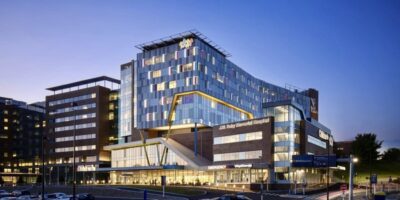
West Virginia is a pivotal state in the American healthcare landscape, marked by its unique challenges and opportunities. DO schools in West Virginia, PA Schools in West Virginia and medical schools in West Virginia each contribute to the state’s healthcare workforce. The state has three places to earn a medical degree: two MD programs, the West Virginia University School of Medicine in Morgantown and the Marshall University Joan C. Edwards School of Medicine in Huntington, and one osteopathic (DO) program, the West Virginia School of Osteopathic Medicine in Lewisburg.
This guide covers the highlights of medical education in West Virginia: the programs, curriculum and admission criteria that define these institutions. It compares all three schools side by side, including the latest class MCAT and GPA averages, what the first year costs for residents and nonresidents, and the rule that matters most to many applicants, which schools admit students from other states. Each school profile links to IMA’s full admissions guide for that school.
Key Takeaways
- West Virginia has three medical schools: two MD programs (WVU School of Medicine and Marshall University Joan C. Edwards School of Medicine) and one DO program (West Virginia School of Osteopathic Medicine). No new MD or DO school is in the accreditation pipeline in the state.
- All three schools admit nonresidents. WVU’s Class of 2030 is 54% out-of-state, and in 2024-25, 153 of WVSOM’s 207 first-year students came from outside West Virginia. Marshall gives preference to West Virginia residents but accepts qualified applicants from any state.
- Marshall’s 2026 entering class posted the highest average MCAT in the state, 512, with an average overall GPA of 3.84. WVU’s Class of 2030 averaged a 510 MCAT and a 3.77 science (BCPM) GPA. WVSOM lists an average MCAT of 503 and an average science GPA of 3.60.
- WVSOM is the state’s least expensive option and its largest medical school. Tuition and fees for 2026-27 are $23,594 for West Virginia residents and $56,394 for nonresidents, and qualified new West Virginia residents can receive a full-tuition waiver. It enrolls more than 200 new students a year.
- First-year tuition and fees for 2026-27 are $37,800 (resident) and $77,112 (nonresident) at WVU and $35,000 and $70,000 at Marshall.
- Marshall requires a minimum MCAT of 505 for consideration. WVSOM sends supplemental applications to applicants with at least a 3.0 science GPA and a 490 MCAT.
- WVU trains students on three campuses (Morgantown, Charleston and Eastern), and WVSOM students complete their third and fourth years at hospitals in seven Statewide Campus regions.

West Virginia Medical Schools at a Glance
The two tables below put the three schools side by side. The first shows each school’s latest published class statistics. The second shows what the first year costs and who may apply. Read the cohort column carefully: each school publishes a different measure for a different class, and “not published” means the school does not post that figure.
West Virginia Medical Schools Admissions Profile
| School | Degree, type and campuses | Average MCAT | Average GPA | Class size | Applicants and interviews | Class or cohort | Source |
|---|---|---|---|---|---|---|---|
| West Virginia University School of Medicine | MD, public; Morgantown, with Charleston and Eastern campuses for clinical years | 510 | 3.77 (BCPM) | 120 | 6,104 applicants; 548 interviews | Class of 2030 (entered 2026) | WVU SoM 2030 Class Profile, checked November 13, 2026 |
| Marshall University Joan C. Edwards School of Medicine | MD, public (state-assisted); Huntington | 512 | 3.84 overall; 3.8 science | 99 | Not published | 2026 entering class | Marshall JCESOM Admissions Criteria, Profile of Entering Students, checked November 13, 2026 |
| West Virginia School of Osteopathic Medicine | DO, public; Lewisburg, with seven Statewide Campus regions for clinical years | 503 | 3.60 (science); 3.62 cumulative undergraduate | 207 first-year matriculants (2024-25); more than 200 a year | Not published | MCAT and science GPA: current admissions page, cohort not stated; cumulative GPA: current Choose DO profile; matriculants: 2024-25 | WVSOM D.O. Application Requirements and History pages; AACOM Choose DO Explorer WVSOM profile, checked November 13, 2026 |
These are class averages, not cutoffs. Two schools publish true floors: Marshall requires a minimum MCAT of 505 for consideration, and WVSOM sends its supplemental application to applicants with at least a 3.0 science GPA and a 490 MCAT, while describing a 3.2 science GPA and a 498 MCAT as competitive. WVU’s Early Decision Program requires at least a 506 MCAT and a 3.6 BCPM GPA. For a national view of how these numbers compare, see our list of medical school GPA and MCAT averages.
West Virginia Medical Schools Cost and Residency Rules
| School | First-year tuition and fees | First-year cost of attendance | Who may apply | West Virginia residents in the latest class | Source |
|---|---|---|---|---|---|
| West Virginia University School of Medicine | $37,800 resident; $77,112 nonresident (2026-27; $12,600 and $25,704 per term, three terms) | Not published on the school’s tuition page | West Virginia residents have the highest priority; pathway students and nonresidents with strong ties or mission fit encouraged; international and DACA applicants may apply in the lowest interview priority group | 46% (Class of 2030) | WVU SoM Tuition and Aid; Ask the Admissions Team; 2030 Class Profile, checked November 13, 2026 |
| Marshall University Joan C. Edwards School of Medicine | $35,000 resident; $70,000 nonresident (2026-27 MS1, nine months) | $67,846 resident; $102,846 nonresident (2026-27 MS1) | Preference to West Virginia residents; qualified applicants from any state may apply; U.S. citizens and permanent residents only | Not published | Marshall JCESOM 2026-2027 Cost of Attendance; Admissions Criteria, checked November 13, 2026 |
| West Virginia School of Osteopathic Medicine | $23,594 in-state; $56,394 out-of-state (2026-27) | $63,088 in-state; $95,888 out-of-state (2026-27 first-year budget maximum) | Residents and nonresidents; Early Decision for West Virginia residents only; full-tuition waiver for qualified new West Virginia residents; U.S. citizens and permanent residents only | 54 of 207 first-year matriculants (2024-25) | WVSOM Education Costs (D.O. Budgets 2026-2027); Cost, Financial Aid and Scholarships; AACOM Choose DO Explorer WVSOM profile, checked November 13, 2026 |
Tuition is only part of the bill. Living costs, books, equipment, insurance and board exam fees add tens of thousands of dollars a year, which is why the cost of attendance runs well above tuition at every school. Our guide to the total cost of medical school explains how to read these budgets and plan for borrowing.
Which West Virginia Medical Schools Admit Nonresidents?
All three West Virginia medical schools admit students from other states, and nonresidents make up a large share of every class. That makes West Virginia unusual: many states’ public medical schools fill nearly every seat with residents.
- West Virginia University School of Medicine. West Virginia residents have the highest priority, and residents of other states who are in one of WVU’s established pathway programs are also given high priority. Nonresidents with strong ties to the state, such as living in West Virginia or having family there, or who fit the school’s mission, are encouraged to apply. WVU says that for the past several years about half of each class has come from other states, and its Class of 2030 is 54% out-of-state. Having ties does not guarantee an interview. International and DACA applicants may apply but are placed in the lowest priority group for an interview, and WVU does not accept international coursework.
- Marshall University Joan C. Edwards School of Medicine. As a state-assisted medical school, Marshall gives preference to West Virginia residents, but qualified applicants can apply regardless of their state of legal residence. Applicants must be U.S. citizens or permanent residents. Residency for admission and tuition follows the West Virginia Higher Education Policy Commission’s residency classification rules.
- West Virginia School of Osteopathic Medicine. WVSOM has no residency requirement and enrolls more nonresidents than residents: 153 of its 207 first-year matriculants in 2024-25 were from outside West Virginia. West Virginia residents do get several advantages: only they can apply through the Early Decision Program, they pay no interview fee and lower deposits, and qualified new resident students can receive a full-tuition waiver.
If you live outside West Virginia, the cost gap is the bigger issue. Nonresident tuition is roughly double the resident rate at WVU and Marshall and more than double at WVSOM, so compare these schools with your own state’s public options before you build your list. Our guide to building a medical school list explains how many schools to apply to and how to balance them. If you live in a neighboring state, the medical schools in Virginia, medical schools in Kentucky and medical schools in Ohio guides cover the programs closest to West Virginia’s borders.

West Virginia University School of Medicine (WVU SOM)
WVU School of Medicine is the state’s largest MD program and its flagship academic medical center. In Morgantown, WVU SOM sits at the heart of West Virginia’s healthcare hub, in the Robert C. Byrd Health Sciences Center, a large, modern medical complex that also includes the Schools of Dentistry, Nursing, Pharmacy and Public Health. The Health Sciences campus has three hospitals, a physician office building and cancer, heart and vascular, and eye centers. The MD program serves about 450 students and is known for its academic rigor, diverse clinical rotations and research opportunities. Applicants who want research training alongside the MD can apply to the MD/PhD Medical Scientist Training Program. WVU has also announced an MD/MBA collaboration with its College of Business and Economics; the current combined-degree admissions page lists only the MD/PhD, so ask the admissions office about MD/MBA availability before you plan around it.
WVU SOM is “three campuses, one vision for health.” Students spend their first two years in Morgantown. For the third and fourth years, students train in Morgantown, at the Charleston Campus, which hosts nearly a third of third- and fourth-year WVU students through an affiliation with Charleston Area Medical Center and is one of the oldest regional medical education campuses in the country, or at the Eastern Campus, which teaches students longitudinally with University Healthcare, Berkeley Medical Center in Martinsburg and Jefferson Medical Center in Ranson. Most WVU medical students complete part of their training at off-campus sites where they learn the demands of rural health care firsthand.
WVU SOM’s commitment to medical education is reflected in the academic profile of its students. The Class of 2030, which entered in 2026, has 120 students with an average MCAT of 510 and an average BCPM GPA of 3.77. Its section averages were 127 in Chemical and Physical Foundations, 127 in Critical Analysis and Reasoning, 128 in Biological and Biochemical Foundations and 128 in Psychological, Social and Biological Foundations. WVU received 6,104 applications for the class and conducted 548 interviews, so about 9 percent of applicants were interviewed. The class is 46% West Virginia residents and 54% out-of-state.
WVU’s admissions process has several features that set it apart. It requires no specific prerequisite courses; instead, applicants show competency through coursework, the MCAT and experiences, with at least 90 credit hours from an accredited U.S. or Canadian institution and at least three years of higher education or employment after high school by matriculation. It asks for just one letter of recommendation of your choice or a committee letter. Every AMCAS-verified applicant can complete the secondary application. The Committee on Admissions looks for strong experience in patient care, including MD shadowing, roles as an educator and leader, research and service to West Virginia and beyond. Applicants must write their own AMCAS and secondary responses without artificial intelligence tools, and sharing secondary essays is prohibited.
Key details:
- Locations: Morgantown (main campus), with Charleston and Eastern campuses for clinical training
- Tuition and fees (2026-27, M1): $37,800 in-state | $77,112 out-of-state ($12,600 and $25,704 per term, billed for three terms in M1 to M3)
- Average BCPM GPA: 3.77 (Class of 2030)
- Average MCAT: 510 (Class of 2030)
- Entering class size: 120 (Class of 2030)
- Applicants and interviews: 6,104 applicants; 548 interviews (Class of 2030)
- Accreditation: full LCME accreditation, with the next full survey in 2030-31
- Website: WVU School of Medicine MD Admissions
- Application deadlines (2026-27 cycle): Early Decision AMCAS August 1 and secondary August 31; MD/PhD AMCAS September 15 and secondary October 15; Regular Decision AMCAS November 1 and secondary December 1
Early Decision. WVU’s Early Decision Program requires U.S. citizenship, a total MCAT of at least 506 and a BCPM GPA of at least 3.6, and competitive applicants list at least 12 mission-based experiences. Accepted Early Decision applicants receive a $30,000 scholarship over four years and their first choice of campus. Early Decision applicants are notified by October 1.
WVU’s Physician Assistant Programs
In addition to the MD, West Virginia University runs a Physician Assistant Studies program that focuses on population health, health disparities and rural and Appalachian health issues. The Accreditation Review Commission on Education for the Physician Assistant (ARC-PA) has granted the program Accreditation-Continued status. These programs train graduates to serve West Virginia’s diverse patient populations, especially in underserved areas. More detail on WVU’s degree options is in our WVU Guide.
PA training at WVU combines rigorous clinical training, exposure to diverse healthcare settings and a team-based approach to patient care, in line with the state’s healthcare priorities. The PA program has its own application and is not a route into the MD program.
Osteopathic Medicine in West Virginia
For those drawn to osteopathic medicine, West Virginia’s pathway is the West Virginia School of Osteopathic Medicine (WVSOM). Situated in Lewisburg, in the Greenbrier Valley, WVSOM is dedicated to holistic patient care and community service. Its mission is to empower students “to find health within themselves and the people and the communities they serve.” It is the only osteopathic medical school in West Virginia and, with more than 200 new students a year and about 800 in total, the largest medical school in the state.
Osteopathic physicians (DOs) are fully licensed physicians who complete the same residencies as MDs. Their training adds osteopathic principles and practice, including hands-on osteopathic manipulative medicine, and a philosophy of treating the whole patient. WVSOM puts that philosophy at the center of its Finding Health curriculum, which incorporates wellness, nutrition, exercise, lifestyle and preventive medicine and is named for a line from A.T. Still, the founder of osteopathic medicine: “To find health should be the object of the doctor. Anyone can find disease.”
Admission Profile
- Selective admission process that weighs academic achievement alongside personal qualities. WVSOM’s Committee on Admissions recommends applicants on the basis of motivation for osteopathic medicine, motivation to serve in rural communities in primary care, health-related experiences and scholastic achievement. Every applicant interviews in a 30-minute, open-file interview with one faculty member and one admissions representative, offered virtually or in person.
- Curriculum focus: the first two years cover eight organ system-based course blocks with two longitudinal courses, Clinical Skills and Osteopathic Principles and Practice, using labs, simulation, standardized patients and virtual reality encounters. Students spend years three and four in WVSOM’s Statewide Campus, rotating at hospitals in seven regions of West Virginia.
- Diversity and community engagement: students and faculty come from the heart of Appalachia and around the world. Students serve through local and statewide clinics, the Robert C. Byrd Clinic near campus, the TOUCH community health program and service trips through clubs such as DOCARE, and third- and fourth-year students can arrange international electives of two to six weeks.
Additional Resources and Programs
Prospective medical students in West Virginia can learn more from the American Association of Colleges of Osteopathic Medicine (AACOM), which runs the AACOMAS application for DO schools, and the Physician Assistant Education Association (PAEA), which supports PA programs and applicants. These organizations offer extensive information on medical and PA education in the state and beyond.
Medical education in West Virginia, led by WVU SOM, Marshall, WVSOM and the state’s PA programs, gives aspiring healthcare professionals a strong framework. These programs prepare graduates to meet the evolving healthcare needs of West Virginia and to contribute to medicine nationally.
West Virginia is a critical region in the U.S. healthcare system, with unique challenges and opportunities. DO schools in West Virginia, PA schools in West Virginia and medical schools in West Virginia each play an integral role in developing the healthcare workforce.
West Virginia is home to respected institutions offering MD, DO and physician assistant programs that prepare future healthcare professionals for successful careers. These include the West Virginia School of Osteopathic Medicine (WVSOM) in Lewisburg, known for its focus on primary care and rural medicine, and the Marshall University Joan C. Edwards School of Medicine in Huntington, which emphasizes research and community health.
West Virginia Medical Schools MD and DO Programs
Marshall University Joan C. Edwards School of Medicine stands out for an MD program that combines rigorous academics with a deep commitment to community service and rural health. Similarly, WVSOM provides a DO program that emphasizes osteopathic principles and patient-centered care, particularly in underserved rural areas.
All three schools seek candidates who excel academically and show a strong commitment to healthcare, community service and leadership. Their mission is to deliver a comprehensive education across a broad range of medical fields and specialties, with special attention to the needs of West Virginia and Appalachia. In practice, that means admissions committees read your application for evidence that you understand patient care, that you have served others, and that you would be likely to serve communities like the ones in West Virginia.
How the three programs differ in practice:
- Degree and application service. WVU and Marshall award the MD and use AMCAS. WVSOM awards the DO and uses AACOMAS. If you apply to both MD and DO programs, you will file two primary applications. Our guide to the AACOMAS application covers the DO process step by step.
- Timing. WVU’s Regular Decision AMCAS deadline is November 1, 2026, with secondaries due December 1. Marshall accepts AMCAS applications June 1 to November 1, 2026, with supplemental applications and letters due December 15, 2026. WVSOM’s AACOMAS deadline is March 1, 2027 and its supplemental deadline is March 30, 2027, but WVSOM reviews on a rolling basis and recommends applying early.
- Letters. WVU asks for one letter or a committee letter. Marshall requires three letters or a composite premedical committee letter, submitted through AMCAS by December 15. WVSOM requires two letters, one from a premedical committee or a science faculty member who taught you and one from a physician (MD or DO); a letter from an osteopathic physician is recommended.
- Prerequisites. WVU requires no specific courses. Marshall requires its prerequisites to be completed at an accredited college or university in the U.S. or Canada with a C or better by June 15 of the year you matriculate, and entrants should have a bachelor’s degree. WVSOM requires English, behavioral sciences, biology, chemistry (including biochemistry), physics and labs, each with a C or better, plus 90 semester hours.
Physician Assistant (PA) Programs in West Virginia
West Virginia also offers respected Physician Assistant (PA) programs that prepare students for crucial roles in diverse healthcare settings. These programs focus on hands-on clinical training and a multidisciplinary approach to patient care, so graduates are prepared to meet the state’s healthcare needs. Marshall’s Joan C. Edwards School of Medicine runs a 28-month Master of Medical Science in Physician Assistant program in Huntington, with a January entry term and a class of 30 that prepares students to care for culturally diverse and rural populations; it is accredited by ARC-PA. WVU’s Physician Assistant Studies program, described above, is another option. Our guide to PA Schools in West Virginia compares the state’s PA programs in detail. If you are still choosing between becoming a physician and a PA, pre-PA internships let you work alongside clinicians on real patient care before you commit to one path.
Addressing Healthcare Needs in West Virginia
Medical schools in West Virginia are well positioned to tackle the state’s evolving healthcare challenges. By blending classroom knowledge with practical experience, they prepare graduates to excel in many healthcare settings, whether they pursue an MD, DO or PA degree.
As West Virginia continues to address its healthcare needs, these medical institutions play a vital role in educating the next generation of medical professionals committed to improving health outcomes across the state.
West Virginia’s medical education programs combine classroom learning with hands-on clinical experience. That prepares graduates to work in many settings, from academic hospitals to rural clinics. The schools build this into their structure: WVU sends most of its students to off-campus sites to learn rural health care firsthand, and WVSOM’s Statewide Campus places third- and fourth-year students in about 60 hospitals, clinics and medical centers across seven regions, supported by more than 2,500 preceptors. WVSOM designed the system so that students who train in West Virginia are more likely to stay and practice there.
As the state works to overcome its healthcare challenges, West Virginia’s medical schools are crucial in developing the next generation of healthcare professionals. With a dedication to excellence in medical education, these institutions produce skilled practitioners who will make a significant impact on the state’s healthcare.
West Virginia’s medical schools. Each of the three schools has a full IMA admissions guide:
- West Virginia University School of Medicine
- Marshall University Joan C. Edwards School of Medicine
- West Virginia School of Osteopathic Medicine
Interested in medical schools outside of West Virginia? Here is a comprehensive list of medical schools that may be a good fit:
- Warren Alpert Medical School of Brown University
- Georgetown University Medical School
- Yale School of Medicine
- Indiana University School of Medicine
- Des Moines University College of Osteopathic Medicine
- University of Iowa Roy J. and Lucille A. Carver College of Medicine
- Marian University College of Osteopathic Medicine
- Meharry Medical College
- Howard University College of Medicine
- University of Kansas School of Medicine (KUMC)
- Charles R. Drew University of Medicine and Science College of Medicine
- Loma Linda University School of Medicine
- John A. Burns School of Medicine (JABSOM)
- Kansas College of Osteopathic Medicine (KansasCOM)
- UC Irvine School of Medicine
- Nova Southeastern University College of Allopathic Medicine
- Florida Atlantic University Charles E. Schmidt College of Medicine
- Touro University Nevada College of Osteopathic Medicine
- University of Miami Miller School of Medicine
- Arkansas College of Osteopathic Medicine (ARCOM)
- University of Arkansas for Medical Sciences (UAMS)
- Tulane University School of Medicine
- LSU Health New Orleans School of Medicine
- LSU Shreveport Medical School
- Kirk Kerkorian School of Medicine at UNLV
- University of Nevada Reno School of Medicine
- University of Arizona College of Medicine-Tucson
- University of Arizona College of Medicine-Phoenix
- Burrell College of Osteopathic Medicine (BCOM)
- The University of New Mexico School of Medicine
- Alabama College of Osteopathic Medicine (ACOM)
- University of South Alabama College of Medicine
- University of Alabama School of Medicine
- FIU College of Medicine
- UCF College of Medicine
- USF Morsani College of Medicine
- Florida State University College of Medicine
- Morehouse School of Medicine
- Medical College of Georgia at Augusta University
- Mercer University School of Medicine (MUSM)
- Campbell University School of Osteopathic Medicine (CUSOM)
- ECU Brody School of Medicine
- Edward Via College of Osteopathic Medicine (VCOM)
- University of South Carolina Medical School
- Medical University of South Carolina (MUSC)
- Lewis Katz School of Medicine at Temple University
- Philadelphia College of Osteopathic Medicine (PCOM)
- Geisinger Commonwealth School of Medicine (GCSOM)
- Penn State Medical School
- CUNY School of Medicine
- SUNY Downstate Medical School
- NYIT College of Osteopathic Medicine
- NYU Long Island School of Medicine
- Touro College of Osteopathic Medicine
- Albany Medical College
- Norton College of Medicine at Upstate Medical University
- Jacobs School of Medicine at the University at Buffalo
- Hofstra Zucker School of Medicine
- Weill Medical College of Cornell University
- University of Rochester Medical School
- Icahn School of Medicine at Mount Sinai
- Renaissance School of Medicine at Stony Brook University
- Albert Einstein College of Medicine
- Ohio University Heritage College of Osteopathic Medicine
- Northeast Ohio Medical University (NEOMED)
- University of Cincinnati College of Medicine
- University of Toledo College of Medicine
- Wright State University Boonshoft School of Medicine
- Ohio State University College of Medicine
- Rowan University School of Osteopathic Medicine
- Hackensack Meridian School of Medicine (HMSOM)
- Rutgers New Jersey Medical School (NJMS)
- Rutgers Robert Wood Johnson Medical School
- Cooper Medical School of Rowan University (CMSRU)
- A.T. Still University Kirksville College of Osteopathic Medicine
- Saint Louis University School of Medicine
- University of Missouri Medical School
- Kansas City University (KCU)
- UMKC School of Medicine
- New York Medical College
- University of Pittsburgh School of Medicine
- University of Wisconsin Medical School
- VCU School of Medicine
- University of Maryland School of Medicine
- Case Western Medical School
- University of North Carolina Medical School
- University of Florida Medical School
- Emory University School of Medicine
- Boston University College of Medicine
- California University of Science and Medicine
- UC San Diego Medical School
- California Northstate University College of Medicine
- Touro University of California
- CHSU College of Osteopathic Medicine
- UC Davis School of Medicine
- Harvard Medical School
- UC Riverside School of Medicine
- USC Keck School of Medicine
- UT Southwestern Medical School
- Long School of Medicine at UT Health San Antonio
- University of the Incarnate Word School of Osteopathic Medicine
- UT Austin’s Dell Medical School
- UTMB School of Medicine
- McGovern Medical School at UT Health
- Johns Hopkins School of Medicine
- The University of Texas Rio Grande Valley School of Medicine
- UNT Texas College of Osteopathic Medicine
- University of Houston College of Medicine
- Texas A&M College of Medicine
- Baylor College of Medicine
- George Washington University School of Medicine
- Vanderbilt University School of Medicine
- St. George’s University School of Medicine
- Lake Erie College of Osteopathic Medicine (in Pennsylvania)
- Sidney Kimmel Medical College at Thomas Jefferson University
- Wake Forest University School of Medicine
- Western University of Health Sciences (in California)
- Drexel University College of Medicine
- Stritch School of Medicine at Loyola University Chicago
- Perelman School of Medicine
- UCLA Medical School
- NYU Medical School
- Washington University School of Medicine
For more options, browse all of IMA’s medical school guides.
West Virginia Medical Schools
West Virginia offers a strong environment for medical education, and its schools provide training experiences that equip students with the skills they need for successful healthcare careers. Whether you are aiming for an MD, pursuing osteopathic medicine or focusing on a physician assistant program, West Virginia’s institutions give students access to the knowledge, clinical experience and support they need to thrive in medicine.
As the state advances its healthcare initiatives, the role of these medical schools becomes increasingly vital. They prepare students for medical careers and also instill a commitment to serving the diverse healthcare needs of West Virginia’s population. Through academic programs, research opportunities and community engagement, West Virginia’s medical schools are key players in improving the state’s healthcare system and the well-being of its residents.
Medical and Osteopathic Medical Schools in West Virginia
West Virginia offers a solid framework for medical education, with schools that provide the training and skills the healthcare sector needs. Whether you are aiming for an MD, a DO or a PA degree, the state’s institutions offer real opportunities to launch a successful medical career. The two profiles below cover the state’s second MD program and its osteopathic school.
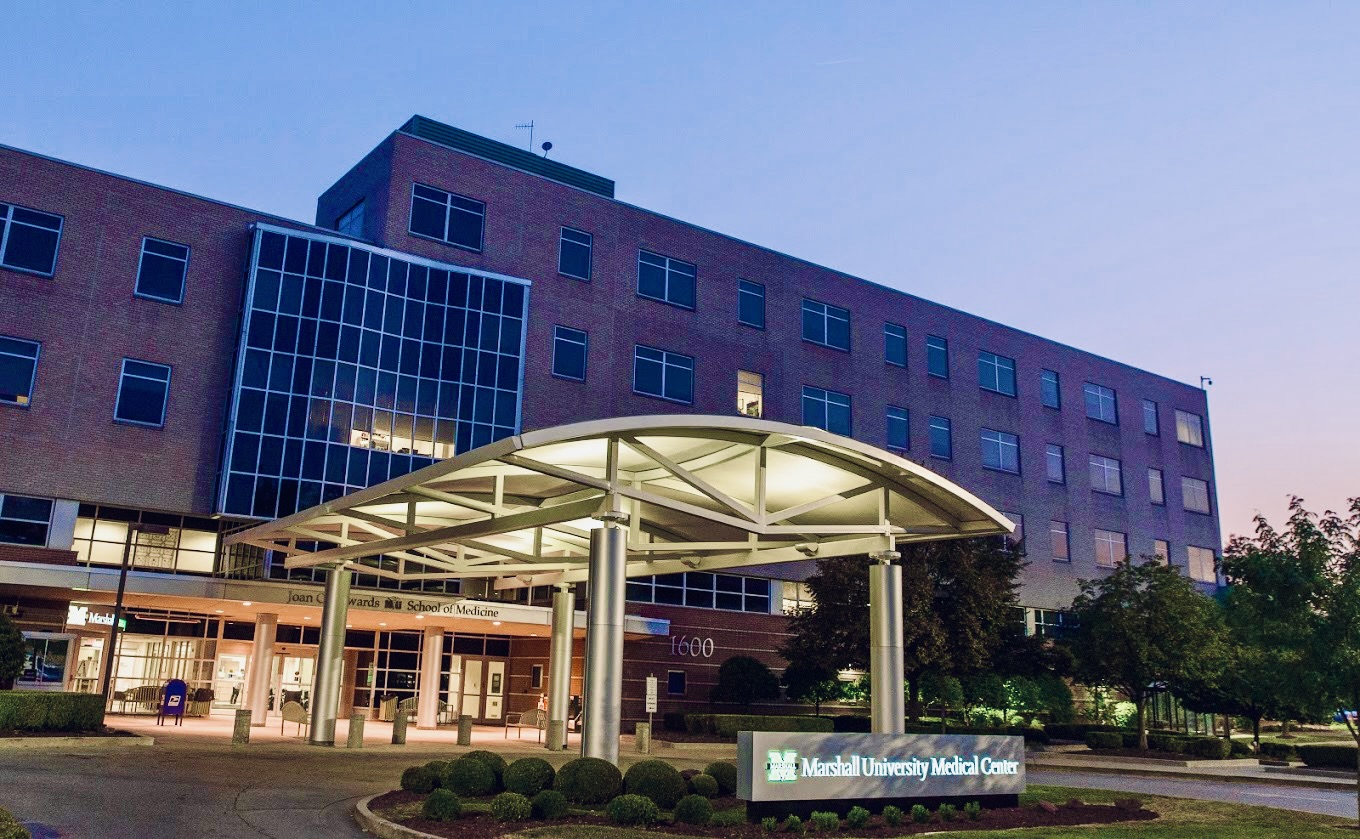
Marshall University Joan C. Edwards School of Medicine
Located in Huntington, the Marshall University Joan C. Edwards School of Medicine is known for its strong MD program, research opportunities and emphasis on community and rural health, preparing students for a changing healthcare landscape. The LCME first accredited the program in 1977. It holds full LCME accreditation today, with its next full survey scheduled for 2026-27. Beyond the MD, Marshall offers an MD Early Assurance Program for Marshall undergraduates, a combined MD/PhD, master’s and PhD programs in the biomedical sciences and the PA program described above.
Admission has become more competitive. The 2026 entering class of 99 students averaged a 512 MCAT, up from 506 for the 2025 class and 504 for the 2024 class, with an average overall GPA of 3.84 and an average science GPA of 3.8. Every applicant needs at least a 505 MCAT, taken within three calendar years before matriculation, to be considered; Marshall Early Assurance and BS/MD students who meet their program’s criteria are exempt from the MCAT requirement. The school does not publish its application or interview counts, so there is no official acceptance rate.
Key details:
- Program type: MD
- Location: Huntington
- Tuition and fees (2026-27 MS1, in-state/out-of-state): $35,000 / $70,000
- First-year cost of attendance (2026-27): $67,846 / $102,846
- Average GPA: 3.84 overall; 3.8 science (2026 entering class)
- Average MCAT: 512 (2026 entering class)
- Entering class size: 99 (2026)
- Minimum MCAT: 505
- Application window: AMCAS June 1 to November 1, 2026; supplemental application and letters due December 15, 2026
- Supplemental fee: $75 for West Virginia residents and $100 for nonresidents, waived for AAMC Fee Assistance Program applicants
Marshall reviews verified applications on a rolling basis, only selected applicants are invited to complete the supplemental application, and interviews run from about September 2026 to February 2027. Because review is rolling, submit your AMCAS application early in the June to November window rather than near the deadline.
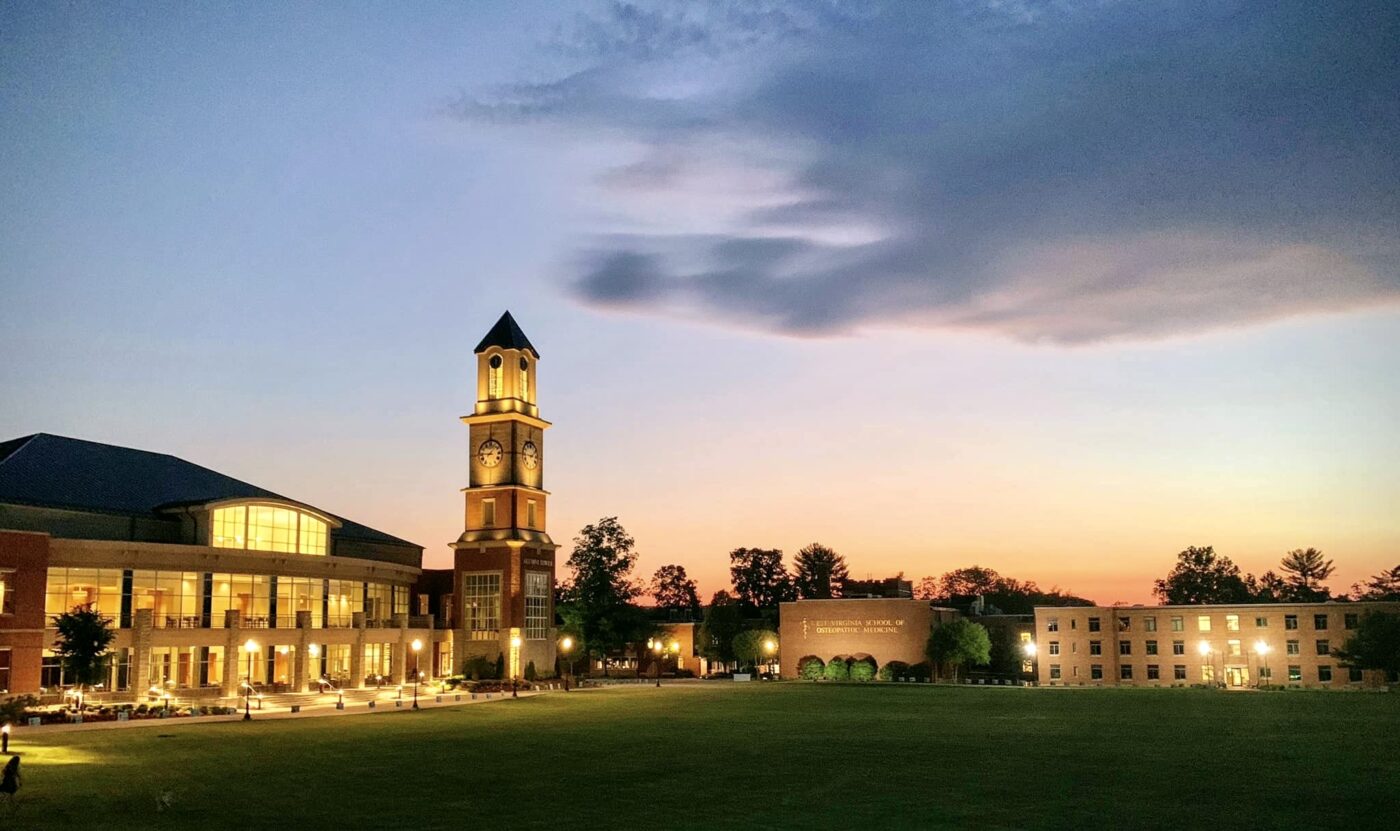
West Virginia School of Osteopathic Medicine (WVSOM)
In Lewisburg, WVSOM offers a DO program built on a holistic approach to medicine, with a curriculum that emphasizes clinical skills and service to underserved populations, especially in rural areas. WVSOM was founded in 1972 as the private Greenbrier College of Osteopathic Medicine, on a campus that once housed the Greenbrier Military School, and welcomed its first class of 36 students in 1974. In January 1976 it joined the state system of higher education and took its current name. It is accredited by the Commission on Osteopathic College Accreditation (COCA), with its next accreditation visit in 2029-30.
The campus includes a Clinical Evaluation Center for simulation and standardized patients, the Center for Rural Medicine and Technology, a student center and the Robert C. Byrd Clinic, a primary care clinic where students support osteopathic care in family practice, pediatrics, preventive medicine, geriatric psychiatry and acute care. In the third and fourth years, students rotate through WVSOM’s Statewide Campus, which spans seven regions, from the Northern panhandle and the Eastern panhandle to Charleston, Huntington and the Southeast. In 2026, 100% of participating WVSOM graduates were placed in residency. WVSOM also offers a DO/MBA with the University of Charleston and a DO/MPH with Marshall University, and its one-year Master of Science in Biomedical Sciences includes a pathway into the DO program.
Key details:
- Program type: DO
- Location: Lewisburg, with clinical years across seven Statewide Campus regions
- Tuition and fees (2026-27): $23,594 in-state | $56,394 out-of-state, the same rate in each of the four years
- First-year cost of attendance (2026-27 budget maximum): $63,088 in-state | $95,888 out-of-state
- Average science GPA: 3.60 (current admissions page); average cumulative undergraduate GPA 3.62
- Average MCAT: 503 (current admissions page)
- Entering class size: more than 200 new students a year; 207 first-year matriculants in 2024-25
- Supplemental application minimums: science GPA 3.0 and MCAT 490
- Deadlines (2026-27 cycle): AACOMAS March 1, 2027; supplemental March 30, 2027; Early Decision (West Virginia residents only) was due July 15, 2026
- Fees: no supplemental fee up front; an interview fee is charged only if you are offered an interview ($80 for nonresidents, none for West Virginia residents)
Full-tuition waiver for West Virginia residents. WVSOM now offers a full-tuition waiver to qualified new, incoming students who are West Virginia residents. Applicants qualify for consideration through one of three academic pathways: a science GPA of at least 3.70 with both the MCAT and the BBFL section at or above the 60th percentile; a science GPA of at least 3.50 with both at or above the 70th percentile; or a science GPA of at least 3.30 with both at or above the 80th percentile. The admissions committee reviews each case individually. For a West Virginia resident, the waiver can make WVSOM one of the least expensive medical school options in the country.
Debt and deposits. WVSOM reports average student debt of $234,200 for 2025. Accepted West Virginia residents pay two $500 deposits, and out-of-state students pay $2,000 and then $1,000; deposits are applied to first-year tuition and are not refundable.
Choosing the Right Medical School in West Virginia
When selecting a medical school in West Virginia, consider each program’s focus, faculty expertise, campus facilities and fit with your career goals. Researching schools, attending information sessions and connecting with alumni can give you valuable insight as you decide. A few questions help sort the three schools quickly:
- MD or DO? If you are open to osteopathic medicine, WVSOM’s lower tuition and broad statewide clinical network are hard to match. If you want an MD, WVU and Marshall are your in-state choices.
- Large academic center or smaller community-based school? WVU is the state’s research-intensive academic health center with three campuses. Marshall is a smaller, community-based school in Huntington. WVSOM is a rural campus whose students train across the whole state.
- Where do you want your clinical years? WVU students rank Morgantown, Charleston and Eastern; WVSOM students train in one of seven regions; Marshall students train in and around Huntington.
- What will it cost you? For West Virginia residents, WVSOM’s tuition (and its full-tuition waiver for qualified residents) is far below the MD schools. For nonresidents, all three schools charge roughly double or more the resident rate.
Admissions committees in West Virginia also look closely at clinical experience and service. WVU names MD shadowing and patient care experience directly in its admissions requirements, WVSOM weighs health-related experiences and an interest in rural primary care, and WVSOM requires a letter from a physician. Shadowing shows you what a physician does; hands-on roles show you can work with patients. Clinical internships for pre-med students are one way to add supervised, hands-on hours to the experiences you build closer to home, such as scribing, EMT work or hospital volunteering.
Plan your timeline around the earliest deadline on your list. WVU’s Early Decision AMCAS deadline is August 1 and Marshall reviews on a rolling basis, so the strongest applications are usually ready in June. If you are a year or two from applying, the summer before you submit is often the best window to finish the MCAT and add clinical hours; pre-med summer internships fit well once the exam is behind you. Students who apply and are not admitted can use the following year to strengthen their file: WVSOM invites denied applicants to speak with an admissions counselor about ways to improve, and pre-med gap year programs are one way to add meaningful clinical experience before reapplying.
Additional Resources for Aspiring Medical Professionals in West Virginia
- West Virginia Board of Medicine: provides licensure information and practice standards for physicians and physician assistants.
- Association of American Medical Colleges (AAMC): offers resources for medical school applicants, including MCAT and AMCAS application details.
- American Medical Association (AMA): a resource for medical students on education and career planning.
- Pre-med advising programs at International Medical Aid: provides guidance and resources for students preparing for medical school.
- Dedicated MCAT prep courses and resources: available through many educational institutions and IMA.
Medical Career in West Virginia
Exploring West Virginia’s medical schools, WVU SOM, the Marshall University Joan C. Edwards School of Medicine and WVSOM, opens doors to a fulfilling healthcare career. All three schools build their training around the state: WVU and WVSOM send students to clinical sites across West Virginia, and Marshall is home to the Robert C. Byrd Center for Rural Health. With proper preparation and guidance, you can confidently pursue your goal of becoming a healthcare professional in the state’s diverse and evolving medical environment.
Conquering West Virginia Medical School Admissions with International Medical Aid
West Virginia medical schools and their supportive learning environments are a great place to start your career as a medical professional. However, competitive acceptance rates, lengthy medical school applications and interview processes can at times feel overwhelming. That is where International Medical Aid Medical School Application Consulting comes in.
Master the MCAT and Craft Compelling Essays
- MCAT mastery: our consultants will analyze your strengths and weaknesses and give you personalized strategies to prepare for the MCAT.
- Storytelling: we help you write essays that show your unique story, motivations and commitment to medicine, so your application stands out. At WVU, remember that the essays must be your own original writing; consultants coach and give feedback, and the words stay yours.
Highlight Your Strengths and Get Noticed
- Academic advantage: we help you present your academic achievements in a way that shows your dedication and potential.
- Extracurricular edge: we help you turn your extracurricular activities and volunteer experiences into clear narratives that show your range and your commitment to service.
- Proven strategies: learn how to personalize your application, from securing strong letters of recommendation to preparing interview answers that fit each school’s mission.
Plan the Path to Success
- Financial aid planning: we help you understand tuition costs and explore financial aid options to make your goal of medical school a reality.
- Residency roadmap: we guide you through the residency programs available in West Virginia and help you find the right fit for your career goals.
- Graduate insight: learn from the experience of West Virginia medical school graduates who have walked the path before you.
International Medical Aid is your partner through West Virginia medical school admissions. Our comprehensive support helps you:
- Maximize your potential: our personalized approach helps you present your best self in every part of the application.
- Reduce stress and save time: focus on what matters most, your studies and preparation, while we help you organize the application logistics.
- Strengthen your application: gain a competitive edge with experienced guidance.
Do not let the competitive landscape hold you back. Take control of your future with International Medical Aid. Contact us today, and let us help you become a West Virginia MD, DO or PA.
Schedule Your Complimentary 30-Minute Session Today. Questions? Feel free to reach out by email at [email protected].
Parting Thoughts
West Virginia, with its rural and urban communities, presents a unique setting for medical education, particularly at its osteopathic medical school. WVSOM trains future physicians with a holistic approach to medicine that emphasizes preventive care and the integral role of the body’s musculoskeletal system in health and disease. As the demand grows for healthcare professionals who understand rural healthcare, West Virginia’s schools are at the forefront of preparing students to meet these needs.
For those aspiring to enter osteopathic and allopathic medical schools in West Virginia, a clinical internship abroad can be a valuable experience. IMA’s pre-med internships abroad place students in teaching hospitals in Mombasa, Kenya and Cusco, Peru, where interns take vitals, help with patient intake and triage and assist with direct care under the supervision of local physicians and nurses. Students gain a global perspective on healthcare, see how medicine is practiced in very different settings and develop empathy and cultural competency. These internships for pre-med students also give applicants concrete patient care experiences to describe in their applications, which fits schools like WVSOM that weigh health-related experience and service. IMA’s medical internships abroad also include tracks for nursing, pre-PA, mental health and other health careers, and our healthcare internships abroad page describes every program.
Medical school admissions can be complex. This is where our medical school admissions consulting services become invaluable. IMA provides prospective students with personalized guidance on every part of the application process, from optimizing their primary and secondary applications to preparing for interviews.
For students targeting osteopathic medical school in West Virginia, our consulting services offer strategic advice that highlights the experiences and qualities WVSOM values most, such as a commitment to primary care, rural health and a holistic approach to patient care.
West Virginia’s medical education landscape is strengthened by opportunities from International Medical Aid for global health experience and by specialized admissions consulting, offering a complete path for aspiring medical professionals. These opportunities prepare students for rewarding careers built on continuous learning and service at every step.
Frequently Asked Questions
How many medical schools are in West Virginia?
West Virginia has three medical schools. Two award the MD: the West Virginia University School of Medicine in Morgantown and the Marshall University Joan C. Edwards School of Medicine in Huntington. One awards the DO: the West Virginia School of Osteopathic Medicine in Lewisburg. No new MD or DO school is currently seeking accreditation in the state.
Which is the largest medical school in West Virginia?
WVSOM is the largest. It enrolls more than 200 new students a year and about 800 students in total. WVU’s MD program serves about 450 students with an entering class of 120, and Marshall’s 2026 entering class had 99 students.
Do West Virginia medical schools accept out-of-state students?
Yes, all three do. WVU gives West Virginia residents the highest priority but enrolls many nonresidents; its Class of 2030 is 54% out-of-state. Marshall gives preference to residents but accepts qualified applicants from any state. WVSOM enrolled 153 nonresidents among its 207 first-year students in 2024-25. Nonresidents pay much higher tuition at all three.
What is the easiest medical school to get into in West Virginia?
No medical school is easy to get into, but WVSOM has the lowest published academic thresholds in the state. Its average MCAT is 503 and its average science GPA is 3.60, and it sends supplemental applications to applicants with at least a 3.0 science GPA and a 490 MCAT. By comparison, Marshall’s 2026 class averaged a 512 MCAT and WVU’s Class of 2030 averaged 510. Fit with each school’s mission matters as much as your numbers.
What MCAT score do I need for medical school in West Virginia?
Aim for each school’s class average. That is 510 at WVU (Class of 2030), 512 at Marshall (2026 entering class) and 503 at WVSOM. Marshall requires at least a 505 to be considered, WVU’s Early Decision Program requires at least a 506, and WVSOM’s supplemental screen starts at 490, with 498 described as competitive.
What GPA do I need for medical school in West Virginia?
Marshall’s 2026 entering class averaged a 3.84 overall GPA and a 3.8 science GPA. WVU’s Class of 2030 averaged a 3.77 BCPM GPA, and WVU’s Early Decision Program requires at least a 3.6 BCPM GPA. WVSOM’s average science GPA is 3.60, and its supplemental screen starts at a 3.0 science GPA.
Which is the cheapest medical school in West Virginia?
WVSOM. Its 2026-27 tuition and fees are $23,594 for West Virginia residents and $56,394 for nonresidents, and qualified new resident students can receive a full-tuition waiver. First-year tuition and fees are $35,000 for residents at Marshall and $37,800 at WVU.
Does WVSOM offer free tuition for West Virginia residents?
WVSOM offers a full-tuition waiver to qualified new, incoming students who are West Virginia residents. You qualify for consideration through one of three pathways that pair a science GPA of 3.30, 3.50 or 3.70 with MCAT and BBFL section scores at or above the 80th, 70th or 60th percentile. The admissions committee reviews each case individually, and living costs are not covered by the waiver.
When are the application deadlines for West Virginia medical schools?
For the 2026-27 cycle, WVU’s Regular Decision AMCAS deadline is November 1, 2026 and its secondary deadline is December 1. Marshall accepts AMCAS applications until November 1, 2026, with supplemental applications and letters due December 15. WVSOM’s AACOMAS deadline is March 1, 2027 and its supplemental deadline is March 30, 2027. All three review applications on a rolling basis, so applying early is the safer plan.
Do West Virginia medical schools accept international students?
WVSOM and Marshall consider only U.S. citizens and permanent residents. WVU allows international and DACA applicants to apply, but they are placed in the lowest priority group for an interview, and WVU does not accept international coursework.
What is the difference between WVU’s three campuses?
All WVU medical students start in Morgantown at the Robert C. Byrd Health Sciences Center. For the clinical years, students train in Morgantown, at the Charleston Campus through Charleston Area Medical Center, or at the Eastern Campus with Berkeley Medical Center in Martinsburg and Jefferson Medical Center in Ranson. Accepted Early Decision applicants are guaranteed their first choice of campus.
Are there physician assistant programs at West Virginia’s medical schools?
Yes. Marshall’s Joan C. Edwards School of Medicine runs a 28-month Master of Medical Science in Physician Assistant program with a class of 30, and West Virginia University runs a Physician Assistant Studies program with ARC-PA Accreditation-Continued status. Our guide to PA schools in West Virginia covers the state’s PA programs in detail.
How much clinical experience do West Virginia medical schools want?
None of the three schools publishes a required hour count, but all of them expect meaningful patient contact. WVU names patient care and MD shadowing among the experiences it looks for, and WVSOM weighs health-related experience and requires a letter from a physician. Supervised programs such as IMA’s pre-health internships and medical internships for undergraduates can add hands-on hours alongside the clinical work you do at home.
Is an MD or a DO better for practicing in West Virginia?
Both MDs and DOs are fully licensed physicians in West Virginia and complete the same residencies. Choose based on your training goals: WVSOM emphasizes osteopathic principles, primary care and rural practice across a statewide clinical network, while WVU and Marshall offer MD training with academic medical center and community-based settings. Many applicants apply to both.
Sources
- West Virginia University School of Medicine: MD Admissions; Admissions Requirements (2026-2027 cycle); Admissions Timeline; Ask the Admissions Team; 2030 Class Profile; Tuition and Aid (2026-2027 Board of Governors rates); Early Decision Program; Combined Degree Programs; Campuses; Accreditation; Physician Assistant Studies. Checked November 13, 2026.
- Marshall University Joan C. Edwards School of Medicine: Admissions Criteria and Profile of Entering Students (2026, 2025 and 2024 classes); How to Apply (2026-2027 cycle); 2026-2027 Cost of Attendance; Accreditation Statements; MMS Physician Assistant program. Checked November 13, 2026.
- West Virginia School of Osteopathic Medicine: D.O. Admissions; D.O. Application Requirements; Admissions FAQ; Cost, Financial Aid and Scholarships; Education Costs (D.O. Budgets 2026-2027); Statewide Campus; Match Data (2026); Graduate Outcome Data; History; Accreditation. AACOM Choose DO Explorer WVSOM profile (2026-2027 cycle dates; 2024-2025 demographics). Checked November 13, 2026.
- Accreditation rosters: LCME directory of accredited programs and applicant and candidate programs; AOA Commission on Osteopathic College Accreditation, Colleges of Osteopathic Medicine directory (September 2026) and candidate-status list. Checked November 13, 2026.
See more of our guides in your Google results: add International Medical Aid as a preferred source on Google.