The University of Chicago matriculated its first class of medical students in 1927, and the school took the name Pritzker School of Medicine in 1968 in recognition of support from the Pritzker family of Chicago. Today Pritzker is the MD-granting school of the University of Chicago’s Biological Sciences Division. It sits on the University’s main campus in Hyde Park, about seven miles south of downtown Chicago, steps from UChicago Medicine, the academic health system where students do most of their clinical training.
Pritzker is small for a research-intensive school. The newest posted class profile (Entering Class of 2024) lists 91 students, 81 in the MD-only program and 10 in MD/PhD programs, and the school describes itself as having about 90 students per class. The curriculum is pass/fail, every MD student completes a mentored scholarly project through the Scholarship & Discovery program, and students run six free clinics across Chicago. Those three features shape almost every part of the application, from the secondary essays to the interview.
Purpose of this Guide
This guide is for applicants in the 2026-2027 application cycle, which is for students who plan to start medical school in summer 2027. It explains who can apply, what the newest class profile shows, what Pritzker costs in 2026-2027, how the Phoenix curriculum and clinical sites are organized, and how to answer all five current secondary prompts, each with a full illustrative example and analysis. Facts were checked on October 18, 2026.
Topics Covered in the University of Chicago Pritzker School of Medicine Guide
The guide follows the order most applicants need: key takeaways and statistics, the mission, accreditation, programs and affiliations, curriculum, admissions requirements and deadlines, tuition and financial aid, campus facilities and student life, clinical rotations and research, notable alumni, faculty, leadership and admissions staff, the class profile, admissions strategy, the secondary essays, the interview, frequently asked questions, related guides and how International Medical Aid can help.
Key Takeaways
- Eligibility: Pritzker accepts applications from U.S. citizens, permanent residents and international applicants. You need at least 90 semester credit hours (AMCAS method) from an accredited four-year U.S. or Canadian college before you start; a bachelor’s degree is strongly preferred but not required. Applicants with a degree from outside the U.S. or Canada need at least one year of full-time U.S. or Canadian coursework.
- Academic context: for the 2025 entering class, accepted applicants had a median MCAT of 520 and a median total GPA of 3.94. The Entering Class of 2024 had MCAT scores from 505 to 527, cumulative GPAs from 3.4 to 4.0 and science (BCPM) GPAs from 3.2 to 4.0. There is no minimum GPA or MCAT for screening.
- Competition: for the 2025 entering class, Pritzker received 7,738 verified applications, interviewed 629 applicants and enrolled 91 students.
- What the class looks like: 84% of that class took at least one gap year, 100% had research experience, 99% had worked with underserved communities and 96% had held formal leadership roles. Only 13% came from Illinois.
- Mission: Pritzker aims “to inspire diverse students of exceptional promise to become leaders in science and medicine for the betterment of humanity.” Research, service on the South Side and leadership carry real weight.
- Key dates: AMCAS deadline November 15, 2026; secondary application and letters due December 1, 2026. Every AMCAS applicant receives the secondary. In a typical cycle, over 90% of admitted students returned it in July or August. Rolling acceptances begin after October 15, and interviews are three one-on-one Zoom conversations, held from August to February. No deposit is required to hold a seat.
- Cost: 2026-2027 tuition is $65,576 for first- and second-year students and $87,436 for the 12-month third and fourth years, with one rate for every student. The first-year standard budget is $96,128, or $101,645 with optional student health insurance. In the Entering Class of 2024, 60% received a full-tuition scholarship.
- Distinctive training: the Phoenix curriculum moves students into clerkships earlier, every student completes a Scholarship & Discovery project in one of seven tracks, and five dual degrees plus three MD/PhD programs sit within walking distance.
- Next step: submit AMCAS early, return the five-part secondary within a few weeks, and build your essays around patient care in under-resourced communities, real research interests and honest reflection on a hard experience.
Key Statistics About the University of Chicago Pritzker School of Medicine
The snapshot below collects the figures applicants ask about first. Medians and application counts describe the 2025 entering class, the school’s own class profile covers the Entering Class of 2024, and costs are for the 2026-2027 academic year. The table that follows gives the cohort, definition and source for each number.

| Metric | Value | Year or cohort | Source and definition |
|---|---|---|---|
| School and degree | University of Chicago Division of the Biological Sciences, The Pritzker School of Medicine; MD, MD/PhD (MSTP, MeSH, GDDTP) and five MD dual degrees | Current | Pritzker degree programs page; Hyde Park campus, Chicago, IL |
| Accreditation | LCME, full accreditation; next survey 2028-29 | LCME list updated October 14, 2026 | LCME accredited programs list |
| Entering class size | 91 students (81 MD only, 10 MD/PhD) | Entering Class of 2024 | Pritzker class profile |
| Matriculants | 91 (17 Illinois, 72 out of state, 2 international; includes 10 MD/PhD) | 2025 entering class | AAMC MSAR, matriculation data for first-year class |
| Verified applications | 7,738 (838 Illinois, 6,379 out of state, 521 international) | 2025 entering class | AAMC MSAR; verified AMCAS applications |
| Interviewed | 629 (629 interviewed / 7,738 verified applications) | 2025 entering class | AAMC MSAR; this ratio is not an acceptance rate |
| Applications | 6,407 | Entering Class of 2024 | Pritzker class profile |
| Interviewed | 630 (630 interviewed / 6,407 applications) | Entering Class of 2024 | Pritzker class profile; this ratio is not an acceptance rate |
| Acceptance rate | Not published | n/a | Total offers are not published (Pritzker class profile; AAMC MSAR) |
| Median MCAT | 520 (mean 519) | 2025 entering class | AAMC MSAR; all accepted applicants |
| Median GPA | 3.94 total; 3.94 science (means 3.90 and 3.87) | 2025 entering class | AAMC MSAR; all accepted applicants |
| MCAT | Range 505-527 | Entering Class of 2024 | Pritzker class profile; lowest to highest score in the class |
| Cumulative GPA | Range 3.4-4.0 | Entering Class of 2024 | Pritzker class profile; lowest to highest GPA in the class |
| Science (BCPM) GPA | Range 3.2-4.0 | Entering Class of 2024 | Pritzker class profile |
| Residency mix | 13% from Illinois; 87% out of state or international | Entering Class of 2024 | Pritzker class profile |
| Full-tuition scholarships | 60% of the class | Entering Class of 2024 | Pritzker class profile |
| Tuition | $65,576 (M1 and M2); $87,436 (M3 and M4); same for all students | 2026-2027 academic year | Pritzker student budget |
| First-year standard budget | $96,128 (10.5 months); $101,645 with $5,517 student health insurance | 2026-2027 academic year | Pritzker student budget |
| Students receiving financial assistance | Approximately 80% each year | Undated, checked October 18, 2026 | Pritzker financial aid for incoming students |
| Average graduate indebtedness | $114,238 | Academic year 2024-2025 | AAMC MSAR (LCME Part I-B); average debt of indebted graduates |
| Secondary fee | $95; fee waiver available | 2026-27 cycle | Pritzker admissions process; AAMC MSAR |
| Deposit and Early Decision | No deposit required; no Early Decision Program | 2026-27 cycle | AAMC MSAR |
| Interview format | Three one-on-one Zoom interviews (faculty member, administrator, medical student) | 2026-27 cycle | AAMC MSAR interview information |
| Residency Match | 98 graduates matched; 23% at UChicago; Internal Medicine 29% | Class of 2026 | Pritzker Match 2026 release |
The University of Chicago Pritzker School of Medicine admits a highly competitive cohort each year. With 6,407 applications for 91 seats in the 2024 entering class, and 7,738 verified applications for 91 seats in the 2025 entering class, selection rests on far more than numbers. The small class allows for personalized attention from faculty and strong peer relationships, which the school credits for its collaborative culture. Tuition is the same for every student, so Illinois residents do not receive a discount, and aid is the main factor that changes what you pay.
Mission and Educational Priorities
Pritzker states its purpose in two places that applicants should read together. Its diversity and wellness pages describe “Pritzker’s mission to inspire diverse students of exceptional promise to become leaders in science and medicine for the betterment of humanity.” Its technical standards add that the mission of the school “is to provide its graduates with broad general knowledge in all fields of medicine and competence in the basic skills requisite for the practice of medicine,” and that the curriculum “is best suited to the education of future generalists, specialists, physician investigators and leaders in medicine.”
Mission Statement
Taken together, the mission has three practical parts:
- Leaders in science and medicine. Pritzker expects every graduate to contribute new knowledge. That is why Scholarship & Discovery is required, why 100% of the 2024 entering class had prior research experience and why the school places itself inside the Biological Sciences Division rather than beside it.
- Broad, patient-oriented competence. The MD is undifferentiated. Even students who plan a narrow specialty or a research career must master the whole curriculum, including clerkships at an academic medical center with a Level I trauma center and at community sites.
- Betterment of humanity, starting on the South Side. UChicago Medicine’s primary service area has poverty levels more than double the state level, and students lead six free clinics. The first secondary essay asks directly how you are prepared to work in that environment.
This mission underscores Pritzker’s commitment to physicians who are skilled clinicians, critical thinkers and leaders in healthcare. The emphasis on community engagement and service reflects the school’s work on healthcare disparities and public health.
What the mission means for your application
For applicants, the mission translates into a few clear signals. First, research is expected, not optional: you will write about your research interests in the MD-only essay, and your experiences section should show real contribution, not just hours. Second, sustained patient contact in your own community matters. The school says long-term commitments that include direct patient contact are valued over short-term experiences, and that it equally values significant patient care in your own community and international work. Third, leadership and teamwork are part of the competencies the school lists for admission. Finally, Pritzker’s culture of free expression and its Office of Health Equity, Diversity, and Inclusion (HEDI) mean you should be ready to discuss how you work with people whose views and backgrounds differ from yours.
Overview of the University of Chicago Pritzker School of Medicine by International Medical Aid
Pritzker stands out among medical schools in Chicago for three structural reasons. It is one of few medical schools located physically on its university campus, so the law school, Booth School of Business, Harris School of Public Policy and the humanities sit a short walk from the hospital and labs. It is part of the Biological Sciences Division, which grounds teaching in basic science and helps students move ideas from bench to bedside. And its South Side location means students care for some of the most diverse communities in Chicago through UChicago Medicine and the free clinics.
The University of Chicago Medical Center, on the medical campus around South Maryland Avenue, is the central hub for patient care and teaching. Students train in the 10-story, 1.2 million square foot Center for Care and Discovery, Comer Children’s Hospital, the Duchossois Center for Advanced Medicine (DCAM) and Mitchell Hospital, and they also rotate at Endeavor Health – NorthShore, La Rabida Children’s Hospital and Ingalls Memorial. The hospital’s Level I trauma center designation, noted by the MSTP, shapes the range of patients students see.
For students drawn to physician-scientist careers, the Medical Scientist Training Program (MSTP), founded in 1967, is one of the longest running in the country. Applicants select “MD/MSTP” on the Pritzker secondary, and both committees screen them. Students interested in health policy, economics or the humanities can pursue the MeSH MD-PhD, and students who want management or data training can add an MBA, a master’s in public policy, an MPH or a master’s in biomedical informatics or applied data science.
The admissions process is highly selective, and the school reviews applicants holistically. Students are encouraged to engage in research and clinical practice from the first weeks of school: the Phoenix curriculum begins with an immersion week in patient-centered skills, and the year-long Ambulatory and Inpatient Mentoring program pairs first-year students with clinical preceptors. Health services are available to students through UChicago’s student wellness programs, and the school runs its own wellness committee and student support office. Overall, Pritzker offers a demanding, supportive environment that prepares students for leadership roles in medicine.
Accreditation and Institutional Identity
Accreditation
The Liaison Committee on Medical Education (LCME) lists the program as “University of Chicago Division of the Biological Sciences, The Pritzker School of Medicine,” in Chicago, with full accreditation, initial accreditation on or before 1942 and a next full survey scheduled for 2028-29 (list updated October 14, 2026). The LCME is the body recognized by the U.S. Department of Education to accredit programs leading to the MD degree.
The official name matters. Pritzker is not a separate university: it is the medical school of the University of Chicago, administered within the Biological Sciences Division (BSD). Mark Anderson, MD, PhD, serves as Dean of the Biological Sciences Division and Pritzker School of Medicine, and all medical education from medical school through residency and continuing education is overseen by the Dean for Medical Education, Vineet Arora, MD, MAPP. UChicago Medicine is the health system, and Pritzker is the school whose students train there. The University of Illinois College of Medicine, also in Chicago, is a different public institution and should not be confused with UChicago.
Importance of Accreditation
LCME accreditation confirms that a program meets national standards for curriculum, faculty, student services and the learning environment. For prospective students, it is a basic requirement: graduates of LCME-accredited programs are eligible for U.S. residency programs and state licensure. Accreditation does not rank schools and is not a quality guarantee beyond those standards.
How Accreditation Impacts Students
Students graduating from an LCME-accredited program like Pritzker sit for the United States Medical Licensing Examination (USMLE) and apply to residency through the National Resident Matching Program (NRMP) and other match services. In the 2026 Match, 98 Pritzker graduates placed into residency positions through the NRMP and SF Match, across 44 institutions in 18 states and the District of Columbia.
Medical Programs and Affiliations
Programs Offered and Affiliations
The University of Chicago Pritzker School of Medicine offers an MD program, three MD/PhD programs, five dual degrees and a separate one-year MS in Biomedical Sciences. Each has its own application route, so it is important to know which one you are applying to.
Doctor of Medicine (MD) Program
The MD program is the cornerstone of Pritzker’s offerings. It is a four-year program that “teaches and empowers future physician leaders to care for and address the challenges of diverse and complex patients and communities,” with small class sizes that let students individualize their education and work closely with faculty. Since the class that matriculated in 2023, students follow the Phoenix curriculum, which gives “ample time for self-directed learning, research scholarship, and community engagement while accelerating entry into the clinical phase.” The curriculum is described in detail in the next section.
Curriculum Overview
The MD is organized into three phases rather than four identical years. Phase 1 builds scientific foundations alongside clinical skills, Phase 2 covers the core clerkships, and Phase 3 focuses on acute care, sub-internships, electives and the transition to residency.
Years 1-2
The first phase covers human structure and function, physiology, pathology, microbiology, pharmacology and neuroscience, together with clinical skills, ethics, health policy and health equity. Early clinical exposure starts in the first year through the Ambulatory and Inpatient Mentoring (AIM) program, so students apply what they learn in real settings from the outset. Phase 1 continues into the fall of the second year, and core clerkships begin after it.
Years 3-4
Clerkships in internal medicine, surgery, pediatrics, obstetrics and gynecology, ambulatory medicine, psychiatry and neurology make up Phase 2. Phase 3 adds emergency medicine, intensive care rotations, sub-internships, basic science “Selectives,” the required Transition to Residency course and the final Scholarship & Discovery work. Rotations take place at UChicago Medicine and affiliated hospitals and clinics, which provides a wide range of patients and clinical challenges.
MD/PhD Programs
The University of Chicago offers three MD/PhD programs:
- Medical Scientist Training Program (MSTP): established in 1967, NIH-funded, about 84 current students, 25 research specialties and 110 participating faculty. Students complete one year of medical school, four years of graduate school and three final years of medical school (a 1-4-3 sequence), and finish both degrees in about eight years on average. Apply through AMCAS and choose “MD/MSTP” on the Pritzker secondary.
- MD-PhD Program in Medicine, the Social Sciences, and Humanities (MeSH): started in 1985 for students who want a PhD in fields such as anthropology, economics, public policy or philosophy. MeSH requires separate applications to MeSH and to each PhD program of interest. Note that the Harris School is pausing admissions to the Harris PhD and Political Economy PhD for 2026-2027.
- Growth, Development, and Disabilities Training Program (GDDTP): an NIH-funded program for current Pritzker students who decide to pursue a PhD after starting medical school.
Dual Degree Programs
Pritzker’s location on the main campus supports five dual degrees. They are administered separately and require two separate admissions and financial aid applications, and students typically enroll in the second program after three years of medical school:
- MD/MBA (Chicago Booth): a full-time year at Booth after the third year, then a final clinical year with electives at both schools; typically five years. Limited Pritzker funds, including the Steven Weiner Fellowship, help with business school tuition.
- MD/MA in Public Policy (Harris School): for students interested in the intersection of medicine and public policy; typically five years. MD/MBA and MD/MA students may also earn a Certificate in Health Administration and Policy through the Graduate Program in Health Administration and Policy.
- MD/MPH: a full-time MPH year after the third year, with the MPH capstone completed during the fourth year; five years in total. Pritzker students receive a 75% tuition scholarship for MPH tuition.
- MD/MS in Biomedical Informatics (Graham School): a year of full-time graduate work after the third year.
- MD/MS in Applied Data Science: a structured five-year pathway for students interested in clinical research, innovation and product development. Admitted MD students apply, preferably by mid-June between the first and second years.
Current students discuss dual degrees with James Woodruff, MD, Dean of Students. None of these programs is a separate entry route for new applicants, except the MSTP and MeSH.
Research Opportunities
Research is a central component of the Pritzker experience. Students can engage in research in virtually any department or division of the University, from the UChicago Medicine Comprehensive Cancer Center to the Institute for Translational Medicine, and the Scholarship & Discovery program gives every student protected time, mentoring and funding for a scholarly project. Research routes are described in detail in the clinical rotations and research section.
Summer Research Program
The summer between the first and second years is the traditional window for full-time research. Scholarship & Discovery includes a “Summer Opportunities Session” in year 1 to help students plan that time, and students work with faculty mentors on projects ranging from basic science to clinical research.
Scholarly Concentration Program
Pritzker’s scholarly concentration is the Scholarship & Discovery (S&D) program. Students prepare from the first year to complete a mentored scholarly project by graduation in one of seven tracks: Basic/Translational Sciences; Clinical Research; Health Services & Data Science; Community Health; Global Health; Medical Education; and Healthcare Delivery Improvement Sciences. Students present their findings and contribute to the advancement of medical knowledge.
Clinical Affiliations
Pritzker’s clinical affiliations give students experience across an academic medical center, a community hospital system and specialty pediatric care.
University of Chicago Medical Center
UChicago Medicine is the primary teaching hospital for Pritzker students. Students complete the majority of their clinical training here, including the Center for Care and Discovery, Comer Children’s Hospital, DCAM and Mitchell Hospital. Students work alongside faculty and residents and care for a highly diverse patient population.
NorthShore University HealthSystem
NorthShore is now part of Endeavor Health, and the school lists it as Endeavor Health – NorthShore. Most inpatient clerkship experiences take place at UChicago Medicine or Endeavor Health – NorthShore. Students may choose general surgery at NorthShore in Evanston, where the service is more general, and NorthShore is also an internal medicine, pediatrics, obstetrics and gynecology, psychiatry and neurology site. This affiliation adds community-based clinical experience to the academic medical center.
La Rabida Children’s Hospital
La Rabida Children’s Hospital, which focuses on children with complex and chronic medical conditions, is one of the inpatient pediatric sites for the Pediatrics clerkship, along with Comer Children’s Hospital and Endeavor Health – NorthShore. Outpatient pediatric sites include primary care at Comer, Friend Health, Flossmoor, NorthShore and La Rabida.
Ingalls Memorial
Ingalls Hospital, owned by UChicago Medicine, hosts the academic inpatient psychiatry service, one of three primary site assignments for the Psychiatry clerkship. If psychiatry interests you, you may also want to look at IMA’s mental health internships abroad to see behavioral health care in another setting before medical school.
Curriculum Overview
The curriculum at the University of Chicago “provides a solid foundation in the basic sciences” and “is designed to emphasize the relationship between the basic and clinical sciences.” The Phoenix curriculum, which began with the class that matriculated in 2023, accelerates entry into clerkships and leaves more time for self-directed learning, research and community engagement. The Class of 2026 was the last to graduate under the earlier “Legacy” curriculum. Pritzker’s pass/fail grading in the preclinical phase supports the collaborative culture students describe.
Phase 1: Foundations of Medicine
Phase 1 runs from orientation in the first year into the fall of the second year. After orientation, students start with a week-long immersion in patient-centered skills and knowledge. Courses are organized in threads, and several run longitudinally:
- Clinical Skills and Reasoning (CSR I-IV): spans all of Phase 1 and teaches doctor-patient communication, physical examination and clinical reasoning with standardized patients, peer educators and formative and summative OSCEs.
- HEAR: introduces frameworks for understanding the causes of health disparities, advocacy for health equity and constructive civil discourse.
- The Human Body: histology and gross anatomy with daily cadaveric dissection, plus imaging and surgical correlations.
- Methods of Inquiry (MOI I-III): the companion course for Scholarship & Discovery, covering epidemiology, research design and critical appraisal of the literature.
- Foundations of Health Policy and the US Health Care System: a Physician Formation course on health care organizations, social determinants of health, Medicare, Medicaid, private insurance and access to care.
- Cell and Organ Physiology (COP I-II): cardiovascular, respiratory, digestive, endocrine, kidney and reproductive physiology, taught through lectures and small problem-based sessions.
- Clinical Medical Ethics: autonomy, informed consent, surrogacy, confidentiality and shared decision-making across clinical contexts.
- Host, Defense and Invasion (HDI): response to injury, tissue pathology, cancer biology, microbiology and virology, with pharmacology and medical genetics integrated.
- Brain and Behavior (B&B): neuroscience, neurologic disease and psychiatric disorders.
- Clinical Pathophysiology and Therapeutics and Pharmacology and Therapeutics: systems-based disease mechanisms and treatment, taught through brief lectures and daily problem-based small groups.
Anatomy, biochemistry, physiology, pharmacology and pathology remain the backbone of this phase. They are taught through a combination of lectures, small group discussion and laboratory sessions, so students gain a deep understanding of the human body and disease processes. Health systems science, covering health care delivery, patient safety and the socioeconomic factors affecting health, is built in from the start.
Phase 2: Clinical Skills Integration
Phase 2 contains the core clerkships. Under Phoenix, students have a clerkship orientation program, “earlier and longer core clinical rotations,” more elective time and a new 4-week Ambulatory Clerkship that integrates outpatient internal medicine and family medicine. The core clerkships are internal medicine (8 weeks), surgery and perioperative medicine and pain management (12 weeks), pediatrics (6 weeks), obstetrics and gynecology (6 weeks), ambulatory medicine (4 weeks), psychiatry (4 weeks) and neurology (4 weeks). Details for each appear in the clinical rotations section below.
In addition to these core rotations, students build continuity with patients and preceptors through the longitudinal AIM program in Phase 1, which pairs each student with an ambulatory preceptor from January through December and with an inpatient faculty preceptor.
Phase 3: Advanced Clinical Training and Electives
Phase 3 is described as “Differentiation and Transition.” Students refine clinical skills, explore specialties and prepare for residency. Required elements include:
- Acute care: an Emergency Medicine clerkship with simulation and rotations in intensive care units.
- Sub-internships: direct patient care and admitting responsibilities for at least four consecutive weeks at UChicago Medicine or an affiliated hospital, with increasing autonomy.
- Transition to Residency (TTR): required of every student, with procedural skills (central lines, lumbar punctures, intubation), communication workshops on breaking bad news and leading family meetings, professional development and patient safety.
- Selectives: 50-150 units of basic science courses in fields such as emerging technologies, physiology, molecular genetics, pharmacology, neuroscience and immunology, taken after Phase 2 clerkships.
- Scholarship & Discovery: completion and dissemination of the scholarly project, with an optional Senior Scientific Session to present results.
Students choose electives at Pritzker’s hospitals and, through visiting rotations, at other institutions. Research can also fill part of this phase for students headed toward academic medicine.
Continuous Assessment and Support
Students are assessed with written exams, clinical evaluations, OSCEs with standardized patients and NBME subject (“shelf”) exams in clerkships such as psychiatry. Clerkships use knowledge and competency-based assessments that let students distinguish themselves. The Clinical Performance Center provides a controlled, supportive simulation environment for students, residents and physicians.
Mentorship and advising surround these assessments. Each student is supported by a team of faculty, including research mentors and career advisors, and the Office of Student Affairs and Programs offers resources for career development, mentoring and well-being. The Pritzker Wellness Committee runs programming on physical, social, mental, emotional and spiritual wellness.
Longitudinal Programs and Unique Curriculum Features
Several features run across the whole curriculum:
- Scholarship and Discovery: a longitudinal program in years one, two and four that prepares every student to complete a mentored scholarly project. Year 1 includes track orientation, the S&D Symposium, a summer opportunities session, an epidemiology and biostatistics course and a spring elective; year 2 includes selecting a track, mentor and project, a winter block and an e-poster; year 3 focuses on clinical work; year 4 completes and disseminates the project.
- Clinical skills development: CSR, AIM and the Clinical Performance Center give students repeated standardized patient encounters, simulation and observed clinical work with feedback.
- Interprofessional education: AIM includes half-days in interprofessional care settings such as physical and occupational therapy, and clinic and ward teams include nurses, pharmacists and social workers.
- Global health: Global Health is one of the seven S&D tracks. Students interested in care in other countries can build a mentored project in this track and explore visiting electives in Phase 3. If you want to practice Spanish-language care before medical school, a medical internship in Peru is one option to consider.
- Health care disparities and advocacy: HEAR, the health policy course, the Community Health S&D track and the free clinics teach students to recognize and address the social, economic and cultural factors that influence health.
Admissions Requirements and Application Process
Admissions Process
The admissions process at the University of Chicago Pritzker School of Medicine is designed to identify candidates who are academically prepared and who bring the personal qualities and experiences needed in medicine. Applicants are “selected based upon academic, personal and extracurricular dimensions of their applications,” and must also meet the school’s technical standards. Pritzker uses rolling admission and does not offer an Early Decision program, so timing matters.
Entrance requirements: competencies, not a course checklist
Pritzker’s entrance requirements “emphasize not the number of courses taken, but the level of mastery that should be achieved.” The school lists competencies and the coursework that typically satisfies them:
| Area | What the school expects | Typical way to meet it |
|---|---|---|
| Biology | Gene expression, cell structure, metabolism, receptors and signaling, reproduction, differentiation, basic physiology, immunology | One year of college biology with lab; advanced biology also counts if you tested out of introductory biology |
| Chemistry and biochemistry | Familiarity with biochemistry, which requires general and organic chemistry | One semester of organic chemistry and one of biochemistry, or a year-long integrated organic/biochemistry course, with one semester of lab |
| Physics | Mechanics, electricity, magnetism, optics, thermodynamics, quantum and nuclear theory | One year of college physics with lab; interdisciplinary biologically relevant courses and advanced placement may count |
| Mathematics | Ability to organize, analyze and evaluate data | A college course in statistics or biomathematics |
| Humanities | Cultural competence and liberal arts exploration | 6 semester hours in the arts, humanities, social sciences or language; some foreign language fluency encouraged, not required |
| Writing and analysis | Analyze evidence, develop a thesis and argue with attribution | One year of writing-intensive coursework in any field |
| Teamwork and leadership | Evidence of a significant experience requiring teamwork and leadership | Extracurricular, academic or work roles; non-traditional backgrounds are valued |
| Clinical exposure | Exploration of medicine in clinics and health care facilities | Long-term commitments with direct patient contact |
Two of these deserve attention because they are not classes. The school says “Long-term commitments that include direct patient contact are valued over short-term experiences,” and “Although many applicants have international clinical or public health experiences, we equally value significant commitments to patient care in the applicant’s own community.” If you are still building hours, look for sustained roles at home first and use short programs, such as clinical internships for pre-med students, to add hands-on experience you can reflect on, not to replace long-term local work.
Degree, credit hours and international applicants
- You must complete 90 credit hours (AMCAS methodology) from an accredited four-year degree-granting U.S. or Canadian college or university before matriculation. Credits from a community college can count when combined with credits from an accredited four-year institution.
- A bachelor’s degree “is not required but is strongly preferred.” There is no preferred major.
- Pritzker accepts international applicants and helps with visa sponsorship through the University’s Office of International Affairs. International students are eligible for Pritzker scholarships and loans, though not federal aid.
- Regardless of citizenship, applicants whose bachelor’s degree is from outside the U.S. or Canada need at least one year of full-time coursework, mostly in the sciences, at a U.S. or Canadian institution. Courses in other English-speaking countries may also be considered.
- Because of the August 2026 suspension of Iran General License G, the University cannot process new applications from individuals located in Iran or ordinarily resident there; applicants in the U.S. in authorized nonimmigrant status can still be processed.
- Pritzker does not accept transfer students or applications for advanced standing.
- You may request a waiver of any requirement by letter to the Admissions Committee, with a completed AMCAS application attached.
MCAT
The MCAT is required. Scores may be up to three years old: for the 2026-27 cycle, the exam must have been taken in January 2023 or later, and the latest score considered is from September 2026. There is no published minimum score. Use the class ranges in the statistics section for context, not as cutoffs. If you are planning test dates and costs, our guide to MCAT cost covers registration fees and budgeting.
Primary Application
The first step is the primary application through the American Medical College Application Service (AMCAS). The AMCAS application includes your coursework, Work and Activities, personal statement, letters and school list, so complete each section thoroughly and accurately. Our AMCAS application guide walks through each section.
- AMCAS filing: May to November
- AMCAS deadline: November 15, 2026
University of Chicago Pritzker School of Medicine Secondary Application
“Every student who submits an application through AMCAS will receive a Pritzker School of Medicine Secondary Application by email.” The secondary is not screened, so receiving it is not a signal of interest.
- Secondary fee: $95, non-refundable. It is waived if you have been granted the AMCAS Fee Assistance Program, and applicants who feel the fee is a barrier are encouraged to contact the office directly.
- Secondary deadline: December 1, 2026, the same deadline as letters.
- Recommended timing: the school “strongly encourage[s]” applying well before the deadline: “In a typical cycle, over 90% of admitted students submitted their secondary applications in July or August.”
- Essays: three essays for MD applicants (two for MD/MSTP applicants), an optional additional-information box and a conditional committee-letter explanation. All five prompts, with limits and full examples, are in the secondary essay section below.
- MSTP applicants select “MD/MSTP” as their application type on the secondary and are reviewed by both the MD and MSTP committees. If an MSTP applicant is not invited to an MSTP interview, the application goes no further unless the applicant asks in writing, before December 1, to be considered for the MD only.
The school also recommends reviewing its class profile “before submitting a secondary application,” because it describes the characteristics of accepted applicants.
Letters of Recommendation
All applicants must submit letters through AMCAS. You can meet the requirement with:
- one committee letter, letter packet, composite letter or premedical advisor’s letter, or
- at least three individual letters.
MD applicants may send up to five individual letters, and MD/PhD applicants up to six. Two letters “should come from science faculty.” If your committee or composite letter does not include faculty letters in full, the school strongly recommends adding individual faculty letters. If your college offers a committee letter and you do not use it, the secondary asks you to explain why. Letters are due December 1.
Other assessments
Pritzker’s admissions process page does not list CASPer, PREview or any other situational judgment test among the components of a complete application, which are AMCAS, MCAT, the secondary, letters and the fee. Pritzker does not use PREview scores in admissions and requires no additional assessment. MCAT scores from January 2023 through September 30, 2026, count for this cycle, and the committee sees all of your lifetime scores.
Interview Process
Selected applicants are invited to interview, and all interviews are virtual. Invitations begin going out in August. The interview is not an MMI: each applicant has three one-on-one interviews via Zoom, with a faculty member, a Pritzker administrator and a medical student. There are no regional interviews. The 2026-27 MD interview calendar runs from August 25, 2026, to February 1, 2027, with optional student-led “Pritzker Preview” Zoom sessions before each block of dates. The format is covered in the interview section below.
Final Admissions Decision
After interviews, the committee reviews complete files. Decisions are rolling: “Rolling Acceptances begin after October 15.” Under the AAMC Application and Acceptance Protocols, admitted students may hold at most three offers by April 15, and by April 30 must hold only one and select Plan to Enroll or Commit to Enroll in the AMCAS Choose Your Medical School tool. MSTP acceptances are rolling from January 1, and MSTP applicants not yet decided may be placed under continued review. Applicants who are not initially accepted may be placed on hold or a waitlist and receive an offer later in the cycle if seats open. The waitlist is unranked and is drawn from a subset of interviewed applicants; in the most recent reported cycle, 17 acceptance offers went to waitlisted applicants. Acceptance notices for this cycle go out from October 15, 2026, through July 30, 2027. The committee welcomes letters of intent, letters of interest and updates at any stage: before the interview, after it or on the waitlist.
Pritzker does not publish an acceptance rate. The class profile shows 630 interviewed out of 6,407 applications for the 2024 entering class, and the 2025 entering class figures are 629 interviewed out of 7,738 verified applications. Both are ratios of interviewed to applications, not admitted to applicants.
Acceptance of Offers
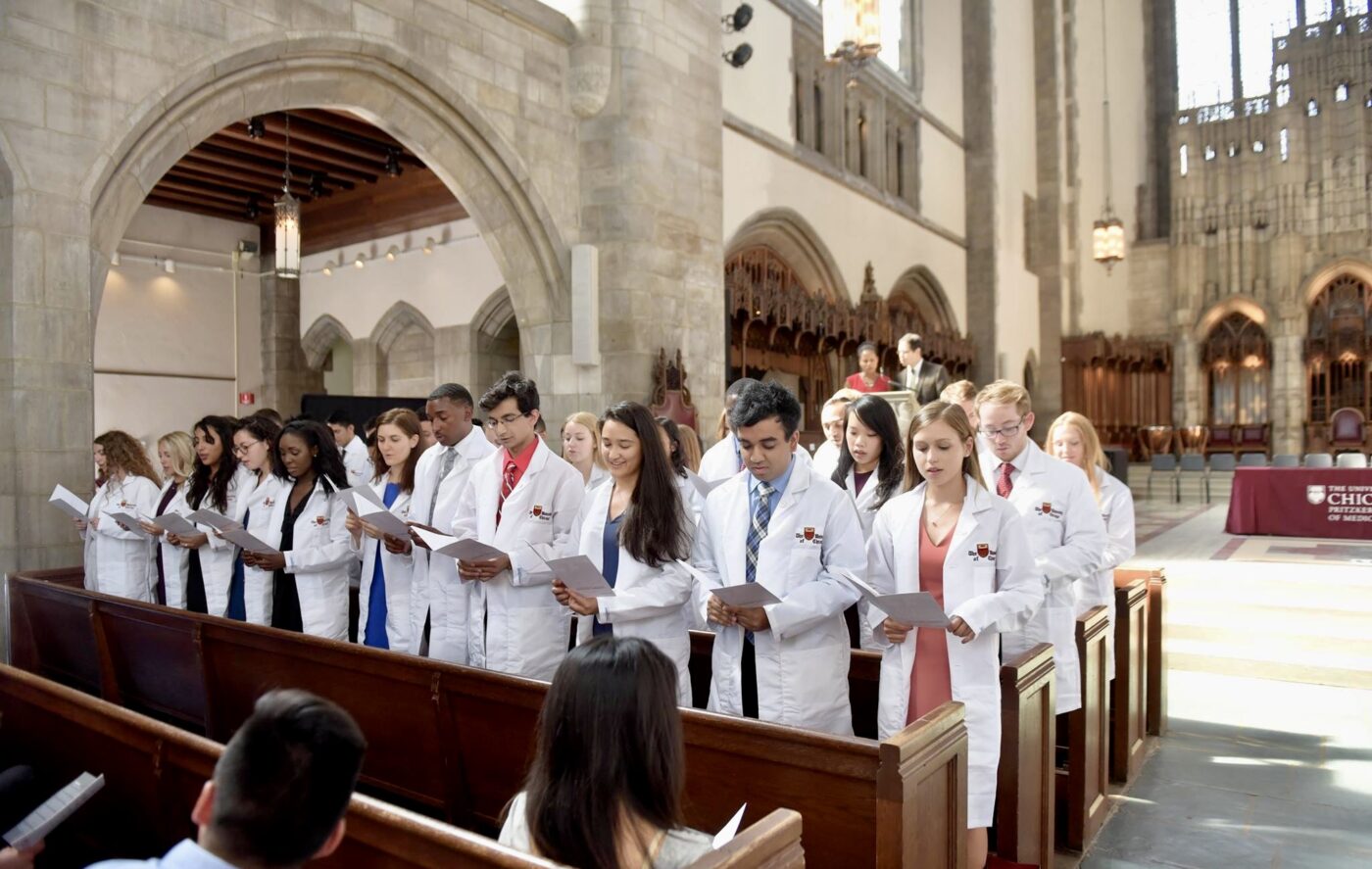
Accepted applicants confirm their decision through the AMCAS Choose Your Medical School tool by April 30. No deposit is required to hold a seat. Pritzker accepts deferred entrance requests; no one in the 2025 entering class deferred. Before matriculation, students submit proof of immunity on a medical-school-specific form during the summer and set up their financial aid. Orientation is followed by the White Coat Ceremony, a tradition that began at the University of Chicago in 1989.
2026-2027 admissions timeline
| Date | Step |
|---|---|
| May to November 2026 | AMCAS filing |
| July and August 2026 | When over 90% of admitted students submitted their secondaries in a typical cycle |
| August 25, 2026 to February 1, 2027 | Virtual MD interview days |
| September 30, 2026 | Latest MCAT date considered |
| After October 15, 2026 | Rolling acceptances begin |
| October to February | MD/MSTP interview dates |
| November 15, 2026 | AMCAS deadline |
| December 1, 2026 | Secondary application and letters of recommendation deadline |
| January 1, 2027 | MSTP rolling acceptances begin |
| April 15, 2027 | Hold no more than three offers |
| April 30, 2027 | Hold one offer and choose Plan or Commit to Enroll; MSTP response deadline |
| July 30, 2027 | Latest date acceptance notices are sent |
| Summer 2027 | Immunization documentation and orientation |
If you are still a year or two from applying, use this calendar to plan backward: an MCAT date by spring, letters requested in spring, AMCAS submitted in early summer and pre-med summer internships or research placed in the summers before that.
Technical standards
Pritzker’s technical standards, revised beginning with the entering class of 2025, list five areas of competence: observational; communication; examination, procedural and diagnostic; intellectual-conceptual, integrative and quantitative; and behavioral, social, ethical and professional. Candidates must meet them with or without reasonable accommodations, and accommodation requests go through the University’s Office of Student Disability Services. Read the standards before you apply so you know what the program expects of all students, including those planning research careers.
Honesty in the application
The school expects applicants “to be completely truthful in every aspect of their application.” If it suspects misrepresentation, it first asks the applicant to explain, and it may notify AMCAS and revoke an interview or offer.
Tuition, Cost of Attendance and Financial Aid
Financial Information
Attending medical school is a significant financial investment. Pritzker is a private school, so “tuition rates are the same for in- and out-of-state students.” The school says that with its “generous financial aid model,” it provides assistance to approximately 80% of enrolled medical students each year, “and the majority of students graduate with less than the national average in student debt.”
Tuition and Fees
The 2026-2027 student budget lists costs by year. The M1 year is 10.5 months, M2 is 9 months, and M3 and M4 are 12 months each, which is why third- and fourth-year tuition is higher.
| 2026-2027 | M1 (10.5 mo.) | M2 (9 mo.) | M3 (12 mo.) | M4 (12 mo.) |
|---|---|---|---|---|
| Tuition | $65,576 | $65,576 | $87,436 | $87,436 |
| Student life fee | $1,560 | $1,560 | $2,080 | $2,080 |
| Medical equipment | $530 | – | – | – |
| Lab fee | $150 | $35 | – | – |
| Disability insurance | $316 | $316 | $331 | $332 |
| Transcript fee (one time) | $84 | – | – | – |
| USMLE fees | – | $685 | TBD | – |
| Loan fees | $312 | $312 | $332 | $312 |
| Housing and food | $20,400 | $20,400 | $24,800 | $24,800 |
| Personal expenses | $4,000 | $4,000 | $5,000 | $5,000 |
| Transportation | $2,000 | $2,000 | $2,600 | $2,600 |
| Books and course materials | $1,200 | $1,950 | $1,400 | $850 |
| Standard budget | $96,128 | $96,834 | $123,979 | $123,410 |
| Student health insurance (optional) | $5,517 | $5,517 | $5,517 | $5,517 |
| Total with health insurance | $101,645 | $102,351 | $129,496 | $128,927 |
Source: Pritzker student budget, 2026-2027. The transcript fee is waived for students who already paid it at the University of Chicago, and M4 transportation includes residency interview travel.
A few points help you read this table:
- Tuition versus total cost. Tuition is only part of the budget. For a first-year student, tuition is $65,576 and the full standard budget is $96,128.
- Health insurance: students may elect the University Student Health Insurance Plan (U-SHIP) if a parent or spouse does not cover them, or they may hold private coverage. U-SHIP is $5,517 per year in 2026-2027.
- Annual increases: tuition and fees are set each spring and “generally increase at approximately 2%-4% annually.” Plan for a four-year total above today’s numbers.
- Living expenses: housing and food are budgeted at $20,400 for each of the first two years. Living costs vary with housing choices, and the budget covers rent, utilities, food, transportation and personal expenses.
Scholarships and Grants
Pritzker scholarships “do not require repayment in kind or in service.” A Scholarship Committee considers all incoming students for scholarship support, reviewing both application files and financial aid documents. The committee “does not designate awards as merit-based or need-based,” so there is no separate merit application. The scholarship funds come from gifts by alumni, families, grateful patients, former faculty and other supporters. In the Entering Class of 2024, 60% of students received a full-tuition scholarship.
Financial Aid and Scholarships
Financial aid packages “may include a combination of institutional loans, scholarships, or federal student loans,” and students may receive aid up to the cost of the standard budget. The school assembles awards “at the lowest possible cost to the student.” The main pieces are:
- Pritzker scholarships: described above; all incoming students are considered.
- Pritzker loans: institutional loans funded by alumni, faculty and friends, awarded based on financial need, with interest rates typically between 0% and 5%.
- Federal Direct Loans: available to U.S. citizens and eligible noncitizens who file the FAFSA (Pritzker’s FAFSA code is 001774). Students matriculating on or after July 1, 2026, should review the 2026-2027 federal loan changes on the UChicago financial aid site.
- Private loans: for remaining costs up to the cost of attendance.
- External scholarships: the school lists outside awards such as the National Health Service Corps Scholarship (primary care service in shortage areas), the Indian Health Service Scholarship, the Paul & Daisy Soros Fellowships for New Americans, National Medical Fellowships and others.
- Service-linked programs: graduates who practice primary care in shortage areas may qualify for service-based programs such as the NHSC; these are external programs with their own rules.
How to apply for aid
Aid awards are made on a rolling basis, and accepted students receive financial aid packets by email during the admissions cycle. To be considered:
- Pritzker Application: a short institutional application emailed after acceptance. It is required for scholarship consideration, and parental information is required for admitted students under 30 at matriculation, with a waiver request possible if you cannot provide it.
- FAFSA: required for federal loans and available from October 1 the year before matriculation.
- Permanent residents submit a copy of both sides of the green card once.
After you commit, you accept your awards in My UChicago, complete federal entrance counseling and a Master Promissory Note, and sign the Pritzker loan note if you have one. The school strongly encourages students to minimize borrowing. Appeals go to a Financial Aid Advisory Committee appointed by the Dean for Medical Education. Questions go to the Office of Financial Aid, whose staff include Richard Wilson, MA, Associate Director of Financial Aid.
What is left to pay after a scholarship
Because 60% of the 2024 class received full tuition, a common question is what still costs money. Even with full tuition covered, a first-year student’s 2026-2027 budget still includes about $30,550 in fees, insurance, housing, food, books, transportation and personal costs (the $96,128 budget minus $65,576 tuition), plus $5,517 if you need U-SHIP. That remainder is usually covered by family resources, loans or outside awards. Compare offers by the amount you would borrow, not just by tuition.
For dual-degree students, the second program has its own tuition and aid. Pritzker gives MD/MPH students a 75% MPH tuition scholarship and has limited funds for MD/MBA students through the Steven Weiner Fellowship.
Campus Facilities and Student Life
Pritzker is “one of few medical schools to be located physically on its University campus.” Classrooms, labs, the hospital and the rest of the University are a short walk apart, and the campus is home to nearly 14,000 undergraduate and graduate students.
Campus Facilities
The Biological Sciences Learning Center (BSLC)
The BSLC at 924 E. 57th Street is the center of academic life at Pritzker. It houses classrooms, labs and the Pritzker offices, including Admissions and Financial Aid in Suite 104. Students do much of their Phase 1 coursework here, close to the research laboratories of the Biological Sciences Division.
Research Laboratories of the Biological Sciences Division
Pritzker’s commitment to research shows in its setting: “all divisions of the University and its professional schools are located within steps of the hospital, as are the extensive biological and physical sciences research laboratories.” Students work in these laboratories with faculty mentors on Scholarship & Discovery projects in fields such as cancer biology, neuroscience and genetics.
The University of Chicago Medical Center
As Pritzker’s main teaching hospital, UChicago Medicine is where students see most patients. The core of the medical campus is the 10-story, 1.2 million square foot Center for Care and Discovery, with Comer Children’s Hospital, the Duchossois Center for Advanced Medicine and Mitchell Hospital nearby. The Clinical Performance Center provides simulation and standardized patient training.
The Regenstein Library
The University’s Regenstein Library is one of the main campus libraries and offers study space and collections used by students across the University, alongside the University’s science library.
Student Wellness Center
Students use UChicago Student Wellness for health services, and Pritzker adds its own support. The Office of Student Affairs and Programs offers career development, mentoring and well-being resources, and the Pritzker Wellness Committee promotes “physical, social, mental, emotional and spiritual wellness.” Students who need disability accommodations work with the University’s Office of Student Disability Services.
Student Life at Pritzker
Pritzker describes a close community in which students call themselves the “Pritzker family.” The small class means students are known by classmates and faculty, and the pass/fail curriculum supports a collaborative environment. A diverse student body, 50 different undergraduate institutions in the 2024 entering class, adds varied perspectives to the learning environment.
Student Organizations
Student organizations range from specialty interest groups to identity-based and service groups. Examples on the school’s current list include the Family Medicine Interest Group, the Hocus POCUS point-of-care ultrasound group, the Medical Student Pride Alliance, the Student National Medical Association chapter (Pritzker-SNMA), the Medical Spanish Committee, the Pritzker Health Policy Interest Group with Doctors for America, a group focused on health inequities affecting communities touched by incarceration, and the Chicagoland Free Clinics Consortium. The Dean’s Council is the student government, and the Identity and Inclusion (i2i) Committee works with the HEDI office.
Community Service
Service is central to student life. Pritzker’s six student-run free clinics serve uninsured patients in diverse neighborhoods:
- Bridgeport Free Clinic: screening and urgent care with a focus on Asian and Asian American patients, with interpretation in Cantonese, Mandarin and Spanish.
- CommunityHealth: a Pritzker student team that runs the University of Chicago’s clinic sessions with the CommunityHealth free clinic organization, using a continuity model of care.
- Maria Shelter Medical Clinic: a student-run clinic advised by family medicine and psychiatry faculty, whose mission is compassionate care “ever mindful of each patient’s dignity and individuality.”
- SEVA Free Clinic: a weekly Friday evening clinic in Rogers Park, run with Northwestern Feinberg students and the Indian American Medical Association Charitable Foundation, focused on the South Asian immigrant and refugee community.
- South Side Free Clinic: care focused on the health needs of the Black adult population on the South Side, created by Pritzker-SNMA, UChicago Medicine and Project H.O.O.D.
- Washington Park Children’s Free Health Clinic: a free pediatric clinic run by a 12-member student board.
From January to December 2025, the clinics held 173 sessions, treated 731 patients and drew 302 student volunteers, supervised by licensed UChicago and NorthShore physicians. Over 90% of trainees volunteer at the clinics. Pritzker also supports service-learning projects through mini-grants.
Cultural and Social Events
Student-organized events run through the year, starting with orientation, the White Coat Ceremony and an early-fall field day. The school’s calendar of events lists student and division-wide events, and the Bowman Society hosts a lecture series on health equity and career development, honoring Dr. James E. Bowman.
Athletics and Recreation
Pritzker students use the University of Chicago’s athletic and recreation facilities and intramural programs, which help with stress during demanding years.
Mentorship and Support Networks
Each student has a team of faculty that includes research mentors and career advisors. Informal mentoring also grows through daily contact with faculty and classmates in a class of about 90.
Living in Hyde Park and Chicago
The campus is in Hyde Park, “just seven miles south of downtown Chicago,” a historic neighborhood known for political and social activism, landmarks, museums, cafes and independent bookstores. The school notes it “has been cited as one of the most racially and economically integrated urban communities in the United States,” and the neighborhood is the home of the Obama Presidential Center. Downtown is about a 20-minute train or bus ride away, and Chicago offers more than 200 theaters and galleries, 552 parks and 26 miles of lakefront trails. Students reach all of it on the city’s buses and “L” trains. Budget about $20,400 for housing and food in the first year, the figure the school uses in its standard budget.
Clinical Rotations and Research Opportunities
Clinical Rotations at the University of Chicago Pritzker School of Medicine
Pritzker’s clinical training moves from mentored clinic sessions in the first year to core clerkships in Phase 2 and advanced acute care rotations in Phase 3. Most inpatient experiences take place at UChicago Medicine or Endeavor Health – NorthShore, and outpatient experiences are concentrated in University of Chicago clinics.
Core Rotations
The core clerkships, described in the Phase 2 clerkship guide, are:
- Internal Medicine (8 weeks): 4-6 weeks on inpatient general medicine and 2-4 weeks on hematology/oncology and/or cardiology services, at UChicago Medicine and Endeavor Health – NorthShore, with faculty preceptor small groups.
- Surgery and Perioperative Medicine and Pain Management (12 weeks): general surgery or trauma, two specialty services and anesthesiology, with a surgical simulation curriculum. Students may choose general surgery at NorthShore in Evanston.
- Pediatrics (6 weeks): one week in the nursery and the rest split between inpatient sites (Comer, NorthShore, La Rabida) and outpatient sites.
- Obstetrics and Gynecology (6 weeks): at either UChicago, mostly high-risk obstetrics with benign gynecology or gynecologic oncology, or NorthShore, mostly low-risk obstetrics and general gynecology. Shifts run about 12 hours, and each student has an individual faculty preceptor.
- Ambulatory Medicine (4 weeks): outpatient adult internal medicine, family medicine and geriatrics at UChicago clinics and community family medicine clinics.
- Psychiatry (4 weeks): consultation-liaison services at UChicago (adult or child), the community inpatient service at Endeavor Health NorthShore, or the academic inpatient service at Ingalls Hospital, with call shifts in emergency psychiatry.
- Neurology (4 weeks): at UChicago or NorthShore, assigned by lottery with preferences considered, covering stroke, seizures, multiple sclerosis and neuromuscular disease.
Pritzker reimburses some clerkship travel, including off-site travel by car or public transit and early-morning rides, which matters because some sites are in Evanston and the south suburbs.
Elective Rotations
Phase 2 under Phoenix includes more elective time for specialty exploration, and Phase 3 adds further electives. Students may also complete visiting rotations at other institutions, and Pritzker runs its own visiting clerkship program for students from other schools.
Sub-Internships
Sub-internships give students admitting responsibilities and direct patient care for at least four consecutive weeks at UChicago Medicine or an affiliated hospital. The stated goals are greater autonomy, better efficiency and practice handling the demands of a complex health system. These rotations are where students function most like interns before graduation.
Longitudinal Integrated Clerkships (LICs)
Pritzker’s continuity experience comes earlier than a traditional LIC. In Phase 1, the year-long AIM program pairs each student with one ambulatory preceptor from January through December and with an inpatient faculty preceptor, and students rotate through ambulatory care, interprofessional care, clinical skills sessions and inpatient preceptorship each week. Students who want longitudinal relationships with patients can also build them through repeated shifts at the free clinics.
Research Opportunities at Pritzker
Research is built into the culture at Pritzker. The Scholarship & Discovery program “reaffirms the core mission of the University to generate new knowledge to improve human life,” and every MD student completes a mentored project.
Basic Science Research
Students in the Basic/Translational Sciences track work in Biological Sciences Division laboratories with faculty mentors. The MSTP’s 110 participating faculty across 25 research specialties give a sense of the range, from genetics and immunology to neuroscience and cancer biology.
Clinical Research
The Clinical Research track and the Health Services & Data Science track support clinical trials, outcomes studies and data-driven projects that move findings from the bench to the bedside. UChicago Medicine’s clinical trials and its Comprehensive Cancer Center are options for students interested in cancer research.
Health Policy and Public Health Research
Students interested in policy and population health can choose the Community Health or Global Health tracks, pair the MD with an MPH or a master’s in public policy, or work with faculty such as Arshiya Baig, MD, MPH, whose community-based participatory research addresses Latino diabetes disparities. Healthcare Delivery Improvement Sciences and Medical Education are additional tracks for students interested in quality improvement or teaching.
Research Electives
In the fourth year, students “revisit [their] scholarly project and/or begin work on a new project,” take elective courses and explore venues to disseminate their work. Students on research-heavy paths often use this time to finish publications.
Summer Research Fellowships
The summer after the first year is the main window for full-time research. The S&D program holds a Summer Opportunities Session during year 1 to help students find mentors and funded projects, and the program provides funding for student research.
Research Symposia and Presentations
Year 1 students attend the S&D Symposium, second-year students submit an e-poster and progress report, and graduating students may present at the Senior Scientific Session. Students also present at national meetings, with support for disseminating their work.
Mentorship for research
The S&D team is led by Rachel Wolfson, MD’00, Assistant Dean of Medical School Research, and Arshiya Baig, MD, MPH, Co-Director for Scholarship & Discovery. Students choose a track, mentor and project in the second year.
If you are building research experience now, our guide on how to get research experience in undergrad explains how to find a lab and make the most of it, and medical internships for undergraduates can add the clinical side that research positions often lack.
Notable Alumni, Faculty, Leadership and Admissions Staff
The people below are verified through University of Chicago sources, with roles current as of October 18, 2026, unless marked as historical. Knowing who leads the school and what its graduates have done helps you understand Pritzker’s priorities. It does not mean any of these people will review your file or mentor you.
Notable Alumni of the University of Chicago Pritzker School of Medicine
Pritzker graduates have shaped cancer research, academic medicine and community health. The degree years below follow the University’s alumni style (for example, MD’89).
Dr. Janet Rowley
Janet D. Rowley, MD’48 (1925-2013), earned her medical degree at the University of Chicago at age 23 and spent her career there as the Blum-Riese Distinguished Service Professor of Medicine, Molecular Genetics & Cell Biology and Human Genetics. Beginning in the 1970s, she showed that specific chromosomal changes cause certain leukemias, work that “established that cancer is a genetic disease” and opened the door to targeted drugs. Her honors include the Lasker Award, the National Medal of Science and the Presidential Medal of Freedom. For applicants, Rowley is the clearest example of the bench-to-bedside research Pritzker still builds into every student’s training.
Dr. Todd Golub
Todd Golub, MD’89, is director of the Broad Institute of MIT and Harvard. His lab developed ways to classify human tumors at the molecular level using gene expression patterns, techniques that changed how doctors classify, diagnose and treat cancer. His career shows how a Pritzker MD can lead to large-scale genomic science.
Dr. Anthony Letai
Anthony Letai, PhD’93, MD’95, earned both degrees at the University of Chicago and is director of the National Cancer Institute. His research showed how cancer cells avoid programmed cell death, and that work led to precision therapies now used as standard treatment for adults with leukemia. He is a model for applicants weighing the MSTP path.
Dr. Charles Rudin
Charles Rudin, PhD’91, MD’93, is Cancer Center Director at Memorial Sloan Kettering. He collaborates with Pritzker faculty, including Noura Choudhury, MD’15, on a nationwide clinical trial for small-cell lung cancer.
Dr. Abdullah Hasan Pratt
Abdullah Hasan Pratt, MD’16, is an emergency medicine physician at UChicago Medicine who founded the Trauma Recovery and Prevention of Violence (TRAP) program and the Medical Careers Exposure and Emergency Preparedness (MedCEEP) program, rooted in the South Side community where he grew up. He also advises the student point-of-care ultrasound group. His work is a direct example of the community engagement the first secondary essay asks about.
Dr. Holly J. Humphrey
Holly J. Humphrey, MD’83, MACP (1956-2025), later served as Pritzker’s dean for medical education. In 1989, as the University of Chicago internal medicine residency program director, she and then dean of students Norma Wagoner, PhD, created the White Coat Ceremony, a tradition now held at medical schools around the world.
Distinguished Faculty at Pritzker
Dr. Olufunmilayo I. Olopade
Olufunmilayo Olopade, MD, is the Walter L. Palmer Distinguished Service Professor of Medicine. She completed her hematology/oncology fellowship at the University of Chicago and focuses on breast cancer, cancer genetics, hereditary cancer syndromes, and cancer risk and prevention, including breast cancer in young women. She is affiliated with the Center for Global Health and graduate programs in cancer biology and human genetics. Students in the Basic/Translational or Global Health tracks may find her work especially relevant.
Dr. Everett E. Vokes
Everett E. Vokes, MD, is the John E. Ultmann Distinguished Service Professor, Chair of the Department of Medicine and physician-in-chief at UChicago Medicine. A clinical and translational investigator in lung and head and neck cancers, he established the basis for national trials of concomitant chemoradiotherapy and has published more than 500 papers. He chairs the Department of Medicine, home to the internal medicine clerkship that every student completes.
Dr. Rachel Wolfson
Rachel Wolfson, MD’00, is a Pritzker graduate who now serves as Assistant Dean of Medical School Research and Associate Professor of Pediatrics. She is board certified in pediatrics and pediatric critical care, attends in the pediatric intensive care unit and leads Scholarship & Discovery. In 2014 she took leadership of the Scholarly Concentrations Collaborative, a national group of physician educators focused on medical student research.
Dr. Arshiya Baig
Arshiya Baig, MD, MPH, Associate Professor of Medicine and Co-Director for Scholarship & Discovery, conducts community-based participatory research with faith-based organizations to reduce Latino diabetes disparities, including a church-based diabetes self-management program in South Lawndale. Her work shows what a Community Health or Health Services project can look like.
Dr. James E. Bowman (historical)
James E. Bowman, MD (1923-2011), joined the faculty in 1962 and became the Biological Sciences Division’s first tenured African American professor. An expert in pathology, inherited blood diseases and population genetics, he studied sickle cell disease and G6PD deficiency and advocated for minority scholars in academic medicine. The Bowman Society lecture series, which he began in 2005, continues to bring the community together around health equity.
Leadership
Dr. Mark Anderson
Mark Anderson, MD, PhD, is Dean of the Biological Sciences Division and Pritzker School of Medicine. Pritzker is “one of few medical schools to be situated within a larger Division of the University,” and the dean leads both the division and the school.
Dr. Vineet Arora
Vineet Arora, MD, MAPP, is Dean for Medical Education and oversees all medical education across the continuum: medical school, residency and fellowship, continuing medical education and simulation. At Match Day 2026 she praised the graduating class, the last to finish the Legacy curriculum, for its service to the South Side community.
Dr. James Woodruff
James Woodruff, MD, is Dean of Students. Current students meet with him before applying to a dual degree, and he signs the letter of good standing that MD/MPH applicants need.
Dr. Abby Stayart
Abby Stayart, PhD, is Associate Dean of Students and Executive Director of the MSTP. MSTP applicants will see her office’s guidance on the two-day interview and the admissions timeline.
Dr. Raghu Mirmira
Dr. Raghu Mirmira is the MSTP Program Director. On the second day of the MSTP interview, candidates hear a presentation from him before meeting research faculty.
Admissions Staff
Dr. Keme Carter
Keme Carter, MD, Professor of Medicine, is Associate Dean for Admissions. She also directs the Emergency Medicine Clerkship and is associate vice-chair for diversity, equity and inclusion education in the Department of Medicine. She earned her MD at the University of Alabama School of Medicine and trained in emergency medicine at UChicago. She is a Master in Pritzker’s Academy of Distinguished Medical Educators, and her research focuses on communication in the emergency department and on equitable pathways through medical education.
Emily Sharp-Kellar
Emily Sharp-Kellar, JD, is Director of Admissions and Financial Aid. Admissions and financial aid share an office at BSLC 104, which is why aid information arrives during the admissions cycle. The office asks applicants to send questions by email to [email protected].
Mentorship and Support Networks
Pritzker connects students with faculty, alumni and peers for guidance. Each student has a team of faculty that includes research mentors and career advisors, and alumni such as Dr. Pratt and Dr. Wolfson are active in teaching and mentorship today.
Admissions Statistics and Class Profile
Admission Statistics for the University of Chicago Pritzker School of Medicine
Pritzker is one of the most competitive medical schools in the United States, and its own class profile is the best guide to who is admitted. The newest profile posted is for the Entering Class of 2024. The school updates the profile periodically, so check it again before you submit your secondary.
Class Profile
| Measure | Entering Class of 2024 |
|---|---|
| Applications | 6,407 |
| Interviewed | 630 |
| Entering students | 91 |
| MD only | 81 |
| MD/PhD | 10 |
| MCAT range | 505-527 |
| Cumulative GPA range | 3.4-4.0 |
| Science (BCPM) GPA range | 3.2-4.0 |
| From Illinois | 13% |
| Out of state or international | 87% |
| Received a full-tuition scholarship | 60% |
| One or more gap years | 84% |
| Previous research experience | 100% |
| Prior work with underserved communities | 99% |
| Formal leadership positions | 96% |
| Undergraduate institutions represented | 50 |
Source: Pritzker Entering Class of 2024 profile.
2025 Entering Class
| Measure | In-state (Illinois) | Out of state | International | Total |
|---|---|---|---|---|
| Verified applications | 838 | 6,379 | 521 | 7,738 |
| Interviewed | 76 | 538 | 15 | 629 |
| Matriculated | 17 | 72 | 2 | 91 |
| Measure | 2025 entering class |
|---|---|
| Median MCAT, accepted applicants | 520 (mean 519) |
| Median section scores (CPBS / CARS / BBLS / PSBB) | 130 / 128 / 130 / 131 |
| Median total GPA, accepted applicants | 3.94 (mean 3.90) |
| Median science GPA, accepted applicants | 3.94 (mean 3.87) |
| MD/PhD matriculants | 10 |
| Baccalaureate/MD matriculants | 1 |
| Matriculants with a graduate degree | 9% |
| Science or math majors | 64% |
| Self-reported disadvantaged status | 43% |
| Age 19-23 / 24-29 / 30-39 | 53 / 37 / 1 |
Source: AAMC Data Warehouse, Applicant Matriculant File, October 29, 2025 (2025 entering class). Residency follows AAMC classification.
Class Size
The class size is about 90 students. The 2024 and 2025 entering classes each had 91, and the school describes “90 per class.” For the 2026-27 cycle, Pritzker expects about 90 new entrants: 76 in the MD program, 10 MD/PhD, 1 Baccalaureate/MD and 3 in other special programs. The small class means faculty know students well and mentoring relationships form quickly.
GPA and MCAT
For the 2025 entering class, the median MCAT of accepted applicants was 520 and the median total GPA was 3.94, with a median science GPA of 3.94. Half of accepted applicants scored at or above those marks and half below. The school’s own class profile gives ranges for the Entering Class of 2024: MCAT 505 to 527 and cumulative GPA 3.4 to 4.0. A range shows the lowest and highest score in the class. It does not tell you the typical score, and it is not a minimum. Pritzker has no minimum GPA or MCAT for screening, considers all parts of the GPA and trends over time, and reviews postbaccalaureate and graduate coursework alongside the undergraduate record. If your score is near the low end, the rest of your application needs to be especially strong. For school-by-school comparisons, our page on average GPA and MCAT score by medical school puts these numbers in context.
Residency and geography
Pritzker is a national school. In the 2024 entering class, 13% came from Illinois and 87% were out of state or international. In the 2025 entering class, 17 of 91 matriculants were Illinois residents, 72 came from out of state and 2 were international, from 22 states and two countries. As a private school, Pritzker gives no preference to in-state or out-of-state applicants. Because tuition is the same for everyone, there is no residency advantage in cost either.
Majors and backgrounds
The 91 students represent 50 colleges and universities and majors including the biological sciences, economics, chemical engineering, sociology and government. There is no preferred major.
Gap years and experience
Eighty-four percent took at least one year between college and medical school, “in pursuits as varied as teaching, graduate degrees, scribing, business, and research.” The most common gap-year experiences were basic or translational research, clinical research, clinical work such as scribing or medical assisting, AmeriCorps and community organizations, and graduate degrees. If you are planning a year or two before applying, structured pre-med gap year programs can be one part of that time, alongside sustained work at home.
Application Numbers
Applications and interviews
The school received 6,407 applications and interviewed 630 applicants for the 2024 entering class. That is 630 interviewed out of 6,407 applications. For the 2025 entering class, Pritzker received 7,738 verified applications and interviewed 629 applicants, or 629 interviewed out of 7,738 verified applications. Neither ratio is an acceptance rate, because the number of offers made is not published, and the 91 entering students in each year reflect both offers and applicants’ choices among schools.
Acceptance rate
An acceptance rate requires the number of admitted applicants divided by the number of applicants for the same cycle. Pritzker’s total offer count is not published, so no reliable acceptance rate can be calculated. Dividing entering students by applications (91 / 6,407 for 2024, or 91 / 7,738 for 2025) gives a matriculation ratio, not an acceptance rate. The only offer figure available is the 17 acceptance offers made to waitlisted applicants in the most recent reported cycle, which is a part of the total, not the total.
Additional Metrics
Financial aid
The school assists approximately 80% of enrolled medical students each year, and 60% of the 2024 entering class received a full-tuition scholarship. The school says the majority of students graduate with less than the national average in student debt. Graduates who borrowed for medical school left with an average of $114,238 in medical school debt in the 2024-2025 academic year.
Deferred entrance
Pritzker accepts deferred entrance requests. No one in the 2025 entering class deferred, so plan on starting with your class. Applicants who are admitted and need to delay should contact the admissions office directly.
Specialty Training for Graduating Class (Top Specialties)
In the 2026 Match, 98 Pritzker graduates placed into residencies. The class was the last to finish the Legacy curriculum and the largest match class since 2014.
| Specialty | Share of Class of 2026 |
|---|---|
| Internal Medicine | 29% (28 students) |
| Psychiatry | 10% (10 students) |
| Anesthesiology | 7% |
| Emergency Medicine | 7% |
| Pediatrics | 7% |
| Primary care specialties combined | 45% |
| Surgical subspecialties combined | 22% |
Source: Pritzker, The Match 2026 (March 20, 2026).
Twenty-three graduates (23%) matched at the University of Chicago Medical Center. Other common destinations were the University of California system (12), Harvard (10), Northwestern (6), Mount Sinai (3) and UT Southwestern (3), across 44 institutions in 18 states and the District of Columbia. The match class included 11 students who earned PhDs at the University (MSTP, MeSH and GDDTP) and seven who will graduate with MBAs from Booth.
These numbers show a class that enters with deep research and service experience and leaves for a wide range of specialties, with nearly half choosing primary care fields.
Tips and Strategies for Admission
Gaining admission to Pritzker takes more than strong grades and scores. The class profile tells you what the committee sees in almost every admitted student: research, service to underserved communities, leadership and, for most, time after college. The tips below translate those patterns into decisions you can make now.
Highlight Your Commitment to Service
Community Service
Ninety-nine percent of the 2024 entering class had prior work with underserved communities. Pritzker’s first secondary essay describes a health system whose primary service area has poverty more than double the state level and six student-run free clinics. Show sustained service, not a list of one-day events, and be ready to explain what you learned about barriers to care, not just what you did.
Patient Care Experience
The school values “long-term commitments that include direct patient contact” over short-term experiences, and it values patient care in your own community as much as international work. Scribing, medical assisting, EMT work, hospice volunteering and free-clinic roles all count when you can describe real patients and real responsibility. If you are looking for structured experience, pre-med internships can supplement, but not replace, long-term local commitments.
Showcase Your Leadership and Teamwork Skills
Leadership Roles
Ninety-six percent of the class held formal leadership positions, and teamwork and leadership are listed among the school’s entrance competencies. A leadership role is strongest when you can show a decision you made, a problem you solved and what changed because of it.
Collaborative Projects
Medicine is a team activity, and Pritzker’s curriculum includes interprofessional care and team-based learning. Describe your role on research teams, clinical teams or community projects and how you worked with people whose training or views differ from yours.
Emphasize Your Research Experience
Research Contributions
Every member of the 2024 entering class had research experience, and every MD student completes a Scholarship & Discovery project. Explain your question, your role, what you found or learned and any presentations or publications. Depth matters more than the number of labs.
Future Research Goals
The MD-only secondary asks how Pritzker’s research opportunities will help your career goals. Read the seven S&D tracks and pick the one that fits your real interests. Mentioning faculty is fine if their work truly matches yours, but the essay should be about your questions, not a list of names.
Craft a Compelling Personal Statement
Reflect on Your Journey
Your personal statement should explain why you want to be a physician through specific experiences and what you learned from them. Avoid clichés and generic statements, and do not repeat your activity list.
Align with Pritzker’s Mission
Pritzker wants “leaders in science and medicine for the betterment of humanity.” You do not need to name Pritzker in your AMCAS statement, but your story should make clear how science and service fit together in your goals. Save school-specific detail for the secondary.
Prepare for the Interview
Understand the Interview Format
Pritzker interviews are virtual and are not an MMI. The medical school interview day includes three one-on-one Zoom interviews, with a faculty member, a Pritzker administrator and a medical student, plus informational sessions with faculty, staff and current students. MSTP candidates have a second research day. See the interview section below.
Practice Ethical Reasoning
Expect questions about patient care, professionalism and challenging situations. The third secondary essay already asks how you handled difficulty, so be ready to talk about it in more depth.
Be Yourself
Interviewers want to know you as a person and as a future colleague. Prepare examples, but do not memorize scripts.
Additional Application Components
Letters of Recommendation
Use a committee letter if your school offers one. If you do not, the secondary asks why. Otherwise send at least three letters, including two from science faculty, and no more than five for MD applicants. Give recommenders your CV and a short summary of your goals, and ask early.
Secondary Essays
Pritzker’s secondary includes three essays for MD applicants and two for MD/MSTP applicants, plus an optional box and a conditional committee-letter question. Return it quickly: over 90% of admitted students submitted in July or August. Our medical school secondary essay prompts database helps you pre-write for other schools at the same time.
Apply early and completely
Admission is rolling, interviews begin in late August and acceptances begin after October 15. Submit AMCAS early in the cycle, return the secondary within two to three weeks and make sure your letters are in well before December 1.
If your numbers are below the typical range
The 505 to 527 MCAT range shows that the class includes scores well below the top of the range, but the competition is intense. If your score is near the low end, strengthen research depth, service and writing, and apply broadly. Our list of medical schools accepting low MCAT scores can help you balance your school list.
Look Beyond Pritzker School of Medicine
While Pritzker may be your top choice, apply to a balanced list of schools that fit your goals and values. Applying to a range of schools increases your chances of acceptance and gives you real choices. When evaluating other programs, consider:
- Location: urban, suburban or rural settings shape your clinical training and lifestyle.
- Curriculum: some schools emphasize early clinical exposure, problem-based learning or specialized tracks in areas such as global health or primary care.
- Research opportunities: if research matters to you, look for structured scholarly programs, mentorship and funded time.
- Community engagement: schools with strong service programs help you understand the social determinants of health.
To compare every MD and DO program in the state, read our guide to medical schools in Illinois. The related guides near the end of this article, along with a long list of other school guides, can help you build a balanced list.
By following these tips and strategies, you can present yourself as a well-prepared, committed candidate. The path to medical school is demanding, but with careful preparation and a genuine commitment to patients, you can reach your goal of becoming a physician.
Secondary Application Questions, Example Responses and Analysis
Secondary Application Questions for the University of Chicago Pritzker School of Medicine
Pritzker’s 2026-2027 secondary has three essays for MD applicants, two for MD/MSTP applicants, an optional additional-information box and a conditional question for applicants who did not use a premedical committee letter. Each prompt below is quoted word for word. Limits are stated as suggested word counts; write to them as hard limits.
| Prompt | Who answers | Limit |
|---|---|---|
| 1. Clinical environment at UChicago Medicine | All applicants | 450 words |
| 2. Scholarship & Discovery research interests | MD-only applicants | 450 words |
| 3. A difficult situation, coping skills and support | All applicants | 450 words |
| Additional information | Optional for all applicants | About 300 words |
| Committee letter explanation | Only if your school offers a committee or advisor letter and you did not use it | About 200 words |
The first and third prompts have new wording for 2026-2027. The first now describes UChicago Medicine’s national recognition for community engagement and the student-led community initiatives, and the third now opens with the role of humility and resilience in medical education. The examples below are written for this year’s wording.
MD/MSTP applicants answer prompts 1 and 3 plus the two additional questions. Program-specific essays for the MSTP and MeSH have not been published for this cycle; if you apply to either program, answer exactly what appears in your portal and follow the limits shown there.
Every example below is labeled “Illustrative example, not an actual applicant essay.” Each is an original teaching example written for this guide, with invented details. Use them to see structure and reasoning, never as text to copy. Your essays must describe your own experiences.
Essay 1: Preparing to work in UChicago Medicine’s clinical environment
Students at the Pritzker School of Medicine complete the majority of their clinical training at UChicago Medicine (UCM). UCM, nationally recognized by the AAMC for sustained commitment to community engagement, partnership, and collaboration, has a primary service area where poverty is over double the state level. Additionally, our students lead numerous community-based initiatives throughout Chicago, including six free clinics that primarily serve uninsured patients. Please share with us the personal and professional experiences that have best prepared you to work in this clinical environment. (450 words)
Who answers: all applicants, MD and MD/MSTP.
What it asks: this is a readiness question, not a “why Pritzker” essay. The school describes a specific setting, a health system with deep community partnerships, a service area with high poverty and student-led free clinics for uninsured patients, and asks which personal and professional experiences prepared you to work there. “Personal and professional” signals that it wants both your background and your work.
How to approach it: choose one or two experiences where you worked directly with patients facing financial, insurance, language or transportation barriers. Show what you did, what you saw and how it changed your practice. Then connect those skills to the setting the prompt describes: continuity, community partnership and supervised student-run care. A short, specific link to the free clinics or the HEAR course is enough; the bulk of the essay should be your experience.
Example response
Illustrative example, not an actual applicant essay.
For two years I worked as a medical assistant at a federally qualified health center in Cleveland, where most of our adult patients were uninsured or on Medicaid. My job was to room patients, take vitals, reconcile medications and pass a clipboard of social needs questions across a small counter. I learned quickly that the clipboard was the least reliable tool in the building.
One patient, Mr. D., came in every month with blood pressure near 180 systolic. His chart said “nonadherent.” When I finally asked him to show me his pills instead of listing them, he took out three bottles, two of them the same drug from different pharmacies. He had been skipping doses to make the refills last because the bus ride to the cheaper pharmacy cost him half a day of work. I brought this to our nurse and physician, who switched him to a once-daily combination pill and set up mail delivery. Three months later his pressure was 138. Nothing about his illness had changed. What changed was that someone asked the second question.
That experience changed how I work. I started asking every patient to show me their medications, and I learned enough Spanish to explain refill steps without waiting for the phone interpreter. I also learned the limits of my role: I could notice barriers, but solving them took a team of nurses, a pharmacist and a social worker who knew which programs were real and which had waitlists.
Outside work, I volunteered weekly at a free clinic in a church basement. There I saw what continuity means when there is no insurance at all: patients returned to the same volunteers because trust was the only thing we could reliably offer. Sometimes the most useful thing I did was call a patient two days later to see whether she had picked up a prescription.
These experiences prepared me for a health system that treats community partnership as part of care, not an add-on. At Pritzker I hope to bring those habits, asking the second question, working within a team and following up, to clinics like the South Side Free Clinic, under faculty supervision. I also want the frameworks I lacked as a medical assistant. A course like HEAR, which examines the causes of health disparities and advocacy for health equity, would help me turn individual observations into changes that last longer than one visit.
I do not expect the South Side to be the same as Cleveland’s east side. I expect to listen first, learn from patients and community partners, and earn my place on the team.
Word count: 433 of 450.
Analysis
- Answers the actual question. The essay names personal and professional experiences (paid clinical work and weekly free-clinic volunteering) and shows how each prepared the writer for a high-poverty, community-engaged setting.
- Shows, then reflects. The patient story has a concrete problem, a specific action and a measurable result, followed by a lesson that changed the writer’s habits.
- Shows the limits of the writer’s role. Recognizing that a team solved the problem reads as mature and realistic for a future student who will work under supervision.
- Connects to verified Pritzker features. The South Side Free Clinic and the HEAR course are real parts of Pritzker, and the essay mentions them briefly and accurately, with supervision noted.
- Ends with humility. The last paragraph avoids claiming expertise about a community the writer has not yet served.
Mistakes to avoid: writing a “why Pritzker” essay that lists the school’s features; describing poverty in vague or dramatic terms; making patients into props; claiming you will “fix” the South Side; and repeating your AMCAS activity descriptions word for word.
Essay 2: Research interests and Scholarship & Discovery (MD-only applicants)
All MD students participate in our longitudinal Scholarship & Discovery research program, which offers protected curricular time, mentoring, and funding for students to pursue their scholarly interests. Please describe your research interests and share how our research opportunities will help you advance your career goals. (450 words – MD only)
Who answers: MD-only applicants. This essay does not appear in the MD/MSTP set.
What it asks: two things: your research interests, and how Pritzker’s research opportunities will help you reach your career goals. “Research” is broad here. The seven S&D tracks include community health, medical education and healthcare delivery improvement, not only laboratory science.
How to approach it: start with a question you care about and how you came to it, using your research experience as evidence. Name the S&D track that fits and explain what you would do with protected time, mentoring and funding. Finish with a career goal that the research supports. If you are unsure of your exact project, say so honestly and show how you would choose.
Example response
Illustrative example, not an actual applicant essay.
My research interest grew out of a spreadsheet. As a clinical research coordinator on a home blood pressure monitoring study, I tracked which participants sent readings and which went quiet. The pattern was not random. Participants without reliable phone data stopped transmitting within weeks, and they were the same patients with the highest baseline pressures. The device worked. The system around it did not.
That observation became my question: how do we design remote monitoring programs so they reach the patients who need them most rather than widening the gap? I spent the next year helping our team test two fixes, a prepaid data plan and a weekly check-in call from a community health worker. I cleaned the data, ran descriptive analyses and co-wrote an abstract on early retention. The results were modest, but the work taught me that health services research is where clinical care, data and equity meet.
Scholarship & Discovery fits this interest in two ways. First, its Health Services & Data Science track would let me study how care is delivered, not only whether a treatment works. I would like to examine how hypertension management and follow-up differ across UChicago Medicine’s clinics and which patients are lost between visits. Second, the program’s structure matters to me. Methods of Inquiry would strengthen my epidemiology and study design, protected time in the second year would let me build a real project rather than squeeze one between exams, and mentorship would teach me to ask questions that clinicians can act on.
I am also drawn to the option of combining the MD with formal data training. I would want to explore the MD/MS in Applied Data Science with my advisors once I understand my project better, but I know my first priority is learning medicine well.
My career goal is to practice general internal medicine in an academic setting and lead quality and equity work within a health system. I want to see patients with uncontrolled hypertension in clinic and then use what I learn there to redesign how the system follows up with them. S&D would give me the training to move from noticing patterns in a spreadsheet to answering questions rigorously, and the free clinics would keep me close to the patients those questions are about.
I expect my interests to change during medical school. What I hope will stay constant is the habit of looking at who is missing from the data and asking why.
Word count: 409 of 450.
Analysis
- States a research interest as a question. The essay moves from an observation to a clear research question about equitable remote monitoring.
- Shows real contribution. The writer describes specific tasks (data cleaning, analysis, abstract) without overstating the results.
- Uses accurate school details. The Health Services & Data Science track, Methods of Inquiry, second-year protected time and the MD/MS in Applied Data Science all exist at Pritzker, and the writer treats the dual degree as something to explore, not a promise.
- Answers the career-goal part. The essay names a concrete career path (academic general internal medicine with health system quality and equity work) and explains how S&D supports it.
- Shows openness. The closing acknowledges that interests may change, which fits a curriculum that asks students to select a track in the second year.
Mistakes to avoid: listing faculty names without a real connection; describing research you did not do; choosing a track only because it sounds prestigious; ignoring the career-goals half of the prompt; and writing about bench science only when your real interest is clinical or community work.
Essay 3: A difficult situation, your coping skills and your support
Medical education requires humility and resilience as students learn to become physicians prepared to deliver exceptional care within a rapidly changing and sometimes challenging healthcare landscape. Share with us a difficult or challenging situation you have encountered and how you dealt with it. In your response, identify both the coping skills you called upon to resolve the situation, and the support person(s) from whom you sought advice. (450 words)
Who answers: all applicants, MD and MD/MSTP.
What it asks: four parts: a difficult situation, how you dealt with it, the coping skills you used and the people you went to for advice. The new opening sentence frames the essay around humility and resilience, so a situation where you had to admit a limit or a mistake fits well.
How to approach it: pick a situation with real stakes in which you made a choice, not one where things simply happened to you. Name your coping skills explicitly (for example, breaking a problem into steps, protecting sleep, disclosure, exercise) and name your support people by role. End with what you would do differently and how the experience prepares you for medical training.
Example response
Illustrative example, not an actual applicant essay.
Two weeks before our lab was due to submit a manuscript, I found my own mistake. While rechecking freezer logs, I realized I had mislabeled a set of twelve samples from two mouse cohorts during my first month in the lab. Those samples fed a figure in the paper. I spent an hour hoping I was wrong. I was not.
The hardest part was not the error. It was deciding how quickly to say it out loud. Part of me wanted to quietly rerun the assays and present a corrected figure. I knew that was the wrong instinct. A hidden fix would have meant my postdoc mentor and principal investigator were relying on data they did not fully understand.
My first coping skill was to slow down and break the problem into steps. Before I talked to anyone, I wrote a one-page summary: which samples were affected, how I found the error, what could be recovered from backup tissue and what could not. Writing it down turned panic into a list I could work through.
Then I asked for help. I went to the postdoc who trained me, because I trusted her judgment and because she would know the technical options. She helped me confirm the error and suggested that we bring it to our PI together, with the summary in hand. Our PI was disappointed, and said so, but she also thanked me for catching it before submission. We delayed the paper by six weeks, reran the experiments and added a second-person check for sample labels to the lab’s protocol.
During those six weeks, my second coping skill was protecting the basics. I kept running three mornings a week and stopped working past nine at night, because I knew tired hands had caused the first mistake. I also talked with a friend from my college peer mentoring program, who reminded me that one error did not define my place in the lab.
The corrected figure told the same story with a smaller effect. The paper was accepted. What stayed with me was how much better it felt to disclose quickly than to hope no one noticed.
Medicine will give me harder versions of this moment: a missed lab value, a wrong dose caught by a nurse, a plan that did not work. I expect to make mistakes. I hope to bring the same habits to them: stop, write down what happened, tell the right person early and fix the system along with the error.
Word count: 415 of 450.
Analysis
- Covers all four parts. The situation (a labeling error), how it was handled (disclosure, rerunning experiments, a new protocol), the coping skills (breaking the problem into steps, protecting sleep and exercise, perspective from a friend) and the support people (postdoc mentor, PI, peer mentor) are each explicit.
- Matches the new framing. Admitting a personal mistake shows humility, and recovering from it shows resilience, the two qualities the prompt now names.
- Shows ethical judgment. The writer considers and rejects a quiet fix, which tells the committee how they think about honesty.
- Ends with transfer. The final paragraph links research errors to clinical safety without exaggeration.
Mistakes to avoid: choosing a situation with no real stakes; blaming others; describing support people without explaining what advice they gave; listing coping skills without showing them in action; and picking a trauma you are not ready to discuss in an interview.
Additional Information (optional)
Please feel free to use this space to convey any additional information that you might wish the Committee to know. For example, if you are not currently completing a degree, please share your planned or current activities for this application cycle. We suggest that you limit your text to about 300 words.
Who answers: optional for everyone. If you are not currently in a degree program, treat it as expected, because the prompt asks for your activities during the cycle.
What it asks: anything important that does not appear elsewhere, and specifically what you are doing this year if you are not in school.
How to approach it: be factual and organized. List your current and planned activities with dates and hours, and add only information the committee needs, such as context for a grade trend or an upcoming publication. Do not write a fourth essay.
Example response
Illustrative example, not an actual applicant essay.
I graduated in May 2025 and am not currently completing a degree. My activities for this cycle are:
- Clinical research coordinator, full time (July 2025 to June 2027). I coordinate a remote blood pressure monitoring study in an internal medicine clinic. I consent participants, manage the database and lead weekly data quality checks. In November I will present our retention findings as a poster at a regional meeting.
- Free clinic volunteer, Saturdays (since 2023). I continue to work intake shifts at a church-based free clinic, where I take vitals, review medications and schedule follow-up calls. Since July I have also trained four new volunteers.
- Spanish coursework (fall 2026 and spring 2027). I am taking an evening medical Spanish course at a community college so that I can speak with patients without waiting for an interpreter for simple questions.
- Before matriculation (summer 2027). I plan to finish my coordinator role in June and spend the remaining weeks helping our team draft a manuscript.
One additional note: my grades in my second year dropped while I worked 25 hours a week to help cover family expenses. My GPA rose in each of my last four semesters as my work hours fell, and my upper-level science courses were completed during that period.
Word count: 213 of about 300.
Analysis
- Answers the example question directly. The writer states they are not in a degree program and lists activities with dates and hours.
- Adds useful context only. The grade note is brief, factual and shows an upward trend without asking for sympathy.
- Stays short. The response uses well under the suggested limit, which is appropriate for an informational box.
Mistakes to avoid: reusing an essay from another school; listing activities already in AMCAS without updates; adding information the committee did not need; and leaving it blank when you are not in school.
Committee letter explanation (conditional)
If your school has a premedical committee or premedical advisor who composes a letter for each applicant from your school and you chose not to avail yourself of this service, please provide an explanation in the text box below for your decision not to do so. We suggest that you limit your text to about 200 words.
Who answers: only applicants whose college offers a committee or advisor letter and who chose not to use it. If your school has no committee, or you used it, skip this.
What it asks: a clear, non-defensive reason for not using an available service, since many committees see a missing committee letter as a question.
How to approach it: give the factual reason, show that you followed your school’s rules and explain how your letters still cover what a committee letter would (science faculty, clinical supervisors). Keep it neutral.
Example response
Illustrative example, not an actual applicant essay.
My university’s health professions committee writes letters for students who complete its interview process during the academic year before they apply. When I decided to apply this cycle, I had already graduated and was working full time as a clinical research coordinator in another state, and the committee’s process for alumni required an in-person interview series in January that I could not attend without leaving my job for several days.
After speaking with the premedical advisor, who confirmed that individual letters were an acceptable alternative for alumni, I chose to submit individual letters instead. My letters come from two science faculty members who taught me in upper-level biology and biochemistry, the physician principal investigator I have worked for since 2025 and the medical director of the free clinic where I volunteer. Together they address my academic preparation, research and patient care.
Word count: 141 of about 200.
Analysis
- Gives a factual reason. The explanation is specific and does not criticize the committee.
- Shows the applicant checked the rules. Speaking with the advisor shows good faith.
- Shows letter coverage. Listing who wrote the letters reassures the committee that the file meets Pritzker’s request for two science faculty letters.
Mistakes to avoid: blaming the advisor or committee; giving a vague reason (“it did not work for me”); and failing to say how your letters cover science faculty.
Common mistakes across the Pritzker secondary
- Waiting too long. Over 90% of admitted students submitted in July or August. A strong essay in October competes with many complete files.
- Writing a “why Pritzker” essay everywhere. None of the prompts asks “why Pritzker” directly. Show fit through your experiences.
- Misusing school details. Name only programs that exist and describe them accurately, such as the S&D tracks, HEAR, AIM and the free clinics.
- Ignoring parts of multi-part prompts. Essays 2 and 3 have two and four parts. Check each one.
- Copying examples. The examples here are teaching tools. Pritzker expects applicants to be completely truthful in every part of the application, and your own experiences are more convincing.
Interview Format and Preparation
What Pritzker confirms about the interview
- Virtual format. The admissions timeline lists “Interviews (Virtual)” from August to February.
- 2026-27 dates. MD interview days run from August 25, 2026, to February 1, 2027, in blocks of two or three dates. You choose a date after you are invited.
- Pritzker Preview. Before each block, current students host a one-hour, students-only Zoom session from 7:00 to 8:00 p.m. Central Time for MD interviewees. It is casual and meant to introduce student life and culture. MSTP candidates have separate student-led activities.
- Who interviews you. The medical school’s interview day includes an orientation to Pritzker and the University and “virtual interviews with 3 members of the medical school admissions team, including at least one member of Pritzker’s faculty and administrative staff.” Each of the three interviews is one-on-one via Zoom: one with a faculty member, one with a Pritzker administrator and one with a medical student. The day also includes informational sessions with faculty, staff and current students.
- Invitations and location. Interview invitations begin in August. All interviews are by video for the 2026-27 cycle, and there are no regional interviews.
- MSTP applicants have a two-day virtual visit. Day 1 is the medical school day described above. Day 2 begins with a presentation by Program Director Dr. Raghu Mirmira, followed by up to six interviews with research faculty and MSTP leadership. You may request faculty whose work interests you, and there are informal sessions with current MSTP students.
- After the interview, acceptances are rolling and begin after October 15 for MD applicants. MSTP applicants may be placed under continued review and are encouraged to send updates.
Pritzker does not use the Multiple Mini Interview (MMI). Plan for three individual conversational interviews and check your invitation email for the schedule.
Understand the Interview Format
Three interviews in one day means you will tell your story more than once. Each interviewer may have read different parts of your file, so prepare to explain your path, your research and your service in fresh words each time. Faculty interviewers may ask about your research in more depth, the administrator may focus on your experiences, teamwork and fit with the school’s community, and the student interviewer is a good person to ask about daily life, the free clinics and the Pritzker Societies.
How to prepare
- Know your file. Reread your AMCAS activities, personal statement and all Pritzker essays. Interviewers often start from what you wrote, especially about the clinical environment and your difficult situation.
- Prepare research explanations at two levels. Practice a one-minute plain-language summary and a five-minute technical version of your main project. Be ready to say what you would do next.
- Practice ethical reasoning. Expect questions about patient care, honesty, confidentiality and professional integrity. Think through why, not only what you would do.
- Connect to Pritzker accurately. Know the Phoenix curriculum, the S&D tracks, AIM, the free clinics and the dual degrees. Mention them only where they connect to your goals.
- Set up your space. Use a quiet room, a stable connection, a wired headset if possible and a neutral background. Test the platform before the day.
- Attend Pritzker Preview. It is a low-pressure way to learn how students describe the school and to prepare questions for the interview day.
- Rehearse common questions. Our list of the most common medical school interview questions is a good place to start practicing.
Practice Ethical Reasoning and Be Yourself
Many interview conversations test how you think about patient care, confidentiality and teamwork. Explain your reasoning step by step and show that you consider the patient, the team and fairness. Interviewers are also trying to get to know you as a person, so be authentic. A clear, honest answer is better than a polished script.
After the interview
Send a brief thank-you if you wish. If you are placed on hold or a waitlist, follow the school’s instructions about updates. Keep any update short and focused on meaningful new information, such as a publication, a new role or a significant clinical experience.
If you want structured practice, IMA’s medical school admissions consulting includes mock interviews with feedback.
Frequently Asked Questions
What is the average GPA and MCAT score required for admission to Pritzker School of Medicine?
There is no minimum GPA or MCAT for screening. For the 2025 entering class, accepted applicants had a median MCAT of 520 (mean 519) and a median total GPA of 3.94 (mean 3.90). For the Entering Class of 2024, MCAT scores ranged from 505 to 527 and cumulative GPAs from 3.4 to 4.0, with science GPAs from 3.2 to 4.0. A range shows the lowest and highest scores in the class, not a typical score. Because the class is small and applications exceed 7,000, competitive applicants usually pair strong academics with research, service and leadership. Use the class profile as context and build a balanced school list.
How does Pritzker School of Medicine evaluate applicants?
Pritzker selects students “based upon academic, personal and extracurricular dimensions of their applications,” and candidates must meet the technical standards. The entrance requirements describe competencies in science, statistics, humanities and writing, plus evidence of teamwork, leadership and clinical exposure. The class profile shows what that looks like in practice: 100% of the 2024 class had research experience, 99% had worked with underserved communities and 96% had held formal leadership roles. Letters, the secondary essays and the interview complete the picture.
What types of financial aid are available at Pritzker?
Pritzker offers scholarships, institutional Pritzker loans, federal Direct Loans and guidance on private loans and outside scholarships. All incoming students are considered for Pritzker scholarships, which do not require repayment and are not labeled merit or need based. In the 2024 entering class, 60% received a full-tuition scholarship, and the school assists about 80% of students each year. Graduates who borrowed left with an average of $114,238 in medical school debt in 2024-2025. To be considered, complete the Pritzker Application after acceptance (with parental information if you are under 30) and the FAFSA for federal loans. International students are eligible for Pritzker scholarships and loans.
What is the curriculum structure at Pritzker School of Medicine?
Pritzker uses the Phoenix curriculum, which began with the class that matriculated in 2023. Phase 1 runs from the first year into the fall of the second year and combines courses such as The Human Body, Cell and Organ Physiology, Host, Defense and Invasion and Brain and Behavior with Clinical Skills and Reasoning, HEAR and the year-long Ambulatory and Inpatient Mentoring program. Phase 2 contains the core clerkships, including a new ambulatory clerkship. Phase 3 covers emergency medicine, ICU rotations, sub-internships, basic science Selectives, the Transition to Residency course and the Scholarship & Discovery project.
What research opportunities are available at Pritzker?
Every MD student completes a mentored scholarly project through Scholarship & Discovery, which provides protected time, mentoring and funding. Students choose one of seven tracks: Basic/Translational Sciences, Clinical Research, Health Services & Data Science, Community Health, Global Health, Medical Education or Healthcare Delivery Improvement Sciences. The program includes a first-year symposium, a second-year winter block and e-poster, and an optional Senior Scientific Session in the fourth year. Students interested in a physician-scientist career can apply to the MSTP or MeSH programs.
How does Pritzker support students interested in primary care?
Primary care is part of every student’s training. The year-long AIM program in Phase 1 places students with an ambulatory preceptor in settings such as primary care, family medicine or geriatrics, and Phase 2 includes a 4-week Ambulatory Clerkship in outpatient internal medicine, family medicine and geriatrics. Students can also join the Family Medicine Interest Group and work in the six free clinics. In the 2026 Match, primary care specialties accounted for 45% of the class, and external programs such as the National Health Service Corps Scholarship support students committed to primary care in shortage areas.
What are the residency match results for Pritzker graduates?
In the 2026 Match, 98 Pritzker graduates placed into residency positions across 44 institutions in 18 states and the District of Columbia. Internal medicine was the most common specialty at 29%, followed by psychiatry at 10% and anesthesiology, emergency medicine and pediatrics at 7% each. Twenty-three graduates (23%) matched at the University of Chicago Medical Center, and others matched at the University of California system, Harvard, Northwestern, Mount Sinai and UT Southwestern. The Office of Student Affairs and Programs and faculty career advisors support students through residency applications.
How does Pritzker School of Medicine promote diversity and inclusion?
Pritzker describes a commitment to an environment “where individuals from diverse backgrounds feel valued and where a variety of thoughts and perspectives can thrive,” within the University’s culture of free expression. The Office of Health Equity, Diversity, and Inclusion supports students’ scholarly and professional growth, runs pathway programs and a visiting clerkship program, and supports the Bowman Society lecture series. Student groups such as Pritzker-SNMA, the Medical Student Pride Alliance and the Identity and Inclusion Committee are active, and HEAR teaches constructive civil discourse on health equity.
What is the interview process like at Pritzker?
Interviews are virtual and run from late August to early February. Pritzker does not use the MMI. On the medical school’s interview day, applicants receive an orientation and have three one-on-one Zoom interviews, with a faculty member, a Pritzker administrator and a medical student. MD interviewees can attend an optional student-led Pritzker Preview Zoom session beforehand. MSTP applicants have a second day with up to six research faculty interviews. Prepare to discuss your experiences, research and the situations described in your secondary essays.
What support services are available for students at Pritzker?
Students have a broad support network:
- Academic and career advising: each student is supported by a team of faculty, including research mentors and career advisors.
- Student affairs: the Office of Student Affairs and Programs offers career development, mentoring and well-being resources.
- Wellness: the Pritzker Wellness Committee and University student wellness services.
- Financial aid counseling: the Office of Financial Aid helps with budgeting and borrowing.
- Health equity, diversity and inclusion: the HEDI office and student groups.
- Disability accommodations: through the University’s Office of Student Disability Services.
Does Pritzker give Illinois residents an advantage?
Not in cost: tuition is the same for in-state and out-of-state students. In the 2024 entering class, only 13% of students came from Illinois and 87% were out of state or international. In the 2025 entering class, 17 of 91 matriculants were Illinois residents, and Illinois applicants made up 838 of 7,738 verified applications. Pritzker gives no preference to in-state or out-of-state applicants. It is a national private school, so out-of-state applicants should not hesitate to apply if their record fits the class profile.
Does everyone receive the Pritzker secondary?
Yes. Every student who submits an AMCAS application to Pritzker receives the secondary by email. Receiving it is not a screen. Return it with the $95 fee (waived for AMCAS Fee Assistance Program recipients) well before the December 1 deadline; over 90% of admitted students submitted in July or August in a typical cycle.
Does Pritzker accept international students?
Yes. The MD program accepts international applicants, and the University’s Office of International Affairs handles visa sponsorship. International students are eligible for Pritzker scholarships and loans but not federal aid. Applicants whose bachelor’s degree is from outside the U.S. or Canada must complete at least one year of full-time coursework, mostly in the sciences, at a U.S. or Canadian institution.
Does Pritzker offer Early Decision or accept transfer students?
No. Pritzker does not offer an Early Decision program, and it does not accept transfer students or applications for advanced standing. All applicants apply as first-year students through AMCAS on the regular timeline. Because admission is rolling, applying early in that timeline is the closest equivalent to an early advantage.
Does Pritzker require CASPer or PREview?
No. Pritzker does not use PREview scores and requires no additional assessment, and the admissions process page does not list CASPer or another situational judgment test. A complete application consists of AMCAS, MCAT scores, the secondary application, letters of recommendation and the secondary fee. Check your secondary portal in case the requirements change.
How much does Pritzker cost?
For 2026-2027, tuition is $65,576 for first- and second-year students and $87,436 for third- and fourth-year students, whose years run 12 months. The first-year standard budget, including fees, housing, food, books, transportation and personal costs, is $96,128, or $101,645 with optional student health insurance. Tuition generally rises about 2% to 4% each year.
Is Pritzker pass/fail?
Yes. Pritzker describes a pass/fail curriculum that “contributes to a collaborative and tight-knit student body.” Clerkships use knowledge and competency-based assessments that let students distinguish themselves.
How do I apply to the MD/PhD program?
Apply to the MSTP through AMCAS and choose “MD/MSTP” on the Pritzker secondary. Both the MD and MSTP committees review you, and there is no minimum GPA or MCAT. Interviews run from October to February over two virtual days, and acceptances are rolling from January 1. MeSH applicants apply separately to MeSH and to each PhD program of interest.
What is Pritzker’s acceptance rate?
Pritzker does not publish the total number of offers it makes, so a true acceptance rate cannot be calculated. For the 2025 entering class, it received 7,738 verified applications, interviewed 629 applicants and enrolled 91 students. Interviewed out of applications is about 8%, and enrolled out of applications is about 1.2%, but neither is an acceptance rate. Treat Pritzker as a reach for almost every applicant and build a balanced list.
Does Pritzker require a deposit, and can I defer?
No deposit is required to hold a seat. Pritzker accepts deferred entrance requests, although no one in the 2025 entering class deferred. If you are admitted and need to delay, contact the admissions office directly.
Can I send a letter of intent or update?
Yes. The admissions committee welcomes letters of intent, letters of interest and application updates at any stage: before the interview, after it or while on the waitlist. Keep updates short and focused on meaningful new information. The waitlist is unranked.
How can clinical experience before medical school help my Pritzker application?
Pritzker values “long-term commitments that include direct patient contact” and equally values patient care in your own community and international work. Sustained roles give you material for the first secondary essay and the interview. Short structured programs, such as pre-health internships, can add supervised hands-on experience, but build long-term local commitments first.
Related Medical School Guides
If Pritzker is on your list, these guides cover schools applicants often consider alongside it. They are related by geography, degree or applicant interests, not by equal selectivity.
- Northwestern University Feinberg School of Medicine: a research-intensive private MD school in downtown Chicago, the most common comparison for Pritzker applicants who want to train in the city.
- Rush Medical College of Rush University Medical Center: a private Chicago MD school within an academic health system on the Near West Side, with a strong community health focus.
- Stritch School of Medicine at Loyola University Chicago: a private MD school in the western suburbs with a service-centered mission, useful for applicants whose essays center on community care.
- Chicago Medical School at Rosalind Franklin University: an MD school in North Chicago built around interprofessional training, a contrast with Pritzker’s research-intensive model.
- Southern Illinois University School of Medicine: a public Illinois MD school with a downstate and rural focus, worth comparing if you are an Illinois resident weighing public and private tuition.
- Washington University School of Medicine: a Midwest research-intensive MD school in St. Louis that many Pritzker applicants also consider for physician-scientist training.
To compare every MD and DO program in the state, read our guide to medical schools in Illinois.
Additional Articles to Help Prospective Students of Pritzker Medical School
How to Get Research Experience in Undergrad
Research experience can significantly strengthen a medical school application. How to Get Research Experience in Undergrad outlines ways to find labs, internships and fellowships.
MCAT Cost: The Definitive Guide
MCAT Cost: The Definitive Guide covers registration fees, additional expenses and budgeting tips for the exam.
Medical Schools Accepting Low MCAT Scores
Medical Schools Accepting Low MCAT Scores lists schools with lower typical scores and strategies for strengthening an application.
Most Common Medical School Interview Questions
Most Common Medical School Interview Questions lists frequent interview questions and how to answer them.
More medical school guides
Here is a comprehensive list of other medical schools to consider:
- Carle Illinois College of Medicine
- Central Michigan University College of Medicine
- Geisel School of Medicine at Dartmouth
- University of Minnesota Medical School
- Johns Hopkins School of Medicine
- Oklahoma State University College of Osteopathic Medicine
- University of Oklahoma College of Medicine
- Marshall University Joan C. Edwards School of Medicine
- Warren Alpert Medical School of Brown University
- Georgetown University Medical School
- Yale School of Medicine
- West Virginia University School of Medicine
- West Virginia School of Osteopathic Medicine
- Indiana University School of Medicine
- Des Moines University College of Osteopathic Medicine
- University of Iowa Roy J. and Lucille A. Carver College of Medicine
- Marian University College of Osteopathic Medicine
- Meharry Medical College
- Howard University College of Medicine
- University of Kansas School of Medicine (KUMC)
- Charles R. Drew University of Medicine and Science College of Medicine
- Loma Linda University School of Medicine
- John A. Burns School of Medicine (JABSOM)
- Kansas College of Osteopathic Medicine (KansasCOM)
- UC Irvine School of Medicine
- Nova Southeastern University College of Allopathic Medicine
- Touro University Nevada College of Osteopathic Medicine
- University of Miami Miller School of Medicine
- Arkansas College of Osteopathic Medicine (ARCOM)
- University of Arkansas for Medical Sciences (UAMS)
- Tulane University School of Medicine
- LSU Health New Orleans School of Medicine
- LSU Shreveport Medical School
- Kirk Kerkorian School of Medicine at UNLV
- University of Nevada Reno School of Medicine
- University of Arizona College of Medicine-Tucson
- University of Arizona College of Medicine-Phoenix
- Burrell College of Osteopathic Medicine (BCOM)
- The University of New Mexico School of Medicine
- Alabama College of Osteopathic Medicine (ACOM)
- University of South Alabama College of Medicine
- University of Alabama School of Medicine
- FIU College of Medicine
- UCF College of Medicine
- USF Morsani College of Medicine
- Florida State University College of Medicine
- Morehouse School of Medicine
- Medical College of Georgia at Augusta University
- Mercer University School of Medicine (MUSM)
- Campbell University School of Osteopathic Medicine (CUSOM)
- Medicine
- Edward Via College of Osteopathic Medicine (VCOM)
- University of South Carolina Medical School
- Lewis Katz School of Medicine at Temple University
- Philadelphia College of Osteopathic Medicine (PCOM)
- Geisinger Commonwealth School of Medicine (GCSOM)
- Penn State Medical School
- CUNY School of Medicine
- SUNY Downstate Medical School
- NYIT College of Osteopathic Medicine
- NYU Long Island School of Medicine
- TOURO College of Osteopathic Medicine
- Norton College of Medicine at Upstate Medical University
- Jacobs School of Medicine at the University at Buffalo
- Hofstra Zucker School of Medicine
- Weill Medical College of Cornell University
- University of Rochester Medical School
- Icahn School of Medicine at Mount Sinai
- Renaissance School of Medicine at Stony Brook University
- Albert Einstein College of Medicine
- Ohio University Heritage College of Osteopathic Medicine
- Northeast Ohio Medical University (NEOMED)
- University of Cincinnati College of Medicine
- University of Toledo College of Medicine
- Wright State University Boonshoft School of Medicine
- Ohio State University College of Medicine
- Rowan University School of Osteopathic Medicine
- Hackensack Meridian School of Medicine (HMSOM
- Rutgers New Jersey Medical School (NJMS)
- Rutgers Robert Wood Johnson Medical School
- Cooper Medical School of Rowan University (CMSRU)
- A.T. Still University Kirksville College of Osteopathic Medicine
- Saint Louis University School of Medicine
- University of Missouri Medical School
- Kansas City University (KCU)
- UMKC School of Medicine
- New York Medical College
- University of Pittsburgh School of Medicine
- University of Wisconsin Medical School
- VCU School of Medicine
- University of Maryland School of Medicine
- Case Western Medical School
- University of North Carolina Medical School
- University of Florida Medical School
- Emory University School of Medicine
- Boston University College of Medicine
- California University of Science and Medicine
- UC San Diego Medical School
- California Northstate University College of Medicine
- Touro University of California
- CHSU College of Osteopathic Medicine
- UC Davis School of Medicine
- Harvard Medical School
- UC Riverside School of Medicine
- USC Keck School of Medicine
- UT Southwestern Medical School
- Long School of Medicine at UT Health San Antonio
- University of the Incarnate Word School of Osteopathic Medicine
- UT Austin’s Dell Medical School
- UTMB School of Medicine
- McGovern Medical School at UT Health
- The University of Texas Rio Grande Valley School of Medicine
- UNT Texas College of Osteopathic Medicine
- University of Houston College of Medicine
- Texas A&M College of Medicine
- Baylor College of Medicine
- George Washington University School of Medicine
- Vanderbilt University School of Medicine
- St. George’s University School of Medicine
- Lake Erie College of Osteopathic Medicine (in Pennsylvania)
- Sidney Kimmel Medical College at Thomas Jefferson University
- Wake Forest University School of Medicine
- Western University of Health Sciences (in California)
- Drexel University College of Medicine
- Perelman School of Medicine
- UCLA Medical School
- NYU Medical School
How International Medical Aid Can Help
How International Medical Aid Can Help Prospective Students Get into the University of Chicago Pritzker School of Medicine
International Medical Aid (IMA) offers programs that fit what Pritzker asks of applicants: real patient contact, service in under-resourced settings and the ability to reflect on what you saw. IMA is independent and is not affiliated with the University of Chicago or Pritzker, and participation does not affect admissions decisions. The value is the experience itself and what you learn from it.
Pre-Med Shadowing Programs
IMA’s clinical programs include time alongside physicians and other health professionals, but they go beyond shadowing. Interns take vitals, do intake and triage and help with direct patient care under supervision. That hands-on experience builds the kind of patient-care understanding Pritzker’s first secondary essay asks about.
Key Benefits:
- Clinical exposure: supervised hands-on work with patients in busy clinics.
- Mentorship: guidance from experienced clinicians.
- Networking: connections with health professionals and other pre-health students.
Global Health Internships
IMA’s pre-med internships abroad, in Kenya and other sites, place students with supervised clinical teams in communities with limited resources. You can compare all of IMA’s international healthcare internships by location and field, and learn about IMA’s medical internships abroad on the homepage.
Key Benefits:
- Cultural competence: working with patients across languages and cultures, which relates to Pritzker’s diverse clinical environment.
- Public health experience: seeing how social and economic conditions shape health.
- Personal growth: resilience, adaptability and humility, the qualities the third secondary essay now names.
Remember that Pritzker “equally value[s] significant commitments to patient care in the applicant’s own community.” International experience is strongest when it adds to sustained local work.
Medical School Admissions Consulting
IMA’s medical school application consulting helps applicants plan and present their experiences.
Key Services:
- Personal statement review: shaping a statement that shows how science and service fit together in your goals.
- Secondary planning: pre-writing the three Pritzker essays and returning them in July or August.
- Interview preparation: mock interviews for a virtual, multi-interviewer day.
- Application strategy: course selection, experiences and timelines for a well-rounded application.
How IMA’s Programs Align with Pritzker’s Admissions Criteria
- Academic excellence: clinical work gives context to the science you study.
- Leadership and service: sustained service and team roles support the leadership and teamwork competencies the school lists.
- Cultural competence: experience with patients from different backgrounds prepares you to discuss Pritzker’s clinical environment honestly.
Our internships for pre-med students are designed for undergraduates and gap-year students who want supervised clinical experience to reflect on in their applications.
Comprehensive Support from IMA
IMA provides pre-departure guidance on flights, travel medical insurance and in-country orientation.
Program Features:
- Accommodation: secure housing with Wi-Fi and prepared meals.
- Transportation: arranged transport to and from placement sites.
- Support services: in-country support, cultural activities and community outreach.
To talk through which program fits your timeline, contact IMA.
Final Thoughts and Sources
Final Thoughts
The University of Chicago Pritzker School of Medicine offers a small, research-intensive MD on a university campus, with clinical training at UChicago Medicine and a commitment to community service on Chicago’s South Side. Since 1927, the school has trained physicians, scientists and leaders, and its curriculum still ties science to patient care.
Pritzker is clear about what it values: research, sustained service with underserved communities, leadership and honest reflection. Submit AMCAS early, read the class profile, return the five-part secondary in July or August, and prepare for a virtual interview day with three interviewers. Emphasize your healthcare involvement, research and service, and practice explaining your experiences clearly. With careful preparation and a genuine commitment to medicine, you can reach your goal of becoming a physician.
Sources
Facts in this guide were checked on October 18, 2026. The school’s class profile figures are for the Entering Class of 2024, the newest profile the school has posted; medians, application counts and matriculant data are for the 2025 entering class from the 2026 AAMC Medical School Admission Requirements (MSAR); tuition and budget figures are for the 2026-2027 academic year; deadlines and prompts are for the 2026-2027 application cycle (entering class of 2027).
- Pritzker admissions process, requirements and 2026-27 timeline (checked October 18, 2026)
- Pritzker entering class profile, Entering Class of 2024 (checked October 18, 2026)
- Pritzker student budget, 2026-2027 (checked October 18, 2026)
- Pritzker financial aid for incoming students and aid application process (checked October 18, 2026)
- Pritzker sources of financial aid (content checked from the May 17, 2026 archived copy)
- Pritzker degree programs and Medical Scientist Training Program (checked October 18, 2026)
- MSTP admissions timeline and interview format (checked October 18, 2026)
- Phoenix Phase One courses and Phase 3 (checked October 18, 2026)
- About Pritzker (checked October 18, 2026)
- Pritzker free clinics and student organizations (checked October 18, 2026)
- Pritzker student support, wellness and health equity (checked October 18, 2026)
- 2026-27 Pritzker Preview and MD interview dates (checked October 18, 2026)
- Pritzker, The Match 2026 (March 20, 2026)
- Pritzker admissions and financial aid contacts (checked October 18, 2026)
- Keme Carter, MD, faculty profile; Everett E. Vokes, MD, faculty profile; Olufunmilayo Olopade, MD, faculty profile (checked October 18, 2026)
- UChicago News: Janet Rowley, 1925-2013 and James Bowman, 1923-2011
- Medical and Biological Sciences Alumni Association: cancer research alumni, community education programs and the first White Coat Ceremony (2026)
- LCME accredited programs (updated October 14, 2026)
- AAMC Medical School Admission Requirements (MSAR), University of Chicago Pritzker School of Medicine profile, 2026 edition: 2025 entering class acceptance and matriculant data (AAMC Data Warehouse, October 29, 2025), 2026-27 interview, deposit, deferral and waitlist information, and average graduate indebtedness (LCME Part I-B, 2024-2025). Subscription profile, accessed October 18, 2026.
- Secondary prompt wording for 2026-2027: applicant-reported prompts in the Student Doctor Network 2026-2027 Pritzker thread (posted July 11, 2026), matched word for word against a 2026-2027 secondary prompt compilation; checked October 18, 2026.